Ghost – The Cathedral of Tone and Theatrical Power
GuitarGangsters Editorial 15 min read Updated 21 October 2026
There’s something otherworldly about Ghost — and not just the masks, incense, and gothic pageantry. When that first riff hits, it’s like Black Sabbath got baptized in ABBA’s cathedral. The guitars sound ancient and futuristic at the same time, the hooks are unholy yet sweet, and under all that smoke and ritual stands one man orchestrating it all: Tobias Forge.
I still remember the first time I saw them live. The stage looked like a cathedral built for distortion — golden thrones, candlelit mic stands, and a sea of masked musicians who never broke character once. Then came that first chord — thick, clean, and absurdly precise. It wasn’t chaos; it was designed power.
That’s Ghost in a nutshell: a band that turned anonymity into theatre and old-school tone into modern metal anthems. Behind the costumes and rituals is a group of world-class players — the Nameless Ghouls — whose gear setups are as disciplined as a liturgy. Their sound doesn’t rely on excess gain or effects; it’s built on clarity, blend, and tone discipline. The guitars are warm, the mids are forward, and the distortion feels sculpted rather than crushed.
And yet, nothing about this project should have worked. A Swedish band that mixes satanic imagery with pop hooks? Opera robes and doom riffs? But Tobias Forge had a vision: to make heavy music that’s both terrifying and hummable. And he did it.
Ghost didn’t rise through the underground — they possessed it. Within a decade they went from secret demo tapes to headlining arenas, winning a Grammy for “Cirice,” and topping Billboard with Impera. All that without showing a single face.
In this feature, we’re peeling back the mask. We’ll explore Ghost’s story — how Forge built an empire of riffs and mystique — and dissect the sonic machinery behind the Nameless Ghouls: the Hagström Fantomen guitars, Orange and Kemper rigs, and the vintage-meets-modern tone recipe that’s now one of the most distinctive in rock.
From the Shadows of Linköping – How Tobias Forge Built the Cult of Ghost
Every legend starts with a riff. For Tobias Forge, that riff was “Stand By Him.” He wrote it alone in his small apartment in Linköping, Sweden — a slab of heavy, melodic doom that didn’t sound like anything else. He imagined a band that felt like a forgotten church hymn rewritten by Satan himself — melodic, blasphemous, and cinematic. And just like that, Ghost was born.
The plan was simple: build a cult, not a band. Forge gathered a handful of anonymous session players, dressed them in identical robes and masks, and called them the Nameless Ghouls. The frontman would become a rotating high priest called Papa Emeritus, each album ushering in a new “incarnation.” It was theatre and rebellion all at once — a satire of religion disguised as ritualistic rock.
In a scene drowning in denim vests and technical shredders, Ghost looked like something out of a Renaissance fever dream. And when they released Opus Eponymous in 2010, the world took notice. Critics called it “Mercyful Fate meets Blue Öyster Cult,” but that didn’t quite cover it. Beneath the satanic theatrics were pop hooks worthy of The Beatles and harmonies straight from a cathedral choir. Forge wasn’t just writing riffs — he was composing sermons.
The momentum kept growing. Infestissumam (2013) expanded the concept with choirs, pipe organs, and a production polish that made Ghost sound like the Vatican’s house band gone rogue. By the time Meliora dropped in 2015, the band had fully crossed over — touring with Iron Maiden, selling out arenas, and picking up a Grammy for Best Metal Performance with “Cirice.”
But Ghost’s success wasn’t built on image alone. Forge’s songwriting is deceptively complex — lush harmonies, disciplined arrangements, and a total avoidance of modern metal clichés. The guitars never compete with the vocals; they support the melody like stained glass supports sunlight. That balance — between menace and melody — became Ghost’s calling card.
And just as the band’s sound evolved, so did its lore. Each new Papa Emeritus fell, each new album introduced a successor. In 2018, Forge unmasked himself publicly — ending years of speculation — and redefined the project around a new persona: Cardinal Copia, later ascending to Papa Emeritus IV. Fans didn’t walk away; they doubled down. The mystery had become mythology.
When Impera hit in 2022, Ghost had officially moved from underground to mainstream domination. The album debuted at No. 2 on the Billboard 200 — unheard of for a masked Swedish metal act. Songs like “Call Me Little Sunshine” and “Spillways” sounded like lost 1980s radio hits possessed by Sabbath’s rhythm section. Forge described it best: “I wanted to make a record that sounded like the end of the world — but catchy.”
From church basements to global arenas, Ghost’s rise wasn’t an accident. It was a masterclass in world-building, showmanship, and tone discipline — the holy trinity of rock done right.
The Nameless Ghouls – Inside Ghost’s Gear, Tone, and the Art of Staying Anonymous
You could swap every Ghoul on stage tomorrow and 90 % of the crowd wouldn’t notice — and that’s exactly the point. Ghost was built to be bigger than any individual musician. But behind those chrome masks and tailored robes stand some seriously skilled players running one of the cleanest, most disciplined rigs in modern rock.
Guitars – The Hagström Fantomen
The backbone of Ghost’s guitar sound is the Hagström Fantomen, a custom model designed specifically for the band in collaboration with Swedish luthiers. It’s essentially a modernized offset built to survive arena punishment — 25.5-inch scale, set neck, and a body that balances like a Les Paul but punches like an SG.
The pickups are Lundgren Design humbuckers, wired with a coil-split for that glassy clarity on cleaner passages (“He Is,” “Spillways”) and thunder when fully engaged. Hagström’s H-Expander truss rod gives the neck ridiculous stability, which is why the guitars stay perfectly in tune even under heavy down-picking and pyro heat.
A few backup instruments make their way into the rotation — mostly Gibson RD Artist and Gibson SG Customs — but the Fantomen is the true altar piece of the Ghost sound. The finish? Always immaculate: black gloss, chrome binding, and no pickguard, because reflection is part of the stage aesthetic.
Amps – Orange Meets Kemper
For years, the Nameless Ghouls ran Orange Rockerverb 100s and AD200 heads, often paired with Orange 4×12 cabinets. Those amps gave Ghost that tight, mid-focused crunch — less fuzz, more punch. But as the band’s live setup scaled, the logistics changed. The Ghouls began using Kemper Profilers loaded with their favorite Orange and Marshall profiles, keeping tone consistent from Stockholm to São Paulo.
It’s worth noting that Ghost’s gain settings are surprisingly moderate. The amps are dialed for clarity — think AC/DC more than death metal — and the secret sauce lies in double-tracking and EQ discipline. The result is a mix where guitars slice without drowning the vocals, even when six layers are stacked.
Pedals & Effects
Minimalism rules here. The pedalboard usually includes:
-
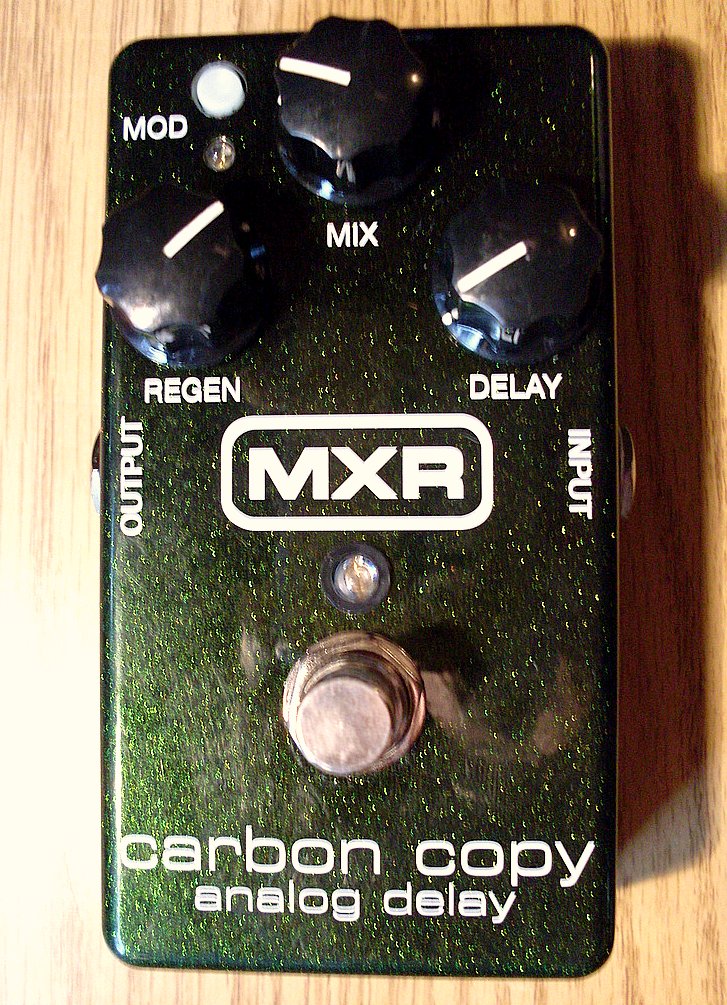
MXR Carbon Copy Delay for short, slap-back textures.
-
Pigtronix Fat Drive for a bit of sag and warmth on leads.
-
TC Electronic Polytune (because even Ghouls need precision).
-
Boss NS-2 Noise Suppressor to keep the stage whisper-quiet between songs.
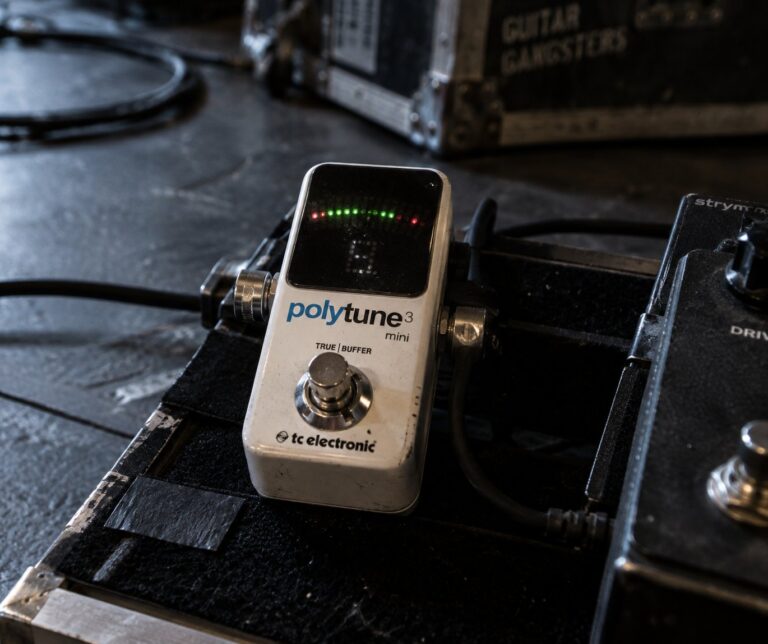
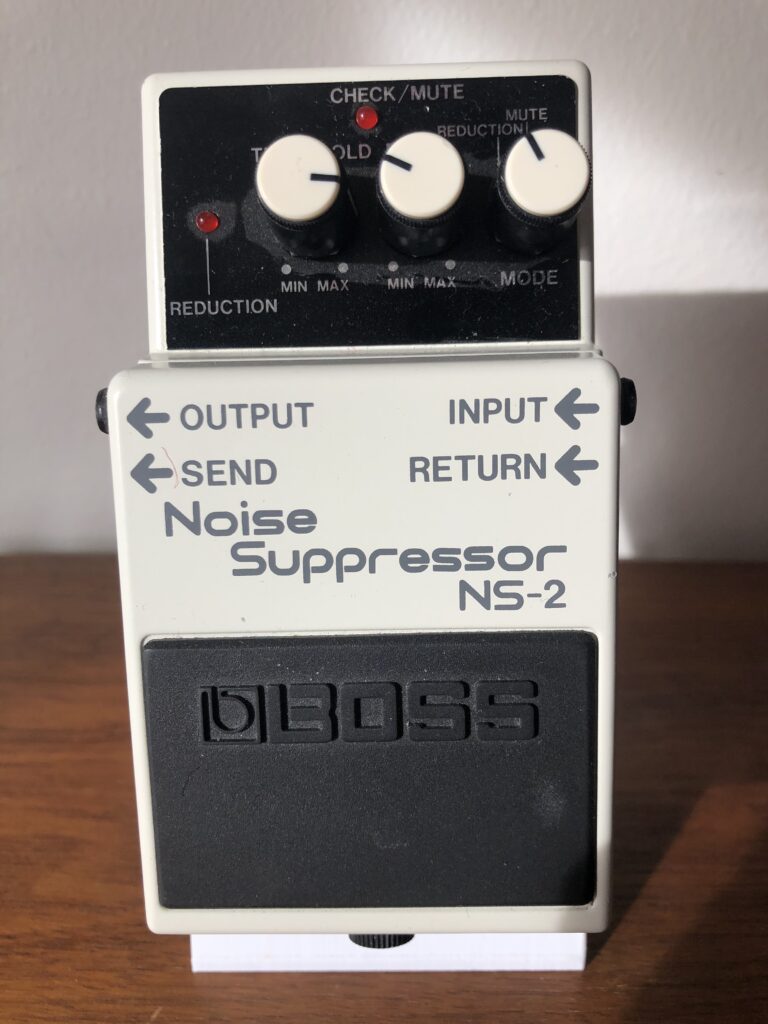
Everything else — modulation, reverb, stereo spread — comes from front-of-house engineers who treat Ghost’s tone like a cinematic soundtrack rather than a metal wall of sound.
Bass & Drums
The Nameless Ghoul handling bass typically runs a Fender Precision Bass through an Orange AD200B head and matching 8×10 cab, sometimes profiled in the Kemper for consistency. It’s gritty, old-school, and perfectly locked with the kick — more Lemmy than Dream Theater. Drums are Ludwig kits with deep-shell toms, tuned low to add weight under all those choirs and keys.
The Discipline Behind the Masks
What makes Ghost’s tone so unnervingly tight isn’t just gear — it’s discipline. Every player hits with the same pick angle, same attack, same dynamics. It’s precision masquerading as ritual. And because the band’s image depends on anonymity, their stage chemistry has to be telepathic. There’s no front-of-house ego war — only collective groove.
Ghost’s live tone feels like a cathedral collapsing in slow motion: harmonic, massive, but never messy. It’s proof that minimal gear, when mastered, can sound far bigger than any rack of boutique pedals.
The Sonic Alchemy – How Ghost Turned Pop Melodies Into Metal Hymns
Ghost’s biggest trick isn’t the masks, or the theatrics, or even the Grammy. It’s that they made melody dangerous again.
Tobias Forge understood something that most metal bands forgot after 1991 — that evil sounds even darker when it’s beautiful.
Listen to “Cirice.” It starts like a love song, whispers in minor key, then explodes into cathedral-sized riffs that would make Tony Iommi grin. Or take “Spillways” — a song ABBA could’ve written if they’d discovered distortion pedals and sacrilege. That’s Ghost’s alchemy: fusing the harmonic discipline of pop with the heaviness of doom.
Forge grew up on The Beatles, Queen, and Swedish pop, and you can hear it in his songwriting. He doesn’t build songs around riffs — he builds them around hooks. Every chorus is engineered to haunt your memory, every guitar line wraps around the vocal melody like incense smoke around a candle flame. Even their darkest tracks — “Year Zero”, “He Is”, “Kaisarion” — shimmer with clarity.
The Production Mindset
Forge treats the studio like a cathedral. Everything matters: mic placement, preamp color, string age, even the type of pick used in double-tracking. Guitars are always recorded in pairs — one left, one right — often with slightly different pickup splits or amp EQs to create dimension. The mix philosophy? Midrange dominance. Ghost doesn’t bury guitars under bass or drums; the tone lives in the 1–3 kHz range where human ears lock in. That’s why their riffs sing instead of roar.
He’s also notoriously anti-overproduction. Instead of layer upon layer of digital gloss, Ghost records real amps, real drums, and then glues it together with cinematic reverb and choir overdubs. The result is huge, but still human.
The Signature Ghost Sound
So what exactly makes a Ghost riff sound like… well, Ghost? Three core elements:
-
Dual Harmonies – Two guitars playing mirrored thirds or sixths, almost like a twin-lead Iron Maiden line baptized in pop.
-
Chordal Motion – They move through progressions that sound wrong for metal — major shifts, key changes, suspended chords. It’s unorthodox, and it works.
-
The Groove – Every Ghost song swings. Even the heaviest tracks like “Square Hammer” groove with a subtle bounce. It’s Sabbath by way of Sinatra.
The Psychology of Catchiness
Forge once said, “If people can hum it, they’ll never forget it — even if it scares them.” That’s the Ghost formula in one line. The band’s melodies are designed for longevity, not shock value. They want you singing about the Antichrist while driving your kids to school — and somehow, you do.
Their live shows reinforce this hypnotic formula. Thousands of fans chant Latin lyrics they barely understand, fists raised like a congregation under a false prophet. It’s ritual turned arena spectacle — and every guitar note is part of the sermon.
Ghost didn’t just resurrect classic rock ideals; they made them holy again. And in doing so, Tobias Forge reminded the world that melody isn’t the enemy of heaviness — it’s the weapon that makes it unforgettable.
Live Ritual – How Ghost Turns Arena Shows into Unholy Ceremonies
Seeing Ghost live isn’t like going to a concert — it’s like attending mass in an alternate universe where Satan runs the choir. The air smells like incense and pyro smoke, the lights glow like stained glass, and somewhere between Gregorian chants and down-tuned riffs, you forget you’re at a rock show at all.
The Stage as a Cathedral
Tobias Forge has said many times that Ghost’s stage design is inspired by “church architecture and Vegas spectacle.” Every show feels meticulously choreographed — the risers resemble marble altars, the backdrop changes from gothic arches to stained glass projections, and the lighting is timed to every beat like divine punctuation.
The Nameless Ghouls move with monk-like precision, never breaking formation. Each wears a chrome mask and uniform tailored to look identical, emphasizing anonymity and unity — a visual metaphor for the band’s philosophy: the message matters, not the messenger. Only the frontman — whether it’s Papa Emeritus IV or the transitional Cardinal Copia — commands individuality. He’s the high priest, the master of ceremonies, equal parts rock star and televangelist.
The Sound of Control
Behind all that smoke and choreography lies one of the cleanest live mixes in modern metal. The guitars, profiled through Kemper rigs, stay razor consistent across continents. Vocals are doubled with subtle delay and reverb to give that eerie “sermon in a cathedral” effect. The rhythm section is a masterclass in restraint — bass and drums glue the entire soundscape without ever overpowering it.
Ghost’s front-of-house team treats every concert like a film score. Reverbs are timed to BPM; delays sync with lighting cues. Each song moves like a chapter — quiet intros swell into cinematic peaks before the house explodes in pyro and choirs.
Theatrics and Emotion
The genius of Ghost’s live ritual isn’t just in spectacle — it’s in emotional control. One moment you’re laughing at Papa’s twisted banter (“Remember, children, Satan loves you very much”), and the next you’re caught in a wall of sound that feels biblical. Forge studied not just rock legends like Alice Cooper and Queen, but also Broadway stagecraft and liturgical ceremony. Every gesture, every lighting change, every pause is deliberate.
And yet, despite the grandiosity, it feels personal. The audience isn’t just watching — they’re participating. Thousands chant “Hail Satan” in harmony, wave imaginary incense, and hold hands like a congregation under fluorescent light. It’s performance art disguised as rock theatre, but it hits harder than any sermon ever could.
The Emotional Payoff
By the time the encore rolls in — often “Square Hammer” or “Dance Macabre” — you’re not just at a show; you’re part of the myth. The crowd sways, the Ghouls lock in that flawless groove, and Papa bows like a dark pope blessing his faithful.
That’s why Ghost’s concerts sell out faster than most metal acts with twice the technical skill. Forge turned his obsession with ritual into entertainment that transcends genre. Whether you came for the riffs, the theatre, or the blasphemy, you leave feeling… cleansed.
Because when Ghost performs, it’s not just rock. It’s rock ritualized.
Legacy of the Mask – How Ghost Redefined Rock Stardom in the 21st Century
Most bands spend decades trying to get people to recognize their faces. Ghost did the opposite — and became one of the biggest rock acts on Earth. In an era obsessed with algorithms, selfies, and personal branding, Tobias Forge built an empire out of anonymity and ritual. The irony? The less fans knew, the more obsessed they became.
The Death of the Rock Ego
When Ghost first emerged, nobody knew who the hell they were. The internet swirled with rumors — famous musicians playing undercover, secret side projects, cult conspiracies. Forge watched the chaos unfold and smiled. By hiding the individual, Ghost made the idea of the band the real star. That’s something even Kiss or Slipknot never fully achieved — the perfect blend of image and invisibility.
And when Forge finally unmasked himself in 2017, the mystique didn’t die — it evolved. Instead of killing the illusion, the reveal gave context. We saw the architect behind the cathedral, not the man behind the curtain. It made Ghost feel more human without losing the magic.
Influence on Modern Rock
Ghost changed the trajectory of heavy music. Suddenly, melody wasn’t a dirty word anymore. Bands that once avoided hooks started writing choruses again. Theatrics came back into style — not as a gimmick, but as a tool for storytelling. And Ghost proved that metal could still hit the charts without watering itself down.
Their DNA now runs through acts like Sleep Token, Zeal & Ardor, and even modern prog bands that dare to combine aggression with atmosphere. Forge showed that presentation is part of composition — that what you see can amplify what you hear.
Awards, Charts, and Longevity
From a Grammy win for “Cirice” to Impera debuting at No. 2 on the Billboard 200, Ghost have achieved the kind of crossover success metal rarely sees anymore. They headline festivals, top radio charts, and move vinyl like it’s 1979. But more than numbers, it’s their cultural footprint that stands out: they made metal fashionable again — elegant, cinematic, and strangely romantic.
Why It Matters
Ghost’s legacy isn’t just sonic — it’s philosophical. They’re proof that mystery still matters in a world that overshares everything. They proved that a rock show can be theatre, that a riff can be ritual, and that a Swedish band in church robes can outsell half of mainstream pop without a TikTok dance in sight.
For Tobias Forge, the masks were never about hiding — they were about focus. He stripped away identity so the music could become mythology. And it worked.
Because at the end of the day, Ghost isn’t just a band. It’s a reminder that rock ’n’ roll, at its core, is still supposed to feel dangerous, beautiful, and just a little bit wrong.
Read our guide to the Kemper Profiler Head for more on the profiling technology behind a digital touring rig.
FAQ — Ghost, Tobias Forge & The Nameless Ghouls
Q: Who created Ghost?
A: Ghost was founded by Tobias Forge in Linköping, Sweden, around 2006. He wrote the early material and built the band’s entire concept — anonymous musicians, theatrical papal personas, and a fusion of metal, pop, and classic rock.
Q: What guitars do the Nameless Ghouls use?
A: Their main weapon is the Hagström Fantomen, custom-built for Ghost with Lundgren humbuckers, coil-splits, and Hagström’s H-Expander truss-rod for rock-solid stability. Backup instruments include Gibson SG Customs and RD Artists.
Q: Which amps define Ghost’s tone?
A: Early tours relied on Orange Rockerverb 100 and AD200 heads with matching 4×12 cabs. Modern shows use Kemper Profilers loaded with those exact amp profiles for consistent tone across global tours.
Q: What pedals are on their board?
A: Minimal setup — MXR Carbon Copy Delay, Pigtronix Fat Drive, Boss NS-2, and a TC Electronic Polytune. All ambient effects and reverbs are handled at the mixing desk.
Q: Why the masks and changing “Papa Emeritus” personas?
A: Forge wanted Ghost to be a mythology, not a personality cult. Each “Papa” represents a new album era, keeping the story fresh while maintaining anonymity for the musicians.
Q: What’s Ghost’s biggest hit?
A: “Square Hammer” remains their most iconic anthem — multi-platinum, still closing every show.
Q: Did Ghost ever win a Grammy?
A: Yes — 2016 Grammy Award for Best Metal Performance with “Cirice.”
Q: What makes Ghost’s sound unique?
A: A rare mix of pop craftsmanship, doom-metal power, and vintage clarity. Dual-guitar harmonies, moderate gain, and midrange-rich mixes give them that unmistakable cathedral-metal tone.
Image credits
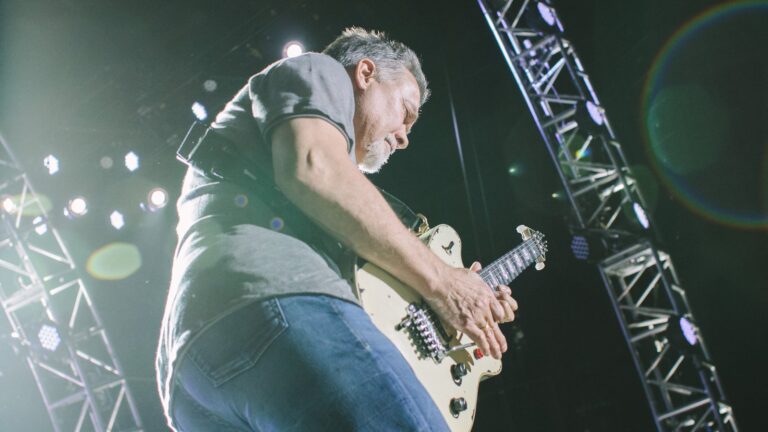
- Top image: Miguel, Flickr, CC BY-SA 2.0.
- MXR Carbon Copy: MXR Carbon Copy by Roadside Guitars, Flickr, CC BY-SA 2.0.
- TC Electronic PolyTune 3 Mini Tuner: GuitarGangsters AI-generated reference illustration, not a photograph.
- Boss NS-2 Noise Suppressor: Johan Rosén / Kuriosatempel, CC BY-SA 4.0.