John McGeoch Guitars & Gear: The Complete Guide to Magazine & Siouxsie’s Yamaha SG, MXR Flanger & Post-Punk Guitar Genius Rig
John McGeoch guitars & gear: Magazine and Siouxsie and the Banshees. Yamaha SG2000, MXR Flanger stand-mounted, Roland JC-120, Yamaha delay — Spellbound post-punk tone guide.
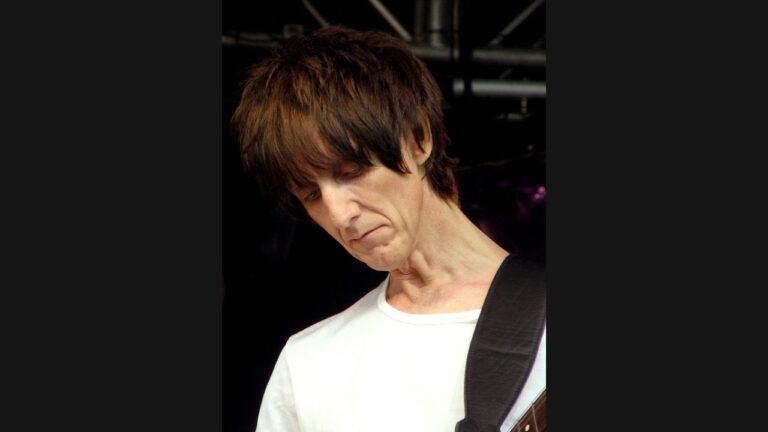
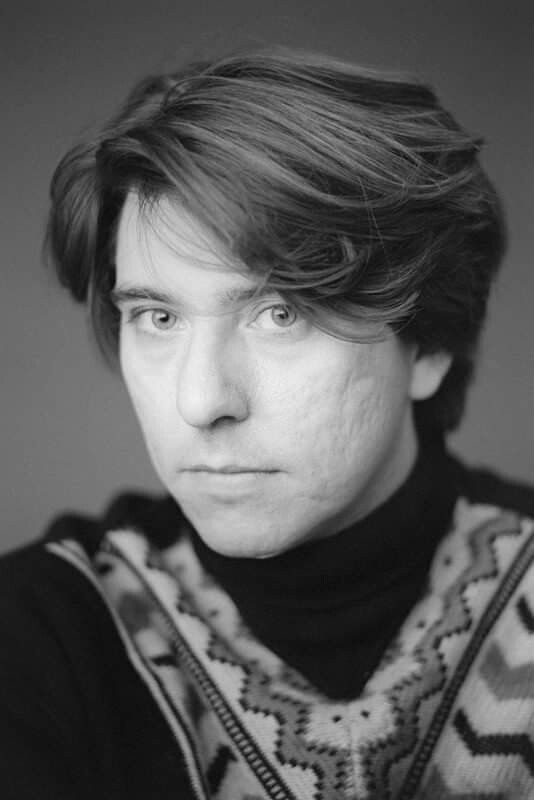
Siouxsie Sioux once described working with John McGeoch by saying she could tell him “I want this to sound like a horse falling off a cliff,” and he would know exactly what she meant. Jonny Greenwood of Radiohead has named McGeoch as his favorite guitarist of all time. Siouxsie Sioux also named him as her favorite guitarist of all time. John Frusciante of the Red Hot Chili Peppers taught himself to play guitar by learning all of John McGeoch’s parts in Magazine and Siouxsie and the Banshees. The biography of the man’s career is the biography of someone about whom the people with the most authority to make assessments — the people who actually worked with him and the musicians who were most directly influenced by him — consistently use the language of superlatives and the vocabulary of awe. He was, as one source describes him, “the underappreciated master of punk guitar.” He was, in Siouxsie’s and Greenwood’s separate assessments, the best guitarist they had encountered. He could play Television’s Marquee Moon back to front, which is how Howard Devoto found him — through a mutual friend who mentioned that there was a Scottish art student at Manchester Polytechnic who could do that. The “Shot by Both Sides” riff that launched Magazine — “a sound like an elastic band building to snap” — was the first public evidence of what Devoto had found. The Yamaha SG through the Roland JC-120 and the Marshall, with the MXR Flanger stand-mounted for live manipulation, producing the specific inventive arpeggios and string harmonics and occasional disregard for conventional scales that distinguished McGeoch from every other post-punk guitarist. A horse falling off a cliff. He knew exactly what that sounded like. The Yamaha SG was the instrument that made the horse fall off the cliff. The MXR Flanger described the arc of the descent.
The Journey
John Alexander McGeoch was born on August 25, 1955, in Greenock, Renfrewshire, Scotland, and died on March 4, 2004, at the age of forty-eight, in Launceston, Cornwall, England. He moved to London in his teens, attended Manchester Polytechnic where he studied Fine Art, and played guitar in the Manchester punk scene that was developing in 1976 and 1977 — the same Manchester scene that produced Joy Division, the Buzzcocks, The Fall, and the post-punk tradition that British indie rock developed from. He had a degree in Fine Art and an ongoing interest in photography, painting, and drawing — the visual arts education is directly relevant to the specific quality of his guitar playing, which was as much about composition and texture as about individual note execution. “McGeoch had the chops of a pyrotechnic rocker and the rudimentary discipline of a punk,” as the Guitar.com Genius Of essay describes him — the specific combination of technical sophistication and punk directness that made his playing immediately identifiable across multiple different band contexts.
His career spanned Magazine (1977-1980), Visage (1979-1980), Siouxsie and the Banshees (1980-1982), the Armoury Show (1983-1986), and Public Image Ltd (1986-1992) — five significant bands across fifteen years of professional playing, each representing a different context and a different musical identity while maintaining the recognizable McGeoch approach: the inventive arpeggios, the string harmonics, the flanger use, and the “occasional disregard for conventional scales” that Wikipedia’s description captures as his signature characteristics. The 1996 Mojo list of 100 Greatest Guitarists cited his work on Siouxsie and the Banshees’ “Spellbound” specifically — the Juju (1981) album track that demonstrates all of his signature characteristics simultaneously, in a song that has been cited as one of the greatest examples of post-punk guitar playing in the tradition.
The documentary film The Light Pours Out of Me — currently in development and raising funds — examines McGeoch’s life and legacy, and its title is taken from the Magazine song of the same name from Real Life (1978), which captures both the specific musical gift of someone whose creative output had the quality of light emerging from an internal source and the specific personal darkness that eventually cost him his health and his career. “When success turns to pressure, pressure to addiction and fragility is masked by substance abuse, the effects can be devastating,” as the Guitar World documentary description notes. McGeoch’s career ended in 1992 when he left Public Image Ltd, reportedly due to ongoing health and personal difficulties. He died in 2004. The legacy is the five bands, the specific guitar approach that Jonny Greenwood and Siouxsie and Frusciante each absorbed as the most important available influence. The Yamaha SG. The MXR Flanger. The horse falling off the cliff. The light pouring out.

Background: Greenock to Manchester, Magazine’s Debut, and the Siouxsie Peak
The Manchester Polytechnic connection — the Fine Art degree that placed McGeoch in the specific educational and cultural environment of post-punk Manchester — is the foundational context for understanding the intellectual and visual dimension of his guitar approach. A guitarist with a Fine Art degree thinks about music differently from a guitarist who developed through the standard rock tradition: the visual arts education provides the specific understanding of composition, texture, contrast, and the relationship between different elements of a work that distinguishes the visually educated practitioner from the technically trained one. McGeoch’s specific approach — the arpeggiated melodic lines, the harmonic inventiveness, the textural use of effects processing — reflects this visual arts sensibility: the guitar as a compositional and textural instrument rather than as a display of technical proficiency.
The Magazine formation is the specific biographical moment in which the Polytechnic connection and the punk moment converged. Howard Devoto — who had left the Buzzcocks after Spiral Scratch, the first UK punk EP, because he wanted to explore new forms of music beyond three-chord punk — was looking for a guitarist through an advertisement in 1977 when he heard through a friend about a Scottish art student who could play Television’s Marquee Moon back to front. This was the specific credential that indicated to Devoto what kind of guitarist McGeoch was: not a three-chord punk who needed to be told what was possible, but someone who had already absorbed one of post-punk’s most sophisticated guitar approaches and internalized it completely. The ability to play Marquee Moon back to front — fluently, accurately, from memory — demonstrated both the technical capability and the musical intelligence that Magazine’s ambitious post-punk required.
The “Shot by Both Sides” riff is McGeoch’s first public legacy: “a sound like an elastic band building to snap” that reached number 41 on the UK Singles Chart in January 1978 and ushered in the post-punk era as a commercially recognizable musical form. The riff itself is a masterclass in the post-punk guitar vocabulary: not a power chord riff, not a blues-derived lick, but a specific melodic-harmonic figure that creates its own internal tension and release through the specific intervals and rhythmic placement rather than through the conventional rock guitar devices. The “elastic band building to snap” description is Siouxsie Sioux’s, not his own — the woman who would become his next musical home heard the riff and understood it immediately, with the same vocabulary that she would later use for the horse-falling-off-a-cliff instruction.
The Siouxsie and the Banshees period — from 1980 through 1982, covering the Kaleidoscope and Juju albums and the subsequent touring — is McGeoch’s most celebrated creative period by the assessment of both his bandmates and subsequent commentators. Budgie (the Banshees’ drummer) wrote in his tribute: “Without any disrespect to all the other guitarists we have worked with, none had the relaxed mastery and such a depth of expression as John.” The Juju album’s “Spellbound,” “Arabian Knights,” and “Halloween” are the canonical McGeoch guitar moments — the specific application of arpeggios, harmonics, and the MXR Flanger’s modulation to the Banshees’ specific post-punk gothic template, producing guitar work of genuinely innovative melodic and textural sophistication. His breakdown and departure from the Banshees in late 1982 — during which Robert Smith stepped in to fill the guitar role, exactly as he had done in an earlier Banshees crisis — is the specific biographical catastrophe that ended the most creatively fertile period of his career.
The Rig: John McGeoch’s Guitars, Amps, and Effects
Guitars
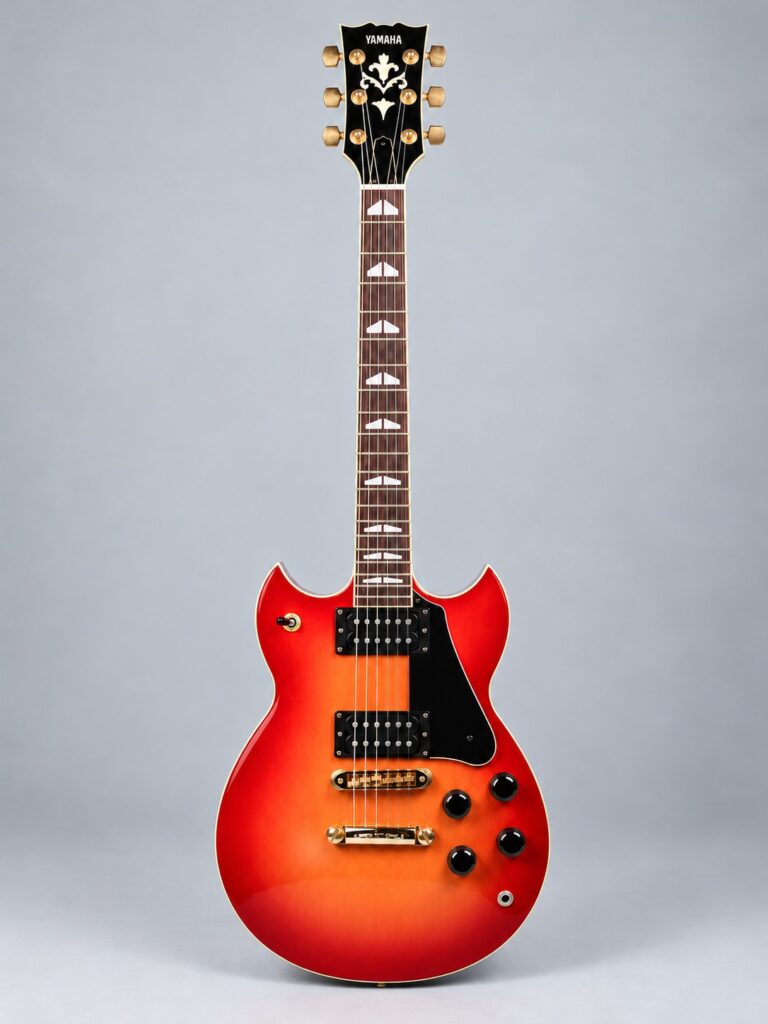
John McGeoch’s main guitar was a Yamaha SG2000 — the Japanese-made neck-through guitar from Yamaha’s SG series that was closely associated with his sound and has been formally recognized through the Eastwood McGeoch 1000 tribute guitar. The Yamaha SG2000’s specific construction: a compact body shape with dual humbuckers, through-neck or set-neck construction (depending on the specific model), and the distinctive split-arrow fret markers that identify the instrument in photographs. Yamaha’s SG series was their high-quality response to the Gibson SG — compact, comfortable, with the warm, sustaining character of the set-neck mahogany construction and the dual humbucker output appropriate for the full-frequency-range guitar work that McGeoch developed. The SG2000’s specific tonal character — warmer than a Stratocaster, slightly brighter and more compact-sounding than a Les Paul, with the specific Japanese-made pickup character of the 1970s-80s Yamaha humbuckers — provided the foundational voice of the McGeoch approach: not the conventional British rock guitar sound of the Les Paul and Marshall but the specific warmth and clarity of the Japanese-made guitar through the Roland JC-120’s clean chorus and the Marshall’s pushed British character. The guitar companies recognized the SG’s significance in McGeoch’s career: the Eastwood McGeoch 1000 tribute harkens back to that iconic design with its compact body shape, dual humbuckers, and distinctive split-arrow fret markers.
Alongside the SG2000, the Yamaha SG1000 is also documented in McGeoch’s equipment — a slightly different specification in the same Yamaha SG series. The Anyone Can Play Guitar lesson guide specifically notes: “I’m guessing it was his main Yamaha SG1000 through a whole ton of processing — chorus and/or flange, reverb, delay, compression” for the “Spellbound” recording. Both the SG1000 and SG2000 share the same basic design identity (compact body, dual humbuckers, set-neck or through-neck construction) with specific construction and pickup differences between models.
A 12-string guitar appears in McGeoch’s documented performance on “Christine” from Kaleidoscope — “the distinctive 12 string in the song Christine, again McGeoch,” as the Strat-Talk forum tribute documents. The 12-string’s specific doubled-string chime and harmonic complexity added the specific texture of “Christine”‘s guitar sound: the shimmer and resonance of the doubled strings that provides a different acoustic character from the Yamaha SG’s standard six-string single-coil or humbucker output. The 12-string on “Christine” represents the same instrument-for-the-song approach documented across multiple entries in this series: the specific textural requirement of the specific song demanded the 12-string’s harmonic complexity.
Amps
McGeoch’s primary amplification was split between a Roland JC-120 and a Marshall — the Roland JC-120 Jazz Chorus amplifier providing the clean channel with its specific built-in stereo chorus effect that is one of the most celebrated amplifier-integrated chorus circuits in the history of electric guitar. The Roland JC-120’s specific character: solid-state amplification (not tube/valve — solid-state transistor circuitry) producing the specific clean, almost clinical clarity of the JC-120, with the built-in chorus circuit adding the specific spatial widening and shimmer that became the signature of multiple 1980s post-punk and new wave guitar sounds. The JC-120 is the amp most often associated with the specific clean-plus-chorus character of 1980s British alternative guitar — the specific combination of clean solid-state headroom and the built-in chorus that adds warmth and width without the tube saturation that Marshall amplification would provide. McGeoch’s use of the JC-120 alongside the Marshall provided the complete tonal range: clean chorus warmth from the Roland, pushed British character from the Marshall, the two together producing the specific full-frequency, texturally complex sound that the McGeoch approach required.
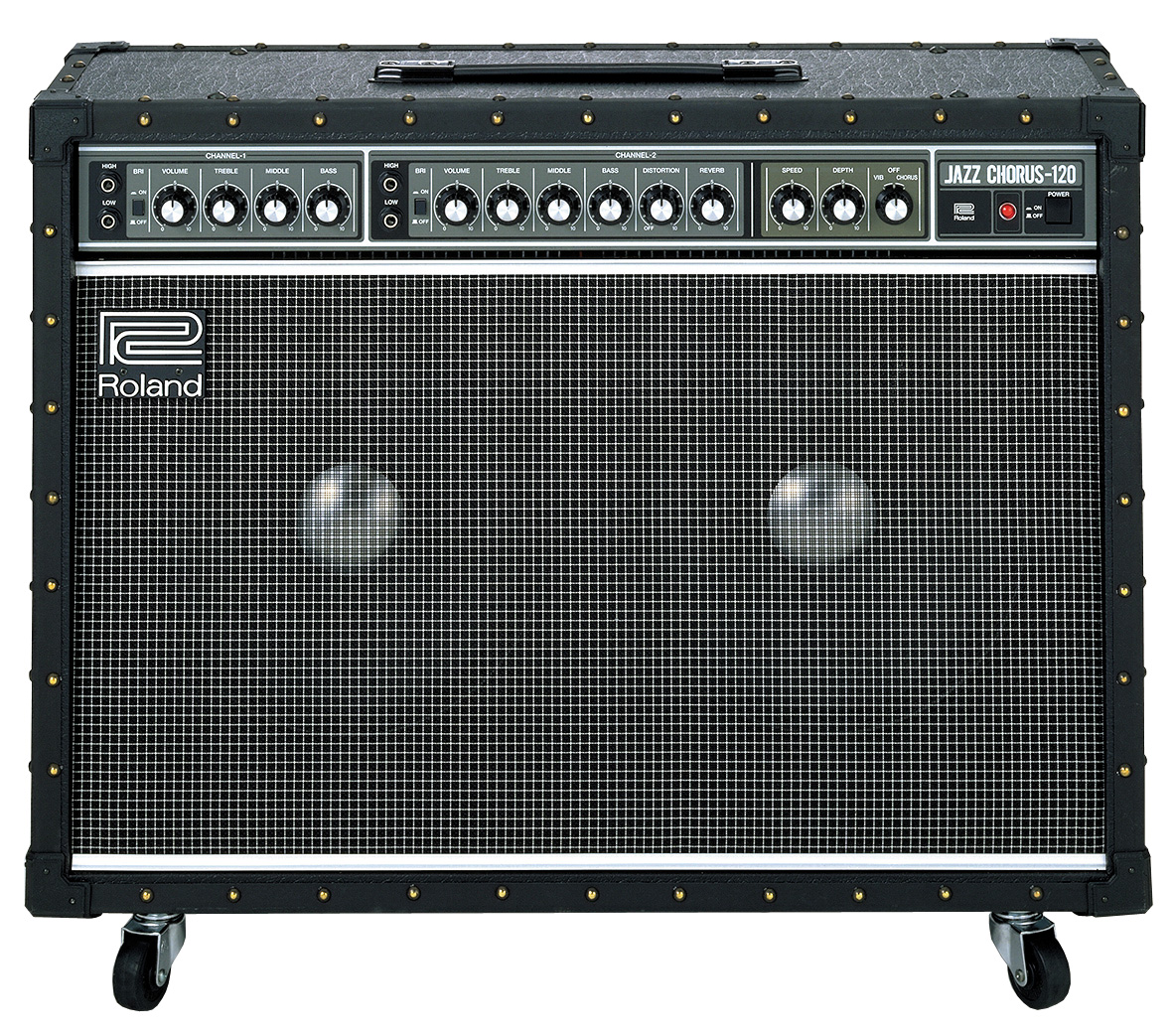
The Marshall amplifier used alongside the Roland JC-120 provided the pushed, British EL34 character that complemented the JC-120’s clean chorus approach. When Magazine reformed in 2009 with Noko replacing McGeoch, the guitarist reportedly used two late 1970s Marshall JMP 2×12 combos with Marshall 4×12 cabinets alongside a Fender Twin — a configuration that consciously replicated the Marshall-and-clean-combo approach that McGeoch had pioneered. The specific Marshall amplifier model in McGeoch’s original rig is not conclusively documented across all available sources, but the Marshall JMP series (the JMP MKII 50 Watt Lead Combo being documented by Gemtracks) represents the typical British guitar amplification of the period.
Effects
The MXR Flanger stand-mounted for live manipulation is the most specific and most immediately identifiable element of the McGeoch effects approach — the specific effect that is documented as his primary signature effect and that the reunion Magazine guitarist Noko consciously replicated “as per John McGeoch and Robin Simon’s setup with the band in the late 1970s.” The MXR Flanger’s stand-mounting is unusual and specifically intentional: rather than using the flanger as a foot-pedal engaged or disengaged at predetermined moments, McGeoch mounted it at a height where he could reach the speed and width controls during performance, modulating the flanger effect manually in real time. This specific performance technique — controlling the flanger parameters continuously rather than using it as a on/off switch — is the direct source of the specific, evolving, expressively varied flanger character that distinguishes his guitar sound from the more static flanger applications of other guitarists. The flanger is not an effect he turns on and off; it is an instrument he plays simultaneously with the guitar. The Wikipedia description of his “use of flanger” as one of his signature characteristics understates how central and how active the MXR Flanger’s real-time manipulation was to the specific McGeoch guitar sound.
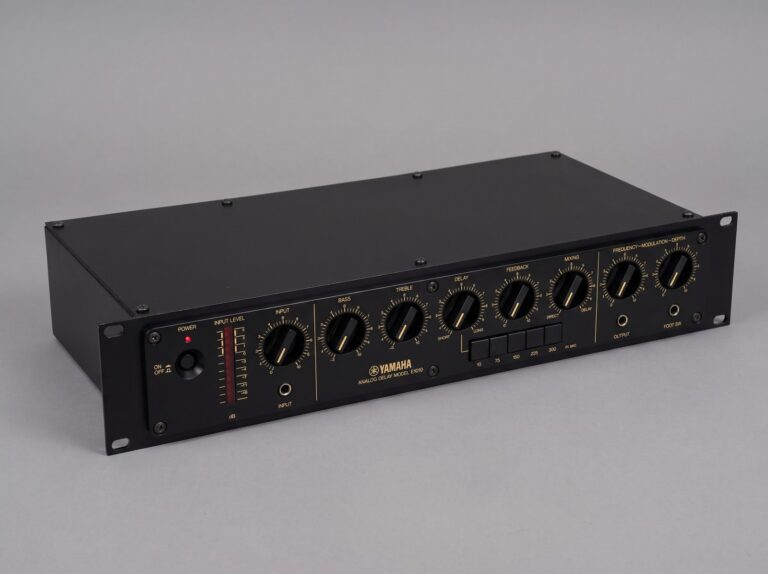
The Yamaha E1010 analog delay — a compact, battery-operated analog delay unit from Yamaha’s late-1970s effects line — is McGeoch’s primary documented delay effect. The E1010’s specific analog bucket-brigade character produces the warm, naturally degrading delay repeats of the analog delay tradition: each repeat slightly warmer and slightly darker than the previous, with the specific organic evolution of the signal that distinguishes analog delay from digital delay’s identical repetition. The E1010’s specific format — a small, standalone unit rather than a rack-mounted unit or a standard stompbox — is consistent with the general McGeoch approach to effects as tools rather than as status symbols: the Yamaha E1010 was accessible, affordable, and tonally appropriate rather than prestigious or expensive.
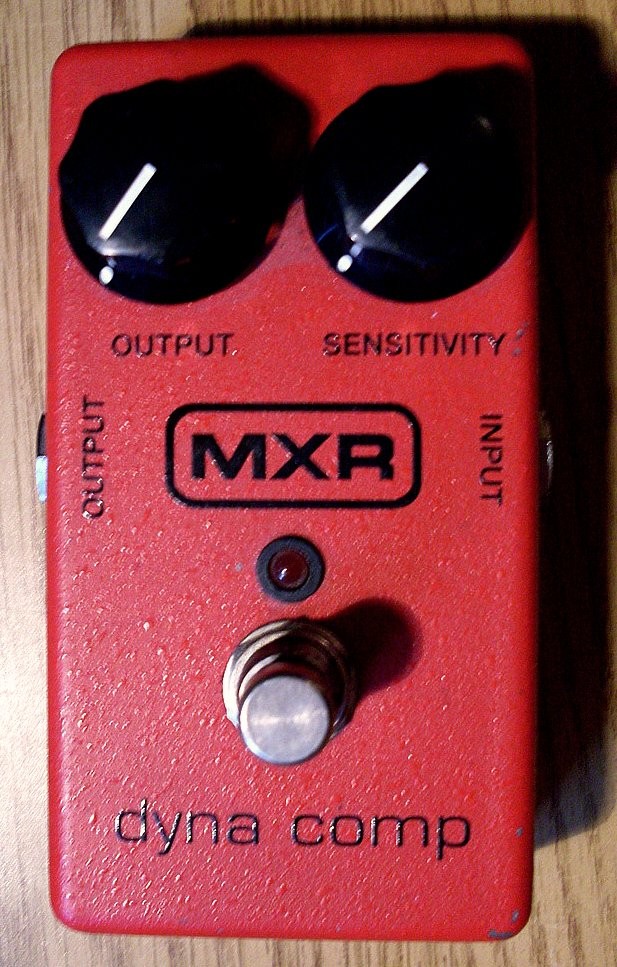
The MXR Dynacomp compressor completes the documented McGeoch effects chain — the standard professional compression that evens out the attack transients of the guitar signal and adds the specific sustain enhancement of compression processing. The Dynacomp’s specific character — musical compression with the specific subtle enhancement of the signal’s sustain and harmonic content — suited the arpeggiated, sustain-dependent guitar approach that McGeoch developed. The compressed signal through the flanger and delay produced the specific layered, harmonically complex character of the McGeoch guitar sound.
The Wikipedia characterization of McGeoch’s playing — “inventive arpeggios, string harmonics, the use of flanger and an occasional disregard for conventional scales” — documents the technique elements that are as much “effects” as any pedal in his signal chain. The inventive arpeggios: individual notes within a chord pattern played in sequence, producing the specific harmonic shimmer of the arpeggio enhanced by the flanger and analog delay. The string harmonics: the natural overtones produced at the string’s nodal points, producing the specific chiming, bell-like quality at the octave, fifth, and other harmonic positions. The “occasional disregard for conventional scales”: the specific willingness to play notes outside the expected key and mode, producing the specific harmonic tension and surprise that distinguishes the McGeoch approach from simpler, more predictable guitar work. These techniques combined with the MXR Flanger’s real-time manipulation, the Yamaha E1010’s warm analog delay, and the Roland JC-120’s built-in chorus produced the specific McGeoch guitar sound — a sound that Jonny Greenwood and Siouxsie Sioux and John Frusciante absorbed as the most important available influence.
The Magazine years — Real Life (1978), Secondhand Daylight (1979), The Correct Use of Soap (1980) — are the specific foundation on which everything else was built. The guitar work on Real Life established the template: the angular, melodic, single-note passages that emerged from the Art school-meets-punk synthesis, the conversational relationship with Dave Formula’s keyboards that the guitar.com description captures as “Most of the time, he seemed to be in a lively conversation with Dave Formula’s grandiose keys.” This conversation — the guitar responding to and extending the keyboard’s harmonic world rather than competing with it for the melodic primary — is the specific music-making approach that the Fine Art education had prepared him for: the composition as a conversation between voices rather than as a single voice’s statement. The specific Magazine guitar was not McGeoch playing over the band; it was McGeoch playing with the band, in the specific post-punk sense of the collective texture where each instrument is one voice in a multi-voiced conversation. “Shot by Both Sides” is the specific document of this approach in its most concentrated form: the elastic-band riff that doesn’t compete with Curtis’s bass or Formula’s keys but arrives between them, finding the specific space that makes the whole arrangement more than the sum of its parts.
The Public Image Ltd period — from 1986 through 1992, representing the longest single-band tenure of McGeoch’s career — is the least celebrated and least documented of his professional career. PIL under John Lydon’s direction was moving through various musical contexts during this period, from the post-punk rock of Album (1986) through the more commercial Happy? (1987) and the various subsequent releases. McGeoch’s presence through this period as the band’s guitarist for six years confirms the specific professional quality that the critical adulation documents: he was not just an innovative stylistic presence in high-profile experimental bands, but a working musician capable of sustained professional contribution over an extended period. The PIL period may be less celebrated than the Magazine and Banshees peak, but it represents the longest commitment of his career and the specific professional endurance of a musician who survived the post-peak creative pressures of working in someone else’s band through multiple musical shifts. The Yamaha SG and the MXR Flanger were presumably still there, serving whatever PIL required, for six years.
The specific post-punk moment that McGeoch inhabited — the period between punk’s raw three-chord directness and the mainstream commercial alternative rock that punk eventually produced — required guitarists who could hold two apparently contradictory positions simultaneously: the punk commitment to directness and the post-punk ambition for something more sophisticated than three chords. McGeoch held both positions at once, with the “chops of a pyrotechnic rocker and the rudimentary discipline of a punk.” This is the specific gift of the punk/post-punk transition: the musicians who could maintain the punk commitment to direct, unglamorous, in-service-of-the-song playing while developing the harmonic and textural vocabulary that made the music more complex, more surprising, and more emotionally resonant. The Yamaha SG is a Japanese guitar, not a prestige American instrument. The Roland JC-120 is solid-state, not the romantic tube-warmth of the Marshall or the Fender. The MXR Flanger stand-mounted for real-time manipulation is an effects pedal used as a continuously played instrument rather than as a switching device. All of these choices are the punk commitment to the functional over the prestigious, applied to a musical vision of extraordinary sophistication. The horse falls off the cliff with a Japanese guitar through a solid-state amplifier. The elastic band snaps with an MXR Flanger mounted at standing height. This is the correct approach.
Playing Style & Tone Philosophy
John McGeoch plays guitar with the specific combination of visual arts composition sensibility, post-punk directness, and harmonic inventiveness that his Fine Art degree and his absorption of Television’s Marquee Moon back to front produced. The Yamaha SG through the Roland JC-120’s built-in chorus and the Marshall’s pushed British character, with the MXR Flanger continuously manipulated and the Yamaha E1010 analog delay adding warmth and depth: this is the complete physical picture of the McGeoch approach. But the physical picture is less than half of the story. The other half is the specific musical intelligence that received “I want this to sound like a horse falling off a cliff” and produced something that matched the description exactly.
Siouxsie’s description of working with McGeoch — the horse falling off the cliff — is the most precise available description of his specific creative gift: the ability to translate a non-musical image or feeling into a specific guitar sound. This is not a technical accomplishment; it is an imaginative one. The technical accomplishment (the arpeggios, the harmonics, the flanger manipulation) is in service of the imaginative accomplishment (translating the non-musical into the specifically musical). The Fine Art degree is the direct antecedent of this specific gift: the visual arts education taught him to think about composition and representation and the relationship between image and expression in ways that the conventional guitar-through-an-amplifier training doesn’t provide.
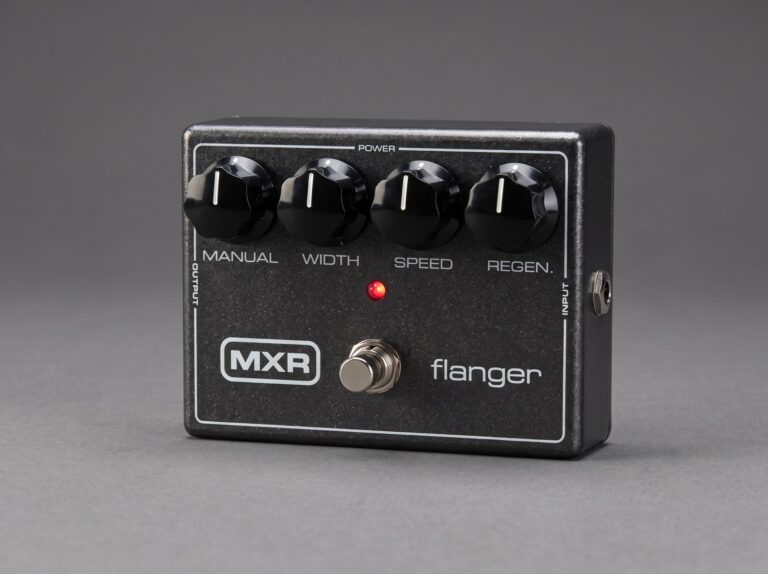
His specific tonal philosophy — the Roland JC-120’s clean chorus as the baseline, the Marshall’s push as the secondary voice, the MXR Flanger manipulated continuously as the primary expressive modulation tool — produced a guitar sound that was simultaneously clean and driven, modulated and melodic, harmonically sophisticated and rhythmically aggressive. The “pyrotechnic rocker with the rudimentary discipline of a punk” description captures the specific balance: the pyrotechnic quality comes from the harmonic inventiveness and the arpeggiated melodic approach; the punk discipline comes from the angular, direct rhythmic attack that keeps the sophisticated harmonic content from becoming self-indulgent.
How to Sound Like John McGeoch
The John McGeoch post-punk tone requires: a Yamaha SG (SG1000 or SG2000, or the Eastwood McGeoch 1000 tribute as the closest accessible alternative); a Roland JC-120 Jazz Chorus amplifier for the clean channel with built-in chorus; a Marshall amplifier for the pushed British channel; an MXR Flanger mounted at a reachable height for real-time manipulation rather than simple on/off use; a Yamaha E1010 or equivalent warm analog delay; and the MXR Dynacomp for compression. The specific inventive arpeggios, string harmonics, and disregard for conventional scales require musical development; no equipment shortcut provides them.
| Control | Setting (0–10) | Notes |
|---|---|---|
| Roland JC-120 Jazz Chorus (Clean Channel) | Volume: 5–6; Treble: 7; Bass: 5; Chorus: engaged (medium rate) | The clean foundation of the McGeoch sound: solid-state clarity with the built-in chorus providing the harmonic widening that distinguishes the JC-120’s clean from any other clean amplifier. The chorus at medium rate adds warmth and spatial dimension without obvious modulation. This is the baseline through which the arpeggiated melodic lines and harmonics speak with the specific clean-but-wide character of the Kaleidoscope and Juju recordings. |
| Marshall Amplifier (Secondary — British Push) | Volume: 6; Gain: 5; Treble: 7; Mid: 6; Bass: 5 | The pushed British character alongside the Roland clean. The Marshall’s EL34 saturation at these settings adds warmth and harmonic complexity to the JC-120’s clinical clean — the combination producing the specific full-frequency, texturally layered McGeoch sound. The two amplifiers together cover the complete tonal range from clean chorus warmth to pushed British presence. |
| MXR Flanger (Stand-Mounted — Real-Time Manipulation) | Speed: variable in real time; Width: 5–7; Regen: 4 | The defining creative tool. Mount the MXR Flanger at a height you can reach while playing — keyboard stand, guitar stand at arm height. Manipulate the Speed control during performance to change the flanger’s sweep rate in real time. Begin slow (0.5–1Hz) for atmospheric passages; increase speed gradually for intensity. The Width at 5–7 provides the specific jet-sweep range. The real-time manipulation is what distinguishes the McGeoch approach from standard on/off flanger use. |
| Yamaha E1010 / Analog Delay | Delay: 300–400ms; Repeats: 2; Mix: 25% | Warm analog delay at a short-to-medium setting. Two warm repeats at moderate mix provide the specific atmospheric depth of the analog delay tradition without overwhelming the melodic content. The E1010’s warm, naturally degrading character adds the specific organic quality of analog delay — each repeat slightly different from the previous. |
| Inventive Arpeggios (Technique) | Individual chord tones; ascending and descending patterns; unusual voicings | The primary compositional technique. Rather than strumming full chords, pick individual chord tones in patterns that create melodic movement within the harmonic content. Use the chord’s extensions (9ths, 11ths, suspended 4ths) alongside the basic tones. The flanger’s modulation and the delay’s echo of each picked note creates the specific layered harmonic texture. The “disregard for conventional scales” means: include chromatic passing tones and non-diatonic notes as expressive elements rather than as wrong notes. |
| Horse Falling Off a Cliff Philosophy | Think visually; translate to sound; trust imagination | The McGeoch creative approach: start from a non-musical image or feeling and find the specific guitar technique, effects combination, and musical material that translates it into sound. This requires the imagination before the technique. The Fine Art degree provided the framework. The Yamaha SG and the MXR Flanger provided the tools. The translation is the music. |
Influence & Legacy
John McGeoch’s influence on post-punk, gothic rock, and alternative rock guitar is the influence of someone who expanded what was considered possible on the electric guitar in a post-punk context — who demonstrated that the guitar could be both harmonically sophisticated and rhythmically direct, both texturally inventive and emotionally immediate, and that the combination of the Yamaha SG through the Roland JC-120’s chorus and the Marshall’s push, with the MXR Flanger continuously manipulated in real time, could produce guitar sounds that communicated “horse falling off a cliff” with specific and immediate accuracy.
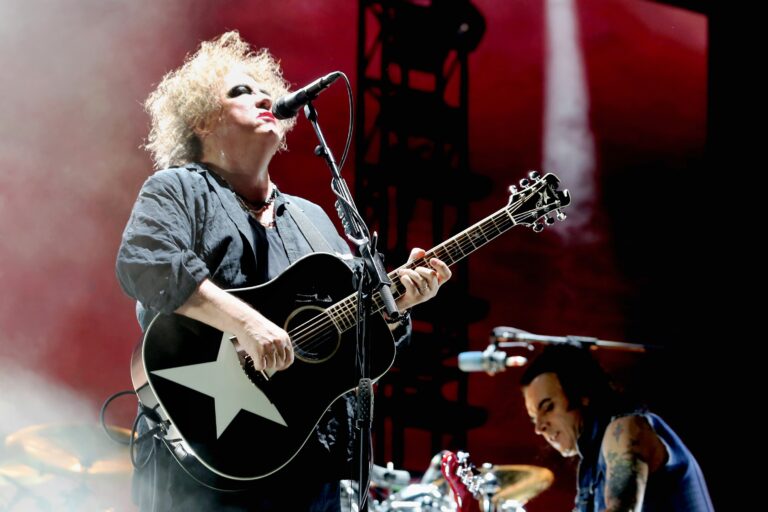
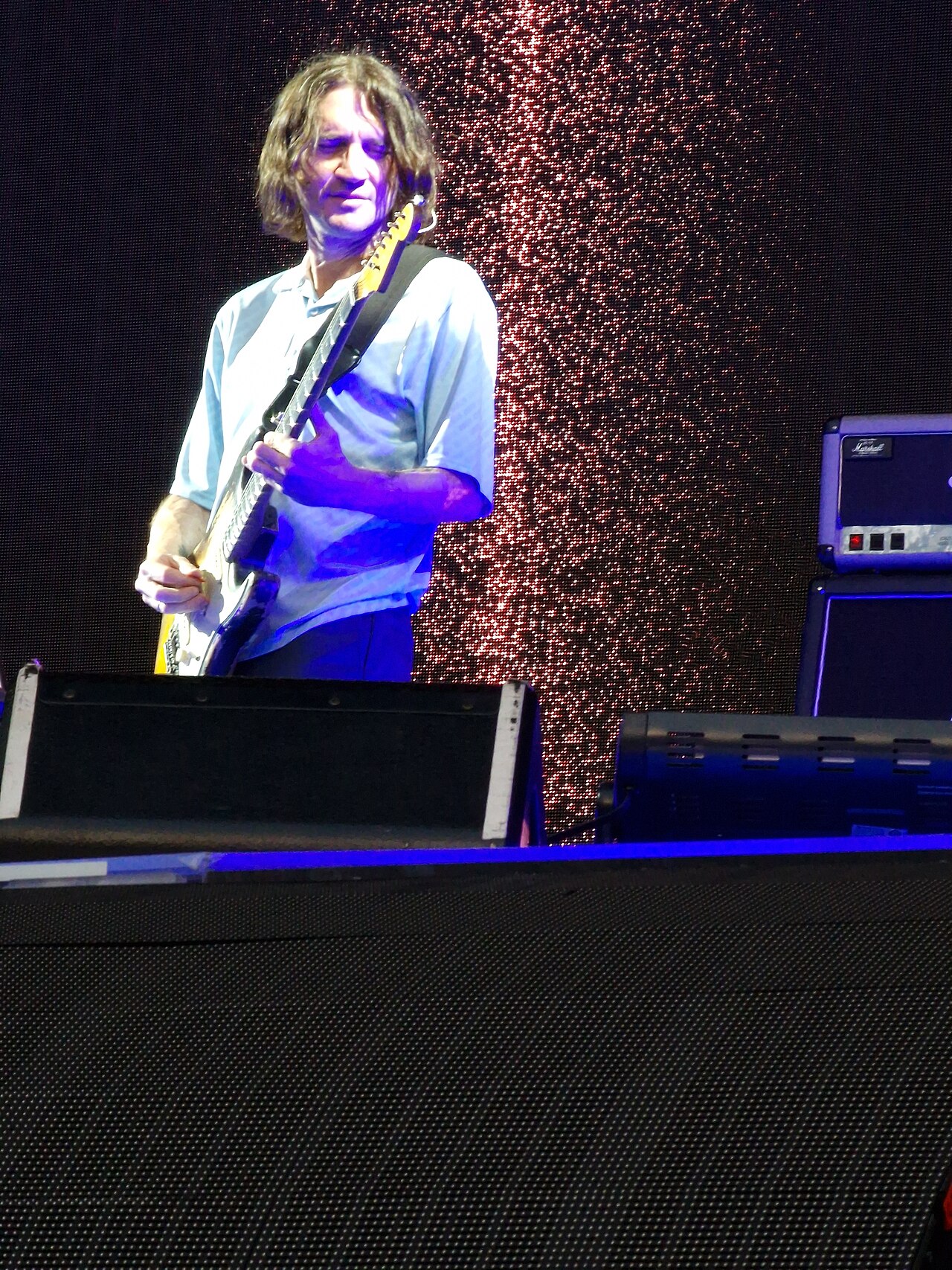
The three most specific documented influences — Jonny Greenwood of Radiohead (whose guitar approach from Pablo Honey through The Bends owes a clear debt to the McGeoch arpeggiated, effects-processed, harmonically non-conventional approach), John Frusciante who learned all of McGeoch’s guitar parts as his primary guitar education, and Siouxsie Sioux whose favorite guitarist he was — represent the specific breadth of what his work reached: the art-rock intellectual guitar of Radiohead, the melodic rock-funk of the Red Hot Chili Peppers, and the post-punk gothic rock of the Banshees themselves. These three separate inheritances demonstrate that the McGeoch approach was not genre-specific but approach-specific: the inventive arpeggios, harmonics, and flanger manipulation serve multiple musical contexts with equal effectiveness.
The Mojo 100 Greatest Guitarists citation for “Spellbound” specifically — the Juju track that demonstrates all of his signature characteristics simultaneously — is the formal critical acknowledgment that the specific combination of technique and imagination in that specific performance is among the most significant in the post-punk tradition. For the post-punk context that McGeoch inhabited, see Bernard Sumner’s Joy Division/New Order entry — a parallel Manchester post-punk development that used the guitar in very different ways from McGeoch’s approach but occupied the same cultural moment. The Television Marquee Moon influence that McGeoch absorbed and could play back to front connects directly to Tom Verlaine’s entry — the specific guitar approach that produced the guitarist who could produce a horse falling off a cliff on demand. And the Roland JC-120’s specific clean-with-chorus character connects to Robert Smith’s Cure approach — both guitarists finding the specific clean-plus-modulation amplification philosophy as the appropriate vehicle for post-punk Gothic guitar expression.
He could play Marquee Moon back to front. He knew what a horse falling off a cliff sounded like on a guitar. He mounted the MXR Flanger at standing height so he could manipulate it continuously during performance. He had a Fine Art degree and he used it. He played in Magazine and Siouxsie and the Banshees and Public Image Ltd. He was Jonny Greenwood’s favorite guitarist and Siouxsie’s favorite guitarist and he taught John Frusciante to play. The light poured out of him. He died in 2004 at forty-eight years old. The Eastwood McGeoch 1000 tribute guitar exists because the guitar community understands what it lost, and the horse falling off a cliff is still the right description for what the McGeoch Yamaha SG through the stand-mounted MXR Flanger sounded like on its best days, which were many. The Yamaha SG and the MXR Flanger stand-mounted for real-time manipulation, in conversation with the keys and the bass and the drum, in service of whatever the singer needed — whether that was a horse falling off a cliff or an elastic band building to snap or something that nobody had named yet when they asked for it. He knew what it sounded like. The guitar knew how to make it. The light poured out.
Frequently Asked Questions: John McGeoch Guitars & Gear
What guitar did John McGeoch use?
John McGeoch’s main guitar was a Yamaha SG2000 (also documented as SG1000 in some sources) — the Japanese-made neck-through guitar with dual humbuckers, compact body shape, and distinctive split-arrow fret markers that became his primary instrument through the Magazine and Siouxsie and the Banshees periods. Eastwood Guitars produced the McGeoch 1000 tribute guitar in recognition of his specific association with the Yamaha SG series. He also used a 12-string guitar for specific songs, most notably “Christine” from the Siouxsie and the Banshees album Kaleidoscope.
What effects did John McGeoch use?
McGeoch’s documented signal chain consisted of three primary effects: an MXR Flanger (stand-mounted for real-time manipulation during performance — one of his most distinctive performance practices), a Yamaha E1010 analog delay, and an MXR Dynacomp compressor. The stand-mounting of the MXR Flanger — allowing continuous manipulation of the speed and width controls during performance rather than simple on/off use — is the specific element that most directly produced the expressively varied, continuously evolving flanger character of his guitar recordings. Wikipedia lists “the use of flanger” as one of his signature characteristics, alongside inventive arpeggios, string harmonics, and an occasional disregard for conventional scales.
What amplifiers did John McGeoch use?
McGeoch’s amplification was split between a Roland JC-120 Jazz Chorus and a Marshall amplifier. The Roland JC-120’s clean solid-state amplification with built-in stereo chorus provided the clean, wide, harmonically lush foundation of his sound; the Marshall added the pushed, British EL34 character as a secondary voice. When Magazine reformed in 2009 with Noko replacing McGeoch, the replacement guitarist used Marshall JMP combos with Marshall 4×12 cabinets alongside a Fender Twin, consciously replicating the clean-plus-Marshall two-amplifier approach that McGeoch had established.
Who named John McGeoch as their favorite guitarist?
Both Siouxsie Sioux (of Siouxsie and the Banshees, his primary band of the early 1980s) and Jonny Greenwood of Radiohead have named John McGeoch as their favorite guitarist of all time. John Frusciante of the Red Hot Chili Peppers stated that he learned to play guitar by learning all of McGeoch’s parts in Magazine and Siouxsie and the Banshees. The 1996 Mojo magazine list of 100 Greatest Guitarists cited him specifically for his work on “Spellbound” from the Siouxsie and the Banshees album Juju. These citations — from three of the most significant names in alternative rock guitar — represent the specific breadth of his influence across different musical contexts.
What was McGeoch’s relationship with Siouxsie and the Banshees?
McGeoch joined Siouxsie and the Banshees in 1980 after leaving Magazine, entering what was described as his “most creatively and commercially rewarding period.” He played on Kaleidoscope (1980) and Juju (1981), contributing the guitar work that became his most celebrated legacy, including “Spellbound,” “Arabian Knights,” “Christine,” and “Happy House.” Siouxsie has described working with him as being able to say “I want this to sound like a horse falling off a cliff” and have him know exactly what that meant. Budgie wrote in tribute that “none had the relaxed mastery and such a depth of expression” as McGeoch. He left the Banshees in late 1982 following a breakdown, with Robert Smith filling in on guitar.
Why is John McGeoch considered underappreciated?
Despite being named as a favorite guitarist by Jonny Greenwood and Siouxsie Sioux and being cited as the primary guitar education of John Frusciante, McGeoch is not widely known outside the post-punk enthusiast community. Several factors contribute: he never had a high-profile solo career, his work was always in service of other artists’ visions, the bands he played with (Magazine, Siouxsie and the Banshees) had significant critical standing but modest commercial profiles, and his career ended relatively early due to health difficulties. The Guitar.com biography describes him as “the underappreciated master of punk guitar.” The documentary The Light Pours Out of Me is specifically intended to address this underappreciation.
When did John McGeoch die and what was his legacy?
John McGeoch died in his sleep on March 4, 2004, at the age of forty-eight, in Launceston, Cornwall, England. He had been born in Greenock, Scotland, on August 25, 1955. His career had ended effectively in 1992 when he left Public Image Ltd. He was survived by his wife and a daughter. His legacy is the specific guitar approach — the Yamaha SG through the Roland JC-120 and Marshall with the stand-mounted MXR Flanger, the inventive arpeggios, string harmonics, and disregard for conventional scales — that influenced three generations of alternative rock guitarists including Jonny Greenwood, John Frusciante, and the guitarists who absorbed the post-punk Gothic rock tradition that his Siouxsie and Banshees recordings established.
Image credits
- Roland JC-120: Roland Musikvertrieb Deutschland, Wikimedia Commons, CC BY-SA 3.0.
- John Frusciante: Hel Davies, Wikimedia Commons, CC BY-SA 2.0.
- Roland JC-120: Solomon203, Wikimedia Commons, CC BY-SA 4.0.
- Yamaha E1010 Analog Delay: GuitarGangsters AI-generated reference illustration, not a photograph.
- MXR M102 Dyna Comp: Roadside Guitars, Wikimedia Commons, CC BY-SA 2.0.
- Yamaha SG1000: GuitarGangsters AI-generated reference illustration, not a photograph.
- MXR M117R Flanger: GuitarGangsters AI-generated reference illustration, not a photograph.