On This Day: Sting Releases 57th & 9th in 2016
Sting released 57th & 9th on November 11, 2016. Revisit Dominic Miller, Lyle Workman and the album’s collaborative writing process.
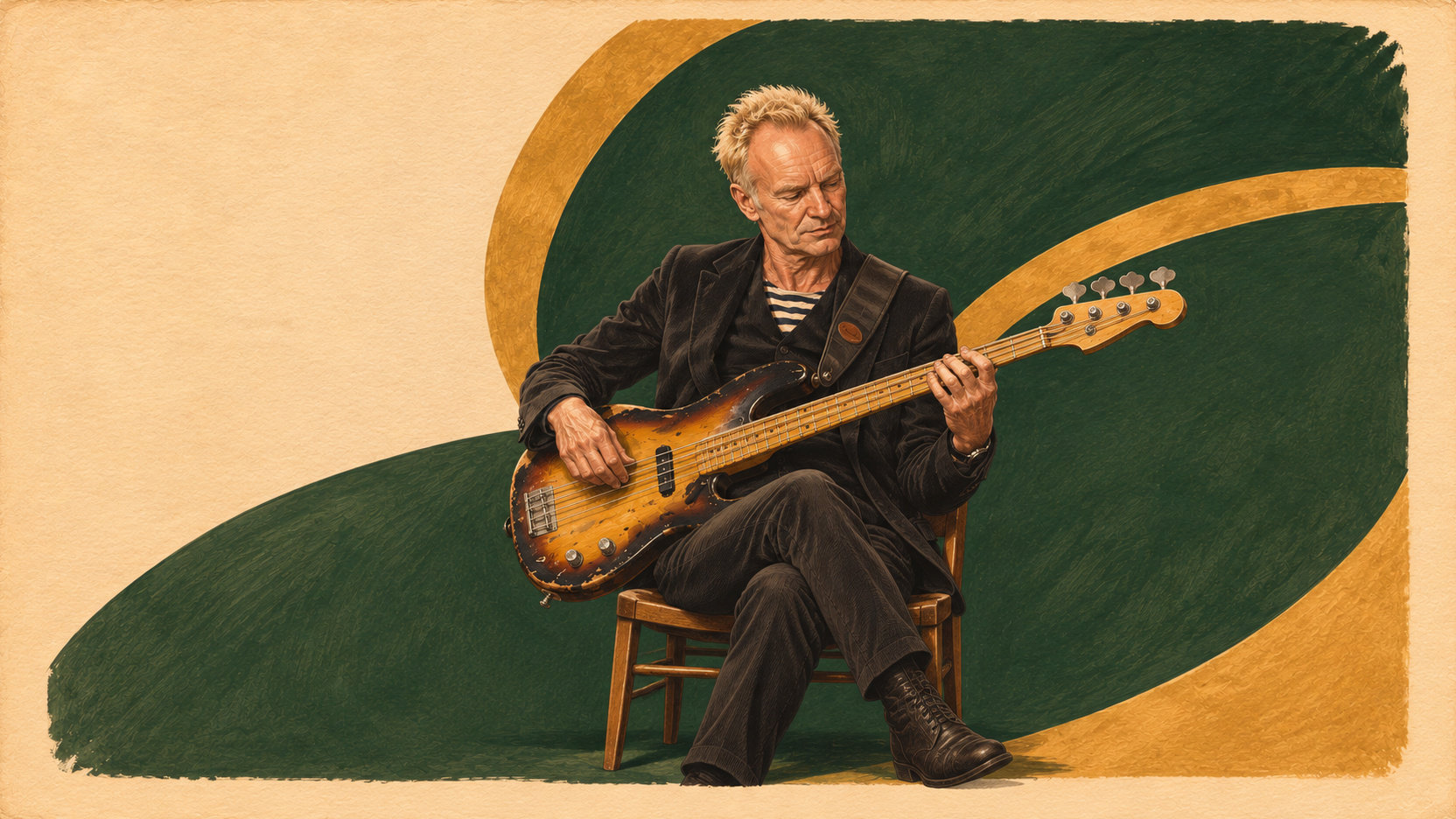
Original illustration of Sting in his documented April 2018 appearance, not a reconstruction of the 2016 57th & 9th recording sessions. Visual reference: Sting in April 2018 by Raph_PH, 21 April 2018, via Wikimedia Commons, CC BY 2.0. Pose, setting and lighting changed.
Original illustration of Sting in his documented April 2018 appearance, not a reconstruction of the 2016 57th & 9th recording sessions. Visual reference: Sting in April 2018 by Raph_PH, 21 April 2018, CC BY 2.0. Pose, setting and lighting changed. No endorsement implied.

Dominic Miller and Lyle Workman contributed guitar to the album, produced by Martin Kierszenbaum.
On November 11, 2016, Sting released 57th & 9th through A&M/Interscope. The title came from an everyday part of making the record: the Manhattan intersection he crossed on his way to the studios in Hell’s Kitchen.
The players behind the album
The official release announcement named Dominic Miller on guitar and Lyle Workman among the contributors, with Martin Kierszenbaum producing. It also identified drummers Vinnie Colaiuta and Josh Freese and contributions from the Last Bandoleros.
Those are album-level credits. They give us the musicians to follow, but they do not assign every guitar part or establish which instruments, amplifiers or pedals were used on individual songs.
Writing through the exchange
In comments from a December 2016 Deutschlandfunk interview reproduced on his official album page, Sting described arriving without prepared material and developing the music through exchanges with musicians he trusted. He credited their familiarity with his working methods and their willingness to improvise.
The release announcement described sessions completed in a few weeks. Read alongside Sting’s account, the emphasis is on musicians responding to one another as the songs take shape. It is a useful way into the record: listen for the conversation between the parts, rather than treating the guitar as a separate layer.
Start with the first single
“I Can’t Stop Thinking About You” introduced the album as its first single. In the same interview account, Sting explained that the song could be heard romantically while also describing the search for inspiration and the work of songwriting.
That makes the single a fitting starting point for revisiting 57th & 9th on its release anniversary: a song about searching for a song, made with collaborators whose responses helped build the music.
Sources
The wait is over. '57th & 9th' is available now — https://sting.com/blogs/news/the-wait-is-over-57th-9th-stings-first-rock-pop-album-in-over-a-decade-is-available-now
57th & 9th Album Now Available for Pre-Order; Tracklisting Revealed — https://sting.com/blogs/news/57th-9th-album-now-available-for-pre-order-tracklisting-revealed
57th & 9th — official album page, Soundbites — https://sting.com/products/57th-9th