November 23, 1970: George Harrison Releases “My Sweet Lord” in the US
The US single arrived on November 23, 1970. Listen past the chorus to Harrison’s slide melody and the four acoustic guitars underneath it.
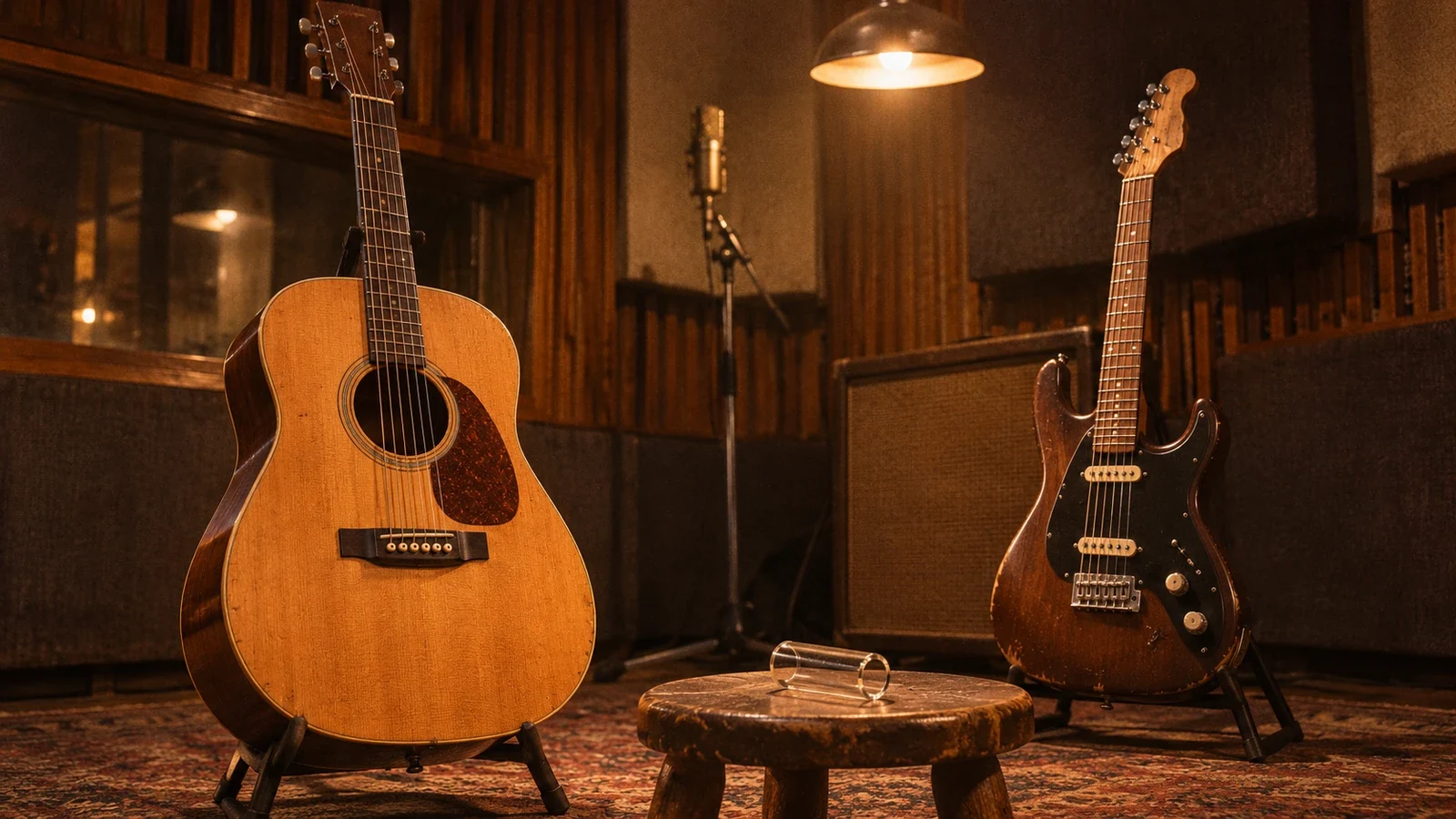
An original period-inspired studio illustration, not a photograph of the session or of Harrison’s instruments.
Listen to the first electric guitar phrase in “My Sweet Lord.” The acoustic strum keeps the song moving, but that little slide melody tells you who’s playing before George Harrison sings a word. On November 23, 1970, Apple Records released the single in the United States with “Isn’t It a Pity” on the other side. All Things Must Pass followed on November 27.
Four acoustic guitars and one melody you can hum
There’s a reason the opening feels full before it gets loud. In the Harrison archive’s session chronology, Abbey Road engineer Phil McDonald remembers four acoustic guitars playing together, with Badfinger alongside Harrison. He put a screen around Harrison’s acoustic setup to help isolate the microphone. It’s a small studio detail that tells you how much of the record’s sound depended on people playing together in the room.
The session notes also show that five attempts with guitars, harmonium and voice were left incomplete. The musicians went back to a full-band arrangement, and take 16 was marked as the best. That’s the documented tracking story; it doesn’t tell us which guitar Harrison used for the finished slide part.
What to listen for on the single
Put the record on again and follow the two guitar jobs separately. The acoustics keep a steady pulse. The slide glides into its notes, then leaves enough space for the next phrase to register. You can hum it back after one listen. That’s the trick worth borrowing: write a lead part you could sing, and let the rhythm guitars do the work underneath.
The official album notes identify the single as the introduction of Harrison’s signature slide sound. For the instruments he used across the Beatles and solo years, explore our George Harrison guitars and gear guide.
Lead artwork: an original period-inspired illustration, not a photograph of the recording or its equipment.