November 23, 1964: The Beatles Release “I Feel Fine” in the US
A bass note, guitar feedback and a Lennon riff made the opening seconds of the American single the hook.
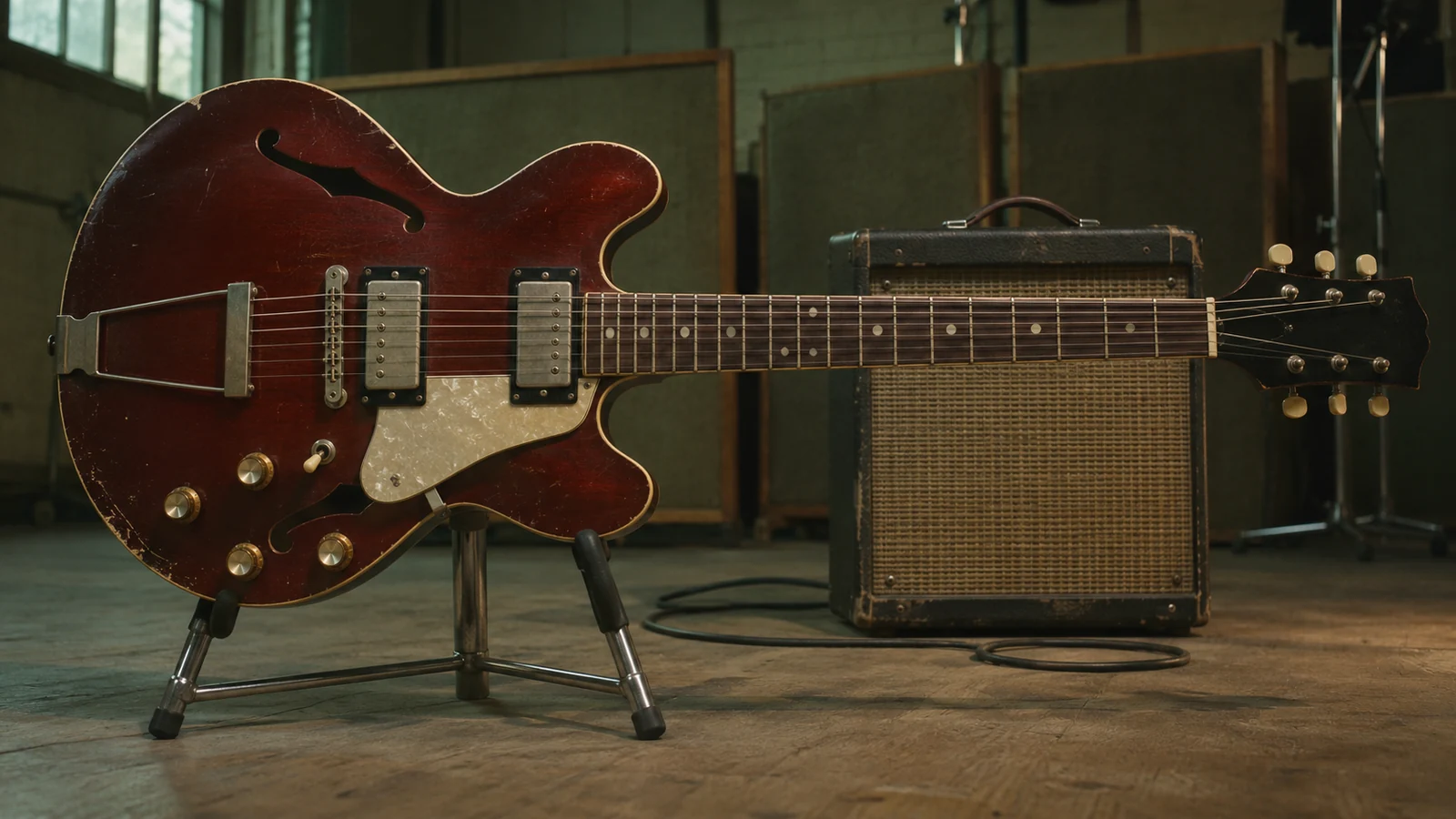
A period-inspired illustration of a guitar and amplifier, not the Beatles’ recording equipment.
Before the riff, there’s a hum. It swells into a bright, ragged buzz, and then John Lennon’s guitar line comes in. That first sound is guitar feedback, and it’s part of the hook. On November 23, 1964, American listeners could buy the Beatles single that put it right up front: “I Feel Fine.”
The US single came first
Capitol issued the seven-inch as Capitol 5327, with “She’s a Woman” on the flip. The British release followed on November 27, on Parlophone R5200. That four-day gap is why November 23 belongs specifically to the US release. The recording itself was already more than a month old: the Beatles had cut it at EMI Studios in London on October 18, with George Martin producing. Lennon wrote the song, which carries the Lennon–McCartney credit.
A bass note starts it. A guitar answers.
In the band’s official account, Lennon had Paul McCartney play a single bass note and used his guitar and amplifier to produce the feedback. The important distinction is between how a sound might first have been discovered and how it was used on the record. By the time it made the master, it was an intentional entrance.
Listen to how quickly the texture changes. The opening hangs on a sustained buzz; then the riff gives you short, distinct notes to follow. If you skip straight to the riff, you can still hear the tune, but you lose the little jolt that makes its arrival so satisfying. The feedback works because it gets out of the way at exactly the right moment.
You don’t need to call it the first use of feedback to hear what the Beatles got right. They made a sound guitarists usually try to stop into a reason to turn up the radio.
What’s your favorite record that opens with guitar feedback, and what makes that entrance work?
Sources
- The Beatles: “I Feel Fine” single credits and release chronology
- The Beatles: recording and feedback account
- The Beatles: “She’s a Woman”
Lead artwork: an original period-inspired illustration, not a photograph of the recording or its equipment.