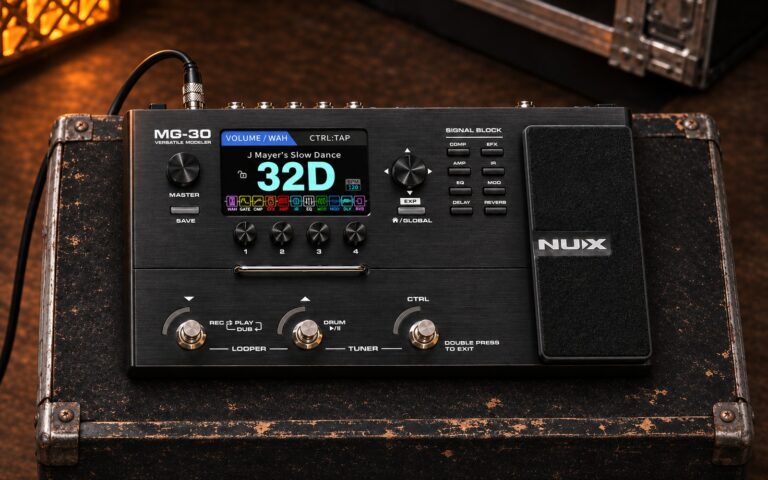
The Amp Modeler That Fits in Your Backpack: HeadRush MX5 Unpacked
The HeadRush MX5 packs 52 amp models, a 4-inch touch display, and a built-in expression pedal into 3.5 lbs. Is this compact modeler worth your money?
There’s a specific kind of guitarist who has been quietly transforming the gigging landscape over the past decade. They show up to soundcheck ten minutes late, dump a single backpack on the stage, plug one cable into the PA, and proceed to dial in tones that make the guy with two pedalboards and a full half-stack setup look mildly embarrassed. The HeadRush MX5 is the machine those guitarists reach for.
Launched in 2021, the MX5 is HeadRush’s answer to a very specific question: what happens when you strip the Pedalboard and Gigboard down to their essential processing core, bolt on a 4-inch touchscreen and a built-in expression pedal, and sell the whole thing for under $400? The answer, as it turns out, is a surprisingly capable floor unit that weighs 3.5 pounds and fits in most laptop bags without complaint. It is not the most powerful HeadRush ever made — the company’s flagship HeadRush Prime handles that title — but the MX5 makes a compelling case that most working guitarists don’t actually need the flagship.
From Eleven Rack to MX5: The Architecture Behind the Box
HeadRush’s technology lineage is worth understanding before you start comparing prices on the secondary market, because it tells you exactly what you’re buying at each tier. The brand launched in 2017 under inMusic Brands (the Akai, Alesis, and M-Audio parent) with the HeadRush Pedalboard — a large-format unit whose processing core was derived from Avid’s Eleven Rack, the professional studio/live modeler that Avid released in 2008 and discontinued in 2016. HeadRush licensed and substantially enhanced that engine, and it became the foundation for the Gigboard and, later, the MX5.
This is a different architecture from the ReValver-based engine that powers the Prime. When HeadRush launched the Prime in 2023, they moved to a new processing platform (ReValver, the amp modelling software originally developed by Peavey and now owned by inMusic). That switch brought the Prime’s Amp Cloner capture workflow, NAM integration, and TONE3000 cloud sharing — none of which are available on the MX5, and none of which will ever arrive via firmware update. The MX5’s most recent firmware is v2.7 (August 2024), and it represents the ceiling of what this platform can do. That is not a knock — it’s a useful fact for anyone deciding between a used MX5 at half price and a new MX5 at full retail, or between the MX5 and the Prime.
The practical upshot of the Eleven Rack heritage is that the MX5’s delays and reverbs are a genuine strength. Avid spent serious engineering effort on the time-based effects in the Eleven Rack, and those algorithms carry over intact. The weak link — as noted independently by Premier Guitar in their December 2021 review — is low- and mid-gain overdrive emulations, which “lack a little nuance and depth.” High-gain sounds are considerably more convincing. If your rig lives in clean-to-crunch territory with a lot of dynamic playing, budget some time for preset building. If you want crushing JCM800 and Mesa Dual Rectifier saturation, the MX5 delivers those with authority.
Specs at a Glance
The Model Library: What’s Actually In There
The 52 amplifier models cover the obvious bases and then some. Fender alone accounts for a substantial chunk: eight blackface-era variants (Deluxe Reverb normal and vibrato channels, Vibroverb, Champ, Princeton, Princeton Reverb, Super Reverb, Twin Reverb), plus four tweed models spanning the Bassman, Deluxe, Princeton, and a gain-modded Deluxe. Vox gets two AC30 Top Boost variants. Marshall is well-represented with the JTM45, five Plexi configurations (including Variac and EL84 mods), and five JCM800 versions. Mesa/Boogie covers the Mark IIc+ (clean and coupling-cap-mod variants) plus three Dual Rectifier channels. More eclectic entries include Bogner Ecstasy 101B across all three channels, Soldano SLO-100 in four configurations, Orange AD30HTC, ENGL Powerball II, a Roland Jazz Chorus 120 (head), and two Matchless DC30 and Gallien-Krueger 800RB entries for bassists.
The distortion/overdrive library covers the green Ibanez TS808 clone, ProCo Rat, EHX Big Muff, Fulltone OCD (two versions), Klon Centaur, Boss DS-1 and SD-1, Dunlop Fuzz Face and Octavio, MXR Distortion, Xotic RC Booster, DOD 250, and JHS Morning Glory. Modulation is a genuine strength: 22 options including chorus (Boss CE-1), flanger, vibrato, phaser (Phase 90, Small Stone, Mu-Tron Phasor II, Uni-Vibe), rotary, tremolo, Drop Tune (Digitech Drop), and an acoustic simulator. The 13 reverb/delay models include Tape Echo (Echoplex EP-3), BBD Delay (EHX Memory Man), spring reverb (Fender), shimmer, reverse delay, pitch delay, and the Eleven Reverb algorithm that carries genuine Avid pedigree.
The IR support is a significant feature at this price. The MX5 ships with 300 precision-captured impulse responses and accepts third-party IRs at 1024 or 2048 sample lengths via USB drag-and-drop. This means cab simulation is not locked to HeadRush’s library — any third-party IR pack you’ve bought for other platforms will drop straight in.
Famous Players: An Honest Account
HeadRush’s artist roster is a brand endorsement programme, not a unit-specific campaign. The official headrushfx.com artist page lists players who endorse the HeadRush brand — it does not document who specifically uses the MX5 versus the Pedalboard, Gigboard, or Prime. As of 2024, the most prominent visible endorsers are Perfecto de Castro (educator and solo artist) and Budda Foster (multi-instrumentalist). Earlier HeadRush promotional materials included Brian Robertson (Thin Lizzy, Motörhead) and Rex Brown (Pantera, Down) — both using the HeadRush Pedalboard, the original flagship, rather than the MX5 specifically.
That distinction matters. The HeadRush Pedalboard retailed for around $1,500 at launch; the MX5 is a $399 compact unit aimed at a different market. There is no verified primary source — manufacturer artist page, Equipboard entry with photo confirmation, Premier Guitar Rig Rundown, or magazine interview — placing a touring professional with arena-level gear requirements on a MX5 specifically. That is not an indictment of the unit; it reflects the market it serves. The MX5 is built for working musicians, cover-band veterans, home recorders, and practice-room commuters who need full-stack tone in a backpack, not for artists whose gear budgets run to five figures. On that axis, it is extremely well-specified.
Forum communities and YouTube channels have documented extensive MX5 use in the working-musician and gigging-cover-band space, but these are not primary-source endorsements and are not catalogued here as such. The honest position is that the MX5’s users are largely anonymous professionals doing anonymous gigs and anonymous sessions — and doing them efficiently.
Tone Recipes
Classic Rock Half-Stack (Straight to PA)
Load the 69 PLEXIGLAS 100W (Marshall Super Lead Plexi 100W model) into a 4×12 GREEN 25W cab (Marshall 1960A with Celestion Greenbacks), mic it with the DYN 57 (SM57) at 0° on-axis. Set amp Gain at 6.5, Bass 5, Mid 6, Treble 7, Presence 7. Add a GRAY COMP (Ross Compressor) before the amp with Sustain at 30% and Level matched. Drop a SPRING REVERB at 15% mix after the cab block. This is the sound Premier Guitar called “near perfect” in their MX5 review — the Plexi stack emulations are the unit’s acknowledged highlight. Roll your guitar’s volume pot to 6 for rhythm, push to 10 for solos.
JCM800 Crunch with Real Boost (4-Cable Method)
Using the MX5’s stereo FX loop, place the FX return block before the amp model in the signal chain. In 4CM configuration: guitar → MX5 input → (pre-amp FX) → FX send → your real amp’s front end → real amp’s FX send → MX5 FX return → (cab/post-amp FX in MX5) → your amp’s power amp/speaker OR straight to MX5 XLR direct. Load 82 LEAD 800 100W amp model with a GREEN JRC-OD (TS808 clone) before it at Drive 4, Tone 5, Level 8. Your real amp’s preamp and power stage add the remaining character. This workflow gives you the MX5’s time-based FX quality (reverb/delay after the power stage) while keeping your preferred amp’s preamp character.
High-Gain Metal Direct
99 PV51 II LEAD (Peavey 5150 II Lead channel) into a 4X12 GREEN 20W cab (Celestion G12-M), DYN 409 (Sennheiser MD409) mic. Amp: Gain 8, Bass 7, Mid 4, Treble 7, Presence 7. Add a GATE (Rocktron Hush model) before the amp with Threshold at -55 dB. Post-cab: DYN DELAY at 225ms, Feedback 15%, Mix 10% — just enough slapback to add size without washing out the attack. The 5150 II emulation is one of the MX5’s high-gain standouts; run the Presence high and let it breathe.
Modulation Showcase — Vox Clean with Shimmer
66 AC Hi BOOST (Vox AC30 Top Boost) into 2X12 AC BLUE (Celestion Alnico Blue cab), COND 87 (Neumann U87) mic at 3cm off-axis. Amp: Gain 4, Bass 5, Treble 6, Cut 4. Chain post-cab: VIBE PHASER (Uni-Vibe) at Rate 3, Depth 40%, Mix 30% — then SHIMMER reverb at Pitch +12 (octave above), Mix 20%, Decay 4s. The MX5’s modulation and time-based FX are the platform’s strongest suit, and the Avid-derived reverb algorithms handle the shimmer without smearing. This is bedroom-ambient-to-gigging-indie territory; assign Shimmer Mix to the expression pedal (0–35%) for live swells.
Studio DI with Hands-Free Parameter Editing
64 BLACK LUX VIB (Fender Deluxe Reverb Vibrato channel) with a 1X12 BLACK PANEL LUX cab (Jensen P12N). Connect the MX5 via USB to your DAW and select it as the audio interface — all clips recorded direct into the DAW without any additional sweetening. In Hands-Free Edit Mode, assign the expression pedal to the amp’s Gain parameter (2–7 range). This gives you a gain-sweep that works mid-song without bending over the unit: heel = clean Fender sparkle, toe = pushed Deluxe breakup. The feature is niche but effective for dynamic single-takes where you want the gain level to breathe with your playing intensity.
Comparisons
vs. Line 6 POD Go
The Line 6 POD Go is the MX5’s most direct rival in the sub-$500 category. Both include a built-in expression pedal, touchscreen/colour display, USB audio, and MIDI. The POD Go runs Line 6’s HX engine — a subset of the Helix processing platform — which gives it access to Line 6’s deep 300+ model library and arguably better clean-to-crunch dynamics. The MX5 counters with gapless preset switching (the POD Go has a brief gap on preset changes) and the third-party IR support that was more open at launch. For high-gain players the MX5’s Eleven Rack-derived engine holds up well; for players who want pristine clean headroom across a wide range of amp types, the POD Go’s HX engine has a slight edge. Street prices are comparable; check used markets, where both float around $250–300.
vs. HeadRush Prime
The HeadRush Prime is a different machine in almost every meaningful technical dimension. It runs ReValver (not Eleven Rack), offers Amp Cloner for capturing real amplifiers and pedals, integrates NAM (Neural Amp Modeler) and TONE3000, has 12 footswitches with OLED scribble strips, a 7″ touchscreen, and an Antares AutoTune vocal suite. It costs $1,299 — more than three times the MX5. If you’re in a working band that demands full setlist management, vocal processing, and the ability to clone your favourite amp, the Prime is the right tool. If you need direct, portable amp-modelled guitar tone for practice, recording, and mid-sized gigs, the MX5 does the job at a fraction of the price with a significantly lighter load-in.
vs. Boss ME-90
The Boss ME-90 takes a different philosophical approach: traditional knob-per-function hardware controls rather than a touchscreen. This makes the ME-90 faster to edit on stage without looking at a screen, and Boss’s AIRD amp modelling has earned consistent critical praise for organic dynamic response. The MX5 counters with the built-in expression pedal (the ME-90 requires an external), a more open IR import workflow, and USB audio interface functionality. At comparable street prices, the choice is tactile-vs-touchscreen: if you’re a knob-twiddler who finds touchscreens slippery mid-gig, the ME-90 suits you better. If you prefer the visual signal-chain building that HeadRush’s touchscreen enables, the MX5 wins.
vs. Boss GT-1000
The Boss GT-1000 is a premium floor unit with more footswitches, dedicated knobs, and Boss’s AIRD modelling at a higher processing budget. It’s heavier, physically larger, and substantially more expensive. The GT-1000 is the choice for players who want Boss reliability and a deeper hardware control surface; the MX5 is the choice for players who prioritise portability and the touchscreen workflow. On raw model count and IR flexibility, the MX5 punches above its weight class. On build durability and live stage footswitch real estate, the GT-1000 is the more robust tool.
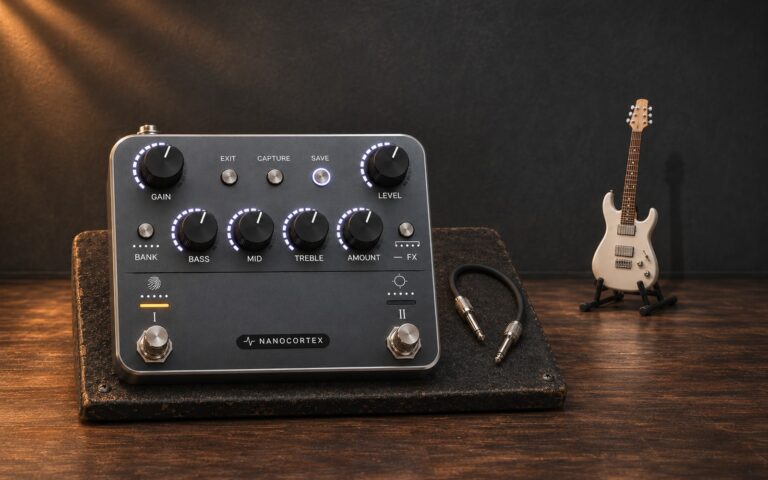
vs. Neural DSP Nano Cortex
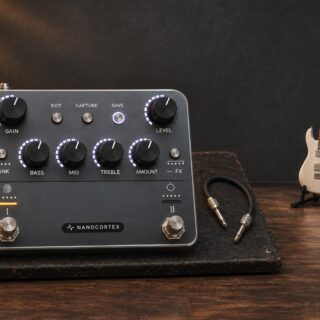
The Neural DSP Nano Cortex represents the capture-based modelling approach: it runs Neural DSP’s own modelling and NAM models rather than traditional circuit modelling. The Nano Cortex is smaller, has no expression pedal, and offers fewer raw FX options — it’s purpose-built for amp capture playback. The MX5 is the broader tool: more FX, full looper, global EQ, setlists, MIDI, USB audio. The Nano Cortex wins if your workflow is built around NAM captures and you want them in the smallest possible package; the MX5 wins if you need a complete all-in-one performance rig.
Buying Guide
New MX5 units have been steady around $399 USD (Sweetwater, Guitar Center) since launch, with occasional sale prices at $349. There is also an MX5 Special Edition Silver finish available at the same price. Used and open-box units appear regularly in the $220–280 range on Reverb and eBay; at that price the value proposition is exceptional. A used MX5 at $250 competes with cheap multi-effects at twice the price.
Before buying used, check the firmware version. The unit should be on v2.7 (August 2024). Earlier firmware versions had preset management quirks that were resolved in subsequent updates. Firmware updates are free and update via USB from the HeadRush website — this is a five-minute process and should be done immediately on any used purchase. There is no subscription fee, no cloud account required for basic operation, and no planned obsolescence in the normal use case.
The MX5 does not include a case. For touring or regular transit, a padded gigbag sized for a small pedalboard fits it comfortably alongside a cable roll and power supply. The unit runs on a 9V DC power supply (included); the power supply is physically small and light, which matters if the backpack strategy is your actual plan.
One purchasing note for live players: the MX5 has three footswitches. Players who are used to a dedicated switch per effect will find three limiting. The Scenes feature helps — assigning multiple FX changes to a single footswitch press compensates for the small switch count — but players who need to independently toggle six or eight individual effects per song in real time should look at the Prime or a dedicated MIDI controller feeding the MX5 via the MIDI input.
Ownership Notes
The most common forum complaint about the MX5 — and every HeadRush unit — is the Amp/Line output switch. The MX5’s two ¼” TRS outputs can be set to Amp level (for running into a guitar amp’s power amp or return input) or Line level (for going direct to a PA or audio interface). When set to Line level with cab and mic simulation active, the signal is correct. When set to Amp level into a real guitar speaker cabinet, HeadRush recommends disabling the cab and mic simulation blocks so the real cab handles that role. The “MX5 sounds terrible” complaints that appear in search results almost invariably trace back to running Line level into an amp input, or running cabinet simulation into a guitar cabinet — doubling the cab sim and producing a hollow, honky, phase-cancelled sound. The solution takes thirty seconds: check the output level setting and disable cab/mic blocks when going into a real speaker.
The 4-inch touchscreen works well in controlled environments. Under direct sunlight on an outdoor stage, visibility drops significantly — the screen is not rated for outdoor brightness levels. In those situations, the Hands-Free Edit Mode (using the expression pedal to edit parameters without touching the screen) partially mitigates the problem, but direct sunlight is a real operational limitation.
The USB audio interface is plug-and-play on Mac; Windows users require the HeadRush ASIO driver (v1.0.4, downloadable free from headrushfx.com). At 24-bit/96kHz, the audio quality is sufficient for serious recording — the Premier Guitar review clips were all captured direct into Logic Pro without additional sweetening, and they demonstrate clean, professional-grade output. Latency under the HeadRush driver in Windows is typically manageable at 256-sample buffer for monitoring, though as with all USB interfaces, your system’s USB controller quality affects the result.
Preset management via the HeadRush Cloud (headrush.cloud) allows sharing rigs between users and downloading community presets. This is a free service and a genuinely useful starting point — searching the community library for your target amp type typically yields a usable starting preset within a few minutes, which is faster than building from scratch.
Frequently Asked Questions
Does the MX5 use the same modelling engine as the HeadRush Prime?
No. The MX5 is based on a significantly enhanced version of the Avid Eleven Rack processing engine. The Prime uses ReValver (inMusic/Peavey). These are different codebases with different sonic characteristics, and presets are not cross-compatible between the two units. The Prime additionally supports Amp Cloner, NAM, and TONE3000 — none of which will come to the MX5 via firmware update.
Will the MX5 receive further firmware updates?
The most recent firmware is v2.7 (August 2024). HeadRush has not announced further updates for the MX5, and the platform’s architecture does not support the capture-based features of the Prime. V2.7 is a stable, fully-featured firmware and there is no deficiency in the current state — but buyers who want ongoing feature development should look at the Prime platform instead.
Can I use the MX5 with a real amplifier?
Yes, including via the 4-cable method using the stereo FX loop. When going into a real guitar amp (front input, power amp return, or effects loop return), switch the output to Amp level and disable the cabinet and mic simulation blocks. Running Line level with cab simulation into a guitar speaker cabinet produces a doubled cabinet character and sounds incorrect — this is a settings issue, not a hardware flaw.
How does the looper work?
The MX5 looper supports up to 5 minutes per loop and up to 20 minutes of total layered audio. Loops can be saved as WAV files and exported via USB Transfer Mode, and you can load WAV or MP3 backing tracks into the looper to play along. The looper is controlled via the footswitches in looper mode — a dedicated looper footswitch does not exist, so you exit preset-switching mode to access looping.
Can I load third-party impulse responses?
Yes. Connect via USB, enter Transfer Mode, and drag-and-drop IR files. The MX5 accepts IRs at 1024 and 2048 sample lengths. Third-party IR packs from Celestion, Ownhammer, Redwirez, and others are all compatible. The included 300 IRs are a solid starting point, but the open IR architecture is one of the unit’s genuine competitive advantages at this price.
Does the MX5 work as a standalone audio interface?
Yes. Connect via USB and select HeadRush MX5 as the audio input/output device in your DAW. Mac: plug-and-play. Windows: install the free HeadRush ASIO driver (v1.0.4). The interface operates at 24-bit/96kHz and supports direct monitoring. Reamping is also possible: send a pre-recorded DI track from your DAW through the MX5 and record the processed output back into the DAW.
Is the expression pedal useful or an afterthought?
It is genuinely useful. The expression pedal has adjustable tension, a toe switch that toggles between Expression Pedal A and B banks, Classic and Advanced assignment modes (Advanced allows up to four parameters per bank simultaneously), and the Hands-Free Edit Mode assigns it as a live parameter editor during performance. At $399, including a functional expression pedal is a significant value add — the Line 6 POD Go and Boss ME-90 require external expression pedals for equivalent functionality.
What FRFR cabinet pairs well with the MX5?
HeadRush makes their own FRFR range (the FRFR-108 and FRFR-112 MkII) specifically designed to pair with their modellers. The FRFR-112 MkII at 2,000 watts peak / 250 watts RMS is a popular live choice. Third-party options that work well include the Mission Engineering Gemini series, the Headrush FRFR range, and for budget-conscious players, the Headrush FRFR-108. Avoid vintage guitar speakers when running with cab simulation active — they are voiced to compensate for a real amp’s cabinet, and that voicing stacks awkwardly on top of the MX5’s cab simulation.
Image credits
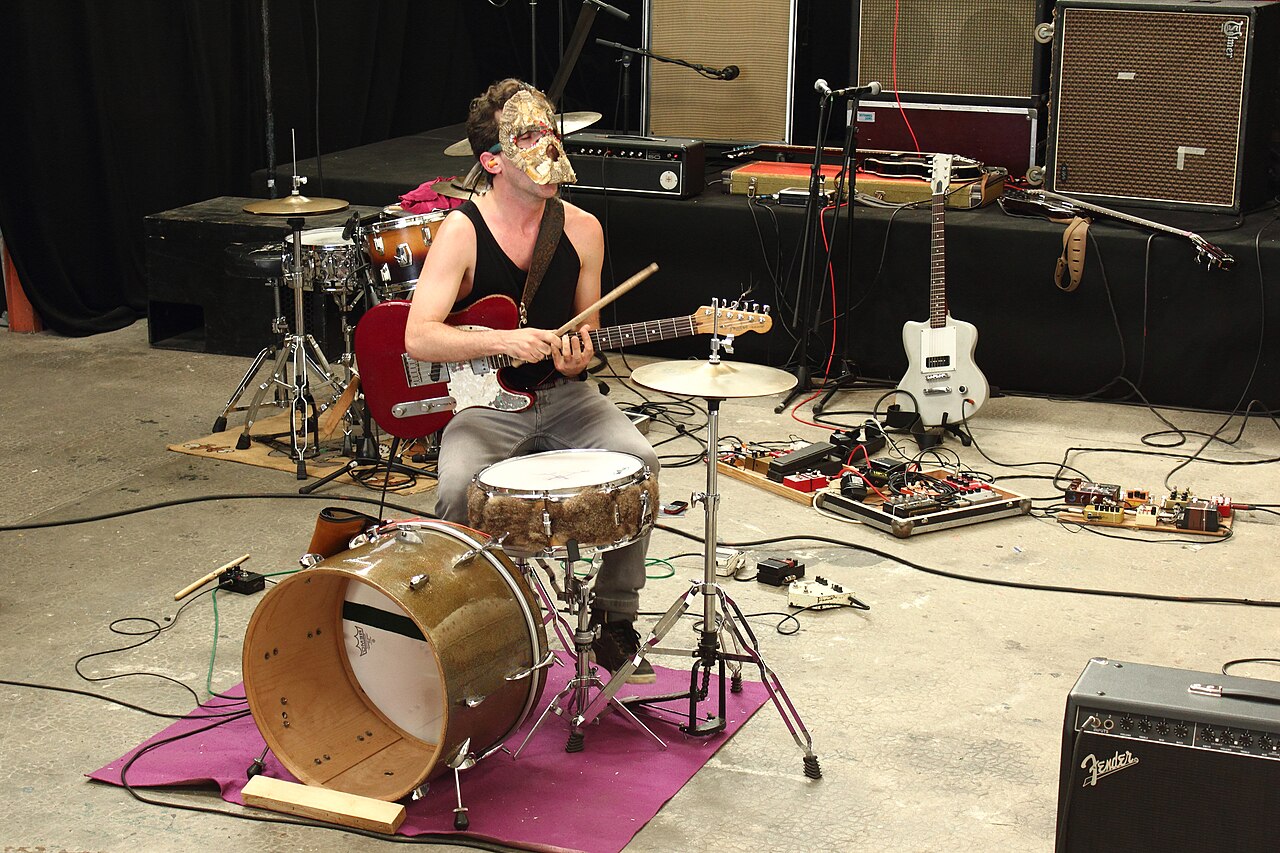
- A drummer and guitarist on a small stage: Xi WEG from Poitiers, France, Wikimedia Commons, CC BY 2.0.
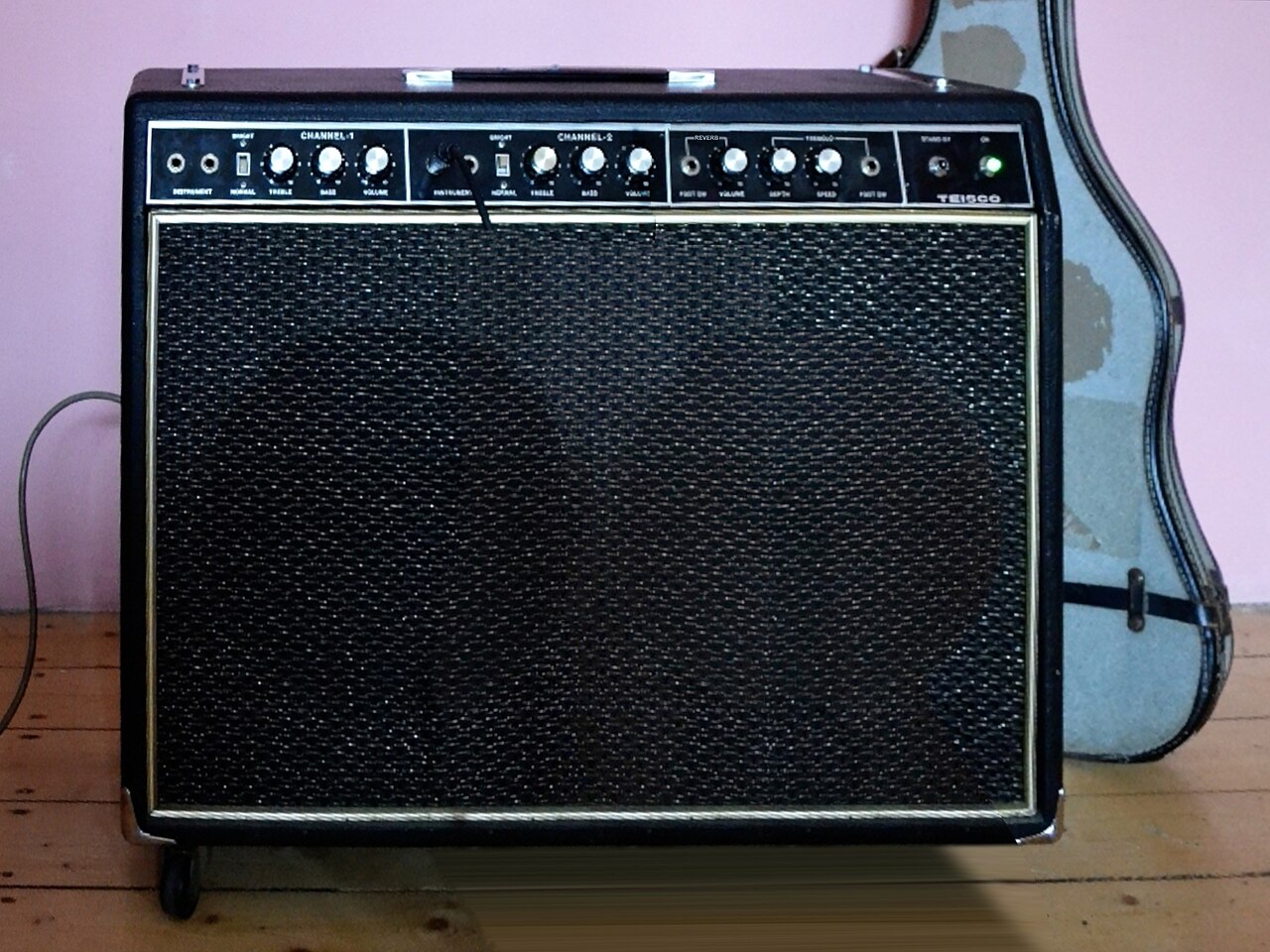
- A tube combo amp: Teisco & Framus.jpg: DeLerkim derivative work: User:Clusternote, Wikimedia Commons, CC BY-SA 3.0.
Latest News
Related
On This Day
Friday 13 November