Richard Lloyd Guitars & Gear: The Complete Guide to Television’s Other Guitarist’s 1961 Stratocaster, Vintage Fender Amps & Fluid Exactitude Rig
Richard Lloyd guitars & gear: Television's co-guitarist. 1961 Fender Stratocaster jumbo frets, vintage Fender amps, Cry Baby, Boss SD-1 — Marquee Moon fluid exactitude tone.
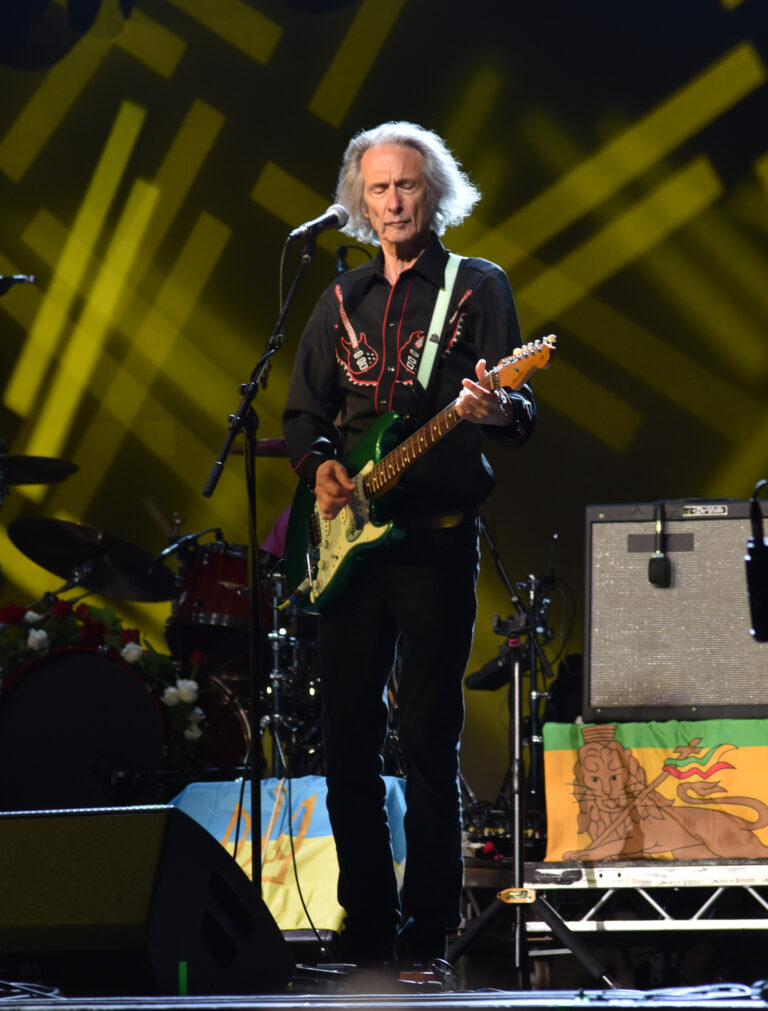
Richard Lloyd at Webster Hall, New York, November 2009. Photo: georgia (Flickr), CC BY 2.0.
Gear Timeline
Richard Lloyd got his first Stratocaster because a friend sold it to him cheap. He got his first Telecaster because he couldn’t afford a Stratocaster — “I scraped up enough money by selling my drum kit and went with the Telecaster because Stratocasters were $100 more.” The $100 more is one of the more consequential price differences in guitar history, because the pinstriped Telecaster that Lloyd bought instead of the Stratocaster was the guitar he played in the early Television period that established the band’s foundational guitar identity at CBGB. By the time of Marquee Moon (1977), he had acquired the 1961 Fender Stratocaster with jumbo frets that would remain his primary instrument through both the Marquee Moon and Adventure recordings and the subsequent Television reunion recordings. “Richard Lloyd still plays the same ’61 Stratocaster with jumbo frets that he played on Marquee Moon and Adventure,” as the 1993 Guitar Player interview documents. The same guitar, used for decades, from the recording of one of the most celebrated debut albums in rock history through the subsequent reunion career. Not because he couldn’t afford a replacement but because the specific 1961 Stratocaster was the right guitar, and the right guitar is the right guitar regardless of whether a newer or more expensive one is available. His first guitar amplifier was a Fender Stratocaster and an Ampeg B-15 turned up to 10, and he played almost exclusively feedback with the tremolo bar. The $100 more. The ’61 Strat. The feedback at the Ampeg B-15’s maximum. Richard Lloyd was playing with the guitar’s physical limits from the beginning, which is why his guitar playing sounds the way it does on Marquee Moon: not the mystical, searching quality of Tom Verlaine’s approach but the precise, fluid, clean exactitude of a guitarist who knows exactly what the guitar can do and does it with complete control.
Richard Lloyd was born in Pittsburgh, Pennsylvania, and grew up to become — alongside Tom Verlaine — one half of the most celebrated guitar duo in the New York punk tradition. Where Verlaine brought the mystical searching quality, the quivering vibrato, the over-100-bar improvised solo on the “Marquee Moon” title track, Lloyd brought the “fluid exactitude” that Premier Guitar identifies as his specific contribution: “Lloyd leads were often marked by fluid exactitude.” The two approaches in dialogue — Verlaine’s mysticism and Lloyd’s precision — produced the specific interweaving guitar texture of the Television recordings that has influenced every subsequent alternative rock band that encountered it. The same anti-Marshall, anti-effects position that Verlaine articulated was Lloyd’s own: he was the one who formalized it — “Fender guitars and blackface Supers. No effects. Conscious decision. Anti-Marshall and anti-hippy longhair!” — but the philosophy was shared, because the specific guitar sound that Marquee Moon achieved required both guitarists to be committed to the same approach. Two guitarists, the same Fender single-coil instruments, the same blackface Super Reverbs, no effects, producing two different but complementary voices from the same fundamental tonal foundation.
His early association with Jimi Hendrix — before Television, in the broader New York music scene — is the specific biographical connection that established the Stratocaster as his foundational instrument. “Two things [drew me to the Strat]. One, Jimi Hendrix. Two, it was the first electric guitar I owned because a friend of mine sold it to me cheap.” The Hendrix influence is visible in the specific feedback-and-tremolo approach of the earliest documented playing — “I played almost exclusively feedback with the tremolo bar” — and in the specific commitment to the Stratocaster as the primary instrument that all subsequent guitars in Lloyd’s arsenal have been Stratocaster-adjacent or Stratocaster-complementary. The Stratocaster’s specific squeeze, as Lloyd describes it, is the physical quality that distinguishes it from the Gibson approach: “I like its radius and it has a different ‘squeeze’ than a Gibson… or anything else, for that matter.”
The Marquee Moon album originally sold “about 23 copies,” as the Vintage Guitar magazine interview notes with the specific wry understatement of the music writer recalling a commercially disappointing but critically transformative release. The 23 copies are the first generation of people who heard Marquee Moon and formed bands; those bands reached the second generation; and the second generation became Sonic Youth, R.E.M., U2, the Pixies, Radiohead — the bands that made the specific Television guitar approach commercially and culturally influential in ways that the 23 original copies could not have achieved directly. “Although it originally sold about 23 copies, in a scenario reminiscent of the Velvet Underground — a band Television took cues from — most everyone who bought it formed a band.” The 23 copies. The pinstriped Telecaster that was $100 less than the Stratocaster. The 1961 Stratocaster with jumbo frets that recorded the best album that 23 people initially bought. Everything that followed.
His continuing solo career — the solo albums, the collaboration with Robert Quine on Matthew Sweet’s Girlfriend, the recent work with the Countdown album — documents the ongoing development of the guitar approach that Television established, applied to the various solo and collaborative contexts that Lloyd has pursued since Television’s 1978 dissolution. The most recent documented rig — Supro Black Holiday, Vintage Guitars Strat-style, and Epiphone Casino through a Vox AC30 and Supro Black Magick — is as eclectic and as practically minded as the original Television approach: whatever sounds right, through clean-headroom amplification, with the specific Fender single-coil character as the foundational reference.
Background: Pittsburgh, the Feedback Experiments, and the Marquee Moon Guitar Duo
The Pittsburgh origin — the specific steel city that also produced other significant American rock and punk figures — placed Lloyd in the Midwest before the New York scene that defined his public reputation. The move to New York, and the early association with Jimi Hendrix’s circle before the Television formation, established the specific musical context from which his approach developed: the Hendrix feedback experiments, the specific physical relationship with the Stratocaster’s tremolo and its potential for sustained, controlled feedback, the understanding of the guitar as an instrument whose acoustic physics could be used as a compositional tool rather than as a practical challenge to be minimized. Playing almost exclusively feedback with the tremolo bar is not the beginner’s approach to the guitar; it is the approach of someone who has immediately identified the guitar’s most unconventional physical capability and committed to exploring it fully.
The Television formation and the CBGB context placed this specific experimental approach in the context of a band whose other guitarist — Tom Verlaine — was approaching the guitar from an entirely different set of inspirations (John Coltrane, the Grateful Dead, French Symbolist poetry) but arriving at the same anti-consensus aesthetic position. The two guitarists, arriving at the Fender-and-blackface-Supers position from different starting points — Lloyd from Hendrix and the Stratocaster, Verlaine from Coltrane and the Jazzmaster — produced a combined guitar aesthetic that was more complete and more internally consistent than either approach alone. The specific Television guitar sound is the specific product of two specific guitarists whose different approaches happened to produce a coherent and complementary combined voice when placed in the same musical context with the same tonal philosophy.
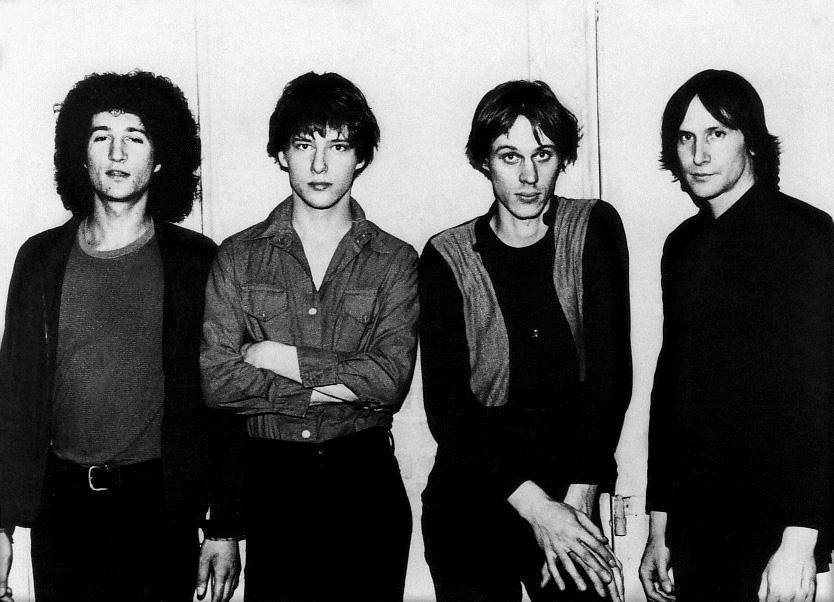
Lloyd’s documented connection to the early Television period’s financial constraints — the pinstriped Telecaster bought because it was $100 cheaper than the Stratocaster, the early rehearsals where neither guitarist had amplifiers and a patron bought them “a couple of Fenders” — is part of the specific economic history of the band that produced Marquee Moon. “Neither of us had amps at the time, just electric guitars, so he bought us a couple of Fenders and let us rehearse in his loft.” The Television guitar approach — the anti-Marshall, anti-expensive-Les Paul position that produced the Jazzmaster/Stratocaster through blackface Supers aesthetic — was partly a philosophical position and partly the practical consequence of two guitarists who didn’t have the money for $3,000 Les Pauls and Marshall stacks. The philosophy and the economy aligned perfectly, which is one reason the position was so coherent and so sustainable.
His collaboration with Robert Quine on Matthew Sweet’s Girlfriend (1991) is the most commercially significant external collaboration in Lloyd’s post-Television career. Robert Quine — the Voidoids guitarist whose own approach to the electric guitar was deeply indebted to the Television tradition — and Lloyd together produced the guitar work on an album that was one of the most acclaimed alternative rock records of the early 1990s. The collaboration documents both the breadth of Lloyd’s professional connections within the New York alternative scene and the specific quality of his guitar playing in a session context: the fluid exactitude that made him Television’s more traditionally accomplished guitarist, applied to the specific pop-rock songs of Matthew Sweet’s songwriting, producing some of the most celebrated guitar work on any alternative rock album of the decade.
The Rig: Richard Lloyd’s Guitars, Amps, and Effects
Guitars
Richard Lloyd’s primary instrument — the guitar he played on Marquee Moon, on Adventure, and on the subsequent Television reunion albums and tours — is a 1961 Fender Stratocaster fitted with jumbo frets. “Richard Lloyd still plays the same ’61 Stratocaster with jumbo frets that he played on Marquee Moon and Adventure,” as the 1993 Guitar Player interview confirms. The 1961 Fender Stratocaster is a pre-CBS instrument from the last year of Leo Fender’s ownership of the Fender company — a transitional instrument that maintains the specific construction qualities of the classic Fender era (slab rosewood fingerboard, clay dot inlays, the specific pickup wind and magnet specifications of the early 1960s) before the CBS acquisition in 1965 changed the company’s production approach. The jumbo fret installation — larger fret wire than the factory specification — is a modification that changes both the playing feel and the tonal character: jumbo frets provide more string-to-fret contact surface, enabling more precise intonation and providing a slightly different tonal character from smaller vintage fret wire. The 1961 Strat’s three single-coil pickups, the alder body, and the maple neck produce the specific Stratocaster warmth, clarity, and presence that Lloyd’s description captures: “I like its radius and it has a different ‘squeeze’ than a Gibson… or anything else, for that matter.”
Lloyd’s primary guitar in the early Television period — before the 1961 Stratocaster — was a pinstriped Fender Telecaster bought because he couldn’t afford the Stratocaster: “I scraped up enough money by selling my drum kit and went with the Telecaster because Stratocasters were $100 more. I bought the Telecaster with a rosewood ‘board.” The pinstriped Telecaster’s visual distinctiveness — the specific custom finish that gives it its name — is the immediately recognizable visual identity of the early Television period. The Telecaster’s two-pickup, three-saddle bridge configuration produces a different tonal character from the three-pickup Stratocaster: tighter in the bass, more cutting in the high end, with the specific “Telecaster twang” that distinguishes it from the Stratocaster’s more vocal character. Lloyd’s description of the pinstriped Tele as “an amazing guitar” confirms that the economic compromise produced a musically excellent result.
For the Television reunion tour supporting the 1992 self-titled album, Lloyd “takes a ’62 reissue Strat and Tele on the road” — using period-correct reissues rather than risking the irreplaceable 1961 original in the specific challenges of touring life. The ’62 Strat reissue provides essentially the same tonal character as the original 1961 in a less irreplaceable format; the Telecaster adds the specific Tele character for the songs that benefit from it. This is the pragmatic touring guitarist’s approach to vintage instrument management: use the original in contexts where its irreplaceability can be properly managed, use the road-appropriate versions when the touring environment’s specific risks apply.
For the Countdown solo album, Lloyd’s guitar arsenal was the Supro Black Holiday (a semi-hollow Supro with the specific warm, overdriven character of the American tube amp company’s guitar line), the Vintage Guitars V6MR Strat-style instrument (a modern Stratocaster-style guitar with the specific tonal character of the vintage-specification approach), and the Epiphone Casino (the fully hollow archtop associated with the Beatles’ mid-period recordings). The Supro’s semi-hollow warmth, the Strat-style’s single-coil clarity, and the Casino’s fully hollow acoustic character provide three distinct tonal approaches within the fundamental single-coil, clean-amplification philosophy that the Television years established.
On the new album’s “Rhyme,” he played a rare black f-hole Gretsch. The Gretsch hollow-body archtop adds the specific warm, resonant character of the hollow-body construction and the Gretsch FilterTron pickup voice to Lloyd’s tonal palette. The “rare” characterization — used in the Guitar Player 1993 interview — reflects both the guitar’s specific vintage status and the generally uncommon nature of finding a black-finished Gretsch f-hole model in good condition.
Amps
The blackface Fender Super Reverbs are documented in photographs showing both Lloyd and Verlaine “plugged into blackface Fender Super Reverb amplifiers” in the early Television period. The Super Reverb’s four 10-inch speakers and clean 6L6-powered American character provided the foundational amplification of the Television sound — the same amplification that Verlaine used and that the “Fender guitars and blackface Supers. No effects. Conscious decision” formulation specifically names. Lloyd’s Super Reverbs are the bass note of the anti-Marshall position: the American clean, the four 10-inch speakers’ fuller presence, the specific blackface-era Fender warm but clean character that suited the Stratocaster’s single-coil output.
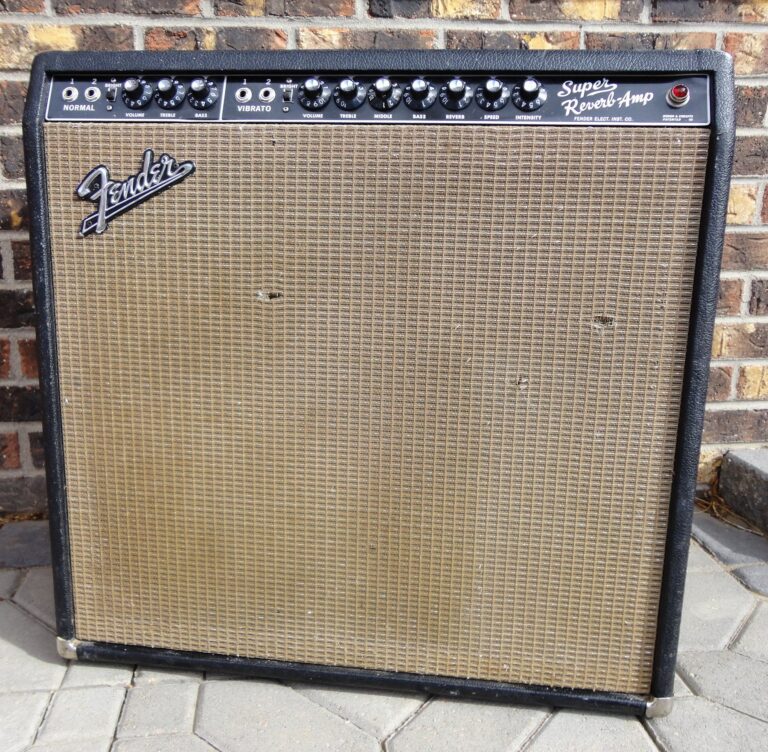
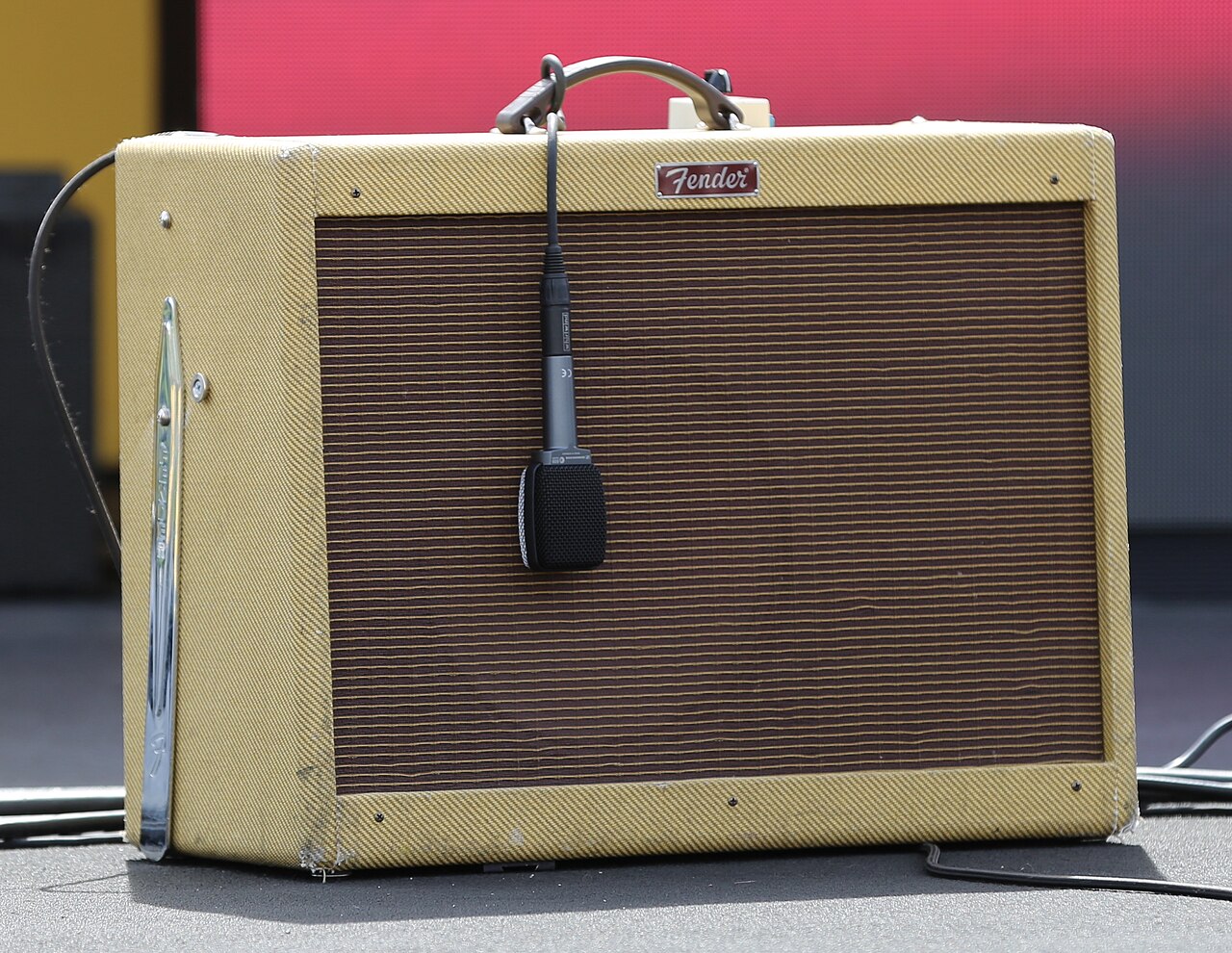
Lloyd tends a stable of vintage Fender amps, including a 1950 Deluxe, a 1952 Pro, a 1955 Tremolux, and a 1956 Princeton. He also uses a 1959 Ampeg Jet, a Vibraverb reissue, and a 1965 Supro. This vintage amp collection — spanning the full decade of the classic American small amplifier tradition from 1950 through 1965 — represents the comprehensive approach of a guitarist who has explored the specific character of each vintage American amplifier model and maintains all of them as available tonal resources. The ’50 Deluxe’s warm, 12-watt two-6V6 character; the ’52 Pro’s slightly larger 18-watt presence; the ’55 Tremolux’s tremolo circuit; the ’56 Princeton’s small, warm single-6V6 character; the ’59 Ampeg Jet’s specific tweed-era warmth; the Supro’s tube-amp grit. Each offers a specific point on the spectrum from clean warmth to pushed saturation.
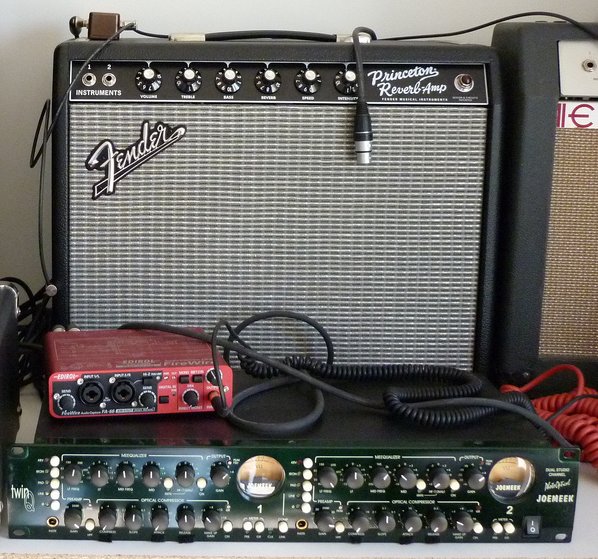
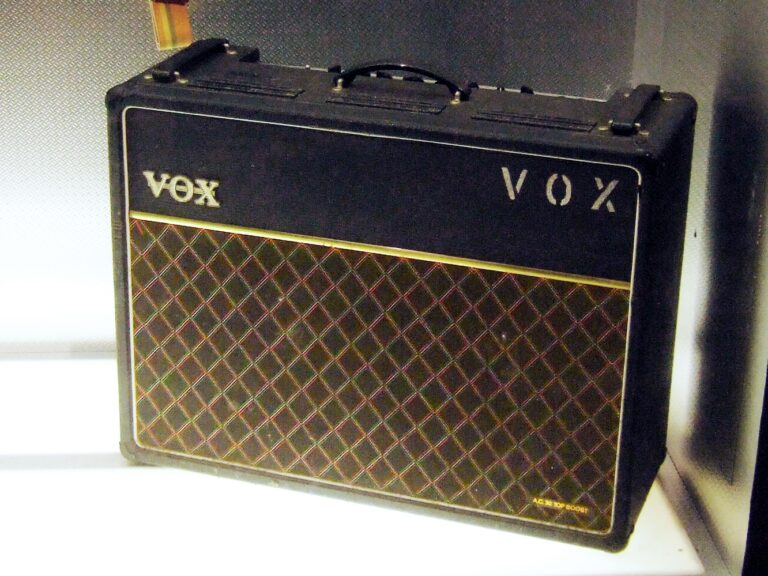
“Mostly, I’ve been playing through a Vox AC-30 live and a blackface Fender Deluxe,” Lloyd told the Vintage Guitar interview. The simplification from the expansive vintage Fender collection to the two-amplifier combination — Vox AC30 for the EL84-powered British character, blackface Fender Deluxe for the smaller-format American warmth — is the mature guitarist’s conclusion: two complementary amplifiers that cover the full range of the tonal requirements more efficiently than maintaining the full vintage collection.
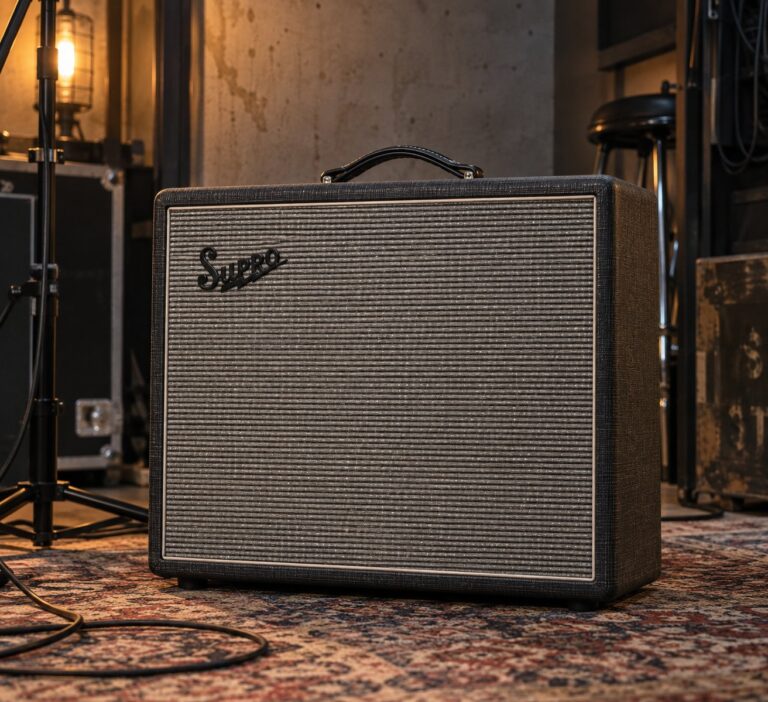
The Supro Black Magick — a modern Supro reissue amplifier with the specific warm, tube-amp character of the vintage Supro tradition — paired with the Vox AC30 for the Countdown album sessions. The Black Magick’s specific character: lower-power tube amp warmth with the natural saturation of a small tube amp working near its limits, producing the specific pushed-tube quality that the vintage Supro amps are celebrated for.
Effects
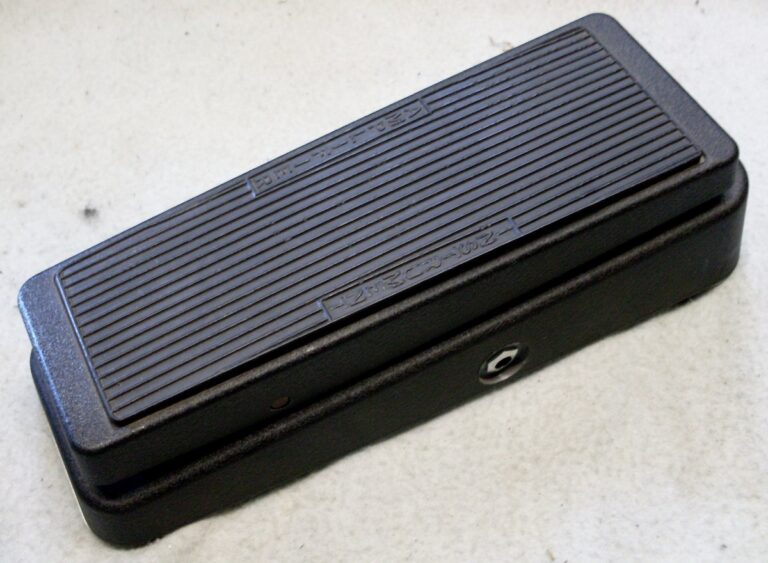
Lloyd runs his Strat into a Cry Baby wah-wah as the first element of his signal chain. The Cry Baby wah — the standard Dunlop wah documented throughout this series — provides the expressive vocal filter quality that the Hendrix influence established as a fundamental element of the Stratocaster vocabulary. Its position first in the chain — before the overdrive — means the wah filters the pure guitar signal before the overdrive processes it, producing the specific tonal character of wah filtered signal driving an overdrive pedal rather than overdrive-colored signal filtered by the wah. The position difference is audible and deliberate.
The Boss SD-1 Super OverDrive, with the tone control at 3 o’clock (approximately 3/4 of the way up — a bright, cutting setting) and the overdrive at 1 o’clock (approximately 1/3 of the way up — a mild overdrive), is the specific mid-chain effect that adds warmth and harmonic complexity to the wah-filtered Stratocaster signal. These specific settings are documented in the 1993 Guitar Player interview, making them among the more precisely specified effects settings in this series. Tone at 3 o’clock means the SD-1’s tone is set bright — near the top of the spectrum — providing the cutting, present character appropriate for the Stratocaster’s single-coil output in the Television context. Overdrive at 1 o’clock is a moderate, organic overdrive setting — not heavy distortion but the specific warmth of a lightly driven op-amp clipping stage. The combination: bright, slightly overdriven, harmonically warm.

The Korg SDD-2000 digital delay set at 400 milliseconds completes the 1992 documented signal chain. Four hundred milliseconds is just under the half-second — a specific delay time that provides rhythmic echoes in quarter-note territory at moderate tempos. The SDD-2000’s specific digital character — cleaner than tape echo, with the specific crystalline repeat quality of early digital delay — adds the spatial dimension and rhythmic complexity of delay to the wah-and-overdrive processed signal. The 400ms setting at moderate tempo produces the specific rhythmic shadow effect that is audible in Television’s more atmospheric passages.
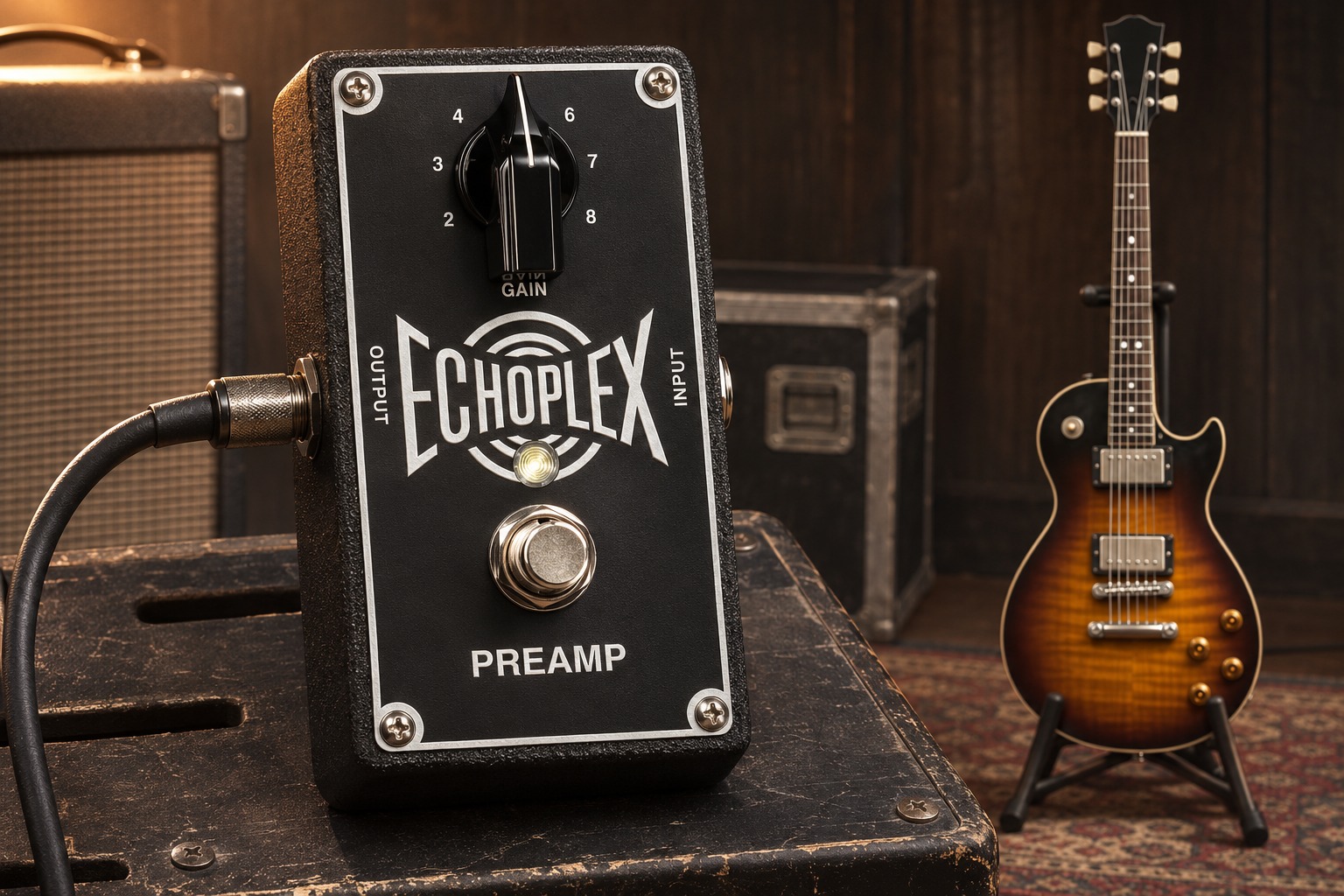
“Lately, I’m using a Vertex T Drive. I have an Echoplex preamp, which adds up to 8 dB to the signal and softens it a bit.” The Echoplex preamp — the specific unit from the Echoplex tape echo that provides the preamp stage without the echo itself — adds gain and a specific harmonic warmth to the signal. “Adds up to 8 dB to the signal and softens it a bit” is the specific description of a preamp that buffers and gently amplifies the guitar signal, providing the specific soft compression and warmth of a quality preamp stage before the subsequent effects and amplifier stages.
“And some kind of delay. On one tour I took an actual Echoplex around the world and, surprisingly, it kept up.” He also used a DigiTech FreqOut, which, Lloyd says, “is essentially a feedback machine. I used that specifically on the strings.” The DigiTech FreqOut is a pedal that simulates the natural guitar feedback effect without requiring proximity to the amplifier — it detects the guitar’s pitch and generates a harmonic frequency that sustains and feeds back as if the guitar were standing in front of a cranked amplifier. The FreqOut’s application in Lloyd’s rig connects directly to the feedback-and-tremolo experiments of the earliest documented playing: “I played almost exclusively feedback with the tremolo bar.” The FreqOut makes controlled feedback available in any context, regardless of stage volume or amplifier positioning. The experimental approach from the beginning is still present, now made practically manageable by a dedicated pedal.
The specific Television recording approach — both guitarists through the same amplifier family, with the same fundamental tonal philosophy, producing two complementary but distinct voices — is the most complete available model for how a dual guitar band can produce a combined sound greater than the sum of its parts. The model is not about one guitarist playing rhythm and the other playing lead; it is about two guitarists improvising simultaneously within the same tonal space, each responsive to the other, each providing what the other doesn’t. This is the jazz model applied to the rock context: the bandstand conversation rather than the arranged performance. Marquee Moon is the document of that conversation conducted at the specific level of musical intelligence that Verlaine and Lloyd brought to it. The 1961 Stratocaster with jumbo frets was the instrument Lloyd brought to the conversation; the specific settings of the Boss SD-1 were his specific tonal contribution; the fluid exactitude was his specific musical contribution. All three — instrument, settings, playing — are inseparable from the specific music that resulted.
The DigiTech FreqOut that Lloyd now uses — “essentially a feedback machine” — is the specific modern technology that makes his earliest guitar approach practically manageable. The young musician who played “almost exclusively feedback with the tremolo bar” through an Ampeg B-15 turned to 10 was exploring the guitar’s physical limits as its own compositional resource. The FreqOut is the instrument that makes those same physical limits available without the specific conditions (extreme volume, proximity to the amplifier) that the original feedback experiments required. The exploration that began with the Ampeg B-15 at maximum has continued through the Television recordings, through the solo career, through the Matthew Sweet collaboration, through the Countdown album. The guitar’s physical limits are still the compositional resource. The FreqOut is just the instrument that makes them available on any stage, at any volume, in any context. The approach is the same. The guitar is the same 1961 Stratocaster. The fluid exactitude is the same.
Playing Style & Tone Philosophy
Richard Lloyd plays guitar with the specific combination of technical precision and emotional commitment that the “fluid exactitude” description captures: not the mystical searching of Verlaine’s approach but the controlled, precise execution of musical ideas that are themselves emotionally direct. His description of playing in fourths while practicing on a rooftop in Manhattan — “I swear that little spiritual creatures used to come around to listen” — suggests the specific quality of musical commitment that produced the Television guitar work: the precise technical execution of intervals that are, in their specific combination, genuinely moving to the attentive ear.
The Hendrix influence — established before Television, in the early feedback experiments — is visible in the specific physical approach to the guitar. Where Verlaine’s vibrato is slow, trembling, and searching, Lloyd’s playing has the specific confident exactitude of someone who has already committed to the note and is delivering it with complete control. The two approaches in dialogue produce the Television guitar sound: Verlaine provides the question; Lloyd provides the answer; together they produce a conversation that is musically complete.
The “Fender guitars and blackface Supers. No effects. Conscious decision” position, which Lloyd articulated as the Television philosophy, reflects a specific understanding of what the guitar’s role should be: the individual voice, amplified faithfully, without additional processing. Lloyd’s effects use — the Cry Baby wah, the Boss SD-1, the Korg delay — is minimally more than Verlaine’s pure no-effects approach, but the positioning reflects the same philosophy: the wah, the overdrive, and the delay are each serving a specific purpose rather than providing a general tonal texture. The tone at 3 o’clock and the overdrive at 1 o’clock are not random settings; they are the specific settings that produced the specific tonal character Lloyd wanted from the Boss SD-1 in the specific context of the 1992 Television reunion sessions.
How to Sound Like Richard Lloyd
The Richard Lloyd Television tone requires: a Fender Stratocaster (1961 or equivalent vintage pre-CBS era, or quality Strat-style with single-coil pickups); a Fender blackface Super Reverb or equivalent American clean combo amplification; optional Cry Baby wah-wah as first effect; optional Boss SD-1 Super OverDrive at low overdrive and high tone settings; optional digital delay at around 400 milliseconds; and the “fluid exactitude” playing approach that serves Television’s interlocking guitar parts with precision rather than mysticism. The mysticism is Verlaine’s contribution. Lloyd provides the precision that makes the mysticism land.
| Control | Setting (0–10) | Notes |
|---|---|---|
| Fender Blackface Super Reverb (Primary) | Volume: 6; Treble: 7; Bass: 5; Mid: 6; Reverb: 2 | The Television amplification: American clean, four 10-inch speakers, minimal reverb. The blackface Super Reverb’s character — warm, present, clean but willing to push slightly at volume 6 — suits the Stratocaster’s single-coil output perfectly. Like Verlaine’s side of the stage, no distortion from the amplifier. The overdrive pedal handles the additional gain. |
| Cry Baby Wah (First in Chain) | Medium sweep; selective use | First pedal in the chain — before the overdrive. The wah filters the clean guitar signal, then the overdrive processes the filtered signal. This order produces a different character from wah placed after overdrive: cleaner wah sweeps, more defined filter effect. Use selectively for specific expressive passages. |
| Boss SD-1 Super OverDrive | Tone: 7 (3 o’clock); Overdrive: 3 (1 o’clock); Level: 7 | Documented settings from 1993 Guitar Player interview. Tone at 3 o’clock (approximately 7 on a 0-10 scale) — bright, cutting, preserving the Strat single-coil’s upper-end presence. Overdrive at 1 o’clock (approximately 3 on a 0-10 scale) — mild, organic, warm. Level compensates for output. These are the specific settings Lloyd used for the 1992 Television reunion recordings. |
| Korg SDD-2000 / Digital Delay (400ms) | Delay: 400ms; Feedback: 2; Mix: 25% | 400 milliseconds — just under half-second delay. Low feedback (2 repeats maximum). Mix at 25% so the dry signal dominates. The specific 400ms creates rhythmic shadow effects in the quarter-note territory of moderate tempos. The digital delay’s clean repeat character preserves the Stratocaster’s tonal character in the echo. |
| DigiTech FreqOut (Modern — Controlled Feedback) | Natural mode; gain to suit stage volume | For the controlled feedback that connects to the earliest feedback-and-tremolo experiments. The FreqOut generates sustained harmonic feedback from any playing position, regardless of amp proximity. In “natural” mode it generates the specific harmonic feedback that a Stratocaster produces when facing a cranked amplifier, without requiring that specific physical setup. Use for sustained notes that need the singing, infinite quality of controlled feedback. |
| Fluid Exactitude (Technique Philosophy) | Precise; in service of the interlock; exact | Lloyd’s specific contribution to the Television guitar interplay: the precise, fluid execution of the parts that complement Verlaine’s more searching, improvisational approach. When Verlaine searches, Lloyd provides the reference point — the precisely executed interlocking part that gives the improvisation its structural context. In a duo guitar context, if both players search simultaneously, the music loses its center. One provides the center; one searches from it. Lloyd is the center. |
Influence & Legacy
Richard Lloyd’s influence on guitar playing is the influence of the precise, technically accomplished half of the most celebrated guitar duo in the New York punk tradition — the guitarist whose “fluid exactitude” provided the structural complement to Verlaine’s visionary searching, making the Television guitar sound something more than either player could produce alone. Without Lloyd’s precision, Verlaine’s searching might have been merely abstract; without Verlaine’s searching, Lloyd’s precision might have been merely technical. Together they produced Marquee Moon, and Marquee Moon produced the alternative rock guitar tradition’s most sophisticated strand.
The Matthew Sweet Girlfriend collaboration — with Robert Quine — is the most documented external demonstration of what Lloyd’s guitar playing brings to a context beyond Television: the specific harmonic sophistication, the fluid exactly-placed note, the Stratocaster-through-clean-amp character applied to pop songwriting contexts that benefit from the quality of guitar work that Television had demonstrated was possible in a rock context. The album is celebrated as one of the best alternative rock records of the early 1990s in large part because of the guitar work; the guitar work is in significant part Lloyd’s.
For the Tom Verlaine parallel — the other half of the Television guitar duo whose approach this article is in conversation with throughout — see Tom Verlaine’s entry, where the anti-Marshall position and the Jazzmaster choice are documented in full. The Television collective approach connects to the broader New York and CBGB scene documented through the Patti Smith and related entries in the broader series context. And the Stratocaster-through-clean-amp approach that defines Lloyd’s guitar identity connects to the specific Fender single-coil tradition documented throughout this series — from Steve Cropper’s Esquire-and-Harvard approach, through George Thorogood’s modified Dual Showman, to Lloyd’s blackface Super Reverbs — all different expressions of the same fundamental philosophy: Fender single-coil, American amplification, the individual voice amplified faithfully.
He sold his drum kit to buy the Telecaster because the Stratocaster was $100 more. He then got the 1961 Stratocaster with jumbo frets and played Marquee Moon on it. He still has it. The same guitar, the same fluid exactitude, the same anti-Marshall position that he articulated as the Television philosophy and has maintained as his own approach for five decades. “Fender guitars and blackface Supers. No effects. Conscious decision.” And then the Cry Baby wah, the Boss SD-1 at tone 3 o’clock and overdrive 1 o’clock, and the Korg delay at 400 milliseconds, because a few carefully chosen effects serve the conscious decision rather than contradict it. The conscious decision is still operating. The 1961 Stratocaster is still in use. The Television guitar approach is still the most sophisticated dual guitar model in the rock tradition, and Richard Lloyd’s half of it — the fluid exactitude — is the half that makes the mysticism legible.
Frequently Asked Questions: Richard Lloyd Guitars & Gear
What guitar did Richard Lloyd use on Marquee Moon?
Richard Lloyd’s primary guitar on Marquee Moon and Adventure was a 1961 Fender Stratocaster with jumbo frets. “Richard Lloyd still plays the same ’61 Stratocaster with jumbo frets that he played on Marquee Moon and Adventure,” as the 1993 Guitar Player interview confirms. He has maintained this same guitar as his primary instrument through the Television reunion recordings and his subsequent solo career. The 1961 Stratocaster’s pre-CBS construction — slab rosewood fingerboard, clay dot inlays, the specific pickup wind and magnet specifications of the early 1960s — provides the specific “squeeze” that Lloyd identifies as the Stratocaster’s distinctive quality versus a Gibson approach.
How did Television’s gear philosophy work in practice?
Lloyd formalized the Television gear philosophy: “Fender guitars and blackface Supers. No effects. Conscious decision. Anti-Marshall and anti-hippy longhair.” In practice, both Lloyd and Verlaine played Fender single-coil guitars through Fender blackface Super Reverb amplifiers with no effects pedals between guitar and amp in the original Television period. The specific choice was deliberately taken as an aesthetic position against the dominant rock guitar consensus of the mid-1970s (Les Paul through Marshall stack) and against the hippie-longhair rock tradition. Lloyd’s own subsequent signal chain includes a Cry Baby wah, Boss SD-1 (tone at 3 o’clock, overdrive at 1 o’clock), and Korg digital delay — a minimal effects addition that maintains the philosophy’s spirit.
What amplifiers does Richard Lloyd use?
Lloyd uses a range of vintage American amplifiers alongside the Vox AC30. In the 1992-93 period, his documented amp collection included a 1950 Fender Deluxe, 1952 Fender Pro, 1955 Tremolux, 1956 Princeton, 1959 Ampeg Jet, Vibraverb reissue, and 1965 Supro. His more recent simplified rig uses a Vox AC30 and a blackface Fender Deluxe live. For the Countdown solo album, he used a Vox AC30 paired with a Supro Black Magick. The Television era used blackface Fender Super Reverbs as the primary amplification — the same Super Reverbs used by Verlaine on the Marquee Moon recordings.
What was Richard Lloyd’s early musical experience before Television?
Lloyd’s earliest documented musical experience involved a Fender Stratocaster through an Ampeg B-15 turned to 10, playing almost exclusively feedback with the tremolo bar — establishing the Stratocaster and the specific physical approach to feedback as foundational elements before Television. His introduction to the Stratocaster came through Jimi Hendrix’s influence, and a friend selling him a Strat cheap. Before the 1961 Stratocaster, he played a pinstriped Fender Telecaster that he had bought when he couldn’t afford the Strat — “I scraped up enough money by selling my drum kit and went with the Telecaster because Stratocasters were $100 more.”
What is the difference between Lloyd’s and Verlaine’s guitar approaches?
Premier Guitar describes the distinction concisely: “Lloyd leads were often marked by fluid exactitude. Verlaine, however, conjured a visceral, even mystical sense of tension and release from his fingers.” Lloyd’s approach is technically precise, exactly placed, and rhythmically controlled; Verlaine’s approach is searching, improvisational, and mystical in its commitment to finding notes that aren’t predetermined. The two approaches in dialogue produce the Television guitar sound: Verlaine provides the question; Lloyd provides the complement that makes the question legible. In the specific Television context, Lloyd’s precision gives Verlaine’s searching its structural reference point, and Verlaine’s searching gives Lloyd’s precision its emotional weight.
Who is Robert Quine and what was his connection to Richard Lloyd?
Robert Quine was the Voidoids guitarist (Richard Hell’s post-Television band) whose own approach to the electric guitar was deeply indebted to the Television tradition. Lloyd and Quine collaborated on Matthew Sweet’s Girlfriend (1991), which is widely regarded as one of the best alternative rock albums of the early 1990s — the guitar work is cited as a primary reason for the album’s critical standing. Quine was also a dedicated student of rock guitar history and is documented as having called Tom Verlaine the guitarist who influenced him most, making the Lloyd-Quine collaboration a specific convergence of two streams of the Television influence within the same recording context.
What is Richard Lloyd’s most recent gear setup?
For the Countdown solo album, Lloyd’s guitar arsenal was the Supro Black Holiday (semi-hollow), a Vintage Guitars Strat-style V6MR, and an Epiphone Casino, played through a Vox AC30 and a Supro Black Magick amplifier. His effects included an Echoplex preamp (adding up to 8dB and softening the signal), a Vertex T Drive, “some kind of delay,” and a DigiTech FreqOut — which he describes as “essentially a feedback machine” that he used specifically on the strings. The FreqOut connects directly to his earliest playing approach: “I played almost exclusively feedback with the tremolo bar,” from decades before the FreqOut existed to make controlled feedback practically manageable.
Image credits
- Echoplex Preamp (Modern Period: GuitarGangsters AI-generated reference illustration, not a photograph.
- A Fender Blues Deluxe guitar amplifier with a microphone in front: TaurusEmerald, Wikimedia Commons, CC BY-SA 4.0.
- Top image: georgia (georgia.kral, Flickr), CC BY 2.0.
- Television, 1977: photo by Roberta Bayley, public domain, via Wikimedia Commons.
- Fender Super Reverb: GabeMc, Wikimedia Commons, CC BY-SA 3.0.
- Fender Princeton Reverb: sploshette, Flickr, CC BY 2.0.
- Vox AC30 Top Boost: wetwebwork; existing crop and contrast/color adjustments: Clusternote, Wikimedia Commons, CC BY-SA 2.0.
- Dunlop Cry Baby: Roadside Guitars, Flickr, CC BY-SA 2.0.
- Boss SD-1 Super OverDrive: GuitarGangsters AI-generated reference illustration, not a photograph.
- Supro Black Magick Reverb: GuitarGangsters AI-generated reference illustration, not a photograph.