
Gear Timeline
Robert Fripp was eleven years old, tone-deaf, left-handed, and had a poor sense of rhythm. He picked up a guitar and never looked back. The biography states these obstacles plainly, as facts to be acknowledged and then set aside: the tone-deafness was overcome through determined study; the left-handedness was channeled into a picking style that contributed to the unusual character of his right-hand work; the poor sense of rhythm was transformed, through years of work with the study of what he calls “Craft,” into the machine-like rhythmic precision that distinguishes King Crimson’s most technically demanding passages. The obstacles became the art. They always do.
Robert Fripp was born on May 16, 1946, in Wimborne Minster, Dorset, England. He is the founder, the sole constant member, and the conceptual architect of King Crimson — the progressive rock band whose thirteen studio albums from 1969 to 2021 represent one of the most sustained, most diverse, and most consistently experimental bodies of work in rock music history. He invented Frippertronics — the tape-loop delay system developed in collaboration with Brian Eno that is the foundational ancestor of every guitar looper pedal made since. He developed New Standard Tuning — an alternate guitar tuning based on near-perfect fifths that he created because standard tuning was, in his assessment, a compromise that limited musical possibility. He has collaborated with Brian Eno, David Bowie, Peter Gabriel, Andy Summers, Talking Heads, and Blondie. He developed Guitar Craft — a teaching methodology for the guitar that addresses the whole person rather than merely the technique. And he plays a 1959 Gibson Les Paul Custom that he bought in 1972-1973 at a shop on Denmark Street in London, reportedly previously owned by Steve Marriott. The guitar is serial number 9 0993.
His gear philosophy is not about acquiring the finest instruments or the most prestigious amplifiers — it is about engineering the most effective tool for the specific sonic vision each musical context requires. The Frippertronics tape-loop system used whatever Revox reel-to-reel tape recorders were available and functional. The Hiwatt amplifiers he favored in the early King Crimson period were chosen for their specific combination of clean headroom and high power. The Fractal Audio Axe-FX that replaced his extensive rack in the final King Crimson touring configuration was chosen because it could execute his complex signal chain with reliability and consistency unavailable from vintage analog equipment. The guitar is always either a 1959 Les Paul Custom or a Fernandes guitar with Sustainer pickup — and the choice between them reflects the specific requirements of different performance contexts. Everything serves the music. Nothing is present for its own sake.
Background: From Dorset to the Crimson Court to Every Looper Pedal
The specific musical formation that produced Robert Fripp was eclectic by design rather than by accident. He absorbed classical guitar technique from early lessons, the jazz guitar of Django Reinhardt and Chet Atkins (both are cited in his early influences), and the proto-rock sounds of the late 1950s and early 1960s. His foundational approach — the sitting posture he has maintained throughout his career (seated, guitar on left knee, spine upright, the classical guitarist’s position rather than the rock guitarist’s casual stance) — was established early and never abandoned. The posture is part of the Craft: the body’s relationship to the instrument is a physical and philosophical commitment, not merely a matter of convenience.
Giles, Giles & Fripp — the trio he formed in 1967 with brothers Peter and Michael Giles — was the immediate predecessor to King Crimson, recording one album (The Cheerful Insanity of Giles, Giles & Fripp, 1968) before the lineup evolved into the first incarnation of King Crimson with the addition of vocalist Greg Lake and multi-instrumentalist Ian McDonald. The debut album, In the Court of the Crimson King (1969), was — and remains — one of the most influential albums in progressive rock history, establishing a template for the genre that Yes, Genesis, ELP, and dozens of other bands subsequently worked within. The opening track, “21st Century Schizoid Man,” was an aggressive, jazz-inflected proto-metal piece that demonstrated King Crimson’s willingness to be louder, stranger, and more technically demanding than any of their contemporaries. The album side-long title track demonstrated their willingness to be quieter, stranger, and more harmonically ambitious than any of their contemporaries. Both qualities were Fripp’s doing.
The subsequent incarnations of King Crimson — the band has had at least seven distinct lineup configurations — each represented a specific evolution of Fripp’s musical vision. The early 1970s band (Larks’ Tongues in Aspic, Red) incorporated jazz, avant-garde, and heavy rock. The dissolution in 1974 was followed by the collaboration with Brian Eno that produced No Pussyfooting (1973) and Evening Star (1975) — the Frippertronics albums that established the ambient guitar looping approach that everything since has built upon. The 1980s reformation (Discipline, 1981) incorporated gamelan music, minimalism, and interlocking guitar patterns in a way that was completely different from any previous King Crimson while remaining recognizably Fripp’s conception. The final lineup (the “Double Trio” and subsequent configurations through 2021) incorporated three drummers, multiple instrument layers, and the Fractal Axe-FX as Fripp’s primary signal processing system.
Guitar Craft, which Fripp began in 1985 as a teaching methodology, is as significant to his legacy as any King Crimson album. The course combined technical guitar instruction with the G.I. Gurdjieff-influenced philosophical framework that has characterized Fripp’s thinking since the 1970s — the understanding that music is a discipline that develops the whole person, not merely a skill to be acquired. The League of Crafty Guitarists — the performance ensemble formed from Guitar Craft students — released several albums and toured internationally. The California Guitar Trio are former Guitar Craft students. The Guitar Circle of Europe continues the work. And the New Standard Tuning that Fripp developed for Guitar Craft — C G D A E G from lowest to highest string, near-perfect fifths throughout — represents his attempt to give students a tuning that was more logically organized than standard E tuning.
His Gurdjieff-informed philosophy — specifically the Fourth Way teaching that Fripp encountered in the 1970s — is inseparable from his musical approach in ways that can seem eccentric to those outside the tradition but that make complete sense within his framework. The Fourth Way teaches the development of consciousness through specific practices in the context of ordinary life — not through monastery withdrawal but through everyday work. For Fripp, guitar playing is that everyday work: the practice through which consciousness is developed, musical intelligence is cultivated, and the “Small, Still Voice” that guides improvisation is given the space to speak. This is not a performance philosophy or a marketing approach. It is how he actually thinks about what he is doing when he plays guitar.
The Rig: Robert Fripp’s Guitars, Amps, and Effects
Guitars
Robert Fripp’s primary guitar — the instrument he has used for King Crimson’s most celebrated recordings — is a 1959 Gibson Les Paul Custom. He bought it in 1972-1973 at a shop on Denmark Street in London. The guitar is serial number 9 0993. It was reportedly previously owned by Steve Marriott of the Small Faces and Humble Pie. The Premier Guitar rig rundown confirms: “Fripp will forever be associated with his 1957 and ’59 Les Paul Customs, the three-pickup Black Beauties he rocked with early King Crimson, as well as The Talking Heads, Blondie, and his other seminal work.”
The 1959 Gibson Les Paul Custom — specifically the three-pickup “Black Beauty” configuration — features the ebony fretboard, the multi-ply body and headstock binding, and the specific pickup configuration (three PAF-style humbuckers rather than the standard two) that distinguishes the Custom from the standard model. The three-pickup configuration gives additional tonal options from the various pickup combinations available: neck alone, middle alone, bridge alone, neck and middle, middle and bridge, neck and bridge (out of phase), all three, and other combinations. This tonal range suited Fripp’s compositional approach to King Crimson’s diverse material. The Custom’s specific PAF character — the warmth and complexity of late-1950s Gibson humbuckers — provided the harmonic richness that Fripp’s legato-and-sustain approach required.
A second 1959 Les Paul Custom appears in his documented collection: the one listed on his gear site (guitarcraftguitars.com/rfgear) as serial number 9 0993 was “bought 1972-73 at a shop in Denmark Street (London), reportedly owned by Steve Marriott.” A Guitar Player article from January 1986 additionally references “a briefcase of cash, a music store showdown and the ’59 Les Paul Custom that powered King Crimson’s most radical music” — suggesting a specific acquisition story involving the purchase of the instrument. Both instruments represent his long-term identification with the Les Paul Custom as his defining electric guitar.
Alongside the Les Paul Custom, Fripp has used Fernandes guitars with the built-in Fernandes Sustainer pickup as a second primary instrument. The Fernandes Sustainer is an active electromagnetic driver that causes the guitar’s strings to vibrate continuously without picking — essentially an infinite sustainer that eliminates the string’s natural decay entirely and allows notes to sustain indefinitely at any volume. This technology is ideal for Frippertronics-style looping and ambient performance, where the ability to sustain a note while building layers is a primary performance requirement. The Sustainer also allows feedback and sustained notes to be generated at low volumes that wouldn’t normally produce acoustic feedback, making it practical in contexts where a Les Paul through a loud amplifier would be the only conventional way to achieve similar sustain.
Fripp’s development of New Standard Tuning (NST) represents a philosophical and practical departure from standard guitar tuning that places him alongside Joni Mitchell in the category of guitarists whose primary contribution includes a completely new tuning system. Where Mitchell developed fifty-one open tunings for compositional purposes, Fripp developed NST as a pedagogical improvement over standard tuning. NST uses C G D A E G from lowest to highest string — near-perfect fifths throughout, with the exception of the major third between the fifth and sixth strings. The near-perfect-fifth intervals create a more symmetrical and logically consistent scale pattern across the fretboard than standard EADGBE, which has the guitar’s most-played positions divided by a perfect fourth with a major third between the G and B strings. NST eliminates this irregularity, theoretically making scale patterns and chord shapes more consistent and easier to learn from first principles. He taught NST through Guitar Craft and used it in King Crimson contexts where its specific harmonic character suited the material.
Fripp’s tech, Biff Blumfumgagnge, confirmed D’Addario XT strings as Fripp’s string choice in the Premier Guitar 2023 rig rundown. The XT series features an extended-life coating that maintains tone for longer than uncoated strings — a practical choice for a touring musician whose performance schedule is extensive.
Amps
During King Crimson’s most powerful and influential early period, Robert Fripp used Hiwatt amplifiers — specifically the DR103 100-watt head, the British-made amplifier that was also Pete Townshend’s primary amp and that provided an extremely clean, high-headroom sound at high volumes. The Hiwatt’s specific character: a very transparent, loud, clean amplifier with minimal coloration from the preamp, allowing the guitar’s natural character (the Les Paul Custom’s humbucker warmth, in Fripp’s case) to be transmitted accurately at high volume. The Hiwatt’s clean power — its ability to remain entirely clean at volumes that would drive most amplifiers into saturation — suited Fripp’s preference for a neutral platform on which his effects and guitar’s natural character could operate without the additional variable of tube saturation.
The Roland JC-120 solid-state amplifier appears in various King Crimson configurations, providing the crystalline, solid-state clean that suited specific tonal requirements. The JC-120’s built-in stereo chorus and its solid-state character — no tube warmth or saturation — gave it a different quality from the Hiwatt while maintaining the clean, transparent platform that Fripp’s effects chain required.
The guitarcraftguitars.com gear listing includes a Fender Champ (serial #A32016, 1971-72) among Fripp’s personal instruments — the small, 5-watt tube combo that produces a full, natural tube saturation at very low volumes. The Champ’s natural breakup at low volumes suits recording contexts where studio volumes are practical rather than arena levels.
By the final King Crimson touring period documented in the Premier Guitar 2023 rig rundown, Fripp’s primary amplification had moved to the Fractal Audio Axe-FX as a comprehensive amp and effects modeling system. “Biff Blumfumgagnge, Fripp’s main road tech since 2005” demoed the rig for Premier Guitar. The Axe-FX handles both amp modeling and effects processing, providing the consistent, programmable signal chain that a touring musician needs across different venues and different power supply environments. The transition from vintage analog equipment to the Axe-FX reflects the pragmatic approach Fripp has always brought to gear: use what works reliably and consistently for the specific musical purpose.
Effects
The Frippertronics system — one of the most important innovations in the history of guitar effects — uses two Revox reel-to-reel tape recorders to create a long, evolving delay loop. The tape supply reel is placed on the first deck in Record mode; the take-up reel is on the second deck in Playback mode; the tape is threaded between the two machines; the output of the second deck is fed back to the input of the first. The guitar signal is recorded on the first machine, played back by the second machine (with a delay determined by the distance of tape between the machines and the tape speed), and fed back into the first machine’s input for re-recording — creating a gradually decaying loop that can be overlaid with new material continuously. “A signal recorded on the first machine plays… Each loop naturally decays with volume loss, creating organic and musical characteristics that distinguish Frippertronics from mechanical digital systems.”
The specific Revox models in his documented inventory: Revox A77 (one unit) and two Revox B77 tape decks. The Revox tape machines were chosen for their specific transport precision and recording quality. The technique was adapted from Brian Eno’s tape delay system, which was itself derived from composer Terry Riley’s “Time Lag Accumulator” — an earlier tape feedback system. The innovation was in the application: using the tape delay as a live performance tool, building layers in real-time, and developing a practice of solo performance with Frippertronics as accompaniment that Fripp took on concert tours in the late 1970s. The direct descendants of Frippertronics are every looper pedal made since — the Boss RC series, the Line 6 DL4’s looper function, the Electro-Harmonix 2880, and every digital looping device that allows a guitarist to record and play back layers. All of it descends from two Revox tape machines and a specific approach to real-time layering that Fripp developed in 1973.
In the final King Crimson touring configuration, the pair of Eventide H8000 rack units at the bottom of Fripp’s rack were used primarily for looping. The Eventide H8000 is a high-quality stereo effects processor capable of a wide range of signal processing; Fripp uses it for the digital successor to Frippertronics. “At the bottom of Fripp’s rack sits a pair of Eventide H8000 units that are used mainly for looping. At any time, Fripp could have several loops going with one loop aimed at the front of the audience and another at the back. Since the band’s FOH is a quad mix these loops interact differently depending on where you are sitting.” This spatial management of multiple simultaneous loops — different loops aimed at different parts of the audience — reflects the sophistication of Fripp’s approach to electronic guitar performance.
The transition from the analog Revox tape loop system to digital looping technology used the Electro-Harmonix 16-Second Digital Delay — one of the first commercially available digital delay units with sufficient delay time for looping. “He currently uses an Electro-Harmonix 16-second digital delay for a similar effect, played in conjunction with a Roland Space Echo, fuzz boxes, wah-wah and volume pedal, and occasionally an Ibanez digital delay.” The EH 16-Second was a remarkable device for its era — sixteen seconds of digital delay time was extraordinary in the early 1980s — and it served as the bridge between the analog Revox system and the fully digital Eventide/Looperlative setups of the final King Crimson period.
“Since 1981, Robert Fripp has used Roland guitar synthesizers — the GR-300 and recently the GR-700. He recorded with them on King Crimson’s Warner Bros. albums (Discipline, Beat, and Three of a Perfect Pair).” The Roland GR-300 — the same guitar synthesizer used by Pat Metheny — was paired with a Roland controller guitar (GR-303/GR-808) to trigger synthesis sounds alongside Adrian Belew’s simultaneous synthesizer work on the 1981-1984 King Crimson lineup. The two-guitar synthesizer interplay on Discipline is among the most sophisticated electronic guitar work of the era.
Fripp consistently uses a volume pedal in his signal chain — essential for the Frippertronics and looping techniques, where swell entries (volume starting at zero and opening gradually) are a fundamental performance element. The volume pedal controls the dynamics of the swelled notes that build the layers of his loop performances.
A wah pedal appears in Fripp’s documented effects — “a volume, wah-wah” — used for the specific expressiveness of a variable filter in certain musical contexts. His wah use is selective rather than consistent, appearing in specific passages rather than as a constant presence.
More recently, Fripp has used the Looperlative LP1 and LP2 digital loop pedals — high-quality, professional-grade loop systems that allow stereo, asynchronous looping with the complexity his performances require. The Looperlative represented another step in the evolution from tape to digital Frippertronics.
Playing Style & Tone Philosophy
Robert Fripp’s playing style is the most philosophically deliberate in this series. He has written and spoken extensively about his approach to the guitar as a musical discipline — a practice in the Gurdjieff sense of the word: a systematic method for developing not just technical skill but musical intelligence, awareness, and the ability to be fully present in the act of performance. His concept of “The Small, Still Voice” — the musical intelligence that speaks within the improvising guitarist — is not metaphorical but literally operational: the ideal performance state in which the guitarist’s learned technique operates automatically while a deeper musical awareness guides the choices that technique executes.
The specific interlocking guitar work of the 1981-1984 King Crimson — the Discipline lineup with Adrian Belew — deserves extended discussion as the fullest expression of Fripp’s compositional approach to the electric guitar in an ensemble context. The two guitars (Fripp and Belew) play rhythmic patterns in different time signatures simultaneously, creating polyrhythmic complexity that resolves periodically into specific downbeats and then diverges again. This is not improvised: the patterns are precisely composed, rehearsed to the exact note, and executed with the rhythmic precision that the material demands. The audience hears it as complex and somewhat unpredictable; the performers know exactly where every note falls and where the next convergence will occur. The gamelan influence is explicit — the Balinese and Javanese musical traditions that Fripp studied in the 1970s use similar interlocking pattern techniques. The minimalism of Steve Reich and Philip Glass is equally present. And the technical demand on both guitarists is extraordinary: maintaining a specific rhythmic pattern against a different rhythmic pattern in the other guitarist’s part, without either player or the mechanical metronome guiding them, requires exactly the kind of refined rhythmic awareness that Guitar Craft was designed to develop.
The technical characteristics of his playing — the machine-like rhythmic precision, the interlocking polyrhythmic patterns (most fully expressed in the 1981-1984 King Crimson with Adrian Belew), the dissonant harmonic language, the sustain-and-fade dynamics — are all expressions of this philosophy. The rhythmic precision comes from years of practice with a metronome and with specific rhythmic training modalities. The polyrhythmic interlocking with Belew came from the study of gamelan music and minimalism (Steve Reich, Philip Glass, both cited by Fripp as influences on the Discipline lineup). The dissonance is not random but carefully chosen — the specific intervals that create maximum harmonic tension while remaining aurally coherent. And the sustain-and-fade dynamics are the physical expression of the “volume swell” technique that Frippertronics requires: the note begins silently, opens through the volume pedal, sustains through the looper’s reinforcement, and eventually fades as the loop’s energy dissipates.
His tone philosophy is inseparable from his musical philosophy: the guitar is not a tone-production device but a performance system that encompasses the instrument, the electronics, the amplification, and the performer’s physical and mental state simultaneously. The New Standard Tuning change was not an attempt to get a different sound but to create a more logical cognitive framework for musical thinking. The Frippertronics system was not an attempt to make interesting guitar sounds but to create an architectural space — a musical environment — in which improvisation could occur. The Fractal Axe-FX adoption was not a concession to modernity but a pragmatic decision about which technology best served the musical requirements of King Crimson’s final touring years.
How to Sound Like Robert Fripp
Approximating Fripp’s tone requires the Les Paul Custom’s specific humbucker warmth through a clean, high-headroom amplifier, combined with the looping system that makes his approach distinctive.
Guitar: A Gibson Les Paul Custom with PAF-style three-pickup configuration for the most authentic character. The three-pickup configuration gives access to the specific tonal positions he uses. Alternatively, any humbucker guitar with warm, complex pickup character. For the Sustainer technique: a Fernandes guitar with built-in Sustainer pickup, or an Ebow for similar infinite sustain effects.
Amp: Hiwatt DR103 or equivalent high-headroom clean amplifier for the early King Crimson tone. Fractal Axe-FX for the contemporary approach with comprehensive effects management. The key is a clean, transparent amplifier that doesn’t impose its own character on the guitar’s signal.
Amp Settings (Hiwatt DR103 or equivalent clean high-power amp):
| Control | Setting (0–10) | Notes |
|---|---|---|
| Volume | 5–7 | Clean — Les Paul through Hiwatt must stay clean |
| Bass | 5–6 | Full but controlled — three-pickup LP has natural warmth |
| Mid | 5–6 | Present — Fripp’s harmonic content lives in the midrange |
| Treble | 5–6 | Moderate — clean warmth over excessive brightness |
| Presence | 4–6 | Moderate — articulation without harshness |
The looping system: Any quality looper pedal (Boss RC-5, EHX 45000, TC Electronic Ditto X4) with sufficient loop time for building multiple layers. The key Frippertronics technique: use the volume pedal to create swell entries (fade in from silence), build layers gradually, and let the natural decay of the looper create the organic diminishment he describes. Practice entering loops at specific points in the phrase rather than randomly — the precision of loop entry and exit is as important as the content of what’s in the loop.
Influence & Legacy
Robert Fripp’s influence on guitar playing operates at three distinct levels, each equally significant. At the technical level, his development of Frippertronics — the tape-loop system that is the grandfather of every guitar looper pedal — gave guitar playing a completely new tool whose descendants include the most popular effects category of the twenty-first century. At the philosophical level, Guitar Craft and its offspring programs have given thousands of guitarists a framework for approaching the instrument as a discipline that develops the whole person rather than merely a skill to be acquired. And at the musical level, King Crimson’s body of work has demonstrated that the electric guitar can be a fully serious compositional instrument capable of addressing the full range of human musical expression.
The specific players who cite him most directly — Adrian Belew (his King Crimson co-guitarist for twenty years), Andy Summers (collaborator on two albums), and the generations of progressive rock guitarists who absorbed the Crimson albums — all describe the specific quality of his musical intelligence as the primary influence, not his technique or his tone. Belew described playing with Fripp as “like being in conversation with the most musically interesting person I’ve ever met.” This is the measure of Fripp’s influence: not the notes he plays but the musical thinking those notes represent.
For context on where Fripp fits in the progressive rock guitar tradition, the comparison with Steve Howe’s approach to progressive rock guitar in Yes illuminates a parallel career — both figures who defined progressive rock guitar in the 1970s, both maintaining their artistic vision through multiple decades and multiple lineup changes, both bringing compositional sophistication to the electric guitar that most of their contemporaries didn’t attempt. Howe’s is more conventionally musical, drawing from jazz and folk alongside progressive rock; Fripp’s is more avant-garde, drawing from twentieth-century classical music and the experimental tradition.
The comparison with Tom Morello’s approach to guitar as sonic experiment illuminates the generational influence: Morello’s systematic exploration of unconventional guitar sounds — using the guitar as a synthesis and noise source — draws from the same experimental tradition that Fripp’s Frippertronics and New Standard Tuning established, applied to a different musical and political context. Every guitarist who uses a looper pedal as a compositional tool is, at some remove, working in the tradition Fripp established.
And the comparison with Brian May’s approach to guitar as orchestral instrument — both players using the guitar’s sustain and harmonic richness to build multi-layered sonic architectures — shows how different the same fundamental impulse can look: May builds upward in layered harmonies within a song structure; Fripp builds outward in evolving loops within an ambient space. Both understand the guitar as a system rather than an instrument.
Robert Fripp is seventy-nine years old in 2026. King Crimson ended its touring existence in December 2021. He continues to perform — “Toyah & Robert’s Sunday Lunch” online performances with his wife Toyah Willcox provided a distinctive COVID-era presence, and he continues to make music in various configurations. The 1959 Les Paul Custom is still there. The Revox machines are in his collection. The Eventide H8000 units that replaced them are still capable of the multiple simultaneous loops that Biff Blumfumgagnge demoed for Premier Guitar. And the New Standard Tuning that he developed for Guitar Craft remains available to any guitarist willing to learn it — a gift from a musician who understood that the instrument itself was a compromise that could be improved, and who improved it, and who is still playing in the improvement he made.
The collaborations with Brian Eno — No Pussyfooting (1973) and Evening Star (1975), the albums that established the Frippertronics system — represent a specific creative partnership in which two musicians working with limited shared vocabulary found a productive space between their different approaches. Eno’s approach was conceptual and rule-based: develop a system, set it in motion, let it generate music. Fripp’s was performance-based: develop a technique, practice it, execute it in real time. The tape loop system was the intersection: a rule-based system (the tape machines do specific things regardless of what the guitarist plays) operated by a performer whose specific choices (what notes, at what volume, entering when in the loop’s cycle) were the primary creative variable. The resulting albums — meditative, slowly evolving, harmonically open — were genuinely unlike anything that had existed before in guitar music and remain unlike anything that has existed since in quite the same way. They are, in their specific combination of system and performance, completely singular.
Fripp’s decision to end King Crimson as a touring entity in December 2021 — after the band had consistently toured since 2014 in its final “Double Trio” configuration — was announced without sentimentality and without the suggestion that the end was forced by external circumstances. It was a creative decision: the work of this King Crimson had been completed. The body of work spans 1969 to 2021. The guitars — the 1959 Les Paul Custom, the Fernandes Sustainer instruments — are still there. The Revox tape machines are in his collection. The Eventide H8000 units can still execute the multiple simultaneous spatial loops that characterized the final touring rig. Whether Fripp will perform again in some configuration is unknown. What is known is that the work he has done — as composer, as performer, as inventor of Frippertronics, as developer of New Standard Tuning, as teacher through Guitar Craft — represents one of the most comprehensive and most sustained contributions to guitar music in its history.
Frequently Asked Questions: Robert Fripp Guitars & Gear
What guitar does Robert Fripp play?
Robert Fripp’s primary guitar is a 1959 Gibson Les Paul Custom (serial number 9 0993), bought in 1972-1973 at a shop on Denmark Street in London — reportedly previously owned by Steve Marriott of the Small Faces. The 1959 Les Paul Custom is the three-pickup “Black Beauty” configuration with ebony fretboard, multi-ply binding, and PAF-style humbuckers in all three positions. Fripp is associated with both 1957 and 1959 Les Paul Customs throughout his career. He also uses a Fernandes guitar with built-in Sustainer pickup for the Fernandes Sustainer’s infinite-sustain capability, which is valuable for looping and ambient performance contexts where the Les Paul’s natural decay is insufficient.
What is Frippertronics?
Frippertronics is the tape-loop delay system developed by Robert Fripp in collaboration with Brian Eno, using two Revox reel-to-reel tape recorders. The tape supply reel is placed on the first machine (in Record mode) and the take-up reel on the second (in Playback mode), with the tape threaded between the two machines and the second machine’s output fed back to the first machine’s input. This creates a long, evolving delay loop that decays naturally over time. The guitarist can record material on the first machine and layer new material over the existing loop continuously. Fripp used specific Revox models — an A77 and two B77 units. The technique descends from Terry Riley’s “Time Lag Accumulator” and Brian Eno’s tape delay experiments. Every guitar looper pedal made since — Boss RC series, EHX 45000, TC Electronic loopers — is a digital descendant of Frippertronics.
What is New Standard Tuning?
New Standard Tuning (NST) is an alternate guitar tuning developed by Robert Fripp for use in Guitar Craft, his teaching methodology. The tuning is C G D A E G from lowest to highest string — near-perfect fifths throughout, with the exception of the major third between the fifth and sixth strings. Standard tuning (E A D G B E) has an irregularity between the G and B strings (a major third where all other intervals are perfect fourths), which creates inconsistent scale patterns across the fretboard. NST eliminates this irregularity by using consistent near-fifth intervals, making scale patterns more symmetrical and theoretically easier to learn from first principles. Fripp developed NST because standard tuning was, in his assessment, a historical compromise that limited guitarists’ harmonic and melodic possibilities.
What amplifiers does Robert Fripp use?
Robert Fripp’s primary amplifier during King Crimson’s most influential early period was the Hiwatt DR103 — the British 100-watt tube amplifier valued for its extraordinary clean headroom and transparent sound at high volumes. He has also used the Roland JC-120 Jazz Chorus solid-state amplifier and a Fender Champ (serial #A32016, 1971-72). For the final King Crimson touring configuration documented in the Premier Guitar 2023 rig rundown, Fripp’s primary amplification had moved to the Fractal Audio Axe-FX as a comprehensive amp and effects modeling system — demonstrating his pragmatic willingness to use whatever technology best serves the current musical requirement.
What effects does Robert Fripp use?
Fripp’s effects setup has evolved across multiple eras. Early career: Electro-Harmonix Big Muff Pi (sustain-heavy solos), EHX 16-Second Digital Delay (Frippertronics bridge), Roland GR-300/GR-700 guitar synthesizers (Discipline-era King Crimson with Adrian Belew), volume pedal, wah pedal. The Frippertronics era: two Revox reel-to-reel tape decks (A77 + two B77), Roland Space Echo. Contemporary: a pair of Eventide H8000 units for looping (quad mix, different loops aimed at different audience sections), Looperlative LP1/LP2 digital loopers, Fractal Axe-FX for comprehensive processing. His tech Biff Blumfumgagnge has managed the final King Crimson touring rig since 2005.
What is Guitar Craft?
Guitar Craft was a teaching methodology Robert Fripp developed in 1985, combining technical guitar instruction with the G.I. Gurdjieff-influenced philosophical framework that has characterized his thinking since the 1970s. The course taught New Standard Tuning and Fripp’s specific approach to the guitar as a discipline that develops the whole person — physical coordination, mental awareness, and musical sensitivity — rather than merely a technical skill. Guitar Craft produced the League of Crafty Guitarists (a performance ensemble that released several albums), the California Guitar Trio (former Guitar Craft students who have toured with King Crimson), and the Guitar Circle of Europe. Fripp recommended that Guitar Craft cease to exist on its 25th anniversary in 2010, though its successor organizations have continued.
Is Robert Fripp in the Rock and Roll Hall of Fame?
As of 2026, Robert Fripp and King Crimson have not been inducted into the Rock and Roll Hall of Fame. The band became eligible in 1994 (twenty-five years after their 1969 formation) and has been discussed as a potential inductee given their influence on progressive rock, their extended catalog of significant albums, and their status as one of the most important bands in experimental rock history. Fripp has received recognition through other channels: his collaboration with Brian Eno on Frippertronics is acknowledged as foundational to ambient music and the entire guitar looping tradition, and King Crimson’s influence on progressive rock is acknowledged by virtually every significant progressive rock band of the 1970s. The Hall’s electoral process has historically given less weight to experimental and progressive music than to mainstream rock.
Related stories
Vernon Reid Guitars & Gear: The Complete Guide to Living Colour’s Guitar Genius’s Rig
Vernon Reid's guitars, amps, and effects — the complete guide. Parker MaxxFly, PRS Vela VR, Mesa Dual Rectifiers, Roland VG-99, Eventide H9, Living Colour gear guide.
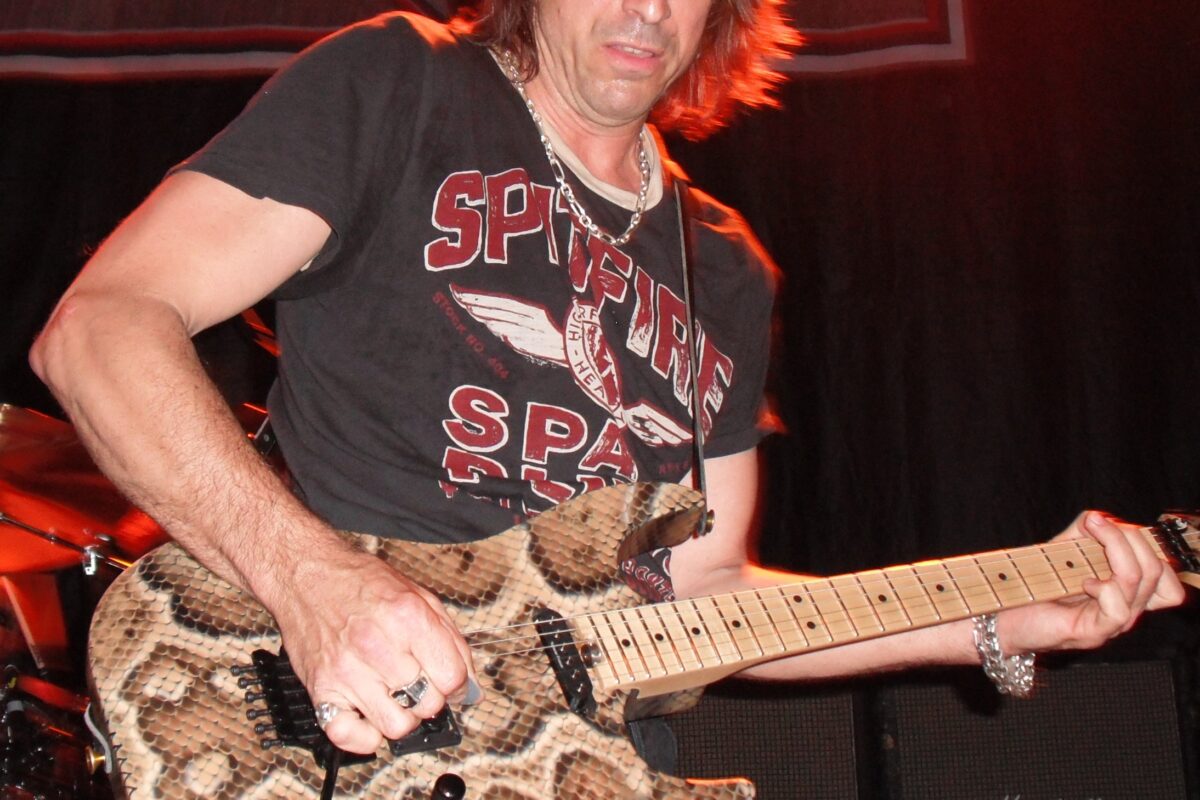
Warren DeMartini Guitars & Gear: The Complete Guide to Ratt’s Torch Guitarist’s Rig
Warren DeMartini guitars & gear: Ratt's Torch guitarist. Charvel Bomber, snakeskin, Jose-modded Plexi, Fender Super Champ, RTM pickup, slapback echo — the complete rig.
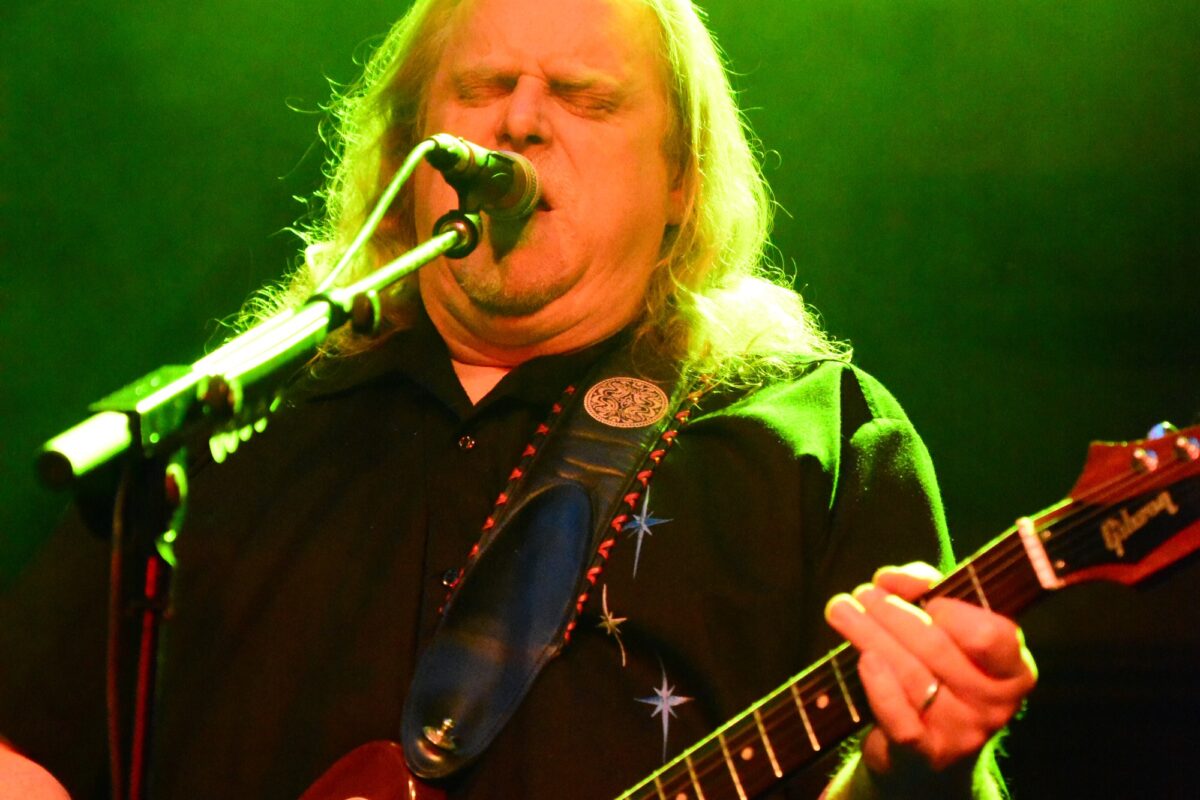
Warren Haynes Guitars & Gear: The Complete Guide to Gov’t Mule’s Guitar Master’s Rig
Warren Haynes' guitars, amps, and effects — the complete guide. Gibson Les Paul Chester, Soldano SLO-100 modified, Klon Centaur, Emma Discombobulator, and how to nail that Gov't Mule blues-rock tone.