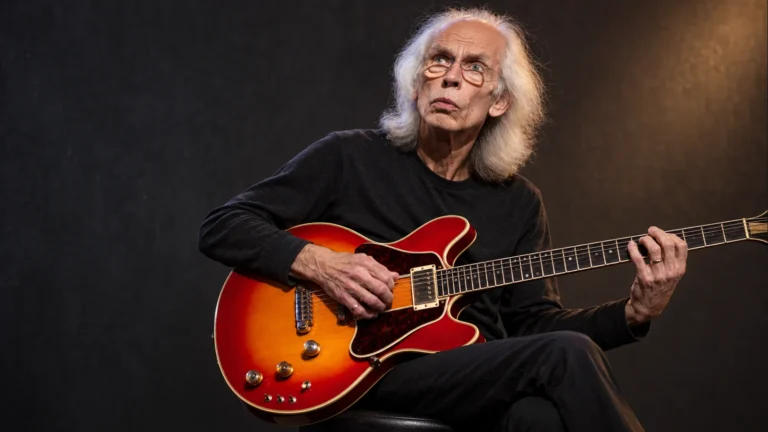
Steve Howe Guitars & Gear: The Complete Guide to Yes’s Guitar Virtuoso’s Rig
Steve Howe's guitars, amps, and effects — the complete guide. 1964 Gibson ES-175, ES-345, ES-5 Switchmaster, 1955 Telecaster, Marshall clean tone, and how to nail that Yes progressive rock guitar sound.
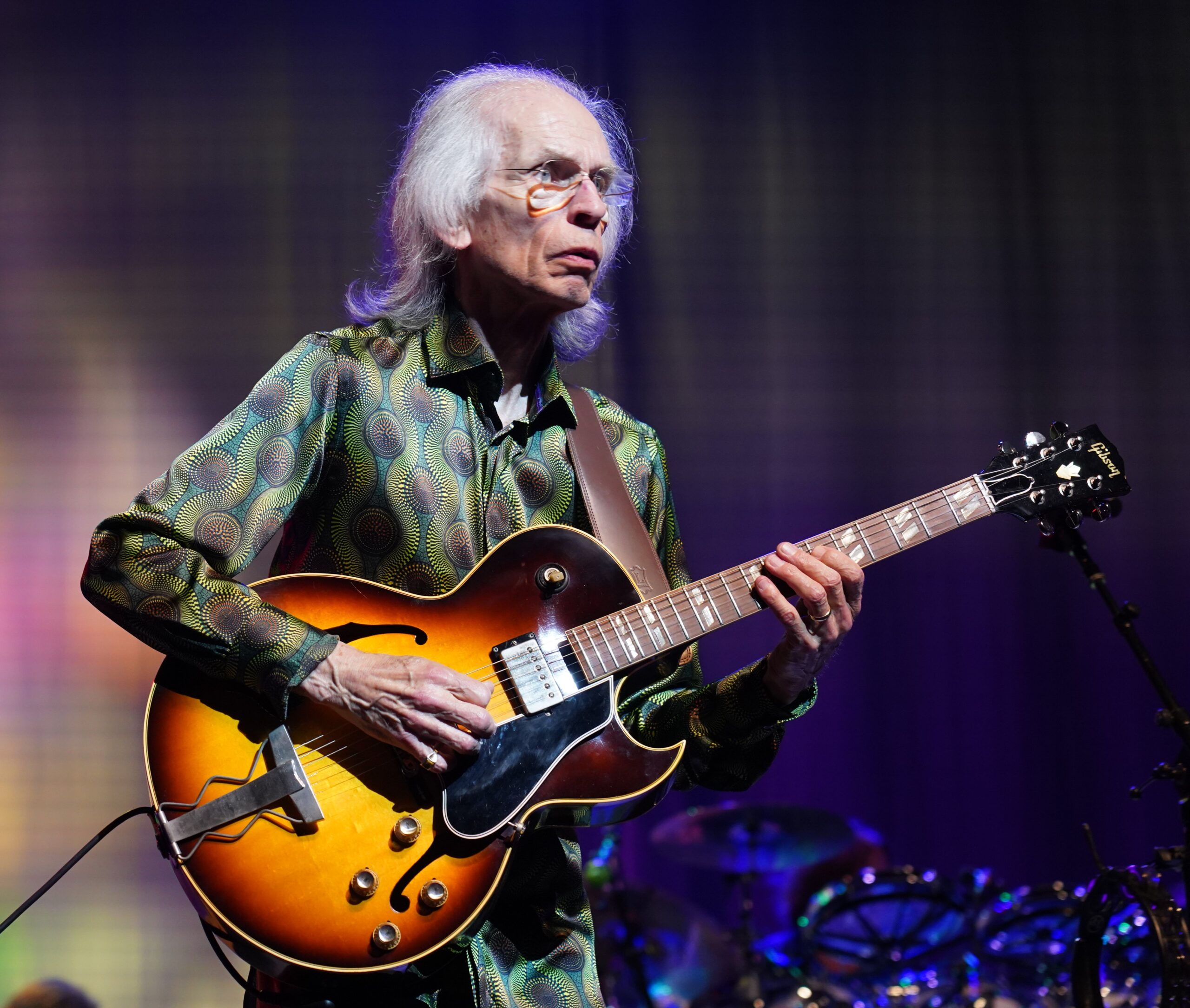
Photo by Steve Knight from Halstead, United Kingdom, licensed under CC BY 2.0 (https://commons.wikimedia.org/wiki/File:Yes_live_at_The_Cliffs_Pavillion%2C_Westcliff-on-Sea_(53758714109).jpg)
Gear Timeline
In 1964, a seventeen-year-old guitarist named Steve Howe walked into the Selmer music store in London and special-ordered a Gibson ES-175. He paid approximately £100 for it — a significant sum in 1964. He had been playing guitar since the age of twelve, had spent years absorbing jazz guitar from Charlie Christian, Django Reinhardt, Wes Montgomery, Tal Farlow, and Jim Hall, and had formed a specific vision of what his guitar needed to be: an archtop jazz guitar, with the warmth and resonance of the hollow body, the articulate midrange of the PAF humbucker, and the jazz musician’s aesthetic of precision and control applied to a rock performance context. He found what he was looking for in the ES-175D’s dual-pickup configuration, with the characteristic warm, woody, slightly dark character of the hollow-body archtop. He has never stopped playing it. More than sixty years later, it remains “my all time greatest guitar I’ve got.”
The Journey
Stephen James Howe was born on April 8, 1947, in Holloway, North London. He first joined Yes in 1970. He was ranked by Rolling Stone as the 34th Greatest Guitarist of All Time. He has been nominated for multiple Grammy Awards. His guitar work — the specific combination of jazz archtop warmth, acoustic guitar sophistication, classical guitar knowledge, pedal steel country influence, and rock energy — is as eclectic as any guitarist’s in this series, and the technical demand of executing all of these different styles to professional standard within a single performance context is what makes his contribution to Yes genuinely extraordinary.
His specific achievement within Yes is best described by Jazz Guitar Today: “Almost all of his tones are of the clean variety void of overdrive distortion that is the mainstay sound of rock guitar… It is so unlikely and hard to believe but there it is on some of the most popular ‘rock’ songs of all time.” The jazz archtop through a clean amplifier, combined with the structural and compositional intelligence of a musician who had absorbed the full vocabulary of jazz guitar and applied it to progressive rock — this is Steve Howe’s contribution to the instrument. He made jazz guitar the primary voice of one of the most commercially successful progressive rock bands in history, and did so without compromising either the jazz guitar’s essential character or the rock band’s essential energy.
Background: From London Jazz Clubs to the Top of the Yes Album
Steve Howe began playing guitar at twelve, initially drawn to the skiffle music that was the entry point for many British guitarists of the late 1950s. The crucial transition came through jazz: Chet Atkins’s fingerpicking gave him the vocabulary of technique-based guitar; Charlie Christian gave him the electric jazz guitar’s foundational language; and the subsequent jazz guitarists — Tal Farlow, Jim Hall, Wes Montgomery, Kenny Burrell — gave him the harmonic and improvisational sophistication that would define his approach. “There is no way Wes, Tal, Jim Hall, Kenny Burrell, etc. These guys most probably would’ve never existed if we hadn’t had Charlie Christian. That is definitely the way I feel about it.” This statement — citing the historical lineage of jazz guitar and placing Charlie Christian at its foundation — is the statement of a genuine jazz student, not a rock guitarist who happens to play a jazz guitar model.
His pre-Yes career included stints with the Syndicats, Tomorrow (with Twink, Keith West, and John “Junior” Wood), and Bodast — a period during which he developed the live performance experience that prepared him for Yes’s demanding touring schedule. The Tomorrow period (1967-1968) is particularly significant: the band was part of the British psychedelic scene, and Howe’s guitar work in that context — more experimental, influenced by the psychedelic movement’s interest in Eastern music and unusual sonic textures — gave him the range of approaches he would deploy in Yes’s more compositionally ambitious context.
Yes hired Howe in 1970 to replace Peter Banks, and his arrival transformed the band’s guitar identity. Banks had been a more straightforward rock guitarist; Howe brought the jazz archtop through clean amplification alongside acoustic guitar, classical guitar technique, pedal steel country playing, and a compositional intelligence that complemented Jon Anderson’s vocal expressionism and Chris Squire’s bass-as-lead-instrument approach. The first album with Howe, The Yes Album (1971), was the band’s commercial breakthrough, and “Yours Is No Disgrace” and “Starship Trooper” established his guitar voice immediately: the ES-175’s warm archtop character, the fingerpicked acoustic sections, the jazz-inflected improvised lines that sat equally well in rock and jazz harmonic contexts.
The Close to the Edge sessions specifically document Howe’s most sophisticated guitar work in a recording context. The album — the title track on Side 1, with “And You and I” and “Siberian Khatru” on Side 2 — required guitar contributions that were simultaneously melodically elaborate, harmonically sophisticated, and structurally responsive to the compositional architecture that Anderson, Squire, Wakeman, and drummer Bill Bruford had established. The ES-345’s stereo wiring enabled Howe to split the signal to two different amplifiers, with each pickup routed to a separate channel — the stereo imaging creating specific phase relationships between the two channels that contributed to the album’s specific spatial quality. This was not a conventional rock guitar recording approach in 1972, and it reflected the level of production sophistication that Yes was applying to every element of the record.
The subsequent albums of the classic Yes period — Fragile (1971), Close to the Edge (1972), Tales from Topographic Oceans (1973), Relayer (1974), Going for the One (1977) — each featured Howe’s guitar as a primary compositional voice, and each period showed a different primary instrument: the ES-175 on The Yes Album, the Gibson ES-5 Switchmaster on Fragile, the Gibson ES-345 on Close to the Edge, the Fender Telecaster on Relayer. This instrument-per-album approach reflects both his collector’s engagement with guitar acquisition and the musical intelligence to choose the specific instrument that matched each album’s specific tonal and harmonic requirements.
The guitar playing on “The Clap” — the acoustic showcase from The Yes Album — deserves specific mention as one of the finest acoustic guitar performances in progressive rock history. A solo acoustic piece that demonstrates Howe’s classical and folk fingerpicking technique, “The Clap” is played without accompaniment and covers a remarkable range of textural and harmonic territory from a single acoustic guitar. It is the direct acoustic equivalent of what Yes was attempting with their full-band progressive compositions: maximum musical content, maximum structural sophistication, from the minimum necessary instrumentation. One acoustic guitar. One complete performance. Recorded live at the Lyceum Theatre in London on 17 July 1970. This is what a complete guitar musician looks like when given two and a half minutes and left alone on stage with an acoustic instrument.
The Rig: Steve Howe’s Guitars, Amps, and Effects
Guitars
The 1964 Gibson ES-175 — special-ordered from the Selmer music store in London in 1964 when Howe was seventeen — is his primary guitar, his most beloved instrument, and the instrument he associates with his core musical identity. The ES-175D’s dual-pickup configuration provides the specific warm, dark, articulate tonal character of a jazz archtop that suits Howe’s jazz-influenced playing perfectly. The guitar’s hollow body adds acoustic resonance and the characteristic “woody” quality that distinguishes it from solid-body instruments. “The Yes Album was the 175 [Gibson ES-175] which is really my classic guitar that I’ve never stopped playing. And it came out on — it’s used on all the albums I make because there are times when that’s the only guitar I can play.”

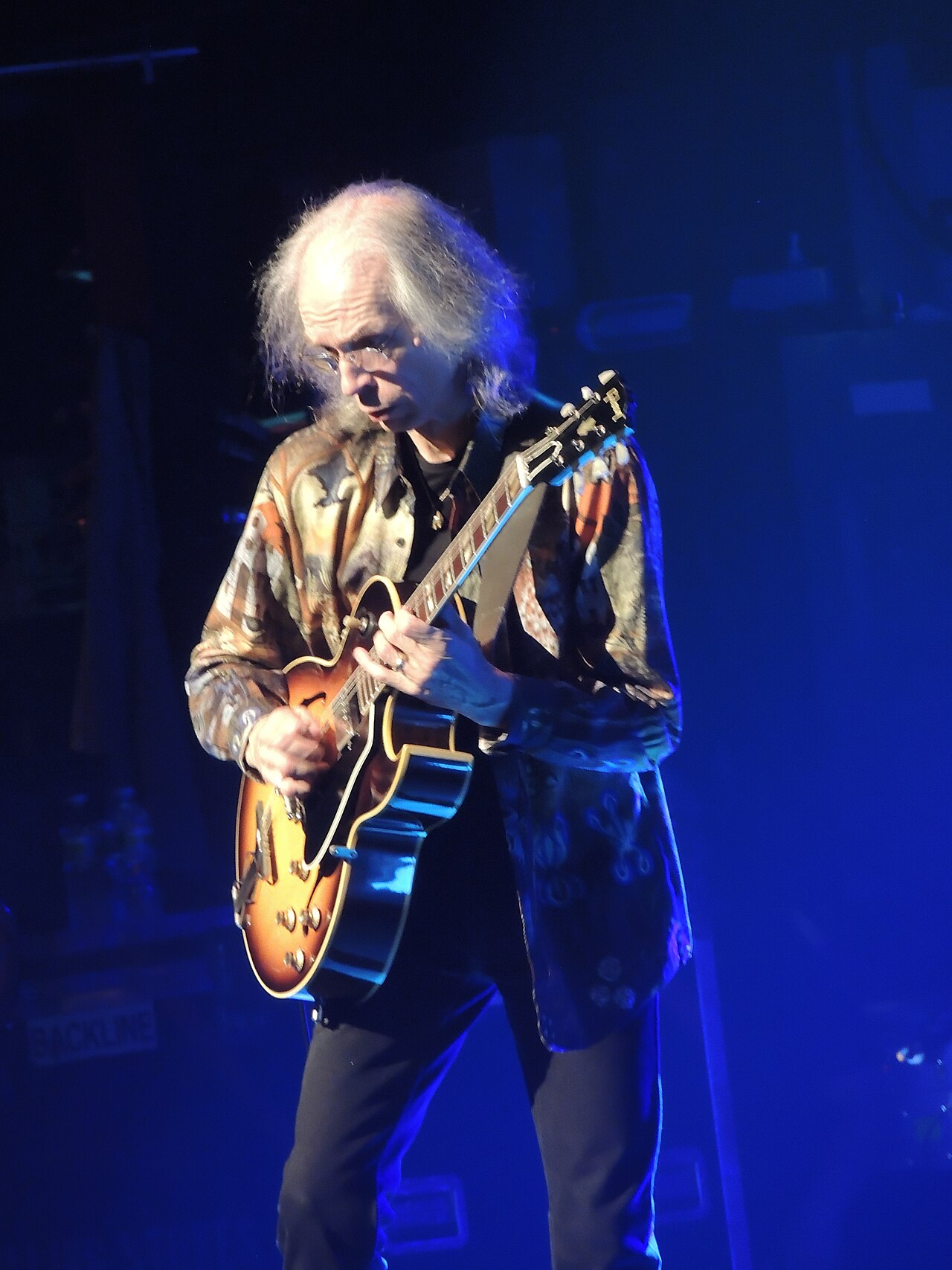
He maintains two ES-175s for current touring: his No. 1 (the original 1964 guitar, which he only uses in the UK because the airlines have been “such an effing pain in the butt”) and his No. 2 (a second 1964 ES-175 which he uses on U.S. tours). Additionally, he has a Gibson Steve Howe signature ES-175 — the official production model — with a third pickup added (to cover the ES-5 Switchmaster’s characteristic multi-pickup tone that he used on Fragile) and ES-5 Switchmaster-style switching. The story of the original guitar includes a dramatic moment: at some point an accident nearly destroyed it, and its survival is a Guitar World headline in itself (“Steve Howe reveals the accident that nearly destroyed the guitar behind Yes’s best-loved songs”).
The Gibson ES-345 used on Close to the Edge (1972) — one of the most celebrated progressive rock albums ever made — was received as a gift from Gibson. “I did a string advert for Gibson, and they offered me a guitar, and I said, ‘Oh, I’ll have a 345.'” The ES-345 differs from the ES-335 in having stereo wiring, a Varitone filter, and the Byrdland-style tailpiece on Howe’s specific model (which he requested to replace the standard ES-345 tailpiece: “I asked them if they’d write ES-345 on a Byrdland and send it to me”). The stereo wiring — each pickup output to a separate channel — allowed Howe to send each pickup’s signal to a different amplifier, creating the specific phasing effects and stereo imaging that appear on Close to the Edge. “A lot of the early recordings were done with two amps, each amp taking a pickup and getting the phasing right.”
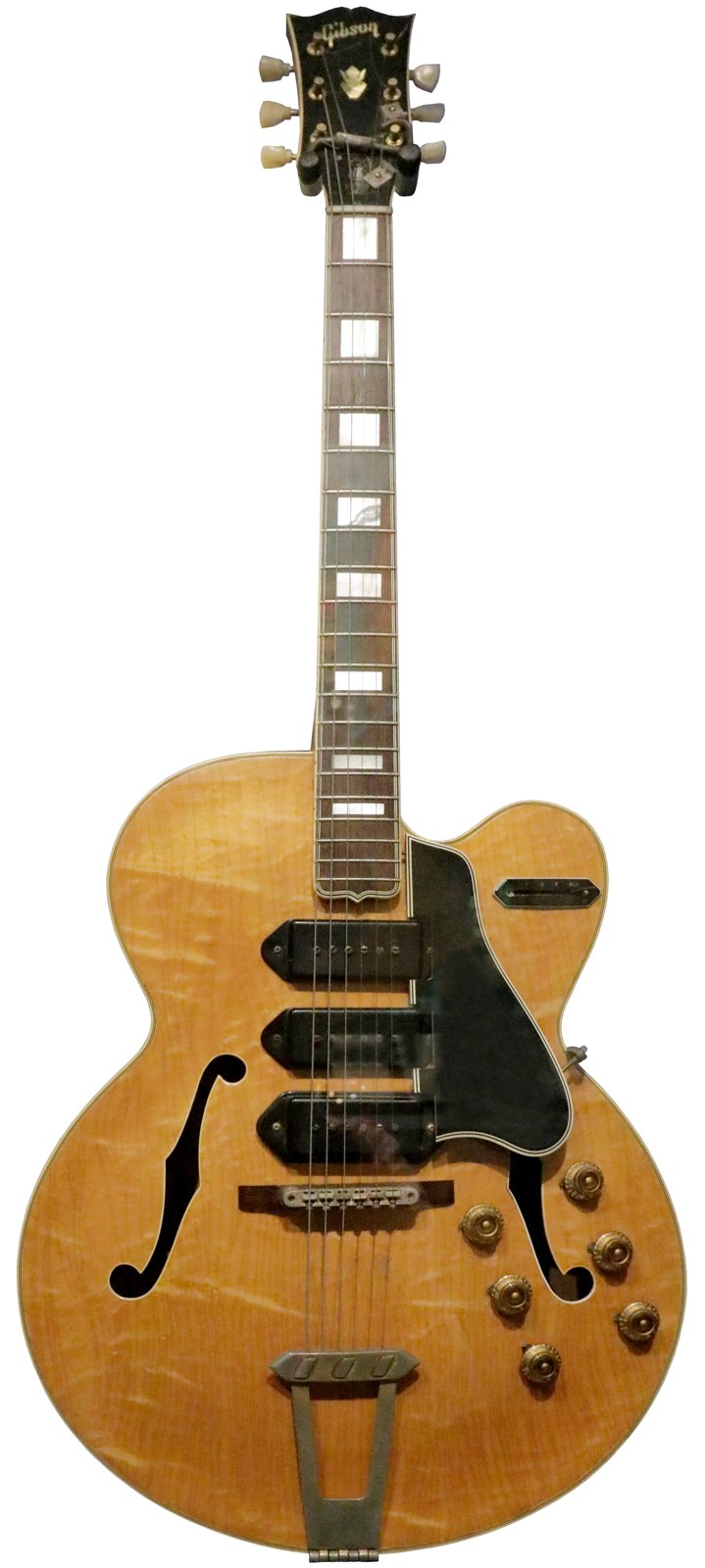
The Gibson ES-5 Switchmaster — the three-pickup fully hollow archtop that Zappa also famously used — was Howe’s primary guitar on Fragile (1971). He subsequently added a third pickup to his Steve Howe signature ES-175 “to cover the sound of the ES-5 Switchmaster that I used on Yes’ Fragile album.” The ES-5 Switchmaster’s specific character — three full-size humbucker pickups (or DeArmond single-coils in earlier models) with individual switching, the very warm, full-bodied sound of the triple-pickup fully hollow jazz archtop — gave Fragile its specific guitar tonal quality, different from both the ES-175D’s warmth and the ES-345’s stereo complexity.
Howe’s 1955 Fender Telecaster — modified with a humbucker in the neck position, six-saddle bridge, and Gibson-style toggle switch — was the primary guitar on Relayer (1974) and has continued to appear in his setlist for specific songs. “Relayer had the Telecaster.” The Telecaster’s bright, cutting single-coil character at the bridge position (retained from the original 1955 instrument) combined with the added humbucker’s warmth at the neck position gave the modified Tele a tonal versatility that suited Relayer’s more aggressive, demanding guitar work. The six-saddle bridge replaces the original three-saddle Telecaster bridge for improved intonation across all six strings. The modifications did not compromise the guitar’s fundamental character — the 1955 Telecaster’s ash body and maple neck with its specific vintage resonance remained intact.
“This guitar is an original ’56 Black Beauty, which is of course a marvelous guitar and full of warmth and character,” says Howe. The 1956 Les Paul Custom — pre-PAF, with P-90 single-coil pickups or early three-pickup configuration — appears in Howe’s documented collection as an example of his range of vintage instruments. Unlike the ES-175 and ES-345 which are central to his performance identity, the Black Beauty is more of a cherished collectible that occasionally appears in performance or recording contexts.
For acoustic guitar passages in Yes concerts and on his solo recordings, Howe plays the Martin MC-38 Steve Howe signature model — a collaboration with Martin Guitar Company that produced a dreadnought acoustic with the specific tonal character and playability that suits his fingerpicking and chord work. His acoustic playing within Yes — the delicate fingerpicked passages that appear on “The Clap,” “Mood for a Day,” and “Leaves of Green” — demonstrates the classical and folk guitar sophistication that complements his jazz electric work.
The Premier Guitar rig rundown documents “a Portuguese 12-string acoustic tuned E–B–E–B–E–Ab” used for “I’ve Seen All Good People” and “Wonderous Stories.” The Portuguese 12-string guitar — a different instrument from the standard steel-string 12-string, with its own specific neck width, string spacing, and tonal character — adds to the eclectic range of acoustic instruments Howe deploys in Yes performances. The unusual tuning (E–B–E–B–E–Ab rather than the standard 12-string configuration) reflects the instrument-specific compositional thinking he has always applied.
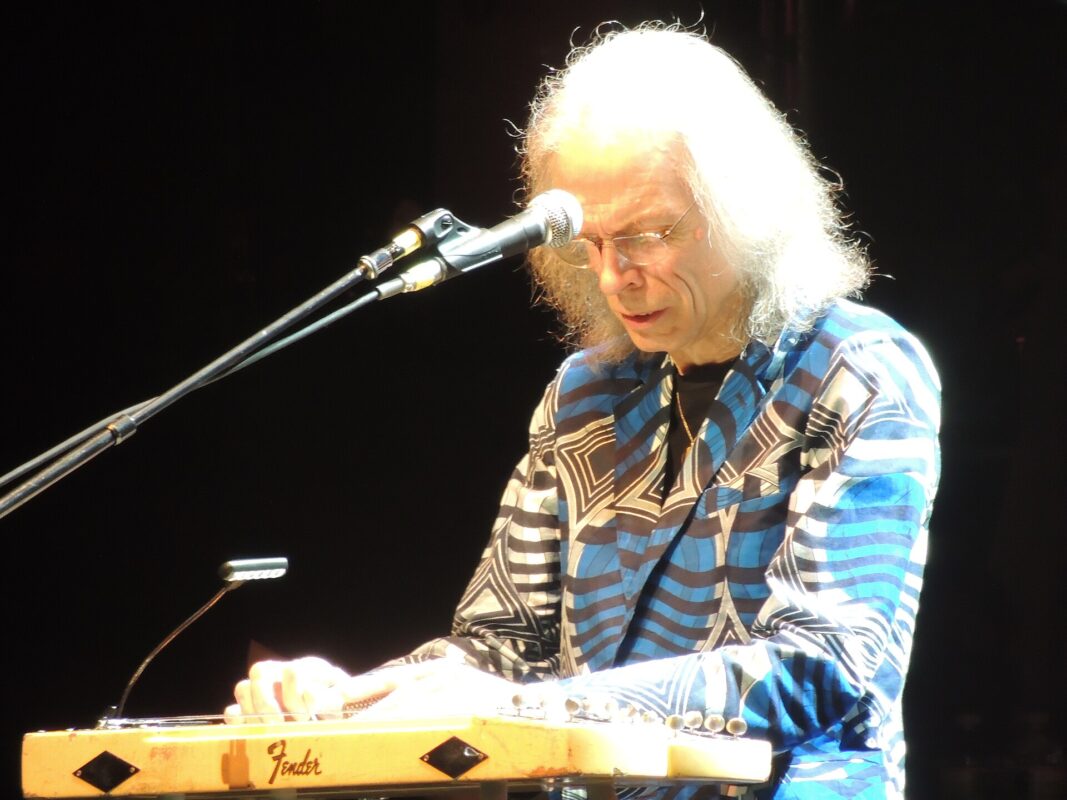
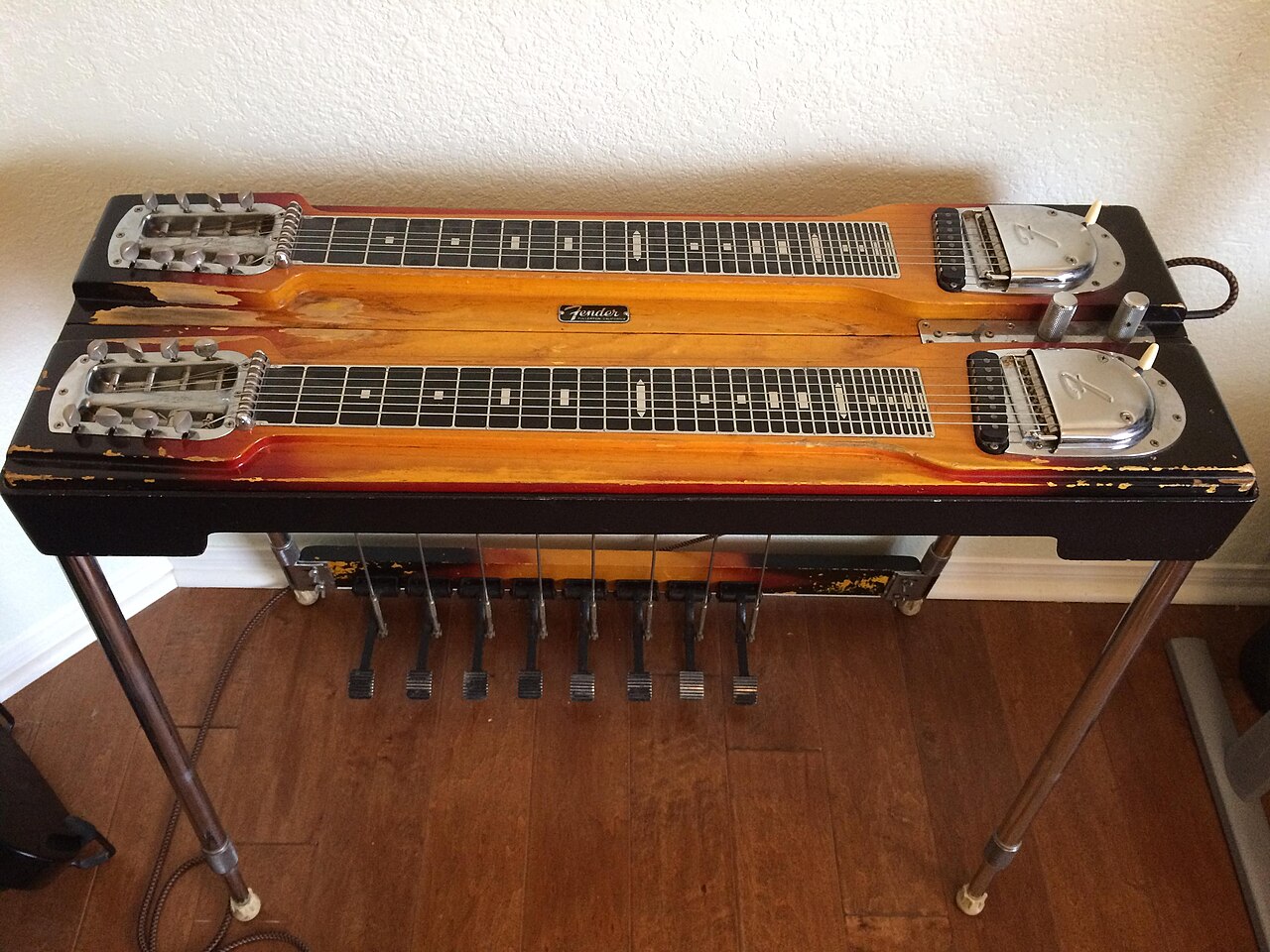
Howe’s documentation includes a Fender Dual-Neck Pedal Steel guitar — the instrument of country music, brought into the progressive rock context by his influence from Western swing and country music alongside jazz and classical. His pedal steel playing within Yes — appearing on “The Gates of Delirium” from Relayer and other tracks — is the least expected dimension of his guitar work and the most specifically unusual: the pedal steel’s characteristic note-bending, resonant sustain, and open-chord voicings appear in the middle of technically demanding progressive rock compositions, creating a specific country-in-the-cosmos quality that is entirely his own.
The Steinberger GM 12-String — the headless, doubleneck guitar from the early 1980s that suited Howe’s need for a touring-friendly 12-string instrument — appears in his documented gear for specific Yes material requiring the 12-string’s natural chorus effect. The Steinberger’s headless design reduced overall length and eliminated the headstock’s weight contribution, making it more practical for touring than conventional 12-strings.
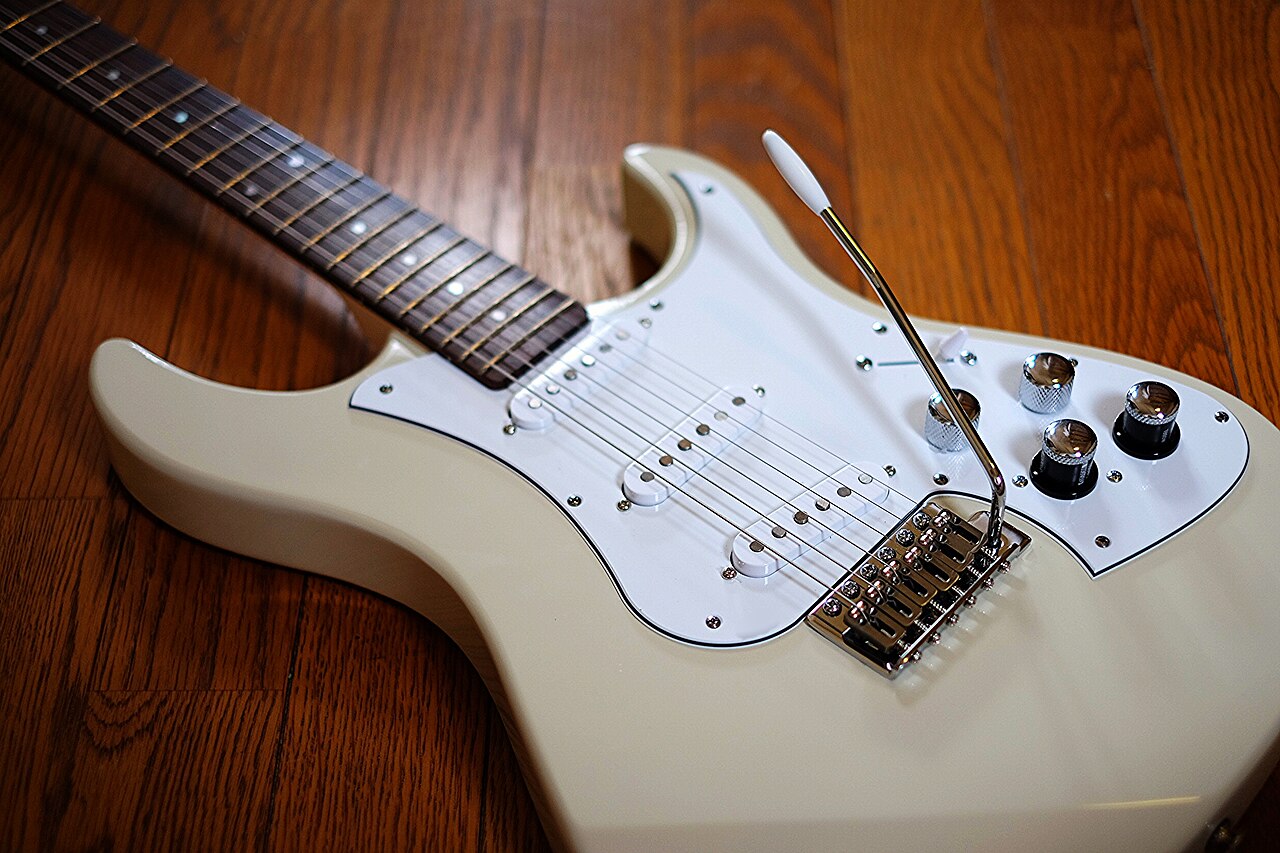
In more recent touring configurations, Howe has used the Line 6 Variax guitar — a digital modeling guitar that can replicate the tonal character of a wide range of instruments from a single physical instrument. “The Line 6 Versace. Who needs a rack full of guitars when you can use ‘ONLY ONE.'” The Variax provides a practical solution to the challenge of touring with multiple vintage instruments when airline transport is a concern.
Amps
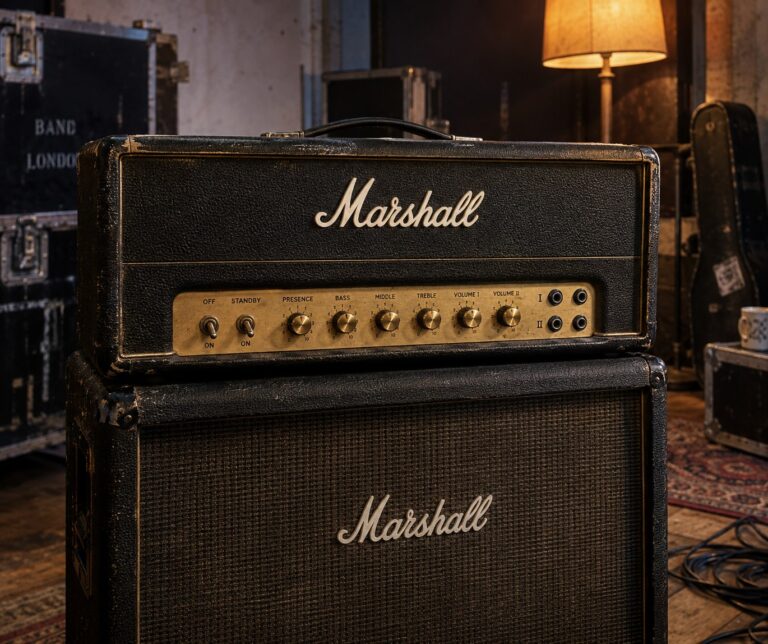
Steve Howe’s primary stage amplification during Yes’s classic period was the Marshall 1959 Super Lead 100-watt head — the standard British high-power amplifier of the progressive rock era. His specific use of the Marshall was notably different from most rock guitarists, however: where guitarists like Ritchie Blackmore and Pete Townshend drove their Marshalls into saturation for heavy, distorted tones, Howe used the Marshall as a clean platform for his jazz archtop’s natural character. The ES-175 through a clean Marshall 1959 — with the volume set for high headroom rather than saturation — provided the powerful, warm, clean amplification that his jazz-guitar-in-rock context required.
The Roland JC-120 — the solid-state amplifier whose built-in stereo chorus and crystalline clean sound also appears in Andy Summers’ and Pat Metheny’s setups — provides the clean, neutral platform that Howe needs for specific applications where the Marshall’s natural character is too colored. The JC-120’s solid-state transparency preserves the ES-175’s acoustic character more fully than tube amplifiers.

For acoustic guitar and specific clean electric applications, Howe has used Fender amplification — the specific warm, American clean character that suits the acoustic-electric interface and certain jazz archtop applications where the British Marshall character is tonally inappropriate.
Effects
Steve Howe’s approach to effects is as specific and as limited as any major rock guitarist’s. He has consistently described his primary tone as the guitar’s natural character through a clean amplifier — the jazz archtop’s inherent quality amplified faithfully rather than processed through effects. “Almost all of his tones are of the clean variety void of overdrive distortion,” as Jazz Guitar Today accurately documents. The guitar does the work. The amplifier transmits it. Effects are specific tools for specific sounds rather than a permanent sonic environment.
The first fuzz pedal Howe used was a Gibson Fuzz Tone — the early fuzz unit that Howe describes with characteristic amusement: “the first fuzz box I ever knew about was made by Gibson, and it was called a Fuzz Tone. The idea of it wasn’t necessarily to distort the hell out of your guitar. It was that you could imitate an instrument like wind instruments and stuff like that.” His description of the Gibson Fuzz Tone as an instrument-imitation device rather than a conventional distortion pedal is accurate to the intent of early fuzz — these were designed to give guitar the sustain and tonal character of horns and strings, not to produce the aggressive rock distortion of later fuzz designs.
A volume pedal appears in Howe’s signal chain for dynamic shaping — controlling the rise and fall of his guitar’s volume in real time during performance, allowing the gradual fade-in that gives certain ES-175 passages their specific quality of emerging from silence. The volume pedal is particularly useful with the hollow-body archtop’s natural sustain: controlling the volume after the note is struck allows the guitar’s resonance to be shaped after the initial attack.
The ADA MP-1 preamp appears in Howe’s documented rack — the programmable tube preamp that provides multiple tonal presets in a single unit, allowing quick access to different tonal characters within a Yes set without changing guitars or amplifier settings.
Playing Style & Tone Philosophy
Steve Howe’s playing style is the most compositionally diverse in this series — the synthesis of jazz guitar, classical guitar, acoustic folk, pedal steel country, and rock energy in a single musician who applies each vocabulary at the professional level of a specialist. Most guitarists are primarily one kind of guitar player; Howe is authentically several simultaneously, with the jazz foundation providing the harmonic sophistication that all the other vocabularies draw from.
The jazz foundation comes directly from the Charlie Christian lineage that he has specifically cited. Christian’s specific contribution — the development of the electric guitar as an improvising lead instrument in the jazz ensemble, with the long, flowing melodic lines, the bebop harmonic language, and the specific smooth legato articulation that the electric guitar’s sustain allows — is present in every Howe guitar solo. The ES-175’s warm archtop character reinforces this connection: the same instrument model that Charlie Christian’s successors (Grant Green, Joe Pass, Herb Ellis) used to define jazz guitar’s post-bop sound is the instrument through which Howe plays in a progressive rock context.
The clean tone philosophy — “void of overdrive distortion,” as Jazz Guitar Today documented — is the defining and most unusual characteristic of his rock guitar work. Progressive rock of the 1970s was not universally a high-gain music, but the guitar in most progressive rock bands provided the heavy, distorted texture that defined rock’s sonic identity. Howe rejected this in favor of the jazz archtop’s natural warmth, which meant that his guitar parts had to be compositionally interesting enough to hold attention without the visceral impact of distorted rock guitar. They were. The instrumental passages on Close to the Edge and Going for the One demonstrate that a clean jazz archtop can be as compelling as any distorted rock guitar if the musical content is sufficiently interesting.
His tone philosophy, stated most directly in his own words: “my Gibson ES 175 1964 is the all time greatest guitar I’ve got.” This is the guitarist whose tone philosophy is embodied in a specific instrument purchased at seventeen years old and played for sixty-plus years because it consistently delivers what the music requires. The amplifier is clean. The guitar speaks for itself. The notes are chosen from a vocabulary that encompasses jazz, classical, folk, country, and rock simultaneously. This is a complete musician’s approach to the guitar.
How to Sound Like Steve Howe
Getting Steve Howe’s primary tone — the ES-175 through a clean amplifier — is one of the more accessible approximations in this series, because the fundamental tonal elements are not extreme or unusual.
Guitar: A Gibson ES-175 (or any hollow-body jazz archtop with a PAF-style humbucker in the neck position) is the authentic choice. The hollow-body construction and the neck humbucker’s warmth are the essential tonal elements. Modern equivalents: Gibson ES-175 reissue, Ibanez AF series, or any quality archtop jazz guitar with vintage-voiced humbuckers.
Amp: A Marshall 1959 or JMP set for clean headroom (not saturation) for the Yes period sound. Alternatively, any clean, warm tube amplifier — Fender Twin Reverb, Vox AC30 — or the Roland JC-120 for crystalline solid-state clean. The critical requirement: the amplifier must stay clean. No tube saturation, no overdrive. The guitar’s natural character is the primary tonal element.
Amp Settings (Marshall 1959 or equivalent, set for clean headroom):
| Control | Setting (0–10) | Notes |
|---|---|---|
| Volume (Treble Channel) | 4–6 | Clean — ES-175 through Marshall must not break up |
| Bass | 5–7 | Full — the hollow body’s warmth needs bass support |
| Mid | 5–6 | Present — jazz archtop midrange is the voice |
| Treble | 4–5 | Moderate — warmth over brightness for the archtop character |
| Presence | 3–5 | Low-moderate — articulation without harshness |
The style — the actual work: Steve Howe’s technical approach requires genuine jazz guitar study. Learn jazz chord voicings (seventh, ninth, suspended, altered dominants) — the standard vocabulary of jazz harmony that gives his chord playing its specific character. Study fingerstyle technique for the acoustic passages. For the improvised lines, listen to Charlie Christian, Tal Farlow, and Wes Montgomery — the direct influences he has cited — and absorb their specific approach to bebop melody before attempting to sound like Howe within a progressive rock context.
Influence & Legacy
Steve Howe’s influence on guitar playing is primarily the demonstration that jazz guitar vocabulary — the specific harmonic and melodic language of jazz archtop playing — could function as the primary guitar voice in a commercially successful rock band, without either compromising the jazz guitar’s essential character or reducing the rock band’s musical ambition. Yes was not a jazz band. It was a rock band with a jazz guitarist, and Howe made the combination work at an extraordinary level of musical quality across fifty years.
His influence is most visible in the progressive rock guitarists who absorbed the Yes albums in the 1970s — the entire progressive rock guitar tradition that emerged from that period carries Howe’s influence in the expectation that the guitarist will be technically sophisticated, musically diverse, and compositionally engaged rather than merely providing rock texture. The standard of musicianship he set — the multi-instrumental range, the jazz harmonic vocabulary, the clean tone as primary sonic identity — became the standard against which progressive rock guitarists were measured.
For context on where Howe fits in the progressive rock guitar tradition, the comparison with Robert Fripp’s approach to progressive rock guitar in King Crimson is the most direct parallel — both figures who defined progressive rock guitar in the 1970s from different but related starting points. Fripp’s foundation is twentieth-century classical music and avant-garde; Howe’s is jazz guitar and folk tradition. Both bring compositional intelligence to rock guitar that transcends the rock context without abandoning it.
The comparison with Pat Metheny’s approach to jazz guitar in commercial contexts illuminates another parallel career — a jazz guitarist who achieved mainstream commercial success without compromising the jazz guitar’s essential character. Metheny’s context is jazz and fusion; Howe’s is progressive rock. Both demonstrate that the jazz archtop is a commercially viable instrument in contexts far outside the jazz club.
And the comparison with Wes Montgomery’s foundational jazz guitar approach — one of Howe’s explicitly named primary influences — shows the direct lineage: the thumb-picking style, the chord-melody sophistication, and the approach to the guitar as a complete musical instrument capable of harmonic and melodic independence all flow from Montgomery through Howe into the progressive rock context. Yes might not exist in its specific form without Wes Montgomery’s recordings. This is the jazz guitar’s influence on rock music at its most indirect and most profound.
Steve Howe is seventy-eight years old in 2026. He is still with Yes in some configuration, as he has been in various forms for over fifty years. The 1964 ES-175 — the one he special-ordered from the Selmer music store at seventeen — remains at home in the UK, where the airlines can’t get at it. His No. 2 ES-175 tours the US. The Marshall stays clean. The jazz vocabulary is intact. Charlie Christian is still the foundation. “The Yes Album was the 175, which is really my classic guitar that I’ve never stopped playing.” He hasn’t.
His guitar collection — the ES-175, ES-345, ES-5, Telecaster, Black Beauty, Portuguese 12-string, Martin acoustic, pedal steel — is not a collector’s accumulation of valuable objects but a working musician’s inventory of tools for specific musical applications. Each instrument is in his collection because it does something that the other instruments don’t do as well. The ES-175 provides the jazz archtop character that is his core musical identity. The ES-345’s stereo wiring provides the specific stereo separation that Close to the Edge required. The ES-5 Switchmaster’s three pickups provide the specific multi-pickup combination tones that Fragile required. The Telecaster’s bright single-coil character provides the specific cutting quality that Relayer required. The pedal steel’s bending, sustaining character provides the specific country expressiveness that certain Yes pieces require. Each is there because the music needed it. None is there for its own sake.
Howe’s formal recognition — the Rock and Roll Hall of Fame induction with Yes in 2017, the Rolling Stone ranking of 34th Greatest Guitarist — documents the institutional acknowledgment of a contribution that the guitar community has understood for fifty years. He is the guitarist who made the jazz archtop the primary voice of one of the most commercially successful progressive rock bands in history, without either compromising the jazz guitar’s essential character or reducing Yes’s musical ambition. This is a specific and remarkable achievement, accomplished over fifty years of professional playing with the same instrument philosophy he developed at seventeen: find the right guitar, play it through a clean amplifier, let the music speak from the instrument’s natural voice. The 1964 ES-175 spoke then. It speaks now. It will speak as long as Steve Howe has it in his hands and a clean amplifier in the room.
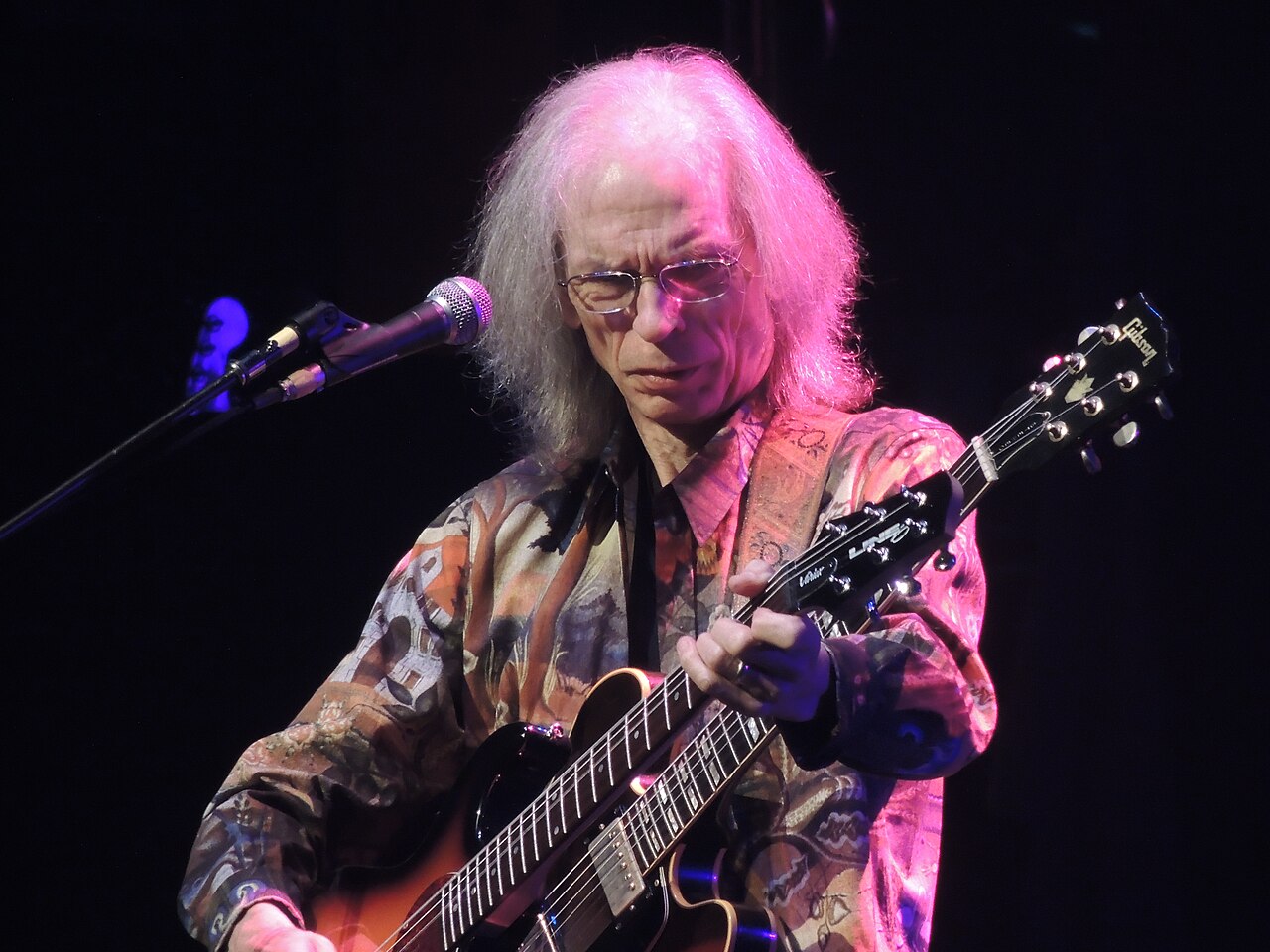
His multi-instrumental range — the fact that he plays jazz guitar, acoustic folk, classical guitar, pedal steel country, and rock guitar at professional level simultaneously — is one of the more genuinely unusual aspects of any major guitarist’s career. Most musicians specialize: the blues guitarist doesn’t also play pedal steel; the jazz guitarist doesn’t also play rock; the acoustic fingerpicker doesn’t also play in a rock band. Howe does all of these, and within Yes he deploys whichever vocabulary the specific musical moment requires. The transition within a single Yes song from fingerpicked acoustic to clean electric archtop to pedal steel to aggressive electric rock rhythm is a transition across three or four distinct instrumental traditions, executed within a single performance by a musician who has studied each tradition seriously. This is not eclecticism as aesthetics; it is range as musical intelligence — the understanding that different musical situations require different tools, and the preparation to have those tools available and to use them well.
His ASIA period (the supergroup with John Wetton, Carl Palmer, and Geoff Downes, 1982-1985 and various reunions) demonstrated that his musical intelligence could adapt to a more commercially accessible context without losing its distinctiveness. The ASIA debut album (1982) was the best-selling album of 1982 in the United States — a commercial achievement beyond anything Yes had achieved — and Howe’s guitar work on it maintained the jazz-influenced clean archtop character while adapting to the more streamlined pop-rock arrangements. A Gibson Les Paul Junior appears in documentation of the ASIA period — the single-pickup, straightforward single-cutaway mahogany instrument providing a different character from the ES-175’s jazz archtop warmth while remaining within his characteristic preference for vintage Gibson instruments.
One more dimension of Howe’s guitar relationship deserves documentation: the care he has taken of the 1964 ES-175 across sixty years of use. Guitar Player noted that “he has taken meticulous care of this guitar, and it shows only a few dings and scratches as evidence of his use.” A guitar that has been played in major rock venues around the world for sixty years, showing “only a few dings and scratches,” is a guitar that has been handled with the reverence of someone who understands both its monetary and its musical value. He keeps the original in the UK rather than risk airline damage. He has a backup. He is, in the stewardship of this specific instrument, as careful as any musician in this series about protecting what is irreplaceable. The musical contribution is made from the instrument; protecting the instrument protects the musical contribution. This understanding — that the guitar is not merely a tool to be replaced when worn out but a specific, irreplaceable partner in the musical work — is perhaps the most fundamental expression of Howe’s relationship with the guitar as an instrument.
Frequently Asked Questions: Steve Howe Guitars & Gear
What guitar does Steve Howe play?
Steve Howe’s primary and most beloved guitar is his 1964 Gibson ES-175D, special-ordered from the Selmer music store in London when he was seventeen years old. He has called it “the all-time greatest guitar I’ve got” and has used it on virtually all of his recordings with Yes since 1970. He maintains two 1964 ES-175s: his No. 1 (kept in the UK due to airline transport concerns) and his No. 2 (used for US touring). He also has a Gibson Steve Howe signature ES-175 with a third pickup and ES-5 Switchmaster-style switching. Other primary guitars include: the 1970 Gibson ES-345 (used on Close to the Edge), the Gibson ES-5 Switchmaster (primary on Fragile), a 1955 Fender Telecaster with humbucker neck modification (primary on Relayer), a 1956 Gibson Les Paul Custom Black Beauty, and a Martin MC-38 Steve Howe signature acoustic.
What amp does Steve Howe use?
Steve Howe’s primary stage amplifier during Yes’s classic period was the Marshall 1959 Super Lead 100-watt — notably used for its clean headroom rather than its saturation, as Howe’s jazz archtop playing requires a clean, neutral platform rather than tube distortion. He has also used the Roland JC-120 Jazz Chorus solid-state amplifier for its crystalline clean sound and various Fender amplifiers for acoustic and clean electric applications. His amp philosophy is consistent with his guitar philosophy: the amplifier should transmit the guitar’s natural character faithfully rather than imposing its own tonal color on the signal.
Which guitar did Steve Howe play on which Yes albums?
Steve Howe has used different primary guitars for different Yes albums: The Yes Album (1971) — Gibson ES-175; Fragile (1971) — Gibson ES-5 Switchmaster (the three-pickup archtop); Close to the Edge (1972) — Gibson ES-345 (received as a gift from Gibson, with Byrdland tailpiece); Relayer (1974) — 1955 Fender Telecaster (modified with humbucker neck pickup); Going for the One (1977) and subsequent albums — various instruments including the ES-175, ES-345, Telecaster, and acoustic guitars. He has described this as an “instrument-per-album” approach that reflected each album’s specific tonal requirements.
How did Steve Howe develop his distinctive jazz-rock style?
Steve Howe developed his jazz-rock synthesis from deep study of the jazz guitar lineage beginning with Charlie Christian. “There is no way Wes, Tal, Jim Hall, Kenny Burrell, etc. These guys most probably would’ve never existed if we hadn’t had Charlie Christian.” He absorbed the jazz guitar vocabulary — the bebop harmonic language, the legato melodic phrasing, the archtop’s specific tonal character — before applying it in a rock context. His specific choice of a Gibson ES-175 (the quintessential jazz archtop guitar) as his primary instrument reinforced this jazz identity within Yes’s progressive rock context. He also draws from classical guitar technique, acoustic folk and fingerpicking traditions, and country pedal steel — giving him the multi-genre range that characterizes his eclectic Yes guitar work.
Why does Steve Howe use a clean tone in a rock context?
Steve Howe’s preference for clean amplification — “void of overdrive distortion” in Jazz Guitar Today’s description — reflects his jazz guitar foundation. Jazz guitar is fundamentally a clean music: the archtop’s natural acoustic resonance and the PAF humbucker’s warm character are most fully realized through clean amplification, where the guitar’s harmonic complexity can be heard without distortion’s smoothing effect. In the progressive rock context, Howe chose to maintain this jazz guitar purity rather than adopting the high-gain rock guitar approach. His guitar parts compensate for the lack of distortion’s visceral impact with compositional interest — the harmonic sophistication and melodic development of his jazz-influenced improvisation making the clean tone as compelling as distorted rock guitar.
What happened to Steve Howe’s original 1964 ES-175?
Steve Howe’s original 1964 Gibson ES-175 — the guitar he special-ordered at seventeen from London’s Selmer music store — is still in his possession and remains “the all-time greatest guitar I’ve got.” At some point an accident nearly destroyed it (Guitar World ran a story about “the accident that nearly destroyed the guitar behind Yes’s best-loved songs”), but the guitar survived. Due to airline transport concerns, he keeps the original at home in the UK and uses a second 1964 ES-175 (his No. 2) for US touring. Gibson produced a Steve Howe signature ES-175 production model based on the original’s specifications, with a third pickup added to replicate sounds from the ES-5 Switchmaster he used on Fragile.
Is Steve Howe in the Rock and Roll Hall of Fame?
Steve Howe was inducted into the Rock and Roll Hall of Fame in 2017 as a member of Yes. The band’s induction was a long-anticipated recognition of their foundational role in progressive rock — their influence on rock music’s compositional ambition, their consistent technical excellence, and their commercial impact with albums including Fragile, Close to the Edge, and Going for the One. Howe was specifically recognized for his contribution to Yes’s guitar identity and his role in creating some of the most technically demanding and musically sophisticated guitar work in rock history. Rolling Stone ranked him the 34th Greatest Guitarist of All Time.
Image credits
- Steve Howe: SolarScott, Wikimedia Commons, CC BY 2.0.
- Steve Howe: SolarScott, Wikimedia Commons, CC BY 2.0.
- Line 6 Variax Standard: Shunichi Kouroki, Wikimedia Commons, CC BY 2.0.
- Fender 1000 Pedal Steel: Zhyla, Wikimedia Commons, CC0.
- Top image: by Steve Knight from Halstead, Wikimedia Commons, CC BY 2.0.
- Gibson ES-175: 1963 Gibson ES-175DN, Wikimedia Commons, CC BY-SA 4.0.
- Steve Howe: photo by SolarScott, via Wikimedia Commons, CC BY 2.0.
- Steve Howe: photo by Steve Knight, via Wikimedia Commons, CC BY 2.0.
- Marshall 1959 Super Lead Plexi: GuitarGangsters AI-generated reference illustration, not a photograph.
- Roland JC-120: Solomon203, Wikimedia Commons, CC BY-SA 4.0.
- Gibson ES-5 Switchmaster: Claude Humbert, derivative work, Wikimedia Commons, CC BY-SA 4.0.