Jimmy Nolen Guitars & Gear: The Godfather of Funk Guitar’s Complete Rig
Jimmy Nolen guitars gear — Fender Stratocaster and Bassman deep-dive for the James Brown funk guitar legend's chop technique tone and complete minimal rig.
Study Jimmy Nolen guitars gear and you reach the origin point of funk guitar — the equipment of the Dallas-born guitarist who spent two decades as James Brown’s primary guitar voice, who invented the percussive, single-note chop technique that became the defining rhythm guitar vocabulary of funk, and whose specific approach to the instrument was so completely revolutionary that it reset the terms of what rhythm guitar could be in popular music. Nolen was not a lead guitarist in any conventional sense — he rarely soloed, rarely played melody in the lead guitar manner — but he created a rhythmic vocabulary on the electric guitar that is as important to the history of popular music as any lead guitar innovation. Every funk guitarist who came after him was either directly influenced by his playing or was influenced by someone who was, and the chain of influence connecting him to contemporary R&B and hip-hop — through the samples that have borrowed his specific guitar approach — makes him one of the most widely heard guitarists in the history of recorded music.
The Journey
This guide covers Nolen’s equipment: the Stratocasters that defined his sound, the amplification that gave his specific technique its characteristic tonal quality, his approach to the minimal effects he used, and the playing philosophy of a musician who understood that less was more in a way that completely transformed what the guitar was for in popular music. Understanding Jimmy Nolen’s gear is understanding where funk guitar came from and why it sounds the way it does.
Background
Jimmy Lee Nolen was born on April 3, 1934, in Austin, Texas, and grew up in Dallas. His early musical formation encompassed the Texas blues and R&B tradition — the specific musical culture of Black Texas that produced T-Bone Walker, Freddie King, and the electric blues tradition that shaped American popular music through the postwar period. He absorbed the blues tradition as a guitarist and brought its harmonic vocabulary and its rhythmic sensibility to the funk context that would define his most important work.
He joined James Brown’s band in 1965 — a period when Brown’s music was undergoing the transformation from soul and gospel-influenced R&B toward the rhythmically radical approach that would become funk. The transition to funk required a specific new approach to the rhythm guitar — an approach that emphasised rhythmic percussiveness over harmonic richness, that treated the guitar as primarily a rhythmic rather than a harmonic or melodic instrument, and that created musical interest through the specific rhythmic placement and articulation of short, clipped notes rather than through sustained chords or melody lines.
Nolen’s development of the specific “chop” technique — the short, clipped, muted single-note and chord fragments played in specific rhythmic patterns that became funk guitar’s defining vocabulary — gave James Brown’s music the rhythmic foundation that made it different from anything that had existed before. The guitar became a percussion instrument that also happened to produce pitched notes, and the combination of rhythmic precision and harmonic implication gave the Brown band its specific, overwhelming forward momentum.
He remained with Brown through the most commercially and artistically fertile period of the band’s history, appearing on records including “Papa’s Got a Brand New Bag” (1965), “I Got You (I Feel Good)” (1965), “Cold Sweat” (1967), “Say It Loud, I’m Black and I’m Proud” (1968), and dozens of other essential recordings that defined the funk era. He died on December 18, 1983, at the age of 49, leaving a recorded legacy of extraordinary importance and influence.
Jimmy Nolen Guitars Gear: The Complete Rig
Guitars
Jimmy Nolen’s guitar choices were specific and purposeful — reflecting the technical requirements of his specific playing approach rather than general preferences for tone or prestige.
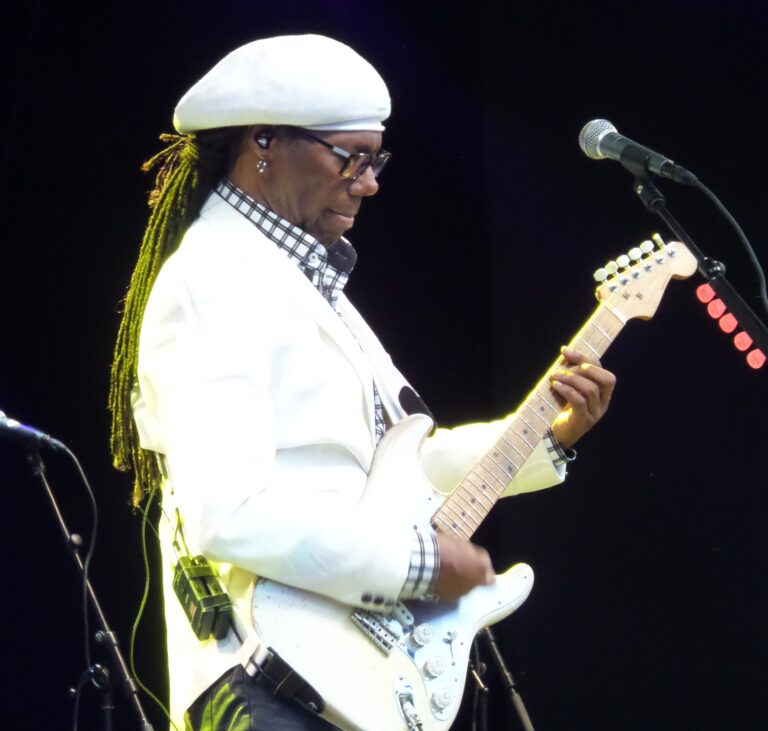
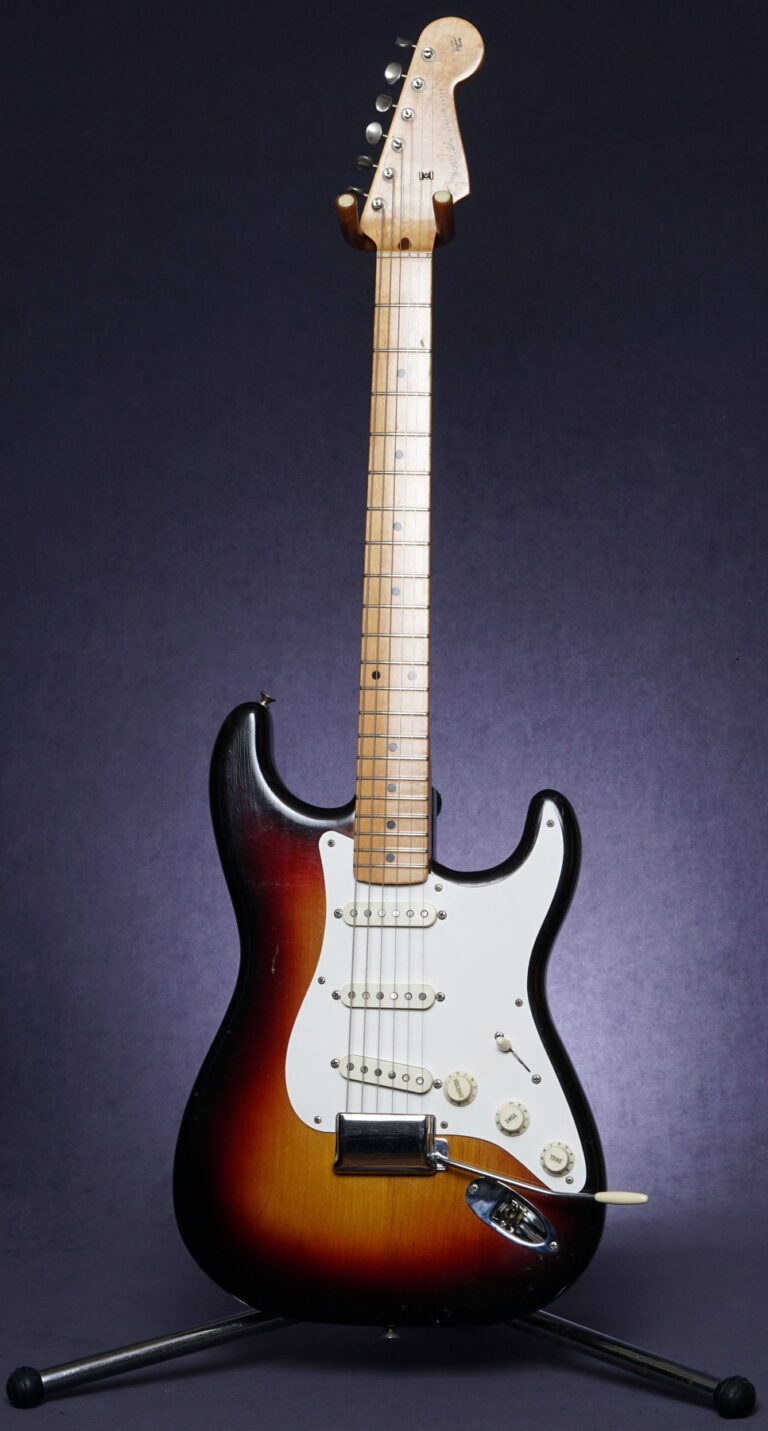
His primary instrument was a Fender Stratocaster — specifically vintage examples from the late 1950s and early 1960s, chosen for the specific tonal character of the single-coil pickups of that era. The Stratocaster’s three-pickup configuration gave access to multiple tonal characters through the pickup selector, and the single-coil pickups’ bright, defined attack — particularly the bridge pickup’s cutting character — suited the percussive, clipped playing approach that Nolen had developed. Each short, clipped note needed to be clearly defined and distinctly articulated for the rhythmic pattern to communicate with the clarity that funk guitar required, and the Stratocaster’s single-coil attack character provided this definition.
The Stratocaster pickups in his instruments — Alnico V magnets, approximately 5.6k to 6.2k ohms DC resistance — had the specific dynamic sensitivity that responded to variations in pick attack in ways that made the chop technique musically expressive. The percussive attack of a hard-picked, immediately muted single note through a Stratocaster bridge pickup had a specific character of sharp initial transient followed by immediate muting — the note was present and then gone in the specific rhythmic manner that funk required. The Stratocaster’s response to this playing technique — defining the note clearly before the muting eliminated it — was part of what made the technique work as a musical approach rather than merely as an interesting sound.
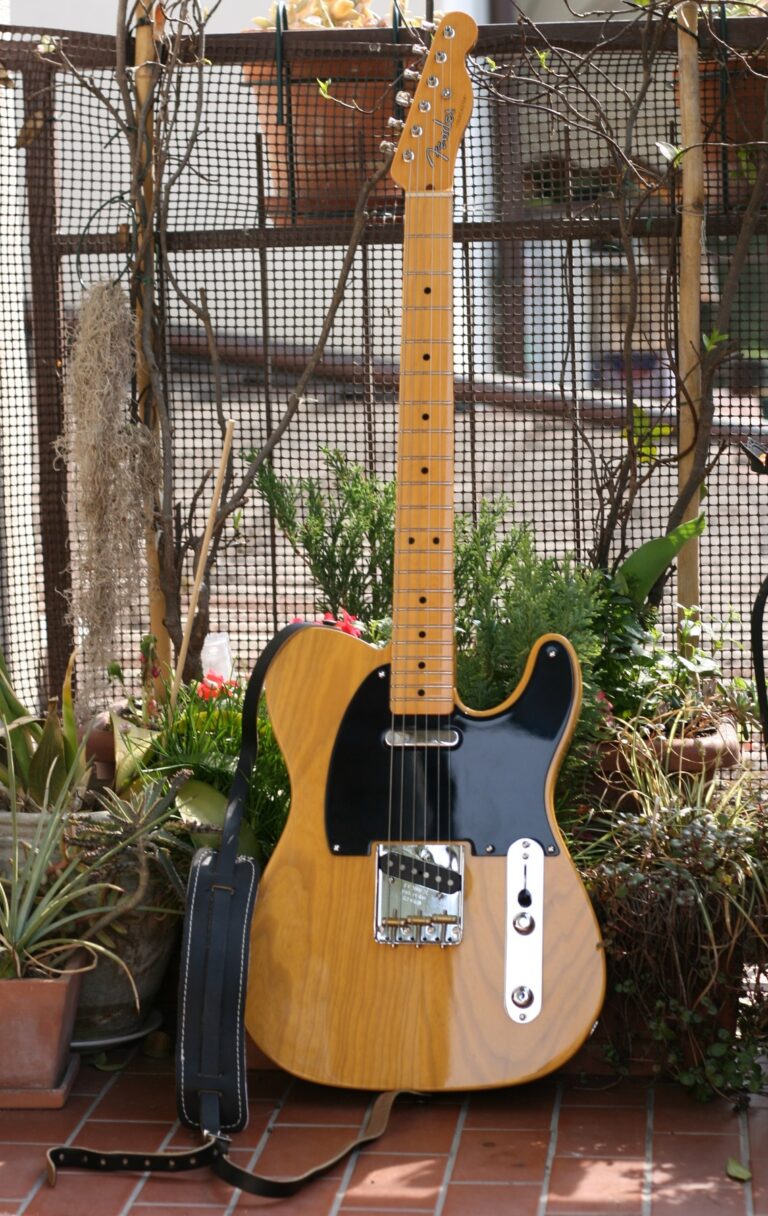
He also used a Fender Telecaster at various points — the two-pickup single-coil guitar whose bridge pickup had an even more aggressive attack character than the Stratocaster’s bridge pickup. The Telecaster’s bright, cutting twang was appropriate for specific material where the rhythmic chop needed additional edge and definition beyond the Stratocaster’s already bright character.
Various Fender and other American-made guitars of the era appeared in his playing across different recordings and tours — the specific instruments varied, but the consistent preference was for single-coil guitars whose specific attack character suited the percussive playing approach he had developed.
His string action — the height of the strings above the frets — was set relatively low, facilitating the fast, precise muting technique that his playing required. The chop technique demanded both the ability to produce a clear note and the ability to mute it immediately, and low action made both the fretting and the muting more manageable at the speeds required for funk rhythm playing.
String gauges ran medium — typically .010–.046 — providing the string mass for adequate tone in the percussive single-note work while maintaining the playability that his fast, rhythmically complex playing approach required.
Amps
Nolen’s amplification was clean and American — consistent with the R&B and soul music tradition from which funk grew, and with the specific tonal requirements of his percussive playing approach.
His primary amplifier was a Fender Bassman — the late-1950s 4×10 combo that Fender had originally designed for bass guitar but that the rock and roll and blues musicians of the era had discovered for their guitar work. The Bassman’s specific character — the cathode-follower tone stack, the 6L6 output valves, the four Jensen P10R speakers — produced a warm, clean tone with a specific quality of natural compression that suited both Nolen’s clean single-note work and the lightly driven chord fragments that appeared in his playing.
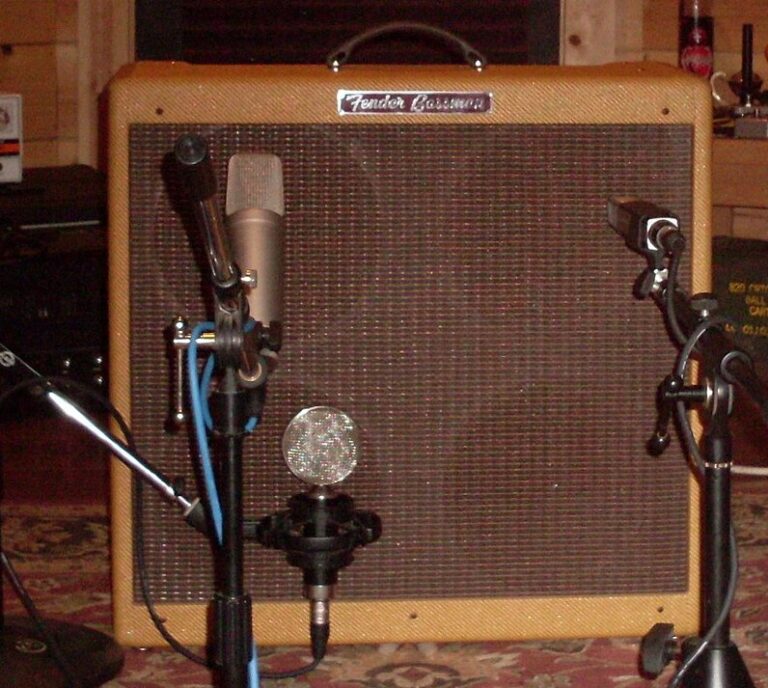
The Jensen P10R speakers in the Bassman were 10-inch alnico-magnet speakers whose specific frequency response — warmer than the 12-inch alternatives that dominated other Fender amplifiers — gave the amplified guitar a particular warmth and smoothness that suited the rhythmically complex, quickly-muted playing approach. The four speakers’ combined response, rather than the single large speaker of smaller Fender combos, gave the amplifier a more complex, slightly warmer quality that suited the funk guitar context.
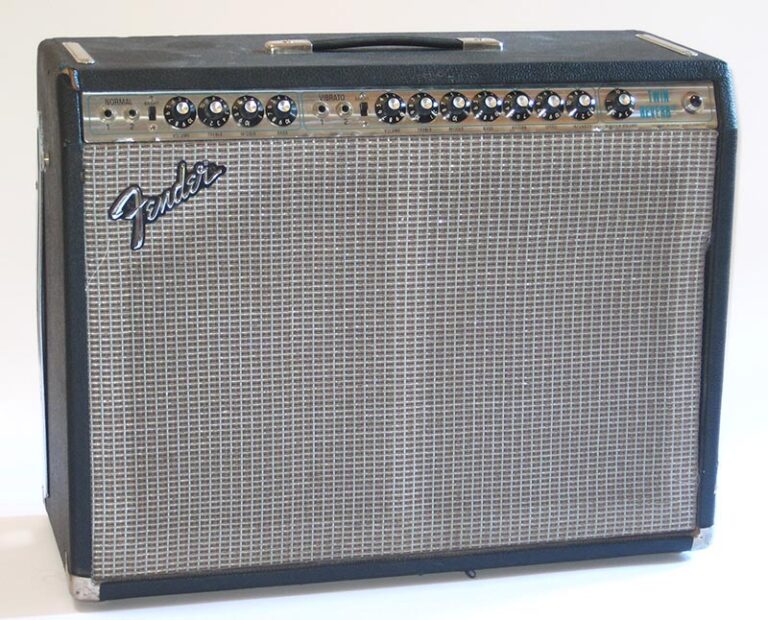
He also used Fender Twin Reverb amplifiers for larger venue applications — the 85-watt, 2×12 combo providing sufficient power for the large venues that James Brown performed in while maintaining the clean American character appropriate for the music.
The consistent priority in his amplifier choices was clean — genuinely clean, with no natural drive from the output stage, no compression from pushed speakers, no warmth from valves approaching saturation. The chop technique’s rhythmic communication required that each note be clearly defined at its attack and clearly absent when muted; any amplifier-level compression or drive that sustained notes beyond the pick attack would have obscured the rhythmic pattern that was the entire musical purpose of the playing. Clean amplification was not merely an aesthetic preference but a functional requirement of the specific playing technique.
Effects
Nolen used essentially no effects — consistent with his emphasis on the pure rhythmic communication of the chop technique and with the musical tradition in which he worked. The funk guitar approach was about rhythmic precision and harmonic implication, not tonal colour or atmospheric processing, and effects that added warmth, dimension, or complexity to the guitar’s natural tone would have obscured the rhythmic clarity that was the technique’s whole point.
The one significant exception was the wah pedal — which appeared in specific contexts where the swept filter effect added a specific rhythmic and tonal expressiveness to the playing. The wah’s use in the funk context was itself a Nolen innovation that became central to the funk guitar vocabulary: not the conventional rock use of the wah as a lead guitar colour effect, but the rhythmic, syncopated wah use where the pedal was rocked in specific rhythmic patterns that added a percussive vowel-quality to the notes. This rhythmic wah technique — treating the wah as a rhythmic percussion instrument as much as a tonal effect — was one of Nolen’s specific contributions to the funk guitar vocabulary, and it influenced every subsequent funk guitarist who incorporated the wah into their rhythmic approach.
The clean, direct signal chain — Stratocaster into clean Fender amplifier, with the wah as the single optional additional element — was the functional requirement of his specific musical approach rather than a philosophical choice against effects. The music required clean, direct, rhythmically precise guitar; the equipment served this requirement with complete simplicity.
Playing Style & Tone Philosophy
Jimmy Nolen’s playing style is one of the most influential and most completely original in the history of the electric guitar — not because it was technically difficult in the conventional sense (the chop technique is simpler to learn in its basic form than most lead guitar approaches) but because it was conceptually revolutionary, requiring a complete reconceptualisation of what the rhythm guitar was for and how it should relate to the rest of the ensemble.
The fundamental innovation was the shift from sustained chord playing — the dominant rhythm guitar approach in both jazz and rock and roll, where chords were held for their duration and the harmonic content was the primary musical value — to percussive, muted single-note and chord-fragment playing where the rhythmic placement of individual attacks was the primary musical value. This shift was analogous to the shift from melodic instrumental music to percussion music: where the sustained chord approach treated the guitar as a harmonic instrument that also had rhythmic implications, the chop approach treated the guitar as a rhythmic instrument that also had harmonic implications.
The specific techniques Nolen developed to serve this approach included: the up-stroke emphasis (where upward pick strokes on the Stratocaster’s single-coil pickups produced a specific bright, percussive attack that downstrokes didn’t replicate), the immediate left-hand muting after each picked note or chord fragment (producing the characteristic “chk” quality of the muted note that gave the chop its specific percussive texture), and the specific rhythmic patterns of 16th-note subdivisions that gave funk its characteristic forward momentum despite (or because of) the relatively slow harmonic rhythm.
Tonally, Nolen’s philosophy was absolute functional simplicity: the guitar should sound like a guitar with clearly defined attack and immediate muting, and anything that obscured either of these qualities was working against the music’s purpose. The Stratocaster’s single-coil attack definition suited the chop technique’s requirement for clear note onset; the clean Fender amplification reproduced this definition faithfully; and the wah was an optional addition that served specific rhythmic and tonal purposes when the music required it. Everything else was surplus to the music’s requirements.
How to Sound Like Jimmy Nolen
Guitar Approach
A Fender Stratocaster — bridge pickup, or bridge and middle in the second position for a slightly warmer character — is the correct starting point. Medium strings (.010–.046) provide adequate tone mass without impeding the fast muting that the chop technique requires. The technique itself is the most important element and requires specific development: the upstroke emphasis that gives the chop its specific bright, percussive quality, the immediate left-hand muting after each attack, and the specific 16th-note rhythmic subdivision patterns that funk rhythm guitar requires. This is not learned from music theory instruction but from listening intensively to the original Brown recordings and directly imitating what Nolen was doing rhythmically and tonally.
Amp Approach
A Fender Bassman (4×10 version, late 1950s circuit) or Fender Twin Reverb at genuinely clean settings — no natural drive, no compression, no warmth from pushed valves. The cleaner the amplifier, the more clearly the rhythmic pattern of the chop technique communicates. Any drive or compression that sustains notes beyond their picked duration obscures the rhythmic precision that is the entire purpose of the technique. Run the amplifier as clean as it will go at the required volume level.
| Control | Setting | Notes |
|---|---|---|
| Volume | 4–6 | Clean — the chop technique requires complete absence of saturation |
| Treble | 7 | High — Stratocaster bridge pickup needs treble presence for chop attack |
| Middle | 5 | Moderate — present but not dominant |
| Bass | 3–4 | Controlled bass — the chop is percussive, not warm |
| Presence | 6 | High presence for note definition in the percussive attack |
| Wah pedal (optional) | Rhythmically active | Rocked in rhythmic patterns — not swept gradually |
Influence & Legacy
Jimmy Nolen’s influence on subsequent music is one of the most extensive in the history of the electric guitar — extending through funk, soul, disco, hip-hop (through samples of the original Brown recordings), and contemporary R&B in ways that touch virtually every strand of Black American popular music since the mid-1960s. The specific rhythmic vocabulary he developed — the 16th-note subdivision, the percussive chop, the rhythmic wah — has been the fundamental currency of funk and R&B guitar playing for six decades.
His direct successors in the James Brown Band — Hearlon “Cheese” Martin, Damon Wood, and subsequent players — continued and extended his approach within the specific Brown context. The broader influence moved through Sly Stone’s band, through Parliament-Funkadelic’s Eddie Hazel and Garry Shider, through Prince’s guitar approach in his early work, and through the entire subsequent tradition of funk and R&B guitar playing. Every session guitarist who has played on a funk or R&B record since 1967 has been working within a rhythmic vocabulary that Nolen created.
The hip-hop connection is particularly significant: the James Brown recordings on which Nolen’s guitar appears have been sampled more extensively than almost any other source in hip-hop history. Every hip-hop track that has sampled a Brown recording has potentially been using Nolen’s guitar as a rhythmic element, making him one of the most widely heard guitarists in contemporary music even though his name is rarely attached to the music in which his playing appears.
For players exploring the funk guitar tradition that Nolen originated, the rigs of Josh Homme — whose Queens of the Stone Age work showed how similar rhythmic precision applied in a hard rock context produces distinctive results — and Jimmy Johnson, whose Chicago blues work shows the tradition from which Nolen’s approach descended, provide illuminating historical context. The rhythmic vocabulary he developed connects to Willie Johnson‘s physically intense Chicago blues guitar, showing the blues tradition that preceded and enabled the funk breakthrough.
Cold Sweat: The Recording That Defined Funk Guitar
“Cold Sweat” (1967) — James Brown’s two-part single that is widely cited as the first fully realised funk recording — contains some of Nolen’s most important guitar work and the clearest single document of how his specific approach to the instrument created a new musical vocabulary. Understanding what his guitar actually does on this recording — measure by measure, rhythmically and tonally — is essential for understanding both the chop technique and the specific equipment that served it.
The opening guitar figure of “Cold Sweat” is one of the most immediately recognisable in American music: a single-note riff that outlines the harmonic content of the groove while maintaining the specific percussive, muted character that distinguishes funk guitar from both blues lead playing and conventional rhythm guitar chord work. The note is there and then gone — present for its rhythmic value and then immediately absent to make space for the next rhythmic placement. The Stratocaster’s single-coil bridge pickup provided the bright, defined attack that made each note clearly audible despite its brevity; the clean Fender amplification reproduced this definition faithfully without the sustaining warmth of driven amplification that would have blurred the rhythmic precision.
The rhythmic patterns Nolen used on the track — primarily 16th-note subdivision with specific upstroke emphasis and immediate muting — created the specific forward momentum of the groove without the harmonic movement that conventional rhythm guitar relied on. The harmony barely changed; the rhythm was everything. This fundamental reversal of the conventional relationship between harmony and rhythm in guitar playing was the specific innovation of “Cold Sweat” and of the funk approach generally, and Nolen’s execution of it on this specific recording was the demonstration that made the innovation audible to the world.
Papa’s Got a Brand New Bag: The Transition Document
“Papa’s Got a Brand New Bag” (1965) — the recording that announced Brown’s musical transformation toward funk — documents an earlier stage of Nolen’s technique, showing the transition from the more conventional R&B rhythm guitar approach toward the percussive, muted funk vocabulary. Comparing the guitar work on this recording with the more fully developed approach on “Cold Sweat” two years later illuminates how the technique developed through performance and recording rather than through a single breakthrough moment.
The guitar on “Papa’s Got a Brand New Bag” is less extreme in its percussive emphasis than the fully realised chop technique of the later recordings — there is more sustained chord content, more conventional rhythm guitar playing — but the direction of travel is clearly toward the more rhythmically radical approach that would characterise the subsequent funk recordings. The Stratocaster’s specific character is already present — the bright, defined single-coil attack that distinguished it from the warmer, more rounded character of Gibson instruments — and the rhythmic approach already emphasised the attack over the sustain in ways that pointed toward the more extreme percussive minimalism of the later work.
This transitional character is historically significant because it shows that the funk guitar vocabulary was developed gradually through the performance practice of the James Brown Band rather than invented as a complete system. Nolen’s approach evolved in response to the specific musical requirements that Brown’s rhythmic vision imposed on the band — the increasing emphasis on rhythmic precision, on the groove rather than the melody, on the forward momentum of the 16th-note subdivision over the harmonic content of sustained chords. The equipment — the Stratocaster, the Bassman — remained consistent while the playing approach evolved to serve the increasingly specific rhythmic demands of Brown’s music.
The James Brown Band: Discipline and Innovation
Understanding Nolen’s equipment and playing in the context of the James Brown Band’s specific musical culture helps explain both the specific approach he developed and the consistency with which he maintained it across two decades of recording and touring. The James Brown Band was not a democratic musical ensemble in which individual musicians freely expressed their own musical personalities — it was a highly disciplined organisation in which Brown exercised direct and detailed control over every aspect of the music, including the specific rhythmic patterns each musician played.
Brown’s legendary tendency to fine musicians for musical mistakes — including wrong notes, wrong rhythms, and rhythmic imprecision — created a specific professional context in which musical discipline was as important as musical creativity. The chop technique’s specific rhythmic patterns were not chosen by Nolen freely but were developed in response to Brown’s specific musical direction, with Nolen’s particular contribution being the specific technique — the upstroke emphasis, the immediate muting, the characteristic Stratocaster single-coil attack — that gave the rhythmic pattern its specific tonal quality.
This context illuminates the specific minimalism of Nolen’s equipment and playing approach: effects and tonal complexity were not merely unnecessary in this context but actively worked against the specific rhythmic clarity that Brown’s music required. The clean Stratocaster through the clean Bassman was not a stripped-back philosophical statement but the functional requirement of a musical environment that prioritised rhythmic precision above all else. Every additional piece of equipment, every additional tonal colour, every additional layer of processing would have made the rhythmic pattern less rather than more clear, and clarity was what Brown’s music demanded.
The Wah Pedal as Rhythm Instrument
Nolen’s specific approach to the wah pedal — deploying it rhythmically rather than as a conventional lead guitar sweep — deserves specific examination because it was a genuinely innovative technique that transformed the wah from a lead guitar colour effect into a rhythm instrument. Understanding what specifically he did with the wah, and why his approach was different from conventional wah use, illuminates both the technique and the equipment choice.
The conventional rock use of the wah pedal — slowly sweeping from heel to toe position while playing a melodic lead line — produced the characteristic vocal effect that gave the wah its name and its appeal in psychedelic and blues-rock contexts. The sweep was gradual, the effect was tonal and melodic, and the pedal was an expression tool for the lead guitar’s melodic content.
Nolen’s rhythmic wah use was fundamentally different: he rocked the pedal quickly in specific rhythmic patterns — often synchronised with the 16th-note subdivisions of his chop technique — producing rapid alternations between the “wah” and “wah” positions that added a rhythmic vowel-quality to the guitar’s attack. Instead of the gradual sweep of a lead guitar wah, the pedal movement was as percussive as the technique itself — quick, rhythmically precise, treating the wah circuit as a percussion element rather than a lead guitar expression tool.
The specific acoustic mechanism of this approach — the wah circuit’s bandpass filter shifting rapidly between different centre frequencies in rhythmic patterns — added a specific vocal, consonant-vowel quality to the chop technique’s already percussive character. The guitar sounded like it was speaking in rhythm rather than playing sustained pitches, which was entirely consistent with the fundamental approach of treating the guitar as a rhythmic percussion instrument that also produced pitched sounds.
The Cry Baby wah — the specific version that Nolen used — had a particular inductor-based circuit whose frequency response and sweep character suited the rhythmic wah approach. The specific resonant peak of the Cry Baby’s inductor circuit, combined with the Stratocaster’s bridge pickup’s bright character, produced the specific vocal quality that became part of the funk guitar vocabulary. The equipment was, again, exactly right for the specific musical purpose.
Jimmy Nolen’s legacy extends far beyond his own lifetime and his own recordings — into every piece of funk, every R&B record, every hip-hop track that has drawn on the rhythmic vocabulary he created. The Stratocaster through the clean Bassman, the chop technique, the rhythmic wah — these tools and their specific applications created a musical language that has been spoken by millions of musicians in millions of different contexts across six decades without losing its essential character. The equipment was minimal; the technique was specific; the impact was total. That combination — minimal means, specific application, total musical consequence — is the Jimmy Nolen gear story, and it is one of the most significant in the history of the electric guitar.
The Stratocaster’s specific upstroke response — the reason why upstroke picking on the Stratocaster’s single-coil bridge pickup produced the specific bright, percussive attack that characterised the chop technique — is worth examining in acoustic detail. When the pick moves upward across the string (from the bass side toward the treble), it contacts the string at a slightly different angle and position from a downstroke. The upstroke tends to pick the string slightly closer to the bridge, emphasising the upper harmonics relative to the fundamental; it also produces a slightly faster release of the string from the pick, giving a marginally shorter and brighter attack transient. The Stratocaster’s bridge single-coil pickup, positioned close to the bridge, was already emphasising the upper harmonic content of the string’s vibration pattern; the upstroke’s additional upper-harmonic emphasis amplified this character. The result was a specific quality of note attack — bright, defined, with a particular sharp transient — that the downstroke at the same position and the same pickup didn’t quite replicate. Nolen’s use of upstroke emphasis for the chop technique was not merely a stylistic preference but a functional choice: the upstroke produced the specific attack character that the technique required, and the Stratocaster’s bridge pickup responded to that upstroke with exactly the right amount of brightness and definition for the rhythmic pattern to communicate clearly.
The broader significance of Nolen’s contribution to the history of American music extends beyond the specific guitar technique to the conceptual framework that the technique embodied: the elevation of rhythm to the primary musical value, the subordination of melody and harmony to rhythmic precision, and the treatment of the guitar as a percussion instrument that happened to produce pitched sounds rather than a melodic instrument that happened to have rhythmic capabilities. This conceptual framework — most explicitly realised in Brown’s music with Nolen’s guitar as its primary instrumental expression — was the foundation on which hip-hop’s rhythmic culture subsequently built, and its influence on contemporary music remains so pervasive that it is essentially invisible, woven into the fabric of how rhythm is understood in popular music. The minimal equipment that Nolen used to create this framework — the Stratocaster, the Bassman, the wah — was the appropriate physical vehicle for a conceptual innovation of extraordinary scope, and its apparent simplicity reflected the specific directness of the musical vision rather than any limitation of the player’s knowledge or resources.
The Fender Bassman 4×10 — Nolen’s primary amplifier for much of his James Brown work — has a specific historical irony that is worth noting: the amplifier was designed by Leo Fender as a bass guitar amplifier, and the electric bass guitar had been designed partly to replace the acoustic upright bass in the same way that the electric guitar had replaced the acoustic guitar in many band contexts. But the Bassman proved to be more effective as a guitar amplifier than as a bass amplifier — its frequency response was somewhat limited for the extended bass frequencies that the electric bass produced, but its character for guitar was extraordinary — and it was adopted by blues and rock and roll guitarists before Nolen used it for the specific requirements of his funk rhythm work. The fact that the most important funk guitar recording setup was based on an amplifier designed for a different instrument is a reminder that equipment history rarely follows the logical path that its designers intended, and that the most significant uses of specific pieces of equipment are frequently not those that the designer foresaw. Nolen’s use of the Bassman for the chop technique was as specific and as informed as any of the other equipment choices that defined his approach, even though the amplifier’s designer might not have anticipated this application of his design.
The Stratocaster’s vibrato arm — absent from Nolen’s primary playing approach but present on the instrument — is worth noting as an element of the guitar that he did not exploit, which is itself informative about his playing philosophy. The vibrato arm’s primary use in rock guitar — creating pitch effects, producing sustained note modulation, achieving specific physical sounds through rapid arm manipulation — was entirely inconsistent with the chop technique’s emphasis on immediate note definition and immediate muting. A vibrato arm used during the chop technique would have introduced pitch instability that conflicted with the harmonic clarity that the technique’s minimal but specific harmonic implications required. Nolen’s non-use of the vibrato arm was as functionally motivated as his use of the upstroke and the immediate muting — every aspect of his approach was in service of the specific rhythmic and tonal communication the technique required, and the vibrato arm was simply not part of that service. This specific restraint — knowing which capabilities of the instrument to exploit and which to leave unused — is as much a part of his equipment story as any active choice he made, and it reflects the same complete understanding of his musical requirements that characterised every other aspect of his approach.
Jimmy Nolen died in 1983, at 49, decades before the full cultural recognition of his contribution to American music had been established. The hip-hop sampling revolution that would make his specific guitar sounds among the most widely heard in the world was only beginning at the time of his death, and the academic and critical attention to the specific details of his technique and equipment that now recognises his importance was largely absent during his lifetime. Like many of the most foundational figures in American popular music, he was more important than he was celebrated, and his equipment — the Stratocaster, the Bassman, the Cry Baby — was chosen for functional musical reasons rather than for the prestige that retrospective recognition might have associated with it. The guitar served the music; the music served the people; and the people responded to it in ways that have shaped every subsequent generation of rhythm music to the present. That is a legacy proportional to the achievement, and the minimal equipment that produced it was exactly appropriate to the scale of the musical vision it served.
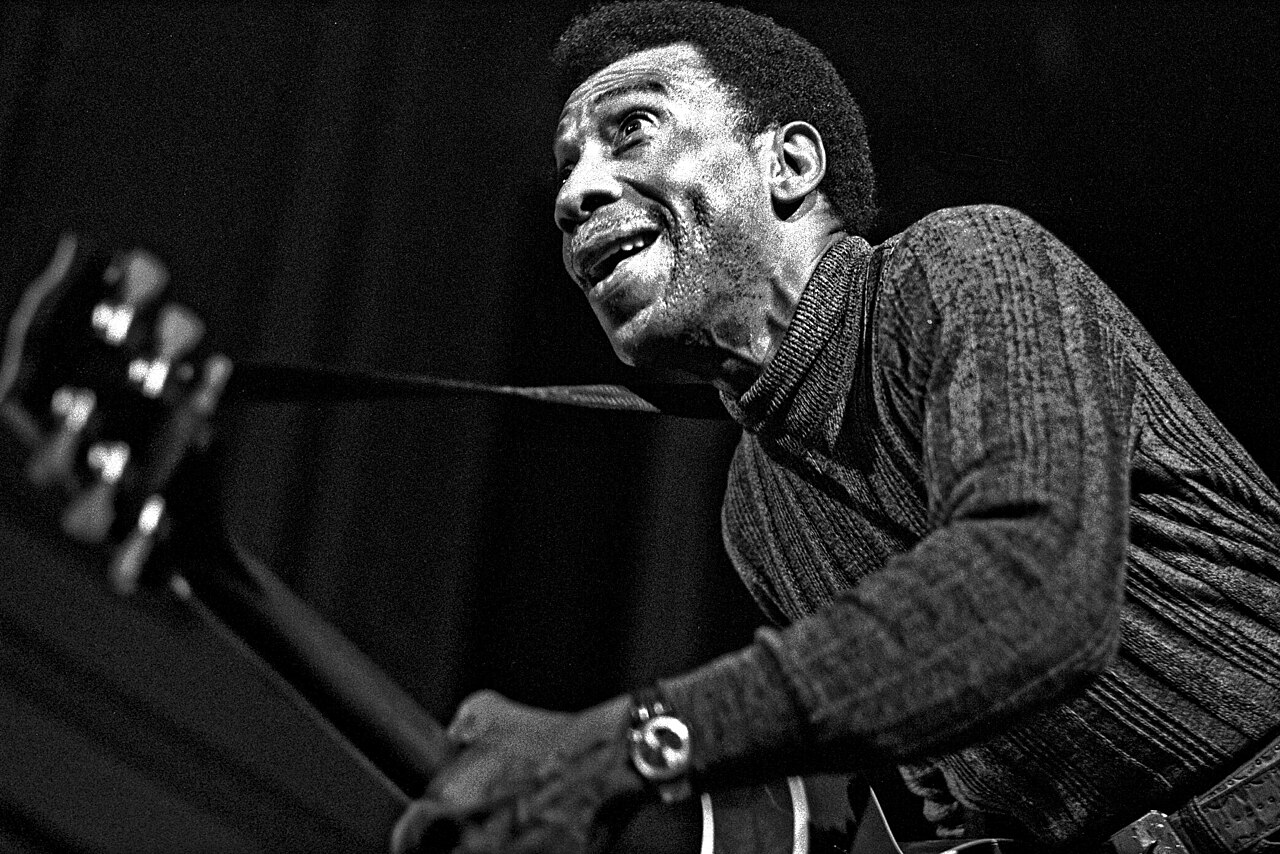
The Texas blues context of Nolen’s musical formation — the tradition that shaped his initial guitar vocabulary before the James Brown context transformed it — is worth examining briefly as part of the complete picture of how the funk guitar approach developed from its roots in the American blues tradition. Texas blues in the postwar period — the tradition of T-Bone Walker, Freddie King, and the Dallas and Houston blues scenes — had developed a specific approach to rhythm guitar that emphasised tight, precise chord playing with specific rhythmic attack rather than the more flowing, sustained chord approach of the acoustic blues tradition. T-Bone Walker’s specific approach to the rhythm guitar — the tight, walking rhythm parts that gave his bands their specific rhythmic drive — was one of the immediate predecessors of the chop technique, and Nolen would have absorbed this approach through his Texas formation before applying it in the radically transformed context of Brown’s music. Understanding this lineage — Texas blues rhythm guitar as the precursor to funk rhythm guitar — illuminates how the chop technique was not invented from nothing but developed through the transformation of an existing tradition in response to a new musical context’s specific demands.
The clean, bright, percussive Stratocaster tone that Nolen used for the chop technique was — in retrospect — the exactly correct tonal solution to the specific acoustic problem that funk rhythm guitar posed: how to communicate a complex rhythmic pattern at high performance volumes, in a band context that included horn section, bass, and drums, without the rhythmic content being obscured by sustained harmonic content or by the compression and warmth of driven amplification. The single-coil’s brightness cut through the horn section’s midrange dominance; the clean amplification preserved the note attack without sustaining it; the immediate muting enforced the rhythmic precision that the pattern required. This was equipment in perfect service of a specific musical purpose, and the fact that the solution was aesthetically and functionally elegant — simple, direct, completely effective — is the highest possible validation of an equipment choice.
Frequently Asked Questions: Jimmy Nolen Guitars & Gear
What guitar did Jimmy Nolen play?
Jimmy Nolen’s primary guitar was a Fender Stratocaster — vintage late-1950s and early-1960s examples with Alnico V single-coil pickups (approximately 5.6k to 6.2k ohms DC resistance). He used the bridge pickup primarily for its bright, percussive attack character that suited his chop technique. He also played Fender Telecasters at various points. His consistent preference for Fender single-coil guitars reflected the functional requirement of his playing approach: clear, defined note attack followed by immediate muting, which single-coil brightness provided better than humbucker warmth.
What amp did Jimmy Nolen use?
His primary amplifier was a Fender Bassman — the late-1950s 4×10 combo with 6L6 output valves and four Jensen P10R alnico-magnet speakers. For larger venues, he used Fender Twin Reverb amplifiers. His amplifier choices consistently prioritised clean, undistorted sound — the chop technique’s rhythmic communication required clean amplification that did not sustain notes beyond their picked duration, and any drive or compression would have obscured the rhythmic precision that was the technique’s musical purpose.
What is the chop technique?
The chop technique is Jimmy Nolen’s primary contribution to the vocabulary of rhythm guitar — a playing approach based on short, percussive, immediately muted single notes and chord fragments played in specific rhythmic patterns (primarily 16th-note subdivisions) that treat the guitar as a rhythmic percussion instrument. The technique involves picking specific notes or chord fragments with an upstroke emphasis and immediately muting them with the left hand, producing a percussive “chk” quality that gave James Brown’s music its specific rhythmic forward momentum. This approach replaced the sustained chord-based rhythm guitar of previous R&B and soul music with a rhythmically radical new vocabulary that became the foundation of funk.
What effects did Jimmy Nolen use?
Nolen used essentially no effects in the conventional sense — his approach was based on the pure rhythmic communication of the chop technique, which required clean, direct amplification rather than tonal processing. The single significant exception was the wah pedal, which he used rhythmically — rocking the pedal in specific rhythmic patterns rather than sweeping it gradually for lead guitar expression. This rhythmic wah use was itself an innovation that influenced subsequent funk guitarists and contributed to the rhythmic vocabulary he developed.
How did Jimmy Nolen invent funk guitar?
Nolen didn’t so much “invent” funk guitar in a single breakthrough moment as develop the specific rhythmic approach gradually through years of playing with James Brown’s band during the transformation of the music from soul toward funk in the mid-1960s. The specific combination of percussive single-note playing, 16th-note subdivision patterns, immediate left-hand muting, and upstroke emphasis evolved in response to the specific rhythmic demands that Brown’s musical vision imposed on the band. Brown’s insistence on rhythmic precision — his role as both bandleader and rhythmic director — drove the band’s musicians, including Nolen, to develop increasingly specific and rhythmically refined approaches to their instruments.
What James Brown recordings feature Jimmy Nolen’s guitar?
Nolen’s guitar appears on a large number of James Brown’s most important recordings, including “Papa’s Got a Brand New Bag” (1965), “I Got You (I Feel Good)” (1965), “Cold Sweat” (1967), “Say It Loud, I’m Black and I’m Proud” (1968), “Funky Drummer” (1969), “Get Up (I Feel Like Being a) Sex Machine” (1970), and many others from the most commercially and artistically significant period of Brown’s career. His guitar was central to the development of the funk sound on these recordings.
Why is Jimmy Nolen’s guitar widely sampled in hip-hop?
The James Brown recordings on which Nolen’s guitar appears have been sampled more extensively than almost any other source in hip-hop history — because the specific rhythmic character of those recordings, including the chop technique guitar parts, provided exactly the rhythmic energy and the specific tonal character that hip-hop producers needed for their rhythmic foundations. The short, percussive nature of the chop technique made individual guitar notes and fragments particularly useful as sampling material, and the historical recognition of Brown’s recordings as foundational documents of Black American music made them culturally resonant sources for producers seeking to connect their work to that tradition.
Genre:
Funk / R&B
Decades:
1960s | 1970s | 1980s
Image credits
- T-Bone Walker: Heinrich Klaffs, Wikimedia Commons, CC BY-SA 2.0.
- Fender Stratocaster: Lightburst, Wikimedia Commons, CC BY-SA 4.0.
- Fender Telecaster: Massimo Barbieri, Wikimedia Commons, CC BY-SA 3.0.
- Fender Twin Reverb: Micahmedia, Wikimedia Commons, CC BY 3.0.
- Fender Bassman: Roadside Guitars, Wikimedia Commons, CC BY-SA 2.0.