
John Renbourn Guitars & Gear: The Complete Guide to Pentangle’s Folk-Baroque Guitar Architect
When John Renbourn and Bert Jansch played together in Pentangle, it was described as “downright unfair” — two of the finest acoustic guitarists in Britain, playing in conversation with each other, each bringing a completely distinct musical personality that was somehow enhanced rather than diminished by the other’s presence. Jansch was the propulsive, ornate picker whose blues and folk playing had a physical immediacy that could stop a room. Renbourn was the jazz-and-classical-inflected baroque-ist, whose arrangements drew on medieval English music and pre-Renaissance polyphony as naturally as they drew on Charlie Parker or Lead Belly. The combination was one of the most extraordinary guitar partnerships in twentieth-century music — and it produced, in Pentangle, one of the bands that defined what folk music could be when serious musicians took it seriously.
John Renbourn was born John McCombe on August 8, 1944, in Marylebone, London. His father was killed in action in WWII shortly after Renbourn’s birth; his mother, a pianist, introduced him to classical music during his early years in Surrey. He was adopted in 1952 and took the surname Renbourn. His guitar journey began during England’s skiffle craze in the late 1950s — Lonnie Donegan’s jangly acoustic folk-pop providing the first spark — before expanding into American blues, folk, jazz, and eventually the medieval and Renaissance music that would become the signature of his solo work. He studied classical guitar formally for two years at the George Abbot School in Guildford, before moving to London in 1964 to break into the Soho folk circuit. There he found Davy Graham, Bert Jansch, Martin Carthy, and a community of musicians who were collectively inventing something that had no name yet but would eventually be called folk baroque.
He died on March 26, 2015, at seventy years old, found at his home in Hawick, Scotland. His archive was subsequently donated to Newcastle University. Eric Clapton, Jimmy Page, Clive Carroll, and Andy McKee are among the players who cite his influence. His music — ranging from fingerstyle blues to medieval polyphony to Indian raga-influenced arrangements — was “impossible to neatly categorise,” as his Last.fm biography puts it. That impossibility of categorization was the point. Renbourn wasn’t interested in genre; he was interested in music, and the guitar was the instrument through which he pursued all of it.
Background: From Skiffle to Sir John Alot, From Pentangle to Solo Baroque
Renbourn’s early London years placed him at the center of the folk revival at exactly the moment it was absorbing its most important influences. He met Bert Jansch in 1963 — Jansch had come down from Edinburgh, already fully formed as a guitarist with a style that synthesized Big Bill Broonzy, Davy Graham, and Brownie McGhee into something entirely his own. The two guitarists began playing together informally, developing the interlocking guitar style that would later be called folk baroque: two independent melodic lines, each complete in itself, woven together so that the whole was harmonically and rhythmically richer than either part alone. Their 1966 album Bert and John captured this duet approach for the first time on record, with Renbourn’s jazz-classical sensibility providing counterpoint to Jansch’s blues-rooted directness.
His solo records for Transatlantic in the mid-1960s — particularly Sir John Alot (1967) and The Lady and the Unicorn (1970) — are the clearest statements of his individual musical vision. Sir John Alot combines jazz/blues/folk playing with classical and early music style in a way that had never been attempted on acoustic guitar before. The Lady and the Unicorn goes further: a meditation on medieval music and pre-Renaissance polyphony, using the guitar to recreate the textures of viols, lutes, and early vocal music. Renbourn was one of the first guitarists to treat the acoustic guitar as a vehicle for early music — a tradition that has since produced a significant body of work, all of which owes a debt to what he established on these records.
Pentangle (1967–1973) expanded the canvas. With Jacqui McShee’s vocals, Danny Thompson’s jazz-upright bass, and Terry Cox’s drums alongside the Jansch/Renbourn guitar partnership, the band created a specific sound: acoustic jazz-folk with medieval and blues elements, recorded and performed with the sophistication of a jazz ensemble rather than the rawness of a folk club. Their albums — including The Pentangle (1968), Basket of Light (1969), and Cruel Sister (1970) — remain among the most consistently inventive records of the British folk revival.
After Pentangle dissolved in 1973, Renbourn continued solo, leading the John Renbourn Group and collaborating extensively with American fingerpicker Stefan Grossman — a partnership that produced a series of duet albums that document Renbourn’s mature technical command. He studied classical guitar formally in the mid-1980s, absorbing new technique into his already extensive vocabulary. He continued teaching, recording, and performing until his death, with his archive now preserved at Newcastle University as one of the most important collections in British folk guitar history.
The Rig: John Renbourn’s Guitars and Instruments
Guitars
Scarth Archtop (Earliest Recordings, Debut Album): John Renbourn’s earliest guitar — documented on the cover of his 1965 solo debut — was a Scarth guitar, described as “a distinctly British archtop creation with a round soundhole.” The Scarth was a British-made instrument, built primarily for dance-band players — maple back and sides, arched top, tailpiece, but with a round rather than f-hole soundhole that gave it a different character from the jazz archtops of American manufacture. The Scarth’s warm, full tone with a specific mid-range presence is audible on his earliest recordings, where it was frequently mistaken by listeners for a Martin — “I was astonished,” one reviewer noted upon learning the guitar on Sir John Alot was a Gibson rather than a Martin. The Scarth provided the foundational acoustic character of Renbourn’s earliest sound: British lutherie, warm and full, without the specific American character of Gibsons or Martins.
Gibson J-50 (Primary Guitar, Late 1960s and Early 1970s, Pentangle Era): In the mid-1960s, Renbourn acquired a Gibson J-50 that became his primary instrument through the late 1960s and early 1970s — the most productive and most celebrated period of his career. The J-50 is a natural-finish version of the J-45, with mahogany back and sides and a spruce top: warm, balanced, with the specific mahogany warmth that suits fingerstyle work. He is photographed with it on the cover of the 1966 album Another Monday, and it appears on his solo Transatlantic records through The Hermit. In his own words: “The J-50 was my main guitar on the solo Transatlantic records up to ‘The Hermit’, by which time it was ready for a re-fret and a rest. The recording studio can be a cruel judge of things that go unnoticed on the road.”
He owned a 1963 J-50, by his own account — one of the pre-CBS-takeover period Gibson acoustic guitars that are regarded as among the finest production instruments of their era, with the specific tonal qualities of Adirondack spruce tops, hide glue construction, and the particular mahogany bodies of early 1960s Gibson production. He also owned a Gibson ES-335 “dot” semi-acoustic during this period, which he played fingerstyle as well as for lead lines — an unusual approach that reflected his classical guitar training and his willingness to apply fingerstyle technique to instruments not conventionally associated with it.
Guild D-55 (Mid-to-Late 1970s, Stefan Grossman Collaboration Period): After the J-50 needed rest, Renbourn acquired a Guild D-55 — a premium dreadnought with rosewood back and sides and a spruce top, representing Guild’s flagship acoustic model. He bought it used (“already played-in, which meant that I didn’t have to wait to hear how it was going to open up”), and made two modifications: he stripped the varnish off the top (allowing the spruce to vibrate more freely without the damping effect of the finish) and slimmed the neck down slightly for easier high-fret access. The Guild D-55 appears on The Black Balloon (1979) and on his recordings and touring with Stefan Grossman. The rosewood back and sides give the D-55 a different tonal character from the mahogany J-50 — more projecting, with a brighter top end and more articulate bass. For Renbourn’s increasingly complex arrangements, the Guild’s clarity and projection suited the demands of the material.
Franklin OM (Custom Luthier Instrument, 1970s–1980s): In the mid-to-late 1970s, Renbourn moved to an orchestra model (OM) body size — smaller and more balanced than the dreadnought, specifically suited to fingerstyle playing where note separation and clarity matter more than maximum volume. His primary OM was built by Nick Kukich of Franklin Guitars in Michigan — a small luthier operation known for high-quality acoustic instruments. The Franklin OM’s specific construction details suited Renbourn’s increasingly refined fingerstyle approach: the OM body’s balanced frequency response and clear articulation suited the complex polyphonic arrangements he was developing through this period. He later also used an OM built by Ralph Bown, another respected small-operation luthier, continuing the pattern of seeking instruments from individual makers rather than factory production.
Gurian Guitar (Collection Instrument): A Gurian guitar — built by Michael Gurian, one of the pioneers of the 1960s and 1970s American independent lutherie movement — appears in the auction of Renbourn’s estate instruments following his death. Gurian built distinctive, individually voiced instruments during his active building years, and his guitars are sought after by players who find factory production inadequate for serious fingerstyle work. The Gurian’s specific construction and tonal character made it a collector’s instrument by the time of Renbourn’s estate sale.
Martin OM John Renbourn Custom Signature Edition (2011): In 2011, Martin produced a signature model for Renbourn — the OMM John Renbourn Custom Artist Edition, with Alpine spruce top and Madagascar rosewood back and sides. This was surprising to many in the guitar community, as Renbourn had not historically been a Martin player — his career had been defined by Gibsons, Guilds, and custom luthier instruments. The Martin company’s own explanation noted that Renbourn had “evolved through round and square-shouldered dreadnoughts and eventually settled on orchestra models from both American and European builders” and that “joining forces with C.F. Martin — which originated the orchestra model in 1929 — to create the Martin OM is the natural culmination of a lifelong quest.” Renbourn himself said: “I am over the moon about this guitar.” The instrument combined Martin’s American lutherie tradition with European-influenced design elements, fitting Renbourn’s career-long synthesis of American and British musical traditions.
Sobell 10-String Cittern (Pentangle and Medieval Music Work): Among the non-standard instruments in Renbourn’s documented collection is a 1970s 10-string Sobell cittern — built by Stefan Sobell, one of Britain’s most respected instrument makers. The cittern is a historical plucked string instrument of the Renaissance and early modern period, and Renbourn’s use of one — for Pentangle and for his medieval music work — was consistent with his serious engagement with pre-Renaissance music traditions. The 10-string configuration gives the instrument specific harmonic possibilities unavailable on the standard guitar. Sobell’s handmade instruments are highly regarded and his citterns are particularly sought after for their specific tonal character in early music contexts.
Sitar (Pentangle Period): Renbourn played sitar on some Pentangle recordings — consistent with the band’s engagement with Indian classical music influences and with the broader mid-1960s absorption of South Asian musical traditions into British folk and rock. His use of sitar reflects the same cross-cultural musical interest that led Davy Graham to DADGAD tuning in Morocco: a desire to incorporate non-Western musical traditions into an acoustic British folk context.
Alternate Tunings: Beyond DADGAD (which he used as part of the British folk baroque tradition he developed alongside Graham and Carthy), Renbourn employed a range of non-standard tunings including open G minor for Celtic-influenced material like the title track of The Nine Maidens. His Acoustic Guitar interview confirms that “unorthodox tunings” became a primary tool in his later years for “conjuring more impressionistic sounds” from the guitar. Each tuning enabled specific harmonic and melodic possibilities unavailable in standard tuning, and Renbourn’s facility across multiple tuning systems was part of what made his arrangements so harmonically rich.
Other Instruments
Recorder, Piano, Shakuhachi: Renbourn’s documented instrument list beyond guitar includes recorder (used in early music contexts), piano (his mother’s instrument, which introduced him to classical music), and shakuhachi (the Japanese bamboo flute), reflecting the same cross-cultural musical curiosity that characterized his guitar work. These instruments were not his primary performing tools, but their presence in his documented arsenal confirms the breadth of his musical engagement.
Playing Style & Tone Philosophy
John Renbourn’s playing style is the most fully realized expression of the folk baroque tradition that Davy Graham had gestured toward but Renbourn elaborated into a complete compositional and instrumental system. The term “folk baroque” describes a specific approach: applying the polyphonic principles of Baroque counterpoint — multiple independent melodic lines moving simultaneously, each complete in itself — to the acoustic steel-string guitar in a folk music context. Renbourn was the first guitarist to realize this synthesis completely, drawing on his formal classical guitar training to understand what polyphony actually meant technically, and then applying that understanding to folk, blues, and early music material.
His technique was rooted in classical guitar’s finger independence — the ability of each finger of the right hand to move independently, at different volumes and attack angles, producing the multiple voice levels that polyphonic arrangements require. Applied to steel-string acoustic guitar, this technique produced a sound that was both rhythmically driving (the folk tradition’s forward momentum) and harmonically complex (the classical tradition’s voice-leading sophistication). His arrangements of medieval pieces were not approximations or stylizations; they were genuine adaptations, applying the counterpoint of Renaissance vocal or lute music to the specific tonal and physical resources of the twentieth-century steel-string acoustic.
His tone philosophy was the acoustic guitarist’s philosophy: the guitar’s natural tonal character, shaped by the specific instrument and the specific right-hand technique, without significant amplification. His move from the Gibson J-50 to the Guild D-55 to the Franklin OM traced an arc from the warm, mahogany-backed sound of folk guitar tradition toward the more balanced, specifically fingerstyle-oriented OM format — a progression driven by increasingly complex arrangements that required increasingly precise note separation and voice clarity.
How to Sound Like John Renbourn
Guitar: An orchestra model (OM) acoustic guitar is the most appropriate format for Renbourn’s mature style — the OM body’s balanced response and clear articulation suit the polyphonic arrangements he developed. The Gibson OM-45, Martin OM-28, or any quality OM from a respected luthier (Collings OM, Bourgeois OM) gets you into the correct tonal territory. For the earlier Pentangle-era sound, a Gibson J-50 or comparable mahogany dreadnought works well. The Martin OM John Renbourn Custom Artist Edition is the signature model, though extremely rare.
Tunings: Standard EADGBE for most of his work; DADGAD for Celtic-influenced pieces; open G minor for specific later arrangements. Begin with standard tuning and learn the finger-independence technique before exploring alternate tunings.
Amp Settings (If Amplifying):
| Control | Setting (0–10) | Notes |
|---|---|---|
| Volume | 3–5 | Natural acoustic projection — Renbourn performed primarily unamplified |
| Bass | 4–5 | Controlled — polyphonic arrangements need bass clarity, not boom |
| Mid | 5–6 | Present — midrange note separation is essential for folk baroque |
| Treble | 5 | Natural — steel strings provide adequate brightness |
| Reverb | 2–3 | Room ambience only — polyphonic lines must remain distinct |
Technique: Classical guitar finger independence is the foundation. Train each finger of the right hand to operate at different volumes and attack angles simultaneously — the thumb carrying bass-line material at one dynamic level while the index, middle, and ring fingers carry multiple treble-string voices at other levels. Study Renbourn’s arrangements of pieces like “The Lady and the Unicorn” or “Sir John Alot” for the specific way he constructs voice-leading between parts. Begin with simpler folk baroque pieces like “Judy” from his debut album, where the polyphonic principle is present but the technical demands are accessible.
Influence & Legacy
John Renbourn’s influence is most directly felt in the world of fingerstyle acoustic guitar — the specific tradition of complex solo acoustic guitar playing that has produced players like Andy McKee, Don Ross, Clive Carroll, and Thomas Leeb. His demonstration that the acoustic steel-string guitar could carry the structural complexity of Baroque counterpoint opened a door through which subsequent generations of fingerstyle players have walked.
Eric Clapton has acknowledged Renbourn’s influence on his early guitar education. The British folk-blues connection that shaped Clapton’s foundational vocabulary ran partly through the folk club scene where Renbourn was central. Jimmy Page similarly absorbed the folk baroque tradition that Renbourn helped establish. Newcastle University notes that “contemporary virtuosic players such as Clive Carroll and Andy McKee continue to acknowledge his influence.”
His partnership with Davy Graham — whose DADGAD tuning and multi-genre synthesis provided the conceptual foundation for the folk baroque tradition — was the most important creative relationship of his early career. His assessment of Graham’s DADGAD invention — “if Davy had done little else, his immortality would still be assured” — remains one of the most generous and precise tributes one guitarist has paid another.
His partnership with Bert Jansch in Pentangle — the two-guitar ensemble that was “downright unfair” in its collective quality — is the most direct expression of folk baroque as a practical ensemble approach. The Jansch/Renbourn guitar partnership remains one of the finest sustained two-guitar dialogues in any acoustic genre.
John Martyn, Martin Carthy, and the broader British folk-jazz tradition all draw on the synthesis that Renbourn established through his solo work and through Pentangle. His engagement with medieval and Renaissance music — the Lady and the Unicorn material, the early music arrangements — also influenced the early music revival in acoustic guitar performance, a tradition that continues in the work of players who perform lute music on steel-string guitar.
His contribution to the concept of the acoustic guitar as a vehicle for serious art music — not just as accompaniment to song or as a vehicle for folk repertoire, but as a fully capable polyphonic instrument in the tradition of the lute — remains his most profound and most enduring legacy. The Newcastle University archive ensures that his scores, recordings, and teaching materials remain accessible to the guitarists who will continue developing what he began.
Related reading:
- Davy Graham, the DADGAD pioneer and folk baroque progenitor who inspired Renbourn
- John Martyn, who took the folk-jazz synthesis into electric territory
- Martin Carthy, Renbourn’s peer in the British folk baroque tradition
- Jimmy Page, who absorbed the folk baroque tradition through the British folk scene
Frequently Asked Questions: John Renbourn Guitars & Gear
What guitar did John Renbourn play?
John Renbourn’s primary guitars evolved across his career. He began with a British Scarth archtop (visible on his 1965 debut album cover). In the mid-1960s he acquired a 1963 Gibson J-50 that was his main instrument through the Pentangle period and his early Transatlantic solo records. In the mid-1970s he moved to a Guild D-55 (stripping the finish from the top and slimming the neck). Later he used custom orchestra model (OM) guitars from luthiers including Nick Kukich (Franklin Guitars) and Ralph Bown. In 2011 Martin released the OMM John Renbourn Custom Signature Edition. His estate also included a Gurian guitar and a 1970s Sobell 10-string cittern for medieval and early music work.
What was John Renbourn’s role in Pentangle?
Renbourn was co-founder of Pentangle alongside Bert Jansch, Jacqui McShee (vocals), Danny Thompson (bass), and Terry Cox (drums). In the guitar partnership with Jansch, Renbourn provided the jazz-and-classical-inflected “baroque” counterpoint to Jansch’s blues-rooted propulsive picking — the two playing independent melodic lines that wove together into the folk baroque style. He also played sitar on some Pentangle recordings, reflecting his engagement with Indian classical music. After Pentangle dissolved in 1973, he continued both solo and in collaborations, particularly with American fingerpicker Stefan Grossman.
What is folk baroque and did Renbourn invent it?
Folk baroque is the term used to describe a specific approach to acoustic guitar: applying the polyphonic principles of Baroque counterpoint — multiple independent melodic lines moving simultaneously — to folk music material on a steel-string acoustic guitar. Davy Graham initiated this synthesis; Renbourn, with his formal classical guitar training and his deep engagement with medieval and Renaissance music, developed it into a complete compositional and instrumental system. The style is most fully documented on Renbourn’s solo albums Sir John Alot and The Lady and the Unicorn, and in the Jansch/Renbourn guitar partnership on the Bert and John album and Pentangle recordings.
How did Renbourn’s Gibson J-50 differ from the J-45?
The Gibson J-50 and J-45 are essentially the same guitar — dreadnought body, mahogany back and sides, spruce top, scalloped bracing — differing primarily in finish: the J-45 has a sunburst finish while the J-50 has a natural (unshaded) finish. The natural finish of the J-50 allows the spruce top’s natural character to be more clearly expressed, and some players find that the natural finish sounds marginally brighter than the sunburst. Renbourn’s 1963 J-50 was considered “THE guitars to have in the old-time circle,” reflecting the high regard for pre-CBS Gibson acoustic quality.
Why did Renbourn get a Martin signature model if he wasn’t known as a Martin player?
The Martin OM John Renbourn Custom Artist Edition (2011) surprised many fans, as Renbourn’s career had been defined by Gibsons, Guilds, and custom luthier instruments rather than Martins. Martin framed it as the “natural culmination” of Renbourn’s evolution toward orchestra model guitars — Martin having originated the OM format in 1929 — and Renbourn himself was enthusiastic about the result: “I am over the moon about this guitar.” The instrument combined Alpine spruce top with Madagascar rosewood back and sides, with European-influenced design elements alongside Martin’s American lutherie tradition. It was produced in limited numbers and is now a collector’s instrument.
What is the Sobell cittern and why did Renbourn use one?
The cittern is a historical plucked string instrument of the Renaissance and early modern period, related to the lute but with a flat back and wire strings. Renbourn’s 1970s Sobell 10-string cittern was built by Stefan Sobell, one of Britain’s most respected instrument makers. Renbourn used it for Pentangle recordings and for his medieval and early music work — the cittern’s historical period made it particularly appropriate for arrangements of Renaissance material, and its specific tonal character (bright, sustained, with a specific harmonic richness) suited the polyphonic arrangements Renbourn was developing.
Who was most influenced by John Renbourn?
Renbourn’s influence is specifically strong in the fingerstyle acoustic guitar tradition. Contemporary virtuosos Clive Carroll and Andy McKee acknowledge his influence. Eric Clapton and Jimmy Page absorbed the British folk baroque tradition that Renbourn helped establish. Stefan Grossman — his long-term duet partner — was both an influence on and a recipient of Renbourn’s approach, their collaboration producing some of the finest duet acoustic guitar recordings of the 1970s and 1980s. The medieval and early music guitar tradition that has developed since the 1970s also draws on Renbourn’s demonstration that the steel-string acoustic guitar could carry the complexity of pre-Renaissance polyphony.
Related stories
Ted Turner Guitars & Gear: The Complete Guide to Wishbone Ash’s Twin Guitar Pioneer’s Rig
Ted Turner guitars & gear: Wishbone Ash's twin-lead pioneer. Stratocasters, Firebird, Orange amps, and the Argus-era tone fully explained.
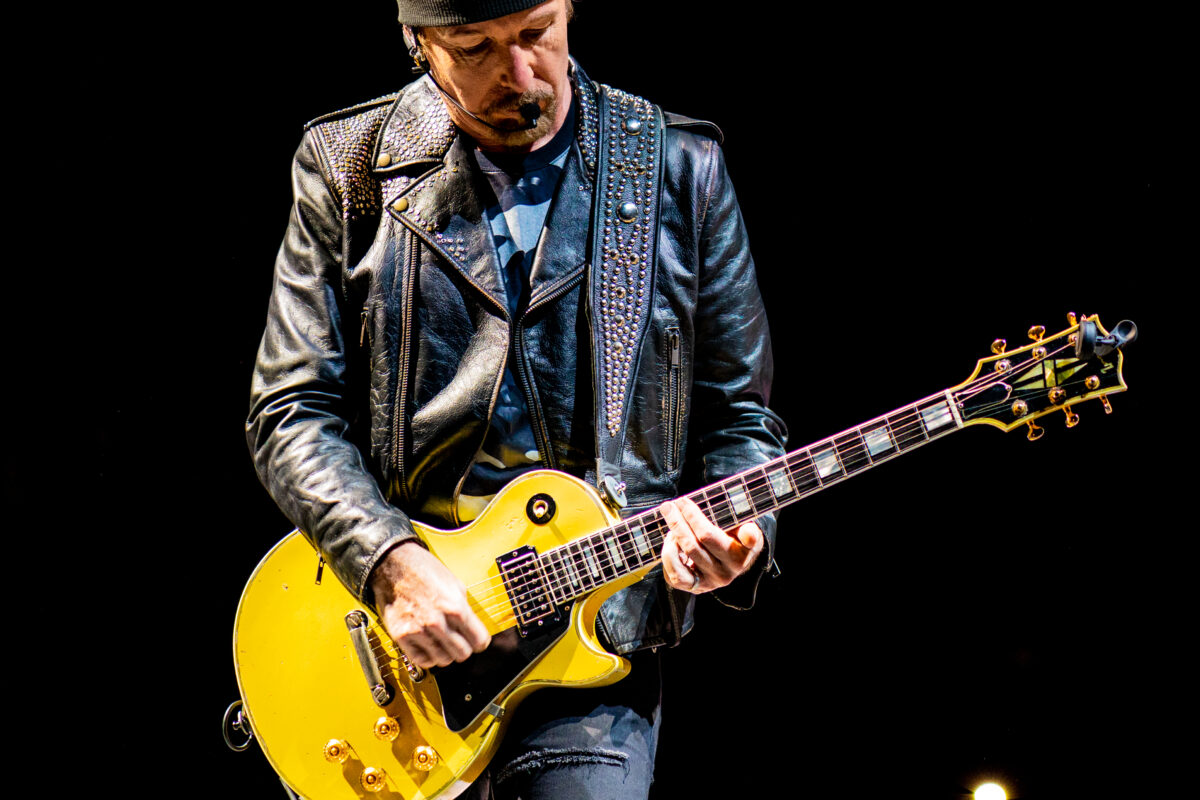
The Edge Guitars & Gear: The Complete Guide to U2’s Guitar Genius’s Rig
The Edge's guitars, amps, and effects — the complete guide. Gibson Explorer, Vox AC30, dotted eighth-note delay, Korg SDD-3000, and how to nail that massive U2 tone.

Tim Henson Guitars & Gear: The Complete Guide to Polyphia’s Guitar Innovator’s Rig
Tim Henson's guitars, amps, and effects — the complete guide. Ibanez TOD10, TOD10N nylon, Fractal Axe-FX, Neural DSP Archetype, hybrid picking, and how to nail that Polyphia clean-crunch tone.