
Billie Joe Armstrong Guitars & Gear: The Complete Guide to Green Day’s $180 “Blue” Strat, Pete & Meat Marshalls & Dookie Tone
Billie Joe Armstrong’s primary guitar — the guitar used on Dookie, the guitar that appears in every Green Day music video of the Dookie and Insomniac era, the guitar covered in stickers that has become one of punk rock’s more immediately recognizable instruments — is a Fernandes Stratocaster copy that he bought for approximately $180. The guitar’s name is “Blue.” Blue was not chosen for its prestige, its vintage provenance, its market value, or its technical specification; it was chosen because it was what was available and affordable at the time, and because Billie Joe Armstrong picked it up and it felt right. The stickers on Blue are not an aesthetic statement; they are the accumulated debris of being a working guitar in a punk rock band, applied over years of touring and recording and becoming the specific physical object that Green Day’s visual identity was built around. Blue has been modified over those years — the original alnico single-coils replaced first with a Bill Lawrence L500XL humbucker (the specific pickup that defines the Dookie guitar tone), then with a Seymour Duncan SH-4 JB humbucker (the current configuration) — but the guitar is still, fundamentally, the $180 Fernandes Stratocaster copy that Armstrong bought before Green Day were famous. The amplification it was run through for Dookie was a Marshall 1959 Super Lead nicknamed “Pete” — a modified Plexi that producer Rob Cavallo helped develop the specific mod for, and that has been a constant companion for Armstrong’s live and recording career ever since. Pete had “Pete” written across it. It was photographed prominently at Woodstock 1994. It is still in use. The $180 Fernandes copy and the modified Marshall Plexi: these are the specific tools with which Armstrong co-wrote and recorded one of the best-selling punk albums in history.
Billie Joe Armstrong was born on February 17, 1972, in Oakland, California, and grew up in Rodeo, California — a small industrial town in Contra Costa County whose specific working-class character is part of the foundational identity of Green Day’s specific brand of punk. He began playing guitar at seven years old and formed Green Day (originally Sweet Children) with bassist Mike Dirnt in 1987, when Armstrong was fifteen and Dirnt was fourteen. The band signed to Lookout! Records in 1989, released 39/Smooth and Kerplunk on the independent label, and then signed to Reprise Records for the recording of Dookie (1994) — the album that sold more than twenty million copies worldwide and established Green Day as one of the most commercially successful punk bands in history. Armstrong’s specific role in Green Day — lead vocalist, rhythm and lead guitarist, primary songwriter — places him in the tradition of the frontman-guitarist who writes the songs, plays the guitar parts, and embodies the band’s public identity simultaneously.
The Dookie recording is the specific commercial and creative achievement that defines the Armstrong guitar identity. Produced by Rob Cavallo at Fantasy Studios in Berkeley — the first Green Day album with a significant recording budget (“The first two records were about $2,000 to make both of those records,” Armstrong recalled) — Dookie used the Pete amp modification to produce the specific Marshall-driven punk tone that would define Armstrong’s sound for a generation. “When we were recording Dookie, it was the first time we had a budget that allowed us to explore.” The exploration produced the Bill Lawrence L500XL pickup in Blue driving the modified Pete Marshall, and the resulting tone — thick, aggressive, with the specific mid-forward character of the modified Plexi — is the guitar sound that fourteen-year-old punk fans in 1994 wanted to replicate and that Armstrong’s subsequent gear choices have continued to develop and refine.
The American Idiot era (2004) represented the most significant shift in Armstrong’s guitar approach: switching from Blue’s humbucker character to the Gibson Les Paul Junior’s P-90 pickups for the primary guitar voice. “The raw, spiky sound of P90 pickups propelled some of the angriest lyrics Green Day had recorded to date,” as Guitar World describes the American Idiot guitar character. The Les Paul Junior’s P-90 provides a different tonal character from Blue’s humbucker — more present, rawer, with the specific single-coil-adjacent bite that the P-90 family produces — and the combination of the Junior’s P-90 with the continuing Pete and Meat Marshall amplification produced the specific guitar sound of the most commercially successful Green Day album, which won the Grammy for Album of the Year. The white Junior appears on the Bullet in a Bible live DVD, featuring Green Day and 130,000 of their closest friends at Milton Keynes. The audience was 130,000 people. The guitar was a Les Paul Junior through a modified Marshall Plexi. The P-90 is the punk rock pickup.
His MXR Dookie Drive signature pedal — developed with MXR specifically to recreate the specific tonal character of the Dookie recording — is both a commercial product and a technical document: MXR worked directly with Armstrong to design a pedal that produces the specific combination of the Bill Lawrence L500XL pickup, the modified Pete Marshall, and the specific gain staging of the Dookie recording in a single stompbox. The Dookie Drive’s existence is the formal institutional acknowledgment that the Dookie guitar tone is a specific, identifiable, reproducible tonal signature that has value beyond Armstrong’s personal use. The $180 Fernandes copy’s tone can now be approximated with a signature pedal. This is the gear story’s full arc: from the affordable guitar that was available and felt right, through the modifications that shaped it into the specific instrument of the Dookie era, to the signature pedal that makes the resulting tone commercially accessible.
Background: Rodeo California, 1,039 Smoothies, and the Dookie Budget That Changed Everything
The independent label Lookout! Records period — the two albums recorded for approximately $2,000 each — is the foundational context for understanding both the limitations and the specific creative intelligence of the early Green Day approach. 39/Smooth (1990) and Kerplunk (1992), recorded with a Gallien-Krueger 250RL amplifier that Armstrong has described as “bizarre” in retrospect, established the Green Day sound at its most basic: fast, direct, pop-melodic punk that owed as much to the Buzzcocks and the Replacements as to the harder punk traditions. The Gallien-Krueger 250RL’s specific solid-state character — not the warm valve character of the Marshall that would define Dookie — produced the specific thinner, more trebly tone of the Lookout! Records period recordings.
The Reprise signing and the Dookie budget are the specific turning point: “The first two records were about $2,000 to make both of those records. When we were recording Dookie, it was the first time we had a budget that allowed us to explore.” The exploration found the Pete amp, found the Bill Lawrence L500XL pickup, found Rob Cavallo as producer, found Fantasy Studios in Berkeley as the recording environment, and found the specific guitar sound that would sell twenty million albums. The budget was the enabling condition; the musical intelligence was the content. Dookie is not a great album because it had a budget; it is a great album because Armstrong, Dirnt, and Tré Cool had the songs, and the budget allowed them to record those songs with the right equipment for the right sound.
The Woodstock 1994 performance — captured in video with the Pete amp visible and clearly labeled, and with the famous mud fight that ended with band members covered in the specific Woodstock mud — is the specific commercial and cultural moment that established Green Day as a phenomenon rather than just a successful punk band. Playing to several hundred thousand people at Woodstock with a guitar that cost $180 and a Marshall Plexi named Pete, and then getting covered in mud while continuing to perform: this is the specific Green Day performance identity that the Dookie period established.
The American Idiot concept album — written after Armstrong’s car was burgled and his notebook containing the initial album’s songs was stolen, prompting a restart from scratch — is the specific creative context for the P-90 guitar shift. The songs of American Idiot are angrier, more urgent, more politically engaged than the Dookie material, and the P-90’s raw, spiky character suited that urgency more directly than the smoother humbucker character of Blue. The Grammy for Album of the Year was the formal commercial confirmation of the American Idiot achievement: the punk band winning the rock establishment’s primary award, playing Les Paul Juniors through modified Marshall Plexis for 130,000 people at Milton Keynes.
The Rig: Billie Joe Armstrong’s Guitars, Amps, and Effects
Guitars
“Blue” — Fernandes Stratocaster Copy ($180 — Dookie Era Primary)
Blue is Billie Joe Armstrong’s most celebrated guitar — a Fernandes Stratocaster copy purchased for approximately $180 that served as Green Day’s primary guitar through Dookie, Insomniac, Nimrod, and the Warning era. When Armstrong first got Blue, it was a pretty standard Fernandes Stratocaster copy with three alnico single-coil pickups. The modifications came later: the Bill Lawrence L500XL humbucker replaced the original pickups for the Dookie era (the specific pickup that defines the Dookie guitar tone), and the Seymour Duncan SH-4 JB humbucker replaced the L500XL in the current configuration. The stickers accumulated over years of touring. The guitar has a Seymour Duncan humbucker added to Blue. Blue also has Armstrong’s characteristic customizations — the sticker aesthetic that gives it its visual identity and the various hardware modifications accumulated over decades of professional use. Blue also inspired the “Frankenstein” guitar that Armstrong built from parts purchased at a Fender shop, combining elements of the Stratocaster configuration in a self-assembled instrument.
Gibson Les Paul Junior (American Idiot Era — P-90 Primary)
For American Idiot, Armstrong reinvented his guitar sound, switching from Blue to primarily Les Paul Juniors. The raw, spiky sound of P90 pickups propelled some of the angriest lyrics Green Day had recorded to date. His white Junior is immortalized on the Bullet in a Bible live DVD. Armstrong also used a pair of 1950s Juniors — each worth more than the entire recording budgets for Green Day’s first two albums — for the American Idiot recording sessions. The Les Paul Junior’s P-90 single-pickup configuration: the mahogany slab body without arch or binding, the single P-90 pickup in the bridge or neck position, the wraparound bridge. The raw, direct tonal character of the P-90-equipped Junior — spikier and more present than a humbucker-equipped guitar, warmer and more complex than a standard single-coil — is the specific guitar voice of American Idiot’s most celebrated passages. “For me, I think that, you know, Les Paul Juniors have more of a rock ‘n roll sound just because it’s the true sound of a guitar.”
Gibson Billie Joe Armstrong Signature Les Paul Junior (Official Gibson Signature)
Gibson produces a Billie Joe Armstrong signature Les Paul Junior — the formal documentation of the Junior’s role in his guitar identity and the commercial product that makes the specific Armstrong Les Paul Junior configuration accessible to players who want to approach his tonal territory. In 2018, Gibson launched a guitar with elements of both Blue and the signature Les Paul Junior — the single humbucker threatened a return to Dookie-style beefier tones, while keeping the look and playability Armstrong has favored since 2004. Multiple signature variants reflect the evolution of his primary guitar identity across different creative periods.
Gretsch Brian Setzer Hot Rod — Modified (Trilogy Albums)
A customized Gretsch Brian Setzer Hot Rod model — with removed pickguard and a Dogear P-90 pickup — was used during the recording of Green Day’s Trilogy albums (¡Uno!, ¡Dos!, ¡Tré!, 2012). The Gretsch hollow-body’s warm, resonant character with the P-90 modification provides a different tonal option from both Blue’s humbucker and the Les Paul Junior’s P-90, with the specific hollow-body acoustic resonance of the Gretsch adding warmth and complexity to the P-90’s output.
Additional Gibsons (Nimrod Era — ES-355, ES-135, Old Les Pauls)
On Nimrod he also used some Gibsons, some old Les Pauls, an ES-355, and an ES-135. The ES-355 — the fully bound, Varitone-equipped ES-335 variant — and the ES-135 — a semi-hollow thinline with P-100 pickups — provide the specific semi-hollow warmth of the Gibson thinline family. The Nimrod era’s expanded guitar palette reflects the broader stylistic range of the album, which moved beyond the straightforward punk of Dookie into more varied rock and pop territory.
Amps
“Pete” — Modified Marshall 1959 Super Lead Plexi (Dookie Amp — Primary Through Career)
The amp he uses on Dookie is most commonly referred to as the ‘Pete’ amp and can be seen most noticeably at the Woodstock concert; it has “Pete” written across it. Pete started life as a Marshall 1959 Super Lead — the vintage 100-watt Plexi head that is the foundational British hard rock amplifier documented throughout this series. The specific modification that made Pete the Dookie amp — the “Dookie mod” developed with producer Rob Cavallo — increased the amp’s gain and shaped its specific midrange character to produce the thick, aggressive, controlled punk tone of the Dookie recording. Pete is Billie Joe’s main rhythm amp, doing the job of recreating the Dookie tone across the band’s subsequent career. The Dookie mod has become sufficiently well-documented that it has been replicated: in this Bad Religion Rig Rundown, Brian shows off his Marshall Plexi heads and states that one of the heads originally belonged to Billie Joe Armstrong with Billie’s famed Dookie Mod in it — Billie lent Brian the amp to try out and Brian never returned it.
“Meat” — Second Modified Marshall 1959 Super Lead (Backup and Heavy Option)
Billie Joe’s second Marshall Plexi, the one he called Meat, showed up after Pete was already established as the main amp on Dookie. Just like Pete, Meat started life as a Marshall 1959 Super Lead, but instead of the Dookie mod, it was taken to Martin Golub and fitted with the SE Lead mod. That mod gave it more gain and sustain compared to Pete. From then on, Pete and Meat were always seen together. Pete did the job of recreating the Dookie tone, while Meat acted as the backup and the heavier option when the songs called for it. By the time of American Idiot and 21st Century Breakdown, the roles were pretty much set — Pete for rhythm, Meat for the parts that needed more push.
Gallien-Krueger 250RL (First Two Albums — 39/Smooth and Kerplunk)
Billie Joe Armstrong began using a Gallien-Krueger 250RL stereo amp head in Green Day’s early years. Armstrong used the amp both in the studio and on stage until 1993 — “The first two records, 39/Smooth and Kerplunk, I used a Gallien-Krueger head, which was bizarre.” The solid-state Gallien-Krueger’s specific clean character produced the thinner, more trebly tone of the early recordings — the direct contrast with the valve warmth of Pete’s modified Plexi character illustrates exactly what the Dookie budget allowed Armstrong to discover.
Fender Bassman (Nimrod and Warning — Clean Character)
On Nimrod he used a Fender Bassman, a Hiwatt, and a Leslie. The Fender Bassman’s specific character — originally designed as a bass amplifier but adopted by guitarists for its warm, full-range valve tone — added a different tonal dimension to the Nimrod recording palette alongside the continuing Marshall rig. The Fender Bassman’s warmth and the Leslie’s rotating speaker effect are the specific tonal additions that gave Nimrod’s guitar sound its broader range compared to Dookie’s more focused Marshall-driven approach.
Effects
MXR Dookie Drive (Signature Pedal — Recreates Dookie Tone)
The MXR Dookie Drive is Armstrong’s signature effect pedal, developed with MXR to recreate the specific tonal character of the Dookie recording in a single stompbox. The pedal captures the combination of the Bill Lawrence L500XL pickup, the Pete Marshall’s Dookie mod, and the specific gain staging of the Dookie recording chain — making the foundational Green Day punk tone accessible without requiring a modified Marshall Plexi and a Fernandes Stratocaster copy. The Dookie Drive’s existence confirms the specific, identifiable, reproducible quality of the Dookie guitar tone and documents it in a commercially accessible format.
Ibanez TS9 Tube Screamer (Boost — Standard Professional)
In this Instagram post by Billie Joe Armstrong, his Ibanez TS9 Tube Screamer pedal can be seen in front of the amp head. The Tube Screamer’s application in Armstrong’s rig: as a boost pedal into the modified Marshall rather than as a standalone overdrive — the TS9’s midrange-pushing character adding additional harmonic complexity and drive to the already-saturated Pete amp input. The same application documented for multiple guitarists throughout this series: the Tube Screamer into a Marshall as a boost rather than as an overdrive.
Boss GE-7 Graphic EQ (Frequency Shaping)
Billie Joe Armstrong, the guitarist for Green Day, uses a Boss GE-7 Equalizer. The GE-7’s seven-band graphic EQ provides precise frequency shaping — the ability to cut or boost specific frequency ranges to tailor the guitar’s tonal balance for specific recording or performance contexts. The GE-7’s typical application in a professional guitar rig: shaping the frequency content of the signal before it reaches the amplifier, compensating for room acoustics or mix requirements.
Bill Lawrence L500XL → Seymour Duncan SH-4 JB (Pickup Evolution — Blue’s Heart)
The pickup evolution in Blue — from stock Fernandes alnico single-coils to Bill Lawrence L500XL (Dookie era) to Seymour Duncan SH-4 JB (current) — is as much an effects story as a guitar story, since the pickup is the primary signal processor between the strings’ vibration and the amplifier’s input. The Bill Lawrence L500XL: a high-output humbucker with a specific bright, mid-forward character that drives the modified Marshall harder than a standard-output pickup would. The Seymour Duncan SH-4 JB: the JB humbucker is among the most widely used and best-known aftermarket humbuckers in the rock tradition, providing warm output with enhanced upper-midrange presence. Both choices reflect Armstrong’s specific tonal requirements for the modified Marshall driving application.
The specific quality of Green Day’s commercial achievement — selling twenty million copies of an album that is simultaneously a punk record (in ethos, energy, and lineage) and a pop record (in melodic sophistication, production quality, and commercial accessibility) — is the specific legacy that Armstrong’s guitar approach enabled. The Dookie guitar sound is aggressive enough to be punk and melodic enough to be pop, which is the specific combination that makes pop-punk work as a genre rather than as a contradiction in terms. The Bill Lawrence L500XL humbucker through the Dookie-modded Pete Marshall produces a tone that is thick enough to drive a punk performance and warm enough to serve a melody that a twelve-year-old hums for the rest of their life. This is the specific achievement: the guitar sound that made punk accessible without making it dishonest. The punk tradition required the energy; the pop tradition required the melody; the modified Marshall and the $180 guitar delivered both simultaneously.
The fact that MXR produced a signature pedal specifically designed to recreate the Dookie tone — rather than simply licensing Green Day’s catalog or producing a signature guitar — is the specific commercial acknowledgment that the guitar tone of Dookie has become culturally significant enough to merit its own dedicated hardware. The Dookie Drive is the gear industry’s recognition that the combination of the $180 Fernandes Stratocaster copy and the modified Marshall Plexi named Pete produced a tonal signature worth preserving and making accessible. Blue cost $180. The MXR Dookie Drive that recreates what Blue through Pete sounded like costs considerably more than $180. The Fernandes is still the better value. Pete is still doing the Dookie mod. Meat is still there when you need more push. The stickers are still on Blue. Twenty million albums have been sold.
The Insomniac era — the album recorded in 1995 as the rapid follow-up to Dookie’s commercial explosion — maintained the Blue-and-Pete configuration while the band navigated the specific commercial and personal pressures of sudden massive success. Insomniac is deliberately rougher and faster than Dookie, and the guitar approach reflected that: more aggressive downstrokes, less sonic space between the rhythm parts, the same modified Marshall Plexi delivering the same Dookie mod character at a more compressed, more urgent performance level. The Pete amp doing what Pete does, with Blue delivering what Blue delivers, through a recording process that had less time and more pressure than the Dookie breakthrough had. The guitar is the same. The amp is the same. The song is faster and angrier. This is the specific adaptation of the established tool to the specific creative requirement of the moment, which is what a working guitarist does: you have the guitar that works, the amp that works, and you serve the music that’s being made right now with the tools that are available and correct. Blue was $180. It has always been worth more than that. It always will be.
The Les Paul Junior remains the true sound of a guitar. Armstrong said so himself, and he has played enough guitars across enough albums across enough years of professional music to know what he is talking about. The $180 guitar agrees. The modified Marshall agrees. Dookie agrees. American Idiot agrees. The Grammy agrees. Blue is covered in stickers and still in use and still correct.
Playing Style & Tone Philosophy
Billie Joe Armstrong plays guitar with the specific quality of energy and directness that the punk tradition demands, combined with the melodic intelligence of someone who grew up listening to the Beatles, the Buzzcocks, and the Replacements as much as to more aggressively punk influences. His rhythm guitar work — the power chords, the palm muting, the aggressive downstroke approach that drives the Green Day rhythm section — is in the Steve Jones and Joe Strummer tradition of the committed rhythm guitarist who serves the song rather than showcasing the guitar. His lead guitar work — the brief, melodic solos of “Basket Case,” the more ambitious lead passages of American Idiot — reflects the melodic intelligence of someone who understands that a guitar solo exists to serve the song’s emotional arc rather than to demonstrate technical velocity.
The two guitar identities — Blue with the humbucker through Pete, and the Les Paul Junior with the P-90 — represent the specific creative evolution from the Dookie punk energy to the American Idiot political urgency. The humbucker’s warmth and smoothness suit the pop-punk melodic hooks of Dookie and Insomniac; the P-90’s rawness and presence suit the angrier, more urgent material of American Idiot. Armstrong understood which guitar served which music and switched accordingly. This is the guitarist’s intelligence applied to the specific creative requirements of the songs.
“For me, I think that, you know, Les Paul Juniors have more of a rock ‘n roll sound just because it’s the true sound of a guitar.” This assessment — delivered with the specific authority of someone who has used both humbucker and P-90 configurations professionally across multiple album cycles — is the most compressed available statement of Armstrong’s guitar philosophy: the Les Paul Junior’s P-90 produces the “true sound of a guitar,” which means the sound that has the least processing between the string’s vibration and the listener’s ear. The P-90’s raw, present, minimally colored character is what he considers closest to the guitar’s actual acoustic nature, amplified. This is the philosophy of someone who loves guitars for what they are rather than for what electronics can transform them into.
How to Sound Like Billie Joe Armstrong
The Dookie Billie Joe Armstrong tone requires: Blue or equivalent Fernandes/Stratocaster copy with Bill Lawrence L500XL humbucker (or MXR Dookie Drive pedal as simpler alternative); modified Marshall 1959 Super Lead Plexi (Pete’s Dookie mod) or equivalent modified Plexi; Ibanez TS9 Tube Screamer as boost; and the power-chord punk rhythm approach. The American Idiot tone requires: Gibson Les Paul Junior with P-90; same Marshall amps; the raw P-90 directness replacing the humbucker’s warmth.
| Control | Setting (0–10) | Notes |
|---|---|---|
| “Pete” Marshall Plexi (Dookie Mod) | Volume: 7–8; Treble: 7; Bass: 5; Mid: 7; Presence: 6 | The Dookie mod increases gain and shapes the midrange for the specific “thick, aggressive, controlled punk tone” of the Dookie recording. Higher mid setting than Strummer’s clean approach — the Armstrong tone is warmer and more saturated than the clean punk approach, with the Plexi’s natural EL34 character pushed toward saturation. Not maximum gain; enough for the specific mid-forward crunch of the Dookie recording. |
| Ibanez TS9 Tube Screamer (Boost) | Drive: 3; Tone: 5; Level: 7 | Used as a boost into the modified Marshall rather than as a standalone overdrive. Low drive setting pushes the preamp harder; moderate tone preserves the TS9’s midrange push without excessive treble; level at 7 for appropriate volume boost. The TS9 + Pete combination produces the specific compressed, mid-forward character of the Dookie studio sound. |
| “Blue” — Fernandes Copy (Humbucker Bridge) | Volume: 10; Tone: 7; Bridge pickup | Full volume for maximum output into the modified Marshall. Bill Lawrence L500XL or Seymour Duncan SH-4 JB in the bridge position. The pickup’s high output combined with the Dookie-modded Pete produces the specific thick, aggressive, controlled tone. Tone at 7: present but not harsh. |
| Gibson Les Paul Junior P-90 (American Idiot) | Volume: 10; Bridge P-90 | The single P-90 in the bridge position. Full volume, no tone roll-off — the P-90’s natural character is raw, spiky, and direct. The P-90 into the Pete Marshall produces a different saturation character from the humbucker: more present, rawer, with the specific single-coil-adjacent spike of the P-90 family. “The true sound of a guitar.” |
| Boss GE-7 EQ | Boost 800Hz–1kHz slightly; cut below 200Hz slightly | The GE-7 for frequency shaping: slight mid boost in the 800Hz–1kHz range emphasizes the specific midrange presence of the Green Day guitar sound in a band mix context. Slight low-cut below 200Hz tightens the low end for the combination of guitar and bass in the Green Day frequency space. |
| Power Chord Approach | Downstroke; aggressive; locked with drums | The Green Day rhythm guitar technique: primarily downstroke power chords, locked in with Tré Cool’s drums rather than anticipating or lagging. The specific punk rhythm guitar approach of committed downstrokes at the correct rhythmic position — not the loose, slightly behind-the-beat approach of some rock styles but the precise, on-the-beat lockdown of the punk tradition. |
Influence & Legacy
Billie Joe Armstrong’s influence on guitar playing is concentrated in the specific generation of guitarists who grew up with Dookie as the formative punk record — the teenagers of 1994 who heard “Basket Case,” “Longview,” and “When I Come Around” and decided that guitar was what they wanted to play. This generation of guitarists absorbed the specific Dookie guitar tone — the Bill Lawrence L500XL humbucker through the modified Plexi, played with the committed downstroke power chord approach — as the foundational reference for punk guitar, and the MXR Dookie Drive signature pedal is the commercial product designed to make that reference accessible without the need for the specific guitar, the specific pickup, and the specific modified Plexi that produced the original.
The American Idiot Grammy — Album of the Year, 2005 — is the specific institutional acknowledgment that a punk band playing Les Paul Juniors through modified Marshall Plexis could produce music of sufficient commercial and cultural significance to win rock’s most prestigious award. The Grammy for American Idiot is the moment when the punk tradition’s commercial ambivalence about mainstream success became irrelevant: Green Day won the award, and their specific guitar sound won it with them.
For the punk guitar tradition that Armstrong inherited, see Joe Strummer’s Clash approach at #65 and Steve Jones’s Sex Pistols rig at #67 — the foundational British punk guitarists whose approach directly preceded and shaped what Armstrong developed in the American pop-punk context. The Les Paul Junior P-90 tradition that became Armstrong’s American Idiot identity connects to Mick Jones’s Les Paul Junior origin story at #66 — the same guitar, the same P-90 character, used in both the British punk and the American pop-punk contexts for the same fundamental reason: it sounds like rock and roll, which is the true sound of a guitar.
Blue cost $180. It is covered in stickers. It has a Seymour Duncan SH-4 JB in the bridge position. Pete is a modified Marshall Plexi with “Pete” written on it. Meat is another modified Marshall Plexi named Meat. The two amps are stacked on the cabs. The Tube Screamer boosts into Pete. The MXR Dookie Drive makes the whole combination commercially available in a single stompbox. Green Day sold twenty million copies of Dookie. They won the Grammy for American Idiot. Blue was $180. This is the correct outcome.
Frequently Asked Questions: Billie Joe Armstrong Guitars & Gear
What is “Blue” and why is it famous?
“Blue” is Billie Joe Armstrong’s primary guitar — a Fernandes Stratocaster copy purchased for approximately $180 that served as Green Day’s primary guitar through the Dookie, Insomniac, Nimrod, and Warning eras. It’s famous for its sticker-covered body, its modifications (Bill Lawrence L500XL humbucker for Dookie, later replaced with Seymour Duncan SH-4 JB), and for appearing in nearly every Green Day music video and performance of the Dookie period. Blue also inspired the “Frankenstein” guitar Armstrong built from Fender shop parts. Despite its low original price, Blue is one of punk rock’s most immediately recognized instruments.
What are Pete and Meat?
Pete and Meat are Billie Joe Armstrong’s two modified Marshall 1959 Super Lead Plexi amplifiers. Pete — named and labeled with “Pete” written on the front — was the primary Dookie recording amp, modified with the “Dookie mod” developed with producer Rob Cavallo to produce the specific thick, aggressive, controlled punk tone of the Dookie recording. Meat is a second Marshall 1959 Super Lead, modified by Martin Golub with the SE Lead mod for more gain and sustain than Pete. Pete does the rhythm work; Meat provides the heavier option when songs require more push. Both are stacked on Marshall 4×12 cabinets in Armstrong’s live and recording rig.
What guitar did Billie Joe Armstrong use on American Idiot?
For American Idiot (2004), Armstrong switched from Blue to primarily Gibson Les Paul Juniors — a significant gear shift that reflected the angrier, more urgent character of the album’s material. “The raw, spiky sound of P90 pickups propelled some of the angriest lyrics Green Day had recorded to date.” His white Junior appears on the Bullet in a Bible live DVD. He also used a pair of 1950s vintage Les Paul Juniors in the recording sessions. Gibson produces a Billie Joe Armstrong Signature Les Paul Junior model. Armstrong on the Junior: “Les Paul Juniors have more of a rock ‘n roll sound just because it’s the true sound of a guitar.”
What is the MXR Dookie Drive?
The MXR Dookie Drive is a signature effects pedal developed by Armstrong with MXR specifically to recreate the tonal character of the Dookie recording in a single stompbox. It captures the combination of the Bill Lawrence L500XL pickup, the Pete Marshall’s Dookie mod, and the specific gain staging of the Dookie recording chain. Armstrong has discussed the pedal in promotion interviews, describing both how the Gallien-Krueger was used on the first two records and how Dookie represented the first time he had the budget to explore, ultimately producing the specific tone that the Dookie Drive captures and makes commercially accessible.
What amplifiers did Billie Joe Armstrong use on early Green Day albums?
Green Day’s first two albums — 39/Smooth (1990) and Kerplunk (1992) — were recorded with a Gallien-Krueger 250RL solid-state amplifier. Armstrong has described this as “bizarre” in retrospect. The move to Reprise Records and the Dookie budget allowed him to discover the modified Marshall Plexi approach that became his signature. For Nimrod he used a Fender Bassman, a Hiwatt, and a Leslie rotating speaker alongside the continuing Marshall rig. For American Idiot a 1965 Fender Deluxe Reverb was also used for clean parts.
What other effects does Billie Joe Armstrong use?
Armstrong’s primary effects beyond the MXR Dookie Drive are the Ibanez TS9 Tube Screamer (used as a boost into the modified Marshall rather than as a standalone overdrive) and the Boss GE-7 Graphic Equalizer (for frequency shaping). The Tube Screamer’s midrange-pushing character adds harmonic complexity and drive to the already-saturated Pete amp input. The GE-7 allows precise frequency shaping for specific recording or performance contexts. His rig has been relatively effects-minimal across his career — the guitar and modified Marshall amps are the primary tonal elements.
Did Green Day’s recording budget affect their guitar sound?
Significantly. The first two Green Day albums were recorded for approximately $2,000 combined, using a Gallien-Krueger 250RL solid-state amplifier and whatever was available within the independent label budget. Armstrong has described this setup as “bizarre.” The Reprise Records signing and the Dookie budget — significantly larger — allowed Armstrong and producer Rob Cavallo to explore equipment options, finding the modified Marshall Plexi “Pete” and the Bill Lawrence L500XL pickup configuration that defined the Dookie tone. “When we were recording Dookie, it was the first time we had a budget that allowed us to explore.” The specific guitar sound that sold twenty million albums was a direct product of having enough money to find the right equipment.
Related stories
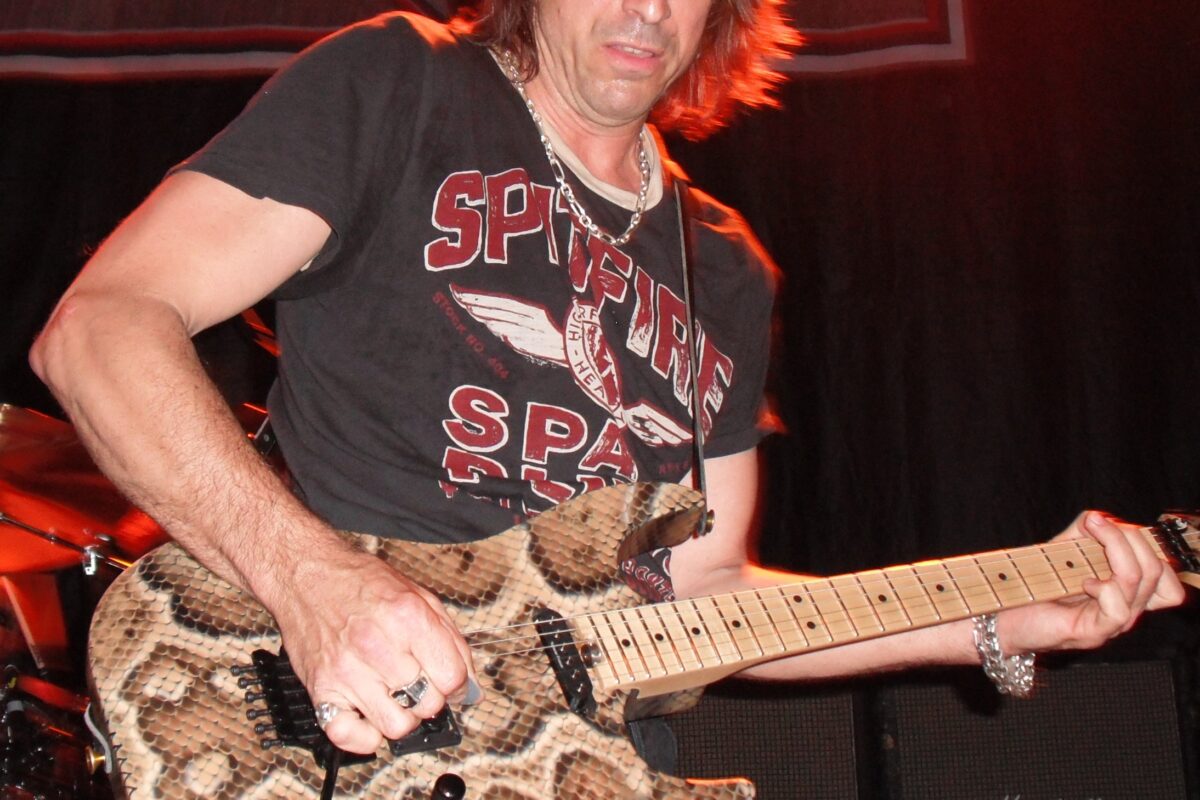
Warren DeMartini Guitars & Gear: The Complete Guide to Ratt’s Torch Guitarist’s Rig
Warren DeMartini guitars & gear: Ratt's Torch guitarist. Charvel Bomber, snakeskin, Jose-modded Plexi, Fender Super Champ, RTM pickup, slapback echo — the complete rig.
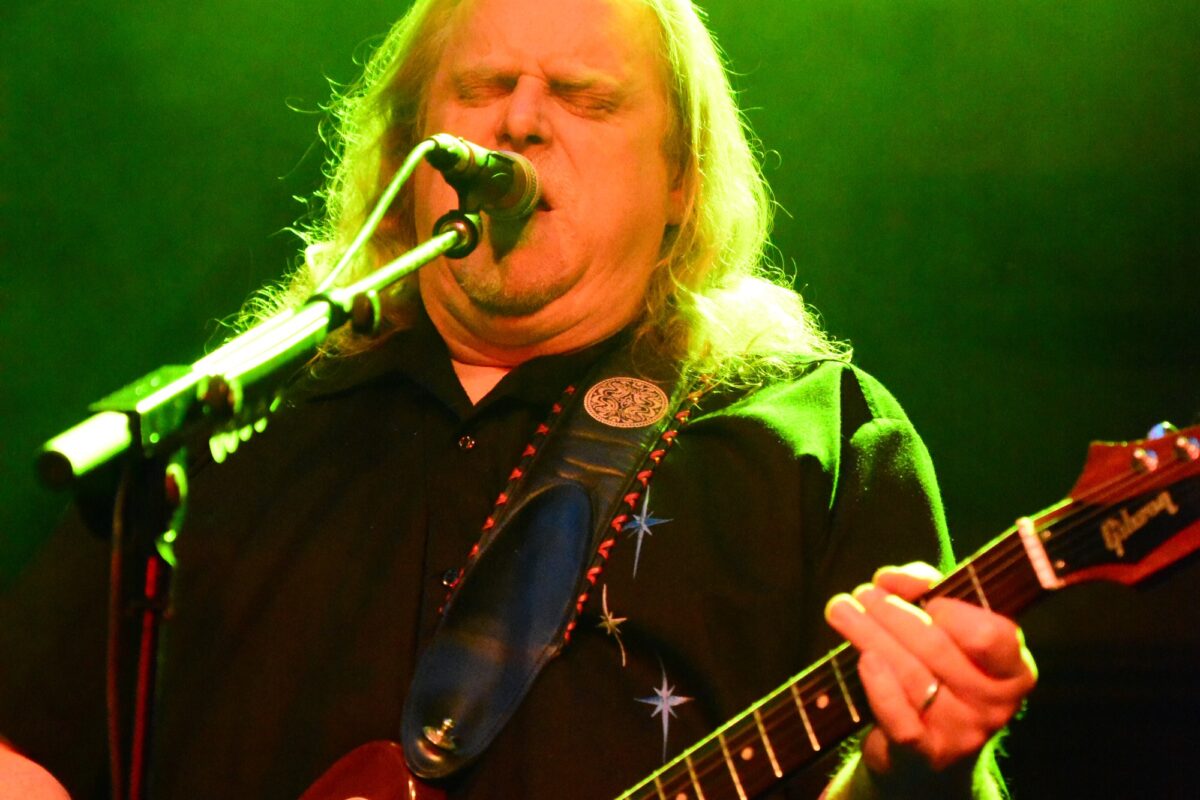
Warren Haynes Guitars & Gear: The Complete Guide to Gov’t Mule’s Guitar Master’s Rig
Warren Haynes' guitars, amps, and effects — the complete guide. Gibson Les Paul Chester, Soldano SLO-100 modified, Klon Centaur, Emma Discombobulator, and how to nail that Gov't Mule blues-rock tone.
Wayne Kramer Guitars & Gear: The Complete Guide to MC5’s Proto-Punk Guitar Insurrectionist’s Rig
Wayne Kramer guitars & gear: MC5's proto-punk guitar insurrectionist. Star-spangled Strat, Big Muff Triangle, Marshall stacks, MXR Jail Guitar Doors Drive — the complete rig.