
Don Ross Guitars & Gear: The Complete Guide to the Two-Time Fingerstyle Champion’s Rig
Bruce Cockburn, the Canadian singer-songwriter and guitarist whose own acoustic guitar work is among the finest in North American music, wrote the liner notes for Don Ross’s 2003 album Robot Monster. He said: “Nobody does what Don Ross does with an acoustic guitar. He takes the corners so fast you think he’s going to roll, but he never loses control.” That combination — cornering at speed without losing control — is the most precise available description of what Don Ross does technically. He plays at a velocity and with a rhythmic complexity that suggests imminent disaster, and yet every note lands, every dynamic shift is intentional, and the musical result is not the white-knuckle tension of someone pushing past their limits but the controlled power of someone who has trained so specifically and so thoroughly that the limits no longer feel like limits. He is the only guitarist in history to win the U.S. National Fingerstyle Guitar Championship twice — in 1988 and 1996 — and the eight years between those wins suggest not a player who got lucky once but a player who was the best in the world at two distinctly different points of his career.
Donald James Ross was born on November 19, 1960, in Montreal, Quebec, to a Scottish immigrant father and a Mi’kmaq mother. He is a member of the Millbrook First Nation. He grew up in Windsor, Nova Scotia. He studied composition at York University in Toronto under David Mott, James Tenney — one of Canada’s most important avant-garde composers — and Phil Werren. After receiving his Bachelor of Fine Arts in Music in 1983, he did something unusual: he entered the Conventual Franciscans, spending time at San Damiano Friary in Holyoke, Massachusetts, and beginning his novitiate at St. Francis Friary in Staten Island. He decided to leave that pursuit and become a musician. His first cassette release, Kehewin, appeared in 1986. Two years later, the 1988 Winfield Championship win gave him a Duke Street Records contract and launched the international career that has taken him, as of this writing, to Canada, the USA, Europe, Japan, Taiwan, China, Australia, Russia, and India. His music — which he calls “heavy wood” — borrows from blues, jazz, folk, and classical music in proportions that no genre label can adequately capture.
Background: Mi’kmaq Heritage, Franciscan Novitiate, York Composition Degree, Winfield Championship
Ross’s biographical trajectory is among the most distinctive in the acoustic guitar world: a Mi’kmaq-Scottish musician who studied avant-garde composition at a Canadian university, entered a Franciscan order, left to pursue music professionally, and then won the most prestigious fingerstyle guitar competition in the world on his third attempt. Each of these biographical facts is relevant to understanding his music and his approach to the guitar.
His Mi’kmaq heritage connects him to the indigenous musical traditions of Atlantic Canada — a cultural background that informs the specific emotional character of his music and his compositional approach in ways that are difficult to quantify but are acknowledged in interviews and documentation. His composition training at York University under James Tenney — a composer whose work engaged with minimalism, microtonality, and the extended possibilities of musical form — gave him a structural and harmonic vocabulary that goes considerably beyond what most self-taught fingerpickers possess. Tenney’s influence is audible in Ross’s compositional architecture: his pieces have formal structure, developmental logic, and harmonic sophistication that reflect genuine composition training rather than self-taught pattern repetition.
The Franciscan period is less directly relevant to his music but is relevant to his character. The discipline of a religious novitiate — the structured daily practice, the community obligation, the commitment to something larger than individual ambition — has parallels with the kind of rigorous daily guitar practice that produces his level of technical mastery. He has described leaving the Franciscans as a difficult decision, made in the understanding that music was his specific vocation. The decision to leave was not a rejection of the values the Franciscan tradition represented but a recognition that those values could be pursued through music as completely as through religious community.
The 1988 Winfield Championship win — his third attempt at the competition, the first Canadian to win it — came after years of deliberate preparation and multiple near-misses. The competition at the Walnut Valley Festival in Winfield, Kansas, “cannot be won only with immaculate technique,” as the Canadian Encyclopedia notes; “the player’s music must also display a high degree of emotion and intensity.” Both dimensions — technique and emotional depth — are hallmarks of Ross’s style, and the competition’s requirement for both helps explain why he could win it twice while many technically superior-seeming players could not win it once.
His son, also a musician, his late wife Kelly McGowan (a soprano with whom he performed as a duo from 1986-1987, who died in 2001), and his subsequent life in Halifax, Nova Scotia are the personal contexts within which his career has unfolded. His tribute song “Michael, Michael, Michael” — one of his most celebrated compositions — honors Michael Hedges, the guitarist whose death in 1997 left the fingerstyle world without its most visionary figure and whom Ross considered a primary influence and a peer.
The Rig: Don Ross’s Guitars, Amps, and Effects
Guitars
Lowden S-10 (Early Career Primary Guitar): Don Ross began his professional career playing a Lowden S-10 — one of the smaller-bodied models from George Lowden’s Northern Irish guitar company. The Lowden S (for “small”) is a compact acoustic with a cedar top and cherry (or other) back and sides, designed to provide a warm, responsive tone in a physically smaller instrument than the full-bodied Lowden O or larger models. The S-10’s cedar top — cedar being warmer and less bright than spruce, with faster response to light touch — suited fingerpicking approaches that require dynamic sensitivity and note separation. Ross’s use of a Lowden from the beginning of his career reflects the specific tonal requirement of his heavy percussive technique: Lowden instruments are known for their ability to withstand significant physical force without collapsing tonally, their construction and bracing designed to remain clear and articulate under hard playing.
Lowden O-10 (Mid-Career Primary Guitar, 1997 Transition): Around 1997 — between his two Winfield Championship wins — Ross transitioned from the smaller S-10 to the Lowden O-10, the orchestral-model body that represents Lowden’s medium-large standard format. The O (for “orchestral”) body is larger than the S, with more bass depth and more projection, giving Ross additional low-end authority for the bass-line constructions that are central to his technique. The O-10 uses a cedar top (the -10 designation indicating cedar top with various back/sides options) — maintaining the cedar warmth and dynamic responsiveness of his earlier S-10 while providing the larger body’s additional resonance and volume. The transition from S to O body size reflects the development of his technique toward fuller, more orchestral arrangements that required the larger instrument’s bass depth.
Marc Beneteau Custom Guitars (Current Primary Instruments, Three Guitars): Since the late 1990s, Don Ross has played exclusively Marc Beneteau custom guitars — instruments built by the Canadian luthier Marc Beneteau in St. Thomas, Ontario. Ross currently owns three Beneteau guitars, which he describes as “far and away the most responsive guitars I have ever played.” His specific endorsement statement on the Beneteau website captures the relationship precisely: “They not only record magnificently, but they put up extremely well with the rigors of my touring schedule. I’ve lost track of how many times people have run up to me after a concert to ask excitedly, ‘Who makes your guitars?'”
The move from Lowden to Beneteau reflects two things simultaneously: Ross’s loyalty to Canadian luthiery (Beneteau builds in Ontario, providing an explicitly Canadian alternative to Irish or American factory production) and his willingness to move to whatever instrument serves his specific musical purpose best regardless of brand prestige. Beneteau instruments are equipped with a combination of microphone and K&K pickup — a dual-source system that captures both the acoustic character of the guitar’s air movement (through the microphone) and the contact vibration of the guitar’s body (through the K&K Pure Mini or similar internal contact pickup). The blended signal gives the full acoustic character of the guitar without the feedback problems of a large-diaphragm microphone in loud live environments.
The Canadian Guitar Forum’s documentation of Beneteau’s expanded wait list following Ross’s endorsement confirms the practical impact of his advocacy: “Now that Don Ross has exposed many players to his guitars, his wait list has expanded dramatically.” Marc Beneteau is known for experimental approaches to tonewoods — using alternative species like Bubinga (flamed), Padouk, Engelmann spruce, and other non-standard tonewoods in combinations that produce specific tonal characters unavailable from conventional rosewood/spruce or mahogany/spruce instruments. The openness to design suggestions and unconventional materials makes Beneteau a natural partner for a musician of Ross’s compositional sophistication.
Marc Beneteau Custom Baritone Guitar (Occasional Use): Ross occasionally plays a baritone guitar also built by Beneteau — a guitar with a longer scale length (typically 27–30 inches, versus the standard 25.4–25.6 inches) strung and tuned lower than standard, typically B to B (a perfect fourth below standard tuning) or A to A (a perfect fifth below). The baritone’s extended bass range gives Ross access to lower pitches that a standard guitar cannot achieve, expanding the orchestral register of his fingerpicking arrangements. Baritone guitar was most established in country music (Glen Campbell’s baritone work) but has been adopted increasingly by fingerstyle guitarists seeking richer bass content.
Marc Beneteau Custom Harp Guitar (Occasional Use): Beneteau has also built Ross a harp guitar — an instrument with additional sub-bass strings mounted beside the standard guitar neck, providing extended bass register below the guitar’s standard lowest string. The harp guitar’s additional strings give Ross access to the same orchestral bass territory that Michael Hedges accessed through his Dyer and Knutsen harp guitars, allowing bass lines of greater range and harmonic richness than a standard guitar can produce.
Oskar Graf Custom 7-String (Extended Range Experiments): For specific compositional purposes, Ross uses a custom 7-string guitar built by Oskar Graf, a luthier based in Clarendon, Ontario — another Canadian builder, consistent with Ross’s general preference for Canadian lutherie. The 7-string guitar adds a low B string below the standard guitar’s low E, extending the bass range by a perfect fourth and enabling bass line constructions that cover the cello’s lower register. The 7-string is associated primarily with jazz (George Van Eps, Bucky Pizzarelli) and with metal (Steve Vai’s heavy music applications), but Ross’s use of it for acoustic fingerstyle extends the tradition in a direction consistent with his broader approach to expanded tonal possibility.
Pickup System (K&K Mini + Internal Microphone): The Beneteau guitars are equipped with a combination of an internal microphone and K&K Pure Mini contact pickup. The K&K Pure Mini is a passive piezo contact pickup that mounts to the guitar’s bridge plate, detecting the physical vibration of the top directly. It produces a natural acoustic character without the quacky, thin quality of some undersaddle piezo designs, and its passive circuit (no battery required) adds no coloration to the signal. The internal microphone adds the acoustic character of the guitar’s air movement — the bloom, the room response, the specific character of the instrument’s interior resonance — that the contact pickup cannot capture alone. The blended signal from both sources is significantly more complex and more acoustically convincing than either source alone.
Amplification
PA System and Direct Injection (Primary Live Approach): Ross’s live setup routes his Beneteau’s combined pickup signal (microphone + K&K) directly to the PA system through a direct injection box and appropriate preamp, rather than through a guitar amplifier. This is the standard professional approach for acoustic performers in larger venues: the PA system’s full-range reproduction is more accurate than any guitar amplifier’s frequency response, and the mixing board provides the volume and EQ control that an acoustic guitar performer needs in a live environment. His signal chain is designed around clarity and acoustic authenticity rather than around amplifier character or coloration.
Acoustic Guitar Amplifiers (Club and Small Venue): For smaller venues where a full PA system is impractical, Ross uses acoustic guitar amplifiers — solid-state designs with flat frequency response and high-quality reproduction — rather than the colored, tube-based amplifiers associated with electric guitar. The acoustic amp’s role is pure amplification rather than tonal shaping, maintaining the specific character of the Beneteau’s microphone/K&K pickup blend without adding the sonic personality of a guitar amplifier’s tube circuit or speaker coloration.
Playing Style & Tone Philosophy: “Heavy Wood”
Don Ross’s self-description of his music as “heavy wood” is the most precise available characterization of what he does and how he does it. The “heavy” references the physical force with which he engages the instrument — the percussive slaps, the forceful bass-string strikes, the dynamic intensity that makes his playing sound almost violent at certain moments, even in its most melodic passages. The “wood” references the acoustic, organic, non-electronic character of the sound he produces: no amplifier distortion, no effects processing, no electronic enhancement beyond the pickup and PA amplification required for live performance. Heavy and wood simultaneously: raw physical force through an acoustic instrument.
His technique combines elements from multiple traditions in proportions that are specifically his own. From the Michael Hedges tradition, he takes the two-handed tapping approach and the systematic use of alternate tunings as compositional tools. From the blues tradition, he takes the percussive attack, the thumb independence, and the rhythmic drive that characterize the alternating bass styles of country blues and ragtime guitar. From jazz, he takes the harmonic vocabulary and the improvisational freedom that his composition training at York University systematized. From classical music, he takes the formal structural awareness and the dynamic sensitivity that are the marks of trained composition study.
His “ripple effect” technique — harmonic sequences that create a cascading arpeggio effect across multiple strings — is described in his instructional work as derived from the harmonic approach of Lenny Breau, the Canadian jazz guitarist whose floating harmonic technique was itself one of the most individual approaches to guitar harmony ever developed. Ross’s adaptation of Breau’s harmonics to an acoustic fingerstyle context is a specific contribution: the harmonic cascades that give certain Ross compositions their specifically shimmering, bell-like quality.
His compositions range from the quietly lyrical (“Upright & Locked Position”) to the ferociously percussive (“Klimbim”) to the openly emotional tribute (“Michael, Michael, Michael”) — a dynamic range that reflects the breadth of his compositional and technical vocabulary. He uses dropped D, double dropped D, DADGAD, and various custom open tunings as compositional tools, choosing each tuning for the specific harmonic character and open-string resonances it enables in a particular composition.
His influences include John Renbourn, Pierre Bensusan, Bruce Cockburn, Keith Jarrett, Egberto Gismonti, and Pat Metheny — a list that crosses folk guitar, jazz piano, Brazilian guitar, and jazz guitar in ways that accurately represent the breadth of his musical absorption. The connection to Renbourn — the British folk baroque tradition — is particularly interesting alongside the connection to Hedges: Ross occupies a position between the two traditions, bringing the formal sophistication of folk baroque and the technical innovations of Hedges’ extended technique together in his own distinct synthesis.
How to Sound Like Don Ross
Guitar: A Lowden O or similar medium-large bodied acoustic with a cedar top is the most historically authentic starting point — the cedar top’s warmth and dynamic responsiveness are essential to his specific tonal character. A Beneteau guitar (available by commission from St. Thomas, Ontario) is the authentic current instrument. For widely available alternatives: the Taylor 814ce or similar cedar-top large-body acoustic, the Collings OM with cedar option, or any well-built acoustic that responds clearly and loudly to percussive playing without collapsing tonally under heavy attack.
Pickup: The K&K Pure Mini contact pickup — or a combination of K&K and an internal microphone — provides the most accurate reproduction of an acoustic guitar’s natural character in a live amplified context. The passive K&K design requires no battery and adds no preamp coloration.
Amp Settings (Acoustic Amp or PA):
| Control | Setting (0–10) | Notes |
|---|---|---|
| Volume | 5–7 | Heavy wood requires authority — don’t play at bedroom volumes |
| Bass | 5–6 | Full — Ross’s bass lines require weight and definition |
| Mid | 5–6 | Present — melody lines must cut through the percussive attack |
| Treble | 5–6 | Clear — harmonics need treble definition to sing |
| Reverb | 2–4 | Moderate room ambience — heavy wood is never reverb-drenched |
Technique: Ross’s approach requires right-hand thumb independence — the thumb must operate percussively and rhythmically on the bass strings while the fingers carry melodic content simultaneously. Develop the “drop thumb” bass pattern as a foundation, then work toward the percussive slap technique (striking the strings with the right-hand thumb heel or fingers for rhythmic accent). The alternate tunings are compositional tools: begin with dropped D (the low E dropped one step to D), which opens up bass register and changes the harmonic character of many chord voicings, then explore DADGAD and double dropped D as his most-used systems. Study the instructional content available through his website donrossonline.com and through the JamPlay course filmed with him.
Influence & Legacy
Don Ross’s influence operates most directly within the contemporary fingerstyle acoustic guitar world — the tradition he both inherited from and contributed to most substantially. His tribute composition “Michael, Michael, Michael” for Michael Hedges documents the specific genealogy: Hedges opened the doors, and Ross was among the first generation to walk through them and build something distinctly his own on the other side.
His impact on Canadian guitar specifically is acknowledged throughout the music community. The Canadian Encyclopedia’s entry treats him as a major figure in Canadian music history rather than merely in acoustic guitar history — a recognition of the breadth of his influence on Canadian musical culture. Bruce Cockburn’s liner note endorsement carries particular weight within the Canadian music community, as Cockburn is himself one of the country’s most respected guitarist-composers.
His collaborations with Andy McKee — who has acknowledged Hedges and the extended fingerstyle tradition as foundational — represent the generational transmission of the technique that Hedges originated and Ross developed. McKee’s massive YouTube success (his videos have been among the most-watched guitar performance videos online) has brought the extended fingerstyle approach to an audience of hundreds of millions, and Ross’s collaborative relationship with McKee connects the older tradition to its most popular contemporary expression.
His connection to Marc Beneteau’s lutherie has also had measurable industry impact — the expanded wait list that followed his endorsement is the most concrete possible evidence that a touring guitarist’s instrument choice influences the market. Beneteau is now recognized as one of Canada’s most important luthiers, and Ross’s advocacy played a significant role in establishing that recognition.
His connection to the broader Hedges/fingerstyle lineage places him alongside Stefan Grossman and Michael Hedges in a tradition that runs from the country blues research of the 1960s through the technical innovations of the 1980s to the internet-era explosion of solo acoustic guitar performance. He is the most complete living example of what the tradition has produced: a guitarist of extraordinary technical command, genuine compositional intelligence, and the emotional depth that separates great music from impressive demonstration.
Related reading:
- Michael Hedges, whose death inspired Ross’s most celebrated tribute composition “Michael, Michael, Michael”
- Stefan Grossman, whose country blues tradition forms part of the fingerstyle lineage Ross inhabits
- John Renbourn, cited by Ross as a primary influence on his approach
- Andy McKee, Ross’s collaborative partner and the next-generation fingerstyle heir to this tradition
Frequently Asked Questions: Don Ross Guitars & Gear
What guitars does Don Ross play?
Ross’s career progressed through three primary guitar phases. He began with a Lowden S-10 (small-body cedar top), then transitioned to a Lowden O-10 (orchestral body, cedar top) around 1997. Since the late 1990s, his primary instruments have been custom guitars built by Marc Beneteau, a Canadian luthier from St. Thomas, Ontario. He currently owns three Beneteau guitars. He occasionally plays a Beneteau custom baritone guitar and a Beneteau custom harp guitar. For specific extended-range compositions, he uses a custom 7-string by Oskar Graf, a luthier from Clarendon, Ontario.
What makes Don Ross’s technique unique?
Ross’s playing combines heavy percussive attack (“heavy wood”) with fingerstyle sophistication. Key technical elements include: independent thumb bass patterns with syncopated percussive strikes; two-handed tapping techniques derived from the Michael Hedges tradition; the “ripple effect” harmonic cascade technique adapted from jazz guitarist Lenny Breau; systematic use of alternate tunings (dropped D, double dropped D, DADGAD, custom open tunings) as compositional tools; and dynamic range from extremely soft harmonics to ferociously loud percussive attacks within the same composition. His composition training at York University under avant-garde composer James Tenney gives his work formal structural depth unusual in the fingerstyle genre.
Why did Don Ross switch from Lowden to Beneteau guitars?
Ross’s transition from Lowden to Beneteau reflected his relationship with Canadian lutherie and his response to the specific qualities of Beneteau’s instruments. His endorsement statement: “I now own three Marc Beneteau guitars, and they are far and away the most responsive guitars I have ever played. They not only record magnificently, but they put up extremely well with the rigors of my touring schedule.” Beneteau’s openness to alternative tonewoods, experimental designs, and specific customization to each player’s requirements made the collaboration productive in ways that production instruments could not match.
What is the K&K pickup system and why does Ross use it?
The K&K Pure Mini is a passive piezo contact pickup that mounts to the guitar’s bridge plate, detecting the physical vibration of the top directly. Ross’s Beneteau guitars use a combination of the K&K contact pickup and an internal microphone — the contact pickup provides the immediate, defined transient response, while the microphone captures the acoustic air movement and body resonance. The blended signal is significantly more complex and acoustically convincing than either source alone. The passive K&K design requires no battery and adds no preamp coloration.
How many times has Don Ross won the National Fingerstyle Guitar Championship?
Don Ross has won the U.S. National Fingerstyle Guitar Championship twice — in 1988 and 1996, becoming the first and still the only player to win it twice. The competition is held annually at the Walnut Valley Festival in Winfield, Kansas, and evaluates players on both technical proficiency and emotional content. Ross’s 1988 win made him the first Canadian to win the competition. The eight-year gap between his two wins demonstrates that he was at the top of the fingerstyle world across two distinctly different periods of his career development.
What inspired “Michael, Michael, Michael”?
“Michael, Michael, Michael” is a tribute composition Don Ross wrote following the death of Michael Hedges in a car accident on December 2, 1997. Hedges — whose extended technique innovations and Aerial Boundaries album are among the most important contributions to acoustic guitar in the second half of the twentieth century — was a primary influence on Ross and on the entire generation of fingerstyle guitarists who emerged in the 1980s and 1990s. The tribute composition is one of Ross’s most celebrated and most emotionally direct pieces, combining the extended techniques Hedges pioneered with Ross’s own specific compositional voice.
What are Don Ross’s main musical influences?
Ross names Bruce Cockburn, John Renbourn, Pierre Bensusan, Keith Jarrett, Egberto Gismonti, and Pat Metheny as primary influences — a list that crosses Canadian folk-rock guitar, British folk baroque, French-Moroccan fingerstyle, jazz piano, Brazilian guitar, and jazz guitar. Michael Hedges is an acknowledged formative influence on his extended technique approach. His composition training at York University under James Tenney (avant-garde composer) and David Mott provided the formal structural vocabulary that distinguishes his compositions from the genre’s typical theme-and-variation format.
Related stories
Vernon Reid Guitars & Gear: The Complete Guide to Living Colour’s Guitar Genius’s Rig
Vernon Reid's guitars, amps, and effects — the complete guide. Parker MaxxFly, PRS Vela VR, Mesa Dual Rectifiers, Roland VG-99, Eventide H9, Living Colour gear guide.
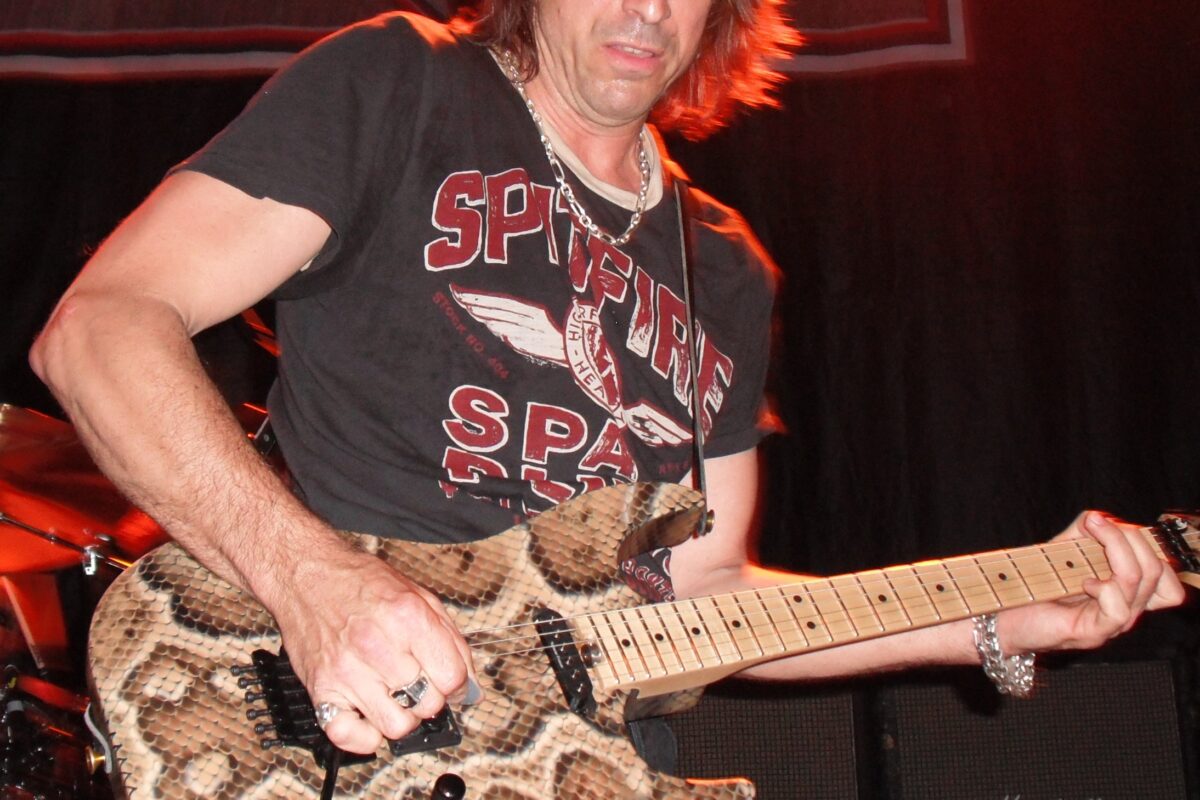
Warren DeMartini Guitars & Gear: The Complete Guide to Ratt’s Torch Guitarist’s Rig
Warren DeMartini guitars & gear: Ratt's Torch guitarist. Charvel Bomber, snakeskin, Jose-modded Plexi, Fender Super Champ, RTM pickup, slapback echo — the complete rig.
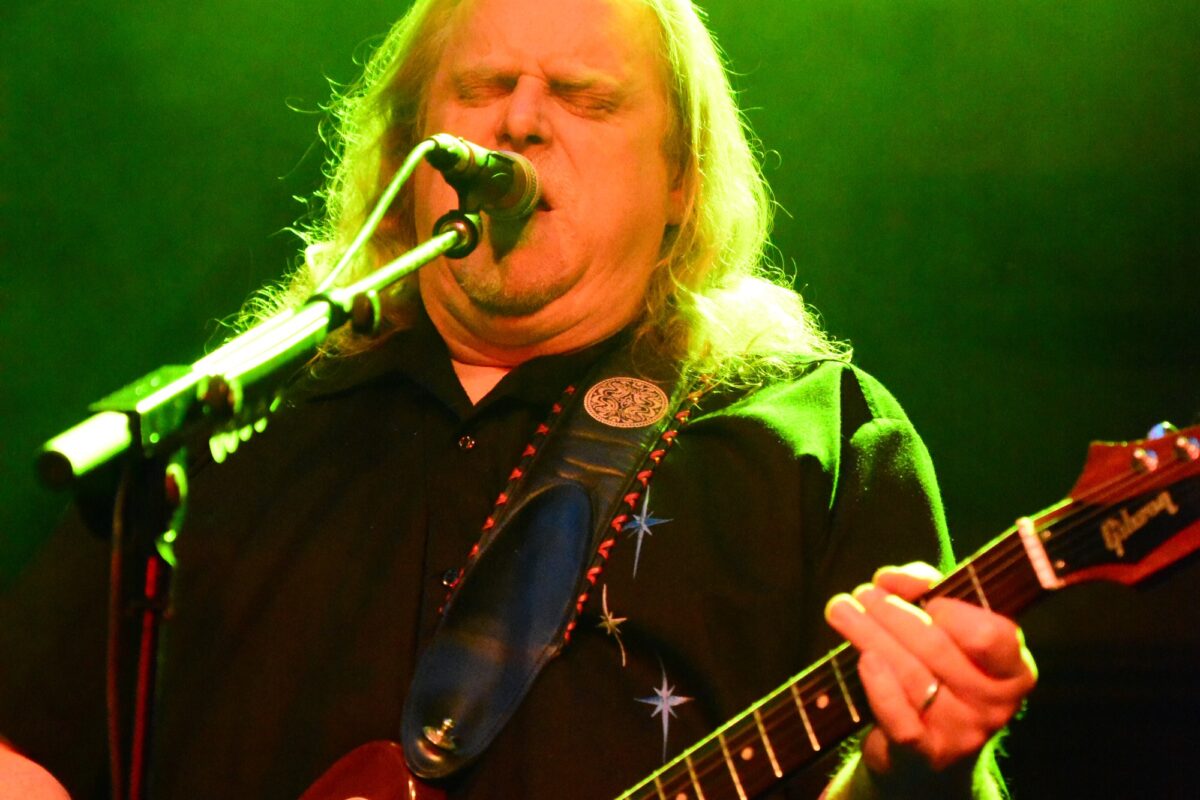
Warren Haynes Guitars & Gear: The Complete Guide to Gov’t Mule’s Guitar Master’s Rig
Warren Haynes' guitars, amps, and effects — the complete guide. Gibson Les Paul Chester, Soldano SLO-100 modified, Klon Centaur, Emma Discombobulator, and how to nail that Gov't Mule blues-rock tone.