Dean DeLeo Guitars & Gear: The Complete Guide to Stone Temple Pilots’ Wet/Dry/Wet Architect’s Rig
“I’ve been using pretty much the same rig since 1990.” Dean DeLeo said this to MusicRadar — and meant it without apology. The rig he assembled during the writing of Core (1992), Stone Temple Pilots’ debut album, was “exactly the sound he had been looking for,” and he has maintained it with minimal changes ever since. Most guitarists are on a perpetual quest to improve or alter their setup: new amplifiers, new guitars, new pedals. DeLeo found his sound in 1990 and kept it. This is not conservatism but confidence — the confidence of a musician who heard exactly what he was listening for and had the technical intelligence to assemble the specific equipment that produced it and the artistic integrity to resist the constant marketing pressure to upgrade, replace, and refresh. The “same rig since 1990” is a VHT Classic stereo tube power amp running at 50 watts per side, a Demeter TGP-3 three-channel preamp, and a Vox AC30 set clean and chimey in the middle — the specific wet/dry/wet configuration that produces the specific wide, shimmering stereo guitar sound of Stone Temple Pilots. “The VHT goes into a Demeter unit — James Demeter does some beautiful amps and preamps,” he told MusicRadar. “And I also have an AC30 that is set very clean and chimey — that’s what you hear when I back off the volume on my guitar… it’s really clear, even with a Les Paul.”
Dean DeLeo was born on August 23, 1961, in Montclair, New Jersey, to Italian-American parents. He and his brother Robert DeLeo (the bass guitarist of Stone Temple Pilots) grew up in a musical household — their father was a musician — before the family moved to San Diego. Dean moved to Los Angeles in the mid-1980s, where he met vocalist Scott Weiland and began forming the band that would become Stone Temple Pilots. Core (1992), Plush (1993), Purple (1994), Tiny Music… Songs from the Vatican Gift Shop (1996), No. 4 (1999), Shangri-La Dee Da (2001), Stone Temple Pilots (2010), and Perdida (2020) — across thirty years of recording and the specific personal difficulties of working with a vocalist whose addiction and legal troubles were well-documented and ultimately fatal (Weiland died of a drug overdose in 2015) — DeLeo maintained the rig, maintained the craft, and produced some of the most musically sophisticated alternative rock guitar of the 1990s. He lives in Los Angeles.
Background: New Jersey Origins, San Diego Move, Los Angeles Alt-Rock Scene, Architectural Guitar Philosophy
DeLeo’s musical formation — the specific combination of influences that produced his approach to the guitar — is unusually diverse for a guitarist associated primarily with grunge and alternative rock. He has cited as primary influences: Jimmy Page (the specific studio sophistication and the specific dark melodic sensibility), Neil Young (the emotional directness, the feedback as melody), Jimi Hendrix (the psychedelic range), John Lennon and Paul McCartney (the melodic compositional intelligence), and — most unusually for a guitarist of his generation — jazz players and chord-melody specialists. The jazz influence is audible in the specific chord voicings he uses: DeLeo plays chords that are not the standard barre chord or power chord vocabulary of rock guitar but jazz-influenced, complex voicings with extended harmonies and unexpected inversions. The Get My Guitar assessment characterizes his playing as combining “heavy rock riffs with jazz-influenced chord voicings and psychedelic textures” — an accurate synthesis of his influences.
The architectural metaphor that multiple commentators apply to his playing is the most accurate characterization: he thinks about guitar parts as components in an arrangement, designed to occupy a specific sonic space within the full band context. The wet/dry/wet amplifier configuration — the specific signal-routing that places a stereo wet signal (with effects) in the outer speakers and a dry signal (without effects) in the center — is itself an architectural approach to guitar sound: a three-dimensional sonic design in which the guitar occupies different physical space in the room depending on whether effects are engaged. The specific character of the “Interstate Love Song” opening, the “Creep” rhythm guitar approach, the “Vasoline” riff architecture — these are not discovered by improvisation but designed by a musician who hears the guitar in terms of its relationship to the full sonic picture.
His purchase of his first Les Paul — “the first Les Paul I got was my sunburst, which I bought brand-new at Manny’s on October 29th, 1978” — is one of the more specifically dated instrument acquisitions in rock guitar history. He remembers the exact date. He has said that “every Les Paul that stepped into my life was a ’78” — as if the specific year of production became magnetically self-reinforcing, each 1978 Les Paul finding its way to him because the first one had. Three 1978 Les Paul Standards (black, wine red, sunburst) form the core of his primary guitar collection, alongside a 1957 TV Les Paul Special and a range of Fender Telecasters.
The Rig: Dean DeLeo’s Guitars, Amps, and Effects
Guitars
1978 Gibson Les Paul Standard Sunburst (Primary Guitar, Core Centerpiece): Dean DeLeo’s primary and career-defining guitar is a 1978 Gibson Les Paul Standard in sunburst finish, bought brand-new at Manny’s Music on West 48th Street in New York on October 29, 1978. This specific guitar — “the main guitar on the record [Core]” — is documented in the Guitar World 25th anniversary retrospective: “I had three guitars that I brought in: my ’78 sunburst Gibson Les Paul, which was the main guitar on the record — that’s the one where Scott sang into the pickup.” The anecdote about Weiland singing into the pickup is documented in STP lore: Weiland’s reverb-affected voice processed through the guitar’s pickup circuit contributed to a specific effect on the Core recordings.
The 1978 vintage places this guitar in the “norlin era” of Gibson production (1969–1985, when Gibson was owned by Norlin Industries and production quality is generally considered inferior to the pre-1969 and post-1985 periods by collectors). DeLeo’s consistent preference for 1978 Les Pauls — “every Les Paul that stepped into my life was a ’78” — reflects a personal affinity for the specific character of that production year rather than the collector preference for earlier vintages. The 1978 Les Paul’s specific character — its weight (full mahogany with maple cap), its pickup voicing (the specific T-Top humbuckers of the late 1970s), and its particular neck profile — is what he has organized his entire guitar sound around. He describes the three 1978 Les Paul Standards (black, wine red, sunburst) as his primary collection: “He has a fascination of 1978 Gibson’s.”
1957 Les Paul Special TV Yellow with P-90s (Pre-Purple Album, Heavily Used): Alongside the 1978 Standards, DeLeo’s most important guitar is a 1957 Gibson Les Paul Special TV Yellow — the low-output, flat-body, dual-P90-equipped version of the Les Paul from the year when Gibson was producing some of its most significant instruments. The 1957 Les Paul Special’s specific character — the P-90 single-coil’s specific raw, woody, slightly aggressive tonal identity (different from both full humbuckers and Stratocaster single-coils), the flatter, less contoured body compared to the Standard, and the lighter construction — gives it a different tonal palette from the 1978 Standards. “That guitar’s been in the family awhile. I got that just prior to making the Purple album, and I used it a lot,” he told Guitar World. The P-90-equipped 1957 Special provides the specific “cut” that P-90s offer — more defined, more present in the midrange, with a specific “bark” character unavailable from either humbuckers or standard single-coils.
Fender Telecasters (Multiple, Various Eras): DeLeo’s secondary guitar family is Fender Telecasters — multiple models across different eras and configurations. A Fender Telecaster with Bigsby in cream finish appears in the “Vasoline” video; he has used various Telecasters in both recording and live contexts. The Telecaster’s bright, cutting single-coil bridge pickup provides the tonal contrast to the Les Paul’s warm, thick humbuckers that gives his studio work its tonal range. The Core Guitar World retrospective mentions “a Tele, a newer one” alongside the 1978 sunburst Les Paul as the guitars he brought to the Rumbo Recorders recording session.
Core Recording Instruments (Brendan O’Brien’s Collection): The Core Guitar World retrospective contains one of the more charming stories in alternative rock recording history. DeLeo’s guitar collection was “limited in those days” — the band had just moved to Los Angeles from San Diego, didn’t have much money, and didn’t have a large gear collection. Producer Brendan O’Brien arrived at Rumbo Recorders with his car loaded with guitars and amps and met the band at five o’clock the evening before recording was scheduled to begin. O’Brien contributed “a beautiful Pelham Blue Gibson ES-335. We had a Gibson Les Paul Special he brought down. He brought a Strat with him.” DeLeo brought his 1978 sunburst Les Paul, a Telecaster, and a Yamaha FG acoustic. The recording infrastructure for one of the defining alternative rock albums of the 1990s was assembled from two musicians loading gear from a car the night before sessions began.
PRS Custom 22 (Documented at 2010 New York Performance): A PRS Custom 22 appears in documentation of the 2010 Stone Temple Pilots New York performance — used specifically for “Sour Girl.” The PRS’s specific mahogany/maple tonewood combination with PRS humbuckers provides a middle ground between the Les Paul’s warmth and the Telecaster’s brightness.
Vintage Acoustic Collection (Perdida and Specific Songs): DeLeo’s acoustic work — particularly on Perdida (2020), the acoustic-oriented STP album — is documented with Guild JF65-12 12-string acoustic and a Yamaha FG acoustic, and with various vintage small-body acoustics. He has described a deep collection of vintage lap steel-era acoustics from the Thirties Nationals, Magnatone, and other makers that appear primarily in studio recording contexts.
Amps
Wet/Dry/Wet Configuration: VHT Classic (Stereo Wet) + Demeter TGP-3 (Preamp) + Vox AC30 (Dry Center) — “Same Rig Since 1990”: DeLeo’s primary amplifier configuration is the wet/dry/wet setup he has used since 1990 — the core rig assembled during the writing of Core that he has maintained through thirty years of touring and recording. The configuration: a Demeter TGP-3 three-channel preamp provides the gain structure and channel switching; a VHT Classic stereo tube power amp (50 watts per side at 16 ohms) powers the wet stereo signal into two Marshall 4×12 1960A slant cabinets; a Vox AC30/6TBX combo loaded with Alnico Blue speakers sits in the center position providing the clean, chimey dry signal.
“I run a VHT Classic stereo amp, which has the option of 50 or 100 watts,” he explained to MusicRadar, opting for the lower output at 16 ohms into two stereo 4×12 cabinets. “I also have an AC30 that is set very clean and chimey — that’s what you hear when I back off the volume on my guitar… it’s really clear, even with a Les Paul. So it’s the VHT in stereo and the Vox in the middle.” The Rocktron Intelliverb (a rack-mount reverb unit) provides the reverb dimension in the wet signal. The Demeter TGP-3’s three channels allow specific tonal configuration for clean, rhythm, and lead contexts within the single physical rig.
The specific philosophy of the wet/dry/wet configuration: the center dry signal maintains the guitar’s fundamental acoustic character — its specific pickup, string, and room character — without any coloration from effects processing. The stereo wet signal in the outer cabinets adds the spatial width, the reverb depth, and the specific modulation effects that give the sound its three-dimensional character. The combination produces a guitar sound that is simultaneously centered and wide, present and ambient — the specific spatial character of STP’s studio recordings reproduced in a live performance context.
Vintage Amps (Studio Recording — Each Album Differently): While his live rig has been consistent since 1990, DeLeo’s studio recording approach has varied substantially between albums. For Shangri-La Dee Da (2001), he used vintage amps including an old Gretsch with 6×9 speakers, vintage late-60s Marshall 18-watt and 20-watt combos, an Ampeg B212 accordion amp (with the original owner’s name engraved on the template: “Harold”), Sovtek MIG50, and various Vox models. For earlier albums he used various configurations assembled from studio collections and borrowed gear. The studio approach reflects a willingness to experiment with different amplifier characters for different sonic purposes across each album, even while maintaining the live rig’s consistency.
Effects
Roland CE-1 Chorus Ensemble (Long-Term, Later Replaced by Boss CE-2W Waza Craft): A Roland CE-1 Chorus Ensemble — Boss’s predecessor company’s original chorus pedal from the mid-1970s, and one of the most celebrated chorus units in rock history — was a long-term component of DeLeo’s rig. He later retired the CE-1 and replaced it with the Boss CE-2W Waza Craft, changing his chorus sound to be “more of a leslie-like ‘2nd guitar’ sound.” The transition reflects his ongoing refinement of the specific spatial character that chorus provides in his wet/dry/wet configuration.
Dunlop EP103 Echoplex Tape Delay (Slapback Sound): The Dunlop EP103 Echoplex — a recreation of the tape delay Echoplex unit associated with the late 1950s and 1960s rock and country sound — provides the slapback echo character in DeLeo’s signal chain. “Dean talks about the slapback sound he gets from his Dunlop EP103 and it’s seen on his pedalboard next to the CE2W,” as Equipboard documents. The slapback echo (a single short delay repeat, typically 60–120 ms) is the characteristic echo of vintage American rock and rockabilly guitar — appropriate for a guitarist whose influences include the 1950s and early 1960s rock vocabulary.
Rocktron Intelliverb (Rack Reverb, Wet Signal): The Rocktron Intelliverb — a rack-mounted digital reverb unit — provides the reverb component in DeLeo’s stereo wet signal. Rack-mount reverb units from the 1980s and 1990s provide specific room, hall, and plate reverb characters that differ from the more compressed reverb of floor pedals, and the Intelliverb’s specific programs have been part of the STP guitar sound since the early 1990s.
Boss NS-2 Noise Suppressor (Signal Chain Management): A Boss NS-2 Noise Suppressor helps manage the hum and interference that a complex wet/dry/wet rack rig can introduce. Multiple rack units, long cable runs, and multiple amplifiers create noise that the NS-2’s threshold gating controls.
Playing Style & Tone Philosophy
Dean DeLeo’s playing style is the most harmonically sophisticated in the alternative rock guitarist tradition — the work of a musician who has absorbed jazz chord voicings alongside the rock riff vocabulary and integrated them into guitar parts that are more complex harmonically than most alternative rock, and yet sound natural and inevitable rather than academic or pretentious. The jazz-influenced chord shapes he uses — the extended voicings, the unexpected bass notes, the specific inversions that give the harmonies their open, floating quality — appear in context with heavy rock riffs and aggressive lead guitar without any sense of genre collision. He moves between jazz warmth and rock power within the same song without either element feeling out of place.
His tone philosophy is the wet/dry/wet philosophy: the specific architecture of the rig is the specific architecture of the sound, and modifying the rig would modify the sound fundamentally. “Same rig since 1990” is not conservatism but the recognition that he found what he was looking for and has maintained it. The Vox AC30’s specific clean Alnico character — “really clear, even with a Les Paul” — provides the foundational transparency around which the VHT’s driven character and the Rocktron’s spatial dimension are organized. Without the AC30’s clean center, the wet/dry/wet would become a wet/dry/wet smear; the AC30 keeps the guitar present and defined in the stereo field.
His role in STP’s creative process is as primary songwriter as much as guitarist — the specific arrangements of STP’s music, the verse-chorus dynamics, the specific tonal character of each album period, reflect DeLeo’s compositional intelligence as much as his guitar playing. Weiland’s voice was the instrument that delivered what DeLeo created; the relationship between the songwriter and the vocalist — creatively productive and personally tumultuous — is the central drama of STP’s history and the specific tension from which their best music emerged.
How to Sound Like Dean DeLeo
Guitar: A late-1970s Gibson Les Paul Standard (1978 specifically, or any late-70s “Norlin era” Les Paul) with the specific T-Top humbucker character. For accessible alternatives: any Les Paul Standard through a clean-to-medium amp provides the tonal foundation. A P-90-equipped Les Paul Special or Junior provides the 1957 Special’s specific raw, midrange-forward character.
Amp: The wet/dry/wet configuration (VHT or similar stereo power amp + preamp + clean Vox or Fender center) is the authentic system. For a simpler approach: a Vox AC30 or AC15 for the clean center, with a Marshall or similar British-voiced amp for the driven stereo signal. The stereo width is key to the STP guitar sound — running two amplifiers simultaneously in a wet/dry configuration is more important than the specific amp brands.
Amp Settings (Vox AC30 Clean Center + Marshall Driven Stereo):
| Control | Setting (0–10) | Notes |
|---|---|---|
| AC30 Volume | 4–6 | Clean and chimey — “that’s what you hear when I back off the volume” |
| AC30 Treble/Bass | 5/5 | Natural — Alnico Blues provide the character |
| Marshall Gain | 5–7 | Driven but not saturated — Les Paul adds warmth |
| Marshall Mid | 6–7 | Forward — STP’s tone is midrange-present |
| Reverb (on Wet Signal) | 3–5 | Spacious but not drenched — the Intelliverb adds width |
Effects: Boss CE-2W Waza Craft chorus (Rate and Depth both below noon, for “leslie-like 2nd guitar” character rather than obvious chorus) in the wet signal chain. Dunlop EP103 Echoplex for slapback. Rocktron Intelliverb or comparable rack reverb for spatial depth. The wet/dry/wet configuration: effects only on the outer stereo channels, clean signal in the center.
Influence & Legacy
Dean DeLeo’s influence is the most underacknowledged in the alternative rock tradition — a guitarist whose specific tonal architecture (the wet/dry/wet configuration), harmonic sophistication (jazz-influenced chord voicings), and compositional intelligence (the specific song structures of STP’s best material) contributed significantly to what alternative rock could sound like and yet receives less credit than the more visceral or technically extreme approaches of his contemporaries.
Stone Temple Pilots sold thirty million albums — a commercial achievement that places DeLeo in the company of the most successful rock guitarists in history, even if the cultural credit he receives is proportionally smaller. His connection to Jerry Cantrell and Billy Corgan as contemporaries in the early 1990s alternative rock moment reflects the shared commercial and cultural context; his specific approach — architectural, harmonically sophisticated, effects-minded — distinguishes him from both Cantrell’s riff-centered heaviness and Corgan’s production-layered approach.
His connection to Dave Navarro of Jane’s Addiction — another Los Angeles-based guitarist of the same era whose approach to the guitar was similarly sophisticated and similarly shaped by a range of influences beyond the conventional alternative rock palette — represents the specific character of the Los Angeles alternative rock scene in the late 1980s and early 1990s: a scene that valued production sophistication, unusual tonal approaches, and musical range in a way that the Seattle grunge scene generally did not.
Related reading:
- Jerry Cantrell of Alice in Chains, DeLeo’s contemporary in early 1990s alternative rock guitar
- Billy Corgan of Smashing Pumpkins, another early 1990s alternative rock guitarist contemporary
- Dave Navarro of Jane’s Addiction, a parallel Los Angeles alternative guitarist of the same era
- J Mascis of Dinosaur Jr., who influenced the broader alternative rock guitar tradition DeLeo worked within
Frequently Asked Questions: Dean DeLeo Guitars & Gear
What guitar does Dean DeLeo play?
DeLeo’s primary guitars are 1978 Gibson Les Paul Standards — he owns three, in black, wine red, and sunburst finishes. The sunburst 1978 Les Paul, bought brand-new at Manny’s on October 29, 1978, was the main guitar on Core (1992). He also plays a 1957 Gibson Les Paul Special TV Yellow with P-90 pickups (acquired before the Purple album), Fender Telecasters (including a Bigsby-equipped cream Tele visible in the “Vasoline” video), and has used PRS Custom 22, Guild 12-string acoustics, and various vintage amps for specific songs.
What is Dean DeLeo’s wet/dry/wet amplifier setup?
DeLeo’s core rig — used since 1990 — is a wet/dry/wet configuration: a Demeter TGP-3 three-channel preamp feeding a VHT Classic stereo tube power amp (50 watts per side at 16 ohms) into two Marshall 4×12 1960A slant cabinets for the wet stereo signal; and a Vox AC30/6TBX with Alnico Blue speakers in the center position providing the clean, chimey dry signal. “The VHT goes into a Demeter unit. I also have an AC30 that is set very clean and chimey — that’s what you hear when I back off the volume on my guitar. So it’s the VHT in stereo and the Vox in the middle.” A Rocktron Intelliverb provides the reverb in the wet signal.
How long has DeLeo used the same rig?
DeLeo has been “using pretty much the same rig since 1990” — assembled during the writing period for Core (1992). He told MusicRadar that when he found this specific combination of Demeter preamp, VHT power amp, and Vox AC30, “it was exactly the sound he had been looking for” and has maintained it with minimal changes across thirty years of touring. The most notable change was retiring his Roland CE-1 chorus for the Boss CE-2W Waza Craft.
What is the story of the Core recording sessions?
The Guitar World 25th anniversary retrospective documents that DeLeo’s guitar collection was “limited in those days” when recording Core. Producer Brendan O’Brien met the band at Rumbo Recorders at five in the evening before recording was scheduled to begin, arriving with his car loaded with guitars and amps. O’Brien contributed a Pelham Blue Gibson ES-335, a Gibson Les Paul Special, and a Stratocaster. DeLeo brought his 1978 sunburst Les Paul (the main guitar on the record), a Telecaster, and a Yamaha FG acoustic. O’Brien helped load all the gear at the front door — a collaborative relationship the band has maintained across their career.
What are DeLeo’s main guitar influences?
DeLeo’s primary influences include Jimmy Page (studio sophistication and dark melodic sensibility), Neil Young (emotional directness), Jimi Hendrix (psychedelic range), and jazz players and chord-melody guitarists (the jazz harmonic vocabulary that distinguishes his chord voicings from standard alternative rock). His jazz influence is audible in the extended chord voicings and unexpected inversions that give STP songs like “Interstate Love Song” their specific harmonic richness. He has also cited John Lennon and Paul McCartney for melodic compositional intelligence.
What were the differences in DeLeo’s studio rigs across STP albums?
While his live rig has been consistent since 1990, DeLeo’s studio approach varies substantially. For Shangri-La Dee Da (2001) he used a wide range of vintage amplifiers including a Gretsch with 6×9 speakers, late-60s Marshall combo amps (18-watt 2×10, 18-watt 1×12, 20-watt 2×10), an Ampeg B212 accordion amp (with original owner “Harold” engraved on the template), a Sovtek MIG50, and various Vox models. For different albums he has used vintage lap steel amps, Thirties Nationals, Magnatone amplifiers, and other uncommon vintage amplification, bringing a different tonal character to each record’s guitar sound.
What was DeLeo’s creative relationship with Scott Weiland?
Weiland and DeLeo were the primary creative partnership in Stone Temple Pilots, with DeLeo writing most of the music and Weiland contributing substantially to lyrics and vocal melodies. The relationship was both productive and difficult — Weiland’s addiction and legal issues repeatedly disrupted the band’s recording and touring schedules, and the tension between DeLeo’s compositional vision and Weiland’s personal struggles is documented throughout the band’s history. Weiland died of a drug overdose on December 3, 2015. The anecdote about Weiland singing into the guitar pickup during the Core sessions captures the specific creative intimacy of their working relationship at its most inspired.
Image credits
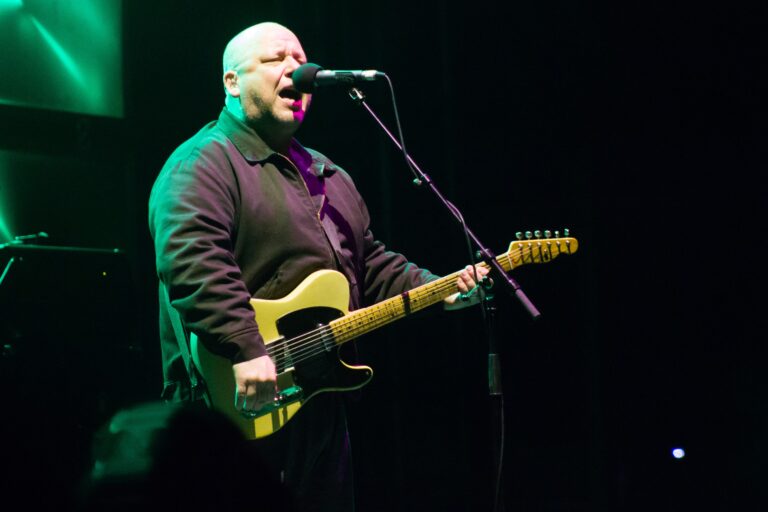
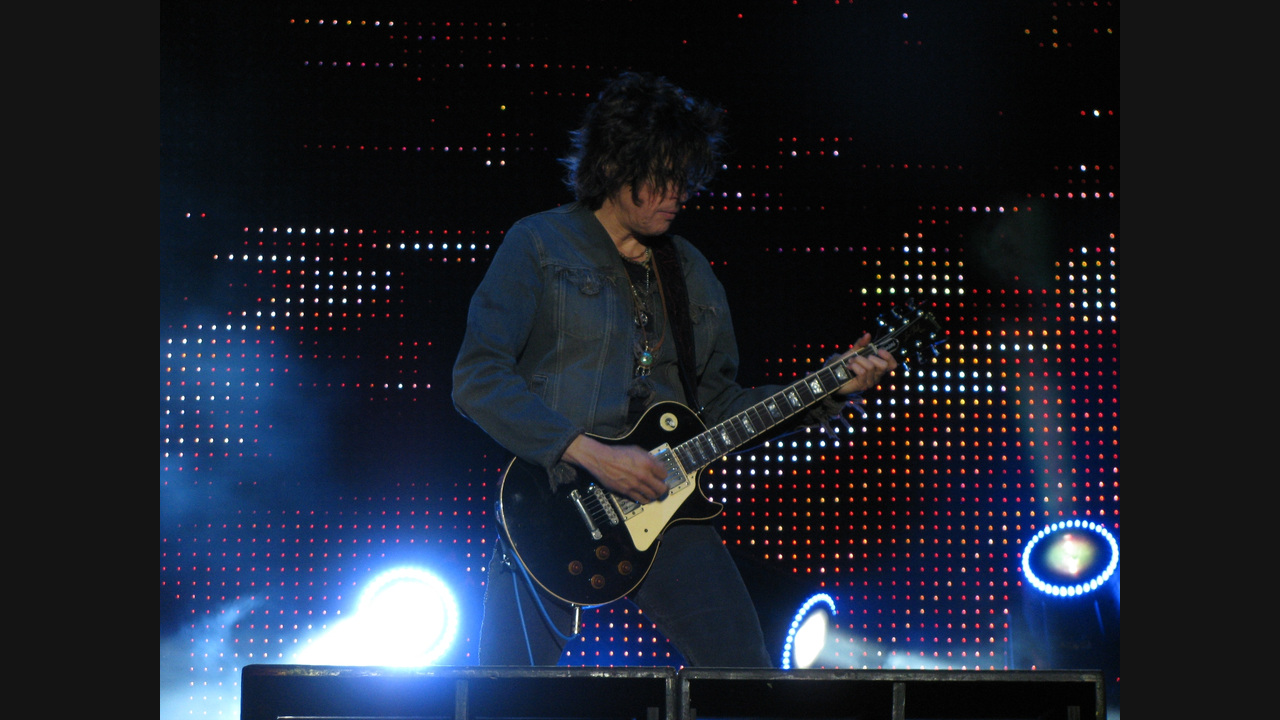
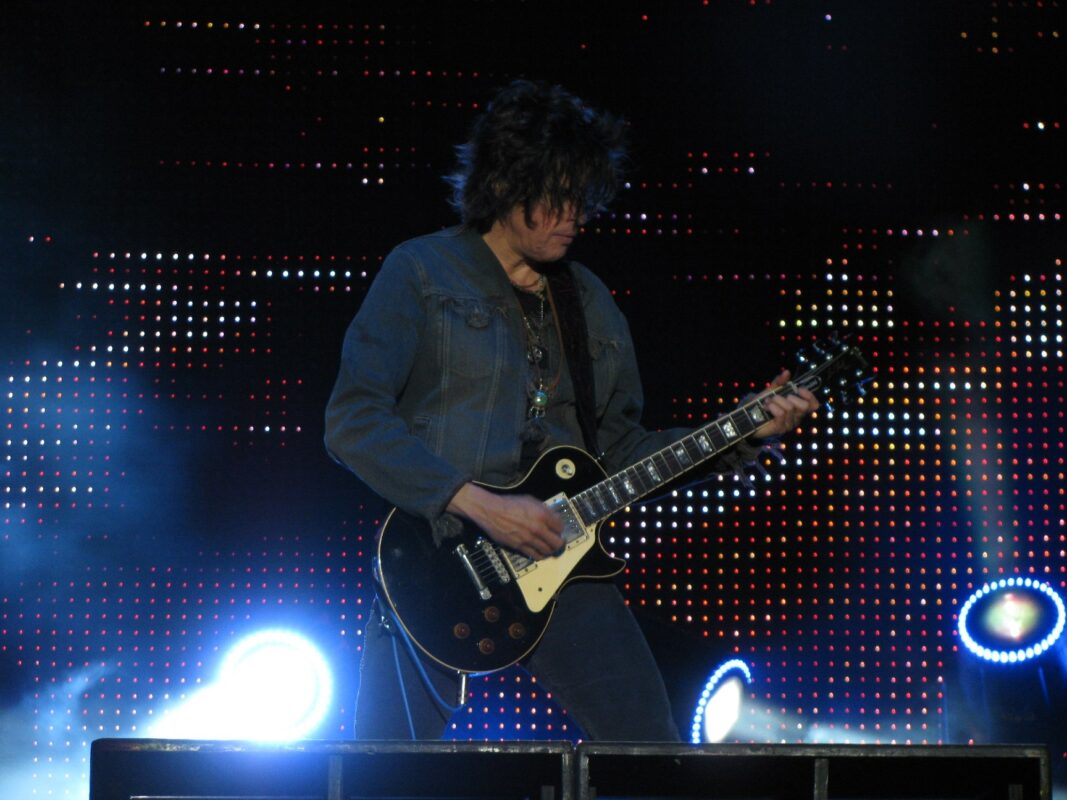
- Dean DeLeo live: ceedub13, Wikimedia Commons, CC BY 2.0.