
There’s a moment in “The Boys Are Back in Town” — right when those harmonized guitar lines cascade over each other like two old friends finishing each other’s sentences — where rock and roll achieves something close to perfection. That moment belongs, in large part, to Scott Gorham. Not the flashiest player you’ll ever encounter. Not the most technically dazzling. But one of the most consequential guitarists to ever plug a Les Paul into a Marshall stack, and a man whose contributions to rock’s twin-guitar vocabulary are so deeply embedded in the music you love that you’ve been absorbing his lessons for decades without even realizing it.
William Scott Gorham was born on March 17, 1951, in Glendale, California — a sun-drenched suburb of Los Angeles that has produced an improbable number of rock casualties and survivors. He grew up absorbing the American rock and blues tradition, and when he found himself in London in the early 1970s, he was the quintessential young Californian searching for something bigger than the West Coast had to offer. He found it in 1974, when he walked into a Thin Lizzy audition and, despite receiving a famously icy reception from his soon-to-be guitar partner Brian Robertson, landed the gig that would define his career and help define a genre.
Gorham joined Thin Lizzy alongside Robertson at arguably the most pivotal moment in the band’s existence. The original guitarist Eric Bell had departed, and the band had briefly cycled through Gary Moore before settling on the Gorham-Robertson tandem. What followed was a creative partnership that rewrote the rulebook for how two electric guitars could coexist in a hard rock context — not dueling for dominance, but weaving together into something larger than either could achieve alone. The twin-guitar harmony attack that Gorham and Robertson developed between 1974 and 1978 became the blueprint for generations of bands, from Iron Maiden and Judas Priest to Mastodon and beyond.
But let’s talk about the gear, because understanding what Scott Gorham played through is essential to understanding how that sound was made. The recipe wasn’t complicated — it never is with the best rock tones — but the execution was everything. Les Pauls, Marshall stacks, a phase shifter, and two California/Irish guitarists with enough chemistry to light up an arena. That’s the whole story. Sort of. Pull up a chair, because we’re about to go deep.
Gorham has been remarkably open over the years about how Thin Lizzy’s tone was achieved, once summing it up with memorable brevity: a Les Paul, a Marshall stack, and an MXR Phase 90. If only it were always that simple. The full picture is a little more nuanced — different Les Paul variants across different eras, a move away from Marshalls and back again, and a pedalboard that evolved from nearly nothing to something considerably more populated. But the core philosophy never changed: warm, singing, harmonically rich guitar tone that serves the song first and the player’s ego second. In that sense, Gorham was always the anti-shredder’s shredder — a guitarist who understood that the most powerful thing a six-string can do is make a listener feel something.
Background: The Californian Who Helped Define Irish Rock
To understand Scott Gorham’s place in rock history, you need to understand the specific sonic and cultural moment he walked into when he joined Thin Lizzy. By 1974, Phil Lynott’s band had been struggling commercially for several years. They had the songs, the charisma, and the ambition, but not yet the guitar sound that would make them famous. The departure of Eric Bell — a bluesman with a warm, slightly jazzy approach — opened the door for something harder, more arena-sized, and ultimately more influential.
Gorham and Robertson were hired simultaneously, and the juxtaposition proved electric. Robertson was the more overtly technical and aggressive player — all bite and flash, a young Scotsman who could burn with bluesy intensity. Gorham was the smoother, warmer counterpart — the melodic anchor who kept the harmonies from flying apart, the rhythm architect who locked things in place with a chunky, groove-oriented right hand. He was, by his own cheerful admission, the band’s “happy right hand” — less interested in dazzling lead runs than in making the whole machine groove harder. The contrast made the partnership work, and the result was one of rock’s great creative duos.
The commercial breakthrough came with 1976’s Jailbreak, an album that nearly didn’t happen. Vertigo Records had been preparing to drop Thin Lizzy following two commercially underwhelming albums, Nightlife and Fighting, when the band delivered their masterpiece. The album contained “The Boys Are Back in Town,” a song that illustrates Gorham’s genius perfectly — he has described how the harmony guitar lines that became the song’s signature weren’t part of the original arrangement at all. The track started as just a chord pattern and Lynott’s vocals, and Gorham recognized that it needed something to elevate it. What he and Robertson added transformed a good song into one of the most recognizable rock recordings ever made.
That sensibility — knowing what a song needs, even when what it needs isn’t a flashy guitar solo — is perhaps Gorham’s most underrated quality. He was never competing with Robertson, or later with Gary Moore, John Sykes, or any of the other incandescent talents who passed through Thin Lizzy’s ranks. He was always trying to make the band sound as good as it possibly could. In an era of guitar hero individualism, that kind of collaborative humility was genuinely unusual, and genuinely radical.
After Thin Lizzy disbanded in 1983 following Lynott’s health struggles, Gorham largely stepped away from the spotlight. Phil Lynott’s death in January 1986 cast a long shadow, but Gorham eventually found the will to continue the band’s legacy. Since 1996 he has led various Thin Lizzy reunion and touring lineups, and in 2012 he co-founded Black Star Riders — a band initially formed to play Thin Lizzy material but eventually developed into its own entity, giving Gorham a vehicle for new music for the first time in decades. Through it all, his approach to tone and gear has evolved while the core philosophy has remained constant.
The Rig: Scott Gorham’s Guitars, Amps, and Effects
Guitars
The guitar most closely associated with the classic Thin Lizzy sound is the Gibson Les Paul Deluxe, and Gorham used these extensively throughout the band’s golden era of the mid-to-late 1970s. The Les Paul Deluxe was Gibson’s economy-minded variant of the Les Paul Standard, featuring smaller “mini-humbucker” pickups (essentially the same pickups used in the old Epiphone guitars, repurposed for the Deluxe model after Gibson acquired Epiphone). These mini-humbuckers — sometimes called “patent applied for” or PAF-style in their vintage incarnations — produced a brighter, airier tone than the full-size humbuckers of a Les Paul Standard, with a little more definition and clarity in the midrange. For Gorham’s harmonized twin-guitar work, this clarity was crucial: it allowed the two guitar lines to sit side-by-side in the mix without muddying each other, each voice distinct and audible. The result was warmer than a Fender, crunchier than a jazz guitar, but never the thick, compressed snarl of a full-fat Standard humbucker. Gorham played multiple Les Paul Deluxes across the classic era, and their mini-humbucker sound is inseparable from the Thin Lizzy tone you hear on Jailbreak, Bad Reputation, and Live and Dangerous.
In addition to the Deluxes, Gorham has played and owned multiple Les Paul Standards over the years, both during his time with Thin Lizzy and in later solo and touring work. The Standard’s full-size humbuckers deliver a thicker, warmer tone than the Deluxe’s mini-buckers, and while they’re slightly less articulate in dense harmonic arrangements, they compensate with a singing sustain and a midrange richness that works beautifully in hard rock contexts. Gorham has acknowledged the Les Paul Standard as his tonal reference point throughout his career — if he’s not playing a Deluxe, he’s likely playing a Standard, and the core approach remains the same.
By the time Thin Lizzy reformed for serious touring work in the 2010s, Gorham had made a practical but entirely sensible upgrade to his Les Paul situation. Gibson built him a custom Les Paul Axcess Standard — a chambered version of the Les Paul with a 1960s-profile neck (thinner and faster than the chunkier ’50s profile) and 500T pickups in place of the standard 490 units. The chambering was a deliberate accommodation for a guitarist who had spent decades hauling full-weight Les Pauls on long tours — “A regular Les Paul,” Gorham noted with characteristic candor, “was always like wearing a wet bag of cement around my shoulder for two hours.” The chambered body removes a significant chunk of that weight while preserving the fundamental tonality. The 500T pickups are hotter and more aggressive than vintage-spec humbuckers, pushing the Engl amps he was using by that point into satisfying natural overdrive. The guitar also features a mid-boost circuit, giving Gorham additional tonal flexibility. It’s a pragmatic, smart solution for a working guitarist who needs to sound great every night without destroying his back in the process.
Gorham was seen playing a B.C. Rich Eagle model during certain periods of the Thin Lizzy years — the Natural finish variant in particular has been documented in live footage. The Eagle was one of B.C. Rich’s more elegant designs, less flamboyant than the Warlock or the Bich, and its set-neck construction and humbucking pickups made it a reasonable tonality companion to the Les Pauls. It’s not the guitar most associated with Gorham’s defining work, but its presence in his arsenal during the Lizzy years is documented and worth noting for completeness.
Post-Lizzy, Gorham experimented with a black Fender Stratocaster featuring a floating Floyd Rose tremolo system and a humbucker/single/single pickup configuration. This represents a significant tonal departure from his Les Paul identity, and it’s fair to say this phase of his guitar career is less well-documented and less central to his legacy. The Floyd Rose-equipped Strat gives him vibrato capabilities unavailable on a hard-tail Les Paul, but the tonal character is inevitably different — brighter, springier, with less of that warm mahogany thickness. For purists chasing the Thin Lizzy sound, the Les Paul variants are the only game in town.
Amps
During the period of Thin Lizzy’s greatest recordings — Jailbreak, Bad Reputation, Live and Dangerous — Gorham was running pre-master-volume Marshall stacks, the same type of amp that defined hard rock in the 1970s. These were EL34-powered heads, run absolutely flat-out, cranked to the threshold of destruction and then pushed a little further. There was no master volume knob to manage the output — if you wanted the amp to sing, you had to let it scream. Gorham has described the recording sessions for Jailbreak with characteristic humor, noting that he and Robertson were playing so loud that the microphones couldn’t handle the volume. The engineer had to bring them to the realization that their amp level was literally damaging the recording equipment. The natural power-amp saturation of those cranked Marshalls — not a pedal, not a preamp channel, just the output section of a great amplifier being pushed into its natural compression and harmonic richness — is the fundamental ingredient in the classic Thin Lizzy guitar sound. No plugin has fully replicated it. No digital modeler captures quite that quality of air moving through a 4×12 cabinet at concert volume.
As Thin Lizzy reformed and Gorham’s rig evolved, a customized 100-watt Marshall JCM900SL-X entered the arsenal. This amp served as either an occasional backup to his main amplifier or as a slave unit for creating a stereo mix — running it in parallel with a primary head to widen the sound and add dimension. The JCM900 series represents Marshall’s transition into the master-volume era, offering more controllable gain than the vintage Plexis while retaining significant family resemblance in tone. The SL-X (Super Lead X) variant is a particularly well-regarded model, favored by players who want genuine Marshall snarl without requiring concert PA levels to achieve it.
For his primary live rig in the 2010s touring years, Gorham made a somewhat eyebrow-raising but ultimately sensible choice: the ENGL Ritchie Blackmore Signature E650 head. ENGL is a German amplifier manufacturer known for high-quality, high-gain designs that have found significant favor in hard rock and metal circles. The E650 Ritchie Blackmore Signature is a 100-watt, all-tube head with four EL34 power tubes, designed in collaboration with the legendary Deep Purple guitarist and optimized for the kind of singing, harmonically rich lead tones that both Blackmore and Gorham favor. It features independent clean and lead channels with extensive EQ controls, and the EL34 output stage gives it a distinctly British character — the same fundamental family of sound as those vintage Marshall Plexis, but with vastly more control and reliability. Gorham ran this head through Marshall cabinets (either two or four 4x12s depending on the configuration), keeping that familiar Marshall low-end thump while getting the preamp flexibility of modern engineering.
Running alongside the Blackmore E650 in his modern live rig, the ENGL Powerball E645 provided a second tonal option and redundancy. The Powerball is a more aggressive, higher-gain design than the E650 — a four-channel head (two clean, two lead) that can produce everything from crystalline clean tones to searing high-gain distortion. Gorham didn’t need the full metal fury the Powerball is capable of, but used selectively, it offers a useful tonal contrast to the E650’s more singing, harmonically focused character. Running two ENGLs through Marshall cabs gives you a combination of flexibility and tonal authority that works well for both the classic Lizzy material and the harder-hitting passages of Black Star Riders’ repertoire.
During the Chinatown-Renegade era (1980-1983), as Thin Lizzy’s sound evolved — some would say overproduced — Gorham experimented with Mesa/Boogie amplifiers. The Boogie’s compressed, mid-forward character was a significant departure from the Marshall openness of the classic era, and it’s fair to say this period produced some of the band’s most contentious sonic choices. Burman and Yamaha amps also appeared in Gorham’s live rig during this experimental period, reflecting a restless search for new sounds that didn’t always pay off in terms of the warm, organic tone that defined the band’s peak work.
Effects
If there’s one effect most closely associated with Scott Gorham’s Thin Lizzy tone, it’s the MXR Phase 90 — a simple, beautiful, four-stage phaser that adds a gentle swirling motion to the guitar signal, thickening the sound and giving it a subtle, rhythmic shimmer. Gorham ran the Phase 90 during the classic 1970s era, and its contribution to the Thin Lizzy sound is often overlooked because it operates subtly — you don’t always consciously register the phase effect, but remove it from the signal chain and something essential disappears from the texture. The Phase 90 was ubiquitous in 1970s hard rock (Van Halen famously used one, as did Page, Iommi, and countless others), but Gorham used it with particular restraint and musicality, never letting it dominate, always keeping it in service of the song’s needs.
Gorham has used wah pedals at various points in his career, with a Dunlop Crybaby documented in earlier configurations and an Ernie Ball wah appearing in his more recent live rig. The wah adds vocal expressiveness to lead lines — the classic cocked-wah sound that filters frequencies to mimic human voice formants — and while it was never central to the core Thin Lizzy tone, it provides useful color for certain passages and solos.
A workhorse delay pedal that Gorham has included in his pedalboard for years. The DD-3 is exactly what you’d expect from Boss — reliable, transparent (when used at low mix settings), and capable of anything from slapback echo to longer, ambient repeats. For live work, a modest amount of delay adds dimension to lead guitar lines without cluttering the carefully arranged twin-guitar arrangements that define the Lizzy sound.
TC Electronic’s chorus/flanger units have been staples of Gorham’s pedalboard in various configurations over the years. The TC Electronic Stereo Chorus Flanger, in particular, provides a lush, studio-quality chorus effect that can be dialed anywhere from barely-there shimmer to full-fat, wide-stereo swirl. Combined with the ENGL amps’ natural harmonic richness, a touch of chorus adds depth and spatial dimension to his guitar sound in ways that complement both the rhythmic chug of his comping and the singing quality of his leads.
Another chorus unit in Gorham’s arsenal, the Ibanez CS9 is a vintage-flavored analog chorus pedal with a warmer, slightly less hi-fi character than the TC Electronic digital unit. Running both gives Gorham flexibility — the CS9 for warmer, more classic tones; the TC for cleaner, more articulate shimmer. It’s perhaps more chorus than most guitarists would consider necessary, but Gorham has always used modulation effects tastefully, and having multiple options for different rooms and contexts is simply practical touring logic.
The Keeley two-knob compressor (also known as the Keeley Compressor or “2-Knob” variant) is a highly regarded studio-quality compressor in pedal form, based on the legendary Ross Compressor circuit. Gorham runs this “always on” — meaning it’s engaged permanently as a foundation layer, not switched in and out for effect. A well-set compressor adds sustain (critical for single-note lead lines), evens out pick attack variations, and gives the overall signal a polished, slightly more “produced” quality. It’s a transparent effect — when done right, you hear its absence more than its presence.
For a period, Gorham’s pedalboard featured multiple T-Rex effects units — the Danish boutique manufacturer known for high-quality, road-worthy pedals. The specific T-Rex models in his rig at various points have included overdrive and other utility pedals, though T-Rex’s reputation rests particularly on their delay units. Running T-Rex alongside Boss, TC Electronic, and Ibanez reflects the pragmatic, mix-and-match approach of a working guitarist who knows what each piece of his chain is doing and why.
A somewhat less common pedal name in Gorham’s recent live rig, the Dytone overdrive provides the occasional pushed gain when the naturally overdriven ENGLs need an additional kick. Gorham has never been a heavy distortion user in the traditional sense — his core tone comes from amp saturation rather than pedal gain — but a quality overdrive pedal in reserve gives him the option to push specific passages harder without drastically altering the underlying amp character.
The Retro-Sonic chorus pedal is a faithful recreation of the vintage Maestro Chorus Ensemble — a BBD-based analog chorus with a warm, organic character that’s quite different from modern digital chorus units. It’s a more subtle effect than the name “chorus” might suggest, adding a gentle, analog warmth to the signal rather than a dramatic swirling effect. In the context of Gorham’s full rig — two ENGL heads, multiple tone-shaping pedals, harmonized twin-guitar arrangements — this kind of subtle textural depth contributes to the richness of the whole without ever demanding individual attention.
The unglamorous but essential anchor of any serious gigging guitarist’s pedalboard. Gorham’s tuner hits mute on the signal chain while he silently tunes between songs, and the TU-3’s chromatic mode handles both standard and alternate tunings with sufficient accuracy for live performance. Not exciting. Totally necessary.
Gorham’s string choice is the lightest-gauge option in the Les Paul world, and he has addressed this with characteristic self-deprecating humor. He uses Ernie Ball .009–.042 sets — Super Slinkys — and described his choice with admirable straightforwardness: “I’m a pussy. I like to make it as easy as possible.” This lighter gauge compared to the heavier strings (.010s or .011s) that many Les Paul players prefer means slightly less tension, easier bending, and a marginally brighter tone. For a guitarist whose right-hand rhythm work is as important as his lead playing, the playability advantage of lighter strings is a real practical consideration.
Playing Style & Tone Philosophy
Scott Gorham is, at his core, a feel player — a guitarist who learned that serving the song is more important than serving the guitarist. His technical vocabulary is rooted in the American blues-rock tradition: pentatonic and blues scales, hammer-ons and pull-offs, bends that reach for the blue notes with the kind of soulful commitment you hear in players like Duane Allman or Peter Green. But Gorham applied these tools in a British hard rock context, filtered through the Irish melancholy and melodic sophistication of Phil Lynott’s songwriting, and the result was something new: hard rock with genuine harmonic depth and emotional resonance.
The twin-guitar harmony work that Gorham pioneered with Brian Robertson represents his most original contribution to the guitar canon. While he has been careful to note that harmonized guitar playing wasn’t invented by Thin Lizzy — country and western players had been doing it for decades — what he and Robertson did was adapt the technique to hard rock and metal, removing what he called “the sweetness” from the harmony approach and replacing it with grit, aggression, and muscle. The Irish folk and traditional music that permeated Lynott’s songwriting gave those harmonies a distinctive modal quality — lots of minor chords, Aeolian inflections, melodies that didn’t resolve the way American rock melodies did. Gorham internalized all of this and learned to write guitar parts that honored both the Celtic emotional character and the hard rock energy.
His rhythm playing — the “happy right hand” he jokes about — is consistently underrated. Listen to the chord work on “Jailbreak” or “Cowboy Song” and you hear a guitarist who understands groove in the deepest sense: when to push, when to sit back, when to let a riff breathe. Gorham described himself as never wanting to play parts that were exclusively about his own showcase — he was always thinking about how his guitar fit with the bass, the drums, the other guitar, and the song’s emotional narrative. This collaborative sensibility made him the ideal anchor for a band whose brilliance depended on multiple strong personalities finding common ground.
As a soloist, Gorham favors melodic, vocal-quality lines over technical displays. His solos tend to be compact and purposeful, hitting the important emotional notes without overstaying their welcome. He has cited the Allman Brothers as a major influence — the interplay of Duane Allman and Dickey Betts, the way two guitars could converse rather than compete, clearly informed his approach with Robertson. Jimmy Page’s pentatonic-based rock vocabulary also runs through Gorham’s playing, filtered through a California-meets-Celtic sensibility that gives his work its particular character. He’s not going to tear your face off with a speed run, and he wouldn’t want to. What he’ll do is play something that makes you feel the back of your neck tingle — which is a harder trick than most shredders will ever manage.
How to Sound Like Scott Gorham
Getting into Thin Lizzy territory requires two fundamental commitments: a Les Paul (or a reasonable facsimile) and a cranked Marshall or Marshall-style amp. The third essential element is a well-set MXR Phase 90, running subtly enough that you feel it more than hear it. Everything else is technique — specifically, the ability to play melodic, harmony-aware lines that sit inside a song structure rather than on top of it.
For the amp settings, the goal is that warm, slightly compressed, harmonically rich British crunch — not scooped metal distortion, not clean Fender sparkle, but the sweet spot where a cranked EL34 amp produces natural power-amp saturation. Midrange is your friend. A Les Paul through a mid-forward Marshall setting, with the Phase 90 and a touch of delay, is the whole game. The settings below are based on his documented approach and the classic Thin Lizzy tone context:
| Control | Setting (0–10) | Notes |
|---|---|---|
| Gain / Preamp Volume | 7–8 | Natural amp crunch — not scooped high-gain, but firmly overdriven. Let the amp breathe. If using a master-volume amp, push the preamp harder than the master. |
| Bass | 6 | Present but controlled. A Les Paul into a Marshall can get muddy in the low end — keep bass enough to add warmth without losing definition in the harmonic arrangements. |
| Mid | 7 | The heart of the Gorham tone. Those midrange frequencies are where the Les Paul’s singing quality lives. Don’t scoop. Never scoop. Scooped mids are the enemy of everything Thin Lizzy stands for. |
| Treble | 6 | Enough high end for clarity and attack, but Gorham’s tone is warmer and smoother than many of his contemporaries. Robertson was the bite; Gorham was the warmth. Dial accordingly. |
| Presence | 5–6 | Moderate presence adds definition and helps the guitar cut through a dense live mix without getting shrill. Adjust to taste depending on room acoustics — larger spaces may benefit from slightly higher presence settings. |
| Master Volume | 5–7 | The classic Gorham tone was achieved with pre-master-volume Marshalls run flat-out, so ideally you want the power amp working hard. With modern master-volume amps, push the master as high as the room allows. |
| Reverb | 0–2 | Minimal. The natural room ambience and the slight bloom of a cranked valve amp is all the “reverb” this tone needs. Over-reverbing a Les Paul through a Marshall just makes everything muddy. |
| MXR Phase 90 | Speed: 8–9 o’clock | Slow, subtle phasing — always on, never obvious. If you can clearly hear the phase effect, it’s probably too prominent. It should add texture, not wobble. Set it slow and turn it down if you hear it consciously. |
| Delay (Boss DD-3) | Mix: 2–3; Time: 200–300ms | Subtle room-filling delay for lead lines. Keep the mix low enough that the repeats support the notes rather than competing with them. Single repeat with moderate decay works well for the classic Lizzy context. |
Influence & Legacy
Scott Gorham’s influence on rock guitar is simultaneously massive and underappreciated, which is perhaps the most Gorham thing about it. He never sought the spotlight the way more flamboyant players did, and as a result, his contributions are often felt rather than consciously acknowledged. But spend time with the bands who came after Thin Lizzy and the DNA is everywhere. Iron Maiden’s Dave Murray and Adrian Smith — who developed one of the most sophisticated twin-guitar interplay systems in metal — openly cite Thin Lizzy as the blueprint. The Judas Priest team of Glenn Tipton and K.K. Downing, while bringing their own considerable technical firepower to the approach, were working from the same fundamental insight: two guitars working together create something greater than either could achieve alone. And before either of those bands fully emerged, it was Scott Gorham, alongside Brian Robertson, who demonstrated what that could sound like at its most melodically sophisticated.
The specific tone Gorham helped create — warm, mid-forward, slightly compressed Les Paul through a singing Marshall, with subtle modulation adding texture — became a reference standard for hard rock guitar. You hear it in the work of Def Leppard’s Steve Clark and Phil Collen, in the twin-guitar attacks of countless NWOBHM bands, and in any modern rock guitarist who reaches for a Les Paul and turns the mids up instead of scooping them. The “no master volume, run it loud” philosophy that characterized the classic Jailbreak sessions has become almost legendary among tone obsessives — evidence that some of the best guitar sounds in recorded history were produced not by careful engineering but by two young guitarists simply playing as hard as they could and letting the physics of amplified electricity do the rest. For more on how the NWOBHM twin-guitar tradition evolved from Gorham’s template, see Dave Murray’s approach to harmonized lead playing, or explore Glenn Tipton’s perspective on the twin-guitar philosophy. The way this approach crossed the Atlantic and influenced American hard rock players is documented in Jake E. Lee’s gear history.
Gorham’s legacy is also personal. He played alongside Phil Lynott for nearly a decade, and no account of his gear and playing is complete without acknowledging what that creative partnership meant. Lynott was the heart of Thin Lizzy — the songwriter, the frontman, the poet — but Gorham was the guitarist who most fully understood and embodied Lynott’s musical vision. That’s why he was the one who stayed the longest, and why he’s the one who carries the band’s legacy forward today. When he plugs in a Les Paul and hits that first chord through a cranked Marshall, somewhere in that sound is everything Thin Lizzy ever stood for: melody, muscle, poetry, and the specific joyful melancholy of great rock and roll.
Frequently Asked Questions: Scott Gorham Guitars & Gear
What guitar is Scott Gorham most famous for playing?
Gorham is most closely associated with Gibson Les Paul guitars, specifically the Les Paul Deluxe during Thin Lizzy’s classic 1970s era. The Deluxe’s mini-humbucker pickups gave his tone a brighter, more defined character than a standard humbucker-equipped Les Paul Standard, which was crucial for the clarity of Thin Lizzy’s twin-guitar harmony arrangements. He has more recently used a custom Gibson Les Paul Axcess Standard — a chambered, lighter version built to accommodate his preference for a thinner 1960s-profile neck and 500T pickups, with a mid-boost circuit for additional tonal flexibility. Throughout his career, the Les Paul has been his constant companion; it’s hard to imagine the Thin Lizzy sound existing without that specific guitar’s combination of warmth, sustain, and harmonic richness.
What amps did Scott Gorham use on the classic Thin Lizzy albums?
For the classic recordings — Jailbreak, Bad Reputation, Live and Dangerous — Gorham used pre-master-volume Marshall stack heads running EL34 output tubes, cranked to their natural saturation point. These were the same all-or-nothing amplifiers that defined 1970s hard rock: no ability to dial in gain independently from volume, meaning the only way to get them to overdrive was to run them loud. Gorham has described recording sessions where both he and Brian Robertson were playing so loud that the amp microphones couldn’t handle the volume — a testament to how truly wide-open those Marshalls were running. In later years, he transitioned to ENGL amplifiers (the Ritchie Blackmore Signature E650 and the Powerball E645) run through Marshall cabinets, which gave him more control and reliability while preserving the essential British valve-amp character.
What was the key to the Thin Lizzy twin-guitar sound?
The core of the Thin Lizzy twin-guitar sound was two Les Pauls through separate Marshall stacks, with carefully arranged harmonic guitar lines that complemented rather than duplicated each other. Gorham and Robertson developed a system where their respective parts were written to fit together like puzzle pieces — Robertson’s brighter, more aggressive tone providing bite and attack, Gorham’s warmer, smoother tone providing the harmonic foundation and melodic depth. The specific intervals they chose for their harmonies were influenced by Irish traditional music’s modal character — lots of minor thirds, with a tendency toward melancholic, ambiguous resolutions that gave the arrangements emotional weight beyond standard major/minor harmony. A subtle MXR Phase 90, kept slow and quiet, added textural glue to the combined sound. The result was something that sounds deceptively simple until you try to replicate it, at which point you realize how much musical intelligence was built into every arrangement.
Did Scott Gorham use pedals in the Thin Lizzy days?
In the classic Thin Lizzy era, Gorham’s effects usage was minimal — essentially just an MXR Phase 90 and very little else. The tone came primarily from the Les Pauls into the cranked Marshalls, with the natural power-amp saturation doing the heavy lifting. There were no multi-effect rigs, no rackmount signal processors, no digital delays — just the pure physics of a valve amp being driven hard. Gorham has reflected on this with some amusement, given how elaborate his later pedalboards became; his modern live rig with T-Rex units, Boss delays, TC Electronic chorus, Ibanez chorus, Keeley compressor, and various overdrive pedals is dramatically more complex than anything he used on the classic recordings. But the philosophy remains: everything in service of the tone, nothing for show.
What strings does Scott Gorham use?
Gorham uses Ernie Ball Super Slinky strings — the lightest-gauge set in the standard Ernie Ball range, at .009–.042. He has described this choice with self-deprecating humor, noting that he prefers to make playing as physically easy as possible. Lighter strings mean less tension, easier bending, and a slightly brighter, faster feel under the fingers. For a player whose rhythm work is as important as his lead lines — the “happy right hand” groove orientation he describes — the playability advantage of lighter strings is a genuine practical consideration. Some tonal purists argue that heavier strings produce more tone and sustain on a Les Paul, and there’s truth to that, but the best guitar tone is the one you achieve when you can play the instrument comfortably and expressively, and clearly the .009s have served Gorham well.
What is Scott Gorham’s role in Black Star Riders?
Black Star Riders was formed in 2012 as a vehicle for new material created by the reformed Thin Lizzy touring lineup. Rather than continue releasing new music under the Thin Lizzy name — which Gorham felt would be disrespectful to the legacy established by the late Phil Lynott — the band created a new identity for original recordings while continuing to tour as Thin Lizzy for legacy shows. In Black Star Riders, Gorham plays guitar alongside additional guitar partners, continuing the twin-guitar approach that has defined his career. The band has released several albums of original hard rock material, drawing on the classic Thin Lizzy sound while exploring new territory. For Gorham, Black Star Riders represents the most substantial opportunity for new creative work since Thin Lizzy’s original 1983 disbanding.
How influential is Scott Gorham’s twin-guitar approach to modern rock?
The twin-guitar harmony approach that Gorham helped develop with Brian Robertson in 1974–1978 is arguably the most influential template for dual-guitar hard rock and metal that exists. It directly influenced Iron Maiden’s Murray/Smith partnership, which became the definitive twin-guitar approach in heavy metal. Judas Priest’s Tipton/Downing configuration, while technically more aggressive, operates from the same philosophical foundation: two complementary voices creating something greater than their sum. Countless NWOBHM, hair metal, and modern metal bands have worked from this template, usually without fully acknowledging its origin. Beyond heavy metal, the approach influenced melodic rock and classic rock revival acts throughout the 1980s, 1990s, and 2000s. Any time you hear two electric guitars playing interweaving melodic lines over a hard rock arrangement, you’re hearing the legacy of what Scott Gorham and Brian Robertson built in the mid-1970s with two Les Pauls, two Marshall stacks, and an uncommonly sophisticated understanding of how harmony could make rock music more powerful rather than less.
Related stories
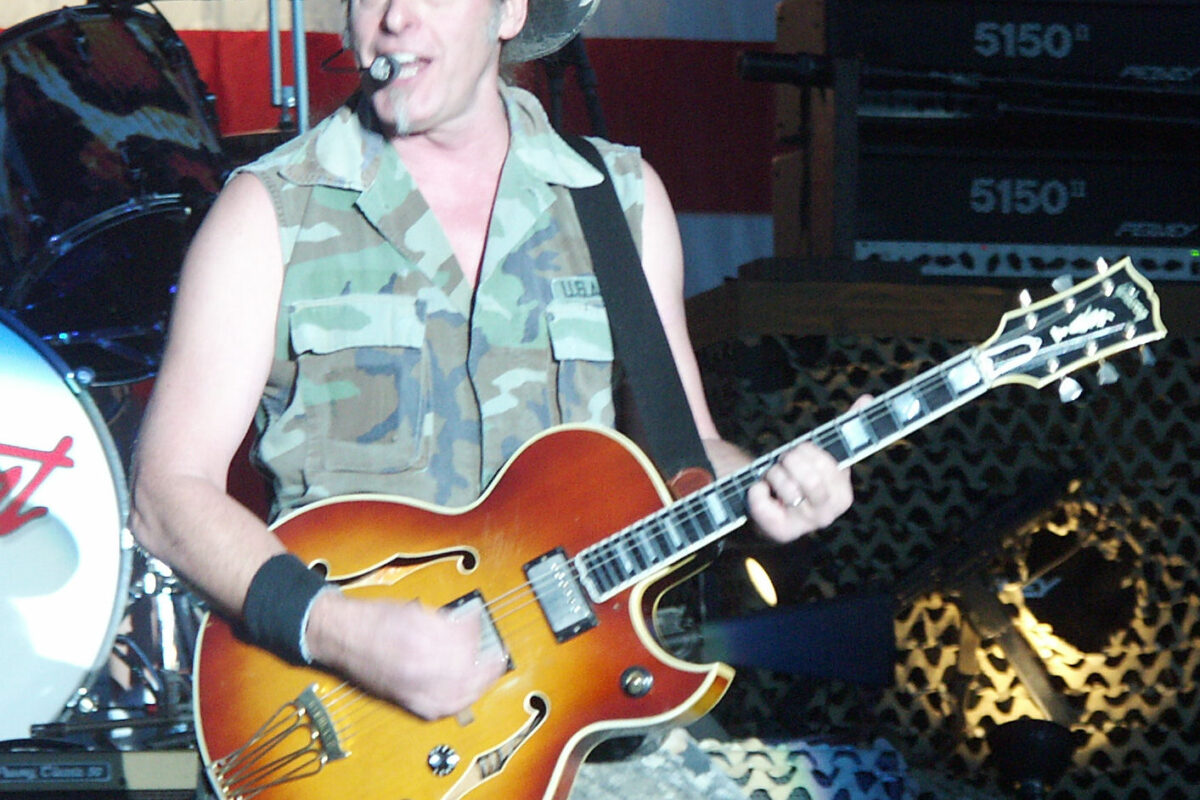
Ted Nugent Guitars & Gear: The Complete Guide to the Motor City Madman’s Byrdland Rig
Ted Nugent guitars & gear: the Motor City Madman's Byrdland rig. 12 vintage Gibson Byrdlands, Fender Twin Reverbs, Peavey 6505, zero effects, and the Stranglehold tone.
Ted Turner Guitars & Gear: The Complete Guide to Wishbone Ash’s Twin Guitar Pioneer’s Rig
Ted Turner guitars & gear: Wishbone Ash's twin-lead pioneer. Stratocasters, Firebird, Orange amps, and the Argus-era tone fully explained.
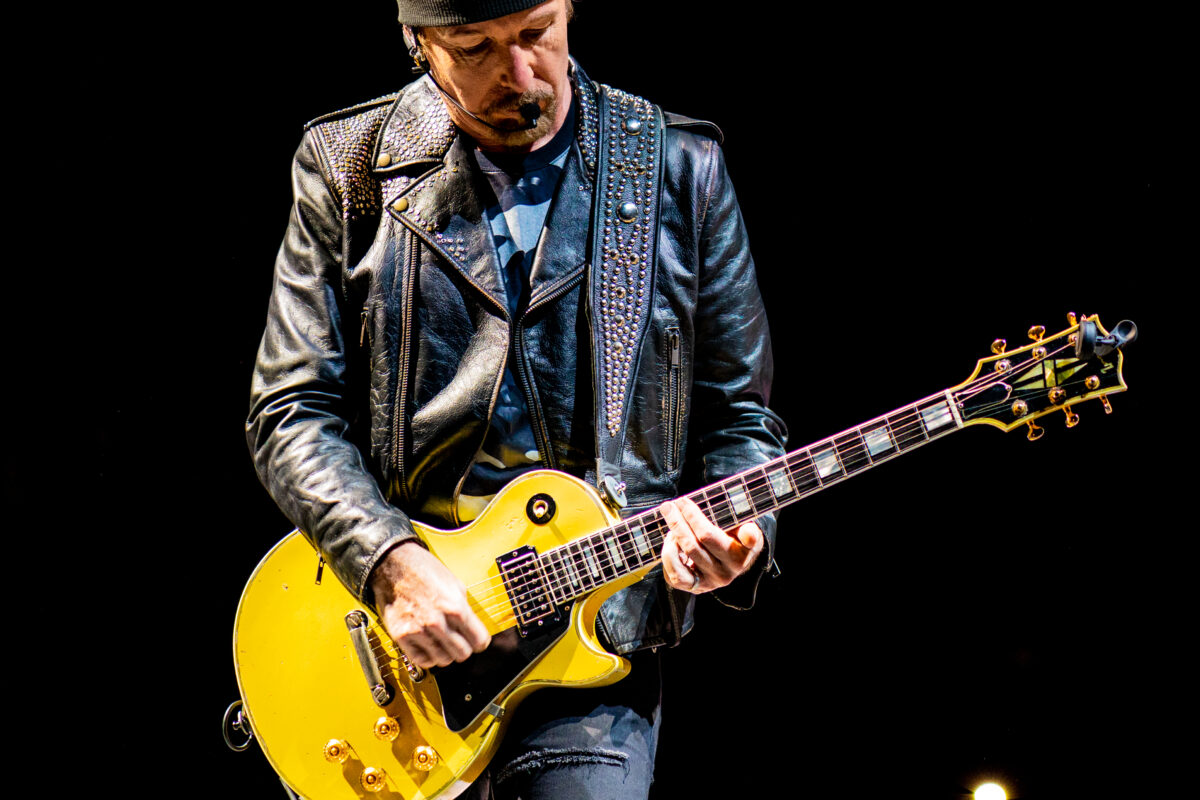
The Edge Guitars & Gear: The Complete Guide to U2’s Guitar Genius’s Rig
The Edge's guitars, amps, and effects — the complete guide. Gibson Explorer, Vox AC30, dotted eighth-note delay, Korg SDD-3000, and how to nail that massive U2 tone.