
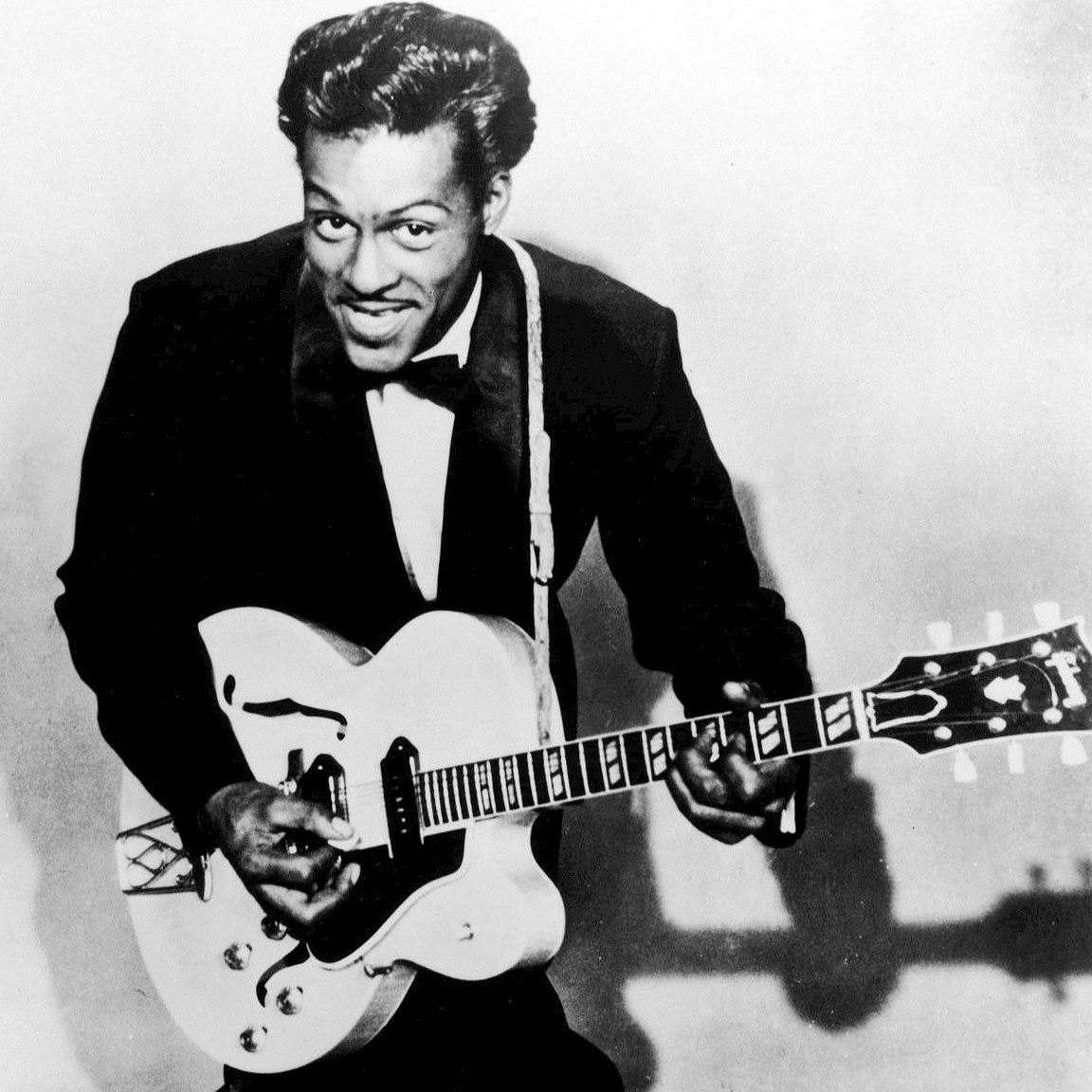
“If you were to try to give rock and roll another name, you might call it Chuck Berry.”
John Lennon said this. The man who, along with the other Beatles, had absorbed Chuck Berry’s catalog so completely that early Beatles recordings are essentially Chuck Berry cover albums — “Roll Over Beethoven,” “Rock and Roll Music,” “Johnny B. Goode,” “Sweet Little Sixteen” — understood better than anyone what Berry had done. He had not just played rock and roll. He had been rock and roll. The music and the man were inseparable.
Chuck Berry died March 18, 2017, at ninety years old. He was buried with his cherry red Gibson ES-355 guitar. The guitar that had accompanied him through his entire career — through the Chess Records recordings of the 1950s and 1960s, through the concert tour that produced “My Ding-a-Ling,” through the collaboration with Keith Richards at the Hail Hail Rock ‘n’ Roll concert in 1987 — went into the ground with him. No museum. No auction. No successor player. The guitar that made rock and roll went with the man who made it.
He required, as part of his concert rider, a pair of Fender Dual Showman Reverb amplifiers and a Lincoln Town Car. The amplifiers — two Dual Showmans, all knobs set to 8 — provided the clean, powerful foundation he needed. The Lincoln Town Car provided transportation with the dignity the King of Rock and Roll deserved. Both were non-negotiable.
He played no effects pedals. He played through clean amplifiers. He played the double-stop riffs that defined the rock guitar vocabulary. He played “Johnny B. Goode” — the song that NASA put on the Voyager Golden Record in 1977, sent into interstellar space as humanity’s musical calling card, the only rock and roll song considered representative enough of the human experience to be sent to the stars.
He was ninety years old when he died. He had a new album — Chuck, his first in decades — ready to release. It came out posthumously. He died playing rock and roll. He’s still playing it, somewhere in the direction of Vega.
Background: St. Louis, Chess Records, and the Invention of Rock and Roll
Charles Edward Anderson Berry was born October 18, 1926, in St. Louis, Missouri. He grew up in a middle-class Black family in St. Louis — his father was a contractor and deacon, his mother a school principal — and developed his musical interests from a combination of gospel church music, blues recordings, and country music that he heard on the radio. The specific synthesis he arrived at — blues guitar vocabulary with country music’s clean, articulate picking style and rhythm and blues’ rhythmic energy — was the specific synthesis that became rock and roll.
He began performing in the St. Louis area in the early 1950s. In 1955, he drove to Chicago and walked into Chess Records — the independent label that was recording Muddy Waters, Howlin’ Wolf, and the foundational artists of Chicago blues — and played for Leonard Chess. Chess heard something new and signed him. “Maybellene” — a reworked version of the country song “Ida Red” — was released in 1955 and reached number one on the R&B charts and number five on the pop charts. Rock and roll existed before “Maybellene,” but it didn’t sound like “Maybellene.” After “Maybellene,” everything changed.
The catalog that followed: “Roll Over Beethoven” (1956), “School Day” (1957), “Rock and Roll Music” (1957), “Sweet Little Sixteen” (1958), “Johnny B. Goode” (1958), “Carol” (1958), “Memphis, Tennessee” (1959), “Back in the U.S.A.” (1959). Each song a masterclass in the specific double-stop riff technique, the storytelling lyric, the specific guitar tone that would define rock and roll for the next six decades.
He was imprisoned in 1959 under the Mann Act (transporting a minor across state lines) and again in 1979 for tax evasion — periods that interrupted his commercial momentum but not his cultural stature. By the time of the Hail Hail Rock ‘n’ Roll concert film in 1987, directed by Taylor Hackford and featuring Keith Richards as musical director, Berry’s place in music history was secure. The film documents both his genius and his famously difficult personality — “he fired everyone on the first day,” Richards has said, with both exasperation and admiration.
Tone note: He drove to Chicago, walked into Chess Records, and played for Leonard Chess. The recording setup at Chess in 1955 was minimal — a room, some microphones, some amplifiers. The tone that came out of those sessions — “Maybellene,” “Roll Over Beethoven” — wasn’t the product of sophisticated signal chains or carefully maintained vintage equipment. It was the product of a guitar player who had discovered a specific vocabulary and who played it with specific energy and conviction. The gear served the vocabulary. The vocabulary was the revolution.
The Rig: Chuck Berry’s Guitars, Amps & Gear
Guitars: From Kay to ES-355
Kay Thin Twin — The Earliest Professional Guitar
Before the Gibson semi-hollows that would define his image, Chuck Berry played a Kay Thin Twin — an American-made semi-hollow electric guitar from the budget instrument manufacturer Kay. The Kay Thin Twin was a common instrument for working musicians in the early 1950s who couldn’t afford professional-grade Gibson or Fender instruments. Berry used it in his early performances in the St. Louis area, and it was almost certainly his instrument when he first began developing the double-stop riff vocabulary that would define rock and roll.
The guitar on “Maybellene” and the other early Chess Records classics — including “Johnny B. Goode” — was a 1957 Gibson ES-350T (also documented as an ES-350TN). This was a thinline hollowbody archtop with a single cutaway — a guitar from Gibson’s professional series before the ES-335’s introduction changed the semi-hollow market.
The ES-350T’s specific character:
- Body: Thinline hollowbody (not semi-hollow with a center block) — the thinner body reduces acoustic feedback compared to a full-depth archtop
- Pickups: PAF humbuckers — Gibson’s then-new Patent Applied For humbuckers, which had been introduced in 1957. The early PAFs’ specific warm, clear character is the tone of the Chess recordings
- Color: White/blonde finish
The ES-350T’s specific contribution to the early rock and roll sound: the PAF humbucker’s warmth and sustain through the Chess recording setup produced the specific “bark” of “Maybellene” and “Johnny B. Goode.” The guitar was loud enough to cut through a rhythm section and warm enough to produce the specific character of those double-stop riffs.
Gibson has subsequently produced tribute models including the Chuck Berry 1955 ES-350T — honoring the guitar that launched rock and roll.
When Gibson introduced the ES-335 in 1958 — the same year as Berry’s hit “Sweet Little Sixteen” — Berry was an early adopter. The ES-335’s semi-hollow construction (solid maple center block with hollow wings) provided better feedback resistance than the ES-350T’s full hollow body, making it more practical for increasingly loud live performance contexts. He used cherry red ES-335s throughout the late 1950s and 1960s.
He was photographed with a number of ES-335s, but it’s believed that some of them were provided to him so that he wouldn’t have to fly with his own beloved instrument — a practical touring decision consistent with his reputation for traveling light and relying on local equipment (including the Fender Dual Showman amplifiers he required in his concert rider rather than bringing his own amps).
Chuck Berry’s most associated guitar — the cherry red Gibson ES-355TD — became his primary instrument from the mid-1960s onward and remained so for the rest of his life. He was buried with it in 2017.
The ES-355’s position in the Gibson catalog: the top-of-the-line ES model, more expensive and more elaborately specified than the ES-335 and ES-345. As the “Cadillac of the ES series” — a description also applied to it in the B.B. King Lucille article, because King used the same model — the ES-355 features:
- Ebony fingerboard (rather than rosewood on the ES-335)
- Gold hardware (rather than nickel)
- Block inlays with split diamond headstock emblem
- Varitone circuit — six-position rotary switch providing different capacitor/filter combinations; B.B. King consistently used position two; Berry’s preferred Varitone position is less specifically documented but the circuit is present on his primary instruments
- Maestro Vibrola tailpiece on many examples — a vibrato system less common on other ES models; some Berry ES-355s have Bigsby vibrato, some have Maestro, some have no vibrato
- Stereo output — two output jacks for independent signal chains from neck and bridge pickups
The ES-355TD’s specific role in Berry’s sound: the combination of the ES-355’s ebony fingerboard clarity, the split-diamond-headstock prestige construction, and the specific humbucker character produced the clean, articulate, slightly warm tone that defined his playing style from the mid-1960s onward. It appeared with him during his first few British TV appearances in glorious black and white, alongside John Lennon and the Plastic Ono Band in 1972, with Keith Richards at Hail Rock N Roll in 1987, and at the Hall of Fame Concert in Cleveland in 1995 with Bruce Springsteen.
He was buried with his cherry red ES-355. The guitar that the King of Rock and Roll chose to take with him.
Other Key Guitars
- Gibson ES-330 — Used in various performances including the 1972 television appearance with John Lennon and the Plastic Ono Band; the ES-330 is a fully hollow version of the ES-335 configuration, with P-90 pickups (single-coil) rather than humbuckers
- Gibson ES-345 — Used at various periods; the ES-345 sits between the ES-335 and ES-355 in Gibson’s lineup
- Gibson Les Paul Custom (black) — Used at various points
- Gibson B.B. King Lucille Signature (cherry red) — In the 1980s, Berry favored the BB King Lucille signature model in cherry red — the same guitar that B.B. King used, adopted by Berry who admired King’s playing and instrument choices
- Gibson Flying V (cherry red, 1967) — Seen in later career photographs; an unusual choice for Berry but consistent with his willingness to play multiple Gibson models
- Gretsch 6121 Roundup — Seen at various points; Gretsch’s country-influenced solidbody
- Gretsch 6120 (Chet Atkins model) — Used at certain periods; the Gretsch archtop sound
- Gretsch G6136DC White Falcon (double cutaway) — Seen in photographs; the White Falcon is one of the most visually striking guitars ever made; four-knob configuration suggesting it may have been a gift from Neil Young (who modifies Gretsch knob configurations)
- Samick SAN-450 semi-hollow — Used in the late 1990s; displayed at the Rock and Roll Hall of Fame Museum
- Fender Stratocaster (black) — Seen in a performance alongside Keith Richards
- Gibson Super 400 — The flagship Gibson archtop; used in specific contexts
Complete Guitar List (Key Instruments)
- Kay Thin Twin — Earliest professional instrument; St. Louis area performances
- 1957 Gibson ES-350T (white, PAF humbuckers) — “Maybellene,” “Johnny B. Goode” recording guitar; the rock and roll guitar
- Gibson ES-335 (cherry red) — Late 1950s-1960s workhorse; touring
- Gibson ES-355TD (cherry red, Varitone, Maestro/Bigsby/hardtail) — Primary from mid-1960s to 2017; buried with him
- Gibson ES-330 (P-90 pickups) — 1972 TV appearance with Lennon
- Gibson B.B. King Lucille Signature (cherry red) — 1980s primary
- Gibson Flying V (cherry red) — Later career
- Gretsch 6121, 6120, White Falcon double cutaway — Various periods
Amps: Fender Dual Showman — Non-Negotiable in the Rider
Fender Dual Showman Reverb — The Concert Rider Requirement
Chuck Berry’s primary amplification for live performances from the 1960s onward was a pair of Fender Dual Showman Reverb amplifiers — and “a pair” is not optional. His concert rider specifically required two Dual Showman Reverb amplifiers to be provided at every venue. It was not negotiable. Neither was the Lincoln Town Car.
Someone who lugged two of Berry’s Dual Showmans around for nearly two decades described the settings: “all knobs set to 8.” Volume 8. Treble 8. Bass 8. Middle 8. Everything at 8. The Dual Showman’s specific character at that setting: extremely loud, extremely clean, powerful and clear, with the specific Fender clean tone that provides a transparent platform for the guitar’s natural character to come through without amplifier coloration.
The Dual Showman was Fender’s most powerful amplifier of the era — a 100-watt head running into two 15-inch speaker cabinets. At volume 8, in a concert venue, two of them are producing enough clean headroom for any guitar to cut through a live band at any volume. The specific choice of two rather than one reflects Berry’s approach to live performance: enough power to be heard clearly at the back of any room, with the clean headroom to let his guitar’s specific character be the only tone.
Earlier Amplifiers
- Fender Bassman — The primary recording amplifier for the Chess Records sessions; the Bassman’s specific 6L6 tube character through an open-back 4×10 cabinet produced the specific “bark” of the Chess recordings. The Fender Bassman at the edge of breakup — not quite distorting, but with the specific compression and harmonic richness that 6L6 tubes produce near their saturation point — is the sound of “Johnny B. Goode”
- Fender Showman (single) — Used before the Dual Showman requirement was established in the rider
- Fender Champ — Used in the Chess recording studio for specific applications; the small Champ at high volume produces natural saturation at lower overall volumes, useful in a recording context where the Bassman’s power was excessive
- Various venue backline — Berry was famously willing to use whatever amplification was provided at a venue; his preference was for the Dual Showman, but he was pragmatic enough to work with what was available
Pedals: None. The Guitar Does the Work.
Chuck Berry used no effects pedals. Like B.B. King — the artist he admired enough to adopt the B.B. King Lucille Signature as his primary guitar in the 1980s — Berry’s philosophy was that the guitar and the amplifier were the complete signal chain. Nothing between guitar and amp except a cable.
His tone on the Chess recordings came from the specific interaction of the ES-350T’s PAF humbuckers and the Fender Bassman’s 6L6 tubes. His live tone came from the ES-355 and the Dual Showman pair at 8. No wah. No fuzz. No delay. No reverb beyond the Dual Showman’s built-in spring reverb (which he may or may not have engaged — the “all knobs at 8” account doesn’t specify the reverb setting).
The double-stop riffs that are the most imitated guitar figure in rock history — the opening of “Johnny B. Goode,” the intro to “Roll Over Beethoven,” the riffs of “School Day” — were played clean through clean amplifiers. The articulation, the dynamics, the specific timing of each pick stroke were the only effects applied. The technique was the sound.
Picks, Strings & Setup
Picks: Heavy picks — firm, standard plectrums consistent with the clean, articulate attack his style required. The double-stop riffs that define his playing need a consistent, firm pick attack to produce the specific “bark” that cut through the Chess recording room and through live venue mixes.
Strings: Standard electric guitar strings in medium to medium-light gauge — consistent with the semi-hollow Gibson guitars’ requirements. Heavy enough for the double-stop bends, light enough for the rapid single-note runs of his solos.
The duck walk: Berry’s signature stage move — the duck walk, performed by squatting on one leg and hopping across the stage while continuing to play — is not a gear decision but a technique decision that is worth noting because it created a specific physical relationship between performer and instrument. Playing while duck-walking requires the guitar to stay in playing position regardless of body position — the Gibson semi-hollow’s lighter weight made this more practical than a heavier solid-body would have been.
Playing Style & Tone Philosophy: The Double-Stop Revolution
Chuck Berry’s guitar philosophy is the foundational philosophy of rock guitar. Every technique, every stylistic approach, every tonal concept that subsequent rock guitarists have developed exists in relation to what Berry established: the double-stop riff as the fundamental unit of rock guitar expression.
The Double-Stop Riff
A double stop is two strings played simultaneously — the simplest possible harmony. Berry’s specific innovation was applying double stops to the high strings (typically the B and G strings), playing them in rapid rhythmic patterns that provided both melody and rhythm simultaneously. The intro to “Johnny B. Goode” — two strings, alternating between two positions, creating the call-and-response pattern that defines the song — is the foundational double-stop riff in rock history.
Before Berry, double stops existed in country music (the specific bent double-stop of country twang) and in blues (the guitar answering vocal phrases). Berry synthesized these into something specifically urban, specifically rhythmic, specifically rock and roll: a double-stop vocabulary that was energetic enough for dancing, melodic enough for listening, and rhythmically sophisticated enough to carry a song without a keyboard or second melody instrument.
The Country Music Influence
Berry’s guitar playing is simultaneously blues and country — and the specific synthesis is what makes rock and roll. He absorbed country picking (the clean, articulate style of country guitarists rather than the messier, more rhythmically loose approach of pure blues) and applied it to blues themes and rhythmic structures. The result was a music that was neither country nor blues but something that drew from both traditions while belonging to neither.
Hank Williams, Bob Wills, Merle Travis — these country influences are as audible in Berry’s guitar playing as Muddy Waters or T-Bone Walker. The specific clarity and articulation of his picking, the rhythmic precision, the tendency to play in the spaces between beat rather than on top of them — all of these reflect the country tradition as much as the blues.
The Storytelling Lyric
Berry was also one of the great lyricists of the rock and roll era — his songs told specific stories about specific characters in specific situations, and the guitar work served these stories. “Johnny B. Goode” is the story of a country boy who plays guitar and wants to be famous — and the guitar intro is the sound of that ambition. “Maybellene” is a car chase story told in verse — and the guitar rhythm is the energy of that chase. The gear and technique served the storytelling.
The Live Performance Philosophy
Berry was notorious in the rock and roll world for his touring philosophy: he traveled alone, required local pickup bands to learn his songs and play them on stage without any rehearsal, and expected payment in cash before he played. This approach — extracting maximum income from live performance while minimizing personal investment — made him simultaneously the most economically rational and most difficult musician in rock and roll. It also meant that his live sound was inherently adaptable: he couldn’t depend on a specific band’s arrangement or a specific stage setup. The guitar and the two Dual Showmans were his constants. Everything else was local.
How to Sound Like Chuck Berry
The Guitar
Gibson ES-335 or ES-355 in cherry red — the foundational color of rock and roll. The semi-hollow construction and PAF-style humbuckers are essential.
- Gibson ES-335 (cherry red) — The working guitar for the classic period; available in current production
- Gibson Chuck Berry 1970s ES-355 — The signature tribute model; limited edition with correct specs
- Gibson ES-355TD — The guitar he was buried with; Varitone; gold hardware; ebony board
- Any semi-hollow with PAF-style humbuckers — The semi-hollow warmth and sustain are the essential tonal character
The Amp
Fender clean — Dual Showman for the authentic live setup; Bassman for the Chess recording sound.
| Control | Setting (Dual Showman) | Notes |
|---|---|---|
| Volume | 8 | “All knobs set to 8” — the documented Berry setting |
| Treble | 8 | High treble; the ES-355’s ebony board and humbuckers provide warmth; treble adds cut |
| Bass | 8 | High bass; the thinline semi-hollow body’s natural warmth plus amplified bass extension |
| Middle | 8 | All at 8; the amplifier’s specific character at these settings is the sound |
| Reverb | Unknown; moderate spring likely | The Dual Showman’s spring reverb adds dimension; Berry’s specific setting not documented |
For the Chess recording sound: Fender Bassman (4×10, 6L6 tubes) at moderate to high volume — the specific natural saturation of the Bassman at working level is the Chess sound. A Catalinbread Formula 5F6 pedal approximates this in front of a clean amp.
The Essential Technique
No effects. Learn the double-stop riff of “Johnny B. Goode.” This involves two strings (B and G, third and second strings in standard tuning) played in a repeating pattern, with specific bends and hammer-ons. The articulation — the precise timing and attack of each double stop — is the technique. Practice it until it sounds like a train moving. That is the rock and roll guitar vocabulary. Everything else is variation on this foundation.
Budget vs Authentic
Budget:
- Guitar: Epiphone ES-335 Pro (cherry red) or any semi-hollow with humbuckers
- Amp: Fender Blues Junior or any clean Fender; if using a smaller amp, drive it slightly for the Bassman character; Catalinbread Formula 5F6 for the Chess recording sound
- Pedals: None
Authentic:
- Guitar: Gibson ES-335 (cherry red, current production) or Gibson ES-355 (with Varitone)
- Amp: Fender Dual Showman Reverb (pair, both required; all knobs at 8); or Fender Bassman (4×10) for the Chess recording sound
- Pedals: None. Absolutely none. The guitar and the amplifier are the complete signal chain.
Influence & Legacy: The Foundation of Everything
Chuck Berry’s influence on guitar playing and on popular music is the influence of the originator — not someone who influenced a genre or a tradition, but someone who created the language that all subsequent genres spoke. The double-stop riff, the storytelling lyric, the specific energy and showmanship of the live rock and roll performance — Berry invented all of it. Every guitarist in this series who plays rock and roll music plays it in a vocabulary that Chuck Berry created.
The documented connections:
- The Beatles — Covered Berry’s songs extensively in their early career; absorbed his double-stop vocabulary into their own writing; John Lennon called him rock and roll itself; Keith Richards considers him the greatest rock and roll songwriter
- Rolling Stones — Keith Richards’s primary guitar influence; Richards spent his career exploring variations on Berry’s double-stop approach; the Stones covered “Route 66,” “Carol,” “Come On,” “Around and Around,” and others. Richards played musical director for the Hail Hail Rock ‘n’ Roll concert film in 1987
- Elvis Presley — Absorbed Berry’s energy and performance approach; covered his songs and acknowledged his influence
- Jimi Hendrix — Learned Berry’s catalog note-for-note as a teenager; the “Johnny B. Goode” double-stop vocabulary is audible in Hendrix’s rhythm playing (#1 in this series)
- AC/DC, Angus Young — Angus Young’s rhythm guitar work is a direct evolution of Berry’s double-stop riff approach; the AC/DC sound is Berry played louder and heavier
- Every rock and roll guitarist — Without exception; the vocabulary they use traces back to Berry’s specific innovations
- The Voyager Golden Record — “Johnny B. Goode” is the only rock and roll song included on the golden record sent into interstellar space in 1977 as a representation of human musical culture. Berry’s response when told: “Tell them to send money.” The line suggests he was joking. The achievement suggests he was right to expect payment
He was buried with his cherry red ES-355. It is in the ground with him. The music he played on it is everywhere else — in every rock guitar that has been played since 1955, in every double-stop riff, in every storytelling lyric about a country boy who plays guitar, in every performance by every guitarist who has ever stood in front of an amplifier and played something that felt like rock and roll.
“Tell them to send money.” He was joking. He was right.
Tone note: “All knobs set to 8.” On a pair of Fender Dual Showman Reverb amplifiers. Not 10 — not the maximum. Not a careful calibration to specific frequency response targets. Just 8 on everything, on both amps. The consistency of this approach — the same setting, every night, everywhere in the world — reflects a performer who knew exactly what he needed, who required that it be provided to him, and who delivered the same performance through it every time. The gear was consistent because the art was consistent. The same double-stop riffs, the same duck walk, the same songs. The same two Dual Showmans at 8. The same Lincoln Town Car. Rock and roll, reliably, every night.
“If you were to try to give rock and roll another name, you might call it Chuck Berry.” John Lennon said this. He was right.
Cherry red Gibson ES-355TD, buried with him in 2017. Fender Dual Showman Reverb — two required, all knobs at 8, Lincoln Town Car, non-negotiable. No effects pedals. The double-stop riff on the B and G strings. The duck walk. “Johnny B. Goode” sent into space in 1977.
“Tell them to send money.”
He was ninety years old. He had a new album ready. He died playing rock and roll. Somewhere in the direction of Vega, the Voyager spacecraft carries “Johnny B. Goode” into interstellar space.
The guitar went into the ground with him. The music went everywhere.
Chuck Berry sits at #13 in this series — for the guitarist who absorbed Berry’s double-stop vocabulary more completely than any other single player and whose entire career can be understood as a sustained meditation on what Berry established, check our complete guide to Keith Richards’s guitars and gear at #28 in this series.
And for the guitarist who learned Berry’s catalog note-for-note as a teenager and whose rhythm guitar playing carries the double-stop DNA into psychedelic rock, check our complete guide to Jimi Hendrix’s guitars and gear.
For the guitarist whose B.B. King Lucille Signature Chuck Berry adopted as his primary guitar in the 1980s — and whose own Gibson ES-355 relationship runs parallel to Berry’s — don’t miss our complete guide to B.B. King’s guitars and gear.
FAQ: Chuck Berry Guitars & Gear
What guitar was Chuck Berry buried with?
Chuck Berry was buried with his cherry red Gibson ES-355TD guitar — the instrument that had been his primary guitar from the mid-1960s until his death on March 18, 2017, at age ninety. The ES-355 appeared with him throughout his career: on his British TV appearances, in his 1972 performance with John Lennon and the Plastic Ono Band, at the Hail Hail Rock ‘n’ Roll concert with Keith Richards in 1987, and at the Rock and Roll Hall of Fame Concert with Bruce Springsteen in 1995. When Berry died, the decision was made to bury him with the guitar. No auction, no museum donation, no successor player — the guitar that made rock and roll went into the ground with the man who made it.
What guitar did Chuck Berry use to record “Johnny B. Goode”?
A 1957 Gibson ES-350T — a thinline hollowbody archtop with PAF humbuckers (Gibson’s then-new Patent Applied For pickups). The ES-350T’s specific combination of hollowbody warmth and early PAF humbucker character, through the Fender Bassman amplifier setup at Chess Recording Studios in Chicago, produced the specific “bark” of “Johnny B. Goode,” “Maybellene,” and the other foundational rock and roll recordings. Gibson has subsequently produced tribute models including the Chuck Berry 1955 ES-350T, honoring the guitar that launched rock and roll.
What were Chuck Berry’s amplifier requirements?
Two Fender Dual Showman Reverb amplifiers — required in his concert rider, along with a Lincoln Town Car for transportation. Not one Dual Showman, but two. Someone who managed Berry’s Dual Showmans for nearly two decades described his settings: “all knobs set to 8.” Volume 8, Treble 8, Bass 8, Middle 8. Everything at 8, on both amplifiers. The Dual Showman’s specific character at those settings: extremely loud, extremely clean, with the powerful, clear Fender tone that provided a transparent platform for his guitar’s natural character. For the Chess Records recordings, the amplifier was a Fender Bassman (4×10, 6L6 tubes) — the specific natural saturation of the Bassman at working level is the Chess recording sound.
What effects pedals did Chuck Berry use?
None. Like B.B. King, Chuck Berry used no effects pedals throughout his career. The complete signal chain: guitar → cable → amplifier. The double-stop riffs that define his playing — the foundations of rock and roll guitar — were played completely clean through clean amplifiers. The technique was the sound: the specific articulation, timing, and pick attack of each double stop were the only “effects” applied. This approach produced some of the most recognizable guitar tones in music history.
What is the double-stop riff and why is it important?
A double stop is two strings played simultaneously — the simplest possible harmony. Berry’s specific innovation was applying double stops to the high strings (typically the B and G strings) in rapid rhythmic patterns that provided both melody and rhythm simultaneously. The intro to “Johnny B. Goode” is the definitive double-stop riff: two strings, alternating between two positions, creating a call-and-response pattern that simultaneously serves as the song’s hook, its energy source, and its rhythmic foundation. Before Berry, double stops existed in country and blues music; Berry synthesized these into the rock and roll vocabulary that every subsequent rock guitarist has inherited. Every guitarist from Keith Richards to Angus Young to Jimi Hendrix learned this vocabulary from Berry.
Why is “Johnny B. Goode” on the Voyager Golden Record?
In 1977, NASA sent the Voyager 1 and 2 spacecraft into space carrying the Voyager Golden Record — a collection of sounds, images, and music intended to represent Earth’s culture to any extraterrestrial intelligence that might encounter it. “Johnny B. Goode” was the only rock and roll song included. The selection reflected the record’s compilation committee’s judgment that Berry’s 1958 recording represented something fundamental about human musical culture and specifically about American musical innovation. It remains the farthest rock and roll recording from Earth — the Voyager spacecraft continues moving into interstellar space. Berry’s response when informed: “Tell them to send money.”
How do I get Chuck Berry’s guitar tone?
Gibson ES-335 or ES-355 (cherry red) with PAF-style humbuckers. Fender amplifier set clean and loud — Fender Dual Showman if you can get one (all knobs at 8 on both), or Fender Bassman 4×10 for the Chess recording sound. No effects pedals. The essential technique: learn the double-stop riff of “Johnny B. Goode” — two strings (B and G), rapid alternating pattern, with specific bends and hammer-ons. Practice the articulation: each double stop should have a consistent, firm pick attack that produces a clear “bark” without distortion. The Catalinbread Formula 5F6 pedal approximates the Fender Bassman’s natural saturation in front of a clean amp, if you need the Chess recording character without the Bassman. Everything else is the playing.
Related stories
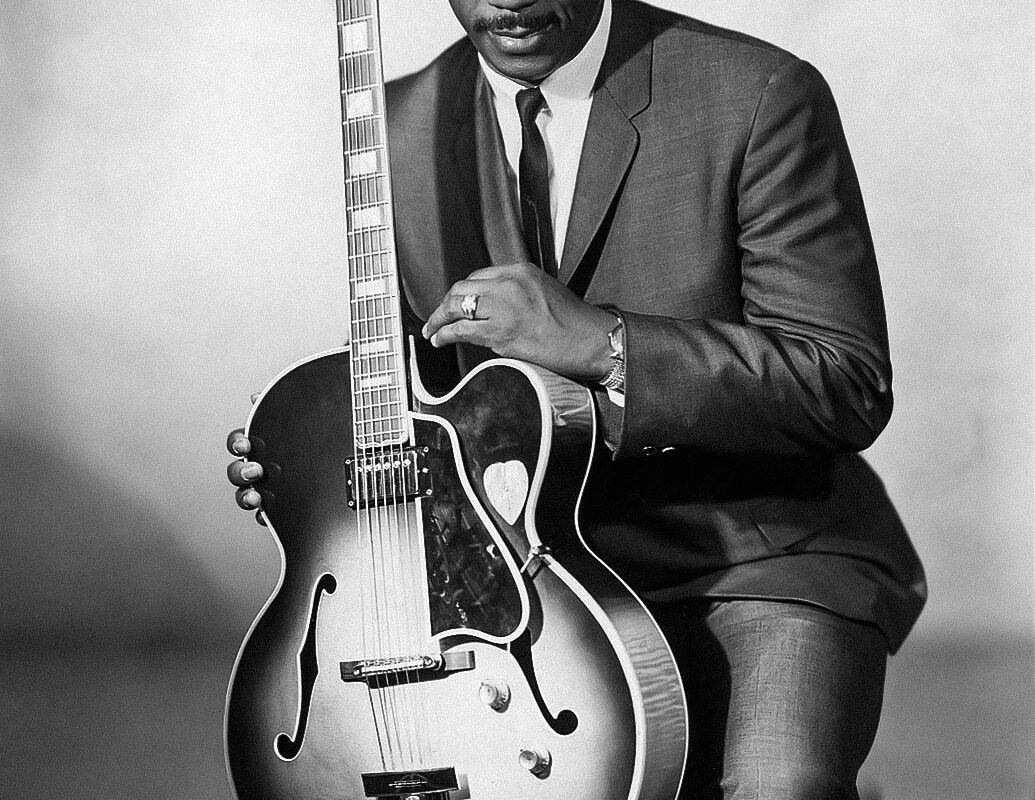
Wes Montgomery Guitars & Gear: The Complete Guide to the Jazz Master’s Rig
Wes Montgomery's guitars, amps, and effects — the complete guide. Gibson L-5 CES, Standel amps, thumb picking technique, flatwound strings, and how to nail that warm jazz tone.
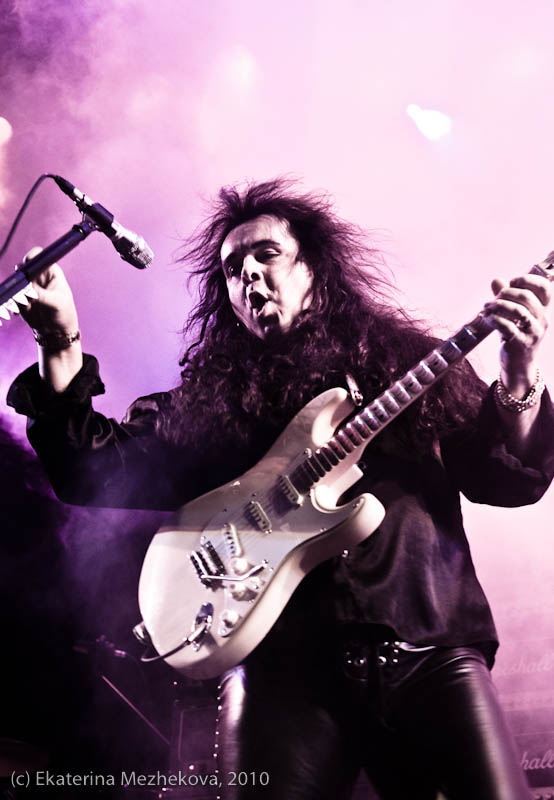
Yngwie Malmsteen Guitars & Gear: The Complete Guide to the Shred Master’s Rig
Yngwie Malmsteen's guitars, amps, and effects — the complete guide. The Duck Stratocaster, scalloped fretboard, Marshall wall, DiMarzio HS3, and how to nail that neoclassical metal tone.
Sylvain Sylvain Guitars & Gear: The Complete Guide to the New York Dolls’ Gretsch, Les Paul Junior & Automatic Guitar Proto-Punk Rig
Sylvain Sylvain guitars & gear: New York Dolls guitarist. Les Paul Junior 'automatics', Gretsch Golden Anniversary, white Les Paul Custom stolen by Steve Jones — proto-punk tone.