Jimi Hendrix – The Alchemist of Electric Expression
GuitarGangsters Editorial 16 min read Updated 21 October 2026
There’s a moment in every guitarist’s life when they plug in, hit a chord, and realize — they’re chasing a ghost named Jimi Hendrix.
That swirling feedback, that liquid sustain, that sense that the guitar wasn’t just an instrument but an extension of his nervous system — that’s what changed music forever.
Before Hendrix, electric guitars were loud. After Hendrix, they spoke.
His rig looked simple — a few Strats, a couple of Fuzz Faces, and a Marshall stack — but in his hands it became a laboratory. He treated sound like a sculptor treats clay, twisting knobs, pushing amps past the point of reason, then taming the chaos with a flick of the pinky on the volume knob.
When he walked onstage at Monterey Pop Festival in 1967, America met the future. He lit his guitar on fire, but what really burned was the idea that tone could be a performance all by itself.
Background: The Making of a Sound Revolutionary
Born Johnny Allen Hendrix in Seattle, 1942, Jimi grew up in a modest home with more imagination than money. His first guitar was a one-string ukulele salvaged from the trash; his second was a pawn-shop acoustic. He taught himself to play by ear — left-handed on right-handed guitars turned upside down. That flip would define his feel forever.
By the early ’60s, he was cutting his teeth as a sideman on the Chitlin’ Circuit, backing artists like Little Richard, Ike & Tina Turner, and The Isley Brothers. Those years built his rhythm chops and showmanship — the swagger that later made The Jimi Hendrix Experience unstoppable.
In 1966, Chas Chandler of The Animals spotted him playing at Café Wha? in New York and brought him to London. Within months, Hendrix went from obscure session player to a psychedelic prophet with a Fender Stratocaster and a Marshall Super 100. The trio — Hendrix, Noel Redding, and Mitch Mitchell — recorded Are You Experienced?, and guitar history split into “before” and “after.”
Every note Hendrix played was part melody, part electricity, part emotion. He wasn’t trying to play clean — he was trying to play alive.
Tone note: Even in 1967, Hendrix’s rig was already ahead of its time — controlled feedback, fuzz sustain, and volume-knob orchestration long before anyone used those words.
Band Context & Hit Songs
When The Jimi Hendrix Experience exploded onto the scene in late ’66, they weren’t just a band — they were a chemical reaction. Three musicians, one frequency: raw, chaotic, spiritual. Hendrix on a flipped-over Fender Strat, Noel Redding on bass, and Mitch Mitchell on drums, swinging like a jazz player trapped inside a thunderstorm.
Their debut Are You Experienced? redefined what the electric guitar could say. It wasn’t just fuzz and volume — it was phrasing, storytelling, and emotion in real time.
“Purple Haze” (1967)
The opening riff was born from chaos theory — an E7#9 chord (“the Hendrix chord”) fed through a Dallas-Arbiter Fuzz Face into a Marshall Super Lead.
The result? Controlled anarchy.
Hendrix discovered that by balancing the Strat’s volume at “7,” the fuzz cleaned up just enough to shimmer, then roared back when he cranked it. That trick became his trademark.
Tone note: The secret of “Purple Haze” isn’t distortion — it’s dynamic control. Fuzz Face + Strat + volume knob = alchemy.
“The Wind Cries Mary” (1967)
His gentler side — glassy Strat neck pickup through a clean Marshall, tone knob rolled slightly back.
No pedals, just touch.
He recorded it in one take. It’s the sound of restraint, proving that even the most aggressive rig could whisper.
Tone note: This is where you hear the man, not the machine.
“Voodoo Child (Slight Return)” (1968)
The ultimate wah-pedal manifesto.
Played live with the Vox Clyde McCoy Wah wide open, Fuzz Face engaged, and Marshall dimed, it became a sermon on stage.
He used the wah not as an effect but as a voice — accenting phrases like a talkbox before talkboxes existed.
Tone note: If Purple Haze was a storm, Voodoo Child was lightning striking the same spot twice.
“Little Wing” (1967)
Clean Strat neck pickup, Uni-Vibe subtle modulation, light compression from tape saturation.
He used his thumb to fret bass notes while letting open strings ring, creating shimmering chord clusters no one had ever heard before.
Tone note: The first true “liquid clean” tone in rock history.
“Machine Gun” (1970, Band of Gypsys)
This was Hendrix the warrior.
He ditched the psychedelic gloss and went full realism — guitar as weapon, wah + fuzz + volume swells mimicking explosions and sirens.
Rig: 1968 Stratocaster → Fuzz Face → Octavia → Uni-Vibe → Wah → Marshall 100W → 4×12 cabs.
It wasn’t just a song; it was Vietnam through electricity.
Tone note: “Machine Gun” turned tone into theater. It’s the moment Jimi stopped being a rock star and became a sound sculptor.
By 1970, with Band of Gypsys, Hendrix had stripped his sound down to raw truth — less psychedelia, more soul. He didn’t play to impress anymore. He played to communicate.
Rig Deep-Dive by Era
The London / Experience Era (1966–1968) – Chaos Meets Control
London in ’66 was gray, dirty, and polite — until Hendrix showed up and made every amp in town cry for mercy.
His weapon of choice: a right-handed Fender Stratocaster flipped upside-down, strung lefty with Fender Rock ’n’ Roll 150s (.010–.038).
He used stock single-coil pickups, often rewired for hotter output, and his playing hand’s inverted angle gave his bends a vocal, almost reverse character — slinkier bass strings, tighter trebles.
The Strat wasn’t just his guitar; it was his paintbrush.
Amp setup:
-
1966–68: Marshall Super 100 (JTM45/100) and Marshall Super Lead 100 (Model 1959) heads
-
Cabs: 4×12” Marshall stacks loaded with Celestion Greenbacks
-
Settings (approx): Presence 6, Bass 4, Mid 7, Treble 6, Volume 8–10
-
Always run loud enough to feedback
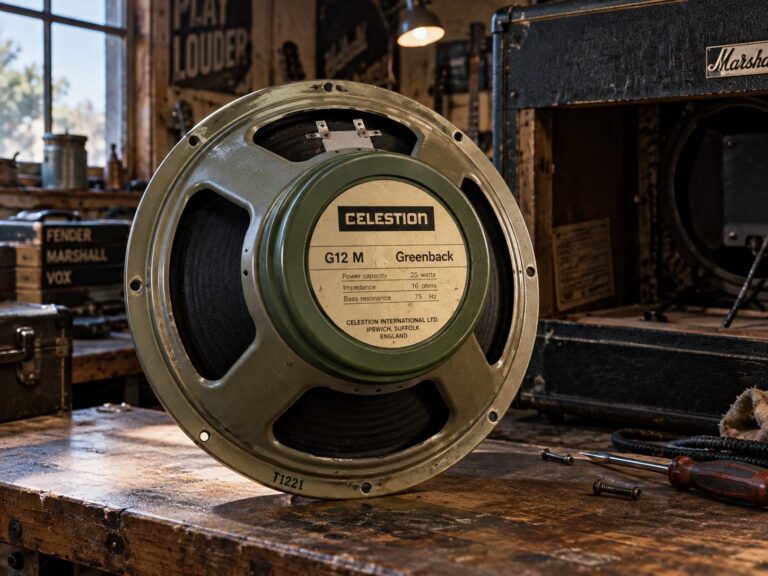
Pedals & Signal Chain:
-
Dallas-Arbiter Fuzz Face (germanium → later silicon)
-
Vox Clyde McCoy Wah-Wah
-
Octavia (Roger Mayer prototype)
Signal path: Guitar → Wah → Fuzz → Octavia → Marshall stack
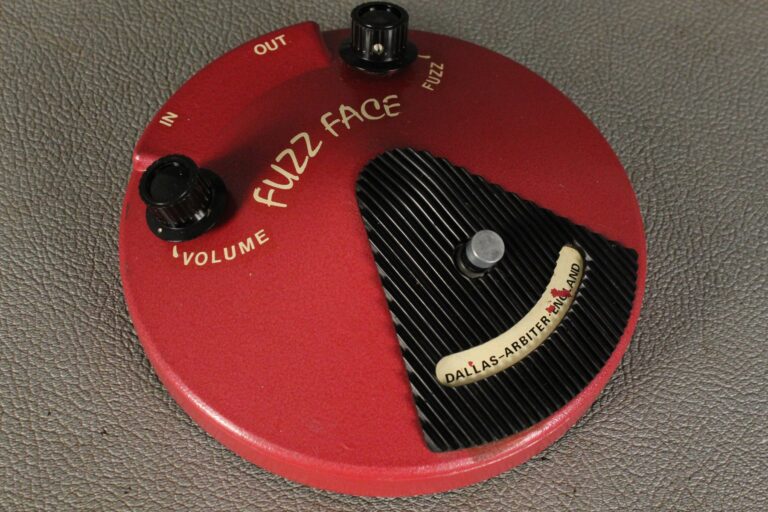
Tone note: This was the “Purple Haze” sound — pure anarchy balanced by touch. He controlled chaos through volume-knob choreography.
Electric Ladyland & Woodstock Era (1968–1969) – The Studio Alchemist
By ’68, Hendrix had become a sonic scientist. In his Electric Lady Studios, he built tone the way painters build light.
He began experimenting with Uni-Vibe, Leslie cabinets, and studio echo for spatial texture.
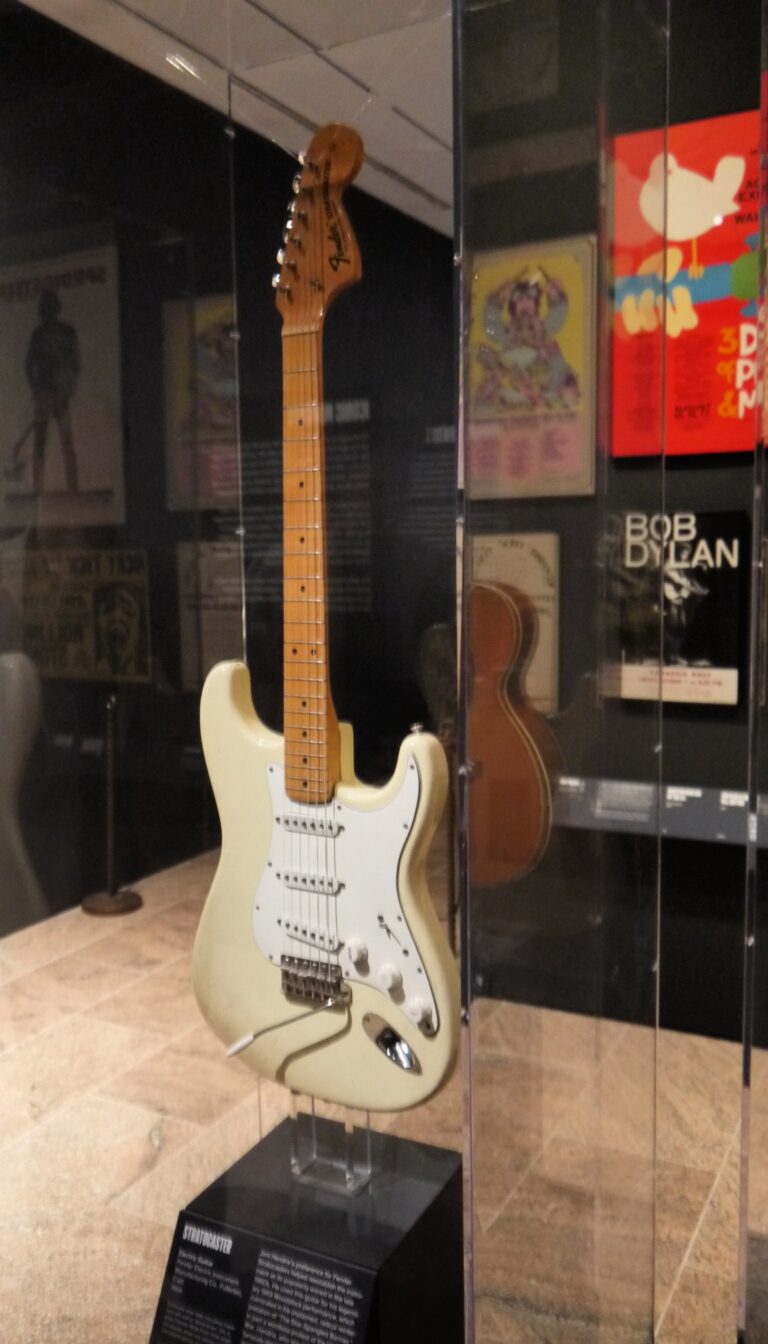
Key Guitars:
-
1968 Fender Stratocaster Olympic White (Woodstock guitar)
-
1968 Black Strat used at Royal Albert Hall
-
Custom Flying V and Gibson SG Custom for studio work
Amps:
-
Marshall Super Lead 100W (still mainstay)
-
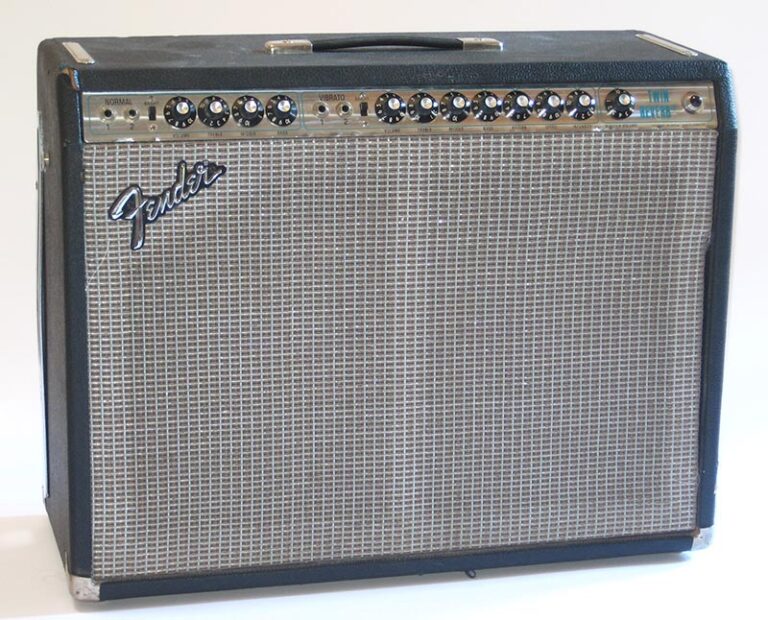
Fender Twin Reverb for cleaner tracks
-
Sunn 100S for low-end headroom
-
Mic setup: Shure SM57s close + Neumann U67 ambient
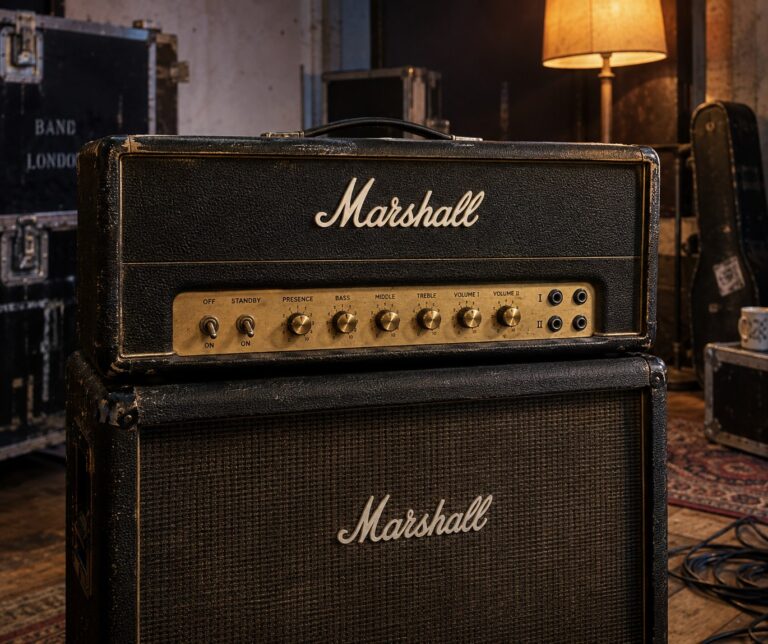
Effects:
-
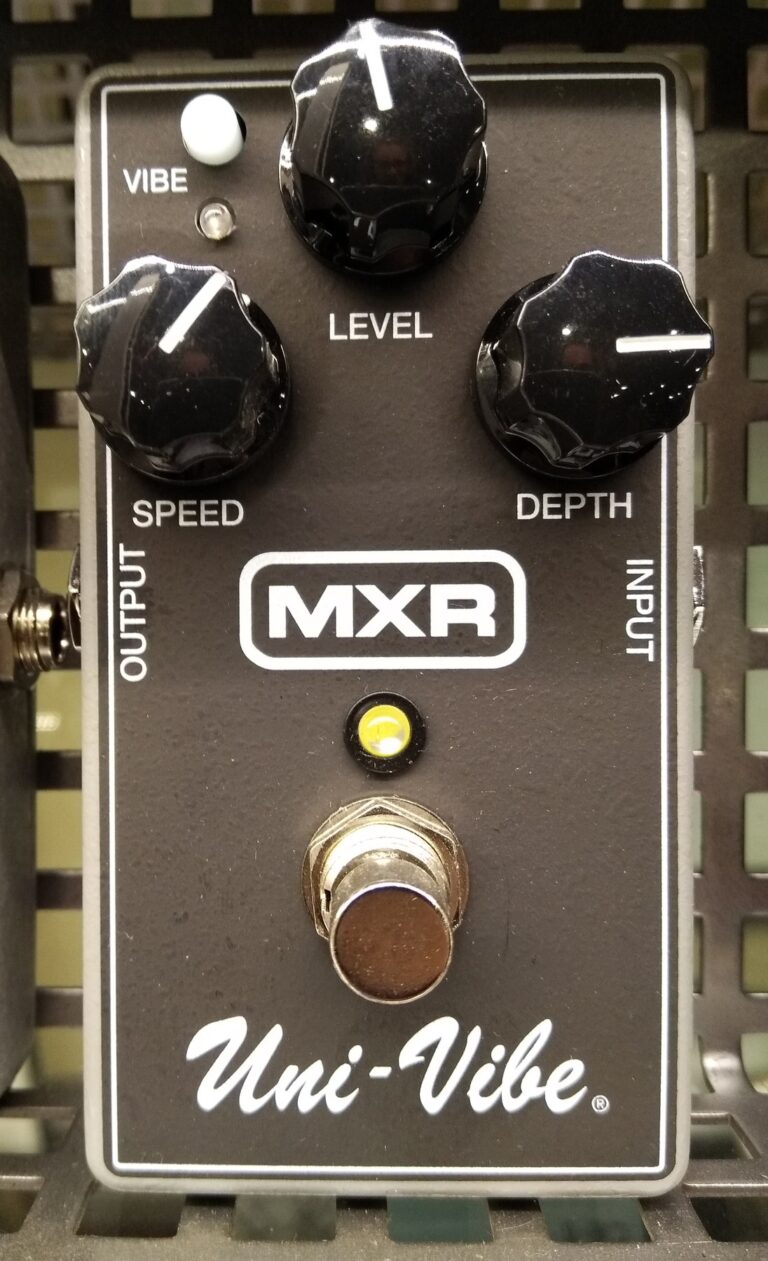
Uni-Vibe (choral swirl on “Machine Gun”)
-
Fuzz Face (silicon version)
-
Vox Wah
-
Octavia for octave-up solos (“Who Knows”)
-
EchoRec / Tape Delay for slapback ambience
Studio tricks:
He doubled tracks in stereo, panned solos hard left/right, and even reversed takes for psychedelic impact (“Castles Made of Sand”).
Tone note: Electric Ladyland wasn’t just an album — it was a tone laboratory. Hendrix didn’t chase perfection; he built emotion out of electricity.
Band of Gypsys Era (1969–1970) – The Soldier of Sound
By ’69, Jimi was darker, heavier, and politically charged. His rig reflected that shift — more mids, more wah, less gloss.
Gone was the flower power shimmer; in its place stood thunder.
Guitars:
-
1969 Black Stratocaster (Maple Neck)
-
Custom Gibson Flying V with humbuckers for extra bite
-
Lefty SG Custom for “Red House”-era blues tone
Amps:
-
Dual Marshall 1959 Super Leads chained
-
Sunn Coliseum Lead (occasional studio use)
-
Leslie cabinet on select clean tones
Pedals & Signal Chain:
-
Fuzz Face → Octavia → Uni-Vibe → Wah → Amp
-
Added Volume pedal for swells on “Machine Gun”
-
Delay via EchoRec or tape loop for atmospheric trails
Tone settings (Marshall base):
-
Gain 8
-
Bass 5
-
Mid 6
-
Treble 6
-
Presence 5
-
Volume 9
Tone note: The Gypsys tone was heavier, drier, and angrier — the sound of a man wrestling his own creation.
Hendrix didn’t use his rig to amplify himself — he used it to translate himself. Every hum, buzz, and squeal was intentional. The feedback wasn’t noise; it was communication.
Strings / Picks / Tunings / Setup
Jimi Hendrix didn’t believe in “rules” — especially not about setup. His rig might have been loud and wild, but his guitars were tuned for feel, not for fight.
Strings
Hendrix was a Fender Rock ’n’ Roll 150 guy — light gauge .010–.038, sometimes mixing sets depending on mood and venue.
He preferred light tension because he played from the wrist, not the arm, letting his bends and vibrato flow instead of forcing them.
He’d change strings frequently — almost nightly on tour — to keep that glassy, articulate attack on clean tones.
Tone note: The lighter gauge gave him elasticity. Combine that with the half-step down tuning, and every bend becomes a vocal line.
Picks
Hendrix typically used medium celluloid picks (around 0.73–0.80 mm), though he often played with fingers too — especially during dynamic passages.
He would switch mid-song, hybrid-picking with his thumb and index, sometimes even using the pick upside down to soften the attack.
Live, he kept multiple picks wedged under the pickguard — quick swaps for sweat-soaked chaos.
Tone note: Even his pick choice was part of his phrasing — attack wasn’t just touch; it was personality.
Tunings
Hendrix nearly always tuned a half-step down (E♭) — what players now call “Hendrix tuning.”
This gave his Strat a warmer, rounder growl and made bending easier under light strings.
Special cases:
-
“Voodoo Child (Slight Return)” – E♭ standard
-
“Hear My Train A Comin’” – sometimes drop-D or open tunings
-
“Little Wing” – E♭ standard, but with vibrato arm modulation replacing chorus
He occasionally experimented with open-E and open-D for slide-like phrasing, but his half-step-down tuning was his home base.
Tone note: Half-step down wasn’t just for Ozzy singers — it was Jimi’s secret to vocal tone control.
Setup
Perhaps the most misunderstood part of Hendrix’s rig was his upside-down Stratocaster.
By stringing a right-handed guitar lefty, the bridge pickup angle reversed, mellowing the treble strings and tightening the bass — a big part of his unique tonal balance.
Setup specs (estimated):
-
Action: medium-low (~1.7 mm at 12th fret)
-
Neck relief: slight
-
Pickup height: bridge 2.4 mm, middle 2.2 mm, neck 2.0 mm
-
Vibrato: floating 1–2 semitones sharp
-
Volume/tone knobs: never static — he played them like controls on a synth
Tone note: His setup was the secret handshake — an ergonomic rebellion that made physics serve art.
Hendrix turned a flipped-over Strat into a conversation with the universe. Every choice — string gauge, tuning, setup — was designed for freedom, not conformity.
Playing Style & Tone Philosophy
To understand Jimi Hendrix’s tone, you first have to forget everything you know about rules.
He didn’t play the guitar — he conducted it.
Every bend, feedback swell, and fuzz roar was deliberate chaos shaped by impossible control.
He used his thumb over the neck to fret bass notes while his other fingers danced around open strings, creating chords that sounded like full bands. That technique, borrowed from blues giants like Curtis Mayfield, became a Hendrix signature — lush, ringing harmonies that lived between rhythm and lead.
His right hand was the other half of the story.
Where most players hit hard to get distortion, Jimi used touch and volume. He’d roll the Strat’s volume down to 5 for clean sparkle, then slam it to 10 mid-phrase, kicking the Fuzz Face into a molten growl.
Every knob on his Strat was part of the conversation — he wasn’t playing notes, he was painting dynamics.
Tone note: This is the DNA of the Jimi Hendrix rig — volume knob orchestration instead of pedal tap-dancing.
Feedback and Freedom
Where others ran from feedback, Hendrix made it sing.
He’d stand inches from his Marshall stacks, angle the Strat’s headstock toward the speakers, and find the exact frequency where the amp started to breathe.
He could control the pitch by moving his body — one step forward for a B note, one step back for an F♯. It looked like voodoo; it was pure physics and feel.
That technique paved the road for generations — from Tony Iommi’s early Sabbath doom tones to Eddie Van Halen’s “brown sound” experiments with harmonic feedback.
(Read also: [Tony Iommi – The Man Who Forged Heavy Metal]),
(and later: [Eddie Van Halen – The Architect of the Brown Sound]).
Dynamics and Emotion
Hendrix’s dynamics were unmatched. He could go from whisper-soft to hurricane-loud without changing a single amp setting.
He used pick angle, attack, and pickup switching to change color mid-solo.
Listen to Little Wing: fingerpicked intro, smooth neck pickup tone, volume rolled back. Then Voodoo Child: bridge pickup, full volume, wah wide open — same rig, completely different universe.
Tone note: Every shade of Hendrix tone came from contrast, not complexity.
Improvisation and Control
Jimi didn’t rehearse solos; he discovered them live.
He treated blues scales like clay, bending them until they melted into modal shapes.
Onstage, he was an improviser in the Coltrane sense — exploring harmony through chaos.
He’d quote melodies mid-solo, build tension with rakes and trills, then explode into wild glissandos that somehow landed perfectly in time.
If Jimmy Page was alchemy and Eric Clapton was architecture, Hendrix was weather — unpredictable, powerful, and alive.
(Compare: [Jimmy Page – The Alchemist of Led Zeppelin]).
Tone Philosophy
At the core of his Hendrix tone was one belief: electricity is emotion.
He once told a journalist, “The Earth is my amplifier.”
What he meant was simple — tone wasn’t just about settings or gear, it was about energy flow. The fuzz wasn’t an effect; it was an emotion magnifier.
He built a rig that could scream, whisper, and pray — all through touch.
His guitar wasn’t a weapon or a tool. It was a soul translator.
Tone note: Every hum, hiss, and squeal was part of the sentence. He made the noise make sense.
Jimi Hendrix didn’t chase perfection. He chased expression. His tone wasn’t about distortion — it was about communication. He made chaos feel like language.
How to Sound Like Jimi Hendrix
Trying to sound like Jimi Hendrix isn’t about buying the right pedals — it’s about learning to control electricity.
But if you want to build his rig, here’s how to get dangerously close.
Amp Settings – The Marshall Vortex
Hendrix’s stage volume could melt steel, but his EQ was surprisingly balanced.
He didn’t scoop mids — he lived in them.
| Control | Setting | Notes |
|---|---|---|
| Presence | 5 | Adds just enough bite |
| Bass | 4 | Keeps the low end tight |
| Middle | 7 | Core of the Hendrix tone |
| Treble | 6 | Air and definition |
| Volume (Channel I) | 8–10 | Loud enough for controlled feedback |
Amp models that work:
-
Marshall Super Lead 1959 (Plexi) — the real deal.
-
Fender Twin Reverb — for cleaner “Wind Cries Mary” tones.
-
Sunn 100S or Coliseum Lead — for that fat, live Band of Gypsys sound.
Modern equivalents:
-
Helix: Brit Plexi Brt → Drive 7, Bass 4, Mid 7, Treble 6, Presence 5
-
Fractal Axe-Fx III: Brit 800 + Fuzz Face Drive Block
-
Kemper: “Hendrix Super Lead 1968” profile
-
Neural DSP Archetype: set Gain ~6, push Mids +2 dB at 800 Hz
Tone note: Hendrix tone lives in volume and midrange — not gain.
Pedal Settings – The Trinity of Chaos
Dallas-Arbiter Fuzz Face
-
Level: 6
-
Fuzz: 8
-
Use guitar volume to clean up tone.
Vox Clyde McCoy Wah
-
Sweep: Wide
-
Best before fuzz in signal chain.
-
Engage mid-solo, use rhythmically — not randomly.
Roger Mayer Octavia
-
Level: 5–6
-
Blend: 60 % dry / 40 % octave
Perfect for “Purple Haze” and “Who Knows.”
Uni-Vibe / Leslie Sim
-
Depth: 4
-
Speed: 3
For “Machine Gun” and “Hey Baby (New Rising Sun).”
Signal Chain:
Guitar → Wah → Fuzz → Octavia → Uni-Vibe → Marshall → 4×12 cab
Tone note: The fuzz was never constant. He “played” it with his guitar volume knob — clean shimmer to volcanic roar.
Budget vs Pro Rigs
Budget Rig
-
Squier Classic Vibe Strat
-
Joyo F.O.H Fuzz or Dunlop Mini Fuzz Face
-
Vox Wah
-
Marshall Code 50 or Katana 100
-
Tune down to E♭
Pro Rig
-
Fender Custom Shop ’68 Strat (right-handed flipped left)
-
Dunlop Fuzz Face (Germanium)
-
Roger Mayer Octavia
-
Fulltone DejaVibe
-
Marshall Super Lead 100 → 4×12 Celestion Greenbacks
Tone note: Even a budget rig can sound authentic if your hands control the gain instead of your pedals.
Technique Drills – The Hendrix Method
1. Thumb-Over Chord Voicings
Play E major shape with thumb fretting low E.
Add pinky extensions (9ths, 13ths) for that Little Wing shimmer.
2. Volume-Knob Dynamics
Set amp on edge of breakup.
Roll Strat volume down to 5 for clean, up to 10 for solos.
Practice switching mid-riff.
3. Controlled Feedback
Stand close to amp; move neck toward speaker.
Find the sweet spot where feedback sings.
Mark that physical distance and learn it.
4. Wah Control Exercise
Play pentatonic runs while rhythmically opening and closing the wah on quarter notes.
Goal: make it talk, not cry.
5. Hybrid Picking / Fingerplay
Alternate between pick and fingers mid-phrase.
Try “Castles Made of Sand” intro — pick bass notes, pluck high strings.
To sound like Hendrix, stop fighting your gear. Make it breathe with you. His magic wasn’t in the pedals — it was in the conversation between hands and electricity.
FAQ – The Essential Hendrix Tone Questions
Q: What guitar did Jimi Hendrix play?
A: Mostly Fender Stratocasters, usually right-handed models flipped upside-down and restrung for left-handed playing.
His most iconic was the Olympic White ’68 Strat from Woodstock and the black maple-neck Strat from Band of Gypsys.
He also used a Gibson Flying V and an SG Custom for thicker blues tones on stage.
Tone note: The flipped Strat changed pickup angles — a huge part of that reversed treble-to-bass sweetness in the Hendrix tone.
Q: What amp setup did Jimi Hendrix use?
A: Hendrix was a Marshall Super Lead 100 loyalist — full stacks, 4×12 cabs with Celestion Greenbacks, and everything set to “almost breaking.”
He sometimes paired them with Fender Twin Reverbs or Sunn 100S amps for cleaner dynamics.
His volume was so loud the amps literally became part of the instrument.
Tone note: No master volume. No pedals saving him. Just physics and control.
Q: What pedals were in the Jimi Hendrix rig?
A: The holy trinity:
-
Dallas-Arbiter Fuzz Face (Germanium & later Silicon)
-
Vox Clyde McCoy Wah
-
Roger Mayer Octavia
Plus a Uni-Vibe for the swirling phase sound heard on Machine Gun and Star Spangled Banner.
Q: How did Jimi Hendrix tune his guitar?
A: Almost always half a step down (E♭) — it gave smoother bends and a warmer growl.
Occasionally he used open tunings for slide-style playing (Hear My Train A Comin’) or experimental passages in Electric Ladyland.
Q: What strings and picks did Jimi Hendrix use?
A: Fender Rock ’n’ Roll 150s (.010–.038) strings, changed constantly for brightness.
He used medium celluloid picks (~0.73 mm) but often ditched them mid-song, switching to his fingers for tone color.
Q: What’s the secret to the Jimi Hendrix tone?
A: Controlled chaos.
He used feedback, fuzz, and dynamics as if they were words in a sentence.
His amp was cranked, but his hands controlled the distortion.
The secret isn’t a pedal — it’s how you make the electricity behave.
Tone note: Hendrix didn’t find tone — he invented a language of it.
Q: How can I get Hendrix’s tone with modern gear?
A:
-
Use a Strat with single-coils (bridge angled reversed if possible).
-
Run a Fuzz Face clone into a cranked Plexi-style amp (or a modeler).
-
Keep mids up, gain moderate, and control distortion with the guitar’s volume knob.
-
Add a Uni-Vibe or Leslie sim for swirl, and tune down to E♭.
Q: What gear did Hendrix use at Woodstock?
A: His ’68 Olympic White Strat, Marshall Super Lead 100s, and a minimal pedalboard — Fuzz Face, Vox Wah, Uni-Vibe, and Octavia.
That’s the tone of The Star-Spangled Banner — pure electricity turned emotion.
Every piece of Hendrix’s gear was a conversation starter — not a shortcut. His tone wasn’t from pedals or amps; it was from how he used them to tell the truth.
He didn’t just play guitar — he redefined what it meant to touch one.
Every note Jimi Hendrix played felt like it came from somewhere older than music itself.
It wasn’t theory. It wasn’t even performance. It was a conversation between chaos and grace.
He didn’t care if the amp howled, if the strings buzzed, if the feedback took over — because that was the point.
The imperfection was the beauty.
And in an era when most guitarists wanted control, Hendrix wanted connection.
That’s why his rig still feels alive today — the Fender Strat, the Fuzz Face, the Marshall Super Lead — they’re relics not because they’re vintage, but because they’re alive with intent.
Every time someone dials in their mids instead of scooping them, every time someone uses feedback as melody, every time a guitarist closes their eyes mid-solo to feel instead of think — that’s Hendrix still playing through them.
He didn’t leave behind settings.
He left behind freedom.
Image credits
- Top image: possibly Ary Groeneveld; source attribution is uncertain, Wikimedia Commons, CC0.
- Celestion G12M Greenback 12-inch Guitar Speaker: GuitarGangsters AI-generated reference illustration, not a photograph.
- Dallas Arbiter Fuzz Face: sploshette, Wikimedia Commons, CC BY 2.0.
- Marshall 1959 Super Lead Plexi: GuitarGangsters AI-generated reference illustration, not a photograph.
- Fender Twin Reverb: Micahmedia, Wikimedia Commons, CC BY 3.0.
- MXR Uni-Vibe: Skimel, Wikimedia Commons, CC BY-SA 4.0.
- Jimi Hendrix’s Woodstock Stratocaster: Eden, Janine and Jim, Wikimedia Commons, CC BY 2.0.



_in_Olympic_White,_purchased_in_New_York_in_1968,_played_on_legendary_1969_Woodstock_performance,_and_used_until_about_1970_-_Play_It_Loud._MET_(2019-05-13_19.43.28_by_Eden,_Janine_and_Jim).jpg)