Ernie Isley Guitars & Gear: The Complete Guide to the Isley Brothers’ Hendrix-Descended Fender Strat & Big Muff Rig
Ernie Isley guitars & gear: Isley Brothers' Hendrix keeper. 1971 Fender Strat, Ram's Head Big Muff, Maestro PS-1A, Fender Twin — That Lady and Summer Breeze tone guide.
Ernie Isley in Washington, D.C., 1996. Photo: John Mathew Smith & www.celebrity-photos.com, CC BY-SA 2.0. Source: Wikimedia Commons.
Gear Timeline
Ernie Isley bought his primary guitar on Christmas Eve, with a blank check that his brother Ronald gave him, at Manny’s Music in New York City. The guitar was a black 1971 Fender Stratocaster — brand new, straight from the store, purchased with the specific authority of a blank check from the man who ran one of R&B’s most successful family enterprises and who understood that the youngest brother’s guitar-playing had become essential to what the Isley Brothers were going to be. Ernie was nineteen. He was buying the guitar that would record “That Lady,” “Summer Breeze,” “Fight the Power,” “Voyage to Atlantis,” and “Harvest for the World” — the guitar that would be driven through an Electro-Harmonix Big Muff Pi Version 2 “Ram’s Head” fuzz pedal and a Maestro PS-1A phase shifter into a Fender Twin Reverb, producing the specific fuzzed-out psychedelic soul guitar sound that Vernon Reid identifies as the keeper of “the Hendrix voice” in the years after Hendrix died. The blank check covered it. The guitar is still in use. The Hendrix voice — inherited from the man who had lived in the Isley family home in the mid-1960s, who had eaten Saturday morning cartoons with young Ernie, and who had played guitar in the Isley Brothers band before becoming the most celebrated guitarist of the rock era — has never stopped speaking through Ernie Isley’s hands.
Ernest “Ernie” Isley was born on March 7, 1952, in Cincinnati, Ohio, the youngest of six brothers in the musical Isley family. He began playing drums at twelve and picked up the guitar in 1968, drawing heavy influence from Jimi Hendrix, who briefly lived with the family in the mid-1960s. The biographical detail that defines everything: Jimi Hendrix was a member of the Isley Brothers band in 1964-65, touring and recording with the brothers before leaving to pursue his own career, and during his time with the family he lived in the Isley home. Ernie was twelve or thirteen when Hendrix lived with them — old enough to absorb what Hendrix did with a guitar, young enough to absorb it before any other major influence had established competing patterns in his musical thinking. Ernie Isley hung out with Hendrix in the Isley home while Jimi was a member of the family, watching Saturday-morning cartoons. Ernie Isley watched Saturday-morning cartoons with Jimi. He knew Hendrix before all the funky outfits and guitar antics, back when Hendrix was an Isley Brothers sideman.
It wasn’t until 1973’s 3+3 that — at just 21 years old — Ernie became a full-fledged member of the Isley Brothers and unleashed his signature tone. If you recognize the fuzzed-out wizardry that is “That Lady,” “Summer Breeze,” “Fight the Power Pts. 1 & 2,” or “Voyage to Atlantis,” you’ve taken in Ernie’s deeply funky tone. The 3+3 configuration — the three older brothers (Ronald, Rudolph, O’Kelly) joined by the three younger brothers and brother-in-law (Ernie, Marvin, and Chris Jasper) — was the specific lineup that produced the Isley Brothers’ most critically celebrated and most commercially successful music of the 1970s. “We were working with the same engineers Stevie Wonder was using on what would become Innervisions,” Ernie recalled. “We were working on the record that became 3+3. There was a fuzz box and a phase shifter by Maestro, and that was pretty much it. We took it from there.”
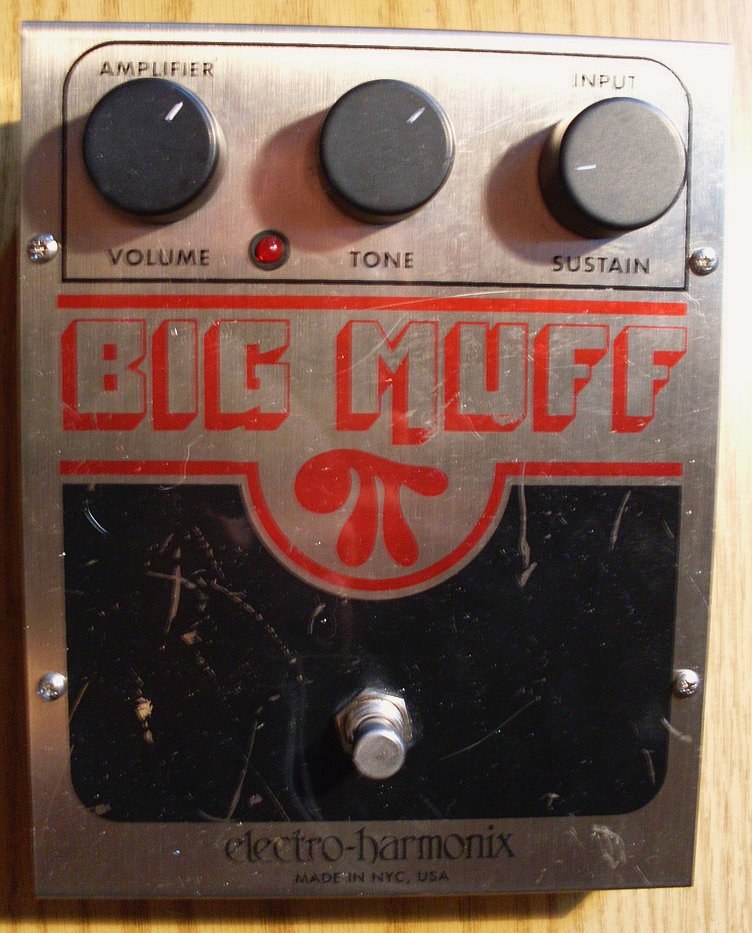
The “That Lady” mystery — the specific question of what produced the guitar sound on one of the most celebrated guitar-driven R&B recordings of the 1970s — is one of the more thoroughly investigated specific gear questions in this series. “On ‘That Lady’ there was a Big Muff, a Maestro Phase Shifter, and a Fender Twin. That was pretty much it,” Ernie confirmed in Vintage Guitar magazine, February 2018. The specific fuzz-and-phase combination — the Ram’s Head Big Muff’s specific gritty, sustaining fuzz character plus the Maestro PS-1A’s slow phasing — produced the psychedelic, Hendrix-informed guitar voice that confused listeners about whether it was Jimi Hendrix or Carlos Santana or someone else entirely. “The lead guitar sounded like a psychedelic fusion of Jimi Hendrix and Carlos Santana, but with a distinctive voice that was all Ernie Isley.”
Ernie insists: “I think folks like the songs. They’ll listen to them, hear the guitar part and say, ‘Who’s the guitar player?’ ‘It’s Ernie Isley…’ ‘Get him on the phone! Have him come down here and play.’ People say the stuff I did had a particular ingredient. That’s a great compliment; I never really expected that to happen.” The understated quality of this self-assessment — the genuinely surprised recognition that the “particular ingredient” of the fuzzed-out “That Lady” guitar was identifiable and desirable — is characteristic of a musician who made his music in service of the family enterprise and then found that the music he made had established an individual identity that people recognized and sought out. The Hendrix voice, kept alive. The blank check guitar. The Ram’s Head Big Muff. The Maestro phase shifter. Ernie Isley.
Advertisements
Background: The Isley Brothers, the Hendrix Inheritance, and the 1970s Funk-Rock Revolution
The Isley Brothers’ history spans a longer arc than almost any other act in American popular music: from their doo-wop beginnings in Cincinnati in the 1950s through “Shout” (1959), “Twist and Shout” (1962 — the song the Beatles covered), “It’s Your Thing” (1969), the 3+3 funk-rock era of the 1970s, and into the smooth R&B of the Ronald Isley solo era. This historical breadth is possible because the family band replaced and renewed itself across generations: the founding brothers were joined by the younger brothers, who then brought the funk-rock guitar approach that Ernie’s Hendrix inheritance had given him, and the resulting musical evolution carried the Isley Brothers from the doo-wop tradition of the 1950s to the psychedelic funk of the 1970s without losing the core family identity that held it all together.
Jimi Hendrix’s period with the Isley Brothers band in 1964-65 is the specific biographical chapter that connects Ernie’s playing to the Hendrix tradition in the most direct possible way: not as an influence absorbed through recordings (though that was also present) but as an actual childhood presence, a figure who played guitar in Ernie’s family home and whose approach Ernie absorbed before it had been mediated by the cultural mythology that surrounded Hendrix’s subsequent work. Contrary to what longtime fans may have heard, Ernie Isley didn’t take guitar lessons from Jimi Hendrix. Though Ernie hung out with Hendrix in the Isley’s home while Jimi was a member of the family… He was fourteen when he played bass on “It’s Your Thing” — the 1969 number-one R&B hit that established the Isley Brothers’ commercial post-Motown identity — and nineteen when Ronald handed him the blank check for Manny’s Music. The Hendrix influence was absorbed over years of casual exposure before any formal guitar study; the result was a guitar voice that critics and peers consistently describe as the most direct continuation of the Hendrix approach in the post-1970 period.
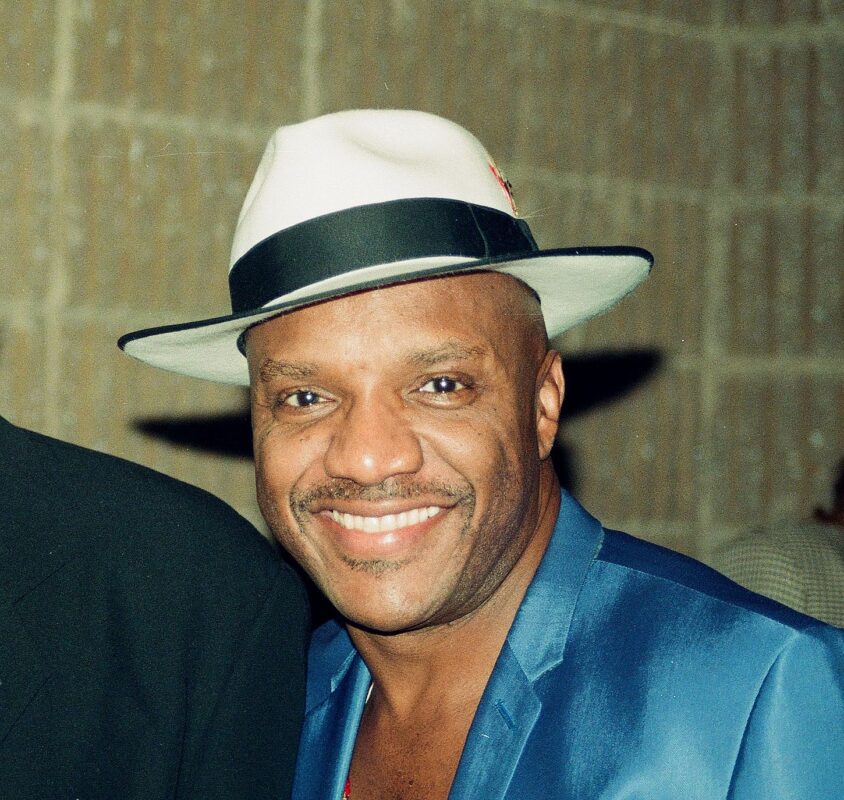
Vernon Reid — whose Colours Vernon Reid praising him as “an overlooked 1970s hero whose Hendrix-descended tone on songs like ‘Summer Breeze’ deserves greater recognition in guitar lore” — is the specific peer assessment that places Ernie’s contribution in its proper context. Reid is one of the more musically encyclopedic rock guitarists in this series; his identification of Ernie Isley as massively underrated despite keeping the Hendrix voice alive is the specific cultural credit that Ernie’s self-deprecating “I never really expected that to happen” suggests he doesn’t fully claim for himself.
His collaboration with Carlos Santana on Power of Peace — a soul-rock recording pairing Ronald Isley’s velvet tenor with Carlos Santana and Ernie’s guitars — is one of the more musically logical collaborations in recent soul and rock history: two guitarists who are both explicitly Hendrix-descended, both famous for the warm, sustaining, harmonically sophisticated guitar voice that their shared influence produces, recording together with one of soul’s most distinctive vocalists. The musical DNA of the collaboration is the Hendrix tradition at two removes: Santana absorbed it from the same Hendrix recordings that Ernie absorbed from the actual person, and the resulting combination produces the specific sound of a tradition with two distinct inheritors playing together.
The Rig: Ernie Isley’s Guitars, Amps, and Effects
Guitars
Ernie’s Strat was a black 1971 model, which he purchased brand new at Manny’s in New York City on Christmas Eve with a blank check that his brother Ronald gave him. This specific guitar — the Christmas Eve purchase, the blank check, the black Stratocaster from Manny’s — is the instrument that recorded “That Lady,” “Summer Breeze,” and the foundational Isley Brothers funk-rock catalog of the 3+3 era. The 1971 Fender Stratocaster’s specific construction: the large headstock of the CBS-era Stratocasters (Fender’s 1971-1976 production period featured the larger three-bolt neck and bullet truss rod design), three standard single-coil pickups, and the natural acoustic resonance of the alder body. The black finish against the white pickguard is the iconic visual identity of the Ernie Isley guitar in the same way the flying V tribal graphic is Kerry King’s: immediately recognizable, directly associated with the specific music.
Isley’s Zeal #3 Stratocaster is dressed front and back for good reason. The Zeal #3 is Ernie’s modern primary performing guitar — a custom-configured Stratocaster with the specific appointments he requires for his current live performance needs. It has EMG X pickups — an 81X in the bridge and two 81 SAX single-coils for the middle and neck positions — along with additional Roland electronics. The EMG X pickups represent a departure from the vintage-specification single-coil pickups of the original 1971 Stratocaster — the active EMG designs providing higher output and a different tonal character. The 81X’s active humbucker bridge pickup provides the aggressive, ceramic-magnet drive character; the 81 SAX single-coil middle and neck pickups maintain the Stratocaster’s single-coil character in those positions while providing the active EMG’s noise rejection and consistent output.
Ernie Isley started off the Milwaukee show by playing “Stone Free” on his Custom Shop Strat. The Fender Custom Shop Stratocaster — built to professional specifications by Fender’s Master Builder craftsmen — provides the tonal and playability refinements over standard production Stratocasters that Ernie’s professional performance requirements demand. The Custom Shop Strat alongside the Zeal #3 constitutes his modern two-primary-guitar touring configuration.
Amps
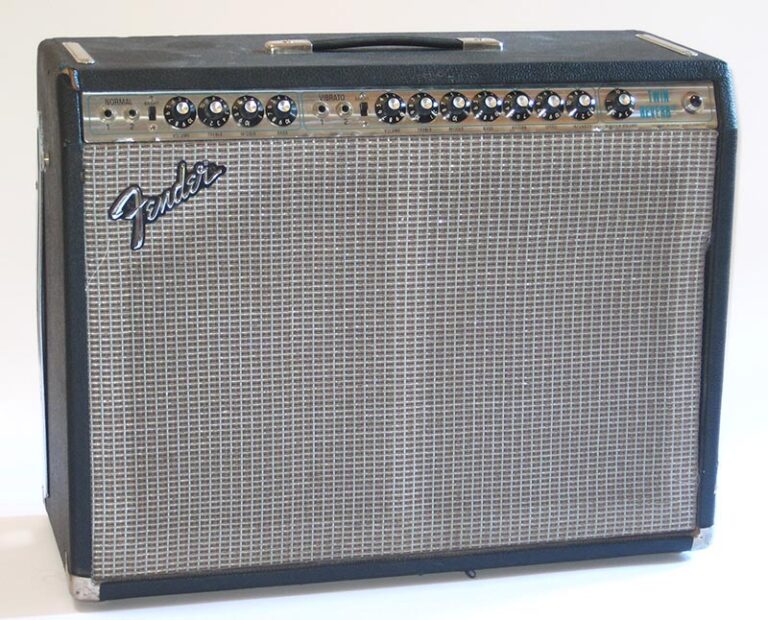
AMPS: c. 1970-73 Fender Twin Reverb (Input: Vibrato Channel 1, Bright: On, Volume: 5, Treble: 7, Middle: 6, Bass: 3, Reverb: 0, Speed: 0, Intensity: 0) with unknown pair of 12-inch speakers. This is the most precisely documented amp setting in this article — the specific Fender Twin Reverb channel, input, and control settings that produced the “That Lady” guitar tone. The vibrato channel rather than the normal channel; bright switch on; volume at 5 for the specific clean headroom level; treble at 7 for the Stratocaster single-coil’s characteristic clarity; middle at 6 for the vocal, present quality; bass at 3 for the controlled low end appropriate for a guitar part that shared the frequency space with the Isley Brothers’ bass guitar and rhythm section. Reverb, speed, and intensity all at zero — the reverb completely bypassed. The “That Lady” guitar tone has no amplifier reverb; the spatial quality comes from the recording environment rather than from the amp’s built-in reverb. Ernie Isley is known to use a Fender Twin amp, highlighting its versatility in complementing the band’s diverse sound.
Effects
EFFECTS: Cry Baby wah, Electro-Harmonix Big Mu Pi/Version 2 “Ram’s Head” (Volume: 7, Tone: 8, Sustain: 6), Maestro PS-1A phase shifter (Slow phase). The Electro-Harmonix Big Muff Pi Version 2 — known as the “Ram’s Head” Big Muff for the ram’s head graphic that appeared on the second version’s enclosure — is the specific fuzz pedal at the center of the “That Lady” guitar sound. The Ram’s Head’s specific character: a four-transistor silicon fuzz circuit with a characteristic high mid-scoop — the tone control at maximum rolls off the high frequency peak and produces the specific warm, sustaining, mid-scooped fuzz character that distinguished it from the brighter, more aggressive character of germanium fuzz pedals. With Volume at 7, Tone at 8, and Sustain at 6 — the specific settings documented for “That Lady” — the Ram’s Head produces a full, sustaining fuzz that is simultaneously aggressive (the Sustain at 6 produces generous but controlled fuzz depth) and musical (the Tone at 8 allows more high-frequency content than the fully rolled-back position while still retaining the Ram’s Head’s characteristic warmth). Ernie Isley’s use of the Electro-Harmonix “Ram’s Head” Big Muff Pi V2 fuzz pedal delivers the gritty, overdriven tones that became a hallmark of their later work.
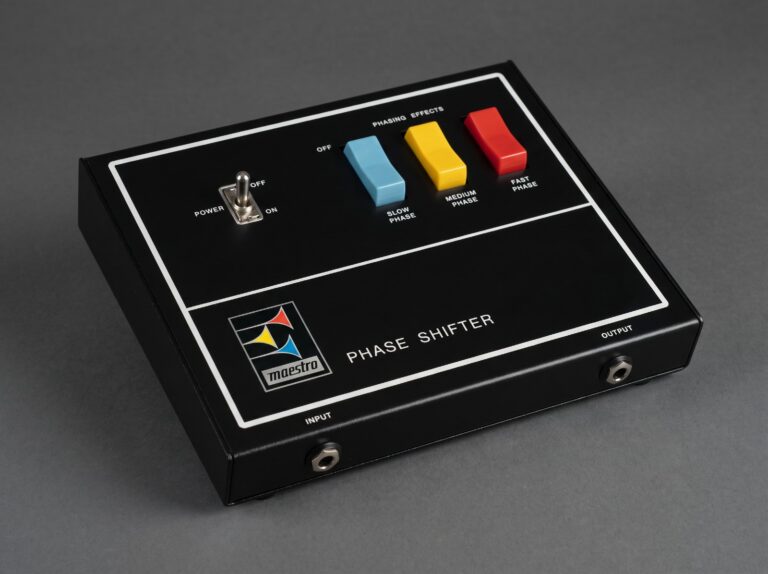
The Maestro PS-1A Phase Shifter is the phase pedal documented as the source of the specific slow, swimming phase modulation on “That Lady.” A photo of each pedal — including the Maestro PS-1A Phase Shifter used by Ernie Isley — is set next to an interview with its owner in the Stompbox book. The Maestro PS-1A was a relatively early dedicated phase shifter — produced in the early 1970s by the same Maestro brand that had produced the famous Maestro Fuzz-Tone (which produced the Rolling Stones’ “(I Can’t Get No) Satisfaction” fuzz tone). The PS-1A’s specific phasing character — slower and more musical than some competing phase shifters — is the specific modulation sound of “That Lady”‘s guitar, the slow sweeping phase that gives the fuzz-driven lead its psychedelic, space-filling quality. Set to slow phase for the “That Lady” recording — the most spacious, most atmospheric phasing speed available from the PS-1A’s control range.
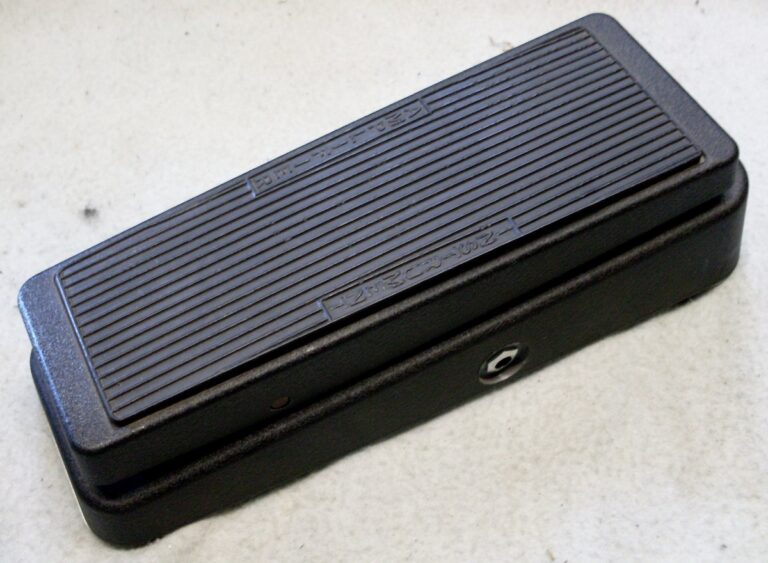
The “That Lady” effects chain includes a Cry Baby wah. His pedalboard included a Dunlop Rotovibe, Voodoo Lab Proctavia, Boss BF-2 Flanger, ProCo Rat, and a Dunlop Crybaby wah. The Cry Baby wah’s presence in both the “That Lady”-era effects chain and the modern pedalboard confirms the consistency of the wah as a fundamental element of Ernie’s tonal vocabulary across fifty years of professional playing. The wah’s function in the Isley Brothers context: the classic funky rhythm wah of the 1970s R&B tradition, and the expressive lead wah of the Hendrix tradition from which Ernie’s approach descends. Both applications — rhythm chicken-scratch wah and expressive lead wah — appear in the Isley Brothers catalog.
His pedalboard included a Dunlop Rotovibe. The Voodoo Lab Proctavia is a faithful recreation of the Roger Mayer Octavia — the specific octave-up fuzz unit that Jimi Hendrix used on “Purple Haze” and other recordings. Ernie’s signal chain goes through a Cry Baby wah-wah, a Big Muff fuzz, a Maestro Phase Shifter, and an Octavia made by Roger Mayer. The Proctavia’s inclusion in the modern rig alongside the explicit Roger Mayer Octavia documentation confirms the Hendrix influence at its most specific: not just absorbing the general approach but including the specific octave-fuzz effect associated with the most celebrated Hendrix recordings. The Octavia’s doubling-and-ring-modulation character — the guitar signal combined with its octave-up transposition, producing a bright, metallic, harmonically complex fuzz — is the most immediately “Hendrix” effect available, and its presence in Ernie’s rig confirms the specific nature of the inheritance.
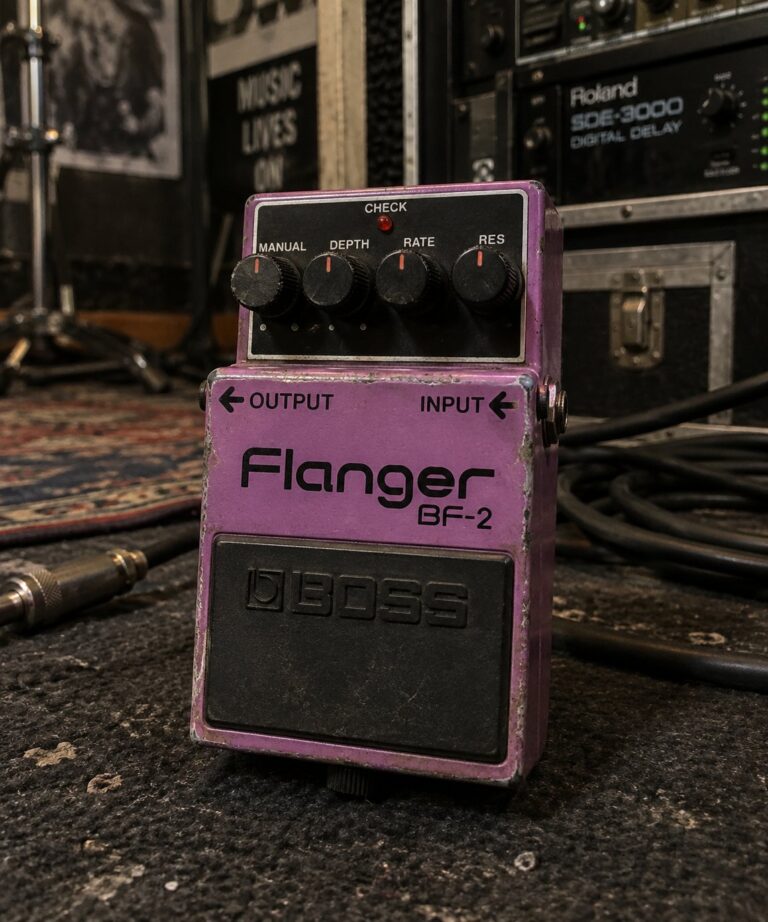
His pedalboard included a Boss BF-2 Flanger. The Boss BF-2 Flanger — one of Boss’s most celebrated compact pedals, known for its wide range of flanging characters from gentle, jet-plane sweep to extreme metallic resonance — adds a different modulation character from the Maestro phase shifter. While the phase shifter produces smooth, notch-filtering modulation, the flanger’s comb-filtering produces a more dramatic, jet-sweep quality that suits different musical passages.
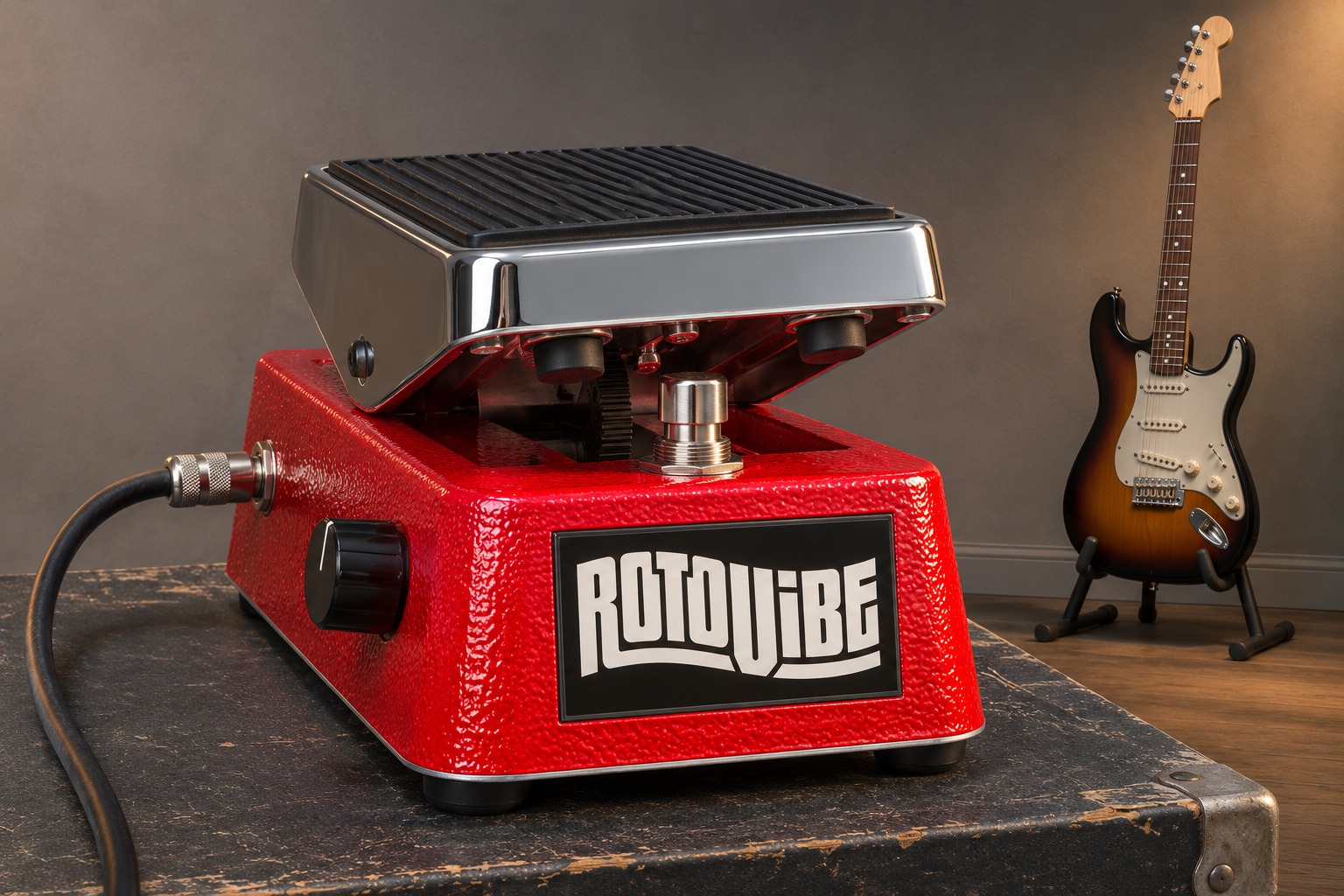
His pedalboard included a Dunlop Rotovibe. The Dunlop Rotovibe — the Uni-Vibe-style chorus/vibrato unit that produces the specific rotating-speaker-effect character associated with Jimi Hendrix’s “Machine Gun” and “Little Wing” — adds the specific undulating modulation quality of the Uni-Vibe tradition to Ernie’s modern effects palette. Again: the Hendrix effect, used in the hands of the guitarist who knew Hendrix personally.
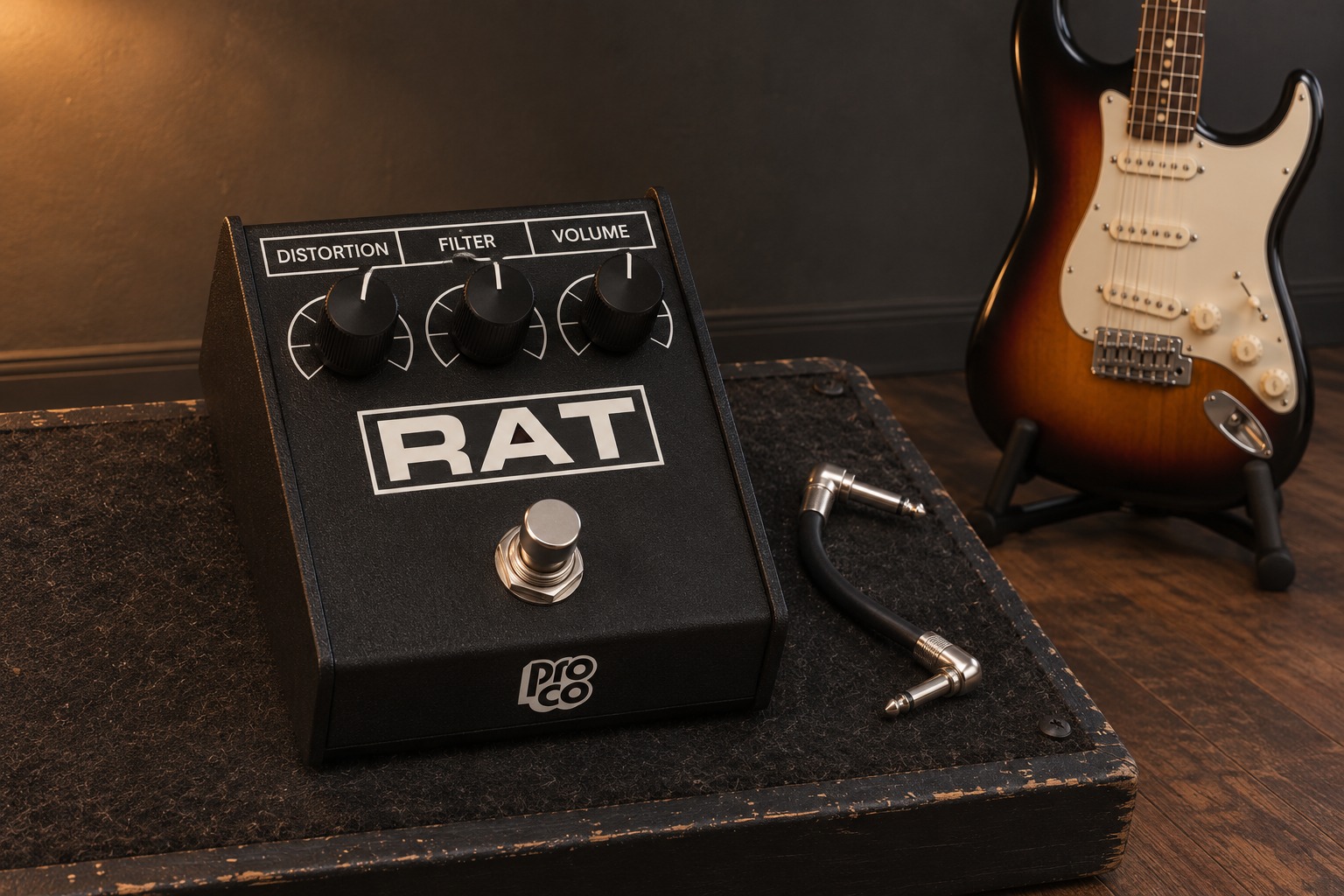
His pedalboard included a ProCo Rat. The ProCo Rat distortion — the LM308-chip distortion pedal known for its specific combination of upper-midrange character and musical distortion saturation — adds a distortion option distinct from the Big Muff fuzz’s character, providing a different gain texture for passages where the Rat’s more compressed, midrange-forward distortion serves the musical content better than the Big Muff’s wide-bandwidth fuzz.
The 3+3 period — the five-year run of Isley Brothers recordings from 1973 through 1977 that produced the major Ernie Isley guitar catalog — deserves precise documentation because it represents a specific, concentrated creative flowering rather than a sustained long-term output. 3+3 (1973), Live It Up (1974), The Heat Is On (1975), Harvest for the World (1976), and Go For Your Guns (1977) are the albums that produced “That Lady,” “Summer Breeze,” “Fight the Power Pts. 1 & 2,” “Voyage to Atlantis,” “Harvest for the World,” and “Footsteps in the Dark” — the complete catalog of the psychedelic soul-funk guitar work that defined Ernie’s signature. Five albums, five years, a black 1971 Stratocaster, a Ram’s Head Big Muff, a Maestro PS-1A, and a Fender Twin Reverb with Bright on. This is the gear story’s most concentrated creative moment, and it produced one of the most completely documented vintage guitar tones in the R&B tradition — the specific amp settings, the specific fuzz settings, the specific phase speed, all confirmed by Ernie himself in interviews across four decades. The “That Lady” tone is available to anyone who assembles the components and uses the settings. The guitar voice on top of those components is available only to the guitarist who lived with Jimi Hendrix and watched Saturday morning cartoons with him, and who has spent fifty years developing what that specific early exposure meant for his musical identity. You can get the equipment right. The inheritance is Ernie’s alone.
“I’d sleep with my guitars. You can derive comfort and solace from an instrument.” This statement — from the guitar.com interview — is as honest and as complete an account of what a guitar means to Ernie Isley as any technical description of his rig. The blank check guitar bought at Manny’s on Christmas Eve. The same guitar on “That Lady” and “Summer Breeze” and all the rest of the 3+3 era. The guitar that a nineteen-year-old bought with his brother’s trust and made into the most psychedelic soul recordings in the Isley Brothers catalog. He slept with the guitars. He derived comfort and solace from them. The music that came from that specific emotional relationship with the instrument is the music that kept the Hendrix voice alive, that influenced Prince’s guitar vocabulary, and that made people say “Is that Hendrix or Santana?” when they first heard “That Lady” on the radio in 1973. It was neither. It was Ernie. Get him on the phone. Have him come down here and play.
Advertisements
Playing Style & Tone Philosophy
Ernie Isley plays guitar in the specific tradition of Jimi Hendrix — not as an imitator but as an inheritor, someone who absorbed the approach before it had become cultural mythology and who has developed it across fifty years of professional playing into a genuinely personal voice. The specific Hendrix qualities that Ernie carried forward: the fuzz-driven sustain, the expressive wah-guitar dialogue, the harmonic sophistication that distinguished Hendrix’s solos from simpler blues-rock approaches, and the specific quality of rhythmic funk that runs through both Hendrix’s funkier recordings and the Isley Brothers catalog. “With Ernie in the line-up, the Brothers began leaning heavily on his emotive, soulful guitar style, becoming one of the first acts to infuse rock guitar into the R&B sound, creating a funky, psychedelic-soul juggernaut.”
The “That Lady” guitar tone — the Ram’s Head Big Muff through the Maestro PS-1A into the Fender Twin on Vibrato Channel 1 with Bright on — is the specific equipment instantiation of this inherited approach. The Ram’s Head provides the warm, sustaining, harmonically rich fuzz that distinguishes Hendrix-derived guitar from simpler distortion approaches; the Maestro PS-1A provides the slow, swimming phase that adds spatial depth and movement to the sustained fuzz notes; and the Fender Twin provides the clean, transparent amplification that allows both the fuzz and the phase character to project without additional amp coloration. The Cry Baby wah in the chain adds the expressive vocal quality of the wah-filtered signal for specific passages. The combination produces the specific “fuzzed-out wizardry” that Guitar World identifies in the 3+3 recordings.
His self-assessment — “I think folks like the songs. They’ll listen to them, hear the guitar part and say, ‘Who’s the guitar player?'” — captures both the frustration and the pride of a musician whose contribution has been consistently identified as essential but not always credited. The Hendrix voice was there in “That Lady” in 1973; it has been there in every subsequent Isley Brothers recording and live performance. It was there when Ernie knew Jimi from Saturday morning cartoons and the family home, before the cultural myth of Jimi Hendrix the Guitar God had replaced the actual person Jimi Hendrix the Sideman. Ernie kept the actual approach alive — not the myth, but the specific, physical, musical approach that produced the specific sounds — and the recordings demonstrate it.
How to Sound Like Ernie Isley
The Ernie Isley / “That Lady” tone requires: a Fender Stratocaster (1971-era or equivalent); an Electro-Harmonix Big Muff Pi Ram’s Head or equivalent warm, sustaining silicon fuzz (Volume: 7, Tone: 8, Sustain: 6); a Maestro PS-1A phase shifter on slow setting (or equivalent phase pedal); a Dunlop Crybaby wah; and a Fender Twin Reverb on the Vibrato channel with Bright on, Volume: 5, Treble: 7, Middle: 6, Bass: 3, Reverb off. The specific settings are documented — use them. The “That Lady” tone is one of the most completely documented vintage soul guitar tones available.
| Control | Setting (0–10) | Notes |
|---|---|---|
| Fender Twin Reverb — Vibrato Channel | Volume: 5; Treble: 7; Middle: 6; Bass: 3; Bright: On; Reverb: 0 | These are the documented “That Lady” settings. Vibrato channel (not normal). Bright switch on. Volume at 5 for the specific clean headroom. Treble at 7 for single-coil clarity. Middle at 6 for vocal presence. Bass at 3 for controlled low end. Reverb off — zero. The spatial quality comes from the fuzz and phase, not the amp. |
| Big Muff Ram’s Head | Volume: 7; Tone: 8; Sustain: 6 | Documented “That Lady” settings. Volume at 7 compensates for the Big Muff’s output reduction relative to the dry signal. Tone at 8 allows high-frequency content while retaining the Ram’s Head’s characteristic warmth. Sustain at 6 — generous but controlled fuzz depth. This is the specific Big Muff setting that produced one of the most celebrated guitar tones in R&B history. |
| Maestro PS-1A Phase Shifter | Slow phase setting | Slowest available phase speed — the most spacious, most atmospheric sweep. The slow phase on “That Lady” is barely perceptible as modulation; it functions as a general widening and deepening of the fuzz-driven guitar signal rather than as an obvious effect. Set it slow and let it work. |
| Cry Baby Wah | Selective — rhythm and lead passages | In the signal chain before the Big Muff. Use for rhythm chicken-scratch wah patterns (funk tradition) and for expressive lead wah (Hendrix tradition). The wah’s position before the fuzz means the fuzz processes the wah’s frequency-shaped signal, producing a warmer, thicker wah character than wah-after-fuzz configurations. |
| Roger Mayer Octavia / Voodoo Lab Proctavia | Selective — specific Hendrix-adjacent passages | The octave-up fuzz for specific moments where the Hendrix “Purple Haze”-style octave character is appropriate. Use selectively — the Octavia’s doubling-and-ring-modulation character is dramatic and specific; overuse diminishes its impact. Reserve it for the passages where the psychedelic, octave-singing quality is exactly what the musical moment requires. |
| Stratocaster Pickup Selection | Middle or middle/neck blend for “That Lady” | Middle pickup or the in-between middle/neck position for the specific warm, present, single-coil character of the 3+3-era recordings. The bridge pickup’s brightness adds aggression for specific passages; the middle and neck positions provide the warmth and sustain that suits the fuzz-driven lead voice. |
Influence & Legacy
Ernie Isley’s influence on R&B and rock guitar is concentrated in the specific contribution of the 3+3-era Isley Brothers recordings — the psychedelic soul-funk that “That Lady,” “Summer Breeze,” “Fight the Power,” and “Voyage to Atlantis” established as a genre that fused rock guitar’s expressive language with R&B’s rhythmic and harmonic vocabulary. This fusion — described as making the Isley Brothers “one of the first acts to infuse rock guitar into the R&B sound” — is Ernie’s specific contribution to the family band’s identity and to the broader development of what guitar could do in a soul-funk context.
The Prince connection — “it’s hard to imagine Prince’s guitar style being quite the same if Isley had not come before him” — is the most significant downstream influence documented for the Ernie Isley approach. Prince absorbed the Isley Brothers’ guitar approach — the fuzz-driven, harmonically sophisticated, emotionally expressive guitar that Ernie brought to the 3+3 recordings — and developed it into the specific guitar identity that defines “Purple Rain,” “Let’s Go Crazy,” and the broader Prince catalog. The inheritance chain is: Hendrix to Ernie (through the Isley family home and the Ram’s Head Big Muff), Ernie to Prince (through the 3+3 recordings and the specific soul-rock guitar vocabulary they established). This is one of American popular music’s most consequential influence chains, and Ernie Isley’s name belongs in it alongside Hendrix and Prince.
For the broader soul and R&B guitar tradition, see Steve Cropper’s Stax approach and Cornell Dupree’s Atlantic session work — parallel traditions to Ernie’s Isley-based approach in the same soul era. The Curtis Mayfield open-tuning psychedelic soul approach represents the other primary guitarist of the era’s political-psychedelic soul wing, with whom Ernie shares both the soul tradition and the Hendrix influence.
The blank check from Ronald. Manny’s Music on Christmas Eve. A black 1971 Fender Stratocaster. A Ram’s Head Big Muff and a Maestro phase shifter. A Fender Twin Reverb on Vibrato Channel 1, Bright on, Volume at 5. “That Lady.” “Summer Breeze.” “Fight the Power.” The Hendrix voice, kept alive. “If you’re standing onstage with me with your guitar, you’ve got a 10-speed and I’ve got a Harley Davidson.” The Harley Davidson is still running. It runs on a black 1971 Fender Stratocaster, a Ram’s Head Big Muff set to Volume 7 Tone 8 Sustain 6, a Maestro phase shifter on slow, and a Fender Twin on Vibrato Channel 1 with Bright on, Volume at 5 — the specific combination that Ernie Isley confirmed in Vintage Guitar magazine in February 2018, the same combination he had on “That Lady” in 1973, the same combination that produced the psychedelic soul guitar voice that nobody recognized as Ernie’s until someone told them, and then they got him on the phone and had him come down and play.
Frequently Asked Questions: Ernie Isley Guitars & Gear
What guitar did Ernie Isley use on “That Lady”?
Ernie Isley recorded “That Lady” on a black 1971 Fender Stratocaster that he purchased brand new at Manny’s Music in New York City on Christmas Eve, with a blank check given to him by his brother Ronald. The 1971 Stratocaster features the CBS-era large headstock, three single-coil pickups, and alder body construction. His modern primary guitar is the Zeal #3 Stratocaster with EMG X pickups (81X bridge humbucker and 81 SAX single-coils for middle and neck positions), with a Fender Custom Shop Stratocaster also in regular rotation.
What is the “That Lady” guitar tone and what gear produced it?
The “That Lady” guitar tone — the psychedelic, fuzzed-out soul guitar that confused listeners about whether they were hearing Jimi Hendrix or Carlos Santana — was produced by a specific combination confirmed by Ernie Isley in Vintage Guitar, February 2018: “On ‘That Lady’ there was a Big Muff, a Maestro Phase Shifter, and a Fender Twin. That was pretty much it.” The specific components: Electro-Harmonix Big Muff Pi Version 2 “Ram’s Head” (Volume: 7, Tone: 8, Sustain: 6), Maestro PS-1A Phase Shifter (slow phase), Dunlop Cry Baby wah, and a Fender Twin Reverb on Vibrato Channel 1 with Bright on, Volume: 5, Treble: 7, Middle: 6, Bass: 3, Reverb at zero. The specific amp settings for “That Lady” are among the most precisely documented in this series.
How did Jimi Hendrix influence Ernie Isley?
Jimi Hendrix lived in the Isley family home in the mid-1960s while he was a member of the Isley Brothers band. Ernie Isley was approximately twelve to thirteen years old during Hendrix’s time with the family — old enough to absorb what Hendrix did with a guitar, young enough to absorb it before any other major influence established competing musical patterns. “Ernie Isley started off the Milwaukee show by playing ‘Stone Free’ on his Custom Shop Strat. He knew Hendrix before all the funky outfits and guitar antics, back when Hendrix was an Isley Brothers sideman,” as documented by Premier Guitar. The influence was not formal guitar instruction but the informal absorption of a teenager living with an extraordinary guitar player during that player’s development period. Vernon Reid identifies Ernie as the keeper of “the Hendrix voice” after Hendrix’s death.
What is the Electro-Harmonix Ram’s Head Big Muff?
The Electro-Harmonix Big Muff Pi Version 2 — known as the “Ram’s Head” for the graphic on its enclosure — is the second iteration of the Big Muff Pi fuzz circuit, produced from approximately 1971-1977. Its four-transistor silicon circuit produces a characteristic warm, sustaining fuzz with a high mid-scoop — the tone control rolled back produces the Big Muff’s darkest, most sustaining character; higher tone settings introduce more high-frequency content while retaining the Ram’s Head’s characteristic warmth and sustain depth. The specific Ram’s Head settings for “That Lady” are Volume: 7, Tone: 8, Sustain: 6. The Ram’s Head is among the most sought-after vintage fuzz pedals, valued for the specific warm, musical fuzz character that distinguishes it from brighter or harsher silicon fuzz designs.
What other effects does Ernie Isley use?
Ernie Isley’s modern pedalboard, documented in the Premier Guitar Hendrix tribute concert coverage, includes a Dunlop Rotovibe (Uni-Vibe-style chorus/vibrato), Voodoo Lab Proctavia (octave fuzz, a recreation of the Roger Mayer Octavia that Jimi Hendrix used on “Purple Haze”), Boss BF-2 Flanger, ProCo Rat distortion, and a Dunlop Crybaby wah — alongside his core “That Lady” setup of Big Muff and phase pedal. Ernie confirmed in Guitar Player (September 1981) that his signal chain “goes through a Cry Baby wah-wah, a Big Muff fuzz, a Maestro Phase Shifter, and an Octavia made by Roger Mayer.” The Proctavia and Rotovibe’s inclusion confirms the Hendrix-specific effects vocabulary that Ernie maintains in his modern rig.
What is Ernie Isley’s role in the Prince influence chain?
Prince is frequently cited as having absorbed the Isley Brothers’ psychedelic soul-funk guitar approach — specifically Ernie Isley’s fuzz-driven, harmonically sophisticated guitar work on the 3+3-era recordings — and having developed it into the specific guitar identity of his own classic recordings. “It’s hard to imagine Prince’s guitar style being quite the same if Isley had not come before him,” as the guitar.com profile notes. The influence chain runs: Jimi Hendrix to Ernie Isley (through the Isley family home and the Ram’s Head Big Muff recordings), Ernie Isley to Prince (through the Isley Brothers 1970s recordings). This is one of the most consequential three-person influence chains in American popular music history, and Ernie Isley’s name belongs prominently in it.
Who is Ernie Isley as a songwriter?
In addition to his guitar playing, Ernie Isley is a primary songwriter of the Isley Brothers’ 1970s material. His writing contributions to the catalog include “That Lady,” “Fight the Power Pts. 1 & 2,” “Harvest for the World,” “Footsteps in the Dark,” “Climbing Up the Ladder,” and other Isley Brothers hits. He also contributed to the Carlos Santana collaboration Power of Peace. His multi-instrumental background — drums from age twelve, bass on “It’s Your Thing” at fourteen, guitar from his late teens — gives him the rhythmic and harmonic understanding of the complete rhythm section that informs both his guitar playing and his songwriting with the specific awareness of how all the parts of an arrangement relate to each other.
Image credits
- ProCo Rat (Modern Pedalboard): GuitarGangsters AI-generated reference illustration, not a photograph.
- Dunlop Rotovibe (Modern Pedalboard: GuitarGangsters AI-generated reference illustration, not a photograph.
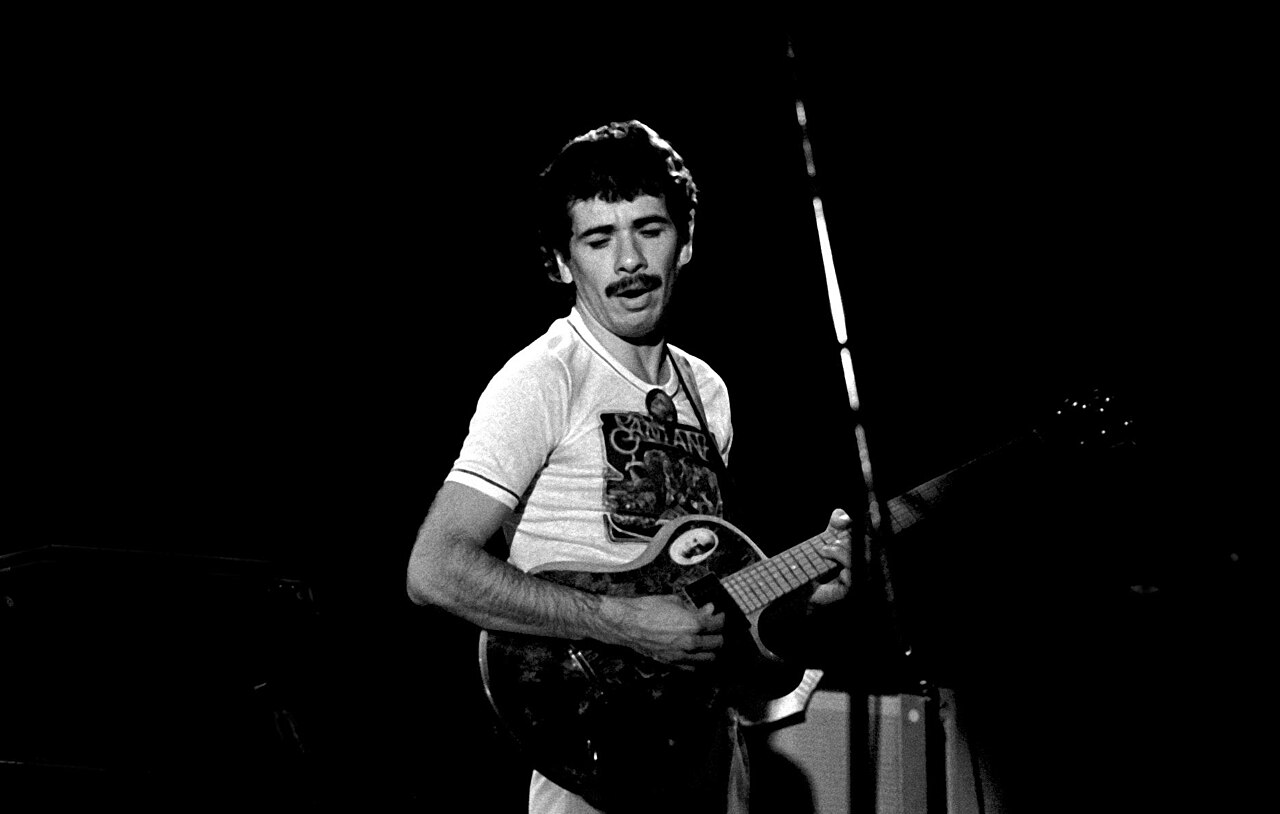
- Carlos Santana: Heinrich Klaffs, Wikimedia Commons, CC BY-SA 2.0.
- Top image: John Mathew Smith & www.celebrity-photos.com, Wikimedia Commons, CC BY-SA 2.0.
- Ernie Isley: photo by John Mathew Smith & www.celebrity-photos.com from Laurel Maryland, USA, via Wikimedia Commons, CC BY-SA 2.0.
- Fender Twin Reverb: Micahmedia, Wikimedia Commons, CC BY 3.0.
- Electro-Harmonix Big Muff Pi: Roadside Guitars, Flickr, CC BY-SA 2.0.
- Dunlop Cry Baby: Roadside Guitars, Flickr, CC BY-SA 2.0.
- BOSS BF-2 Flanger: GuitarGangsters AI-generated reference illustration, not a photograph.
- Maestro PS-1A Phase Shifter: GuitarGangsters AI-generated reference illustration, not a photograph.