Kurt Cobain vs Billie Joe Armstrong – Grunge Chaos or Punk Rebellion?
GuitarGangsters Editorial 15 min read Updated 21 October 2026
You can almost smell the sweat, feedback, and cigarette smoke when these two names collide.
Kurt Cobain — the tortured anti-hero who made broken guitars and broken hearts sound beautiful.
Billie Joe Armstrong — the eyeliner-wearing punk kid who turned three chords into arena anthems.
Both came from scenes that hated glamour and worshipped authenticity. Both made distortion a language of emotion. But where Cobain’s tone bled chaos and pain, Armstrong’s sound was sharp, disciplined, and defiant — like a clenched fist hitting every downstroke in perfect time.
The result? Two entirely different revolutions that somehow spoke to the same crowd: the misfits, the restless, the kids in garages who believed you didn’t need permission to play loud.
One burned fast and bright — a voice of a generation who never wanted to be a voice of anything.
The other built a dynasty from rebellion, still shouting “1-2-3-4!” decades later.
So let’s plug in, turn up, and dissect what really separates grunge chaos from punk rebellion — from the guitars and amps to the very souls holding the picks.
From Seattle’s Mud to Berkeley’s Basement – The Birth of Two Revolutions
Grunge and punk may have shared the same DNA — noise, angst, and the middle finger to authority — but the worlds that birthed Kurt Cobain and Billie Joe Armstrong couldn’t have been more different.
Seattle: The Sound of Collapse
When Kurt Cobain started Nirvana in the late ‘80s, Seattle wasn’t a scene — it was a damp, half-forgotten corner of the rock map. The clubs smelled like stale beer and mildew, and the city’s isolation gave rise to something raw. Bands like Mudhoney, Soundgarden, and Melvins were smashing punk energy into Sabbath-like sludge, creating what would soon be called grunge.
Cobain, stuck between punk ideals and pop instincts, took it further.
He wrote catchy songs — but buried them under distortion, self-loathing, and noise.
He sang about pain with a pop sensibility that the mainstream didn’t know what to do with… until Nevermind hit.
Then the floodgates opened, and suddenly flannel shirts were fashion, and anti-establishment became MTV prime time.
But fame was poison for Cobain. The louder the applause got, the more he recoiled. His guitars got dirtier, his lyrics darker. By In Utero, he was trying to burn the whole machine down from inside the belly of it.
Berkeley: The Punk That Grew Up (Without Selling Out)
Meanwhile, down in California, Billie Joe Armstrong was sharpening his rebellion in the cracked basements and dive bars of 924 Gilman Street, the heart of East Bay punk.
The rules there were simple: No major labels. No rock stars. No bullshit.
Green Day broke all three.
But before they became arena icons, they were just three kids with duct-taped guitars and more energy than the room could hold. Armstrong’s songwriting was snotty, smart, and secretly sophisticated. Under the “hey-ho-let’s-go” simplicity was real structure, melodic control, and a love for classic rock hooks buried under distortion.
When Dookie dropped in 1994, punk finally had its own Nevermind moment.
It was clean enough for the radio, fast enough for the pit, and catchy enough to get your mom humming Basket Case.
Armstrong didn’t apologize for making punk accessible — he weaponized it.
Two very different worlds.
One drowned in feedback, the other marched to a metronomic downstroke.
Yet both rewrote what it meant to be a guitarist in the modern age — proof that attitude mattered more than virtuosity.
Kurt Cobain – The Sound of Grunge Chaos
If punk was rebellion, Kurt Cobain turned it into confession. His sound wasn’t polished — it was personal. Every squeal of feedback, every detuned chord was part of his language. He didn’t chase tone perfection; he chased truth. And somehow, in all that mess, he created one of the most recognizable guitar sounds in history.
The Right Hand of Destruction
Cobain’s secret weapon wasn’t fancy gear — it was violence.
He attacked the strings like they’d insulted him. His right hand slammed power chords with surgical inconsistency — half rhythm, half rage. Notes bled together, bends went sharp, and somehow, it all worked.
That raw, percussive attack gave Nirvana’s songs their punch. Listen to “Smells Like Teen Spirit” — that opening riff isn’t just distortion; it’s aggression in motion. The slight timing imperfections? They’re what make it human.
“I’m not trying to be a guitar hero,” he said. “I just want to make noise that means something.”
Distortion: Simple, Brutal, Iconic
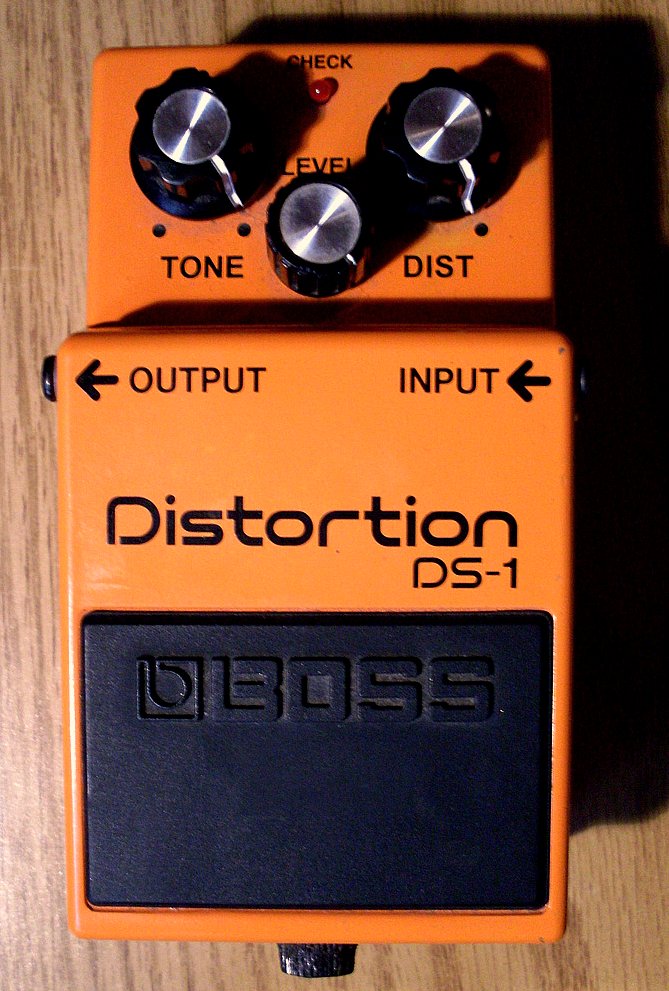
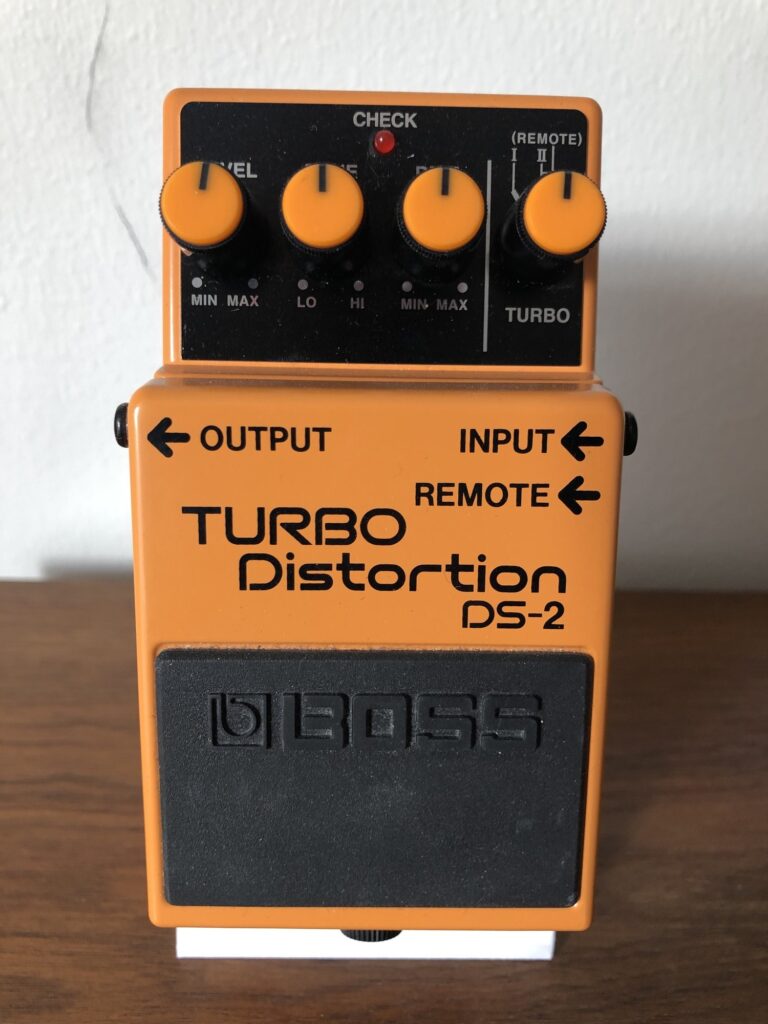
While other guitarists were stacking boutique pedals, Kurt’s tone was built on one unassuming orange box — the BOSS DS-1 Distortion, later replaced by its angrier sibling, the DS-2 Turbo Distortion.
Those two pedals defined the sound of Nevermind and In Utero: harsh mids, compressed grit, and a tone that cut through the chaos.
His setup was dead simple:
-
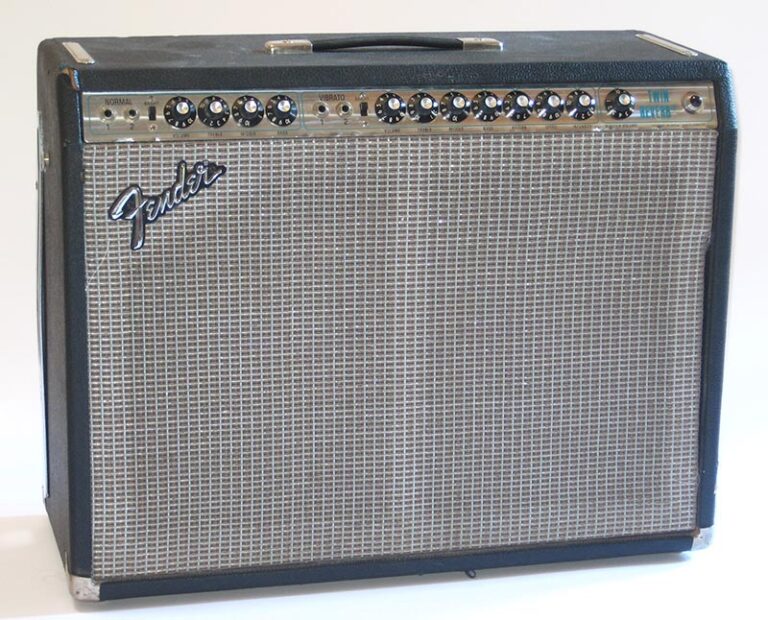
BOSS DS-2 into a Fender Twin Reverb or Mesa/Boogie power section.
-
No noise gates, no EQ tricks — just raw pedal distortion straight into semi-clean amps.
-
A touch of Electro-Harmonix Small Clone or Poly Chorus for that watery swirl on songs like “Come As You Are.”
It shouldn’t have worked — but it did. The result was brittle, gnarly, and alive.
The Art of Anti-Tone
Cobain’s genius wasn’t in chasing purity — it was in rejecting it.
He loved cheap guitars, battered amps, and gear that looked as broken as it sounded. He treated tone like a protest. If Eddie Van Halen’s sound was a hot rod, Cobain’s was a rusted pickup that somehow outran it.
And yet, despite all the chaos, every Nirvana song was structured like pop — verse, chorus, hook, repeat. That contradiction made his sound timeless: catchy enough for radio, destructive enough for the underground.
(Also read Dave Grohl – Grohl Power and the Sound of Foo Fighters for how Cobain’s legacy carried into Grohl’s precision-driven rhythm style.)
Kurt Cobain’s Rig – Guitars, Pedals, and the Jag-Stang Legacy
Cobain’s rig looked like something pulled from a pawn shop floor — mismatched, beaten, taped, and barely holding together. But that’s exactly what made it work. His gear wasn’t about prestige; it was about personality. Every guitar he owned had scars, and every scratch told part of the story.
The Guitars: Offbeat, Broken, and Perfect
Kurt didn’t believe in collector guitars or spotless finishes.
He favored the weird, the cheap, and the forgotten.
-
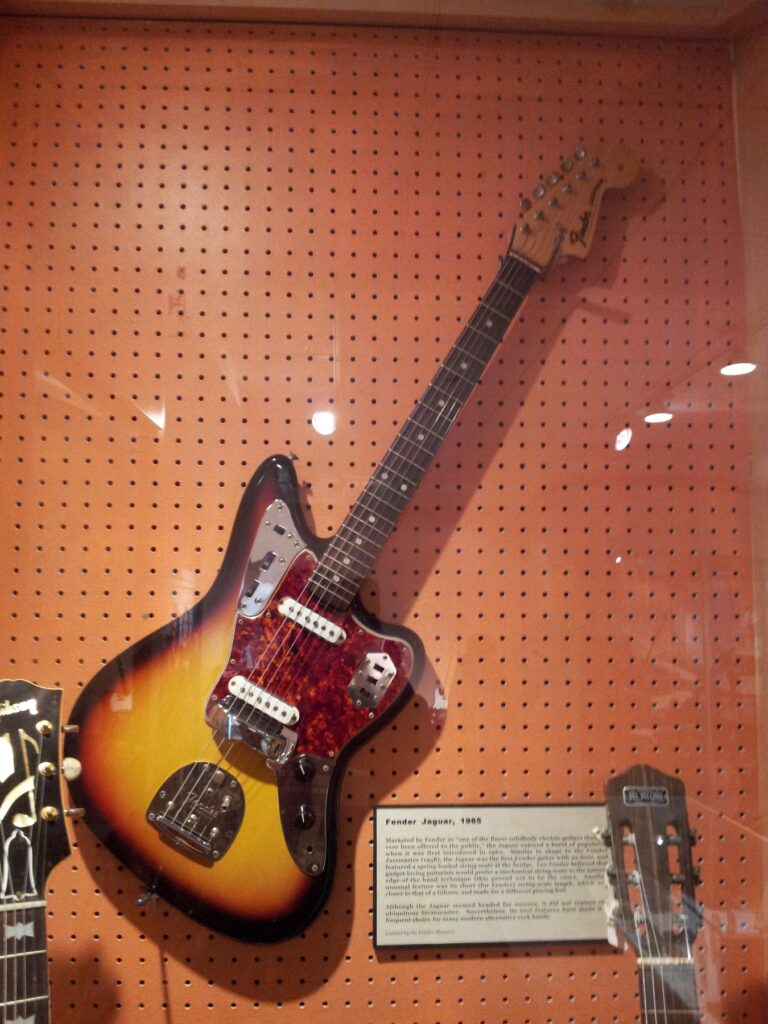
Fender Jaguar (1965): His main live weapon during Nevermind. He modified it with DiMarzio PAF in the neck and a Seymour Duncan JB in the bridge — a combination that gave him the perfect mix of clarity and chaos.
-
Fender Mustang: Used extensively on In Utero and live. Often swapped or smashed mid-tour. Short-scale neck, messy wiring, but the tone — nasal, urgent, unpredictable — became part of his identity.
-
Univox Hi-Flier: The cheap Japanese offset he loved before fame. Its rough edges and muddy tone were a perfect fit for the early Bleach sessions. He even came back to it for the Heart-Shaped Box video.
-
Fender Jag-Stang: The hybrid dream. Fender built it from his sketches — half Jaguar, half Mustang. It became his official signature model, released after his death, and perfectly summed up Kurt’s philosophy: half precision, half mistake.
The Pickups That Screamed
Most of Cobain’s sound came from high-output humbuckers stuffed into guitars never meant for them.
The Seymour Duncan JB became his calling card — bright highs, thick mids, and just enough output to turn the DS-2 into a firestorm.
Combine that with short-scale necks and light strings, and you got that snappy, compressed response that defined Teen Spirit and Breed.
The Pedals of Chaos
Kurt’s pedalboard could fit in a shoebox:
-
BOSS DS-1 / DS-2 Turbo Distortion: Raw, jagged, unrefined.
-
EHX Small Clone / Poly Chorus: For those liquid, haunting modulations (Come As You Are, Drain You).
-
EHX Big Muff (occasional): Used for thicker, sludgier tones during In Utero.
He often chained them haphazardly — power cables dangling, knobs cranked. If something buzzed, squealed, or fed back, that was part of the show.
Amps & Cabinets
Cobain wasn’t loyal to any single brand — he was loyal to results.
-
Fender Twin Reverb: Bright, clean headroom. The canvas for all his pedal chaos.
-
Mesa/Boogie Studio Preamp + Crown Power Amp: Used in studios for punchier tone on Nevermind.
-
Marshall Cabinets (4×12): Live, he drove them mercilessly, blending the warmth of Fender cleans with Marshall punch.
His tone philosophy? “Plug in whatever works. If it doesn’t, hit it until it does.”
Strings, Picks & Chaos Control
-
Strings: Light gauge (.010–.046), often detuned half a step down.
-
Picks: Dunlop Tortex (0.73 mm), flexible enough for his slashing strumming.
-
Setup: Low action, sloppy intonation — because perfection was never the goal.
Cobain’s rig wasn’t a setup — it was a statement.
It said: Tone isn’t about money. It’s about emotion.
(Also check out James Hetfield – Downpicking King of Metallica to see how another right hand changed the course of rhythm guitar forever.)
Billie Joe Armstrong – The Sound of Punk Rebellion
If Kurt Cobain was the sound of collapse, Billie Joe Armstrong was the sound of control — razor-tight, melodic, and relentlessly on beat.
Where Cobain made chaos beautiful, Armstrong made discipline dangerous. His tone wasn’t about falling apart; it was about holding it together while the world burned around him.
Three Chords, Infinite Energy
Armstrong built a career out of simplicity — and that’s exactly why it works.
He doesn’t overcomplicate. He owns the essentials. Every Green Day song hits with the precision of a machine gun, yet there’s groove, swagger, and melody behind every downstroke.
The magic isn’t technical skill — it’s conviction.
Listen to “Basket Case” or “Welcome to Paradise”: those riffs could be played by anyone, but nobody makes them hit like Billie Joe.
Why? Because his right hand doesn’t stop. Every stroke lands dead on the kick drum, creating that signature locked-in punk engine that powers Green Day’s sound.
“It’s all in the wrist, man. Once you start slowing down, you’re dead.”
Distortion with Discipline
While grunge chased sludge and chaos, Armstrong kept his tone clean and defined — overdriven, yes, but never muddy.
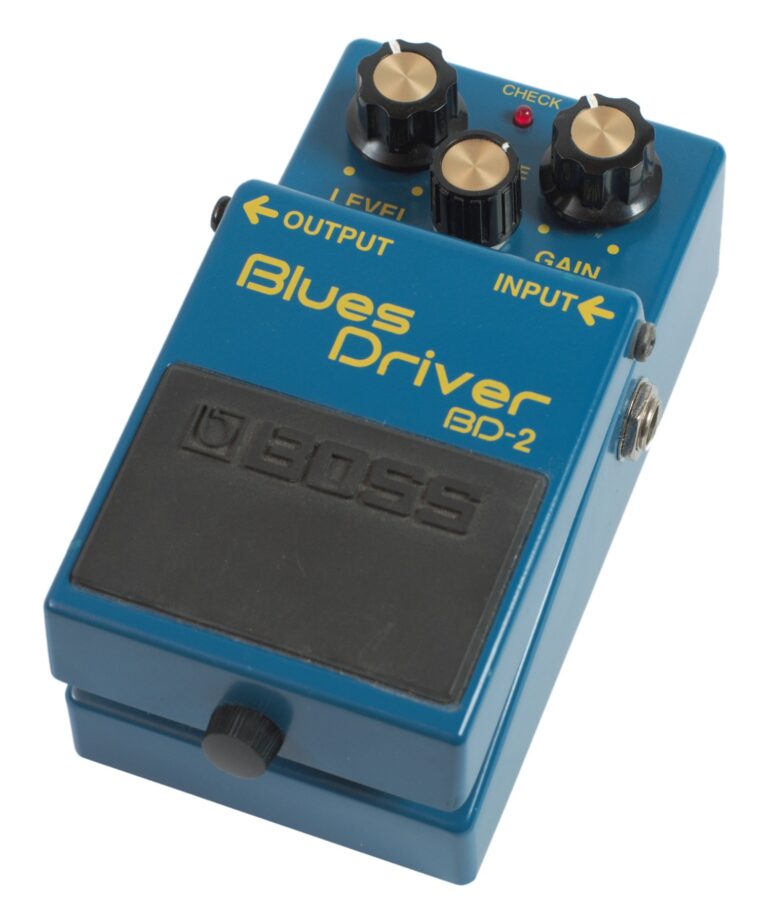
He used a combination of Marshall heads and a BOSS BD-2 Blues Driver, set just on the edge of breakup.
That setup gave him punchy midrange, shimmering highs, and that “always about to explode” tension.
Unlike Cobain’s full-on pedal mayhem, Billie’s board could fit in your pocket:
-
BOSS BD-2 – main tone shaper (gain just below noon).
-
MXR Smart Gate – keeps his brutal downpicking tight.
-
Occasional Big Muff/boost – for extra bite on solos.
The result: a distortion that’s thick, controlled, and unmistakably Green Day.
The Rhythm Hand of God
Billie Joe’s entire philosophy can be summed up in two words: Down. Picking.
Every riff, every verse, every chorus is hammered downward like he’s forging steel.
It’s the same right-hand power that Hetfield built metal on — but filtered through punk’s simplicity.
He doesn’t alternate pick. He refuses to.
That’s how he gets that heavy, consistent wall of rhythm — the sound that turned pop-punk into stadium rock.
(Also read Tony Iommi – The Godfather of Heavy Riffs to see how riff discipline shaped the DNA of every heavy guitarist that followed.)
Billie Joe Armstrong’s Rig – Guitars, Amps, and Punk Precision
Billie Joe’s rig is the opposite of complicated — but don’t mistake that for basic.
Every part of it, from his guitars to his amp EQ, is dialed for maximum attack, consistency, and attitude. It’s the kind of setup that proves you don’t need a wall of pedals to sound huge — just the right guitar, the right amp, and a right hand that never quits.
The Guitars – From ‘Blue’ to the Junior Revolution
If Kurt Cobain had pawnshop charm, Billie Joe had punk craftsmanship.
He made two guitars legendary — neither pristine, both brutally effective.
-
“Blue” (Fernandes Strat Copy):
Billie’s original workhorse since the early 1039/Smoothed Out days.
It started life as a Strat copy but was modded to hell — Seymour Duncan JB humbucker in the bridge, ripped pickguard, stickers covering every inch.
The JB gave it that biting, mid-forward crunch that sliced perfectly through Mike Dirnt’s bass and Tre Cool’s snare-heavy mix.
He used it live until it was practically held together by duct tape — and somehow, it still sounded perfect. -
Gibson Les Paul Junior (TV Yellow):
This became the Billie Joe look — and sound.
Single P-90 pickup, wraparound bridge, and no nonsense.
It’s raw, mid-punchy, and brutally honest. The P-90’s clarity lets every downstroke breathe, giving his rhythm tone that unmistakable snap.
He’s used countless versions of it, from vintage ’50s models to modern Gibsons — and even has his own Billie Joe Armstrong Signature LP Junior.
“A P-90 into a loud amp — that’s it. That’s the truth.”
Pickups & Strings – The Punk Science of Simplicity
Armstrong has always been obsessed with output balance — hot enough to drive a Marshall, clean enough to keep clarity.
-
Fernandes “Blue” → Seymour Duncan JB (classic humbucker power)
-
LP Junior → Gibson P-90 (raw bite, fast transient attack)
-
Strings: Ernie Ball Regular Slinkys (.010–.046) — reliable, flexible, and perfect for the constant downpicking assault.
-
Picks: Dunlop Tortex 0.73 mm — same as Cobain, ironically. Maybe chaos and control aren’t that far apart.
Amps – Marshall Fury with a Hint of Vox
If there’s a Mount Rushmore of Marshall tone, Billie Joe deserves a spot.
His sound is the blueprint for modern punk crunch.
Mainstays:
-
Marshall Plexi (1959SLP / JCM800 / JCM900) – the heart of his tone. High mids, biting top end, tight low response.
-
Vox AC30 – added to blend some chiming clarity in the studio, especially on cleaner parts like Good Riddance (Time of Your Life).
-
Fender Bassman – occasionally used for warmth in recording sessions.
Typical Live Chain:
Guitar → BD-2 → Marshall head → 4×12 cab loaded with Celestion Greenbacks.
That’s it. No mystery. No secret sauce. Just volume and precision.
Pedals – Minimalism Done Right
Armstrong could have a massive pedalboard. Instead, he uses a pedalboard that fits on a dinner plate:
-
BOSS BD-2 Blues Driver – his constant companion. Gain low, level high. Adds grit and definition to his already overdriven Marshalls.
-
MXR Smart Gate – keeps noise down from all that high-gain downpicking.
-
Electro-Harmonix Big Muff (sometimes) – for heavier live sections or overdubs.
He’s said many times he hates “pedal dancing.” One tone, one mission: make the riff hit harder than the snare.
The Secret Ingredient – Consistency
The real secret to Billie Joe’s tone isn’t a pedal or amp — it’s discipline.
He hits every chord with the same precision, every time.
That’s why his tone always sounds tight, no matter the venue. It’s not just good gear — it’s repetition, focus, and muscle memory turned into art.
(Also read James Hetfield – The Iron Cross Rhythm Machine to see how another downpicking icon built his empire on precision and fire.)
Chaos vs Control – What Really Separates Cobain and Armstrong
Both Kurt Cobain and Billie Joe Armstrong changed what it meant to be a rock guitarist — but they did it from opposite ends of the emotional spectrum.
One weaponized vulnerability. The other perfected discipline.
Both made imperfection sound like purpose.
Cobain: Emotion Before Execution
Kurt never cared about technique — and that’s exactly why his playing hit harder than most virtuosos. His entire philosophy was that emotion beats precision every time.
He’d drag chords, miss notes, and swing wildly between clean and dirty — but in that mess lived the heartbeat of his generation.
Songs like “Lithium” or “Heart-Shaped Box” are full of contradictions: soft vocals over violent guitars, quiet verses before sonic explosions. His tone mirrored his psyche — chaotic, unpredictable, honest to the point of pain.
He made every mistake count, and that became his signature.
Armstrong: Precision as Power
Billie Joe took the opposite road. He learned control — then turned it into a weapon.
His rhythm playing is a masterclass in mechanical tightness without losing feel.
Listen to “Holiday” or “American Idiot.” Every chord hits like a drum. Every pause is deliberate.
Where Cobain was chaos bottled in a Fender, Armstrong was structure wrapped in rebellion.
He didn’t need feedback or noise to make you move — just pure momentum.
If Cobain was a Molotov cocktail, Billie Joe was a laser-guided missile.
The Psychology of Tone
Cobain’s tone screamed fragility: gritty, unpolished, feedback-prone — like it could collapse at any moment.
Armstrong’s tone shouted confidence: tight, mid-focused, perfectly carved to dominate any mix.
Both tones reflected their minds.
Kurt’s guitars bled emotion; Billie Joe’s enforced control.
And yet, both told the same truth: you don’t need perfection to sound powerful — you just need identity.
When Chaos Meets Control
Here’s the irony — both guitarists shaped generations that overlapped.
Every garage band in the ’90s borrowed from Cobain’s honesty.
Every pop-punk kid in the 2000s stole Armstrong’s energy.
And today’s players? They need both — the chaos and the control.
The result is the legacy they unknowingly built together:
Music that’s loud, emotional, simple… and timeless.
“The day punk became polished, it died,” Cobain might have said.
“Yeah, but it sure as hell sold out stadiums,” Armstrong would’ve answered.
(Also check Slash – Les Paul Fire and the Guns N’ Roses Tone for another guitarist who balanced attitude and melody on the edge of chaos.)
Cobain vs Armstrong: Tone, Guitars, and the Battle of Attitude
Why do Kurt Cobain’s guitars sound so raw?
Because they were.
Kurt’s tone came from cranking a BOSS DS-1 or DS-2 straight into relatively clean Fender Twin Reverb or Mesa/Boogie amps. No compression, no polishing — just harsh mids, jagged treble, and a violent right hand. Add light strings, short-scale Fenders, and chaotic picking, and you get that iconic grunge rasp.
Why does Billie Joe Armstrong use a Les Paul Junior?
Because it’s the purest punk guitar ever made.
A single P-90 pickup, one tone knob, one volume knob — no frills, no confusion. It’s perfect for Billie’s surgical downpicking. The midrange growl of the P-90 through a Marshall Plexi is tight, punchy, and unapologetically raw.
How can I get Kurt Cobain’s tone?
-
Use a Fender Jaguar or Mustang with a humbucker bridge pickup.
-
Plug into a BOSS DS-2 with the gain around 70%.
-
Run into a clean amp like a Twin Reverb or Boogie head.
-
Add a Small Clone chorus pedal for songs like Come As You Are.
Then — don’t play perfectly. Let it breathe, let it buzz. That’s the whole point.
How can I get Billie Joe Armstrong’s tone?
-
Grab a Les Paul Junior (or any P-90-equipped guitar).
-
Use a BOSS BD-2 Blues Driver into a Marshall head (JCM800/900).
-
Keep the gain low and volume high — clarity is key.
-
Focus on right-hand precision and palm muting.
Armstrong’s tone is 80% amp settings, 20% stubborn muscle memory.
Who influenced their sound the most?
-
Cobain: The Melvins, Sonic Youth, Black Sabbath, and punk acts like The Wipers and The Vaselines.
-
Armstrong: The Ramones, The Clash, Buzzcocks, and Cheap Trick.
Both drew from punk — one twisted it into self-destruction, the other into pop clarity.
Did Cobain and Armstrong ever meet?
They crossed paths briefly in the early ’90s on festival circuits, but there’s no record of a full collaboration.
Still, Green Day’s rise after Nirvana’s fall feels almost like a passing of the torch — from grunge chaos to punk order.
What’s the biggest difference between their tones?
Cobain’s sound collapses gloriously. Armstrong’s never does.
One thrives in imperfection, the other in precision.
And together, they taught a generation that attitude matters more than accuracy.
(For another legend of control and tone, read Zakk Wylde – Pinch Harmonics and Ozzy’s Wild Axe Man.)
Image credits
- Top image: GuitarGangsters AI-generated reference illustration, not a photograph.
- Boss DS-1 Distortion: Roadside Guitars, Flickr, CC BY-SA 2.0.
- Fender Jaguar: doryfour, Wikimedia Commons, CC BY-SA 2.0.
- Fender Twin Reverb: Micahmedia, Wikimedia Commons, CC BY 3.0.
- Boss BD-2 Blues Driver: El Grafo, Wikimedia Commons, CC BY-SA 4.0.
- BOSS DS-2 Turbo Distortion: Kuriosatempel, Wikimedia Commons, CC BY-SA 4.0.
,_Museum_of_Making_Music.jpg)


