Billie Joe Armstrong Guitars & Gear: The Complete Era-by-Era Guide to Green Day’s Punk Tone Machine
He was eleven years old when he got it. A scratched-up Fernandes Stratocaster copy buried under stickers, passed down through a chain of people that somehow ended with a kid from Rodeo, California, clutching the guitar that would eventually be heard by a hundred million people.
Nobody planned it that way. Nobody plans anything in punk rock.
Billie Joe Armstrong didn’t become one of the most recognizable rhythm guitarists on the planet because he had the fanciest gear or the most expensive rig. He became who he became because he played like his life depended on it — shoulder attack, not wrist, hitting every chord like he was trying to break something — and because he had the songs to back it up.
But here’s the thing nobody tells you: behind that apparent simplicity is a surprisingly deep gear story. One that spans three decades, nearly every major guitar brand, and features a Marshall amp nicknamed “Pete” that literally changed the sound of pop-punk forever.
This is the complete, era-by-era breakdown of every significant guitar, amp, pedal, and piece of gear that Billie Joe Armstrong has used to build one of rock’s most imitated — and most underrated — tones.
Background: From Rodeo to 924 Gilman — The Making of a Punk Guitar Icon
Before the gear, the story. Because the two are inseparable.
Armstrong developed an interest in music at a remarkably young age, recording his first song — a number called “Look for Love” — at the age of five at a Bay Area label called Fiat Records, encouraged by a teacher at Hillcrest Elementary School. It sounds almost too wholesome for a future punk icon, but there it is.
His father, Andy, was a part-time jazz musician who tragically died of cancer in 1982 when Billie Joe was just ten years old. The loss cut deep. When his mother later remarried a man nobody in the family liked, Armstrong retreated further into music — which, in hindsight, was the best thing that could have happened to rock and roll.
At age 10, he met future bandmate Mike Dirnt in the school cafeteria, and the two immediately bonded over their shared obsession with music. Metal was the common ground at first — Ozzy, Def Leppard, Van Halen. The first concert Armstrong ever attended was Van Halen in 1984. But punk was coming fast. He discovered it through his brothers and never looked back, citing The Ramones, the Sex Pistols, the Replacements, and Hüsker Dü as the bands that rewired his brain.
In 1987, aged 15, Armstrong formed a band called Sweet Children with Dirnt. They came up through the late 1980s/early 1990s Bay Area punk scene that revolved around 924 Gilman Street in Berkeley — a legendary DIY venue that was either the best or worst place to grow up as a band, depending on how you looked at it. Broken vans, borrowed floors, 50-person crowds on a good night. Green Day survived it. Most bands didn’t.
On his 18th birthday, Armstrong dropped out of high school to pursue music full-time. No safety net. No backup plan. Just a guitar, a best friend on bass, and the absolute conviction that this was the only thing worth doing.
They were right.
Tone note: Before the Plexis and the stadiums, there was a kid with a cheap Fernandes and something to prove. That urgency never left the music.
The Rig: Billie Joe Armstrong’s Guitars, Amps & Gear — Complete Era-by-Era Breakdown
Armstrong’s gear story is often misunderstood as “one guy, one guitar, one amp.” And while that minimalism is real and deliberate, the full picture is considerably richer. Let’s break it down properly — by instrument, by era, by modification, and by the specific records each piece of gear helped define.
Guitars: From “Blue” to Gibson Signature — The Full Arsenal
“Blue” — The Fernandes Stratocaster That Started Everything
If you understand nothing else about Billie Joe Armstrong’s tone, understand this guitar.
Blue is a Fernandes Stratocaster copy that Armstrong received as a gift for his 11th birthday from his mother, who bought it from his guitar teacher, George Cole. Cole had reportedly acquired it from David Margen, a bassist who played with Santana from 1977 to 1982. Today, a photo of Billie with the guitar on the day he received it is taped to the back of the instrument. It’s that sentimental.
Fernandes Stratocasters were often dismissed as cheap knockoffs, but they had serious players behind them — Kirk Hammett and Tobias Forge of Ghost both started on them. The wood was a Japanese species called Silver Heart, more commonly used to make bowling alley floors than guitar bodies. That detail alone is peak punk rock.
Over the years, Blue got modified aggressively:
- The selector switch is permanently locked in the bridge position
- The neck and middle pickups are disconnected and lowered out of the way
- The original pickup was replaced first with a Bill Lawrence L-500XL (the same pickup Dimebag Darrell used on his Dean From Hell), then later with a Seymour Duncan JB humbucker
- The entire body was covered in stickers — layers of them, accumulated over decades
Billie Joe opted to record all of the electric guitar parts on Dookie with Blue and nothing else. One guitar. The entire album. That record went on to sell over 20 million copies in the US alone.
Blue has never fully left the stage. Armstrong played it at Super Bowl LX in February 2026. Some relationships don’t end.
Tone note: Blue isn’t a vintage collector’s piece. It’s a working tool with a lifetime of war wounds and the tone to prove it.
Gibson Les Paul Junior “Floyd” — The Album Era Workhorse
From the American Idiot era onward, Les Paul Juniors became Armstrong’s primary studio and live guitars. The centerpiece of this chapter is “Floyd” — a black double-cutaway Gibson Les Paul Junior wearing a Mary sticker on the body. It became his main rhythm instrument for recording and touring throughout the 2000s.
The P-90 pickup in the Junior delivered something Blue’s single humbucker couldn’t quite match: that midrange bark, that woody punch, that raw immediacy that gave songs like “American Idiot” and “Holiday” their particular swagger. Producer Butch Vig described recording Floyd through a Park amp as “like a Marshall, only more dialed up” — which tells you everything about the guitar’s character.
Tone note: The Les Paul Junior is the most honest guitar in rock. One pickup, one tone, zero excuses.
Gibson Signature Models — When Gibson Made It Official
Gibson built the first Billie Joe Armstrong signature Les Paul Junior in early 2012 — the first time the company had purpose-built a guitar specifically for him. It had a double-cutaway Junior body in glossy TV Yellow, mahogany neck and body, and a brown granadillo fingerboard (a dense Central American hardwood Gibson was using in place of rosewood at the time).
The key spec difference from a standard Junior: the Gibson Billie Joe Armstrong signature features an H-90 pickup — a hotter, louder version of the P-90 that adds more bite and output while keeping the characteristic midrange character. The slim neck profile makes it fast for aggressive playing. A second signature model, the double-cutaway DC version, followed in 2013.
The Hella Mega Tour (2021) introduced another guitar to the live spotlight: a Les Paul Junior that had been repainted in gold sparkle finish, used for the opening run of songs including “American Idiot,” “Holiday,” and “Boulevard of Broken Dreams.”
The Full Guitar List
- Fernandes Stratocaster “Blue” — The original. Modified with Seymour Duncan JB, selector locked to bridge. Still in active rotation since 1983.
- Gibson Les Paul Junior “Floyd” — Black DC Junior, Mary sticker, P-90. Primary studio guitar from American Idiot through 21st Century Breakdown.
- Gibson Billie Joe Armstrong Signature LP Junior (single cut, 2012) — TV Yellow, granadillo board, H-90 pickup.
- Gibson Billie Joe Armstrong LP Junior DC (double cut, 2012–13) — Companion double-cut version of the signature.
- Gibson LP Junior “Gold Sparkle” (Hella Mega Tour) — Repainted natural-finish Junior, used for opening songs live.
- Gibson ES-335 Dot (Black, ~2009) — Semi-hollow used briefly during 21st Century Breakdown era. Two tone knobs removed, clown sticker added.
- Rickenbacker 360 (Black) — Studio guitar, used for specific layered tones on American Idiot and 21st Century Breakdown.
- Custom Fender Telecaster (backup) — Built to match Blue’s specs: Seymour Duncan SH4-JB, maple neck, single volume knob. Used at Reading Festival 2013.
- Gibson “Frankenstein” — Parts guitar assembled from a Fender shop haul. Used during Nimrod sessions.
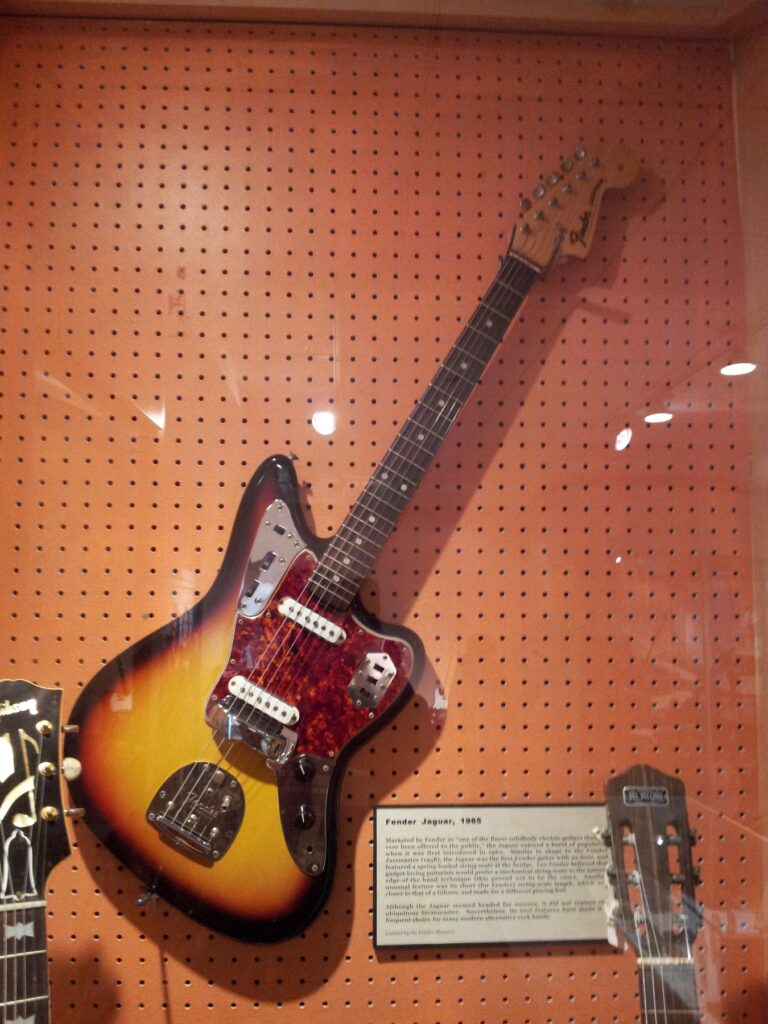
- Gibson ES-355, ES-135, Fender Jaguar — Various guitars used during Nimrod recording.
- Epiphone Billie Joe Armstrong LP Junior “Special” — Custom Epiphone with “Special” marking, seen in video content.
- Gibson J-180 (Black acoustic) — Primary acoustic, live and studio.
- Taylor 514C “Excalibur” — Producer Rob Cavallo’s guitar; used extensively from Nimrod onward.
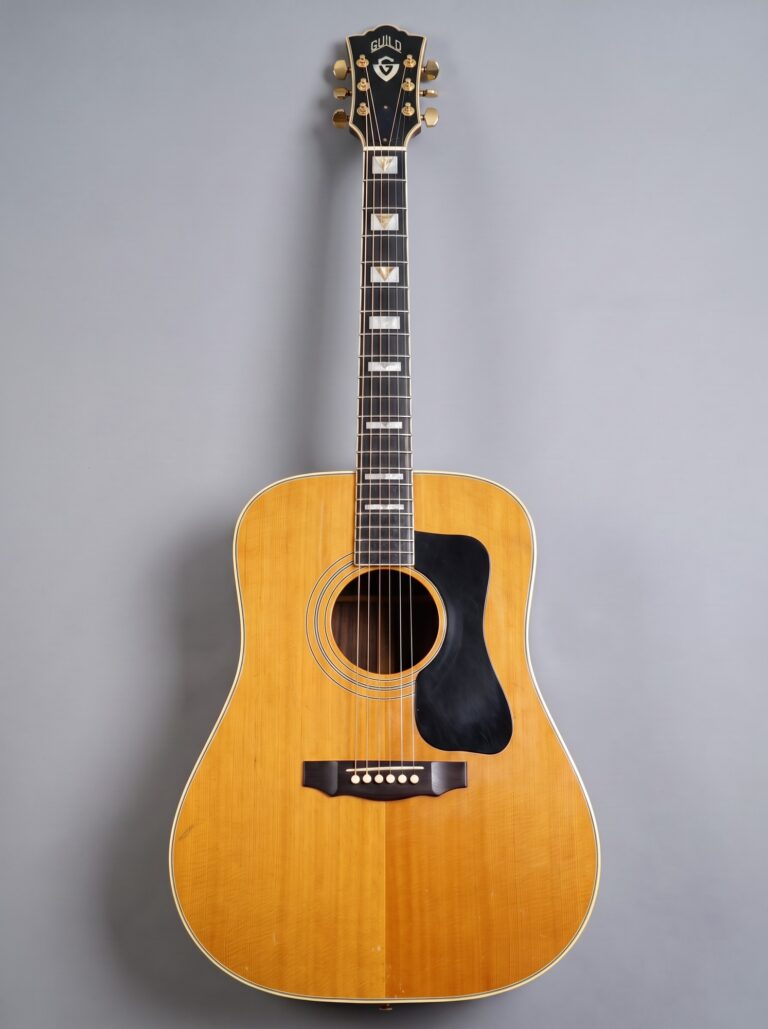
- Guild D-55 — Acoustic documented in the Nimrod-era gear list.
Amps & Cabinets: “Pete,” “Meat,” and the Dookie Mod Legacy
“Pete” — The Marshall That Changed Pop-Punk Forever
When Green Day entered Fantasy Studios in Berkeley in September 1993 to record Dookie, producer Rob Cavallo brought a 100-watt Marshall 1959SLP Plexi head to the session. Armstrong used it for the entire album. He later purchased it, had Martin Golub of Custom Audio Electronics modify it with what became known as the “Dookie Mod” — and the amp earned its nickname: Pete.
The Dookie Mod (also called the Bradshaw Gain Mod or Cascading Gain Mod) rewires the 1959SLP so one preamp channel feeds directly into the other, cascading the gain stages. This gives the signal two rounds of amplification before it hits the power amp. The result: significantly more distortion and sustain at manageable volume, with a tighter, more aggressive character than stock. A master volume is also added — the High Treble volume control is repurposed as the master, and the Normal Volume becomes the gain control.
That’s it. One guitar. One modded Marshall. No pedals. Dookie.
In a 2024 Guitar World interview, Armstrong revealed that while recording Saviors, he used the Dookie amp for the first time since Nimrod — confirming Pete was still operational and still relevant over 30 years later.
At Super Bowl LX in February 2026, Armstrong debuted a pale-blue Marshall head bearing a “Dookie” plaque — the first official Marshall signature amp built around the famous mod. The tone that defined a genre had finally been officially bottled.
Tone note: Pete isn’t just an amp — it’s the sound of three chords becoming a cultural earthquake.
“Meat” — The Heavier Partner
Pete needed a partner for the road. Enter Meat: a second Marshall 1959SLP, this one modified with the SE Lead mod by Martin Golub. Where the Dookie mod cascades gain stages, the SE Lead mod adds an additional tube to the circuit for even more gain and sustain. By the Insomniac tour, both heads were working as a team — Pete for the core Dookie rhythm tone, Meat for the heavier, more saturated moments.
Armstrong’s tech Hans explained the live setup precisely: “The way we run the heads is really all the knobs pretty much straight up and the master and gain at 10 o’clock. And Billie’s tone is really not about tons of gain. It’s actually cleaner than you would think it is. His technique and picking is more about where the sound is coming out of.”
Read that again. Not about tons of gain. Cleaner than you’d think.
Tone note: Two modded Plexis, all knobs at noon, and a player who hits with his shoulder. That’s the entire formula.
The Complete Amp List by Era
| Amp | Era / Album | Notes |
|---|---|---|
| Marshall JCM900 4100 (100W) | Early years / Kerplunk | Two-channel head; Armstrong’s main amp before the Plexis |
| Marshall 1959SLP “Pete” (Dookie Mod) | Dookie (1994) → Nimrod (1997), revived for Saviors (2024) | The defining amp of Green Day’s sound. Modded by Martin Golub / CAE |
| Marshall 1959SLP “Meat” (SE Lead Mod) | Insomniac (1995) → ongoing | Pete’s heavier partner. SE Lead mod adds extra tube for more gain |
| Park 75 (50W, Dookie Mod variant) | American Idiot (2004), 21st Century Breakdown (2009) | Second principal amp on American Idiot; paired with Floyd for double-tracked rhythm parts |
| CAE 3+ SE Rackmount Preamp | Live, 2000s–present | Used for clean tones in live rig; bypasses Marshalls for “Clean” and “Mid” presets |
| Divided by 13 FTR 37 Head | American Idiot, 21st Century Breakdown | Studio amp paired with Rickenbacker 360 for layered tones |
| Fender Bassman | Nimrod | Studio session amp (reported; fan-site sourced, unverified) |
| 1958 Fender Twin 5F8-4 | 21st Century Breakdown | Confirmed by Armstrong in interviews |
| Fender ’65 Deluxe Reverb | American Idiot sessions | Studio combo; small-room overdrive character |
| Marshall Signature Dookie Head (2026) | Super Bowl LX / ongoing | Official Marshall signature based on Dookie Mod. Red labels on modified controls |
| Marshall 1960B 4×12 cabs (Celestion Vintage 30s) | Live, 2000s–present | Both heads and the CAE 3+ SE run through these in the live rig |
Pedals & Signal Chain: The Most Honest Pedalboard in Arena Rock
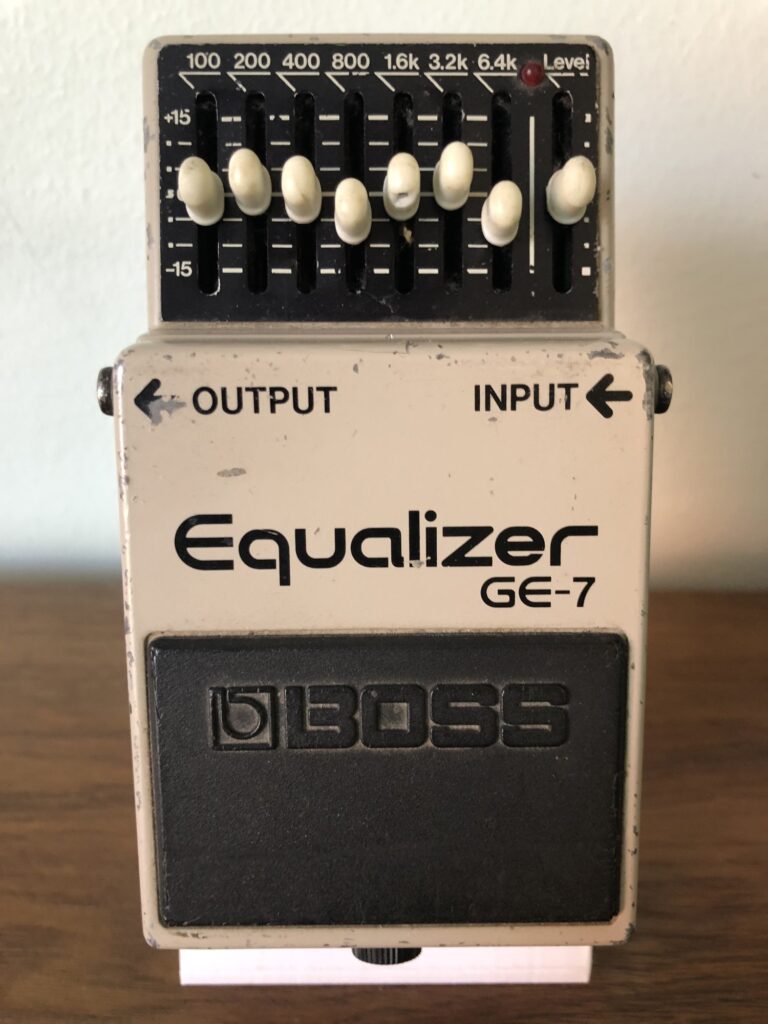
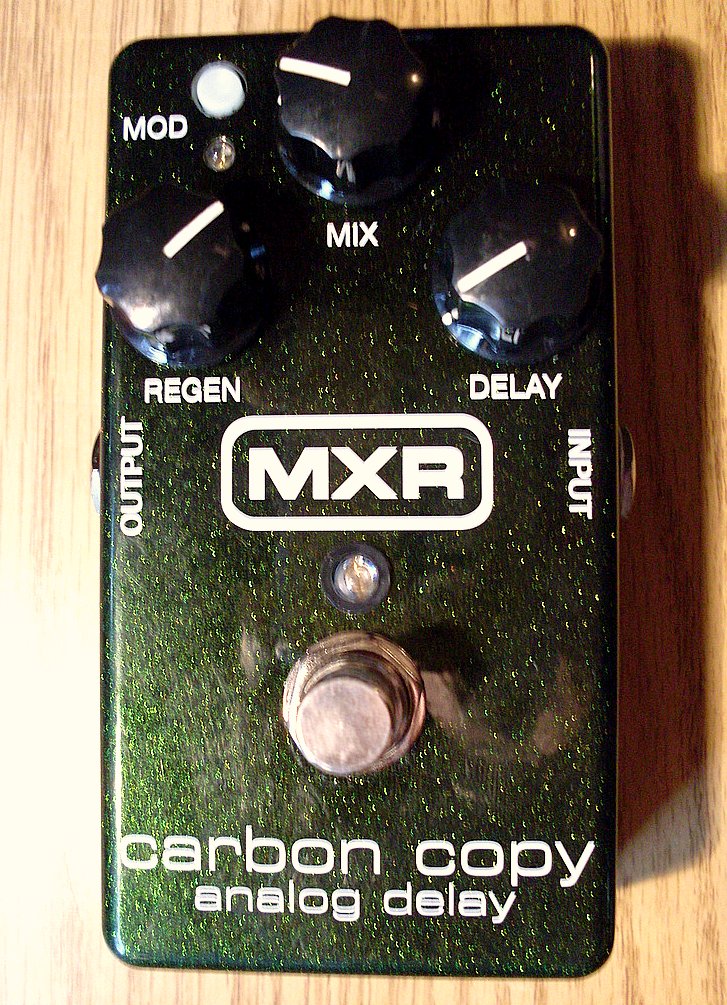
For a band that has sold 60+ million records and headlined stadiums on six continents, Billie Joe Armstrong’s pedalboard is almost offensively minimal. For most of his career it contained exactly three things: a Boss BD-2 Blues Driver, a Boss GE-7 Equalizer, and an MXR Carbon Copy analog delay. That is genuinely one of the smallest pedalboards in the history of arena rock.
His tech confirmed the live philosophy bluntly: “Blues Driver, and that’s it. I’ll just kind of, depending upon the song, manipulate it to get feedback or gain or whatever.”
Core Pedalboard
- Boss BD-2 Blues Driver — The cornerstone. Transparent overdrive that preserves the amp’s core character while adding controlled grit. Used primarily in the “Big Effect” live preset, which kicks in for solos. Armstrong’s tech described it as the only pedal that gets regular use.
- Boss GE-7 Equalizer — Seven-band graphic EQ for sculpting tone to different venues. Permanent board fixture.
- MXR Carbon Copy (M169) Analog Delay — Warm, dark analog delay for depth and texture. Long-running fixture.
Extended Pedalboard (Various Eras)
- MXR Dookie Drive — Created with Armstrong’s direct involvement in 2019 to mark the 25th anniversary of Dookie. MXR borrowed Pete and Meat to capture the dual-amp character: one channel mid-scooped and cranked, the other mid-heavy crunch, blended via a single knob. Four versions released through 2023.
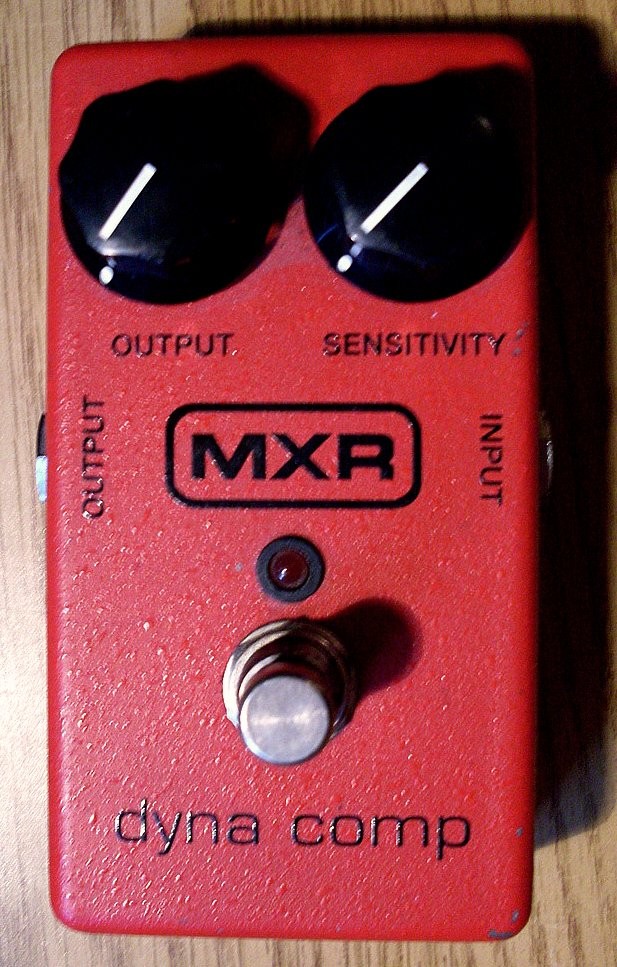
- MXR Dyna Comp (M102) — Compressor for dynamic control on cleaner sections.
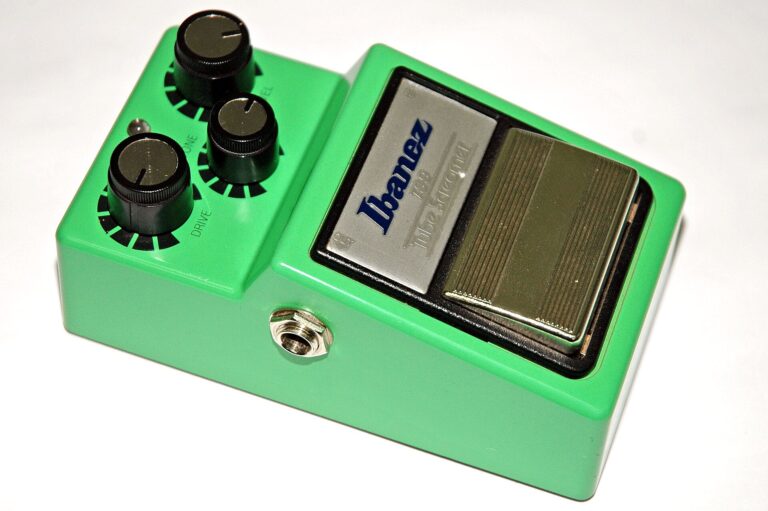
- Ibanez TS9 Tube Screamer — Midrange crunch when a cleaner distortion character is needed.
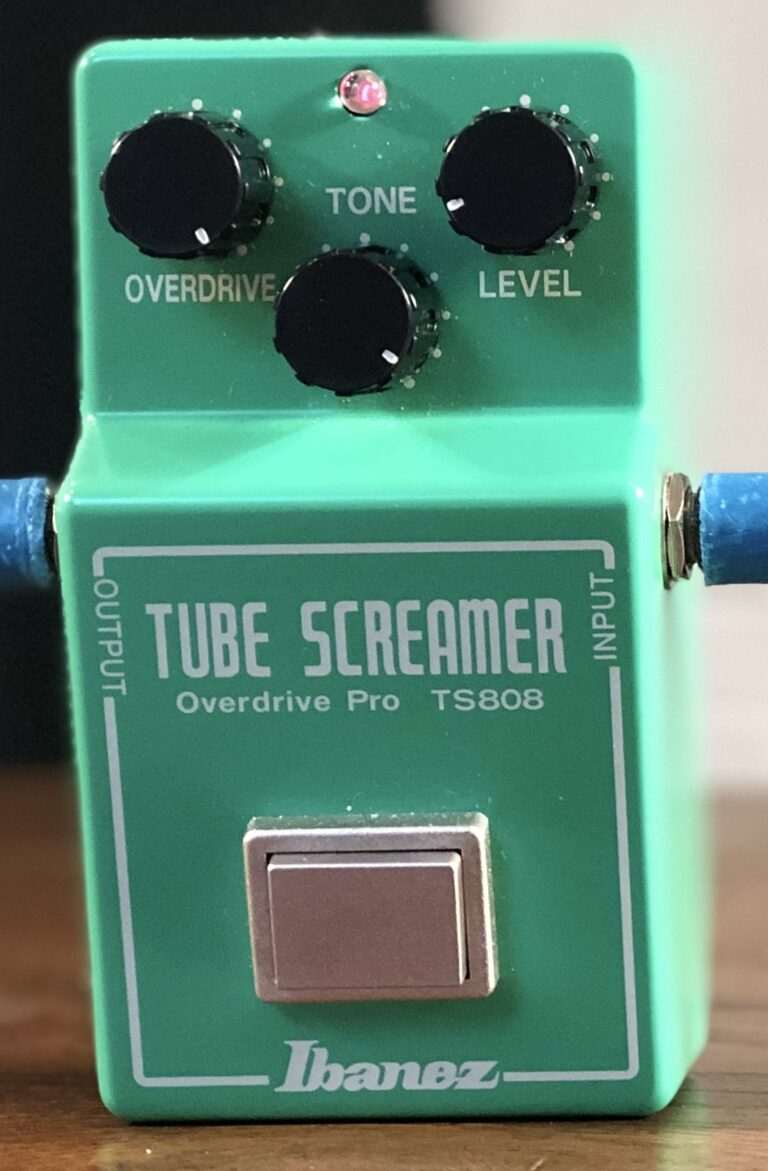
- Ibanez TS808 Tube Screamer — Smoother, more vintage-voiced sibling of the TS9. Confirmed via Armstrong’s Instagram.
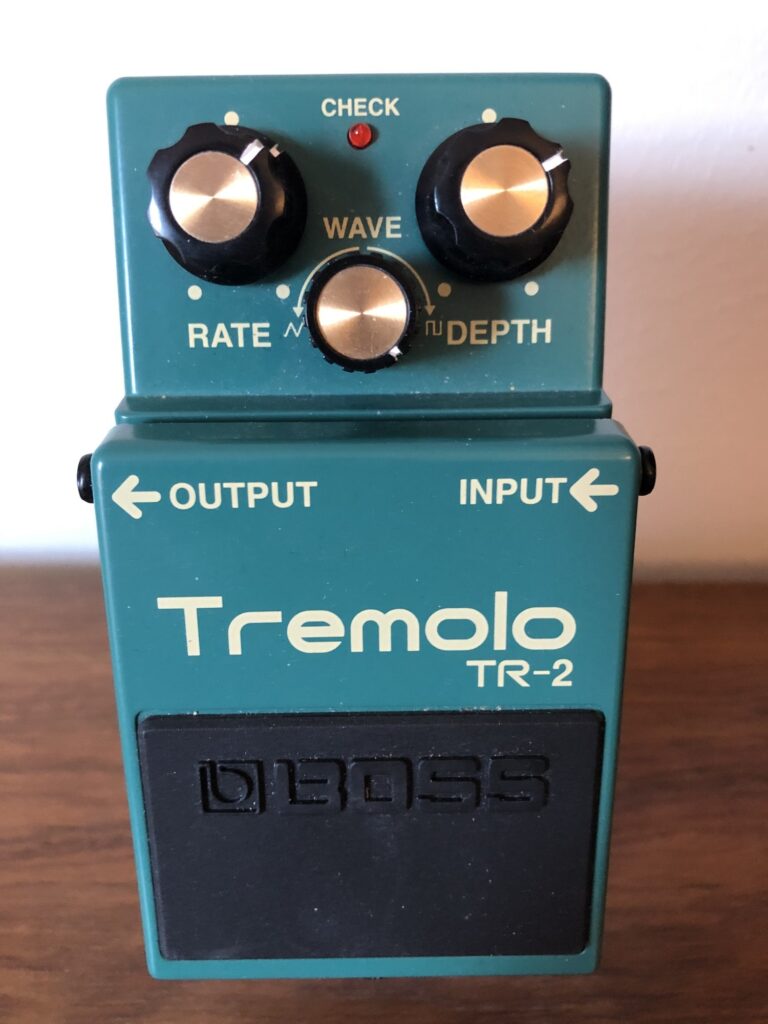
- Boss TR-2 Tremolo — Used on specific tracks including the recorded version of “Warning.”
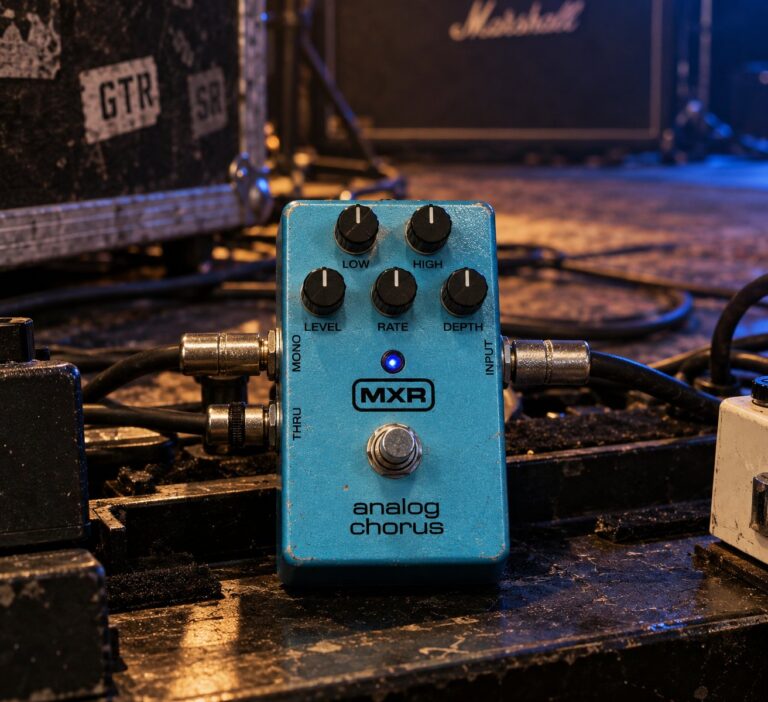
- MXR M234 Analog Chorus — Spotted during The Coverups live performances.
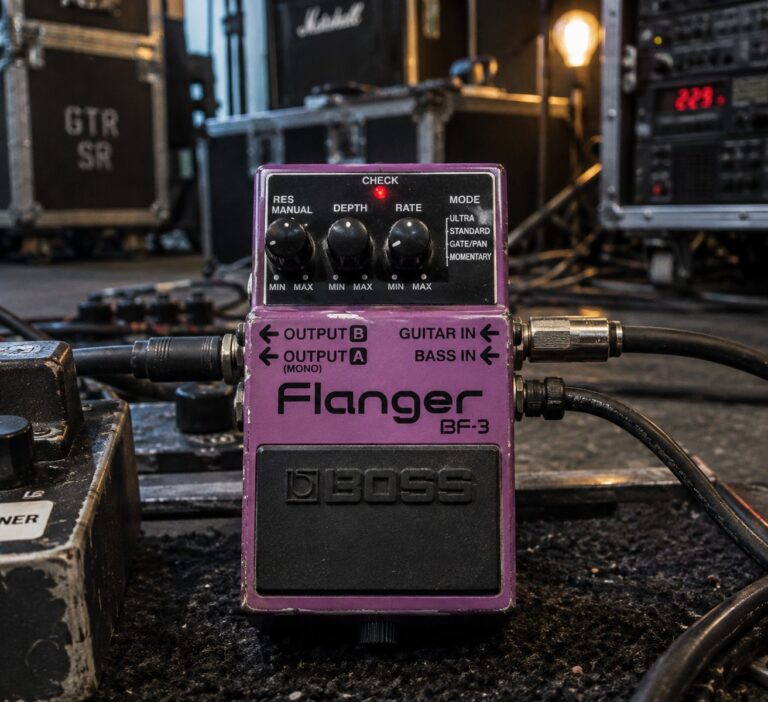
- Boss BF-3 Flanger — Visible in the live rig during certain periods.
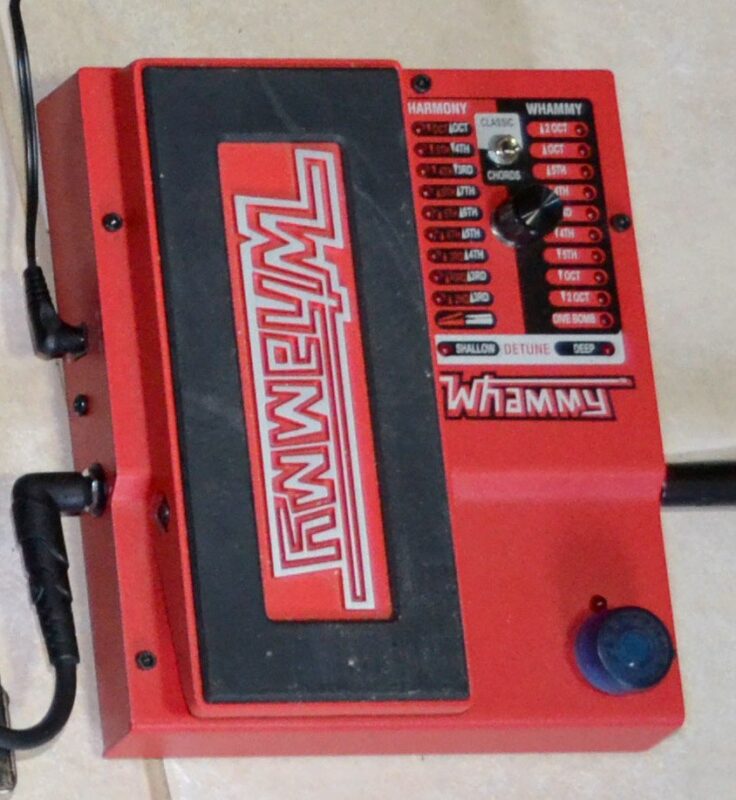
- DigiTech Whammy — Used live at the Whiskey A Go Go in 2019 and in the studio on tracks from Father of All.
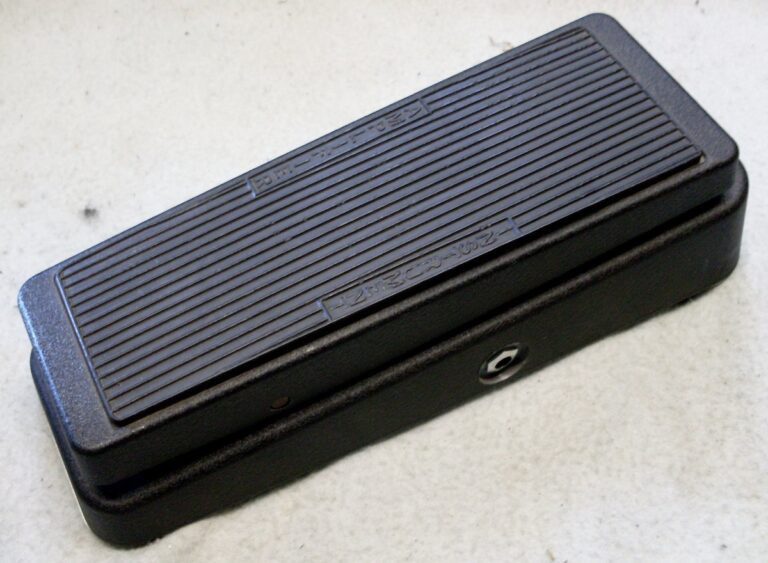
- Dunlop Cry Baby Wah (Rackmount) — Part of the live rack rig (2013 Premier Guitar Rig Rundown).
- Line 6 Echo Pro (Rackmount) — Eighth-note triplet delay for live performances.
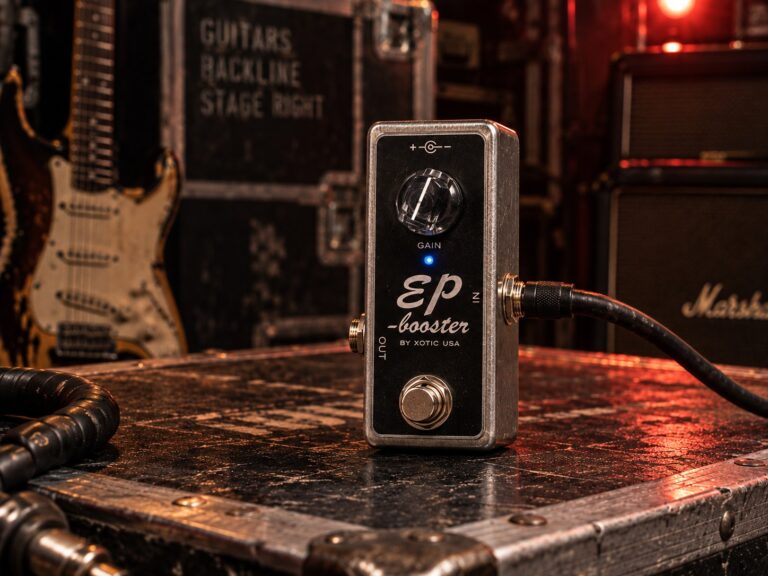
- Xotic Effects EP Booster — Spotted in Armstrong’s personal Instagram pedalboard photo.
- Fulltone FatBoost V1 — Documented in a pedalboard photo.
- ISP Technologies Decimator G-String — Noise gate in the live rig.
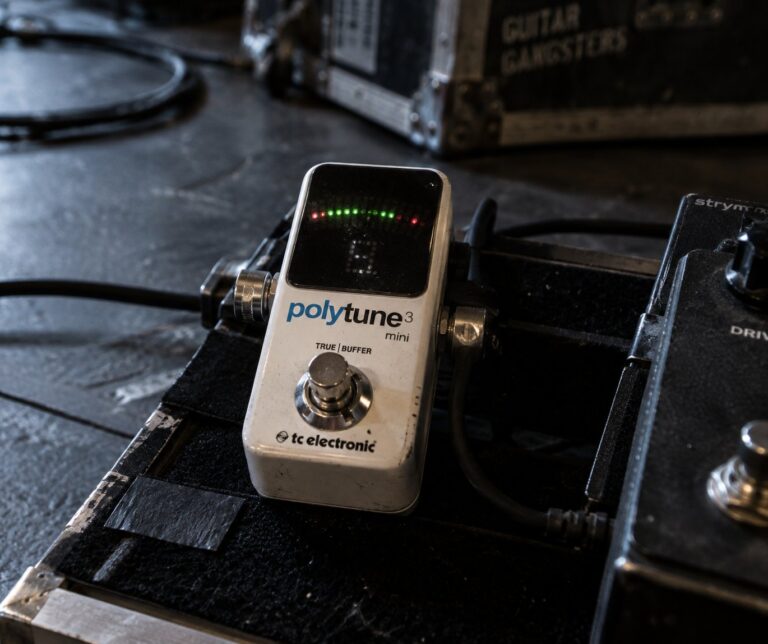
- TC Electronic PolyTune — Tuner of choice.
- Voodoo Lab Pedal Power 2+ — Power supply, documented in the 2013 Rig Rundown.
The Live Signal Routing (2013 Rig Rundown)
Guitar → Shure R4D+ wireless → RJM iS-8 (8-guitar input switcher) → splits to either CAE 3+ SE preamp or Marshall heads → RJM RG-16 switcher + MasterMind MIDI controller → four main presets:
- Clean — Both Marshalls bypassed; CAE 3+ SE preamp only
- Mid — Both Marshalls bypassed; CAE 3+ SE preamp only
- Big — Both Marshalls active; no CAE preamp
- Big Effect — Both Marshalls active + Boss BD-2 engaged for solos
Tone note: Four presets. Two modded Marshalls. One Blues Driver. That’s how you run an arena guitar rig.
Strings, Picks & Setup
Strings: Ernie Ball Regular Slinky (.010–.046). Armstrong moved to 10s for the stability and resistance they provide on semi-hollow and solid-body guitars at high volume. His tech confirms strings are replaced fresh before every show.
Picks: Dunlop Tortex .73mm — custom-printed with Armstrong’s face for live performances. Medium gauge: flexible enough for fast strumming, stiff enough for attack. Armstrong burns through them aggressively; most don’t survive a full set.
Setup:
- Action: medium-low on electrics; Les Paul Juniors set up for low, fast playing
- Neck relief: nearly flat
- Pickup height: close to strings for maximum output and bite
- Les Paul Juniors typically have the H-90/P-90 set close to the strings for maximum punch
- Blue’s selector permanently locked in bridge position, neck/middle pickups disconnected
Tone note: Medium picks, 10s, and a pickup selector that only knows one position. Simple tools for a simple philosophy.
Tunings & Tone Philosophy
The vast majority of Green Day’s catalog is in standard E tuning. No drop-C madness, no alternate voodoo. A handful of songs use Eb standard (half-step down) to ease vocal strain and fatten the low end slightly on live runs.
Armstrong’s core tone philosophy is deceptively simple: the guitar and amp do the work. Everything else stays out of the way. He told Guitar World about recording Saviors: “I have this one amp, a Dookie amp that I haven’t used in a while, since maybe Nimrod. That was the main one. It’s a Marshall 100-watt Super Lead that was modified by Martin at CAE.” Three decades in the business, and he went back to the same amp that made Basket Case.
That’s not nostalgia. That’s knowing what works.
Tone note: Standard tuning, one pickup, two Marshalls. The entire philosophy fits on a cocktail napkin.
Playing Style & Tone Philosophy: The Shoulder, the Thwack, and the Truth
Here is the thing about Billie Joe Armstrong’s guitar tone that most people miss entirely: it is not about gain. It never was.
His tech Hans put it plainly in the Premier Guitar 2013 Rig Rundown: “Billie’s tone is really not about tons of gain. It’s actually cleaner than you would think it is. His technique and using the pick is more about where the sound is coming out of.”
Armstrong himself explained his picking approach: “I use my thumb. It’s that half-pick and half-thumb that gives it that thwack. Also, I don’t play with my wrist, I play with my shoulder and hit it really hard.”
Play with your shoulder. Hit it really hard.
That is the entire secret. Not the Fernandes. Not the Marshall. Not the Dookie Mod. The fact that Armstrong attacks the guitar from the shoulder — using the entire arm as a pendulum — is what gives Green Day’s rhythm playing that physical, almost percussive quality. It sounds like someone genuinely hitting something. Because they are.
Right Hand: The Percussive Engine
Armstrong primarily uses downstrokes for rhythm playing, particularly on verses. This creates the driving, forward-pushing momentum that is AC/DC-adjacent in its relentlessness — three chords played with such conviction they sound like a declaration. For power chords, he typically strums all six strings even when fretting only two or three, controlling string noise with light fretting-hand mutes on the strings he isn’t using.
Tone note: The right hand is the amp. The amp just makes it louder.
Left Hand: Economy and Aggression
Armstrong’s fretting hand is efficient — no wasted movement, no over-articulation. His chord vocabulary is built on power chords, barre chords, and occasional single-note runs. The genius is in the release: the way he lets chords breathe or mutes them with surgical precision to create rhythmic contrast.
He rides his guitar volume knob actively — rolling down for cleaner sections, opening up for distorted choruses. The modded Marshall responds to this in exactly the way a great amp should: the tone cleans up when you back off, roars when you open up.
Tone note: Two fingers and a volume knob. The most powerful EQ in the signal chain.
The Stage Physicality
Armstrong doesn’t stand still. His movement is part of his tone — leaning into the amp to coax feedback, stepping back to cool it off, the physical commitment of every strum visible in his whole body. When you watch early Green Day footage, you’re watching a guy who learned guitar in rooms where you had to be heard or you’d be ignored. That survival instinct never went away.
Tone note: Feedback is a conversation. Armstrong has been having it since 1987.
How to Sound Like Billie Joe Armstrong: Building the Dookie Tone
Here’s the truth nobody wants to hear: Billie Joe Armstrong’s guitar tone is one of the most achievable sounds in rock. You don’t need a vintage Plexi. You don’t need a custom-modded Marshall. You don’t need a Japanese Fernandes from 1983.
What you need is to understand what actually makes it work — and then stop adding things.
The Guitar
Start with a single-pickup guitar. This matters. Blue has one active pickup. Floyd has one pickup. The signature Juniors have one pickup. The entire sonic philosophy is built around a single, consistent voice hitting an amp hard.
A Les Paul Junior with a P-90 is the most authentic modern path. The Epiphone Billie Joe Armstrong Les Paul Junior is purpose-built for this tone. If you want the Dookie-era Blue character, a Strat with a humbucker in the bridge will get closer — but honestly, the Junior sounds better for the job.
The Amp
You want British. The Marshall Plexi circuit — that particular midrange crunch, the way it compresses when you dig in, the clarity that stays intact even under gain — is what gives Green Day their sonic identity.
For a budget-friendly path, the Marshall SV20H (20-watt Studio Vintage) uses the 1959 Plexi circuit with a master volume and responds correctly to picking dynamics. Remember what the tech said: all knobs at noon, master and gain at 10 o’clock.
| Control | Setting | Notes |
|---|---|---|
| Presence | 5 | Adds air without getting brittle |
| Bass | 4–5 | Tight low end — leave room for the kick drum |
| Middle | 7 | The core of the Green Day growl |
| Treble | 6 | Bite without ice-pick harshness |
| Volume / Master | As loud as the room allows | The louder the better — tube sag is half the tone |
Tone note: If your gain knob is past 6, you’ve already lost the plot.
The Pedal
For the recorded Dookie tone in a box, the MXR Dookie Drive is the closest available shortcut. The Blend knob mixes between the mid-scooped cranked channel and the mid-forward crunch channel — the same dual-amp character of Pete and Meat in miniature. The MXR FOD Drive runs essentially the same circuit under a different name at half the price — worth knowing.
For live use, the Boss BD-2 Blues Driver is Armstrong’s actual choice. Transparent, dynamic, and responsive to pick attack. Don’t add a wall of pedals. Armstrong ran three for most of his career. Keep the chain short.
Budget vs Pro Rigs
Budget Rig:
- Guitar: Epiphone Billie Joe Armstrong Les Paul Junior (~$400)
- Amp: Boss Katana 50 or Marshall DSL20CR
- Pedal: Boss BD-2 Blues Driver + MXR FOD Drive
- Strings: Ernie Ball Regular Slinky .010s
- Pick: Dunlop Tortex .73mm
Pro Rig:
- Guitar: Gibson Billie Joe Armstrong Signature LP Junior or original Floyd-spec LP Junior DC
- Amp: Marshall 1959SLP or SV20H with Dookie Mod (available from boutique techs for $220–$250)
- Pedal: Boss BD-2, Boss GE-7, MXR Carbon Copy — that’s the actual live board
- Cab: Marshall 1960B with Celestion Vintage 30s
Tone note: If you sound like you’re overdriving a fuzz through a metal amp, you’ve gone too far. Pull back.
The Technique — This Is What Actually Matters
Play with your shoulder. Hit it really hard. Strum all six strings even on two-note power chords and mute the excess with your fretting hand. Use your guitar volume knob like a fader — back it off for clean sections, open it up for the chorus.
And commit. Armstrong doesn’t half-commit to a strum. Every chord lands like he means it. That conviction is why even the simplest Green Day riffs have an energy that technically superior playing often lacks.
No preset, no pedal, no vintage amp in the world will replicate what conviction does to a guitar chord.
Tone note: Three chords and the truth. Armstrong’s been proving it for 35 years.
Influence & Legacy: The Three Chords That Refused to Disappear
Let’s sit with a number for a moment: over 60 million records sold. Dookie alone crossed 20 million copies in the US. American Idiot sold over 15 million worldwide, won a Grammy, and became a Broadway musical. Green Day is not a cult band with a devoted niche following. They are one of the biggest rock acts in the history of rock.
And the man at the center of it built his sound around a sticker-covered Fernandes, a single-modded Marshall, and one overdrive pedal.
That is not an accident. It is a philosophy.
What Armstrong understood — instinctively, from the Ramones and the Clash and every band he saw in Gilman Street basements — is that punk guitar tone is not about complexity. It’s about character. The right amount of grit. The right midrange bark. The attack that makes three chords sound like a manifesto.
The ripple effects are everywhere. Every pop-punk band from Blink-182 to Sum 41 to Paramore was either directly or indirectly shaped by the sound of Blue through Pete. The idea that you could sign to a major label, record one guitar through one amp, and make a record that sold 20 million copies — that was Billie Joe Armstrong’s proof of concept. It changed what was considered possible.
The Dookie Mod itself became a sought-after modification that independent amp techs have been performing for 30 years. Chicago Amp Mods charges $220–$250 for it. MXR built four versions of a pedal to approximate it. And in February 2026, Marshall — the company that built the original amp — finally released an official signature version of the modded head. That is how influential a single tone can become.
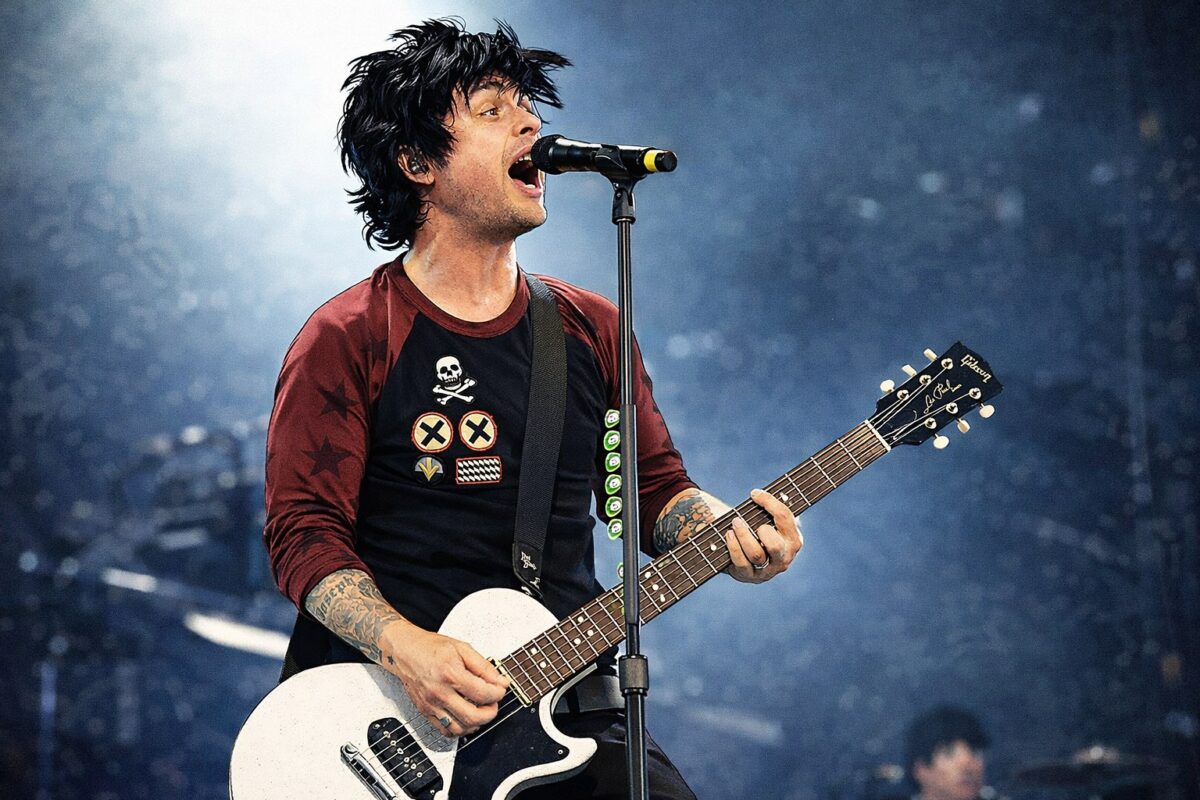
Armstrong also proved something important about longevity: you don’t have to reinvent yourself every album. Green Day went from three-chord East Bay punk to a rock opera that played Broadway, and the guitar tone stayed fundamentally the same throughout. Pete and Meat, running all knobs at noon, Blue or Floyd in the bridge position, a Blues Driver for solos. The consistency is the identity.
In 2024, recording Saviors, he pulled Pete out for the first time in over 25 years. The amp still worked. Still sounded right. Still sounded like Green Day.
Some things outlast everyone’s expectations. Blue and Pete are two of them.
Tone note: He didn’t change the world by adding more. He changed it by keeping it honest.
There’s a photo of Billie Joe Armstrong taken on the day he received Blue. He’s eleven years old. He’s holding the guitar like he already knows something the rest of the world hasn’t figured out yet.
Three decades, 60 million records, and a Marshall amp named Pete later — it turns out he did.
The story of his gear is the story of someone who found the right tools early and never let go of them. Blue survived the Gilman Street era, the major label deal, the Woodstock mud, the American Idiot stadium tours, and a Super Bowl halftime set. Pete survived being shelved for 25 years and came back to record another album. The Dookie Mod became so influential that the company who built the original amp finally turned it into a signature product.
None of this happened because Armstrong chased trends or upgraded gear or added pedals. It happened because he understood something that most guitarists spend a career trying to learn: the tone is in the conviction. Everything else is just wood and wire.
Plug in, hit it from the shoulder, and mean every note.
That’s the gospel according to Billie Joe Armstrong.
If you want to go deeper into how modified Marshall amps shaped the sound of an era, check out our deep dive on Angus Young’s tone and rig — the SG-into-Plexi blueprint that helped define British rock voltage.
FAQ: Billie Joe Armstrong Guitars & Gear
- What guitar does Billie Joe Armstrong play most?
- His most iconic guitar is “Blue,” a Fernandes Stratocaster copy he received on his 11th birthday in 1983. From the American Idiot era (2004) onward, he’s primarily used Gibson Les Paul Juniors live and in the studio — including his Gibson signature model featuring a custom H-90 pickup.
- What amp did Billie Joe Armstrong use on Dookie?
- The entire electric guitar sound on Dookie was recorded through a single amp: a 100-watt Marshall 1959SLP Plexi nicknamed “Pete,” modified with the Bradshaw Gain Mod (Dookie Mod). Martin Golub of Custom Audio Electronics performed the modification, which cascades the two preamp channels and adds a master volume control.
- What is the Dookie Mod?
- The Dookie Mod (also called the Bradshaw Gain Mod or Cascading Gain Mod) rewires a Marshall 1959SLP so one preamp channel feeds directly into the other, cascading the gain stages for more distortion and sustain at lower volume. A master volume is added by repurposing the High Treble control. The modification is available from independent amp techs for roughly $220–$250. MXR released the Dookie Drive pedal in 2019 to approximate the result in a compact format.
- What pedals does Billie Joe Armstrong use?
- Armstrong’s core pedalboard has historically been: Boss BD-2 Blues Driver, Boss GE-7 Equalizer, and MXR Carbon Copy Analog Delay. He’s also used a Boss TR-2 Tremolo, Ibanez TS9/TS808 Tube Screamers, MXR Dyna Comp, DigiTech Whammy, and TC Electronic PolyTune tuner, among others. The MXR Dookie Drive was co-created with Armstrong to approximate his amp tone in pedal form.
- What strings and picks does Billie Joe Armstrong use?
- Ernie Ball Regular Slinky strings in .010–.046 gauge, and Dunlop Tortex .73mm picks — custom-printed with his face for live performances.
- How do I get Billie Joe Armstrong’s guitar tone on a budget?
- Start with the Epiphone Billie Joe Armstrong Les Paul Junior (purpose-built for this tone), a Marshall-voiced amp set to moderate gain, and a Boss BD-2 Blues Driver. The MXR FOD Drive approximates the Dookie pedal circuit at roughly half the price. Most importantly: don’t over-gain the amp. His tech confirmed the tone is “actually cleaner than you would think it is.” Keep gain under 6 and let your pick attack do the heavy lifting.
- What is Billie Joe Armstrong’s playing technique?
- Armstrong plays with a half-pick, half-thumb attack and drives his strumming motion from the shoulder rather than the wrist. He typically strums all six strings even when fretting only two or three, controlling excess string noise with light fretting-hand mutes. He actively rides his guitar’s volume knob between clean and driven sounds during performance.
Image credits
- Fender Jaguar: doryfour, Wikimedia Commons, CC BY-SA 2.0.
- MXR Carbon Copy: MXR Carbon Copy by Roadside Guitars, Flickr, CC BY-SA 2.0.
- Ibanez TS9 Tube Screamer: Mataresephotos, Wikimedia Commons, CC BY 3.0 US.
- MXR M234 Analog Chorus: GuitarGangsters AI-generated reference illustration, not a photograph.
- BOSS BF-3 Flanger: GuitarGangsters AI-generated reference illustration, not a photograph.
- DigiTech Whammy: marcelodonati, Wikimedia Commons, CC BY 2.0.
- Dunlop Cry Baby: Roadside Guitars, Flickr, CC BY-SA 2.0.
- Xotic EP Booster: GuitarGangsters AI-generated reference illustration, not a photograph.
- TC Electronic PolyTune 3 Mini Tuner: GuitarGangsters AI-generated reference illustration, not a photograph.
- Billie Joe Armstrong (illustration 1): GuitarGangsters AI-generated reference illustration, not a photograph.
- Guild D-55: GuitarGangsters AI-generated reference illustration, not a photograph.
- BOSS GE-7 Equalizer: Kuriosatempel, Wikimedia Commons, CC BY-SA 4.0.
- BOSS TR-2 Tremolo: Kuriosatempel, Wikimedia Commons, CC BY-SA 4.0.
- MXR M102 Dyna Comp: Roadside Guitars, Wikimedia Commons, CC BY-SA 2.0.
- Ibanez TS808 Tube Screamer: Guitar Chalk, Wikimedia Commons, CC BY 2.0.
,_Museum_of_Making_Music.jpg)


_(cropped).jpg)