Joe Perry Guitars & Gear: The Complete Guide to Aerosmith’s Guitar Slinger’s Rig
Joe Perry's guitars, amps, and effects — the complete guide. 1959 Les Paul, Marshall 200W Major, Klon Centaur, Walk This Way gear secrets, and how to nail that Aerosmith blues-rock tone.
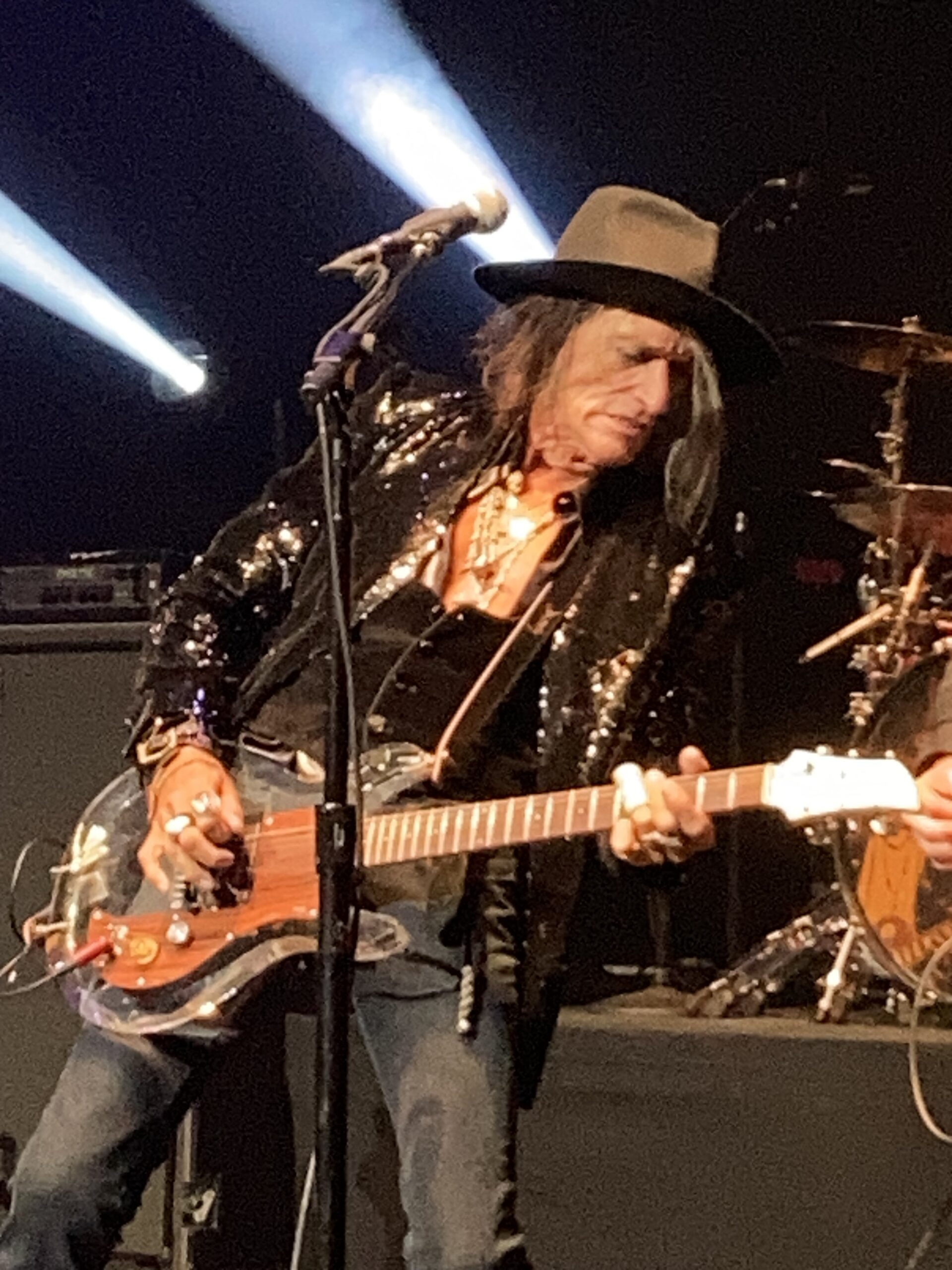
Photo by Applesbees13, licensed under CC BY-SA 4.0
Gear Timeline
There is a guitar riff — the opening of “Walk This Way” — that exists at the intersection of rock and funk and blues in a way that few guitar lines before it had quite managed. It is simultaneously a groove and a statement, rhythmically displaced in exactly the right way, with enough dirt to be hard rock and enough swing to be something else entirely. And the guitar on “Walk This Way” is not a Les Paul through a Marshall, which is what most people assume. It is a double-cutaway Gibson Les Paul Junior — a single P-90 pickup, volume up, tone up — plugged into an Ampeg V-2 tube head that happened to be a house amp at the Record Plant in New York, with the mid-range set to the 800Hz position and boosted to provide what Guitar World described as “proper grit, growl and howl.” Joe Perry switches to a late-1950s Fender Stratocaster for the second solo. He uses a Maestro Fuzz Tone FZ-1S for the outro only. These are the facts of one of the most iconic guitar recordings in rock history, and they are considerably less glamorous than the mythology suggests.
This is the essential Joe Perry paradox: an enormous, arena-filling guitar tone that is produced, on closer inspection, by instruments and amplifiers that are humbler, more eclectic, and more specifically chosen for specific musical purposes than the “Les Paul through Marshall, everything at ten” caricature suggests. He has owned over 600 guitars. He plays as many as 14 different guitars in a single concert, switching after every song. He used an Ampeg V4 on the first Aerosmith album — specifically, he told Guitar World, “because I didn’t want to sound like everybody else, and everyone was using Gibson Les Pauls and Fender Strats with Marshalls.” He carries approximately 200 pedals on tour but is famously reluctant to use the same effects twice in a row. His Klon Centaur is so fundamental to his sound that, per his tech, when they removed it from the pedalboard for a week, he kept saying “something’s wrong, something’s wrong” until they put it back.
Born Anthony Joseph Perry on September 10, 1950, in Lawrence, Massachusetts, Perry co-founded Aerosmith with Steven Tyler in Boston in 1970 and has been the band’s primary lead guitarist for the entirety of its existence (minus two departures in 1979 and 1981 that are collectively referred to as the “toxic twins” era — the band’s commercial nadir and personal catastrophe before the 1987 comeback). He was inducted into the Rock and Roll Hall of Fame with Aerosmith in 2001. He has been cited as an influence by Slash, Zakk Wylde, and dozens of other guitarists. Rolling Stone ranked him among the greatest guitarists of all time. He owns a home studio called The Bone Yard. He has more than 600 guitars. He has the Klon Centaur on the pedalboard at all times, and when you remove it, something is wrong.
Background: From Lawrence, Massachusetts to the World’s Stage
Joe Perry grew up in Lawrence, Massachusetts, and Hopedale, Massachusetts — the New England working-class context that gave Aerosmith its specific character. His musical education began with the British Invasion: Jeff Beck, Yardbirds, Led Zeppelin. “His style comes from his love of the Yardbirds and Led Zeppelin,” as one analysis noted. The British blues-rock tradition — the specific combination of electric blues vocabulary with hard rock volume and aggression — was his foundational influence, absorbed through the late-1960s British bands who had in turn absorbed it from American sources. He formed a band called the Jam Band with bassist Tom Hamilton while still in high school, and this ensemble eventually merged with Steven Tyler, Joey Kramer, and Brad Whitford’s groups to form Aerosmith in 1970.
Aerosmith’s Boston-area club scene development through 1970-1972 was rapid and total: the band lived together in an apartment on Commonwealth Avenue, practiced constantly, developed their specific sound — the Tyler/Perry partnership, the “Toxic Twins” combination of Tyler’s vocal and frontman personality with Perry’s guitar aggression — and built a following that led to their Columbia Records contract in 1972. The debut album (Aerosmith, 1973), Toys in the Attic (1975), and Rocks (1976) established them as one of the major American rock bands of the decade. The Rocks album specifically — “Back in the Saddle,” “Last Child,” “Combination” — is considered by many as the finest hard rock album of the 1970s, and Perry’s guitar throughout is characterized by the specific combination of rhythmic sophistication and physical aggression that distinguishes Aerosmith from every other band of the era.
Perry has been notably specific about one major influence that doesn’t appear in most discussions of Aerosmith’s sound: “Aerosmith would never have developed the sound we did if it weren’t for the original Fleetwood Mac.” The early Fleetwood Mac’s British blues approach, with Peter Green’s specifically melodic and emotional lead guitar work, informed the sensibility behind Perry’s playing in ways that the more obvious Yardbirds/Zeppelin influences don’t fully explain. He was also “listening to the Meters a lot during the writing of Toys in the Attic and Rocks” — the New Orleans funk band’s specific rhythmic approach contributing to the swinging, syncopated rhythmic identity that gives Aerosmith’s best material its specific groove-meets-hard-rock quality.
The 1979 departure — precipitated by the infamous “spilled milk incident” at the Cleveland Stadium Richfield Coliseum, an on-stage confrontation between his wife and Steven Tyler — began a period of solo work (the Joe Perry Project) and personal destruction that he survived while many of his contemporaries didn’t. He returned to Aerosmith in 1984, and the subsequent commercial comeback — Done With Mirrors (1985), the Run-D.M.C. collaboration on “Walk This Way” (1986), Permanent Vacation (1987), Pump (1989) — produced some of the band’s most commercially successful work. His sobriety in the late 1980s (he has been sober since 1988) gave him back the full use of his musical faculties and the physical capacity to play and tour at the level Aerosmith’s career required.
The 1990s and 2000s continued with Get A Grip, Nine Lives, Just Push Play, and Honkin’ on Bobo — albums of varying commercial and critical success but consistent guitar work. The Hollywood Vampires supergroup (with Alice Cooper and Johnny Depp) provided additional performance context from the 2015 period onward. Aerosmith’s Peace Out farewell tour beginning in 2023, which was interrupted by Tyler’s vocal injury, represented what appears to be the band’s conclusion as a major touring entity. Perry remains active, performing and recording with his various projects. He still has more than 600 guitars. The Klon is still on the board.
The Rig: Joe Perry’s Guitars, Amps, and Effects
Guitars
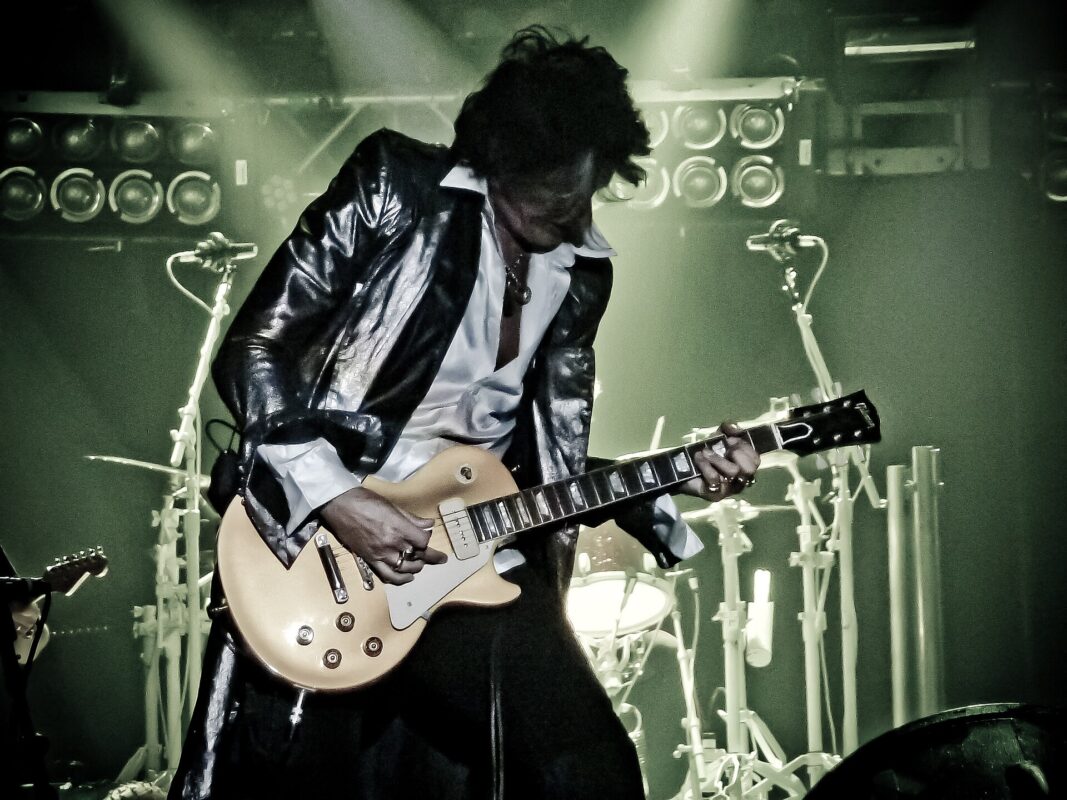
The guitar Joe Perry describes as his “desert island guitar” — the instrument he would keep above all others — is his 1959 Gibson Les Paul Standard, the classic “Burst” configuration with PAF humbuckers and figured maple top. In a typical Perry story, he sold this guitar to Slash during the period of his career when he needed the money, and then bought it back from Slash years later when his circumstances had improved. “I put it through hell,” he has said of the guitar’s history with him — and the story of selling and repurchasing his most important instrument captures something essential about the economic realities of rock musicians’ lives, even major rock musicians, during certain periods.
The 1959 Les Paul Standard is, in the opinion of the guitar world broadly, the finest production electric guitar ever made — and Perry plays a genuine one, not a replica. The figured maple top, mahogany body, mahogany neck, rosewood fretboard, and the specific PAF humbucker pickups that Gibson produced before acquiring the patent from Seth Lover in 1956 give the ’59 Burst its specific tonal character: warm, sustaining, with the harmonic complexity that comes from PAF pickups operating at a relatively low output level and allowing the guitar’s natural resonance to express itself through them without the compression of high-output pickups. This is the guitar he used extensively through the Rocks and Toys in the Attic era, and its sound is woven into some of Aerosmith’s most celebrated recordings. Gibson produced a Joe Perry ’59 Les Paul signature model as part of their Custom Shop Historic series.
For the most recent era of touring, Perry’s primary guitars have been the Gibson Les Paul Axcess signature models — in black and in Gold Rush finish. The Axcess is a modified Les Paul featuring a specially carved body for better upper-fret access (the “Axcess” name refers to the extended treble cutaway and the heel modification that allow the fretting hand to reach the upper frets more easily), a roller nut, and a Strat-style Wilkinson vibrato. In Perry’s specific configuration: single 498T humbucker, simplified controls (volume only, or volume and coil-split tone), minimal electronics. His tech noted: “A lot of guitars lately we’re just keeping volumes and no tones. Like the black Les Paul has one volume and no tone. And that’s kind of his new thing. He wants the amps to do all the work.” This philosophy — stripping the guitar’s controls to their minimum so the amplifier handles all tonal shaping — reflects Perry’s consistent preference for the most direct possible signal path.
Perry has cited a 1968 Gibson Les Paul Goldtop as “the guitar you played on ‘Dream On’ and the Aerosmith album” — his first significant Les Paul, used through the band’s earliest recordings. His own recollection is characteristically uncertain about exact instruments (“I would guess that was it”) but his guitar tech has confirmed the instrument’s historical importance to the early Aerosmith recordings. The 1968 Goldtop predates the reintroduction of the “Standard” designation and represents the transitional period of Les Paul production — with the T-Top humbuckers that began appearing in Gibson guitars around 1966-67, rather than the earlier PAF units.
Before acquiring his ’59 back from Slash, Perry had a 1960 Gibson Les Paul Standard with a low serial number — one of the final “Burst” production years — that he used extensively during the 1990s period when the ’59 was in Slash’s possession. The 1960 Standard differs slightly from the ’59 in neck profile (the ’60s have a slimmer neck than the chunky ’59s, though Perry specifically likes fat necks) and in the specific PAF pickups of that production year. The guitar’s appearance in his touring rig during the decade it substituted for the ’59 makes it one of the more historically significant instruments in his collection despite its second-string status relative to the primary Burst.
For the recording of “Walk This Way” — the Guitar World analysis confirms — Perry used a double-cutaway Gibson Les Paul Junior with a single P-90 pickup for the rhythm track and first solo. The Junior’s P-90 single-coil pickup provided the specific “grit, growl and howl” of the guitar’s contribution to that recording, with the Ampeg V-2’s midrange boost filling out the frequency range. The LP Junior’s simplicity — one pickup, one volume, one tone — suits Perry’s preference for direct signal paths. He has confirmed using the ’61 Les Paul Junior as one of his most-used instruments: “I used most – my ’61 Les Paul Junior.”
One of the most distinctive and most-used guitars in Perry’s contemporary touring arsenal is a left-handed Fender Stratocaster body fitted with a Warmoth neck — he created this “mongrel” guitar himself, starting with a left-handed body (which reverses the cutaway orientation, putting the longer cutaway at the bottom rather than the top) and customizing it with Joe Barden pickups and heavy relic finish from years of touring. He named it the “Admiralcaster.” The reverse body gives it a different balance point and a different visual identity from standard Stratocasters. It is “a guitar that Perry goes back to time and time again because he can always count on it.” He also plays three Fender Strats with left-handed Telecaster-style necks built by Scott Smith at Musikraft.
Perry has embraced guitars built by California luthier Bruce Nelson — reverse S-type (Stratocaster-shaped) instruments with reverse bodies and necks, left-handed MannMade vibratos with right-handed arms, and locking tuners. The black Nelson (“Admiralcaster II”) has Joe Barden pickups; the white Nelson (the first build Nelson completed for Perry) has a trio of Lollar pickups with an onboard anti-hum system; a natural Nelson has Fralin Noiseless Stratocaster pickups. All share a modified treble-side cutaway for easier upper-fret access. The Nelson guitars became central to his touring setup in the 2020s, appearing in the Aerosmith Peace Out tour before Tyler’s injury.
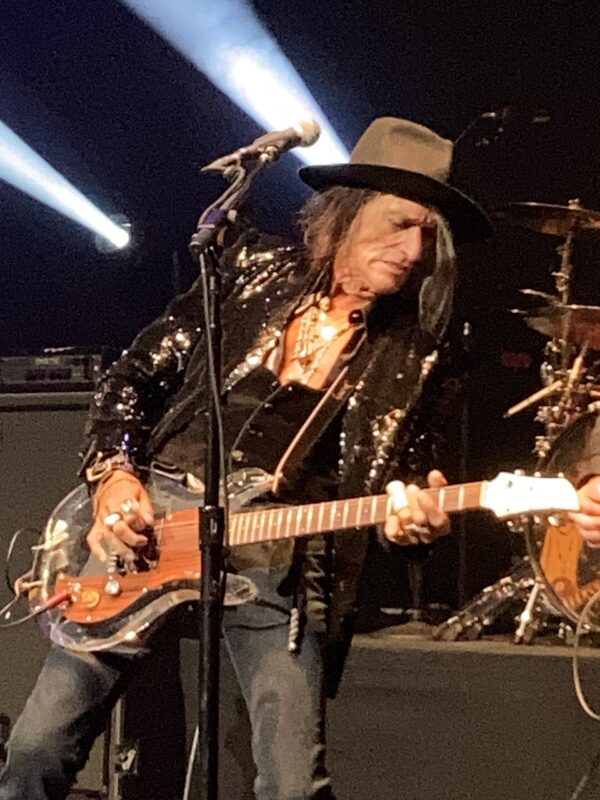
One of the more unusual guitars in Perry’s collection is an Ampeg Dan Armstrong — the transparent acrylic-body guitar of the early 1970s, a visually distinctive instrument with a single sliding pickup. Perry uses this in open-A tuning for Keith Richards-style five-string open-A chord work, with a bass string on the bottom for additional low-end growl. He has several of these, all identical to each other, used on songs like “Draw the Line.” The custom pickups he had installed changed its character from the stock Armstrong configuration while maintaining the acrylic body’s specific bright, transparent tonal quality.
The Echopark Ghetto Bird — a boutique guitar built by Echopark Guitars in Los Angeles — appears in Perry’s more recent touring rigs, loaded with a P-90 and a humbucker configuration with volume and tone only. His tech describes it: “The Ghetto Bird has two pickups, a P90, and a Humbucker. The pickups are controlled by one volume and one tone knob, which is something Joe Perry also loves. It doesn’t have all the dials and functions that many guitars have. It’s simple, straightforward, and lets the amps do their thing.” This preference for simplified controls — eliminating anything that puts a variable between the pickup’s raw signal and the amplifier input — is one of the most consistent threads in Perry’s gear philosophy across all eras of his career.
Among Perry’s more unusual instruments is a B.C. Rich Bich 10-string — a guitar with ten strings where the D, G, B, and high E strings are doubled in unison (rather than octave, as on a twelve-string). This gives the instrument a chorus-like, dense harmonic texture without the full octave-shift of twelve-string playing. Perry used the Bich during Aerosmith’s commercial peak, and it became one of the more recognizable visual elements of their mid-career stage shows.
For “Back in the Saddle” — the Rocks track — Perry plays what is technically a 6-string bass but treats as a standard guitar for lead work. The Music Man Silhouette 6-string bass, tuned a whole step down to G and strung with heavy .045-.105 strings, produces a specific thick, resonant tone that sits between a baritone guitar and a bass guitar. The fact that Perry plays lead lines on a six-string bass without the audience necessarily realizing it is characteristically eccentric and characteristically effective.
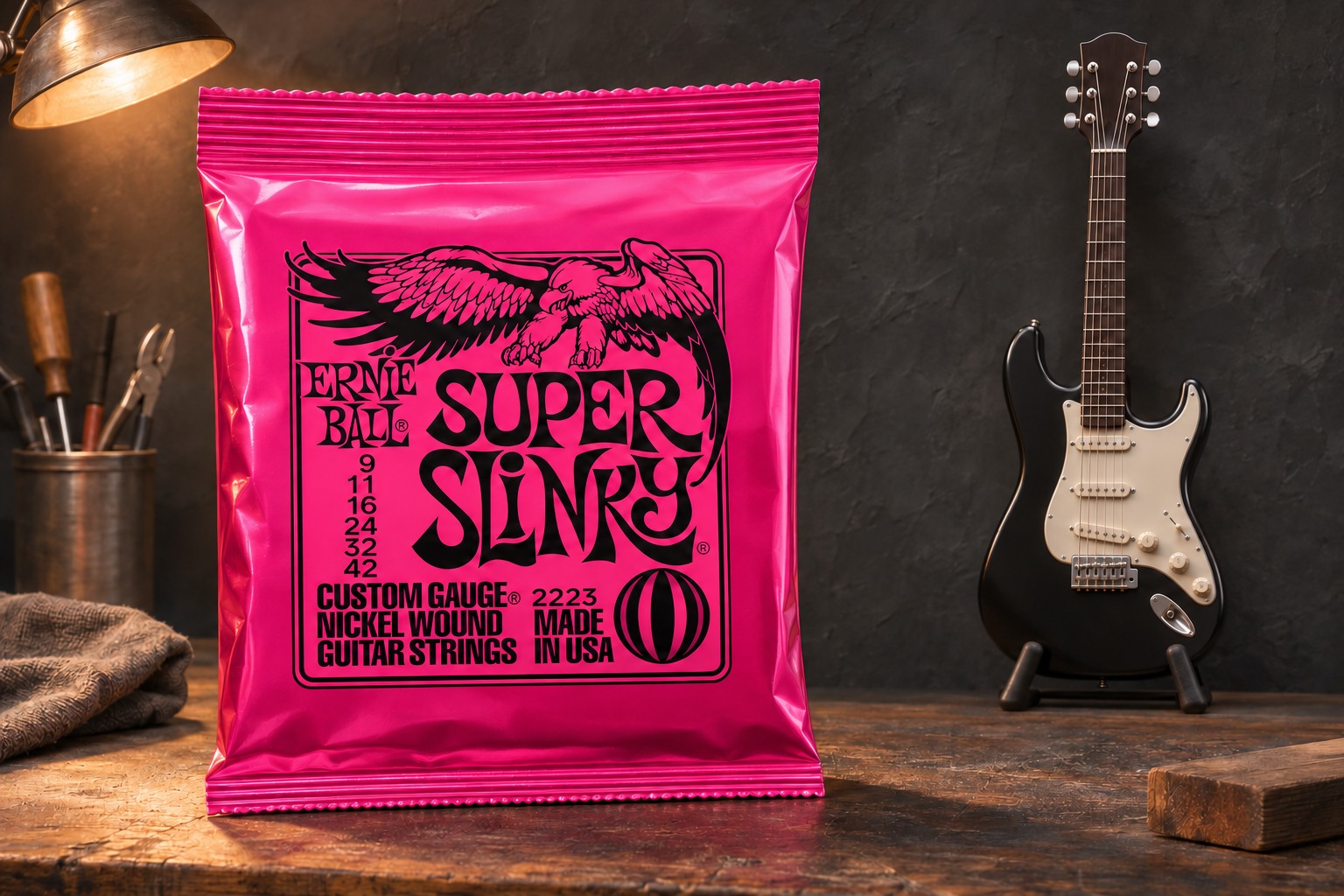
Perry uses Ernie Ball Super Slinky .009-.042 gauge strings — confirmed in the detailed “Walk This Way” recording analysis from Guitar World, and consistent with his preference for lighter strings that allow the bending range his blues-influenced lead work requires.
Amps
The choice that defined the early Aerosmith guitar tone was the Ampeg V4 — and the decision was deliberate anti-conformism. “For the first Aerosmith album, I used an Ampeg V4. I probably used that for the first couple of tours, too. I didn’t want to sound like everybody else, and everyone was using Gibson Les Pauls and Fender Strats with Marshalls.” The Ampeg V4 was primarily a bass amplifier — 100 watts, solid-state rectifier, EL34 output tubes — that produced a specific character when driven by guitar: warmer in the low-mids than Marshall, with a different compression character and less of the upper-midrange bite that defined the Marshall sound. The V2 variant (60 watts, 7027A power tubes, Baxandall EQ with active midrange) was the specific amp used on “Walk This Way” — a house amp at the Record Plant that Perry encountered in the studio and used for the iconic recording.
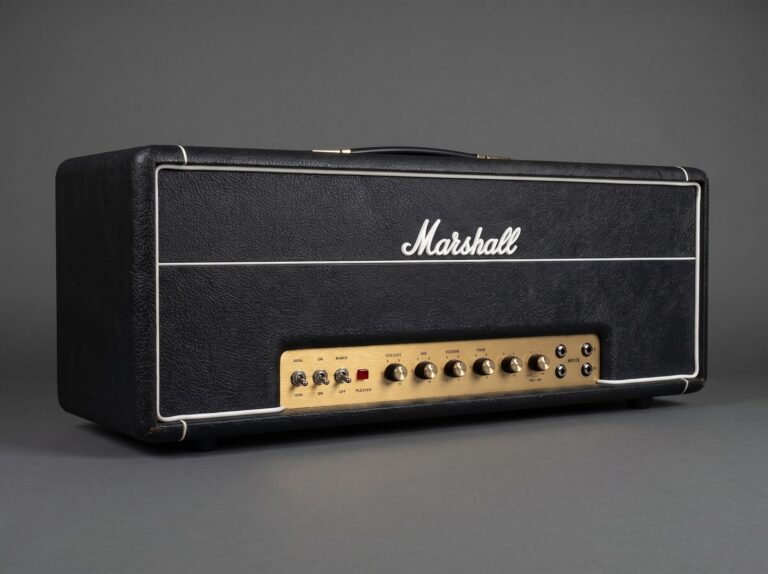
After the early Ampeg period, Marshall amplifiers — specifically the Marshall Major 200-watt heads — became the primary stage amplification for Perry through the band’s commercial peak. Most of his Marshall amps are Majors 200W — some new, some vintage, and some Marshall Hendrix reissues — with approximately 20 feet of amplification on stage at times. Two vintage 1959 Marshall Plexi heads (one from 1969 with KT-66 tubes, one from 1970 with EL-34s) have been primary touring amps; before every show, his tech listens to both to determine which is primary and which is backup. The Marshall Major 200-watt uses KT88 output tubes rather than the standard EL34s or 6L6s — producing a different power section character from the standard Marshall, with more headroom and a specific compression quality at its operating limits. This is the same amp favored by Mick Ronson and Ritchie Blackmore for the same qualities.
“In the late ’70s, the longest-tenured amps we had for touring were some of the first Music Mans,” Perry confirmed in his decade-by-decade amp guide for Guitar World. The Music Man amps — the same solid-state/tube hybrid that Johnny Winter favored — provided reliable, consistent amplification for the long touring schedules of the late-1970s Aerosmith period. The Music Man’s specific clean-to-overdrive character differed from the Marshall’s more aggressive response and suited the specific production requirements of touring bands in that era.
In the most recent Aerosmith touring documentation, Friedman amplifiers — specifically the Dirty Shirley head — appear as Perry’s primary amplification. “This is a Dave Friedman amp, Dave Friedman from Rack Systems. This is a Dirty Shirley head. This head is pushing a 15 cabinet. It sounds so good — 5881s as well,” his tech confirmed. The Friedman amps flank a center column of Supro and Friedman cabs, surrounded by Marshall 4×12 pinstripe cabinets in the “monolithic wall of amplifiers” documented by Guitar.com. The Dirty Shirley’s specific character — a low-wattage, touch-sensitive, bluesy overdrive amp — provides the warm, responsive saturation Perry increasingly prefers over high-gain distortion.
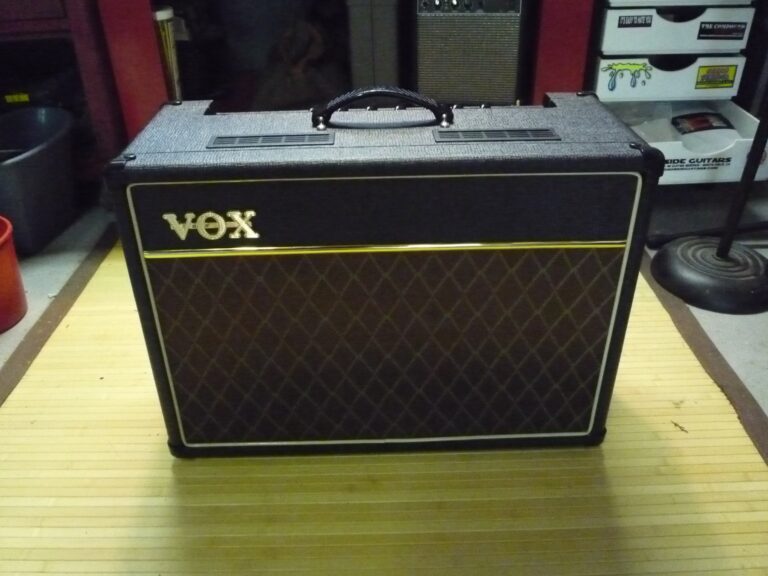
“The other amp that I really like a lot, either new or old, is the AC15. That’s a really nice amp,” Perry has said. The Vox AC15’s EL84-driven 15 watts and the classic Vox EL84 character provide a distinctly different tonal option from the Marshall Major’s aggressive power — cleaner at moderate volumes, with a specific chimey, compressed quality suited to the cleaner material in his repertoire. His willingness to reach for an AC15 alongside a 200-watt Marshall wall is characteristic of the eclectic, song-by-song gear philosophy that defines his approach.
During Aerosmith’s early-1980s comeback period, before the full commercial return of Permanent Vacation, both Perry and Brad Whitford were using New England-built Bedrock amplifiers — a boutique American manufacturer whose specific New England origins gave them a regional connection to the band’s Boston roots. The Bedrock period is one of the less-documented chapters of Perry’s amp history but represents the transitional phase between the Marshall-dominated classic period and the more eclectic post-sobriety approach.
Effects
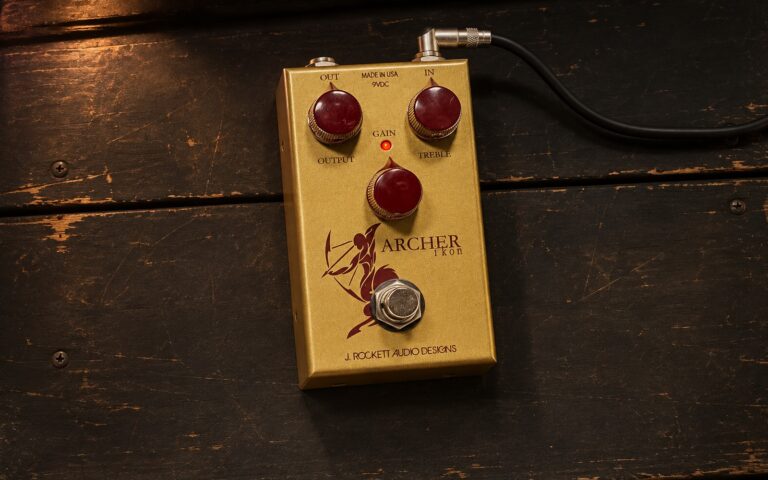
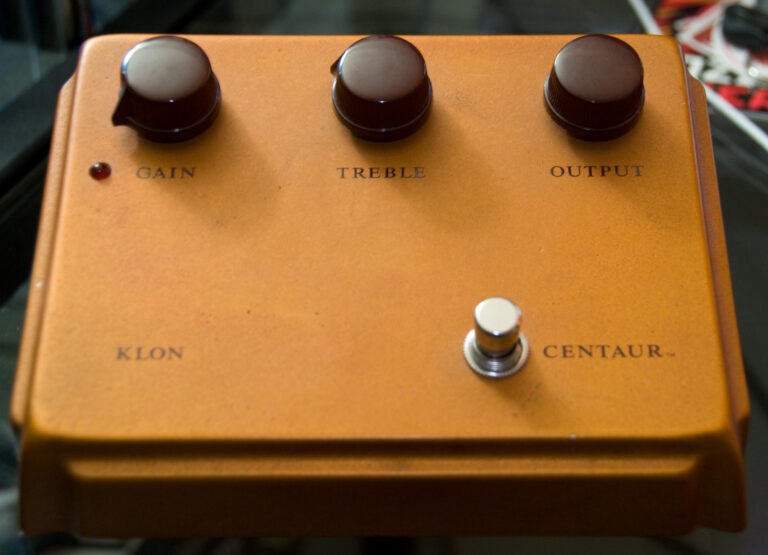
The Klon Centaur is the single most essential effects pedal in Joe Perry’s contemporary signal chain. His tech’s account is definitive: “Everybody needs a Klon — if you can find and afford one! I wish I had the money and the knowledge when those things came out and bought all of them I could find. We’ve got three of those. I took them out of the pedalboard for about a week, and every day he kept saying ‘something’s wrong, something’s wrong!’ Then once we went back to the Klon he goes ‘there you go, that’s what I was missing!'” The Klon Centaur’s transparent overdrive character — described as “adding more of the guitar itself” rather than imposing its own strong tonal character — is the foundation of Perry’s lead tone. Running the Klon as a clean boost into an already-working tube amplifier pushes the amp’s input stage with a slightly enhanced signal, adding presence and sustain without changing the fundamental tonal character.
The Maestro Fuzz Tone — the pedal that produced the fuzz on the Rolling Stones’ “Satisfaction” and that is documented by Guitar World as the specific pedal on the “Walk This Way” outro solo — is one of the earliest fuzz pedals ever made. Perry used the FZ-1S at Fuzz 1 setting with Volume at 10, Balance at 10, and Sustain at 8, for the outro solo only. The Maestro’s specific aggressive, asymmetric fuzz character — harder and more primitive than later silicon or germanium fuzz designs — contributed the specific saturated quality of that brief passage. That Perry used it for a single section of a single song is characteristically specific about choosing the exactly right tool for the exactly right moment.
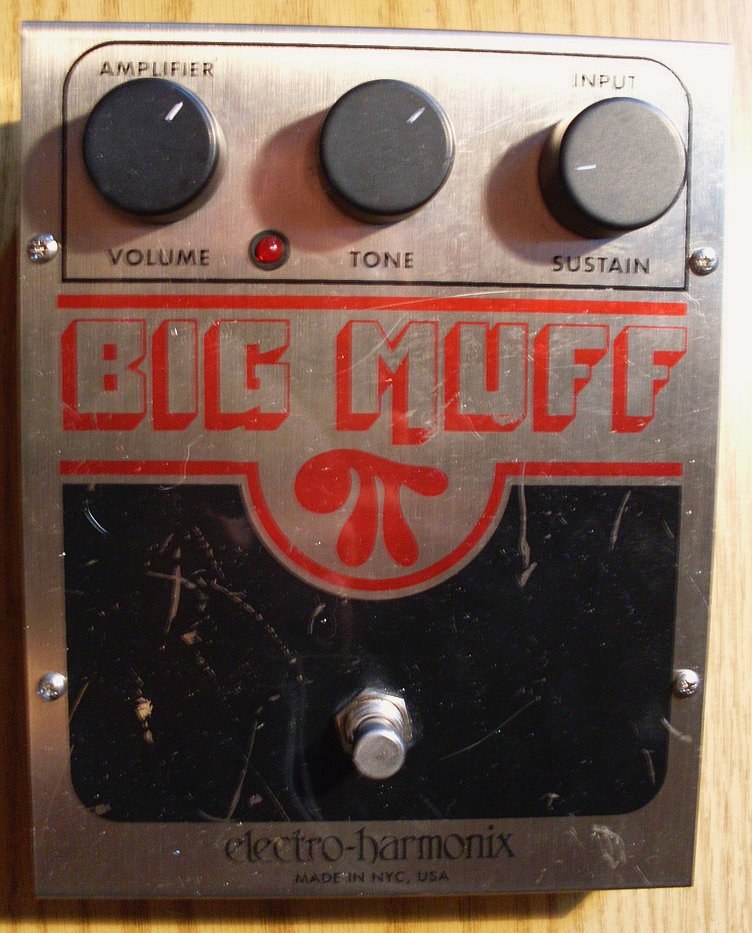
The EHX Big Muff Pi fuzz pedal is more broadly associated with Perry’s tone than the Maestro — the Big Muff’s specific sustaining, violin-like distortion character appearing throughout Aerosmith’s classic recordings. The Big Muff provides more sustain and smoother distortion than the harder-edged Maestro, making it suitable for sustained lead lines rather than the aggressive punchy distortion of “Walk This Way.” Perry has used various Big Muff versions across his career.
Joe Perry is specifically associated with TC Electronic products in his contemporary rig. His tech’s comments confirm TC Electronic presence in his setup, and Guitar Lobby notes that “Joe Perry likes his TC Electronic pedals” as a general observation about his contemporary preferences. TC’s specific delay, reverb, and modulation units provide the digital effects options that complement his predominantly analog and tube-based signal chain.
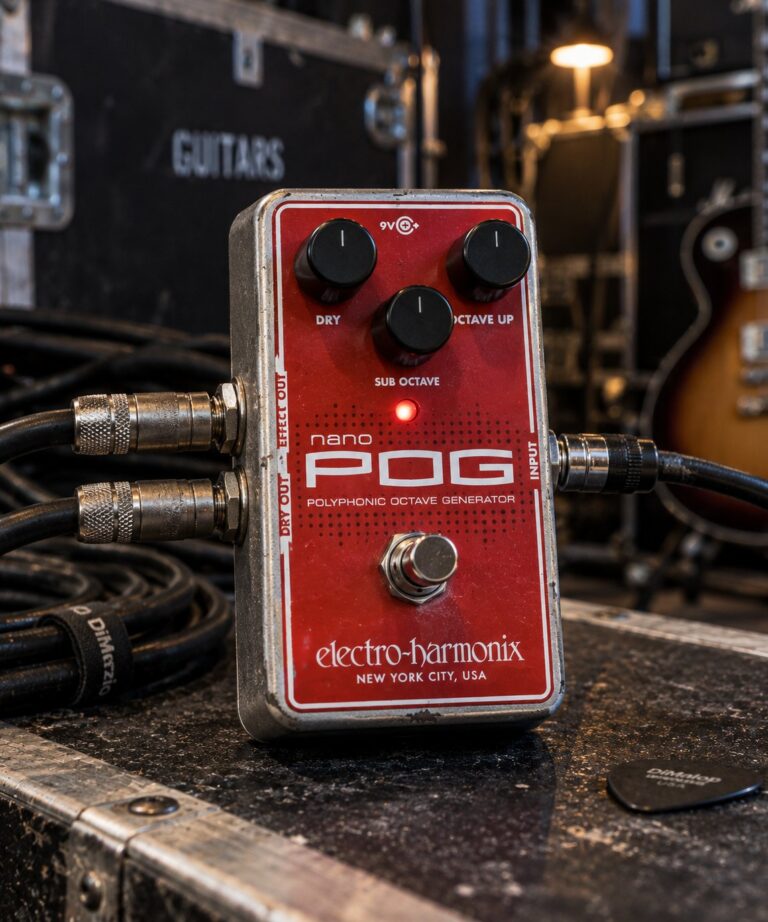
The EHX Micro POG (Polyphonic Octave Generator) appears in Perry’s more recent pedalboard documentation, used for specific applications where an octave-up or octave-down doubling adds tonal variety to specific riffs or leads. The Micro POG’s polyphonic processing allows chords and single notes alike to be pitch-shifted cleanly.
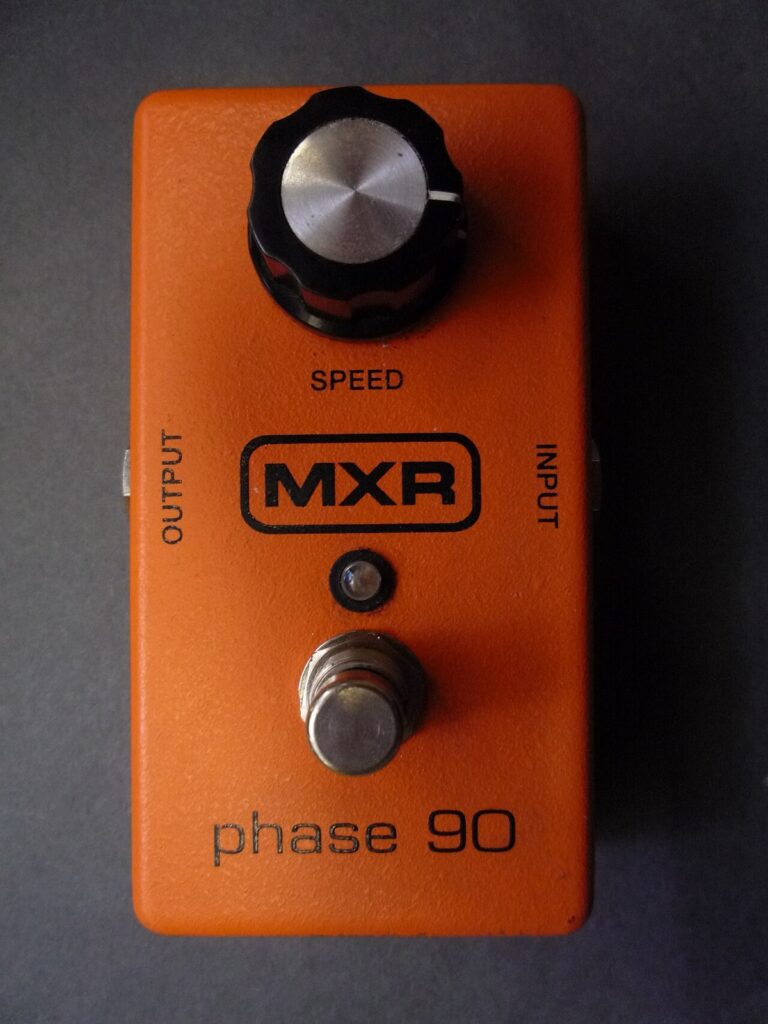
An MXR Phase 90 appears in Perry’s documented effects, providing the sweeping phaser modulation that appears in specific Aerosmith recordings. The Phase 90’s simple, musical sweep character is consistent with Perry’s preference for effects that add specific tonal color without requiring complex adjustment.
Perry carries approximately 200 pedals on tour but deploys them selectively, often varying which pedals appear active from night to night. “Joe Perry doesn’t like to use the same effects every night. He likes to feel inspired and go wherever the inspiration takes him.” This approach — carrying the tools but choosing based on inspiration rather than habit — is unusual among major rock guitarists and reflects his fundamental belief that the equipment should serve the music rather than the music serving the equipment.
Playing Style & Tone Philosophy
Joe Perry’s playing style sits in a specific and underappreciated position in the history of American rock guitar — less technically virtuosic than many of his contemporaries (he himself has acknowledged this with characteristic disarming honesty), but more rhythmically sophisticated and more compositionally intelligent than the “lead guitarist” category traditionally implies. His rhythm guitar work in Aerosmith — the specific syncopated patterns, the seventh and ninth chord voicings that give songs like “Last Child” and “Sweet Emotion” their funk-meets-hard-rock character — is his most distinctive contribution to the guitar tradition and the element of his playing that influenced subsequent guitarists most specifically.
He uses “a very diverse array of 7th, 9th, Sus chords and double stops, along with all the other normal rock inversions and power chords. His use of syncopation and swinging 16th note rhythms are a huge trademark of the Aerosmith sound.” This rhythmic sophistication — the ability to play an eighth-note groove that swings rather than plods — comes from the funk influences he absorbed from the Meters and from James Brown’s band, applied to hard rock guitar in a way that most hard rock guitarists of his era weren’t doing. Where other guitarists were playing straight power chord rhythms, Perry was playing rhythm patterns that breathed and swung.
In most Aerosmith songs, Brad Whitford holds down the bottom end with root-fifth power chords while Perry outlines the upper chord tones or plays funky stabs and licks in the treble register. The two-guitar architecture — Perry’s upper-register funk-influenced parts against Whitford’s lower-register rock foundation — is what gives Aerosmith’s rhythm guitar its specific three-dimensional quality. Perry plays less in this context, not more: he leaves the root-fifth foundation to Whitford and plays the chord extensions and melodic stabs that define the harmonic identity of each song.
His tone philosophy has evolved toward increasing clarity and reduced complexity: “These days Joe’s tone has cleaned up considerably. Joe relies a lot less on distortion or fuzz pedals and going for a much more transparent overdriven sound.” The Klon as transparent boost, the amp doing the primary saturation work, the guitar controls simplified to remove variables — this is the mature expression of a preference for directness that has always been present in his approach. He wants to hear the guitar. He wants the amp to respond to the guitar. He doesn’t want the effects to be the tone.
How to Sound Like Joe Perry
The Walk This Way setup — the most specifically documented of Perry’s iconic tones — is historically accessible: a Gibson Les Paul Junior or similar P-90-equipped single-pickup guitar into any medium-gain tube amp with the midrange forward. For the contemporary touring tone: Les Paul Axcess or similar humbucker guitar into a touch-sensitive, moderately gained tube amp (Vox AC15, Friedman Dirty Shirley) with a Klon Centaur (or clone) as a clean boost.
Guitar: A Gibson Les Paul — Standard, Axcess, or Junior — depending on the era and song. The Les Paul Junior’s P-90 for “Walk This Way”-era tones; the Les Paul Standard with PAF humbuckers for the classic lead sound; the Axcess for contemporary low-weight, high-playability performance.
Amp: Early era: Ampeg V4 or V2 for the most authentic early Aerosmith sound. Mid-career: Marshall 100-watt JMP or Major for the arena period. Contemporary: Friedman Dirty Shirley or Vox AC15 for the cleaner, more transparent current approach.
Amp Settings (Marshall JMP or similar hot tube head):
| Control | Setting (0–10) | Notes |
|---|---|---|
| Volume (No Master) | 6–8 | Working — natural tube saturation, not maximum distortion |
| Bass | 5–6 | Present — Perry’s tone has weight but not muddy bottom |
| Mid | 7–8 | Forward — the grunt of the Les Paul lives in the mids |
| Treble | 6–7 | Clear — enough sparkle for articulation |
| Presence | 5–7 | Adds note definition in the mix |
“Walk This Way” Recipe: Gibson Les Paul Junior (single P-90) or similar P-90 guitar → Ampeg V2 or V4 equivalent (medium-gain, tube, with active mid boost set to 800Hz) → Marshall 4×12. No effects on the rhythm track or first solo. Maestro Fuzz for outro solo only.
Rhythm approach: Study Aerosmith’s rhythm guitar parts specifically for their syncopation. Perry consistently displaces chord attacks off the beat, creating a push-pull feel that is the foundation of “Sweet Emotion,” “Walk This Way,” and most of the great Aerosmith grooves. This rhythmic sophistication is more important than any gear choice — the Aerosmith sound is in the swung 16th notes, not in the equipment.
Influence & Legacy
Joe Perry’s influence on rock guitar operates through two specific channels: the rhythmic sophistication of his chord work, which influenced subsequent rock guitarists who were trying to understand why Aerosmith grooves felt the way they felt, and the tonal approach — the specific combination of Les Paul and mid-forward tube amplification — that defined American hard rock guitar for the 1970s and through the comeback period of the 1980s and 1990s.
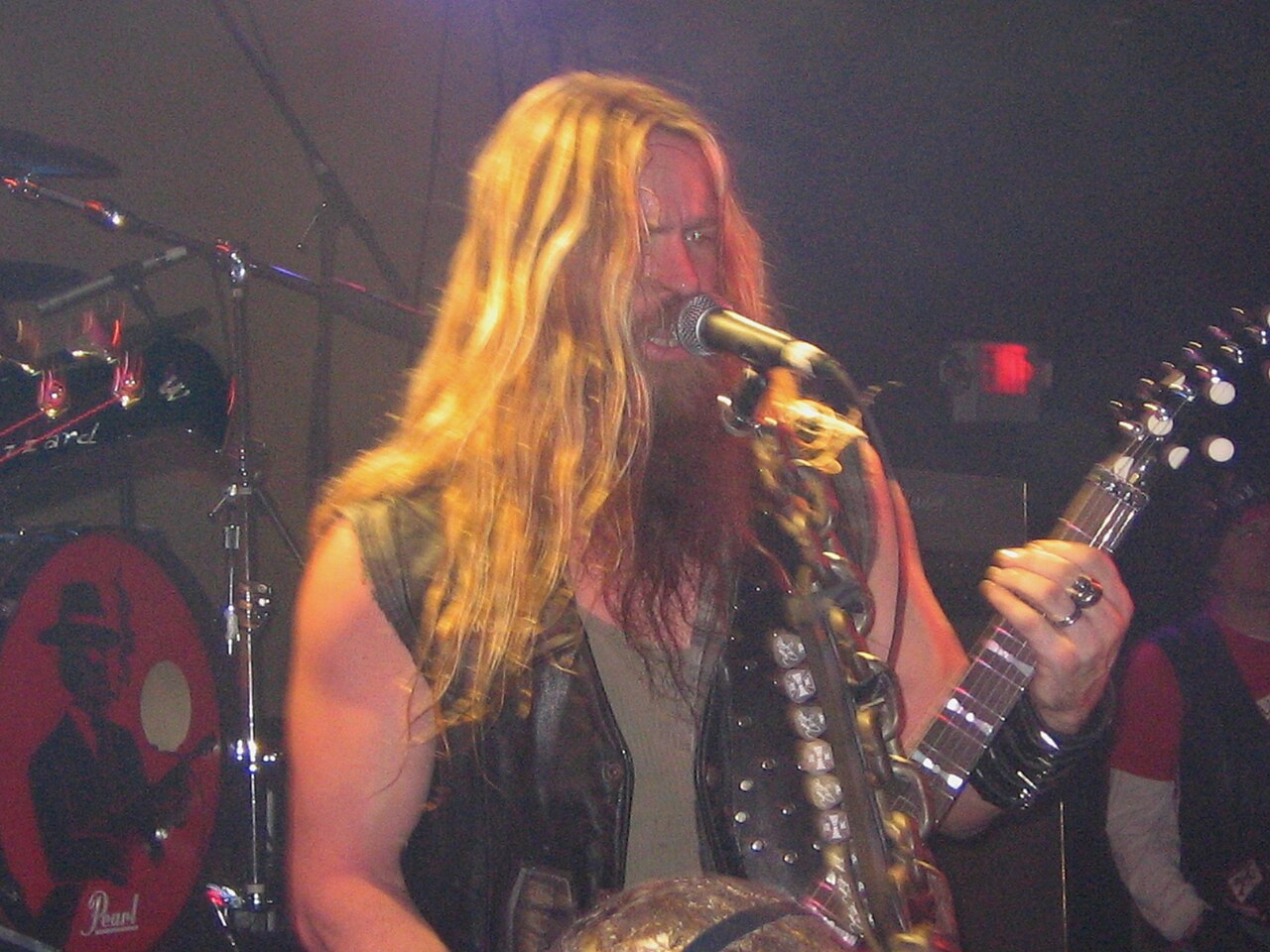
The players who cite him most directly — Slash, Zakk Wylde, and the generation of hard rock guitarists who came up in the late 1980s and 1990s — absorbed the Les Paul identity and the specific aggressive-yet-melodic approach to lead playing that Perry represented. The rhythmic dimension of his influence is less often cited but equally significant: the funk-inflected, syncopated approach to hard rock guitar that he developed (partly under the Meters’ influence) influenced the groove-oriented hard rock of the late 1980s and 1990s in ways that are more diffuse but no less real.
For context on where Perry fits among his contemporaries in the American hard rock tradition, the comparison with Slash’s similarly Les Paul-centered approach is the most direct — Slash citing Perry as an influence, both players building their identities on the Les Paul’s specific warmth and sustain, each arriving at a distinct personal style from the same fundamental equipment. Perry’s is grungier and more rhythmically complex; Slash’s is more melodically elaborate. Both are essential.
The comparison with Stevie Ray Vaughan’s contemporaneous approach to American rock guitar illuminates a different axis — two major American guitarists of the same commercial era whose styles are utterly different (SRV from Texas blues, Perry from British-influenced hard rock with funk inflections) but who both prioritized tonal authenticity and physical commitment over technical complexity. Both played with their whole body. Both are instantly recognizable from the first note.
And for understanding how Perry’s specific rhythm guitar approach connects to the broader tradition of American guitar that values groove over speed, the comparison with Nile Rodgers’ rhythm guitar mastery — from a completely different genre but with the same fundamental understanding that the most powerful rhythm guitar is the one that serves the groove — shows that Perry’s specific attention to syncopation and swing is not just a rock guitar trait but an expression of a broader American guitar tradition rooted in the relationship between rhythm and feel.
Joe Perry is seventy-four years old in 2026. The Bone Yard home studio is still operational. The 600 guitars are still in some number of cases. The Klon Centaur is still on the pedalboard because, as his tech has confirmed, removing it for even a week causes noticeable musical distress. The ’59 Les Paul — sold to Slash, bought back, put through hell — is presumably in a very good case, because it is the desert island guitar, and you treat the desert island guitar accordingly. The music it made, across five decades of Aerosmith, is in the permanent record. “Walk This Way.” “Dream On.” “Back in the Saddle.” “Sweet Emotion.” “Janie’s Got a Gun.” “Cryin’.” The list is long and the guitar is on all of it, doing exactly what the guitar is supposed to do: making the music land in the chest, making the body move, making the room feel like something is happening that wouldn’t have happened without it.
Frequently Asked Questions: Joe Perry Guitars & Gear
What guitar does Joe Perry play?
Joe Perry owns over 600 guitars and plays as many as 14 different instruments in a single concert. His primary and most beloved guitar is a 1959 Gibson Les Paul Standard (“Burst”) which he describes as his “desert island guitar” — he sold it to Slash during a difficult period in the 1990s and later bought it back. His current touring primary guitars include the Gibson Les Paul Axcess signature models (in black and Gold Rush finishes), with simplified controls (single volume, no tone) and Strat-style Wilkinson vibrato. He also plays reverse S-type guitars by California luthier Bruce Nelson, an Echopark Ghetto Bird, a left-handed “mongrel” Fender Stratocaster he built himself (the “Admiralcaster”), an Ampeg Dan Armstrong Plexi in open-A tuning, and a B.C. Rich Bich 10-string. The “Walk This Way” rhythm track was recorded on a Gibson Les Paul Junior (single P-90) through an Ampeg V-2.
What amp does Joe Perry use?
Joe Perry’s amp history spans multiple decades and multiple preferred configurations. Early career (1973-1975): Ampeg V4 and V2 — he chose the Ampeg specifically to avoid the standard Les Paul/Fender/Marshall combination everyone else used. Mid-career: Marshall 200-watt Major heads (the same KT88-powered heads favored by Mick Ronson and Ritchie Blackmore), with approximately 20 feet of amplification on stage. Late 1970s: Music Man amps for touring reliability. Contemporary: Friedman Dirty Shirley heads alongside Vox AC15 for cleaner options. He has confirmed a consistent appreciation for Marshall amps across all eras: “You can put Marshall down for every decade.” The “Walk This Way” Ampeg V-2 at the Record Plant was a studio house amp encountered by chance.
What is the Klon Centaur and why does Joe Perry need it?
The Klon Centaur Professional Overdrive was a boutique guitar effects pedal produced in limited quantities by Bill Finnegan in the 1990s and early 2000s, now a highly collectible vintage pedal commanding several thousand dollars on the secondhand market. It is known for its transparent, “clean boost” character — enhancing the guitar signal’s presence and sustain without imposing strong tonal coloration. Joe Perry’s relationship with it was confirmed by his guitar tech: “We’ve got three of those. I took them out of the pedalboard for about a week, and every day he kept saying ‘something’s wrong, something’s wrong!’ Then once we went back to the Klon he goes ‘there you go, that’s what I was missing!'” The Klon operates as an always-on clean boost in Perry’s signal chain, pushing the amplifier’s input for additional presence and harmonic complexity without identifiable effect character.
What guitar was used on “Walk This Way”?
The guitar tone on “Walk This Way” (1975) was created using multiple instruments for different parts. The main rhythm track and first solo used a double-cutaway Gibson Les Paul Junior (single P-90 pickup), run through an Ampeg V-2 head with the midrange set to the 800Hz position and boosted, into a Marshall 4×12 cabinet. For the second solo, Perry switched to a late-1950s Fender Stratocaster (rosewood fretboard), using the bridge pickup. For the outro solo only, he used the Maestro Fuzz Tone FZ-1S fuzz pedal (set to Fuzz 1, Volume 10, Balance 10, Sustain 8). The Ampeg V-2 was a house amp at the Record Plant studio in New York, not a guitar Perry specifically owned at the time.
How did Joe Perry influence subsequent rock guitarists?
Joe Perry’s influence on rock guitar operates through two primary channels. The tonal channel: his identification with the Gibson Les Paul Standard as the defining instrument of American hard rock — both the “Burst” vintage instruments and the signature models — influenced a generation of hard rock players including Slash (who Perry’s guitar went to temporarily) and Zakk Wylde. The rhythmic channel: his funk-influenced, syncopated approach to rock guitar rhythm — the swinging 16th notes, the seventh and ninth chord voicings, the characteristic displacement of chord attacks that gives Aerosmith songs their groove — was rooted in his listening to the Meters and James Brown and represented an unusual application of funk rhythmic logic to hard rock guitar. He is consistently cited as an influence by the leading guitarists of the hard rock generation that followed his peak years.
Why did Joe Perry use an Ampeg V4 instead of Marshall on the first Aerosmith album?
Joe Perry chose the Ampeg V4 for the first Aerosmith album (1973) specifically to avoid sounding like everyone else. In a Guitar World decade-by-decade amp guide, he explained: “For the first Aerosmith album, I used an Ampeg V4. I probably used that for the first couple of tours, too. I didn’t want to sound like everybody else, and everyone was using Gibson Les Pauls and Fender Strats with Marshalls, so I used the Ampeg because you were pretty much in the same range, but it sounded a little different.” The Ampeg V4 was primarily a bass amplifier repurposed for guitar, producing a warmer, more mid-focused character than the Marshall’s aggressive upper-midrange response. This same independent thinking about gear — using what serves the music rather than what’s conventional — has characterized his approach to amplification across his entire career.
Is Joe Perry in the Rock and Roll Hall of Fame?
Yes. Joe Perry was inducted into the Rock and Roll Hall of Fame in 2001 as a member of Aerosmith. The band was recognized for their extraordinary commercial success and cultural influence across four decades of American rock — from the 1973 debut through the 1987 commercial comeback and the subsequent string of major-selling albums. Perry’s specific contributions as lead guitarist, songwriter, and co-founder of the Aerosmith sound were central to the induction. He was also a founding member of the Hollywood Vampires supergroup with Alice Cooper and Johnny Depp, which received separate critical recognition. Rolling Stone has consistently ranked him among the greatest guitarists in rock history.
Image credits
- String Gauge: GuitarGangsters AI-generated reference illustration, not a photograph.
- Zakk Wylde: Joanna Corwin, Wikimedia Commons, CC BY-SA 3.0.
- Top image: by Applesbees13, CC BY-SA 4.0.
- Joe Perry: photo by japrea, via Wikimedia Commons, CC BY-SA 2.0.
- Joe Perry: photo by Applesbees13, via Wikimedia Commons, CC BY-SA 4.0.
- Vox AC15: Roadside Guitars, Wikimedia Commons, CC BY-SA 2.0.
- Klon Centaur: ArtBrom, Flickr, CC BY-SA 2.0.
- Electro-Harmonix Big Muff Pi: Roadside Guitars, Flickr, CC BY-SA 2.0.
- Electro-Harmonix Nano POG: GuitarGangsters AI-generated reference illustration, not a photograph.
- MXR Phase 90: Roadside Guitars, Wikimedia Commons, CC BY-SA 2.0.
- Marshall Major 200W: GuitarGangsters AI-generated reference illustration, not a photograph.