Mark Arm Guitars & Gear: Mudhoney’s Gretsch Duo Jet, Super Fuzz and Fender Super Six Rig
Mark Arm is Mudhoney’s singer first, and he also plays guitar alongside Steve Turner. That makes his gear story short and unusually specific. He has a favourite Gretsch, a big Fender combo he does not have to think about, a handful of fuzzes and a string gauge he changed after reading about another guitarist. The rest of what people call the Mudhoney guitar sound is largely Turner’s rig, and we keep the two apart here. This guide sets out what Premier Guitar, Vintage Guitar, Guitar Player and a few interviews say about Mark Arm’s guitars and gear, who said it, and where the accounts do not line up.
What Is Documented and What Is Not
The best single source is Premier Guitar’s rig rundown with both guitarists, by Chris Kies, dated December 20, 2023. Arm goes through his own guitars, amp, pedals and strings in it. An earlier Premier Guitar feature by Shawn Hammond (November 1, 2018) adds pedal and string detail, but its gear sidebars do not name a player, so we use them only where the text itself ties an item to Arm. Vintage Guitar’s September 2023 profile of Turner by Dennis Pernu and a 1992 Guitar Player interview with Turner by James Rotondi cover the other half of the band. A 1999 University of Washington Daily interview with Arm and the notes for a Life of the Record episode transcript on the Superfuzz Bigmuff EP (the page is undated) fill in the early years.
Gaps are real. Arm gives no amp details for the early records in anything we read, and we found no maker-confirmed spec sheet for his Gretsch guitars, because the Gretsch product pages did not open for us. Where a point rests on one article, we say so. Everything below is an account of what was reported as of December 2023 unless a date says otherwise.
The Rig: Mark Arm’s Guitars, Amps and Effects
Guitars
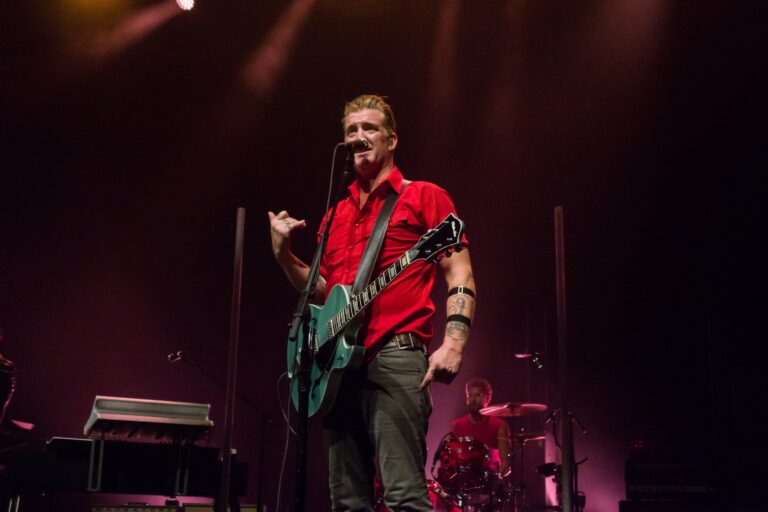
In the 2023 rig rundown this black, chambered-body Duo Jet reissue is the guitar Premier Guitar presents as Arm’s preferred one. The article says he finds the chambered body lighter and more resonant, and it describes the guitar as the one that gets run through three different fuzzes. Our Gretsch G6128T Duo Jet guide covers the model family and its George Harrison connection. We could not confirm the Vintage Select specification from Gretsch, whose product pages did not open for us.
The same rundown shows a Silver Jet. According to the article, Arm bought it because he wanted to look like Billy Zoom. The page lists it as a 1991 reissue, which sits oddly beside the Vintage Select name, so we treat the year as the article’s listing rather than as a confirmed fact. The 2018 Premier Guitar feature also lists a G6129T-59 Silver Jet in an unattributed sidebar.
In the University of Washington Daily interview, dated February 11, 1999, the writer calls a shiny silver Gretsch reissue Arm’s favourite guitar. The article says he bought it second-hand from American Music, the shop, after waiting a year for it to return to the shelf, and that it had been a Soundgarden member’s reject. The article, as we read it, gives no model name. It may be the same guitar family as the Silver Jet above, but no source we opened says so, and we do not connect them.
In the Life of the Record episode notes, Arm says he bought a baby blue Hagstrom for $80 from Tom Mick of Feast. He also says he played in standard tuning on the early recordings because he did not yet know open tunings. Hagstroms were shared between the two guitarists. In 1992, Turner told Guitar Player that he and Arm have several between them. The 2023 rundown puts a 1960s Hagstrom III with a Filter’Tron neck pickup in Turner’s hands, kept in open A for slide, so we do not list that particular guitar as Arm’s.
Amps
Arm’s amp in the rundown is a 1970s Fender Super Six Reverb, a 100-watt combo with six 10-inch speakers, four 6L6 power tubes and five 12AX7 preamp tubes, according to the article. The piece says he has not had to worry about amps on tour since he bought it, years ago. The 2018 feature lists a 1970s Super Six Reverb in an unattributed sidebar, and it may be the same amp, though the article does not say so. Turner, by contrast, plays a Fender Hot Rod DeVille, discussed below.
Effects
Arm’s Super Fuzz clone in the 2023 rundown, where the article says his tone burns with it. Our fuzz pedal origins explainer covers how it differs from the Maestro, Tone Bender and Fuzz Face circuits.
Arm uses this one in a gray box. In 2023 he says the original plastic units were cheap and broke easily, so a friend moves the circuit into a metal enclosure. The 2018 Premier Guitar feature quotes him saying the same thing in other words: whenever he found one in a shop he bought it and had a friend rehouse it. The same feature has him describing his setup as minimal, and it quotes him on a shelf full of pedals he never uses.
An octave, distortion and booster pedal on his board in the rundown.
The rundown lists a Catalinbread Epoch Boost, Belle Epoch, Valcoder and Sabbra Cadabra on his board. The article does not describe how often each is used.
A strobe tuner, listed in the rundown as a utility item.
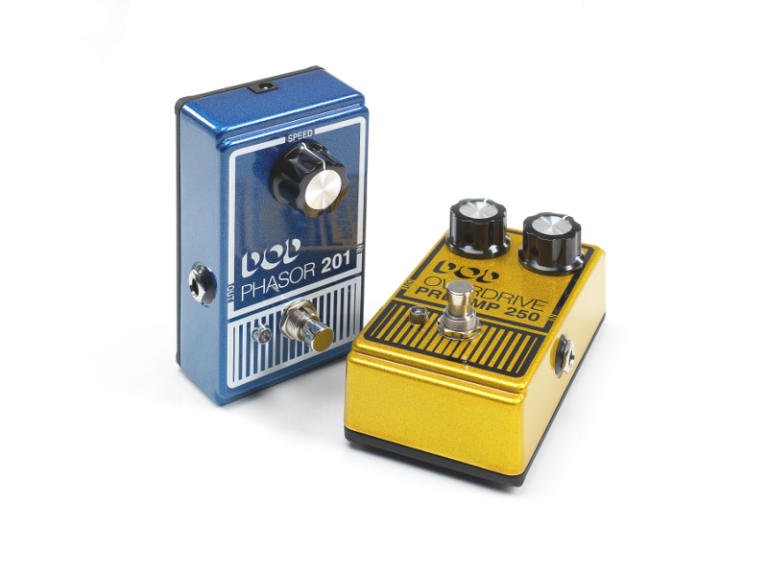
Two gear sidebars in the 2018 feature list a DOD Overdrive Preamp 250 in both, and the second also has the Ibanez FZ5 and a Moog Minifooger Analog delay. The article does not say whose they are. The second set contains the FZ5 that Arm discusses, so it may be his, but that is our inference. Our DOD 250 guide mentions Mudhoney running a pair of the pedals.
Strings, Picks and Tuning
In the 2023 rundown Arm uses Ernie Ball Super Slinky strings, gauge .009 to .042. He says he moved down from Ernie Ball Skinny Top Heavy Bottom (.010 to .052) after reading about Tony Iommi’s light-string playing. The 2018 feature lists Ernie Ball .010 to .052 sets in its sidebars, but the sidebars do not name a player, so we do not tie that gauge to Arm. Both sidebars list Jim Dunlop .73 mm Tortex picks.
Tuning is simple. On the early recordings Arm says he played in standard tuning. In the 2023 rundown Turner says his Guild Starfire IV and Jazzmaster are in standard tuning too, and that the Hagstrom III is the exception, set to open A for slide. If you want background on alternate tunings in general, our alternate tunings guide covers the common ones, though it does not include open A.
The Two-Guitar Sound: Who Plays What
Mudhoney is a two-guitar band with a singer who plays, and the sources describe a clear division. In the Life of the Record notes, Arm says Turner was given a Super Fuzz in the Green River days and that he, Arm, played Turner’s Super Fuzz on the early recordings. He says he only played with the Super Fuzz on, and that it eventually broke down on tour. Turner’s own account in the notes is that he played the Big Muff. Vintage Guitar adds that Turner already owned a Super Fuzz before he bought the Big Muff. These are three accounts of one story, and they do not contradict each other.
The band’s debut EP, Superfuzz Bigmuff, is named for those two pedals, according to Turner in the 2018 feature. Our Big Muff Pi guide covers the pedal Turner plays, and the Nano Big Muff Pi guide covers the small version Turner names as his favourite. In the Hammond feature he says he likes the Nano, which he calls the cheapest one EHX makes. Vintage Guitar says he bought his first Big Muff new in Seattle in about 1984 for $25, and that its remains are in the Museum of Pop Culture, as of that September 2023 article. The 2018 feature gives a slightly different detail, a 1984 unit bought on closeout. Both put the pedal in 1984.
Steve Turner’s rig, in brief
We include Turner’s gear because it is half of the sound, and because it is easy to attribute to the wrong player. All of the following is reported as Turner’s, as of the 2023 sources.
Guitars: Two Guild Starfire IV semi-hollows, a 1967 and a 1968, the newer one being the one he says he uses (2023 rundown). Vintage Guitar says the Starfire has been his main guitar since about 2001 or 2002, and that he bought a second because he breaks strings often on stage. He also has a Fender Gold Foil Jazzmaster, used for vibrato on a couple of songs on the newest record, per Vintage Guitar. His first good guitar was a Fender Mustang, which he says he bought in 1984 for $200. In 1992 he told Guitar Player that Mustangs were his main guitars.
Amps: A Fender Hot Rod DeVille is his live amp: a 4×10 combo in the rundown and, per Vintage Guitar, a 2×12 version on tour and a Deluxe Reverb in the studio. He keeps a 1965 Super Reverb that he has not used for about a decade. In 1992 he described an older Super Reverb, an Ampeg Portaflex and an Excelsior amp bought from an accordion shop.
Pedals: An MXR Micro Amp, a Vox V847A wah, an EHX Little Big Muff Pi, a Strymon Flint, an MXR Phase 90 and an Ibanez TS9DX Turbo Tube Screamer that Turner says Stone Gossard gave him, listed in the rundown. Our Stone Gossard guide covers his side of the Green River connection. In the 2018 feature Turner calls Death by Audio’s Fuzz War a pretty amazing pedal from a few years back, and our Fuzz War guide describes it. For the wah, Turner says in the rundown that he puts it early in the chain and wants it twice as loud as everything else, as on a Stooges record. Our Ron Asheton guitars and gear guide covers that reference.
Where the Sources Disagree
Whose Hagstrom? The 2018 feature’s gear sidebars list a 1960s Hagstrom III with a Filter’Tron neck pickup tuned to open A for slide, without naming a player, and it can be read as Arm’s. The 2023 rundown puts the Hagstrom III in Turner’s hands. The 1992 Guitar Player piece and Arm’s own account in the Life of the Record notes show that both players have owned Hagstroms. We think the safest reading is that the band shares the brand and that the open-A guitar is Turner’s as of 2023, but we cannot rule out that the earlier piece described a different guitar.
Which Gretsch? The 1999 interview names no model for the silver guitar. The 2023 rundown names a Duo Jet and a Silver Jet. Whether the guitar from 1999 is the 2023 Silver Jet is not stated anywhere we read.
Where did the first Super Fuzz come from? Arm’s account in the Life of the Record notes is that Turner was given it, which matches Vintage Guitar’s statement that Turner owned one first. We saw no source that gives the pedal’s model or serial details.
Playing Style and Tone: Fuzz Plus a Loud Clean Amp
In our view, the sources describe an approach that is plain: a big Fender combo, a fuzz or two, and a guitar chosen for weight and resonance. Arm says in the 2018 feature that his setup is minimal, and the 2023 rundown shows the same thing at small scale: a Gretsch he prefers, a few fuzzes and an octave box, and an amp he does not worry about. That is an observation about what was shown, not a claim about every show.
In the Life of the Record notes, Arm also says that “Mudride” needs an amp for its notes to sustain. It fits the pattern: the amp is part of the instrument.
How to Get Close to the Sound
None of these steps is endorsed by Arm. They follow from what the sources above report, and they are our own view.
- Start with the amp. In our view, a loud Fender combo matters more than any one pedal. Arm’s is a Super Six Reverb; Turner says a stock Hot Rod DeVille is the closest match he has found to his 1965 Super Reverb.
- Add a Super Fuzz type before a Muff. Arm’s own pedal is a Stromer Mutroniks Superfuzz and, in the early years, Turner’s original. He also uses an Ibanez FZ5 in a metal enclosure.
- Use lighter strings. Arm’s 2023 rundown gauge is .009 to .042, and Turner uses .010 to .048.
Frequently Asked Questions
What guitar does Mark Arm play?
In Premier Guitar’s December 2023 rig rundown, his preferred guitar is a black Gretsch G6128T-59 Vintage Select ’59 Duo Jet reissue. He also showed a G6129T-59 Silver Jet. In 1999 the University of Washington Daily called a silver Gretsch reissue his favourite guitar.
What amp does Mark Arm use?
A 1970s Fender Super Six Reverb, according to the 2023 rundown: 100 watts, six 10-inch speakers and four 6L6 power tubes.
What fuzz pedals does Mark Arm use?
A Stromer Mutroniks Superfuzz and an Ibanez Soundtank FZ5 60’s Fuzz in a metal enclosure, as of the December 2023 rig rundown. He also has an EarthQuaker Devices Life Pedal V3 on the board.
What strings does Mark Arm use?
Ernie Ball Super Slinky, .009 to .042, as of December 2023. He says he changed from Skinny Top Heavy Bottom (.010 to .052) after reading about Tony Iommi using light strings.
Which Mudhoney guitarist plays the Big Muff?
Steve Turner. In the Life of the Record notes Turner says he played the Big Muff, and Arm says he played Turner’s Super Fuzz on the early recordings.