Larry Coryell Guitars & Gear: The Complete Guide to the Godfather of Fusion’s Hagstrom Swede, Gibson Super 400 & Eleventh House Rig
Larry Coryell guitars & gear: Godfather of Fusion. Hagstrom Swede, Gibson Super 400, Martin acoustic, Fender Twin Reverb — Spaces, Eleventh House complete fusion rig guide.
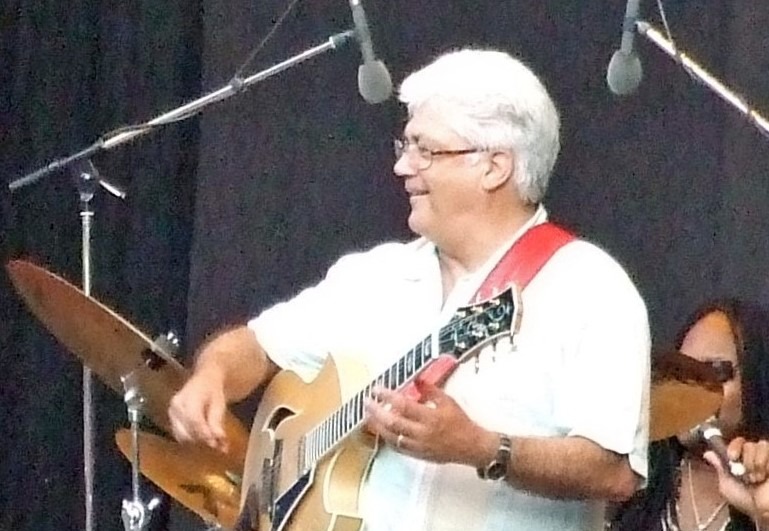
Photo by Dontworry, licensed under CC BY-SA 3.0 (https://commons.wikimedia.org/wiki/File:Larry-coryell-ffm-001.jpg)
Larry Coryell played two shows at the Iridium in New York City on February 17th and 18th of 2017. He had just announced a reunited Eleventh House with trumpeter Randy Brecker, a new album Seven Secrets ready to release in June, and an extensive summer tour confirmed. On February 19th, he died in his hotel room of heart failure at seventy-three years old. The final album — Barefoot Man: Sanpaku (2016) — had been made with just two guitars: his Gibson Super 400 and a Martin acoustic. “I felt they were all I was going to need,” he told Vintage Guitar magazine at the time. A career that had begun with the full electric assault of the Gibson ES-185 through the Fender Twin Reverb in the fusion-pioneering context of the late 1960s, through the Hagstrom Swede’s rock-inflected fusion of the Eleventh House, through the acoustic explorations with Philip Catherine and John McLaughlin and Paco de Lucia, ended with the Gibson Super 400 and a Martin and the specific simple conviction that those were all he was going to need. He was the Godfather of Fusion — the guitarist who “brought a new feel to electric jazz in the 1960s — hard-edged, with cutting tone and note-bending that owed much to blues, rock, and country,” before John McLaughlin, before Mahavishnu, before the genre had a name. He recorded Spaces (1970) with McLaughlin and it became “the embryo for the fusion-jazz movement.” The Eleventh House was “one of the premier jazz fusion” bands. He stands “on equal footing with John McLaughlin as one of the premier jazz fusion guitarists.” The Godfather. Born Galveston, Texas, 1943. Died New York City, 2017. The two Iridium shows were the last ones. The Super 400 was the guitar that was going to be enough. He was right: it was. He always was.
Larry Coryell was born Lorenz Albert Van DeLinder III on April 2, 1943, in Galveston, Texas, and grew up in Seattle, Washington, where his mother introduced him to the piano as a child. By his teens he had switched to guitar and was playing rock music, citing Chet Atkins and Chuck Berry as early influences. He attended the University of Washington, studying journalism while taking private guitar lessons — the same dual academic-and-musical identity that would characterize the subsequent career in which he completed two operas based on Tolstoy’s works and was working on a third inspired by James Joyce’s Ulysses at the time of his death. By 1965, he had moved to New York City at age twenty-two to establish himself as a professional musician, began taking classical guitar lessons, and within a year was working with drummer Chico Hamilton and vibraphonist Gary Burton — two of the most significant jazz instrumentalists of the period. He took cues from John Coltrane and Wes Montgomery alongside the Chet Atkins and Chuck Berry that had attracted him to the guitar in the first place, and was inspired by the Beatles, the Byrds, and Bob Dylan in ways that anticipated the specific music-genre synthesis that would produce the jazz-rock fusion tradition he effectively founded.
The Free Spirits — Coryell’s first significant band, formed around 1966 — is the foundational document of the jazz-rock fusion concept before the concept had a name. The Free Spirits combined jazz improvisation and jazz harmonic sophistication with the energy and visual presentation of rock music at a moment when essentially no one else was doing this, and Coryell’s guitar was the specific instrument that made the combination work: the jazz vocabulary applied to the electric guitar’s rock amplification and rock visual culture, producing something new and unfamiliar that the critical establishment didn’t know how to categorize. The guitars were electric. The soloing was jazz. The sound was rock. The music was the future. Coryell was twenty-three years old.
The Spaces album (1970) with John McLaughlin — recorded with Coryell, McLaughlin, Chick Corea, Miroslav Vitous, and Billy Cobham — is the specific recording that Coryell’s fusion legacy is most accurately summarized by: the “embryo for the fusion-jazz movement” that the Vintage Guitar tribute documents. Spaces contains the specific combination of jazz harmonic sophistication, rock electric guitar energy, and free improvisational approach that the subsequent fusion tradition developed in multiple directions — McLaughlin’s Mahavishnu direction, Coryell’s Eleventh House direction, and the Weather Report and Headhunters directions that defined the 1970s jazz-rock fusion mainstream. The interplay between Coryell and McLaughlin on Spaces is “particularly astounding” — two guitarists at the peak of their respective fusion approaches, in dialogue with a rhythm section of extraordinary quality, producing the specific document of the fusion guitar’s potential at the exact moment when the tradition was being invented.
Background: Galveston, Seattle, New York, and Inventing the Vocabulary
The Seattle background — the Pacific Northwest city that is geographically distant from the jazz centers of New York and Chicago, but which had a specific local music culture that included exposure to both the American folk and country tradition and the emerging psychedelic rock scene — is the specific geographic context that produced Coryell’s specific combination of Chet Atkins country guitar, Chuck Berry rock guitar, Coltrane jazz vocabulary, and Hendrix-influenced electric approach. Seattle in the mid-1960s was where Jimi Hendrix was playing before he relocated to London and became the Jimi Hendrix that everyone knows; the specific Seattle electric guitar culture of that period is the cultural context that Coryell left when he moved to New York in 1965, carrying its specific influences into the jazz world that he entered.
The Chico Hamilton and Gary Burton engagements — the specific jazz contexts in which Coryell developed his electric guitar approach within an established jazz framework — provided the specific professional jazz education that the University of Washington journalism program and the classical guitar lessons had begun. Burton’s vibraphone group is one of the more musically sophisticated contexts in which the jazz-rock fusion synthesis developed: Burton’s specific rhythmic and harmonic sophistication, combined with Coryell’s specific rock-influenced guitar energy, produced the specific quality of their collaboration that the Coryell biography documents as foundational.
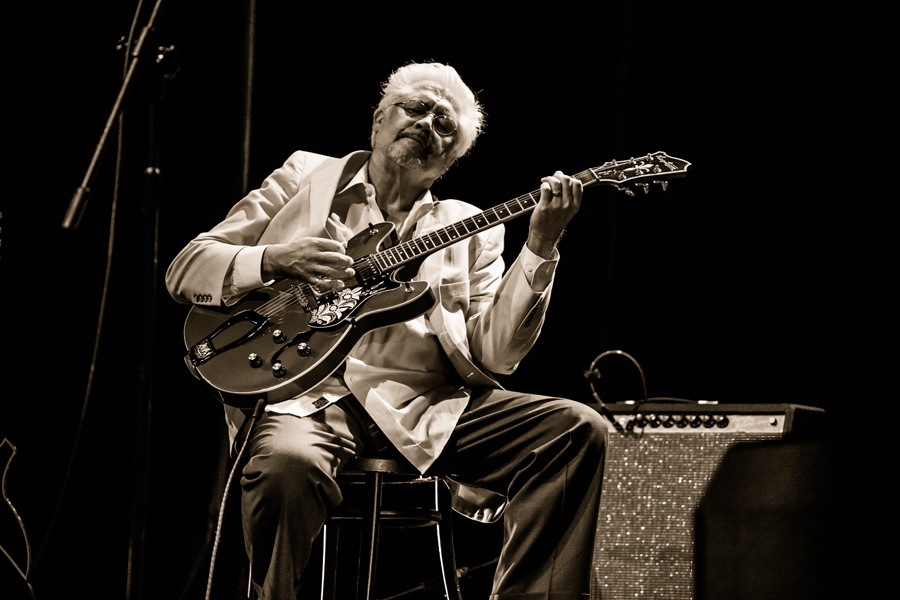
The Guitar Trio — formed in 1979 with John McLaughlin and flamenco guitarist Paco de Lucia for the Meeting of the Spirits tour — is the specific biographical chapter that places Coryell in the most celebrated available context for guitar virtuosity: alongside McLaughlin (whose Mahavishnu Orchestra had become the most celebrated jazz-fusion band of the 1970s) and de Lucia (whose flamenco approach was the most technically virtuosic available alternative guitar tradition). Coryell was replaced in this trio by Al DiMeola due to his on-again, off-again heroin addiction — a specific biographical tragedy that removed him from the most celebrated guitar trio of his era at the moment of its greatest commercial and critical impact. The McLaughlin-de Lucia-DiMeola recording from 1981 is celebrated; the McLaughlin-de Lucia-Coryell version that preceded it is less documented but historically significant as the original configuration.
The Emily Remler connection — the “then up-and-coming guitarist” who Coryell “sponsored and had a love affair with” — is the biographical chapter that documents both Coryell’s generosity toward emerging talent and the specific personal complications that characterized the period of his career when the heroin addiction was most active. Remler was one of the most gifted jazz guitarists of her generation — a virtuoso in the Wes Montgomery tradition — and her death from a heart attack/drug overdose before her career reached its peak is the specific loss that the Coryell connection most directly documents. Philip Catherine — the Belgian guitarist with whom Coryell recorded the celebrated acoustic duo albums Twin House and Splendid — is the other significant collaboration of the mid-to-late 1970s period, the European jazz guitar tradition’s influence on Coryell’s acoustic approach documented in recordings that “entered into guitar folklore alongside his previous Spaces recording with John McLaughlin.”
The Rig: Larry Coryell’s Guitars, Amps, and Effects
Guitars
In the early electric fusion recordings — the Village Gate performance documented on the 1971 live album — Coryell used a hollow-bodied Gibson ES-185 guitar. “Some of that overdrive is the unique combination of LC’s choice of what is typically a jazz guitar, a hollow-bodied Gibson ES-185 guitar, very sympathetic to stage vibration, such as from Coryell’s amplifier, feeding back into the guitar body.” The ES-185 is a Gibson hollow-body archtop from the post-World War II period — a large hollow-body with the specific acoustic resonance that produces feedback at high volumes, which Coryell exploited as a compositional element in the distortion-and-feedback approach of the early fusion electric work. The ES-185’s hollow-body construction made it “very sympathetic to stage vibration,” producing the specific organic, acoustically induced feedback that distinguished the early Coryell electric sound from the more controlled, solid-body feedback of rock guitar.
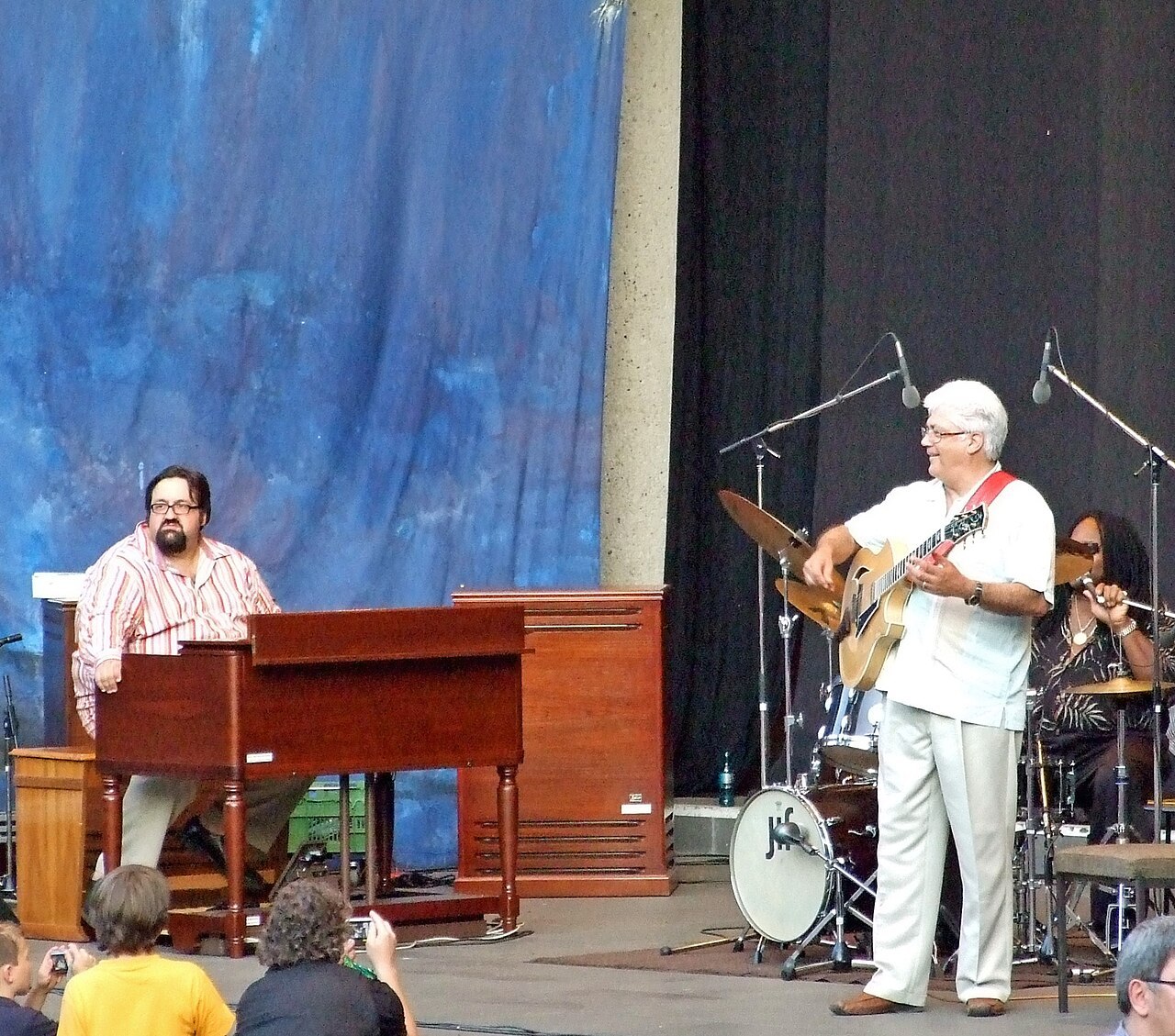
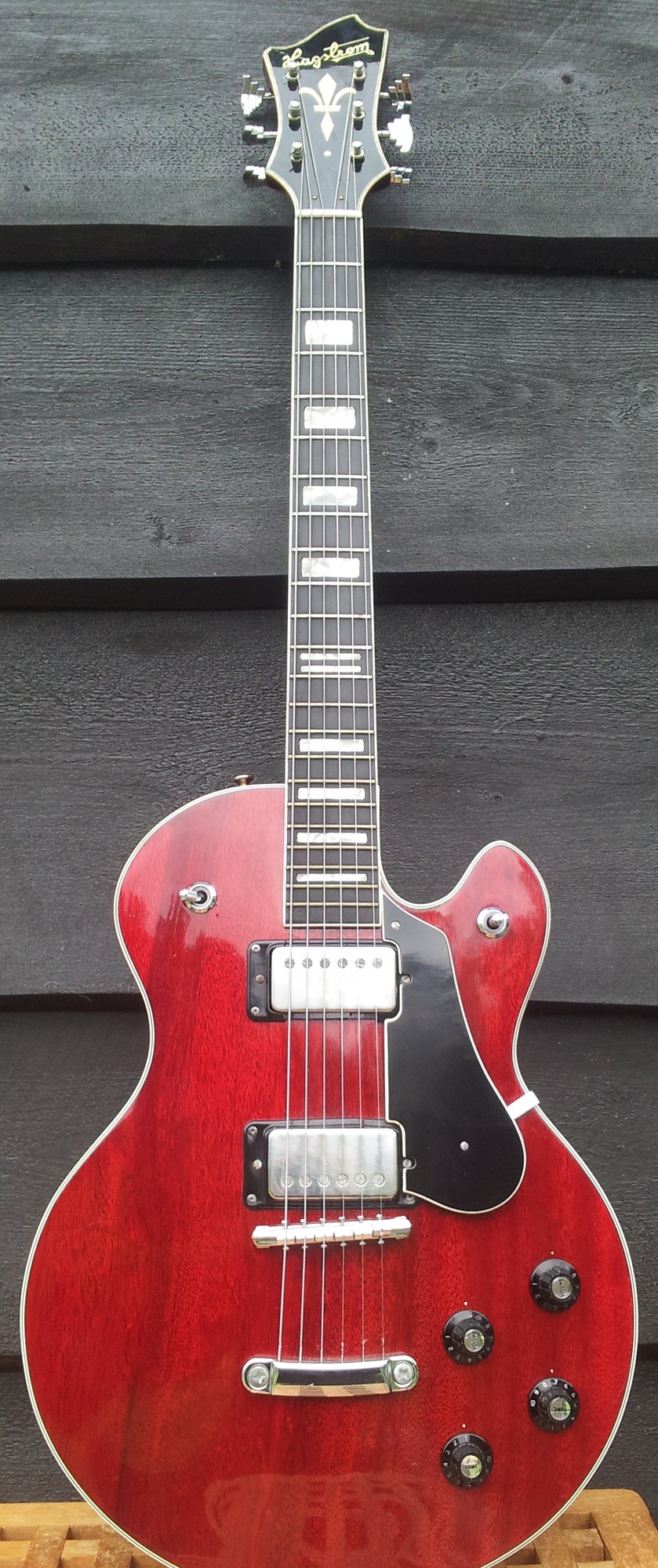
“In the mid ’70s, the guitarist grabbed a Hagstrom Swede and formed the funky Eleventh House.” The Hagstrom Swede — the Swedish-made solid-body guitar from Hagstrom that was designed as a Gibson Les Paul-adjacent instrument with the specific Scandinavian construction approach — was Coryell’s primary guitar through the Eleventh House period. Live video documents Coryell playing “a Hagstrom Swede with his 1970s band Eleventh House.” The Hagstrom Swede’s specific character: a mahogany-bodied, set-neck solid-body with dual humbuckers in the Les Paul tradition, providing the warm, sustaining humbucker output appropriate for the complex, thunderous compositions and flashy, rapid-fire solos of the Eleventh House context. The Hagstrom rather than a Gibson is the specific practical choice that the period’s economic and professional context made available; the specific tonal character of the Hagstrom humbuckers through the Fender Twin Reverb at high volumes produced the distinctive Eleventh House electric guitar sound.
“Later in the decade, Coryell could be heard playing lush artificial harmonics on Ovation roundbacks.” The Ovation roundback acoustic guitars — with their specific synthetic bowl-back construction and the specific acoustic character that the rounded bowl produces — were Coryell’s primary acoustic instruments through the mid-to-late 1970s period when he had largely abandoned electric guitar for acoustic exploration. The artificial harmonics that the Vintage Guitar description identifies — the specific technique of producing harmonics by touching the string at the exact nodal point with one hand while plucking with the other — are the specific classical guitar technique that Coryell’s classical guitar lessons had provided and that the Ovation roundbacks’ specific resonance suited.
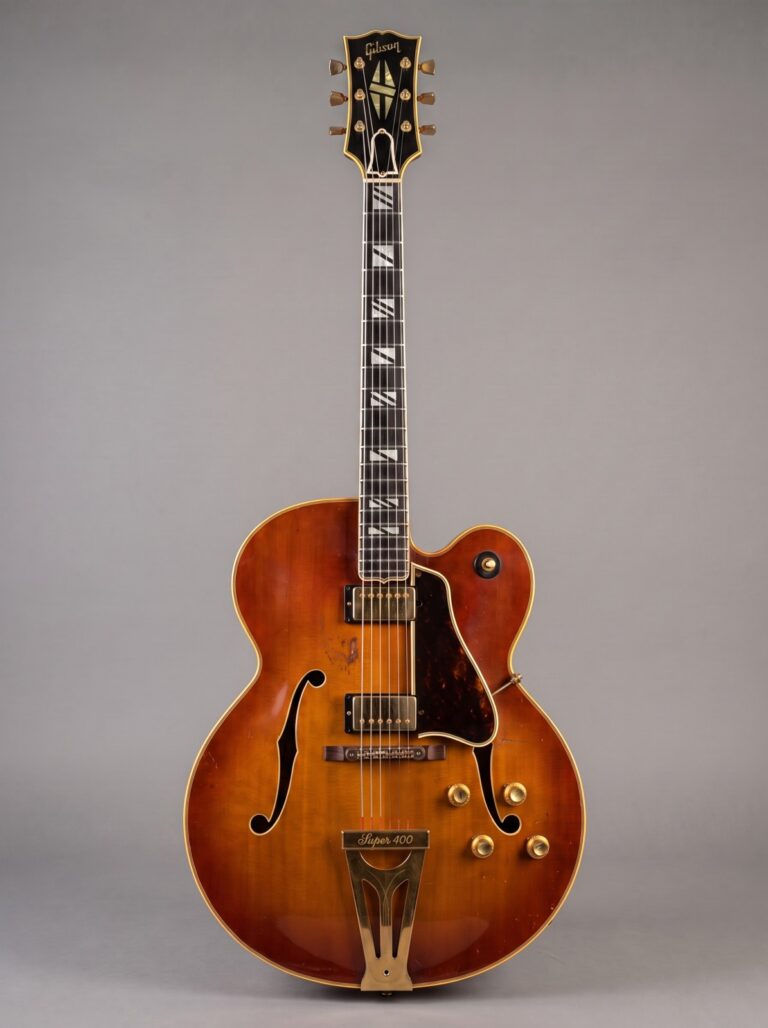
“But my favorite jazz guitar is still the Gibson Super 400.” The Gibson Super 400 — Gibson’s largest and most ornate archtop guitar, the flagship of the Gibson archtop tradition with its 18-inch lower bout, elaborate binding and ornamentation, and the specific full-bodied acoustic and electric character of the Super 400’s construction — was Coryell’s primary guitar in the final decades of his career and on his final recording. “Coryell’s final album, Barefoot Man: Sanpaku, was released in October of 2016, and on it he used just two guitars — his Gibson Super 400 and a Martin acoustic. ‘I felt they were all I was going to need.'” The Super 400 is one of the most celebrated archtop guitars in the jazz guitar tradition — used by Wes Montgomery and other foundational jazz guitarists — and Coryell’s adoption of it as his primary jazz guitar in the later career documents the specific return to the jazz archtop tradition that the early career’s fusion electric approach had departed from.
The Martin acoustic — used alongside the Gibson Super 400 on Barefoot Man: Sanpaku — is the second instrument of the final recording, a symbol of the simplified, essential approach of the final album. “I felt they were all I was going to need.” The Martin acoustic’s specific folk and Americana character — the American acoustic guitar tradition that runs from Robert Johnson through Woody Guthrie through the specific folk-country-jazz synthesis that the Coryell career had always contained beneath its electric fusion surface — provides the acoustic voice alongside the Super 400’s jazz archtop warmth. Two guitars. A fusion pioneer’s final statement. All he was going to need.
Amps
“For much of his career Coryell relied on Fender Twin Reverb amplifiers.” The Fender Twin Reverb — the clean, high-headroom 6L6-powered American combo that has appeared throughout this series as a primary jazz and blues amplification choice — was Coryell’s primary working amplifier through the fusion period and well into the subsequent straight-jazz career. The Twin’s clean headroom allowed the ES-185’s hollow-body feedback and the Hagstrom Swede’s humbucker output to be amplified with the specific transparency of the clean American amplification before the Fender Deluxe Reverb that is also documented in his gear. For loud gigs, the Twin was the primary amplifier; for smaller gigs later in his career, he relied on a Jazz-Kat BluesKat amp or a Henriksen amplifier.
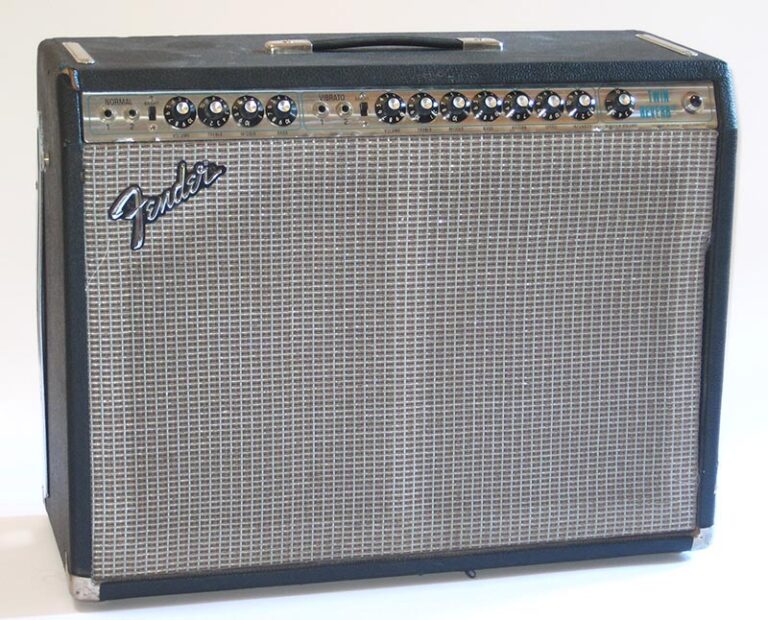
“Later in life he only used this amp [Twin Reverb] for loud gigs, instead relying on a Jazz-Kat BluesKat amp or a Henriksen amplifier.” The Jazz-Kat and Henriksen are both specialized jazz guitar amplifiers — the Henriksen in particular being one of the most celebrated modern jazz guitar amplifiers for its specific clean, transparent character that serves the jazz archtop guitar’s natural acoustic character. The transition from the Twin Reverb to the smaller, more jazz-specific amplifiers in the later career documents the evolution of the Coryell approach from the high-volume fusion context to the more intimate straight-jazz context of the final decades.
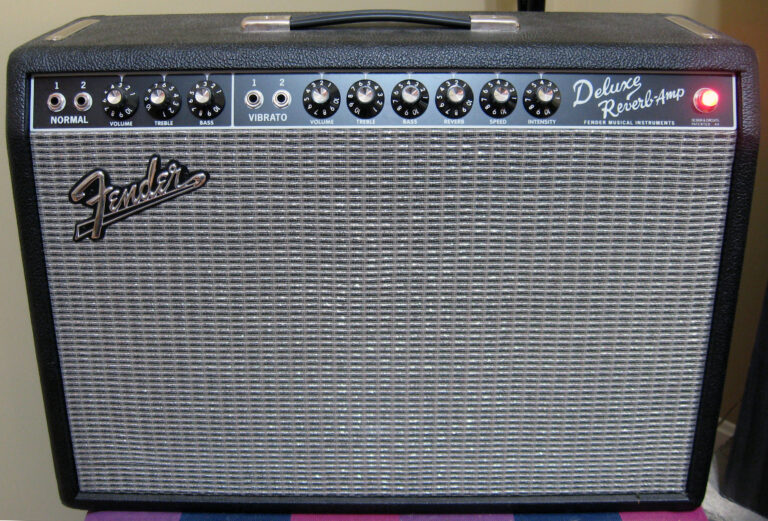
The Fender Deluxe Reverb appears in the Premier Guitar gear list for Coryell — the smaller Fender tube combo that provides the more intimate, more dynamically responsive amplification appropriate for smaller venues and recording contexts. The Deluxe Reverb’s smaller power (22 watts vs the Twin’s 85 watts) allows it to reach natural 6V6 saturation at lower volumes than the Twin, providing the specific warm, slightly pushed character of a small Fender tube combo at performance level.
Effects
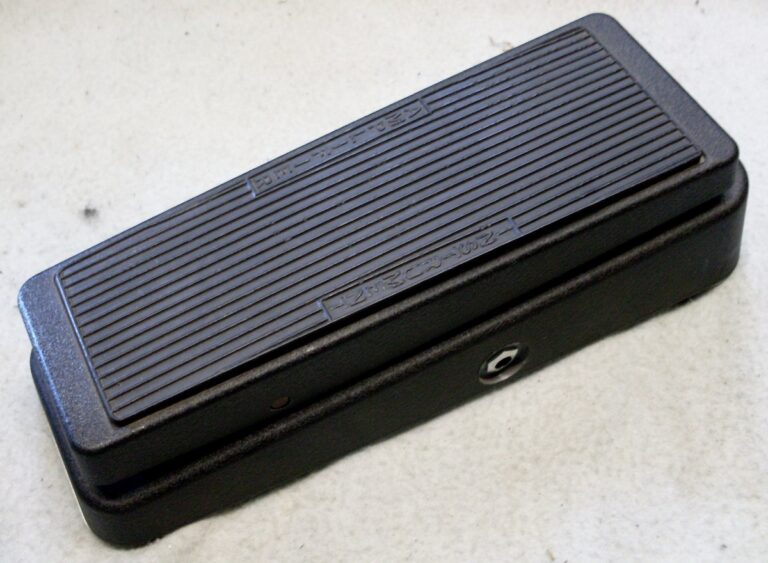
The Dunlop Cry Baby wah is documented in Coryell’s early fusion gear — “we also hear the use of the wah-pedal later in the lead guitar” on the Village Gate recordings. The wah’s frequency filter sweep applied to the hollow-body ES-185’s distorted output through the Twin Reverb at high volume produced the specific “cutting tone” of the early Coryell electric fusion work. The wah applied to the jazz vocabulary — the specific musical application of the frequency filter’s vowel-sound character to the jazz-melodic content of the Coryell solos — is the specific gear technique that distinguished the early Coryell fusion sound from both the straight jazz that preceded it and the blues-rock guitar that the wah was conventionally associated with.
“He said that used little or no reverb, preferring a touch of delay and chorus to get his sound.” This is the specific Coryell effects philosophy: minimal reverb (in contrast to the heavy reverb application of many jazz guitarists and the atmospheric reverb of Bill Frisell), with a touch of delay and chorus for the specific spatial dimension and harmonic width that the jazz-fusion context required without the lush wetness of reverb. The delay adds depth without the decay that reverb produces; the chorus adds harmonic width without the artificial room quality of reverb. The preference for “little or no reverb” is the specific tonal choice of someone who had developed the specific clean-but-processed character of the Coryell jazz-fusion sound over decades of professional playing and understood exactly what each processing element contributed.
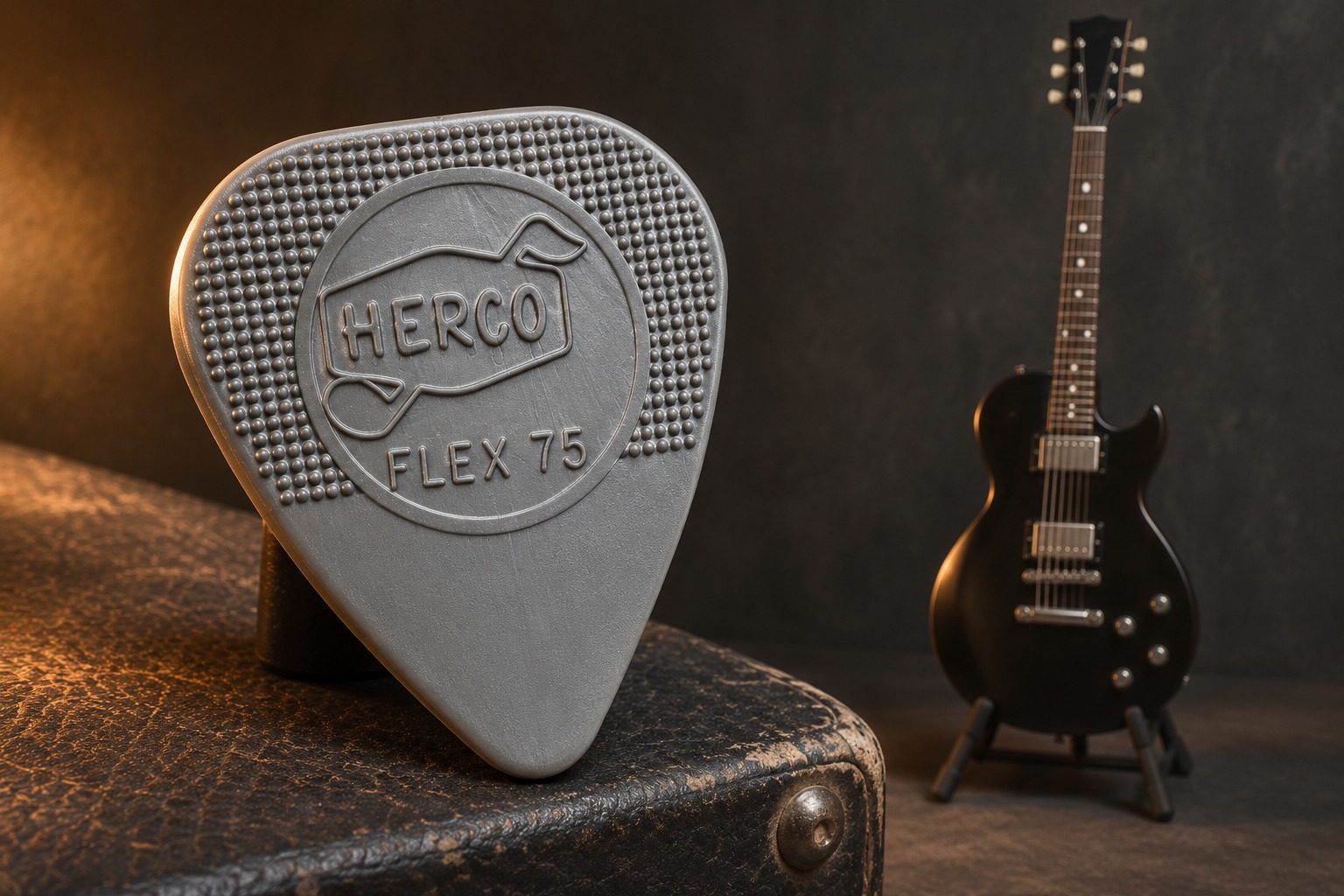
Larry Coryell used Herco Flex 75 guitar picks — documented in the December 29, 2016 issue of Premier Guitar. The Herco Flex 75 is a nylon pick of medium flexibility, associated with the specific feel and attack character that the jazz and fusion guitar context requires: not the hard, stiff pick of the heavy rock guitarist, but the more flexible nylon that provides the specific touch-sensitive attack that the jazz vocabulary’s articulation demands.
The specific distortion and feedback approach of the early Coryell fusion recordings — the “distortion-laden electric work” that the Vintage Guitar tribute documents as one pole of his range — was not produced by a distortion pedal but by the specific combination of the hollow-body ES-185’s feedback susceptibility at high volumes and the Fender Twin Reverb pushed to the appropriate level. The “unique combination of LC’s choice of what is typically a jazz guitar, a hollow-bodied Gibson ES-185 guitar, very sympathetic to stage vibration” and the amplifier’s high volume produced the specific organic, feedback-driven distortion of the early fusion recordings. This is the Coryell approach to distortion: not a pedal but a physical-acoustic interaction between the hollow-body guitar and the high-volume amplifier, producing the specific feedback-as-note quality that is more organic than any distortion pedal’s hard-clipping character.
The specific influence combination that the Coryell biography documents — Chet Atkins and Chuck Berry alongside John Coltrane and Wes Montgomery, then the Beatles and the Byrds and Bob Dylan — is worth examining more precisely as the complete available description of what the jazz-rock fusion synthesis actually was at its most creative origin point. Chet Atkins represents the country fingerpicking tradition: the specific technique of the thumbpick and the independent bass-line fingerpicking that allows the guitarist to play rhythm and melody simultaneously on an acoustic or semi-acoustic instrument. Chuck Berry represents the rock and roll rhythmic energy and the specific electric guitar attack of the fundamental American rock vocabulary. John Coltrane represents the jazz harmonic sophistication and the improvisational boldness of the post-bop tradition — the sheets of sound, the altered harmony, the specific intellectual ambition of the jazz avant-garde. Wes Montgomery represents the jazz guitar’s melodic warmth and the specific octave-playing technique that Montgomery made famous. And the Beatles and Byrds and Dylan represent the specific cultural moment of the mid-1960s when rock music was absorbing the folk and literary traditions of the American songwriting heritage and becoming something more sophisticated than its early commercial form. Coryell absorbed all five streams and synthesized them in the Free Spirits in 1966, before anyone else had assembled a comparable synthesis. The synthesis produced the Godfather. The Godfather produced Spaces. Spaces produced the embryo. The embryo produced everything that followed.
His late-career work — the two Tolstoy operas, the planned Joyce Ulysses opera, the final album with the Super 400 and the Martin — represents the final arc of a creative intelligence that never stopped expanding its musical horizons. A jazz fusion guitarist who completed opera based on Russian literature and was planning an opera based on the greatest modernist novel in English at the time of his death: this is the specific intellectual ambition of the University of Washington journalism student who left to take classical guitar lessons in New York in 1965 and spent the subsequent five decades demonstrating that the guitar was capable of bearing the weight of whatever cultural ambition the musician brought to it. The Hagstrom Swede in 1972 and the Joyce Ulysses opera in 2017 are the same musical intelligence at different points in the same lifelong creative arc. The Godfather of Fusion was always also the guitarist who studied Aristotelian logic at the University of Washington — or rather, journalism, but the intellectual curiosity is the same regardless of the specific curriculum. The Super 400 and the Martin were all he was going to need for the final album. The Joyce opera needed more time. He ran out.
Playing Style & Tone Philosophy
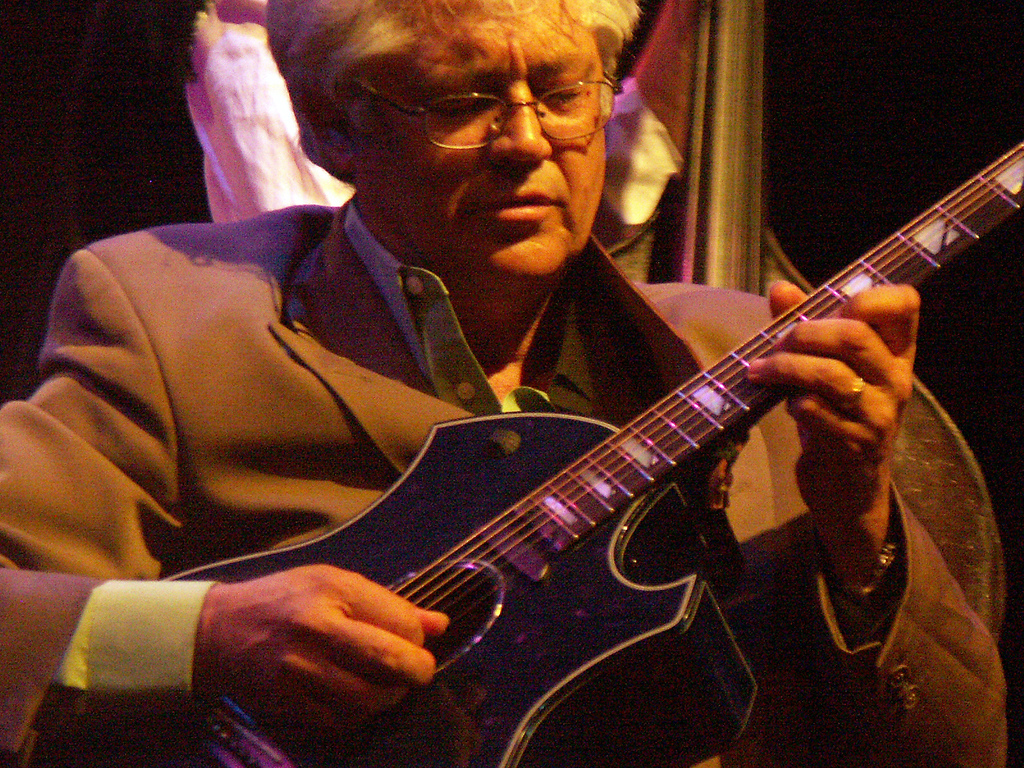
Larry Coryell plays guitar as someone who was “comfortable in almost every style” — a characterization that might suggest unfocused eclecticism but that is more accurately described as the specific musical completeness of a guitarist who had absorbed the jazz tradition’s harmonic sophistication, the blues and country tradition’s expressive directness, the rock tradition’s electric energy, and the classical tradition’s technical rigor, and who could deploy all four simultaneously within the same solo. The “cutting tone and note-bending that owed much to blues, rock, and country” produced the jazz fusion guitar as it had never previously been heard; the “intricate lines on acoustic” demonstrated the classical and folk dimensions of the same musical intelligence.
The specific early influence combination — Chet Atkins and Chuck Berry alongside John Coltrane and Wes Montgomery — is the complete available description of the Coryell guitar identity: the country fingerpicking technique of Atkins, the rock-and-roll energy of Berry, the harmonic and improvisational sophistication of Coltrane, and the melodic warmth and octave-playing of Montgomery, all present simultaneously in the same musical identity. No other guitarist in this series has documented an influence combination quite this far-reaching across traditions. The combination produced the Godfather of Fusion — the guitarist who arrived at the synthesis before the synthesis had a name, who invented the vocabulary that the subsequent generation of fusion guitarists used, and who spent the rest of his career demonstrating the breadth of a musical intelligence that the “fusion” label insufficiently captured.
The “little or no reverb, preferring a touch of delay and chorus” philosophy is the specific tonal minimalism of the Coryell late-career approach: the guitar and its natural acoustic character as the primary sound, the delay adding depth without the wetness of reverb, the chorus adding width without the artificiality of heavy processing. In contrast to the elaborate effects chains of some jazz-fusion contemporaries, the Coryell approach valued the guitar’s direct voice — the hollow-body ES-185’s feedback character, the Hagstrom Swede’s humbucker warmth, the Super 400’s archtop resonance — as the primary tonal source, with effects as modest supplements rather than primary compositional environments.
How to Sound Like Larry Coryell
The Coryell fusion tone requires: a hollow-body electric (ES-185 or equivalent, or for a more modern approach, any hollow or semi-hollow with humbuckers) or the Hagstrom Swede/Les Paul-style solid-body for the Eleventh House context; Fender Twin Reverb at high volume for the natural breakup and feedback of the early fusion approach; touch of delay and chorus (minimal reverb); Dunlop Cry Baby wah for the expressive jazz-fusion lead vocabulary; Herco Flex 75 nylon picks; and the specific jazz harmonic vocabulary applied to the rock guitar’s physical energy. For the later career jazz approach: the Gibson Super 400 or equivalent archtop through a Henriksen or Jazz-Kat BluesKat for the clean, transparent straight-jazz tone.
| Control | Setting (0–10) | Notes |
|---|---|---|
| Fender Twin Reverb (Fusion Mode) | Volume: 7–8; Treble: 7; Bass: 5; Reverb: 1–2 (minimal) | “Little or no reverb.” The Twin pushed toward natural 6L6 saturation for the specific Coryell fusion energy — high volume, some natural breakup, the hollow-body’s feedback beginning to develop. Minimal reverb — the Coryell sound prefers the direct, slightly pushed character of the amp at volume over the atmospheric quality of reverb. |
| Hollow-Body ES-185 / Semi-Hollow (Fusion Context) | Both pickups; Volume: 10; natural feedback at high volume | “Very sympathetic to stage vibration, such as from Coryell’s amplifier, feeding back into the guitar body.” Position the hollow-body guitar toward the amplifier at high volume to develop the specific organic, acoustically induced feedback that the early Coryell fusion approach used as a compositional element. The hollow-body feedback is more organic and more harmonically complex than pedal-induced distortion. |
| Touch of Delay (Depth Without Reverb) | Time: 250–350ms; Repeats: 1–2; Mix: 15–20% | “Preferring a touch of delay and chorus.” Short delay at low mix — adding the specific spatial depth of delay without the wetness of reverb. One or two repeats at modest level, barely audible but providing the subtle impression of acoustic space around each note. This is the Coryell effects minimalism: maximum guitar, minimum processing. |
| Dunlop Cry Baby Wah (Expressive Lead) | Toe position 30–80% of sweep; musical phrasing | The wah applied to jazz vocabulary: the frequency filter’s vowel-sound character coordinated with the melodic content of the solo. Not the rhythmic chicken-scratch of funk wah but the expressive, melodically aware application of the filter sweep to specific notes at specific moments. The Chet Atkins country influence informs the touch; the Coltrane jazz influence informs the notes the wah follows. |
| Gibson Super 400 / Archtop (Jazz Straight-Ahead) | Neck pickup; Volume: 8; Tone: 6; Henriksen amp | The final career straight-jazz approach: “my favorite jazz guitar is still the Gibson Super 400.” Full archtop through a clean, jazz-specific amplifier. Little or no effects — the Super 400’s natural acoustic archtop character through the Henriksen’s transparent amplification, with the “touch of delay and chorus” for modest spatial enhancement. All he was going to need. |
| Fusion Guitar Philosophy (Chet Atkins + Chuck Berry + Coltrane + Wes) | Simultaneous: country technique + rock energy + jazz harmony + melodic warmth | The Coryell synthesis: Chet Atkins’ finger dexterity and country touch sensibility, Chuck Berry’s rhythmic directness and rock energy, Coltrane’s harmonic sophistication and improvisational boldness, Wes Montgomery’s melodic warmth and octave-playing facility. All four operating simultaneously from the same guitar through the same amplifier. This is what the Godfather of Fusion invented. The Hagstrom Swede. The Twin Reverb at 8. The wah sweep following the jazz melody. The distortion-laden note-bending owed to blues, rock, and country. |
Influence & Legacy
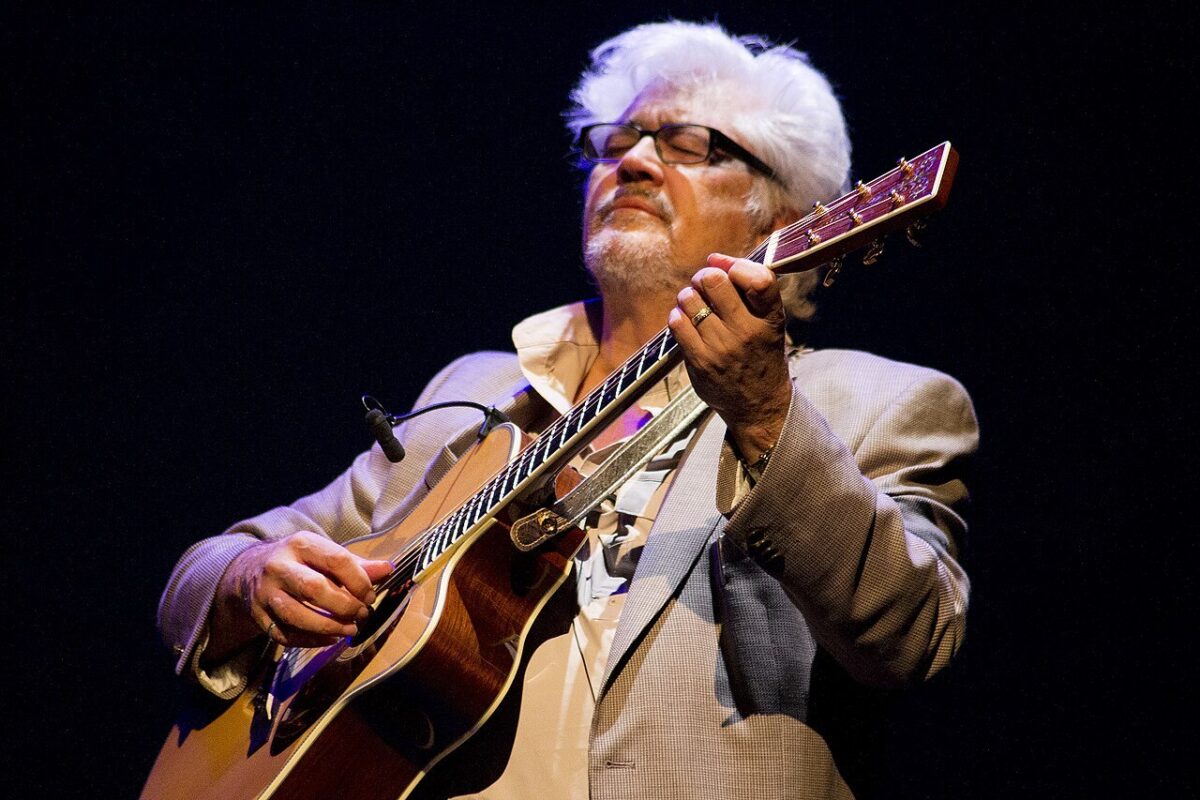
Larry Coryell’s influence on jazz guitar and jazz-rock fusion is the influence of the specific individual who invented the genre before it had a name — whose specific combination of jazz harmonic vocabulary, rock electric guitar approach, country technique, and blues expression produced the fusion template that John McLaughlin’s Mahavishnu Orchestra and Herbie Hancock’s Headhunters and the Weather Report tradition subsequently developed in multiple simultaneous directions. The Vintage Guitar tribute’s assessment — “a pioneer of jazz-rock, Coryell was dubbed the ‘Godfather of Fusion'” — is the least contestable available characterization: if anyone is the godfather, it is the guitarist who invented the synthesis before anyone else had a name for it.
The Spaces recording with McLaughlin is the specific canonical document of this invention: two guitarists, in 1970, playing together in a way that no two guitarists had previously played, with a rhythm section of extraordinary quality, producing a record that became “the embryo for the fusion-jazz movement” in the most precisely documented way possible — the subsequent generation of fusion musicians heard the record and understood what was possible. The embryo. The Godfather. The Hagstrom Swede. The Twin Reverb at high volume. The wah applied to the jazz vocabulary. The Coryell synthesis.
For the parallel fusion guitar tradition that Spaces launched alongside McLaughlin’s Mahavishnu direction, see the broader fusion entries in this series. The Godfather’s specific legacy connects to John Scofield’s jazz-funk fusion approach — one of the guitarists who recorded a duo album with Coryell and who represents a direct continuation of the jazz-fusion guitar tradition that Coryell established. The acoustic duo recordings with Philip Catherine connect to Bill Frisell’s Americana acoustic approach — the acoustic guitar as the vehicle for a jazz musician’s broader musical explorations. And the Chet Atkins influence that shaped the Coryell country-picking technique connects to the broader American guitar tradition that runs through Jorma Kaukonen’s fingerpicking approach — both guitarists drawing from the country and folk acoustic tradition as the foundational technical education for the electric music they developed.
He played two shows at the Iridium on February 17th and 18th. The reunion Eleventh House was ready. Seven Secrets was ready to release in June. He died in his hotel room on February 19th. The Gibson Super 400 and the Martin acoustic were all he was going to need, and he was right. Born Lorenz Albert Van DeLinder III, Galveston, Texas, April 2, 1943. Died New York City, February 19, 2017. The Godfather of Fusion. The embryo was Spaces. The Hagstrom Swede built the Eleventh House. The Twin Reverb was on for most of a career. The wah followed the jazz melody. Little or no reverb. A touch of delay and chorus. The Super 400 at the end, which was all he was going to need. He was always right about what he was going to need.
Frequently Asked Questions: Larry Coryell Guitars & Gear
Why is Larry Coryell called the “Godfather of Fusion”?
Larry Coryell is called the Godfather of Fusion because he was one of the first guitarists — arguably the first — to combine jazz harmonic vocabulary with rock electric guitar energy and blues and country expression before the genre had a name. From the Free Spirits in 1966 onward, Coryell was playing the specific combination of jazz improvisation and rock amplification that would become known as jazz-rock fusion. His 1970 album Spaces with John McLaughlin is cited as “the embryo for the fusion-jazz movement.” He brought a new feel to electric jazz in the 1960s — “hard-edged, with cutting tone and note-bending that owed much to blues, rock, and country” — before Mahavishnu Orchestra, before Headhunters, before the genre existed as a commercial category.
What guitars did Larry Coryell use throughout his career?
Coryell used different primary guitars across different career periods. In the early electric fusion period (Village Gate era), he used a hollow-bodied Gibson ES-185 that was “very sympathetic to stage vibration” and produced natural feedback-driven overdrive. Through the Eleventh House period in the mid-1970s, he used a Hagstrom Swede (Swedish-made Les Paul-style guitar). Later he used Ovation roundbacks for the acoustic period. In his final decades, his primary guitar was the Gibson Super 400 archtop — “my favorite jazz guitar” — which he used on his final album Barefoot Man: Sanpaku (2016) alongside a Martin acoustic. “I felt they were all I was going to need.”
What amplifiers did Larry Coryell use?
For most of his career, Coryell relied on Fender Twin Reverb amplifiers — the clean, high-headroom American tube combo that he pushed to appropriate volumes for the fusion context’s natural breakup and feedback. Later in life, he used the Twin Reverb only for loud gigs, instead relying on a Jazz-Kat BluesKat amplifier or a Henriksen amplifier for smaller venues. The Fender Deluxe Reverb is also documented in his gear. The evolution from the high-volume Twin Reverb to the more jazz-specific, intimate Henriksen reflects the transition from the fusion electric approach to the straight-jazz approach of his later career.
What was Spaces and why is it important?
Spaces (1970) is the album many cite as the founding document of jazz-rock fusion — recorded with Larry Coryell, John McLaughlin, Chick Corea, Miroslav Vitous, and Billy Cobham. It is described as “the embryo for the fusion-jazz movement” and “a high-water mark of the fusion movement.” The interplay between Coryell and McLaughlin is “particularly astounding” — two guitarists at the peak of their respective approaches, producing the specific document of the fusion guitar’s potential at the exact moment when the tradition was being invented. Many consider it, alongside the Coryell/McLaughlin acoustic Guitar Trio performances, the foundational text of jazz fusion guitar.
What was the Eleventh House?
The Eleventh House was Larry Coryell’s fusion band, formed in 1972 and active through 1975. The lineup included Randy Brecker (trumpet), Mike Mandel (keyboards), Alphonse Mouzon (drums), and Danny Trifan (bass). The band “emphasized complex compositions, flashy solos, and volume” and was “seen as a preeminent force in the genre.” Introducing the Eleventh House (1974) is regarded as one of the premier jazz fusion recordings of the era, with Coryell “on equal footing with John McLaughlin as one of the premier jazz fusion guitarists.” Coryell announced a reformed Eleventh House in January 2017 with a new album ready for release, but died before the reunion could occur.
What were Larry Coryell’s guitar effects and tone philosophy?
“He said he used little or no reverb, preferring a touch of delay and chorus to get his sound.” The Coryell effects philosophy was minimalist: the guitar’s natural acoustic character (hollow-body feedback, archtop resonance) as the primary tonal source, with a touch of delay for depth and a touch of chorus for harmonic width, but minimal reverb to preserve the direct character of the instrument. The Dunlop Cry Baby wah was documented in the early fusion recordings. He used Herco Flex 75 nylon picks for the jazz-appropriate touch sensitivity.
How did Larry Coryell die?
Larry Coryell died on February 19, 2017, in his hotel room in New York City, from heart failure at the age of seventy-three. He had performed two shows at the Iridium jazz club in New York on February 17th and 18th — his final performances. He had just announced a reformed Eleventh House with Randy Brecker and a new album Seven Secrets scheduled for June 2017, with an extensive summer tour confirmed. His final studio album, Barefoot Man: Sanpaku, had been released in October 2016. He is survived by his wife Tracey, his daughter Annie, sons Murali and Julian, daughter Allegra, and six grandchildren.
Image credits
- Herco Flex 75 Guitar Picks (Documented): GuitarGangsters AI-generated reference illustration, not a photograph.
- Larry Coryell: ultomatt, Wikimedia Commons, CC BY 2.0.
- Hagstrom Swede: Kaitil, Wikimedia Commons, CC BY-SA 4.0.
- Top image: by Dontworry, Wikimedia Commons, CC BY-SA 3.0.
- Larry Coryell: photo by Wtg, via Wikimedia Commons, CC BY-SA 3.0.
- Fender Twin Reverb: Micahmedia, Wikimedia Commons, CC BY 3.0.
- Fender Deluxe Reverb: DlxReverbFront, Wikimedia Commons, CC BY-SA 3.0.
- Dunlop Cry Baby: Roadside Guitars, Flickr, CC BY-SA 2.0.
- Larry Coryell live: Dontworry, Wikimedia Commons, CC BY-SA 3.0.
- Larry Coryell live: jose nieto, Wikimedia Commons, CC BY 2.0.
- Gibson Super 400: GuitarGangsters AI-generated reference illustration, not a photograph.