
In this guide
The Klon Centaur is one of those rare guitar pedals that escaped the usual gear cycle and became folklore. Plenty of overdrives have been loved. Plenty of pedals have become collectible. But the Klon Centaur lives in a different zone entirely: part tool, part myth, part argument, part status symbol. Some players swear it is the finest low-gain drive ever made. Others think the legend got inflated by scarcity, price, and decades of forum mythology. Both camps have a point. If you want the honest version, the Klon Centaur matters because it solved a very specific musical problem better than most pedals of its era: how to push an amp without flattening the player.
That is the real story behind the holy-grail label. The Klon was never just about more gain. It was about preserving attack, keeping your guitar’s identity intact, and making a good amp feel like it had more dimension under the fingers. That is why people still talk about it, chase it, clone it, and compare everything else to it. The original pedal may now belong as much to collector culture as to working pedalboards, but the sound idea behind it is still alive in studios, clubs, and touring rigs everywhere.
The Centaur’s Backstory: Why This Pedal Became a Myth
Bill Finnegan designed the Klon Centaur in the 1990s with a very focused goal: create a drive pedal that could preserve the feel and harmonic richness of a cranked amp at more usable volumes. The pedal became legendary partly because of limited production and partly because so many serious players felt that it did something musical without acting like a blunt distortion box.
The Klon survived because enough experienced players heard something in it that felt useful and hard to replace. It could act like a clean-ish push, a mid-present lead enhancer, or a chewy low-gain drive that did not immediately erase the guitar and amp underneath it.
What the Klon Actually Does
The lazy description is “transparent overdrive.” The better description is a smart, musically voiced push pedal that keeps one foot in clean signal and one foot in clipped signal. Players usually love the Klon as an always-on tone shaper, a low-gain drive, or a boost into an already-cooking amp.
When used well, it can make single notes feel more connected, chords feel more dimensional, and the front end of an amp feel more eager. It rarely sounds like a giant special effect. It sounds like your rig on a very good day.
Why Players Hear a Klon as Different
The Klon became famous because it often feels like the usual overdrive trade got renegotiated. You gain sustain and push without losing as much immediacy, transient snap, or string separation as you do with many other drives.
On a clean Fender-style amp, a Klon-style pedal can add focus and harmonic firmness without turning the rig mushy. Into a British-voiced amp that is already snarling, the Klon behaves more like a sharpening tool than a coloring tool.
Transparent Overdrive Is a Useful Lie
Every overdrive leaves fingerprints, and the Klon is no exception. It has a voice and it changes the feel. But compared with many drive pedals that heavily stamp their own character onto the rig, the Klon usually feels less like a costume and more like an enhancement.
The pedal is not invisible. It is simply more flattering than many alternatives, which is why players often describe it with emotional language like “dimension,” “bloom,” or “chew.”
The Klon and Famous Guitarist Culture
The Klon’s legend grew because enough respected players used it in subtle, functional ways. Many did not build an entire identity around it. They used it as a helper: a way to keep expressive phrasing intact while nudging the amp into a sweeter, more articulate zone.
- Dynamic blues phrasing
- Pushed clean amps
- Articulate classic-rock lead work
- Edge-of-breakup rhythm
- Stacking with other low-gain drives
Where the Klon Works Best
Clean or Almost-Clean Fender-Style Amps
This is classic Klon territory. A Klon-style pedal can add firmness, upper-mid presence, and just enough push to make a headroom-heavy amp feel more urgent.
Edge-of-Breakup British-Style Amps
With an amp that is already cooking, the Klon becomes more of a precision tool. It can push leads forward and tighten rhythm definition, but it can also overcrowd the mids if the rig is already thick.
Single-Coil Guitars
Single-coils often love the way a Klon-style circuit adds body without smothering the attack. Strat bridge pickups can feel less skeletal, while Telecasters can stay cutting without becoming shrill.
Humbucker Guitars
Humbuckers can sound great through a Klon if the amp has enough headroom and openness. But with a rig that is already warm and heavily compressed, the pedal may not be the right answer.
Where the Klon Is the Wrong Answer
If you want thick, saggy, obviously colored blues-rock drive, another circuit family may fit better. If you want full fuzz behavior, the Big Muff and Fuzz Face worlds are different planets. The Klon usually rewards good base tone. It does not perform miracles on a flat or uninspiring rig.
Klon Versus Tube Screamer
The Tube Screamer is narrower, more obviously voiced, and more immediately recognizable. The Klon usually feels broader and more like an enhancer than a strong tonal stamp. Neither is better in every situation. Mature pedalboards often understand that both exist for a reason.
Klon Versus Bluesbreaker-Style Drives
Bluesbreaker-style drives often feel softer and woodier. The Klon tends to feel firmer and more forward. Some players keep both because the Bluesbreaker idea excels at gentle breakup while the Klon idea excels at focus and projection.
Why the Clone Market Exploded
The Klon clone market exists because the original became too expensive for normal working players while the underlying musical idea stayed valuable. For most players, the useful question is not whether they need an original, but whether a modern Klon-style pedal helps their rig feel better.
How to Choose a Klon-Style Pedal Today
- Know what your amp is already doing
- Know whether you need help for single-coils or humbuckers
- Decide whether the pedal will be always-on, a solo boost, or a primary drive
- Be honest about whether you even like low-gain pedals
How to Use a Klon Well
The most common mistake is too much gain. Start with the gain low, the output high enough to push the amp, and the tone set by ear. Try it into a clean amp, an edge-of-breakup amp, and stacked with another low-gain drive. That is usually when the Klon starts making musical sense.
Buying Advice: Original, KTR, or Modern Klone?
If you are a collector, the original Centaur is a historical object. For working players, the better answer is usually a strong modern Klon-style pedal. What matters is whether the pedal gives you more conviction, clearer phrasing, and a better relationship with your amp.
FAQ
What is a Klon Centaur?
A boutique overdrive pedal designed by Bill Finnegan, famous for boost, low-gain drive, and preserving feel.
Why is the Klon Centaur so expensive?
Limited supply, strong reputation, collector demand, and decades of mythology pushed prices upward.
Is a Klon just a boost pedal?
No. It can work as a boost, a low-gain overdrive, or a stacking tool.
Does a Klon work with humbuckers?
Yes, but amp context matters. Some humbucker rigs love it and others feel too congested.
Is the Klon better than a Tube Screamer?
Not universally. They solve different musical problems.
Do I need an original Klon Centaur?
No. Most players are better served by a strong modern Klon-style pedal.
Why do players call the Klon transparent?
Because it preserves more of the guitar and amp identity than many overdrives, even though it still has its own voice.
The Klon Centaur still matters because it sits at the intersection of tone, touch, and restraint. It is one of the clearest reminders that the best overdrive is not always the one that shouts the loudest.
Related reading:
- Read our guide to Stevie Ray Vaughan’s gear and tone – for the Tube Screamer side of expressive overdrive
- John Frusciante – for low-gain edge-of-breakup tone discipline
- Eddie Van Halen – for how boost and amp interaction shape iconic rock sound
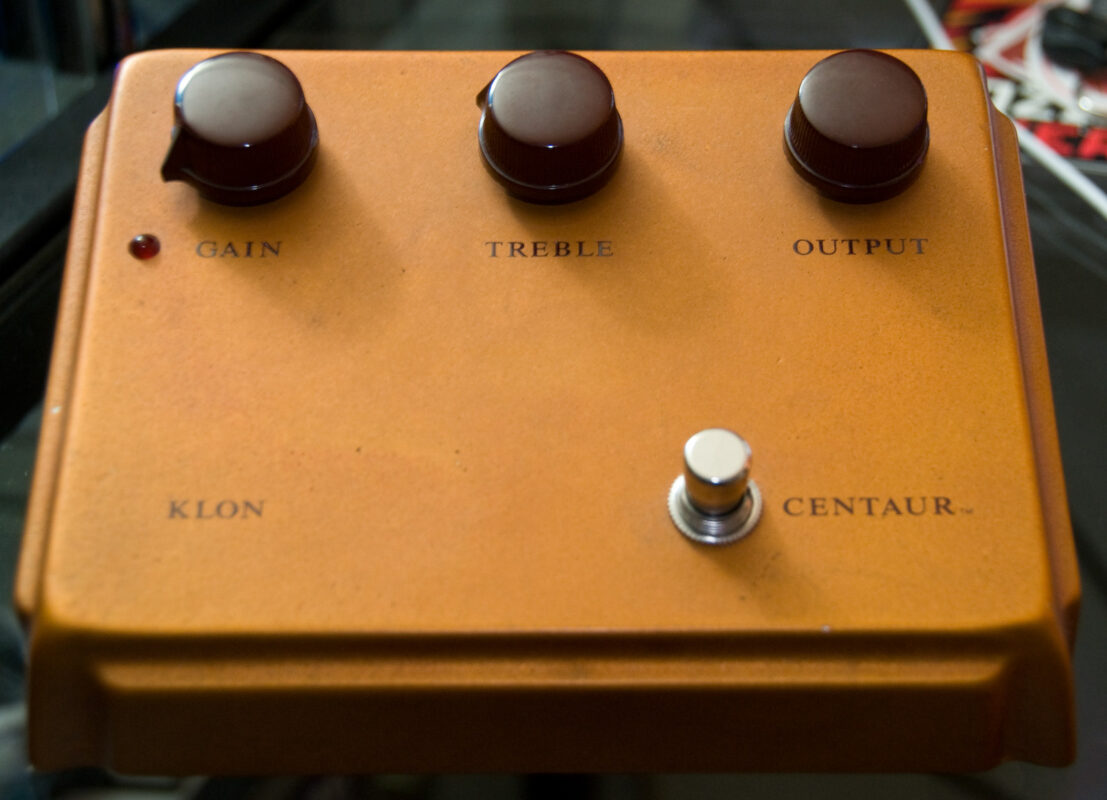
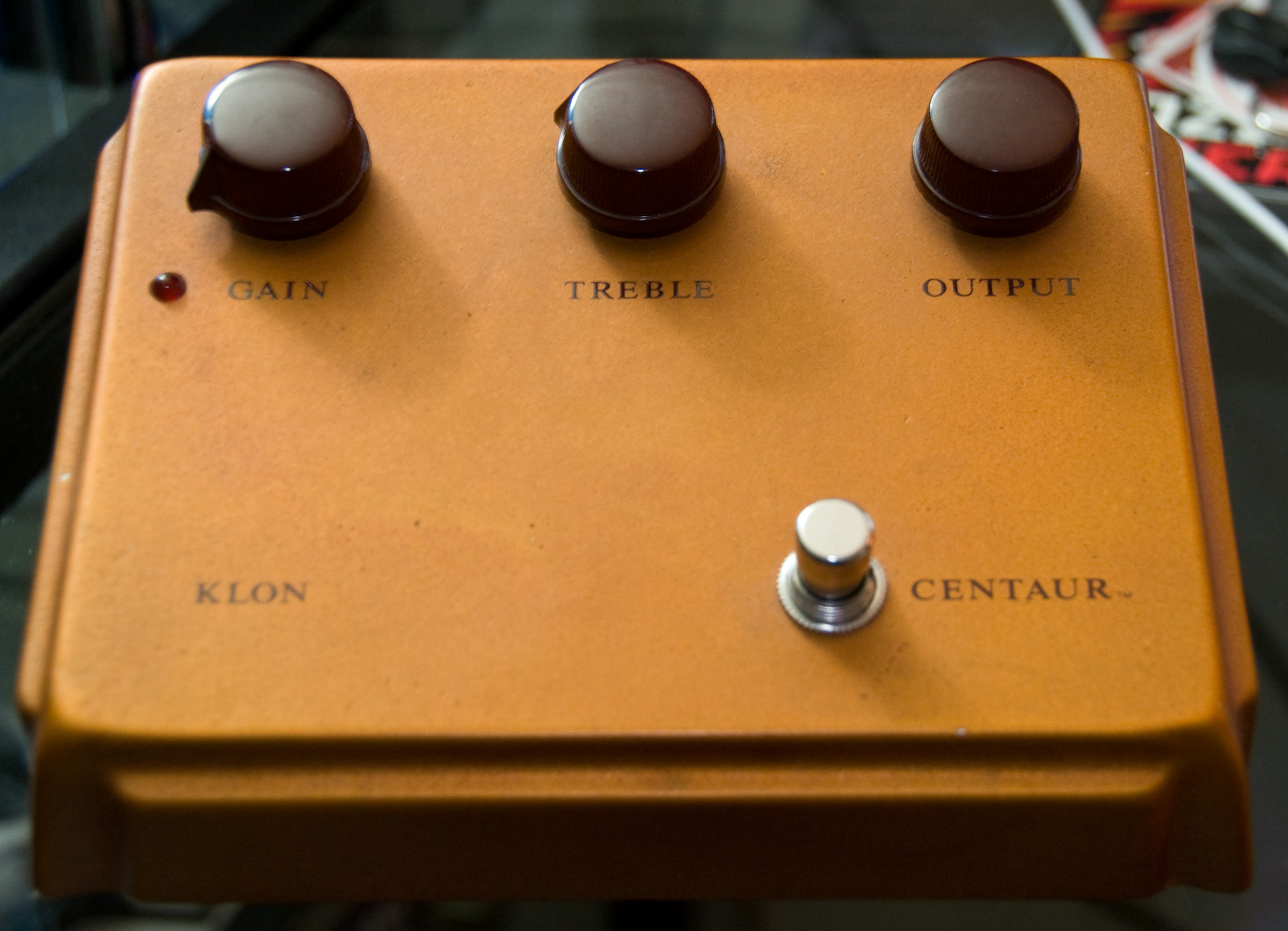
Photo: Klon Centaur, photographed on 17 September 2008. “Klon Centaur” by ArtBrom, CC BY-SA 2.0. Full source frame; original photograph unchanged, display resizing only. Adaptations require ShareAlike. No manufacturing date or circuit revision is asserted.