Mick Box Guitars & Gear: The Complete Guide to Uriah Heep’s Black Les Paul, Marshall Stack & Wah-Wah Proto-Metal Rig
Mick Box guitars & gear: Uriah Heep's founding guitarist. Black Gibson Les Paul, Marshall stack, Jim Dunlop wah — Look at Yourself, Easy Livin, Demon Stew proto-metal tone guide.
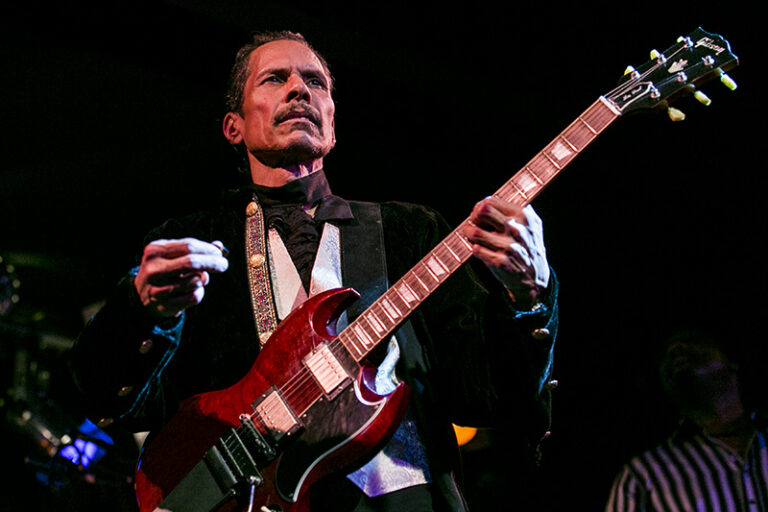
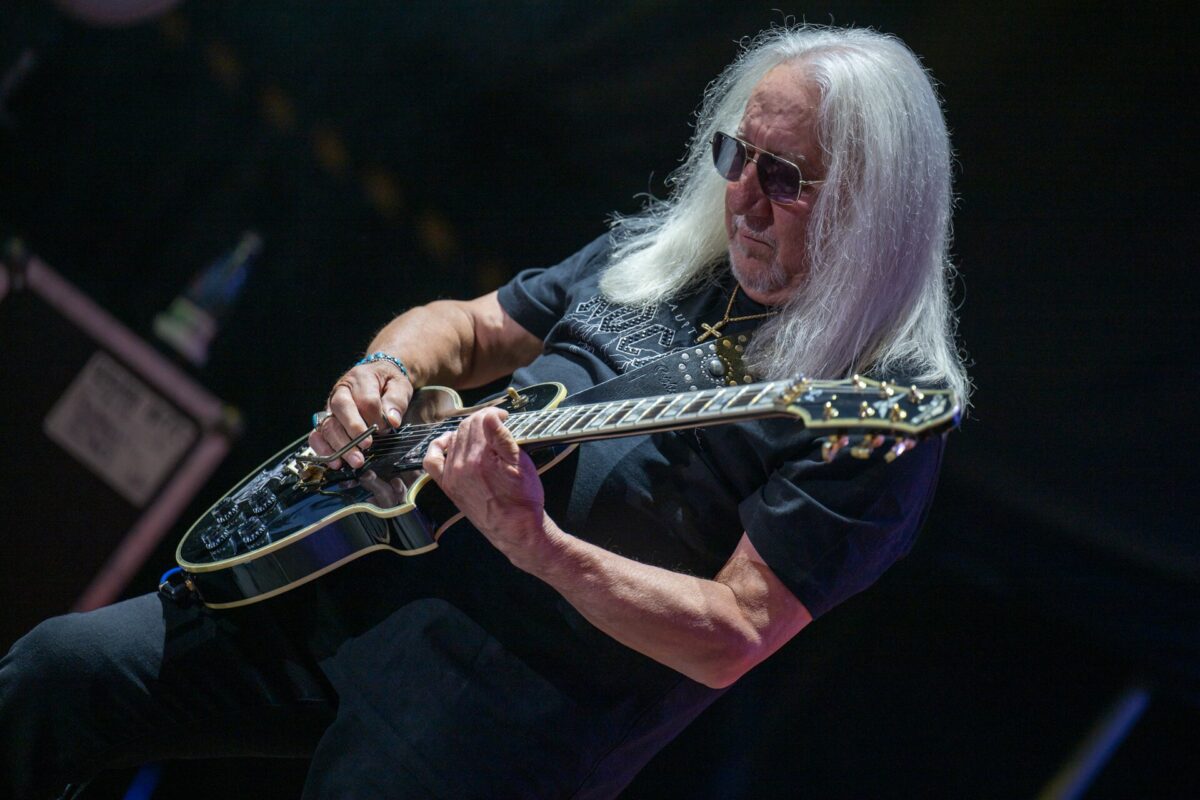
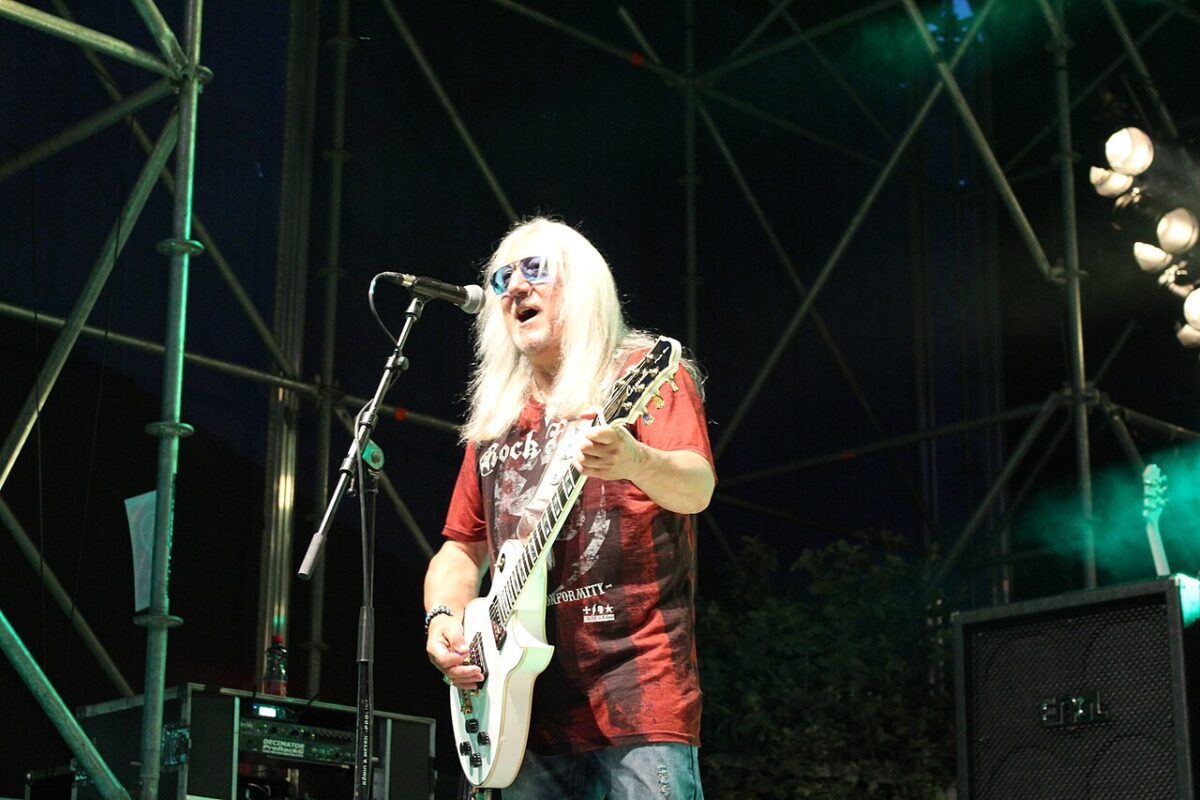
Photo: Stefan Brending, license: https://creativecommons.org/licenses/by-sa/3.0/de/legalcode
Uriah Heep’s template for their specific sound came from Vanilla Fudge. “One of our major influences was a band called Vanilla Fudge, who used a Hammond Organ, searing guitars and high vibrato vocals,” Mick Box told the Psychedelic Baby Magazine. “We kind of applied that to our original songs, and that became the template for Heep’s sound. We added harmony, as we had five vocalists and used this almost as another instrument, plus there was my Wah Wah guitar.” The Hammond Organ plus searing guitars plus high vibrato vocals, with the wah-wah guitar: this is the foundational Uriah Heep formula, and it is the Mick Box guitar that provides the “searing” element. The specific gear for the early albums — the black Gibson Les Paul through a Marshall 100-watt stack with a Jim Dunlop wah pedal — produced the guitar sound of Very ‘Eavy, Very ‘Umble (1970), Salisbury (1971), and Look at Yourself (1971): the albums that established Uriah Heep as one of the primary British proto-metal bands alongside Black Sabbath, Deep Purple, and Led Zeppelin. The wah solos on Salisbury are documented as “complex and powerful” — the specific critical descriptor for the guitar playing that distinguished Box from the simpler hard rock approaches of some contemporaries. The black Les Paul. The Marshall stack. The Jim Dunlop wah. The Hammond Organ filling the sonic space that the guitar left open. This is the early Uriah Heep guitar story: not the guitar as the only voice in the arrangement, but the guitar in dialogue with the organ, the two searing together through the high vibrato vocals and the five-part harmony that the band added as its additional specific instrument. Mick Box is the founding guitarist and the only founding member of Uriah Heep still active with the band — fifty-five-plus years of the same musical identity, the same commitment to the guitar’s role in the specific Vanilla Fudge-descended British proto-metal template, now executed with Carparelli signature guitars through ENGL amplification instead of the black Les Paul through the Marshall stack, but maintaining the same fundamental approach that the Walthamstow guitarist brought to the band he co-founded in 1969.
The Journey
Michael Frederick Box was born on June 9, 1947, in Walthamstow, East London, England — the same East London geography that produced a disproportionate share of the British rock musicians of his generation. He was previously a member of The Stalkers and Spice, both with original Uriah Heep vocalist David Byron, and co-founded Uriah Heep with Byron in 1969 along with Ken Hensley (guitar, keyboards, vocals), Paul Newton (bass), and Nigel Olsson (drums). The band signed to Vertigo Records and released Very ‘Eavy, Very ‘Umble in 1970 — the album that established both the specific Uriah Heep organ-guitar-voice template and the critical controversy that would follow the band throughout their early career. The Rolling Stone review — one of the most savage reviews in the magazine’s history, describing the album as “one of the worst albums I’ve ever heard” — is part of the Uriah Heep biography at least as much as the commercial success: the band that critics despised became one of the biggest-selling rock acts of the early-to-mid 1970s, achieving particular success in Germany, Japan, and the United States while the British critical establishment dismissed them. Box’s guitar was at the center of this commercial success: the wah-wah solos on Salisbury, the hard-driving riffs of “Easy Livin'” and “Look at Yourself,” the blues-influenced guitar of the heavier material that drew from the same Cream and Hendrix tradition that the broader British hard rock scene of the period inhabited.
His musical education is notable for starting with jazz — Django Reinhardt, Barney Kessel, Tal Farlow — before moving on to the electric rock tradition. This jazz foundation gives Box’s guitar a specific harmonic sophistication that distinguishes his approach from the purely pentatonic rock guitar of some contemporaries: the jazz influences’ chord vocabulary and melodic sensibility are audible in the more harmonically complex passages of the Uriah Heep catalog, particularly in the progressive rock-adjacent material of the Demons and Wizards (1972) and The Magician’s Birthday (1972) period that is widely regarded as the peak of the early Heep creative arc.
The Carparelli signature guitar relationship — the modern primary instrument — is the specific current expression of the Les Paul-family guitar identity that Box established in the early Heep period. The Carparelli S4 Mick Box Signature’s Gibson-style humbuckers, tune-o-matic bridge, and stopbar tailpiece maintain the fundamental tonal architecture of the Les Paul approach — warm humbucker output, sustaining mahogany/maple construction, the specific guitar family that the Vanilla Fudge influence demanded as the searing element of the organ-guitar-voice template. “I’ve got Seymour Duncan Jeff Beck pickups on every guitar that I use out on the road because you can interchange things; you don’t want to start messing around with the controls on the amp to make it sound right,” Box told Guitar World. The Seymour Duncan Jeff Beck signature pickups on the road guitars, the ENGL Fireball amplification, the Cry Baby wah and chorus: the contemporary Mick Box signal chain in the service of the same Uriah Heep sound that the black Les Paul and Marshall stack established in 1970.
Background: Walthamstow, the Vanilla Fudge Template, and the Album That Got the Worst Review in Rolling Stone History
The Vanilla Fudge influence — the specific American psychedelic rock band whose combination of Hammond Organ, searing guitar, and high vibrato vocals on slowed-down covers of pop songs (their famous cover of “You Keep Me Hangin’ On” transforming the Supremes’ three-minute pop song into an eight-minute psychedelic heavy rock statement) — is the most precisely documented single influence on the Uriah Heep sound. The Vanilla Fudge template is the Uriah Heep template: the organ as the foundation and texture instrument, the guitar as the searing melodic and riff voice, the vocals as the high, prominent, multi-harmony element. Uriah Heep applied this template to their original songs and added the specific dimension of five-part vocal harmony — an element that no other British heavy rock band of the period had developed to the same degree. The harmony vocals are the Heep’s specific addition to the Vanilla Fudge formula, and they are as much an “instrument” in the arrangement as the Hammond Organ or the guitar.
The Vertigo Records signing and the Very ‘Eavy, Very ‘Umble debut established the band immediately in the specific British proto-metal tradition alongside Black Sabbath (Birmingham), Deep Purple (Home Counties), and Led Zeppelin (various locations, but centered in London). The four bands share the early 1970s British heavy rock moment and the specific combination of blues-influenced guitar, heavy rhythm sections, and vocalist-driven melodic content that defines the proto-metal tradition. What distinguishes Uriah Heep from the other three is the organ’s centrality — Ken Hensley’s Hammond Organ is as prominent in the Heep arrangements as any guitar, and Box’s guitar is in dialogue with it rather than dominant over it. The searing guitar and the Hammond Organ searing together: this is the specific Heep approach to the blues-to-heavy-rock transition.
Demons and Wizards (1972) and The Magician’s Birthday (1972) are widely regarded as the creative peak of the early Uriah Heep period — the two albums that most completely realized the fantasy-themed progressive hard rock vision that Box and Hensley developed together. “Wizard” from Demons and Wizards is the specific track most often cited as the Heep peak: a seven-minute fantasy narrative with the specific combination of the acoustic guitar intro, the organ-and-guitar development, and the vocal harmonies that fully realized the Vanilla Fudge template in the Heep context. “The Magician’s Birthday” from the following album — eighteen minutes long, with the specific extended instrumental passage and guitar solo that Box’s technical development allowed — is the progressive rock dimension of the Heep identity at its most ambitious.
The numerous lineup changes across five decades — nearly forty different musicians passing through Uriah Heep — make Box’s consistent presence as the only founding member still active with the band a specific biographical statement of personal and creative commitment. Through David Byron’s departure (1975), Ken Hensley’s departure (1980), and every subsequent incarnation of the lineup, Box has maintained the specific guitar identity and the specific Uriah Heep creative vision that he established with the black Les Paul and the Marshall stack in 1969. The guitar has changed — from the black Les Paul to various Gibson instruments to the modern Carparelli signatures — but the approach has not.
The Rig: Mick Box’s Guitars, Amps, and Effects
Guitars
The primary guitar of the early Uriah Heep recordings — the very ‘eavy, very ‘umble instrument that produced the wah solos on Salisbury and the searing guitar of the classic proto-metal period — was a black Gibson Les Paul Custom. “I can only remember that I had a Black Gibson Les Paul guitar, put through a Marshall 100 watt stack, and a Jim Dunlop Wah pedal,” Box recalled in the Psychedelic Baby Magazine interview. The black Les Paul Custom — the three-humbucker, ebony fingerboard, multi-binding Les Paul Custom specification — provided the specific warm, thick, sustaining humbucker character that the Uriah Heep organ-guitar-voice template required. The guitar’s three-humbucker configuration provided more tonal variety than the two-humbucker Standard, and the ebony fingerboard’s brightness added clarity to the warm mahogany body character. The black finish — in contrast to the sunburst of the Standard or the natural of the Junior — gave Box a visually distinctive instrument appropriate to the progressive heavy rock aesthetic of the early Heep period. The Les Paul Custom’s specific character through the Marshall 100-watt stack produced the “searing guitar” element of the Vanilla Fudge template: warm, sustaining, capable of the high-volume harmonic complexity that the Marshall EL34 amplification at appropriate power produced.
In the video of The Magician’s Birthday Live, Mick is playing a Gibson Les Paul Custom. The documentation confirms the Les Paul Custom as the primary performance guitar through the mid-1970s Heep period, the specific instrument through which the complex and powerful wah solos and the extended guitar passages of The Magician’s Birthday were performed.
Mick Box was seen playing a Yamaha MSG Deluxe during a performance in Peterborough in the late 90s, as evidenced by a user-uploaded photo on his official website. The Yamaha MSG Deluxe — a high-quality Japanese-made guitar from Yamaha’s professional line — provided a different tonal character from the Gibson Les Paul family’s characteristic warmth, with the Yamaha’s specific construction quality and pickup character in a different acoustic architecture.
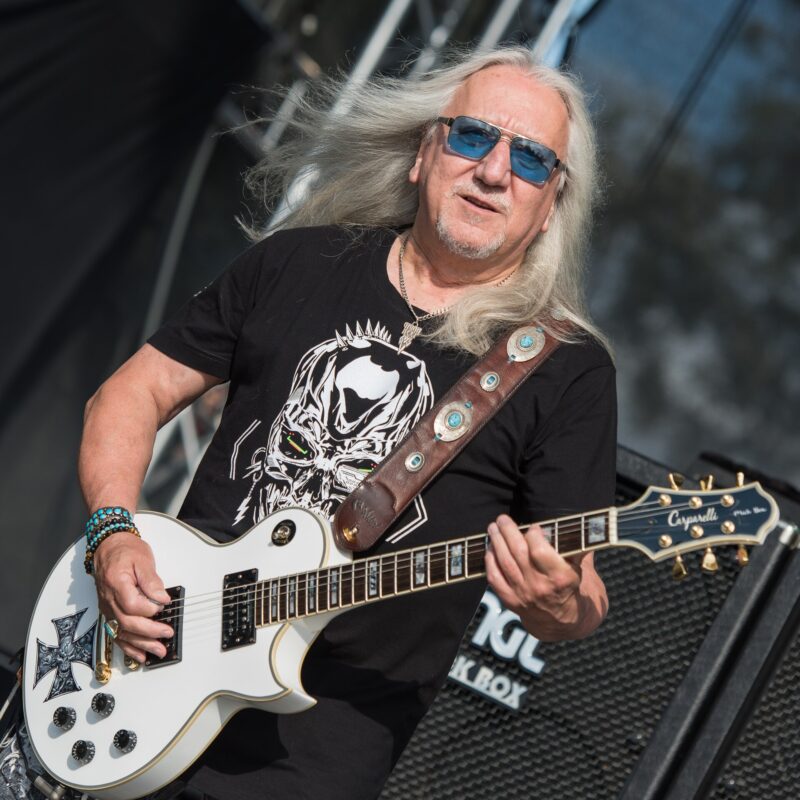
Box’s modern primary electric guitars are the Carparelli S4 Mick Box Signature models — produced by Canadian manufacturer Mike Carparelli’s Carparelli Guitars, “built with precision and care, using high-quality materials, and traditional building techniques.” The Carparelli S4 Mick Box Signature features dual humbuckers, a tune-o-matic bridge, stopbar tailpiece, and the specific Gibson-style headstock that maintains the Les Paul family visual identity. “I’ve got three Carparellis out on the road, all with Seymour Duncan JB pickups in,” Box told Guitar World. The Seymour Duncan SH-4 JB humbucker — one of the most widely used aftermarket humbuckers in rock — provides the specific warm, upper-midrange-present character that Box prefers for the road guitar context. “It’s a really strange thing with guitarists; with me and my sound I can plug into a Fender Champ with something and it will sound like a Gibson in the end.” The guitar’s inherent Les Paul-family character — the wood, the construction, the pickup position — is what makes it sound like itself regardless of the amplifier, and the Carparelli maintains that character in the touring-appropriate format.
The Taylor DN6e dreadnought acoustic guitar is documented in Mick Box’s equipment — the specific acoustic used for acoustic passages in the Uriah Heep live set and for acoustic recording contexts. The Taylor’s solid Sitka spruce top and sapele back and sides provide the specific bright, articulate acoustic character of the Taylor dreadnought tradition.
Amps
The early Uriah Heep amplification — confirmed in Box’s own account of the Very ‘Eavy, Salisbury, and Look at Yourself recording period — was a Marshall 100-watt stack: the same foundational British EL34 amplification documented throughout this series as the primary British hard rock amplifier of the early 1970s. The Marshall 100-watt head through the Marshall 4×12 cabinet produced the specific British EL34 warmth and natural saturation at high volumes that the black Les Paul Custom’s humbuckers drove into the specific searing character of the early Heep guitar. The Marshall’s natural saturation at appropriate performance volumes combined with the Les Paul Custom’s three-humbucker output and the wah pedal’s frequency filtering: this is the foundational Mick Box guitar tone.
Box’s modern primary amplification is the ENGL Fireball amplifier — “I have an Engl Fireball amp with two speakers” — used with straight speaker cabinets rather than slanted. “I like to have them on the floor, not on wheels, so I can feel it.” The ENGL Fireball’s specific character: a high-gain British-voiced tube amplifier (EL34 output stage, similar to Marshall’s power section) with the specific ENGL preamp design that provides more gain and more tonal flexibility than the vintage Marshall stack. The straight cabinet preference — over the more common slanted 4×12 — is Box’s specific practical and tonal decision: “the slanted ones drive me nuts. I just think they give the wrong tone for me and they also bleed into the microphone when I’m singing and it doesn’t help the front of house.” The floor placement for physical feedback: “I can feel it.” The ENGL Artist Edition E651 is also documented via the Equipboard community — a more recent ENGL model that Box has demonstrated.
Effects
The Jim Dunlop Cry Baby wah-wah is the most consistent and most historically significant element of Mick Box’s signal chain — documented from the earliest Uriah Heep recordings (“plus there was my Wah Wah guitar”) through the present day (the official artist website confirms a Dunlop Cry Baby wah). The wah-wah is Box’s primary expressive tool and the element that distinguishes his approach from the more straight-into-amp British hard rock guitar of some contemporaries. “His early work stands out on the album Salisbury with complex and powerful wah solos” — the critical assessment that identifies the wah as the primary technical and expressive characteristic of his playing. The wah’s frequency filter sweep, applied to the Les Paul Custom’s warm humbucker output through the Marshall’s pushed EL34 amplification, produces the specific vocal, expressive quality of the Box guitar voice that the “searing” descriptor captures: the wah’s filtering creating the specific vowel-sound quality of notes that seem to speak rather than merely to sound.
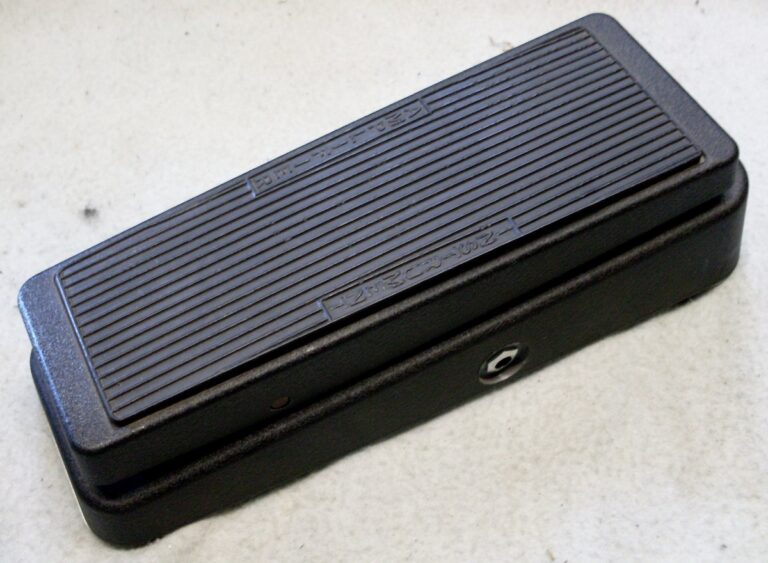
The pedalboard is one Cry Baby wah-wah and a chorus, as Box told Guitar World. The chorus pedal adds the specific harmonic widening and pitch modulation that gives the guitar more sonic presence in the Uriah Heep mix — a mix that includes Hammond Organ as a primary instrument competing for the same sonic space. The chorus’s width-adding character helps the guitar cut through and alongside the organ without requiring extreme volume or additional gain. In 2012, Box was using the Bi-Chorus pedal from the Bi-Chorus pedal manufacturer, picked up while in the USA.
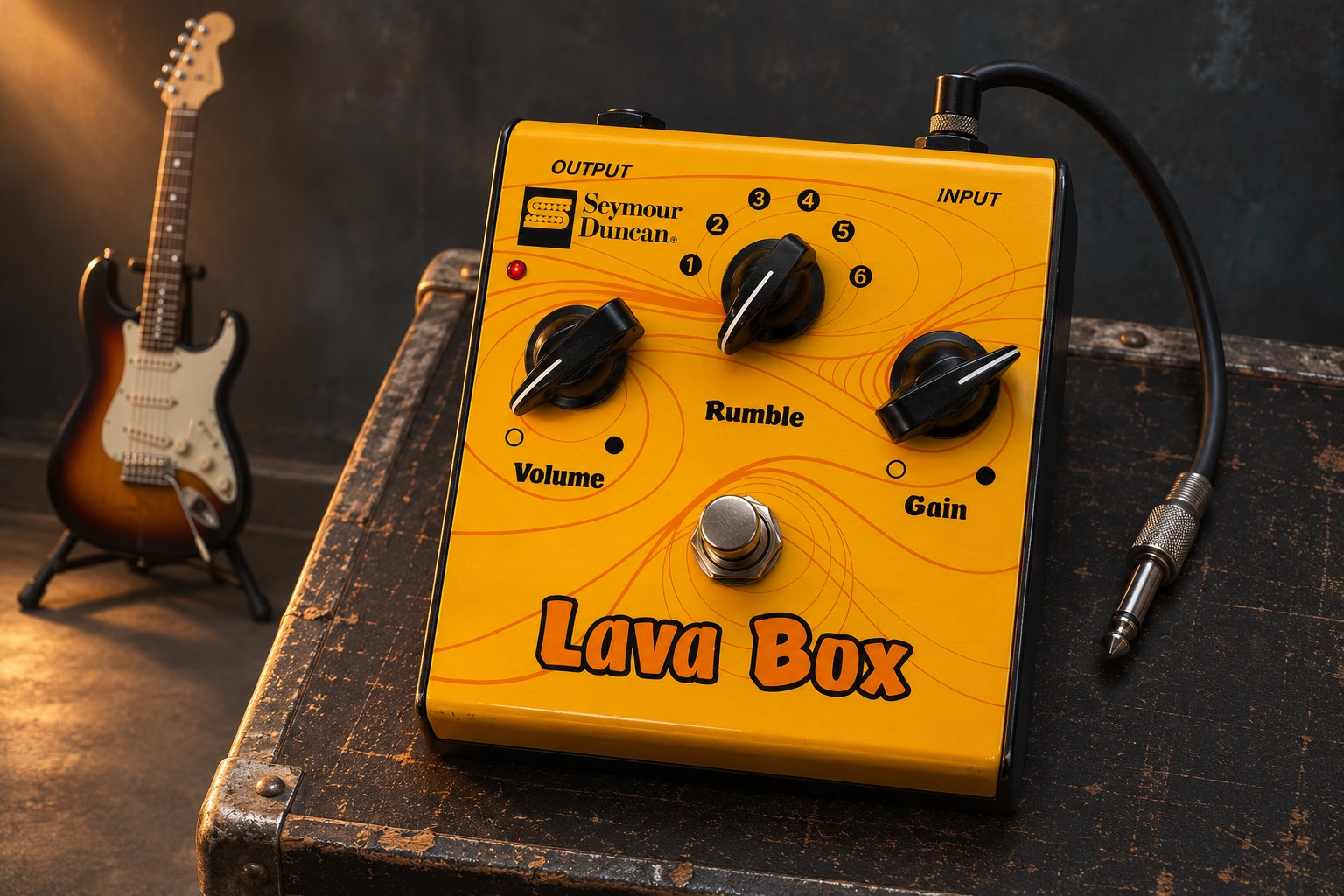
The Seymour Duncan SFX-05 Lava Box is documented in Box’s setup from a 2011 Seymour Duncan blog post. The Lava Box is a reverb/tremolo effects pedal from Seymour Duncan’s SFX effects series, providing the specific spring reverb and tremolo character that adds spatial dimension to the guitar sound.
“I’ve got Seymour Duncan Jeff Beck pickups on every guitar that I use out on the road.” The Seymour Duncan Jeff Beck signature pickup (SH-4 JB for bridge, TB-4 for tremolo-equipped guitars) is the specific pickup that Box equips on all road guitars — Carparellis and others — for the touring context. The JB’s specific character: warm, output-medium-to-high, with the upper-midrange presence that suits the Uriah Heep guitar’s need to cut through the Hammond Organ’s sonic density. “You can interchange things; you don’t want to start messing around with the controls on the amp to make it sound right” — the consistent pickup across all road instruments means the amp settings don’t need to change between guitars. The pickup is the consistent variable that makes the guitar sound like the guitar regardless of which specific Carparelli body it’s installed in.
The specific early 1970s British heavy rock moment that Uriah Heep inhabited alongside Black Sabbath, Deep Purple, and Led Zeppelin is the specific cultural context that makes the Rolling Stone dismissal both historically ironic and critically instructive. Rolling Stone in 1970 was oriented toward the American counterculture’s specific musical preferences — the singer-songwriter tradition, the blues-rock of the Allman Brothers, the country-rock of the Byrds and the Eagles — and the specific British heavy rock of the Heep debut did not fit within that critical framework. The audiences in Germany and Japan, uncontaminated by the Rolling Stone critical consensus, heard something different: the specific combination of the Hammond Organ’s powerful harmonic richness, the searing guitar’s aggressive melodic content, the five-part vocal harmony’s specific richness, and the overall sound’s sheer physical impact. They bought the records. Rolling Stone is on record as having called it one of the worst albums ever heard. The record sold millions. This is the critical establishment’s specific limitation documented in the most vivid available example: the judgment of taste and the judgment of the marketplace reaching opposite conclusions about the same music, with the marketplace being demonstrably correct about the music’s specific value to the audience it was serving.
Box’s fifty-five-plus years as the only continuous Uriah Heep member is a specific biographical achievement that places him in the same category as the long-serving founding guitarists documented elsewhere in this series — Dave Davies of the Kinks, who is the original co-creator of a specific guitar sound that defines a band’s identity across decades; or Andy Latimer of Camel, who is the only continuous member of his band since its formation. The specific quality these guitarists share: not merely technical excellence but the creative vision and personal commitment to a specific musical identity that sustains a band’s identity across personnel changes and through the changing commercial landscape of rock’s evolving genre history. Box with the Carparelli signature guitars and the ENGL Fireball is the same guitarist who played the black Les Paul Custom through the Marshall 100-watt stack in 1970, because the guitar philosophy — the dialogue with the organ, the wah-wah as expressive tool, the jazz-influenced melodic vocabulary applied to the heavy rock context — has not changed. The instruments have evolved; the philosophy has remained. The wah is still searing. The organ is still in the arrangement. The audiences are still right.
Playing Style & Tone Philosophy
Mick Box plays guitar as a musician who understood from the beginning that the Uriah Heep guitar was one voice in a multi-voice arrangement where the Hammond Organ occupied an equivalent position in the melodic and harmonic foreground. The guitar doesn’t dominate in the Heep context; it dialogues — with the organ, with the vocal harmonies, with the rhythm section’s specific driving quality. This understanding of the guitar’s role as a dialogic rather than dominant voice is what made the Vanilla Fudge template work in the Heep context: Box provided the searing guitar that the template required without overshadowing the other voices that made the template function.
The jazz foundation — Django Reinhardt, Barney Kessel, Tal Farlow — gives Box’s guitar a melodic sophistication that the purely pentatonic blues-rock approach doesn’t provide. The complex and powerful wah solos on Salisbury reflect this jazz-influenced melodic development: not the simple blues pentatonic wah-wah of the Hendrix tradition, but a more harmonically adventurous melodic vocabulary that the jazz influences’ chord awareness and melodic sophistication enabled. The wah is the expressive tool; the scales and melodic vocabulary are the content. The content reflects the jazz education applied to the heavy rock context.
The straight speaker cabinet preference and the floor placement — “so I can feel it” — is the specific physical grounding of someone who understands that the amplifier is not merely a sound-producing device but a physical experience: the vibration through the floor, the specific physical feedback of the amplifier’s acoustic output felt through the body as well as heard through the ears. “I can plug into a Fender Champ with something and it will sound like a Gibson in the end” — the guitar’s inherent character is more determinative than the amplifier’s character, which is why the consistent pickup across all road guitars matters more than the specific amplifier model in the touring context.
How to Sound Like Mick Box
The Mick Box Uriah Heep tone requires: a Gibson Les Paul Custom or equivalent (Carparelli S4 or Les Paul family humbucker guitar with Seymour Duncan JB pickups); a Marshall 100-watt stack or ENGL Fireball equivalent through straight speaker cabinets; a Jim Dunlop Cry Baby wah-wah as the primary expressive tool; a chorus pedal for width and presence in the organ-heavy Heep mix; and the specific understanding that the guitar is in dialogue with a Hammond Organ rather than dominant over a simpler rhythm section.
| Control | Setting (0–10) | Notes |
|---|---|---|
| Marshall 100-Watt / ENGL Fireball | Volume: 7; Gain: 6; Treble: 7; Mid: 6; Bass: 5 | Natural EL34 saturation at performance volume — the specific British warmth that the Les Paul Custom’s humbuckers drive into the specific “searing” character. Enough gain for the wah-wah solos’ sustained notes to sustain and bloom without excessive compression. The Marshall stack on the floor, not on wheels. Feel the vibration. The physical feedback of the amplifier is part of the playing experience. |
| Gibson Les Paul Custom / Carparelli S4 | Volume: 10; Bridge Humbucker (Seymour Duncan JB) | Full volume through the bridge humbucker into the pushed Marshall or ENGL. The Les Paul Custom’s three-humbucker configuration or the Carparelli’s dual-humbucker with SD JB provides the specific warm, sustaining output that drives the Marshall’s EL34 output stage toward natural saturation. The guitar’s character is the character of the sound — the amp confirms it. |
| Jim Dunlop Cry Baby Wah-Wah | Complex, expressive, melodically organized | “Complex and powerful wah solos.” The wah is not used for simple rhythmic chicken-scratch patterns or for show-off toe-to-heel velocity. The Box wah approach is melodically organized — the wah’s frequency sweep follows the melodic content of the guitar’s note choices, creating the specific vocal, expressive quality of the “searing” guitar voice. Slow, deliberate wah movements for sustaining melodic passages; more dynamic motion for the technically demanding solo passages. |
| Chorus (Presence in Organ Mix) | Rate: 2–3 (slow); Depth: 4–5 (moderate) | The chorus’s width-adding character helps the guitar occupy the sonic space alongside the Hammond Organ without requiring volume competition. A slow, moderate-depth chorus adds the specific harmonic widening that gives the guitar more sonic presence in the organ-heavy mix. Not the obvious chorus of a guitar-forward mix; the subtle presence-adding chorus that serves the collective Uriah Heep arrangement. |
| Hammond Organ Awareness | Dialogue; not dominance; leave space | The most important Mick Box technique that no gear setting produces: the awareness that the Hammond Organ is an equal voice in the arrangement and that the guitar’s role is to dialogue with it rather than to overwhelm it. The Vanilla Fudge template requires both voices. The guitar and the organ together make the Heep sound; the guitar alone is only half of it. Play with the awareness of the other voice in the room. |
| Jazz Melodic Vocabulary | Beyond pentatonic; chord tones; harmonic awareness | The Django Reinhardt, Barney Kessel, Tal Farlow influence: chord tone approach to lead guitar melody, harmonic awareness from the jazz tradition applied to the heavy rock context. The complex and powerful wah solos reflect melodic choices that go beyond the pentatonic scale’s five notes. Practice arpeggios over the chord changes; use the chord tones as the primary melodic material; the pentatonic is the vocabulary, the chord tones are the grammar. |
Influence & Legacy
Mick Box’s influence on rock and heavy metal guitar is the influence of the foundational British proto-metal guitarist who established the specific combination of the Les Paul humbucker character, the Marshall stack’s EL34 warmth, and the wah-wah’s expressive frequency filtering as the template for the heavy rock guitar voice that would develop through the 1970s and 1980s into the multiple genres of hard rock and heavy metal. The Uriah Heep-specific contribution — the guitar in dialogue with the Hammond Organ rather than dominant over a simpler rhythm section — is the specific element that distinguishes Box’s contribution from the parallel developments of Tony Iommi at Black Sabbath and Ritchie Blackmore at Deep Purple: where those guitarists were developing the riff as the primary compositional unit, Box was developing the guitar’s dialogic relationship with the organ as the specific Heep contribution to the genre.
The commercial success that the critical establishment dismissed — the massive international sales in Germany, Japan, and the United States that made Uriah Heep one of the most commercially significant British rock bands of the early-to-mid 1970s despite the scathing Rolling Stone reviews — is the specific marketplace validation of the Box guitar approach. The audiences in Germany and Japan who made Uriah Heep one of the biggest-selling acts in those markets were responding to the specific combination of the Hammond Organ, the searing guitar, the high vibrato vocals, and the five-part harmony that the Vanilla Fudge template and the Box/Byron/Hensley creative intelligence had produced. The critics were wrong. The audiences were right.
For the Uriah Heep context within the broader British proto-metal tradition, see Tony Iommi and Ritchie Blackmore — the parallel developments of the three primary British heavy rock guitarists of the early 1970s who, alongside Box, established the genre’s foundational guitar vocabulary. The Hammond Organ integration that distinguishes Uriah Heep from the other three proto-metal bands connects to Andy Latimer’s keyboard-guitar dialogue approach — a different musical context but the same fundamental understanding that the guitar is one voice among multiple keyboard-and-guitar voices rather than the sole melodic instrument. And the wah-wah as career-defining expressive tool connects to Shuggie Otis’s “toy box” wah approach — both guitarists using the wah as a primary melodic and expressive resource rather than as an occasional effect.
Born in Walthamstow in 1947. Co-founded Uriah Heep in 1969 with a black Gibson Les Paul and a Marshall stack and a Jim Dunlop wah pedal and the Vanilla Fudge template. The only founding member still active. Three Carparellis on the road, all with Seymour Duncan JB pickups. The ENGL Fireball on the floor, not on wheels, so he can feel it. The Cry Baby wah still on the board. The Hammond Organ still in the arrangement, still requiring the guitar to dialogue with it rather than to dominate it. Fifty-five years of the Uriah Heep guitar identity, from the Very ‘Eavy, Very ‘Umble to Chaos and Color (2023). The critics were wrong in 1970. The audiences were right. Mick Box is still playing. The wah is still searing. Mick Box is still on the floor with the ENGL, feeling it. The guitar sounds like a Gibson regardless of what amp it goes through. Chaos and Color in 2023. The twenty-fifth studio album. Fifty-five years. The black Les Paul is still in the biographical record. The Carparelli is in the flight case. The Cry Baby is on the board. The wah. The searing. The organ in the room. The dialogue continues. The template was Vanilla Fudge. The result was Uriah Heep. The wah was always in the formula. Never let the critics tell the audiences what to like.
Frequently Asked Questions: Mick Box Guitars & Gear
What guitar did Mick Box use on the early Uriah Heep albums?
Mick Box’s primary guitar on the early Uriah Heep recordings — Very ‘Eavy, Very ‘Umble (1970), Salisbury (1971), and Look at Yourself (1971) — was a black Gibson Les Paul Custom. “I can only remember that I had a Black Gibson Les Paul guitar, put through a Marshall 100 watt stack, and a Jim Dunlop Wah pedal,” Box recalled. The black Les Paul Custom’s three-humbucker, ebony fingerboard specification provided the warm, sustaining character appropriate for the organ-guitar-voice Vanilla Fudge-descended template. In The Magician’s Birthday Live video, he is also seen using a Gibson Les Paul Custom.
What is Mick Box’s current guitar?
Mick Box’s current primary road guitars are the Carparelli S4 Mick Box Signature models — produced by Canadian manufacturer Mike Carparelli’s Carparelli Guitars. “I’ve got three Carparellis out on the road, all with Seymour Duncan JB pickups in,” Box told Guitar World. The Carparelli S4 maintains the Les Paul family’s Gibson-style headstock, tune-o-matic bridge, and humbucker configuration. All road guitars are equipped with Seymour Duncan JB (SH-4) humbuckers for tonal consistency across instruments: “You don’t want to start messing around with the controls on the amp to make it sound right.”
What amplifiers does Mick Box use?
Box used a Marshall 100-watt stack during the classic early Heep period. His current primary amplification is an ENGL Fireball — “I have an Engl Fireball amp with two speakers, but the speaker cabs are straight – I don’t like the slanted ones.” He places the cabs on the floor rather than on wheels: “I like to have them on the floor, not on wheels, so I can feel it.” He also uses the ENGL Artist Edition E651, demonstrated in a Gemtracks video. The ENGL Fireball’s EL34 output stage provides a similar British character to the vintage Marshall, with additional gain flexibility.
What is Mick Box’s pedalboard?
Box’s pedalboard is minimal by modern standards: one Cry Baby wah-wah and a chorus, as described to Guitar World. Additional documented effects include the Seymour Duncan SFX-05 Lava Box (reverb/tremolo) from a 2011 Seymour Duncan blog post, and the Bi-Chorus pedal used in 2012. The wah-wah is the primary and most historically significant effect — documented from the earliest Uriah Heep recordings (“my Wah Wah guitar”) through the present. The official Mick Box artist website confirms the Dunlop Cry Baby wah as his wah pedal.
What were Uriah Heep’s main musical influences?
Box identifies Vanilla Fudge as the primary band influence: “One of our major influences was a band called Vanilla Fudge, who used a Hammond Organ, searing guitars and high vibrato vocals. We kind of applied that to our original songs, and that became the template for Heep’s sound.” Box’s own guitar influences started with jazz — Django Reinhardt, Barney Kessel, Tal Farlow — before moving to the electric rock tradition. This jazz foundation gave Box’s guitar approach the harmonic sophistication that produced the “complex and powerful wah solos” documented on Salisbury.
Why is Mick Box significant in rock history?
Mick Box is the founding guitarist and only founding member of Uriah Heep still active with the band — more than fifty-five years of continuous membership. Uriah Heep were one of the primary British proto-metal bands of the early 1970s alongside Black Sabbath, Deep Purple, and Led Zeppelin, achieving massive commercial success internationally (particularly in Germany, Japan, and the United States) despite critical dismissal by publications including Rolling Stone. Box’s specific guitar contribution — the wah-wah guitar in dialogue with the Hammond Organ, the jazz-influenced melodic vocabulary applied to heavy rock, the black Les Paul through the Marshall stack — established a specific template for the organ-guitar-voice heavy rock sound that influenced the genre’s development.
What are the most important Uriah Heep albums?
The classic Uriah Heep period is generally considered to span Very ‘Eavy, Very ‘Umble (1970) through Return to Fantasy (1975). The most celebrated albums are Demons and Wizards (1972) and The Magician’s Birthday (1972), which are regarded as the creative peak: Demons and Wizards contains “The Wizard,” “Easy Livin’,” and “All My Life”; The Magician’s Birthday contains “Blind Eye,” “Echoes in the Dark,” and the eighteen-minute title track. Look at Yourself (1971) contains the well-known title track and “Lady in Black.” The band has continued recording with consistent touring activity through their 25th studio album Chaos and Color (2023).
Image credits
- Seymour Duncan SFX-05 Lava Box (Documented: GuitarGangsters AI-generated reference illustration, not a photograph.
- Top image: Photo: Stefan Brending, license: https://creativecommons.org/licenses/by-sa/3.0/de/legalcode
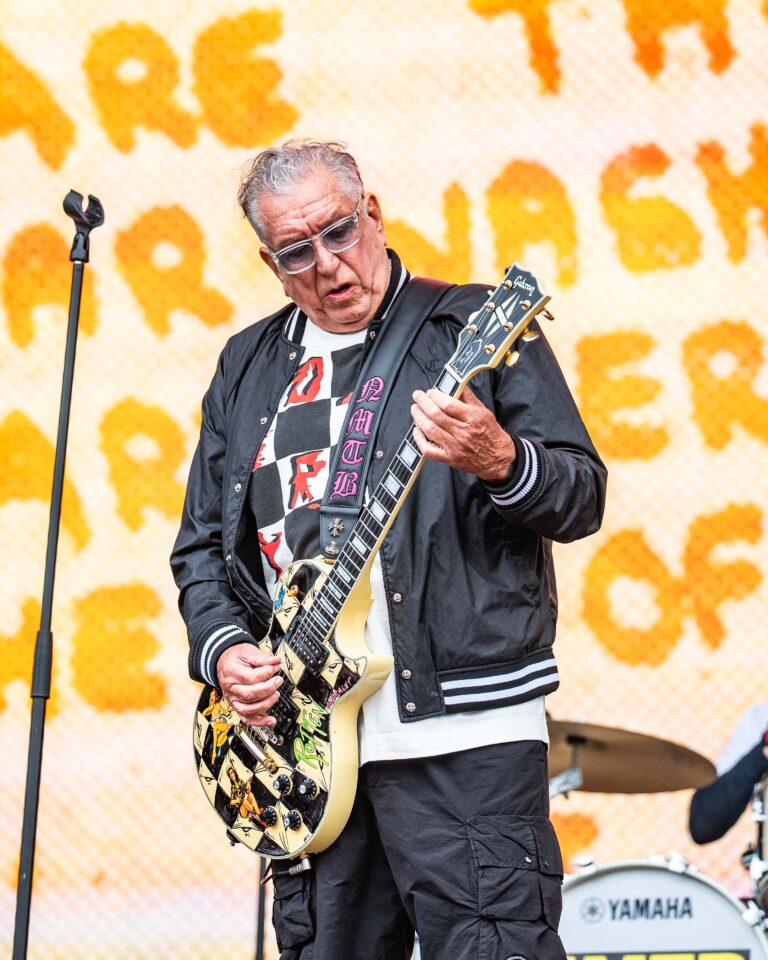
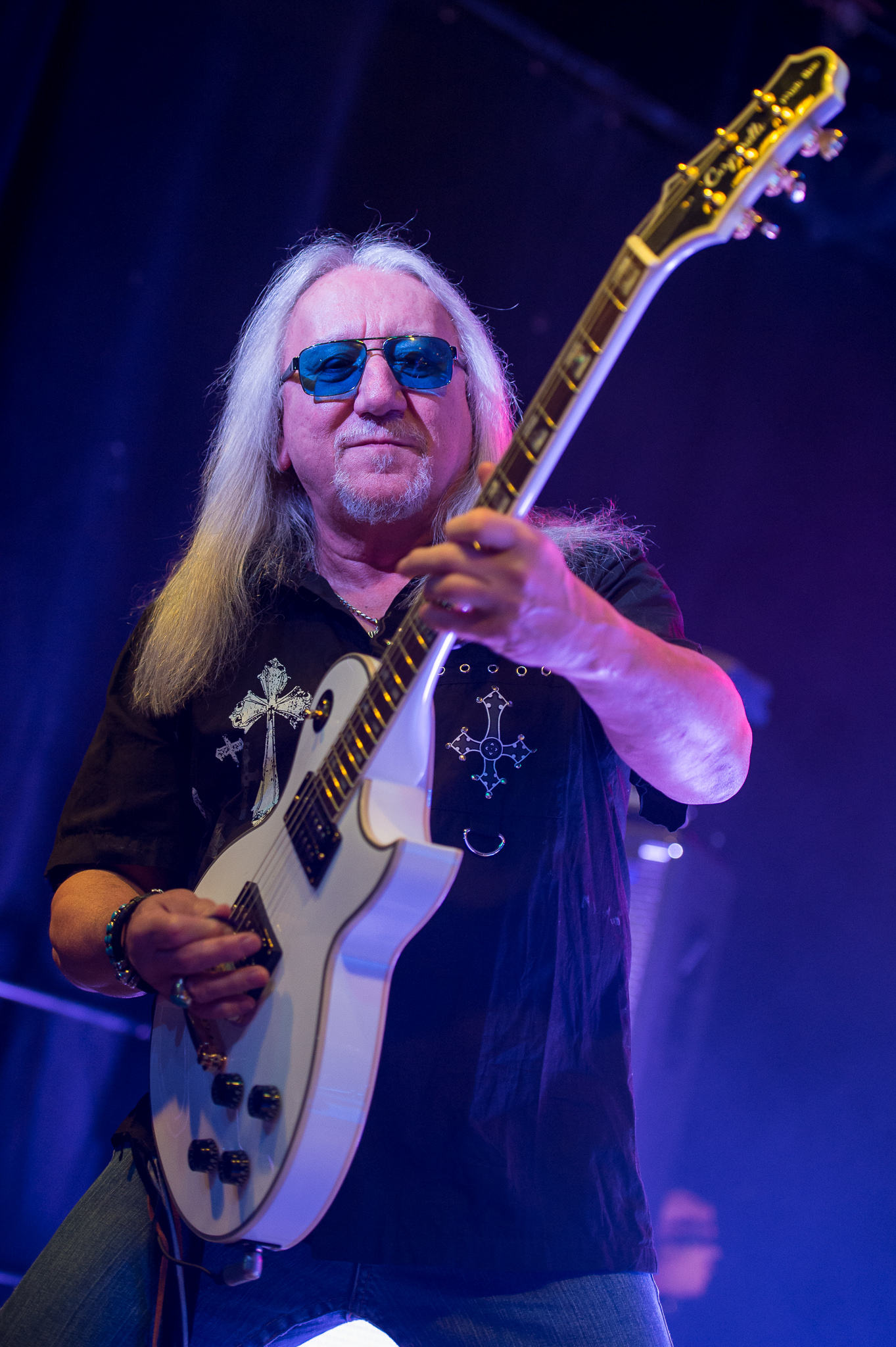
- Mick Box (2023): photo by Stefan Brending (2eight), via Wikimedia Commons, CC BY-SA 3.0 de.
- Mick Box (2017): photo by Stefan Brending (2eight), via Wikimedia Commons, CC BY-SA 3.0 de.
- Dunlop Cry Baby: Roadside Guitars, Flickr, CC BY-SA 2.0.
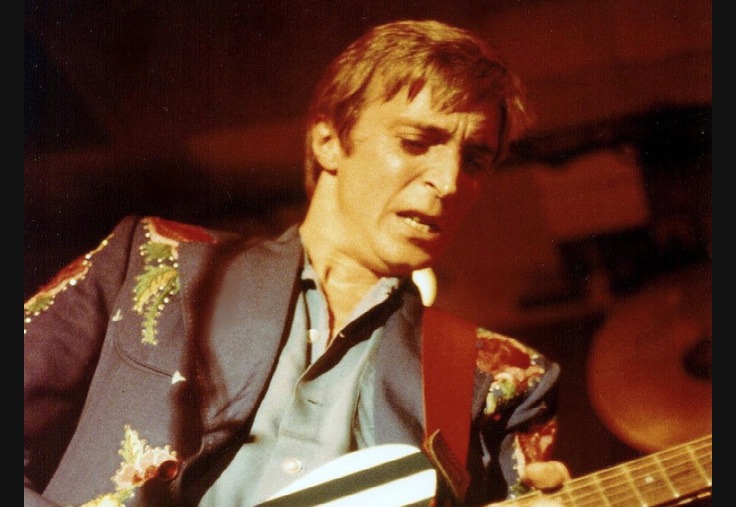
- Mick Box live: Biha, Wikimedia Commons, CC BY-SA 4.0.