PRS SE Silver Sky: The $849 Guitar That Outsold Its Own Namesake
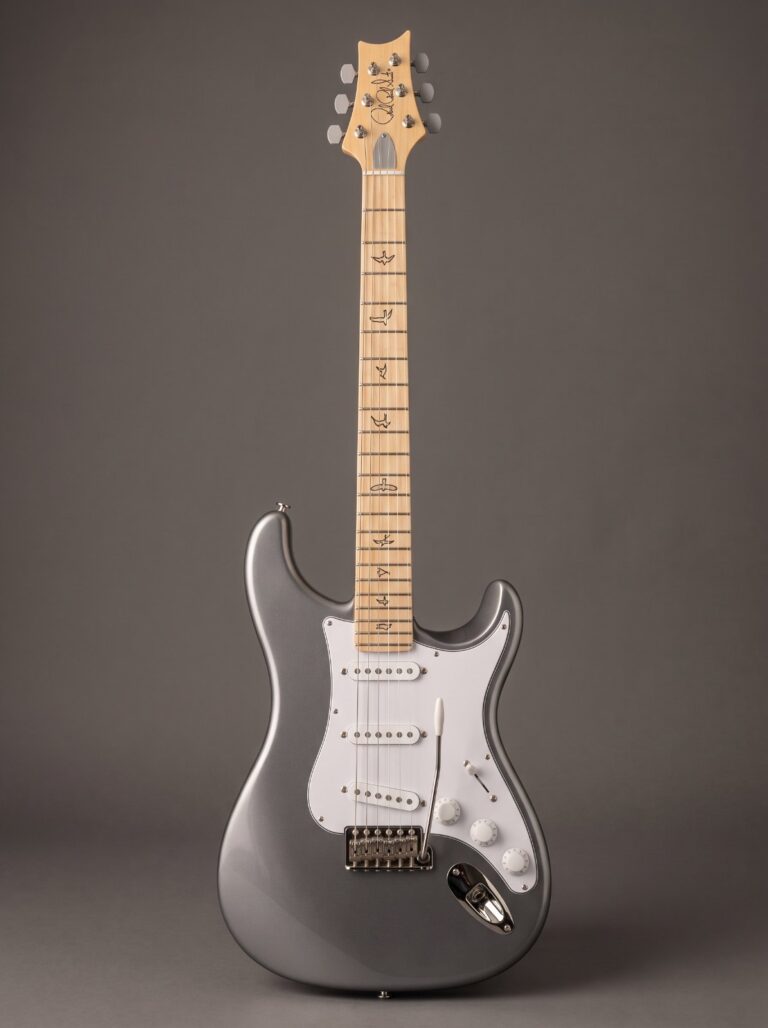
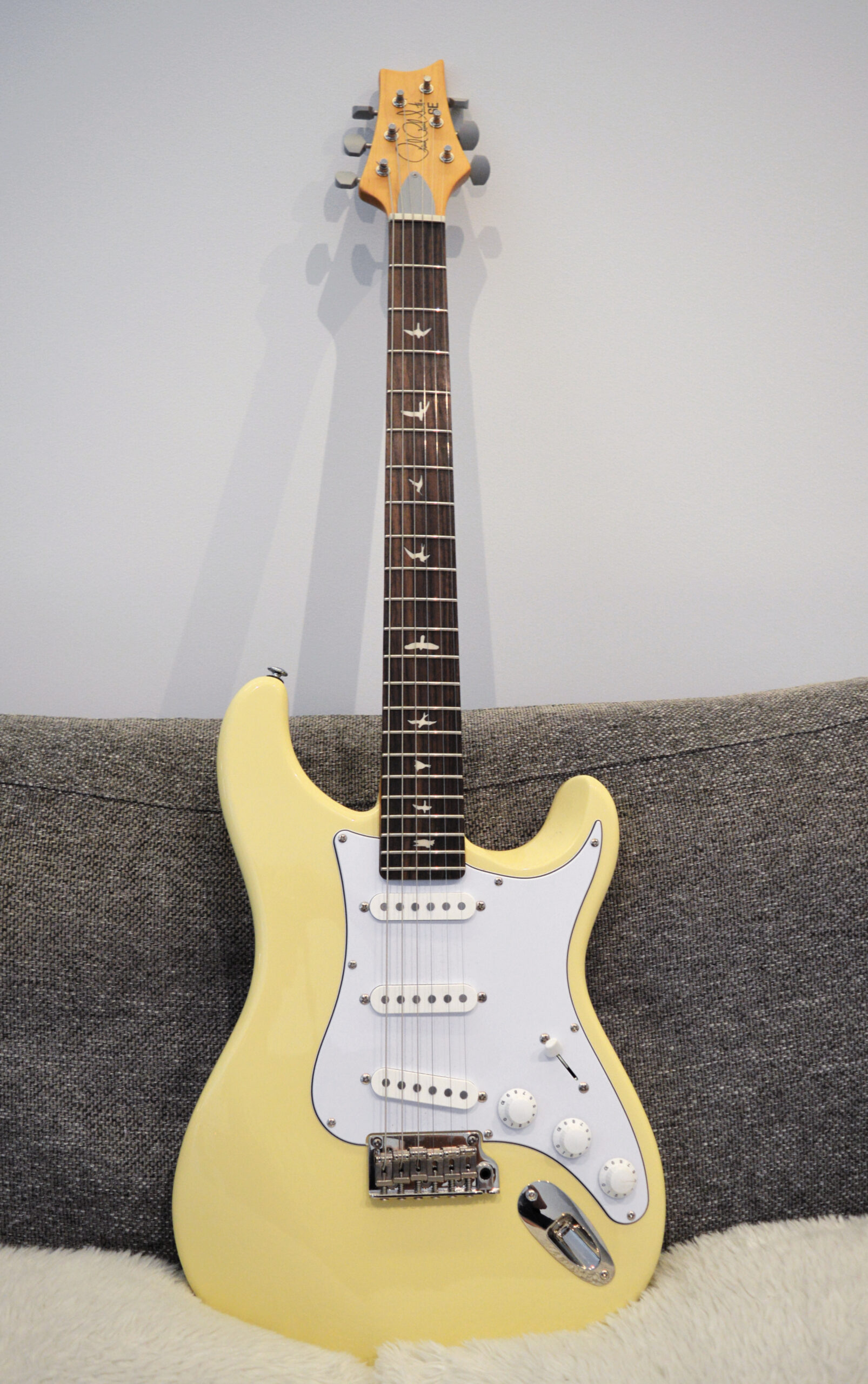
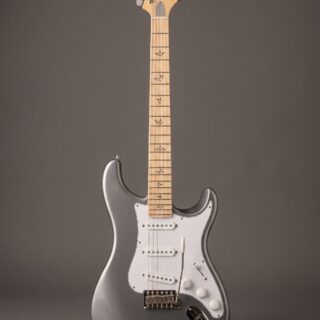
2022 PRS SE Silver Sky in Moon White, photographed 15 June 2023. Photo: Freebird, CC BY-SA 2.0. Full source frame.
How PRS built a sub-$1,000 Silver Sky without gutting it: the SE's real spec differences from the Core model, its manufacturing story, and buying advice.
The SE Silver Sky is the budget sibling of the guitar covered in our PRS Silver Sky entry, and the full story of why Mayer left Fender to build it with Paul Reed Smith lives there. This article covers different ground — the specific engineering decisions PRS made to bring a $2,300+ USA-made guitar down to well under $1,000 without simply cutting corners, and how that guitar ended up outselling the original on the used market.
Two Years After the Original: Why PRS Built an SE Version
The plan for an affordable Silver Sky wasn’t an afterthought bolted on after the Core model’s runaway success — according to PRS’s own COO Jack Higginbotham, an SE version came up in the very first development conversation between Paul Reed Smith and Mayer, years before the Core Silver Sky even existed. It took until January 2022 for that plan to become a shipping product: four years after the USA Silver Sky’s chaotic 2018 launch, PRS unveiled the SE Silver Sky at $849, less than half the price of the Core model, built at the Indonesian facility PRS shares with its manufacturing partner Cor-Tek — the same operation that produces guitars for Cort. Anticipating heavy demand, PRS announced an expansion of that Indonesian SE-dedicated building the same year, targeting a 50% increase in manufacturing capacity by the end of 2022.
That anticipation turned out to be well founded. The SE Silver Sky became Reverb.com’s best-selling electric guitar model in both 2022 and 2023 — not just PRS’s best-selling SE guitar, but the single best-selling electric guitar of any brand on one of the largest used-and-new gear marketplaces in the world, a genuinely remarkable result for a guitar competing against decades of Fender and Gibson brand recognition at the sub-$1,000 price point.
PRS SE Silver Sky — Full Specifications
What Actually Changes Between Core and SE
PRS didn’t build the SE Silver Sky by simply outsourcing the Core blueprint to a cheaper factory — reviewers who’ve compared the two side by side note that “just about every part has been re-engineered,” with virtually no shared off-the-shelf components between the two guitars despite looking nearly identical from a few feet away. The most significant material change is the body wood: poplar instead of alder, chosen not purely for cost (the wood-cost difference between the two is modest) but reportedly because PRS’s own blind testing found poplar performed as the preferred alternative in a direct comparison, delivering a more consistent tone across production runs than the more traditional but variable alder.
The fretboard radius is the spec most likely to change how the guitar actually feels in your hands: the Core model uses a notably curved, vintage-style 7.25″ radius, while the SE uses a flatter 8.5″ — a deliberate choice PRS made to appeal to a broader range of playing styles and hand sizes rather than replicating Mayer’s exact personal preference. The bridge changes from the Core’s more heavily engineered six-point-mounted tremolo to a simpler two-point design, which is generally easier to set up and adjust but offers a slightly different feel under the tremolo arm. The neck joint differs too — the Core uses a scarf-jointed headstock construction, while the SE uses multi-ply construction, a manufacturing difference invisible from the outside but relevant to long-term structural stability. Locking tuners and a bone nut on the Core give way to non-locking tuners and a synthetic nut on the SE, changes that affect tuning stability and setup convenience more than tone.
The pickups are where PRS drew the most attention to detail despite the lower price point. The SE’s 635JM “S” single-coils are made overseas rather than in the USA, but they’re built to the same target voicing as the Core pickups — described by PRS’s own team as aiming for a tone “somewhere between the pickups typically found in a ’63 and ’64 Strat.” Independent measurement of DC resistance on both pickup sets shows they land in a similar range, and most player comparisons find the difference audible mainly in clean tones, where the USA pickups retain slightly more top-end sparkle; under any meaningful amount of drive, the two are difficult to tell apart.
The Manufacturing Story
The SE Silver Sky is built at a factory operated by Cor-Tek Musical Instruments Co. in Indonesia — the same manufacturing group behind Cort Guitars, one of the largest OEM guitar builders in the world. Every SE Silver Sky carries a printed disclosure of its origin: “Built by Cor-Tek Musical Instruments Co., LTD Indonesia under licence for PRS Guitars,” a detail the USA-made Core model, marked only with a handwritten serial number, doesn’t carry. PRS’s quality control process for the SE line runs guitars back through US-based inspection even though assembly happens overseas, a structure the company credits for the SE line’s reputation for unusually consistent fit and finish at its price point relative to other imported guitars.
This isn’t PRS’s first experience with Indonesian manufacturing — the broader SE line has been built there for years, and the country has become one of the world’s major centers for mid-tier guitar production, supplying instruments for numerous Western brands. What set the SE Silver Sky’s launch apart was the scale of investment PRS made specifically for it: rather than folding production into existing SE lines, PRS and its manufacturing partner opened a dedicated new building in 2022 purely to handle SE-series output, with the explicit goal of increasing total SE manufacturing capacity by half within the calendar year. That kind of dedicated capital investment ahead of a product’s launch is unusual for a guitar at this price point, and reflects how confident PRS was in the SE Silver Sky’s commercial potential even before it reached stores — a confidence the guitar’s subsequent Reverb sales figures went on to justify.
Famous Players: John Mayer, Briefly
The full account of Mayer’s departure from Fender and the Core Silver Sky’s development lives in our dedicated PRS Silver Sky article — the short version relevant here is that Mayer was directly involved in signing off on the SE version’s design compromises, not merely licensing his name to a cheaper spinoff. “With the release of the SE Silver Sky, PRS has kept the modern design aesthetic, tone and feel of the original model and made it accessible to more guitar players, from beginner to professional,” Mayer said at the SE’s launch. “I couldn’t be happier with it.” Beyond Mayer himself, the SE Silver Sky’s commercial reach has made it a common first “real” guitar for players who couldn’t justify the Core model’s price, as well as a practical backup or travel instrument for gigging musicians who own a Core Silver Sky but don’t want to risk it on the road.
Tone Recipes
Clean-to-edge-of-breakup pop/rock: Neck or middle pickup, light compression, moderate amp headroom — the SE’s poplar body and 635JM “S” pickups handle Mayer-style clean tones convincingly at a fraction of the Core price.
In-between funk rhythm: Position 2 or 4, clean amp — the SE inherits the same reverse-wound middle pickup logic as the Core model, preserving the musical “quack” without excess hum.
Budget blues-rock drive: Bridge pickup, an affordable overdrive pedal pushing a modest tube or modeling amp — a realistic setup for a player building a first serious rig around this guitar rather than a boutique Core-level signal chain.
Worship/session rhythm: Neck pickup, subtle chorus, clean amp — the SE Silver Sky’s consistency and comfortable neck have made it a common choice in exactly this context, where reliability matters more than boutique pedigree.
How It Compares
Against the Core PRS Silver Sky, the SE trades the alder body, locking tuners, bone nut, and more curved 7.25″ fretboard radius for a poplar body, non-locking tuners, synthetic nut, and flatter 8.5″ radius — real differences, but ones that many players in blind comparisons describe as smaller than the price gap would suggest, particularly once a driven amp tone is in the mix.
Against a Fender Player Stratocaster — its most direct price-point competitor — the SE Silver Sky generally wins praise for out-of-the-box setup consistency and neck comfort, while the Fender retains a more traditional, brighter single-coil “quack” that some players prefer for straight-ahead Strat tones.
Against the PRS SE CE 24, the comparison is really humbucker versus single-coil PRS at a similar price point — the SE Silver Sky for Strat-style versatility and single-coil chime, the SE CE 24 for the snap and higher-output humbucker sound of PRS’s bolt-on 24-fret platform.
Buying Guide
Both rosewood and maple fretboard options are available on the SE Silver Sky, mirroring the choice offered on the Core model, though the SE’s fretboard radius stays the same 8.5″ regardless of wood choice, unlike the Core where the two board options carry subtly different neck shoulder shaping. Color options have expanded well beyond the four launch finishes (Dragon Fruit, Ever Green, Moon White, and Stone Blue) to include a wide rotating selection, plus periodic retailer-exclusive finishes from partners like Sweetwater. Left-handed SE Silver Sky models are also available, following the Core line’s introduction of left-handed models in 2024. For players deciding between the two tiers, the honest advice echoed across PRS’s own player forums is that the gap in raw sound is smaller than the price difference suggests — the Core model’s advantage shows up more in long-term hardware reliability, resale value, and the vintage-curved 7.25″ neck feel than in any dramatic tonal gulf.
Practical Ownership Notes
The SE Silver Sky is a common and rewarding upgrade platform — owners frequently report swapping in aftermarket pickups (boutique ’61-style single-coil sets are a popular choice) and PRS’s own locking-tuner hardware, since none of the SE’s design compromises are structural. The non-locking tuners are the most commonly cited weak point in player reviews, worth a proper stretch-and-tune routine or an eventual hardware swap if string slippage becomes an issue. Setup quality out of the box is consistently praised even by players who ultimately prefer the Core model’s feel, a reflection of PRS’s US-based quality control process rather than an accident of mass production.
Players moving between the two tiers should budget time to adjust to the fretboard radius difference before drawing conclusions — the SE’s flatter 8.5″ curve rewards a slightly different fretting-hand angle than the Core’s more rounded 7.25″, and switching between the two cold can make either guitar feel briefly unfamiliar even to an experienced player. It’s a small enough difference that most players adapt within a session or two, but worth knowing if a side-by-side comparison in a shop is the deciding factor in a purchase.
FAQ
How much cheaper is the SE Silver Sky than the Core model?
The SE Silver Sky lists for roughly $849–$949 depending on finish, compared to roughly $2,299–$2,499 for the Core USA model — less than half the price.
Is the SE Silver Sky actually as good as the USA model?
It’s a genuinely different guitar with real spec differences (poplar vs. alder body, non-locking vs. locking tuners, a flatter fretboard radius), but most player comparisons find the tonal gap smaller than the price gap, especially with any amount of amp drive.
Where is the PRS SE Silver Sky made?
Indonesia, at a factory operated by Cor-Tek Musical Instruments Co. — the same manufacturing group behind Cort Guitars — with quality control checks performed in the USA.
Was John Mayer involved in designing the SE version, or is it just licensed?
Mayer was directly involved from the earliest development conversations about the Core Silver Sky, and PRS has stated the SE version’s development plan existed before the first Core Silver Sky ever shipped.
Did the SE Silver Sky really outsell the Fender Stratocaster?
The SE Silver Sky was Reverb.com’s best-selling electric guitar model for both 2022 and 2023, a notable result given it was competing against decades of Stratocaster brand recognition at a similar price point.
Image credits
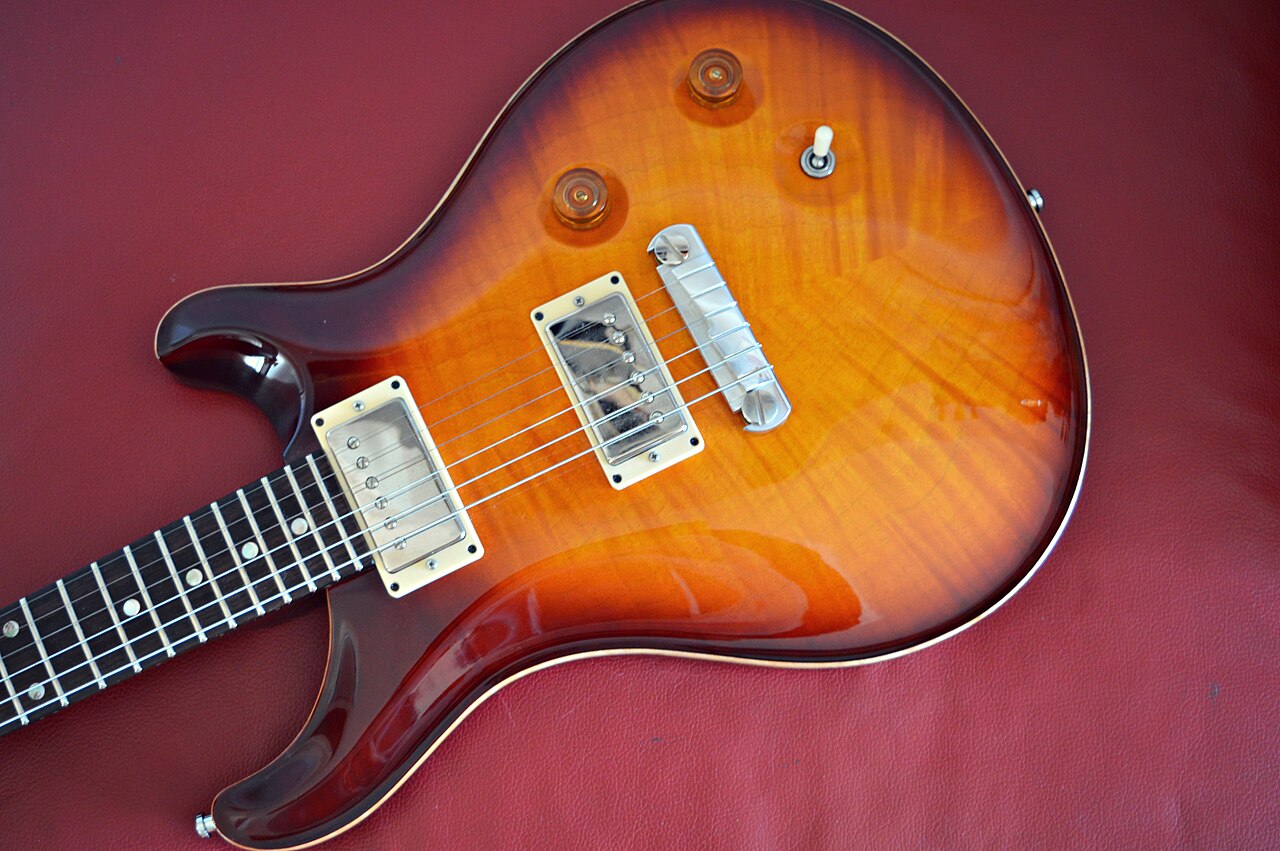
- A PRS McCarty guitar body: Freebird, Wikimedia Commons, CC BY-SA 2.0.
- Top image: Photo: “2022 PRS SE John Mayer Silver Sky Moon White” by Freebird, via Wikimedia Commons, CC BY-SA 2.0. The 2022 Moon White SE model, photographed on 15 June 2023. Full source frame; no crop or local image editing. WordPress scales display copies. ShareAlike applies to adaptations.
Latest News
Related
On This Day
Monday 9 November
From this week: