Reverend Jetstream 390: The Guitar Ron Asheton Never Got Back
The spreadsheet says Chet Atkins and Brian Setzer. The real story is Ron Asheton's stolen Stooges guitar and the players who picked up where he left off.
In 2008, somebody stole a truck in Montreal. Inside it was every piece of gear The Stooges owned, including the Rock Orange Reverend Jetstream 390 that Ron Asheton had been playing throughout the band’s triumphant mid-2000s reunion. The guitar never turned up. Asheton died less than a year later. What’s left is a tribute model built in its image — and a guitar whose real story has nothing to do with the rockabilly royalty printed on its spec sheet.
The names listed for the Jetstream 390 — Chet Atkins, Brian Setzer, George Harrison, Malcolm Young, and Eddie Cochran — are a Gretsch Professional Collection lineup, and none of the five has ever been documented playing a Reverend of any kind. The Jetstream 390’s real lineage runs through Detroit proto-punk, not Nashville rockabilly.
A Korina P-90 Machine, Not a Gretsch Understudy
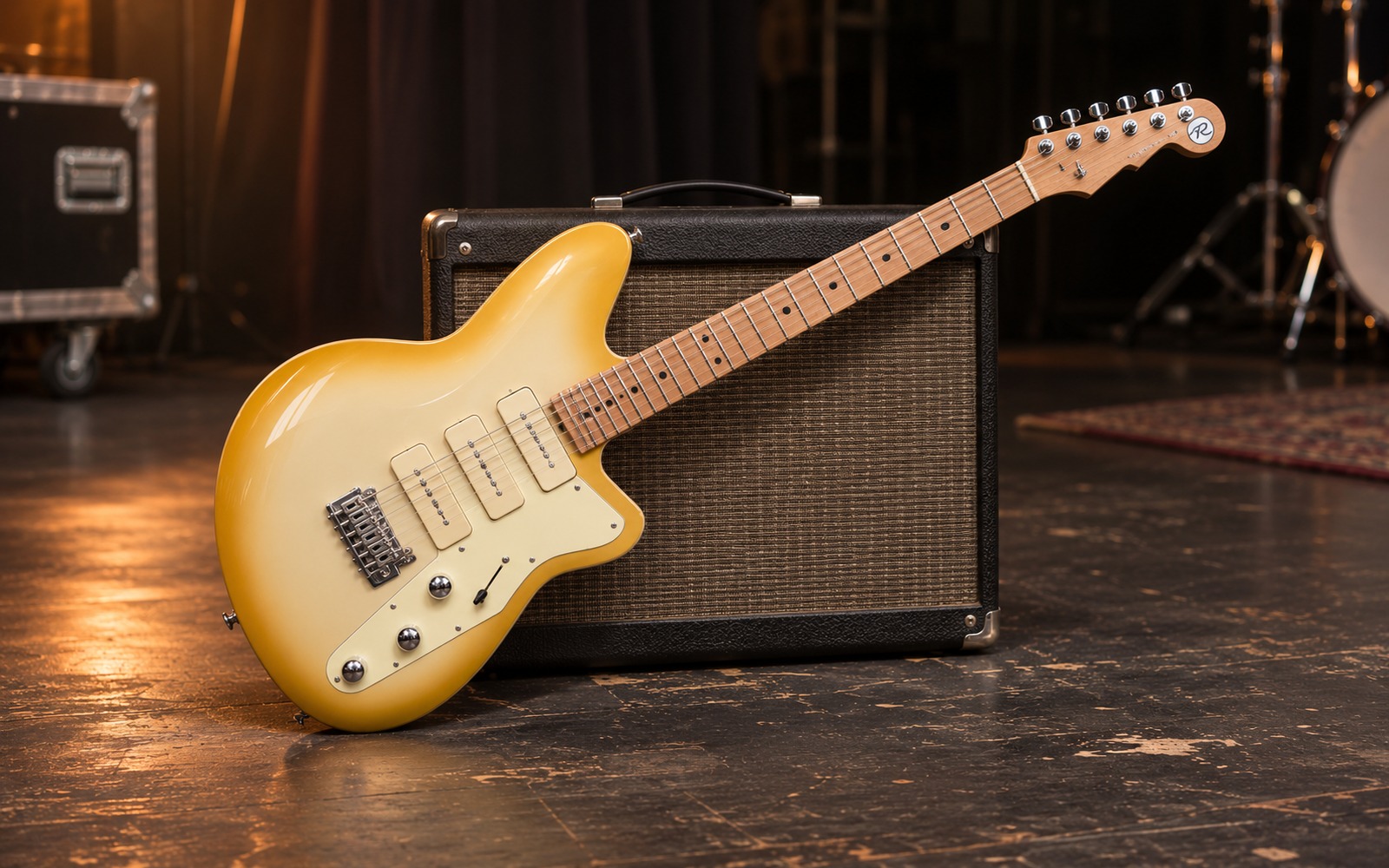
Reverend introduced the Jetstream 390 in 2005 as part of its Korean-built Bolt-On series, and the company celebrated its own tenth anniversary two years later with a limited silver-sparkle Jetstream variant — a sign of how central the model was to Reverend’s identity early on. The pitch was straightforward: a korina-bodied, three-P-90 solidbody built for players who wanted Gibson-adjacent twang and bite without a Gibson price tag or a Gibson name. For the full story of Reverend’s founding — Joe Naylor’s Detroit garage, the 2006 shift to Korean manufacturing, the 2010 Haas ownership era, the move to Toledo — see the Double Agent OG article, which covers that ground in depth.
Full Specifications
Construction and Tone
The Jetstream 390’s defining feature is its three-pickup P-90 layout, which sets it apart from every other Reverend model covered so far in this series — the Double Agent OG mixes a humbucker and a single P-90, while the Sensei RA and Charger HB both run dual humbuckers. Here, all three pickups are Reverend’s own 9A5 design, tuned for a fat, raw, bluesy voice with enough bite to cut through a mix — Reverend’s own copy describes positions 2 and 4 on the five-way switch delivering a thickened version of classic single-coil “quack,” closer to a Stratocaster on steroids than a jazz-box mellow tone.
The Bass Contour knob — the same passive bass roll-off circuit found across the Reverend catalog and detailed at length in the Double Agent OG article — does particularly noticeable work here, since it can push the middle and neck P-90s from a bass-heavy woof into a bright, articulate snap without touching the guitar’s volume or tone controls. Reviewers consistently point to the tremolo as a standout for the price point: the Wilkinson WVS50 IIK, combined with the Pin-Lock tuners and Boneite nut, holds pitch through aggressive whammy use in a way budget-tier tremolo systems often don’t.
Independent coverage has held up over the years. Premier Guitar included the Jetstream 390 in a dedicated feature on P-90 tone alongside boutique-tier competition, treating it as a legitimate reference point for the pickup type rather than a budget alternative to something else. Owners on gear forums consistently describe the guitar’s neck pickup as unexpectedly bass-heavy in isolation — a trait the Bass Contour control exists specifically to tame — while praising the roasted maple neck’s playability, often comparing its smoothness favorably to a Fender Telecaster.
Famous Players: The Stooges Connection
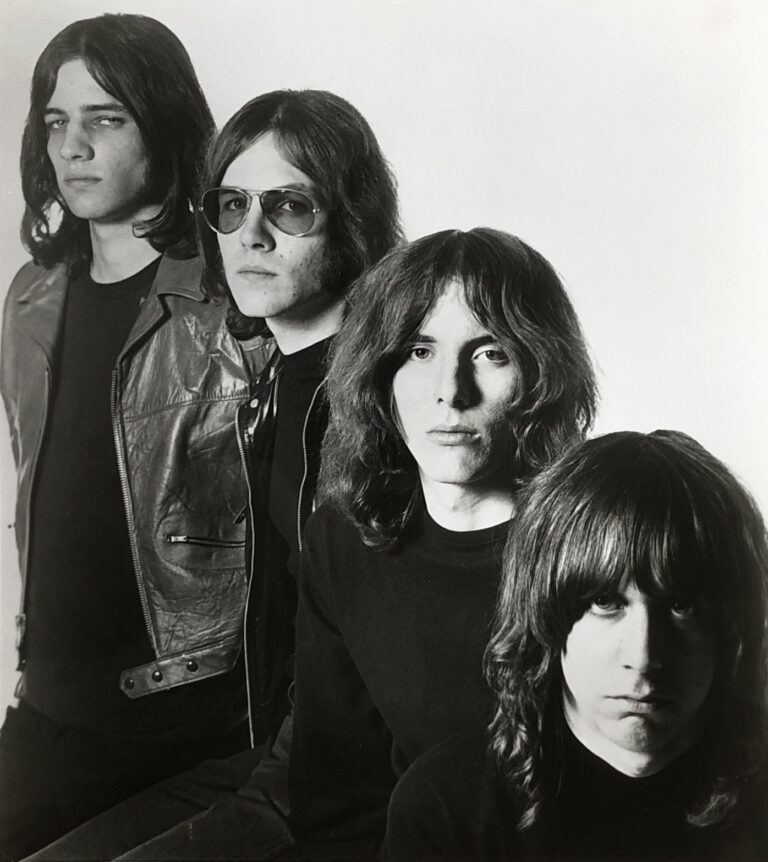
Ron Asheton co-founded The Stooges with Iggy Pop in Ann Arbor in 1967 and played the guitar on the band’s self-titled 1969 debut and 1970’s Fun House — records now treated as foundational documents of proto-punk, decades before the genre had a name. Tracks like “I Wanna Be Your Dog” and “1969” built their menace almost entirely out of Asheton’s stripped-down, fuzzed-out riffing, and generations of punk and garage-rock guitarists have cited that raw, unpolished attack as a direct influence. It’s a strange kind of full-circle moment that decades later he’d find that same raw voice in a modern Korean-built P-90 guitar rather than the vintage gear he was known for in the band’s original run.
When The Stooges reunited in the 2000s for a run of acclaimed live shows, Asheton played a Reverend Jetstream 390 finished in Rock Orange. In 2008, that guitar was stolen along with the rest of the band’s equipment when their truck was taken in Montreal. It was never recovered. Asheton died in January 2009, and The Stooges were inducted into the Rock and Roll Hall of Fame the following year — an honor Asheton never lived to see.
Reverend’s response was to build the guitar back into existence. The company created a dedicated Ron Asheton Signature Jetstream 390, finished in the same Rock Orange, with a trio of lightning-bolt decals added to the upper horn — a design detail Asheton was known to favor — as a direct tribute rather than a generic signature exercise. It’s worth noting this is a separate tribute from the Avenger AG signature covered in this series’ Reverend Double Agent OG article: Reverend has built two distinct posthumous Asheton models, reflecting two different guitars from two different points in his career, and it’s easy to conflate them if you’re not looking closely at the model names.
The Jetstream 390 also has a more contemporary following that has nothing to do with punk history. Christofer Drew, the singer-guitarist behind Never Shout Never, has said on record that the Jetstream 390 is currently his main guitar, covering roughly 90 percent of his live set, with a Double Agent OG handling open-tuned slide parts for the rest. Katie Harkin — a prolific touring and session guitarist whose credits include Sky Ferreira, Wild Beasts, Sharon Van Etten, and Flock of Dimes — was photographed playing a Jetstream 390 while touring with Flock of Dimes in 2016. Between Asheton’s punk pedigree and Drew’s and Harkin’s more contemporary indie/pop contexts, the Jetstream 390’s actual player base spans a wide range.
Tone Recipes
- Proto-Punk Snarl: Bridge P-90, bass contour rolled halfway, amp pushed into natural breakup — Asheton’s raw, unfiltered Stooges tone.
- Strat-on-Steroids Quack: Switch position 2 or 4, bass contour rolled off for brightness, light compression — the “in-between” tones Reverend built the 5-way switch around.
- Indie-Pop Clean: Neck or middle P-90, bass contour boosted for warmth, chorus and a touch of reverb — closer to the register Harkin and similar touring players work in.
- Bluesy Rhythm-Lead Hybrid: Middle pickup, tone rolled back slightly, amp on the edge of breakup — the “fat, raw, bluesy” voice Reverend designed the 9A5 pickups around.
Comparisons to Related Models
The Jetstream HB swaps the three P-90s for two humbuckers, trading twang and bite for thicker output and less noise — a straightforward choice between vintage snap and modern push. Against the Double Agent OG, the Jetstream’s all-P-90 layout is more single-minded in its vintage voicing, where the Double Agent’s humbucker/P-90 split offers more contrast between its two pickup positions. Against the Charger HB and Sensei RA, both dual-humbucker guitars aimed more squarely at rock and metal players, the Jetstream 390 reads as the more versatile, genre-agnostic option — as comfortable with surf twang as it is with punk grit. Reverend’s Warhawk series occupies similar territory with a thicker, raised center body section for extra mass and sustain, available in both HB and 390 pickup configurations — worth a look for players who want the Jetstream’s tonal palette in a slightly heavier-feeling instrument.
Buying Guide
- 390 vs. HB: Choose the 390 for maximum tonal versatility and vintage bite; choose the HB for higher output and lower noise in high-gain settings.
- Ron Asheton Signature vs. standard 390: Functionally near-identical instruments — the signature model’s value is almost entirely in the Rock Orange finish and lightning-bolt decals rather than any hardware or electronics difference.
- Left-handed players are directly served with a dedicated Jetstream 390 left-handed model, priced roughly $100 above the standard right-handed version.
- New owners coming from Fender or Gibson instruments should budget time to learn the Bass Contour knob — it’s more powerful and more central to this guitar’s tonal range than a standard tone control, and skipping past it undersells what the guitar can do.
Practical Ownership Notes
The korina body keeps the Jetstream 390 lighter on the shoulder than most mahogany-bodied solidbodies in its price class, which matters over a long set. The Wilkinson tremolo and Pin-Lock tuner combination is genuinely gig-reliable, but new owners should still stretch strings thoroughly after a fresh restring, as with any tremolo-equipped guitar. Because all three pickups share the same 9A5 design rather than being voiced individually for their position, players switching from a guitar with more differentiated pickup voicing may need a session or two to learn how much of the Jetstream’s tonal range lives in the Bass Contour knob rather than the pickup selector.
FAQ
Did Ron Asheton actually play this exact guitar?
Yes — a Rock Orange Reverend Jetstream 390 was his instrument during The Stooges’ 2000s reunion, until it was stolen along with the rest of the band’s gear in 2008.
What’s the difference between the Ron Asheton Signature and the standard Jetstream 390?
Primarily cosmetic: the signature model repeats Asheton’s Rock Orange finish and adds the lightning-bolt decals he favored, on the same underlying Jetstream 390 platform.
Is this the same as Ron Asheton’s Avenger AG signature guitar?
No — they’re two separate tribute models built around two different guitars from different points in Asheton’s career. See this series’ Reverend Double Agent OG article for the Avenger AG.
How does the Jetstream 390 compare to a Gibson-style P-90 guitar?
It’s built around the same P-90 concept but with a korina body, bolt-on roasted maple neck, and a tremolo system — a different construction philosophy than a traditional Les Paul Junior or SG Special.
Who plays the Jetstream 390 today?
Never Shout Never’s Christofer Drew has called it his main touring guitar, and it’s shown up in the hands of touring indie players like Katie Harkin, well outside the guitar’s punk-rock origin story.
Image credits
- Top image: GuitarGangsters AI-generated reference illustration, not a photograph.
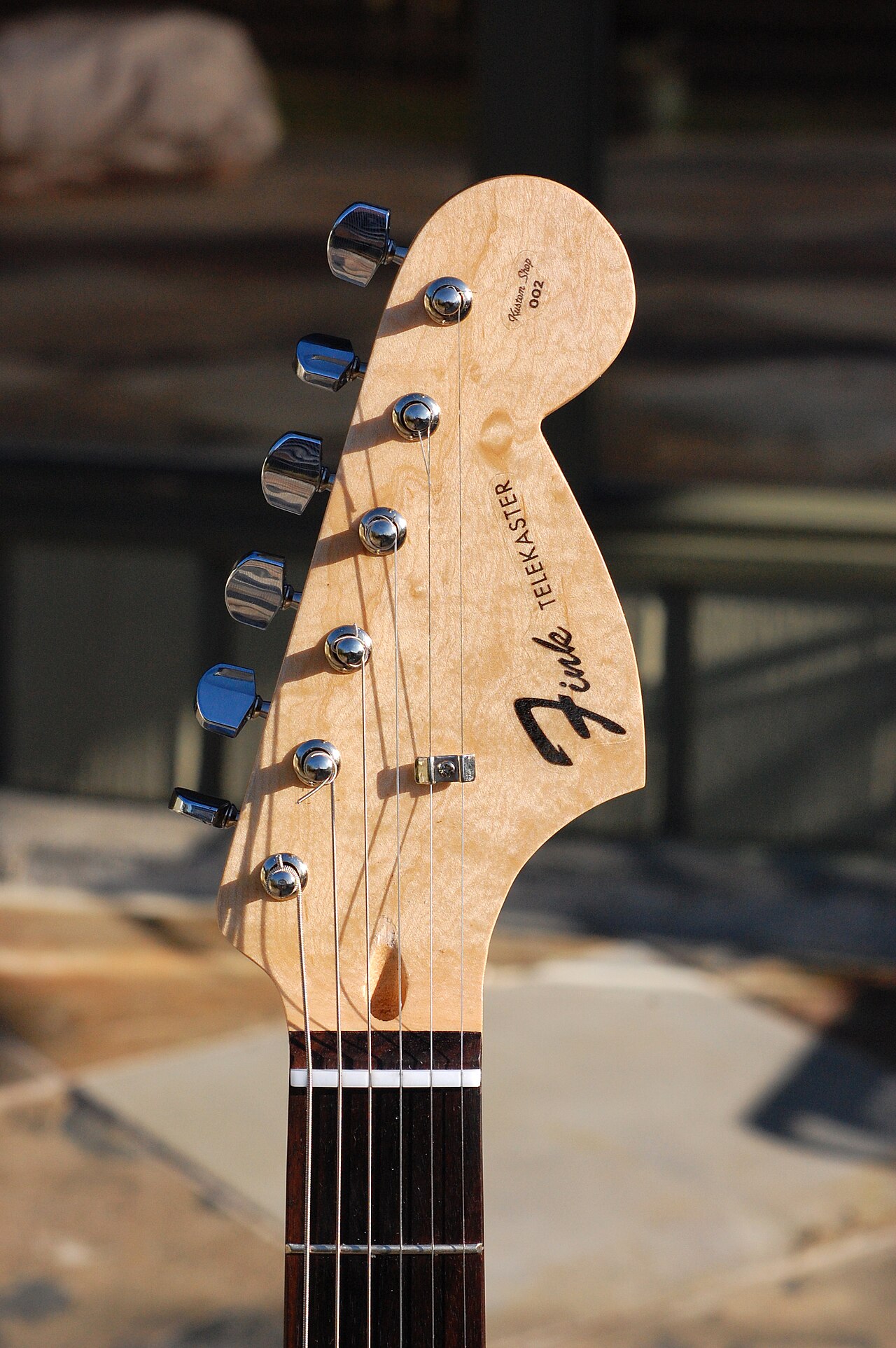
- The headstock of a maple electric guitar outdoors: steve lodefink, Wikimedia Commons, CC BY 2.0.
Latest News
Related
On This Day
Friday 13 November
From this week: