Ron Asheton Guitars & Gear: The Stooges Guitarist’s Flying V, Strat, Marshall and Fuzz Rig
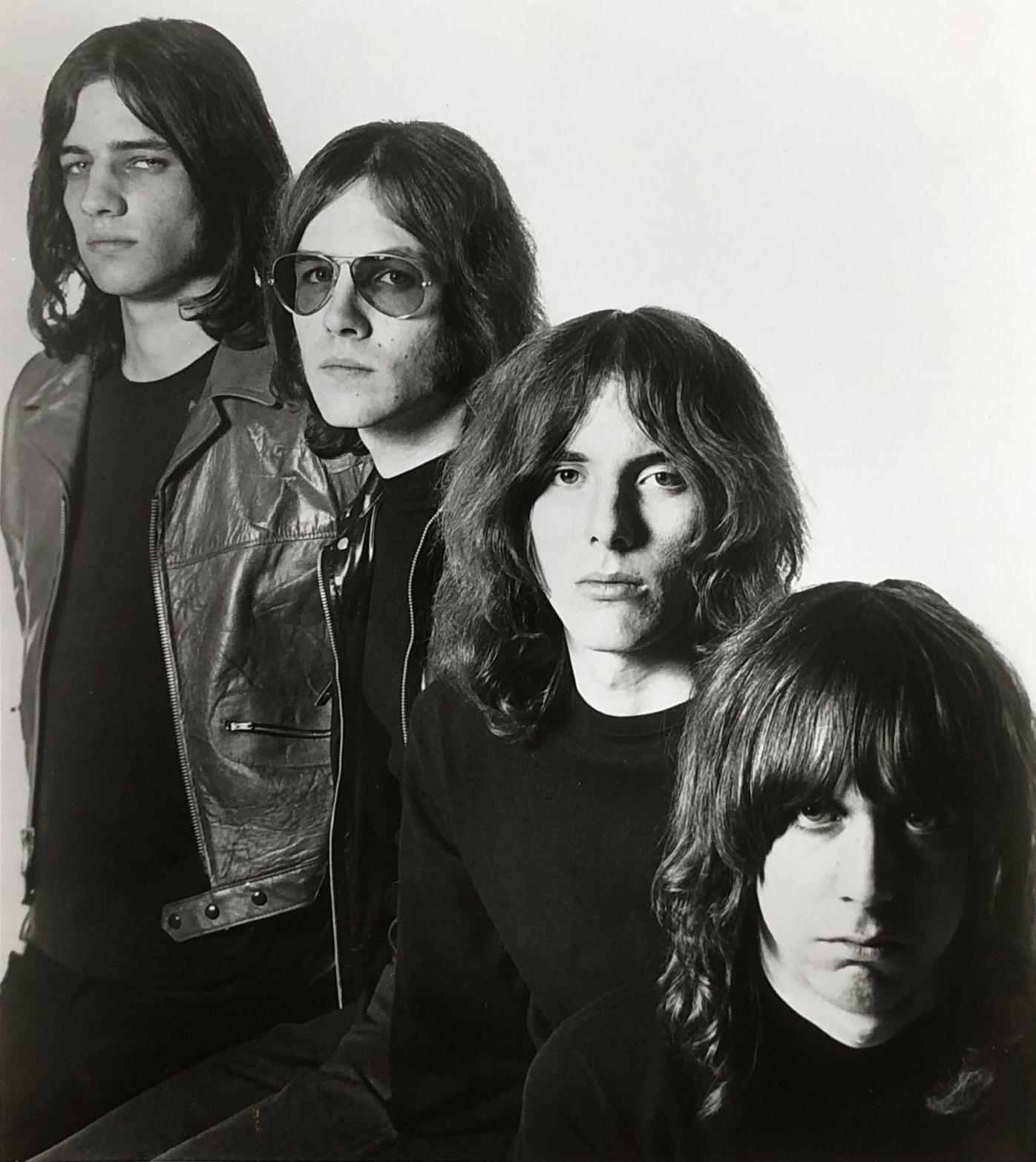
Elektra Records publicity photo / public domain
Ron Asheton’s guitar sound on the first two Stooges albums came from a handful of things: a Flying V or a Stratocaster, Marshall amplifiers turned up past what a studio wanted, and a fuzz and wah pedal whose details are disputed. The details are harder to pin down than the sound suggests. Asheton gave several interviews that mention his gear, a fellow guitarist recalled his early rig in Premier Guitar, and the Reverend company later built signature guitars with him, but the accounts do not always agree. This guide sets out what those sources say about Ron Asheton’s guitars and gear, who said it, and where the record is thin.
What Is Documented and What Is Not
Three kinds of evidence exist. The first is Asheton himself, in interviews with Perfect Sound Forever (2000), Phawker (2007) and Ken Shimamoto (conducted in November 1998 and later published by the I-94 Bar). The second is people who knew his rigs: Premier Guitar’s “Forgotten Heroes” feature by Tzvi Gluckin (January 22, 2019) draws on Radio Birdman guitarist Deniz Tek, Reverend’s Joe Naylor, Asheton’s reunion-era guitar tech Chris Wujak and others. The third is manufacturer material, mainly Reverend and Daredevil Pedals press releases carried by Premier Guitar, which tell us what the companies say about his gear rather than what he said himself.
Gaps matter here. The Asheton interviews we read do not discuss his own Stratocaster. The Strat comes mostly from other people’s memories. We found no documented spec sheet for his first-album rig, and no source that places a Univox Super-Fuzz in his hands; Equipboard captions one photo as showing his Marshall Supa Fuzz, with no interview or quote behind it. Where a claim rests on one voice, we say so.
The Rig: Ron Asheton’s Guitars, Amps and Effects
Guitars
This is the guitar Asheton himself talks about for the first Stooges album. In the Shimamoto interview he says he “used the Flying V for half the tunes, every song but three.” The Perfect Sound Forever interview likewise has him on the Flying V for every song but three, and that page gives the exceptions as “Real Cool Time,” “Not Right” and “Little Doll.” He says “Flying V” without a maker in the passages we read; Equipboard, a community gear database, lists it as a Gibson, and we have no better source for the year or finish. Our Gibson Flying V guide covers the instrument itself.
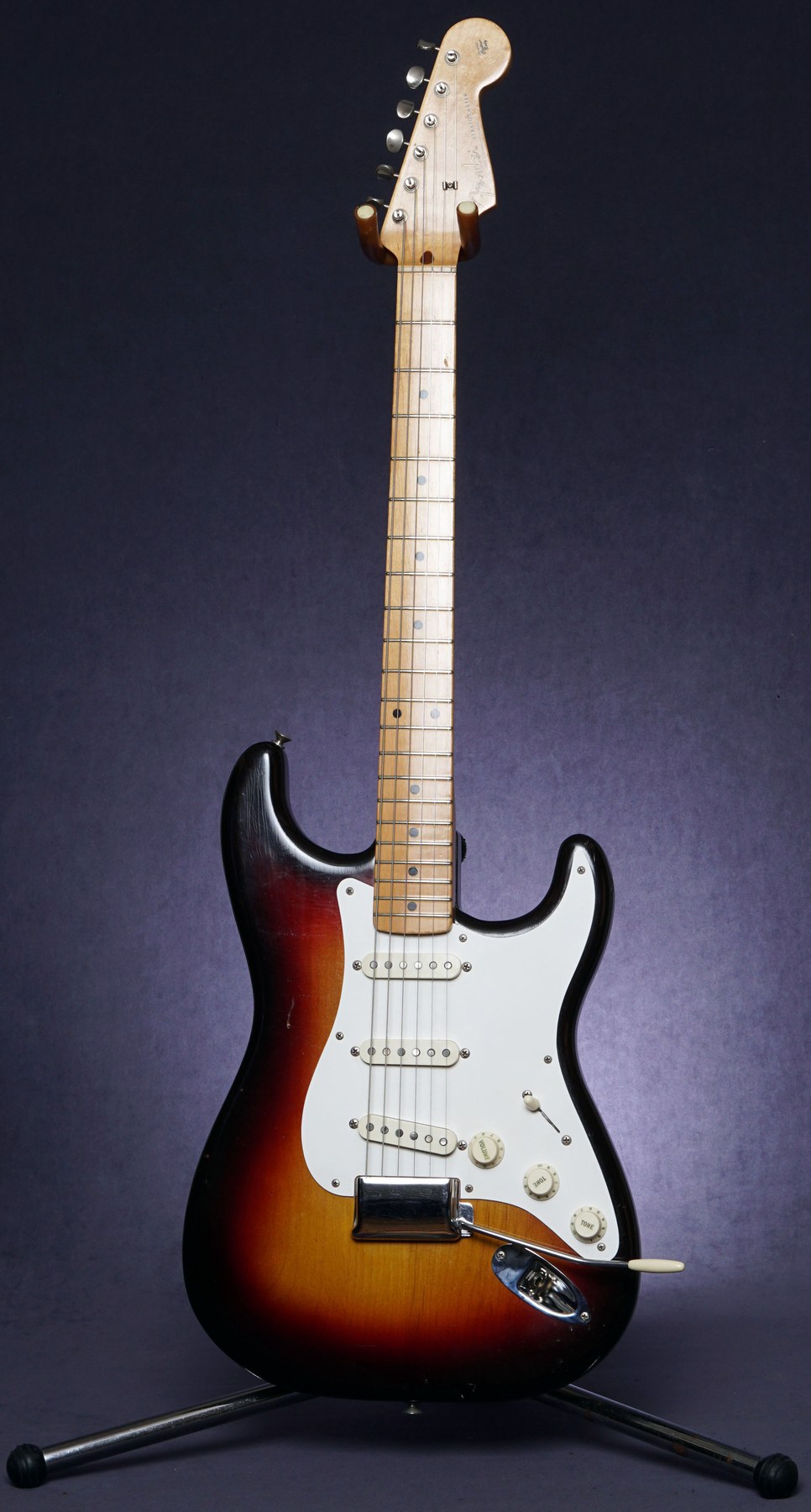
In the Premier Guitar feature, Deniz Tek recalls that Asheton “was using a Strat” in 1968, and says he thinks it was a 1957 sunburst. That is one man’s recollection, not a documented serial number. Equipboard quotes a Vintage Guitar article as saying a 1957 Strat with a maple neck, “the one that got away,” ended up with Dan Erlewine of the Prime Movers. We could not open the Vintage Guitar original, so we treat that as second-hand. The Premier Guitar article also reports, with Wujak as the source, a black Mexican-made Strat at the 2003 reunion debut at Coachella. See our Fender Stratocaster guide for the model’s background.
A Premier Guitar photo caption identifies a Guild X-79 in a 1995 studio shot. Equipboard lists three X-79s and attributes a quote about its pickups to vintageguitars.com; we have not verified that quote. Treat the Guild as documented once, by caption, with the rest unverified.
Premier Guitar shows two custom three-pickup Avenger models built by Joe Naylor for Asheton, in a 2007 tour photo. Naylor says a bass roll-off control from that work became Reverend’s bass contour control.
Premier Guitar and Guitar.com both report that Asheton played a Jetstream 390 at a Stooges reunion show, and that it was stolen with the band’s other gear in Montreal in 2008 and, per Reverend’s 2020 announcement, has since disappeared. The Reverend Volcano signature prototype went missing at the same time. We cover the guitar in our Reverend Jetstream 390 guide.
Naylor designed it “a few years later” than the Avenger, according to the Premier Guitar feature, with a stop tailpiece, a set neck and three P-90s. Guitar.com describes it as Reverend’s first signature model with Asheton, V-shaped with three P-90s, available mainly in Rock Orange with Midnight Black and Ice White versions as well.
Amps
Marshall is the one amplifier name that runs through every Asheton interview. He says the band knew one setup for the first album. In his words to Shimamoto, “all we knew was stack of Marshalls on ten.” The studio would not allow that, and the accounts of the compromise disagree. Shimamoto has him saying he went “down to like nine,” and Phawker records him saying the amps were turned down to nine. Perfect Sound Forever quotes him at “something like eight and a half.” We cannot say which is closest, and a memory of a volume knob from decades earlier is not a measurement. In Phawker he also says the amps were baffled a little more to cut bleed.
Asheton told Shimamoto that for the second album he went down to a Marshall 50 in a smaller cabinet, which he called “the refrigerator top.” He thinks it had six 10-inch speakers, and he is not sure of that detail himself. No model number for these amps appears in the interview, so we do not assign one.
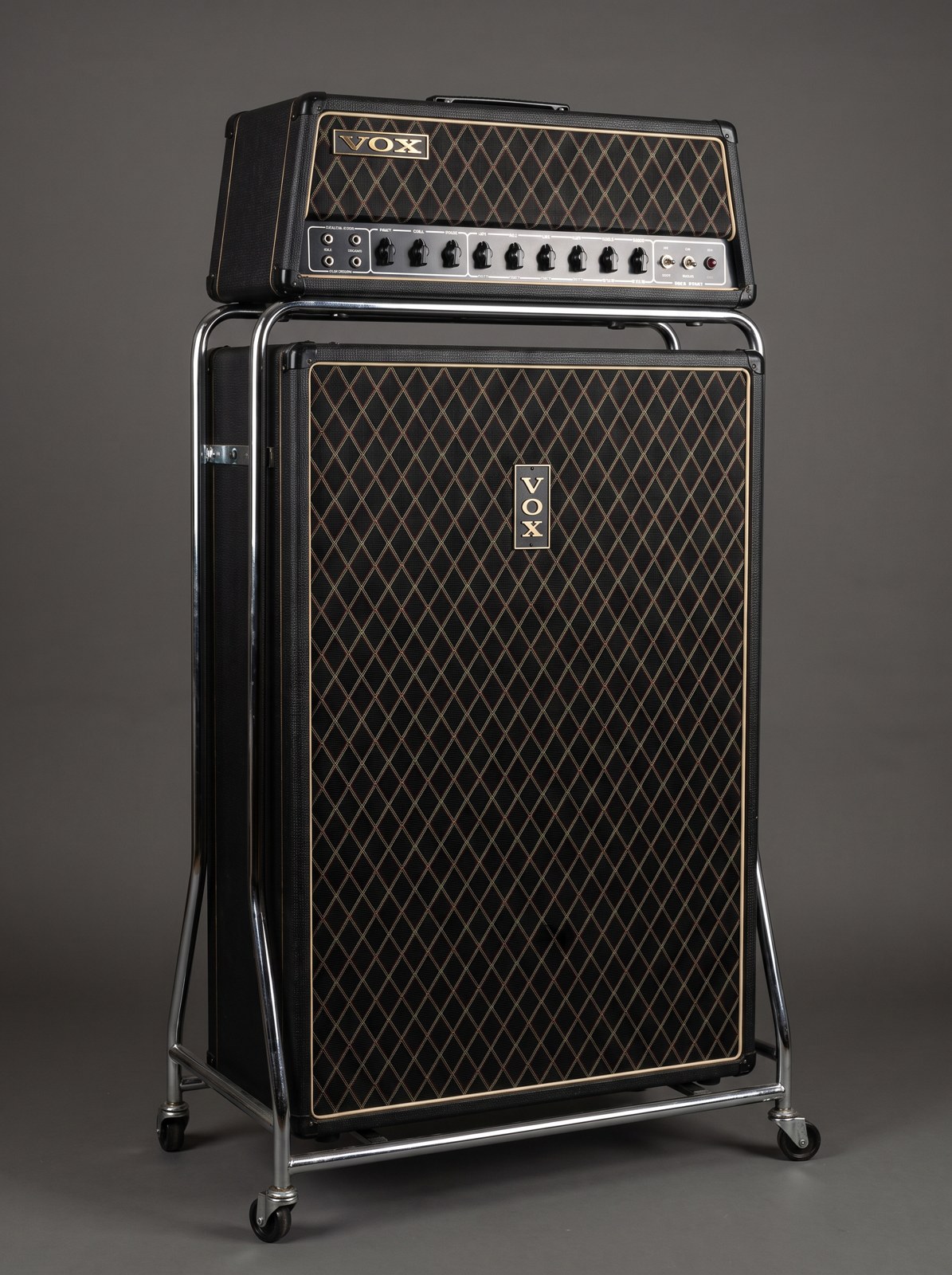
Deniz Tek says it was Asheton’s first amp in the late 1960s, followed by “Sunns and Marshalls.” Tek also says Asheton later used 100-watt Marshall Super Leads and may also have had a Marshall Major. All of this is Tek’s account in Premier Guitar. Our Marshall 1959 Super Lead guide explains the amp family.
Premier Guitar quotes Naylor as saying Asheton played Naylor amps, the company he ran before Reverend.
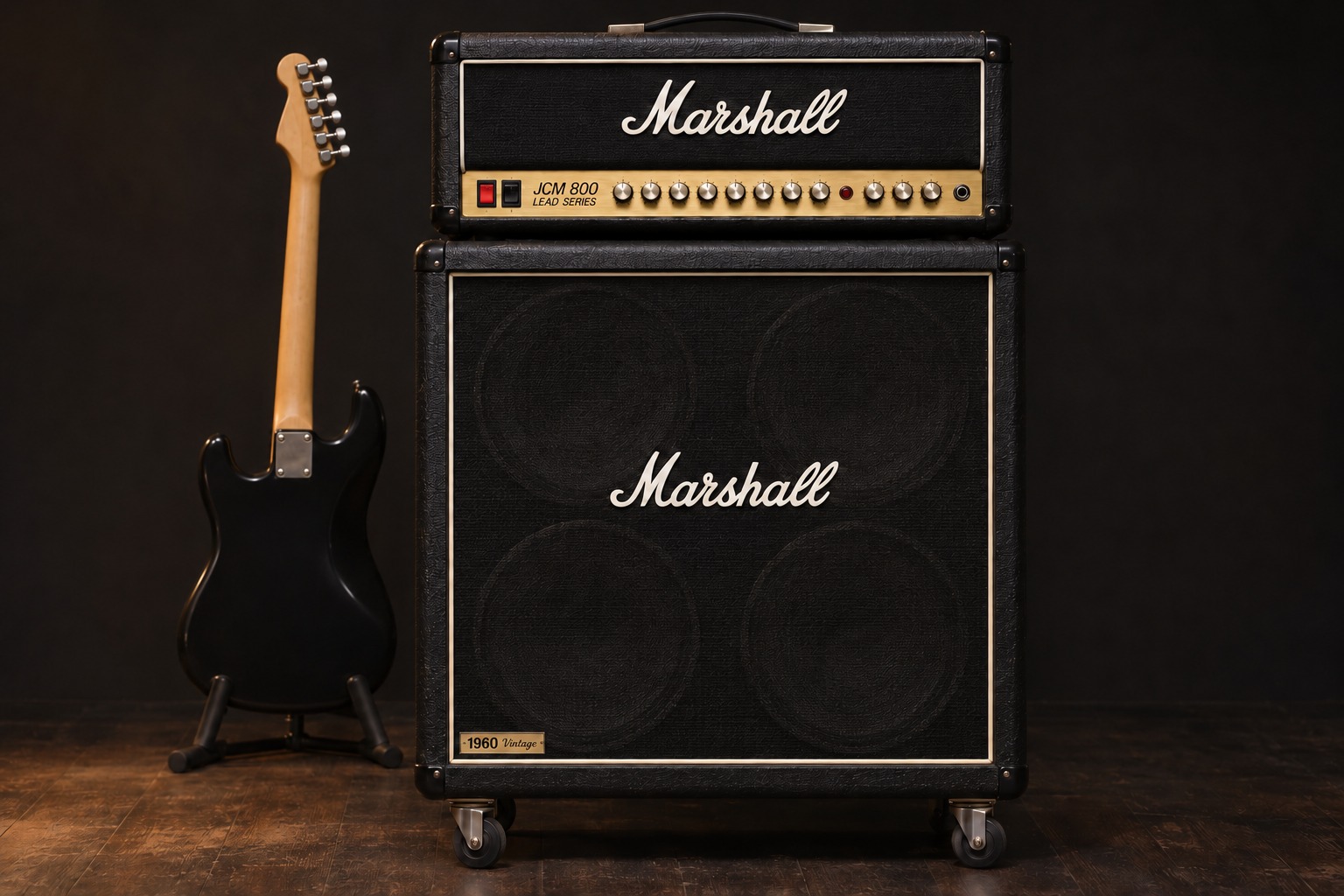
According to the Premier Guitar article, the reunion tours usually used rented JCM800 heads with two Marshall 4×12 cabinets.
Effects
The one effects detail Asheton repeats across interviews is that in the early band he ran a fuzz and a wah pedal with his bass guitar, not his guitar. He says this to Shimamoto (“I would use the bass guitar that I was playing with fuzztone, wah pedal”), in Perfect Sound Forever and in Phawker, where he describes himself on bass with a “fuzz-tone wah-wah.” The Shimamoto interview also has him recalling his fuzz and wah being dragged across the stage by a camera operator’s cables at the Cincinnati Pop Festival.
Tek recalls a Vox wah in Asheton’s early setup. For the reunion era Premier Guitar lists a Dunlop Cry Baby. Our Cry Baby GCB95 guide covers the pedal.
This is the weakest part of the record, and the sources point in different directions. Tek lists an Arbiter Fuzz Face in the early setup. A 2017 press release from Reverend and Daredevil Pedals, carried by Premier Guitar, says the Ron Asheton edition of Daredevil’s Real Cool Fuzz is based on a 1960s Tone Bender that Asheton used on the first two Stooges albums. Daredevil’s own page for a later limited edition repeats that claim, while its standard Real Cool Fuzz page calls that pedal a silicon Fuzzrite-based design. These are a maker’s claims, and we found no interview in which Asheton names a Tone Bender. Equipboard credits a Vintage Guitar interview with him saying he moved on to better fuzzboxes such as the Fuzz Face, a second-hand attribution we could not check. For how those circuits relate, see our fuzz pedal origins explainer, and for a modern Fuzz Face, the Dunlop JH-F1.
Premier Guitar says one of these served as a solo boost on the reunion rig, with the distortion otherwise coming from the amp. A Boss chromatic tuner doubled as a mute.
The Bass Years
When the band was rebuilt for the third album, Asheton moved to bass, and what he used is not settled. Guitar.com’s piece on the Raw Power gear says outright that it cannot be quite sure what rig he used. Photographer Robert Matheu, quoted there from a 2024 Guitar World article, says he is “pretty sure” Asheton played a Fender Precision on the record, that every live bass photo he has shows a Guild, and that he is “pretty sure” Hiwatt amps were used on stage. Premier Guitar’s feature, in its section on the 1973-74 lineup, gives a different picture: Mike Watt describes a Guild bass, probably a JS II, full scale but looking like an EB-3, and Tek is quoted on an SVT or a Sunn 2000. Equipboard says he recorded Raw Power on a Gibson EB-3 and lists a Sunn 2000S head, both without naming a source. In our view, the safest summary is that a Guild was the live bass and the studio bass remains open.
Playing Style and Tone: Volume Before Pedals
The most consistent point across sources is that Asheton leaned on amplifier saturation. A Premier Guitar caption says he preferred amp saturation over pedals for distortion, and the reunion rig described there bears that out: the amp supplied the dirt and a boost sat in front for solos. His own interviews say the same thing from the other side. By his account the band knew only how to turn the Marshalls up, and the compromise he describes is a notch or two off full volume.
The recording adds a twist. Asheton says in the Perfect Sound Forever interview that the way the studio treated the guitars and bass left the record “kind of clean,” and in the Shimamoto interview he says the studio overcompensated, taking a lot of the edge off. In our view, that is the useful lesson for anyone chasing the sound: the stage rig and the recorded result were different things.
How to Get Close to the Sound
This is our reading of the documented rig, not a recipe from Asheton. Start with the amp, not the pedals. A Marshall-style head into a 4×12, with the gain set by volume, matches every source we read. A Strat-style guitar or a Flying V covers the two guitars most clearly tied to him. If you want a fuzz in front, a Fuzz Face-style pedal has the support of a named person (Tek), while the Tone Bender link rests on the maker’s press release. Add a wah for the early bass-era effects.
Reverend’s Ron Asheton Signature Jetstream 390, announced on July 17, 2020 and reported by Premier Guitar and Guitar.com, is a korina-body guitar in Rock Orange with a Boneite nut, a bass contour control and a lightning-bolt decal on the upper horn. Guitar.com lists a maple neck and three P-90s. The lightning bolt began as a Naylor Amps logo and also appeared on the Volcano. Our Reverend Double Agent OG guide covers a related Reverend model with an Asheton link, and our James Williamson gear guide covers the guitarist who took over lead duties on the third album.
Frequently Asked Questions
What guitar did Ron Asheton play on the first Stooges album?
By his own account, a Flying V on all but three songs. He says this in the Shimamoto interview and the Perfect Sound Forever interview. Other people recall him with a Stratocaster, but he does not discuss his own Strat in the interviews we read.
Did Ron Asheton use a Fuzz Face or a Tone Bender?
The record is split. Deniz Tek lists an Arbiter Fuzz Face in the early setup. A 2017 press release from Reverend and Daredevil Pedals says the Ron Asheton edition of the Real Cool Fuzz is based on a Tone Bender he used on the first two albums. Asheton does not name either in the interviews we read, so we do not pick one.
What amps did Ron Asheton use?
Marshalls, by his own statements: stacks on the first album, then a Marshall 50 for the second. Tek also names a Vox Super Beatle early on, and the reunion tours used rented JCM800 heads with two 4×12 cabinets, according to Premier Guitar.
What bass did Ron Asheton play on Raw Power?
It is not settled. Photographer Robert Matheu believes a Fender Precision on the record and a Guild on stage, but the Guitar.com author says nobody can be sure.
Is there a Ron Asheton signature guitar?
Yes. Reverend built the Volcano, a V-shaped three-P-90 model, and later the Ron Asheton Signature Jetstream 390, announced in July 2020. A 2017 Legacy Fun Pack paired a Reverend signature V, with three CP90 pickups, with the Daredevil fuzz in a run of 12 sold through Riff City Guitars.
Was Ron Asheton’s gear ever stolen?
Yes. Premier Guitar and Guitar.com report that his Jetstream 390 was stolen with the band’s other gear in Montreal in 2008 and, as of Reverend’s 2020 announcement, had not been recovered.
Image credits
- Marshall JCM800 heads with two 4×12 cabinets (Reunion): GuitarGangsters AI-generated reference illustration, not a photograph.
- Top image: Elektra Records publicity photo, Wikimedia Commons, public domain.
- Vox Super Beatle: GuitarGangsters AI-generated reference illustration, not a photograph.
- Fender Stratocaster: Lightburst, Wikimedia Commons, CC BY-SA 4.0.