One Footswitch, Fifty-Five Sounds: Why the Zoom MS-50G MultiStomp Became a Cult Classic
The Zoom MS-50G MultiStomp crams 55 effects and 8 amp models into a single stompbox. Here's why this cult classic earns a slot on your pedalboard.
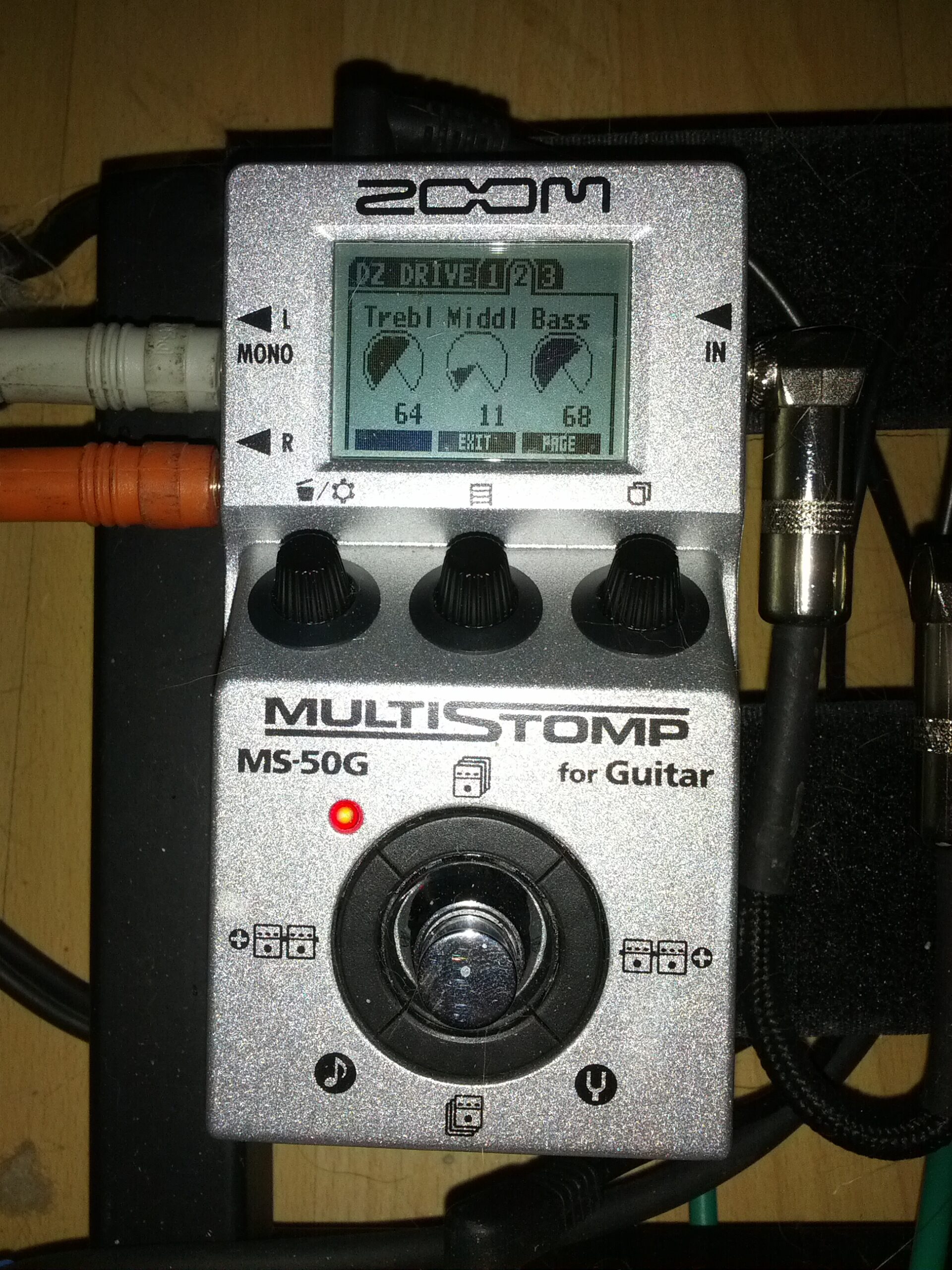
Most guitarists walk past it twice before they buy it. It looks like a standard silver stompbox — diecast chassis, three knobs, one footswitch, slightly oversized for a compact but undersized for a floor unit. Then they pick it up and realise the knobs are soft encoders, the screen is navigable, and it contains everything from a TS-808 to a Marshall Plexi to a self-oscillating reverb. The Zoom MS-50G MultiStomp is the gear equivalent of a Swiss Army knife that keeps producing blades you didn’t know it had.
Zoom launched it in late 2012 with a quiet but revolutionary claim: this was the first multi-effects pedal and amp modeller ever built into a single-stompbox form factor. The price was £99 in the UK, $169.99 in the US — less than most single boutique overdrives of the era. The LCD was not glamorous. The manual was dense. And over the next decade, it became one of the most photocopied items in pedalboard photos across Reddit, Instagram, and gear forums worldwide, earning its own thriving community at r/zoommultistomp and a reputation as the ultimate secret weapon for players who need options without the floor-unit footprint.
This is the full story of what it does, how it sounds, who actually uses it, and why the used market for an eleven-year-old pedal that costs thirty or forty dollars still makes total sense in 2026.
Zoom’s Stompbox Gamble: The MS-50G Origin Story
Zoom Corporation launched in Tokyo in 1983 with the explicit goal of democratising studio-quality processing for working musicians. The company’s early multi-effects units — the 9002, the 505, the 707 — made chorus, delay, and pitch-shifting affordable for players who couldn’t afford a rack full of outboard gear. By the time the G3 and G5 arrived in the early 2010s, Zoom had refined its ZFX-DSP engine through multiple generations into something genuinely competitive: not just cheap and cheerful, but acoustically accurate.
The MS-50G was a lateral move rather than an upgrade. Where the G3 and G5 used multiple footswitches and large control surfaces, the MultiStomp asked: what if we kept the DSP but stripped everything back to a single-footswitch stompbox footprint? The ZFX-IV DSP processor — the same generation driving the G3 and G5 at the time — went into a chassis only marginally larger than a Boss compact. The display was an LCD roughly the size of a large postage stamp. Navigation used a four-way cursor surrounding the footswitch, plus three soft-press knobs that doubled as parameter selectors. The whole thing weighed 350 grams.
The result shipped with 55 sounds — 47 effects and 8 amp models — and the ability to stack any six of them in any order within a single patch. Subsequent firmware updates expanded the catalogue; Zoom’s product page eventually listed over 100 effects and amp models as the library grew. That firmware expansion was free, downloaded via the USB port, and consistent with Zoom’s approach across the G3Xn and G5n: the hardware you buy is the floor, not the ceiling.
The MS-50G sold steadily for eleven years. In October 2023, Zoom announced its successor, the MS-50G+: 100+ effects, multi-layer IRs (three impulse responses stacked at different volumes to simulate amp-at-volume behaviour), a colour-changing LCD, and a revised button layout. The price came in at $129 — cheaper than the original’s launch price, adjusted for nothing, eleven years later. The original MS-50G is now discontinued and lives on the used market.
Zoom MS-50G Specs
Effects Breakdown
The MS-50G’s effect library is logically divided into five categories. Dynamics and filter covers 12 modules: compressors, EQs, filters, Zoom’s own ZNR noise suppressor, and emulations of the MXR Dyna Comp, Moog MF-101, and Z. Vex Seek-Wah. Overdrive and distortion brings 12 units including simulations of the Boss OD-1, DS-1, and Metal Zone; the Ibanez TS808; the MXR Distortion+; the Matchless Hot Box; the Electro-Harmonix Big Muff; and the Pro Co RAT. Amp simulations run to 8 models — Fender ’65 Twin Reverb, ’65 Deluxe Reverb, Tweed Bassman, Vox AC30, Marshall Plexi, Two-Rock Emerald 50, Diezel Herbert, and ENGL Invader — each with its own cabinet model and a choice of output modes (Line, Combo Front, Stack Front, Combo Power Amp, Stock Power Amp) to match whatever you’re actually plugging into. Modulation and special effects supplies 13 modules: phaser, flanger, chorus, tremolo, vibrato, detuning, octave divider, pitch shift, harmonizer, and emulations of the Boss CH-1 Super Chorus and the ADA flanger. Delays and reverbs covers 10 types processed through the 32-bit floating-point reverb engine, including standard hall and room, reverse, modulated, and self-oscillating delay.
One specification worth flagging immediately: the MS-50G’s input impedance is 1 MΩ, higher than most of Zoom’s larger multi-effects units (the G3Xn and G5n both run at 470 kΩ). In practice this means the pedal presents a transparent, true-to-source load to almost any passive guitar pickup, without the slight top-end softening that lower-impedance inputs can introduce.
Who Actually Uses the Zoom MS-50G?
Equipboard lists 20 professional musicians with the MS-50G on their boards as of 2026. This is an honest number — not zero, but not a headline-grabbing superstar roster either. That distribution is exactly what you’d expect from a $169 compact stompbox in a category dominated by players who value utility over optics.
Kiko Loureiro, the Megadeth guitarist, appears on the Equipboard MS-50G page and has a documented relationship with Zoom as a platform collaborator — he has contributed patches and participated in Zoom content across the G3Xn, G5n, and MultiStomp lines. This documents his engagement with the Zoom ecosystem rather than confirming the MS-50G as his touring rig. His live signal chain runs through Fractal-tier hardware; the MultiStomp is the kind of tool a player of his technical depth would carry in a gig bag as a backup or experimentation unit.
Ichirou Agata of Melt-Banana is a more structurally interesting entry. The Tokyo noise-pop duo has always treated guitar effects as compositional material rather than signal enhancement, and a compact multi-effects pedal that can generate self-oscillating reverb, harmonised pitch-shift, and heavy gated fuzz in a single pass is precisely the kind of tool that logic would put on an avant-garde pedalboard. No primary source was found placing Agata’s MS-50G in a specific video or interview, but the presence registers as plausible rather than anomalous.
Mikio Fujioka, guitarist of the Japanese rock band Babymetal during their early touring years, is documented via a photo shared on his Twitter account showing the MS-50G on his pedalboard. This is straightforward photo evidence of actual use on a real board, the clearest kind of Equipboard documentation. Charles Bissell of The Wrens and Grasshopper Mackowiak of Mercury Rev also appear — both from indie rock contexts where experimental effects processing is expected rather than incidental.
The honest summary: no one is headlining stadiums with a Zoom MS-50G as their primary rig. The pedal’s actual audience is working guitarists who need a fallback for every effect type they don’t have a dedicated pedal for, session players who want a compact safety net, bedroom producers who can’t fill a six-pedal ‘board but need chorus, reverb, and a compressor simultaneously, and experimental players who prize the oddball combinations the six-in-series architecture makes possible. The absence of a celebrity endorsement is not a bug; it reflects what the pedal is actually for.
Sound: What the MS-50G Actually Does
MusicRadar’s Trevor Curwen, reviewing at launch, landed on the right verdict: “As an affordable multi-role secret weapon for your ‘board, it’s in a class of its own.” The operative phrase is “secret weapon.” The overdrives and distortions are not going to displace dedicated analogue pedals in A/B comparisons — the TS-808 simulation is recognisable but lacks the feel of a real tube-screamer pushing an actual valve stage. The comp is functional rather than musical. The amp models are convincing enough for a live direct signal or a quiet rehearsal, but a working guitarist recording a serious session will want the real hardware.
Where the MS-50G earns its reputation is in the combination territory. A phaser into a self-oscillating delay into a spring reverb is a three-block chain that no single analogue pedal can replicate in one footswitch. A compressor followed by a subtle chorus followed by a room reverb — all in one patch, recalled with one press — turns the MS-50G into a sophisticated clean-signal enhancer that would otherwise require three separate pedals and three power supplies. The reverbs and delays in particular are consistently praised; the 32-bit floating-point reverb engine delivers a quality well above what the price and form factor would suggest.
The interface has a learning curve. Navigating the four-way cursor through the effects chain while your guitarist instincts are twitching is not the same as bending down and kicking a dedicated stompbox. Zoom’s patch alphabet system — assign letters A through Z to patches, cycle them in alphabetical order using the footswitch — works once you’ve programmed it, but reprogramming mid-set is not something you want to attempt live. The community consensus is clear: build your set of patches at home, leave the deep editing for the PC editor software (free download), and treat the physical interface as a performance tool rather than a programming surface.
Tone Recipes
British Crunch to PA (Two Blocks)
Load the Marshall Plexi amp model. Set the output mode to Stack Front if you’re feeding a real cab, or Line for FRFR. Add a ZNR noise gate in Block 1 before the amp. Keep the amp’s gain at 55–65%, treble at 60%, mids at 55%, bass at 45%. This is a clean, usable British crunch that can handle a full rock set. The two-block approach leaves four open slots for a chorus or delay that you can engage per song without rebuilding the patch.
TS808 Push Into a Clean Amp (Three Blocks)
Block 1: TS-808 sim with Drive at 30%, Tone at 50%, Level at 65%. Block 2: One of the Fender amp models (the Twin or Deluxe), gain low. Block 3: A short room reverb. This replicates the classic “tube screamer pushing a Fender” tone stack in a compact unit. It works going into a real amp too — use the output mode as Combo Front and bypass the amp model block, or set it to Line for direct-to-board use.
Big Muff + Spring Reverb (Two Blocks)
Block 1: Big Muff simulation. Block 2: Spring reverb. Sustain past 70%, tone around 40% for a murky, mid-scooped fuzz. This combination is ruthlessly effective for lo-fi indie and surf-inflected recording — the spring verb adds vintage character without pushing the fuzz tone into digital cleanliness.
Auto-Wah Ambient (Four Blocks)
Block 1: Compressor (fast attack, moderate ratio). Block 2: MF-101 filter simulation, sensitivity at 60%, filter range mid. Block 3: Modulated delay, 600ms, moderate feedback, rate very slow. Block 4: Hall reverb, large size, low mix. Start with fingerpicked single notes — the envelope filter only opens on clean transients, so this combination rewards a precise right hand. The modulated delay adds pitch movement to the sustain; the hall ties everything together into something that sounds expensive.
Clean Shimmer (Three Blocks)
Block 1: Chorus (subtle, Rate at 30%, Depth at 25%). Block 2: Pitch shift (one octave up, dry/wet at 20–30%). Block 3: Long reverb (5+ seconds decay, high mix). This produces the transparent shimmer ambient texture associated with players like The Edge and Kevin Shields, though neither is documented on the MS-50G. The octave-up pitch shift in the reverb tail is the defining ingredient; the chorus widens the dry signal. Keep the pitch shift octave blended low — you want air, not a harmoniser.
How the Zoom MS-50G Compares
The MS-50G sits at the entry point of the Zoom effects ecosystem, which makes it easy to contextualise against its siblings. The Zoom G3Xn is the obvious step up within the same family: three footswitches instead of one, seven simultaneous effects blocks (versus six), a dedicated expression pedal, USB audio interface functionality, and a three-display system that shows the full effects chain at a glance. The G3Xn’s original price was $249 against the MS-50G’s $169, but the footswitch count is the operationally significant difference — if you need to switch patches live without bending down, the G3Xn is the right Zoom. If you’re building a supplement to an existing ‘board, the MS-50G’s compact footprint is the point.
The Zoom G5n is the flagship end of the same generation: nine simultaneous effects, five displays, four footswitches, a built-in expression pedal, 80-second stereo looper, and USB audio interface. The G5n ran at $299 new and currently trades used at $80–$150 — comparable to a good used MS-50G. The G5n wins on sheer processing power and live controllability; the MS-50G wins on physical size, which is not a trivial consideration when pedalboard real estate is limited.
Against the Boss ME-90, the comparison is almost format-level rather than spec-level. The ME-90 is a traditional floor unit with dedicated knobs for each effect category, multiple footswitches, and BOSS’s four-decade library of effects models. It is larger, heavier, and significantly more expensive, but it is also considerably easier to use live without programming ahead of time. The MS-50G is for players who want to do their homework in advance; the ME-90 is for players who want to improvise on the fly.
The NUX MG-30 at $329 represents a different tier entirely: dual DSP chips, 1024-sample IR loading, a 4″ colour LCD, and 35 amp models. The MG-30 is a serious compact modeler; the MS-50G is a utility effects pedal with amp simulations. They serve adjacent rather than identical needs — the MG-30 for players whose primary interface is a laptop and a pair of FRFR speakers, the MS-50G for players who want one compact pedal to handle everything the rest of their ‘board doesn’t cover.
Against the Line 6 POD Go, the MS-50G is simply in a different class and price bracket. The POD Go is a professional floor modeller with Helix DSP, HX amp models, and a premium live performance interface. Mentioning both in the same sentence only makes sense if you’re trying to decide which category to invest in — the MS-50G is a supplement to a real ‘board, not a replacement for a full modelling system.
Buying Guide: The MS-50G in 2026
The Zoom MS-50G has been discontinued since the MS-50G+ arrived in late 2023. New old stock occasionally surfaces, but the sensible route is the used market. Reverb is the primary destination; the MS-50G is common enough to appear frequently in good condition and rare enough that prices haven’t collapsed entirely. Expect to pay $40–$80 for a unit in working order, with condition and accessories determining where in that range you land.
When buying used, the checks are straightforward. Power it up and navigate all five effect categories — the four-way cursor should register cleanly in all directions without dead spots. Verify all three soft knobs respond: press each one and confirm it enters the relevant menu, then turn to confirm parameter adjustment. Run through several patches and confirm the LCD has no dead pixels or contrast issues. Check the USB port by connecting to a computer — firmware update software is still available from Zoom’s support page, and a unit running old firmware is missing a significant portion of its effect library.
The critical question before buying: do you need a 9V adapter? The MS-50G requires 9V at 500 mA — higher current than the 100 mA or 200 mA outputs on many budget pedalboards. The Zoom AD-16 adapter works, as does any regulated 9V centre-negative 500 mA supply. If your current board’s power supply has a high-current output available, this is a non-issue. If not, factor in the cost of a suitable supply or confirm the unit comes with one. Running on 2 × AA batteries (7 hours of alkaline life) is a legitimate option for short-duration gigs.
One useful current consideration: the MS-50G+’s $129 street price makes the used MS-50G an increasingly marginal proposition on pure value. The MS-50G+ has multi-layer IRs, a better interface, and the same basic architecture. The original MS-50G’s advantages are its established Reddit community, the volume of patch-sharing resources that have accumulated over eleven years, and the lower entry price on the used market. If firmware and patch sharing community matter to you, the MS-50G is still worth buying. If you want the most capable hardware, the MS-50G+ at $129 new is the logical choice.
Ownership Notes
The first thing to do with a new (or newly acquired used) MS-50G is update the firmware. Connect via mini-USB to the Zoom Guitar Lab desktop application, check for available firmware, and install. This expands the effect library and addresses any bugs in early production units. The firmware update takes under five minutes and is the single highest-value action you can take on this pedal before touching a knob.
Second: understand the two modes of footswitch operation. In normal operation, the footswitch toggles the current patch on and off — standard stompbox bypass behaviour. In patch-cycling mode (invoked by pressing the centre control knob until the patch list appears on screen), the footswitch steps through alphabetically assigned patches in sequence. Assigning your two or three most-used patches to consecutive letters (A, B, C) and leaving the footswitch in cycling mode is the smoothest live workflow for a single-footswitch unit. Hybrid use — cycling patches for most songs, tapping for tap tempo on delay-heavy tracks — requires switching modes during a set, which takes both hands and a pause.
Third: the Auto Save function is on by default and saves every parameter change immediately to the current patch. If you’re experimenting with an effect during a rehearsal and accidentally overwrite a carefully built patch, it’s gone. Switch Auto Save off (accessible through the system menu) if you’re in an editing session and want the freedom to audition changes without committing them.
Fourth: for amp-simulation use going direct to a PA or interface, set the output mode correctly for your target. Line is for PA or audio interface input. Combo Front and Stack Front are for using the MS-50G as a preamp into a real power amp and speaker — without the cab simulation doing its work twice (once in the pedal, once through the speaker’s natural colouration). Getting this wrong is the most common cause of the “sounds too harsh” or “sounds too muddy” complaints on the subreddit.
Fifth: Zoom Guitar Lab (the PC/Mac editor) dramatically reduces the friction of building patches. The visual signal-chain interface is faster and more intuitive than navigating the pedal’s physical controls for complex multi-block patches. Build in the app, sync to the pedal, and you’ve effectively turned a compact stompbox into a programmable multi-effects unit with a proper editor.
Frequently Asked Questions
Is the Zoom MS-50G still worth buying now that the MS-50G+ exists?
Yes, if you can find a clean used unit in the $40–$70 range. The original has eleven years of community patches, tutorials, and Reddit resources behind it. The MS-50G+ at $129 new is the better current purchase on specs alone — multi-layer IRs and a revised interface are meaningful upgrades — but a well-priced used MS-50G still makes sense for its intended supplementary pedalboard role.
Can the Zoom MS-50G replace a full pedalboard?
For a solo bedroom setup or a casual rehearsal, yes. For a serious live rig, it works best as a supplement — a compact solution for every effect type you don’t have a dedicated pedal for. Players who want a complete modelling rig in a compact form factor are better served by the Zoom G3Xn or G5n, which have multiple footswitches and more flexible live control.
How many effects can I use at once?
Up to six simultaneously, in any order within the signal chain. The actual number possible in a given patch depends on DSP allocation — some effects (particularly the larger reverbs and modulated delays) consume more processing headroom, which may limit combinations. In practice, most players report four to six blocks working comfortably without hitting DSP limits.
Does the MS-50G work as a USB audio interface?
No. The USB port handles firmware updates and bus power only — it does not function as a USB audio interface. This distinguishes the MS-50G from the Zoom G3Xn and G5n, both of which support USB audio. If USB audio recording is a requirement, move up to either of those units.
What power supply does the Zoom MS-50G need?
9V DC, centre-negative, 500 mA. This is a higher current draw than many budget pedalboard power supplies provide on their standard outputs (which often run 100–200 mA). Check your power supply’s available high-current outputs before buying, or plan to run the pedal on 2 × AA batteries. Zoom’s own AD-16 adapter is the guaranteed-safe option.
Can I use the MS-50G as an amp modeller going direct?
Yes, and it works well for the application. Set the output mode to Line for a flat PA or audio interface. Make sure you select a cab model to go with each amp model — the amp blocks run with cabinet modeling by default, but the output mode setting shapes how that signal is presented. The Fender and Vox models in particular have a reputation in the community for sounding genuinely usable at this price point.
What’s the difference between the MS-50G and the MS-70CDR?
The MS-70CDR is the same MultiStomp architecture but limited exclusively to modulation, delay, and reverb effects — no drives, no amp models. It’s designed specifically as a “wet” effects supplement for players who already have a complete drive and amp section and want a compact effects unit for the back end of their chain. The MS-50G covers the full signal path; the MS-70CDR covers only the time-and-space portion.
Is the Zoom MS-50G discontinued?
Yes. Zoom officially replaced it with the MS-50G+ in October 2023. The MS-50G is no longer manufactured; all available units are new-old-stock or used. The MS-50G+ is the current production model and is available new at $129 — the same basic architecture with multi-layer impulse responses, a revised interface, and a colour-changing LCD screen.
Image credits
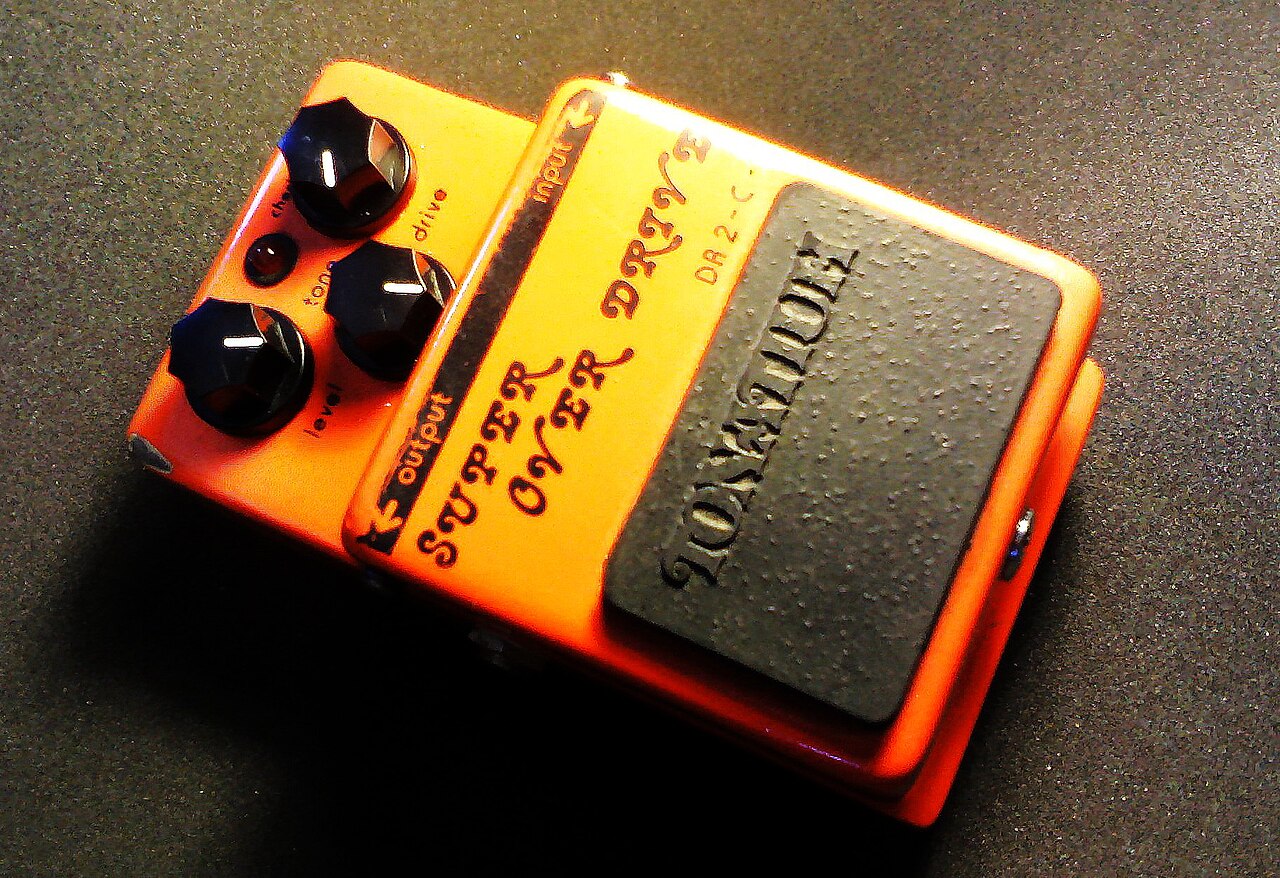
- An orange overdrive pedal: Andrés Galeotti, Wikimedia Commons, CC BY 2.0.
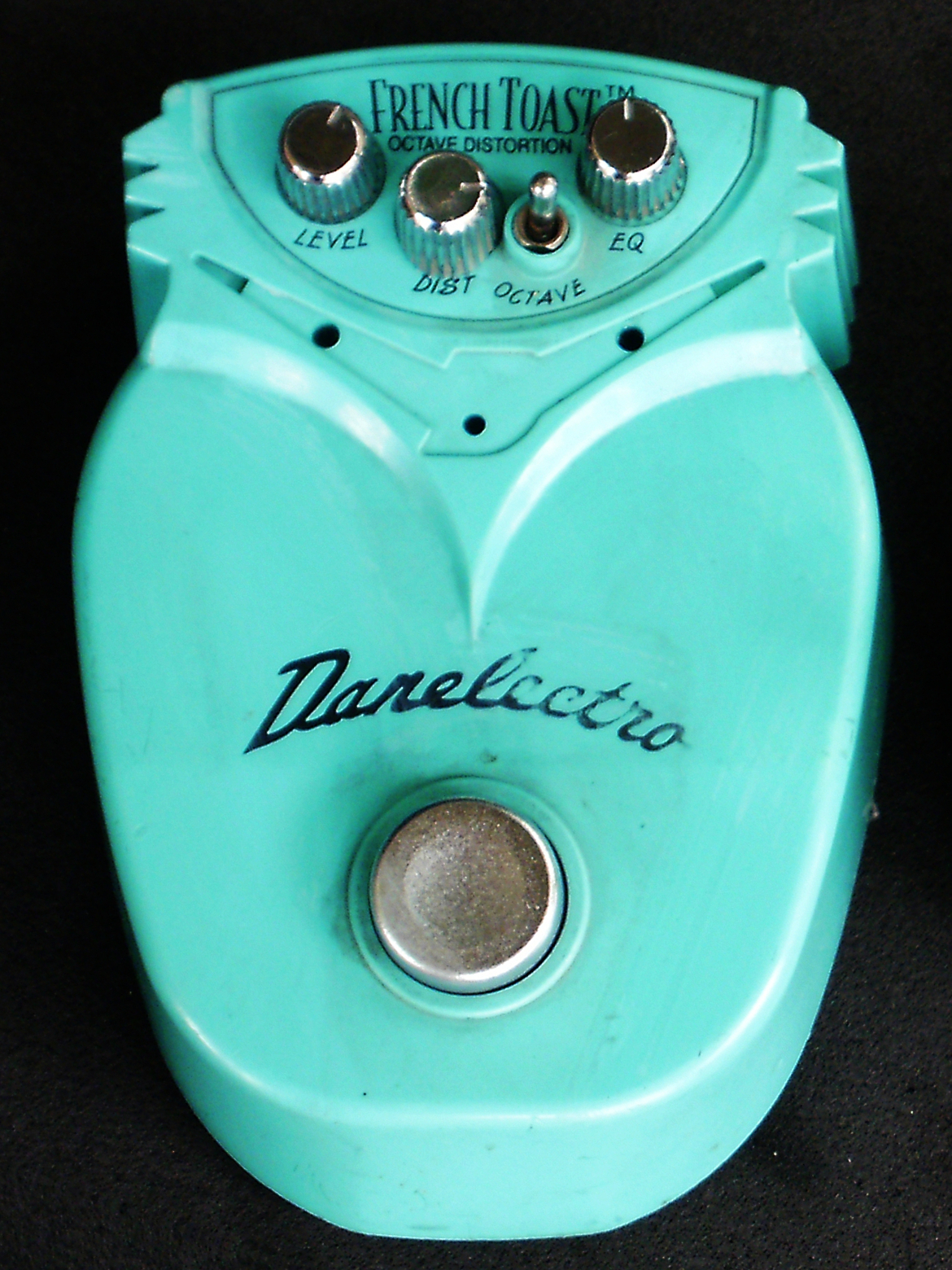
- A mint green distortion pedal: Danelectro French Toast octave distortion rehouse on metal case (2011-10-03 by Andrés Galeotti).jpg: Andrés Galeotti fro, Wikimedia Commons, CC BY 3.0.
- Top image: Zoom MS-50G MultiStomp, photographed on 30 November 2013. Photo: Mike Prosser. Re-re-recording the rhythm guitar parts for my EP, because I ams a tones chaser. CC BY-SA 2.0. Full source frame retained and proportionally resized for display. Adaptations remain under the same license.
Latest News
Related
On This Day
Friday 13 November