The Pedal That Fixed What Wasn’t Broken: Inside the Electro-Harmonix Neo Clone
Electro-Harmonix Neo Clone: Small Clone circuit in a nano enclosure with Depth switch. Specs, tone recipes, artist connections, and buying advice for 2026.
Here’s a counterintuitive product story for you. Electro-Harmonix already had a nano-format Small Clone. It was called the Nano Clone, it cost less, and it did a perfectly respectable job of delivering that lush, wobbly analog chorus in a pedalboard-friendly footprint. So why did EHX turn around and release another nano-format Small Clone? Because the Nano Clone had one irritating omission: no Depth switch. The Small Clone — the actual, original Small Clone that Kurt Cobain made iconic — has two controls: a Rate knob and a two-position Depth switch. The Nano Clone dropped the Depth switch entirely, fixing the rate at the equivalent of the Small Clone’s “deep” setting and calling it a day.
The Neo Clone, released in 2010, is the correction. It keeps the nano enclosure, keeps the same authentic Small Clone circuit with its high-quality bucket brigade chip, and adds back the Depth switch that the Nano Clone left out. That one addition transforms the pedal from “pretty good budget chorus” to “the closest thing to a Small Clone that fits in a nano box.” If the Nano Clone was EHX asking “how small can we make this?” the Neo Clone was EHX asking “how complete can we make it?”
This is the analog chorus story that matters right now — not for the nostalgia of the Small Clone lineage, not because it’s cheap, but because it genuinely delivers a specific, character-rich modulation sound that no digital chorus replicates with the same feel. Here’s everything you need to know about one of the best value chorus pedals on the market.
The Small Clone Legacy: Where the Neo Clone Comes From
You cannot talk about the Neo Clone without talking about the Small Clone, and you cannot talk about the Small Clone without landing on Kurt Cobain. The original Small Clone appeared in 1979 as a stripped-down analog chorus — two controls, that warm bucket brigade wobble, and a price that made it accessible to working musicians who couldn’t afford more elaborate modulation units. Cobain discovered one sometime around 1990 at Guitar Maniacs in Tacoma, Washington. He bought several over the years and used them on every Nirvana album. “Come As You Are” is the most famous application — that unmistakable slow, deep chorus sound threaded through the song’s main riff. He ran the Depth switch in the high position, which produces the more pronounced modulation effect.
A critical clarification worth making upfront: the Neo Clone was released in 2010. Kurt Cobain died in 1994. Cobain used the Small Clone, not the Neo Clone, not the Nano Clone. The connection between these pedals is lineage, not identity. What the Neo Clone inherits from the Small Clone is the circuit architecture and the sonic character — the same bucket brigade chip design, the same core tonal profile. That’s a genuine inheritance worth understanding, but it’s not the same thing as saying Cobain used this particular pedal. He didn’t and couldn’t have.
After the Small Clone came a long period where EHX offered it in its original format and little else for budget chorus shoppers. The Nano Clone arrived in 2006 as the first nano-enclosure attempt — a Rate-only version that sacrificed the Depth switch for compactness and lower cost. The Neo Clone in 2010 split the difference: nano enclosure, full Small Clone circuit, both controls restored. MusicRadar called it simply “the legendary Small Clone chorus gets even smaller” — which is accurate but undersells the engineering involved in preserving circuit fidelity at that form factor.
Specifications
| Specification | Details |
|---|---|
| Year Released | 2010 |
| Circuit | Analog (Bucket Brigade Device) |
| Controls | Rate knob, Depth switch (2-position), Footswitch |
| Bypass | True Bypass |
| Audio | Mono |
| Power | 9V battery included; optional 9.6VDC-200mA adapter not included |
| Current Draw | 12mA |
| Dimensions | 4.5″ × 2.75″ × 2.1″ (nano enclosure) |
| UPC | 683274011127 |
| MSRP (2026) | ~$86.20 USD |
| Street Price New (2026) | ~$71–90 USD |
| Street Price Used Excellent (2026) | ~$45–65 USD |
Controls: What Each Does and Why It Matters
The Neo Clone has two controls and a footswitch. That’s it. This is a feature, not a limitation.
The Rate knob controls the speed of the chorus modulation — how quickly the pitch cycles up and down through the effect. Turned fully counterclockwise, you get an extremely slow, almost imperceptible shimmer that adds dimension without drawing attention to itself. As you turn it clockwise, the effect becomes more pronounced and eventually reaches a fast, aqueous vibrato-adjacent sound that defines the upper end of the pedal’s range. The sweet spot for most applications lands somewhere between 8 and 11 o’clock — slow enough to read as lush rather than seasick.
The Depth switch is the entire reason the Neo Clone exists as a separate product from the Nano Clone. In the off position (shallow), the Depth setting produces a more subtle modulation — the pitch displacement is smaller, the effect sits further back in the mix, and you get a delicate thickening of the signal rather than obvious chorus movement. In the on position (deep), the effect becomes considerably more pronounced — this is the setting that approximates the Small Clone’s characteristic sound, the same position Cobain ran on his unit. For the classic Small Clone shimmer, you want Depth on. For studio-subtle or ambient-texture work, Depth off rewards experimentation.
The combination of Rate at around 9 o’clock and Depth on gives you the most direct approximation of “Come As You Are” chorus — slow, deep, unmistakably Nirvana-adjacent without being cartoonish about it.
The Bucket Brigade Difference
Digital chorus pedals are extraordinarily good in 2026. Boss’s CE-2W, the TC Electronic Corona, the Strymon Ola — any of these will give you clean, consistent, programmable chorus with zero noise floor. Why would you choose the Neo Clone’s bucket brigade analog circuit over any of them?
The answer is in what the analog circuit does to the signal that isn’t strictly modulation. Bucket brigade devices — the class of analog delay chips used in the Neo Clone — introduce a subtle compression, a gentle high-frequency rolloff, and a kind of organic instability to the pitch cycling that digital algorithms replicate imperfectly. When you play through the Neo Clone, the effect interacts with your picking dynamics in a way that feels responsive rather than uniform. Hit harder and the chorus seems to breathe slightly differently. There’s also a faint warmth added to the dry signal itself as it passes through the analog circuit — nothing that a frequency analysis would necessarily quantify, but something your ear registers as “right” in a way that a bypass-parallel digital effect doesn’t quite replicate.
This isn’t a knock on digital chorus. For precision applications, digital wins cleanly. But the Neo Clone sounds like a chorus pedal from a specific era of guitar music — the era that produced Andy Summers‘ legendary Police tone, the era that informed every shoegaze record you’ve ever heard, the era the Small Clone came from. If that’s the reference point you’re chasing, no amount of digital modeling gets there the way the original circuit does.
Famous Players
Jeremy DePoyster (The Devil Wears Prada) — Confirmed
The most clearly documented Neo Clone user in professional music is Jeremy DePoyster, guitarist for Ohio metalcore band The Devil Wears Prada. His use of the Neo Clone is confirmed through a Premier Guitar Rig Rundown — the gold standard for gear verification — where his signal chain is laid out in detail. DePoyster’s setup routes through a Boss TU-3 tuner into a Moen GEC9 loop switcher, with the Neo Clone placed in a dedicated effects loop for his clean tone: Boss OD-1 into the Neo Clone into an MXR Carbon Copy, running into an Orange TH30 combo that handles his clean sounds. The Neo Clone’s role in a metalcore context is instructive — it’s not there for surf shimmer or 80s pop chorus. DePoyster uses it precisely because the Small Clone circuit’s particular character sits well in a clean channel without reading as overtly chorus-y. It adds dimension and warmth to the clean tones that anchor his band’s dynamics against the high-gain sections.
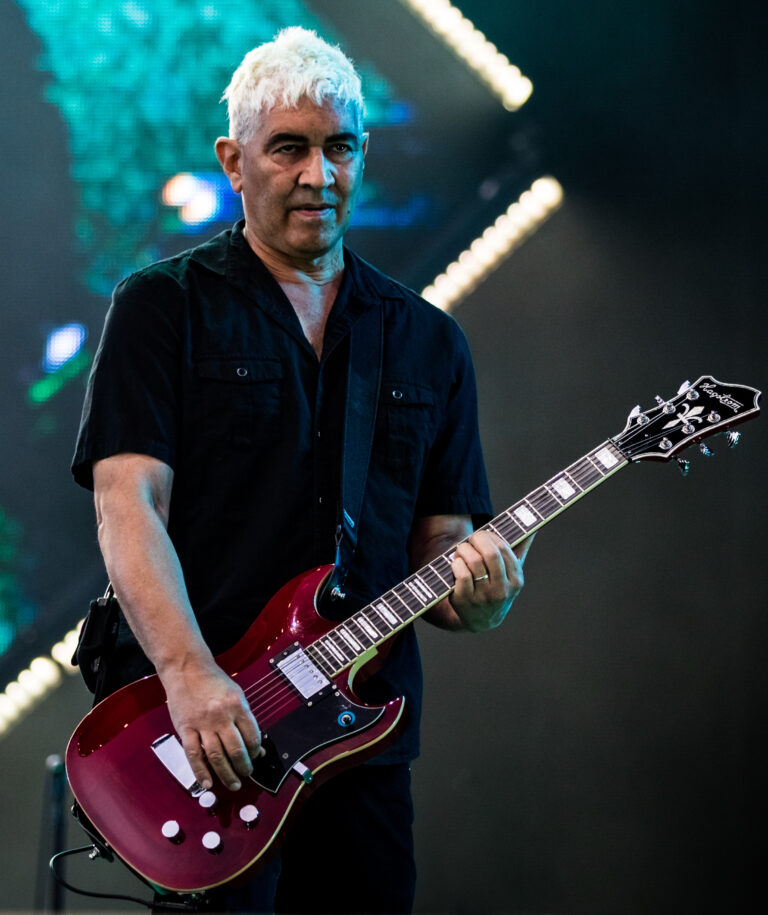
Pat Smear (Nirvana, Foo Fighters) — Equipboard Listed
Punk institution and rock heavyweight Pat Smear appears on Equipboard’s list of Neo Clone users. As the live guitarist who joined Nirvana during their final touring years and subsequently one of the Foo Fighters’ longest-serving members, Smear is among the more recognizable names associated with the pedal. The Equipboard listing represents secondary-source documentation — not a direct manufacturer endorsement or a rig rundown interview — so the connection should be understood as plausible and community-documented rather than manufacturer-confirmed. That said, Smear’s stylistic context and gear sensibility are entirely consistent with a Small Clone-circuit chorus, and the Neo Clone fits naturally into the kind of eclectic, classic-rock-informed pedalboard he typically assembles.
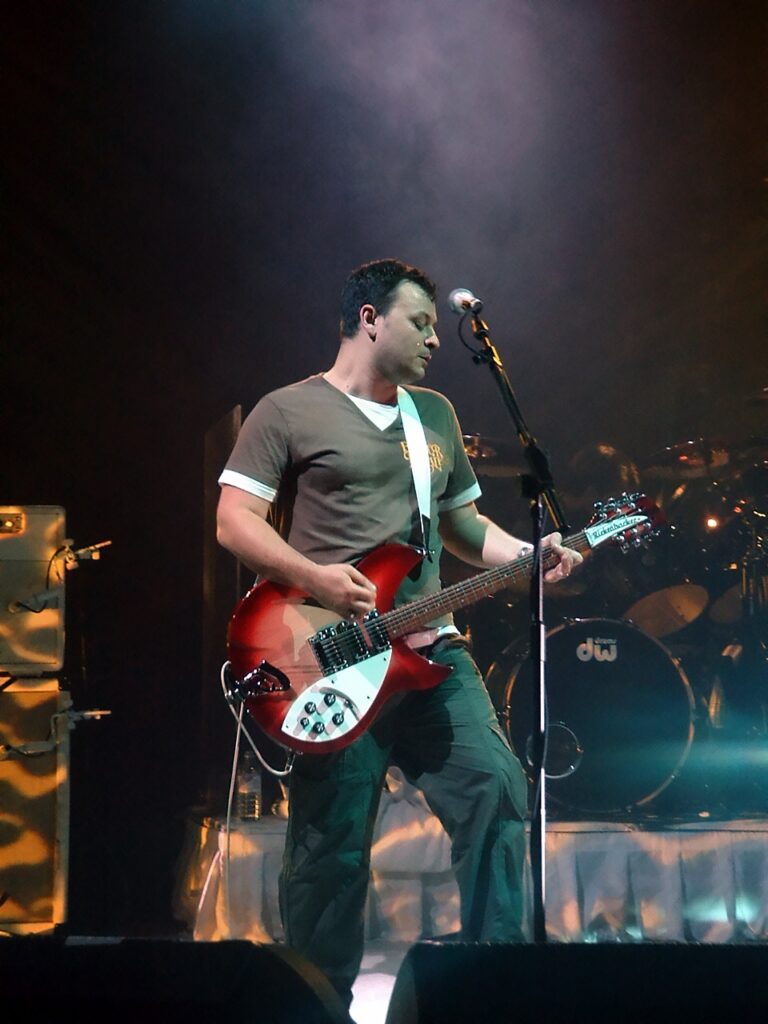
James Dean Bradfield (Manic Street Preachers) — Equipboard Listed
Manic Street Preachers guitarist and vocalist James Dean Bradfield also appears on Equipboard’s Neo Clone documentation. Bradfield is known for big, anthemic guitar tones that often incorporate modulation — the Manics’ catalog includes everything from raw post-punk to arena-ready rock with sophisticated arrangement. Like Smear, the Equipboard listing is secondary documentation; no manufacturer or rig rundown confirms the specific Neo Clone variant. Mentioned here as a plausible community-documented connection rather than primary-source verified usage.
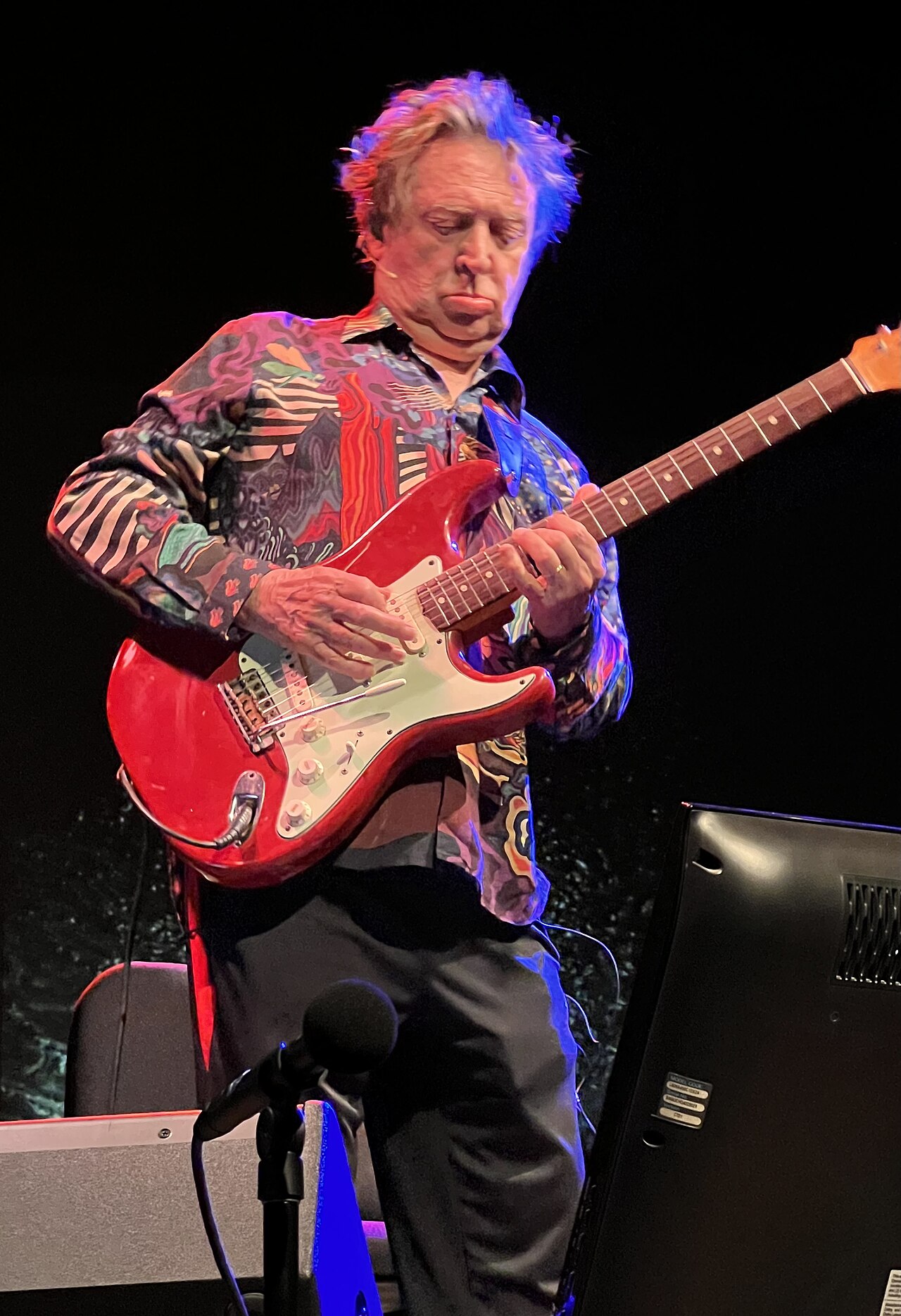
An Honest Note on Andy Summers and the Chorus Legacy
Andy Summers is the guitarist most associated with iconic chorus tone in rock music — his work with The Police on “Every Breath You Take,” “Message in a Bottle,” and “Roxanne” defined what chorus could mean as a compositional element rather than just an effect. Summers achieved those sounds primarily with the Roland CE-1 Chorus Ensemble and the built-in chorus on his Roland JC-120 amplifier, not with a Small Clone or Neo Clone. The connection to this pedal is conceptual rather than documented — the Neo Clone occupies similar sonic territory to the chorus effects Summers used, and understanding his approach to chorus as texture and space helps explain why the Neo Clone’s specific character matters. But naming him as a Neo Clone user would be inaccurate.
Tone Recipes and Settings
The Cobain Reference: “Come As You Are” Approximation
Rate: 9 o’clock | Depth: On (high position). This is as close as the Neo Clone gets to the original Small Clone setting documented on Nirvana recordings — slow, deep modulation with obvious but not overwhelming pitch movement. Run this into a clean amp or a light crunch. The effect needs space to breathe; a heavily distorted signal will mask most of the chorus movement. Works particularly well with a Fender-style amp where the clean headroom lets the modulation fully develop.
Ambient Shimmer: Clean-Tone Enhancement
Rate: 8 o’clock | Depth: Off (shallow position). The slow rate combined with shallow depth gives you a barely-there shimmer that adds dimension to clean arpeggios without announcing itself as a chorus effect. Useful for acoustic-through-electric applications, clean intros, and any moment where you want the guitar to occupy more sonic space without adding a distinct modulation sound. This setting rewards single-note playing on the high strings — the shimmer adds harmonic complexity to each note without muddying chord voicings.
Surf and 60s Texture
Rate: 11-12 o’clock | Depth: On. A medium-to-faster rate with deep modulation pushes into 60s surf-guitar territory — thick, swaying, with that aqueous quality that defined reverb-soaked instrumental rock. This is where the Neo Clone’s bucket brigade heritage becomes most audible. Pair with a slapback delay and a Fender-style amp for maximum authenticity.
Metalcore Clean Channel Approach (DePoyster Method)
Rate: 9-10 o’clock | Depth: On. Feed into a clean channel of a relatively warm amp — Orange, Fender, or similar. Stack with a mild overdrive before the Neo Clone and a delay after it (carbon copy or similar analog delay). The chorus sits between the overdrive and delay in the chain, providing harmonic thickening before the delay spreads the signal. This approach gives clean tones in heavy music context enough weight and dimensionality to hold their own against high-gain sections.
Subtle Studio Texture
Rate: 7-8 o’clock | Depth: Off. The slowest rates with shallow depth create a doubling-adjacent effect — not quite pitch-specific enough to read as true doubling, but close enough that a DI’d or clean amp signal gains presence and perceived width. At these settings the Neo Clone essentially functions as a gentle, always-on tonal enhancer rather than an identifiable modulation effect.
How It Compares
vs. Nano Clone
The Electro-Harmonix Nano Clone is the Neo Clone’s cheaper sibling and most direct comparison. Same nano enclosure, same Small Clone circuit lineage, and approximately $10-20 less on the street. The critical difference: the Nano Clone has only a Rate knob, with depth fixed at the equivalent of the Small Clone’s Depth-high position. If you always want deep, pronounced chorus and you never need the option of subtle modulation, the Nano Clone does the job at a slight savings. But for most players, the Neo Clone’s Depth switch is worth the modest premium — two distinct tonal characters from one pedal rather than one. The Neo Clone is the smarter buy for anyone who might eventually want to dial back the depth for different musical contexts.
vs. Small Clone (Original)
The Small Clone is a medium-sized pedal — larger than the Neo Clone’s nano footprint — in a somewhat vintage-feeling enclosure. The circuit is the same Small Clone design that the Neo Clone replicates. The differences are form factor and price: the Small Clone typically retails slightly higher than the Neo Clone and takes up more pedalboard real estate. For players who prioritize authenticity and don’t mind the additional size, the Small Clone is the original. For players who need every square inch of their pedalboard, the Neo Clone delivers the same circuit in roughly half the footprint.
vs. Boss CE-2W
The Boss CE-2W is a premium digital reissue of the CE-2, with a CE-1 mode added. At roughly three to four times the Neo Clone’s price, it offers more tonal flexibility, stereo output capability, and the Boss reliability standard. It’s an excellent pedal. But the Neo Clone’s bucket brigade analog circuit sounds different in a way that’s difficult to precisely quantify — warmer, slightly more compressed, with organic modulation behavior that the CE-2W’s digital processing approximates but doesn’t fully replicate. If budget is a factor, the Neo Clone wins handily. If you need stereo output or the specific CE-2 character, the Boss is the better choice.
vs. TC Electronic Corona
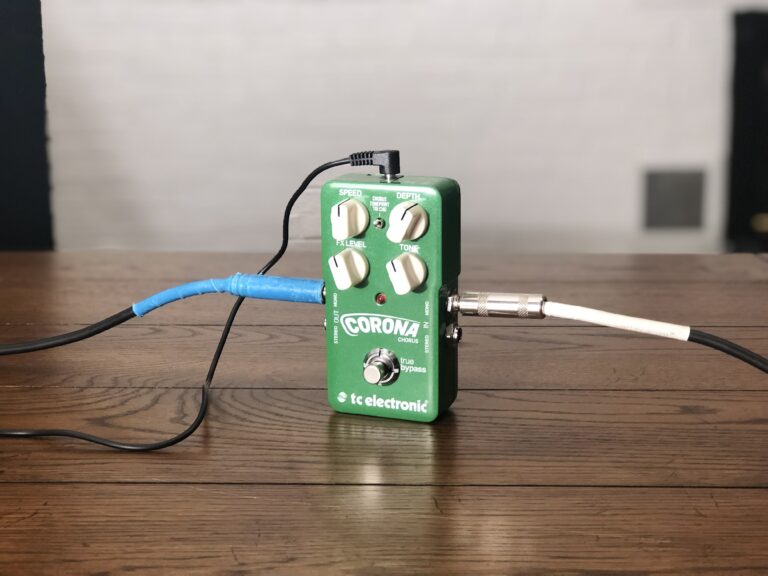
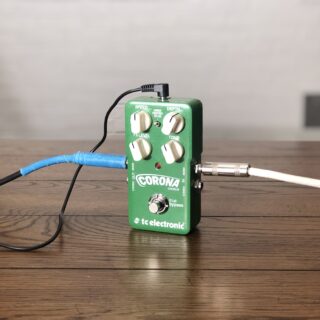
The TC Electronic Corona provides digital chorus with TonePrint programmability — downloadable artist presets and significant sonic range in a similarly compact enclosure. More versatile by any objective measure. The Neo Clone counters with analog authenticity and simpler operation. For players who know exactly what Small Clone-circuit chorus sounds like and want a reliable, simple, analog version of it, the Neo Clone is preferable. For players who want flexibility and programmability, the Corona wins.
Buying Guide
Buy New If:
You want the full EHX warranty and the assurance of a fresh 9V battery included. At the $71-90 street price, the Neo Clone is inexpensive enough that new makes financial sense for most buyers — the premium over used pricing is small enough not to justify the uncertainty of used condition.
Buy Used If:
You find one in excellent condition for under $50. The Neo Clone is mechanically simple with no moving parts beyond the footswitch and knob, so a well-maintained used unit carries very little risk. Inspect the Depth switch toggle carefully — it’s the most-used mechanical component — and check the jacks for corrosion.
What to Watch For:
The Neo Clone runs on 12mA current draw, which is at the low end of the spectrum. Any standard pedalboard power supply with a 100mA-or-better output handles it without issue. No adapter is included — plan accordingly if you don’t own a compatible supply. The pedal only takes 9V; don’t experiment with higher voltages.
Pedalboard Placement:
Chorus typically sounds best after dirt pedals and before delay and reverb. Running an Ibanez TS9 or similar overdrive before the Neo Clone gives you the option of driving the chorus input, which produces a slightly warmer, more compressed modulation character. Delay and reverb after the Neo Clone let the chorus shimmer spread into the space created by those effects. If you run the Neo Clone before a Marshall JCM800 or similar high-gain amp, use the amp’s clean channel for the chorus patches — the modulation effect largely disappears into preamp saturation on high-gain settings.
Ownership Notes
The Neo Clone is a true bypass pedal, which means that when disengaged, your signal passes directly through without any buffering. This is generally desirable — your dry tone is unaffected — but in long true-bypass signal chains, high-frequency content can roll off due to cable capacitance. If you’re running many true bypass pedals with long cable runs, consider adding a buffer early in your chain. For most practical pedalboard setups this is a non-issue.
A minor quirk documented by some users: the footswitch can produce an audible pop when engaged after a period of non-use. This is a known characteristic of the Neo Clone’s circuit design rather than a defect, and it typically diminishes after the pedal has been warmed up. It’s more noticeable in studio recording contexts than live situations where ambient noise masks it. A simple internal modification resolves it permanently, though this voids any warranty.
The 9V battery that ships with the pedal is included primarily for initial testing and basic use — for regular pedalboard operation, a dedicated power supply is the practical choice. The 12mA draw means the Neo Clone is extremely power-efficient and will share a supply rail comfortably with other pedals.
Storage and handling: the nano enclosure is solidly built but the controls are exposed. Protect the Depth switch toggle in particular — it’s a small toggle switch that can be caught on cables or gear bags if not careful. Most players who gig regularly treat it no differently than any other small pedal, and it holds up fine.
FAQ
Is the Neo Clone the same as the Small Clone?
The circuit architecture is the same — EHX describes it as using “the same classic Small Clone circuit” — but the enclosures and form factors differ. The Small Clone is a medium-sized pedal; the Neo Clone uses the smaller nano enclosure. Both have Rate and Depth controls. Sonic output is very similar, making the Neo Clone the practical choice for space-conscious pedalboards.
What’s the difference between the Neo Clone and the Nano Clone?
One critical difference: the Nano Clone has a Rate knob only, with depth fixed at the equivalent of Small Clone’s high-depth position. The Neo Clone adds a Depth switch, giving you two distinct modulation characters — subtle and pronounced. The Neo Clone is the more versatile option for a modest price premium.
Did Kurt Cobain use the Neo Clone?
No. Cobain used the original Small Clone, which he acquired around 1990. The Neo Clone was released in 2010, sixteen years after his death. The connection is one of lineage — the Neo Clone replicates the Small Clone’s circuit — not of direct use. “Come As You Are” was recorded with a Small Clone, not a Neo Clone.
What does the Depth switch actually do?
The Depth switch controls the amount of pitch displacement in the modulated signal. In the off (shallow) position, the pitch change is more subtle — you get a gentle thickening of the sound. In the on (deep) position, the pitch change is more pronounced and obvious — this is the lush, wobbly chorus character the Small Clone is famous for. The on position with slow Rate is the classic setting; the off position with various Rate settings opens up more subtle applications.
Can I use the Neo Clone with bass guitar?
Yes, effectively. EHX confirms bass compatibility on the product page, and the full-frequency analog circuit preserves low-end content well. The Depth-off setting is particularly useful for bass — it adds harmonic width without the excessive pitch wobble that can muddy bass lines in ensemble contexts. The Depth-on setting works for more expressive bass applications where obvious chorus movement is intentional.
Does the Neo Clone need an adapter, or can it run on batteries?
It ships with a 9V battery and can run on batteries. For regular use, a 9V DC center-negative adapter at 100mA or above is the practical choice. The pedal draws only 12mA, so it’s compatible with virtually any standard pedalboard power supply. Note that no adapter is included in the box — the battery is provided, but the adapter must be purchased separately.
How does the Neo Clone compare to digital chorus pedals?
Digital chorus pedals like the TC Electronic Corona or Boss CE-2W offer more versatility, often stereo output, and consistent, noise-free operation. The Neo Clone’s bucket brigade analog circuit sounds different — warmer, with subtly compressed dynamics and organic modulation behavior that digital models approximate but don’t fully replicate. If you want the specific character of Small Clone-circuit analog chorus, the Neo Clone delivers it more authentically than digital alternatives. If you want flexibility and modern features, digital wins.
Is the Neo Clone good for beginners?
Very much so. Two controls means essentially zero learning curve — adjust Rate for speed, flip Depth for intensity. At the street price of $71-90 new, it’s affordable enough for an exploratory first chorus pedal. It also happens to sound excellent, so it’s not something you’ll feel compelled to upgrade past quickly. Many professional players use it on major stages for the same reason — the simplicity isn’t a beginner compromise, it’s a design principle.
Image credits
- Andy Summers: Drussel1, Wikimedia Commons, CC BY-SA 4.0.
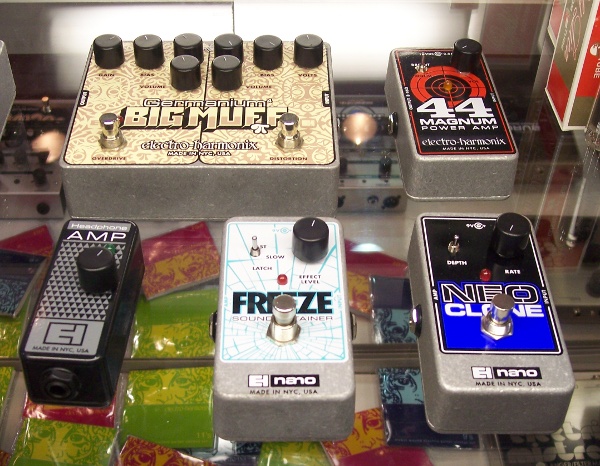
- Top image: Electro-Harmonix Neo Clone analog chorus, front right, displayed beside the Freeze Sound Retainer and other EHX pedals at Summer NAMM on 19 June 2010. Photo: Create Digital Media, ElectroHarmonixPedals (EH pedals, 2010 Summer NAMM), CC BY-SA 2.0. Full original frame retained; no crop or retouch. Adaptations must use the same or a compatible license.
- Pat Smear: by Andreas Lawen, Wikimedia Commons, CC BY-SA 4.0.
- James Dean Bradfield: Markus Unger, Wikimedia Commons, CC BY-SA 3.0.
Latest News
Related
On This Day
Monday 9 November
From this week: