Robert Smith Guitars & Gear: The Complete Guide to The Cure’s Fender Jazzmaster, Bass VI & Disintegration Gothic Tone
Robert Smith guitars & gear: The Cure's leader. Fender Jazzmaster, Fender Bass VI, Gretsch Country Gentleman, Roland Space Echo, Peavey Ultra — Disintegration gothic tone guide.
Photo by Mr. Rossi, licensed under CC BY-SA 4.0 (https://commons.wikimedia.org/wiki/File:The_Cure_-_Southside_Festival_2019_4765_-_2.jpg)
Billy Corgan once said that when Robert Smith played guitar, “the air gets heavier.” This is the most compressed available description of what makes the Smith guitar approach immediately identifiable and specifically powerful: not the technical virtuosity of a shredder, not the aggressive physical energy of a punk guitarist, not the jazz-influenced harmonic sophistication of a fusion player, but the specific quality of weight — atmospheric, emotional, gravitational — that the Fender Jazzmaster through whatever amplification Smith was using at any given point in the Cure’s forty-five-year career produces in the listener’s experience. The air gets heavier. The Jazzmaster’s larger single-coil pickups through a pushed amplifier, shaped by the Roland Space Echo’s warm magnetic tape delay, in the service of songs about love and despair and the Gothic darkness that Robert Smith has inhabited consistently from the first Cure recordings to the most recent — the air gets heavier when all of this is working simultaneously. “Even people who are quite close to the band are surprised to learn that I played the solo on ‘The Edge of the Deep Green Sea,'” Smith told Guitar Player in 1990. “Everyone would immediately assume it’s Porl.” Everyone assumes the other guitarist. Everyone is wrong. The heavier air is Robert Smith’s doing.
The Journey
Robert James Smith was born on April 21, 1959, in Blackpool, Lancashire, England, and grew up in West Sussex, where he took classical guitar lessons (then dropped them, as many guitarists do before finding that the guitar was more interesting without the formal structure) and absorbed Jimi Hendrix and Rory Gallagher as his primary guitar influences. He formed the Cure in 1976 in Crawley, West Sussex, beginning a band that has been through extraordinary stylistic transformations across its career — from the angular post-punk of Three Imaginary Boys (1979) and the minimal dark atmospherics of Seventeen Seconds (1980) and Faith (1981) through the bleak nihilism of Pornography (1982) through the new wave pop of The Head on the Door (1985) and the synthesizer-driven Kiss Me Kiss Me Kiss Me (1987) through the masterpiece dark expansiveness of Disintegration (1989) through the subsequent decades of intermittent recording and touring that have maintained the Cure’s status as one of rock’s most enduring and most beloved bands. Smith has been the only continuous member throughout all of it.
The Fender Jazzmaster that he acquired in the late 1970s — and refinished multiple times throughout the 1980s, “going from natural to white to black” — is the primary guitar of the first gothic era: Seventeen Seconds, Faith, Pornography. The Jazzmaster’s specific tonal character — the larger single-coil pickups’ warm, full, somewhat dark sound, the offset body’s resonance, the specific quality of sustained notes that the Jazzmaster produces — is the guitar voice of the Cure’s most celebrated atmospheric period. The Fender Bass VI baritone guitar is the instrument of Disintegration: Smith used it most notably on the album’s key tracks, and “the smoothness of the Bass VI’s low-frequency tone is the secret behind the velvety character of Smith’s most sumptuous parts.” The Bass VI’s low-frequency character — tuned a full octave below standard guitar tuning, producing the specific deep, resonant baritone that occupies the frequency space between guitar and bass — through a Peavey Ultra head with the mids turned down completely, bass half-raised, and treble cranked: this is the Disintegration guitar sound, and it is the instrument and amplifier combination that gave one of alternative rock’s most celebrated albums its specific atmospheric character.
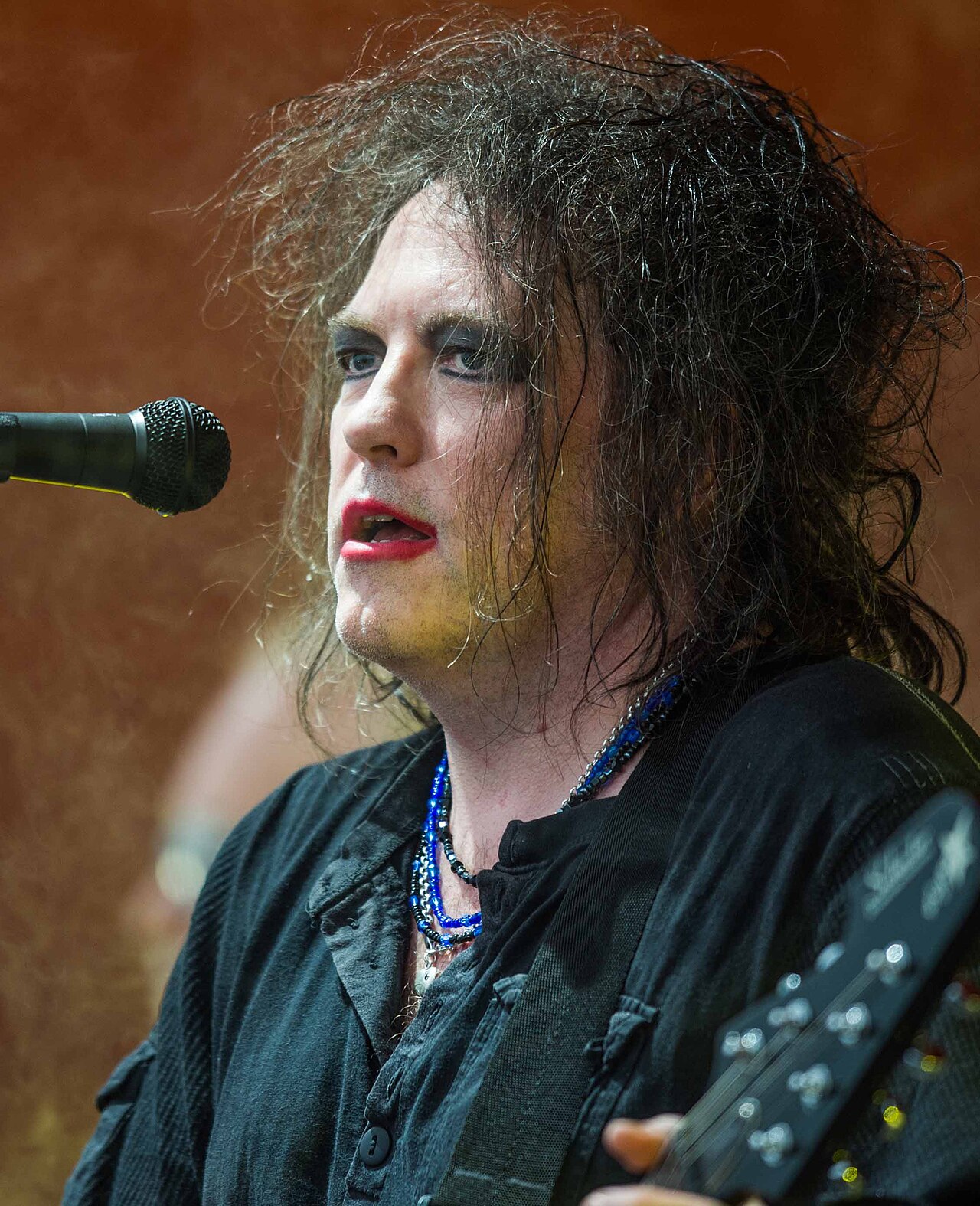
He inadvertently invented goth. The Cure did not set out to create a subculture; they set out to make music that expressed the specific emotional territory of despair, beauty, darkness, and love that Smith has consistently inhabited as both a person and an artist. The specific clothing (the backcombed hair, the red lipstick, the black everything), the specific music (the atmospheric minor-key guitar over drum machines and synthesizers, the vocals on the edge of breaking), and the specific emotional territory (the Gothic darkness of the imagination, the sadness that is also beautiful) combined to produce something that a generation recognized as their own. The goth subculture is the specific cultural consequence of Robert Smith’s guitar work and songwriting, which is a gear consequence in the most expanded possible sense: the air gets heavier when the Jazzmaster is playing, and an entire subculture organized itself around the specific quality of that weight.
The Rock and Roll Hall of Fame inducted the Cure in 2019 — the formal institutional acknowledgment of a career that had always been more beloved than acknowledged, more influential than celebrated, more present in the cultural mainstream than the Gothic darkness of the image would have suggested. The Fender Jazzmaster refinished from natural to white to black to whatever was required by the specific aesthetic moment; the Fender Bass VI through the Peavey Ultra with the mids scooped; the Gretsch Chet Atkins Country Gentleman for “Friday I’m in Love”; the National Newport Val-Pro 88 in the “Lovesong” video. The specific instrument for the specific song, in service of the specific emotional territory. The air gets heavier.
Background: Crawley, the Goth Invention, and Disintegration’s Dark Masterpiece
Crawley, West Sussex — the specific new town built after World War II on the south of London, a suburb designed for working-class families relocated from London’s overcrowding — is the geographic origin of a band that produced some of the most emotionally expansive music in the post-punk tradition. The new town’s specific quality — neither rural nor genuinely urban, a constructed place rather than an organically developed one — is the specific geographic context in which the Cure’s combination of suburban alienation and imaginative escape into the Gothic darkness of literature and imagination developed. Smith’s access to classical guitar lessons as a child demonstrates the specific middle-class musical aspiration of the suburban context; his subsequent dropping of those lessons and absorption of Jimi Hendrix and Rory Gallagher demonstrates the same pattern of formal instruction giving way to the guitar’s own expressive possibilities that characterizes many of the self-taught or near-self-taught guitarists in this series.
The Siouxsie and the Banshees period — in the late 1970s and early 1980s, when Smith performed sporadically with fellow goth connoisseurs — gave him exposure to a specific aesthetic that was both parallel to and distinct from the Cure’s own developing Gothic identity. Banshees was more aggressive, more confrontational, more directly connected to the original punk tradition; the Cure was more melodic, more atmospheric, more given to the specific quality of beauty in darkness that would eventually produce Disintegration. During the Banshees period, Smith used a rare and jangly Fender XII — the 12-string Fender electric, whose doubled-string chime suits the specific jangly atmospheric quality that the late-1970s/early-1980s post-punk guitar approach employed for texture.
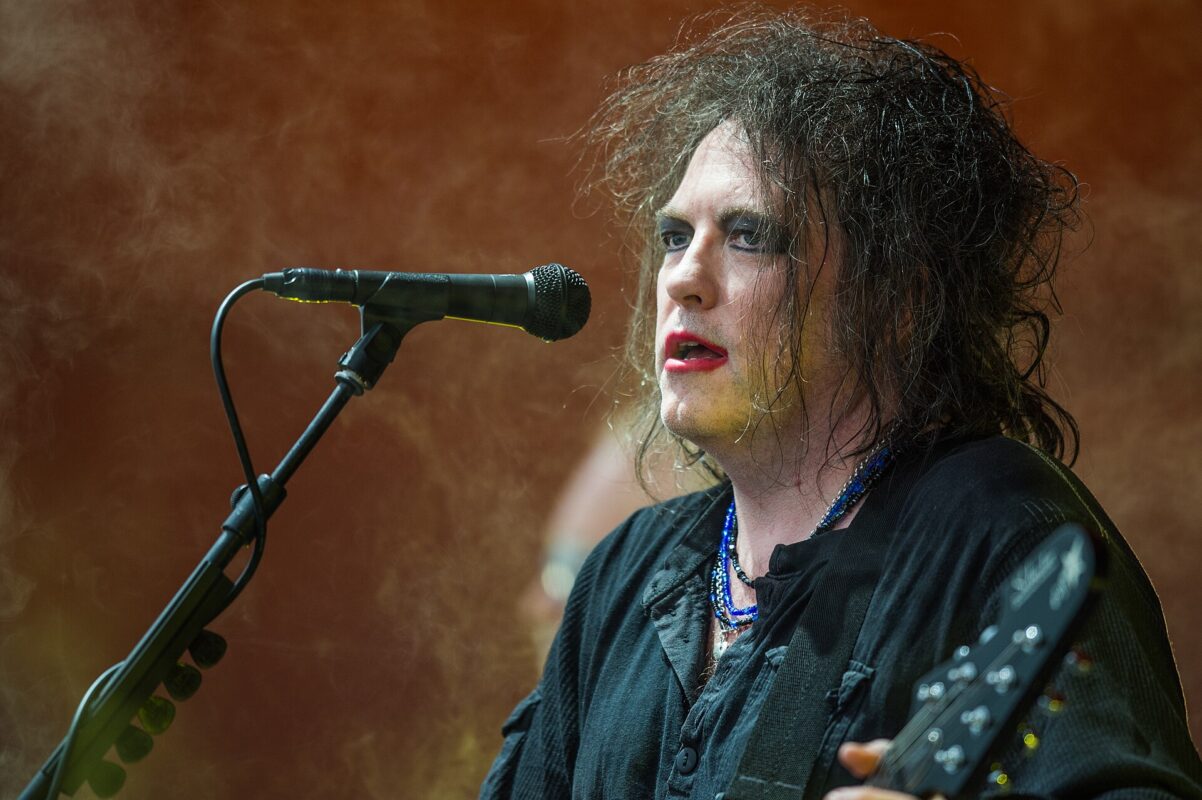
Disintegration (1989) is the Cure’s masterpiece by the consensus of both critics and the band’s own assessment — Smith himself has described it as his favorite Cure album. Recorded as Smith neared his thirtieth birthday with “an increased pressure to follow up on the band’s pop successes with a more enduring work,” Disintegration represents the specific return to the Gothic darkness of the early Cure after the more commercially accessible pop of the mid-1980s. The hallucinogenic drug use that influenced the production is part of the specific creative context — not as romantic mythology but as part of the specific psychological and chemical environment in which Smith was operating when he made the creative decisions that produced the album’s specific atmospheric character. The Fender Bass VI through the Peavey Ultra with the mids scooped: the dark, velvety, baritone guitar tone of an album that sold six million copies worldwide despite being the darkest, most atmospheric thing the Cure had produced since Pornography.
Friday I’m in Love (1992) — the Cure’s most commercially successful single, released from Wish — represents the other pole of Smith’s guitar identity: the Gretsch Chet Atkins Country Gentleman’s warm, archtop jangle rather than the Jazzmaster’s atmospheric Gothic character, in the service of an explicitly happy pop song that Smith described as his love letter to his wife Mary. “It’s an open show of emotion. It’s not trying to be clever. It’s taken me ten years to reach the point where I feel comfortable singing a very straightforward love song.” The Gretsch on “Friday I’m in Love” is the guitar that proves the range: from the Bass VI’s baritone darkness of Disintegration to the Country Gentleman’s warm jangle of a pop love song, Smith used whatever instrument served the specific emotional territory of the specific song.
The Rig: Robert Smith’s Guitars, Amps, and Effects
Guitars
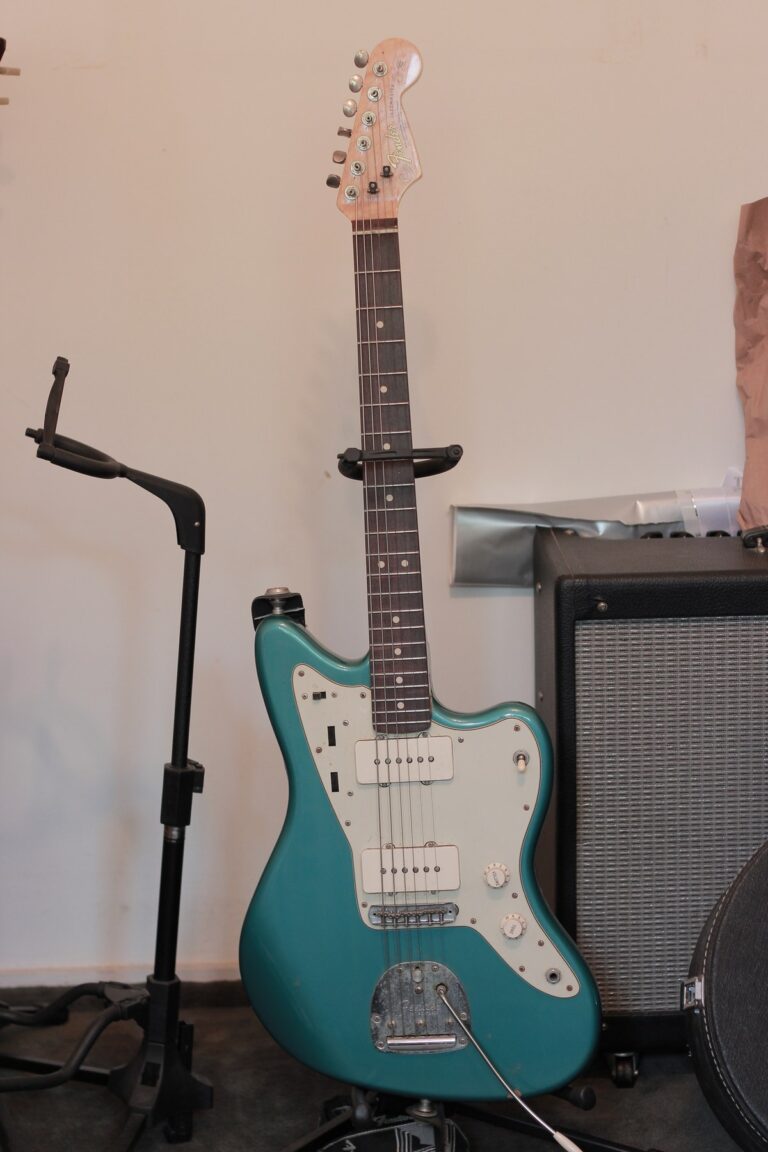
Robert Smith’s primary guitar through the Cure’s first gothic era was a Fender Jazzmaster — the same offset Fender that Tom Verlaine used for Marquee Moon, chosen for the same combination of affordable price (the Jazzmaster was commercially unfashionable in the late 1970s, making it accessible) and specific tonal character. Smith refinished his Jazzmaster various times throughout the ’80s, going from natural to white to black. The Jazzmaster’s larger single-coil pickups produce the specific warm, slightly dark, atmospheric guitar tone that is the voice of Seventeen Seconds and Faith: the arpeggiated chord patterns, the sustained single notes with the specific Jazzmaster resonance, the combination of melodic clarity and tonal warmth that the Gothic atmosphere of the early Cure recordings required. “The sinister, spidery lines spun by Smith with a Fender Jazzmaster (or often a six-string bass) were a best-kept secret,” as the Classic Rock retrospective describes the specific combination of guitar and bass that produced the Cure’s atmospheric guitar character.
Smith used a Fender Bass VI most notably on Disintegration — the baritone guitar tuned an octave below standard tuning that occupies the frequency space between guitar and bass. “The smoothness of the Bass VI’s low-frequency tone is the secret behind the velvety character of Smith’s most sumptuous parts. You can hear it in the downcast lead riff of Lullaby, the heart-rending pain of Lovesong’s melancholic drive, and in The Same Deep Water As You’s troubled manoeuvring.” The Bass VI on Disintegration is through an early 1980s Peavey Ultra head and 4×12 cabinet, with the mids turned down completely, a half-raised bass, and the treble cranked: the specific deeply scooped-mid amplifier setting that produces the Bass VI’s specific baritone velvety darkness in the Disintegration context. The Bass VI “also serves to contradict Gallup’s driving basslines, especially on Pictures of You” — creating a specific low-register counter-melody that sits above the bass but below the guitar, in the sonic territory that the bass VI uniquely occupies.

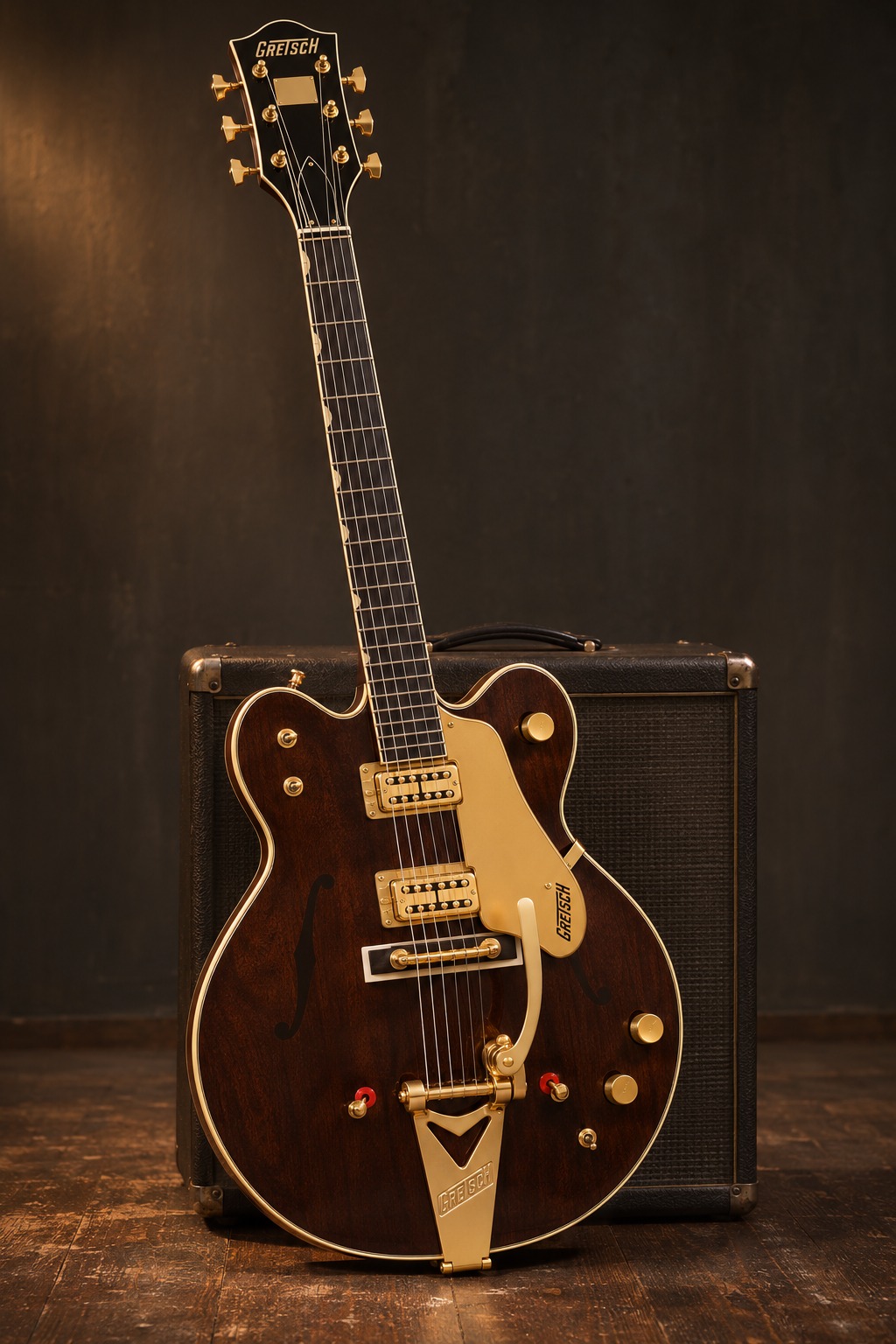
Smith mentions his use of a Gretsch Chet Atkins Country Gentleman on the recording of the Cure’s signature anthem “Friday I’m in Love,” which he also favoured for live shows around this era. The Country Gentleman — the semi-hollow Gretsch archtop with its FilterTron pickups and the specific warm, chiming jangle that the Gretsch hollow-body construction produces — provides the specific tonal character of “Friday I’m in Love”: bright, warm, open, with the specific clean Gretsch character that suits the pop song’s explicitly happy emotional territory. The Country Gentleman is the opposite of the Bass VI’s dark baritone: warm, chimey, jangly, open. Same guitarist, same band, same creative identity, completely different guitar serving completely different emotional territory.
In the music video for “Lovesong,” Smith can be spotted playing a National Newport Val-Pro 88 — a hollow-body guitar from National’s budget line that the Mixdown Magazine rundown describes as “whacky looking.” The National Val-Pro’s hollow plastic body and National lipstick pickups produce the specific resonant, somewhat nasal tonal character of the budget hollow-body tradition. Its use in the “Lovesong” video reflects Smith’s broader openness to unusual, non-consensus instruments.
During his period performing with Siouxsie and the Banshees in the late 1970s and early 1980s, Smith favored a rare and jangly Fender XII — the 12-string electric Fender that produces the specific doubled-string chime of the 12-string in the single-coil Fender character. The Fender XII’s tonal character — the doubled strings producing the shimmer and complexity of the 12-string, combined with the Fender single-coil’s specific articulation — suited the specific atmospheric, jangly quality that the Banshees’ sound required.
Schecter produces Robert Smith signature guitar models — the PT and UltraCure — the formal modern guitar partnership that documents his current guitar identity in a production instrument format. The Schecter models incorporate the specific tonal and playability requirements that Smith has developed over four decades of professional playing, providing the modern touring equivalent of the vintage Jazzmaster and Bass VI approach.
Amps
The specific amplifier configuration of Disintegration is precisely documented: the Bass VI was output through an early 1980s Peavey Ultra head and 4×12 cabinet, with the mids turned down completely, a half-raised bass, and the treble cranked. This deeply scooped EQ setting — mids down completely, bass moderate, treble maximum — produces the specific velvety, dark, atmospheric character of the Disintegration guitar tone. The mid-scoop amplifier setting is the specific production decision that gives the Bass VI’s baritone output its particular quality on the album: without the midrange frequencies that would normally provide the guitar’s presence and cut, the remaining bass warmth and treble clarity combine in the specific smooth, dark, atmospheric way that “velvety” captures accurately. The Peavey Ultra’s specific solid-state preamp character — different from the tube-warmth of the Fender or Marshall family — contributes an additional tonal quality to the specific Disintegration sound.
Smith has used various amplifiers across the Cure’s career, with different recordings using different amplification for specific tonal requirements. The diversity of amplification — from the Peavey Ultra of Disintegration to the various other amplifiers documented across different recording and touring periods — reflects the same instrument-for-the-song philosophy that produced the Jazzmaster for the early Gothic era, the Bass VI for Disintegration, and the Gretsch for “Friday I’m in Love.” The right amplifier for the right song, in the same spirit as the right guitar for the right song.
Effects
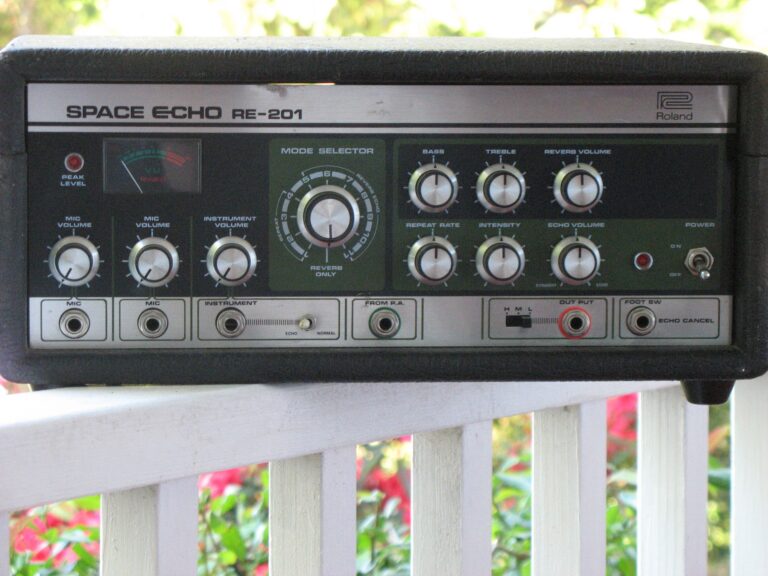
The Roland RE-201 Space Echo — the magnetic tape echo unit — is the primary effects unit in Smith’s documented signal chain and the most significant single effect in the Cure’s guitar sound. The Space Echo’s warm, slightly degraded tape echo character — the repeats gradually losing high-frequency content as the tape passes the playback heads — produces the specific atmospheric warmth of the Cure’s guitar sound: not the clean digital clarity of later delay units but the organic, warm, naturally evolving character of magnetic tape delay. The Space Echo on the Jazzmaster is the combination that produces the specific “sinister, spidery” quality of the early Cure guitar work: the Jazzmaster’s single-coil warmth with the Space Echo’s gentle, warm, atmospheric echo transforming individual notes into the specific atmospheric shimmer of Seventeen Seconds and Faith.
The Roland GP-16 guitar processor — a multi-effects unit from Roland’s late-1980s product line — appears in Smith’s documented later-period signal chain, providing multiple effects processing options in a single rack unit. The GP-16’s capabilities include delay, chorus, reverb, and various other effects that the specific sophistication of the later Cure productions required beyond the Roland Space Echo’s single-tape-echo application.
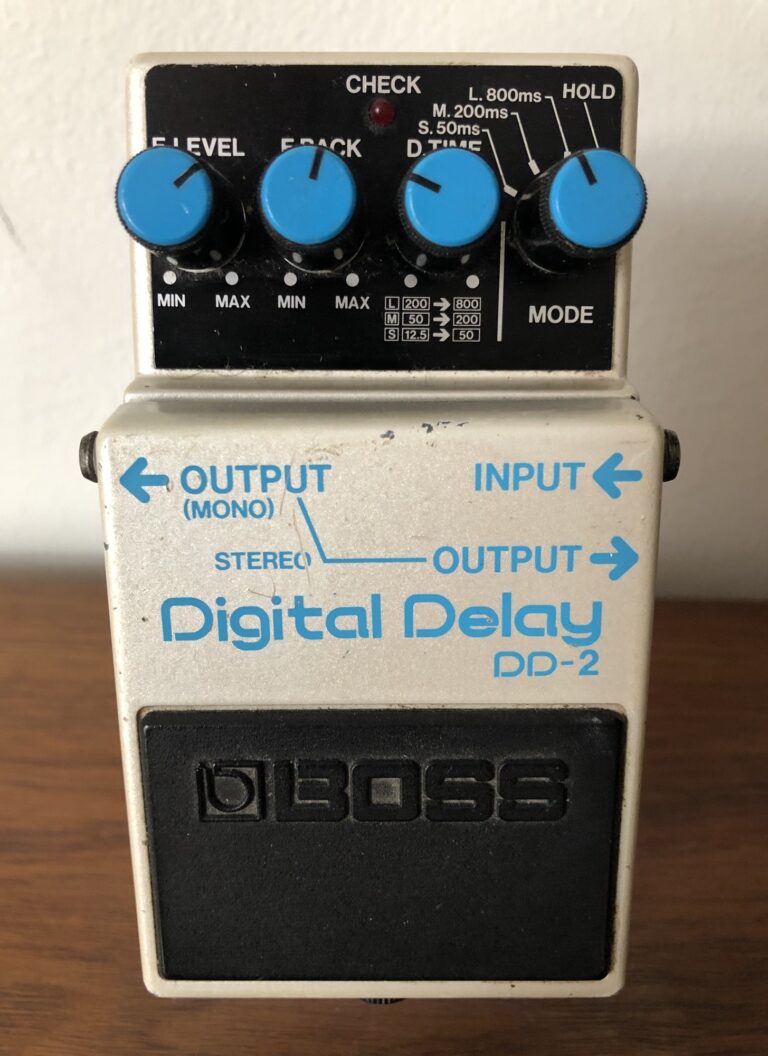
The Boss DD-2 — one of the first commercially available digital delay pedals, from the early 1980s — is documented in Smith’s signal chain as a more portable digital alternative to the Space Echo for specific touring and recording applications. The DD-2’s clean digital character provides the specific crystalline repeat quality that the tape echo doesn’t produce, offering a different delay texture for contexts where the Space Echo’s warm degradation is not the appropriate effect.
Various octave and modulation effects appear in Smith’s documented signal chain across different recording and touring periods, providing the specific atmospheric texture of the Cure’s guitar sound beyond the foundational delay of the Space Echo. The modulation effects — chorus, flange, phase — add the specific swirling, atmospheric quality that contributes to the Cure’s guitar sound’s characteristic richness.
A chorus effect is fundamental to the Cure’s guitar sound — the specific harmonic widening and pitch modulation that gives the Jazzmaster’s guitar notes their characteristic shimmer and width in the mix. The chorus’s specific application in the Smith signal chain: the doubled, slightly detuned signal that adds a quality of depth and movement to sustained guitar notes, particularly in the arpeggiated chord patterns that characterize much of the Cure’s guitar approach. The combination of Space Echo delay and chorus modulation is the specific two-effect foundation of the early Cure gothic guitar tone: the delay adds temporal depth, the chorus adds harmonic width, and together they produce the atmospheric guitar shimmer that has influenced multiple generations of alternative and indie rock guitarists.
The specific Cure discography — the extraordinary stylistic range that Smith has maintained across more than forty years of recording — is the best available demonstration of the guitar-for-the-emotional-territory philosophy in practice. Three Imaginary Boys (1979): the angular post-punk, relatively straightforward guitar work. Seventeen Seconds (1980): the first gothic era begins, the Jazzmaster and the Space Echo in their first full deployment, the arpeggiated minor-key atmospheric guitar of “A Forest” establishing the template. Faith (1981): the darkest of the early gothic records, the Jazzmaster’s atmospheric shimmer at its most austere. Pornography (1982): the absolute bottom of the darkness, the guitar almost industrial in its aggression. The Top (1984): psychedelic and experimental, Smith’s guitar more varied and less atmospheric than the early gothic period. The Head on the Door (1985): pop ambition, guitar in service of hooks and melodies rather than atmosphere. Kiss Me Kiss Me Kiss Me (1987): eclectic and expansive, multiple guitar approaches within a single album. Disintegration (1989): the return to Gothic darkness and the masterpiece of the Bass VI baritone through the scooped-mid Peavey Ultra. Wish (1992): more pop-oriented, the Gretsch Country Gentleman for “Friday I’m in Love.” Wild Mood Swings (1996), Bloodflowers (2000), the 2004 self-titled, 4:13 Dream (2008), Songs of a Lost World (2024): the ongoing career that the 2019 Hall of Fame induction recognized. The guitar has been different on each of these albums because the emotional territory has been different, and Smith has always used the guitar that serves the emotional territory rather than the guitar that serves the identity. This is the practice of guitar playing at its most musically intelligent: the instrument disappears into the music, and what remains is the specific quality of weight that Billy Corgan recognized as heavier air.
Playing Style & Tone Philosophy
Robert Smith plays guitar as a melodist — someone whose primary guitar identity is the melodic line, the specific sequence of notes that expresses an emotional condition directly without the intermediate step of technical demonstration. “All spidery substance and no ’empty flash,'” as the Classic Rock description captures: the guitar lines are not technically impressive but emotionally specific, which is the harder achievement in a rock context where the equipment and the technical vocabulary for “impressive” guitar playing are commercially well-developed and the specific qualities of emotional specificity and melodic intelligence are more difficult to describe and more difficult to reproduce.
The Billy Corgan quote — “the air gets heavier” — is accurate precisely because Smith’s guitar playing operates in the emotional register of weight rather than the physical register of aggression. The Jazzmaster’s specific tonal character, the Space Echo’s warm atmospheric delay, the specific arpeggiated chord patterns and sustained single notes that characterize the early Cure guitar work: all of these produce the specific quality of emotional gravity that “heavier air” describes. This is the Gothic guitar aesthetic at its most concentrated: the guitar making the atmosphere feel denser, more present, more emotionally loaded than the silence before it.
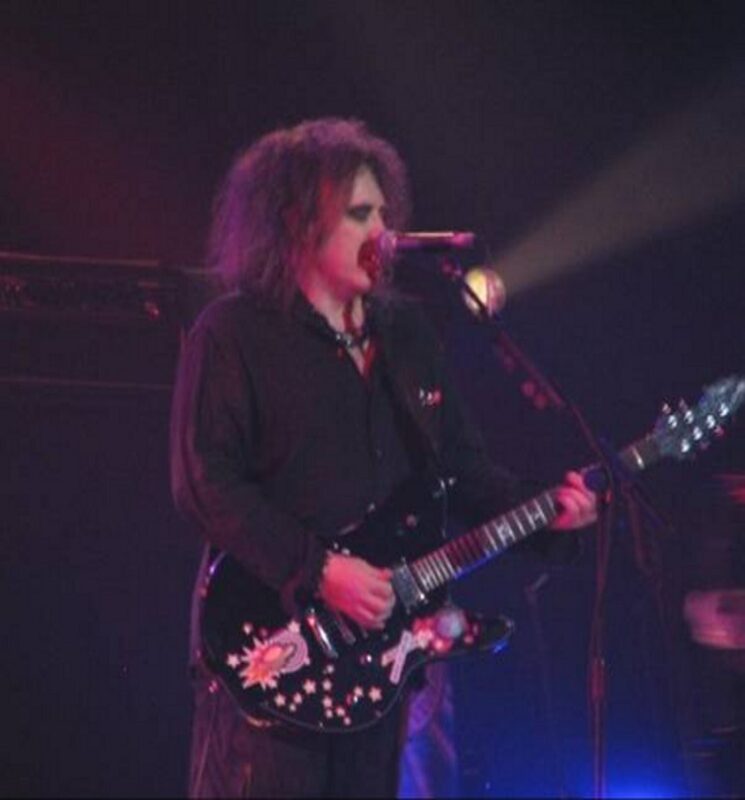
His position as the Cure’s only continuous member — and the band’s primary songwriter, arranger, vocalist, and guitarist — means that the guitar playing and the songwriting are inseparable aspects of the same creative identity. Smith does not write songs and then add guitar; the guitar is part of the compositional process, and the specific tonal choices (Jazzmaster for Gothic darkness, Bass VI for Disintegration’s baritone velvet, Gretsch for “Friday I’m in Love”‘s jangly pop) are compositional decisions as much as tonal ones. The right guitar for the right emotional territory: this is the Smith approach, and it is why the gear story for the Cure covers such an unusual and eclectic range of instruments.
How to Sound Like Robert Smith
The Robert Smith Cure tone requires: a Fender Jazzmaster (or Bass VI for the Disintegration baritone approach, or Gretsch Country Gentleman for the pop period); a Roland RE-201 Space Echo (or equivalent warm tape delay) with chorus modulation; an amplifier pushed toward the edge of its clean headroom; and the specific arpeggiated chord and sustained single-note approach that characterizes the Cure’s guitar methodology. The air gets heavier when all of this is working correctly. There is no shortcut to that specific quality of weight; it comes from the instrument, the delay, and the specific melodic intelligence of the playing.
| Control | Setting (0–10) | Notes |
|---|---|---|
| Amplifier (Toward Clean Saturation) | Volume: 6–7; Treble: 6; Bass: 5; Mid: 5 | The amplifier working toward its natural saturation point — not clean, not aggressively distorted, but the specific warmth of a tube amp approaching its output stage’s limit. The Jazzmaster’s larger single-coil pickups drive the input with sufficient output to push the amp slightly. The “spidery” quality comes partly from this specific pushed-but-not-distorted character. |
| Peavey Ultra (Disintegration — Bass VI Setting) | Mids: 0; Bass: 5; Treble: 10 | The specific Disintegration amplifier settings: mids completely off, bass half-raised (5), treble fully cranked (10). This produces the deeply scooped EQ that gives the Bass VI’s baritone output its velvety, dark character. The total mid-scoop removes the frequencies that would normally give the guitar presence; what remains is the warmth of the low end and the clarity of the high end, combined to produce the specific Disintegration velvet. |
| Roland RE-201 Space Echo (Primary Delay) | Echo: 1–2 repeats; Intensity: 5; Mode: echo only | The foundational atmospheric effect. 1–2 warm tape echo repeats, each slightly softer and warmer than the previous as the tape’s high-frequency content degrades naturally. The Space Echo’s specific character is different from digital delay: each repeat is slightly different in frequency content, producing the organic, evolving quality of tape delay rather than the identical repetition of digital. This specific quality is irreplaceable in the Cure’s atmospheric guitar sound. |
| Chorus (Atmospheric Width) | Rate: 2–3; Depth: 4–5 | Slow chorus modulation — barely perceptible as an obvious effect but providing the specific harmonic width and shimmer that adds depth to the Jazzmaster’s arpeggiated chords. The chorus’s slight pitch modulation widens the guitar’s sound in the stereo field, making the arpeggiated chord patterns feel more atmospheric and expansive than the single guitar’s natural stereo width provides. |
| Arpeggiated Chord Approach | Individual notes within chord; ascending or descending patterns | The primary compositional technique: picking individual notes within a chord pattern (arpeggiation) rather than strumming all strings simultaneously. The Jazzmaster’s sustained single-coil notes, with the Space Echo adding the echo of each picked note before the next arrives, produces the specific shimmering, layered quality of the early Cure guitar. Each note rings into the echo while the next note sounds — the delay creates a natural chord-like texture from individual picked notes. |
| Guitar Selection (Emotional Territory) | Jazzmaster: Gothic/atmospheric; Bass VI: Disintegration velvet; Gretsch: Pop/happy | The Smith methodology: choose the guitar that serves the specific emotional territory of the specific song. Jazzmaster for the dark atmospheric — its larger single-coil warmth and the Gothic atmosphere. Bass VI for the baritone velvet of the deepest emotional darkness. Gretsch Country Gentleman for the warm, jangly pop of explicit happiness. The guitar is a compositional tool, not an identity. The air gets heavier when the right guitar is chosen. |
Influence & Legacy
Robert Smith’s influence on guitar playing is the influence of a guitarist who “inadvertently invented goth” — whose specific combination of Jazzmaster tonal warmth, Roland Space Echo atmospheric delay, arpeggiated chord approach, and the specific emotional territory of Gothic darkness produced a guitar sound that an entire subculture recognized as theirs and adopted as a cultural identifier. Every subsequent guitarist who heard the early Cure recordings and reached for a Jazzmaster with a chorus and a Space Echo was following the trail that Smith had established. Every dark, atmospheric, arpeggiated guitar part in alternative and post-punk music of the subsequent decades draws on the specific vocabulary that the Cure established with the Jazzmaster and the Space Echo in the early 1980s.
His influence extends well beyond the goth tradition: the Cure’s guitar approach influenced bands including the Pixies, Radiohead, My Bloody Valentine, the Smashing Pumpkins (Billy Corgan’s “the air gets heavier” is not an abstract assessment — it is the observation of someone who absorbed the Cure’s guitar approach deeply enough to make it part of their own compositional vocabulary), and every subsequent alternative rock band that understood the guitar as an atmospheric instrument rather than a technical showcase. “One of the most influential yet underrated guitarists of the 20th century,” as Mixdown Magazine describes him — underrated because the hair and the lipstick and the persona attracted more attention than the spidery guitar lines, and because Porl Thompson’s presence as co-guitarist allowed the assumption that the lead guitar work was always Porl’s. It was often Robert’s. The air got heavier.
The Rock and Roll Hall of Fame induction (2019) provided formal institutional acknowledgment of the Cure’s cultural significance — an acknowledgment that was, in the specific case of a band whose work is as beloved as any in alternative rock, overdue. For the Fender Jazzmaster tradition that Smith shared with Tom Verlaine — both guitarists using the offset Fender for its atmospheric qualities and its affordable availability — see Tom Verlaine’s Television entry. The Gothic atmosphere that Smith developed connects to the broader post-punk tradition documented through multiple series entries, and the specific “air gets heavier” quality of his guitar approach connects to Richard Lloyd’s fluid exactitude — both guitarists operating in the same Fender-single-coil tradition with radically different emotional vocabularies and radically different cultural consequences.
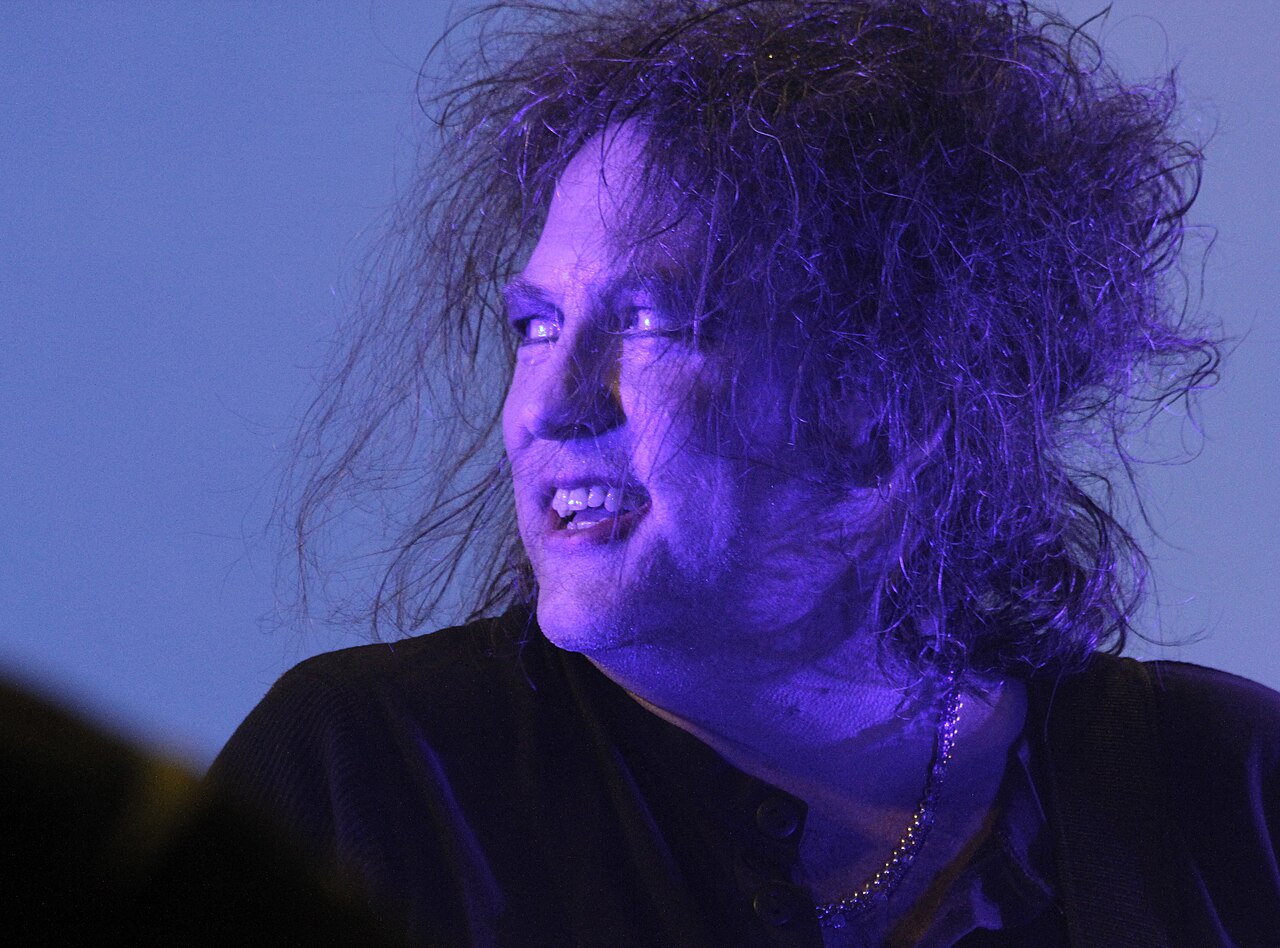
The Jazzmaster. The Bass VI through the Peavey Ultra with the mids down completely. The Gretsch for the love songs. The National Val-Pro 88 in the music video. The Roland Space Echo’s warm tape echo. The chorus making the air wider. The air getting heavier. Billy Corgan said it. Robert Smith proved it, on every record from Seventeen Seconds through Disintegration through Faith through Friday I’m in Love through Songs of a Lost World. The goth subculture didn’t plan to form around his guitar tone. It formed anyway. Some forces are gravitational. The heavier air is one of them.
The Schecter Robert Smith signature guitars — the PT and the UltraCure — are the modern commercial documentation of the instrument identity he developed over four decades. Players who want to approach Smith’s tonal territory can now do so with purpose-built instruments that incorporate his specific requirements. But the Schecter signature guitars are the synthesis of the gear story, not its origin. The origin is the Jazzmaster refinished from natural to white to black, bought when Jazzmasters were affordable because they were unfashionable, used because they sounded like the Gothic darkness that Smith was trying to express, modified over years of touring because the emotional territory kept demanding new tonal responses. The Schecter is the result. The Jazzmaster in 1980 is where it started. The air gets heavier at both ends of the timeline.
Frequently Asked Questions: Robert Smith Guitars & Gear
What guitar did Robert Smith use on Disintegration?
Robert Smith used a Fender Bass VI baritone guitar as the primary guitar on Disintegration (1989). “The smoothness of the Bass VI’s low-frequency tone is the secret behind the velvety character of Smith’s most sumptuous parts.” The Bass VI through an early 1980s Peavey Ultra head with mids down completely, bass half-raised, and treble cranked produced the specific dark, velvety, atmospheric baritone guitar sound of “Lullaby,” “Lovesong,” “Pictures of You,” “The Same Deep Water As You,” and the rest of the album. He also used a Fender Jazzmaster and National Newport Val-Pro 88 on the album. The Jazzmaster was his primary guitar for the early gothic era (Seventeen Seconds, Faith, Pornography).
What was the “air gets heavier” quote about?
Billy Corgan of the Smashing Pumpkins said that when Robert Smith played guitar, “the air gets heavier” — a description of the specific quality of emotional and atmospheric gravity that Smith’s guitar approach produces. The Fender Jazzmaster’s warm, dark single-coil tone through a Roland RE-201 Space Echo tape delay and chorus modulation, applied to arpeggiated chord patterns and sustained single notes in the service of Gothic emotional territory — the combination produces a specific quality of weight in the listener’s experience that Corgan identified as “heavier air.” It is one of the most accurate short descriptions of what makes the Cure’s guitar sound specifically powerful despite being technically unremarkable by the standards of conventional rock guitar virtuosity.
What effects does Robert Smith use?
Smith’s foundational effects are the Roland RE-201 Space Echo (warm magnetic tape delay — the primary atmospheric effect of the early Cure recordings) and chorus modulation (providing harmonic width and shimmer). He has also used the Roland GP-16 guitar processor, Boss DD-2 digital delay, and various octave and modulation effects across different recording and touring periods. The specific combination for the early gothic era: Jazzmaster → Space Echo → chorus → pushed amplifier, producing the specific “spidery, sinister” atmospheric guitar of Seventeen Seconds and Faith. The Disintegration period used different signal chain elements appropriate to the Bass VI and the Peavey Ultra.
What guitar did Robert Smith use on “Friday I’m in Love”?
Robert Smith used a Gretsch Chet Atkins Country Gentleman on the recording of “Friday I’m in Love” — the warm, hollow-body archtop with FilterTron pickups that produces the specific warm, jangly, chiming character of the pop love song. He also favored the Country Gentleman for live shows around the Wish (1992) era. The Country Gentleman’s tonal character is the opposite of the Bass VI’s Disintegration darkness: warm, bright, open, chimey. Smith chose the guitar that served the specific emotional territory of the specific song, and “Friday I’m in Love” is explicitly about happiness, love, and the specific experience of a Friday being the best day of the week — the Country Gentleman’s warm jangle is the correct guitar for that emotional territory.
Did Robert Smith play lead guitar on Cure recordings?
Yes, significantly more than is generally recognized. “Even people who are quite close to the band are surprised to learn that I played the solo on ‘The Edge of the Deep Green Sea,'” Smith told Guitar Player in 1990. “Everyone would immediately assume it’s Porl [Thompson].” The presence of co-guitarist Porl Thompson in various Cure lineups has led many listeners and even band associates to assume that lead guitar work is always Thompson’s, when Smith has consistently played significant guitar parts across the Cure’s recordings — often the most melodically and emotionally central parts. The “sinister, spidery lines” of the early gothic era are primarily Smith’s work.
How did Robert Smith’s guitar approach influence goth rock?
Robert Smith inadvertently invented goth through the combination of the Cure’s specific aesthetic — the music (dark, atmospheric, minor-key, arpeggiated guitar over drum machines and synthesizers), the image (backcombed hair, red lipstick, black clothing), and the emotional territory (beauty found in darkness and despair) — that together produced a subculture that recognized itself in what Smith was expressing. The specific guitar contribution: the Fender Jazzmaster through the Roland Space Echo with chorus, producing the arpeggiated atmospheric guitar shimmer that became the defining guitar sound of the goth tradition. Every subsequent goth rock guitarist who reached for a Jazzmaster and a Space Echo was following the trail that Smith’s early 1980s Cure recordings had established.
When was Robert Smith and The Cure inducted into the Rock and Roll Hall of Fame?
The Cure were inducted into the Rock and Roll Hall of Fame in 2019. Robert Smith, as the band’s only continuous member since its formation in 1976 and its primary creative force throughout its career, represented the band at the ceremony. The induction provided formal institutional acknowledgment of a career that had always been more beloved by its audience and more influential on subsequent musicians than the Gothic darkness of its aesthetic had allowed mainstream critical consensus to fully recognize. Smith accepted the induction and subsequently resumed the Cure’s touring and recording activities.
Image credits
- Gretsch Chet Atkins Country Gentleman ("Friday I’m in Love"): GuitarGangsters AI-generated reference illustration, not a photograph.
- Robert Smith: Bill Ebbesen, Wikimedia Commons, CC BY-SA 3.0.
- Robert Smith: Christopher Johnson, Wikimedia Commons, CC BY-SA 2.0.
- Top image: by Mr, Wikimedia Commons, CC BY-SA 4.0.
- Robert Smith: photo by Bill Ebbesen, via Wikimedia Commons, CC BY-SA 3.0.
- Robert Smith: photo by NSR77, via Wikimedia Commons, CC BY-SA 3.0.
- Fender Jazzmaster: ligia diniz, Wikimedia Commons, CC BY 2.0.
- Fender Bass VI: GuitarGangsters AI-generated reference illustration, not a photograph.
- Roland RE-201 Space Echo: Bdjames, Wikimedia Commons, Public domain.
- Boss DD-2 Digital Delay: Kuriosatempel, Wikimedia Commons, CC BY-SA 4.0.