Nils Lofgren Guitars & Gear: Strats, Jazzmasters, Fuchs Amps and the Documented Rig
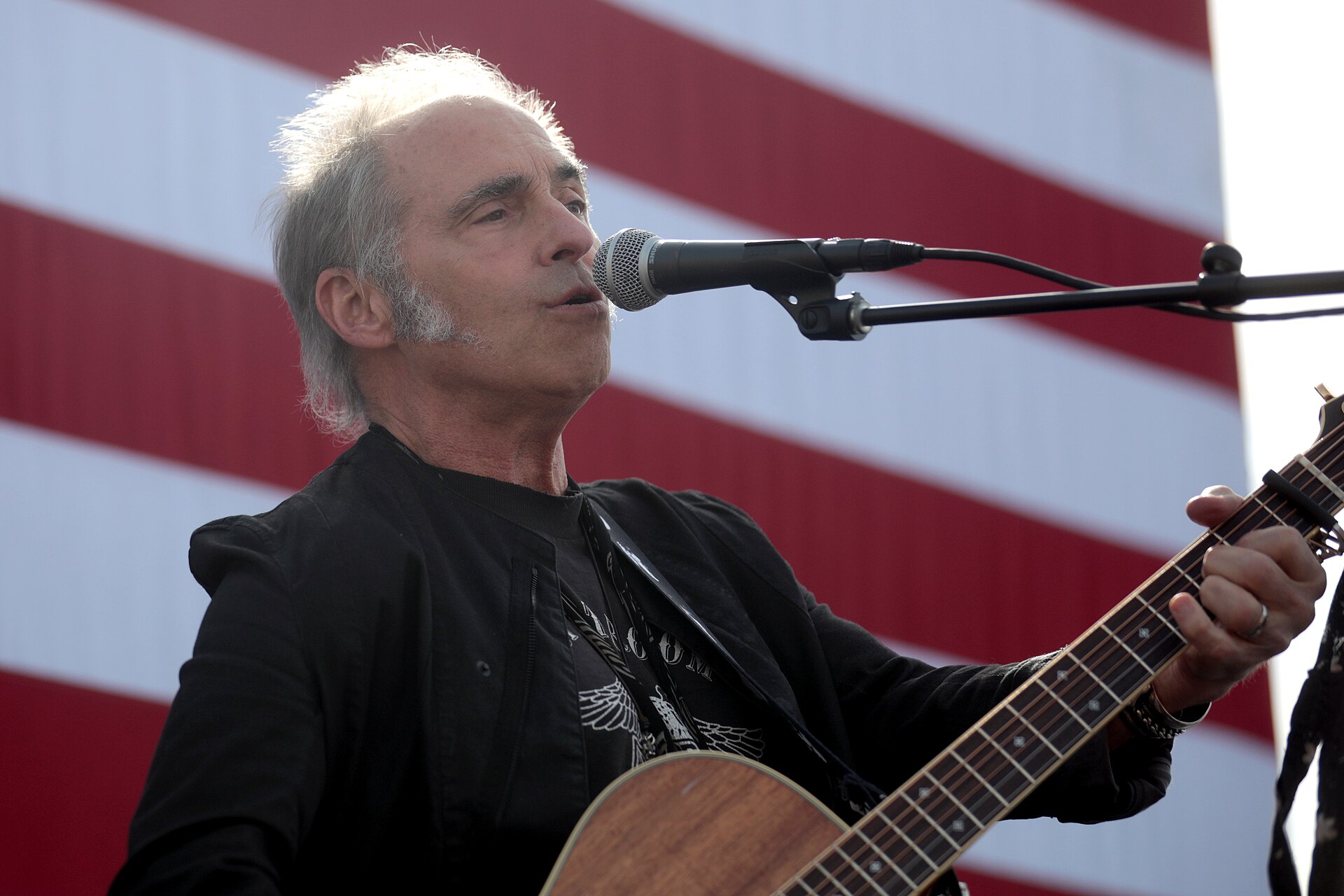
Nils Lofgren singing with an acoustic guitar. Photo: Gage Skidmore from Peoria, AZ, United States of America, CC BY-SA 2.0, via Wikimedia Commons.
Nils Lofgren’s rig does not fit one photograph. He has been a guitarist for Grin, a sideman for Neil Young, a member of Bruce Springsteen’s E Street Band, a solo artist, and on the road he has carried a collection of instruments so large that he has described it in numbers. Most of what is documented comes from his own answers in gear interviews, in magazines that span nearly four decades, and from two makers who list him as an artist. This guide sets out what those sources say, who is saying it, and where the picture is thin.
A note on method. Everything below comes from pages we opened: Premier Guitar’s February 2009 interview by Bob Cianci, Vintage Guitar’s July 2016 interview by Johnny Zapp and its August 2023 interview by Pete Prown, Tony Bacon’s April 1986 piece for Making Music, Takamine’s December 2021 artist feature and Peterson’s artist page. Each is a snapshot, not a permanent inventory, and we give the date of the account whenever a detail depends on it. Fan-compiled gear lists and dealer listings are not used as evidence here.
Where the Rig Comes From
The first thing the sources agree on is range. In the 2009 Premier Guitar interview Lofgren describes starting out on a Telecaster for about two years and then moving to Stratocasters, and calls the Strat the most beautiful electric guitar ever made. That is his opinion, but it explains the shape of the rig: Strats are the home base, and almost everything else is added for a specific job.
The jobs are different in each band. With Springsteen, Lofgren has described the problem as one of space. In the 2016 Vintage Guitar interview he says he plays a Jazzmaster strung with the heaviest strings he could find, to give a warmer, richer third guitar next to Steve Van Zandt’s Strat and Springsteen’s Telecaster. With Neil Young’s Trans Tour, he says in 2009, the guitar was a 1952 Gibson Les Paul Goldtop. On his own records and acoustic shows the tools change again: in 2016 he names a cutaway Takamine used with capos and occasional alternate tunings.
For the same reason there is no single main instrument across his career. Below, each item is tied to the interview it comes from, and where two interviews disagree or one is silent, we say so.
The Rig
Guitars
The two 1961 Strats are the guitars Lofgren calls his favourite old instruments in the 2009 Premier Guitar interview, where the gearbox that accompanies the article lists them alongside various reissue Strats in wood finishes. Vintage Guitar’s 2023 interview adds a specific use: Lofgren says he played the lead part on “I Remember Her Name” on a 1961 Strat while a Gretsch Black Falcon, fingerpicked, carried the main part. Whether the 2023 guitar is one of the same two as the 2009 pair is not stated in either piece, so we do not claim it.
In the 2016 Vintage Guitar interview Lofgren names a reissue 1961 Strat fitted with Bill Lawrence pickups as the electric on his Face the Music Tour live album, alongside the Takamine acoustic that was his main guitar for the record. Lawrence pickups are an older thread: Tony Bacon’s April 1986 Making Music piece describes a Strat with a Lawrence pickup, but Bacon does not say it is the same instrument, and neither do we. What it does show is that the combination has lasted across decades of interviews.
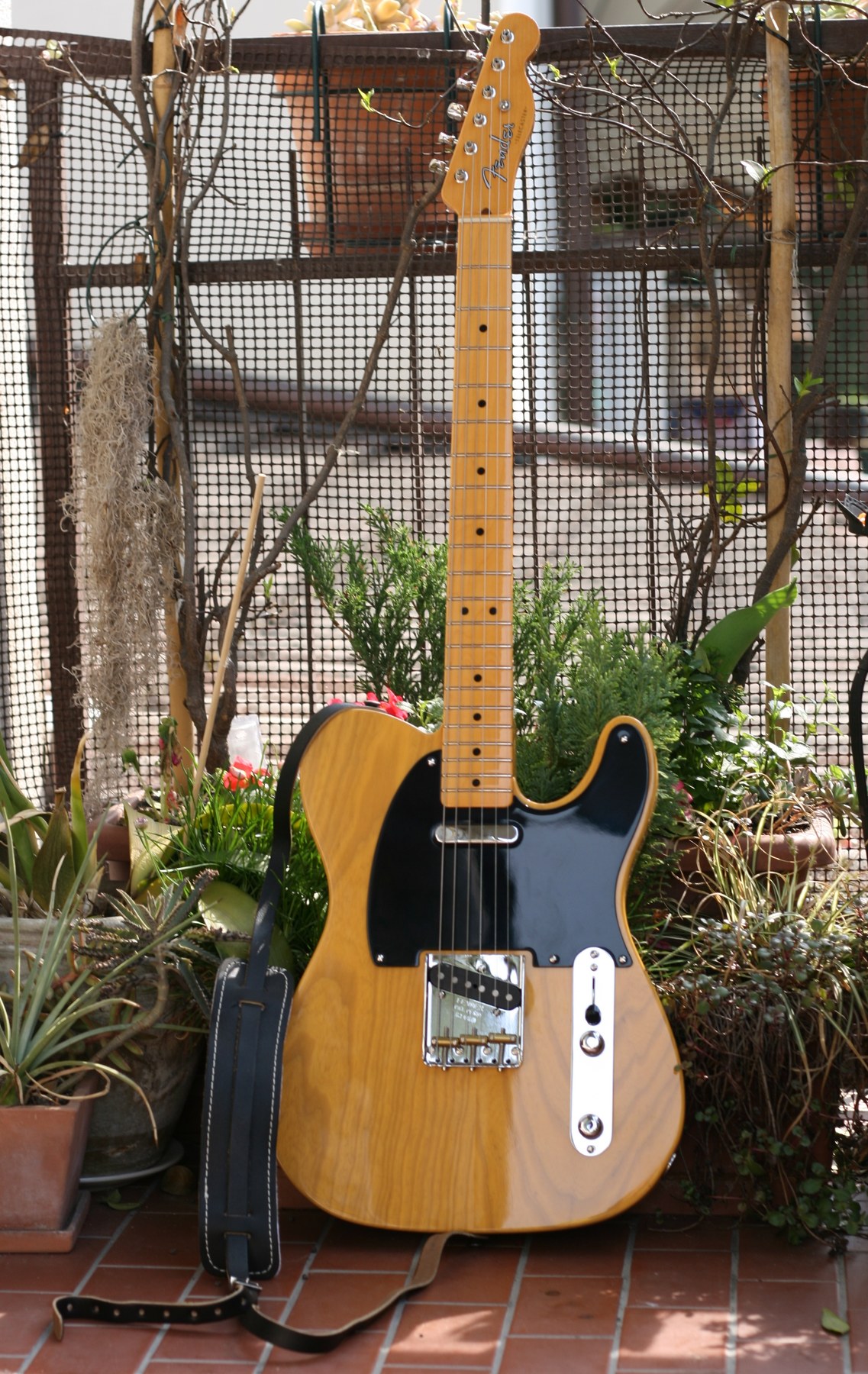
Lofgren says in 2009 that he played a Telecaster for about two years when he started, before moving to Strats. Nothing in the sources identifies the model or its year.
The 2009 gearbox lists a 1956 Jazzmaster plus various reissue Jazzmasters, which Lofgren says he plays onstage with Springsteen. The gearbox gives the strings as D’Addario 13-56, heavier than the 11-52 set he lists for the Strats. The 2016 interview, seven years later, repeats the heavy-string approach in his own words and describes a Jazzmaster as the warmer third guitar in the E Street Band. No brand or gauge is given in the 2016 piece, so we treat the 13-56 figure as a 2009 detail.
The 2009 gearbox lists two Black Falcons and two Black Penguins, and Lofgren says in the interview that Fender supplied them for use with Springsteen. In 2016 he lists Black Penguins and Gretsch Country Gents among a touring collection. In 2023 a Black Falcon is the main part on “I Remember Her Name”. If you want background on the family these guitars belong to, our Gretsch White Falcon guide covers the Falcon line, though not Lofgren’s own examples.
In 2009 Lofgren names a 1952 Goldtop as the guitar he used on Neil Young’s Trans Tour, and an Epiphone Les Paul as the one he used on Ringo Starr and His All-Starr Band tours. At the time of the interview he said he used both only in the studio. Our Neil Young guide also mentions a 1952 Goldtop in Lofgren’s hands for songs Young plays piano on, but we did not use that as a source for this article.
Two sources agree on this one, and both are Lofgren’s own account. In 1986 he told Making Music that Young gave him an old Martin D-18 as a present for making the album After the Gold Rush, and that he still had it. In 2009 he repeated the account to Premier Guitar and called the guitar his most treasured, saying he used it on The Loner. For the model’s wider story, see our Martin D-18 guide.
Lofgren is a Takamine endorser, and both a six-string and a twelve-string appear in the 2009 gearbox. Takamine’s December 2021 feature, written by Jeff K., calls the Legacy Series EF508KC koa cutaway the acoustic most closely associated with him and says he has done plenty of gigs with an earlier NP15C, which the article calls similar to the current Pro Series P3DC. The same article does not describe either as a signature model, and in our reading of the sources none exists. The article quotes him on playing the brand for decades in concert and in the studio; we paraphrase it here because a fuller quotation would not add anything.
The 2009 gearbox lists Carter pedal steels, Owens/Zeta resonators and five vintage lap steels, and Lofgren says in the interview that he plays Dobro and bottleneck as well. Peterson’s artist page lists an eight-string lap steel, a ten-string pedal steel and a Dobro-style resonator among his instruments, and prints his statement that he became the band’s “swingman” by playing lap steel, pedal steel, Dobro and bottleneck guitar. The page carries no date, so we cannot place it in time beyond “current as of our 2026 access”. Players who want to compare approaches to the instrument will find the Junior Brown guide and the Taj Mahal guide useful.
When Prown asked about the album Mountains in 2023, Lofgren’s answer listed a Strat, a Zemaitis, a hybrid Telecaster/Mustang one-off, a PRS, a Hagstrom electric 12-string, a Kay electric, a Fender Jazz bass, a Takamine, Martin D-18 and D-35 acoustics and a Gibson J-50. None of these comes with a year or a model detail in the interview, so we list them as used and nothing more.
In 2016 he told Vintage Guitar that he took about 52 guitars on the road, with around 30 set up each night, including 12-string acoustics, baritones, Country Gents and Black Penguins. It is Lofgren’s own figure and a single-source claim, so treat it as an account of one period and not a standing fact.
Amps
In 2023 Lofgren says he ran most of his guitars through a Fuchs combo, sometimes with a Bassman beside it for stereo imaging, with no model named. The 2016 interview is more specific about the live rig: Fuchs amps with two 2×12 Buzzy Feiten cabinets for touring with the E Street Band, which he credits with the clarity he wanted after the 10-inch speakers failed on the low end. The 2009 Premier Guitar piece does not mention Fuchs at all, which means the switch happened between 2009 and 2016 or that the interview simply did not raise it. We cannot tell which.
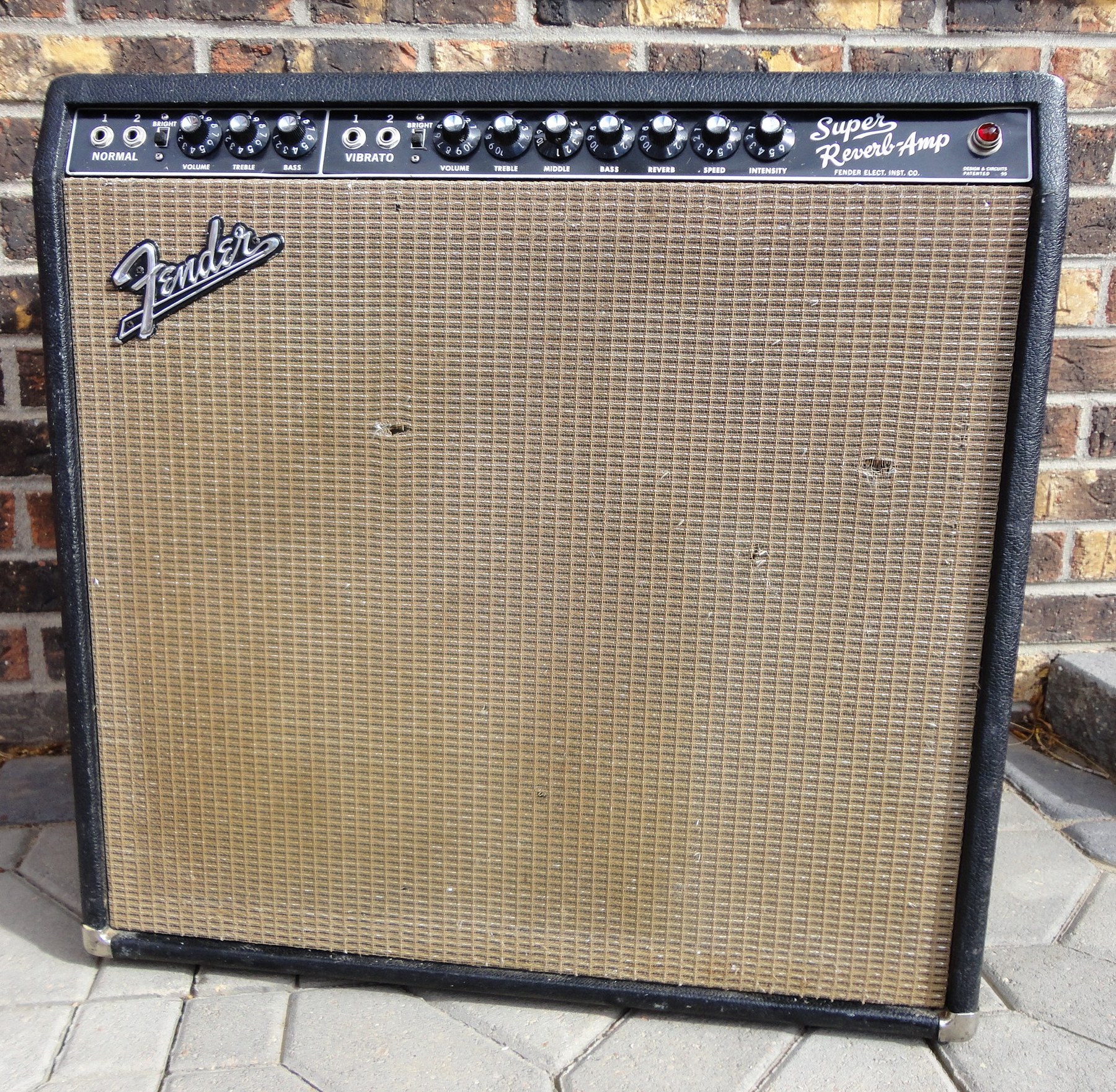
In 2009 Lofgren says his early rigs used blackface Super Reverbs with four 10-inch speakers. Tony Bacon’s 1986 piece also has a Super Reverb and a Music Man amp in the rig behind the Lawrence-pickup Strat, in his own narration rather than a quote from Lofgren. For a companion read on a guitarist who built a rig around the same amp, see our Tom Verlaine guide.
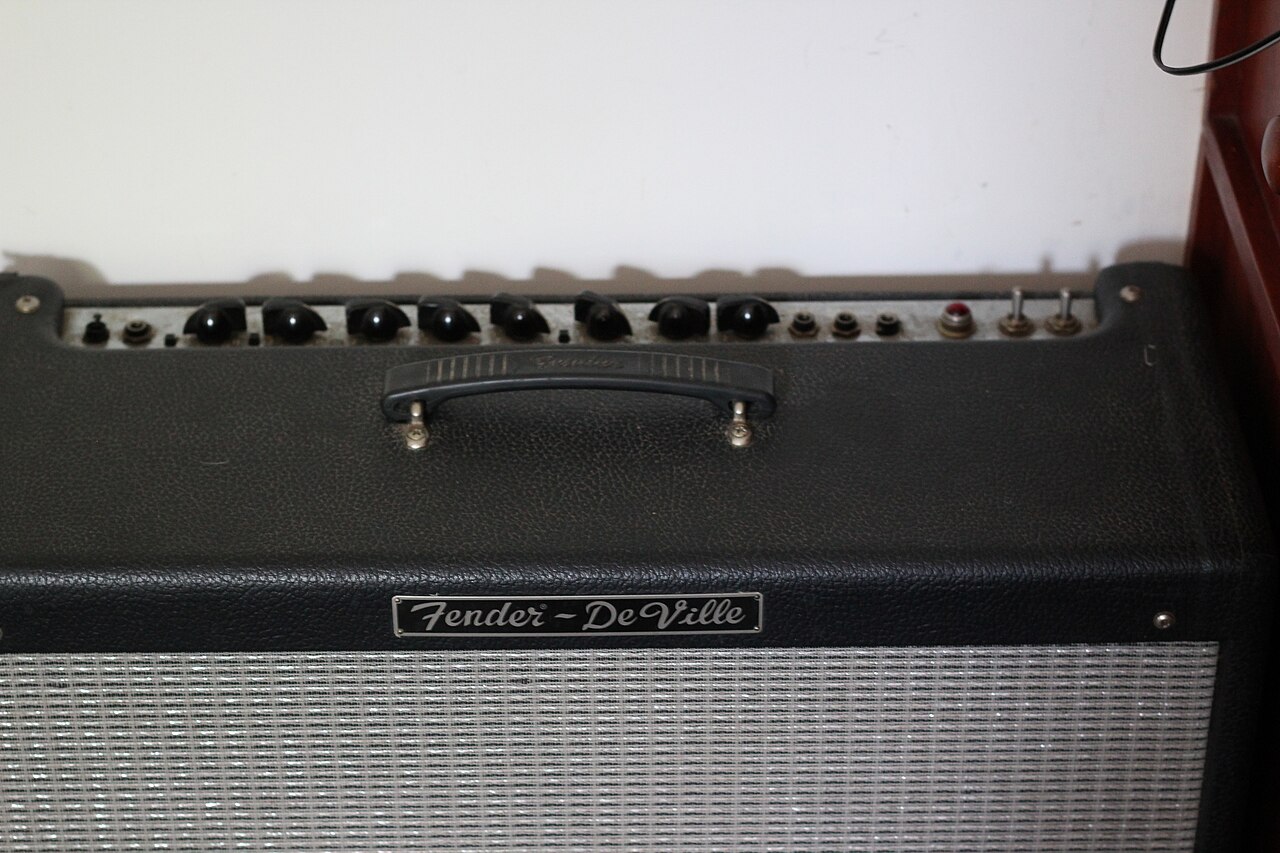
The 2009 interview says Lofgren moved from Super Reverbs to Hot Rod DeVilles for electric gigs and lists one in the gearbox. In 2016 he says he used Hot Rod DeVilles on tour for a long time but that the 10-inch speakers could not handle the low end, which is why he moved to the Fuchs and Feiten cabinets. Our Hot Rod DeVille 212 IV review looks at the 212 model; the amp Lofgren describes in 2016 is the 4×10 version.
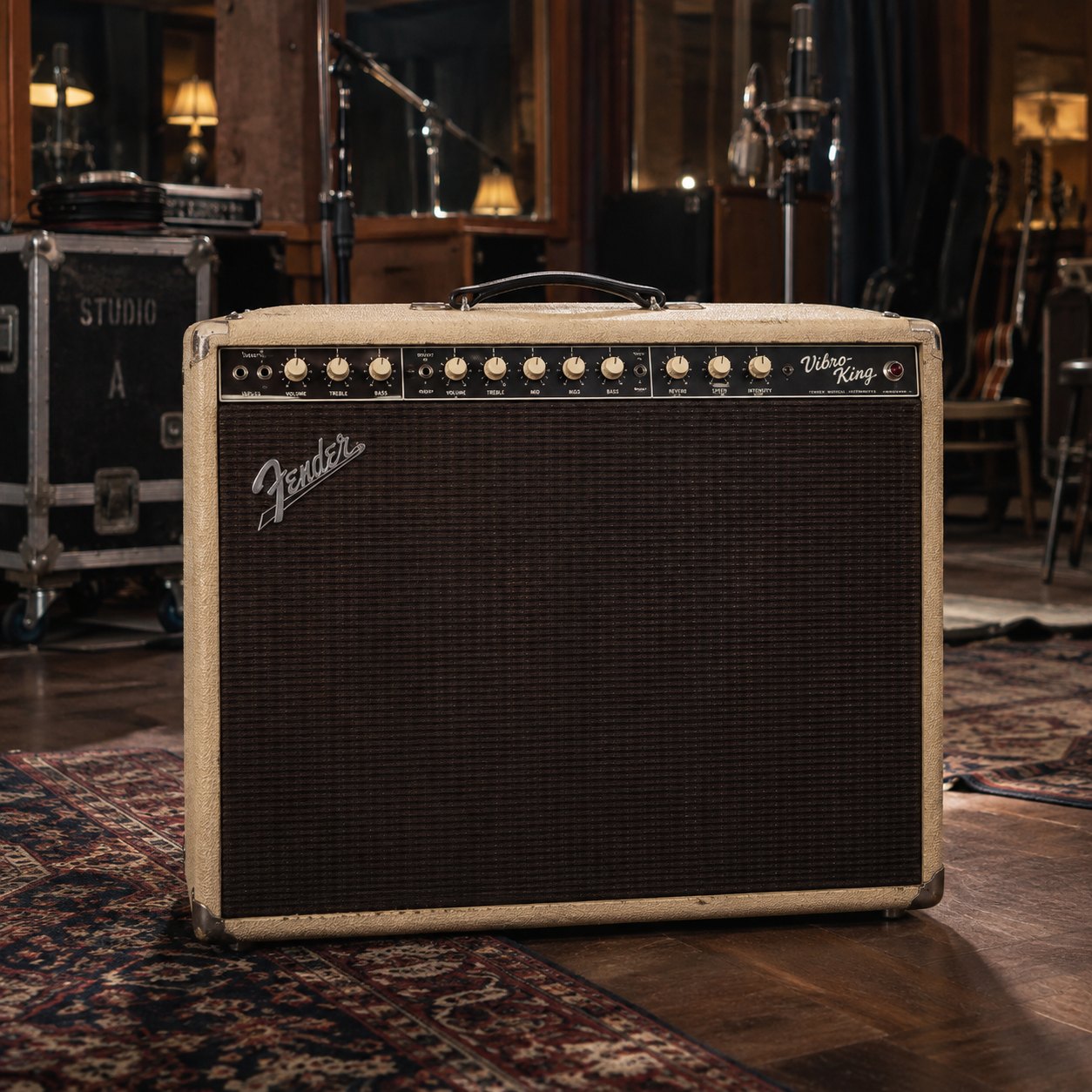
Lofgren lists Vibro-Kings with three 10-inch speakers in 2009 as part of the progression after the DeVilles. Our Vibro-King guide describes the amp itself.
Two Twin Reverbs sit onstage with Springsteen in the 2009 account, carrying his low-end effects. The same interview has him saying he likes his Fenders turned up to around seven or eight for a warm saturation.
In 2016 he says he uses a Blues Junior and a Barber Burn Unit for acoustic things, and he also mentions a great old Marshall head and bottom. No model or year is given for the Marshall.
Effects
The 2009 interview lists a Poly Octave Generator in the rack setup, and the 2016 interview describes a mini POG as an occasional separate lead voice. In 2023 an Electro-Harmonix Micro POG appears in the list of pedals used on Mountains. Our Electro-Harmonix Nano Clone article is a different pedal but the same maker.
Two Barber Burn Unit overdrives appear in the 2009 rack setup and one again in 2023. The 2016 piece pairs a Barber Burn Unit with a Blues Junior for acoustic work; it is an overdrive pedal, as the 2009 and 2023 pieces describe it. Lofgren describes light overdrive as an occasional lead tone, with fuzz used sparingly so the string tone is not lost.
The 2009 rack has a Line 6 delay, which Lofgren describes as the green one with the backwards sounds and the gearbox lists as a DL-4, and a Boss DD-3. In 2023 he names a TC Electronic Nova Delay for reverse reverb and a Strymon Brigadier delay.
The 2009 interview lists two Boss octave pedals, shown as OC-3 in the gearbox, and a Guild Rotoverb, a late-1960s Leslie simulator that Lofgren said he had been trying to find more units of. The 2016 interview adds compression and light chorus on the acoustic setup for the live album.
How the Switching Works
The most useful single detail in the 2009 interview is the control system. According to Lofgren, his tech Roy Witte programmed three or four rack pedals to engage with one stage pedal setting. In our view, that explains how a guitarist who carries dozens of instruments can still sound like one person: the effects chain is organised for a single press, and the choice of guitar carries the colour.
Strings, Picks and Tuning Tools
The 2009 gearbox lists D’Addario 11-52 on the Strats, 13-56 on the Jazzmasters and medium gauge on the acoustics. Lofgren plays with a thumb pick, Herco or Golden Gate according to the gearbox, which he says he first found in the case of his dad’s guitar when he started playing. In 1986 he said the thumb pick frees his first finger. In 2023 he says he learned his artificial-harmonics technique from Roy Buchanan, using a thumb pick and his first finger to brush the string at the octave. Our Roy Buchanan guide covers that guitarist’s own rig. Peterson’s page says Lofgren uses an AutoStrobe 490 tuner onstage with the E Street Band; the page text, not Lofgren, is the source for that.
Signature Products
None of the sources we opened documents a signature instrument or amp. The 2009 article states his endorsements as Fender, D’Addario and Takamine, with none requiring exclusivity, and the Takamine feature calls the EF508KC the model most closely associated with him and does not call it a signature. In 2023 interviewer Pete Prown calls Lofgren’s artificial harmonics his signature, but that describes a technique. We have not found a documented artist model, and we do not list one.
What the Sources Do Not Settle
Four things stay open. First, we cannot say how many of the Strats named across the interviews are the same instruments. Second, the amp story has a gap between 2009 and 2016 with the Fuchs appearing in the later account only. Third, equipment lists on gear databases mention a Fuchs Four Aces combo, which we could not confirm from any page we opened, so we leave it out. Fourth, the lap steel and resonator details come from a gearbox and a manufacturer profile and not from a detailed interview.
Frequently Asked Questions
What guitar is Nils Lofgren best known for playing?
The Stratocaster. In the 2009 Premier Guitar interview he names two 1961 Strats as his favourite old guitars, and in 2023 he says a 1961 Strat played the lead on “I Remember Her Name”. He also plays a Jazzmaster and Gretsch guitars with the E Street Band.
What amps does Nils Lofgren use?
It depends on the year. In 2009 he named Fender Super Reverbs, Hot Rod DeVilles, Vibro-Kings and Twin Reverbs. In 2016 he described Fuchs amps with two 2×12 Buzzy Feiten cabinets for the E Street Band, and in 2023 he said he ran most guitars through a Fuchs combo.
Does Nils Lofgren play lap steel and pedal steel?
Yes, according to his own statement on Peterson’s artist page and the 2009 Premier Guitar interview, which also lists Carter pedal steels and five vintage lap steels. He also plays Dobro and bottleneck.
Does Nils Lofgren have a signature guitar?
Not in any source we opened. Takamine’s 2021 feature calls the EF508KC the acoustic most closely associated with him, not a signature model.
Which acoustic guitars does Nils Lofgren play?
Takamine cutaways are his main acoustics according to the 2016 and 2021 sources, and Neil Young’s gift of a Martin D-18 is the one he calls most treasured in 2009.
Image credits
- Fender Hot Rod DeVille: ligia diniz, Wikimedia Commons, CC BY 2.0.
- Fender Vibro-King: GuitarGangsters AI-generated reference illustration, not a photograph.
- Fender Super Reverb: GabeMc, Wikimedia Commons, CC BY-SA 3.0.
- Fender Telecaster: Massimo Barbieri, Wikimedia Commons, CC BY-SA 3.0.
- Top image: Nils Lofgren singing with an acoustic guitar, Gage Skidmore from Peoria, AZ, United States of America, Wikimedia Commons, CC BY-SA 2.0.