Luther Allison Guitars & Gear: Chicago Blues Showman Complete Rig Guide
Luther Allison guitars gear — Gibson Les Paul, Marshall amplification deep-dive for the West Side Chicago blues showman's European and American career.
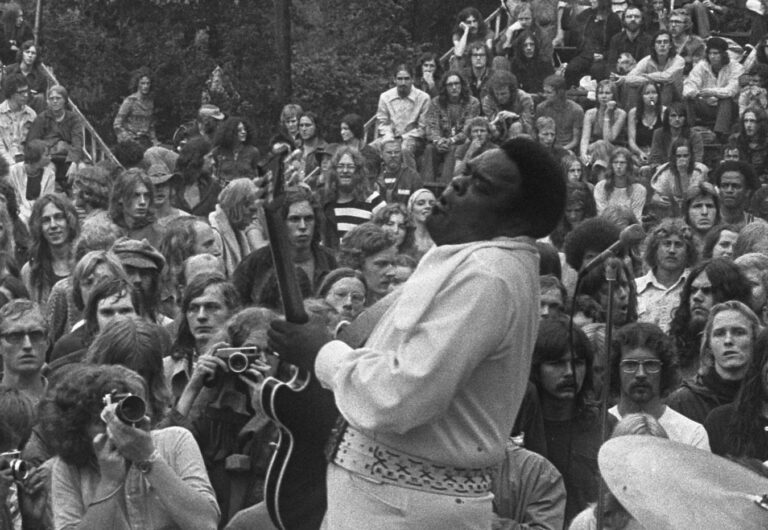
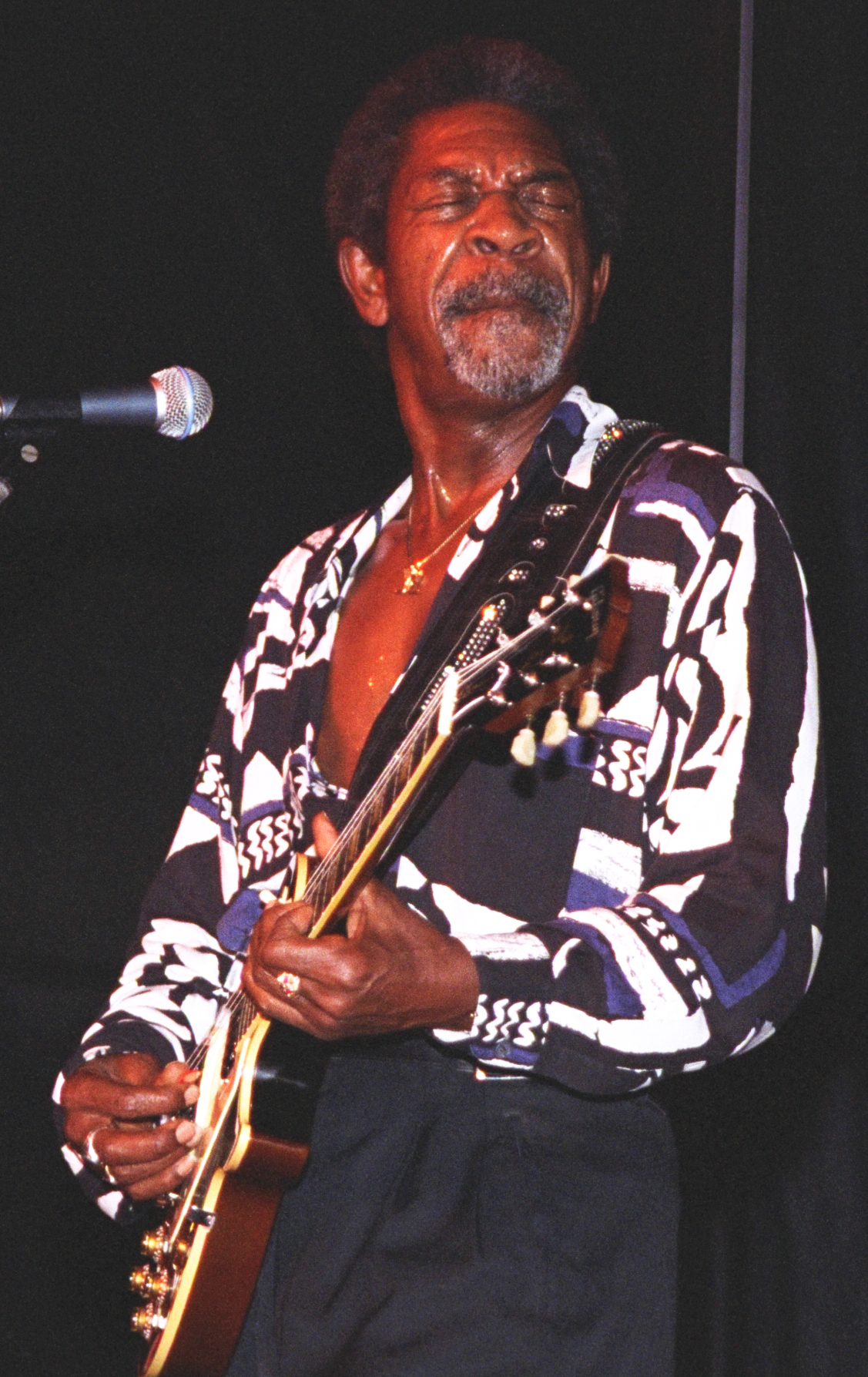
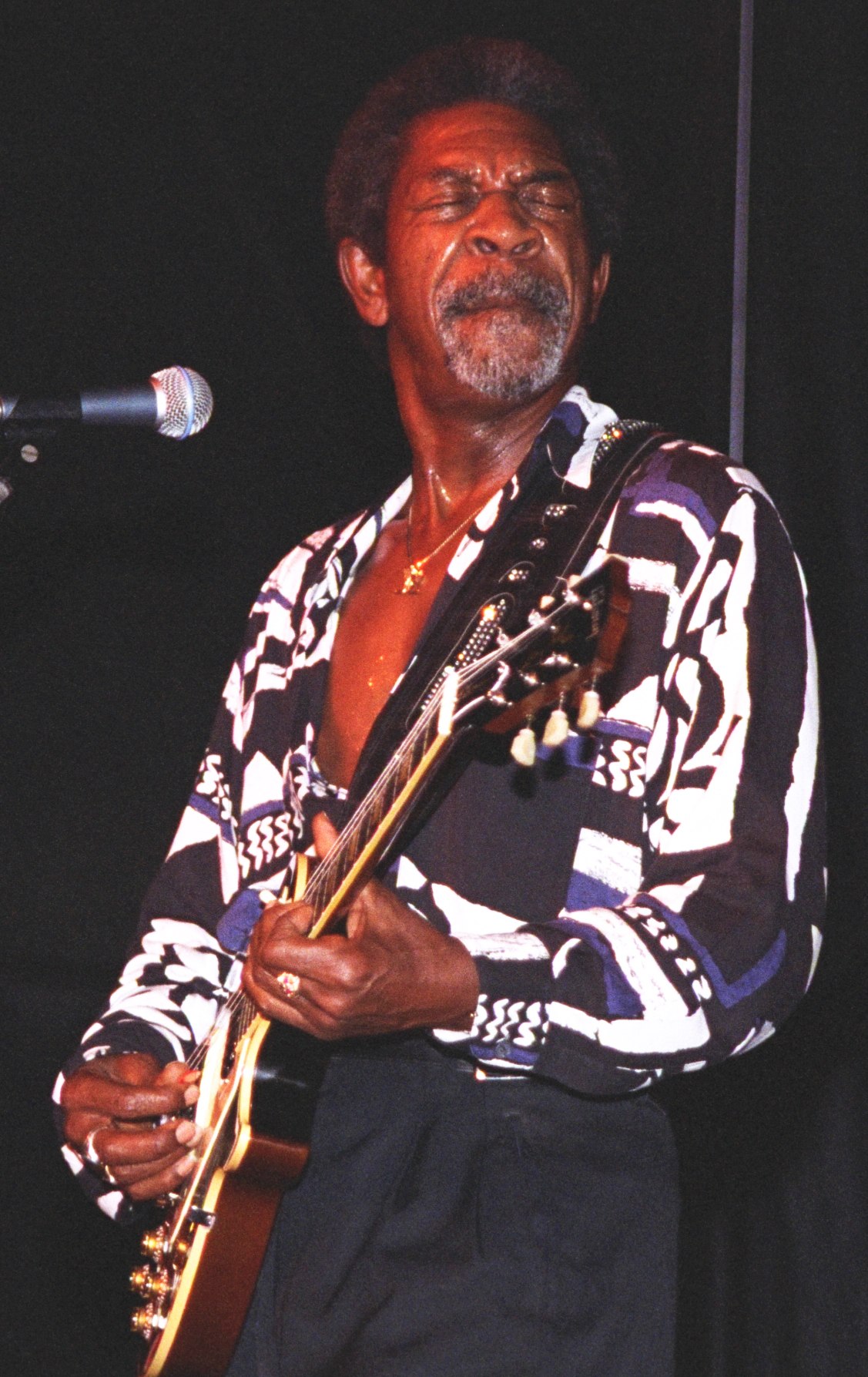
Photo by Carl Lender, licensed under CC BY-SA 3.0 (https://commons.wikimedia.org/wiki/File:LutherAllison1996.jpg)
Luther Allison guitars gear is the subject of a Chicago blues career that bridged generations and continents — the equipment and approach of a guitarist whose career began within the West Side Chicago blues scene documented for Magic Sam and Otis Rush, who experienced a substantial commercial career in Europe (particularly France) during the 1980s when American blues audiences had largely moved on to other genres, and whose late-career return to American attention in the 1990s — culminating in a string of Grammy-nominated albums before his death from cancer in 1997 — gave him a career arc that demonstrated both the specific challenges blues musicians of his generation faced in maintaining careers within American commercial structures and the alternative pathways (European audiences, European blues festival circuits) that some musicians found.
His specific guitar approach — combining the West Side Chicago blues vocabulary he’d absorbed as a younger musician working alongside the genre’s pioneers with a high-energy, showmanship-oriented performance style that connected to both blues tradition and rock concert presentation — gave his playing a quality that translated effectively to the larger European blues-rock festival audiences his career increasingly served. This is the complete breakdown of Luther Allison guitars gear, technique, and tonal philosophy.
Background
Luther Allison was born on August 17, 1939, in Widener, Arkansas, into a large farming family, with his family’s move to Chicago in 1951 placing him within the same broader Great Migration pattern documented for Magic Sam, Tampa Red, and other Chicago blues musicians in this series. His Chicago formation occurred during the period when the West Side Chicago blues sound — documented extensively for Magic Sam — was developing, and Allison’s own career developed in direct proximity to and association with the musicians (including Magic Sam, Otis Rush, and Freddie King, the latter a significant influence on Allison’s specific guitar approach) who were establishing this sound’s vocabulary.
His early career included work as part of the Chicago blues club circuit during the 1950s and 1960s, eventually leading to his own recording career — his debut album Love Me Mama (1969) and subsequent recordings through the 1970s established him within the American blues scene, though American commercial prospects for blues musicians of his generation were generally limited by this period, as American popular music’s commercial mainstream had moved toward other genres even as blues’ influence remained foundational to rock music more broadly (a pattern this series has documented extensively).
His move toward European audiences — particularly France, where blues found a more sustained and more substantial audience during the 1980s than American commercial structures generally provided — gave Allison a career path that several blues musicians of his generation found necessary: maintaining a viable performing and recording career through European audiences and festival circuits when American commercial structures didn’t support comparable career sustainability. His 1990s American comeback — beginning with Soul Fixin’ Man (1994) and continuing through subsequent Grammy-nominated albums — gave him renewed American attention before his death from cancer in 1997, a career arc whose final act demonstrated both his enduring relevance and the tragedy of its premature conclusion.
Luther Allison Guitars Gear: The Complete Rig
Guitars
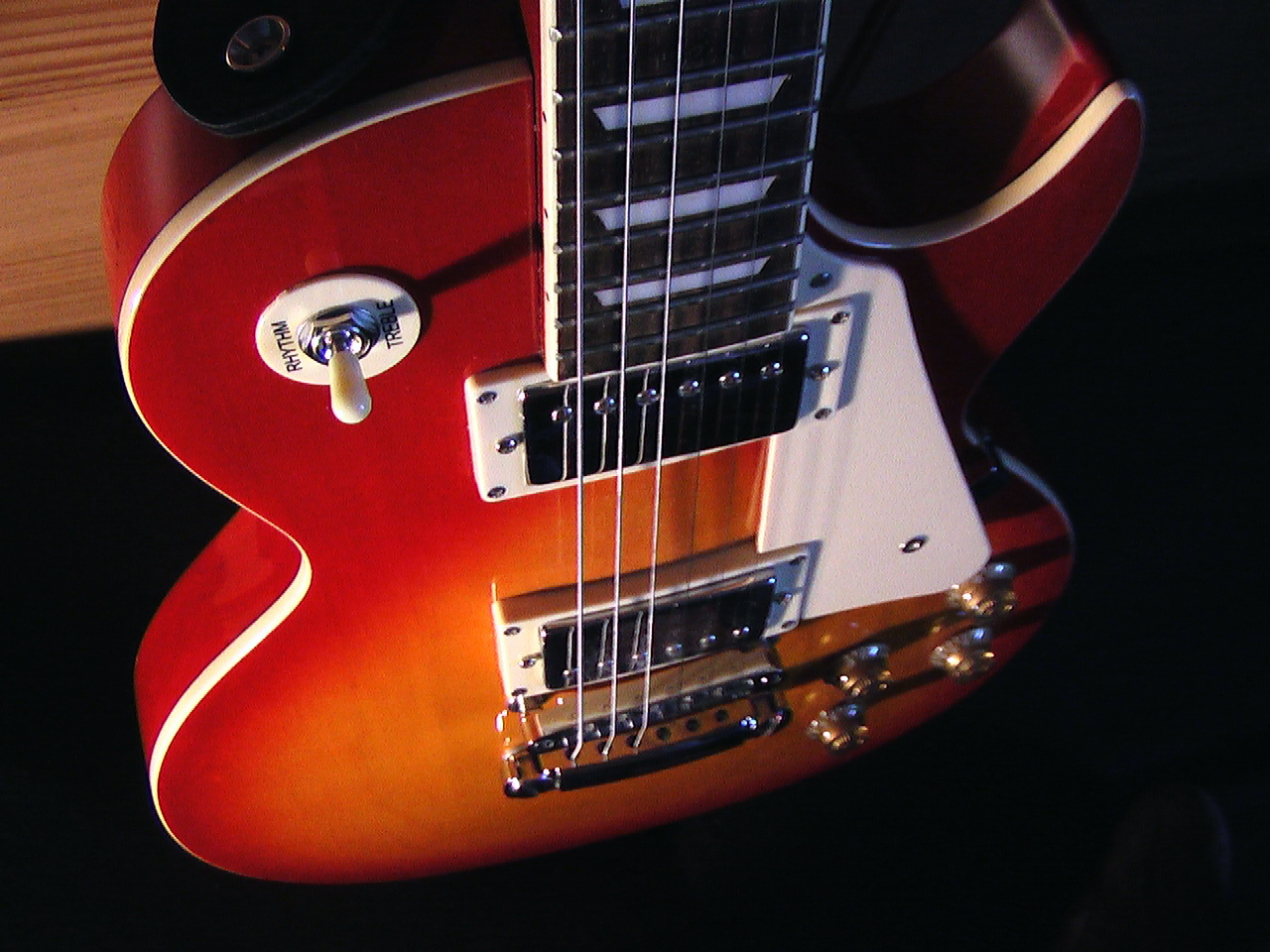
Luther Allison’s primary guitar during much of his mature career was the Gibson Les Paul — giving his playing the humbucker warmth and sustain appropriate to both his West Side Chicago blues roots and the higher-energy, more rock-influenced performance context his European career increasingly involved. The Les Paul’s specific characteristics — sustained, harmonically rich humbucker output that could drive amplifiers into the natural saturation appropriate to blues-rock crossover contexts, combined with sufficient versatility for the more traditional blues vocabulary his playing also drew from — suited the range of contexts his career spanned.
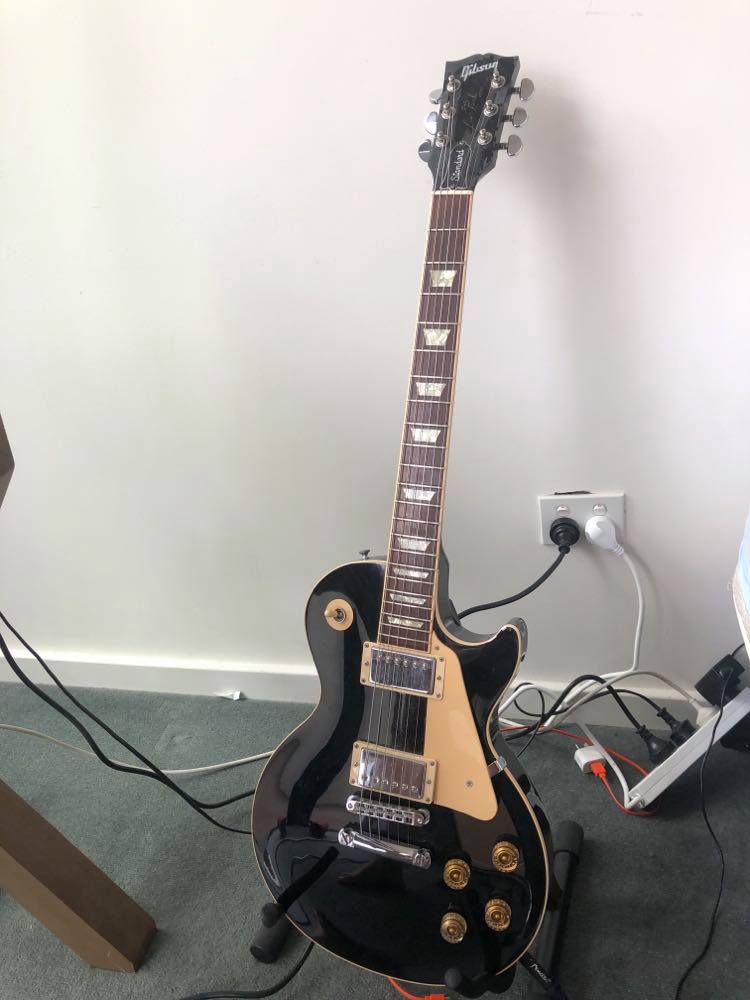
Various other guitars likely appeared in Allison’s earlier career setup, consistent with the general pattern of working Chicago blues musicians of his generation using available and affordable instruments before later-career success allowed more consistent equipment choices.
The stock Gibson humbucking pickups in Allison’s Les Paul gave the warm, sustained output appropriate to his approach — sufficient gain-driving output for the more rock-oriented passages of his European performance context while retaining the warmth appropriate to traditional blues vocabulary.
Allison’s specific string gauge preferences are not extensively documented, but would be consistent with blues guitarists of his generation and performance context — likely medium gauges balancing the bending ease his expressive lead playing required with sufficient string mass for tonal fullness.
Amps
Fender amplifiers — consistent with the broader Chicago blues tradition’s foundational reliance on Fender amplification (documented extensively for Magic Sam’s tremolo-soaked tone) — likely provided Allison’s foundational amplification, with the specific gain characteristics adjusted for his more rock-influenced European performance context relative to the more traditional blues tone of his Chicago predecessors.
Marshall amplifiers — giving the British EL34 character and higher-gain capability appropriate to the larger venues and more rock-festival-oriented context of his European career — likely appeared in Allison’s setup for the higher-energy performance contexts that increasingly characterised his career from the 1980s onward. The combination of Les Paul humbuckers and Marshall amplification represents one of the most common blues-rock crossover configurations documented throughout this series, giving Allison’s sound a tonal foundation that translated effectively to the larger festival audiences his European career served.
Effects
Consistent with the broader blues and blues-rock tradition, Allison’s tonal edge likely came primarily from natural amplifier saturation — Les Paul humbuckers driving Fender or Marshall amplifiers into their natural overdrive character — rather than extensive pedal-based distortion, giving his tone the warm, harmonically rich quality appropriate to blues vocabulary even in higher-energy performance contexts.
Wah pedals, consistent with the broader blues and blues-rock tradition’s use of the wah for expressive lead passages, likely appeared in Allison’s setup for specific expressive moments in his lead playing.
Amplifier-based reverb gave Allison’s recordings and performances their atmospheric spatial dimension, consistent with the general blues and blues-rock tradition’s use of moderate reverb for ambient depth.
Playing Style & Tone Philosophy
Luther Allison represents a generation of Chicago blues musicians whose careers had to navigate the specific commercial realities of American blues’ diminished commercial position from the 1970s onward — musicians whose musical roots and abilities were directly connected to the foundational West Side Chicago blues tradition (Allison’s direct association with Magic Sam, Otis Rush, and Freddie King placed him within this tradition’s living transmission), but whose career sustainability required finding audiences and commercial contexts beyond what American structures provided during this period.
His specific guitar vocabulary drew from the West Side Chicago blues tradition — the tremolo-soaked tonal character, the percussive rhythmic attack, and the soul-influenced melodic sensibility documented extensively for Magic Sam — combined with Freddie King’s specific influence, which brought a particular combination of aggressive attack and melodic clarity that gave Allison’s playing additional dimensions beyond the Magic Sam-specific tremolo approach.
His performance style — described by those who experienced his live shows as высоко energetic and showmanship-oriented, with extended performances and a physical, theatrical quality to his stage presence — connected blues tradition’s performance values (the tradition of blues as live entertainment, connecting to audiences through direct emotional and physical communication) with the larger-scale concert and festival presentation that his European career increasingly involved. This showmanship quality gave his performances an accessibility to audiences (including European festival audiences whose blues exposure might be more limited than dedicated Chicago club audiences) that pure musical sophistication alone might not have provided.
His late-career American comeback recordings — Soul Fixin’ Man and subsequent albums — demonstrated a musician whose decades of performance experience (including the specific large-venue, high-energy performance context his European career had developed) gave his mature playing a combination of technical command and performance experience that these recordings captured at what, tragically, would be the final phase of his career.
Tonally, Luther Allison guitars gear philosophy was built on the Les Paul/Marshall (or Fender, depending on context) blues-rock crossover combination — giving sufficient sustain and natural saturation for both traditional blues vocabulary and the higher-energy passages his performance context increasingly required. This combination — humbucker warmth and sustain through amplifiers capable of natural overdrive at performance volumes — represents one of the most thoroughly documented blues-rock tonal foundations throughout this series, applied here by a musician whose roots in the foundational West Side Chicago blues tradition gave this combination a specific authenticity beyond its general blues-rock applicability.
The specific phenomenon of American blues musicians finding more substantial career sustainability through European audiences during the 1970s and 1980s — the broader pattern that Allison’s career exemplifies — deserves examination because it reflects genuinely different cultural relationships to blues music that developed in America versus Europe during this period. In America, blues’ commercial position had been transformed by its own influence: blues-derived rock music (documented extensively throughout this series, from the British blues-rock explosion through American blues-rock and its subsequent heavy rock and hard rock developments) had become commercially dominant, while the originating blues tradition itself — performed by the musicians who had created and developed it — occupied an increasingly marginal commercial position, its influence everywhere but its direct practitioners’ career opportunities increasingly limited. In Europe, by contrast, blues had arrived more recently (primarily through the same postwar recordings that influenced the British blues-rock generation) and retained, for European audiences, a quality of discovery and authenticity that gave original blues musicians’ performances a specific cultural value — European audiences, encountering Allison and his generational peers, were often encountering musicians whose direct connection to blues’ foundational tradition gave their performances an authenticity that the blues-rock derivatives, however commercially successful, couldn’t claim in the same way. This difference in cultural relationship — blues as foundational-but-commercially-marginal in America versus blues as recently-discovered-and-authentic in Europe — gave musicians like Allison genuinely different career opportunities depending on which audience they performed for, a difference that reflects not the music’s quality (which remained constant) but the specific cultural narratives and expectations that different audiences brought to their encounters with it.
Freddie King’s specific influence on Allison’s playing — mentioned in the playing style section — deserves expansion because King represented a specific and influential development within Chicago and Texas blues guitar whose combination of qualities gave subsequent musicians (including Allison) a model distinct from the Magic Sam-specific tremolo-soaked approach. King’s playing combined a specifically aggressive attack — heavy picking, often using a combination of flatpick and fingerpicks (a thumbpick and metal fingerpick on the index finger, giving a specific combination of attack and clarity) — with melodic lead lines that, despite the aggressive attack, maintained clear melodic definition rather than dissolving into pure aggression. King’s instrumental recordings (including “Hide Away,” one of the most influential blues instrumentals of the era, covered and absorbed by numerous subsequent guitarists including several of the British blues-rock generation) demonstrated this combination at a level that gave King substantial influence beyond Chicago blues specifically — his playing represented a kind of bridge between Chicago blues and the more aggressive, more rock-oriented blues guitar that would develop subsequently. For Allison, absorbing King’s influence alongside the Magic Sam-tradition tremolo approach gave him a combined vocabulary — tremolo-soaked atmospheric quality from one tradition, aggressive-attack-with-melodic-clarity from another — that may have given his playing additional range for the blues-rock crossover contexts his career increasingly involved, where King’s more aggressive approach may have translated more directly to rock-festival contexts than Magic Sam’s specifically atmospheric tremolo approach alone.
The thumbpick-and-fingerpick technique that Freddie King employed, and that may have influenced Allison’s own technique to some degree, represents a specific approach to pick attack that differs from both pure fingerstyle (documented extensively for Big Bill Broonzy and Lonnie Johnson in previous articles) and pure flatpick (single pick held between thumb and index finger) approaches. A thumbpick — a pick worn on the thumb, typically with a specific curved shape that allows it to function somewhat like an extension of the thumb itself — combined with a metal or plastic fingerpick on the index finger (sometimes additional fingerpicks on other fingers as well) gives a player the ability to combine the attack characteristics of pick-based playing (the thumbpick providing a pick-like attack for bass notes or rhythm patterns) with the independence and tonal variety of fingerstyle playing (the fingerpicks allowing melodic and chordal content with a different attack character than the thumbpick). This hybrid approach — neither pure fingerstyle nor pure flatpick but a combination — gave King (and guitarists influenced by his approach) access to a specific combination of attack characteristics: the aggressive, percussive attack that pick-based playing can provide, combined with the multi-voice capability that fingerstyle playing provides. For blues guitar specifically, this combination could give rhythm playing a percussive, driving quality (from the thumbpick’s pick-like attack on bass notes and chord strikes) while lead lines retained the expressive control (bending, vibrato) that blues lead vocabulary requires — a combination that may have informed Allison’s own approach to combining rhythmic drive with expressive lead playing across his career’s blues-rock crossover contexts.
How to Sound Like Luther Allison
Guitar Approach
A Gibson Les Paul (Standard or similar, with humbucking pickups) is the foundational Luther Allison guitars gear instrument — giving the sustained, harmonically rich tonal foundation appropriate to both traditional West Side Chicago blues vocabulary and higher-energy blues-rock crossover contexts. Medium-gauge strings for bending ease combined with tonal fullness.
The vocabulary approach: study West Side Chicago blues (Magic Sam, Otis Rush) for the foundational tremolo-soaked, soul-influenced lead and rhythm vocabulary, combined with Freddie King’s specific aggressive-attack-with-melodic-clarity approach. Develop performance presence and showmanship — Allison’s career demonstrated that technical vocabulary alone wasn’t sufficient for the larger-venue contexts his career increasingly involved; physical and theatrical performance quality was an integrated element of his approach.
Amp Approach
For traditional blues contexts: Fender amplification with moderate gain, consistent with the West Side Chicago blues tradition. For higher-energy blues-rock crossover contexts: Marshall amplification at moderate-to-higher gain, giving the natural saturation appropriate to larger venues and more rock-festival-oriented performance contexts.
| Control / Element | Setting / Approach | Notes |
|---|---|---|
| Guitar | Gibson Les Paul, humbucking pickups | Sustained, harmonically rich foundation for both traditional and crossover contexts |
| Amplifier (traditional) | Fender, moderate gain | West Side Chicago blues tradition foundation |
| Amplifier (crossover) | Marshall, moderate-to-higher gain | Natural saturation for larger venue/festival contexts |
| Wah pedal | Selective expressive lead | Specific expressive moments in lead playing |
| Reverb | Moderate, amplifier-based | Atmospheric depth consistent with blues/blues-rock tradition |
| Vocabulary foundation | West Side Chicago blues + Freddie King influence | Tremolo-soaked soul sensibility combined with aggressive melodic clarity |
| Performance presence | High-energy, showmanship-oriented | Integrated element — technical vocabulary alone insufficient for larger-venue contexts |
Gibson Les Paul through Fender (traditional) or Marshall (crossover) amplification at moderate-to-higher gain. West Side Chicago blues vocabulary combined with Freddie King-influenced aggressive melodic clarity. Wah for selective expressive lead. The performance dimension — high-energy showmanship — is as integral to the complete Luther Allison approach as any specific equipment or vocabulary element, reflecting his career’s specific development toward larger-venue, festival-oriented contexts.
Influence & Legacy
Luther Allison’s influence operates partly through his direct connection to and transmission of the West Side Chicago blues tradition to subsequent audiences — particularly European audiences whose exposure to this tradition, during the period of Allison’s European career, may have come more directly through his performances than through the original recordings of Magic Sam and his contemporaries (whose own international recognition, as documented in the Magic Sam article, was limited by his early death and by the broader patterns of how prewar and early postwar blues reached international audiences).
His career also represents a specific case study in the alternative career pathways that American blues musicians of his generation found when American commercial structures didn’t sustain blues careers — the European festival and audience circuit that several musicians of his generation relied upon, giving these musicians career sustainability that pure reliance on American commercial structures might not have provided.
The comparison with Magic Sam — his direct West Side Chicago blues predecessor and influence, whose own career was cut short by early death rather than by the commercial challenges Allison’s generation faced, giving a contrast between two different ways a Chicago blues career could be limited — illuminates the broader West Side Chicago blues tradition’s transmission across generations despite these different limiting circumstances. The parallel with Otis Rush — another West Side Chicago blues figure whose own career similarly navigated the challenges of American blues’ commercial position across subsequent decades — shows the broader generational experience of West Side Chicago blues musicians navigating careers across a changing commercial landscape. And the connection to Buddy Guy — whose own career, extending across subsequent decades with eventual substantial American recognition, gives a contrasting trajectory to Allison’s European-then-late-American-comeback pattern — places Luther Allison guitars gear within the broader landscape of West Side Chicago blues musicians whose individual career trajectories, while sharing common roots, diverged according to the specific commercial and personal circumstances each musician navigated.
Frequently Asked Questions: Luther Allison Guitars & Gear
What guitar did Luther Allison play?
Luther Allison’s primary guitar during much of his mature career was the Gibson Les Paul — giving his playing the humbucker warmth and sustain appropriate to both his West Side Chicago blues roots and the higher-energy, more rock-influenced performance contexts his European career increasingly involved. Various other guitars likely appeared in his earlier career, consistent with the general pattern of working Chicago blues musicians using available instruments before later-career success allowed more consistent equipment choices.
What amplifier did Luther Allison use?
Allison’s amplification likely combined Fender amplification (consistent with the West Side Chicago blues tradition’s foundational reliance on Fender, documented for Magic Sam) for more traditional blues contexts, and Marshall amplification (giving British EL34 character and higher-gain capability) for the larger-venue, more rock-festival-oriented contexts that increasingly characterised his European career. The Les Paul/Marshall combination represents one of the most common blues-rock crossover tonal foundations.
Why did Luther Allison’s career move toward Europe in the 1980s?
American commercial structures of the 1970s and 1980s generally didn’t sustain career-level opportunities for blues musicians of Allison’s generation, even as blues’ influence on rock music remained foundational. European audiences — particularly in France — found a more sustained and substantial audience for blues during this period than American commercial structures generally provided, giving musicians like Allison a viable career pathway (touring, recording, festival performances) that American structures alone might not have sustained. This pattern — American blues musicians finding more substantial career sustainability through European audiences — was common among Allison’s generation.
What was Luther Allison’s connection to Magic Sam and Freddie King?
Allison’s Chicago formation occurred during the period when the West Side Chicago blues sound was developing, and his career developed in direct proximity to and association with the musicians establishing this sound’s vocabulary — including Magic Sam and Otis Rush. Freddie King’s influence on Allison was specific and significant — King’s combination of aggressive attack and melodic clarity gave Allison’s playing dimensions beyond the Magic Sam-specific tremolo approach, contributing to Allison’s particular synthesis of West Side Chicago blues vocabulary.
What was Luther Allison’s 1990s American comeback?
After building a substantial European career through the 1980s, Allison returned to American attention in the 1990s with Soul Fixin’ Man (1994) and subsequent albums, which received Grammy nominations and renewed American critical and audience attention. This comeback period — capturing a musician whose decades of performance experience, including the large-venue, high-energy performance context his European career had developed, gave his mature playing a combination of technical command and performance experience — represented the final phase of his career before his death from cancer in 1997.
How did Luther Allison’s performance style differ from more traditional Chicago blues presentation?
Allison’s performance style was described as high-energy and showmanship-oriented, with extended performances and a physical, theatrical stage presence — connecting blues tradition’s performance values (blues as live entertainment, direct emotional and physical communication with audiences) to the larger-scale concert and festival presentation that his European career increasingly involved. This showmanship quality gave his performances accessibility to audiences whose blues exposure might be more limited than dedicated Chicago club audiences, representing an adaptation of blues performance tradition to larger-venue contexts.
What are Luther Allison’s most important recordings?
Love Me Mama (1969) represents his debut album and earlier career documentation. His extensive output during his European career period documents his blues-rock crossover development. Soul Fixin’ Man (1994) and subsequent 1990s recordings represent his American comeback period, capturing his mature playing at what would tragically be the final phase of his career, and received Grammy nominations reflecting renewed critical recognition.
The specific texture of high-energy, showmanship-oriented blues performance — and its relationship to both blues tradition and rock concert presentation — deserves examination because this performance dimension represents an element of Luther Allison guitars gear (in the broadest sense, encompassing performance approach alongside equipment) that connects to traditions extending well beyond guitar technique specifically. Blues performance has always included a theatrical, entertainment-oriented dimension — the tradition’s origins in juke joints and similar venues where music functioned as part of a complete social and entertainment experience gave blues performance a quality of direct audience engagement that more “concert hall” oriented traditions (including some jazz contexts) didn’t always share to the same degree. This theatrical dimension — showmanship, physical performance, direct audience interaction — was always part of blues tradition, even as specific individual performers varied in how prominently they featured it. For Allison’s career, the larger-venue, festival-oriented context of his European work would have rewarded and perhaps required an amplification of this theatrical dimension relative to smaller club contexts — a large festival audience, often at some physical distance from the stage and sometimes including audience members whose blues familiarity was more casual than dedicated club audiences, responds to and requires a different scale of performance presence than an intimate club audience does. Allison’s reputation for high-energy, extended, theatrical performances may reflect both his own personal performance style and this adaptation to the specific demands of the larger-venue context his career increasingly involved — a performance scaling that connects to how rock concert presentation more generally developed (larger venues requiring larger-scale performance presence) even as the underlying musical vocabulary remained blues-rooted.
The broader pattern of blues musicians’ careers being shaped by which audiences and markets provided sustainable opportunities — rather than purely by musical merit in some abstract sense — connects Luther Allison’s career to a recurring theme this series has documented: musical influence, recognition, and career sustainability don’t always correlate as directly as might be assumed, with structural factors (commercial categorisation, available audiences, geographic and cultural circumstances) playing significant roles alongside musical quality. Allison’s specific case — substantial European career success during a period of relative American commercial marginality for blues, followed by American “rediscovery” in the 1990s — illustrates how a musician’s career trajectory can be shaped as much by which audiences happen to be available and receptive during specific periods as by the musician’s own development or musical quality, which (based on the continuity of his approach across the European and American-comeback periods) appears to have remained substantively consistent even as his career’s commercial geography shifted dramatically. For listeners encountering Luther Allison guitars gear primarily through his 1990s American comeback recordings — likely the most accessible entry point for American audiences — it’s worth recognising that these recordings represent the culmination of decades of development, much of it occurring in contexts (European blues festivals, French audiences) that American blues history, when told primarily through American sources, sometimes underrepresents.
The Gibson Les Paul’s specific role in blues-rock crossover contexts — and why it became such a common choice for musicians navigating between traditional blues and rock-festival presentation — deserves examination because the instrument’s specific characteristics gave it advantages for exactly the kind of dual-context career that Allison’s represented. The Les Paul’s humbucking pickups give substantially higher output than the single-coil pickups more associated with traditional Chicago blues (the Fender Stratocasters documented for Magic Sam and Otis Rush) — this higher output means the same amplifier settings that would give a Stratocaster a relatively clean or lightly-overdriven tone will push a Les Paul further into natural saturation, giving access to a more rock-appropriate overdriven character without requiring the amplifier’s gain controls to be set so high that the traditional blues clean-to-light-overdrive tonal range becomes inaccessible. This means a Les Paul player can access both traditional blues tonal territory (by playing with a lighter touch, which produces less output and therefore less amplifier saturation) and more rock-appropriate overdriven territory (by playing with a heavier touch, producing more output and more saturation) from the same amplifier settings — a dynamic range advantage that gave Les Paul players genuine flexibility across the dual contexts that musicians like Allison navigated. This dynamic-range flexibility — accessible through picking-hand touch variation alone, without requiring amplifier setting changes between songs or passages — represents a practical advantage that may partly explain the Les Paul’s prevalence among blues-rock crossover musicians documented throughout this series, Allison included.
The Widener, Arkansas origins and the move to Chicago in 1951 — placing Allison’s family migration roughly a generation after the migrations documented for Tampa Red, Broonzy, and the prewar Chicago blues figures, and at a similar time to Magic Sam’s family’s move — reflects the Great Migration’s extended timeline: this demographic transformation of American cities occurred not as a single event but as a sustained pattern across multiple decades, with successive waves of families making similar journeys from the rural South to Northern industrial cities for similar reasons (economic opportunity, escape from the specific conditions of the Jim Crow South) across an extended period. Allison’s specific position — arriving in Chicago as a child in 1951, old enough to absorb the city’s blues scene as a developing young musician during the 1950s when the West Side sound was itself developing — gave him a formation that was genuinely contemporaneous with the West Side sound’s own development, rather than encountering it as an already-established tradition from outside. This contemporaneous formation — growing up musically alongside a tradition’s own development, rather than learning an already-codified tradition — may have given Allison (and his generational peers who shared similar timing) a specific relationship to the West Side sound: not students of an established tradition, but participants in its ongoing development, even as figures like Magic Sam and Otis Rush (slightly older, already established by the time Allison was developing as a musician) represented the tradition’s more senior figures. Luther Allison guitars gear, in this sense, represents not merely the inheritance of an established tradition but participation in a tradition’s continued development by a slightly younger generation whose own subsequent careers (including Allison’s European pivot) represented further development beyond what the tradition’s founding generation’s careers had encompassed.
The 1990s American blues revival more broadly — the specific commercial and cultural context that gave Allison’s Soul Fixin’ Man and subsequent recordings their American reception — connects to a broader pattern of American audiences periodically rediscovering blues, often catalysed by specific commercially successful artists or events that bring renewed mainstream attention to a genre whose foundational importance had remained constant even as its commercial visibility fluctuated. The success of artists working in blues-influenced rock during the late 1980s and early 1990s, alongside renewed media attention to blues’ foundational role in American music history, created a context in which American audiences and the music industry became more receptive to blues artists — including artists like Allison, whose European career had given them continued performance and recording activity through the period when American attention had been more limited. This pattern — periodic American “rediscoveries” of blues, each bringing renewed attention to artists who had continued working through the intervening periods of reduced mainstream attention — represents a recurring dynamic in how American audiences’ relationship to blues has developed across the decades this series has documented, from the 1960s blues revival (which brought attention to prewar figures like Big Bill Broonzy, as documented in that article) through this 1990s revival (which brought attention to Allison and other blues musicians whose careers had continued through less visible periods). For Allison specifically, this 1990s revival gave his final career years a level of American recognition that, while arriving late in his life and cut short by his 1997 death, nonetheless gave his decades of musical development — much of it occurring in less visible (to American audiences) European contexts — a culminating American reception that connected his complete career arc to the broader American audience whose blues exposure his earlier European work hadn’t directly reached.
Luther Allison’s son, Bernard Allison, continued in his father’s musical tradition as a blues guitarist in his own right — a generational continuation that connects to the broader pattern of musical family lineages documented throughout this series (the Greenwood brothers in Radiohead, various other family musical connections) and that gives Luther Allison guitars gear a continuing presence through subsequent performance and recording by a direct musical descendant. This kind of direct generational transmission — a parent’s musical vocabulary and approach passed to a child who develops their own career within the same broad tradition — represents one of the most direct forms of musical influence transmission, more immediate than the recordings-based or scene-based transmission documented for many other musicians in this series. Bernard Allison’s career, drawing on his father’s West Side Chicago blues roots combined with his own subsequent development, gives Luther Allison guitars gear’s specific vocabulary continued life through a musician who absorbed it not primarily through recordings or scene immersion but through direct family transmission — a final dimension of how Luther Allison’s specific musical approach has continued to influence subsequent blues guitar beyond his own recordings and performances.
A final consideration on Luther Allison guitars gear concerns the specific challenge of researching and documenting musicians whose careers occurred substantially outside the primary geographic and media contexts (American music journalism, American record label documentation) that have most thoroughly documented many other musicians in this series. Allison’s European career — substantial in duration and significance, but occurring within French and broader European media and recording contexts that English-language American music history and journalism sources may document less thoroughly than equivalent American-context activity — means that a complete picture of his career’s European period requires engagement with sources (French-language music journalism, European blues festival documentation, European record label catalogues) that are less readily accessible to researchers working primarily from American and English-language sources. This documentation gap — not unique to Allison, but representative of a broader pattern affecting musicians whose significant career activity occurred in non-American, non-English-language contexts — means that even genuinely substantial career periods can remain less thoroughly documented in the sources most readily available to subsequent researchers and historians, giving such musicians’ complete career pictures a kind of asymmetry: thoroughly documented for periods occurring within American/English-language contexts, less thoroughly documented for periods occurring elsewhere, even when those “elsewhere” periods were substantial and significant to the musician’s actual career and development. Luther Allison guitars gear’s complete picture, including its European dimensions, would benefit from research drawing on the broader range of sources that document his complete international career — a research task whose completion would give a more complete picture of how his specific approach developed and was received across the genuinely international career his trajectory represents.
For guitarists studying Luther Allison’s approach today, the most accessible entry points remain his 1990s American comeback recordings — Soul Fixin’ Man and the albums that followed — which, while representing only the final phase of a decades-long career, capture his mature playing with the production quality and availability that American and international audiences can most readily access. These recordings demonstrate the complete synthesis this article has described: West Side Chicago blues vocabulary, Freddie King-influenced aggressive melodic clarity, Les Paul/Marshall blues-rock crossover tone, and the high-energy performance quality that decades of large-venue European performance had developed. Listening to these recordings with attention to how they combine traditional blues vocabulary with rock-festival-appropriate energy and presentation gives a practical demonstration of the synthesis that Luther Allison guitars gear, in its complete sense (equipment, vocabulary, and performance approach together), represents — a synthesis developed across a career that touched Chicago’s foundational West Side blues scene, European blues festival circuits, and finally a renewed American audience, in that order, with each context contributing to the complete musical result that his final recordings document.
The premature ending of Allison’s American comeback — his death from cancer in 1997, only three years after Soul Fixin’ Man initiated his renewed American recognition — gives his career arc a final quality of incompleteness that this series has documented for several musicians (Magic Sam’s early death, James Williamson’s career interruptions, and others). For Allison specifically, the timing is particularly poignant: a musician who had spent roughly two decades building a substantial career in contexts (Europe) less visible to American audiences, who then received renewed American attention and critical recognition (the Grammy nominations) precisely during the years when his health was declining, meant that the American audience encountering “the new Luther Allison” in the mid-1990s was, without necessarily knowing it, encountering an artist in the final years of a much longer career and a much longer life than the “comeback” framing might suggest. This is a pattern worth bearing in mind when engaging with any artist’s “comeback” or “rediscovery” narrative: the renewed attention often arrives without full context for the audience receiving it, framing a musician’s late career as a “return” or “discovery” when, for the musician themselves, it represents simply the continuation of a career that had never actually stopped — merely shifted to contexts the newly-attentive audience hadn’t been watching. Luther Allison guitars gear, considered with this context, represents not a “comeback” in any simple sense but the late-career documentation of an artist whose actual musical development had been continuous across decades, in contexts both visible and less visible to the American audiences whose attention patterns shaped how his career has subsequently been narrated.
In sum, Luther Allison guitars gear represents a Gibson Les Paul through Fender or Marshall amplification, West Side Chicago blues vocabulary combined with Freddie King’s influence, and a high-energy performance approach developed across decades of international touring — a complete picture that, while less extensively documented in readily available English-language sources than many other musicians in this series, represents a career of genuine substance and genuine influence on how West Side Chicago blues vocabulary reached international audiences during a period when American commercial structures provided limited opportunities for the musicians who had created and developed that vocabulary.
This combination — instrument, amplification, vocabulary, and performance approach, considered together as a complete system rather than as separate elements — is ultimately what “guitars gear” means throughout this entire series: not merely a list of equipment, but the complete physical and musical system through which a specific artistic vision found its expression. For Luther Allison, that system carried West Side Chicago blues across the Atlantic and back again, a journey that this article’s necessarily incomplete documentation can only gesture toward in full.
Image credits
- A close view of a Gibson Les Paul body: Delhovlyn, Wikimedia Commons, CC BY-SA 3.0.
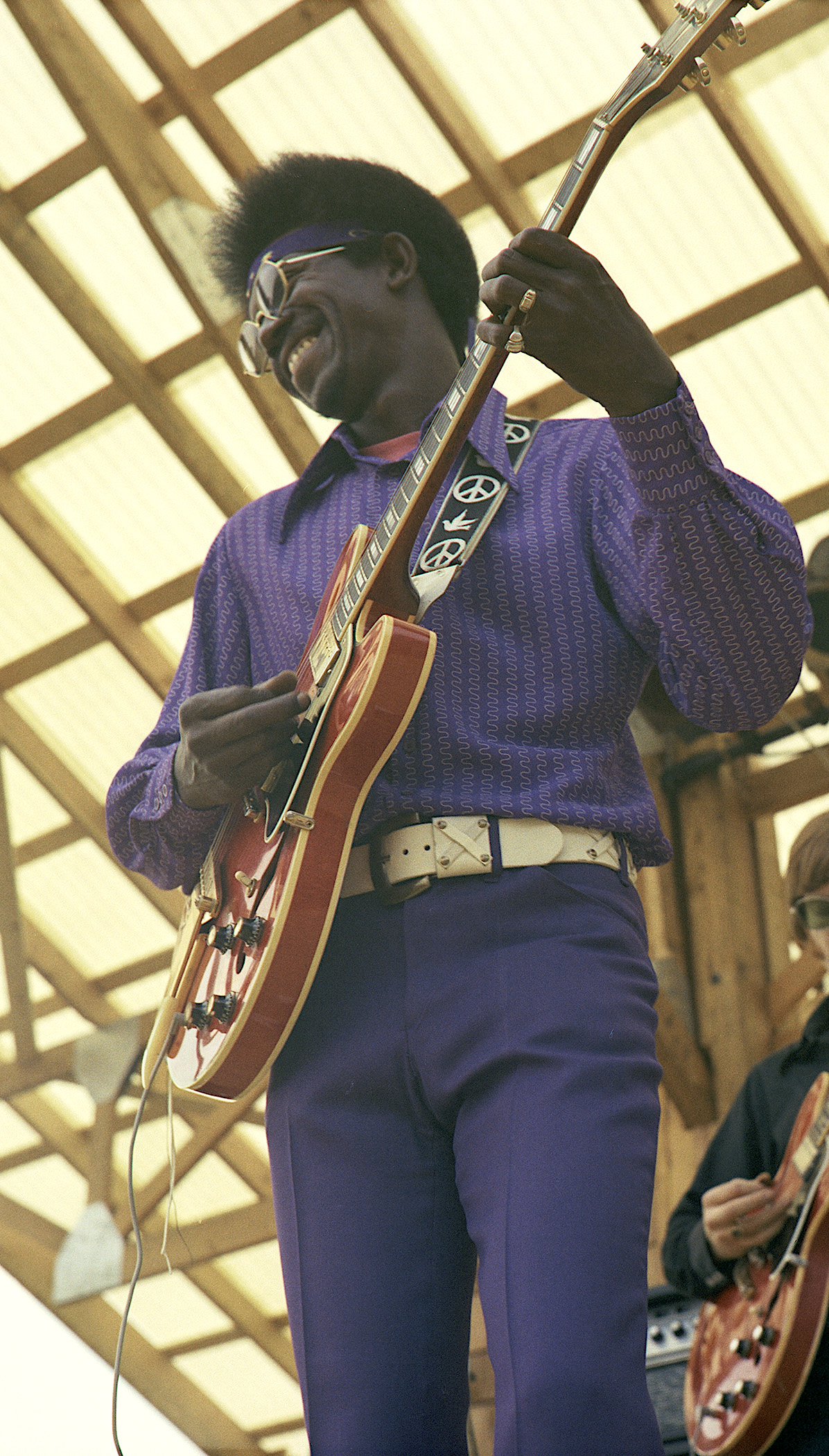
- Luther Allison: Eatonland, Wikimedia Commons, CC BY-SA 4.0.
- Top image: by Carl Lender, Wikimedia Commons, CC BY-SA 3.0.
- Gibson Les Paul Standard: DonnyBurger1974, Wikimedia Commons, CC BY-SA 4.0.
- Luther Allison live: Carl Lender, Wikimedia Commons, CC BY-SA 3.0.