Anthony Phillips Guitars & Gear: Genesis Founder’s Twelve-String Complete Rig Guide
Anthony Phillips guitars gear — twelve-string acoustic deep-dive for the founding Genesis guitarist's extensive instrumental solo career beyond the band's high profile.
Anthony Phillips guitars gear is the subject of one of progressive rock’s earliest and most twelve-string-centred individual stories — the equipment and approach of a founding member of Genesis whose departure from the band in 1970 (early in Genesis’ history) represented one of progressive rock’s notable “what if” departures, with Phillips’ subsequent career — extending across decades, substantially within instrumental and acoustic-focused territory, with twelve-string guitar representing a particularly central instrument within his subsequent work — representing a genuinely different trajectory than either his former Genesis bandmates’ subsequent paths or the more band-centric, ensemble-electric-guitar-focused careers.
His specific position — an early Genesis member whose departure occurred before the band’s most widely-referenced progressive rock-era work (the period covered for Hackett), with Phillips’ subsequent career developing largely outside the high-profile band context that gave his former bandmates’ subsequent work much of its visibility — gives this article an opportunity to examine a genuinely different kind of “Genesis-connected” career: not a member whose subsequent work built on high-profile band recognition, but a founding member whose early departure meant his subsequent work developed its own audience and recognition largely independent of Genesis’ subsequent prominence, even as his early Genesis contributions represent part of the band’s founding history. This is the complete breakdown of Anthony Phillips guitars gear, technique, and tonal philosophy.
Background
Anthony Phillips was born on December 23, 1951, in Putney, London, England, with his early career including co-founding Genesis alongside several other future members (including Peter Gabriel, Tony Banks, and Mike Rutherford) during the late 1960s.
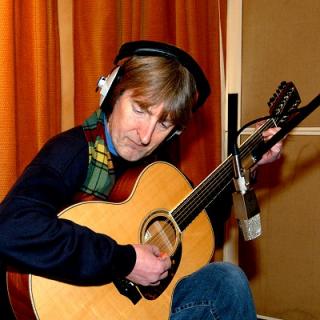
His departure from Genesis in 1970 — reportedly connected to stage fright/performance anxiety affecting his ability to continue with the demands of live performance, a genuinely human circumstance this article can acknowledge as part of his career’s actual history without dwelling on it beyond its relevance to understanding why his career took the specific direction it subsequently did — occurred before Genesis’ progressive-era lineup recorded the albums generally considered the band’s most significant work, meaning Phillips’ direct involvement with Genesis’ most widely-referenced recordings was limited to the band’s earlier, less widely-referenced material.
His subsequent career — developing substantially within instrumental and acoustic-focused territory, including significant twelve-string guitar-focused work — represented a direction quite distinct from continuing within high-profile band contexts: rather than pursuing a subsequent career building on Genesis’ (eventual) high profile, Phillips’ subsequent work developed its own specific character and audience, with twelve-string guitar becoming a particularly central instrument within Phillips’ own subsequent solo work — not merely one textural element within ensemble arrangements (as twelve-string functioned within Genesis’ broader arrangements during Hackett’s tenure) but a primary instrument within Phillips’ more frequently solo or acoustic-ensemble-focused subsequent recordings.
His extensive subsequent discography — spanning decades, including numerous albums substantially or entirely instrumental and acoustic-focused — gave Phillips a body of work representing one of the more thoroughly twelve-string-centred catalogues, with twelve-string’s textural richness here representing not one element among many but a foundational, frequently primary instrument across an extensive body of work.
Anthony Phillips Guitars Gear: The Complete Rig
Guitars
Anthony Phillips’ subsequent career has been substantially built around twelve-string acoustic guitar , Phillips’ primary and frequently foundational instrument across an extensive solo/acoustic-focused discography. Twelve-string’s specific characteristics — six pairs of strings (lower four pairs typically in octaves, upper two pairs in unison), giving rich, chorus-like texture — that represented one textural element within Genesis’ broader arrangements here represent the foundational sonic character of much of Phillips’ subsequent recorded output.
Alongside twelve-string’s central role, six-string acoustic guitars would represent complementary instruments within Phillips’ broader acoustic-focused work — providing the more direct, less chorus-textured tonal character that contrasts with and complements twelve-string’s richness within varied compositions and arrangements.
During his early Genesis tenure, electric guitars appropriate to the band’s then-developing sound would have appeared in Phillips’ setup, though his subsequent career’s substantial shift toward acoustic/instrumental territory means electric guitar likely represents a less central element of his overall discography than the twelve-string and six-string acoustic instruments his subsequent work more centrally features.
Amps
For Phillips’ substantially acoustic-focused subsequent career, clean, transparent amplification or direct recording approaches appropriate to acoustic guitar — preserving twelve-string’s specific textural richness and six-string’s more direct character — would represent his foundational sonic approach.
Effects
Consistent with substantially acoustic/instrumental solo and small-ensemble recordings, minimal effects processing — letting twelve-string’s natural textural richness and the compositional content itself represent the primary sonic interest — likely characterises Phillips’ broader approach.
Playing Style & Tone Philosophy
Anthony Phillips represents a “founding member, early departure, independent subsequent career” pattern — a pattern genuinely distinct from the “long-tenured member, subsequent career building on band’s eventual high profile” pattern. Phillips’ early departure — before Genesis’ progressive-era lineup recorded its most widely-referenced work — meant that whatever recognition Genesis’ subsequent work achieved didn’t directly translate into comparable recognition for Phillips’ own subsequent work, which instead developed its own audience based on its own specific characteristics rather than on continuity with Genesis’ (post-Phillips) high profile.
This circumstance — a founding member’s work developing largely independent of his former band’s subsequent prominence — represents a genuinely different career trajectory than this series has typically documented for “former member of significant band” cases, where (as for Hackett, Collins, and Gabriel) subsequent individual work typically benefits at least somewhat from association with the band’s recognised significance. For Phillips, this benefit was considerably attenuated by his early departure’s timing — his direct association is with early Genesis (less widely-referenced) rather than with the progressive-era lineup (more widely-referenced) that produced the work most commonly discussed in broader Genesis historical accounts.
His subsequent twelve-string-centred career, then, represents work that — whatever its own intrinsic qualities — developed its recognition substantially on its own terms, within whatever specific audience (likely overlapping with but not identical to broader progressive rock audiences, given Phillips’ substantially instrumental/acoustic direction representing a somewhat different specific territory than progressive rock’s more typically electric, ensemble-based, vocal-inclusive mainstream) found and valued this work. This represents a recognition pattern genuinely distinct from this series’ more typical “individual career building on prior band recognition” pattern — closer, perhaps, to the “develops own audience through own work’s specific qualities” pattern this series has documented for guitarists without significant prior band affiliations at all, even though Phillips’ Genesis founding-member status represents real historical fact, just one whose direct career-benefit for his subsequent work proved more limited than such affiliations more typically provide.
Phillips’ twelve-string-centred compositional approach — building extensive instrumental work substantially around twelve-string’s specific textural character — represents a different relationship to twelve-string than in Hackett-era Genesis, where twelve-string represented one textural element within broader ensemble arrangements featuring multiple instruments. For Phillips, twelve-string’s role shifts from “one element among many within ensemble arrangements” to “foundational instrument around which compositions are substantially built” — a shift with real compositional implications: when an instrument is one element among many, its specific characteristics need to combine with other elements’ characteristics within an overall arrangement; when an instrument is foundational/primary, compositions can be built more directly around that instrument’s own specific characteristics (twelve-string’s chorus-like richness, its specific resonance characteristics) as the primary compositional material, rather than this instrument’s contribution needing to be balanced against numerous other simultaneous elements.
Tonally, Anthony Phillips guitars gear philosophy was built on twelve-string acoustic guitar as foundational/primary instrument (rather than one textural element among many), complemented by six-string acoustic, through minimal-effects acoustic-appropriate recording — giving his extensive subsequent discography its specific character: twelve-string’s textural richness as primary compositional material across substantially instrumental, acoustic-focused work that developed its own recognition independent of his early Genesis affiliation’s limited direct career-benefit.
The “what if” framing this article’s introduction used regarding Phillips’ departure deserves examination because counterfactual speculation about how Genesis’ subsequent work might have differed had Phillips remained represents a common feature of how departures from significant bands get discussed, even though such speculation is inherently unanswerable and potentially does a disservice to both the departed member’s actual subsequent work (by framing it primarily in terms of what it “isn’t” — namely, continued Genesis membership — rather than on its own terms) and to the band’s actual subsequent work (by implying it represents some kind of lesser alternative to an unrealised “what if” scenario, rather than representing what actually happened and achieved its own genuine significance). This article has aimed to avoid this trap by focusing on Phillips’ actual subsequent career — twelve-string-centred instrumental work achieving its own recognition within its own communities — rather than framing this career primarily in relation to Genesis’ subsequent (post-Phillips) trajectory. This focus matters because Phillips’ actual subsequent work represents decades of genuine creative output with its own intrinsic qualities and its own audience, deserving documentation on these terms rather than primarily as “the guitarist who might have been part of Genesis’ more famous work, had circumstances been different.” This series’ broader commitment — documenting guitarists’ actual work and actual careers, rather than primarily through frameworks of what might have been — applies here as much as anywhere, even when (as for Phillips) a guitarist’s most widely-known biographical fact (early Genesis membership and departure) might tempt a “what if Genesis” framing that this article has deliberately moved beyond.
Stage fright/performance anxiety — mentioned as a factor in Phillips’ departure — represents a genuinely significant issue affecting musicians (and performers more broadly) that this series hasn’t extensively discussed, despite its real prevalence and real career impact for various musicians across genres and eras. Performance anxiety can affect musicians regardless of their technical ability or the quality of their work — a musician can be genuinely skilled and genuinely capable of producing excellent recorded work while finding live performance’s specific demands (performing in front of audiences, the specific pressures live performance involves) genuinely difficult to sustain, particularly within touring band contexts where live performance represents a frequent, ongoing requirement rather than an occasional event. For a musician in this circumstance, a career shift toward recording-focused work — where the specific pressures of live performance don’t represent an ongoing requirement in the same way — can represent a genuinely sensible adaptation, allowing continued creative output (recordings) while reducing exposure to the specific circumstances (live performance) that present genuine difficulty. Phillips’ subsequent career — substantially recording-focused, with twelve-string-centred instrumental work not requiring the kind of touring-band live performance schedule that high-profile band membership typically involves — represents, in this light, not merely “a different direction” in some neutral sense, but potentially a direction genuinely suited to working around a real personal circumstance (performance anxiety) while still allowing substantial creative output. This article raises this not to dwell on personal difficulty, but because understanding why a career took a specific direction sometimes requires acknowledging genuinely human factors (health, anxiety, personal circumstances) that pure “musical/stylistic choice” framings might otherwise omit — and because, for any reader who might themselves experience performance anxiety while having genuine musical ability, Phillips’ career represents a demonstration that significant creative output remains possible through pathways (recording-focused work) that don’t require live performance’s specific demands.
The “founding member, early departure” pattern this article has identified — and that the Influence & Legacy section extended to Yes’ Peter Banks as another instance — connects to a broader question about how bands’ early histories get remembered relative to their subsequent, more widely-recognised work. For many significant bands, early lineups (before whatever specific lineup produced the band’s most widely-referenced work) represent a kind of “prehistory” that, while genuinely part of the band’s actual history, receives less attention in broader popular accounts than the subsequent more-widely-referenced lineup’s work. Founding members who departed before this more-widely-referenced period — like Phillips for Genesis, and (as this article has anticipated) Banks for Yes — occupy a specific position within this dynamic: genuinely part of their bands’ founding histories, but with their direct involvement concentrated within the “prehistory” period that receives less attention than what came after their departure. This isn’t to suggest these founding members’ contributions were less significant in some absolute sense — founding a band, contributing to its early development and direction, represents genuine significance regardless of whether the specific lineup that benefited from this founding work subsequently included the founding members themselves — but rather that the specific recognition pattern (concentrated on “prehistory” rather than on the more-widely-referenced subsequent period) represents a recurring structural feature of how band histories get told, with founding-member-early-departure cases representing a recurring instance of this broader pattern across multiple significant bands’ histories.
How to Sound Like Anthony Phillips
Guitar Approach
A twelve-string acoustic guitar as primary/foundational instrument, complemented by six-string acoustic, represents the foundational Anthony Phillips guitars gear approach.
The compositional approach: rather than treating twelve-string as one textural element within broader arrangements, build compositions substantially around twelve-string’s own specific textural characteristics — its chorus-like richness, its resonance characteristics — as primary compositional material. This represents a shift from “twelve-string serving an arrangement’s broader needs” to “arrangement built around twelve-string’s own characteristics,” with six-string acoustic and other instruments (if used) serving as complements to this twelve-string foundation rather than twelve-string serving as a complement to other foundational elements.
Amp Approach
Clean, transparent acoustic-appropriate amplification or direct recording, minimal effects, preserving twelve-string’s natural textural richness as primary sonic material.
| Element | Approach | Notes |
|---|---|---|
| Primary instrument | Twelve-string acoustic | Foundational, not one-element-among-many |
| Complementary instrument | Six-string acoustic | Direct tonal contrast to twelve-string richness |
| Amplification/recording | Clean, transparent, minimal effects | Acoustic-instrumental aesthetic |
| Compositional approach | Built around twelve-string’s characteristics | Inverts the “one element among many” arrangement role |
| Career pattern | Independent recognition, not band-profile-dependent | Early departure limited direct Genesis-profile benefit |
| Overall character | Substantially instrumental/acoustic | Different territory than progressive rock’s electric/vocal mainstream |
Twelve-string acoustic as foundational instrument, six-string acoustic as complement, through clean minimal-effects recording. The defining compositional shift is treating twelve-string’s specific textural characteristics as primary compositional material — building compositions around what twelve-string does best, rather than fitting twelve-string into arrangements built around other foundational elements, the inverse of twelve-string’s role within Genesis’ broader ensemble arrangements.
Influence & Legacy
Anthony Phillips’ influence operates substantially within fingerstyle/instrumental acoustic guitar communities — communities this series discussed in relation to Pierre Bensusan’s recognition, with Phillips representing another guitarist whose significant individual work achieved recognition substantially within acoustic/instrumental-focused communities rather than primarily through broader rock/progressive rock mainstream recognition.
His broader significance — demonstrating twelve-string acoustic guitar’s potential as a foundational/primary instrument for extensive compositional work, rather than primarily as a textural element within broader arrangements — represents a model for guitarists interested in twelve-string’s possibilities beyond its more typical “textural element” role, similar in general structure to how this series has documented various guitarists demonstrating instruments’ or techniques’ potential beyond their typical applications (DADGAD beyond Celtic tradition’s typical applications, for Bensusan; sweep picking beyond its isolated pre-Gambale applications, for Gambale).
The comparison with Steve Hackett — whose own Genesis tenure, documented in the previous article, represents the “long-tenured member, subsequent career building on band’s eventual high profile” pattern this article has contrasted with Phillips’ “early departure, independent recognition” pattern — illuminates the range of “Genesis-connected guitarist” career trajectories this series is documenting across consecutive articles, with Phillips and Hackett representing genuinely different relationships to their shared former band’s subsequent significance. The parallel with Pierre Bensusan — whose own fingerstyle/instrumental acoustic career, documented several articles ago, represents another guitarist whose significant individual work achieved recognition substantially within acoustic/instrumental-focused communities — shows a recurring recognition-community pattern across guitarists whose work, however significant, occupies territory somewhat distinct from broader rock mainstream recognition’s typical pathways. And the connection to Peter Banks — a founding guitarist of Yes (another significant British progressive rock band this series will document in the immediately following article), whose own early departure from his founding band represents a structurally similar “founding member, early departure” pattern within a different specific band’s history — places Anthony Phillips guitars gear within a broader pattern this series is beginning to identify across multiple significant British progressive rock bands’ founding lineups: founding members whose early departures, for various specific reasons, meant their subsequent careers developed somewhat apart from their founding bands’ eventual high profiles, representing a recurring structural pattern across this genre’s significant bands’ early histories.
Frequently Asked Questions: Anthony Phillips Guitars & Gear
What guitar does Anthony Phillips play?
Anthony Phillips’ subsequent career has been substantially built around twelve-string acoustic guitar as his primary instrument across an extensive solo and acoustic-ensemble-focused discography, complemented by six-string acoustic guitars.
What was Anthony Phillips’ role in Genesis?
Phillips was a founding member of Genesis during the late 1960s, alongside other future members including Peter Gabriel, Tony Banks, and Mike Rutherford. He departed from Genesis in 1970 — before the band’s progressive-era lineup (including Steve Hackett) recorded the albums generally considered the band’s most significant and most widely-referenced work, meaning Phillips’ direct involvement was limited to Genesis’ earlier, less widely-referenced material.
Why did Anthony Phillips leave Genesis?
Phillips’ departure from Genesis in 1970 is reportedly connected to stage fright/performance anxiety affecting his ability to continue with live performance’s demands — a genuinely human circumstance representing part of his career’s actual history, relevant to understanding why his subsequent career developed substantially within recording-focused, less performance-demanding instrumental/acoustic territory rather than continuing within high-profile touring band contexts.
How does Phillips’ use of twelve-string differ from its role in Genesis’ arrangements?
Within Genesis’ arrangements during Hackett’s tenure, twelve-string represented one textural element among many within complex ensemble arrangements. In Phillips’ subsequent solo career, twelve-string functions as a foundational/primary instrument, with compositions built substantially around twelve-string’s own specific textural characteristics (its chorus-like richness, its resonance) as primary compositional material — an inversion of twelve-string’s “one element among many” role within broader ensemble arrangements.
Why didn’t Phillips’ early Genesis connection translate into comparable recognition for his solo career?
Phillips’ 1970 departure occurred before Genesis’ progressive-era lineup recorded the work most commonly discussed in broader Genesis historical accounts. This meant that whatever recognition Genesis’ subsequent (post-Phillips) work achieved didn’t directly translate into comparable recognition for Phillips’ own subsequent work, which instead developed its own audience based on its own specific characteristics — a genuinely different pattern than the “subsequent career building on band’s eventual high profile” pattern more typical for former members of bands whose most significant work occurred during their tenure.
What kind of music does Anthony Phillips’ solo discography represent?
Phillips’ extensive subsequent discography is substantially instrumental and acoustic-focused, with twelve-string guitar representing a particularly central instrument across numerous albums. This represents different territory than progressive rock’s more typical electric, ensemble-based, vocal-inclusive mainstream — closer to the fingerstyle/instrumental acoustic guitar landscape, with Phillips’ work achieving recognition substantially within this kind of acoustic/instrumental-focused community.
What does Phillips’ career demonstrate about twelve-string guitar’s potential?
Phillips’ extensive twelve-string-centred catalogue demonstrates twelve-string acoustic guitar’s potential as a foundational/primary instrument for extensive compositional work — beyond its more typical role as one textural element within broader arrangements.
The “twelve-string as foundational instrument” approach this article has emphasised for Phillips’ subsequent career deserves additional technical examination regarding what specifically changes when an instrument shifts from “textural element within broader arrangements” to “foundational/primary instrument for compositions.” When twelve-string is one element within broader arrangements, the instrument’s contribution needs to fit within a sonic space also occupied by other instruments — meaning twelve-string’s specific frequency content, its specific rhythmic/textural character, needs to complement rather than compete with simultaneous contributions from keyboards, bass, drums, and other guitars. When twelve-string becomes foundational/primary — as in Phillips’ solo work — this “fitting within a broader sonic space” consideration changes: twelve-string’s own frequency content and textural character can occupy more of the available sonic space, since fewer other simultaneous elements (if any) are competing for this space. This means compositions can be built that more fully explore twelve-string’s specific characteristics — its full frequency range, its full textural richness — without needing to “leave room” for other elements in the way ensemble arrangements require. For a composer/guitarist working this way, this represents both opportunity (fuller exploration of the instrument’s characteristics) and a different kind of compositional challenge (since the instrument itself, rather than the interplay between multiple instruments, needs to provide sufficient interest/variety across a composition’s duration — a different compositional problem than ensemble arranging, where interplay between instruments provides one source of interest/variety that solo or near-solo instrumental composition needs to find through other means, such as exploring an instrument’s full textural/registral range, varied compositional techniques within the solo format, or other approaches).
Considering Anthony Phillips guitars gear’s place within this series’ broader documentation of “instruments demonstrated beyond typical application” — DADGAD beyond Celtic tradition (Bensusan), sweep picking beyond isolated pre-Gambale applications (Gambale), and now twelve-string beyond its typical “textural element” role (Phillips) — offers an opportunity to note a recurring structure across these examples: in each case, an instrument/technique/tuning had an existing, recognised application (Celtic music for DADGAD, isolated technical use for sweep picking, ensemble textural contribution for twelve-string), and a specific guitarist demonstrated this foundation’s capacity for something beyond this existing application (DADGAD’s harmonic sophistication for Bensusan, sweep picking’s systematic technical vocabulary for Gambale, twelve-string’s foundational compositional role for Phillips). This recurring structure — existing application, plus individual demonstration of capacity beyond that application — represents, in a sense, a template for how this series has documented several different kinds of individual musical contribution: not necessarily “inventing something from nothing” (a framing this series has questioned in various contexts, including its discussion of sweep picking’s pre-Gambale isolated appearances), but rather “taking something with an existing, often more limited, application and demonstrating its capacity for more.” For readers who’ve followed this series across these various examples, recognising this recurring structure may offer a useful lens for understanding genuinely original musical contributions more broadly: not as ex nihilo invention, but as the often-substantial work of recognising and then realising existing foundations’ under-explored potential.
For guitarists interested in exploring twelve-string as a foundational instrument following Phillips’ general approach, a practical starting point involves spending substantial time simply exploring twelve-string’s sonic characteristics in isolation — without the “fitting into an arrangement” considerations that twelve-string’s more typical textural-element role involves — playing across the instrument’s full range, exploring how its doubled strings’ specific tuning (octaves for lower strings, unison for upper strings, as this article’s predecessor discussed) produces specific resonance and chorus-like characteristics in different registers and with different playing approaches (fingerstyle versus strumming, for instance, might produce different specific textural results given twelve-string’s doubled-string character). This kind of exploratory, instrument-focused practice — getting to know an instrument’s specific characteristics deeply, before or alongside developing compositional ideas — represents a different starting point than approaches focused primarily on developing technique transferable across instruments (as this series has more typically discussed for techniques like sweep picking or tapping, which guitarists develop with an eye toward applying across various instruments/contexts). For twelve-string-as-foundational-instrument specifically, the instrument’s own specific character — not merely as a “twelve-string version of guitar technique” but as its own sonic entity with its own specific possibilities — represents the starting point, with compositional approaches subsequently developing from this instrument-specific exploration rather than from techniques developed independent of the specific instrument.
The general question of “what happens to founding members who leave before a band’s breakthrough” — which this article has examined for Phillips and will examine again for Yes’ Peter Banks — represents a pattern with various possible subsequent trajectories beyond the “develops independent recognition through own subsequent work” pattern Phillips represents. Some departed founding members pursue careers entirely outside music; some pursue careers within music but in roles other than performing (production, session work, industry roles); some achieve subsequent recognition primarily through retrospective interest in their former band’s early history (fans of a band’s later work becoming interested in earlier lineups and former members as part of exploring that band’s complete history) rather than through their own subsequent independent work achieving recognition on its own terms. Phillips’ specific trajectory — substantial subsequent recorded output achieving its own recognition within acoustic/instrumental communities, as this article has documented — represents one of these possible trajectories, arguably among the more creatively productive ones (decades of recorded output, as opposed to, say, departing music entirely or pursuing primarily non-performing roles), even if this trajectory’s recognition didn’t reach the scale that continued high-profile band membership might have provided. This range of possible trajectories for departed founding members — with Phillips representing one specific point within this range — illustrates that “leaving a band before its breakthrough” doesn’t determine a single subsequent outcome, but rather opens a range of possibilities whose specific realisation depends on the departed member’s own subsequent choices, abilities, and circumstances (including, for Phillips, the performance-anxiety circumstance this article has discussed as relevant context for understanding his specific subsequent direction toward recording-focused work).
The relationship between Phillips’ early Genesis work and his subsequent solo career — whether his subsequent twelve-string-centred direction represents continuity with specific elements of his early Genesis contributions, or represents more of a departure/new direction relative to his early Genesis work — represents a question this article can raise without being able to answer definitively without more detailed comparative analysis of Phillips’ early Genesis recordings against his subsequent solo work. If Phillips’ early Genesis contributions already included significant twelve-string elements, then his subsequent twelve-string-centred solo direction might represent continuity — taking an element already present in his early band work and developing it more fully as a primary/foundational focus in subsequent solo work. If, alternatively, Phillips’ early Genesis contributions were more electric-guitar-focused (consistent with this article’s brief mention of electric guitar as part of his early Genesis-era setup) with twelve-string representing a less central element during this early period, then his subsequent twelve-string-centred direction might represent more of a new direction — twelve-string becoming central in his solo work in a way it wasn’t necessarily central during his band tenure. Either possibility would be consistent with this article’s broader documentation of Phillips’ subsequent career; the specific answer (continuity versus new direction) would add additional texture to understanding how his subsequent career relates to his early band work, but doesn’t change this article’s central points regarding his subsequent career’s own character and its recognition pattern relative to Genesis’ subsequent (post-Phillips) prominence.
In summary, Anthony Phillips guitars gear represents twelve-string acoustic guitar as foundational/primary instrument (complemented by six-string acoustic) through clean, minimal-effects recording — equipment serving an extensive substantially-instrumental solo discography that developed across decades following Phillips’ early 1970 departure from Genesis. The genuine substance, as this article has emphasised throughout, involves both a specific instrumental demonstration (twelve-string’s capacity as foundational compositional material, beyond its more typical textural-element role within ensemble arrangements) and a specific career pattern (founding-member-early-departure leading to independent recognition developed substantially on its own terms, rather than building on a former band’s eventual high profile). For listeners and guitarists interested in twelve-string’s possibilities beyond its more familiar supporting role, and for anyone interested in how musicians navigate genuinely human circumstances (like performance anxiety) in shaping their career directions, Phillips’ extensive catalogue represents both a specific instrumental demonstration and a broader human story — a founding member of a band that became one of progressive rock’s most significant, who nonetheless built his own substantial and substantially independent body of work, on his own instrument, on his own terms.
For listeners wanting to explore Phillips’ twelve-string-centred catalogue directly, the recommended approach involves listening without expecting Genesis’ (post-Phillips) progressive rock characteristics — extended ensemble arrangements, vocal-led compositions — and instead approaching Phillips’ work on its own terms: substantially instrumental, twelve-string-centred, developed within and recognised by acoustic/instrumental guitar communities whose specific aesthetic values may differ from broader progressive rock audiences’ typical expectations.
A closing thought worth sitting with: somewhere in Phillips’ extensive catalogue, a twelve-string chord rings out — rich, chorused, full of overtones — and whether or not the listener knows anything about Genesis, about 1970, about stage fright or independent careers or recognition patterns, that chord simply sounds the way it sounds: warm, resonant, complete in itself. All the context this article has provided matters for understanding the career, the history, the broader patterns — but the music itself, in the end, doesn’t require any of it to do what music does. That’s true for Phillips’ twelve-string as much as it’s true for every other guitarist and every other instrument, and it’s worth remembering precisely because so much attention goes to context: the context illuminates, but the sound itself is where everything ultimately lives.
Image credits
- Anthony Phillips: Prog_Ress, Wikimedia Commons, CC BY-SA 2.0.