Shuggie Otis Guitars & Gear: The Complete Guide to the LA Prodigy’s Gibson ES-335, Upside-Down Strat & Toy Box Rig
Shuggie Otis guitars & gear: LA prodigy and psychedelic soul legend. Gibson ES-335, upside-down Strat, Marshall stack, phaser/wah/fuzz toy box — Strawberry Letter 23 tone guide.
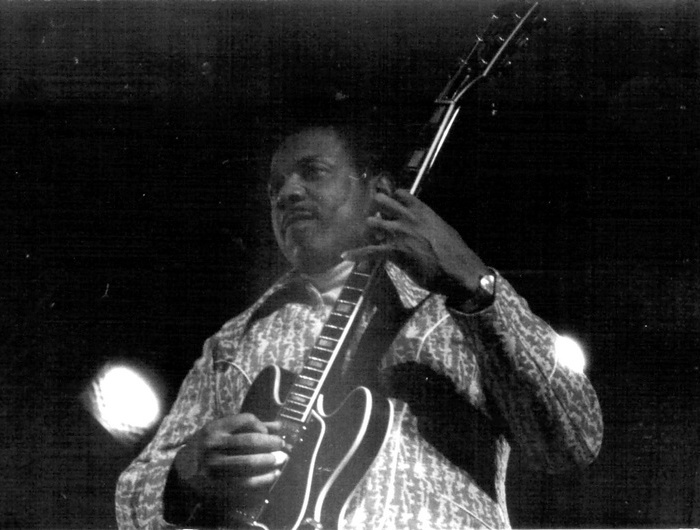
Sachyn Mital, CC BY-SA 3.0, via Wikimedia Commons
Quincy Jones asked Shuggie Otis to produce his next album. Shuggie Otis said no. Quincy Jones then heard “Strawberry Letter 23” — the song that Shuggie had written for his girlfriend, who wrote him love letters on strawberry-scented paper — and decided to record it with the Brothers Johnson instead. The Brothers Johnson version topped the R&B chart and reached number 5 on the Billboard Hot 100 in 1977. “Strawberry Letter 23” became Shuggie Otis’s best-known composition through someone else’s recording of it, because Shuggie Otis had said no to Quincy Jones. This is not the most commercially rational decision. But it is characteristically Shuggie Otis: a musician who started playing guitar at age two, performed professionally with his father’s band at eleven wearing dark glasses and a false mustache to pass for old enough to play in nightclubs, recorded his first album at fifteen with Al Kooper, had B.B. King call him “my favorite new guitarist,” played bass on Frank Zappa’s “Peaches En Regalia” as a teenager, spent three years playing every instrument on Inspiration Information himself (including one of the first uses of an electronic rhythm box in any popular recording), got labeled “difficult” by record labels, and then disappeared from public musical life for nearly forty years before returning to touring in 2013. The decision to say no to Quincy Jones is part of the biography. So is the three-year solo-everything recording project. So is the red 1960s Gibson ES-335 through the “toy box” of old-school phaser, wah-wah, and fuzz into a Marshall stack, and the black Stratocaster strung for a left-handed player that he plays right-handed. Everything about Shuggie Otis is on his own terms.
Johnny Shuggie Otis — born Johnny Alexander Veliotes Jr. on November 30, 1953, in Los Angeles, California — is the son of Johnny Otis, the rhythm and blues pioneer, bandleader, musician, and impresario who was of Greek descent but who lived, worked, and identified completely with the Black music community of Los Angeles. His mother Phyllis Walker was of African American and Filipino descent. The name “Shuggie” — short for “sugar” — was given to him by his mother when he was a newborn. He began playing guitar at two years old and was performing professionally with his father’s band at eleven, wearing dark glasses and strategically applying black ink between his nose and mouth to appear old enough to perform in clubs. He was fifteen when he recorded Al Kooper Introduces Shuggie Otis, his debut album for CBS Records. He was seventeen when he played bass on Frank Zappa’s Hot Rats, specifically on “Peaches En Regalia” — one of rock music’s most celebrated instrumental tracks. B.B. King, hearing the debut recordings, called him “my favorite new guitarist.” He was a prodigy in the most complete sense: not just technically accomplished at an early age, but musically intelligent in ways that made the technical accomplishment meaningful.
The Inspiration Information album — recorded from 1971 to 1974, released in October 1974, with Shuggie playing every instrument himself (apart from horns and strings) — is the recording that Inspiration Information fans describe as one of the first psychedelic soul records and one of the first to showcase an electronic rhythm box in the arrangement. “Some credit this album as creating an entirely new genre of popular music,” as the Telecaster Guitar Forum community noted. The album includes “Aht Uh Mi Hed,” “Sparkle City,” the title track, and “Island Letter” — tracks that have been cited by subsequent musicians as significant influences on the specific direction of 1970s and 1980s funk and soul. That it failed to chart significantly on release — a combination of the three-year recording timeline, the label’s diminishing patience, and the specific cultural moment that made the album’s ahead-of-its-time quality both its artistic virtue and its commercial liability — is the biographical irony most often cited when discussing Shuggie Otis.
His playing style — the red Gibson ES-335 through the toy box of phaser, wah-wah, and fuzz into a Marshall stack, plus the upside-down black Stratocaster strung for a left-handed player that he plays right-handed — is immediately identifiable as a specific personal approach built from Hendrix influence absorbed through genuine awe (“Jimi Hendrix is my number one influence. I feel very close to him, like I know him — in fact I do know him. I met him once but I don’t know him from that, I know him another way.”) and from the West Coast blues tradition of his father’s musical world. He plays a Stratocaster that is strung for left-handed playing but held right-handed — not the Hendrix approach (which was strung right-handed but held upside down) but something related to it in the specific quality of idiosyncratic guitar relationship that produces an immediately personal voice. The upside-down Stratocaster strung for left hand, played right hand, means that the string order is reversed from the standard: the lowest string is at the bottom of the body rather than the top, producing a different relationship between hand position and string tension that requires the player to develop guitar knowledge specific to this non-standard configuration.
“I like the Stratocaster but I also like the 335 (Gibson guitar) and I had a Les Paul (Gibson guitar) there last night too,” he told Rockshot Magazine. “I just love the guitar! I really fell in love with a new one, the Godin Passion.” This assessment — delivered with the enthusiasm of a guitarist who loves instruments generically rather than having a single fixed primary identity — is consistent with the musical breadth of someone who has played blues, psychedelic soul, funk, jazz-influenced R&B, and multi-instrumental studio recordings on his own terms. The guitar serves the music. The music is whatever Shuggie Otis wants it to be.
Background: Johnny Otis’s Son, the Fake Mustache Years, and the Album That Invented a Genre
The Johnny Otis connection is the foundational biographical context for understanding both the musical breadth and the specific blues-and-R&B grounding of Shuggie Otis’s guitar approach. Johnny Otis — who, as a Greek-American who identified completely with the African-American community of Los Angeles, was himself a complex figure in the racial and cultural history of American music — was one of the central figures of the West Coast R&B scene from the late 1940s onward: a bandleader, talent scout, record producer, songwriter, and musician who was responsible for introducing a series of significant R&B artists to broader audiences. Growing up in the household of someone with this specific breadth of musical knowledge and cultural connection meant growing up surrounded by blues and R&B at the highest level — not as an academic subject but as the lived environment. Shuggie absorbed the West Coast blues tradition, the R&B tradition, and the specific musical intelligence of a professional music environment from the earliest possible age.
The fake mustache years — the eleven-year-old performing in nightclubs with a false mustache and dark glasses to appear old enough — are the specific biographical image that captures both the absurdity and the seriousness of Shuggie Otis’s early development. A child prodigy good enough to play professionally at eleven, held back only by the legal age restrictions on nightclub performance, and willing to apply black ink between nose and mouth to get past them. The guitar skills that required this subterfuge were already professional-level at eleven; the professional-level judgment about how to develop those skills in the most demanding available musical environment came from a child who understood what performing for actual audiences at the highest local level would provide. The fake mustache was not an act of deception for its own sake; it was access to the musical education that the father’s band and the adult performance context uniquely provided.
The Frank Zappa connection — playing bass on “Peaches En Regalia” on Hot Rats — is the specific early career collaboration that establishes Shuggie’s status as a recognized musical peer rather than simply a prodigy curiosity. Zappa did not hire people out of sentiment or novelty; he hired musicians who could play what the music required. Shuggie was seventeen when “Peaches En Regalia” was recorded, and his bass playing on one of Zappa’s most celebrated instrumental tracks confirmed the technical capability that the early guitar work had suggested. The Zappa connection also places Shuggie in the specific avant-garde/experimental wing of the Los Angeles music scene that existed alongside and occasionally overlapped with the blues and soul tradition of his father’s world — a breadth of musical context that explains the experimental quality of the Inspiration Information recording approach.
The near-forty-year absence from public musical life — the period between the Inspiration Information era and the 2013 return to touring — is documented as involving substance abuse difficulties and the specific challenges of being branded “difficult” by the record label industry after the Inspiration Information experience. “He went through some tough times with alcohol abuse, but eventually he became sober and has been for quite a while.” The return — touring with the re-release of Inspiration Information alongside a companion record of unreleased songs, Wings of Love — demonstrated that the musical intelligence of the early career had survived the intervening decades, and that the Inspiration Information album’s reputation had grown sufficiently that a new audience was ready to hear it as the significant document it always was.
The Rig: Shuggie Otis’s Guitars, Amps, and Effects
Guitars
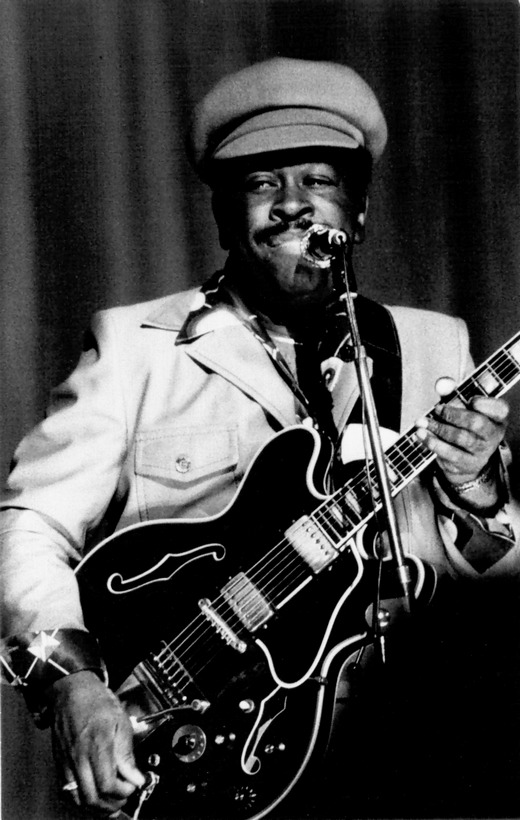
Shuggie Otis’s primary stage guitar in his return-to-performing period is a red 1960s Gibson ES-335 — the semi-hollow thinline Gibson that serves as the primary instrument of musicians who value the combination of semi-hollow warmth, feedback potential at high volume, and the specific tonal complexity of an instrument that has both acoustic body resonance and solid-center construction. “He was wearing a long black coat and puffy white scarf. Otis played a red ’60s Gibson ES-335 sent through a ‘toy box’ of old-school effects such as phaser, wah-wah and fuzz, and then into a Marshall stack amplifier.” The ES-335’s semi-hollow construction provides the specific warm, complex, sustaining character that the phaser-wah-fuzz effects chain then shapes into the specific psychedelic soul guitar voice of the performing Shuggie Otis. The red finish — the specific red that the 1960s Gibson ES-335 in cherry was produced in, vibrant and immediately attention-catching on stage — is the visual identity of this specific guitar in his performing career.
For some of the tunes in his performing set, Shuggie switches to a black Stratocaster strung for a left-handed player (although he plays it right-handed). This playing configuration — right-handed technique applied to a guitar strung in left-handed string order — means that the lowest strings are at the bottom of the guitar body (nearest the floor) rather than at the top, with the highest strings at the top. The practical consequence: the interval relationships of all chord shapes and scale patterns are reversed from standard. A standard major chord shape produces a different chord in this configuration; the specific knowledge required to play this guitar correctly is different from standard guitar knowledge and specific to the individual player who has developed it. Shuggie’s upside-down playing drew specific audience comments: “It was noticeable that in most concerts you use the Red Gibson ES335 but in London you chose to use mostly the white Fender Stratocaster which you play upside down?” His response: “Yes people ask me about that all the time why are you playing left handed are you trying to be like Jimi Hendrix? I say this much that Jimi Hendrix is my number one influence. I feel very close to him, like I know him, in fact I do know him.”
A Gibson ES-335 with Bigsby vibrato is documented in the Equipboard community’s Shuggie Otis gear page — a variant of the primary red ES-335 with the addition of a Bigsby B7 vibrato tailpiece. The Bigsby adds tremolo capability to the ES-335’s semi-hollow construction, enabling the pitch modulation of the vibrato arm in a way that suits the Hendrix-influenced psychedelic guitar approach. The combination of ES-335 warmth, the Bigsby’s specific vibrato character (warmer and less dramatic in pitch range than a Floyd Rose), and the toy box effects chain produces a different tonal option from the standard-bridge ES-335.
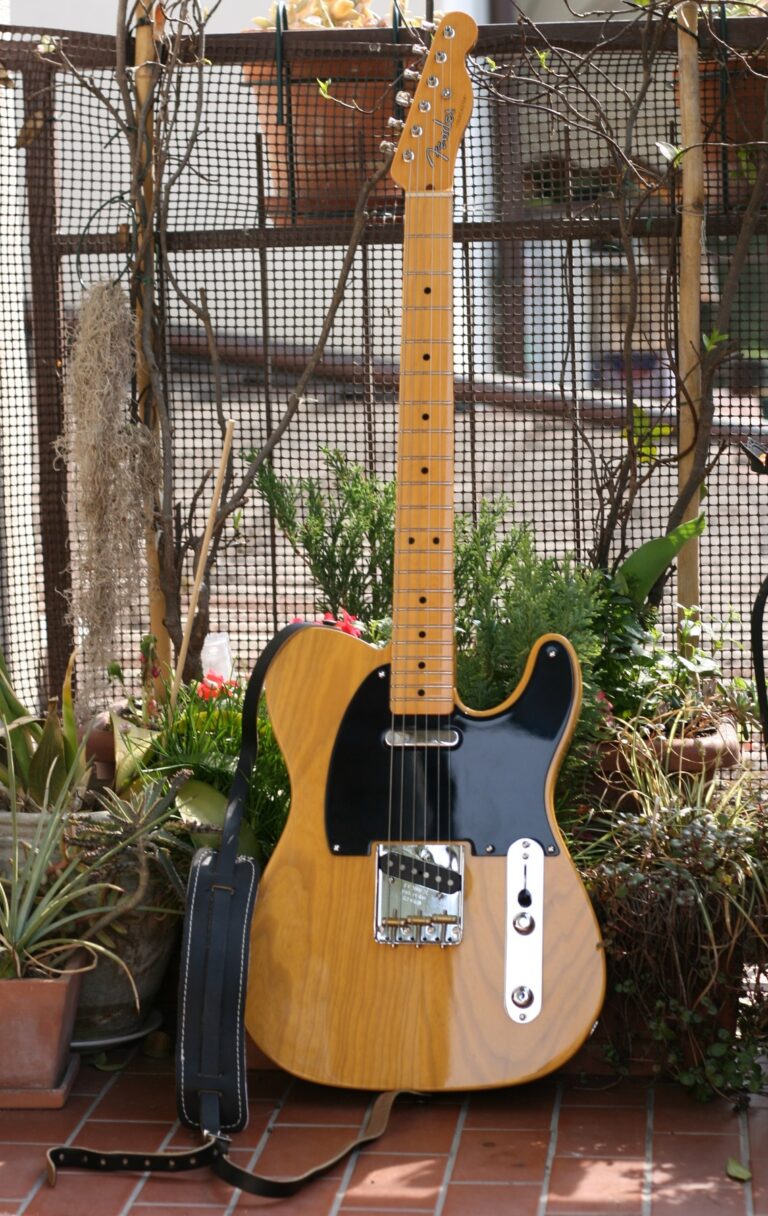
A young Shuggie Otis is documented in a photograph with a Fender Telecaster in natural wood finish — the early career instrument from the period of the first albums. The natural-finish Telecaster’s ash or alder body construction provides the specific bright, defined character of the Telecaster’s single-coil bridge pickup, appropriate for the blues and R&B guitar work of the early Here Comes Shuggie Otis and Freedom Flight period. The natural wood finish gives the guitar the specific visual understated quality that differs dramatically from the elaborate visual identity of the later career’s red ES-335 and black upside-down Stratocaster.
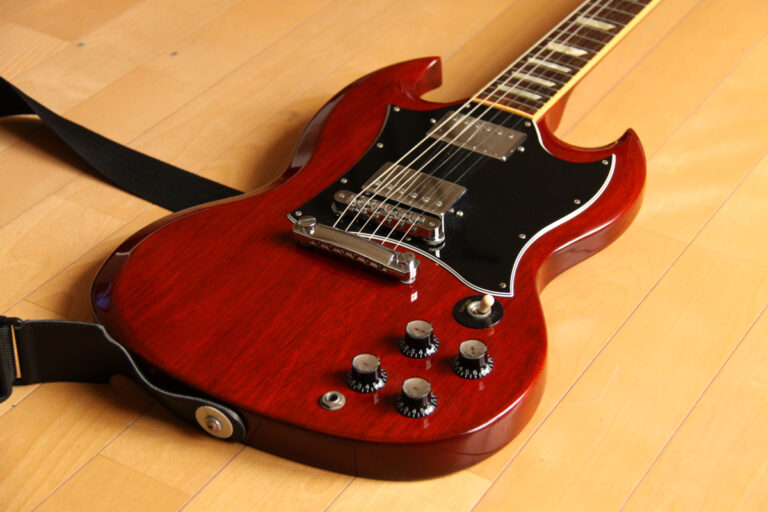
“I love the Gibson SG” — Shuggie confirmed in the Vintage Guitar magazine interview alongside his ES-335 and Stratocaster preferences. The Gibson SG’s specific character — lighter than a Les Paul, brighter, with the double-cutaway design’s easy upper-fret access — suits the psychedelic, wide-range guitar playing that the Hendrix influence and the experimental soul context require. The SG’s natural high-volume feedback potential — its lightweight construction makes it more feedback-prone than heavier guitars, particularly through a Marshall stack — adds a specific atmospheric dimension available when the stage volume is appropriate.
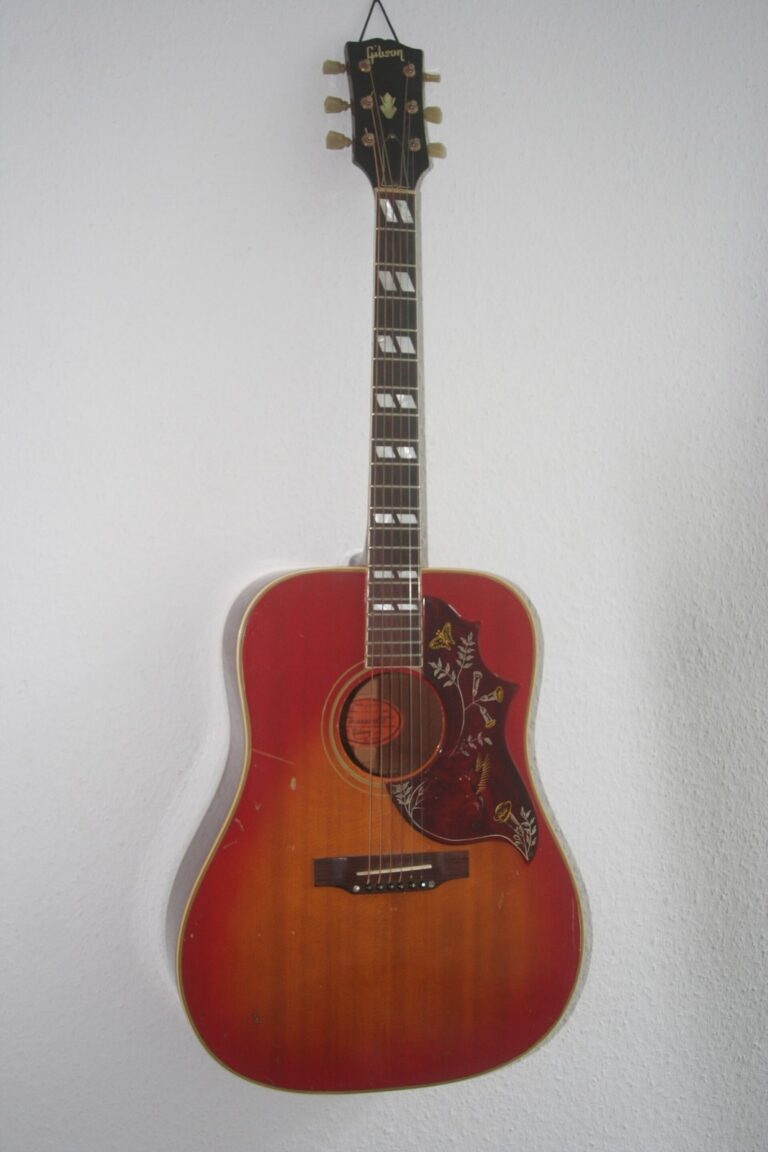
Pictures of Shuggie Otis playing a Gibson Hummingbird are included as the album art for his album In Session Information — the acoustic guitar that confirms his multi-instrumental approach extends to acoustic guitar as a primary instrument alongside the electric work. The Gibson Hummingbird’s specific character — the square-shoulder dreadnought with the distinctive floral pickguard, warm and full-bodied with the specific Gibson acoustic voice — provides the acoustic foundation for the more intimate, acoustic-adjacent recordings.
“I really fell in love with a new one, the Godin Passion,” Shuggie told Vintage Guitar magazine — the Canadian guitar manufacturer’s Passion model, a semi-acoustic instrument known for its warm, complex tone and high build quality. The Godin Passion’s semi-acoustic character provides similar acoustic resonance and warmth to the ES-335 while offering the distinctive Godin construction quality and the specific tonal character of the Canadian-made instrument. Its addition to his guitar vocabulary confirms the consistent preference for semi-hollow and resonant instruments that the ES-335 and the earlier Telecaster both represent in different ways.
Amps
Shuggie Otis’s live amplification in the return-to-performing period is a Marshall stack — the Marshall head and cabinet combination that provides the specific high-powered British EL34 amplification that his “toy box” of effects feeds into. The Marshall stack’s specific character — the natural saturation of the EL34 output section at performance volume, the British midrange presence that cuts through the horn section and rhythm section of a full live band — provides the amplification platform that the phaser, wah-wah, and fuzz effects then process. The Marshall’s own character is audible beneath and through the effects: the warmth of the British EL34 power section sustaining the fuzz-processed guitar signal in a way that solid-state amplification wouldn’t.
Shuggie’s documented amplification across his career includes various combinations alongside the Marshall stack. The multi-amp approach consistent with a musician who loves multiple guitars and plays multiple instruments reflects the general philosophy of using whatever serves the specific musical moment. His AB box — which he described in the Rockshot Magazine interview as causing amp problems during the London performance — confirms a multi-amplifier signal routing approach that was either not fully set up correctly on the night or had technical issues, leading Shuggie to eliminate the problem by troubleshooting in real time.
Effects
Otis played a red ’60s Gibson ES-335 sent through a “toy box” of old-school effects such as phaser, wah-wah and fuzz, and then into a Marshall stack amplifier. The “toy box” description — his own characterization of the effects collection — is both accurate and revealing: a collection of vintage effects pedals assembled for their specific tonal contribution rather than for their brand prestige or technical sophistication. The three elements provide the complete palette of the psychedelic soul guitar tradition: the phaser for the slow, swimming modulation that gives sustaining notes their atmospheric, moving quality; the wah-wah for the expressive vocal quality of the filter sweep; and the fuzz for the warm, sustaining distortion that carries the guitar signal through the arrangements with the specific physicality of the psychedelic approach. The combination of all three — available simultaneously or selectively engaged — produces the specific Shuggie Otis live guitar voice, immediately Hendrix-adjacent, immediately personal.
The phaser in Shuggie’s toy box is a vintage old-school unit — the type of analog phase-shifting that produces the smooth, slow sweeping character of the 1970s psychedelic guitar tradition. Like the Maestro PS-1A documented for Ernie Isley in the previous entry, the vintage phaser’s specific analog character — warmer, more musical than some digital phaser designs — produces the specific atmospheric quality of the Inspiration Information-adjacent guitar voice. The phaser’s slow speed setting — the most spacious, most swimming phase characteristic — is the specific application that suits the open, ringing guitar approach of the psychedelic soul tradition.
The wah-wah in the toy box is the classic rock expressive filter pedal — used for both the rhythmic chicken-scratch wah of the funk tradition and the expressive, vocal, lead wah of the Hendrix tradition from which Shuggie’s approach descends. The Hendrix influence is specific and acknowledged: the wah’s application in the psychedelic soul context — slow, controlled, emotionally engaged — is the specific Hendrix wah approach rather than the faster, more percussive wah of the funk tradition.
The fuzz in the toy box is an old-school vintage unit — the warm, harmonically complex fuzz of the 1960s-70s tradition rather than modern high-gain distortion. Like the Ernie Isley Ram’s Head Big Muff connection in the previous entry, the vintage fuzz provides the specific sustaining, harmonically rich character that the psychedelic soul guitar approach requires. The combination of the ES-335’s semi-hollow acoustic resonance with the vintage fuzz’s specific harmonic complexity produces the specific sustaining, warm, psychedelic guitar voice that Shuggie brings to the stage.
The most significant “effect” in the Inspiration Information recording is not a pedal but the self-produced, self-played recording philosophy: playing every instrument himself — guitar, bass, drums, keyboards, percussion, plus one of the first uses of an electronic rhythm box in a popular music recording — and assembling the tracks over three years to produce a coherent, complete musical vision. The Inspiration Information album is as much a studio compositional document as a guitar record, and its significance in the development of funk and soul is as much about the production intelligence and the multi-instrumental approach as about the specific guitar tones that appear across it. The electronic rhythm box — “one of the first releases to showcase the electronic rhythm box then found usually on organs” — anticipates the drum machine use of the 1980s funk and hip-hop production by nearly a decade.
The black Stratocaster strung for left-handed playing but played right-handed is as much an “effect” as any pedal — it produces a specific guitar configuration with specific tonal and physical consequences that differ from standard playing. The string tension in the upside-down configuration (with the lower strings nearest the floor) affects the attack and release of notes differently from standard. The visual appearance — the upside-down Stratocaster played right-handed — is the specific visual identity of Shuggie’s second guitar in the performing set, immediately recognizable and immediately Hendrix-adjacent in its unconventional relationship with the instrument.
Playing Style & Tone Philosophy
Shuggie Otis plays guitar with the specific combination of blues-rooted technical precision, Hendrix-inspired psychedelic expression, and multi-instrumentalist’s compositional awareness that his biography has assembled from the Los Angeles blues world of his father, the teen-prodigy development in adult musical contexts, and the self-produced-everything approach of the Inspiration Information recordings. He is not primarily a blues guitarist, a psychedelic rock guitarist, a soul guitarist, or a jazz guitarist — he is all of these and none of them exclusively, which is the specific quality that makes him immediately difficult to categorize and immediately worth hearing.
The red ES-335 through the toy box of old-school effects into the Marshall stack is the live expression of this multi-dimensional musical identity: the semi-hollow warmth of the 335, the phaser’s atmospheric modulation, the wah-wah’s expressive vocal quality, and the fuzz’s sustaining harmonic complexity — all combined into the specific live guitar voice that audiences at the return-to-touring concerts encountered when Shuggie took the stage in his long black coat and puffy white scarf. The playing upside down Stratocaster adds the visual and tonal dimension of the non-standard guitar configuration to the stage presence. B.B. King called him his favorite new guitarist. B.B. King was not wrong, and the forty years of absence didn’t change it.
His self-described love of guitars — “I love a lot of guitars. I just love the guitar!” — is the most complete available characterization of his relationship with the instrument. The Stratocaster, the ES-335, the SG, the Les Paul, the Godin Passion, the Telecaster, the Hummingbird — each represents a different acoustic voice, a different physical feel, a different harmonic character appropriate for different musical applications. The musician who played every instrument on Inspiration Information himself approaches the guitar with the same comprehensive awareness of what different guitars provide as he brings to drums, bass, keyboards, and percussion: each instrument is a tonal resource, and the right resource for the right application is what the music requires.
How to Sound Like Shuggie Otis
The Shuggie Otis live tone requires: a Gibson ES-335 (or equivalent semi-hollow, warm-toned guitar); a vintage or vintage-voiced phaser (slow speed); a wah-wah pedal (used expressively in the Hendrix tradition); a vintage fuzz (warm, sustaining, harmonically complex); and a Marshall stack (EL34-powered for the specific British warmth that sustains the effects-processed signal). For the Inspiration Information studio approach, add every other instrument, three years of recording time, and an early electronic rhythm box.
| Control | Setting (0–10) | Notes |
|---|---|---|
| Marshall Stack (EL34 — Primary) | Gain: 6; Master: 7; Treble: 7; Mid: 6; Bass: 5 | The Marshall stack at moderate-to-high gain with the effects chain in front. The EL34’s natural saturation at appropriate performance volume sustains the fuzz-processed signal with the specific British harmonic warmth. Not maximum gain — the fuzz provides the primary distortion; the Marshall provides the power and sustain. |
| Vintage Fuzz (Warm, Sustaining) | Volume: 7; Tone: 6; Sustain: 7 | The primary distortion source — warm, harmonically complex, sustaining. Higher sustain than the “That Lady” settings (Ernie Isley’s Ram’s Head was at 6) for the more psychedelic, open approach. Tone at a middle setting for the balance between warmth and definition. The fuzz into the Marshall provides the sustained, singing quality of the psychedelic soul guitar voice. |
| Phaser (Vintage Analog — Slow) | Rate: 2–3 (slow); Depth: 5–6 | Slow phasing — the most atmospheric, most spacious sweep. The phase modulation should be barely perceptible as a distinct effect; it should function as a general widening and deepening of the fuzz-saturated guitar signal. Moderate depth provides movement without the obvious “swoosh” of deeper settings. |
| Wah-Wah (Expressive — Hendrix Approach) | Heel to toe: slow sweep for leads | Use for expressive lead wah — slow, controlled heel-to-toe motion that shapes the fuzz-saturated lead notes with the vocal, crying quality of the Hendrix wah tradition. Not the fast, percussive rhythm wah of the funk tradition; the slow, expressive lead wah of the psychedelic approach. Let the wah sustain in specific positions for the mid-frequency peak rather than constant motion. |
| Gibson ES-335 Pickup Position | Neck for warmth; bridge for attack; both for balance | The ES-335’s two humbuckers provide the complete tonal range from neck’s warm, full character to bridge’s brighter, more cutting character. The semi-hollow body’s acoustic resonance adds warmth and sustain to both positions. For the fuzz-and-phaser combination, the neck or both-pickups position provides the fullest, warmest base for the effects to process. |
| Upside-Down Strat Approach (Optional) | Left-hand string order, right-hand technique | String a standard Stratocaster for a left-handed player (lowest string nearest floor, highest string nearest ceiling), then play it right-handed. All chord shapes are reversed; all scale patterns are reversed. Develop guitar knowledge specific to this configuration rather than trying to map standard guitar knowledge onto the reversed string order. Shuggie has been playing this configuration long enough to have developed the specific knowledge it requires. |
Influence & Legacy
Shuggie Otis’s influence on American popular music is concentrated in two specific contributions: the Inspiration Information album’s specific multi-instrumental, self-produced, electronic-rhythm-box-inclusive approach that anticipates the studio-as-instrument philosophy of subsequent funk and hip-hop production; and the “Strawberry Letter 23” composition that the Brothers Johnson’s cover made commercially ubiquitous in 1977. The first is the more artistically significant contribution; the second is the more commercially documented one. Both spring from the same specific musical intelligence — the prodigy who could hear what music needed and had the technical capability to provide it across multiple instruments.
The Brothers Johnson cover of “Strawberry Letter 23” — produced by Quincy Jones, the man who Shuggie said no to — reached number 1 on the R&B chart and number 5 on the Billboard Hot 100. Shuggie’s original version, slower and more tender, remains the more musically interesting recording: “Shuggie’s own version of ‘Strawberry Letter 23’ stands up remarkably well against the better known Brothers Johnson cover. It’s slower and Otis injects genuine tenderness into it.” This is the specific quality that the composer’s version has over the cover’s commercial polish: the tenderness of having written the song for a girlfriend who used strawberry-scented paper for her love letters.
For the Los Angeles blues and R&B tradition that shaped Shuggie Otis’s development, the connection to his father Johnny Otis is the foundational context — a tradition running through the same West Coast blues scene that produced B.B. King’s assessment of young Shuggie as “my favorite new guitarist.” The psychedelic soul approach that the Inspiration Information album represents connects to Curtis Mayfield’s psychedelic soul work — a parallel artist working in the same genre space from a Chicago perspective. The Hendrix influence that shapes Shuggie’s guitar playing connects to Ernie Isley’s Hendrix inheritance, who also absorbed the Hendrix approach through personal proximity. And the multi-instrumentalist self-production philosophy of Inspiration Information connects to Aldo Nova’s self-produced debut — another musician who played every instrument himself because the music required it and the talent was there.
He said no to Quincy Jones. He spent three years playing everything himself. He disappeared for nearly forty years. He came back with the same red ES-335 and the toy box of old-school effects into the Marshall stack. B.B. King’s favorite new guitarist, still playing. “I love a lot of guitars. I just love the guitar.” The strawberry-scented love letters. The fake mustache at eleven. The blank check was Ronald Isley’s; the Stratocaster strung upside-down is Shuggie’s own. Everything on his own terms. The red ES-335. The toy box. The Marshall stack. The upside-down black Stratocaster with the lowest string nearest the floor. The Godin Passion that he fell in love with. The strawberry-scented paper that became the title of the most covered song he ever wrote. Every instrument on Inspiration Information, alone, for three years, because the music required it and the record label would not wait that long. He is still playing. The music is still exactly what it was. This is the correct outcome for someone who said no to Quincy Jones and meant it.
Frequently Asked Questions: Shuggie Otis Guitars & Gear
What guitar does Shuggie Otis use?
Shuggie Otis’s primary stage guitar in his return-to-performing period is a red 1960s Gibson ES-335 — used through his “toy box” of old-school effects (phaser, wah-wah, and fuzz) into a Marshall stack. He also uses a black Fender Stratocaster strung for left-handed playing but played right-handed. “I like the Stratocaster but I also like the 335 (Gibson guitar) and I had a Les Paul (Gibson guitar) there last night too. I just love the guitar! I really fell in love with a new one, the Godin Passion.” Earlier career guitars include a Fender Telecaster in natural wood finish and a Gibson ES-335 with Bigsby vibrato. He plays a Gibson Hummingbird acoustic for acoustic contexts.
Why does Shuggie Otis play a Stratocaster upside down?
Shuggie Otis plays a black Fender Stratocaster that is strung for a left-handed player but held and played right-handed — making it appear “upside down” to observers. When asked about this in a 2016 Rockshot Magazine interview, he responded: “Yes people ask me about that all the time why are you playing left handed are you trying to be like Jimi Hendrix? I say this much that Jimi Hendrix is my number one influence. I feel very close to him, like I know him.” The upside-down stringing reverses the standard string order, placing the lowest strings nearest the floor rather than the ceiling, requiring the player to develop guitar knowledge specific to this non-standard configuration. It is not the same as Hendrix’s approach (Hendrix restrung right-handed guitars in left-handed string order and played them left-handed) but reflects the same willingness to approach the instrument unconventionally.
What is the “toy box” of effects Shuggie Otis uses?
The JazzTimes review of Shuggie Otis’s return-to-performing New York concert documented that “Otis played a red ’60s Gibson ES-335 sent through a ‘toy box’ of old-school effects such as phaser, wah-wah and fuzz, and then into a Marshall stack amplifier.” The “toy box” is his own characterization of the effects collection — vintage, old-school pedals providing phasing, wah filtering, and fuzz distortion. The three components provide the complete palette of the psychedelic soul guitar tradition, all in the Hendrix-influenced style that Shuggie acknowledges as his primary influence.
What happened with Quincy Jones and “Strawberry Letter 23”?
Quincy Jones approached Shuggie Otis about producing his next album — an offer Shuggie declined. Jones subsequently heard Shuggie’s composition “Strawberry Letter 23” and recorded it with the Brothers Johnson. The Brothers Johnson version, produced by Quincy Jones, topped the R&B chart and reached number 5 on the Billboard Hot 100 in 1977, becoming Shuggie Otis’s best-known composition through a cover version. Shuggie’s original, on the Freedom Flight album (1971), is considered by many to be the more musically tender and emotionally authentic version — written for his girlfriend, who used strawberry-scented paper for her love letters.
What is Inspiration Information and why is it significant?
Inspiration Information (1974) is the album Shuggie Otis spent three years recording, playing every instrument himself (except horns and strings). It is described as one of the first popular music recordings to feature an electronic rhythm box, and as an album that some credit with creating an entirely new genre of popular music — anticipating the studio-as-instrument approach of subsequent funk and hip-hop production by nearly a decade. The album failed to chart significantly on release but has grown substantially in reputation since, with the 2013 re-release (alongside companion record Wings of Love) prompting a new generation to recognize the album’s historical significance and musical quality. Artists across multiple genres have cited it as a formative influence.
Who is Shuggie Otis’s father and how did he influence Shuggie?
Shuggie Otis’s father is Johnny Otis — the rhythm and blues pioneer, bandleader, musician, and impresario who, though of Greek descent, lived and worked completely within the Black music community of Los Angeles. Johnny Otis wrote “Willie and the Hand Jive,” discovered numerous R&B artists, and ran a significant R&B band for decades. Shuggie began playing guitar at two, performed professionally with his father’s band at eleven (wearing dark glasses and a false mustache to appear old enough for nightclub performance), and had his first album Al Kooper Introduces Shuggie Otis released on CBS when he was fifteen. The immersion in the professional blues and R&B environment of his father’s musical world from the earliest age is the foundational educational context for Shuggie’s specific combination of blues technique, R&B feeling, and multi-instrumental capability.
What connection did Shuggie Otis have with Frank Zappa?
As a teenager, Shuggie Otis played bass guitar on Frank Zappa’s Hot Rats album (1969), specifically on “Peaches En Regalia” — one of Zappa’s most celebrated instrumental tracks. The connection established Shuggie in the specific avant-garde/experimental wing of the Los Angeles music scene that existed alongside and occasionally overlapped with the blues and soul tradition of his father’s world. Playing bass on a Zappa record at seventeen confirmed the technical capability that extended beyond guitar to multi-instrumental proficiency — a capability later demonstrated most completely in the self-produced, every-instrument-himself approach of Inspiration Information.
Image credits
- Frank Zappa: ThomasFHH, Wikimedia Commons, CC BY-SA 4.0.
- Top image: Sachyn Mital, via Wikimedia Commons, CC BY-SA 3.0.
- Fender Telecaster: Massimo Barbieri, Wikimedia Commons, CC BY-SA 3.0.
- Gibson SG Standard: Sonya, Wikimedia Commons, CC BY-SA 4.0.
- Gibson Hummingbird: Guitarpimp (de.wikipedia), Wikimedia Commons, CC BY 3.0.