Duane Allman Guitars & Gear: The Complete Guide to Skydog’s Legendary Tone
Complete gear guide to Duane Allman — the Goldtop traded for the 1959 Cherry Burst, Coricidin bottle slide, Marshall Bass 50 with JBL speakers, dead-battery Fuzz Face, and the greatest slide ever.
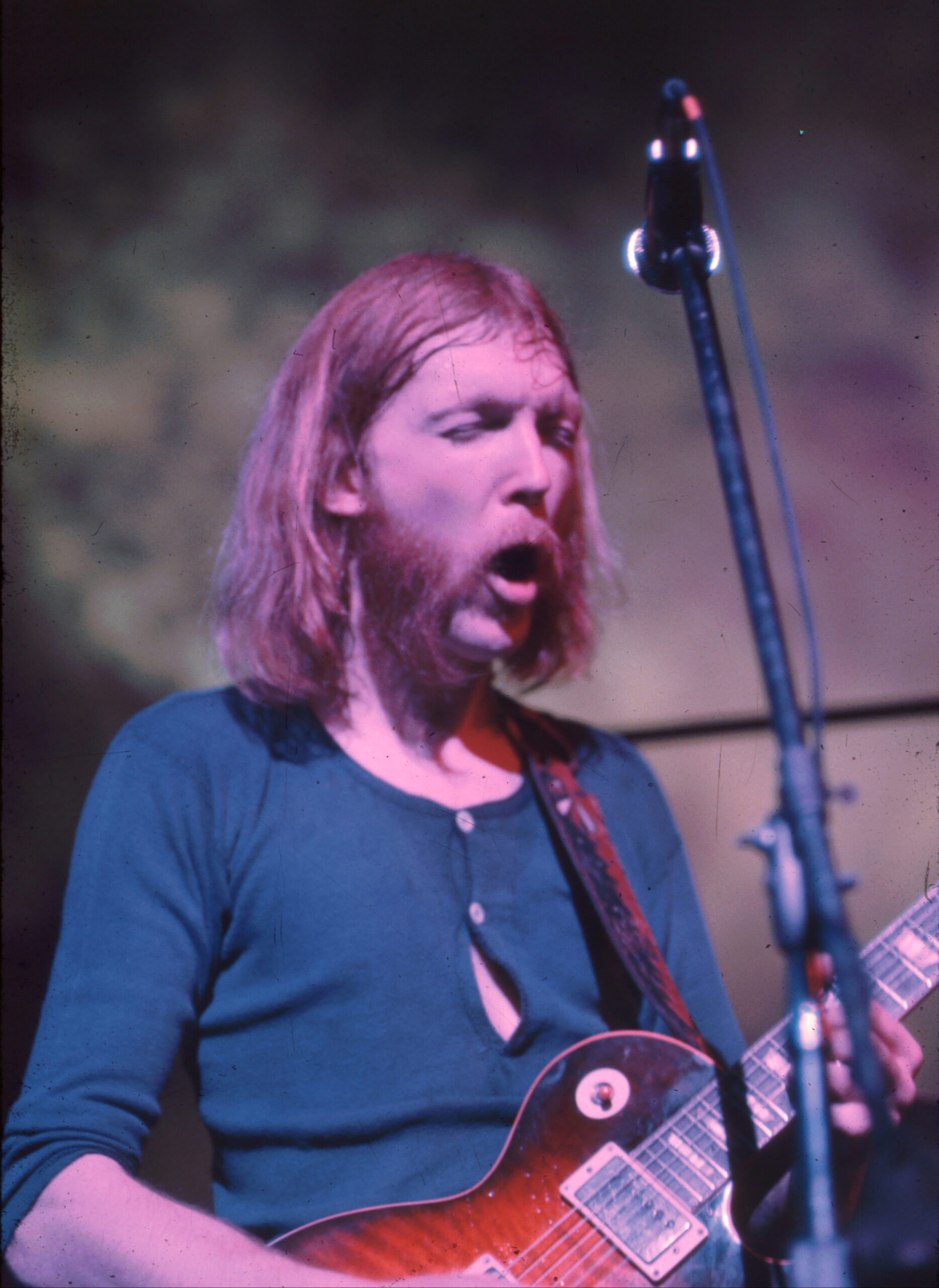
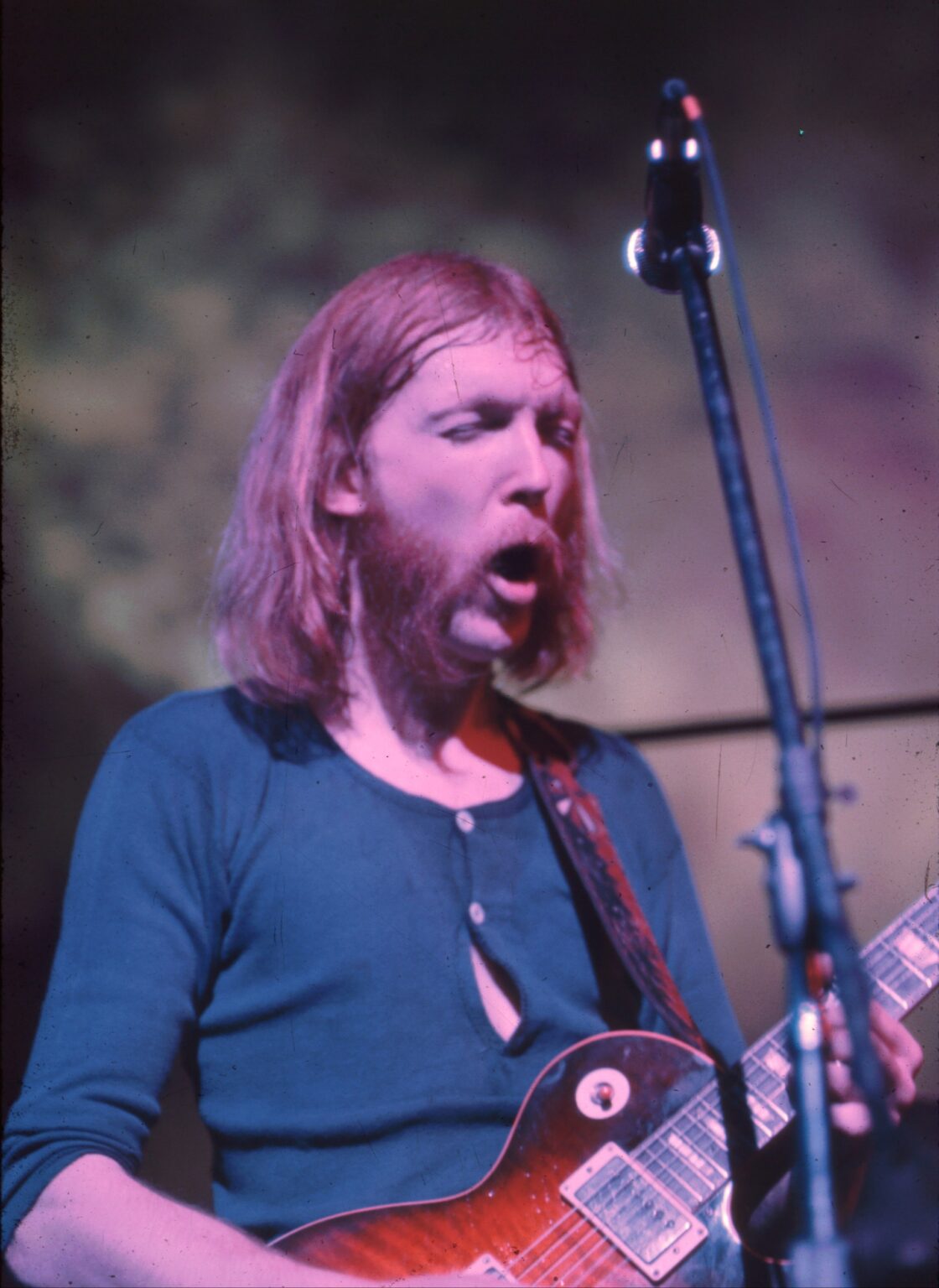
Ed Berman / Wikimedia Commons / CC BY 2.0
He poured the pills out of a Coricidin bottle, washed off the label, and started playing slide.
The Journey
Gregg Allman had an injured hand. He’d been in a motorcycle accident and was in pain, and he’d gotten a bottle of Coricidin cold medicine because it was the only thing that helped with the nerve damage. He left the bottle on the front porch and rang the bell, but Duane was angry with him about the injury and Gregg left. About two hours later, his phone rang.
“Baby brother, baby brother, get over here now!”
Duane had poured the pills out of the Coricidin bottle, washed off the label, and was using it as a slide to play along with the album track “Statesboro Blues.” “Duane had never played slide before,” Gregg later said, “but he just picked it up and started burnin’. He was a natural.”
The slide in the Coricidin cold medicine bottle — a small glass pharmacy bottle with a specific diameter that fit his ring finger perfectly, producing a specific bright, glassy tone on the guitar strings — became the most famous slide tool in rock history. Exact replicas are now manufactured for guitarists who want the same feel and sound. The original Coricidin bottle is no longer manufactured. The technique it enabled — Duane Allman’s electric slide guitar on “Statesboro Blues,” “Whipping Post,” “In Memory of Elizabeth Reed,” “Layla,” “Bell Bottom Blues” — is one of the highest achievements in guitar history.
He was twenty-four years old when he died. He had been playing slide guitar for approximately three years. In those three years, he had produced the most celebrated slide guitar recordings in rock history, collaborated with Eric Clapton on “Layla,” and performed the “At Fillmore East” concert that Rolling Stone ranked as one of the greatest live albums ever made.
He poured the pills out of a cold medicine bottle and started burnin’. He was a natural. And then he was gone.
Background: Nashville, Muscle Shoals, and the Birth of Southern Rock
Howard Duane Allman was born November 20, 1946, in Nashville, Tennessee. His father Willis Allman was killed when Duane was three years old. His mother Geraldine moved the family — Duane and his younger brother Gregg — to Daytona Beach, Florida. The brothers grew up there and developed their musical interests together; when their mother eventually bought Gregg a Silvertone guitar, the brothers would fight over it until their mother bought Duane his own — a 1959 Gibson Les Paul Junior.
He saw B.B. King perform at a concert in Nashville and told Gregg: “We got to get into this.” He left school to focus on guitar. The brothers formed early bands — The Escorts, The Allman Joys, Hour Glass — working their way from local Florida performances through a period in Los Angeles (Hour Glass recorded two albums for Liberty Records that satisfied neither the band nor the label) back to the South.
The crucial turn: Rick Hall of FAME Studios in Muscle Shoals, Alabama heard Duane play and brought him in as a session musician. The Muscle Shoals sessions — recording with Wilson Pickett (including a famous cover of “Hey Jude” with Duane’s guitar), Aretha Franklin, King Curtis, Herbie Mann, Boz Scaggs — established his reputation as one of the most expressive and technically remarkable guitarists in the American South. His session work at Muscle Shoals is the foundation on which the Allman Brothers Band was built.
He formed the Allman Brothers Band in 1969 in Jacksonville, Florida — Duane and Gregg Allman, Dickey Betts, Berry Oakley, Butch Trucks, Jai Johanny “Jaimoe” Johanson. The specific combination of Duane’s blues and jazz-inflected guitar vocabulary with Dickey Betts’s country-influenced melodicism, over the propulsive dual-drumming of Trucks and Jaimoe, produced the specific ABB sound that defined Southern rock.
He died October 29, 1971, at twenty-four, when his motorcycle collided with a peach truck on Macon, Georgia’s Inverness Avenue. The album Eat a Peach — released posthumously — was named partly as a sardonic reference to the peach truck that killed him.
Tone note: Miles Davis and John Coltrane were two of his stated influences. He said he listened to Davis’s Kind of Blue intently for two years. The jazz improvisation tradition — specifically the concept of extended melodic improvisation over harmonic movement, the idea of telling a complete musical story within a solo — is what separates Duane Allman’s slide playing from mere technique. The technical facility with the slide is one thing. The musical intelligence informing what he plays with that facility is another. The jazz tradition gave him the second. The Coricidin bottle gave him the tool. The combination produced something that hadn’t existed before.
The Rig: Duane Allman’s Guitars, Amps & Gear
Guitars: The Les Paul Trilogy
Duane’s first real guitar — the one his mother bought him when the brothers were fighting over Gregg’s Silvertone — was a 1959 Gibson Les Paul Junior. He used it from approximately 1961, playing the local Florida bands of his early career. He eventually gave it to Delaney Bramlett. When Bramlett showed him a red Les Paul Junior he’d bought from a pawn shop, Duane recognized a scratch on the back and realized it was his own guitar — which had passed through several hands before ending up in the pawn shop. It’s now owned by a Japanese collector named Kunio Kishida.
Fender Telecaster and Stratocasters — The Pre-Gibson Period
Before settling on Les Pauls, Duane worked through a series of Fender instruments:
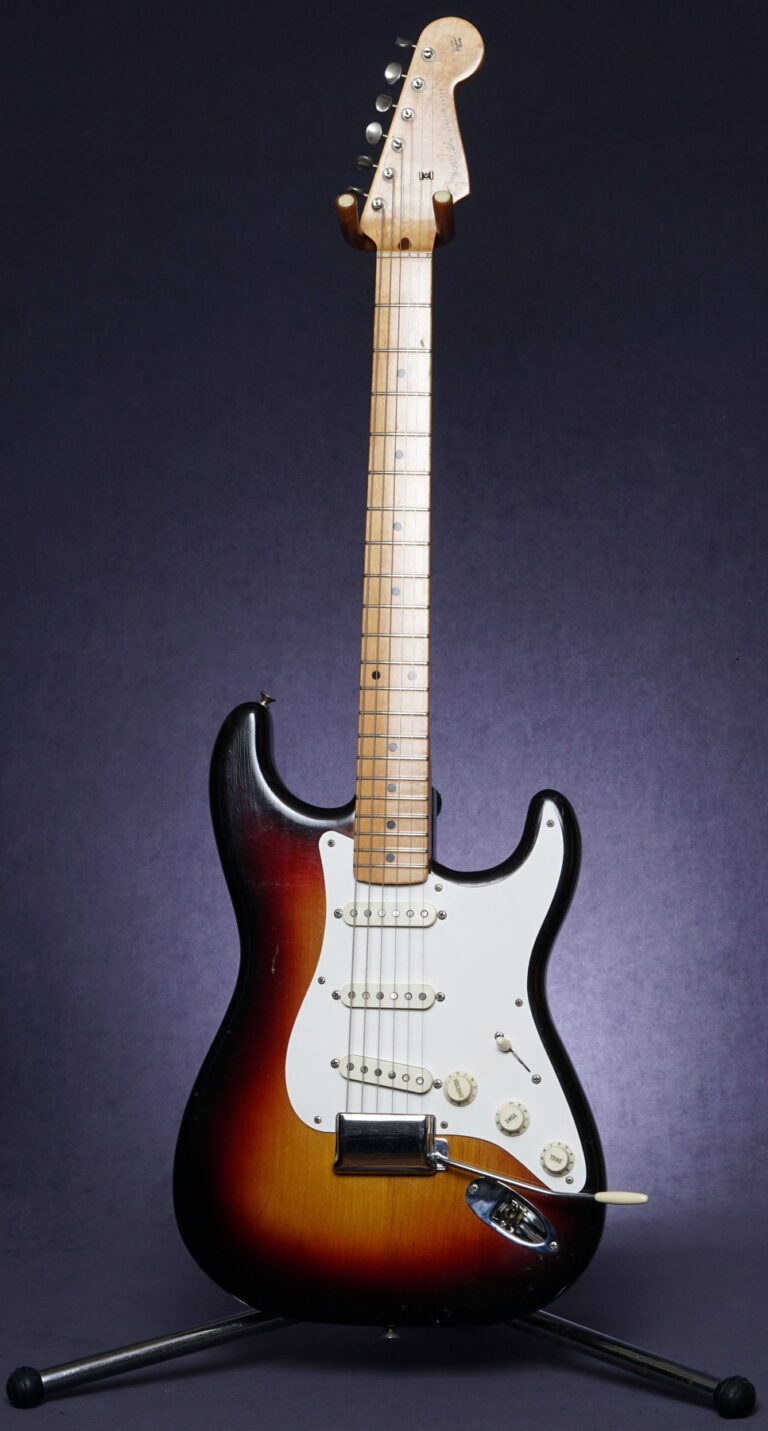
- Fender Telecaster (acquired ~1965) — Primary with The Allman Joys and Hour Glass; featured a late-1960s V-shaped Stratocaster neck; originally black pickguard, later replaced with white; had a Vox fuzz box installed directly on the guitar below the volume/tone controls
- 1956 Fender Stratocaster — Acquired through Florida guitar shop owner Jimmy Jewell; used briefly
- 1954 and 1961 Fender Stratocasters — The 1954 Strat was used on the Muscle Shoals sessions (now in the Hard Rock Cafe London Vault); the 1961 Strat for early session work overlapping with the ABB’s formation
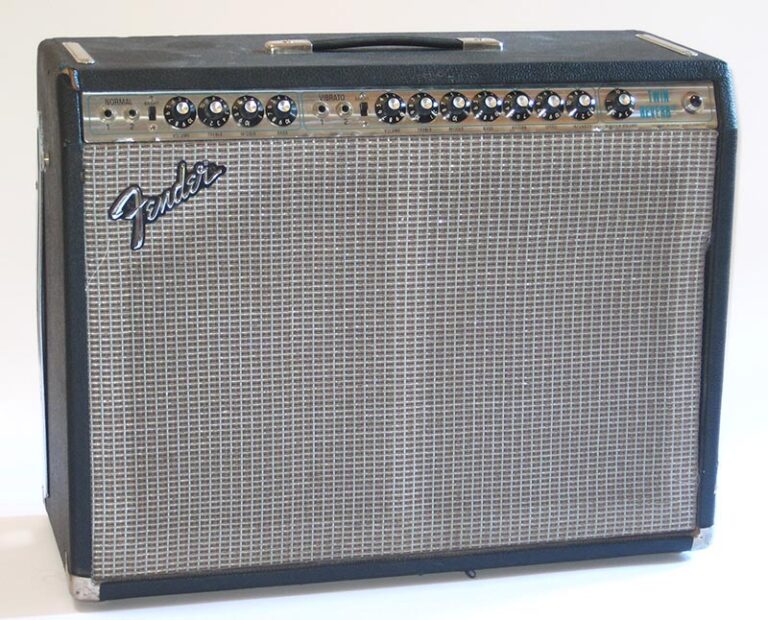
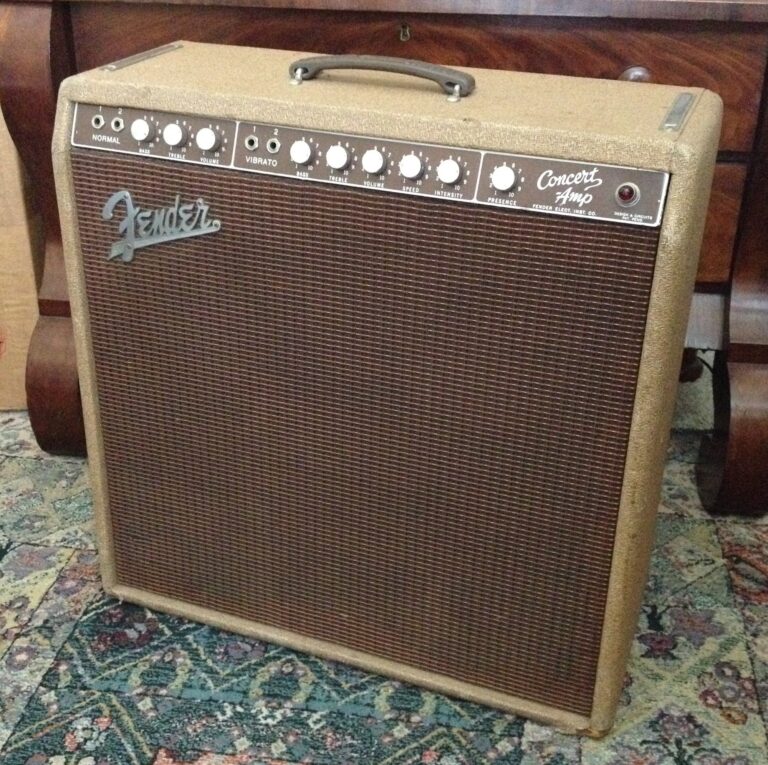
During his Muscle Shoals period, Duane preferred Fenders and Fender amps — the Twin Reverb was his favorite amplifier at this stage, and his brown Fender Concert 4×10 also appeared. The Muscle Shoals sessions used Fender instruments to produce the specific funky, Southern soul-blues tone that those recordings required.
In 1969, Duane wrote to his friend Holly Barr: “Dearest Polly, I got a Les Paul of my very own…Gregg’s here gigging with me and I got about the greatest band I ever did hear together and a Marshall amp and two drummers and I quit taking speed and I ha[ve]…”
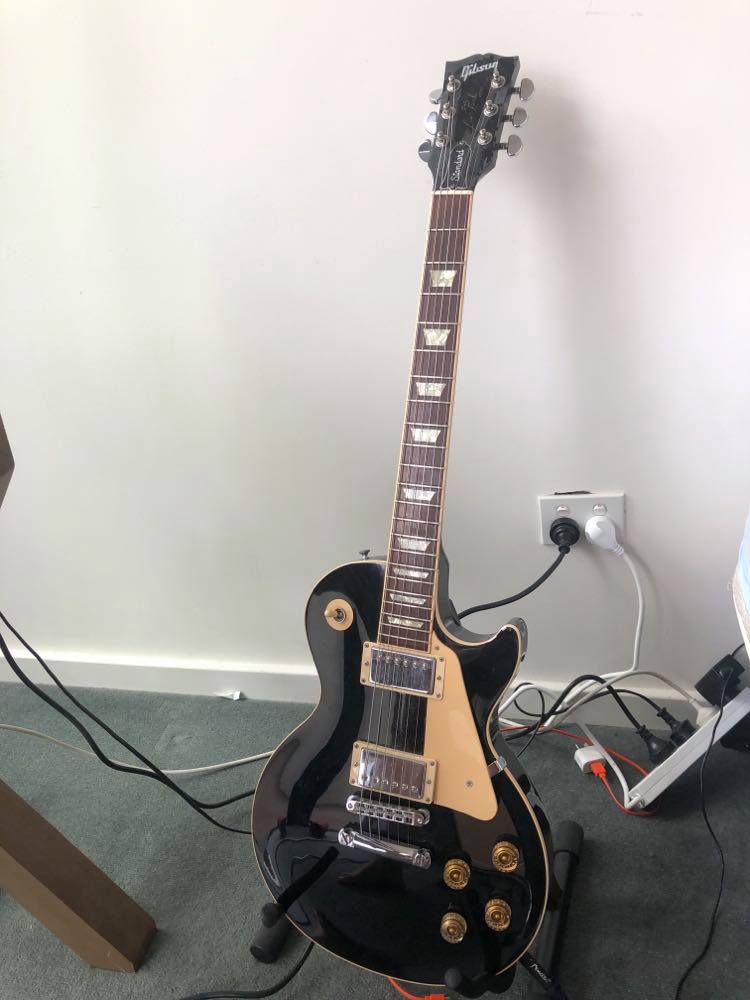
The Les Paul he was writing about was a 1957 Gibson Les Paul Standard Goldtop, purchased from Lipham Music Shop in Gainesville, Florida — the store where the Allman Brothers bought much of their gear. The guitar had no pickguard (which Duane preferred), two original PAF humbuckers, a wraparound bridge, and the specific warmth and sustain of the 1957 Goldtop’s construction.
This guitar was his primary instrument during the first year of the Allman Brothers Band and was used on the Layla sessions with Derek and the Dominos in August 1970 — the recording that produced “Layla,” “Bell Bottom Blues,” “Key to the Highway,” and the other tracks of what many consider the greatest rock album ever made.
In September 1970, Duane made the trade that would define the next phase of his career. The opening act at an Allman Brothers show in Daytona, Florida was a band called Stone Balloon. Their guitarist, Rick Stine, was playing a 1959 plain-top Cherry Burst Les Paul. Duane approached Stine after the show. His offer: the 1957 Goldtop, $200 cash, and a 50-watt Marshall head. One condition: he keeps the original PAF pickups from the Goldtop. The trade was made.
Roadie Kim Payne changed out the pickups from the Goldtop to the Cherry Burst in a Daytona, Florida hotel room. The older PAF pickups from the 1957 guitar went into the 1959 body. By the time of the Allman Brothers Band’s performance at the Fillmore East on September 23, 1970 — just weeks later — Duane was playing the cherry burst with the Goldtop’s PAFs installed.
The Goldtop, after various adventures, ended up at the Big House Museum in Macon, Georgia. Warren Haynes, Derek Trucks, and Vince Gill have borrowed it for live performances. It remains one of the most historically significant guitars in American rock.
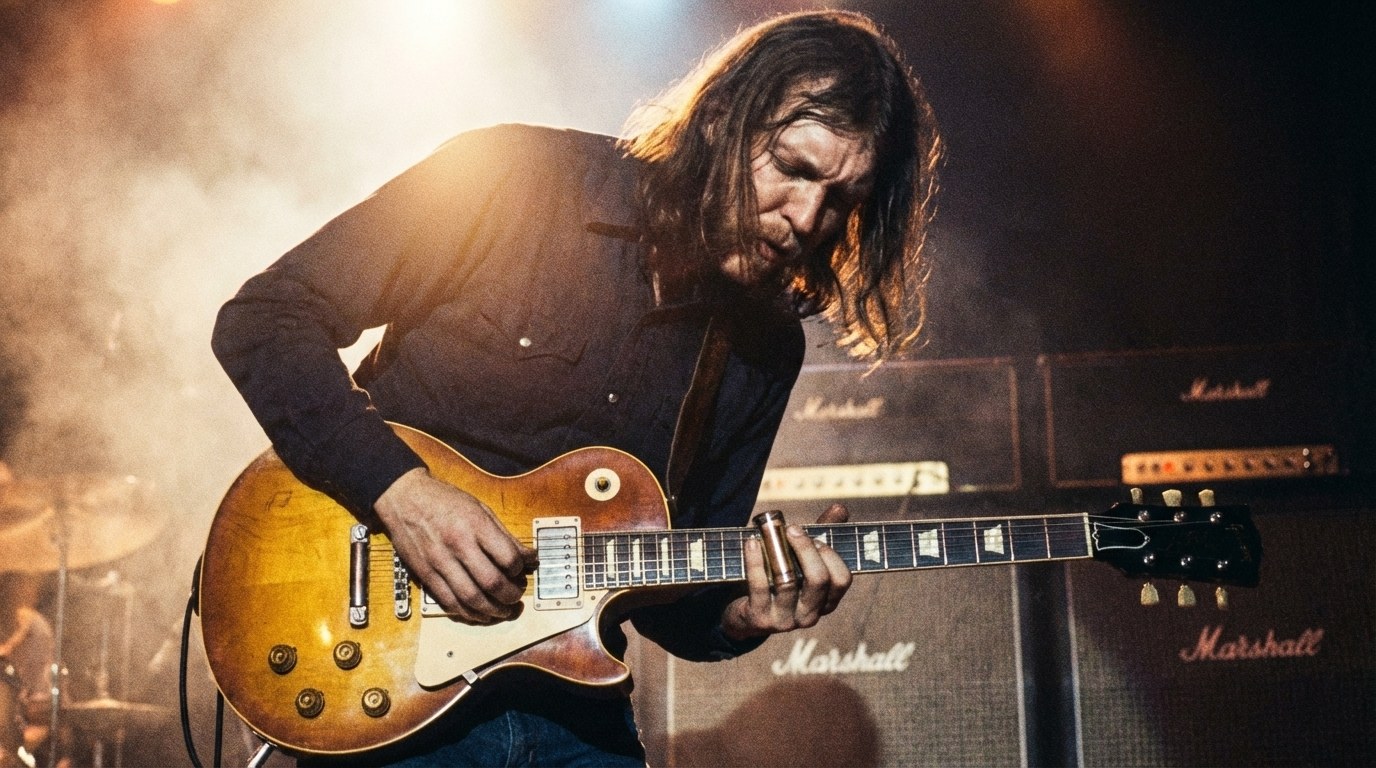
The guitar that appears on At Fillmore East — the March 1971 recording that Rolling Stone placed among the greatest live albums in history — is the 1959 Cherry Burst Les Paul acquired from Rick Stine, fitted with the PAF pickups from the 1957 Goldtop. The specific combination: 1959 Cherry Burst body (plain top, no pickguard) + 1957 PAF pickups = the most celebrated Les Paul in Southern rock history.
After Duane’s death, the guitar passed to Gregg, who traded it to road manager Twiggs Lyndon for a 1939 Ford Opera coupe. Lyndon re-fretted the guitar and had Duane’s name inlaid before presenting it to Duane’s widow on the graveside. The guitar subsequently went to Duane’s daughter Galadrielle, who remains the sole owner.
The guitar most often seen in photographs from the last months of Duane’s life was a 1959 Les Paul Standard Tobacco Burst that became known as “Hot Lanta” (after the ABB song). He acquired it in mid-1971 from Kurt Linhof — a guitar dealer and collector he met through Billy Gibbons of ZZ Top, who was opening for the Allman Brothers.
ZZ Top and the Allmans crossed paths in 1971. Billy Gibbons introduced Linhof to Duane: “If anybody can find you a guitar, this man can.” Duane’s negotiating terms became a running joke with the band: “I’ll pay you the cost of the guitar plus half… plus half of that!… plus half of that!!… plus half of that!!!” The guitar had a replacement headstock/peghead because the original had been broken and repaired. Despite this, it became his primary instrument in the final months of his life.
A 1968 Gibson Les Paul Custom — serial number 537837, with “Donna I Love U” carved into the back of the body by Duane, and the front signed by Gregg with a gold marker — also appeared in his collection. It sold at auction for approximately $50,000.
Dickey Betts gave Duane a 1961 Gibson SG in cherry red finish specifically for slide guitar work. The SG’s double-cutaway body allowed easier access to the higher frets that slide playing frequently required — the SG’s cutaway geometry is more accommodating of high-fret slide work than the Les Paul’s single-cutaway. Duane kept the SG tuned to open E for songs that required slide, meaning he could move between the Les Paul and the SG depending on whether a song required standard or slide playing.
On August 5, 1970, at the Schaefer Music Festival, Duane briefly played a Stratocaster that belonged to Delaney Bramlett — who had received it from George Harrison in 1969. This was the guitar that George Harrison had used in the Let It Be film and during the Abbey Road studio sessions. Bramlett owned it until 2003, when it was auctioned and Harrison’s widow Olivia purchased it for more than $470,000. The brief moment of Duane Allman playing George Harrison’s Abbey Road Stratocaster at a 1970 concert is documented in photographs.
Complete Guitar List (Key Instruments)
- 1959 Gibson Les Paul Junior — First guitar; given to Delaney Bramlett; recognized later in pawn shop by scratch; Japan collector
- Fender Telecaster (V-neck, Vox fuzz installed in body) — Allman Joys and Hour Glass
- 1954 Fender Stratocaster — Muscle Shoals sessions; now Hard Rock Cafe London Vault
- 1957 Gibson Les Paul Goldtop (PAF pickups) — ABB first year; Layla sessions Aug 1970; traded Sept 1970; Big House Museum
- 1959 Gibson Les Paul Cherry Burst (Goldtop’s PAFs installed) — At Fillmore East; acquired from Rick Stine; Galadrielle Allman’s possession
- 1959 Gibson Les Paul Tobacco Burst “Hot Lanta” — Final primary; acquired via Billy Gibbons/Kurt Linhof 1971; replacement headstock
- 1961 Gibson SG (cherry red, from Dickey Betts) — Slide guitar; tuned open E; double cutaway for high fret access
- George Harrison’s Abbey Road Stratocaster (brief loan, Schaefer 1970) — Most historically significant guitar he briefly played
Amps: The Marshall Bass 50 with JBL Speakers
Marshall 1987 Bass 50 — The Primary
Duane’s primary amplifier with the Allman Brothers Band was a Marshall Bass 50 (model 1987) — a 50-watt head that he purchased in 1969 alongside the 1957 Goldtop. He wrote about the purchase to Holly Barr the same day he wrote about the Les Paul. The Marshall Bass 50 was his constant amplifier from that point through his death — the same letter notes it was “present on his debut as well as the very last day of his life.”
The 50-watt specification was deliberate: Duane favored the 50-watt head over the 100-watt because it broke up earlier — “Duane favored a 50 watt which broke up earlier, giving Duane’s tone more of a singing quality even at lower volume settings.” The earlier power tube saturation of the 50-watt head suited his expressive, sustain-forward playing style.
The Marshall cabinets were modified: the standard Celestion “greenback” 25-watt speakers were replaced with JBL-D120 speakers. The JBL-D120’s character — cleaner, more extended high-frequency response, more efficient than the Celestions — produced a specific clarity that allowed Duane’s slide work to articulate precisely. The cabinets were also half-open-backed (not fully closed), further shaping the frequency response.
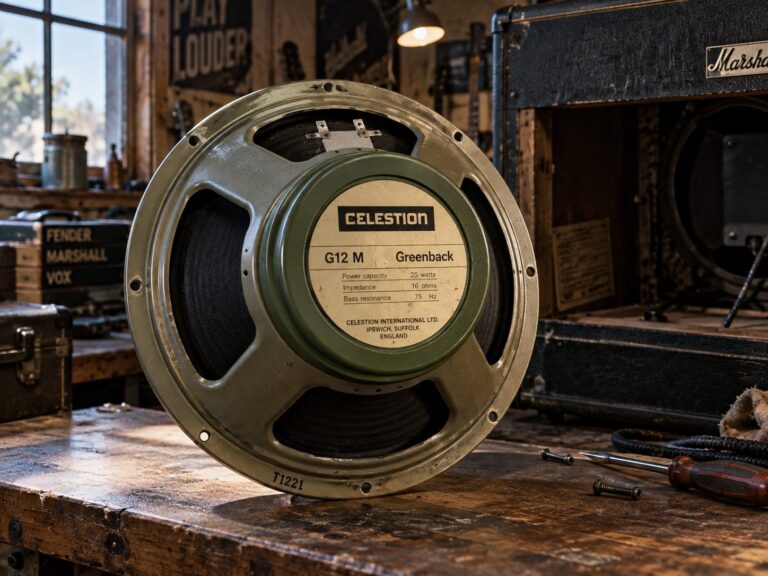
The result: more clarity, more articulation, less of the “creamy” quality that Clapton’s Celestion-loaded Marshalls produced — a specific transparent quality that suited the intricate slide work and jazz-influenced improvisation of the Allman Brothers’ live performances.
Earlier Amplifiers
- Fender Twin Reverb — His favorite in the early career and Muscle Shoals period; “Duane preferred the usage of Strats and Fender amps like the Twin Reverb”
- Fender Concert 4×10 (brown) — Used in early career alongside the Twin Reverb
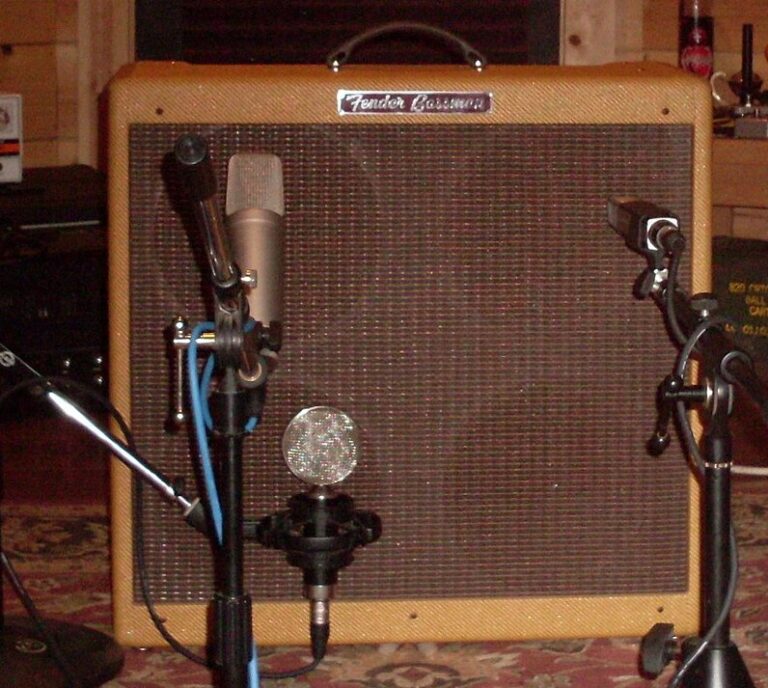
- Fender Bassman (with JBL speakers) — Used before the Marshall; friend Johnny Sandlin had a Bassman that Duane took to California; speakers replaced with JBLs when “going and not quite loud enough” for the volume the band was playing
- Super Beetle Vox amps — Used with Hour Glass; both Allman brothers had these during the LA period
- Marshall Lead Combo — Used alongside the Bass 50 heads
The Coricidin Bottle Slide — The Most Important “Gear” Decision
Duane Allman discovered slide guitar by accident when he poured the pills out of Gregg’s Coricidin cold medicine bottle and used it as a slide to play along with the “Statesboro Blues” album track. The Coricidin bottle’s specific qualities as a slide:
- Glass material: Glass produces a brighter, more bell-like tone than metal or ceramic slides; the specific glass of the Coricidin bottle had a particular brilliance
- Diameter: The specific size of the Coricidin bottle fit Duane’s ring finger precisely — producing the specific pressure and angle that his technique required
- Length: Short enough to allow the other fingers to function for fretting while the ring finger holds the slide
- Weight: Light enough for the specific control his playing required
He played slide on his ring finger — “like many other guitar players do” — with the remaining fingers available for muting and additional fretting. His slide technique was distinguished by its intonation precision (hitting exact pitches on the slide rather than the approximate pitches that less controlled slide players produce) and its vibrato (the specific width and speed that he applied to sustained slide notes, giving them their vocal quality).
For strings specifically used for slide: flat-wound strings (rather than the roundwound strings used for standard playing). Flat-wound strings have a smoother surface than round-wound; the slide moves more easily across flat-wound strings without the scraping sound that round-wound strings produce against glass. He left his strings long, uncurled at the tuning pegs — a preference confirmed by his wife and others close to him; “He liked to leave his strings long and curled up.”
The Coricidin bottle is no longer manufactured in its original form. Replica bottles — designed to match the original’s dimensions and glass character — are now produced by multiple manufacturers specifically for guitarists who want to replicate Duane’s slide approach.
Pedals: The Fuzz Face with Dead Batteries
Duane Allman was, by all accounts, virtually a no-pedals guitarist with the Allman Brothers Band — “reportedly the only stompbox he ever used was a Fuzz Face during his time as a session musician and into the early years and formation of the Allman Brothers Band.” His signal chain: guitar → Fuzz Face (when used) → Marshall Bass 50 → Marshall cabinet with JBL speakers. That was it.
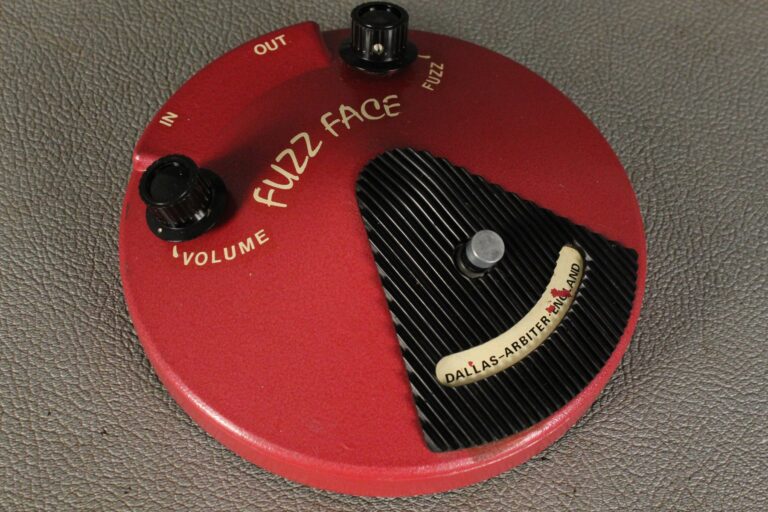
His specific Fuzz Face approach: he used old, run-down 9-volt batteries to power his Fuzz Face. The lower voltage produced by a depleted battery caused the Fuzz Face’s germanium transistors to operate below their design point — producing a warmer, softer fuzz character than a fresh battery would generate. This is the same principle that Ritchie Blackmore applied to his amplifier with the Variac: reducing operating voltage to produce a specific tonal character. Duane discovered it empirically; the dead battery produced a warmer sound, so he used dead batteries deliberately.
During his Fender/session period, he also had a Vox fuzz box installed directly in his Telecaster — below the volume and tone controls — rather than as a floor pedal. This integration of the fuzz effect into the instrument’s body is one of the most unusual instrument modifications in this series.
Open E Tuning — The Slide Setup
Duane tuned his slide guitar (the 1961 Gibson SG from Dickey Betts) to open E: E B E G# B E from low to high. Open E tuning means that all six strings open produce an E major chord — allowing the slide to produce major chords by placing it across all strings at any fret. The specific advantages of open E for Duane’s style:
- Major chords available at any fret without complex fingering
- Specific scale patterns available in the open tuning that don’t exist in standard
- Higher string tension than open D (equivalent tuning a step lower), producing a specific tone character
- The high E-string register accessible for the specific singing quality of his slide leads
Playing Style & Tone Philosophy: Jazz Intelligence Through the Blues Slide
Duane Allman’s guitar philosophy is the most jazz-influenced in the Southern rock tradition. He explicitly cited Miles Davis and John Coltrane as influences — musicians whose approach to improvisation as melodic storytelling over harmonic movement was the jazz tradition at its peak. He listened to Davis’s Kind of Blue for two years. The specific effect on his guitar playing: his solos tell complete stories, with beginning, development, climax, and resolution — the jazz improvisation model applied to blues-inflected rock guitar.
The Circular Picking Technique
Duane used “circular picking” — a specific picking motion that produces a softer, rounder attack than conventional straight-down-and-up alternate picking. The circular motion slightly softens the initial transient while maintaining clarity — producing the specific “bell-like” quality of his single-note lines. Combined with the JBL-loaded Marshall’s clarity, this technique produced the specific articulation that made his playing more transparent and more legible than many of his contemporaries.
The Volume Knob as Tone Control
Like B.B. King, Carlos Santana, and Jeff Beck — all of whom appear in this series — Allman used his Les Paul’s volume knob as a continuous dynamic and tonal control. Rolling back the volume produced a cleaner, warmer tone; advancing it drove the Fuzz Face and the Marshall harder. This continuous volume management, without any additional pedal-switching, produced the specific range of tones across his performances.
The Slide Precision
What distinguished Duane’s slide from other slide guitarists of his era — and from most subsequent slide guitarists — was intonation precision. He consistently hit exact pitches with the slide rather than approximating them, a skill that most slide players take years to develop and few achieve to his level. The specific precision came from his jazz absorption — jazz requires exact pitch; approximate pitch is unacceptable in that tradition. The precision he developed through jazz listening and internalization was applied to the blues slide tradition.
How to Sound Like Duane Allman
The Guitar
Gibson Les Paul Standard — 1959 Cherry Burst if possible; PAF humbuckers essential. For slide: a second guitar in open E tuning.
- Gibson Les Paul Standard (1959 vintage) — The authentic instrument; PAF pickups required for the specific warmth and clarity
- Gibson Les Paul Standard (current production with Burstbucker pickups) — Modern approach to PAF character
- Any Les Paul with original-specification PAF-voiced humbuckers
The Slide
A glass slide — Coricidin replica (available from multiple manufacturers) or any glass slide of similar diameter. Flat-wound strings on the slide guitar. Open E tuning.
The Amp
Marshall 50-watt head (no master volume — model 1987 or equivalent) through 4×12 cabinet with JBL-D120 speakers. Half-open-back cabinet configuration.
| Control | Setting | Notes |
|---|---|---|
| Volume | High (7–9) | 50-watt head breaking up naturally; earlier breakup than 100-watt Marshall |
| Treble | 6–7 | Present but not harsh; JBL speakers provide the top-end extension |
| Middle | 5–6 | Moderate; the JBL speakers’ clear midrange response doesn’t need amp mid boost |
| Bass | 5–6 | Controlled; the half-open-back cabinet reduces bass muddiness |
Budget vs Authentic
Budget:
- Guitar: Epiphone Les Paul Standard with upgraded pickups (Burstbucker or PAF equivalent)
- Amp: Marshall DSL50 or Origin 50 (50-watt for earlier breakup)
- Slide: Glass Coricidin replica (available for ~$20); open E tuning on second guitar
- Fuzz: Dallas Arbiter Fuzz Face Mini (germanium); use a run-down battery for the warm character
Authentic:
- Guitar: 1959 Gibson Les Paul Standard (or any vintage Burst with original PAFs)
- Amp: Marshall 1987 Bass 50 (50-watt, no master volume) through Marshall 4×12 with JBL-D120 speakers; half-open-back modification
- Slide: Original or high-quality Coricidin replica glass slide; flat-wound strings in open E
- Fuzz: Dallas Arbiter Fuzz Face (germanium) with deliberately run-down 9V battery
Influence & Legacy: The Slide That Changed Everything
Duane Allman’s influence on guitar playing is the influence of the slide master — someone who took an existing technique (electric slide guitar) and elevated it to a level of expressiveness and precision that redefined what the technique could accomplish in a rock context. Before Duane, slide guitar in rock was a specific blues-derived approach associated with specific players. After Duane, slide guitar was a complete expressive vocabulary capable of anything the guitar could do.
The documented connections:
- Eric Clapton — The Layla sessions; Clapton had assembled Derek and the Dominos but needed something more; Duane walked into the studio and Clapton recognized the sound immediately. The slide guitar on “Layla” and “Bell Bottom Blues” — the most celebrated slide guitar in rock history — is Duane’s specific contribution to a recording that Eric Clapton has called his most important work
- Derek Trucks — The most direct inheritor of the Allman slide tradition; took over Duane’s literal guitar slot in the Allman Brothers Band and plays with the same open E tuning, the same jazz-inflected improvisation model, and the same precision. Trucks has borrowed the actual 1957 Goldtop for live performances
- Warren Haynes — Took over Allman Brothers Band’s lead guitar role; has borrowed the actual Goldtop for live performances; maintains the tradition while adding his own Blues Rock vocabulary
- The Southern rock tradition — The Allman Brothers Band’s founding of the Southern rock genre — Lynyrd Skynyrd, Marshall Tucker Band, ZZ Top, Wet Willie — absorbed and extended the specific approach Duane established
- Coricidin bottle replicas — The fact that manufacturers now produce replicas of a medicine bottle because of its use as a slide guitar tool is the most unusual piece of gear legacy in this series
- The At Fillmore East recording — The specific performance document; Rolling Stone ranked it among the greatest live albums; it demonstrates that extended improvisation in a rock context — without any commercial concession — was viable at the highest level
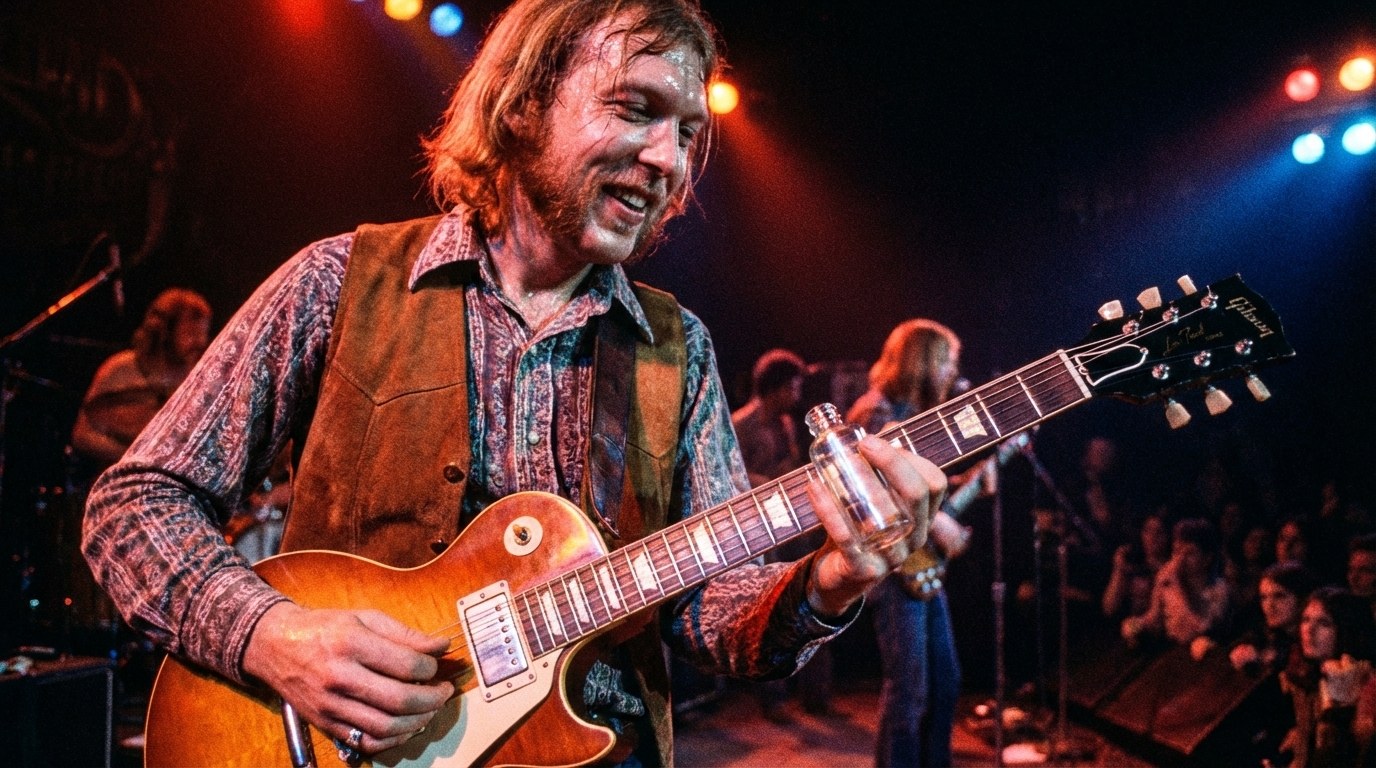
He poured the pills out of a Coricidin bottle. He played the 1957 Goldtop with the PAF pickups through the 50-watt Marshall with JBL speakers. He traded the Goldtop for the 1959 Cherry Burst, keeping only the PAFs. He used dead batteries in the Fuzz Face for warmth. He left his strings long and curled up at the tuning pegs. He listened to Miles Davis and John Coltrane for years and played their musical intelligence through a glass slide on a Gibson Les Paul.
He was twenty-four years old when he died. The recording career lasted five years. The greatest slide guitar in rock history, produced in five years, by a man who had never played slide before he poured the pills out of his brother’s cold medicine bottle.
“He just picked it up and started burnin’. He was a natural.”
Tone note: The PAF pickups from the 1957 Goldtop in the 1959 Cherry Burst body. Roadie Kim Payne changed them in a hotel room in Daytona, Florida, the night of the trade. The combination — older PAF pickups (lower output, greater clarity and presence) in the 1959 body — produced the specific character of the At Fillmore East recordings. Every note on that album, every slide phrase on “Statesboro Blues” and “In Memory of Elizabeth Reed,” comes through those specific pickups. They are in Galadrielle Allman’s possession, in the guitar her father traded a Marshall amp and $200 cash and his Goldtop to acquire. That’s the guitar. Those are the pickups. The music they produced is immeasurable.
He poured the pills out of a cold medicine bottle and learned slide guitar in an afternoon. He traded his 1957 Goldtop for a 1959 Cherry Burst, keeping only the PAF pickups. He played the Fillmore East in March 1971. He played on Layla in August 1970. He recorded the sessions that made the most celebrated live album in Southern rock history. He was twenty-four years old.
The Coricidin bottle. The Marshall 50-watt with JBL speakers. The Fuzz Face with dead batteries. The open E tuning on the SG. The circular picking. The jazz intelligence through the blues slide.
“Baby brother, baby brother, get over here now!”
He was a natural. And then he was gone.
For the guitarist who was present at the Layla sessions and whose Stratocaster and Marshall approach Duane’s guitar complemented perfectly on “Bell Bottom Blues” and “Layla,” check our complete guide to Eric Clapton’s guitars and gear .
And for the guitarist who most directly inherited Duane’s slide tradition and who has borrowed the actual Goldtop Les Paul for live performances — check our complete guide to Derek Trucks’s guitars and gear.
For the guitarist from the same Southern rock tradition who played alongside Duane and who continues the Allman Brothers Band legacy — don’t miss our complete guide to Warren Haynes’s guitars and gear.
FAQ: Duane Allman Guitars & Gear
How did Duane Allman learn to play slide guitar?
By accident. Gregg Allman had a bottle of Coricidin cold medicine for nerve pain from a motorcycle injury. He left it on the porch for Duane and left. About two hours later Duane called Gregg: “Baby brother, baby brother, get over here now!” Duane had poured the pills out of the Coricidin bottle, washed off the label, and was using it as a slide to play along with the “Statesboro Blues” album track. “Duane had never played slide before,” Gregg later said, “but he just picked it up and started burnin’. He was a natural.” The Coricidin bottle — a small glass pharmacy bottle that fit his ring finger precisely — became his slide for the rest of his career, producing a specific bright, glassy tone on guitar strings. Replica Coricidin bottles are now manufactured specifically for guitarists who want the same feel and sound.
What was the Les Paul trade story?
In September 1970, the Allman Brothers were playing in Daytona, Florida. The opening act was a band called Stone Balloon, whose guitarist Rick Stine was playing a 1959 plain-top Cherry Burst Les Paul. Duane wanted it. His offer: his 1957 Gibson Les Paul Goldtop, $200 cash, and a 50-watt Marshall head. One condition: he keeps the original PAF pickups from the Goldtop. Stine accepted. Roadie Kim Payne swapped the pickups from the Goldtop to the Cherry Burst in a Daytona hotel room that night. By the Fillmore East performance on September 23, 1970 — weeks later — Duane was playing the 1959 Cherry Burst with the 1957 Goldtop’s PAF pickups installed. The guitar that plays on the At Fillmore East recordings is that specific combination: 1959 body, 1957 pickups.
What amplifier did Duane Allman use?
A Marshall 1987 Bass 50 (50-watt head) through Marshall 4×12 cabinets modified with JBL-D120 speakers. The cabinets were half-open-backed. He chose the 50-watt head specifically because it broke up earlier than the 100-watt — giving his playing a “singing quality even at lower volume settings.” The JBL-D120 speakers provided cleaner, more articulate high-frequency response than the standard Celestion Greenback speakers, allowing his slide work to articulate precisely. He purchased the Marshall in 1969 alongside the 1957 Goldtop — writing about both in the same letter to his friend Holly Barr. It remained with him until his death.
How did Duane Allman use the Fuzz Face differently?
He used deliberately old, run-down 9-volt batteries to power it. The lower voltage from a depleted battery caused the Fuzz Face’s germanium transistors to operate below their design point — producing a warmer, softer fuzz character than a fresh battery generates. This was not accidental or convenient: he specifically used dead batteries because he believed they produced a warmer sound. This is the same general principle as Ritchie Blackmore’s Variac on the Marshall — reducing operating voltage to change the circuit’s character. Duane discovered it empirically; the dead battery produced the tone he wanted, so he used dead batteries deliberately. He was reportedly the “only stompbox he ever used” with the Allman Brothers Band.
What was Duane Allman’s slide setup?
A glass Coricidin cold medicine bottle on his ring finger, playing in open E tuning (E B E G# B E from low to high) on his 1961 Gibson SG cherry red — given to him by Dickey Betts specifically for slide work. He used flat-wound strings on the slide guitar (smoother surface for the slide, reducing scraping sound). The SG’s double-cutaway body allowed easier access to high frets that slide playing requires. For intonation: he was distinguished by hitting exact pitches with the slide rather than approximating them — a precision he attributed to two years of intensive listening to jazz musicians Miles Davis and John Coltrane, whose harmonic precision he applied to the blues slide tradition.
What was Duane Allman’s role on the Layla album?
Eric Clapton had assembled Derek and the Dominos for the Layla sessions, but something was missing. Duane walked into the studio after a concert encounter, played for the band, and was immediately invited to join the sessions as co-lead guitarist. His slide guitar on “Layla,” “Bell Bottom Blues,” “Key to the Highway,” and other tracks is considered the essential complement to Clapton’s guitar work — Clapton has called the recordings his most important work, and Duane’s contribution is inseparable from that assessment. The specific instruments: the 1957 Goldtop (he traded it to Rick Stine shortly after the Layla sessions in August-September 1970), through the Marshall Bass 50 with JBL speakers. Clapton recognized Duane’s playing as something he hadn’t heard before and needed to capture on record.
How do I get Duane Allman’s slide guitar tone?
Glass slide (Coricidin replica) on ring finger, playing in open E tuning (E B E G# B E). Flat-wound strings on the slide guitar. 1961-style Gibson SG or any guitar with double-cutaway access to high frets. For the amp: Marshall 50-watt head (no master volume) through 4×12 with JBL-D120 speakers; set at working volume for natural tube breakup. For the standard electric tone: Gibson Les Paul with PAF-voiced humbuckers into the same Marshall setup; Dallas Arbiter Fuzz Face (germanium) with a partially discharged battery for warmth. The essential technique element: precision intonation with the slide — every note must land exactly on pitch, not approximately. This requires slow, patient practice with a tuner until the slide position for each pitch becomes instinctive.
Image credits
- Top image: Ed Berman / Wikimedia Commons / CC BY 2.0
- Fender Stratocaster: Lightburst, Wikimedia Commons, CC BY-SA 4.0.
- Fender Twin Reverb: Micahmedia, Wikimedia Commons, CC BY 3.0.
- Celestion G12M Greenback 12-inch Guitar Speaker: GuitarGangsters AI-generated reference illustration, not a photograph.
- Dallas Arbiter Fuzz Face: sploshette, Wikimedia Commons, CC BY 2.0.
- Duane Allman live: Ed Berman, Wikimedia Commons, CC BY 2.0.
- Fender Bassman: Roadside Guitars, Wikimedia Commons, CC BY-SA 2.0.
- Duane Allman (illustration 2): GuitarGangsters AI-generated reference illustration, not a photograph.
- Duane Allman (illustration 1): GuitarGangsters AI-generated reference illustration, not a photograph.
- Fender Concert: Centervolume, Wikimedia Commons, CC BY-SA 4.0.