Euronymous (Mayhem) Guitars & Gear: The Complete Guide to the Founder of Norwegian Black Metal’s Rig
Øystein “Euronymous” Aarseth was twenty-five years old when he was murdered on August 10, 1993, at his apartment in Oslo. He had been the guitarist and primary architect of Mayhem since co-founding the band in 1984 at age sixteen, had run the Helvete record shop that served as the gathering point of the Norwegian black metal scene, had established Deathlike Silence Productions as the primary label for early Norwegian black metal recordings, and had played the guitar on the recordings that would eventually be compiled and released as De Mysteriis Dom Sathanas (1994) — the album that, more than any other single recording, defined what Norwegian black metal was. He had a Gibson Les Paul sunburst guitar, a 1976 or 1977 Marshall JMP Model 1987 MkII 50-watt amp head, a Boss HM-2 Heavy Metal distortion pedal, and a Boss SD-1 Super Overdrive to push the HM-2 further. These were the tools of the founding of a genre. They were modest tools — not expensive vintage guitars, not boutique amplifiers, not extensive pedal collections. They were what was available in Norway in the late 1980s and early 1990s, when the scene was emerging from very limited means, and they produced, in combination, one of the most influential sounds in extreme metal history. The gear was not the point. The vision was the point. The gear served the vision well enough.
This article is about the music and the instruments that made it. The Norwegian black metal scene’s history includes events — murders, arson, and other violence — that are matters of public record and have been extensively documented in journalism and books including Michael Moynihan and Didrik Søderlind’s Lords of Chaos (1998). These events are part of the historical context of the music; they will be treated factually and without glorification or condemnation beyond what accuracy requires. The focus here is on Euronymous as a guitarist and as the architect of a musical approach that influenced subsequent extreme metal profoundly and specifically. His biography was cut short at twenty-five; his musical influence has not been.
Øystein Aarseth was born on March 22, 1968, in Surnadal, Møre og Romsdal, Norway. He co-founded Mayhem in 1984, initially using the stage name “Destructor” before adopting “Euronymous” (from the Greek underworld spirit Eurynomos). He was Mayhem’s only constant member from the band’s formation until his death. He opened the Helvete (Norwegian for “Hell”) record shop in Oslo in 1991, establishing it as the gathering point of the Norwegian black metal scene. He ran Deathlike Silence Productions, which released recordings by Mayhem, Burzum, Merciless, and Abruptum. He was murdered on August 10, 1993. De Mysteriis Dom Sathanas, featuring his guitar recordings alongside vocals by Attila Csihar (replacing the band’s previous vocalist Dead, who had died in 1991) and bass by Varg Vikernes (his murderer), was released posthumously in 1994.
Background: Surnadal, Mayhem’s Formation, Helvete, Deathlike Silence Productions, The Sound of Norwegian Black Metal
Mayhem’s specific position in black metal history is as the band that codified the Norwegian black metal sound — the specific combination of extremely distorted, trebly guitar, blast-beat drumming, shrieked vocals, and the deliberately lo-fi recording approach that made the music sound simultaneously primitive and terrifying. The specific recording aesthetic that Mayhem established — which was partly a deliberate choice and partly a function of limited recording budgets — influenced every subsequent Norwegian black metal recording: the raw, hissing, high-gain guitar sound of Deathcrush (1987), of Live in Leipzig (1993), and ultimately of De Mysteriis Dom Sathanas became the tonal template for the genre.
Euronymous’s specific role in establishing this sound was central. His guitar playing — tremolo-picked, extremely distorted, with the specific HM-2 + SD-1 + Marshall combination that became the tonal template of Norwegian black metal — was both a technical approach (the tremolo-picking technique that creates the characteristic “buzzing” wall of guitar sound) and an aesthetic choice (the deliberate rejection of the cleaner, more precise approach of American thrash metal in favor of something more chaotic, more ambient, more atmospheric). The resulting sound influenced Darkthrone’s shift from death metal to black metal, informed the approach of Emperor, Immortal, and dozens of other bands, and continues to define the sonic character of orthodox black metal forty years later.
His role as a scene organizer — through Helvete and Deathlike Silence Productions — was as important as his role as a musician. He mentored younger musicians (including Ihsahn and Samoth of Emperor, who at various times lived at or frequented Helvete), established the infrastructure (record label, shop) that made the scene commercially viable at a minimal level, and created the specific social environment that the scene required to cohere. The guitarist and the entrepreneur were the same person, operating simultaneously.
The specific difficulty of his story is that the same scene he helped create also produced the church burnings and murders that are part of its documented history. These events were real and had real victims. They are documented historical facts. Their relationship to the music — whether the music caused them, whether they were expressions of the same ideology that generated the music, whether they were criminal behaviors that happened to occur within a music scene — is a matter of ongoing scholarly and journalistic debate that this guide does not resolve. What is not debatable is that Euronymous was murdered and that his guitar recordings remain influential.
The Rig: Euronymous’s Guitars, Amps, and Effects
Guitars
Gibson Les Paul Sunburst (Primary Guitar, Documented in Multiple Photos): Euronymous’s primary and most consistently documented electric guitar was a Gibson Les Paul in sunburst finish. The Equipboard documentation: “Euronymous played a sunburst Gibson Les Paul guitar, which can be seen in many pictures of him playing.” The Gibson Les Paul’s specific character — warm, thick, sustaining, with the particular harmonic richness of its mahogany body and maple top — interacted with the Boss HM-2’s specific distortion to produce the specific tonal character of his recorded and live guitar sound. The Les Paul’s inherent warmth and sustain gave the heavily distorted HM-2 signal a density that a thinner-bodied guitar would not produce. The sunburst finish specifically placed the instrument visually in the vintage Les Paul tradition, although the specific vintage of Euronymous’s instrument is not documented with precision. In Norway in the late 1980s and early 1990s, expensive vintage instruments were difficult to acquire; his Les Paul was likely a production instrument rather than a rare vintage collectible.
The musicstrive.com account provides useful context: “In Norway in the 1980s, expensive guitars were hard to come by. Mayhem, like most of their heavy-metal contemporaries, used inexpensive guitars for years.” The Les Paul was accessible relative to the highest-priced boutique instruments; the specific model (Standard, Custom, or another variant) is not documented with certainty in available sources. Its consistent presence in photographs establishes it as his primary performance instrument.
The Lo-Fi Aesthetic as Intentional Choice: An important aspect of understanding Euronymous’s guitar approach is understanding that the specific raw, hissing, distorted character of early Mayhem recordings was not purely a limitation imposed by limited budget and equipment — it was also an aesthetic choice. The deliberate rejection of the clean, precise sound of American thrash metal (which was the sonic standard for extreme metal in the mid-to-late 1980s when Mayhem was forming) in favor of something rawer, more chaotic, and more atmospheric was a specific artistic decision. The equipment was what was available; the specific way it was used, the specific tonal character that the HM-2 + SD-1 + Marshall combination produced, was embraced as the appropriate sound for the music Mayhem was making.
Amps
Marshall JMP Model 1987 MkII 50-Watt Super Lead (1976-77 Vintage — Primary Amplifier): Euronymous’s documented primary amplifier is a 1976 or 1977 Marshall JMP Model 1987 MkII Super Lead — a 50-watt vintage Marshall head from the hand-wired period preceding Marshall’s transition to printed circuit board construction. The Equipboard documentation is specific: “Euronymous used to use a 1976 or 1977 Marshall Model 1987 JMP MK II 50-watt amp head. The white threading, the switches, and the chrome plated jacks are clear giveaways.” A vintage Marshall JMP 1987 — the 50-watt version of the original Super Lead design (the 100-watt version is the 1959) — is a naturally high-gain amplifier by the standards of the era but was not the ultra-high-gain amp that modern metal guitarists use. The specific character of the 1976-77 JMP: a warm, complex tube saturation with the specific Marshall midrange presence, responsive to picking dynamics, with the natural compression of a 50-watt EL34-based power section. Running the Boss HM-2 into this amp provided the additional gain staging that the Marshall’s preamp alone could not achieve at manageable volumes.
The alternative documentation — from the Alternative History Fandom source — mentions “a slightly modified 1981 Marshall Super Lead tube amp,” placing the amplifier in a slightly different year. Whether the specific Marshall used was 1976-77 or 1981, the general character is the same: a vintage Marshall Super Lead of the JMP era, run at high volume, providing the specific British tube character that became the foundational amplifier tone of Norwegian black metal.
Effects
Boss HM-2 Heavy Metal Distortion (Primary Distortion, The Norwegian Black Metal Pedal): The Boss HM-2 Heavy Metal — a discontinued Boss compact distortion pedal produced from 1983 to 1991 — is the pedal most specifically associated with the Norwegian black metal tonal tradition, and Euronymous’s use of it was foundational to that association. Euronymous used to gain-stack his guitar signal with the Boss SD-1 Super Overdrive. The Super Overdrive does not come in black, but its distinctive yellow chassis can be seen in countless photos of Mayhem’s early, chaotic live gigs.
The Boss HM-2’s specific tonal character, when all four controls (Level, Color 1, Color 2, Distortion) are turned to maximum — as was standard in the Norwegian black metal approach — produces a specific wall of high-frequency, saturated distortion that has been described as “the sound of a chainsaw” and that provides the specific trebly, buzzing, wall-of-noise guitar character that defines the Norwegian black metal aesthetic. The pedal was discontinued in 1991, precisely as the Norwegian black metal scene was hitting its stride; the resulting demand for used HM-2 units from black metal guitarists worldwide subsequently made the pedal one of the most sought-after discontinued Boss models.
Boss SD-1 Super Overdrive (Gain Boost for HM-2, Yellow Chassis in Photos): The Boss SD-1 Super Overdrive — a mild-to-moderate overdrive pedal based on asymmetric clipping — was used by Euronymous to push the Boss HM-2 further into saturation. Running the SD-1 into the HM-2 (rather than the HM-2 into the SD-1) stacks the two drive stages, increasing both the gain level and the harmonic complexity of the combined distortion character. The SD-1’s yellow chassis in “countless photos of Mayhem’s early, chaotic live gigs” provides photographic documentation of its specific placement in the signal chain. This SD-1 → HM-2 → Marshall combination became one of the most widely attempted black metal guitar tones.
Ibanez Tube Screamer (Additional Drive, Equipboard Documented): An Ibanez Tube Screamer appears in Equipboard’s documentation of Euronymous’s gear — “Euronymous played a sunburst Gibson Les Paul guitar… and used an Ibanez Tube Screamer pedal as well as another distortion pedal.” The Tube Screamer’s specific mid-push character, when stacked into the HM-2 chain, adds the additional midrange presence that the HM-2’s inherently scooped character can lack. The three-pedal chain (TS + SD-1 + HM-2, or in some configurations SD-1 + HM-2) represents the full gain staging of his documented setup.
Arion SMM-1 Metal Master Distortion (Documented Secondary Distortion): The Arion SMM-1 Metal Master — a Japanese-made budget distortion pedal — is documented in Equipboard: “Euronymous used the Arion SMM-1 Metal Master distortion pedal in his setup, placing it before an Ibanez Tube Screamer and after a Marshall Plexi.” The Arion SMM-1 is an inexpensive Japanese distortion unit with a similar frequency character to the Boss HM-2 — a high-gain, treble-forward distortion appropriate for the early black metal approach. Its use alongside the HM-2 and the Tube Screamer reflects the gain-stacking approach that was characteristic of Euronymous and early Mayhem: multiple drive stages combined to produce the maximum possible saturation and the specific buzzing character of the Norwegian black metal guitar sound.
Boss DD-3 Digital Delay (Freezing Moon Recording): “This photo by a Facebook page dedicated to Mayhem collectibles shows the Boss DD-3 pedal that Euronymous used when recording the track ‘Freezing Moon.'” “Freezing Moon” — one of the most celebrated Mayhem compositions, recorded for De Mysteriis Dom Sathanas — used a Boss DD-3 Digital Delay for the specific echo character of certain passages. The DD-3’s standard digital delay character added a spatial dimension to the guitar texture of the recording.
Playing Style & Tone Philosophy
Euronymous’s playing style was built on the tremolo-picking technique that defines the sonic character of second-wave black metal guitar: rapidly repeating single notes or simple chord fragments at very high speed on a single string, creating a dense, buzzing texture that is simultaneously melodic (the notes are there) and atmospheric (the speed of repetition and the distortion combine to create a wall of sound rather than individual discrete notes). This technique, combined with the specific HM-2 + Marshall tonal character, produced the specific “buzzing chainsaw” guitar sound that Norwegian black metal inherited from Euronymous and that has been replicated by countless subsequent bands.
His approach to soloing — which appears in the Mayhem recordings but is not the primary focus of his guitar work — reflects the black metal approach to the solo as atmospheric event rather than technical demonstration. Solos in black metal are relatively uncommon and tend to be brief, dissonant, and more focused on creating a specific emotional atmosphere than on demonstrating technique. Guitar World’s description of black metal guitar — “the music emphasizes atmosphere over technicality” — captures the specific value system that distinguished the Norwegian black metal approach from American thrash metal’s technical focus.
His tone philosophy is the lo-fi philosophy: the right sound for the music, achieved with whatever tools are available, without concern for expensive vintage instruments or prestigious amplifiers. The Gibson Les Paul was the guitar he could acquire. The Marshall JMP was the amplifier he could find. The Boss HM-2 was the distortion pedal that produced the specific sound he was seeking. None of these choices were made from a position of extensive resources; they were made from a position of limited resources applied intelligently to a specific sonic goal.
How to Sound Like Euronymous / Mayhem
Guitar: A Gibson Les Paul or similar humbucker-equipped guitar — the sunburst Les Paul’s specific combination of warmth and sustain interacted with the HM-2 in specific ways that single-coil guitars don’t replicate. Any Les Paul Standard or equivalent (humbucker, mahogany body, maple top) provides the authentic foundation.
Amp: A vintage Marshall head from the JMP era (1973-1981) — the 50-watt 1987 or the 100-watt 1959 Super Lead. Modern equivalents include the Marshall JCM800 or JCM2000 for the Marshall character, though the specific vintage JMP warmth is slightly different from these later designs.
Amp Settings (Marshall JMP / Vintage Super Lead):
| Control | Setting (0–10) | Notes |
|---|---|---|
| Volume/Gain | 7–10 | Pushed — the Marshall at high volume provides the tube character |
| Bass | 3–4 | Low — the HM-2’s character is inherently treble-forward |
| Mid | 5–6 | Present — the Marshall midrange adds the British character |
| Treble | 7–8 | High — the trebly, buzzing character is essential to the sound |
| Presence | 6–8 | High — adds the cutting, saw-like quality to the distortion |
The Boss HM-2 setting: All four controls — Level, Color 1, Color 2, Distortion — at maximum. This is sometimes called the “Swedish death metal” or “black metal” setting. Run the SD-1 before the HM-2 (SD-1 gain at noon, volume slightly above unity) to push the HM-2 harder. Run the combined HM-2 + SD-1 into the Marshall. The resulting sound is the foundational Norwegian black metal guitar tone.
Influence & Legacy
Euronymous’s influence on the extreme metal tradition is foundational and specific. He did not invent black metal — Venom named it, Bathory and Hellhammer developed it in the early 1980s — but he codified what Norwegian black metal specifically was, establishing the sonic template (the HM-2 tonal approach, the Marshall amplification, the tremolo-picking technique), the organizational infrastructure (Helvete, Deathlike Silence Productions), and the aesthetic values (the rejection of thrash metal’s American commercial polish in favor of something rawer and more extreme) that defined the scene and influenced subsequent extreme metal globally.
Darkthrone’s shift from death metal to black metal was directly influenced by their contact with Euronymous. Ihsahn of Emperor lived at and frequented Helvete and received mentorship and support from Euronymous. The Boss HM-2 at maximum settings has been used on thousands of black metal recordings in the decades since Mayhem’s early activity, and its specific tonal character is inseparable from the genre’s identity.
De Mysteriis Dom Sathanas (1994) — the album that Euronymous recorded but did not live to see released — is widely considered the foundational document of Norwegian black metal and one of the most important extreme metal recordings ever made. Its specific guitar tone, its specific composition, and its specific atmosphere have been studied and replicated by subsequent musicians across three decades. It is the final statement of a musical vision cut short at twenty-five, completed in the most tragic possible circumstances, and released posthumously to an audience that recognized its importance immediately.
The Norwegian black metal scene’s legacy is complicated — it produced genuine musical innovation alongside genuine criminality. Both are true. The music is real; the crimes were real; separating them is both necessary for honest assessment and impossible for complete assessment. What can be said with confidence is that the specific guitar approach that Euronymous developed and promoted, in the specific context of Mayhem and the Norwegian black metal scene, changed what extreme metal could be and how it could sound. The tremolo-picked, HM-2-distorted, Marshall-amplified Norwegian black metal guitar approach is now one of the most widely practiced guitar styles in extreme metal, forty years after it was first developed in a record shop in Oslo.
Related reading:
- Ihsahn of Emperor, who received mentorship and support from Euronymous and developed in the scene he helped create
- Mikael Åkerfeldt of Opeth, whose early work developed in the same Norwegian extreme metal context
- Alexi Laiho of Children of Bodom, a musician who developed in the broader Scandinavian extreme metal tradition
- Misha Mansoor of Periphery, representing a next-generation musician who absorbed the extreme metal tradition
Frequently Asked Questions: Euronymous Mayhem Guitars & Gear
What guitar did Euronymous play?
Euronymous’s primary documented guitar was a Gibson Les Paul in sunburst finish — visible in multiple photographs of him playing live and in rehearsal. The specific model (Standard, Custom, or other variant) and vintage of the instrument are not documented with precision in available sources. As noted by musicstrive.com, expensive guitars were difficult to obtain in Norway in the late 1980s, and Mayhem used accessible instruments rather than expensive vintage models.
What amplifier did Euronymous use?
Euronymous’s documented primary amplifier was a 1976 or 1977 Marshall JMP Model 1987 MkII Super Lead 50-watt head — identified through photographic documentation of its specific physical characteristics (white threading, specific switch design, chrome-plated jacks). Alternative documentation mentions a “slightly modified 1981 Marshall Super Lead.” Either way, the amplifier was a vintage Marshall JMP-era Super Lead providing the specific British tube character that forms the foundation of the Norwegian black metal guitar tone.
What is the Boss HM-2 and why is it associated with black metal?
The Boss HM-2 Heavy Metal is a discontinued Boss compact distortion pedal produced from 1983 to 1991. Euronymous’s use of it — with all four controls at maximum (the “full Swedish” or “full black metal” setting) — became the tonal template for Norwegian black metal guitar. The HM-2 at maximum produces a specific wall of high-frequency, saturated distortion described as sounding like a chainsaw. Euronymous further boosted the HM-2 by running a Boss SD-1 Super Overdrive before it, creating a gain-stacked signal chain that produced maximum saturation at manageable volumes. The HM-2 was discontinued precisely as the black metal scene was reaching its height, making working units highly sought after by subsequent black metal guitarists.
What is De Mysteriis Dom Sathanas?
De Mysteriis Dom Sathanas is Mayhem’s debut full-length album, released posthumously in May 1994. Recorded over a period including 1991-1993, it features Euronymous on guitar (his last and most fully realized recorded guitar work), Attila Csihar on vocals, Varg Vikernes on bass, and Hellhammer on drums. The album is widely considered the foundational document of Norwegian black metal and one of the most important extreme metal recordings ever made. Its specific guitar tone — the tremolo-picked, HM-2-distorted, Marshall-amplified approach — is the tonal template for the genre.
What was Helvete?
Helvete (Norwegian for “Hell”) was a record shop opened by Euronymous in Oslo in 1991 that served as the social center of the Norwegian black metal scene. Its walls were painted black and decorated with medieval weapons, posters, and picture discs. The shop’s basement served as a meeting place for black metal musicians including Ihsahn and Samoth of Emperor, Varg Vikernes, and others. Euronymous also lived in a section of the same building. Metalion of the Slayer fanzine described the opening of Helvete as “the creation of the whole Norwegian Black Metal scene.” The shop closed after Euronymous’s death.
What was Deathlike Silence Productions?
Deathlike Silence Productions was the independent record label founded by Euronymous, based at Helvete. It released recordings by Mayhem and Burzum (Varg Vikernes’s solo project) from Norway, and Merciless and Abruptum from Sweden. The label was one of the first dedicated black metal record labels, establishing the distribution infrastructure that made the scene accessible beyond Norway. Euronymous used his position as label owner to promote and support younger bands including Emperor and Enslaved.
How did Euronymous influence the broader black metal scene?
Euronymous’s influence operated on two levels: musical and organizational. Musically, he established the specific tonal approach (tremolo-picking, HM-2 at maximum, Marshall amplification, lo-fi recording aesthetic) that became the Norwegian black metal template. Organizationally, he ran Helvete as the scene’s social hub and Deathlike Silence as its label infrastructure, mentored younger musicians including Ihsahn and Samoth of Emperor, and promoted the aesthetic values (rejection of commercial metal, embrace of the extreme and dark) that gave the scene its specific character. Metal Storm’s assessment: “He is considered to be the person responsible for sparking the whole Norwegian Black Metal movement and making it what it is today.”
Related stories
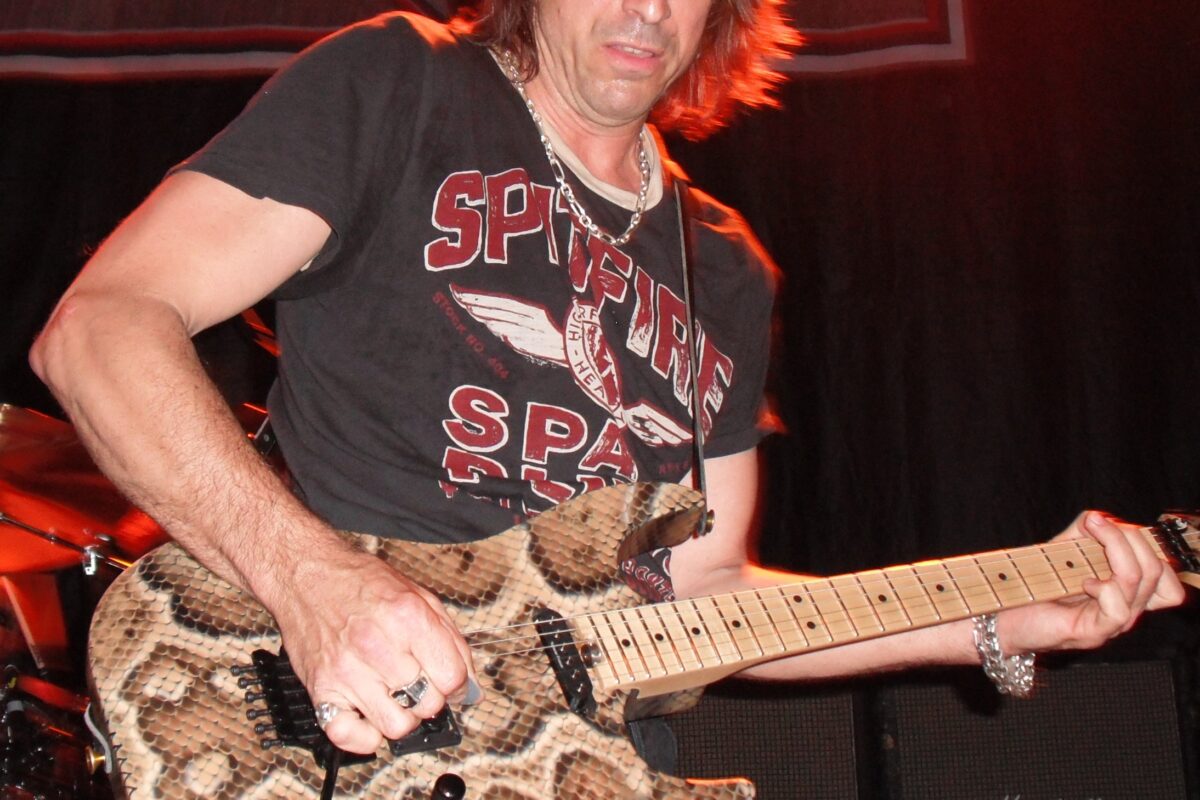
Warren DeMartini Guitars & Gear: The Complete Guide to Ratt’s Torch Guitarist’s Rig
Warren DeMartini guitars & gear: Ratt's Torch guitarist. Charvel Bomber, snakeskin, Jose-modded Plexi, Fender Super Champ, RTM pickup, slapback echo — the complete rig.
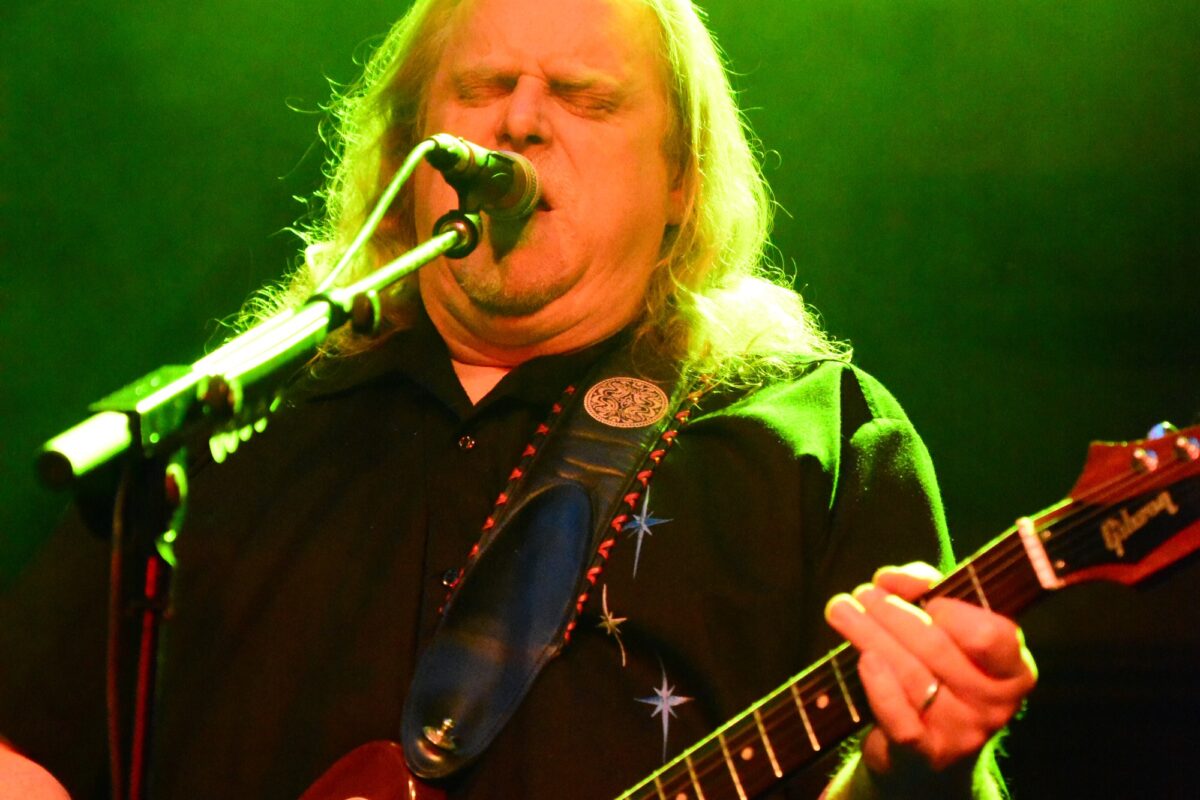
Warren Haynes Guitars & Gear: The Complete Guide to Gov’t Mule’s Guitar Master’s Rig
Warren Haynes' guitars, amps, and effects — the complete guide. Gibson Les Paul Chester, Soldano SLO-100 modified, Klon Centaur, Emma Discombobulator, and how to nail that Gov't Mule blues-rock tone.
Wayne Kramer Guitars & Gear: The Complete Guide to MC5’s Proto-Punk Guitar Insurrectionist’s Rig
Wayne Kramer guitars & gear: MC5's proto-punk guitar insurrectionist. Star-spangled Strat, Big Muff Triangle, Marshall stacks, MXR Jail Guitar Doors Drive — the complete rig.