Greg Ginn Guitars & Gear: The Complete Guide to Black Flag’s Dan Armstrong Lucite, Solid-State Amps & Hardcore Tone
Greg Ginn guitars & gear: Black Flag founder. Dan Armstrong Lucite, homemade humbuckers, Peavey solid-state amps, SST Records — Damaged blueprint of hardcore punk tone guide.
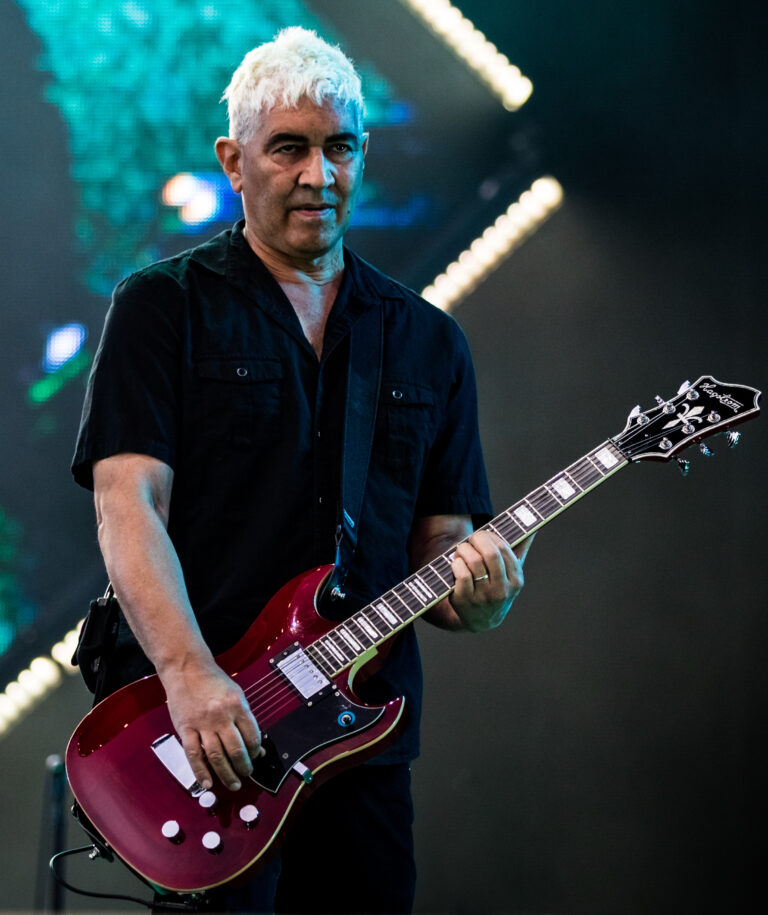
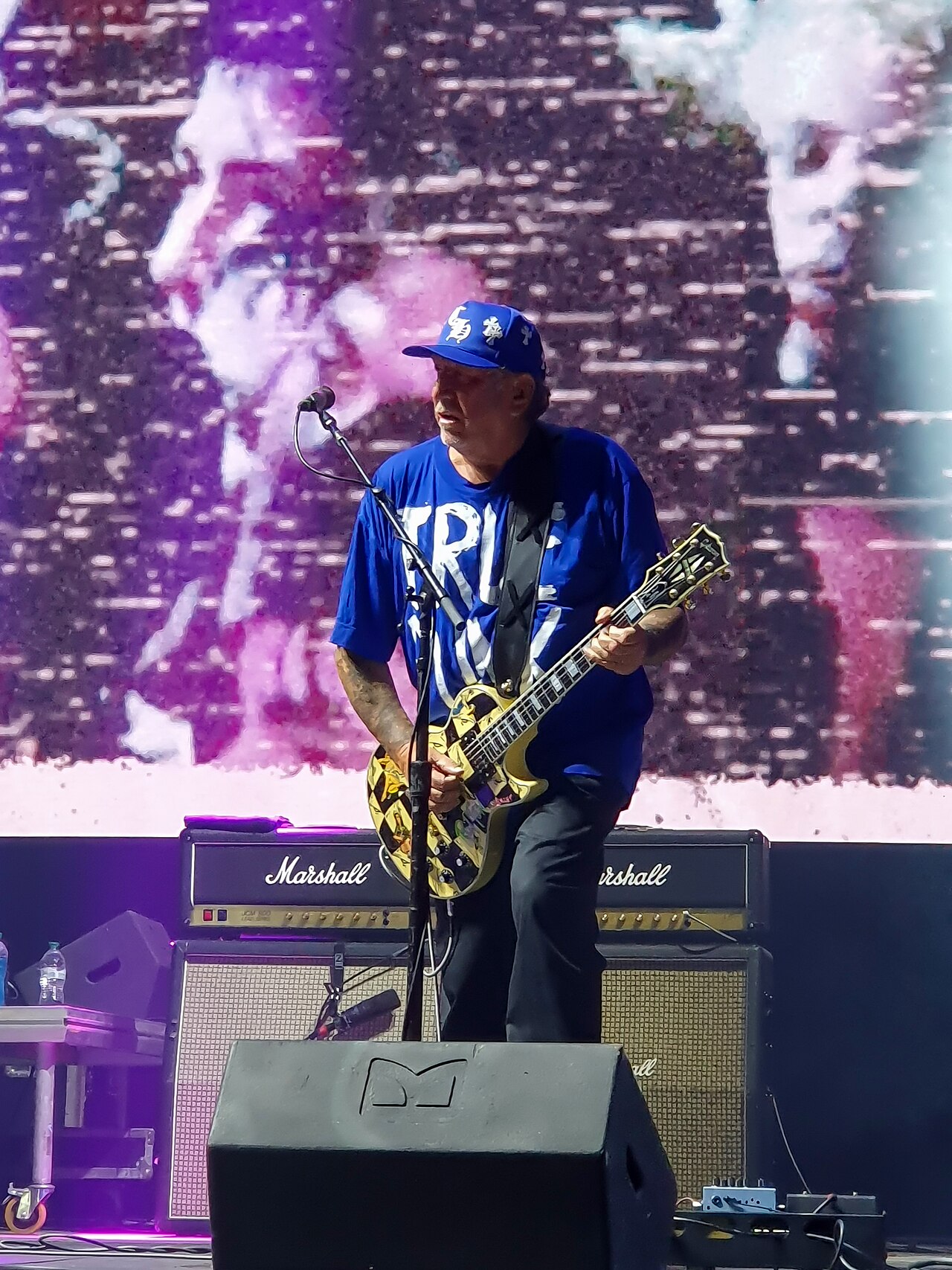
Robxwallace, CC BY-SA 4.0
Greg Ginn started selling electronics equipment at the age of twelve, repairing and reselling radios. He called the business Solid State Transmitters. The name was not chosen for its rock and roll resonance; it was chosen because he was a twelve-year-old electronics enthusiast from Tucson, Arizona who had a working knowledge of solid-state circuit design and needed a business name. A decade later, when he converted the business into a record label to release material by his band Black Flag, he kept the name — abbreviated to SST Records. SST Records went on to release records by Bad Brains, Hüsker Dü, the Minutemen, the Meat Puppets, Sonic Youth, Dinosaur Jr., and the Descendents — effectively defining the American independent alternative rock scene of the 1980s from a label that had begun as a twelve-year-old’s electronics business. The solid-state technology knowledge that Ginn developed as a child is directly visible in the guitar rig that recorded Damaged: not a valve amplifier, not the tube-driven warmth of the Marshall or the Fender that so many guitarists reach for, but a solid-state amplifier — the Peavey 260 Standard, the solid-state Peavey Musician 400, the specific choice of a guitarist whose understanding of amplifier electronics made him suspicious of the romantic mythology of tube technology. “SST stands for ‘solid state technology’ — he worked on amps and such.” The Dan Armstrong Lucite Plexi guitar with homemade highly wound humbuckers, plugged directly into solid-state amplification. No pedals. No effects chain. Just the homemade pickups, the Lucite body’s specific acoustic character, and the solid-state amp cranked to the point where “natural distortion” — the solid-state kind, different from tube saturation but capable of its own specific aggressive character — produced the chainsaw guitar tone of one of the most influential debut albums in punk rock history.
The Journey
Gregory Regis Ginn was born on June 8, 1954, in Tucson, Arizona, and eventually settled in Hermosa Beach, California, where he formed the band that would become Black Flag in 1976 with bassist Chuck Dukowski and vocalist Keith Morris. The band was initially called Panic; it changed its name to Black Flag at the suggestion of Ginn’s younger brother, the artist Raymond Pettibon, whose illustration work gave the band its four-bar logo — one of the most immediately recognizable visual symbols in rock history. The flag image is as iconic in the punk context as any guitar manufacturer’s headstock or amplifier badge; Raymond Pettibon made it, and Greg Ginn’s band needed it, and the specific visual identity of Black Flag — the confrontational, anti-institutional, iconoclastic identity that the flag symbol projected — is as much Raymond Pettibon’s contribution as it is the musicians’.
The musical influences that Ginn brought to Black Flag are, in the context of hardcore punk, genuinely surprising: the Grateful Dead’s improvisational approach and their specific relationship to the American roots music tradition; B.B. King’s blues guitar vocabulary; and Television’s intellectual, avant-garde approach to the electric guitar in a rock context — “having read about the nascent New York punk scene in the Village Voice.” This is not the biography of a guitarist who arrived at punk through the British tradition; it is the biography of a guitarist who arrived at punk through the Grateful Dead and Television, who understood the guitar as an improvisational and experimental instrument before the specific aggression of hardcore punk became the primary vehicle. Joe Carducci’s assessment — “it was as if a band had a guitarist who passed from playing like he was in the Sex Pistols, to playing like he was in Black Sabbath, to playing like he was in King Crimson” — is the most specific available description of the Ginn guitar evolution: the hardcore punk directness, the sludge metal heaviness, and the avant-garde improvisational ambition, all present across the arc of the Black Flag catalog.
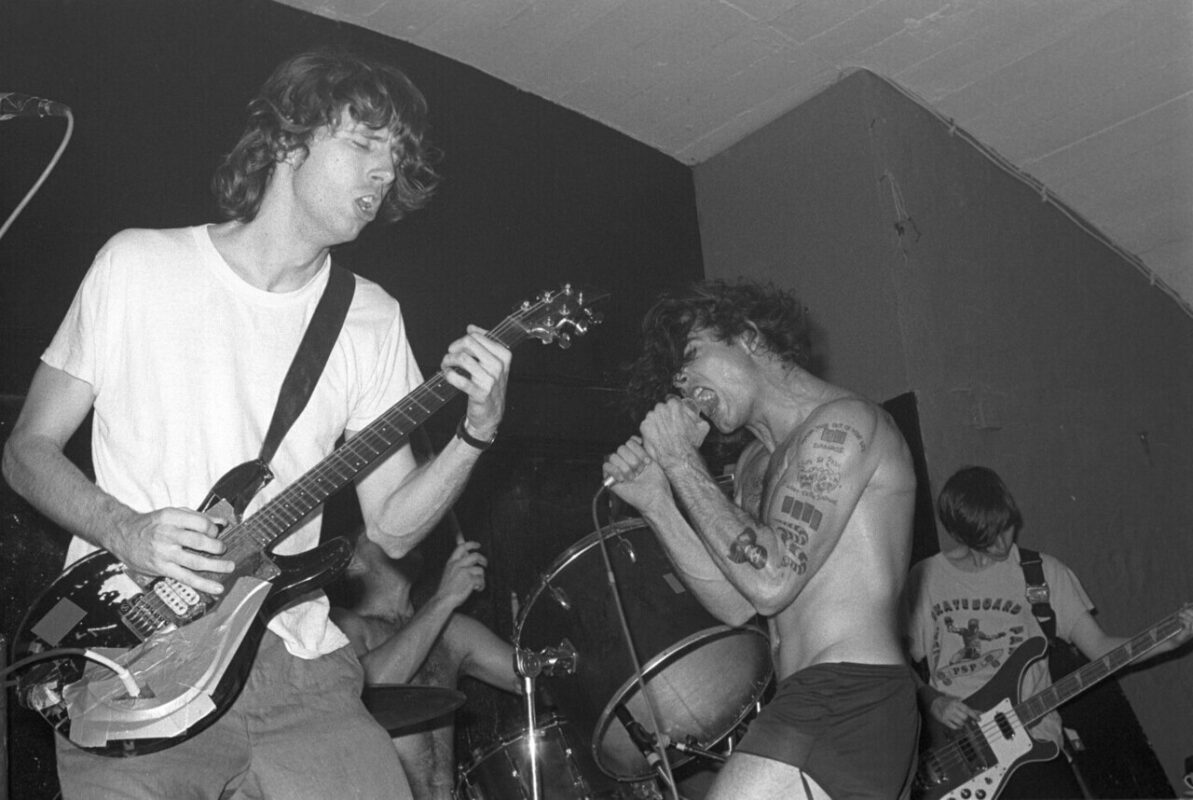
Damaged (1981) — recorded with SST’s house engineer Spot — is “the blueprint of hardcore punk that nearly every other band would spend the next three decades copying.” Its guitar sound: the Dan Armstrong Lucite with homemade pickups, the Peavey solid-state cranked for maximum gain, the “chainsaw double guitar assault” (Ginn and Dez Cadena sharing the guitar work on the album before Henry Rollins’s later arrival stabilized the lineup). “Ginn, who played an Ampeg Dan Armstrong Lucite throughout most of his time with Black Flag, using a cranked amp and natural distortion over a pedal, often appears to be clattering through both rhythm and lead parts at once, chopping in and out of Rise Above’s hardcore rallying cry before peeling off a short, sharp solo.” Cranked amp, natural distortion, no pedals. The solid-state guitar tone of one of the most culturally significant punk albums ever recorded, produced by the twelve-year-old’s electronics business knowledge applied to the specific problem of how to make a guitar sound like controlled chaos.
He played bass on My War (1984) under the pseudonym “Dale Nixon” when bassist Chuck Dukowski left the band shortly before recording. This is not the first time a guitarist has played all string instruments on a seminal album — Steve Jones did it on Never Mind the Bollocks because Sid Vicious couldn’t play; Ginn did it on My War because the bassist left. The pseudonym “Dale Nixon” — applied to the bass credit — is the specific decision of someone who didn’t want the bass credit to overshadow the guitar, or who found the acknowledgment of the specific production reality (the guitarist played the bass) less important than the music itself. Dale Nixon is Greg Ginn. The bass on My War sounds like a bassist. It is a guitarist who happened to also be an electronics expert playing in the specific context of the band he founded.
Background: Hermosa Beach, SST Records, and the Independent Music Infrastructure That Changed Everything
The SST Records story is, in the broader history of American music, as significant as the Black Flag story — and it is impossible to separate the two because the label was founded explicitly to release material by the band. Starting from the electronics business that the twelve-year-old Ginn had founded as Solid State Transmitters, SST became the primary American independent record label of the 1980s: the label that released the Descendents, Bad Brains, Hüsker Dü, the Minutemen, the Meat Puppets, Sonic Youth, Dinosaur Jr., Screaming Trees, and Saint Vitus, alongside the complete Black Flag catalog. This roster — assembled by a guitarist who had started an electronics business at twelve and converted it into a record label to release his band’s music — is one of the most significant bodies of American independent music in the history of the format. The specific philosophy: SST would release music that the major commercial labels wouldn’t, built on the specific DIY ethic that the punk movement had established as the foundational operating principle of independent music.
Black Flag’s specific touring approach — relentless, cross-country, self-organized van tours that established direct relationships with local promoters and audiences across the United States rather than relying on the commercial touring infrastructure — is the model that the American independent music scene subsequently adopted. “Black Flag toured with their own PA so that they could have consistent live sound at shows.” This is the specific technical sophistication that the solid-state technology background provided: Ginn understood sound reinforcement equipment, understood the electronics of the touring PA, and applied that understanding to the specific problem of achieving consistent live sound in venues that ranged from proper rock clubs to VFW halls to basements. The consistent live sound was not an accident; it was an engineering decision made by a guitarist who understood the electronics.
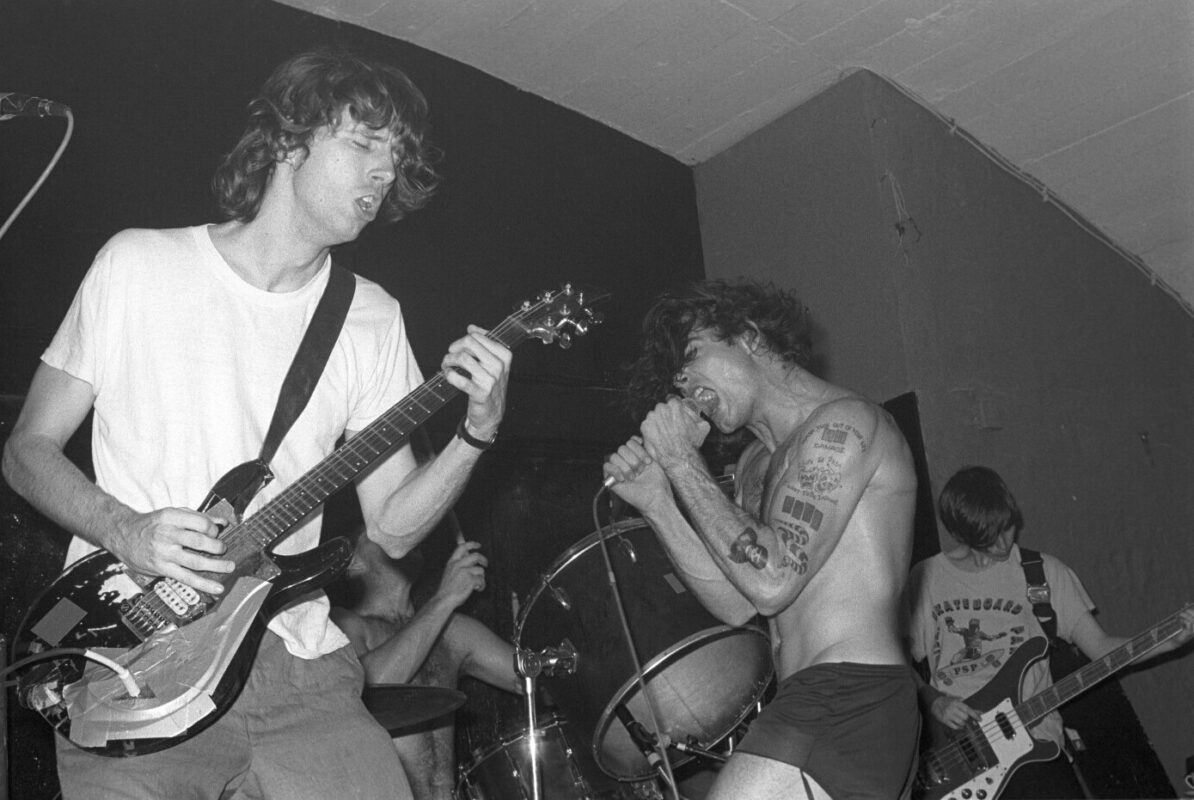
Henry Rollins’s addition to the lineup in 1981 — replacing Dez Cadena, who moved to second guitar before leaving — stabilized the vocal lineup that would produce the majority of the Black Flag catalog’s most celebrated recordings. Rollins’s specific physical presence — the confrontational, shirtless aggression that defined the live Black Flag experience — combined with Ginn’s guitar work to produce the specific identity of Black Flag at their peak: the guitarist’s avant-garde improvisational intelligence married to the vocalist’s physical, confrontational performance commitment. Rollins gave Black Flag “a physical, confrontational edge” that transformed the band from a punk act into a force of cultural confrontation.
The musical evolution across the Black Flag catalog — from the stripped hardcore of Damaged and the Nervous Breakdown EP, through the Black Sabbath-influenced sludge of My War’s B-side, to the jazz-inflected, meditative long-form pieces of Loose Nut and the instrumental process pieces of The Process of Weeding Out — documents a guitarist who was always more interested in musical development than in commercial accessibility. Bored with the hardcore sound he had helped forge, Ginn crammed more musical evolution into the final five years of Black Flag than most other bands could even dream of. The specific evolution is visible in the guitar approach: the fast, aggressive downstroke attack of the early hardcore giving way to the longer, more meditative, more melodically complex solos of the later Black Flag, with the Grateful Dead’s improvisational tradition visible in the specific approach to extended guitar improvisation that characterized the band’s later live performances.
The Rig: Greg Ginn’s Guitars, Amps, and Effects
Guitars
Greg Ginn played an Ampeg Dan Armstrong Lucite throughout most of his time with Black Flag. The Dan Armstrong Lucite — designed by luthier Dan Armstrong and marketed through Ampeg in the late 1960s and early 1970s — is a guitar with a body made entirely of clear acrylic (Lucite/Plexiglas) that is as visually striking as it is tonally distinctive. The Lucite body’s specific acoustic character: denser and harder than wood, with less acoustic resonance than a wooden body but a specific bright, cutting, percussive attack that suits the aggressive downstroke rhythm approach of hardcore punk. The clear body also makes the guitar’s internal components visible through the body — a quality that suits both the punk aesthetic of transparency and the electronics-minded guitarist’s appreciation for visible mechanism. The original Dan Armstrong design used removable slide-in pickups — a unique cartridge system that allowed rapid pickup changes. Ginn modified his Dan Armstrong with homemade highly wound humbuckers: winding his own coils to higher-than-standard impedance specifications to increase the pickup’s output and modify its frequency response. The homemade, highly wound humbuckers are the specific application of the solid-state technology and electronics knowledge that Ginn had been developing since age twelve: not buying commercial pickups but building his own, with specific tonal goals and the specific technical knowledge to achieve them.
The homemade highly wound humbuckers in the Dan Armstrong are the most specific and most personally significant piece of electronics in Ginn’s rig — the specific application of self-built guitar electronics to the specific tonal problem of what Damaged needed to sound like. A highly wound humbucker — a coil wound to higher impedance than standard, which increases output and alters the frequency response toward a darker, warmer, more distortion-prone character — will drive a solid-state amplifier’s input harder and produce a different quality of distortion from the natural gain structure of the solid-state circuit. Ginn wound his own because he could. He founded an electronics business at twelve because he could. He built his own pickups because he understood the theory and had the tools. The result is the specific guitar sound of Damaged: the homemade high-output humbucker driving the Peavey solid-state into a specific, aggressive, controlled-chaotic distortion that no commercial pickup and no commercial valve amplifier would have produced in exactly the same way.
While the Dan Armstrong Lucite is the primary documented guitar for the Black Flag period, Ginn also used various standard electric guitars across different recordings and performing contexts. His background as a Grateful Dead-influenced guitarist — absorbing the Dead’s approach to the electric guitar as an improvisational vehicle — is visible in his willingness to use different instruments for different musical contexts across the increasingly varied Black Flag catalog. The later Black Flag recordings, which incorporated jazz-influenced improvisation and extended meditative pieces, required different instrumental approaches from the aggressive hardcore of the early material.
Amps
Photographs from the Damaged era show a Peavey 260 Standard on top of Greg Ginn’s stack. The Peavey 260 Standard is a solid-state bass head — not a guitar amplifier, not a valve amplifier, but a solid-state bass amplification unit. Its use for guitar is the specific unconventional choice of a guitarist who knew amplifier electronics and who specifically chose solid-state over valve for reasons beyond simple equipment availability: he understood the technical difference between the two designs and chose the solid-state design deliberately. The Peavey 260’s solid-state circuit produces a different distortion character from valve amplification: faster transient response, more consistent distortion character at different volume levels, the specific “aggressive ugliness” that Ginn’s playing style was characterized by rather than the romantic warmth of valve saturation.
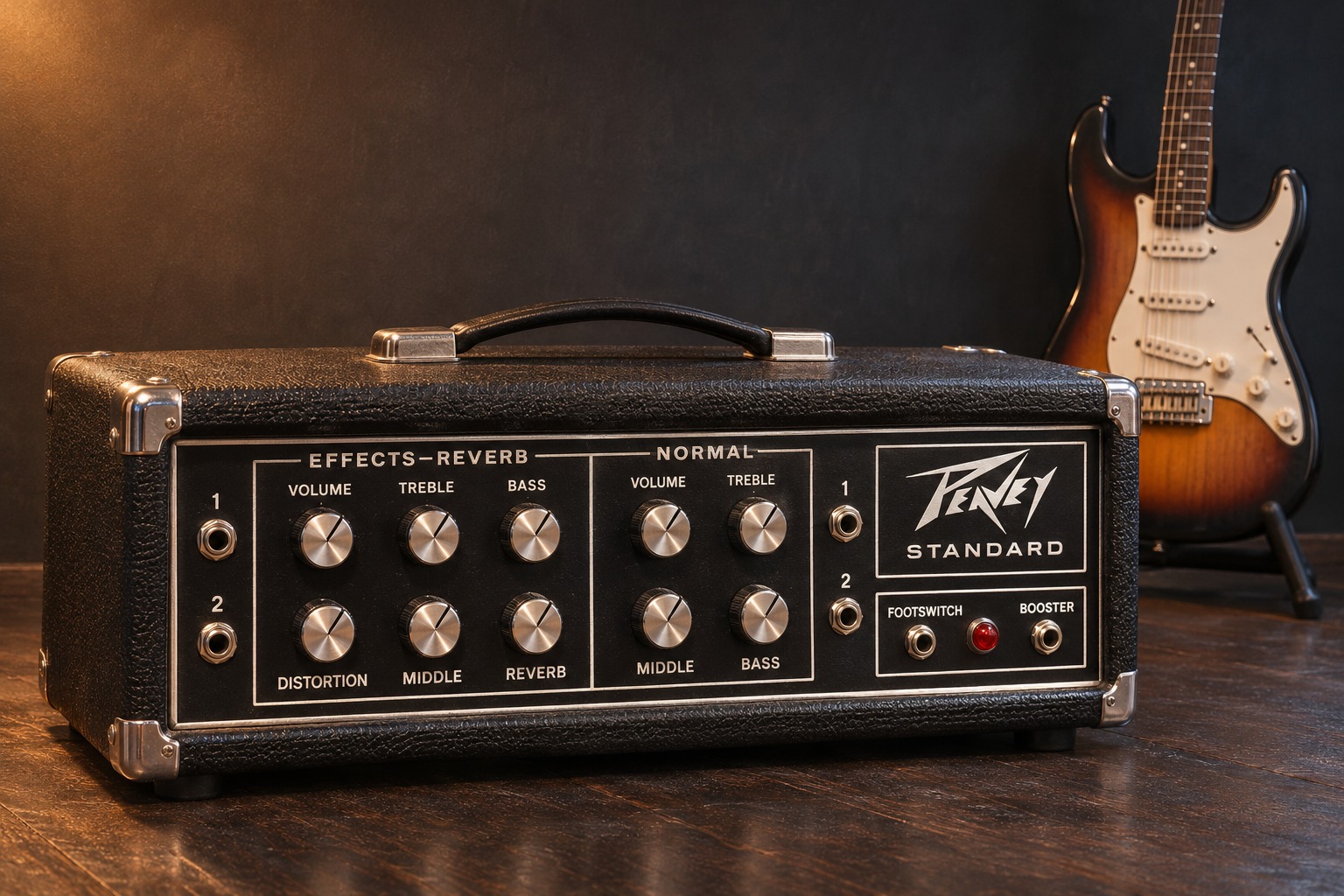
The Peavey Musician 400 — another solid-state amplifier from Peavey’s bass amplification line — appears below the Peavey 260 Standard in the stack configuration visible in photographs from the Damaged era. Whether the two Peavey units were daisy-chained (one feeding the other for additional gain staging) or run in parallel (each driving a separate cabinet) is not definitively established in available sources. The Peavey Musician 400’s high power output in the solid-state configuration, combined with the Peavey 260’s specific characteristics, provided the amplification basis for the Damaged guitar sound in the live and recording context.
Greg Ginn reportedly disliked tube amplifiers — a preference consistent with his background as a solid-state electronics engineer. The specific reason for the anti-tube stance is both practical (solid-state amplifiers are more reliable, more consistent, and more technically predictable than tube amplifiers) and aesthetic (the specific distortion character of solid-state amplification is different from tube saturation, and Ginn preferred the solid-state character for his specific guitar approach). The SST label name — derived from Solid State Transmitters — is itself an endorsement of solid-state technology. Ginn brought the solid-state engineer’s preference for his own technology to his amplification choices and used solid-state equipment to record one of the most culturally significant punk albums ever made. The result challenges the conventional wisdom that tube amplification is necessary for quality electric guitar recording.
Effects
Greg Ginn used a cranked amp and natural distortion over a pedal — no effects in the conventional sense. Like Joe Strummer (clean Telecaster into clean combo, no pedals), Steve Jones (Les Paul Custom into stolen Fender Twin, one MXR Phase 45 only on “Anarchy”), and other punk guitarists, Ginn’s signal chain was the guitar directly into the amplifier with no external processing. The distortion in the Damaged guitar sound comes from the solid-state Peavey amplifiers cranked beyond their clean headroom — the specific distortion character of overdriven solid-state circuitry rather than the natural saturation of overdriven EL34 or 6L6 tubes. Solid-state distortion at high drive levels has a specific character — harder, more abrupt in its clipping behavior, with a different harmonic content from tube saturation — that produces the specific “aggressive ugliness” of the Damaged guitar tone.
The most significant “effect” in Greg Ginn’s guitar playing is not a pedal or an amplifier modification but the specific technique of “aggressive ugliness” — the willingness to use diminished ninths, tritones, and other dissonant intervals in a hardcore punk context where conventional technique would have suggested power chords and pentatonic scales. “He used a lot of diminished ninths and tritones, but his rhythmic approach was, on the whole, fairly conventional.” The dissonant intervals — the tritone specifically, which is the most harmonically unstable interval in Western music theory, traditionally called “diabolus in musica” (the devil in music) — produce the specific harmonic tension and anxiety of the Damaged guitar sound. This is not simple punk aggression; it is musically sophisticated dissonance applied to a punk context, using the harmonic vocabulary of jazz and avant-garde classical music to produce a more extreme emotional effect than conventional punk harmony would provide.
Often appears to be clattering through both rhythm and lead parts at once, chopping in and out of Rise Above’s hardcore rallying cry before peeling off a short, sharp solo. This simultaneous rhythm-and-lead approach — the specific quality that makes the Damaged guitar sound like more than one guitarist even when it is one — is the technical technique that the Grateful Dead and Television influences enabled: the improvisational guitar player’s ability to move between rhythm and lead functions within a single phrase, without the conventional separation between a rhythm pass and a lead pass. Carlos Alomar’s simultaneous rhythm-and-lead approach achieved the same effect from a soul music context; Ginn achieves it from a punk-meets-free-jazz context. The technique is different; the musical result — the guitar doing everything simultaneously — is the same fundamental achievement.
He used a lot of triplets, which linked his style all the way back to Chuck Berry, but unlike Berry he was very keen to avoid obvious pentatonic runs. The triplet-based rhythmic approach is the specific technique that connects Ginn’s guitar playing to the foundational American rock and roll tradition — the Chuck Berry rhythmic feel that is the DNA of every subsequent rock guitarist — while the avoidance of pentatonic runs separates it from that tradition’s conventional lead guitar vocabulary. The tritones and diminished intervals that replace the pentatonic scales are the specific jazz-and-avant-garde harmonic vocabulary that Ginn absorbed from Television and developed into the specific Black Flag guitar language.
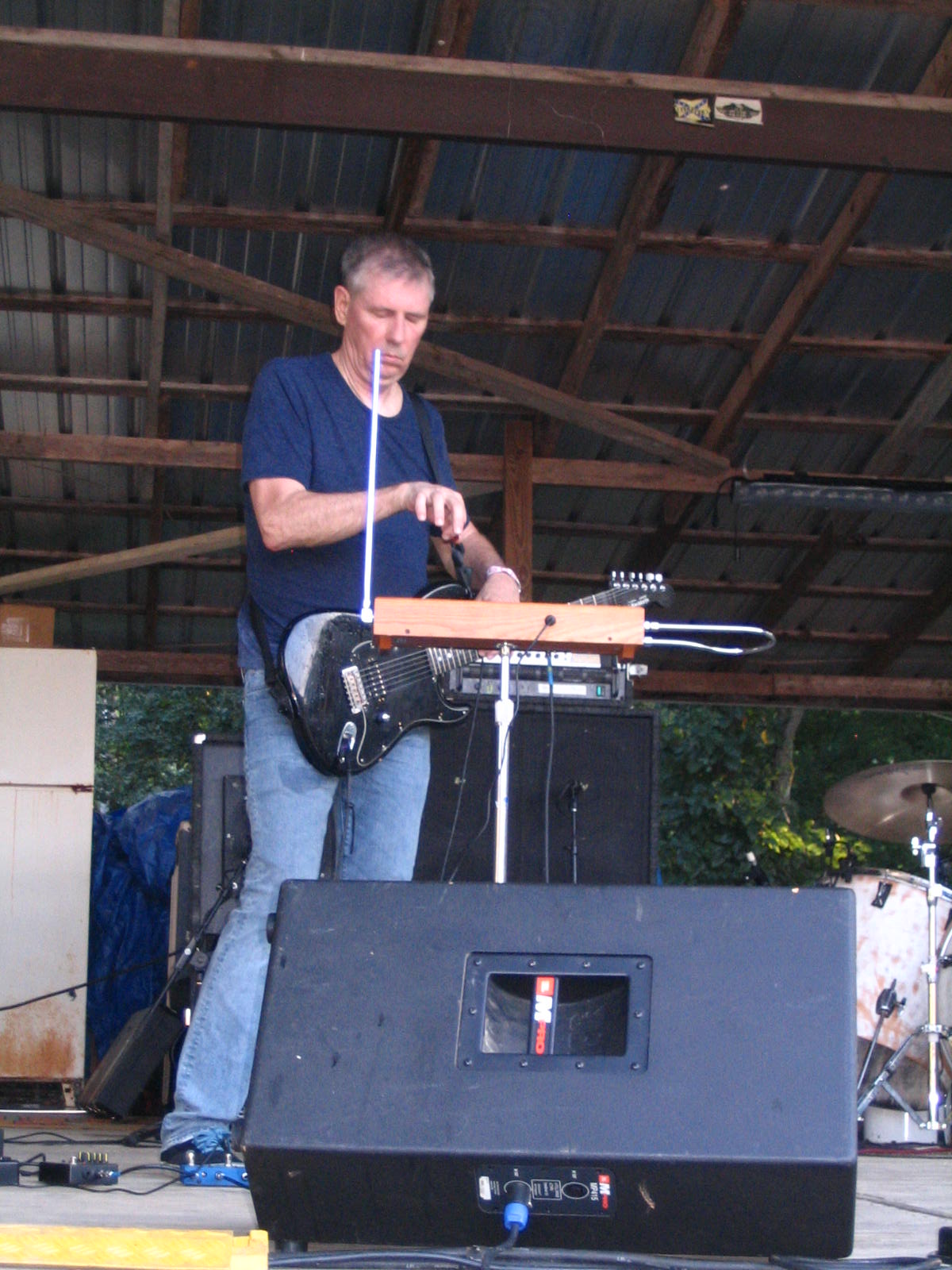
The specific historical moment that Black Flag inhabited — the late 1970s and early 1980s American punk scene, in the period when hardcore was differentiating itself from the British punk that had preceded it — required a guitarist who could develop the genre’s foundational vocabulary from first principles rather than from received tradition. Ginn was that guitarist. The Dan Armstrong Lucite with homemade humbuckers through Peavey solid-state is the most extreme possible expression of the DIY ethic that hardcore punk established as its primary value system: build what you need because buying what you want is not how the culture operates. The homemade humbuckers are the guitar equivalent of the screen-printed T-shirt, the photocopied zine, the van tour organized by phone calls rather than by a booking agency. Do it yourself. Build it yourself. Play it through a solid-state Peavey bass head because you understand solid-state amplifier design and you like what it does. Record it with Spot at SST. Release it on your own label. Tour in a van. Never stop.
The fact that this approach — the homemade humbuckers in the acrylic guitar, the solid-state amplification, the label founded from an electronics business started at twelve — produced one of the most culturally significant debut albums in punk rock history is the specific validation of the DIY method. Damaged is not a great album because it had a great budget or great equipment or great commercial support. It is a great album because Greg Ginn had been thinking about what he wanted guitar to sound like since he was twelve years old, wound his own pickups to achieve it, chose his own amplifiers deliberately, and then applied the resulting tonal identity to songs that had something urgent to say and a specific musical intelligence to say it with. The engineering knowledge and the artistic intelligence were the same person. The Lucite body is transparent. The music is not.
Playing Style & Tone Philosophy
Greg Ginn plays guitar with the specific combination of engineering intelligence, musical eclecticism, and aggressive commitment that produced Black Flag’s specific sound: not the British punk tradition of the Les Paul and the Marshall, not the American punk tradition of the Telecaster and the clean combo, but the specific American guitar approach of someone who started as a Grateful Dead fan, absorbed Television’s avant-garde rock vocabulary, and then applied both to the specific physical and social context of Hermosa Beach California in the late 1970s where the punk scene was developing. The result is a guitar approach that is simultaneously more technically sophisticated and more physically raw than either of its primary influences, using dissonant intervals and improvisational technique in a context that demands maximum aggression and minimum pretension.
Joe Carducci’s description — “as if a band had a guitarist who passed from playing like he was in the Sex Pistols, to playing like he was in Black Sabbath, to playing like he was in King Crimson” — is the most precise available description of the Black Flag guitar evolution. The Damaged Ginn is the Sex Pistols guitarist: direct, aggressive, rhythmically driving, in service of the hardcore punk ethos. The My War Ginn is the Black Sabbath guitarist: slower, heavier, with the specific sludge-metal heaviness that the B-side’s extended tracks required. The Process of Weeding Out Ginn is the King Crimson guitarist: avant-garde, improvisational, deliberately inaccessible, the specific application of progressive rock’s conceptual ambition to the hardcore context. All three are present in the Dan Armstrong Lucite, the homemade humbuckers, and the solid-state Peavey amplification — the same equipment across all three phases, the guitar approach doing all the work.
The solid-state amplification choice is the most revealing single gear decision in Ginn’s rig: it demonstrates that the specific Damaged guitar tone was not a default choice made by someone who couldn’t afford better equipment but a deliberate engineering decision made by someone who understood amplifier technology and chose the solid-state character for specific reasons. “SST stands for solid state technology — he worked on amps and such.” The man who founded a label called Solid State Transmitters at twelve years old was not using Peavey solid-state bass heads because they were the only option; he was using them because he understood solid-state amplifier design and chose its specific distortion character deliberately.
How to Sound Like Greg Ginn
The Damaged-era Greg Ginn tone requires: a Dan Armstrong Lucite guitar (or equivalent acrylic/high-density body with high-output humbuckers); a cranked solid-state amplifier (Peavey bass head or equivalent high-output solid-state unit) pushed beyond its clean headroom; no effects; and the specific technique of avant-garde dissonance — diminished ninths, tritones, and non-pentatonic intervals — applied to the rhythmically aggressive power-chord framework of hardcore punk. The homemade highly wound pickups are the hardest element to replicate; very high-output aftermarket humbuckers (Seymour Duncan Invader, DiMarzio X2N) provide the closest commercially available approximation.
| Control | Setting (0–10) | Notes |
|---|---|---|
| Peavey Solid-State (Cranked Beyond Clean) | Volume: 8–9; Gain: 8; Bass: 5; Mid: 6; Treble: 7 | Push the solid-state amplifier beyond its clean headroom into solid-state distortion — the specific abrupt, hard-clipping character that differs from tube saturation. The solid-state distortion’s specific quality: faster transient response, harder clip, different harmonic content from tube saturation. This is not tube-amp warmth; it is solid-state aggression. The Peavey bass heads’ specifically high output drives the cabinet hard. |
| High-Output Humbuckers (Homemade or Equivalent) | Volume: 10; No tone control | Maximum output from highly wound humbuckers into the solid-state amp. Commercial equivalents: Seymour Duncan SH-8 Invader, DiMarzio X2N. The high output drives the solid-state input harder, producing more aggressive clip behavior. The Dan Armstrong Lucite’s specific bright, percussive acoustic attack from the acrylic body provides the fundamental character that wood-body guitars don’t replicate exactly. |
| No Effects | Guitar → amplifier directly | No pedals. No effects chain. The same direct philosophy documented for Strummer and Jones, but with the critical difference that the amplification is solid-state rather than the tube amps those players used. The solid-state distortion IS the “effect” — the natural distortion character of the cranked solid-state amp rather than any external processing. |
| Dissonant Intervals (Tritones, Diminished Ninths) | Theory: study; Practice: apply | The specific harmonic vocabulary that distinguishes Ginn’s lead playing from conventional punk lead guitar. The tritone (augmented fourth / diminished fifth — the interval between the first and the flatted fifth) is the most unstable interval in Western harmony, producing maximum tension against the tonic. Diminished ninths (a flatted second above the octave) add further chromatic tension. Applied to a hardcore punk rhythmic context, these intervals produce the specific “aggressive ugliness” that characterizes the Damaged guitar solo approach. |
| Rhythm-and-Lead Simultaneously | Chop; switch; clattering | The specific technique of moving between rhythm and lead functions within a single phrase — “clattering through both rhythm and lead parts at once.” Begin with a rhythm chord pattern; interrupt with a brief lead fragment; return to rhythm; peel off a solo; back to rhythm. The interruption and the return are what define the “clattering” quality of the approach. No clear separation between rhythm pass and lead pass — both happening in the same time and the same space. |
| Volume and Intensity Philosophy | Maximum; confrontational; sustained | The Black Flag live approach was maximum volume, maximum physical energy, maximum confrontational intensity sustained across sets that lasted beyond the conventional punk set length. Ginn’s guitar playing reflects this approach: not the efficient, minimal punk guitar of Strummer or Jones but the sustained, extended, physically demanding guitar of someone who was performing in the same spirit as a jazz improviser — for as long as the music required, at maximum intensity. The “aggressive ugliness” is not an accident; it is the sustained commitment of someone who decided this was the specific sound that the specific music required. |

Influence & Legacy
Greg Ginn’s influence on American independent music is the influence of both a musician and an infrastructure builder — a guitarist whose specific approach to the electric guitar established the hardcore punk template, and a label founder whose SST Records provided the commercial and logistical framework through which a generation of American independent musicians reached their audiences. The guitar influences and the label influences are inseparable because they come from the same person and the same foundational commitment: do it yourself, use the tools you have and build the ones you don’t, create the infrastructure that the music requires rather than waiting for someone else to provide it.
The specific guitar influence — the Dan Armstrong Lucite, the homemade humbuckers, the solid-state Peavey amplification — established that hardcore punk’s guitar sound was not derived from the British rock tradition’s Les Paul-and-Marshall approach but from a specifically American combination of economic pragmatism and engineering intelligence: use what’s available, modify what isn’t adequate, and build what doesn’t exist. This approach influenced every subsequent guitarist who understood that the instrument’s value was in what it could do rather than in its commercial prestige or vintage provenance.
The SST Records roster — Bad Brains, Hüsker Dü, the Minutemen, the Meat Puppets, Sonic Youth, Dinosaur Jr. — represents the specific cohort of American independent musicians who Ginn recognized as doing work worth releasing, and the specific commercial and logistical platform he provided for that work. Without SST, the specific development of American alternative music in the 1980s would have been substantially different; without Black Flag’s touring model, the specific infrastructure for independent touring that subsequent American bands inherited would have been much slower to develop. For the punk guitar tradition that Ginn’s work established, see Joe Strummer’s Clash approach and Steve Jones’s Sex Pistols rig — the British punk guitarists whose work preceded and partially inspired Ginn’s own, with the specific difference that Ginn’s solid-state Peavey approach produced a completely different tonal character from Jones’s stolen Fender Twin and Strummer’s clean combo. And the DIY label-founding philosophy connects to Aldo Nova’s self-produced debut — another musician who understood that the creative vision and the commercial vehicle needed to be unified, though Aldo Nova’s approach was significantly less confrontational.
The twelve-year-old who started an electronics business called Solid State Transmitters became the guitarist who recorded Damaged with homemade humbuckers through solid-state Peavey bass amplifiers. The same person founded the record label that defined the American independent music scene of the 1980s. Rolling Stone named him to their 100 greatest guitarists list. The Dan Armstrong Lucite’s acrylic body is still more transparent than most guitar bodies. The solid-state Peavey is still not a tube amplifier. The homemade humbuckers wound to his own specifications are still wound to his own specifications. The SST Records catalog is still the most concentrated single body of American independent music from the 1980s. This is the Greg Ginn legacy. It was built from scratch, with homemade pickups and solid-state electronics, because that is how Ginn builds things.
Frequently Asked Questions: Greg Ginn Guitars & Gear
What guitar did Greg Ginn use on Damaged?
Greg Ginn played an Ampeg Dan Armstrong Lucite — a guitar with a body made entirely of clear acrylic — throughout most of his time with Black Flag, including the Damaged recording. He modified the Dan Armstrong with homemade highly wound humbuckers: coils he wound himself to higher-than-standard impedance to increase output and modify the frequency response. The Dan Armstrong’s original removable slide-in pickup system was replaced with Ginn’s own electronics, the product of the solid-state technology knowledge he had been developing since he started an electronics business at age twelve.
Why did Greg Ginn use solid-state amplifiers instead of tube amps?
Greg Ginn reportedly preferred solid-state amplification over tube amplification — a preference consistent with his background as an electronics engineer. He had founded a company called Solid State Transmitters at age twelve and had the technical knowledge to understand the specific differences between solid-state and tube amplifier design. The Peavey 260 Standard and Peavey Musician 400 solid-state units used for the Damaged recording produced a specific solid-state distortion character — harder, more abrupt in its clipping behavior, with different harmonic content from tube saturation — that Ginn chose deliberately for its specific aggressive character. “SST stands for solid state technology — he worked on amps and such.”
What is SST Records and how did it connect to the guitar rig?
SST Records was founded by Greg Ginn in 1978, repurposing his existing electronics business Solid State Transmitters (which he had founded at age twelve to repair and resell radios and electronics) as a record label to release Black Flag material. The label went on to release records by Bad Brains, Hüsker Dü, the Minutemen, the Meat Puppets, Sonic Youth, Dinosaur Jr., the Descendents, and others — effectively defining the American independent alternative rock scene of the 1980s. The connection to the guitar rig: the label’s name reflects the same solid-state technology preference that produced Ginn’s amplifier choices, and the DIY ethos of both the label and the guitar modifications (homemade pickups, non-standard amplification) are expressions of the same fundamental principle.
What musical influences shaped Greg Ginn’s guitar approach?
Ginn’s documented influences include the Grateful Dead (whose improvisational approach to the electric guitar and relationship to the American roots music tradition he absorbed extensively), B.B. King (whose blues guitar vocabulary provided a foundational melodic approach), and Television (whose intellectual, avant-garde approach to rock guitar he encountered through reading about the New York punk scene in the Village Voice). These influences — particularly the combination of the Dead’s improvisation and Television’s dissonance — produced the specific guitar vocabulary that Ginn developed for Black Flag: tritones, diminished ninths, triplet rhythms, and the clattering simultaneous rhythm-and-lead approach that makes the Damaged guitar sound like it is doing two things at once.
What was Ginn’s guitar evolution across the Black Flag catalog?
Joe Carducci described the Black Flag guitar evolution as “as if a band had a guitarist who passed from playing like he was in the Sex Pistols, to playing like he was in Black Sabbath, to playing like he was in King Crimson.” The Damaged-era Ginn is direct hardcore punk guitar: aggressive, rhythmically driving. My War (1984) added sludge-metal elements, particularly on the slower B-side tracks. The later albums — Slip It In, Loose Nut, and especially The Process of Weeding Out — incorporated jazz and avant-garde improvisation, with extended instrumental passages that polarized the hardcore audience who wanted more Damaged-style fast punk but documented Ginn’s genuine breadth of musical ambition.
What is Greg Ginn’s technique of “aggressive ugliness”?
“Aggressive ugliness” — the description of Ginn’s mature Black Flag soloing style — refers to the specific combination of dissonant intervals (tritones, diminished ninths), non-pentatonic melodic approach, and the physical aggression of the performance context that produces a guitar sound simultaneously harmonically sophisticated and physically confrontational. He used a lot of diminished ninths and tritones, but his rhythmic approach was fairly conventional. The tritone (the flatted fifth — the “devil’s interval” of medieval theory) produces maximum harmonic tension; the diminished ninth adds chromatic dissonance. Applied to a punk context over solid-state amplification, these intervals produce the specific anxious, aggressive, anti-comfortable guitar tone that makes Damaged’s solos sound unlike any other punk album’s lead guitar.
Who is Raymond Pettibon and what is his connection to Black Flag?
Raymond Pettibon is Greg Ginn’s younger brother and the visual artist who created Black Flag’s logo — the four-bar rectangular flag symbol that became one of the most immediately recognizable logos in punk rock history. He suggested the name Black Flag and provided the visual identity that the band maintained throughout its existence. Pettibon also created the distinctive hand-drawn artwork that appeared on Black Flag’s records, flyers, and promotional materials. His work — raw, literary, dark, combining text and image in a specific visual language — is as much a part of the Black Flag identity as the guitar sound. He has subsequently become recognized as a major figure in contemporary American art.
Image credits
- Peavey 260 Standard (Solid-State): GuitarGangsters AI-generated reference illustration, not a photograph.
- Steve Jones: GenerationSex, Wikimedia Commons, CC BY-SA 4.0.
- Greg Ginn: Robert Huffman, Wikimedia Commons, CC BY-SA 3.0.
- Top image: Robxwallace, CC BY-SA 4.0
- Greg Ginn with Black Flag: photo by Petra Gall, via Wikimedia Commons, CC0.
- Greg Ginn live: Petra Gall, Wikimedia Commons, CC0.
- Greg Ginn live: Robxwallace, Wikimedia Commons, CC BY-SA 4.0.