George Thorogood Guitars & Gear: The Complete Guide to the Delaware Destroyer’s Gibson ES-125, Slide & Dual Showman Rig
George Thorogood guitars & gear: the Delaware Destroyer. Gibson ES-125TDC P-90, Epiphone White Fang signature, Fender Dual Showman, open G tuning, sandpaper slide — Bad to the Bone tone.
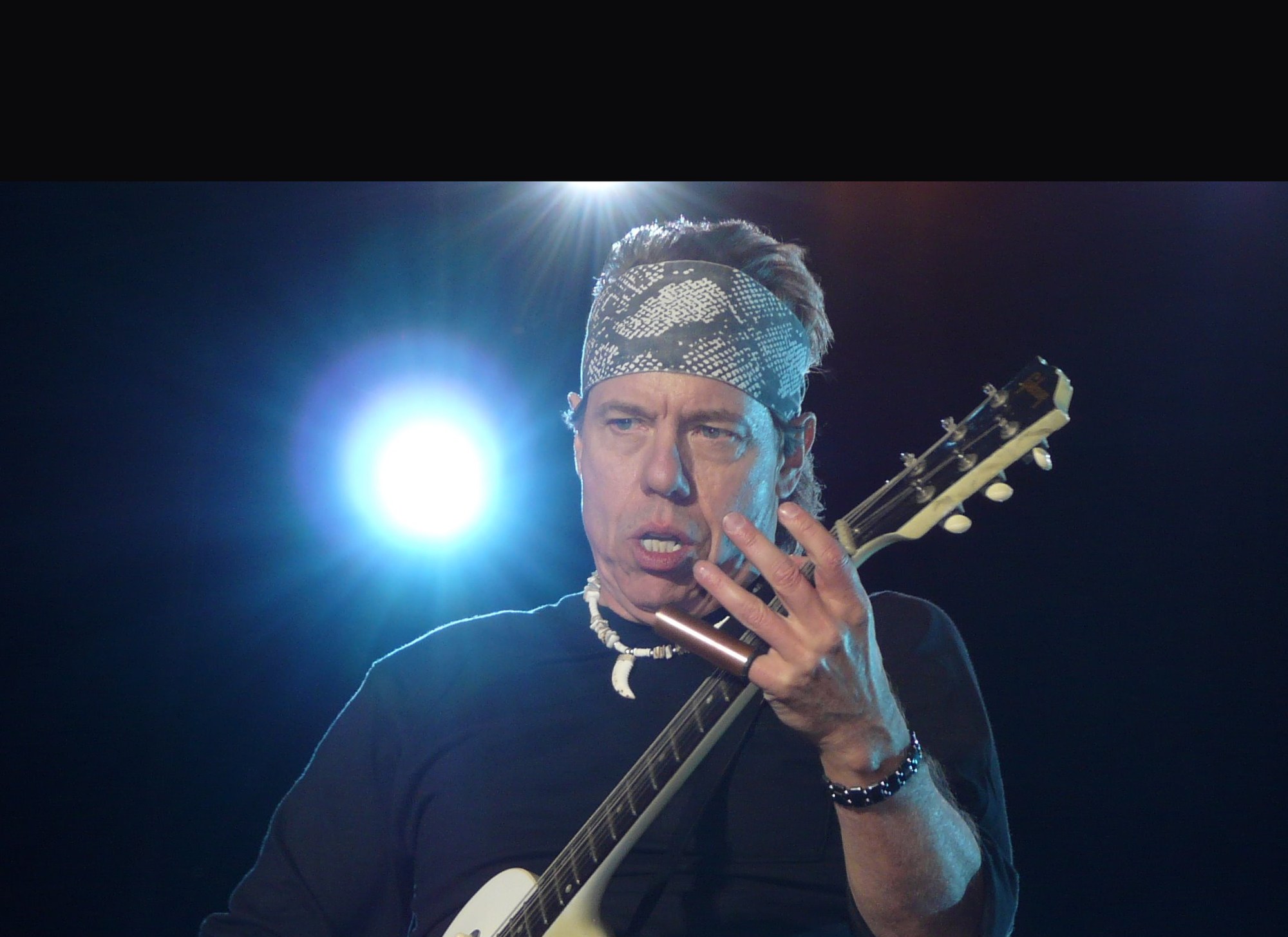
George Thorogood performing at Moondance Jam. Photo: Matt Becker, CC BY 3.0 (https://creativecommons.org/licenses/by/3.0/). Source: https://commons.wikimedia.org/wiki/File:GeorgeThorogood.JPG. Cropped to landscape with a dark band added at the top.
Gear Timeline
George Thorogood chose the Gibson ES-125 because it was cheap and it felt like an acoustic. That’s the complete explanation. He had been “playing nothing but acoustic guitars” before he plugged in, and the ES-125 — a student-grade hollow-body archtop with an f-hole top and P-90 pickups — suited the transition from acoustic to electric because it retained the acoustic-like resonance and feel of the archtop without the disorienting experience of a solid-body guitar’s entirely different acoustic character. “The 125 had an archtop and f-holes, so it was an electric guitar, but it felt like playing an acoustic.” And: “The price. It was inexpensive.” The two greatest compliments available to a student guitar. The guitar he chose for its price and its acoustic-like feel became the primary instrument of a career that sold fifteen million albums, produced “Bad to the Bone” (which appeared in Terminator 2: Judgment Day and became one of the most recognizable guitar riffs in American pop culture), “I Drink Alone,” and one of the most beloved bodies of blues-rock cover recordings in the tradition — the Bo Diddley “Who Do You Love,” the John Lee Hooker “One Bourbon, One Scotch, One Beer,” the Hank Williams “Move It on Over” — that kept the original blues tradition audible to generations who might never have otherwise heard it. A student guitar. A cheap one. Chosen because it felt like an acoustic. Fifteen million albums. “Bad to the Bone” in Terminator 2. The greatest compliment to the ES-125 available.
George Lawrence Thorogood was born on February 24, 1950, in Wilmington, Delaware — the specific mid-Atlantic city whose somewhat unlikely relationship with the blues-rock tradition it would eventually produce runs through Thorogood’s biography as a consistent thread. He is described on his band’s official biography as performing “American music” — a deliberately broad and deliberately humble self-description that captures both the breadth of his influences (Chicago blues, early rock and roll, country blues, rockabilly, R&B) and his consistent positioning of himself as a carrier and popularizer of traditions rather than an originator. “I pity them!” he has said of any young player who might want to be George Thorogood — while simultaneously asserting: “I want to be Jeff Beck. I want to be Keith Richards. I want to be Bo Diddley and Jimi Hendrix.” The self-deprecation and the ambition coexist, which is characteristically honest about what it means to spend fifty years playing music rooted in the work of people you consider genuinely larger.
His band — the Delaware Destroyers (sometimes credited as simply the Destroyers), formed in the mid-1970s — has been the primary vehicle of this popularization project across more than twenty studio albums and more than eight thousand live performances. The band’s specific combination of Thorogood’s firebreathing guitar with a rhythm section locked to the blues tradition produces the specific “high-energy boogie-blues” sound that Guitar World identifies as his primary contribution: not a new genre but an extremely vigorous and enthusiastic rendition of an existing one, delivered with enough personal commitment that the enthusiasm becomes the artistic statement. Thorogood has never apologized for loving the music he loves or for wanting other people to love it too. This is, in the history of popular music’s relationship with the blues tradition, a more unusual position than it sounds.
His amplifier situation is one of the more refreshingly honest gear statements in this series: “I’d tell you if I knew what they were called! My amplifier situation is a real mutt. My tech put a combination of things in there to get it close to a Fender Dual Showman. It’s hard to pinpoint exactly what kind of amp I use. It’s custom-made with 12-inch speakers.” The technical descriptions — the Marshall names, the EL34 tube specifications, the preamp gain architecture — are largely absent here. What Thorogood has is a custom combination of components that his tech assembled to approximate the Fender Dual Showman’s specific character, and it works, and it sounds like George Thorogood, and that is everything he needs it to do. The amp is in service of the sound. The sound is in service of the music. And the music is Bo Diddley and John Lee Hooker and Chuck Berry and Elmore James, delivered with fire and fun and the specific commitment of someone who has been doing this for fifty years and finds it as essential now as he did at the beginning.
“Bad to the Bone” — written by Thorogood and recorded for the 1982 album of the same name — is his most culturally ubiquitous piece of music: the specific opening riff, the slide-over-boogie-pattern setup, the gritty vocality of the P-90-through-Dual-Showman tone. The song appeared in Miami Vice; it appeared in Terminator 2: Judgment Day; it has appeared in so many films, television shows, and advertising contexts that it has become a kind of cultural shorthand for a specific brand of masculine badassery that the song’s own lyrics treat with some degree of satirical self-awareness. The slide guitar riff that introduces it is the specific piece of equipment at the center of this cultural ubiquity: the ES-125, the P-90 pickups, the open G tuning, the glass slide — and Thorogood’s specific quality of playing it as if he genuinely believes every note.
Background: Delaware, the Blues Tradition, and the Career Built on Someone Else’s Songs
George Thorogood has spent his career performing other people’s songs — not exclusively, but predominantly. His catalog is primarily composed of covers: Bo Diddley’s “Who Do You Love,” John Lee Hooker’s “Boogie Chillun” and “One Bourbon, One Scotch, One Beer,” Hank Williams’s “Move It on Over,” Chuck Berry’s “Reelin’ and Rockin’,” Muddy Waters’s “Rollin’ and Tumblin’,” Elmore James’s “Madison Blues” — these are the recordings that have most durably defined his commercial career alongside the handful of originals (“Bad to the Bone,” “I Drink Alone,” “Gear Jammer”) that he wrote himself. This is an unusual position for a major recording artist, and it reflects a specific philosophy: that bringing great music to audiences who might not otherwise hear it is itself a valuable artistic contribution, and that the quality of the performance is the primary artistic statement regardless of who wrote the material being performed.
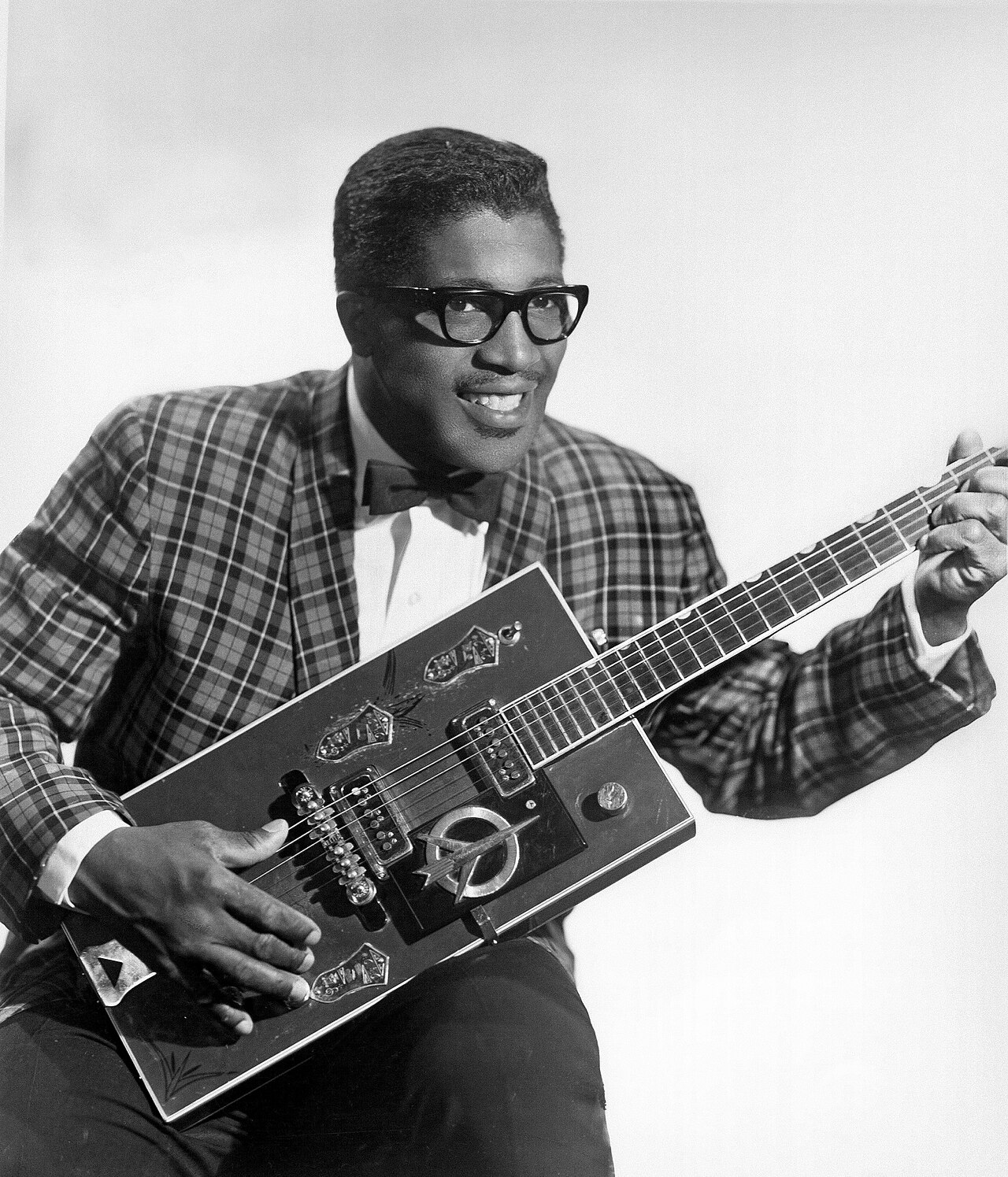
The Bo Diddley influence is the most direct and most structural: the specific rhythmic feel of the Bo Diddley beat — the syncopated, off-beat rhythmic pattern built from the maracas and the guitar — runs through Thorogood’s approach to the guitar as a rhythmic instrument. Like Bo Diddley, Thorogood plays guitar that is as much about the groove and the drive as it is about the notes. His thumb-and-fingerpicked playing style — documented in the Epiphone signature guitar materials as a fundamental element of his ES-125 approach — produces a specific rhythmic character from the archtop hollow body: the thumb driving the bass strings, the fingers picking the treble strings independently, the whole right hand functioning as a percussive ensemble rather than a single picking unit. This thumb-and-fingerpick style, applied to the ES-125’s hollow-body resonance and the P-90 pickups’ specific tonal character, is the specific physical technique at the heart of his sound.
Elmore James is the other primary influence — the Chicago slide guitarist whose fierce, amplified slide work on “Dust My Broom” and related recordings established the electric slide guitar tradition that Thorogood has spent fifty years celebrating. Elmore James’s specific approach to the slide — aggressive, loud, with the metal slide producing a bright, cutting tone — is the model for Thorogood’s own slide work, roughened further by his own refinement: “On occasion, I’ve even roughened it up with sandpaper to make it scratchier so it really digs into the strings.” The sandpaper modification of the slide is the most specific and most characteristic gear detail in Thorogood’s documented equipment: not buying a different slide, not using a different material, but modifying the existing slide with sandpaper to make it rougher and more aggressive. This is the DIY approach of a guitarist who knows what he wants and is willing to modify the available tool rather than replace it.
The 50 for 50 tour (50 states in 50 days, 1981) is the specific promotional event that established Thorogood’s touring identity and demonstrated the specific combination of musical endurance and commercial commitment that has characterized his career. Fifty consecutive dates, one per day, across all fifty US states — a touring schedule that few bands have attempted and fewer have completed. This was the most targeted demonstration of what the Delaware Destroyers were: a band built for live performance, committed to the road as the primary delivery mechanism for the music, and physically capable of the sustained effort that fifty dates in fifty days required. The tour confirmed a reputation that the records had established; it also confirmed a musical endurance that explains why Thorogood was still touring at seventy-five, still performing the same music with the same commitment, still using a version of the same ES-125 and the custom-assembled Dual Showman-equivalent amp.
The Rig: George Thorogood’s Guitars, Amps, and Effects
Guitars
The Gibson ES-125TDC — the thinline single-cutaway variant of the student-grade ES-125 hollow-body archtop — is Thorogood’s primary guitar and the instrument at the center of his entire tonal identity. His specific example is a vintage late-1950s ES-125 with two dog-ear P-90 single-coil-sized pickups — the student guitar from the period when Gibson was producing affordable hollowbody archtops with the P-90 pickups that had been their premium pickup offering before the development of the humbucker. The ES-125 was never a prestige instrument — it was the affordable option for players who wanted the archtop acoustic-like feel of an f-hole hollowbody without the price of a ES-335 or ES-175. Thorogood’s choice of this instrument reflects his start as an acoustic player who needed the archtop resonance and the visual and tactile similarity to an acoustic guitar, combined with the practical consideration of price. The P-90 pickups in the ES-125 produce the specific warm, biting, nasty tonal character that distinguishes his sound from both the full-humbucker warmth of a Les Paul Standard and the single-coil clarity of a Stratocaster. “My original 125 and P-90s was a good blend — the tone was nasty and different. However, the pickups weren’t that powerful. If another guitarist was playing with me I got kind of left in the dust.” The power limitation of the original P-90s was addressed in the Epiphone White Fang signature through more powerful ProBucker P-90 units.
The Epiphone George Thorogood “White Fang” ES-125TDC — announced in 2019 for the Good to Be Bad Tour’s 45th anniversary — is Thorogood’s formal signature instrument: a single-cutaway hollow-body archtop in Bone White finish with a removable Cobra sticker that replicates the decal on his personal customized ES-125, ProBucker P-90 single-coil pickups, Diamond trapeze tailpiece, and Wilkinson Deluxe tuners. The “White Fang” name reflects both the guitar’s white finish and the specific aggressive character of his playing approach — fang-like, biting, with the specific P-90 nasty quality that has defined his sound across fifty years. “My new Epiphones are like riding a thoroughbred horse — you have to hold them back,” Thorogood said of the signature model, indicating the higher output and greater power of the ProBucker P-90s relative to his vintage original. The ProBucker P-90s use Alnico V magnets and period-correct design specifications as gold standard, providing both vintage tonal character and improved output power for the live performance context.
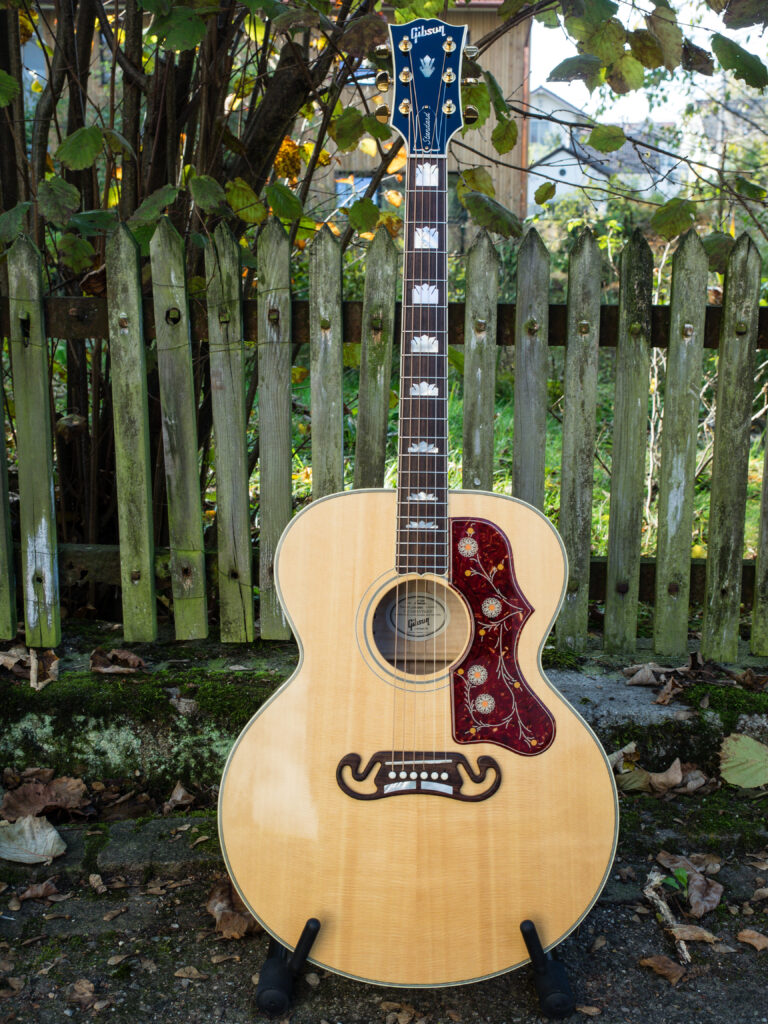
A Gibson J-200 acoustic guitar appears in Thorogood’s documented equipment from the Equipboard community — the large-body Gibson jumbo with the distinctive mustache bridge that provides maximum acoustic volume and a full, rich tone suited to a guitarist who started on acoustic and maintains an acoustic relationship to the guitar’s fundamental sound. The J-200’s arched maple back and sides produce a bright, balanced tone that suits Thorogood’s blues-acoustic playing when the electric setup is set aside.
A 1962 Fender Stratocaster is documented in Thorogood’s equipment alongside the primary ES-125 — a vintage Strat from the pre-CBS era that provides a completely different tonal character from the ES-125’s hollowbody P-90 voice. The ’62 Strat’s three single-coil pickups and the Fender scale length produce the specific bright, clear Stratocaster character for applications where the ES-125’s warmth and hollowbody resonance are not the right tonal choice.
George Thorogood specifically confirmed in the Guitar World “Dirty Talk” interview that “Bad to the Bone” features his slide playing in open G tuning. Open G (D-G-D-G-B-D, low to high) is the primary tuning of the Delta blues slide tradition — the same tuning associated with Robert Johnson, Muddy Waters, and the Chicago blues slide approach that is the direct antecedent of Thorogood’s playing. The open G chord as the natural resting position of all open strings enables the specific drone quality of the boogie-blues riff: the tonic chord available without fretting, the slide providing the chromatic approach notes and the melodic content above the open drone strings. It is also the tuning of Keith Richards’s rhythm guitar work — the “open G five-string” approach that Richards documented throughout the Rolling Stones’ classic period — which connects Thorogood’s slide approach to the same rhythmic and harmonic tradition that drives the boogie-blues genre at its best.
Amps
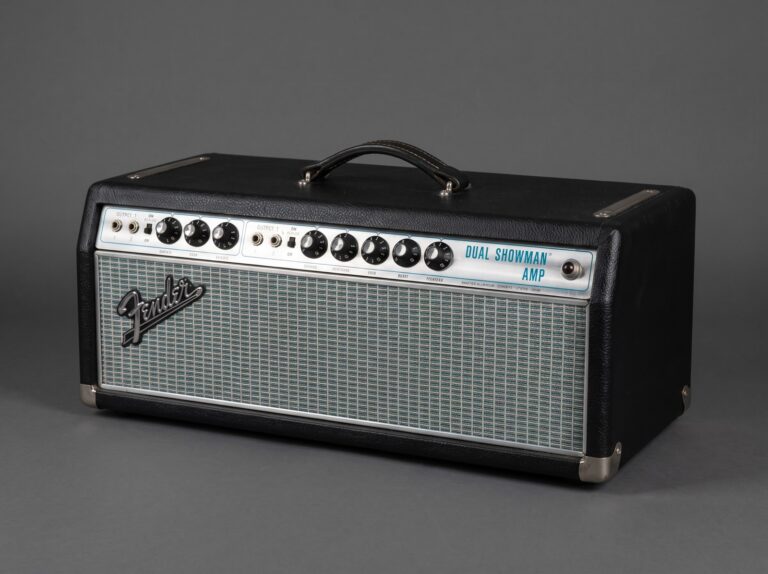
Thorogood’s live amplification is not a single identifiable commercial amplifier but a custom-assembled combination that his guitar tech built to approximate the Fender Dual Showman’s specific tonal character. “My tech put a combination of things in there to get it close to a Fender Dual Showman. It’s hard to pinpoint exactly what kind of amp I use. It’s custom-made with 12-inch speakers.” The Fender Dual Showman — a large-format, dual-speaker Fender head-and-cab combination originally designed for bass but adopted by guitarists for its extraordinary clean headroom and specific American 6L6-powered warmth — provides the specific quality that Thorogood seeks in his amplification: “loud, but it’s not distorted. It’s more distinct.” The 12-inch speakers in the custom combination provide the frequency response appropriate for the hollow-body ES-125’s acoustic character — the warmth and fullness of the hollow body needs amplification that doesn’t add hard edged distortion but amplifies the guitar’s natural resonance with sufficient power for the live performance context.
Alongside the custom tech-assembled rig, the Equipboard community documentation confirms that George “often times plays through a Fender Dual Showman” — specifically a Silverface version, the CBS-era production from 1968 onward that features a silver-and-blue front panel rather than the earlier black-and-gold Blackface design. The Silverface Dual Showman’s 100-watt 6L6-powered output produces the specific clean American Fender character — warm, full, with extraordinary clean headroom that requires significant volume to produce natural saturation. This clean, full character suits the ES-125’s hollow-body resonance without adding the aggressive coloration that would mask the acoustic complexity of the guitar’s natural voice.
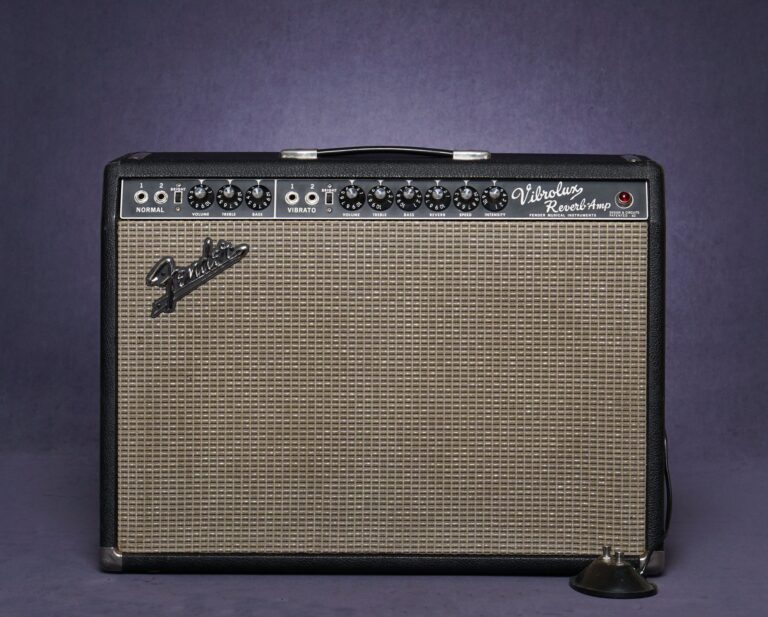
The Fender Vibrolux Reverb also appears in Thorogood’s documented amplification — the smaller-format Fender combo with built-in reverb and vibrato circuits. The Vibrolux’s lower power output (35 watts, two 10-inch speakers) produces natural saturation at more manageable volumes than the 100-watt Dual Showman, providing a different tonal option for contexts where the Dual Showman’s maximum clean headroom is more power than is required.
Effects
Thorogood uses a glass slide — specifically noted by Guitar Chalk as a medium or heavy glass slide worn on the ring finger — with a specific modification: “On occasion, I’ve even roughened it up with sandpaper to make it scratchier so it really digs into the strings.” This sandpaper modification of the slide surface is the most specific and most characteristic gear detail in Thorogood’s documented equipment. A roughened glass slide produces a different acoustic contact with the strings: instead of the smooth, gliding contact of polished glass, the roughened surface creates more friction as it moves across the strings, producing a slightly more aggressive, grittier attack. This is the specific tonal difference that Thorogood is seeking when he takes sandpaper to his slide: the extra bite, the additional scratchiness, the specific quality that makes the slide “really dig into the strings” rather than floating smoothly across them. It is also the most affordable possible instrument modification — sandpaper applied to a commercially available slide — and in this sense perfectly consistent with the same pragmatic, price-conscious approach that chose the ES-125 in the first place.
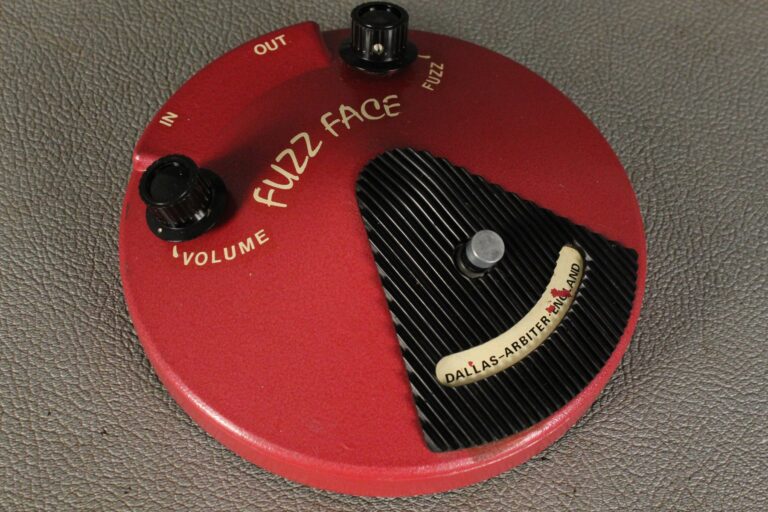
The Dunlop Dallas Arbiter Fuzz Face appears in Thorogood’s documented effects — the vintage-specification germanium fuzz pedal that is the foundational fuzz effect of British rock. The Fuzz Face’s specific germanium character — warmer, more organic than silicon fuzz designs, with a specific musical compression character — adds fuzz distortion to specific passages where the P-90 through the Dual Showman’s clean headroom needs additional harmonic complexity. Its use is selective rather than constant, applied where the musical content requires the fuzz character.
Thorogood’s right-hand playing technique — the thumb-and-fingerpick approach that the Epiphone signature materials describe as the “platform for his unique thumb-and-fingerpicked style” on the ES-125 — is as important to his sound as any hardware. The thumb provides the bass string drive; the fingers pick the treble strings independently in a pattern that combines single-string picking with strummed chord attacks. This technique, applied to the ES-125’s hollow-body resonance and the P-90 pickups’ acoustic character, produces the specific full-bodied, rhythmically complex quality of the Thorogood guitar sound — more percussively complete than standard single-pick approach, with the bass and treble strings functioning more independently than the unified pick stroke allows.
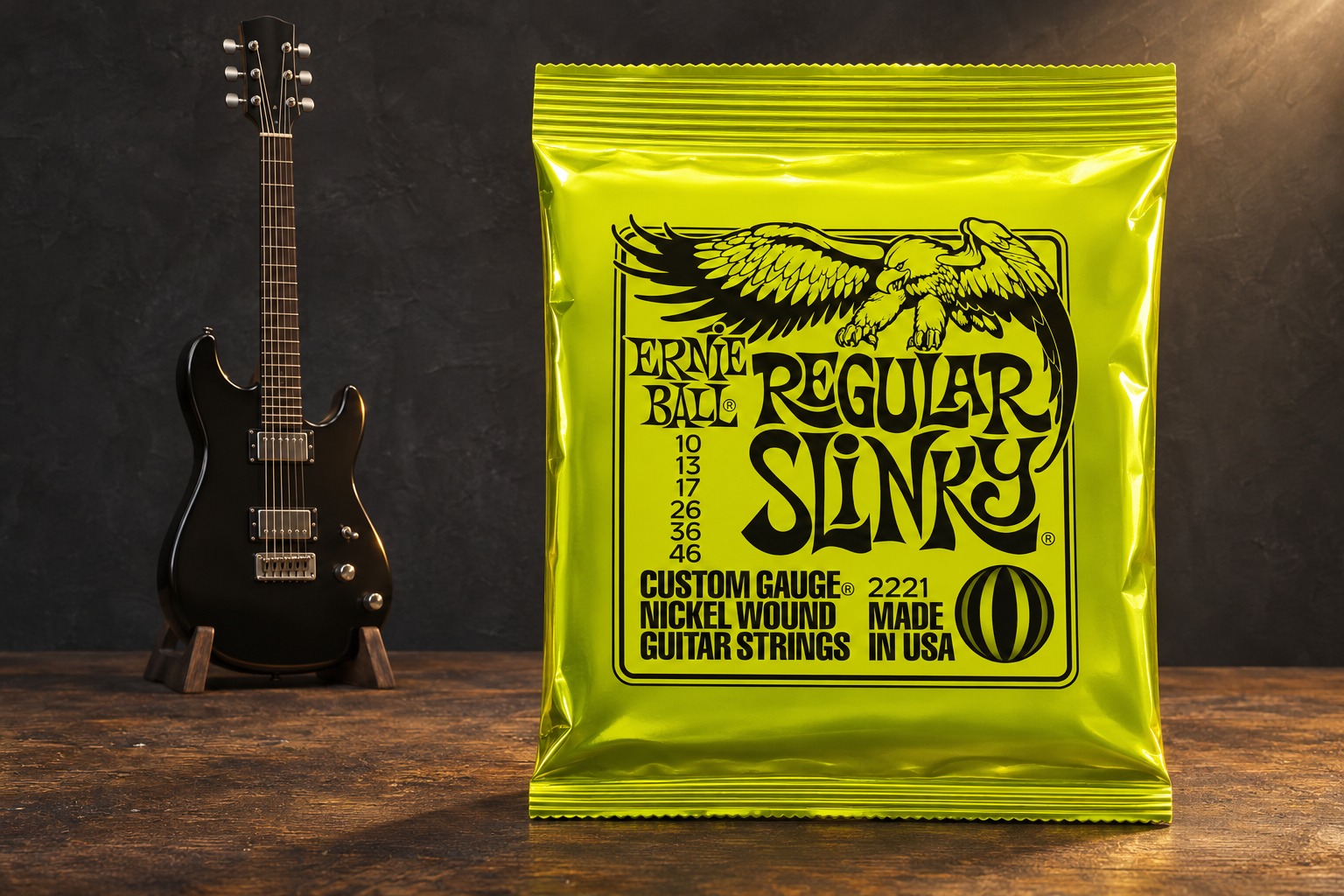
Ernie Ball Regular Slinky strings in .010-.046 gauge appear in Thorogood’s documented equipment — the standard medium-light gauge that provides the specific balance of bending ease (for slide work and expressive vibrato) and tonal weight (for the rhythmic driving of the boogie-blues approach) that his style requires.
Thorogood’s effects philosophy is minimal — the guitar and the amp provide the primary tonal character, with the Fuzz Face available as a selective addition for specific passages. This minimal approach is consistent with the blues tradition’s fundamental philosophy and with the specific acoustic-to-electric journey that the ES-125 represents: an acoustic player who chose an electric guitar that still felt like an acoustic is unlikely to build an elaborate effects chain between that guitar and the amplifier. The sound that matters is the guitar’s own sound, amplified.
The Epiphone White Fang’s name deserves specific attention as a piece of branding that captures Thorogood’s persona accurately. “White Fang” — the Jack London novel about a wild wolf-dog creature’s struggle and ultimate domestication — is not an obvious reference for a blues-rock guitarist from Delaware. But the fang quality is right: the biting, aggressive, slightly feral character of the P-90 through the Dual Showman, the rough-edged slide attack that the sandpapered glass produces, the physical commitment of the thumb-and-fingerpick approach — all of these have a fang quality, a willingness to dig in that the smooth-and-polished alternatives lack. And the white finish — the Bone White of the signature model — is the visual opposite of the conventional understanding of blues guitar aesthetics, which run toward sunburst and worn tobacco finishes and wood-grain natural finishes. White Fang. Unexpected. Correct. The student guitar in a white finish with a Cobra sticker and sandpapered slide, playing Bo Diddley and John Lee Hooker for people who needed to hear them. Fifty years. Fifteen million albums. Still bad to the bone.
His statement about what inspires him — the guitarists, not the guitars — is worth returning to as the conclusion of the gear documentation. “What inspired me were the guitar players themselves. I believe that no matter what guitar Jeff Beck picked up, he’d still sound like Jeff Beck. No matter what guitar Chuck Berry played, or Keith Richards — who plays a thousand different guitars — as soon as you hear him play, you know it’s Keith Richards.” This is the gear philosophy of someone who understands gear correctly: the equipment is the vehicle, the musician is the point, and the musician’s specific voice — the accumulated identity of everything they have heard, everything they have practiced, every commitment they have made to the music — comes through regardless of the specific hardware. George Thorogood sounds like George Thorogood regardless of which Gibson ES-125 he happens to have in his hands. The sandpaper helps. The open G helps. The Dual Showman helps. But the sound is the man.
Playing Style & Tone Philosophy
George Thorogood plays guitar with the specific conviction of a musician who believes completely in the music he plays — not as a performance of belief but as the genuine article. His guitar approach — the thumb-and-fingerpick technique, the aggressive sandpapered slide, the P-90 hollowbody through the Dual Showman, the open G tuning — serves the blues tradition as he understands it, which is as fire and fun delivered in equal parts. The “fire” is the aggressive, amplified slide attack, the rough-edged P-90 bite, the relentless drive of the boogie rhythm. The “fun” is the humor in “I Drink Alone,” the wit in “Bad to the Bone”‘s satire of its own swagger, the sheer joyful energy of a “Who Do You Love” that sounds like it is enjoying itself as much as anyone in the room.
“I want to be Jeff Beck. I want to be Keith Richards. I want to be Bo Diddley and Jimi Hendrix.” This statement — delivered in the Guitar World interview where Thorogood also explained why he chose the ES-125 because it was cheap and felt like an acoustic — is the most honest available summary of his aspirational framework. He knows exactly where the tradition he plays comes from. He knows exactly who its best practitioners are. He knows he is not them. And he plays it anyway, with everything he has, every night for fifty years, because the music is worth playing regardless of whether you are Jeff Beck or George Thorogood. This is the democratic quality of the blues tradition at its most explicit: the music belongs to everyone who loves it enough to play it with genuine commitment.
His amplification philosophy — the “real mutt” custom combination that his tech assembled to approximate the Fender Dual Showman — reflects the same pragmatic, music-first approach that chose the ES-125. You don’t need the most prestigious amplifier; you need the right sound for the music. The custom combination provides it. The Dual Showman provides the character. The ES-125 provides the guitar. The P-90s provide the bite. The sandpapered slide provides the scratch. And the thumb-and-fingerpick provides the rhythmic complexity that makes it all cohere into the specific thing that is the George Thorogood guitar sound — identifiable from the first note, built from affordable components assembled with specific musical intelligence.
How to Sound Like George Thorogood
The George Thorogood tone requires: a Gibson ES-125 or equivalent hollowbody archtop with P-90 pickups; open G tuning (D-G-D-G-B-D) for slide work; a glass slide roughened with sandpaper worn on the ring finger; a large-format American Fender amplifier (Dual Showman or equivalent) pushed for clean volume rather than preamp distortion; and the thumb-and-fingerpick right-hand technique. The Epiphone White Fang signature provides the most accessible version of the specific ES-125 specification at a price more consistent with the original instrument’s affordable origins.
| Control | Setting (0–10) | Notes |
|---|---|---|
| Fender Dual Showman / Equivalent (Primary Clean Amp) | Volume: 7–8; Treble: 6–7; Bass: 5; Mid: 7–8 | “Loud, but it’s not distorted.” Push the Dual Showman’s 100 watts for the clean volume that makes the ES-125’s hollow body resonate naturally at the performing level without the amp providing additional distortion. The ES-125’s own acoustic resonance and the P-90’s character provide all the sonic complexity; the amp’s job is to amplify rather than color. |
| P-90 Pickup Selection | Bridge for slide and drive; neck for cleaner lead | The dog-ear P-90 bridge pickup provides the “nasty and different” character Thorogood identifies as his primary sound — the bite and aggression of the P-90’s ceramic or alnico character in the bridge position, bright enough for slide attack, warm enough for the hollowbody’s natural resonance. |
| Open G Tuning (Slide and Boogie) | D-G-D-G-B-D (low to high) | From standard: lower string 6 (E→D), string 5 (A→G), string 1 (E→D). Strings 2, 3, 4 stay at B, G, D. Result: open G major chord (D-G-D-G-B-D). The boogie-blues riff of “Bad to the Bone” operates from this foundation — the open chord providing the tonic drone, the slide providing the movement above. |
| Glass Slide (Sandpapered) | Ring finger; above fret; roughened surface | Use a medium or heavy glass slide on the ring finger. Lightly roughen the slide surface with sandpaper (fine grit, 220+) to add the scratchiness Thorogood describes — the slide “really digs into the strings.” Don’t over-roughen; a few passes of fine sandpaper produce the right additional texture without damaging the slide’s fundamental glass character. |
| Thumb-and-Fingerpick Right Hand | Thumb drives bass; fingers pick treble independently | The primary technique difference from standard pick playing. The thumb picks the bass strings downward while the index and middle fingers pick the treble strings upward and in various combinations. This produces a fuller, more rhythmically complex guitar texture than a flat pick provides — the bass and treble functioning more independently. Practice bass-string thumb attacks while the fingers pick treble strings simultaneously. |
| Dunlop Fuzz Face (Selective — Specific Passages) | Fuzz: 6; Volume: 7 | Used selectively rather than as a constant component. The Fuzz Face adds harmonic fuzz to specific passages where the P-90/Dual Showman combination needs additional distortion character. Germanium Fuzz Face settings: lower fuzz for the organic, warm character; higher volume to compensate for the germanium’s output reduction. Engage only where the music requires it. |
Influence & Legacy
George Thorogood’s influence on the blues-rock tradition is concentrated in the specific function he has served across fifty years: keeping the original American blues tradition audible to audiences who might not have sought it out independently, performing it with enough personal commitment and musical fire that even listeners who arrived for “Bad to the Bone” in Terminator 2 found themselves in the presence of John Lee Hooker and Elmore James and Bo Diddley. This is not a small contribution. The blues tradition’s survival as a culturally living tradition rather than as a museum object depends on performers who play it with the same conviction as if it were their own, and Thorogood has done this consistently across a career that spans from the late 1970s to the present.
The “Bad to the Bone” riff — the slide-guitar-over-open-G-boogie that has appeared in more films and television shows and advertising campaigns than almost any other guitar figure in the American cultural landscape — is the specific sonic artifact through which his influence is most broadly distributed. Whether or not the listener knows the song is George Thorogood, they know the riff, and the riff carries with it the specific tonal character of the ES-125 P-90 through the Dual Showman-equivalent, the open G tuning, and the sandpapered glass slide. This is, in the most practical sense, how a guitar tradition reaches people who aren’t looking for it: through the rock film score, through the television advertisement, through the bar-band set list that borrows the riff without knowing the original. Thorogood put it there. The tradition reaches through him.
For the slide guitar tradition that Thorogood most directly extends, see Sonny Landreth’s behind-the-glass approach — a guitarist who developed the most technically complex version of the same slide tradition from a different regional base. The open G tuning’s connection to the Rolling Stones tradition runs through Ron Wood’s copper pipe slide approach — another rock guitarist whose slide work is rooted in the same prewar blues vocabulary. And the hollow-body ES-125’s P-90 tradition connects to Charlie Starr’s Les Paul Junior P-90 approach — a different body style but the same pickup family and the same pragmatic choice of an affordable instrument that happens to sound exactly right.
The student guitar. Cheap, because it was cheap. Felt like an acoustic, because he came from acoustic. Has been in his hands for fifty years. Has generated fifteen million album sales. Has appeared in Terminator 2. Has kept the spirit of Elmore James and Bo Diddley and John Lee Hooker alive for MTV-era audiences who needed to hear it. The ES-125 was inexpensive. It became irreplaceable. This is the gear story in its most concentrated form.
Frequently Asked Questions: George Thorogood Guitars & Gear
What guitar does George Thorogood use?
George Thorogood’s primary guitar is a vintage Gibson ES-125TDC — a late-1950s single-cutaway hollowbody archtop with two dog-ear P-90 pickups. He chose the ES-125 originally because it felt like playing an acoustic guitar (the archtop and f-holes retaining the acoustic-like character he was used to) and because it was affordable: “The price. It was inexpensive.” His signature guitar is the Epiphone George Thorogood “White Fang” ES-125TDC, introduced in 2019 in Bone White with a removable Cobra sticker that replicates his personal ES-125’s decal, ProBucker P-90 pickups for improved power over the vintage originals, and Diamond trapeze tailpiece. He also uses a Gibson J-200 acoustic and a 1962 Fender Stratocaster for specific applications.
What amplifier does George Thorogood use?
“My amplifier situation is a real mutt,” Thorogood has said. “My tech put a combination of things in there to get it close to a Fender Dual Showman. It’s hard to pinpoint exactly what kind of amp I use. It’s custom-made with 12-inch speakers.” His tech assembled a custom combination of components to approximate the Fender Dual Showman’s specific tonal character — a large-format, high-powered American Fender amplification design known for its extraordinary clean headroom and 6L6-powered warmth. He also plays through a Fender Silverface Dual Showman in various live contexts, and a Fender Vibrolux Reverb for lower-volume applications. The consistent element: the Fender family’s clean, warm American character rather than the British Marshall’s more aggressive midrange presence.
What tuning does George Thorogood use for “Bad to the Bone”?
“Bad to the Bone” features Thorogood’s slide playing in open G tuning, as he confirmed in a Guitar World interview. Open G tuning (D-G-D-G-B-D, from low to high) is one of the primary tunings of the Delta blues slide tradition — the same tuning associated with Robert Johnson, Muddy Waters, and the Chicago blues slide approach that is the direct antecedent of Thorogood’s playing. In open G, all open strings produce a G major chord, enabling straight-bar major chords at every fret position and the specific drone quality of the boogie-blues riff: the tonic chord available without fretting, the slide providing the melodic content above the open drone strings.
What is unusual about George Thorogood’s slide technique?
Beyond the open G tuning, Thorogood has specifically mentioned modifying his glass slide with sandpaper to alter its tonal character: “On occasion, I’ve even roughened it up with sandpaper to make it scratchier so it really digs into the strings.” He wears the slide on his ring finger. The sandpaper modification creates more surface friction when the slide moves across the strings, producing a grittier, more aggressive attack compared to a polished glass slide’s smooth glide. He also employs a distinctive thumb-and-fingerpick right-hand technique — thumb driving the bass strings, fingers picking treble strings independently — rather than using a single flat pick. This technique, developed from his acoustic guitar background, gives the ES-125 hollowbody a fuller, more rhythmically complex character than standard pick-only technique.
Why is “Bad to the Bone” so culturally ubiquitous?
“Bad to the Bone” (1982) has appeared in Miami Vice, Terminator 2: Judgment Day, and dozens of other films and television programs, becoming one of the most frequently licensed guitar riffs in American popular culture as a cultural shorthand for a specific brand of tough swagger. The song’s opening slide-guitar riff — the ES-125 P-90 through the Dual Showman in open G tuning, with the sandpapered glass slide — is immediately and globally recognizable. The song’s own lyrics treat the “badass” persona with some satirical self-awareness, which may partly explain its durability: it knows what it is, and it plays that straight. Thorogood has always been rightfully proud of the original compositions in his catalog, and “Bad to the Bone” is the one that has most extensively crossed into the broader pop culture landscape.
How has George Thorogood served the blues tradition?
Thorogood has spent his career performing covers of classic American blues, country, and rock and roll recordings alongside his original compositions — reverently reinventing songs by Bo Diddley, John Lee Hooker, Hank Williams, Muddy Waters, Elmore James, and Chuck Berry for audiences who might not have sought out the originals independently. His band’s official biography describes this as “keeping the music of these American Masters alive for the MTV Generation and beyond” — a cultural service that the blues tradition’s survival as a living tradition rather than a museum exhibit depends on. He describes the music as “American music” — a deliberately inclusive self-description that positions him as a carrier of a tradition rather than as an originator.
What is the significance of George Thorogood’s 50 for 50 tour?
The 50 for 50 tour (1981) was George Thorogood and the Destroyers performing 50 consecutive shows in 50 different US states in 50 days — one performance per day across the entire country without a day off. It remains one of the most ambitious touring schedules attempted by any rock or blues act, and it established Thorogood’s identity as a live performer of exceptional endurance and commitment. The tour simultaneously served as a promotional effort for the music and as a demonstration of the band’s physical and musical capability, confirming what the recordings had established: that this was a band built for live performance and committed to it as the primary delivery mechanism for their music.
Image credits
- Ernie Ball Regular Slinky Strings .010-.046 (Documented): GuitarGangsters AI-generated reference illustration, not a photograph.
- Bo Diddley: Unknown photographer, Wikimedia Commons, Public Domain (PD-US-no notice).
- Top image: Matt Becker, Wikimedia Commons, CC BY 3.0.
- Fender Vibrolux Reverb: Tonereport, Wikimedia Commons, CC BY-SA 4.0.
- Dallas Arbiter Fuzz Face: sploshette, Wikimedia Commons, CC BY 2.0.
- Gibson SJ-200: Gibb Stutz, Wikimedia Commons, CC BY 3.0.
- Fender Dual Showman: GuitarGangsters AI-generated reference illustration, not a photograph.