Rick Derringer Guitars & Gear: The Complete Guide to the All-American Guitar Hero’s Rig
Rick Derringer guitars & gear: the McCoys, Edgar Winter Group, and Rock and Roll Hoochie Koo. Gibson Explorer, ES-355, DiMarzio signature, and the full rig guide.
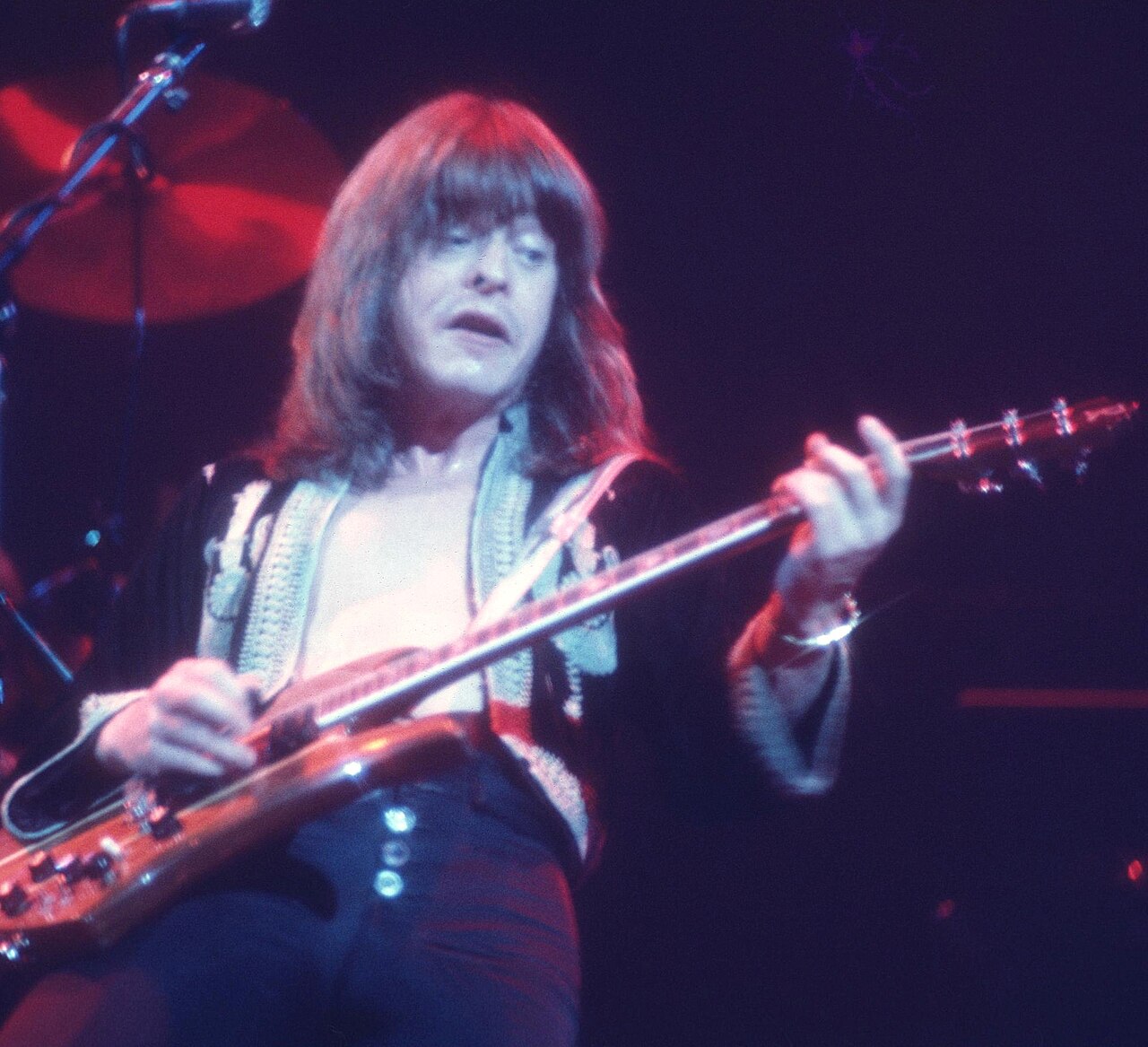
Photo by Jim Summaria, licensed under CC BY-SA 3.0. Work: Rick Derringer.jpg. Licence: https://creativecommons.org/licenses/by-sa/3.0/ Source: https://commons.wikimedia.org/wiki/File:Rick_Derringer.jpg Site copy resized and re-encoded. Site adaptation also CC BY-SA 3.0.
In the middle of a McCoys concert in Miami around 1966, Rick Derringer reached for a Supro guitar tuned to an open tuning and started playing slide. In the audience, watching, was a young Duane Allman — not yet the legendary slide player he would become, but already an accomplished electric guitarist who had never tried the technique because, as he later told Derringer, he “thought of slide as some kind of ethnic blues sound that wasn’t his.” Derringer’s casual, mid-show deployment of slide guitar in a hard rock context changed everything for Allman. “He told me I was responsible for him taking up slide,” Derringer recalled with characteristic understatement. “He’d always played electric, but seeing me use the slide in that kind of rock ‘n’ roll context gave him the inspiration to make it work for him.” If Duane Allman’s slide playing is the single most influential guitar performance style in American rock — and there’s a reasonable argument that it is — then a portion of that lineage runs through a McCoys concert in Miami in 1966, and through Rick Derringer pulling out a Supro in open tuning on stage. That’s the kind of guitarist Rick Derringer was: profoundly influential in ways that don’t always appear on his own marquee.
Richard Dean Zehringer was born on August 5, 1947, in Fort Recovery, Ohio — a small town about fifty miles northwest of Dayton, the kind of place that doesn’t appear in any rock mythology but that somehow produces, periodically, musicians with enough genuine talent and ambition to escape its gravitational pull. He started playing guitar at age nine — electric from the start, on a Supro with a small Gibson amp — and by age eleven was playing in a band with his neighbor, whom he was teaching bass while using the Ventures as a musical reference point. The band was called, eventually, the McCoys, after a Ventures album track. By the time Rick was turning seventeen, the McCoys had a number-one hit with “Hang On Sloopy” and had opened for the Rolling Stones on their first American tour. He had experienced what he called “what it was like to be a Beatle.” At seventeen years old.
The subsequent career arc is one of rock history’s more instructive examples of genuine talent in service of other people’s music while somehow also producing landmark recordings of one’s own. Derringer produced and performed on Johnny Winter’s breakthrough albums. He produced Edgar Winter’s They Only Come Out at Night — the album that contained “Frankenstein” and “Free Ride” and became one of the best-selling rock albums of 1972–73. He wrote “Rock and Roll, Hoochie Koo,” one of the defining riffs of early-1970s American hard rock, and gave it to Johnny Winter before eventually recording his own superior version on his 1973 solo debut. He played guitar on albums by Steely Dan, Todd Rundgren, Alice Cooper, Kiss, Cyndi Lauper, and Barbra Streisand (yes, Barbra Streisand). He produced and performed on six Weird Al Yankovic albums, including playing the guitar solo on “Eat It” — a direct homage to Eddie Van Halen’s solo on the Michael Jackson song it parodies, executed because Derringer was the player the moment required. He wrote the Hulk Hogan theme for the WWF. He was a prolific, skilled, multi-purpose musical force who deserves far more individual recognition than he typically receives.
His death on May 26, 2025, at age 77, in Ormond Beach, Florida, came less than a year after Guitar Player’s 2024 interview in which Derringer — reflective, warm, clearly still engaged with the music and the memories — had discussed his career with the generosity of a man who had made peace with having been more significant than famous. He recalled that Duane Allman’s slide revelation had “blown his mind.” He confirmed that the “Hang On Sloopy” solo had been one take. He talked about Johnny Winter’s generosity in sharing blues knowledge — “specific things I didn’t know, tunings and slide guitar. He showed me because I asked him.” The interview read like a man summing up a life well spent in music, delivered without bitterness at the gap between his contributions and his marquee status. That gap is real, and this article is partly an attempt to address it.
His guitar work across the peak years — “Rock and Roll, Hoochie Koo,” the Edgar Winter Group recordings, the All-American Boy solo debut — reveals a player of remarkable versatility and taste: blues roots deep enough to have inspired Duane Allman, rock energy fierce enough to define an era’s guitar vocabulary, and production intelligence sophisticated enough to make other musicians’ albums better than they would have been without him. The gear he used across this work reflected the same eclectic intelligence — not a single consistent setup but the right instrument for each musical context, chosen with the practical knowledge of a working musician who understood what his tools were actually doing rather than just what they represented.
Background: From “Hang On Sloopy” to Hoochie Koo — The Career of a Professional Musical Catalyst
The McCoys story is rock and roll at its most pure and its most disorienting. In 1965, Rick Derringer was sixteen years old, playing in an Indiana garage band that had just been invited to record with Bert Berns — one of the era’s most accomplished pop-soul producers, responsible for “Twist and Shout,” “Piece of My Heart,” and many other productions. Berns put them in the studio, they recorded “Hang On Sloopy” in one session, and within weeks it was number one in the United States. The guitar solo was one take. “They said, ‘Now it’s time to play the solo,'” Derringer recalled. “I played it, and that was it. I just came up with it on the spot. I used a Gibson ES-355TD, without stereo.” That’s the factual record of one of the more celebrated guitar moments of the mid-1960s: improvised in the moment, on the first attempt, on a guitar he had bought with The McCoys’ advance money when he was around sixteen years old. It’s the kind of story that makes perfect sense about someone who would later tell Eddie Van Halen he inspired him, and go on to play the guitar solo in the Van Halen parody song “Eat It.”
The transition from teen-pop band to serious rock musician came through the relationship with Johnny Winter. After The McCoys’ success with “Hang On Sloopy” and several subsequent records, the band’s commercial momentum slowed. Their path forward — remarkably — was to become Johnny Winter And, the backing band for the albino Texas blues guitarist whose own commercial momentum was building. Derringer described the transformation explicitly: “I made sure the music became more commercial, more rock oriented. I wrote ‘Rock and Roll, Hoochie Koo’ — the rock was me and ‘hoochie koo’ was Johnny.” The creative division — Derringer bringing the hard rock energy, Winter contributing the blues authenticity — produced some of the more interesting American rock of the early 1970s, and more importantly gave Derringer a direct education in serious blues technique from one of its greatest practitioners. Winter “showed me specific things I didn’t know — tunings and slide guitar… He showed me because I asked him.” The generosity of great musicians sharing knowledge with curious younger players runs throughout this story.
The Edgar Winter chapter is where Derringer’s producer-performer combination reached its peak. He produced They Only Come Out at Night — giving it the commercial sheen and rock energy that made “Frankenstein” and “Free Ride” radio-friendly without compromising their musical substance — and then joined Edgar Winter’s band as the lead guitarist for the subsequent touring and recording work. “Frankenstein” is one of the most musically ambitious top-five hits in rock history: a synthesizer and sax instrumental built around a genuinely complicated rhythmic and harmonic structure, with Edgar Winter keyboard theatrics and Derringer’s guitar work providing the hard rock credibility. “Free Ride” is the complementary pop vehicle: clean, melodic, instantly memorable. Derringer’s dual role — the man who makes the album sound right and also plays on it — is the most challenging position in rock production, and he filled it on both counts.
The Duane Allman story, set in a Miami hotel room, is one of the more extraordinary moments of musical transmission in rock history. Allman, already a serious player, attributed his entire slide guitar vocabulary to a McCoys performance in 1966 — specifically to Derringer pulling out a Supro in open tuning and making slide work in a rock context. “Duane Allman told me he was inspired to pick up slide guitar because he saw me playing with the McCoys,” Derringer said. “That blows my mind.” The implications are significant: if Derringer had not done that specific thing at that specific show, Duane Allman might never have developed slide playing, and the entire Southern rock tradition that the Allman Brothers Band established through the Layla and other recordings and the Live at Fillmore East might have taken a fundamentally different form. Rock history is made of these contingencies, and Derringer’s specific contribution to this one deserves to be placed on the historical record.
The Rig: Rick Derringer’s Guitars, Amps, and Effects
Guitars
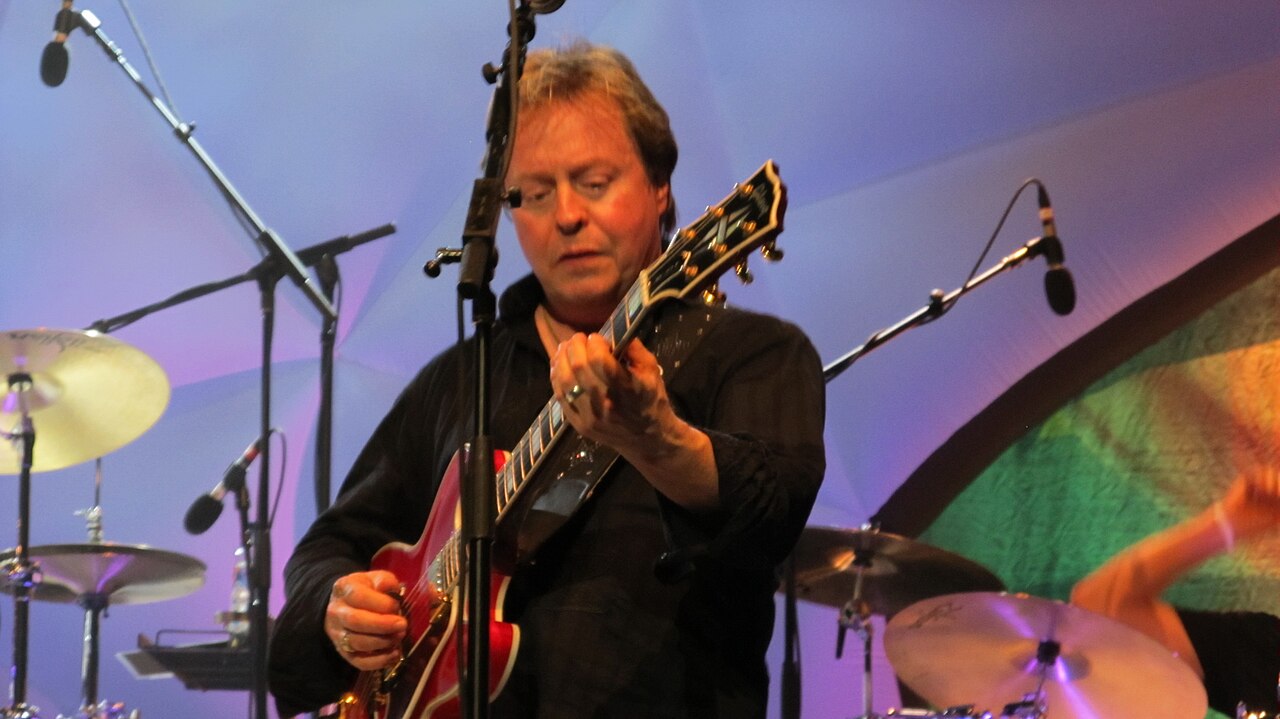
The guitar on which Rick Derringer improvised the “Hang On Sloopy” solo in a single take was a Gibson ES-355TD — the stereo-capable semi-hollow body variant of the ES-335, with a fancier cosmetic specification (multiple binding, block inlays, Varitone tone circuitry in the standard version, though Derringer specified “without stereo” when describing his instrument). He purchased this guitar new when he was approximately sixteen years old — directly after “Hang On Sloopy” became a hit, with the advance money the song generated. The ES-355 is visually and structurally similar to the ES-335 but positioned higher in Gibson’s semi-hollow hierarchy: the block inlays, the ebony fingerboard (in many examples), the multi-ply binding, and the overall quality of finish elevate it above the plainer 335 specification. Its semi-hollow body produces the characteristic warm-but-articulate tone of the ES family — not quite as acoustically complex as a fully hollow guitar like the Byrdland, but with enough acoustic resonance from the hollow chambers to add a specific warmth and bloom to the amplified signal. Derringer bought this guitar as a teenager and it became the instrument on which he established his initial musical identity. It is visible in photographs and album artwork from the Edgar Winter White Trash era.
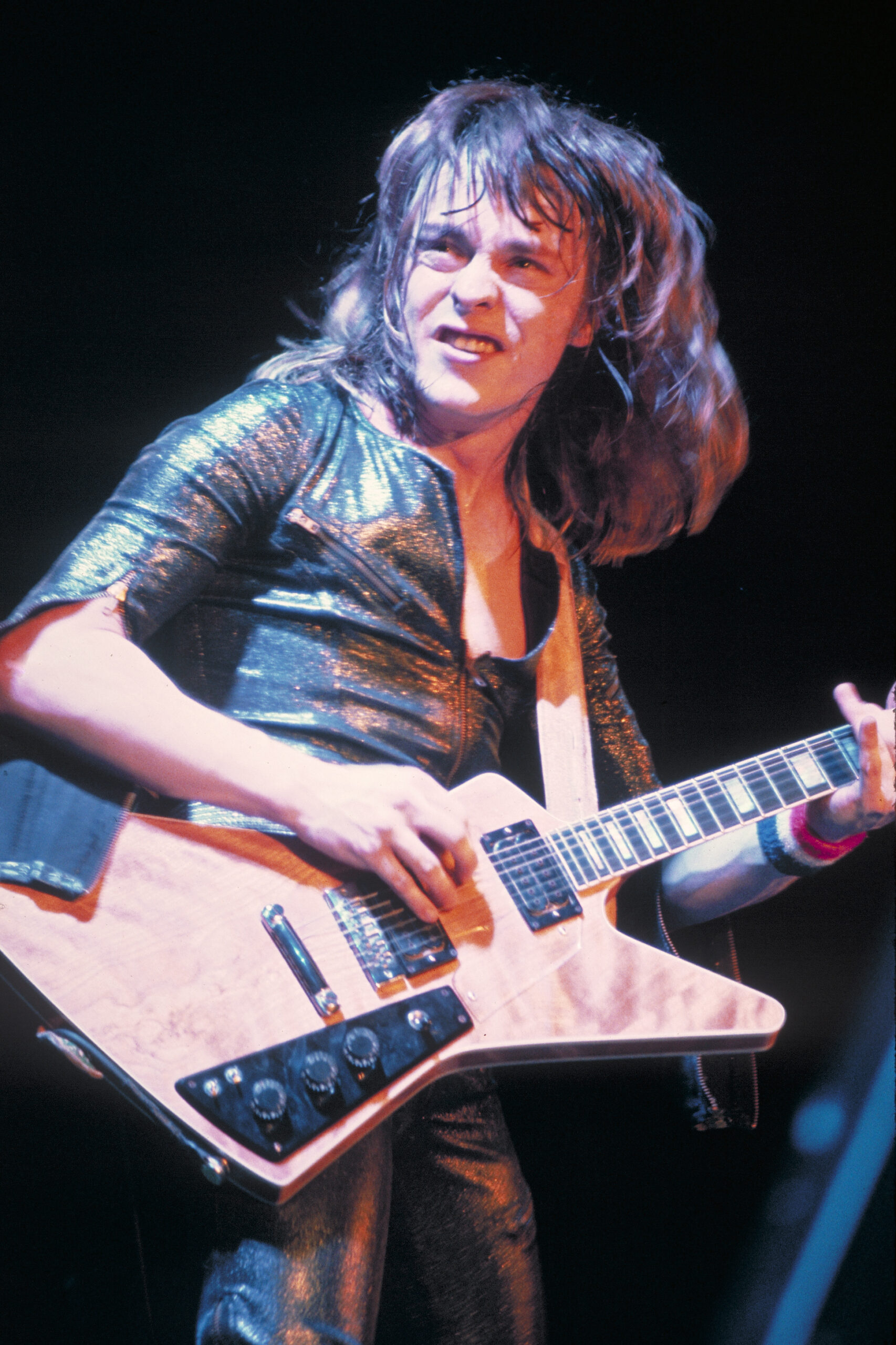
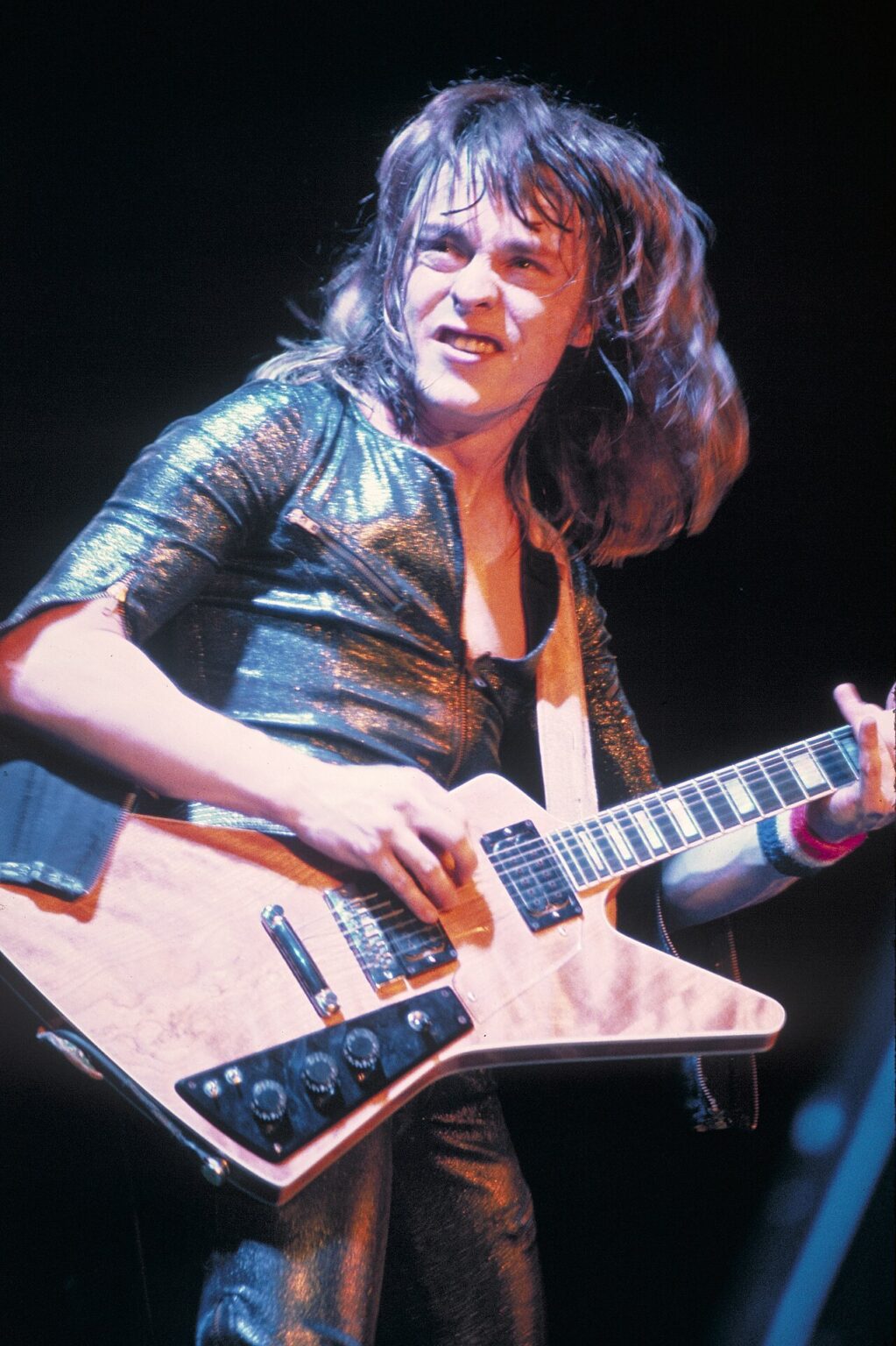
During the 1970s, Rick Derringer was closely identified with the Gibson Explorer — specifically a rare early example featuring a V-shaped “split” headstock that distinguishes it from the standard Explorer headstock. The split-V headstock variant is among the rarest of all Gibson Explorer configurations — Equipboard’s documentation identifies “reportedly fewer than 16 ever made” — making Derringer’s Explorer one of the most historically unusual instruments associated with a major rock guitarist. Guitar World, in its history of the Explorer guitar, specifically lists Derringer alongside Eric Clapton (who owned an Explorer with a portion of the lower bout sawed off), J. Geils, and Allen Collins of Lynyrd Skynyrd among the mid-1970s “early adopters” who established the Explorer as a viable rock instrument before the guitar’s subsequent mass adoption by the NWOBHM and metal scenes. The Explorer’s angular body shape produces a tone in the Gibson family — mahogany body and neck with dual humbucker pickups — but with slightly different resonant characteristics from the conventional Les Paul or SG body shapes. Derringer wielded this guitar extensively in the period of his Edgar Winter Group work and his solo debut era.
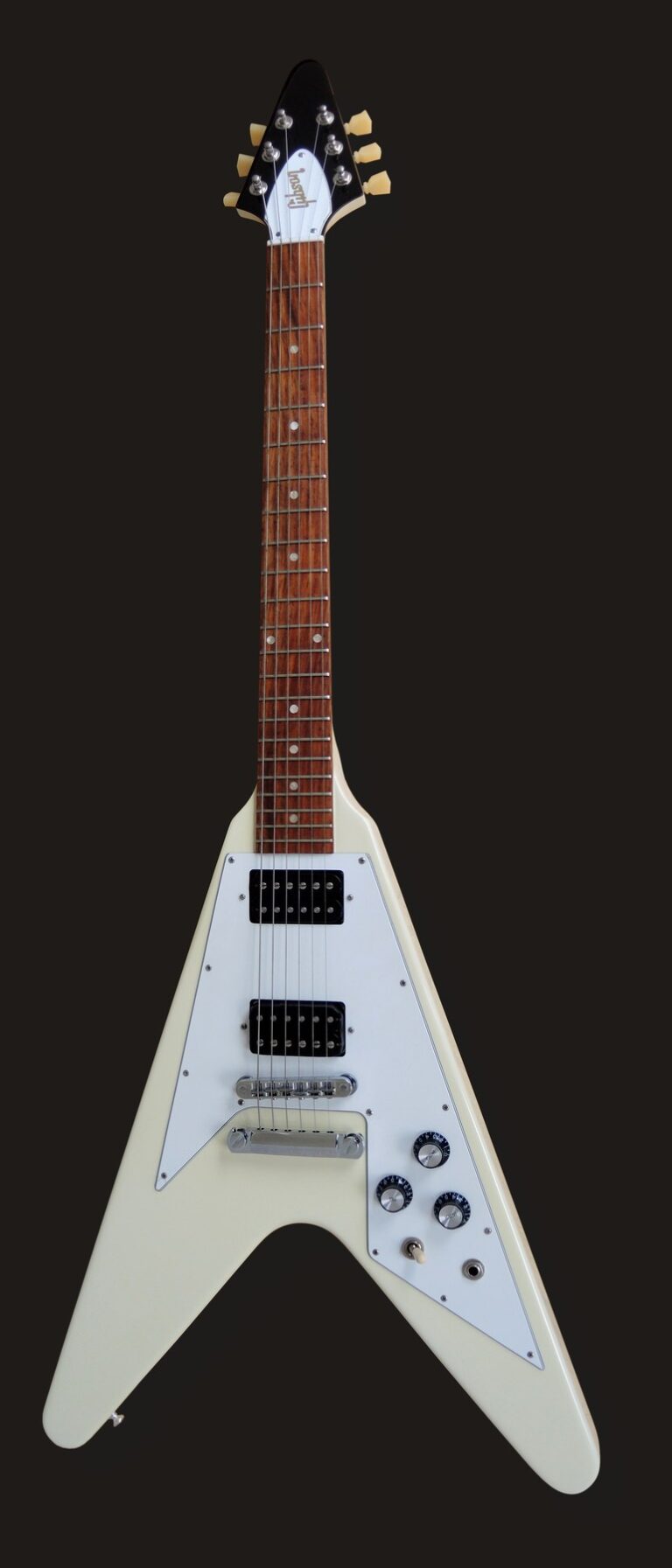
In addition to the Explorer, Derringer used Gibson Flying V guitars in various live and touring contexts. The Flying V produces a specific warm, mid-forward tone from its mahogany body construction and humbucker pickups, and its visual impact on stage is substantial. A period photograph documented by Guitar Player shows Derringer backstage at the Shaboo Inn in Willimantic, Connecticut with a Gibson Explorer before a performance with his Derringer band in June 1976 — the Explorer and Flying V guitars running in parallel as his primary angular-body working instruments through the decade.
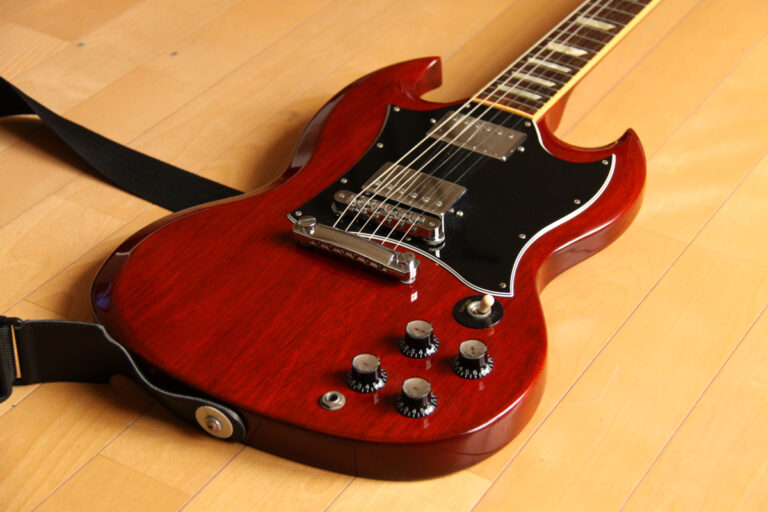
Gibson SG Standard guitars also appear in Derringer’s documented gear history — consistent with his position in the broader American hard rock tradition of the late 1960s and early 1970s where the SG’s double-cutaway design and humbucker tone was a natural working instrument choice. The SG’s lighter mahogany body and double-cutaway upper horn give it a somewhat different character from the LP — brighter in the upper registers, with different sustain characteristics — but the fundamental Gibson humbucker warmth remains consistent across both instruments.
The guitar that Derringer pulled out mid-McCoys set in Miami around 1966 — the instrument on which he played slide in open tuning that inspired Duane Allman to develop his own slide vocabulary — was a Supro. Supro was an American guitar brand produced by the National-Dobro / Valco company, known for small, affordable electric guitars and amplifiers that produced a specific, raw, slightly edgy tone quite different from the Gibson mainstream. The Supro’s tone through an open tuning with slide has a characteristic that suits blues and rock slide playing well: enough grit and bite to project in a live context, light enough construction to respond expressively to slide technique, and enough basic acoustic character to produce musical pitch with the sustained, gliding quality that good slide playing requires. Derringer’s use of this instrument in open tuning for the McCoys performance was, by Allman’s own account, the moment that changed American rock guitar’s relationship to slide technique.
In the early 1980s, DiMarzio — the New York-based pickup company whose Super Distortion and various other aftermarket humbucker designs had reshaped the replacement pickup market — produced a Rick Derringer Signature humbucker set. These pickups, designed with Derringer over the course of the endorsement relationship, were aimed at capturing the specific tonal character he had developed through the Explorer and Flying V years: “the clarity, punch, and swagger that defined a generation,” as one description puts it. The Derringer Signature set represents DiMarzio’s attempt to provide a pickup optimized for the blend of blues expressiveness and hard rock aggression that characterised Derringer’s playing — enough output and midrange presence for rock clarity, enough warmth and dynamic responsiveness for blues expression. The collaboration produced pickups that have been reassessed positively in recent years as serious collectors have engaged with Derringer’s broader legacy.
Given the breadth of Derringer’s session and production work — Johnny Winter, Edgar Winter, Steely Dan, Todd Rundgren, Alice Cooper, Kiss, Cyndi Lauper, Barbra Streisand, Weird Al Yankovic — his guitar arsenal necessarily extended beyond the primary instruments documented above. A working session guitarist at the level of New York’s most productive studios in the 1970s would have needed access to a wide range of instruments for different musical contexts. Clean, chimey tones for the Steely Dan sessions. High-gain rock for the Winter sessions. Whatever “Eat It” required to parody Eddie Van Halen convincingly. The specific instruments for each of these sessions are not comprehensively documented, but the general picture of a guitarist with a broad, well-maintained instrument collection assembled in service of diverse professional requirements is clear from the biographical record.
Amps
Rick Derringer’s primary live and studio amplification for the classic rock era — the Johnny Winter And period, the Edgar Winter Group work, and his solo debut — was built on Marshall amplification. The Marshall stack was the universal tool of American hard rock in this period, providing the British-voiced EL34 saturation and midrange push that suited the Gibson humbucker instruments Derringer was primarily using. His combination of the ES-355, the Explorer, or the Flying V through a Marshall stack produced the specific warm-but-aggressive rock tone that characterises the “Rock and Roll, Hoochie Koo” recordings and the Edgar Winter era work. The specific Marshall models he used — Super Lead, JMP, or JCM800 depending on the specific period — are not comprehensively documented in available sources, but the Marshall family provides the amplification foundation for his primary recorded work.
From the earliest origins of his playing career, Derringer used small Gibson amplifiers alongside his Supro guitar — the combination that gave him his initial electric guitar experience. “I had a Supro and a small Gibson amp; I was very happy with that setup” is his description of his earliest playing configuration, at age nine, and it captures both the modest origins of his gear journey and the specific American small-amp character that informed his early tonal sensibility.
The breadth of Derringer’s studio production and session work across four decades means his documented amplifier usage extended well beyond the Marshall primary of his classic period. Different studios, different productions, and different musical contexts each required different amplification approaches. As a producer as well as a performer, Derringer understood amplification from both sides of the glass — the player’s perspective of what felt right to play through, and the engineer’s perspective of what captured well on tape — giving him an unusually complete understanding of amplifier choice in recording contexts.
Effects
Derringer’s core approach to effects was consistent with the American hard rock tradition of the early 1970s: primary tone from guitar and amplifier, with effects used selectively for specific musical purposes rather than as permanent signal chain elements. The “Rock and Roll, Hoochie Koo” recordings and the Edgar Winter Group era work are characterized by direct, unprocessed guitar tone — the distinctive riff quality that defines the track comes from picking attack, humbucker output, and amplifier response rather than from effects chain architecture.
Derringer’s most historically significant “effect” is a technique rather than a device: his use of open tuning and slide guitar in a mainstream rock context — specifically in the McCoys performance that inspired Duane Allman. The Supro in open tuning, played with a bottleneck slide in a hard rock context, produced a specific tonal quality that was genuinely unusual for its time. Most rock guitarists of 1966 were not incorporating bottleneck slide into electric rock performance; the blues authenticity context of the slide tradition had separated it from the mainstream rock vocabulary. Derringer’s casual deployment of it on stage, in the middle of a McCoys set, made the technique available to someone who would go on to make it one of rock’s most celebrated guitar voices.
Wah pedals appear in Derringer’s documented studio and live work — used for specific passages in the Johnny Winter and Edgar Winter Group recordings where the vocal, sweeping quality of the wah adds expressiveness to extended lead passages. His wah use was selective rather than omnipresent, consistent with his overall approach of using effects to serve specific musical moments rather than as constant tonal backgrounds.
Derringer’s string gauge preferences are not thoroughly documented, but his playing approach — the aggressive picking technique of “Rock and Roll, Hoochie Koo,” the expressive string bending of his blues-derived lead work, the slide technique in open tuning — suggests a flexible approach to string choice based on the specific instrument and musical context rather than a single committed gauge philosophy. The blend of regular gauge for conventional playing and potentially lighter options for slide work reflects the practical requirements of a multi-technique player.
Derringer’s role as a producer of the recordings on which he also played guitar is worth considering as a specific kind of “gear” decision. In the studio, his production choices — microphone placement, amplifier selection, recording chain characteristics — were as much a part of creating the tonal identity of his guitar work as the physical instruments and amplifiers he used. The specific sound of “Rock and Roll, Hoochie Koo” on the All-American Boy album reflects not just his playing and his gear but his understanding as a producer of how to capture guitar in a way that serves the song’s energy and character. “I felt the version we’d cut with Johnny could’ve been better, so that’s what I tried to do. We sped it up and added the female background vocals. It became more of a rock-sounding record with more energy.” These are producer decisions as much as guitarist decisions, and they are inseparable from the final sonic result.
Playing Style & Tone Philosophy
Rick Derringer played guitar as the most versatile member of every context he operated in. This is simultaneously his greatest strength and the characteristic that made him more recognized by fellow musicians than by the general public. A guitarist who can play the blues that inspired Duane Allman’s slide technique, write a riff that defined 1970s American hard rock, improvise a guitar solo in a single take on a number-one pop hit at age sixteen, execute a Van Halen-style guitar solo for a parody song, and contribute meaningfully to Steely Dan’s sophisticated jazz-rock arrangements is a player with an unusually wide musical vocabulary and the taste and discipline to deploy it appropriately in each context.
His blues foundation is the through-line. Johnny Winter’s direct tutelage added specific slide and open tuning knowledge to what Derringer had developed independently. The result was a blues-rock guitarist who understood the American blues tradition not as an aesthetic pose but as a living vocabulary — the bends, the vibrato, the specific placement of notes in a blues phrase, the way silence functions as a musical element in the blues tradition. This foundation is audible in his best work: the “Rock and Roll, Hoochie Koo” solo has the commitment and conviction of someone who has internalized blues phrasing at a deep level, not someone playing blues vocabulary as a stylistic choice over a rock arrangement.
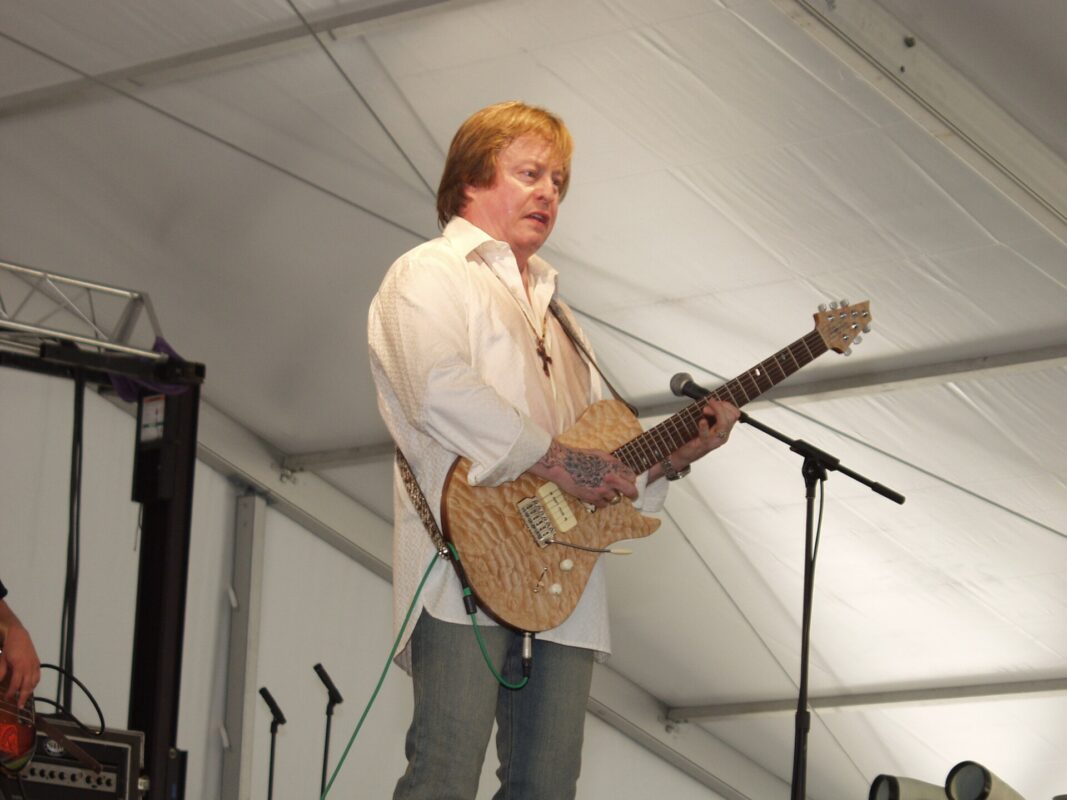
The versatility that made him such a valuable session and production musician also meant that his personal identity as a guitarist was sometimes less defined than players with a more singular, instantly recognizable approach. Where Paul Kossoff’s tone was unmistakably his from the first note, and where Leslie West’s P-90 through a Sunn PA head was recognizable before the first phrase was complete, Derringer’s approach was chameleonic — adaptable to context, serving the music rather than announcing the guitarist. This is a quality that is enormously valuable to the musicians who benefit from it and slightly invisible to the audiences who don’t think about it. The historical record — Allman’s slide technique, the Edgar Winter hits, the Hoochie Koo riff, the decades of session and production work — is the evidence of what this quality produces over a career.
His tone philosophy was practical and experimental — not defined by a single instrument/amp combination but by the right tool for the right musical moment. The ES-355 for “Hang On Sloopy.” The Explorer for the angular, aggressive hard rock of his peak years. The Supro in open tuning for the slide performance that changed a generation. The DiMarzio signature humbuckers for the heavy rock context of the early 1980s. The willingness to play the Van Halen solo for Weird Al because it needed to be done well and he was the person to do it. This is not a guitarist without convictions; it is a guitarist whose primary conviction is that the music always comes first, and that the equipment serves the music.
How to Sound Like Rick Derringer
The “Rock and Roll, Hoochie Koo” tone — the defining Derringer sound — is a Gibson humbucker guitar (Explorer or similar angular-body guitar for the visual authenticity, or any quality Gibson with PAF-style humbuckers for the tonal authenticity) through a Marshall amplifier pushed into natural EL34 saturation. The aggressive picking attack that drives the riff’s rhythmic energy is as important as the equipment — the tone of the track is partly physical, coming from the way Derringer’s right hand engages the strings with the committed energy that blues-trained technique produces. No effects for the core riff; selective wah use on extended lead passages.
| Control | Setting (0–10) | Notes |
|---|---|---|
| Gain / Preamp Volume | 7 | Moderate-to-high preamp gain — enough for natural Marshall saturation from the humbucker-equipped guitar, not heavy high-gain distortion. The “Rock and Roll, Hoochie Koo” tone has rock crunch with blues articulation — individual notes in a riff or solo should be audible, not smeared into a single compressed mass. |
| Bass | 6 | Moderate bass — the Gibson Explorer or ES-355’s mahogany construction has natural low-end warmth. Controlled bass preserves the rhythmic precision of the riff-oriented playing. Too much bass through a Marshall at high gain muddies the attacking riff energy. |
| Mid | 7 | Present midrange — the PAF humbucker’s midrange character is the seat of the tone’s authority. Mid-forward Marshall settings complement the Gibson humbucker’s natural voice and provide the cutting projection needed for the hard rock riff vocabulary. |
| Treble | 6–7 | Moderate-to-present treble for pick attack definition. The “Hoochie Koo” riff needs enough top-end clarity to hear the hammer-on technique and the note articulation. Not ice-pick bright; warm enough to feel like blues, clear enough to feel like rock. |
| Presence | 5–6 | Moderate presence for clarity and cut in the live or recording mix. The American hard rock context of Derringer’s primary work requires enough presence to project the guitar clearly without the aggressive cutting quality appropriate for British-influenced metal. |
| Master Volume | 7–9 | Push the master for EL34 output stage engagement. The natural power-amp saturation of a cranked Marshall provides the warmth and sustain that distinguish the classic Derringer tone from digital or solid-state approximations. |
| Pick Attack | Aggressive — blues commitment | The “Rock and Roll, Hoochie Koo” riff energy comes from the right hand. Derringer’s blues training produces a physical commitment to the attack that drives the riff’s momentum. Strike with conviction; let the blues foundation dictate the rhythmic placement. |
| Wah (Lead passages) | Dynamic — selective use | Used selectively for specific lead passages, not as a constant tonal presence. Sweep the wah for extended blues-influenced lead lines where the vocal, expressive quality of the sweep adds expressiveness. Disengage for rhythm work and the core riff. |
| Open Tuning (Slide work) | Open G or Open D | For the Supro-style slide technique inspired by Derringer’s McCoys-era approach: open G (D-G-D-G-B-D) or open D (D-A-D-F#-A-D) tuning, played with a smooth slide (porcelain or glass preferred for quiet operation). Position the slide above the fret for accurate pitch. Blues feel first; technical accuracy serves the expression. |
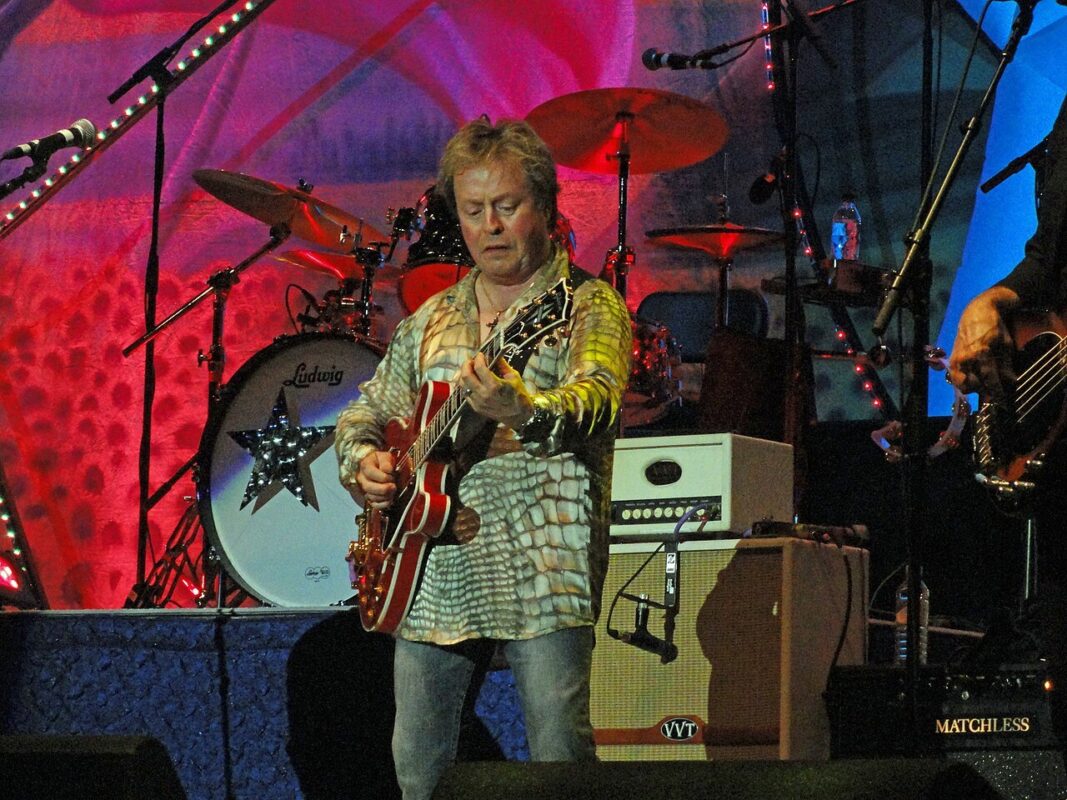
Influence & Legacy
Rick Derringer’s legacy operates on multiple levels simultaneously, which is partly why he doesn’t have the singular, immediately graspable cultural identity of some other players in this series. He wrote “Rock and Roll, Hoochie Koo” — a riff so effective that it has been used in movies, television, sporting events, and commercial contexts for fifty-plus years without ever sounding tired. He inspired Duane Allman’s slide guitar technique, which means his influence runs directly through one of the most imitated and celebrated guitar approaches in American rock history. He produced two of the best-selling rock albums of the early 1970s (the Edgar Winter albums) while also playing lead guitar on them. He developed a DiMarzio signature pickup in the early 1980s. He played the guitar solo in “Eat It.” He wrote the Hulk Hogan theme. If you are looking for a career that touched more of American popular music across more different contexts than almost any other guitarist of his generation while receiving less proportional individual credit — Rick Derringer is your man.
The Allman connection is worth emphasizing one more time because its implications are not fully appreciated. If Derringer had not played slide on stage at that Miami concert in 1966, Duane Allman’s musical development would have taken a different path. The Allman Brothers Band’s specific sound — the way it combined rock energy with blues expression through the particular vehicle of Duane’s slide technique — would have been different, or absent. The “Layla” guitar parts, constructed around Duane’s slide, would have been different. Derek Trucks, who has explicitly cited Duane’s slide work as the foundation of his own development, would have had a different template to work from. The ripple effects of a single Supro guitar in open tuning at a Miami club in 1966 extend, quite literally, across decades of American guitar playing. For more on the broader tradition of American blues-rock guitar from which Derringer emerged, see Leslie West’s Mountain era work — another player whose contributions to the Les Paul Junior tradition and the American hard rock sound are significant and underappreciated. The Edgar Winter Group context is further explored through the broader 1970s American rock scene, and Derringer’s connection to both the Allman tradition and the Winter brothers’ blues-rock lineage is documented through Alvin Lee’s parallel British contribution. The specific blues-rock influence chain that connects Derringer to the broader story runs through Johnny Winter’s gear history.
He was, in a phrase used in multiple tributes after his 2025 death, “one of rock’s greatest guitarists” — a designation that typically prompts the question “then why isn’t he more famous?” The answer is that he was more interested in being useful than in being famous, more interested in making the music as good as possible than in making sure his name was on the marquee. The Allman story is the most extreme version of this: he inspired one of the most influential guitar techniques in American rock history and didn’t know about it until Duane Allman told him, years later, in a hotel room. Derringer’s response — “That blows my mind” — is the response of a man who genuinely hadn’t been keeping score. He was just playing guitar from the stage in Miami, trying to make the set exciting, using a Supro in open tuning because it sounded interesting. That’s the Rick Derringer story in one sentence.
Frequently Asked Questions: Rick Derringer Guitars & Gear
What guitar did Rick Derringer use to record “Hang On Sloopy”?
Derringer confirmed in a 2024 Guitar Player interview that the “Hang On Sloopy” guitar solo — improvised in a single take — was recorded on a Gibson ES-355TD (without the stereo option). He purchased the guitar new at approximately age sixteen with advance money from The McCoys’ recording deal. The ES-355 is the higher-specification version of the semi-hollow body ES-335: more binding, block inlays, ebony fingerboard, and more elaborate cosmetic details, with the same fundamental semi-hollow body construction that produces the warm, articulate Gibson semi-hollow tone. The guitar is visible in photographs from the Edgar Winter White Trash Roadwork era and represents the first major guitar purchase of Derringer’s professional career.
What is the story of Rick Derringer inspiring Duane Allman to play slide guitar?
Around 1966, The McCoys were performing in Miami, and a young Duane Allman was in the audience. During the set, Derringer reached for a Supro guitar tuned to an open tuning and played slide — an unusual thing for a mainstream rock performer to do in 1966, when slide was still primarily associated with traditional blues rather than hard rock contexts. Allman, who had never explored slide playing because he thought of it as “some kind of ethnic blues sound that wasn’t his,” saw Derringer use the technique in a rock context and was immediately inspired to develop his own slide vocabulary. Years later, in a hotel room where Winter, Allman, and Derringer were together, Allman told Derringer the story directly. Derringer’s response: “That blows my mind.” The implications are significant — Allman’s subsequent development of slide guitar directly produced some of the most celebrated guitar work in American rock history, and a portion of that lineage runs directly through Derringer’s McCoys performance in Miami.
What guitar was Rick Derringer most associated with in the 1970s?
During his 1970s peak — the Edgar Winter Group era and his solo recording career — Derringer was closely associated with the Gibson Explorer, specifically a rare variant featuring a V-shaped “split” headstock of which fewer than sixteen examples are believed to have been made. Guitar World identified him as one of the mid-1970s “early adopters” who established the Explorer as a viable rock guitar before its subsequent mainstream adoption by NWOBHM and metal players. A June 1976 photograph taken backstage at the Shaboo Inn in Willimantic, Connecticut documents him with the Explorer before a Derringer band performance. He also used Gibson Flying V guitars and the earlier ES-355 in various live and recording contexts.
Did Rick Derringer have any signature guitar products?
Yes — DiMarzio produced a Rick Derringer Signature humbucker set in the early 1980s. These were custom-voiced pickups developed with Derringer to capture the specific tonal character he had developed through his Explorer and Flying V work: the blend of blues expressiveness and hard rock aggression that characterized his playing style. The pickups were designed for “clarity, punch, and swagger” — the tonal vocabulary of his best-known recordings. The Derringer Signature pickups have been reassessed positively in recent years as collectors have engaged more seriously with his broader legacy.
How was Rick Derringer involved with the Edgar Winter Group?
Derringer produced Edgar Winter’s They Only Come Out at Night (1972), which became one of the best-selling rock albums of that era and contained both “Frankenstein” and “Free Ride.” He subsequently joined Edgar Winter’s band as lead guitarist for the following album Shock Treatment (1974). His dual role — producer and guitarist — on the Edgar Winter albums reflects the specific quality that made him such a valuable musical collaborator: the ability to make sound decisions about how an album should be made (producer) while also being the right person to play guitar on it (performer). This combination is genuinely rare. He produced all four Edgar Winter White Trash and Edgar Winter Group albums during this period, contributing both production intelligence and guitar work.
What is Rick Derringer’s connection to the “Eat It” guitar solo?
In 1984, Rick Derringer played the guitar solo on Weird Al Yankovic’s “Eat It” — the parody of Michael Jackson’s “Beat It” whose video and musical arrangement directly mirrored the original. The original “Beat It” featured a guitar solo by Eddie Van Halen, specifically invited onto the track by Quincy Jones to add rock credibility to Jackson’s bid for rock crossover appeal. Van Halen’s solo became one of the most celebrated guitar performances of the era. When “Eat It” needed to parody it, Derringer was brought in to execute a guitar solo that captured the Van Halen approach convincingly. That the task was assigned to Derringer — rather than any of the other highly capable rock guitarists available in early 1980s New York — reflects both his professional standing and his technical ability to inhabit and execute the Van Halen tonal vocabulary convincingly. The resulting Grammy-winning song was a defining moment in Weird Al Yankovic’s career, with Derringer’s guitar work as a crucial element.
What did Rick Derringer learn from Johnny Winter?
Derringer described Johnny Winter’s generosity with technical knowledge as a significant element of his musical education: “Johnny was very generous about sharing his blues knowledge. He showed me specific things I didn’t know — tunings and slide guitar. It wasn’t because he wanted me to know these things — I asked him. I said, ‘Help me with these things.'” This exchange — between a rock-oriented guitarist who had already achieved commercial success and a blues master who was willing to share the specific techniques of the tradition he came from — enriched Derringer’s playing with a deeper blues vocabulary than he had previously possessed. The specific open tunings and slide techniques Winter showed him fed directly into the slide approach that Derringer had already been developing from his Supro-in-Miami origin, deepening and systematizing what had begun as an instinctive and somewhat accidental performance choice.
Image credits
- Rick Derringer: Carl Lender, Wikimedia Commons, CC BY 2.0.
- Rick Derringer: Dr Jean Fortunet, Wikimedia Commons, CC BY-SA 3.0.
- Top image: by Jim Summaria, Wikimedia Commons, CC BY-SA 3.0.
- Rick Derringer: photo by Carl Lender, via Wikimedia Commons, CC BY 2.0.
- Gibson Flying V: Monika Fischer (retouch: Auge=mit), Wikimedia Commons, CC BY-SA 2.5.
- Gibson SG Standard: Sonya, Wikimedia Commons, CC BY-SA 4.0.
- Rick Derringer live: Jim Summaria, Wikimedia Commons, CC BY-SA 3.0.
- Rick Derringer live: Phil Guest, Wikimedia Commons, CC BY-SA 2.0.