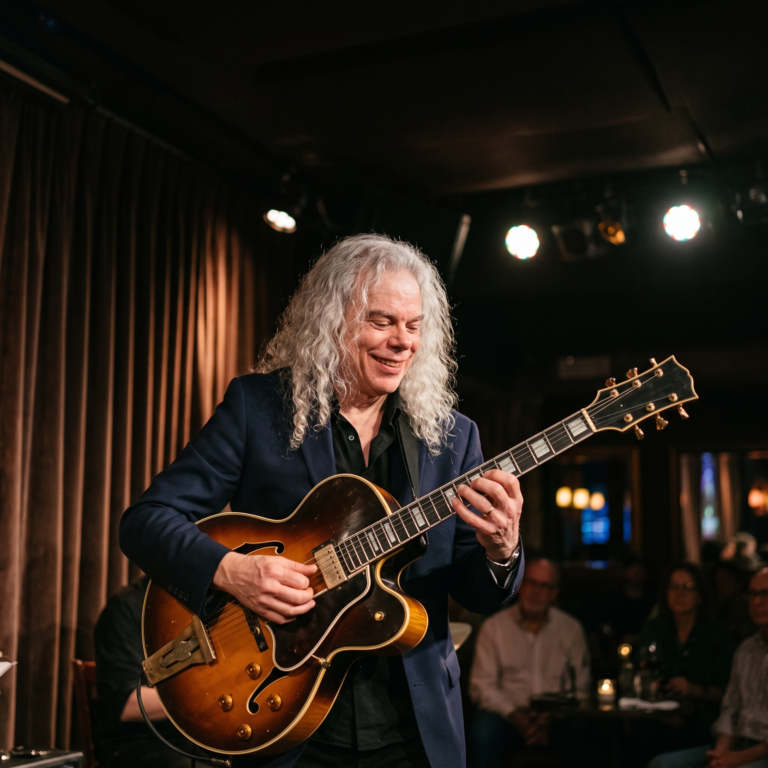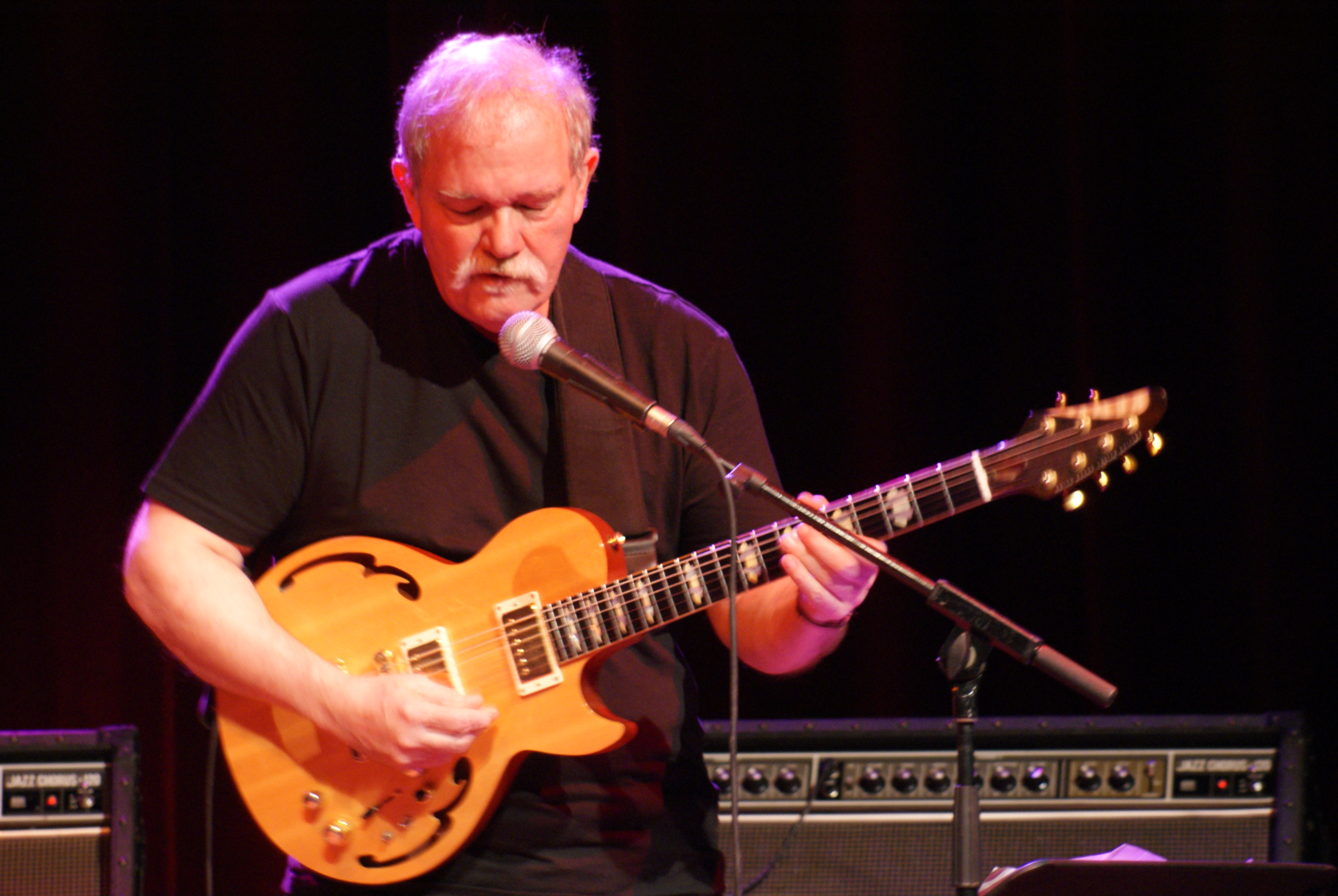
John Abercrombie Guitars & Gear: ECM’s Jazz Guitar Poet’s Complete Rig
John Abercrombie guitars gear — Gibson ES-335 and Polytone deep-dive for ECM's jazz guitar poet's lyrical warm tone and Roland GR-300 synth complete rig guide.
Jmreymond
Explore John Abercrombie guitars gear and you find the equipment behind one of the most poetic and most harmonically sophisticated voices in post-1970s jazz guitar — a Port Chester, New York-born musician whose ECM Records recordings placed him at the centre of a specific kind of meditation-inflected, harmonically adventurous jazz that was one of the most distinctive musical territories of the 1970s and 1980s. Abercrombie played with a lyrical intelligence and a harmonic depth that made him simultaneously one of the most technically accomplished jazz guitarists of his generation and one of the most emotionally direct. His ECM recordings — solo albums, duo recordings with Ralph Towner, trio and quartet recordings with Dave Holland and Jack DeJohnette — were consistently among the most beautiful guitar recordings available in the jazz tradition, and his equipment choices served this beauty with complete musical appropriateness.
This guide covers Abercrombie’s complete equipment picture: the Gibson guitars that defined his warm, singing jazz tone, the unusual guitar synthesiser work that extended his sonic range, the amplification and effects that gave the ECM recordings their specific character, and the playing philosophy of a musician who always understood that the jazz guitar’s highest purpose was melodic and harmonic beauty in service of genuine musical expression. Understanding John Abercrombie’s gear is understanding how the electric guitar can be a genuinely beautiful instrument when played with complete musical intelligence and complete emotional honesty.
Background
John Abercrombie was born on December 16, 1944, in Port Chester, New York. His early musical formation encompassed the mainstream jazz tradition — the bebop vocabulary, the post-bop harmonic language, and the specific guitar tradition of Wes Montgomery, Jim Hall, and the players who had developed the jazz guitar’s language from the swing era through the 1960s. He studied at the Berklee College of Music in Boston, where he absorbed both the technical foundation of jazz guitar and the broader musical education that Berklee’s curriculum provided.
His early professional work included playing with mainstream jazz artists and in the organ trio format before the musical associations that shaped his mature career. The connection with Billy Cobham — appearing on Cobham’s fusion-oriented recordings in the early 1970s — placed his playing in a more electric, more rock-influenced context than the acoustic jazz tradition he had primarily worked within, and gave his guitar work a wider commercial exposure than the purely acoustic jazz context had provided.
His association with ECM Records began with the album Timeless (1974) — a recording that documented his guitar approach with extraordinary clarity and that established the specific musical relationship with ECM that would define the most important period of his career. Subsequent ECM albums — Sargasso Sea (1976, with Ralph Towner), Characters (1977), Arcade (1978), Abercrombie Quartet (1979), and many others — showed a musician developing within an unusually productive creative relationship with both the label’s production aesthetic and the specific community of musicians that ECM brought together.
He died on August 22, 2017, leaving a body of ECM recordings that remained among the most consistently distinguished guitar recordings available in the jazz tradition and that documented one of the most complete and most genuinely original guitar voices of the late twentieth century.
John Abercrombie Guitars Gear: The Complete Rig
Guitars
John Abercrombie’s guitar choices reflected the specific demands of his jazz approach — warm, sustaining instruments that gave his melodic lines the specific singing quality that suited the lyrical, harmonically sophisticated music he was making.
His primary guitar was a Gibson ES-335 — the semi-hollow thinline archtop with PAF-spec humbucking pickups that was one of the primary instruments for the post-bop jazz guitar tradition. The ES-335’s specific combination of semi-hollow body resonance and humbucker warmth gave Abercrombie’s melodic lines their specific singing quality — the warmth of the humbucker’s lower midrange emphasis and the acoustic resonance of the semi-hollow body’s hollow sections combining to produce a sustained, vocal quality that suited the lyrical jazz melodic approach.
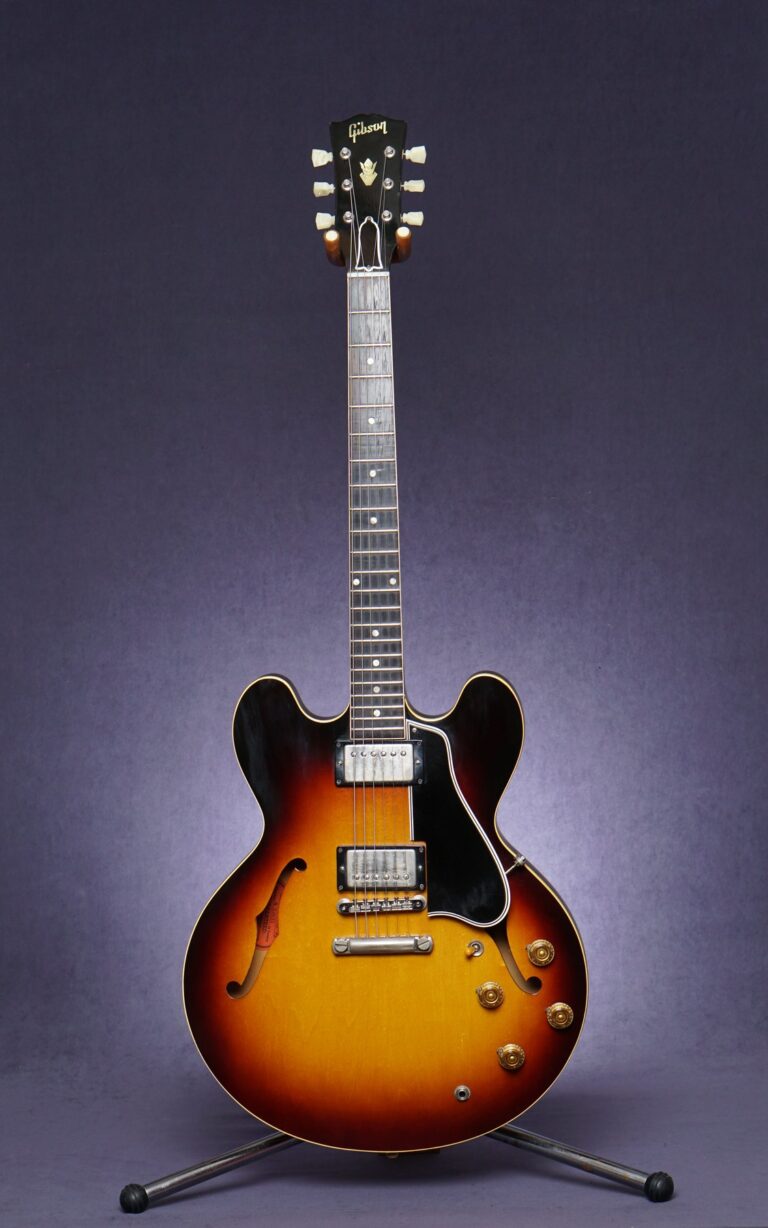
He also used a Gibson ES-345 — the stereo-capable ES-335 variant with the Varitone selector that provided additional tonal options. His ES-345 use gave him access to the Varitone’s midrange shaping options within the same basic semi-hollow Gibson framework that his ES-335 provided.
A significant and unusual element of his guitar setup was the guitar synthesiser — specifically the Roland GR-300 and its companion hexaphonic pickup, the Roland G-303 or G-808 guitar. The Roland GR-300 was one of the first commercially successful guitar synthesis systems, allowing the guitar’s pitch to control a synthesizer’s oscillators through a hexaphonic pickup that captured each string’s signal independently. For Abercrombie, the guitar synthesiser was not a gimmick but a genuine extension of the guitar’s sonic vocabulary — the synthesiser’s specific tonal character (the GR-300 had a particularly musical, warm analogue synthesis sound) gave specific passages a different textural dimension from the acoustic guitar sound without departing from the overall musical aesthetic of the ECM recordings.
His collaboration with guitar synthesiser technology was more musically motivated than most guitarists’ synthesis experiments — he used the technology to access specific tonal characters that the acoustic guitar didn’t provide, rather than using it for science-fiction sound effects. The GR-300’s brass and string ensemble patches, in particular, gave his chord voicings a specific warmth and fullness that complemented his regular jazz guitar sound.
String gauges were typically jazz standard — medium gauges (.010–.046 or similar) appropriate for the fingerstyle and flat-pick technique of jazz guitar playing.
Amps
Abercrombie’s amplification was oriented toward the warm, clean character appropriate for the jazz guitar tradition and for the ECM recording context — amplifiers that reproduced the guitar’s natural character with the warmth and presence that suited the lyrical playing approach.
His primary amplifier was a Polytone Mini-Brute — the solid-state combo amplifier that became a standard professional amplifier for jazz guitarists in the 1970s and 1980s. The Polytone’s solid-state circuitry produced a clean, warm character without the natural saturation and compression of valve amplifiers — giving jazz guitarists the clean, detailed reproduction of the guitar’s natural character that the jazz tradition typically required. The mini-Brute’s compact size and its specific warm solid-state character made it a practical and tonally appropriate choice for jazz guitar performance and recording.
He also used various small valve amplifiers for specific applications — particularly for the ECM recording sessions where the specific warmth of valve amplification suited the music more completely than the Polytone’s clean solid-state character.
The ECM recording approach — the same high-quality condenser microphones, appropriate rooms, and minimal processing that served Towner’s acoustic guitar recordings — gave Abercrombie’s amplified guitar its specific recorded character. The amplifier’s sound was captured through a microphone rather than through direct injection, preserving the specific acoustic character of the amplifier-speaker interaction that was part of the guitar’s overall tonal identity.
Effects
Abercrombie’s effects chain was more developed than many jazz guitarists maintained — reflecting both the ECM aesthetic’s openness to sonic experimentation and his specific interest in using technology to extend the guitar’s sonic possibilities without distorting its essential character.
The Roland GR-300 guitar synthesiser — described above in the Guitars section — was his most significant and most unusual effects element. The GR-300’s analogue synthesis gave him access to textural dimensions that acoustic guitar alone didn’t provide, and his musically intelligent use of the synthesiser’s specific characters gave the ECM recordings their specific quality of sonic variety within a consistent musical aesthetic.
An Echoplex tape echo appeared in his signal chain for the specific warm, organic delay character that suited the ECM recording aesthetic. His echo use was tasteful and musical — adding atmospheric depth to specific passages without the clinical precision of digital delay alternatives.
A volume pedal for dynamic control — particularly for the long, sustained melodic lines that characterised his most lyrical playing, where real-time dynamic shaping gave the melodies their specific expressive arc.
Various chorus and modulation effects appeared at different points in his career — the specific dimensional quality that chorus added to sustained chord voicings suited the ECM recordings’ aesthetic of spatial depth and harmonic richness.
Playing Style & Tone Philosophy
John Abercrombie’s playing style was defined by a specific combination of lyrical melodic intelligence and harmonic sophistication that placed him among the most musically thoughtful jazz guitarists of his era. His melodic lines were characterised by a specific quality of singing continuity — notes that connected to each other through harmonic logic rather than merely technical proximity, creating melodies that had the impression of inevitability rather than of improvisation.
His harmonic language reflected deep absorption of the post-bop jazz tradition — the harmonic extensions, the chromatic voice leading, the specific approach to the bebop vocabulary that Miles Davis, Bill Evans, and their contemporaries had established as the foundation for jazz in the 1960s — combined with the more open, more modal approach that ECM’s musical aesthetic encouraged. His chord voicings were typically open and spacious — leaving room for the bass and piano to provide additional harmonic context rather than filling every available register with guitar notes.
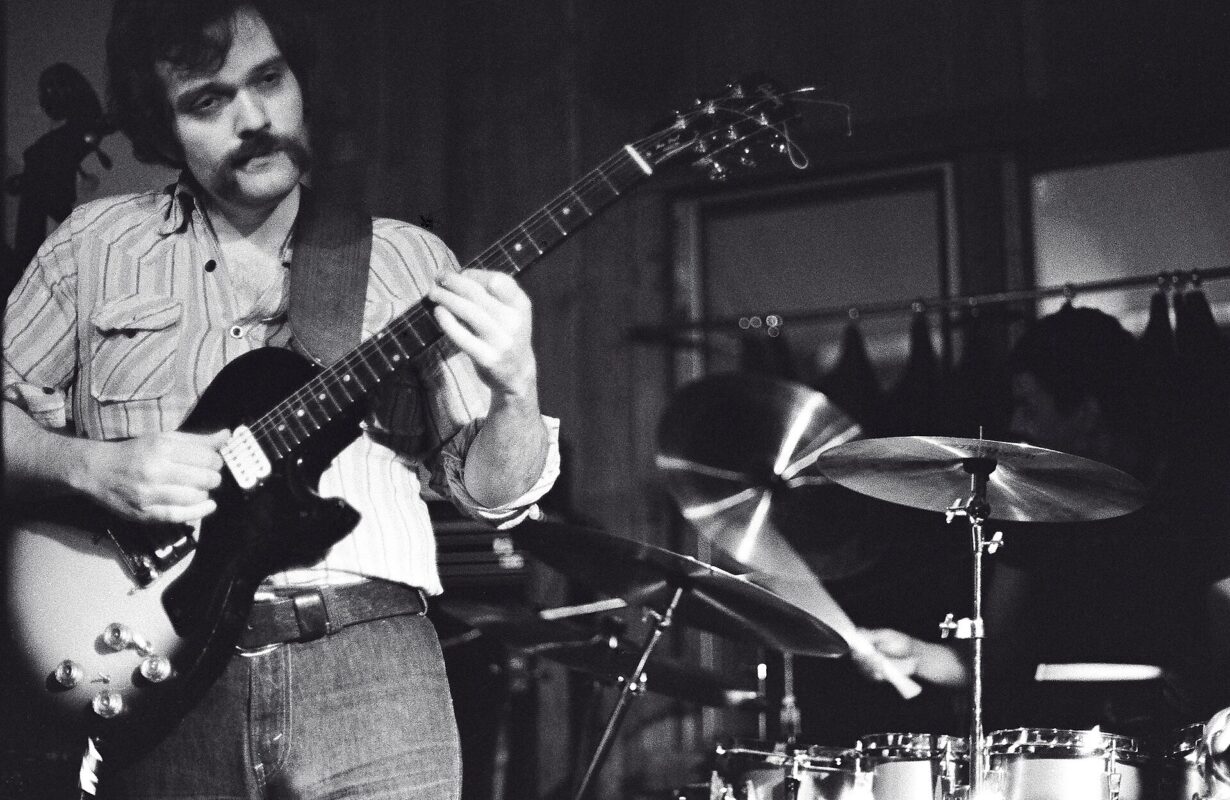
The guitar synthesiser added a specific dimension to his approach that no acoustic guitar or electric guitar through conventional amplification could replicate — the synthesiser’s sustained, evolving tones gave harmonic passages a textural depth that complemented his guitar’s natural character without competing with it. His ability to integrate the synthesiser’s specific qualities into the overall jazz guitar context — making the synthesis feel organic rather than technological — was one of his most distinctive and most genuinely innovative contributions to jazz guitar practice.
Tonally, his philosophy was the jazz guitarist’s philosophy in its most lyrical form: warm, sustaining semi-hollow Gibson through clean amplification, with the synthesis and effects adding specific textural dimensions when the music required them. Every tonal choice was in service of the melodic and harmonic intelligence that was his primary musical quality.
How to Sound Like John Abercrombie
Guitar Approach
A Gibson ES-335 with PAF-spec humbuckers — or a modern equivalent — through clean jazz amplification (Polytone Mini-Brute or similar). The most important technical element is the harmonic vocabulary: Abercrombie’s approach required deep knowledge of post-bop jazz harmony, modal jazz frameworks, and the specific voice-leading principles that gave his chord progressions their characteristic openness and sophistication. Study Bill Evans’ harmonic approach on the piano — Abercrombie’s harmonic thinking was more piano-influenced than guitar-influenced in many respects.
Amp Approach
A Polytone Mini-Brute or similar warm, clean solid-state amplifier for the jazz context. The ECM recording approach — high-quality condenser microphone, appropriate room, minimal processing — produced the best results with this combination. An Echoplex or quality tape echo simulation for atmospheric depth on specific passages.
| Control | Setting | Notes |
|---|---|---|
| Volume | Moderate | Clean — jazz guitar should not distort |
| Treble | 5 | Neutral — ES-335 humbuckers provide natural warmth without EQ boost |
| Middle | 5–6 | Moderate presence for melodic voice in ensemble |
| Bass | 4–5 | Moderate — jazz guitar sits above bass in the ensemble |
| Reverb | 2–3 | Light — ECM recordings used natural room reverb, not heavy spring reverb |
Influence & Legacy
John Abercrombie’s legacy was the specific legacy of one of jazz guitar’s most beautiful voices — a musician whose ECM recordings showed what the electric jazz guitar was capable of at its most lyrical and most harmonically sophisticated. His influence on subsequent jazz guitarists — particularly those who worked at the intersection of jazz, classical music influence, and the ECM aesthetic — was direct and substantial.
His pioneering use of the guitar synthesiser — integrating synthesis technology into jazz guitar practice in a musically intelligent way that no guitarist had done before — showed that technology could extend rather than replace the jazz guitar’s expressive possibilities. His specific approach to the GR-300 gave subsequent guitarists who experimented with synthesis a model of how to use technology as a musical resource rather than as a novelty.
The ECM recordings that documented his work — from Timeless through the final recordings before his 2017 death — were among the most consistently excellent guitar recordings available in the jazz tradition, and their consistency over more than four decades of recording was one of the most remarkable achievements in jazz guitar history.
For players exploring the ECM jazz guitar tradition that Abercrombie helped define, the rigs of Ralph Towner — whose ECM acoustic guitar work placed him in the same musical community and on many of the same recordings — and Steve Khan, whose jazz guitar work showed similar harmonic sophistication in a more mainstream fusion context, provide illuminating comparison. The harmonic sophistication of his playing connects to George Benson‘s approach, which shows how similar harmonic depth in jazz guitar produced a radically different aesthetic result when commercial accessibility was the primary value rather than the ECM aesthetic’s commitment to musical depth over mass appeal.

Timeless: The ECM Debut That Defined a Career
Timeless (1974) — John Abercrombie’s debut ECM album with keyboardist Jan Hammer and drummer Jack DeJohnette — was one of those recordings that announced a completely formed and completely individual musical personality from its first moments. The album’s title proved prescient: four decades later, it remained one of the most consistently rewarding jazz guitar recordings available, and the specific guitar sound it documented — warm, singing, harmonically sophisticated, emotionally direct — was as fresh on repeated listening as it had been on first acquaintance.
The guitar tone on Timeless — the ES-335’s warm humbucker character through the Polytone’s clean reproduction, captured with ECM’s characteristic condenser microphone and room acoustic approach — showed what the electric jazz guitar could achieve in the right musical and recording context. Every note had warmth and presence; every melodic line had harmonic intelligence; and the overall quality of the playing communicated genuine musical emotion rather than technical demonstration. This quality — technical accomplishment serving emotional directness — was as characteristic of Abercrombie’s approach as it was rare in the broader jazz guitar world.
Jan Hammer’s keyboard contribution to the recording — the specific electric piano and synthesizer textures that complemented Abercrombie’s guitar — created a specific sonic environment that suited the ECM aesthetic and that gave the guitar its specific role within the ensemble. The guitar was not the only harmonically sophisticated voice in the ensemble; Hammer’s keyboard covered some of the harmonic territory that the guitar might otherwise have been responsible for. This specific division of harmonic labour — two harmonically sophisticated instruments in dialogue rather than one serving the other — gave the recording its specific quality of harmonic density without harmonic crowding.
The Roland GR-300: Technology as Musical Resource
Abercrombie’s use of the Roland GR-300 guitar synthesiser — one of the most unusual elements of his equipment approach relative to the jazz guitar tradition — deserves specific examination because it illustrates how musically intelligent use of technology can extend an instrument’s range without compromising its essential character.
The Roland GR-300 was introduced in 1980 and represented a significant advance over earlier guitar synthesis systems in its response time, its pitch tracking accuracy, and the musical quality of its analogue synthesis. Earlier guitar synthesisers had been plagued by slow tracking (the synthesiser lagged behind the guitar’s pitch changes) and imprecise pitch tracking (the synthesiser produced glitches when processing certain pitch relationships), making them essentially unusable for sophisticated melodic playing. The GR-300’s improved tracking and its musically warm analogue synthesis gave it a viable role in professional jazz performance and recording.
Abercrombie’s specific use of the GR-300 was musically motivated throughout: he used the synthesiser’s specific tonal characters — the warm brass ensemble patches, the string-like synthesis textures — for specific passages where these tonal dimensions served the music’s specific requirements, rather than using synthesis as a constant or habitual element of his playing. The synthesiser appeared when its specific character was the right choice for a specific musical moment; the regular guitar sound prevailed when the guitar’s acoustic character was more appropriate. This contextual discrimination — knowing when technology served the music and when it didn’t — was as much a mark of musical intelligence as any technical guitar playing skill.
The specific acoustic character of the GR-300’s analogue synthesis — the warmth of the analogue oscillators, the specific quality of the analogue filters — was itself musically appropriate for the ECM aesthetic. The GR-300’s synthesis had a warmth and a musical character that digital synthesis of the period couldn’t replicate, and this specific analogue warmth gave the synthesiser passages their quality of fitting within the overall ECM sound rather than intruding as an alien electronic element.
Sargasso Sea: Dialogue with Ralph Towner
Sargasso Sea (1976) — the duo album with Ralph Towner — provided one of the most distinctive single documents of Abercrombie’s guitar approach: a recording in which the contrast between his electric jazz guitar and Towner’s nylon-string classical guitar created an acoustic and musical landscape of unusual richness and variety. Understanding the specific dynamics of this musical dialogue illuminates both Abercrombie’s specific guitar character and its relationship to the acoustic guitar tradition that Towner represented.
The contrast between the two guitars was fundamental and multi-dimensional. Towner’s nylon-string classical guitar produced a warm, organic, relatively short-sustaining tone with the specific character of natural gut and nylon under finger pressure. Abercrombie’s ES-335 produced an electronic, more sustained, humbucker-warm tone with the specific character of electromagnetic pickup amplification. These tonal contrasts — organic versus electronic, naturally limited versus amplified sustain, classical versus jazz playing approach — created the specific musical tension and resolution that made the album so distinctive.
The specific musical dialogues on the album — the passages where Towner’s classical arpeggio patterns provided a harmonic and rhythmic foundation for Abercrombie’s melodic improvisation, the passages where their roles reversed, and the passages where both played simultaneously in genuine melodic counterpoint — showed both players’ specific abilities to listen and respond in real time rather than simply playing their own music in parallel. The specific equipment that each player brought to the dialogue — Towner’s acoustic classical guitar, Abercrombie’s amplified electric — created the acoustic contrast that made the dialogue visually and sonically legible to listeners as a genuine two-voice conversation rather than a blend into a single textural field.
The Bill Evans Connection: Harmony from the Piano Perspective
Abercrombie’s harmonic language was substantially shaped by the piano-based jazz tradition — particularly by Bill Evans’ specific approach to jazz harmony, which had influenced an entire generation of post-bop musicians across all instruments. Understanding the Evans connection illuminates both the specific character of Abercrombie’s chord voicings and the specific acoustic requirements that made the ES-335 through the Polytone the right instrumental combination for those voicings.
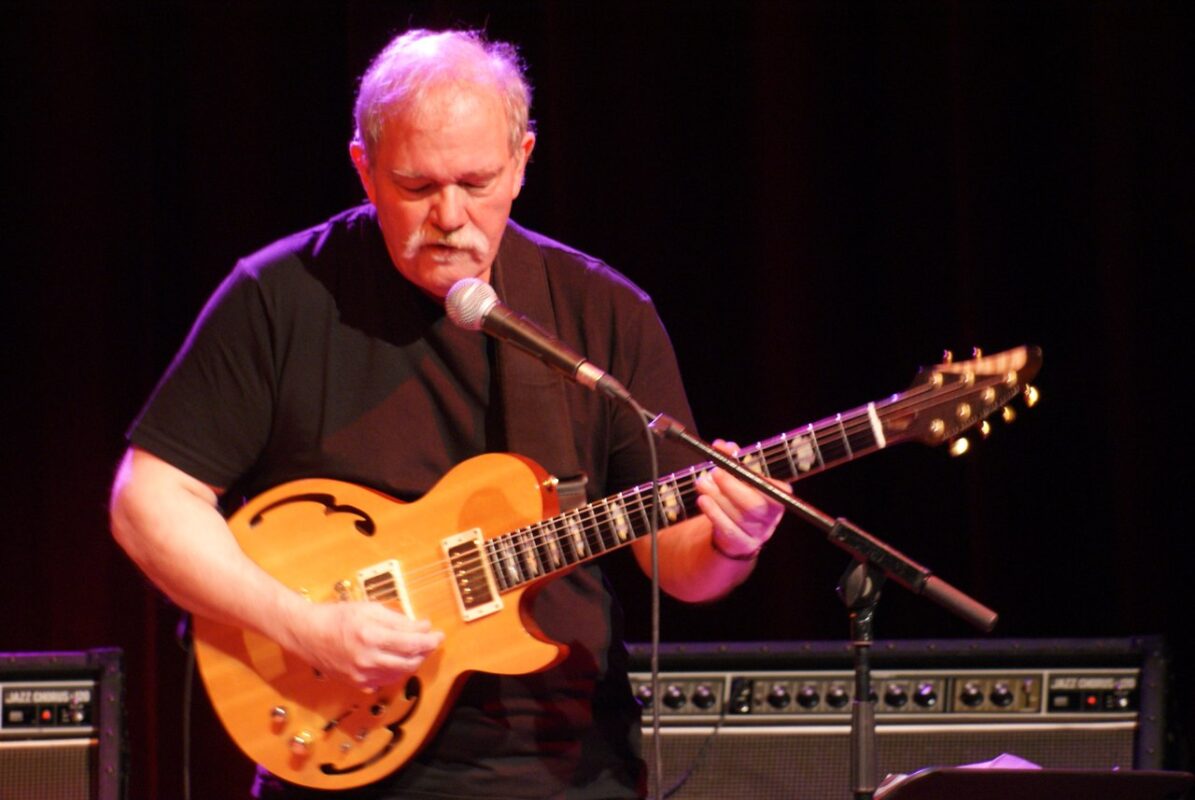
Evans’ specific approach to jazz harmony — the open voicings that left specific harmonic space unfilled, the specific treatment of the major seventh and added ninth as primary harmonic colours, the specific voice leading that gave his chord progressions their characteristic smooth, shimmering quality — was one of the most influential harmonic vocabularies in post-bop jazz. Musicians on every instrument absorbed the Evans approach to harmonic openness and harmonic colour, and Abercrombie’s guitar voicings showed this absorption clearly — in the specific choices of voicing, the specific notes omitted to leave harmonic space, and the specific voice-leading principles that governed chord movement.
The specific acoustic requirements of these Evans-influenced voicings — the need for harmonic clarity to allow each individual voice within the chord to be heard distinctly, the need for sustained resonance to allow the chord’s full harmonic content to develop over its duration — were served by the ES-335’s specific combination of humbucker warmth and semi-hollow acoustic resonance. The warmth gave the voicings their harmonic richness; the acoustic resonance gave each voice its opportunity to sustain through the chord’s full duration; and the Polytone’s clean reproduction preserved the harmonic details without the frequency-selective saturation of valve amplification that might have blurred the distinction between voices in complex voicings.
The Jack DeJohnette connection — DeJohnette having appeared on both Timeless and many subsequent Abercrombie recordings — was a musical partnership of genuine depth and genuine mutual influence. DeJohnette’s drumming in jazz contexts was characterised by a specific kind of melodic and harmonic sensitivity — his rhythmic approach was shaped by genuine harmonic awareness rather than by purely rhythmic concerns — that made him an unusually appropriate partner for Abercrombie’s harmonically sophisticated guitar work. The specific way DeJohnette’s drumming interacted with the guitar’s harmonic and melodic content — responding to specific harmonic tensions, supporting specific melodic lines with specific rhythmic placements, creating specific rhythmic environments for specific harmonic passages — gave the recordings on which they appeared together a specific quality of musical coherence and mutual understanding that appeared in neither musician’s work with other partners in quite the same way.
John Abercrombie’s forty-three year recording career on ECM and other labels produced a body of work whose consistent quality and consistent musical intelligence placed him among the most distinguished guitar recording artists in jazz history. The equipment that served this body of work: the warm, sustaining ES-335, the clean reproduction of the Polytone, the musically intelligent integration of the GR-300 synthesis, the atmospheric depth of the Echoplex echo, the ECM recording approach’s natural acoustic quality — was chosen and used with the same musical intelligence that the playing itself demonstrated. The gear served the music; the music served the jazz tradition; and the tradition was enriched by the specific quality of musical intelligence and emotional honesty that Abercrombie brought to it across a career of extraordinary consistency and genuine artistic distinction.
The Polytone Mini-Brute’s specific sonic character — and why this solid-state amplifier became the standard professional choice for jazz guitarists in the period when Abercrombie was recording his most important work — reflects genuine acoustic understanding of what jazz guitar amplification required. Valve amplifiers produce natural saturation and harmonic distortion when driven above their linear range, which gives the amplified guitar a specific warmth and harmonic richness at working volumes. For rock and blues guitarists whose sound benefits from this natural saturation, valve amplification was the obvious choice. For jazz guitarists who required clean, transparent reproduction of the guitar’s natural character — including the specific harmonic complexity of extended jazz chord voicings that natural saturation could make less distinct — the Polytone’s solid-state circuit’s ability to remain clean at performance volumes was a practical advantage. The Polytone’s specific solid-state warmth — produced through its particular circuit design and the specific character of its transducer driver system — gave the amplified guitar a warmth that avoided the sterility of some solid-state designs while maintaining the cleanness that jazz guitar required. Abercrombie’s choice of the Polytone reflected genuine understanding of what jazz guitar amplification required and why this specific amplifier served those requirements better than the valve alternatives that dominated most other guitar contexts.
The ECM recording’s specific spatial quality — the way that Abercrombie’s guitar seemed to exist in a genuinely three-dimensional acoustic space rather than as a close-miked, spatial-information-poor studio sound — was achieved through Manfred Eicher’s specific choices about microphone distance and placement relative to both the amplifier and the recording room’s acoustic properties. Closer microphone placement would have given more of the amplifier’s direct sound and less of the room’s acoustic contribution, producing a drier, more present but less spatially complex sound. Eicher’s typical preference for more distant microphone placement gave more of the room’s acoustic contribution — the specific reflections, the specific decay character, the specific warmth of the recording space — relative to the direct amplifier sound, creating the specific sense of space that distinguished ECM recordings from the drier, closer-miked productions that dominated jazz recording practice in the same period. This microphone placement decision was as significant to the specific quality of the Abercrombie recordings as any choice of instrument or amplifier, and understanding it as part of the complete “equipment” picture gives a more accurate understanding of how those specific sounds were achieved.
The Dave Holland bass relationship — Holland having appeared on multiple Abercrombie ECM recordings and being one of his most consistent and most distinguished musical partners — shaped the specific harmonic and melodic approach that Abercrombie brought to those specific recordings. Holland’s bass playing was as harmonically sophisticated as his guitar — his melodic bass lines implied specific harmonic frameworks that gave Abercrombie’s improvisation specific contexts to respond to, and his specific approach to the bass’s rhythmic and harmonic role was more piano-influenced than the conventional walking bass model. The specific interaction between Abercrombie’s harmonic voicings and Holland’s melodic bass lines — the way the guitar chose voicings that left specific harmonic space for the bass’s contribution, the way the bass responded to specific harmonic movements in the guitar — was one of the primary sources of the musical intelligence that distinguished the recordings on which they appeared together. Understanding Abercrombie’s equipment approach requires understanding that it was always deployed in specific musical relationships with specific musicians, and that those relationships shaped the specific choices as much as any abstract equipment preference.
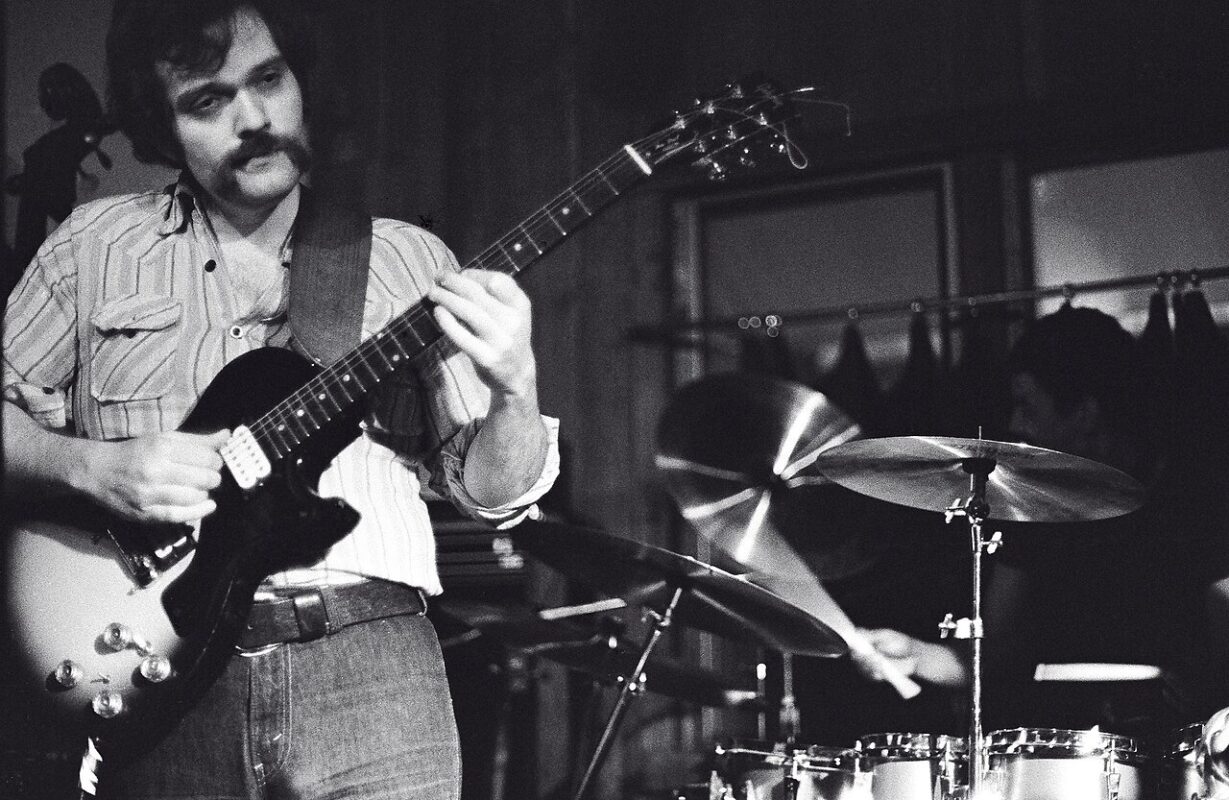
The final period of Abercrombie’s career — the recordings made in the years before his 2017 death, including the late ECM recordings that continued to document his playing at extraordinary levels of musical intelligence and emotional depth — showed a musician whose relationship with the guitar and with the musical values that had always guided his work remained completely alive and completely genuine into his eighth decade. The ES-335’s warmth through the Polytone’s clean reproduction, the GR-300’s synthesis adding specific textural dimensions when the music required them, the Echoplex’s organic echo giving atmospheric passages their depth — all of these remained exactly right for exactly the music Abercrombie was making, because the musical values that had made them right in 1974 remained the musical values that guided every subsequent recording. The gear served the music; the music served the jazz tradition; and the jazz tradition was honoured by the specific quality of John Abercrombie’s commitment to it across one of the most consistently distinguished careers in the history of the jazz guitar.
The Berklee College of Music formation — where Abercrombie received his formal musical education in the early 1960s — gave him access to both the technical foundation of jazz guitar and the broader musical theoretical framework that shaped his subsequent development. Berklee in the early 1960s was already one of the primary institutions for jazz music education in the United States, offering a curriculum that combined technical guitar instruction with comprehensive music theory, ear training, and the study of jazz harmony and composition. The specific curriculum of the period — heavily influenced by George Russell’s Lydian Chromatic Concept and other theoretical frameworks that were reshaping jazz harmonic thinking in the early 1960s — gave Abercrombie access to harmonic ideas that went beyond the chord-scale relationships of conventional jazz guitar instruction. This theoretical grounding was part of the foundation for the harmonic sophistication that distinguished his subsequent playing — the theoretical knowledge giving him access to harmonic resources that less theoretically grounded players didn’t know were available, and the practical guitar instruction giving him the technical means to realise those resources on the instrument.
The Billy Cobham connection — Abercrombie appearing on Cobham’s fusion-oriented recordings in the early 1970s — provided an interesting counterpoint to the ECM aesthetic that otherwise defined his career. Cobham’s music was more rhythmically aggressive and more electronically oriented than the ECM approach, requiring a different kind of guitar contribution — more rhythmically driving, more electrically processed, more oriented toward the fusion aesthetic of combining jazz harmony with rock rhythmic energy. Abercrombie’s ability to serve this very different musical context while subsequently developing his ECM approach without losing the musical development the fusion context had provided showed the same kind of stylistic range and musical intelligence that characterised the best guitarist careers. The fusion work expanded his technical and musical range; the ECM work focused that range toward the specific musical values he was most committed to. Both contributed to the complete musician who made the ECM recordings that remain his primary legacy.
The Echoplex’s specific contribution to Abercrombie’s ECM recordings — the organic, slightly warm echo that added atmospheric depth to specific melodic passages without the clinical precision of digital delay — reflected the same aesthetic values that informed every other aspect of the ECM production approach. The Echoplex, as described in the Waddy Wachtel section of this guide, produced delay through a mechanical tape loop that introduced natural variations in timing, frequency response, and amplitude between the original signal and the delayed repetitions. These variations — too small to be easily perceived as distinct effects but real and acoustically significant — gave the Echoplex’s delay a quality of warmth and organic variation that digital delay units of the period couldn’t replicate. In the ECM context, where natural acoustic quality was the primary aesthetic value, the Echoplex’s organic character suited the recordings’ overall aesthetic more naturally than digital alternatives would have — the slight imperfection of the tape echo was itself a form of acoustic naturalness that the ECM aesthetic valued. Abercrombie’s use of the Echoplex for specific passages where echo added appropriate atmospheric depth reflected both genuine understanding of the effect’s specific character and the same aesthetic values that guided the ECM production approach as a whole.
The harmonic openness that characterised Abercrombie’s chord voicings — the specific quality of leaving harmonic space unfilled, of using voicings that implied more than they stated, of choosing chord colours that created harmonic ambiguity rather than harmonic certainty — was as much a compositional strategy as a technical one. In the jazz tradition, harmonic openness served multiple musical purposes: it allowed other instruments to contribute specific harmonic context without conflicting with an already-dense guitar voicing; it created a quality of harmonic possibility that engaged the listener’s own harmonic imagination in completing the picture; and it gave the improvisation a sense of harmonic discovery that more fully specified voicings didn’t permit. The specific ES-335 through Polytone combination served this harmonic openness particularly well — the warmth of the humbucker gave the implied harmonics their resonance without the distortion that would have blurred their specific content, and the Polytone’s cleanness preserved the harmonic detail of each voicing without the frequency-selective coloring of valve amplification. The equipment and the musical approach were mutually reinforcing in this respect: the tonal clarity of the setup served the harmonic clarity of the voicings, and the harmonic clarity of the voicings benefited from the tonal clarity of the setup. That mutual reinforcement — equipment and musical approach genuinely suited to each other at the level of fundamental acoustic principles — was one of the marks of John Abercrombie’s complete musical intelligence.
The semi-hollow ES-335’s acoustic contribution to the recorded guitar sound on the ECM recordings — the specific way the hollow wing sections’ resonance added to the amplified signal — was particularly significant in the ECM recording context, where the microphone captured both the direct amplifier sound and the ambient acoustic character of the recording room. The ES-335’s hollow body resonated acoustically with both the string vibration and, to a lesser degree, with the amplifier’s acoustic output in the recording space, creating a complex acoustic interaction between the instrument, the amplifier, and the room that gave the recorded sound its specific quality of dimensional richness. This acoustic complexity — the result of multiple acoustic sources interacting in a specific physical space — was exactly what Manfred Eicher’s recording approach was designed to capture, and the ES-335’s semi-hollow construction was particularly well suited to this specific recording approach because it contributed more acoustic richness to the recorded environment than a solid-body alternative would have provided through the same amplification system and in the same recording space. The specific quality of the ECM recordings was the product of this complete acoustic system — instrument, amplifier, room, and microphone — rather than of any single component, and the ES-335’s contribution to that system was as significant as any other element.
Frequently Asked Questions: John Abercrombie Guitars & Gear
What guitar did John Abercrombie play?
John Abercrombie’s primary guitars were Gibson semi-hollow instruments — the ES-335 and ES-345 — with PAF-spec humbucking pickups. He also used a Roland guitar synthesiser system (Roland GR-300 with hexaphonic pickup on a Roland G-303 or G-808 guitar) as a significant extension of his tonal palette. His preference for warm, sustaining semi-hollow Gibson instruments reflected the specific requirements of his lyrical, melodically sophisticated jazz approach.
What amp did John Abercrombie use?
His primary amplifier was the Polytone Mini-Brute — the warm, clean solid-state combo that became a standard professional amplifier for jazz guitarists in the 1970s and 1980s. He also used various small valve amplifiers for specific recording applications where the valve warmth suited the music. The ECM recording approach — microphone-captured amplifier sound in appropriate acoustic environments — gave the recorded guitar its specific character.
What is the Roland GR-300 guitar synthesiser?
The Roland GR-300 was an analogue guitar synthesiser introduced in 1980 that used a hexaphonic pickup to capture each string’s pitch individually, driving six oscillators to produce synthesiser tones that tracked the guitar’s pitch. Unlike earlier guitar synthesis systems, the GR-300 was responsive and musical enough to be used in professional performance and recording contexts. Abercrombie was one of the most musically sophisticated users of the GR-300, integrating its specific warm analogue synthesis character into his jazz guitar practice without compromising the overall musical aesthetic of his ECM recordings.
What is the ECM aesthetic and how did it affect Abercrombie’s recordings?
ECM (Edition of Contemporary Music) was a Munich-based label founded by Manfred Eicher that became the most consistently excellent producer of acoustic jazz in recording history. The ECM aesthetic combined exceptionally high recording quality with a commitment to musical depth over commercial accessibility. For Abercrombie’s recordings, the ECM approach gave the guitar its specific warm, naturally reverberant character through high-quality condenser microphone recording in appropriate acoustic spaces. The specific warmth and spatial quality of the ECM recordings were as much a product of the production approach as of the instruments and amplifiers used.
What were John Abercrombie’s most important recordings?
His most significant recordings include Timeless (1974, with Jan Hammer and Jack DeJohnette), Sargasso Sea (1976, with Ralph Towner), Characters (1977, solo), Arcade (1978), and the series of quartet recordings with Dave Holland, Jack DeJohnette, and various collaborators. Later recordings including Getting There (1988) and Speak of the Devil (1993) with Marc Johnson showed the sustained quality of his ECM work across more than four decades.
What was John Abercrombie’s relationship with Ralph Towner?
Abercrombie and Towner recorded the duo album Sargasso Sea (1976) for ECM, which brought together two of the label’s most distinctive guitar voices in a format that highlighted both the contrasts and the complementarities between Towner’s nylon-string classical approach and Abercrombie’s electric jazz guitar. The duo recordings showed both musicians at high levels of musical intelligence and empathy, and the album remains one of the most distinctive guitar duo recordings available in the ECM catalogue.
What is the Polytone Mini-Brute?
The Polytone Mini-Brute was a solid-state combo amplifier produced by Polytone Electronics that became a standard professional amplifier for jazz guitarists in the 1970s and 1980s. Its specific warm, clean solid-state character — without the natural saturation of valve amplifiers — gave jazz guitarists the clean, detailed reproduction of the guitar’s natural character that the jazz tradition typically required. The Mini-Brute’s compact size, reliability, and specific tonal character made it the professional choice for jazz guitarists of Abercrombie’s generation.
Genre:
Jazz Fusion / ECM Jazz
Decades:
1970s | 1980s | 1990s | 2000s | 2010s
Image credits
- Top image: Jmreymond, Wikimedia Commons, CC BY-SA 3.0.
- Ralph Towner: Tore Sætre, Wikimedia Commons, CC BY-SA 4.0.
- Abercrombie: photo by Tom Marcello from Pittsford, New York, USA, via Wikimedia Commons, CC BY-SA 2.0.
- Gibson ES-335: Lightburst, Wikimedia Commons, CC BY-SA 4.0.
- John Abercrombie live: Tom Marcello, Wikimedia Commons, CC BY-SA 2.0.
- John Abercrombie live: Jmreymond, Wikimedia Commons, CC BY-SA 3.0.