
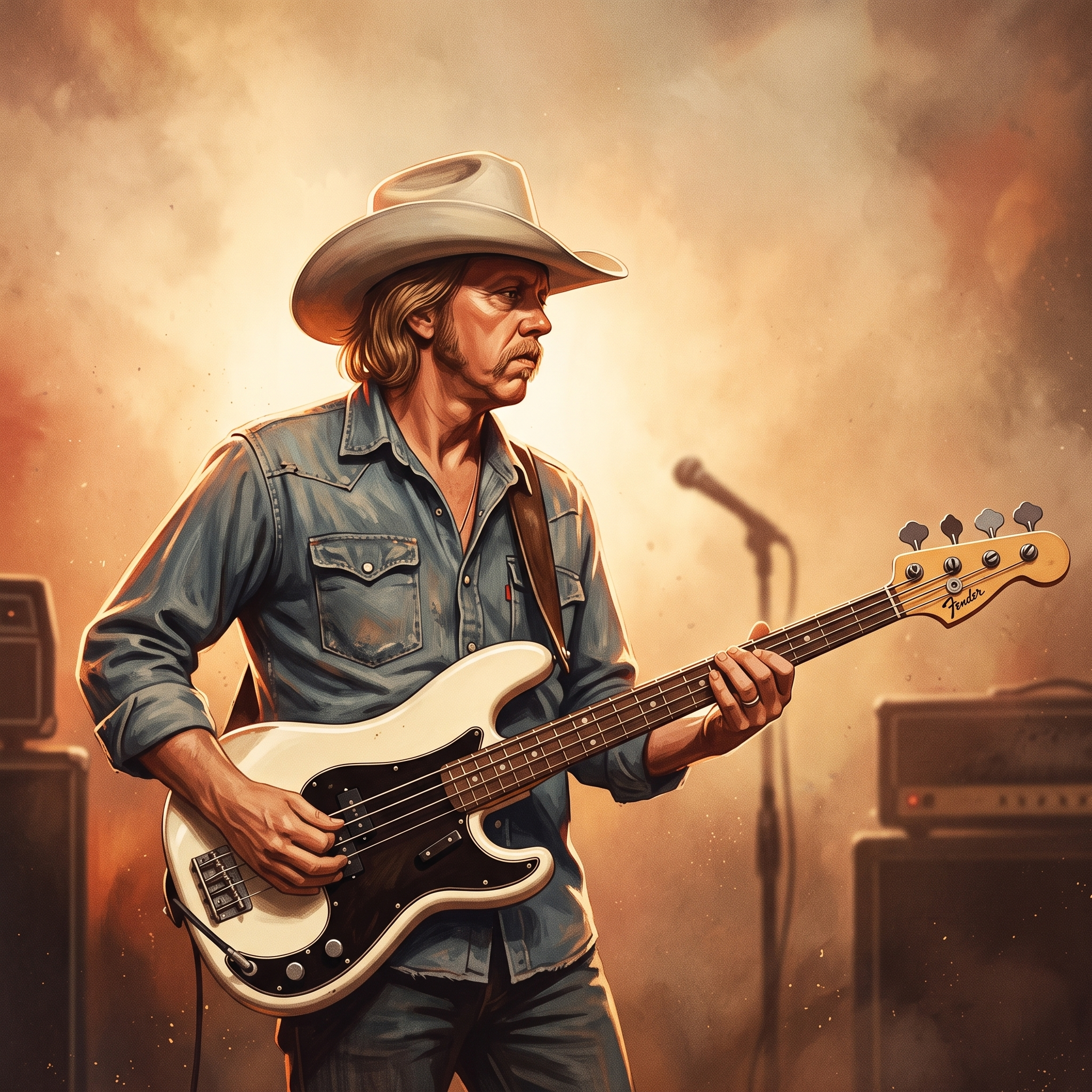
Investigate Tommy Caldwell guitars gear and you find the equipment behind one of Southern rock’s most fundamentally important rhythm sections — a Spartanburg, South Carolina-born bassist and co-founder of the Marshall Tucker Band whose bass playing and guitar work were as central to the band’s specific sound as any other element, and whose musical partnership with his brother Toy Caldwell’s lead guitar was as important to defining the Marshall Tucker Band’s specific character as any other musical relationship in the Southern rock tradition. Tommy Caldwell was primarily known as a bassist rather than a guitarist, but his guitar work and his understanding of how guitar and bass complemented each other gave the Marshall Tucker Band’s rhythm section a specific musical character that distinguished the band from other Southern rock acts. His tragic death in 1980 — from injuries sustained in an automobile accident — ended a career that was at the height of its musical and commercial development.
This guide covers Caldwell’s complete equipment picture: the guitars and basses that served his diverse instrumental contributions, the amplification that gave the Marshall Tucker Band their specific Southern rock sound, and the playing philosophy of a musician who understood that the rhythm section’s primary duty was to give the entire band a foundation of groove and warmth from which everything else could develop. Understanding Tommy Caldwell’s gear is understanding the specific musical values that made Southern rock more than just hard rock with Southern accents.
Background
Tommy Caldwell was born on November 9, 1949, in Spartanburg, South Carolina, into a musical family that produced both him and his brother Toy — together the co-founders and primary creative forces behind the Marshall Tucker Band. Spartanburg in the late 1960s was part of the specific South Carolina musical culture that was developing the specific synthesis of country, blues, jazz, and rock that would become Southern rock, and the Caldwell brothers absorbed this culture through their immediate family and community musical environment.
The Marshall Tucker Band formed in Spartanburg in the early 1970s — taking their name from a local blind piano tuner whose name they found on a key in the rehearsal space they used — and quickly developed the specific sound that distinguished them from other Southern rock acts: less hard rock-oriented than Lynyrd Skynyrd, more jazz-influenced and more country-oriented than Molly Hatchet, with a specific openness and a specific quality of musical warmth that came from Toy Caldwell’s fluid lead guitar and Tommy’s supportive, melodically sophisticated bass playing.
The band’s commercial breakthrough came with their debut album (1973) and the subsequent albums A New Life (1974), Where We All Belong (1974), Searchin’ for a Rainbow (1975), and the definitive live document Greatest Hits that captured their commercial peak. Tommy Caldwell’s bass was central to every recording — his melodic approach, his understanding of the rhythmic and harmonic role of the bass in the band’s specific musical context, and his personal musical chemistry with his brother’s lead guitar gave the recordings their specific character of Southern rock sophistication.
Tommy Caldwell Guitars Gear: The Complete Rig
Instruments
Tommy Caldwell was primarily a bassist rather than a guitarist, and his primary instruments were bass guitars rather than six-string guitars. Understanding this correctly is important for accurately describing his equipment contribution to the Marshall Tucker Band.
His primary instrument was a Fender Precision Bass — the split-pickup single-coil bass that had been the foundational instrument for electric bass guitar since Leo Fender introduced it in 1951. The Precision Bass’s specific single-coil pickup character — warm in the low-midrange, with a specific definition and presence that gave bass lines their melodic clarity — suited Tommy Caldwell’s melodically sophisticated bass approach. He used both vintage and contemporary examples of the P-Bass, choosing instruments for their specific playability and tonal character rather than for collector value.
He also used a Fender Jazz Bass — the two-pickup bass that Fender introduced in 1960 as a more tonally versatile alternative to the Precision Bass. The Jazz Bass’s two J-style pickups, positioned at different positions along the string, gave access to the typical hum-cancelling operation when both pickups were used simultaneously and a brighter, more scooped-mid character than the Precision Bass’s single pickup. His use of both P-Bass and J-Bass reflected the same practical musical intelligence that characterised every other aspect of his equipment approach — the right instrument for the specific musical context rather than a fixed signature choice.
He occasionally played six-string guitar in rehearsal and studio contexts, contributing rhythm guitar knowledge to the band’s arrangements from his guitarist’s perspective on the bass parts. His understanding of guitar harmony and guitar rhythm was as important to his bass playing as his specific bass technique — knowing how the bass supported the guitar, what harmonic space the bass should occupy relative to the guitar, and how the two instruments’ rhythmic roles complemented each other.
String gauges ran medium for the bass instruments — appropriate for the melodic playing style and the specific tonal character that his approach required.
Amps
Caldwell’s bass amplification was oriented toward the warm, full character appropriate for Southern rock’s specific musical context — not the aggressive, cutting character of some rock bass approaches but the warm, melodically clear character that suited the Marshall Tucker Band’s specific sound.
His primary bass amplification included Ampeg SVT heads — the 300-watt all-valve bass amplifier that had been the professional standard for rock bass since its introduction in 1969. The SVT’s specific character — the warmth of its six 6550 output valves (related to the KT88 but with specific characteristics suited to the high-power bass application), the specific tonal quality of its EQ circuit — gave bass guitar the combination of warmth and power that Southern rock’s live performance requirements demanded. The SVT’s ability to move air acoustically at high power levels gave bass a physical presence in the room that lower-powered alternatives couldn’t replicate.
He ran the SVT through Ampeg 8×10 cabinets — the eight-ten-inch-speaker configurations that gave bass the acoustic spread and the specific frequency response appropriate for large venue performance. The 8×10’s multiple smaller speakers provided a combined acoustic output that suited the Southern rock live performance environment better than a single large-speaker design’s more focused projection.
Effects
Caldwell’s effects chain was minimal — consistent with the Southern rock tradition’s emphasis on direct, warm, organically produced sound rather than electronic processing. The Marshall Tucker Band’s specific sound was about warmth, groove, and the specific musical chemistry between the band members, not about sonic complexity generated by elaborate signal processing.
The natural warmth and compression of the Ampeg SVT at working volume provided the primary tonal character — the 6550 output valves’ natural compression at working volume giving the bass its specific warm, slightly compressed quality that suited Southern rock’s groove-based musical approach.
A volume pedal appeared for dynamic control in specific live performance contexts — allowing real-time management of the bass’s contribution to the ensemble’s overall dynamic level.
Playing Style & Tone Philosophy
Tommy Caldwell’s bass playing was defined by its melodic sophistication — the ability to maintain the bass’s fundamental rhythmic and harmonic role while simultaneously contributing melodic interest that engaged the listener’s attention independently of the lead guitar and vocal. His specific approach was less rooted in the standard blues-derived rock bass vocabulary than in a broader understanding of how the bass could serve a harmonically sophisticated musical context — contributing countermelody and harmonic movement rather than merely outlining root notes and providing rhythmic support.
The Marshall Tucker Band’s specific musical character — the jazz-influenced harmonic openness, the country-derived melodic directness, the blues-rooted rhythmic feel — required a bass approach that was simultaneously rhythmically supportive and melodically engaged. Tommy Caldwell’s playing served all three of these requirements simultaneously, which was a more demanding musical challenge than the simpler bass roles that some Southern rock bands required of their bassists.
His musical partnership with Toy Caldwell’s lead guitar — the specific chemistry between two brothers who had been making music together since childhood — gave the Marshall Tucker Band’s guitar-bass interaction a quality of musical empathy that extended beyond professional competence into something genuinely personal and genuinely musical. The specific ways that Tommy’s bass responded to Toy’s lead guitar choices — anticipating specific melodic movements, supporting specific harmonic choices, creating rhythmic counterpoint to Toy’s melodic lines — reflected the deep mutual musical understanding of two musicians who had literally grown up playing music together.
Tonally, his philosophy was the Southern rock musician’s philosophy: warm, full, natural. The Precision Bass’s warm single-coil character through the SVT’s natural compression gave his playing the specific combination of warmth and definition that the Marshall Tucker Band’s sound required — present enough to be heard as a genuine melodic voice in the ensemble, warm enough to provide the harmonic foundation that the flute, guitar, and keyboards built upon.
How to Sound Like Tommy Caldwell
Instrument Approach
A Fender Precision Bass — vintage or quality modern reproduction — provides the authentic starting point for the warm, melodic bass approach. Medium strings for adequate warmth and definition. The most important element is the melodic orientation — studying the bass as a melodic instrument rather than merely a harmonic and rhythmic support instrument. The Marshall Tucker Band recordings are essential study material: focus specifically on how the bass moved melodically while maintaining its rhythmic and harmonic responsibilities.
Amp Approach
An Ampeg SVT through an 8×10 cabinet — the professional Southern rock bass standard. Run at working volume where the 6550 valves contribute natural compression and warmth. The warm, round character of the SVT at these settings gave Southern rock bass its specific quality of being both powerful and musical rather than merely loud.
| Control | Setting | Notes |
|---|---|---|
| Volume | 6–8 | Working volume — natural 6550 compression for warm Southern rock tone |
| Bass | 6 | Present bass — P-Bass warmth through SVT should be full, not boomy |
| Middle | 5–6 | Moderate mids — melodic bass needs midrange presence to be heard |
| Treble | 4–5 | Moderate — warmth over brightness in Southern rock bass |
| Ultrahigh / Ultrabass | Minimal | Subtle if used — the SVT’s natural character is the target, not extreme EQ |
Influence & Legacy
Tommy Caldwell’s legacy was the specific legacy of a musician whose bass playing gave one of Southern rock’s most distinctive bands its specific musical character — and whose career was cut tragically short before he could fully realise the musical direction that the band was developing in the late 1970s. His contribution to the Marshall Tucker Band’s specific sound was as important as any other single element, and the recordings he appeared on remained among the most consistently musical documents of the Southern rock tradition.
His death in April 1980 — from injuries sustained in a car accident — ended a career at the height of its development, and the Marshall Tucker Band never fully recovered the specific musical chemistry that his presence had provided. His brother Toy Caldwell’s guitar was the most celebrated element of the band’s sound, but the complementary bass approach that Tommy provided was as central to the music’s overall quality.
The specific synthesis of country, jazz, blues, and rock that the Marshall Tucker Band developed — with Tommy’s melodic bass playing as one of its primary vehicles — represented one of Southern rock’s most ambitious and most fully realised attempts to create a genuinely distinctive regional music rather than a regional version of national rock trends. His equipment — the Precision Bass through the SVT, with the natural compression of the valve output stage contributing to the warm, melodic character of his playing — served this ambition with complete appropriateness.
For players exploring the Southern rock and country rock bass tradition that Caldwell helped define, the rigs of Toy Caldwell — his brother and creative partner whose lead guitar work was the most celebrated dimension of the Marshall Tucker Band’s sound — and Dave Hlubek, whose Molly Hatchet work showed how the Southern rock guitar tradition developed in a heavier, more metal-oriented direction from similar starting points, provide essential comparison. The country and jazz dimensions of his approach connect to Doug Sahm‘s work, which shows how similar country-meets-blues-meets-rock synthesis developed in Texas.
Can’t You See: The Song That Defined the Band
“Can’t You See” — the Marshall Tucker Band’s most widely known and most musically representative song, appearing on the debut album (1973) — was as much a showcase for Tommy Caldwell’s melodic bass approach as for Toy Caldwell’s celebrated lead guitar. Understanding what the bass actually did on this recording — not merely the harmonic role but the specific melodic contribution — gives a more complete picture of how Tommy’s playing served the band’s specific musical character.
The bass line on “Can’t You See” was melodically active throughout the song — not the static root-note approach that simpler Southern rock arrangements often used but a continuously moving melodic line that responded to the song’s chord changes with specific melodic content of its own. The specific way the bass moved between chord tones and passing notes, the specific rhythmic placement of melodic peaks and valleys, and the specific relationship between the bass’s movement and the rhythm guitar’s chord rhythm — all of these reflected a bass player who heard the instrument as a melodic voice in the ensemble rather than as a harmonic and rhythmic foundation that had no independent musical identity.
The Precision Bass’s specific tonal character on the recording — the warm, defined quality of the split-coil pickup through the SVT’s natural compression — gave the melodic bass lines their specific quality of warm presence without harshness. Every note was warm and clear; every melodic movement was audible as a distinct musical statement rather than as a low-frequency blur. This combination of melodic clarity and tonal warmth — the bass’s melody audible and distinct within the ensemble’s overall sound — was one of the primary reasons the Marshall Tucker Band’s specific sound was as musically satisfying as it was.
The Marshall Tucker Sound: Southern Rock Sophistication
The specific musical character of the Marshall Tucker Band — the quality of harmonic and melodic sophistication that distinguished them from both the harder-rocking Southern rock of Lynyrd Skynyrd and the rawer, more blues-oriented Southern rock of other bands — was substantially the product of Tommy Caldwell’s specific bass approach interacting with the other elements of the band’s musical personality.
The flute of Jerry Eubanks — unusual in Southern rock but central to the Marshall Tucker sound — occupied the melodic space above the guitar and bass in the ensemble’s frequency picture, giving the overall sound a specific quality of melodic richness that distinguished it from guitar-and-guitar Southern rock. Tommy’s bass, responding to the flute’s melodic content as well as to Toy’s guitar and the chord structure of the songs, produced specific melodic choices that created the harmonic and melodic counterpoint between the instruments that gave the ensemble its specific character.
The jazz influence that ran through the band — most visible in the harmonic language of Toy Caldwell’s compositions and in the improvised passages that distinguished the live performances — also shaped Tommy’s bass approach. Jazz bass playing — from Mingus through Paul Chambers through the Motown session players — had developed a specifically melodic orientation that moved well beyond the simple root-note bass playing of early rock and roll, and Tommy’s bass approach reflected this jazz influence even within the Southern rock performance context.
Toy and Tommy: The Brother Partnership
The specific musical relationship between Toy and Tommy Caldwell — brothers who had been making music together since childhood — was one of the foundational elements of the Marshall Tucker Band’s specific character. Understanding this relationship in musical terms helps explain both what Tommy’s bass contributed to the band and why the Marshall Tucker sound was as internally coherent as it was.
Brothers who make music together develop a specific quality of mutual musical understanding that extends beyond what professional musicians who met later in their careers can usually achieve. The years of playing together in informal settings before the Marshall Tucker Band’s formation had given Toy and Tommy a specific musical vocabulary that was genuinely shared — the same musical references, the same rhythmic instincts, the same harmonic preferences — and a specific quality of musical communication that was more immediate and more spontaneous than the communication between musicians who had to negotiate their shared language at a more conscious level.
The specific ways that Tommy’s bass responded to Toy’s lead guitar in the Marshall Tucker performances — anticipating specific harmonic movements, supporting specific melodic choices, creating rhythmic and melodic counterpoint that was both independent and complementary — were not the result of verbal communication or explicit arrangement but of the deep mutual musical understanding that decades of music-making together had produced. This specific quality of musical empathy — where one musician seemed to know what the other was going to play before they played it — was one of the most distinctive and most valuable qualities of the Marshall Tucker Band’s musical character, and Tommy’s bass was as central to this empathy as Toy’s guitar.
The Ampeg SVT: Southern Rock’s Bass Standard
The Ampeg SVT — Tommy Caldwell’s primary bass amplifier — became the de facto professional standard for Southern rock and arena rock bass amplification in the 1970s for specific acoustic reasons that made it more appropriate for this musical context than any available alternative. Understanding why the SVT was the right amplifier for Southern rock bass gives a more complete picture of how Tommy’s specific equipment choices served the Marshall Tucker Band’s specific sound.
The SVT’s 300-watt output through its six 6550 output valves gave it substantially more power than the guitar amplifiers used in the same band context — necessary because bass frequencies required more acoustic power to produce comparable sound pressure levels. At working volume, the six 6550s’ specific compression character gave the bass a quality of natural warmth and sustain that solid-state alternatives couldn’t replicate — the valves’ specific response to transients (brief, loud signals) producing a gentle, musical compression rather than the harder, more abrupt limiting of solid-state designs.
The 8×10 cabinet’s eight 10-inch speakers gave the bass its specific acoustic spread and frequency response in the live performance environment. Multiple smaller speakers collectively produced a broader acoustic dispersion pattern than a single large speaker, distributing the bass’s acoustic output more evenly across the listening area. The specific 10-inch speaker size gave the bass frequencies a specific quality of definition — less extended in the lowest bass frequencies than 15-inch alternatives, but more present and more articulate in the bass’s melodically important upper-bass and lower-midrange frequencies. This frequency distribution — less rumble, more definition — suited Tommy’s melodic bass approach better than alternatives that emphasised the lowest frequencies at the expense of upper-bass clarity.
The specific warmth of the SVT’s all-valve signal chain — from the input through the multiple preamp stages to the 6550 output configuration — gave the bass its specific quality of harmonic richness that solid-state or hybrid bass amplifiers of the same power rating didn’t provide. The valve chain added specific even-order harmonic content to the bass signal — subtle but musically significant overtones that gave the amplified bass a quality of warmth and musical presence that technically “cleaner” solid-state alternatives lacked. For Southern rock specifically — where musical warmth and groove were primary values rather than technical precision or extreme low-frequency extension — this valve warmth was as important to the overall sound as any specific tonal choice.
Tommy Caldwell’s complete equipment story — the melodic Precision Bass approach through the warm SVT, the specific musical partnership with Toy Caldwell’s guitar, and the broader musical context of the Marshall Tucker Band’s sophisticated Southern rock — was ultimately a story about how musicians with deep shared musical understanding created something greater than any individual’s contribution. The gear served the music; the music served the partnership; and the partnership served a specific vision of what Southern rock could be at its most musically ambitious and most personally authentic. That legacy endured in the recordings Tommy Caldwell left behind, and in the ongoing musical legacy of the Marshall Tucker Band tradition that those recordings defined.
The Fender Precision Bass’s specific role in defining Tommy Caldwell’s approach — and why this instrument was more appropriate for his specific melodic bass style than the Jazz Bass, despite the Jazz Bass’s reputation for greater tonal versatility — reflected genuine acoustic understanding of what each instrument contributed. The Precision Bass’s split single-coil pickup — positioned at the midpoint of the string’s length, where the fundamental frequency and lower harmonics were most strongly present — produced a specific warmth and definition balance that suited melodic bass playing. The split-coil design (two coils wound in opposite directions and picking up different halves of the string) cancelled the 60-cycle hum of standard single-coil designs while maintaining the single-coil’s specific warmth and definition — giving the Precision Bass a practical hum-rejection advantage over straight single-coil alternatives while preserving the tonal character that made single-coil bass pickups musically appropriate for the melodic approach. The specific placement of the Precision’s split-coil pickup — midway between the neck and bridge — gave it a frequency balance that was neither the warm, round neck-pickup Jazz Bass tone nor the bright, cutting bridge-pickup Jazz Bass tone, but a specific middle character that gave melodic bass lines their specific combination of warmth and definition that Tommy Caldwell’s approach required.
The Spartanburg, South Carolina musical culture that formed both Toy and Tommy Caldwell — the specific regional music of the South Carolina Piedmont region — gave their musical formation a specific character that was different from both the Mississippi Delta blues and the Nashville country music that had shaped other Southern rock musicians. The Piedmont region’s musical culture included a specific variant of blues (the Piedmont blues, characterised by a specific fingerpicking guitar style and a different rhythmic approach from the Delta tradition), the country and gospel music of the rural South, and the R&B and soul that was the soundtrack of Southern Black cultural life in the 1960s. This specific regional formation gave the Caldwell brothers a musical vocabulary that included elements that other Southern rock musicians didn’t necessarily share, and this specific regional character was part of what gave the Marshall Tucker Band their distinctive sound relative to the Alabama and Georgia-formed Southern rock that dominated the genre’s commercial development.
The specific jazz dimension of Tommy Caldwell’s bass playing — the harmonic sophistication, the melodic approach, the countermelody orientation — was part of what gave the Marshall Tucker Band their specific place in the Southern rock tradition. Most Southern rock bass playing was rooted in the blues and rock and roll bass traditions — the relatively straightforward root-note and fifth-based approaches of the R&B bass tradition, adapted to the specific rhythmic demands of rock. Tommy’s approach went significantly beyond this, incorporating the melodic independence and the harmonic sophistication of the jazz bass tradition without losing the rhythmic grounding that the Southern rock context required. This synthesis — jazz melodic sophistication within a Southern rock rhythmic framework — was as distinctive a contribution to Southern rock’s musical vocabulary as Toy Caldwell’s lead guitar or Jerry Eubanks’ flute, and it was as central to the Marshall Tucker Band’s specific sound as either of those more widely celebrated elements.
The band’s country music dimension — the country-influenced melodic directness and harmonic simplicity that balanced the jazz sophistication of specific passages — gave Tommy’s bass approach its specific quality of accessibility within sophistication. The country bass tradition’s emphasis on clarity and melodic simplicity — the walking bass lines of country bands, the specific relationship between bass and pedal steel or fiddle — was part of Tommy’s musical formation alongside the jazz influences, and the combination of these two orientations gave his playing the specific character of both harmonic intelligence and direct musical communication that made it so effective within the Marshall Tucker Band’s specific musical context. The gear he used — the Precision Bass’s warm clarity through the SVT’s natural compression — served both dimensions of this approach: warm and clear enough for the jazz melodic content, direct and full enough for the country rhythmic foundation.
The Marshall Tucker Band’s live performances — documented on various live recordings and in the memory of the Southern rock audience that attended their shows — were as central to understanding Tommy Caldwell’s equipment as the studio recordings. The SVT through the 8×10 in a live performance context produced a specific quality of bass presence that studio recordings could only partially capture: the physical dimension of the bass at performance volume, the specific acoustic coupling between the cabinet and the performance space’s acoustic environment, and the specific way the bass’s physical presence contributed to the overall live experience. For Tommy’s melodic approach specifically, the live context gave the melodic bass lines a quality of physical engagement — feeling the bass as much as hearing it — that added a dimension to their musical communication that the studio recordings, for all their sonic quality, could only suggest rather than fully reproduce. Understanding the equipment in the context of the live performance tradition that it primarily served gives a more complete picture of why these specific choices were right for this specific music in this specific context.
The specific acoustic environment of the 1970s Southern rock live performance context — the arenas and large theatres where the Marshall Tucker Band performed at the height of their commercial success — imposed specific requirements on bass amplification that the Ampeg SVT’s design had been specifically engineered to meet. Arena bass in the 1970s was a genuinely demanding acoustic problem: the physical spaces were large enough that the bass needed both substantial acoustic power and adequate low-frequency extension to fill the room, but the acoustic variability between different venues — different ceiling heights, different reflection patterns, different audience absorptions — meant that the bass amplification needed to produce a consistent and musical sound across radically different acoustic environments. The SVT’s specific combination of power (300 watts was substantial even by arena rock standards of the period), tonal quality (the natural warmth and compression of the 6550 output valves), and the 8×10 cabinet’s multiple-speaker acoustic projection suited these requirements with a consistency that alternative amplifier designs couldn’t match. Tommy Caldwell’s choice of the SVT for arena performance reflected both the practical necessity of adequate power and the specific tonal values that Southern rock bass required — not the clean precision of a technical audio system but the musical warmth of a professional bass rig at working volume.
The Fender Jazz Bass that appeared in Caldwell’s collection as an alternative to the Precision Bass gave him access to the Jazz Bass’s specific tonal character — the brighter, more scooped character of the J-style pickups in their two-pickup configuration — for specific material where this character served the music better than the Precision’s warmth. The Jazz Bass’s two pickups — neck and bridge J-style units that were individually volume-controllable — gave multiple distinct tonal characters through different pickup balance combinations: neck-only for maximum warmth and round low-midrange character, bridge-only for maximum brightness and attack, and various combinations for intermediate characters. For specific Marshall Tucker Band material where the bass needed more definition and more attack — faster, more rhythmically active passages where the P-Bass’s warmth made individual notes less distinct — the Jazz Bass’s brighter character gave the specific clarity that the music required. Understanding that Caldwell used both instruments reflects the same practical musical intelligence that characterised his overall approach: the right instrument for the specific musical context rather than a fixed signature instrument applied regardless of requirements.
Tommy Caldwell’s death at thirty years old — from injuries sustained in a car accident in April 1980 — cut short one of Southern rock’s most musically sophisticated and most personally committed creative careers at a point where the full scope of his musical ambitions was only beginning to be realised. The Marshall Tucker Band was one of the commercially successful Southern rock acts, but the specific musical depth of their approach — the jazz influences, the country sophistication, the specific melodic bass and lead guitar interplay — suggested a musical vision of considerably greater ambition than their commercial positioning indicated. The equipment Tommy used to pursue this vision: the Precision Bass’s melodic warmth, the SVT’s natural compression and power, the minimal effects chain that let the playing’s musical content speak directly — was in service of a musical personality of genuine sophistication and genuine warmth that deserved more time to develop than its thirty years produced. The recordings he left behind remain as evidence of that sophistication and that warmth, and they reward careful listening by anyone who wants to understand what Southern rock bass playing looked like at its most melodically intelligent and its most musically committed.
The specific relationship between Tommy Caldwell’s bass and George McCorkle’s rhythm guitar — the two instruments whose combined contribution formed the primary rhythmic and harmonic foundation for the Marshall Tucker Band’s arrangements — was another dimension of the band’s specific musical character that Tommy’s equipment served. McCorkle’s rhythm guitar approach was characterised by a specific combination of country-influenced chord voicings and Southern rock rhythmic drive that provided the harmonic framework within which Tommy’s bass melodic lines moved. The specific acoustic relationship between the Precision Bass’s warm low-midrange and McCorkle’s rhythm guitar’s mid-range presence — the bass and guitar occupying complementary frequency spaces without harmonic crowding — was part of what gave the band’s rhythm section its specific quality of fullness and musical coherence. Tommy’s melodic bass lines could be heard distinctly above McCorkle’s rhythm guitar because the two instruments occupied different enough frequency spaces to coexist without competition — the Precision’s specific pickup position and character giving the bass its warmth in frequencies that the rhythm guitar didn’t dominate. Understanding this specific acoustic relationship between bass and rhythm guitar — not merely their musical relationship but the physical acoustic one — gives a more complete picture of why the specific equipment choices worked as well as they did within the specific ensemble context.
The Paul Riddle drum approach — laying down the rhythmic foundation with the specific Southern rock feel that the Marshall Tucker Band’s music required — provided the rhythmic context within which Tommy’s melodic bass operated. The specific relationship between the bass and drums in Southern rock — where the bass’s melodic content needed to stay rhythmically grounded within the drum’s rhythmic framework while maintaining its melodic independence — was as musically demanding as any more conventionally celebrated ensemble musical relationship. Tommy’s specific approach to this bass-drums relationship — maintaining his melodic independence while never losing the rhythmic grounding that the drums provided — was one of the most sophisticated aspects of his musicianship, and the Precision Bass through the SVT gave him the combination of warmth (for the melodic content) and authority (for the rhythmic grounding) that this specific challenge required. The gear served the music; the music served the partnership; and the partnership between Tommy’s bass, Paul’s drums, George’s rhythm guitar, and Toy’s lead guitar gave the Marshall Tucker Band the specific musical foundation from which everything else they achieved emerged.
The specific harmonic language of the Marshall Tucker Band’s compositions — particularly the compositions that bore Toy Caldwell’s specific melodic intelligence and harmonic sensibility — gave Tommy’s bass approach its most demanding and most rewarding musical contexts. Toy’s compositions moved through harmonic territory that was wider and more unexpected than most Southern rock — modulations to unexpected keys, harmonic extensions that implied jazz chord substitutions, and melodic lines that implied harmonic movement beyond the explicitly stated chords. Tommy’s bass needed to navigate these harmonic complexities with the same melodic intelligence that Toy brought to the lead guitar, identifying the specific harmonic choices that would serve the composition’s specific harmonic vision rather than defaulting to simpler root-note patterns that would have been harmonically adequate but musically less interesting. The Precision Bass’s specific warmth and definition gave the bass’s harmonic choices — the specific notes Tommy selected for melodic movement between chord positions — their specific character of warm presence without harshness, making the harmonic intelligence of the bass choices audible as genuine musical content rather than as harmonic accidents within the overall sound. That audibility of intention — the listener being able to hear that the bass was making specific harmonic choices rather than merely filling the low-frequency space — was as much a product of the equipment’s specific character as of the playing’s musical intelligence, and both were essential to the specific quality that made Tommy Caldwell’s bass playing as musically significant as it was.
Frequently Asked Questions: Tommy Caldwell Guitars & Gear
What instrument did Tommy Caldwell primarily play?
Tommy Caldwell was primarily a bassist rather than a guitarist. His primary instruments were Fender Precision Bass and Fender Jazz Bass. While he had knowledge of six-string guitar from his background and occasionally contributed guitar in rehearsal contexts, his main professional contribution to the Marshall Tucker Band was his bass playing, which was as central to the band’s sound as any other element.
What amp did Tommy Caldwell use?
His primary bass amplification was the Ampeg SVT — the 300-watt all-valve bass amplifier that was the professional standard for rock bass — running through Ampeg 8×10 cabinets. The SVT’s natural 6550 valve compression at working volume gave his bass playing its specific warm, full character that suited the Marshall Tucker Band’s Southern rock sound.
What was the Marshall Tucker Band?
The Marshall Tucker Band was a Southern rock band from Spartanburg, South Carolina, co-founded by brothers Tommy Caldwell (bass) and Toy Caldwell (guitar/vocals) alongside Doug Gray (vocals), Jerry Eubanks (flute/saxophone), George McCorkle (rhythm guitar), and Paul Riddle (drums). The band’s specific synthesis of country, jazz, blues, and rock — more jazz-influenced and more country-oriented than most Southern rock contemporaries — gave them a distinctive sound that placed them among the most musically sophisticated of the Southern rock acts.
What was Tommy Caldwell’s bass playing style?
Caldwell’s bass playing was characterised by melodic sophistication — the ability to maintain the bass’s fundamental rhythmic and harmonic role while simultaneously contributing melodic interest that made the bass a genuine voice in the ensemble rather than merely a harmonic and rhythmic support instrument. His playing was less blues-derived than many Southern rock bass approaches, showing jazz and country influences that gave the Marshall Tucker Band’s music its specific harmonic openness.
What happened to Tommy Caldwell?
Tommy Caldwell died on April 28, 1980, from injuries sustained in an automobile accident that had occurred several days earlier. He was thirty years old at the time of his death, and his passing ended a career that was at the height of its musical and commercial development. The Marshall Tucker Band was one of the biggest Southern rock acts of the mid-to-late 1970s, and his death represented an irreplaceable loss to both the band and the broader Southern rock tradition.
What are the Marshall Tucker Band’s most important recordings?
The self-titled debut The Marshall Tucker Band (1973) introduced the band’s specific sound and showed Toy Caldwell’s guitar and Tommy Caldwell’s bass at their most freshly conceived. Where We All Belong (1974), Searchin’ for a Rainbow (1975), and the live double album Carolina Dreams (1977) documented the band at their commercial and artistic peak. “Can’t You See” — the debut album’s defining track — remained the band’s most widely known song and the most complete single document of what made the Marshall Tucker sound distinctive.
What was the relationship between Tommy and Toy Caldwell?
Tommy and Toy Caldwell were brothers and co-founders of the Marshall Tucker Band who had been making music together since childhood. Their specific musical chemistry — the deep mutual understanding that came from a lifetime of musical collaboration, the specific ways that Tommy’s bass responded to Toy’s lead guitar and vice versa — was central to the band’s specific musical character. The Marshall Tucker Band’s sound was in many ways the expression of a specific musical relationship between two brothers, and Tommy’s death left an irreplaceable void both musically and personally for Toy Caldwell and the rest of the band.
Genre:
Southern Rock
Decades:
1970s
Related stories
Vernon Reid Guitars & Gear: The Complete Guide to Living Colour’s Guitar Genius’s Rig
Vernon Reid's guitars, amps, and effects — the complete guide. Parker MaxxFly, PRS Vela VR, Mesa Dual Rectifiers, Roland VG-99, Eventide H9, Living Colour gear guide.
Warren DeMartini Guitars & Gear: The Complete Guide to Ratt’s Torch Guitarist’s Rig
Warren DeMartini guitars & gear: Ratt's Torch guitarist. Charvel Bomber, snakeskin, Jose-modded Plexi, Fender Super Champ, RTM pickup, slapback echo — the complete rig.
Warren Haynes Guitars & Gear: The Complete Guide to Gov’t Mule’s Guitar Master’s Rig
Warren Haynes' guitars, amps, and effects — the complete guide. Gibson Les Paul Chester, Soldano SLO-100 modified, Klon Centaur, Emma Discombobulator, and how to nail that Gov't Mule blues-rock tone.