
Tyler Bryant Guitars & Gear: The Complete Guide to “Pinky” and the Texas Blues-Rock Rig
The coach of the Dallas Mavericks came up to Tyler Bryant after a show when Bryant was thirteen years old and said: “What’s your dream guitar?” Bryant said: “A 1960 Fender Stratocaster.” A few days later, one showed up at his house. That guitar — a 1960 Strat gifted by a basketball team’s head coach to a thirteen-year-old guitar prodigy from Honey Grove, Texas — is the origin of the entire “Pinky” story, one of the most remarkable guitar biographies in contemporary blues-rock. The 1960 Strat’s specific shell-pink color and its neck profile became the specification for Pinky One: a Fender Custom Shop Relic Strat that Bryant had built to match the vintage guitar’s dimensions. Pinky One was stolen from the Shakedown’s tour van in Spokane Valley, Washington in 2013. When it was recovered in 2018, it had been sanded and repainted to obscure its identity — but it came back bearing inscriptions from Jeff Beck and Steven Tyler, who had played it in the interim. Bryant kept the inscriptions. Pinky Two — built to the same specs while Pinky One was missing — was with Bryant “the last night I saw Roosevelt Twitty, and he played it right before he passed.” Vince Gill called Bryant a “future guitar god” at the 2007 Crossroads Festival. He has since opened for AC/DC, Guns N’ Roses, ZZ Top, Aerosmith, Jeff Beck, B.B. King, Lynyrd Skynyrd, and REO Speedwagon. He is thirty-four years old.
Tyler Dow Bryant was born on February 24, 1991, in Paris, Texas, and grew up in Honey Grove, Texas — population 1,668. He got his first guitar at six. At eleven, he sold the dirtbike his parents had given him for Christmas to buy an Epiphone Les Paul from Holly Bond’s Music Store in Paris. At the same time he met Roosevelt Twitty — a Texas blues musician who became Bryant’s guitar mentor, his musical father figure, and the most important single influence on his playing. Together they formed the Blues Buddies, playing shows around Texas. At fifteen he received the Robert Johnson Gibson New Generation Award. At sixteen he won Ernie Ball’s Play Crossroads Competition and performed at Eric Clapton’s 2007 Crossroads Festival alongside Buddy Guy and John Mayer. At seventeen he moved to Nashville. He is married to Rebecca Lovell of Larkin Poe. His record producer credits — he is a two-time Grammy Award-winning producer — reflect the breadth of his professional activities beyond performing.
Background: Honey Grove, Roosevelt Twitty, Crossroads Festival, Nashville, Pinky
The specific geography of Tyler Bryant’s formation is as important as any technical influence. Honey Grove, Texas — a small agricultural community in Fannin County, northeast Texas — is not a music industry center. It is a place where a boy can spend years developing a relationship with the guitar without any of the commercial pressures or genre expectations that shape musicians who grow up in Nashville or Los Angeles or New York. Bryant’s early musical development happened in this vacuum of expectation, shaped almost entirely by Roosevelt Twitty and by the specific tradition of Texas blues that Twitty represented.
Twitty’s influence went beyond guitar technique. He was, as Bryant has described, “probably one of the most influential people in my life” — not just as a guitar teacher but as a model of musical authenticity and commitment. Lightnin’ Hopkins was one of Bryant’s first blues influences, turned on to him by Twitty. The Texas blues tradition — the specific character of Texas guitar playing that runs from T-Bone Walker through Lightnin’ Hopkins through Stevie Ray Vaughan — is the foundation on which everything Bryant has built since rests. His Stratocaster preference, his tone approach, his physical playing style all reflect the absorption of this tradition through direct mentorship rather than through records alone.
Twitty died while Bryant was on the road. Pinky Two — his primary touring guitar, the replacement for the stolen Pinky One — was with him on that last night. “It was with me the last night I saw Roosevelt Twitty, and he played it right before he passed. Then we got those AC/DC tours and got to go out with Guns N’ Roses. It just became like my right arm.” The guitar and the mentor are inseparable in the specific emotional biography of Pinky Two — a physical object that carries the weight of a relationship’s ending and a career’s beginning simultaneously.
The move to Nashville at seventeen — “having finished with high school early” — brought the specific professional infrastructure that Honey Grove couldn’t provide. He formed Tyler Bryant & the Shakedown with Graham Whitford (son of Aerosmith’s Brad Whitford), Caleb Crosby on drums, and Calvin Webster on bass. The band has been through lineup changes but has maintained its character: a blues-rooted rock band with two guitars (Whitford is the co-guitarist), a rhythm section, and Bryant’s lead playing and vocals as the primary identity. The tours with AC/DC and Guns N’ Roses — the largest rock tours of the 2010s — gave the Shakedown the specific arena-rock education that only opening for those particular bands can provide.
The Rig: Tyler Bryant’s Guitars, Amps, and Effects
Guitars
1960 Fender Stratocaster (The Dream Guitar, Mavericks Coach Gift): The guitar that started everything is the 1960 Fender Stratocaster that the Dallas Mavericks coach gave Bryant at thirteen. It is shell pink — a color Fender produced in very limited quantities on certain instruments in the late 1950s and early 1960s, derived from the specific Cadillac paint code that Fender used for custom orders. The 1960 vintage places it in the last year before Fender’s body contours and specifications were adjusted, with the specific neck profile and the specific tonal character of late-period pre-CBS production. “Fender built my dream guitar which is a 1960 Cadillac Pink Strat,” he told an interviewer at twenty. “It was a guitar I always dreamed of and they built it for me. It’s pretty much the only guitar that I play now.”
The 1960 Strat’s specific character — its neck profile, its pickup voicing, its body resonance accumulated over sixty years of aging — is the tonal reference against which every subsequent guitar in his collection is measured. When he took it to the Fender Custom Shop to develop Pinky One, he said: “I took the ’60 to the Custom Shop and the original pink Strat I have is modelled to a tee after that one.” This guitar is the standard; everything else is either the original or a faithful copy.
Pinky One (Fender Custom Shop Relic Strat, Stolen 2013, Recovered 2018, Jeff Beck and Steven Tyler Inscriptions): Pinky One was the first Fender Custom Shop shell-pink Relic Stratocaster built specifically to match the 1960 original’s dimensions and specifications. It was, for the period Bryant had it, “my favourite guitar in the world” — the guitar he used on tour when the original was too precious to risk. It was stolen from the Shakedown’s van in Spokane Valley, Washington in early 2013, along with three other guitars, a bass, and a snare drum, while the band slept at a hotel.
The recovery story is one of the more extraordinary in guitar history. Pinky One resurfaced in April 2018 at River City Guitars in Spokane — five years after the theft — where it had been altered by sanding to obscure its origins. When identified and returned, it bore inscriptions from Jeff Beck and Steven Tyler, who had played it in the interim. Bryant opted to preserve these marks as part of its history rather than refinishing the guitar. A guitar can accumulate biographical weight across multiple owners; Bryant recognized this and kept the evidence of where Pinky One had been.
Pinky Two (Primary Touring Guitar, Roosevelt Twitty’s Last Guitar): Pinky Two was built to the same specifications as Pinky One after the theft — family and close friends pitched in to purchase it as a replacement. It became Bryant’s primary touring guitar and carries specific biographical weight: it was with him on the last night he saw Roosevelt Twitty, and Twitty played it right before he died. “Then we got those AC/DC tours and got to go out with Guns N’ Roses. It just became like my right arm. Those two are closely tied in my heart,” he told Guitar World. This is the guitar that has been on every stage with him through the defining years of the Shakedown’s career.
Fender Custom Shop Limited Edition Tyler Bryant “Pinky” Stratocaster Relic (2023 Production Signature): In 2023, Fender Custom Shop released the Limited Edition Tyler Bryant “Pinky” Stratocaster Relic — a production version of the Pinky Two specification available to the public. The signature model features a two-piece select alder body with aged shell pink nitrocellulose lacquer finish, a maple neck with a ’60s-style oval “C” profile and slab rosewood fingerboard (7.25-inch radius), and the standard three single-coil pickup configuration. The production signature reflects the specific character of Pinky Two — the guitar that has been Bryant’s primary instrument through the AC/DC tours, the Guns N’ Roses tours, and the album recordings of his mature career.
The pickup configuration is revealing: “It’s so funny, because when I was working with Fender on the signature Strat, they were like, ‘So what modifications have you done?’ I said, ‘Man, it sounded great when I got it!’ I just put the humbucker in it. All my Strats since have had humbuckers.” This detail — that he swapped the bridge single-coil for a humbucker on all his working Strats — is the single most important technical modification in his collection. The humbucker’s additional output and warmth suits the harder rock territory the Shakedown occupies without completely sacrificing the Stratocaster’s characteristic single-coil clarity on the neck and middle positions.
1931 National Duolian Resonator (Slide Work, Primary Touring Companion): The Pinky guitars are not Bryant’s only primary touring companions: a 1931 National Duolian resonator guitar appears in his documented collection and Guitar.com’s “At Home” feature identifies it as one of his “ever-present touring companions” alongside Pinky One and Pinky Two. The National Duolian is a steel-bodied resonator guitar designed in the late 1920s for maximum projection in the pre-amplification era. Its specific tonal character — the metallic, bright, cutting sound of a biscuit-bridge resonator on a steel body — is the sound of Delta blues slide guitar at its most authentic. For a guitarist whose foundation is the Texas blues tradition mentored by Roosevelt Twitty, a 1931 Duolian for slide work is not an anachronism but a living connection to the tradition’s deepest roots.
D’Angelico Deluxe DC (Rose Gold, Semi-Hollow): A D’Angelico Deluxe DC in rose gold finish appears in Bryant’s documented rig from the Premier Guitar Rig Rundown period. D’Angelico’s Deluxe DC is a semi-hollow thinline with dual humbuckers — providing the warmer, fuller tonal character of a semi-hollow in contrast to the Stratocaster’s brighter single-coil clarity. The rose gold finish reflects the visual aesthetic of Bryant’s guitar collection: instruments chosen partly for their visual character alongside their tonal attributes.
1965 Gibson SG and 1956 Gibson 125 (Vintage Collection): Bryant’s early documented collection included a 1965 Gibson SG and a 1956 Gibson 125 alongside his primary Stratocasters. The Gibson 125 — a small single-cutaway archtop with a P-90 single-coil pickup — is a relatively uncommon vintage Gibson, valued by collectors for its specific P-90 character in a light, resonant archtop body. The 1965 SG’s standard humbucker configuration provides the British blues-rock tonal territory that complements the Texas blues character of the Stratocasters.
Amps
Marshall 1959SLP 50th Anniversary “Plexi” (Primary Lead Amp): Bryant’s primary touring amplifier is a Marshall 1959SLP — the Super Lead “Plexi,” the 100-watt head that defined British rock guitar from the late 1960s onward. Marshall Amps gave Bryant a 50th Anniversary edition of the famous Plexi in August 2016, and he has used it on tour since. The Plexi’s specific character — EL34 power tubes, the specific transformer design that produces the characteristic Plexi “sag” under hard playing, the particular frequency response of the Marshall circuit with its midrange emphasis — is the sound of classic rock guitar from Hendrix through AC/DC. For a guitarist who tours with AC/DC as an opener and draws from the Texas blues tradition, the Plexi is the bridge between the two traditions: loud enough for arenas, British enough for hard rock, responsive enough for blues expression.
Orange Rockerverb 100 MKIII (Secondary Amp): An Orange Rockerverb 100 MKIII provides a second amplifier channel and tonal option in Bryant’s live setup. Running both the Marshall and the Orange simultaneously — “two amplifiers” as his 2018 rig rundown confirms, “Marshall 1959SLP and Orange Rockerverb 100 MKIII” — gives him tonal variety: the Plexi’s American-influenced British character alongside the Rockerverb’s specifically British EL34 saturation. The Orange is connected to “2×12 and 4×12 closed back guitar cabinets” for a full-stack experience in larger venues.
AmpRx BrownBox (Power Voltage Regulator): Bryant uses the AmpRx BrownBox to “keep the power clean on his amplifiers” — a device that regulates incoming AC voltage to ensure consistent tonal behavior from vintage amplifiers regardless of venue power supply quality. The BrownBox reflects the practical sophistication of his approach to live performance: vintage amplifiers like the Plexi are sensitive to power supply variation, and the BrownBox eliminates this variable.
Effects
Rodenberg TB Drive / Shakedown Special (Core Overdrive, Hand-Built in Germany): Bryant’s primary overdrive pedal is the Rodenberg TB Drive — the Shakedown Special — a custom pedal hand-built in Germany by Rodenberg Custom Amplification. “I’ve used this pedal at every session and every show since I got it,” as the Equipboard documentation notes. The Rodenberg is a custom low-to-medium gain overdrive designed to be touch-sensitive and dynamic — providing grit and sustain without excessive compression, maintaining the attack character of the guitar through the overdrive circuit. Its specific voicing reflects Bryant’s Texas blues foundation: responsive to pick dynamics, musical in its breakup character, never artificial or pedal-like in the way cheaper overdrive circuits can be.
Black Arts Toneworks Pharaoh Fuzz (Heavy Passages): The Black Arts Toneworks Pharaoh Fuzz provides the heavier fuzz texture for rhythm parts in songs like “Say a Prayer” from the Wild Child album. The Pharaoh is a high-gain silicon fuzz with significant sustain and a specific aggressive character that suits the harder rock territory of the Shakedown’s heavier material — different from the Rodenberg’s musical breakup in character and in function.
Strymon Timeline Delay (Ambient Delay): The Strymon Timeline is one of the most capable digital delay platforms available — a multi-mode delay with twelve different delay algorithms, tap tempo, and MIDI control. Bryant uses it for “ambient echoes” in his signal chain — the reverberant space that gives his lead lines dimension and depth in live performance. The Timeline’s quality and flexibility make it the standard professional choice for touring guitarists who need delay reliability across diverse performance contexts.
Dunlop 535Q Cry Baby Wah (Expressive Lead): A Dunlop 535Q Cry Baby wah pedal provides expressive lead articulation — the vocal, funky wah quality essential to blues and blues-rock lead playing. The 535Q’s adjustable frequency range allows specific tuning of the wah’s sweep character, giving Bryant control over where the peak frequency falls in his lead lines.
JHS Colour Box (Preamp Coloration): A JHS Colour Box — a preamp and EQ that can add Neve-console-style coloration to the signal — appears in Bryant’s documented effects. The Colour Box’s preamp character adds warmth, depth, and harmonic complexity to the signal chain rather than gain or distortion specifically.
Playing Style & Tone Philosophy
Tyler Bryant’s playing style sits at the intersection of Texas blues and classic British rock — the specific synthesis that AC/DC and Guns N’ Roses tours have shaped alongside the Twitty mentorship that preceded them. His Stratocaster-with-humbucker approach is the physical expression of this synthesis: the Strat’s neck and middle positions provide the Texas blues clarity and responsiveness, while the humbucker-equipped bridge position provides the hard rock authority needed for arena-scale music.
His tone philosophy is guitar-forward and signal-chain simple. “Whether it’s a $200 or $10,000 guitar, you’re gonna sound better on what you resonate with,” he has said — the authentic musician’s assessment of gear that prioritizes actual connection over equipment prestige. The Pinky Two’s specific character — its wood, its pickups, its accumulated playing history — is what he resonates with, and everything in his signal chain serves that relationship rather than replacing it.
His slide playing on the 1931 National Duolian represents the deepest connection to the Roosevelt Twitty tradition: an unamplified resonator guitar for acoustic slide performance, the most direct link to the pre-amplification Texas blues that Twitty transmitted. The Pinky guitars and the Marshall Plexi are the arena-rock present; the National Duolian is the Texas blues past. Both are equally his own.
How to Sound Like Tyler Bryant
Guitar: A Fender Stratocaster with the bridge single-coil replaced by a humbucker is the authentic starting point — the modification that Bryant makes to all his working Strats. A Fender American Professional II Strat with a humbucker bridge pickup swap (Seymour Duncan ’59 or PAF-style) provides the core configuration. For the resonator slide work: any steel-body National resonator gets into the tonal territory.
Amp: A Marshall Plexi or Plexi-style amp (Marshall 1959SLP reissue, Origin 50, or boutique Plexi-circuit amplifiers from Friedman or Ceriatone) pushed moderately hard. The specific British midrange emphasis and the EL34 saturation character are non-negotiable for the harder rock territory. The Orange Rockerverb provides the blended second channel for tonal variety.
Amp Settings (Marshall Plexi / British Tube Head):
| Control | Setting (0–10) | Notes |
|---|---|---|
| Volume (High Input) | 6–8 | Pushed toward natural Plexi breakup |
| Bass | 4–5 | Controlled — Plexi bottom can get muddy at high bass settings |
| Mid | 6–7 | Forward — Bryant’s tone is mid-forward British character |
| Treble | 5–6 | Bright but not harsh — Strat humbucker bridge needs some treble |
| Presence | 5–6 | Present — defines the lead tone’s cutting quality |
Effects: Rodenberg TB Drive (or a transparent low-to-medium gain overdrive like the Klon KTR or Wampler Paisley) for baseline grit. Black Arts Toneworks Pharaoh Fuzz (or a comparable high-gain silicon fuzz) for heavier passages. Strymon Timeline delay for ambient echo. Dunlop 535Q wah for expressive lead work. Keep the chain purposeful — Bryant’s approach is specific tools for specific functions, not accumulation.
Influence & Legacy
Tyler Bryant’s position in contemporary blues-rock is as the young Texas guitar tradition’s most visible representative — a guitarist who received the Robert Johnson Gibson New Generation Award at fifteen, performed at the Crossroads Festival at sixteen alongside Clapton, Buddy Guy, and John Mayer, and has since opened for essentially every major rock act of the last decade. The breadth of his touring relationships — AC/DC, Guns N’ Roses, ZZ Top, Aerosmith, Jeff Beck, B.B. King, Lynyrd Skynyrd — places him in conversation with every strand of the blues-rock tradition simultaneously.
His marriage to Rebecca Lovell of Larkin Poe connects his gear story to another important contemporary voice in American roots music — Larkin Poe’s Megan and Rebecca Lovell represent a different approach to the same Southern American guitar tradition, and the Bryant/Lovell household is, in a very specific sense, a laboratory for the tradition’s continued development.
His connection to Marcus King — another young Southern guitarist with deep blues roots who has opened for major acts while building a solo career — represents the peer-generation parallel. Both share the influence of the Texas/Southern blues tradition, both play Fender-family guitars through loud amplifiers, and both have used their proximity to established rock acts as both a commercial bridge and an artistic education. Samantha Fish and Joanne Shaw Taylor complete the generation of young blues-rock guitarists whose careers are collectively redefining what the tradition means in the 2020s.
The Pinky story — the 1960 Strat gifted by a basketball coach, the Custom Shop copies, the theft, the recovery, the Jeff Beck and Steven Tyler inscriptions, the Roosevelt Twitty connection — is the most complete guitar biography in contemporary blues-rock, a story in which the instruments carry as much biographical weight as the music they produce.
Related reading:
- Marcus King, Bryant’s peer in the new generation of Southern American blues-rock guitar
- Samantha Fish, another contemporary blues-rock guitarist in Bryant’s generation
- Rebecca Lovell of Larkin Poe, Bryant’s wife and fellow roots music guitarist
- Eric Gales, an elder figure in the blues-rock tradition who performed at the same Crossroads Festival
Frequently Asked Questions: Tyler Bryant Guitars & Gear
What guitar does Tyler Bryant play?
Bryant’s primary guitars are his shell-pink Fender Stratocasters: Pinky Two (his main touring guitar, a Custom Shop Relic built to match his 1960 original) and the recovered Pinky One (now bearing Jeff Beck and Steven Tyler inscriptions from its years missing). His foundational guitar is a 1960 Fender Stratocaster given to him at thirteen by the Dallas Mavericks coach. All his working Strats have the bridge single-coil replaced with a humbucker. He also tours with a 1931 National Duolian resonator for slide work and has used a D’Angelico Deluxe DC, 1965 Gibson SG, and 1956 Gibson 125. Fender Custom Shop released the Limited Edition Tyler Bryant “Pinky” Stratocaster Relic in 2023.
What is the story of Pinky One?
Pinky One was a Fender Custom Shop shell-pink Relic Stratocaster built to match Bryant’s 1960 original, which became “my favourite guitar in the world.” It was stolen from the Shakedown’s tour van in Spokane Valley, Washington in January 2013. It resurfaced in April 2018 at River City Guitars in Spokane, where it had been sanded to obscure its origins. Upon recovery, it bore inscriptions from Jeff Beck and Steven Tyler, who had played it during the five years it was missing. Bryant kept the inscriptions as part of the guitar’s history.
Who was Roosevelt Twitty and why does he matter to Tyler Bryant?
Roosevelt Twitty was a Texas blues musician who became Bryant’s guitar mentor when Bryant was around eleven years old — described by Bryant as “probably one of the most influential people in my life.” Twitty taught Bryant the Texas blues tradition (including Lightnin’ Hopkins as a primary influence), helped form the Blues Buddies with him, and was the person most responsible for Bryant’s development as a guitarist. Twitty died while Bryant was on tour; Pinky Two was the guitar Roosevelt played on their last night together. “Those two are closely tied in my heart,” Bryant said of Twitty and Pinky Two.
What amplifier does Tyler Bryant use?
Bryant’s primary touring amplifier is a Marshall 1959SLP 50th Anniversary Plexi — the 100-watt Super Lead head that Marshall gave him in August 2016. He pairs it with an Orange Rockerverb 100 MKIII as a second amp, with the Orange running through 2×12 and 4×12 closed-back cabinets. He uses an AmpRx BrownBox voltage regulator to maintain consistent power to the vintage amplifiers across different venue power supplies.
What effects does Tyler Bryant use?
Bryant’s core effects include the Rodenberg TB Drive (Shakedown Special) — a custom hand-built overdrive from Germany — as his primary overdrive; the Black Arts Toneworks Pharaoh Fuzz for heavier rhythm and lead passages; Strymon Timeline for delay; and Dunlop 535Q Cry Baby wah. A JHS Colour Box provides preamp coloration. The AmpRx BrownBox keeps power clean to the amplifiers. He keeps his effects chain focused and purposeful rather than complex.
What awards and industry recognition has Tyler Bryant received?
Bryant received the Robert Johnson Gibson New Generation Award at fifteen. He won Ernie Ball’s inaugural Play Crossroads Competition at sixteen, earning a performance slot at Eric Clapton’s 2007 Crossroads Guitar Festival in Chicago alongside Buddy Guy, John Mayer, and Clapton himself. After that festival, Vince Gill called him a “future guitar god.” He was featured in rock photographer Robert M. Knight’s documentary Rock Prophecies (2009) alongside Carlos Santana, Steve Vai, Slash, and Jeff Beck. He is a two-time Grammy Award-winning producer. Fender released his Custom Shop signature Stratocaster in 2023.
Why did Tyler Bryant put humbuckers in his Stratocasters?
Bryant modified his working Strats to replace the bridge single-coil with a humbucker to better suit the harder rock territory of Tyler Bryant & the Shakedown — particularly the arena-rock context of opening for AC/DC and Guns N’ Roses. “All my Strats since have had humbuckers,” he told Guitar World. For solo single-coil Strat tone, he uses the original 1960 Strat or Pinky One: “If I want a Strat with a single coil, I’m just going to grab Pinky One, or my original 1960 Strat.” He also notes that he did one with a coil-split “to try and get the best of both worlds,” but the cleaner division between the humbucker Pinkys and the single-coil originals proved more practical.
Related stories
Vernon Reid Guitars & Gear: The Complete Guide to Living Colour’s Guitar Genius’s Rig
Vernon Reid's guitars, amps, and effects — the complete guide. Parker MaxxFly, PRS Vela VR, Mesa Dual Rectifiers, Roland VG-99, Eventide H9, Living Colour gear guide.
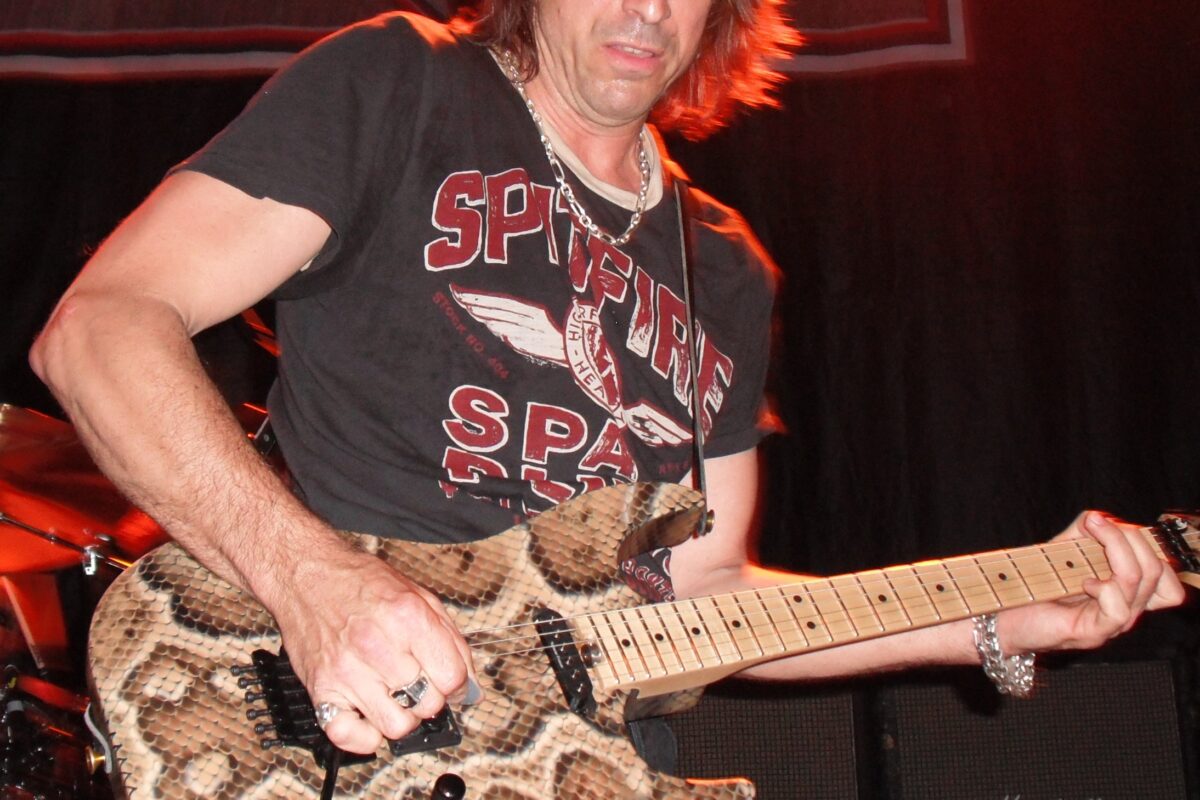
Warren DeMartini Guitars & Gear: The Complete Guide to Ratt’s Torch Guitarist’s Rig
Warren DeMartini guitars & gear: Ratt's Torch guitarist. Charvel Bomber, snakeskin, Jose-modded Plexi, Fender Super Champ, RTM pickup, slapback echo — the complete rig.
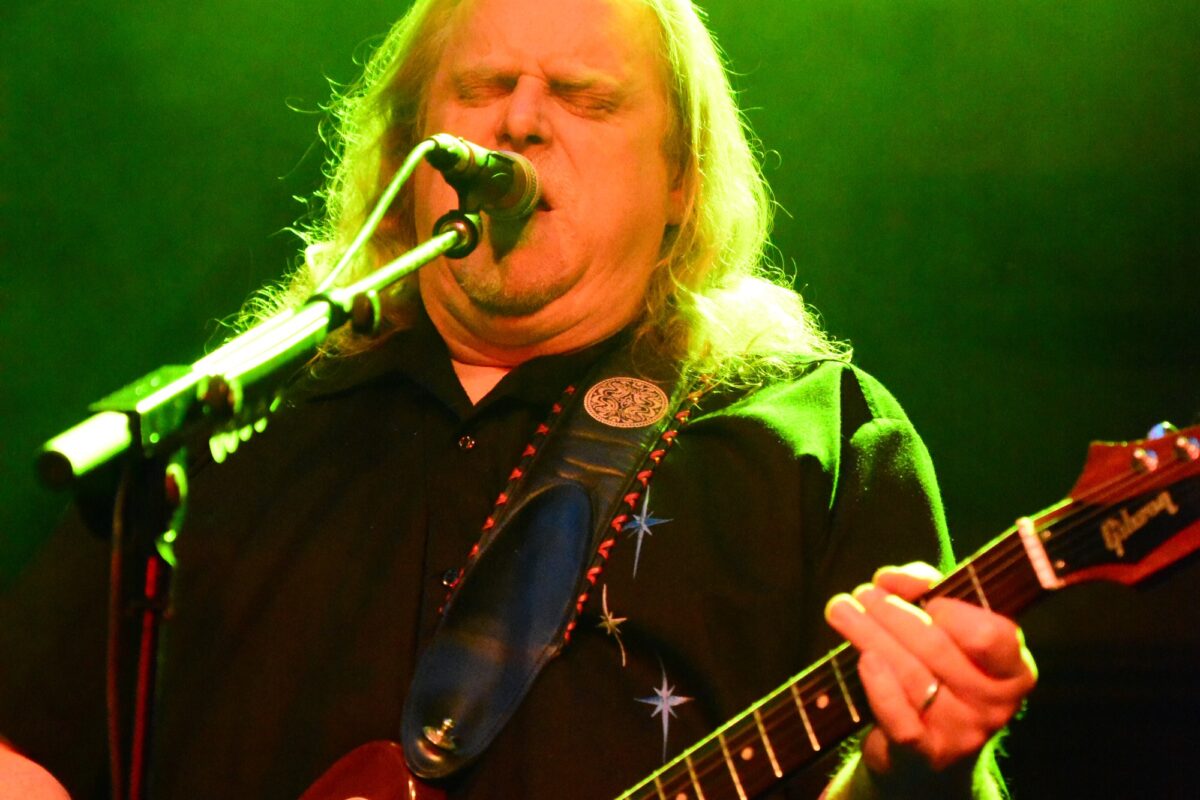
Warren Haynes Guitars & Gear: The Complete Guide to Gov’t Mule’s Guitar Master’s Rig
Warren Haynes' guitars, amps, and effects — the complete guide. Gibson Les Paul Chester, Soldano SLO-100 modified, Klon Centaur, Emma Discombobulator, and how to nail that Gov't Mule blues-rock tone.