Harvey Mandel Guitars & Gear: The Complete Guide to The Snake’s Psychedelic Blues Rig
Harvey Mandel guitars & gear: The Snake's psychedelic blues rig. Gibson ES-355, customised Bogan amp, two-handed tapping pre-Van Halen, Rolling Stones sessions, Cristo Redentor tone.
In the entire history of rock guitar, there are perhaps five or six moments where a player demonstrated a technique that would later become universal, years before the musician who got credit for it made it famous. Harvey Mandel is responsible for at least two of them. He was using two-handed fretboard tapping — the technique where the fretting hand is augmented by the picking hand tapping notes directly on the neck, enabling faster legato runs and wider intervals than conventional single-hand fretting allows — in the mid-1960s, more than a decade before Eddie Van Halen made it the defining technique of a generation of rock guitarists. He was using controlled feedback as a musical tool — not accidentally, but systematically, through a specifically modified Bogan amplifier — before the technique had a name or a theoretical framework in rock guitar. He was exploring psychedelic production techniques, backward guitar effects, and sophisticated studio processing at a level that most rock guitarists of 1968 hadn’t considered as possibilities. He did all of this as a self-taught guitarist from Chicago who had small hands and played a large guitar. Most of the world didn’t know his name. Most of the guitarists who followed didn’t know he’d been there first. Harvey “The Snake” Mandel kept playing anyway.
Harvey Mandel was born in Detroit, Michigan, and grew up in Morton Grove, Illinois — a suburb of Chicago that placed him in the orbit of the Chicago blues scene that would fundamentally shape his musical development. He was self-taught from the beginning, developing his technique by ear and by practice rather than through formal instruction, absorbing the electric Chicago blues tradition while simultaneously finding ways to extend and modify what he was hearing into something more personal and more adventurous. His first record was a sideman appearance on Charlie Musselwhite’s Stand Back! Here Comes Charley Musselwhite’s Southside Band in 1966 — Musselwhite being the harmonica player who, like Mandel, came from a working-class background and absorbed the Chicago blues tradition with the commitment of an outsider who needed it rather than a native who inherited it. Musselwhite nicknamed Mandel “The Snake” — a moniker that reflected both the fluid, sinuous quality of his guitar lines and, perhaps, a personal elusiveness that kept him outside the orbit of the major commercial successes that his talent deserved.
The solo debut Cristo Redentor (1968) is the album around which Mandel’s critical reputation has been constructed, and it deserves the reverence it receives. Named after the famous Christ the Redeemer statue in Rio de Janeiro, it is an almost entirely instrumental record — only the title track features vocals, provided by a group of women whose wordless voices are treated as another instrumental layer rather than as a conventional lead vocal. The guitar playing throughout is extraordinary: John Mayall, who would later employ Mandel in his Bluesbreakers, described the approach as “Harvey’s wall of sound” — the specific quality of controlled feedback through the Bogan amplifier, sustained for musical effect rather than as noise, creating a continuous tonal environment in which Mandel’s specific melodic ideas float and develop. Legends of Rock Guitar (1997) described the album as “a landmark record, influential in bridging the gap between blues and rock and roll, with Mandel’s relentless fuzztone, feedback-edged solos, and unusual syncopated phrasing.”
The Rolling Stones connection is one of the more poignant might-have-beens in rock history. When Mick Taylor — Mandel’s blues circuit contemporary, a guitarist who had replaced Brian Jones — quit the Stones in 1974, the band held auditions that eventually produced Ron Wood as the replacement. Mandel auditioned. He played on two tracks of the Black and Blue album (1976): “Memory Motel,” where his melodic licks “enhance the tune” (Premier Guitar), and “Hot Stuff,” where his “limitless sustain and backwards-sounding licks show the added colors and creativity Mandel might have brought to the band had they not opted to go with Ron Wood’s virtual cloning of Keith.” The implied assessment — that Mandel was a more genuinely original musical personality than the ultimately chosen Wood, but that original musical personalities are not always what a band in a specific commercial position needs — captures the recurring story of Mandel’s career: extraordinary talent, perpetually adjacent to the major cultural moments, never quite the one who gets the credit or the commercial spotlight.
He also appeared at Woodstock in August 1969 with Canned Heat — his third gig with the band, which is an extraordinary detail. He had briefly replaced Henry Vestine in Canned Heat, and his third performance with them was in front of approximately half a million people. This was, by any reasonable measure, a significant debut in a band context. He would go on to play with John Mayall’s Bluesbreakers in 1971, to form the band Pure Food and Drug Act with blues violinist Don “Sugarcane” Harris, and to continue a prolific solo recording career across more than a dozen albums spanning five decades. The career is more substantial than the public recognition. The music is better than the biography suggests. That is the Harvey Mandel story in two sentences.
Background: The Unknown Genius and the Techniques He Developed First
To fully understand Harvey Mandel’s place in guitar history requires confronting an uncomfortable question: why isn’t he more famous? The techniques he pioneered — two-handed tapping, controlled feedback as a compositional tool, the specific psychedelic production approaches of the Cristo Redentor era — went on to define subsequent generations of guitar playing without Mandel receiving the credit that their origination would conventionally warrant. The answers are multiple and none of them are satisfying. He was, in the words of one comprehensive assessment, “always in the right place at the right time” without the commercial packaging or the cultural moment that would have translated being in the right place into being permanently recognized for it.
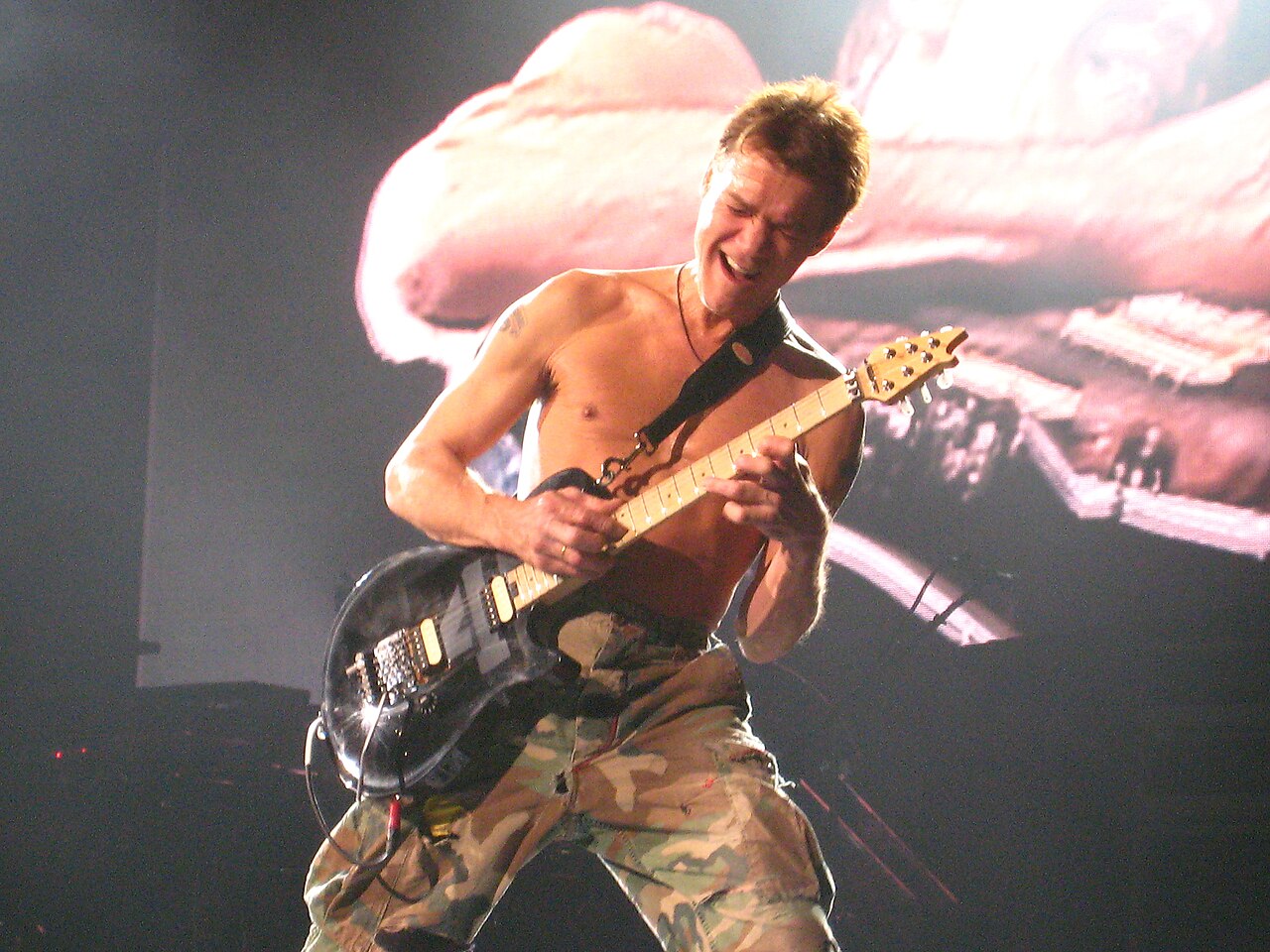
The two-handed tapping story is documented in Mandel’s own biography: “He helped to develop playing techniques such as two-handed fretboard tapping, and the use of sustained and controlled feedback during the mid-’60s.” Eddie Van Halen, who brought the technique to global awareness on the 1978 debut album — specifically the iconic “Eruption” solo — acknowledged awareness of other players using tapping but identified it as something he had developed independently. The historical record on who did what first with tapping is genuinely complicated: Frank Zappa guitarist Harvey Brooks documented similar techniques, and various players from different traditions had explored hand-tapping in different forms. But Mandel’s specific, documented use of two-handed tapping in a blues-rock electric context in the mid-1960s is among the earliest documented instances of the technique, and his contemporaries — the musicians who were actually present at those performances — were aware of what he was doing.
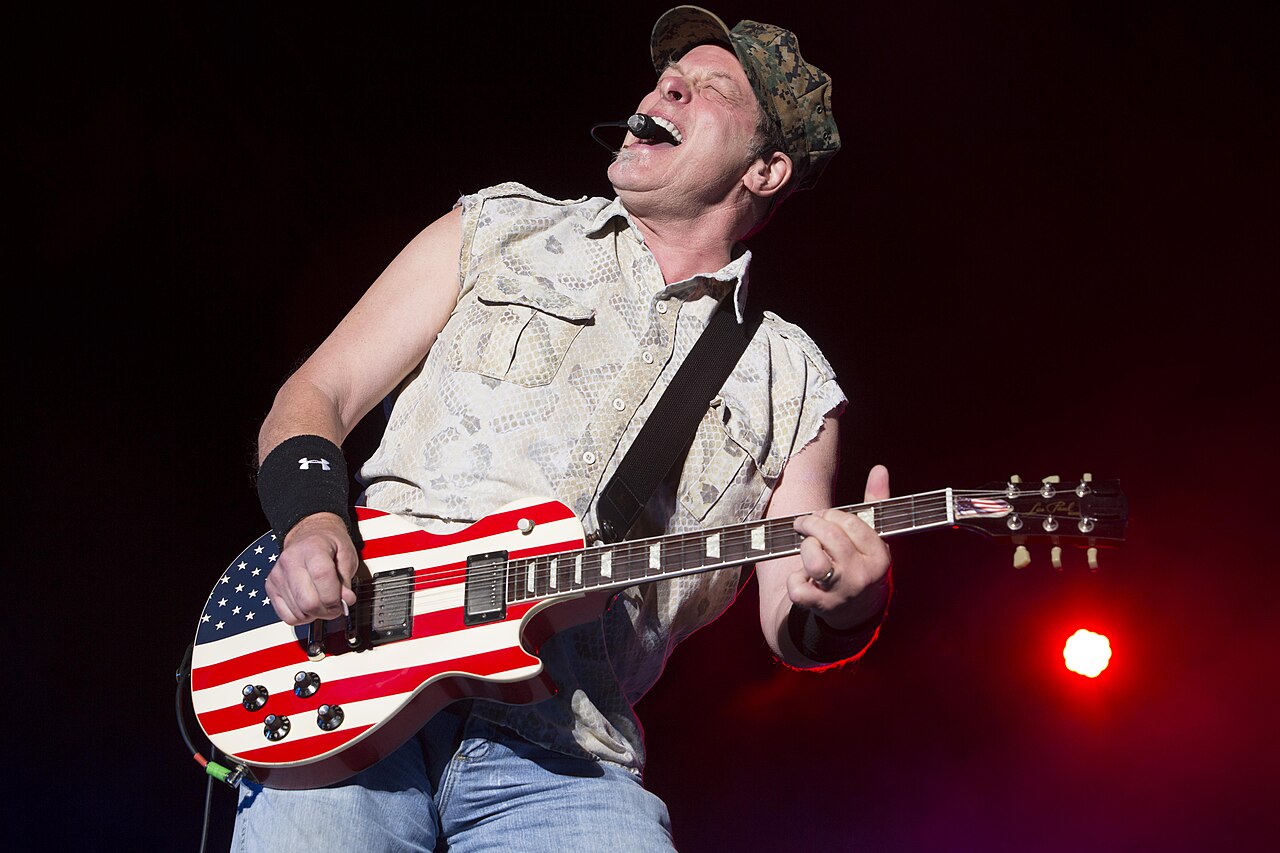
The controlled feedback work is equally remarkable. John Mayall’s description of “Harvey’s wall of sound” refers specifically to Mandel’s ability to control the feedback produced by his modified Bogan amplifier — not the uncontrolled howl that most guitarists associate with feedback at high volumes, but a specifically directed resonant sustain that could be maintained and shaped as a musical texture. The technique required not just amplifier modification but the same systematic physical understanding of guitar-amp acoustic interaction that Ted Nugent developed with his Byrdland and that Alvin Lee managed with Big Red at concert volumes. Mandel was doing this with a Bogan amplifier — not a premium boutique piece of equipment, but a workhorse piece of mid-century American electronic equipment that he had specifically customized for the purpose.
The specific disaster that ended his relationship with the best guitar he ever owned deserves its own paragraph, because it perfectly illustrates the relationship between a great guitarist and an irreplaceable instrument. During the Baby Batter period (1971), Mandel had a guitar tech in Chicago who proposed installing a Floyd Rose tremolo system on his primary Les Paul. “To do it, he had to scoop out a hunk of wood in the back to put the springs in,” Mandel explained in Guitar Player. “As soon as he did that and we put the guitar back together, it was ruined. The sustain was gone and we could never get that guitar to sound right again.” He ended up giving the guitar away. “It was one of the best guitars I ever had. The tone was astronomical. I could get another Les Paul, but it wouldn’t be the same.” The story is simultaneously heartbreaking (for what was lost) and instructive (for what it reveals about how profoundly a guitar’s specific acoustic properties — in this case the resonance of its intact body cavity — contribute to its amplified tone). The lesson about not letting anyone modify an irreplaceable instrument was learned at the cost of an irreplaceable instrument, which is how the most important lessons in guitar culture are typically learned.
The Rig: Harvey Mandel’s Guitars, Amps, and Effects
Guitars
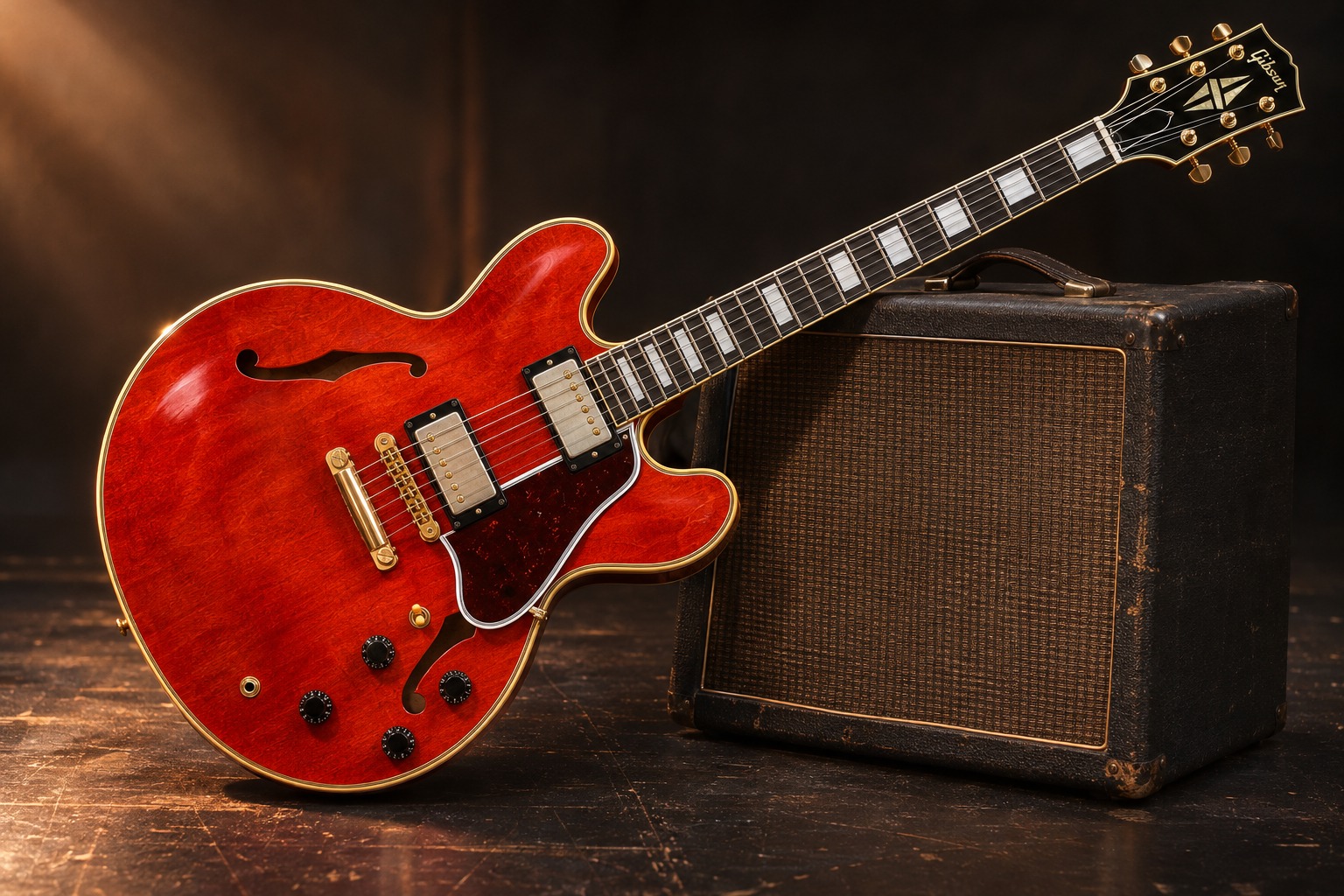
The guitar Harvey Mandel used for the Cristo Redentor debut album — visible in photographs including the back cover of that album, where “an impossibly young-looking Mandel is pictured on the back artwork, a diminutive figure dwarfed by his big Gibson 355” — was a Gibson ES-355. The ES-355 is Gibson’s most elaborate semi-hollow body instrument: the top-specification variant of the ES-335 family, with multiple binding, ebony fingerboard, block inlays, and in many configurations, a Varitone tone circuit and stereo wiring capability. Its semi-hollow body produces the characteristic warm, acoustically complex tone of the ES family — not as feedback-prone as a fully hollow instrument like a Byrdland or Casino, but with enough acoustic resonance from the hollow chambers to add a specific warmth and bloom to the amplified signal. The ES-355’s combination of humbucker pickups (PAF-specification in 1968 vintage examples), semi-hollow body resonance, and the high-quality construction of Gibson’s flagship semi-hollow model produced the specific quality of tone that Mandel required for the Cristo Redentor sessions: warm enough for the blues foundation, articulate enough for the complex, multi-layered psychedelic guitar work, and sustaining enough for the controlled feedback passages that characterize the album. The photograph of Mandel dwarfed by his ES-355 — the guitar almost as large as the guitarist — captures a specific visual irony: a man with small hands (“It’s much harder for me to play, like, a full-sized Strat or other guitars like that, because my hand isn’t as big”) producing enormous tonal and musical output from an instrument that seems physically ill-matched to his stature.
Mandel’s primary guitar through the Baby Batter (1971) and subsequent albums was a Gibson Les Paul Standard — a guitar he described in Guitar Player with the specifically pained language of someone who had experienced great loss: “It was one of the best guitars I ever had. The tone was astronomical.” This specific Les Paul is the guitar that the Floyd Rose surgery destroyed — the tech who installed the tremolo system had to “scoop out a hunk of wood in the back” for the spring cavity, and the removal of that wood permanently eliminated the sustain that had made the guitar extraordinary. “The sustain was gone and we could never get that guitar to sound right again.” After the tragedy, Mandel gave the guitar away and tried to replace it with other Les Pauls, acknowledging with resigned acceptance the fundamental irreproducibility of specific great vintage instruments: “I could get another Les Paul, but it wouldn’t be the same.” The ghost of this guitar — its astronomical tone and the inadvertent destruction of it — haunts any discussion of Mandel’s gear in the way that legendary lost instruments haunt guitar history.
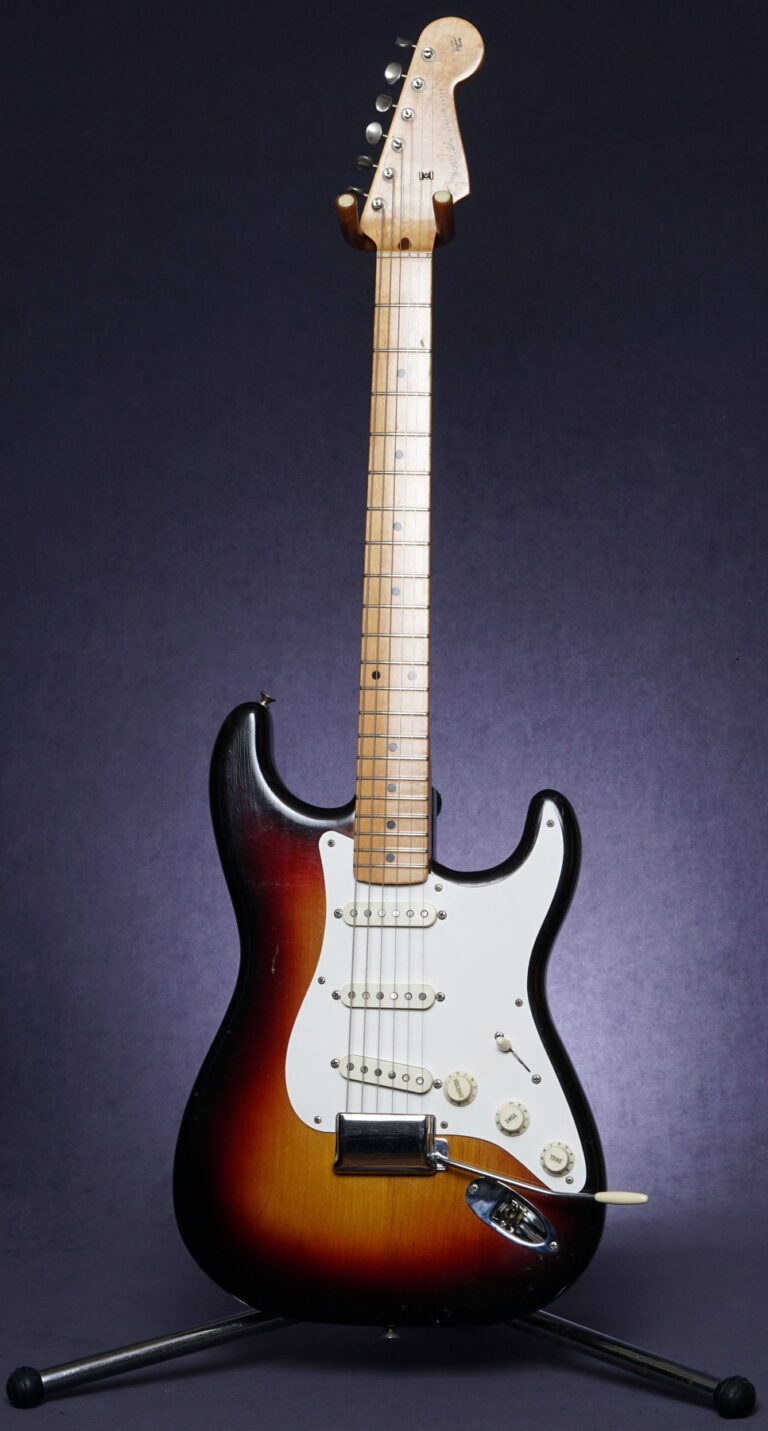
Fender Stratocasters appear in Harvey Mandel’s documented instrument history across various periods — though by his own admission, the Strat’s full-scale length presents challenges for his smaller hands. “It’s much harder for me to play, like, a full-sized Strat or other guitars like that, because my hand isn’t as big. If you look at Steve Vai’s fingers, the guy’s got, like, giant long fingers. I’m just the opposite. I got small hands.” The Stratocaster’s 25.5-inch scale length (compared to the 24.75-inch scale of Gibson instruments) results in slightly higher string tension at the same pitch, which compounds the playability challenge for smaller hands. Despite this acknowledged difficulty, Mandel used Stratocasters in contexts where their specific single-coil character — brighter, more articulate, with a different quality of harmonic content from the Gibson humbuckers — served specific musical purposes. His small-hands admission is not a limitation he treated as an insurmountable obstacle but a practical reality he worked around through guitar selection and technique adaptation.
Mandel’s career — spanning more than five decades and encompassing every musical style from Chicago blues through psychedelia, funk, jazz-influenced instrumental, and straight hard rock — required access to a range of instruments beyond the primary ES-355 and Les Paul. Various photographs and documentation across his career show him with different Gibson instruments appropriate for different musical contexts, and his Gemtracks documentation lists the Fender Stratocaster as a documented instrument alongside Gibson models. The consistent thread through his guitar choices, regardless of specific model, is the preference for instruments that produce the warm, sustaining, harmonically complex tonal palette that his specific approach — the controlled feedback, the sustained notes, the two-handed tapping passages — requires.
Amps
The most historically interesting and most musically significant amplifier in Harvey Mandel’s documented setup is a customised Bogan — an American public address and hi-fi amplifier manufacturer that produced high-quality audio electronics from the 1940s through the 1970s. Bogan amplifiers were designed for professional audio applications — PA reinforcement, home hi-fi, institutional sound systems — rather than for electric guitar. Their circuit design, optimized for linear amplification of audio signals with minimal coloration, produced a specific tonal character when driven with electric guitar: different from the EL34-powered British Marshall character, different from the 6L6-powered American Fender character, with its own specific quality of feedback response that John Mayall identified as “Harvey’s wall of sound.” Mandel specifically customised his Bogan for guitar use — the specific modifications are not comprehensively documented in available sources, but the result was an amplifier that gave him the controlled, musical feedback sustain that characterises the Cristo Redentor recordings and the performances that preceded them. This customised Bogan represents the same creative tradition as the Sunn Coliseum PA head that Leslie West accidentally discovered: a non-guitar amplifier pressed into guitar service and producing a specific tonal character unavailable from conventional guitar amplification. In both cases, the “wrong” amplifier was the right tool for the specific musical goal the guitarist had in mind.
Gibson amplifiers appear in Mandel’s early documented equipment, consistent with his position as a young blues guitarist in the Chicago area in the mid-1960s. Gibson’s amplifier line of the period produced functional, reliable valve amplification appropriate for club performance contexts, and Mandel’s use of Gibson amps alongside Gibson guitars in the early years reflects both practical availability and the natural brand familiarity of a guitarist whose primary instruments were also Gibson.
Mandel’s extensive session and production work — the Canned Heat recordings, the John Mayall Bluesbreakers sessions, the Rolling Stones tracks, and the diverse studio work across his solo albums — required access to a range of studio amplifiers appropriate for different recording contexts. The specific amplifiers used on individual sessions are not comprehensively documented in available sources, but the diversity of musical contexts in which Mandel’s guitar work appears implies a flexible, multi-amplifier approach to studio recording rather than a single consistent setup.
Effects
Harvey Mandel’s most important and most historically significant “effect” is not a pedal but a technique: the systematic use of controlled, sustained feedback as a compositional and tonal element. “He helped to develop playing techniques such as two-handed fretboard tapping, and the use of sustained and controlled feedback during the mid-’60s,” his official biography states. The feedback that John Mayall called “Harvey’s wall of sound” was not accidental or uncontrolled — it was the product of specific knowledge about how the Gibson semi-hollow body resonates at specific frequencies relative to specific amplifier speaker positions, developed through systematic experimentation and accumulated over years of practice. Mandel’s controlled feedback is distinct from the feedback-as-noise that troubled most guitarists of his era and distinct from the feedback-as-effect that Hendrix and others used as an expressive tool: it is feedback as sustained tonal environment, a continuous resonant field within which melodic ideas can develop at length. This is a genuinely sophisticated compositional approach, and it required a specific combination of instrument (the semi-hollow ES-355 with its acoustic resonance), amplifier (the customised Bogan with its specific acoustic interaction), and technique (the physical positioning and angle management that directs the feedback to specific pitches).
Mandel’s documented use of two-handed fretboard tapping in the mid-1960s places him among the earliest electric guitar players to develop and perform this technique. The tapping technique involves the picking hand tapping notes directly onto the fretboard simultaneously with the fretting hand — enabling hammer-on and pull-off patterns that span wider intervals than single-hand fretting allows, and enabling faster legato passages than are practical with conventional picking technique. The technique produces a specifically smooth, connected quality in fast passages — the notes seamlessly blending without the pick-attack transient of conventional playing — that has its own distinct tonal character. Mandel’s small hands may paradoxically have been an advantage in developing this technique: the physical limitations that made full-scale guitars “harder to play, like, a full-sized Strat or other guitars like that” may have encouraged him to find ways of playing that reduced the physical demands on the fretting hand alone.
The Legends of Rock Guitar description of Cristo Redentor references “Mandel’s relentless fuzztone, feedback-edged solos, and unusual syncopated phrasing” — indicating that fuzz pedals were part of his signal chain for the late-1960s recordings alongside the customised Bogan amplifier. The specific fuzz units he used have not been documented in available sources with the precision of some other players, but the “relentless fuzztone” character of the Cristo Redentor recordings is distinct from both the natural amplifier saturation approach and the fuzz-pedal transparency — suggesting a fuzz with its own strong tonal character actively coloring the signal rather than simply boosting it.
Mandel was an early adopter of tape-reversal techniques in the studio — “psychedelic production techniques like guitars panning across the stereo spectrum and flipping the tape over to achieve backwards guitar effects,” as Premier Guitar documented his approach on Cristo Redentor. The backwards guitar technique involves recording a guitar part conventionally and then reversing the tape (or, in digital production, reversing the audio file) so that the attack is at the end of each note rather than the beginning. The result is an atmospheric, ethereal sound in which notes swell from silence before abruptly cutting off — the inverse of the guitar’s natural attack-decay envelope. Mandel used this technique not as a novelty but as a compositional tool, integrating it into the layered, psychedelic textures of the Cristo Redentor recordings to create depth and dimension that conventional forward-only guitar tracks couldn’t provide. The “backwards-sounding licks” on the Rolling Stones’ “Hot Stuff” represent the same approach applied to a harder rock context — demonstrating that Mandel could deploy these techniques in mainstream commercial settings as well as in the more adventurous context of his solo albums.
Alongside the backwards guitar, Mandel employed “guitars panning across the stereo spectrum” as a compositional element on Cristo Redentor — using the spatial dimension of stereo recording to create tonal environments in which guitar elements moved through the soundfield rather than occupying a fixed position. This approach was genuinely innovative in 1968: while stereo recording was standard for major label releases by that point, the deliberate, compositionally meaningful use of stereo movement as a musical element was rarer than its commercial prevalence might suggest. Mandel’s use of panning as a compositional tool — as one account describes it, “pyrotechnically brilliant in an era before such things were common” — reflects the same forward-thinking studio intelligence that characterized his other technical innovations.
Mandel’s string gauge preferences are not extensively documented in available sources, but his acknowledged small-hands situation and his preference for Gibson-scale instruments suggests lighter gauges than the heaviest players typically favour — gauges that reduce string tension and make wider-interval techniques like his two-handed tapping more physically accessible. The specific string choice would also have been influenced by the extended feedback technique, where string mass and tension affect the specific feedback frequencies available at a given guitar-amplifier distance and angle.
Playing Style & Tone Philosophy
Harvey Mandel plays guitar as a self-taught innovator who developed his musical vocabulary by solving problems that formal training would have defined as someone else’s specialty. The two-handed tapping, the controlled feedback, the backwards guitar — none of these came from a music school curriculum or a teacher’s lesson plan. They came from a guitarist who needed to produce certain sounds and figured out how to produce them, often through approaches that existing technique didn’t include. This is the specific quality of the self-taught innovator: not necessarily more gifted than formally trained players, but unconstrained by the formal training’s implicit boundaries between “what guitarists do” and “what guitarists don’t do.”
His approach to blues is deeply authentic and deeply Chicago — the specific gritty, electric blues of Muddy Waters and Howlin’ Wolf and the West Side and South Side players who defined the electric blues vocabulary in the 1950s and early 1960s. But Mandel processed this tradition through his own sensibility in ways that extended rather than reproduced it. The Carlos Santana comment that Mandel inspired him is documented — another guitarist who would go on to massive commercial success acknowledging the role of a less commercially successful predecessor who showed him something essential. “I had this feeling that Harvey Mandel was the first guitarist in my life to show me something beyond just the basics,” is the Santana assessment, which is a remarkable statement from a man who had also had the opportunity to be inspired by Miles Davis, John Coltrane, and B.B. King.
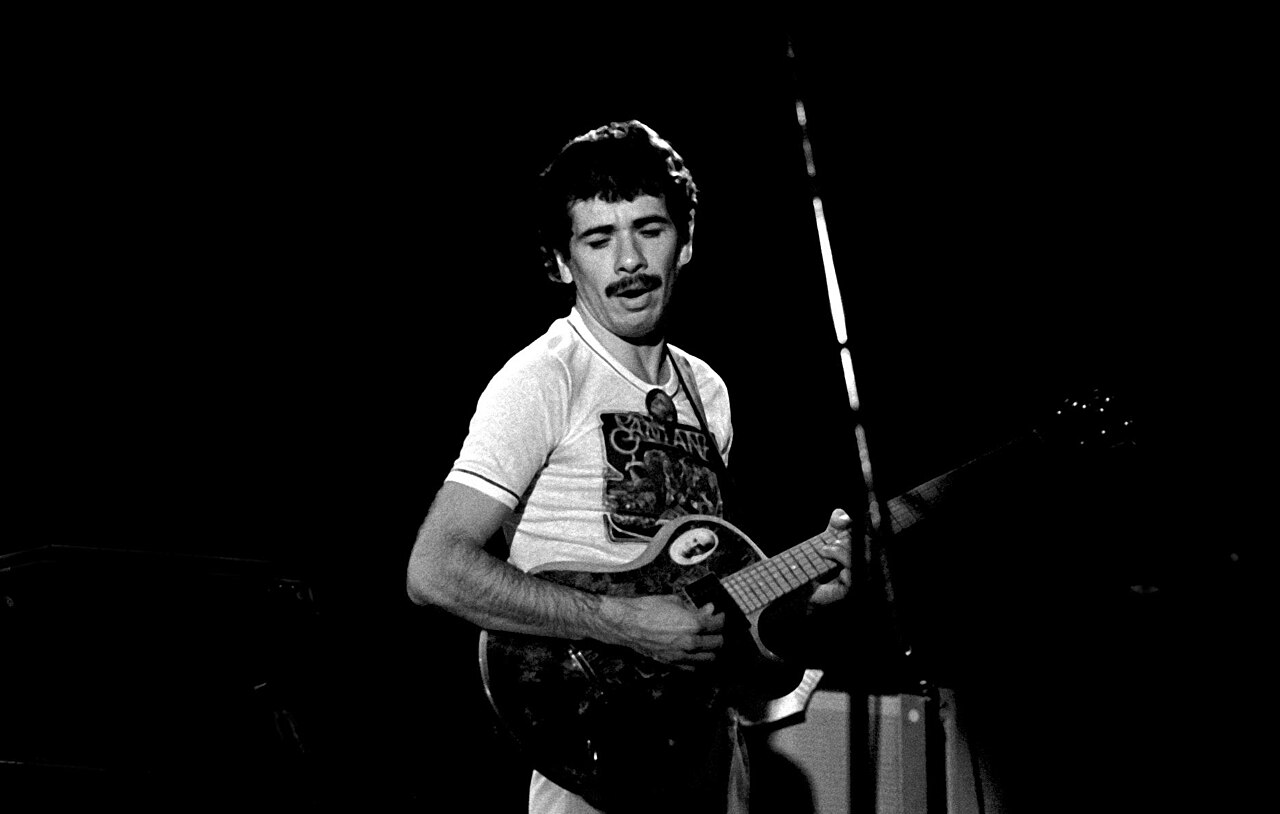
His tone philosophy is implicit rather than explicitly stated in the available record — more visible in the music than in interviews. The Cristo Redentor approach combines blues foundations with psychedelic processing tools in a way that treats the guitar not just as a melody instrument but as a complete sound-design instrument: each note is not just a pitch but a tonal event, shaped by the feedback, processed by the studio, positioned in the stereo field, and allowed to extend into the sustained resonance of the amplifier interaction as long as the musical idea requires. This is a compositional philosophy as much as a performance philosophy, and it reflects someone who was thinking about the guitar in terms of what it can contribute to a fully realized musical environment rather than just in terms of what scales he could play over a given chord progression.
How to Sound Like Harvey Mandel
Capturing Mandel’s Cristo Redentor tone requires a semi-hollow Gibson instrument (the ES-355 or ES-335 being the most historically appropriate) through amplification that provides enough clean headroom to sustain the feedback at controlled, manageable pitches without collapsing into noise. The customised Bogan provided this specific character; a quality, high-headroom American valve amplifier represents the best modern approximation. The fuzz pedal contributes the “relentless fuzztone” character; a germanium-based fuzz approximates the organic, buzzy quality of period-correct fuzz units. The backwards guitar and stereo panning are studio production tools rather than live performance elements — access to a digital audio workstation enables the same techniques.
| Control | Setting (0–10) | Notes |
|---|---|---|
| Guitar Volume | 10 | Maximum — Mandel required maximum output from the guitar to drive both the fuzz and the Bogan amplifier into the feedback-sustain zone. Backing off the guitar volume reduces the specific harmonic interaction between guitar and amplifier that produces controlled feedback. |
| Fuzz (Germanium-style) | Volume: 7; Fuzz: 6–7; Tone: 5 | Moderate-to-high fuzz setting — the Cristo Redentor “relentless fuzztone” has grit and bite but is not the maximum-compression high-gain character of a fully cranked silicon fuzz. Germanium fuzz produces the warm, harmonically complex character of period-correct 1960s fuzz units. Tone at noon provides the midrange balance for both rhythm and lead. |
| Amp Bass | 6 | Moderate bass — the ES-355’s hollow chambers add natural low-end warmth; the amp bass setting supports rather than exaggerates this. Controlled bass also prevents the lower frequency range from dominating the feedback response in unwanted ways. |
| Amp Mid | 7 | Present midrange — Mandel’s tone is fundamentally midrange-oriented, with the controlled feedback and fuzz both living primarily in the midrange frequencies. Support the natural ES-355 humbucker character. This is where the blues lives. |
| Amp Treble | 6 | Moderate treble for clarity and definition in the two-handed tapping passages where individual note articulation is as important as the overall texture. Not the aggressive high-treble approach of some rock styles; warm enough to feel organic, clear enough to hear the complex melodic ideas. |
| Amp Volume / Master | 7–9 | High enough to enter the feedback-sustain zone — where the guitar-amplifier acoustic interaction produces the continuous resonance that sustains notes beyond their natural decay. The specific threshold depends on the room, the guitar, and the amplifier’s specific response characteristics. Listen for the “wall of sound” quality and find it. |
| Controlled Feedback (Technique) | Body angle: 45–90° to speaker | Position the guitar’s semi-hollow body at 45–90° to the speaker, at a distance of 2–4 feet. The specific angle and distance that produces musical, sustained feedback rather than uncontrolled noise depends on the specific guitar and amplifier combination. Experiment systematically — identify the angles that produce specific pitches, then practice sustaining and moving between them. This is Mandel’s primary tonal tool and takes time to develop. |
| Two-Handed Tapping | Practice required | The picking hand taps notes on the fretboard simultaneously with conventional fretting-hand technique — enabling wider intervals and faster legato passages. Set the picking hand middle or index finger lightly but decisively on the string above the desired fret; combine with hammer-ons and pull-offs in the fretting hand for seamless legato passages. At high volume through fuzz, the tapped notes sustain and bloom in ways not available at lower volumes. |
| Backwards Guitar (Studio) | DAW reverse function | Record the guitar part conventionally, then reverse the audio in a DAW. Notes swell from silence and cut off abruptly — the inverse of the natural guitar envelope. Use for atmospheric textural layers behind conventional forward guitar tracks. Position in the stereo field deliberately, as Mandel did on Cristo Redentor. |
Influence & Legacy
Harvey Mandel’s influence is the most counterintuitive kind: massively consequential and almost invisible. The players who were directly influenced by him — Carlos Santana among the most prominent — went on to affect the development of rock guitar in ways that dwarf Mandel’s own commercial profile. The techniques he pioneered — two-handed tapping and controlled feedback — became foundational to subsequent generations of rock guitarists without Mandel’s name appearing in the standard genealogy. The Cristo Redentor album, which the Vivascene description calls “one of the essential guitar-based albums of the last century” and Legends of Rock Guitar describes as “a landmark record,” remains less widely known than albums it influenced.
The Rolling Stones tracks — “Hot Stuff” and “Memory Motel” from Black and Blue — are perhaps the most widely heard examples of Mandel’s playing, accessible to a large audience without necessarily being recognizable as specifically his work. They demonstrate what he might have brought to the Stones: genuine originality, technical sophistication, and a musical personality distinct enough from Keith Richards’s that the band dynamic would have changed fundamentally. The decision to hire Ron Wood instead was not about quality — it was about fit, about the specific kind of chemistry the Stones needed at that specific commercial moment. “I did come real close to becoming a Rolling Stone,” Mandel acknowledged. The “real close” and the “not quite” summarize the trajectory of his public recognition throughout his career.
For more on the Chicago blues tradition that shaped Mandel’s foundation, and the Chicago and Detroit rock scenes that surrounded him during his formative years, the connection to players who emerged from the same cultural moment runs through Rick Derringer’s early Chicago circuit work. The broader tradition of blues-rock guitar innovation that Mandel inhabited alongside John Mayall’s players is explored through Paul Kossoff’s blues-influenced approach. The specifically American approach to controlled feedback as a musical tool — which Mandel and Ted Nugent both developed through non-standard amplification — connects to Ted Nugent’s Byrdland feedback system.
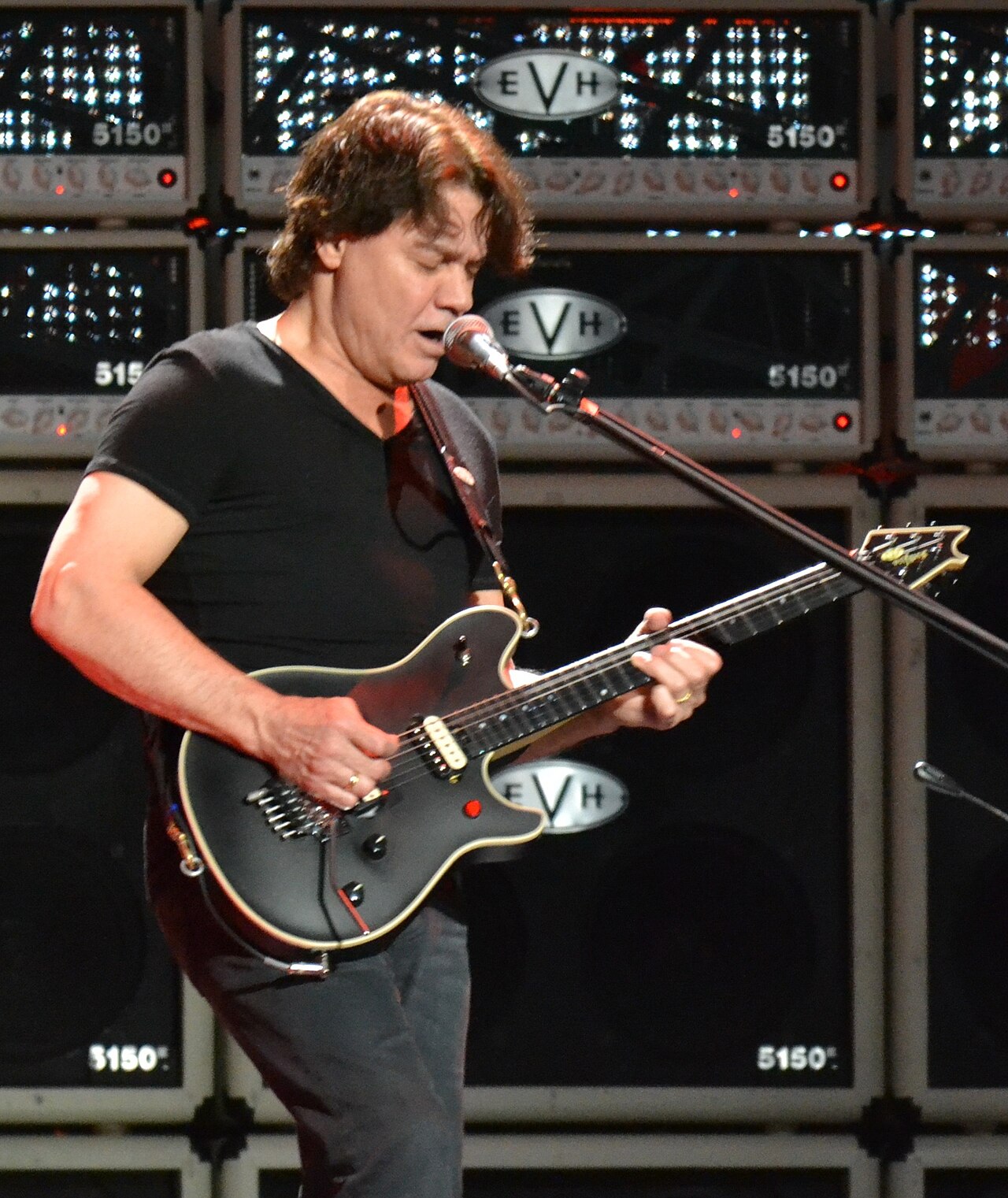
The most apt final assessment of Harvey Mandel comes from Carlos Santana’s quote, reproduced not because it elevates Santana but because it captures what Mandel actually contributed: “He showed me something beyond just the basics.” In guitar terms, “beyond just the basics” covers an extraordinary amount of territory — the techniques, the tonal approaches, the compositional intelligence, the specific quality of musical imagination that makes a player’s work worth hearing fifty years after it was recorded. Harvey Mandel showed guitarists something beyond just the basics. The evidence is the Cristo Redentor album, the Rolling Stones tracks, the Woodstock appearance, the techniques that other players eventually made famous. He was there. He was extraordinary. The world was slower to notice than it should have been.
Frequently Asked Questions: Harvey Mandel Guitars & Gear
What guitar did Harvey Mandel use on Cristo Redentor?
Harvey Mandel’s primary guitar for the Cristo Redentor debut album (1968) was a Gibson ES-355 — Gibson’s most elaborate semi-hollow body instrument, visible on the back cover of the album where “an impossibly young-looking Mandel is pictured on the back artwork, a diminutive figure dwarfed by his big Gibson 355.” The ES-355 is the top-specification variant of the ES-335 family, featuring multiple binding, block inlays, ebony fingerboard, and (in stereo versions) a Varitone tone circuit. Mandel’s specific example was the instrument through which he developed and deployed the controlled feedback technique that John Mayall described as “Harvey’s wall of sound” — using the customised Bogan amplifier to generate sustained, musical feedback as a compositional and tonal element on the album’s recordings.
What was the Bogan amplifier and why did Mandel use it?
The Bogan amplifier was an American public address and hi-fi electronics manufacturer’s product — designed for professional audio applications rather than electric guitar amplification. Like Leslie West’s Sunn Coliseum PA head, Mandel’s Bogan represents the tradition of creative guitarists finding non-guitar amplification that happens to produce specific tonal qualities unavailable from conventional guitar amplifiers. Mandel specifically customised his Bogan for guitar use, and the result was the “wall of sound” sustained feedback character that John Mayall identified as Mandel’s most distinctive tonal signature. The Bogan’s specific circuit design — optimised for linear audio amplification rather than the colored, characterful response of guitar amp designs — produced a feedback response with different qualities from either a Marshall or a Fender.
Did Harvey Mandel really use two-handed tapping before Eddie Van Halen?
Yes — Mandel’s official biography states that “he helped to develop playing techniques such as two-handed fretboard tapping, and the use of sustained and controlled feedback during the mid-’60s,” which places his documented use of the technique more than a decade before Eddie Van Halen’s “Eruption” made it famous in 1978. The history of two-handed tapping predates both players — various musicians had explored hand-tapping in different contexts across several decades — but Mandel’s specific, documented use of the technique in a blues-rock electric guitar context in the mid-1960s is among the earliest recorded instances. His small hands may have contributed to developing the technique: the physical limitations that made conventional full-scale guitar playing more challenging may have encouraged him to find approaches that reduced the demands on the fretting hand.
What was Harvey Mandel’s Rolling Stones connection?
When Mick Taylor left The Rolling Stones in 1974, the band held auditions to find a replacement. Mandel auditioned and was asked to record on two tracks of the resulting Black and Blue album (1976): “Memory Motel,” where his melodic contributions enhanced the track, and “Hot Stuff,” where his “limitless sustain and backwards-sounding licks” demonstrated genuine creative originality beyond what the ultimately chosen Ron Wood brought to the band. Mandel came “real close” to becoming a Rolling Stone, by his own account, but the band ultimately preferred Wood’s compatibility with Keith Richards’s existing style over Mandel’s more genuinely distinctive musical personality. The Black and Blue tracks provide the most widely distributed example of Mandel’s guitar work in a mainstream commercial context.
What happened to Harvey Mandel’s “best guitar”?
Mandel had a Les Paul Standard during the Baby Batter era (1971) that he described as having “astronomical” tone — “one of the best guitars I ever had.” A guitar tech proposed installing a Floyd Rose tremolo system on the instrument. To accommodate the Floyd Rose’s spring mechanism, “he had to scoop out a hunk of wood in the back.” The removal of that wood eliminated the guitar’s sustain permanently — “as soon as he did that and we put the guitar back together, it was ruined. The sustain was gone and we could never get that guitar to sound right again.” Mandel ended up giving the guitar away, acknowledging that replacing a great instrument is effectively impossible: “I could get another Les Paul, but it wouldn’t be the same.” The story is a cautionary tale about irreversible modifications to irreplaceable instruments.
What does Carlos Santana say about Harvey Mandel’s influence?
Carlos Santana identified Harvey Mandel as a formative influence on his own development, specifically describing Mandel as “the first guitarist in my life to show me something beyond just the basics.” Santana’s influence on Latin rock and guitar in general is well-documented; his acknowledgment of Mandel as a formative influence is therefore significant evidence of Mandel’s musical importance even before his critical reputation was formally established. The specific “beyond just the basics” phrase captures something essential about Mandel’s contribution: he was demonstrating things — the controlled feedback, the two-handed tapping, the psychedelic processing — that were genuinely beyond what most guitarists of the period knew was possible.
Was Harvey Mandel at Woodstock?
Yes — Harvey Mandel appeared at Woodstock in August 1969 with Canned Heat, in what was remarkably only his third performance with the band. He had briefly replaced lead guitarist Henry Vestine in Canned Heat, and the third gig of his tenure with the band happened to be the Woodstock festival, in front of approximately half a million people. This places Mandel in the remarkable company of the Woodstock performers whose presence at the festival became historically significant — though Mandel’s specific Woodstock appearance is less celebrated than, for example, Alvin Lee’s extended “I’m Going Home” solo with Ten Years After on the same bill. Mandel continued to tour with various configurations of Canned Heat through subsequent decades, returning to the band periodically throughout his career.
Image credits
- Gibson ES-355 (Primary "Cristo Redentor" Guitar: GuitarGangsters AI-generated reference illustration, not a photograph.
- Harvey Mandel: Carlos Ramón Bonilla, Wikimedia Commons, CC BY-SA 3.0.
- Eddie Van Halen: Anirudh Koul, Wikimedia Commons, CC BY 2.0.
- Ted Nugent: Lance Cpl. Danielle Prentice, Wikimedia Commons, Public domain.
- Eddie Van Halen: Joe Bielawa, Wikimedia Commons, CC BY 2.0.
- Carlos Santana: Heinrich Klaffs, Wikimedia Commons, CC BY-SA 2.0.
- Fender Stratocaster: Lightburst, Wikimedia Commons, CC BY-SA 4.0.