Johnny Thunders Guitars & Gear: The Complete Guide to the New York Dolls’ ’59 TV Yellow Junior, Fender Twin & Proto-Punk Lead Guitar Rig
Johnny Thunders guitars & gear: New York Dolls and Heartbreakers. 1959 TV Yellow Les Paul Junior, Fender Twin cranked, ton of reverb — Born to Lose proto-punk tone guide.
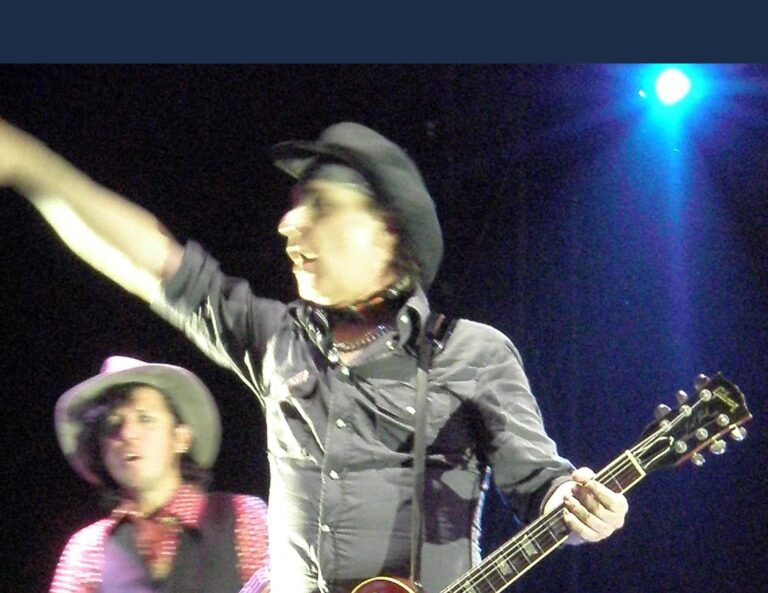
Photo by Thomas Good / Next Left Notes, licensed under CC BY-SA 4.0
Arthur Kane arrived outside the rehearsal studio where he was meeting the guitarist who would become the musical center of the New York Dolls and heard something through the wall. “I heard someone playing a guitar riff that I myself didn’t know how to play. It was raunchy, nasty, rough, raw, and untamed. I thought it was truly inspired.” Kane then added the description that is the most precise available assessment of the Johnny Thunders guitar voice: “His sound was rich and fat and beautiful, like a voice.” Raunchy, nasty, rough, raw, untamed. Rich, fat, beautiful, like a voice. This apparent contradiction — the sound simultaneously abrasive and beautiful, simultaneously rough and rich — is the specific quality of the 1959 Gibson Les Paul TV Yellow Junior through the Fender Twin Reverb cranked to the edge of its natural saturation, played by a guitarist from Queens who worshipped Keith Richards and the MC5 in equal measure. The TV Yellow finish of the Junior — designed to stand out on black and white television, a color chosen for its specific visual contrast rather than its aesthetic beauty — combined with the single P-90 pickup’s specific warm, biting, direct character to produce a guitar sound that was both the ugliest and the most beautiful thing in the room simultaneously. That quality — the rich-fat-beautiful from the raunchy-nasty-rough — is the Johnny Thunders guitar gift, and it lived in the 1959 Les Paul TV Yellow Junior through the cranked Fender Twin. Arthur Kane heard it through the wall. The wall made it clearer. Everything Thunders did was clearest at its most extreme.
John Anthony Genzale was born on July 15, 1952, in Queens, New York, to an Italian-American family, and died on April 23, 1991, in New Orleans, Louisiana, at the age of thirty-eight, under circumstances that were disputed at the time and remain incompletely resolved: the official cause of death was a drug overdose, but there were credible reports of robbery and assault at the scene, and the specific combination of methadone, heroin, and other substances found in his system suggested a death that was not purely a result of his own drug use. He was, for the twenty years of his professional life, one of the more genuinely self-destructive musicians in rock history — a heroin addict whose addiction was visible in every aspect of his public persona and whose live performances were as celebrated for their unreliability and their brilliance in equal measure. When Thunders was playing well, no one sounded quite like him. When he wasn’t — which was often enough to be the dominant public narrative — the unreliability was its own kind of statement about the specific quality of living life at the speed at which he was living it. “Born to Lose” is not a metaphor in the Thunders biography; it is the specific autobiography of someone who chose a life with the specific knowledge that the choice was not the safe one.
He renamed himself after the Kinks’ 1968 song “Johnny Thunder” — adding the “s” to the end — and built a visual and musical identity around the specific combination of Keith Richards’ rock and roll danger and the New York Dolls’ glam excess. His sister started combing his hair like Keith Richards’ when he was sixteen; a year later he can be seen in the Gimme Shelter documentary looking spellbound at his hero in the Rolling Stones concert footage. The MC5 and the Stooges — the two Detroit bands that became his “new passion” after the Richards model — added the specific aggressive, amplified rock energy that distinguished the Thunders approach from the more stylish, melodic approach that the pure Richards influence would have produced. The combination: Richards’ cool, instinctive rock-and-roll authority applied to the Detroit bands’ aggressive, confrontational electric approach, played on a 1959 Gibson Les Paul TV Yellow Junior with a single P-90 pickup through a cranked Fender Twin. This is the Johnny Thunders guitar identity, assembled from the specific inputs of the specific culture that produced him in Queens in the late 1960s and early 1970s.
The Heartbreakers’ specific moment on the Sex Pistols’ Anarchy Tour in the winter of 1976 — joining the tour through McLaren’s connection from the New York Dolls period, playing the British punk audiences that were just forming around the Sex Pistols’ specific provocation — is the historical moment in which Thunders’ guitar became directly influential on the British punk generation rather than merely inspirational through the records. The Heartbreakers on the Anarchy Tour were the Americans who had already been doing what British punk was just beginning to define, and their performance of “Born to Lose,” “Chinese Rocks,” and the New York Dolls material demonstrated to the British punk audiences that the specific guitar approach — the TV Yellow Junior through the cranked Twin, power chords and raunchy single-note leads, simultaneously nasty and beautiful — was the complete proto-punk guitar identity that the British bands were building toward.
Background: Queens, the Dolls, the Heartbreakers, and the Permanent Rock and Roll Tragedy
The Queens origin — the specific outer-borough New York City geography that produced both Johnny Thunders and several other significant rock musicians — is the social context of someone for whom the Manhattan music scene of the early 1970s was a destination rather than a home ground. The journey from Queens to Bleecker Street, where Thunders began appearing in outfits borrowed from his girlfriend and high-heeled boots in 1970, is the specific biographical journey of the working-class kid who absorbed rock and roll as an aspirational culture and who committed to inhabiting that culture with complete physical and aesthetic commitment. The outfits and the heels are as much gear as the Les Paul Junior: the specific glam visual identity of the New York Dolls was as carefully assembled as the specific guitar sound, and both were expressions of the same fundamental creative commitment to maximum rock and roll effect.
The New York Dolls were Thunders’ creation in the most specifically musical sense: it was his guitar playing — the raunchy, nasty, rough, raw, untamed sound that Kane heard through the wall — that established the band’s foundational musical identity. David Johansen was the vocalist and the public face; Sylvain Sylvain was the rhythm guitarist and the co-developer of the automatic guitar philosophy; but Thunders was the lead guitarist, the musical engine, the specific voice that Arthur Kane recognized as unlike anything he had encountered. The two Mercury Records albums — New York Dolls (1973) and Too Much Too Soon (1974) — are the primary documents of that voice in its most publicly accessible form.
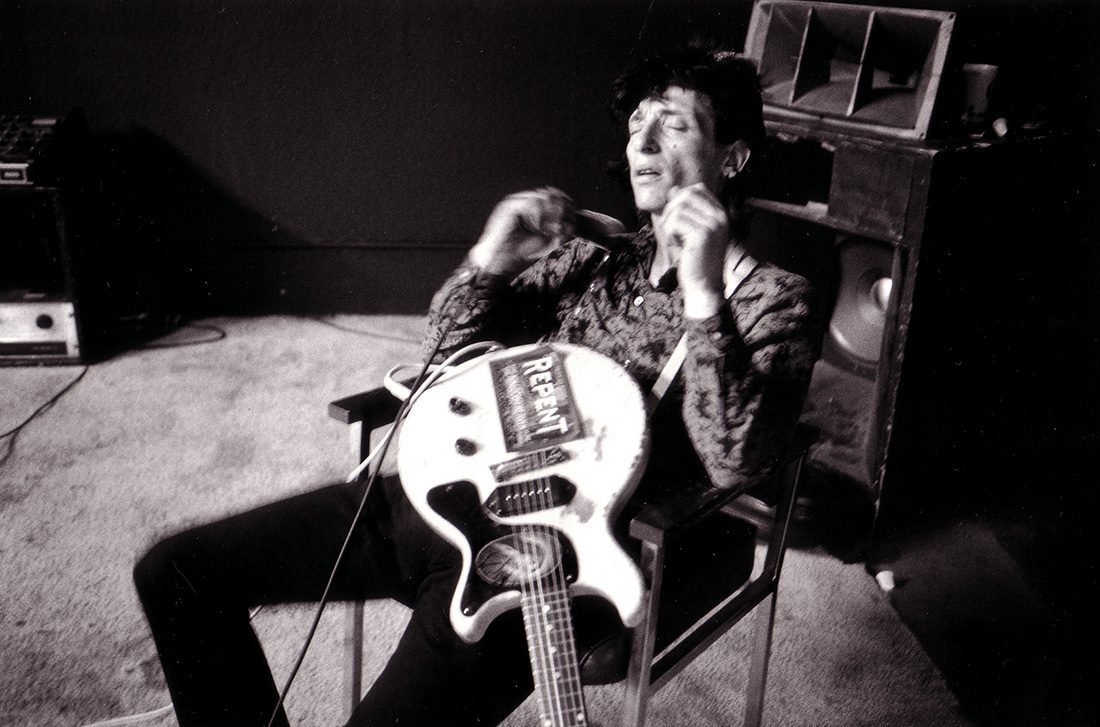
The Heartbreakers — formed in 1975 with Jerry Nolan and eventually Walter Lure — represented the more purely punk-focused context for Thunders’ guitar after the Dolls’ dissolution. The Dolls had been a glam-punk hybrid with multiple creative centers; the Heartbreakers were Thunders’ band, built around his specific guitar identity and musical vision. “Chinese Rocks” — co-written with Dee Dee Ramone — is the canonical Heartbreakers recording: the specific combination of heroin-as-subject-matter and rock and roll velocity that defined the Heartbreakers as the most dramatically self-aware of the first-wave punk bands. The Anarchy Tour in Britain, the LAMF album (1977), and the subsequent years of sporadic recording and touring documented a guitarist who was simultaneously more musically gifted and more personally destructive than almost anyone else in the tradition.
His death at thirty-eight in New Orleans — the specific city of voodoo and decadence that Thunders had chosen for a residency in his final years — is the specific biographical ending that the “Born to Lose” autobiography seemed to predict. The disputed circumstances — the heroin and methadone and the reports of robbery — are consistent with a life that had been conducted at the extreme edge of the possible since 1970. What the death left behind is the TV Yellow Junior’s guitar sound, the Heartbreakers’ recordings, the specific Thunders lead guitar approach that Mick Jones absorbed from the New York Dolls and that Steve Jones absorbed from the Dolls’ live approach and visual aesthetic. The influence runs forward; the Thunders himself ran out of time at thirty-eight.
The Rig: Johnny Thunders’ Guitars, Amps, and Effects
Guitars
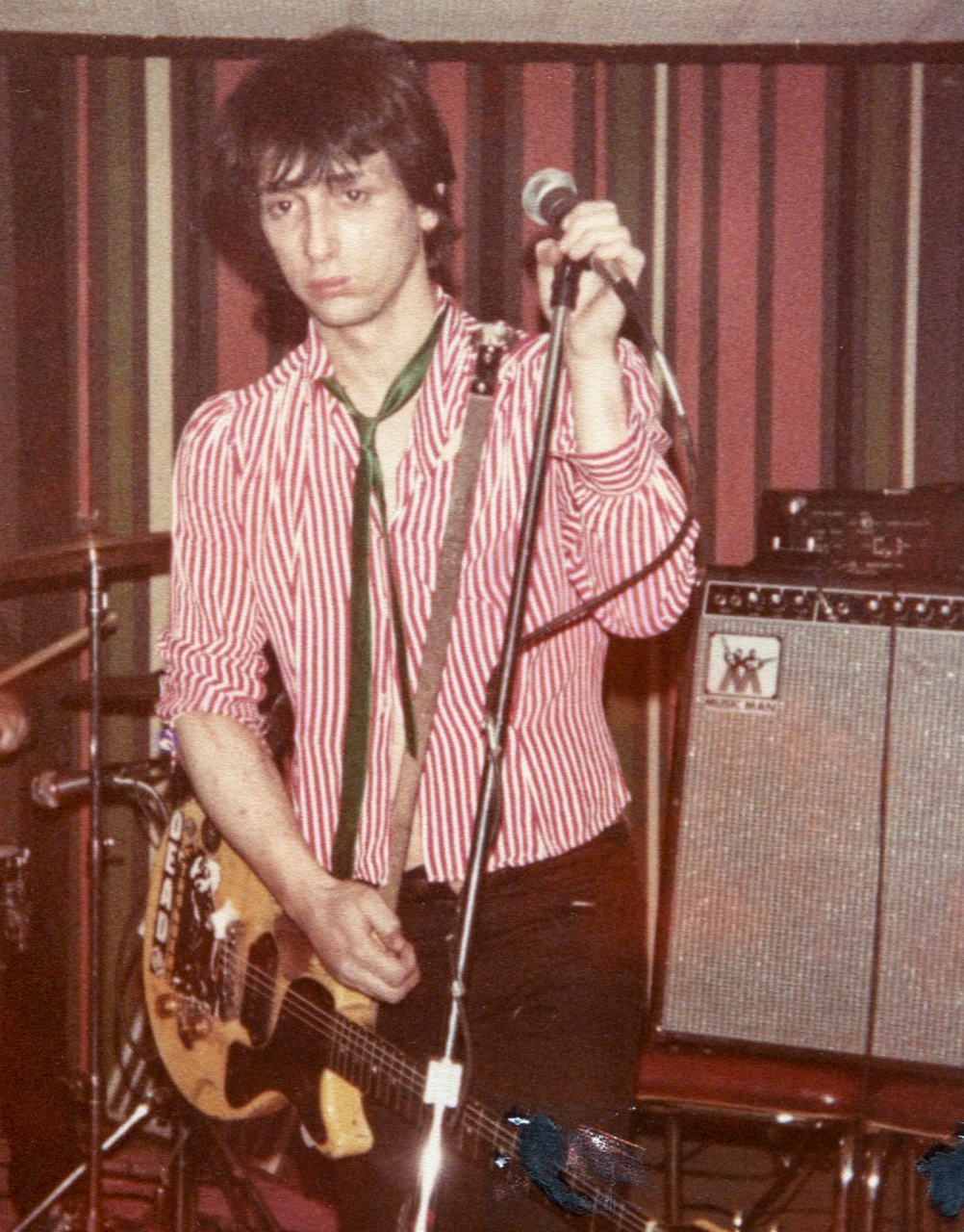
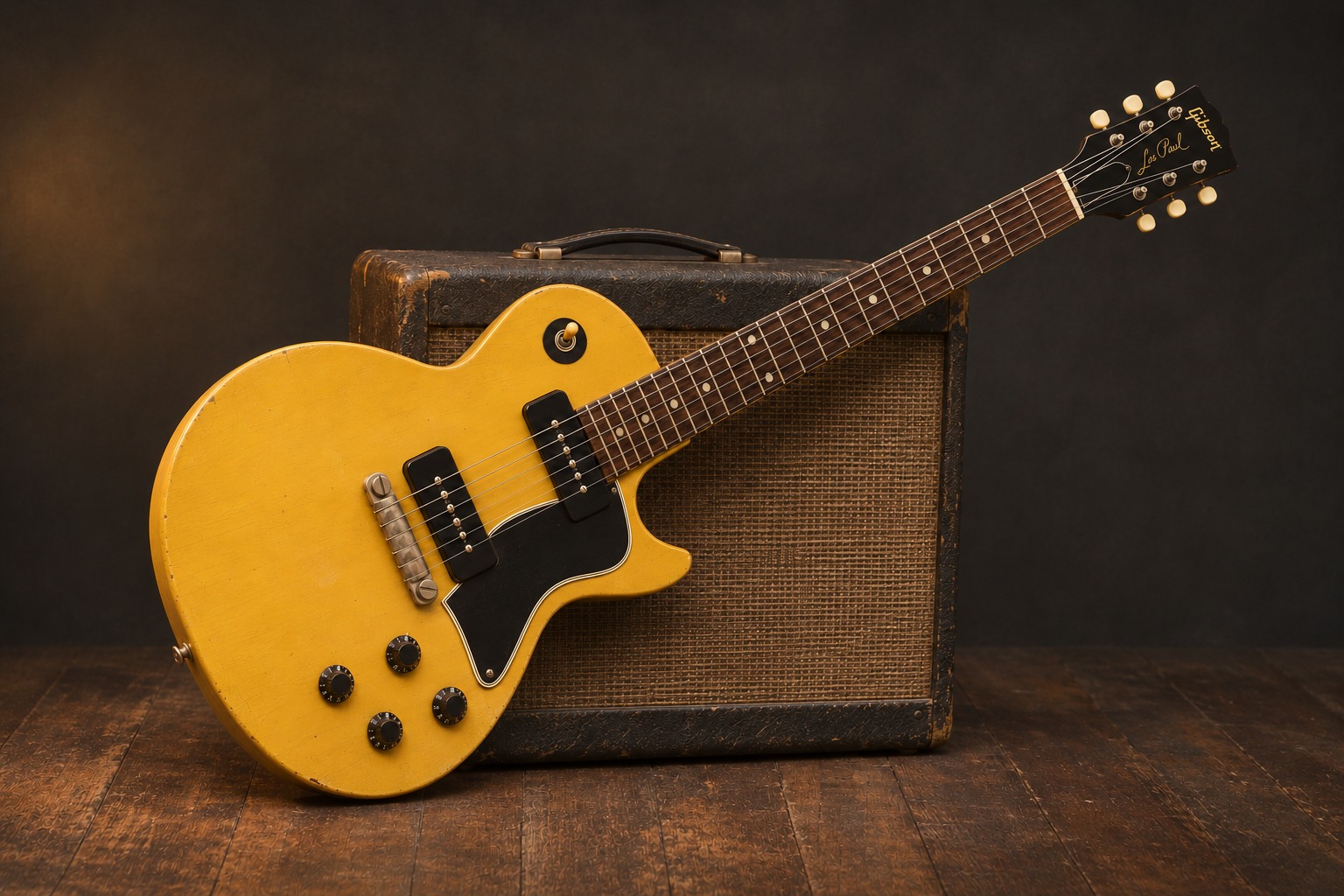
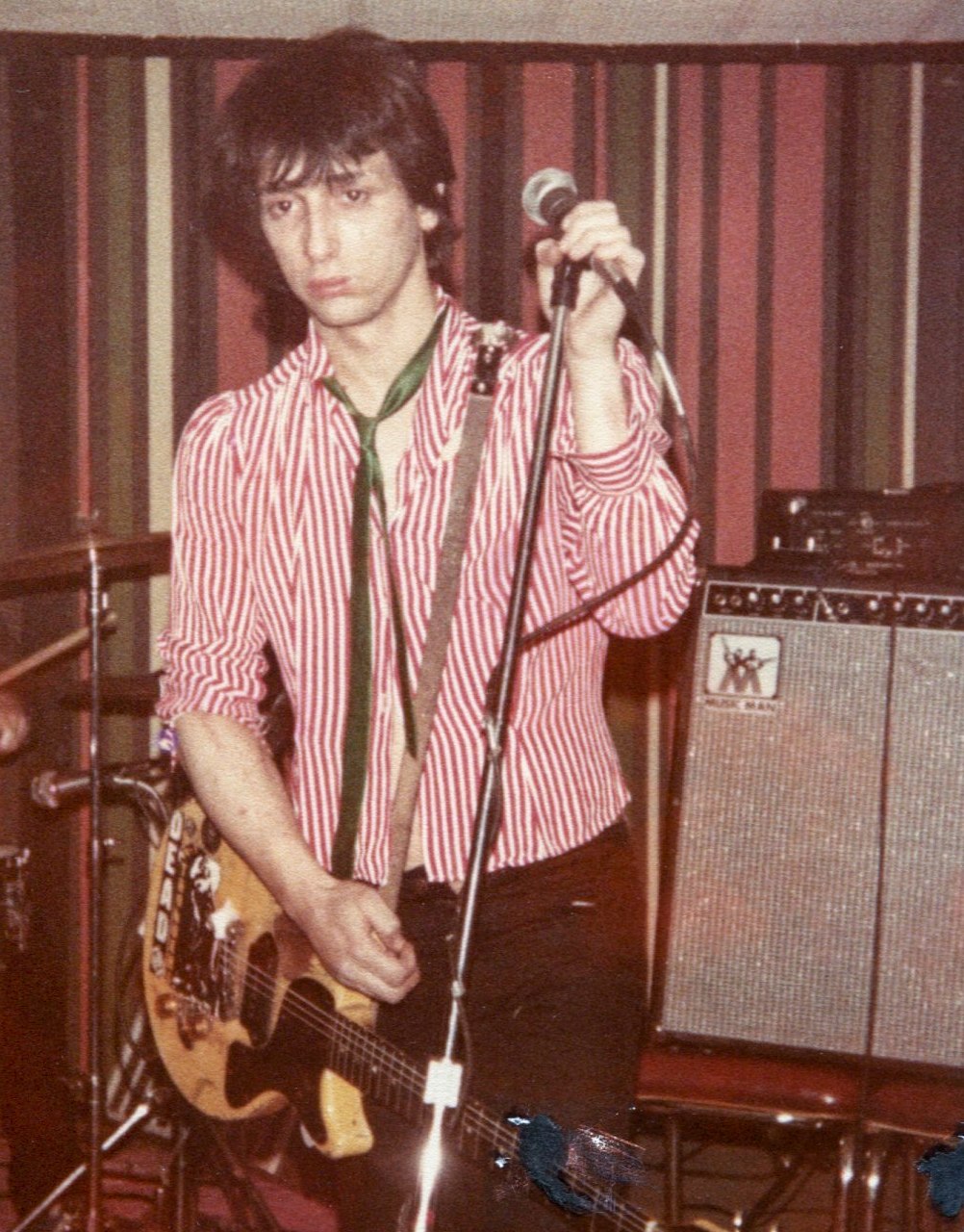
Johnny Thunders’ primary guitar — the instrument with which he is most immediately identified and which has become the single most iconic visual image in proto-punk guitar history — was a 1959 Gibson Les Paul TV Yellow Junior. “See a TV yellow Junior and I immediately think of Thunders,” as the My Les Paul Forum community confirms. The TV Yellow finish was originally developed by Gibson for the budget Les Paul Junior specifically to ensure that the guitar would show up clearly on the black and white television broadcasts of the late 1950s — the specific sunburst finishes of the Standard appeared dark and flat on monochrome television, so Gibson developed the TV Yellow’s warmer, more television-friendly color for the entry-level instrument. The technical reason for the finish is forgotten; what remains is the specific visual identity of the guitar that Johnny Thunders played, and the specific association between the TV Yellow Junior and the specific sound that Arthur Kane heard through the wall. The 1959 Junior’s single P-90 pickup — positioned in the bridge location of the wraparound-bridge, slab-mahogany-body Junior — provides the specific warm, biting, direct character of the P-90 in the most economical and most powerful available form: one pickup, driving the amp with the full P-90 output, no tonal alternative available, completely committed to the single voice that the Junior produces. The TV Yellow Junior through a cranked Fender Twin Reverb: this is the sound that Arthur Kane heard through the wall, and this is the sound that every subsequent punk and proto-punk guitarist recognized as the correct sound for the specific music they were making.
Following the Mercury Records deal, Thunders acquired a Gibson Les Paul Custom Black Beauty — trading with Sylvain Sylvain, who had started with a cherry Junior and who received the black beauty in exchange for the Junior. “Thunders had an $800 budget, so he bought the black beauty, and we traded,” as Sylvain recalled in the Vintage Guitar interview. The Black Beauty — the three-pickup Les Paul Custom with ebony fingerboard, gold hardware, and the specific mid-1970s Custom specification — appears on the cover of Too Much Too Soon. The Custom’s three-humbucker configuration provided more tonal options than the Junior’s single P-90, but the specific quality that Thunders produced from the P-90 Junior was not replicated by the Custom’s warmer, more compressed humbucker character. Both guitars appear in the Too Much Too Soon documentation; the TV Yellow Junior remained the primary sonic identity even as the Black Beauty provided the visual identity of the second album cover.
The Guitar Player historical profile notes that Thunders was pictured clutching a two-pickup 1955 Les Paul Special on Too Much Too Soon — the midrange Gibson that occupies the space between the single-pickup Junior and the full Standard. The Special’s two P-90 pickups provide more tonal flexibility than the Junior’s single P-90, but the fundamental P-90 character — the warm, biting, direct single-coil-sized pickup that drives a cranked amp differently from a humbucker — is maintained. Thunders’ affinity for the P-90-equipped Gibson family is consistent across all of his documented primary instruments.
In addition to the primary Gibson Les Paul Junior, Thunders is documented with Gretsch guitars in the early career period — consistent with the broader New York Dolls affinity for Gretsch hollow-bodies that Sylvain also expressed. The Gretsch’s specific hollow-body warmth and the FilterTron pickup character provided a different tonal palette from the Les Paul Junior, though the Junior’s P-90 through a cranked Twin remained the primary recording and performing guitar identity.
Amps
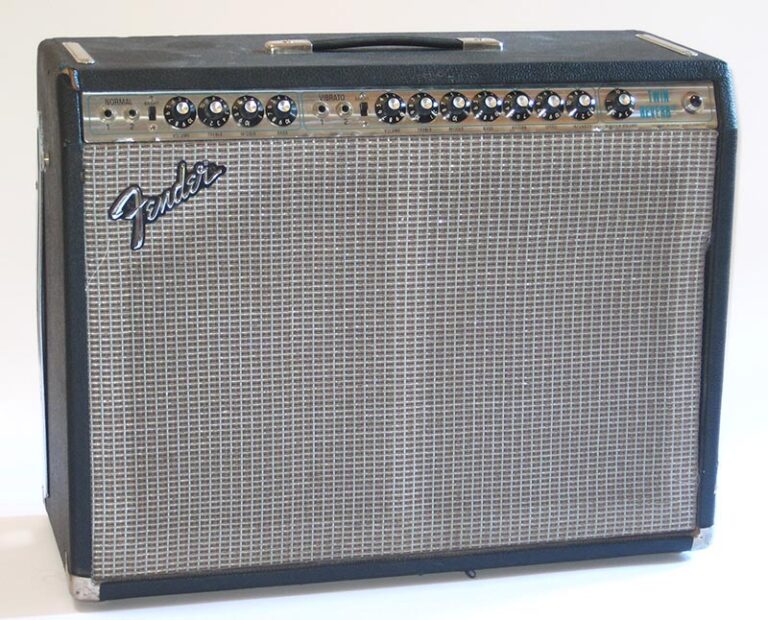
Johnny Thunders consistently played through a Fender Twin Reverb — “the combination of the Junior and a Twin Reverb, cranked to the max and with a ton of reverb was what rock ‘n’ roll should sound like,” as the Guitar World assessment documents. The Twin Reverb cranked to the max is the specific amplification approach that produces the “rich, fat, beautiful” quality that Kane identified — the Fender Twin’s clean, powerful 6L6 output at working volume, with the P-90’s hot single-coil output driving the preamp harder than a standard-output pickup would, producing the specific pushed-but-not-distorted character that makes the TV Yellow Junior’s voice “like a voice” rather than like a standard rock guitar. The “ton of reverb” — the Fender Twin’s built-in spring reverb at high settings — adds the specific spatial warmth and sustain that makes Thunders’ individual notes bloom rather than die immediately after the pick attack.
Effects
Like Rowland S. Howard in the previous series entry, Thunders’ primary effect was the built-in spring reverb of the Fender Twin — turned up to produce the specific warm, sustaining reverb quality that distinguishes the Thunders guitar sound from a dry, direct signal. “Cranked to the max and with a ton of reverb” is the complete effects section of the Johnny Thunders signal chain. The high spring reverb setting extends the sustain of each note and adds the specific spatial warmth that makes individual guitar notes “rich and fat and beautiful” rather than dry and direct. The combination of the P-90’s natural warmth and output, the Twin’s pushed 6L6 output, and the high spring reverb produces the specific Thunders guitar sound that is simultaneously more aggressive (the cranked amp, the hot P-90) and more beautiful (the reverb bloom, the sustaining richness) than either element alone would produce.
Johnny Thunders was the sloppiest influential guitarist of the punk era — by general assessment and by his own self-aware acknowledgment. The sloppiness was not carelessness; it was the specific quality of someone who played from feeling rather than from technical precision, who let the guitar go where the emotional content required rather than where the technical training would direct. The Guitar Player retrospective describes the Thunders approach as “the sloppiest influential guitarist this side of Johnny Cash’s Luther Perkins” — which is a description of the specific genre of influential sloppiness rather than a dismissal of its quality. The sloppy virtuosity — the moments when the Thunders playing was both technically imprecise and emotionally overwhelming — is the specific quality that Arthur Kane heard as “raunchy, nasty, rough, raw, and untamed” while simultaneously being “rich and fat and beautiful, like a voice.” Both descriptions are accurate; the sloppy virtuosity is what produces both simultaneously.
The foundational influence — Keith Richards’ specific approach to lead guitar as an extension of the rhythm groove rather than as a departure from it — is as much an “effect” as any pedal or amplifier setting. Thunders absorbed Richards’ specific quality of playing lead guitar that never loses the groove, that stays physically in the rhythm even when it’s playing melodic material, and applied it to the P-90 Junior through the cranked Twin at a volume and with an aggression that the Richards approach had never required. The Richards instinct in the Thunders context produced the specific “like a voice” quality: the lead lines are as rhythmically rooted as a rhythm part and as melodically expressive as a vocal, because the Richards model had established that these two qualities were not alternatives but complements.
The specific New York punk and proto-punk tradition that Thunders inhabited — the Lower East Side and downtown Manhattan of the early 1970s where the Dolls formed, the midtown Manhattan of Max’s Kansas City and the Mercer Arts Center where they performed, the Queens origin and the Bleecker Street arrival in borrowed girlfriends’ clothes and high-heeled boots — is the geographic and social context that produced the specific combination of street-level rock and roll aggression and glam visual excess that defined the Dolls’ and Thunders’ aesthetic. The TV Yellow Junior in that context is not the prestige instrument of the established rock hierarchy; it is the entry-level, budget-conscious Gibson that was available at prices the Queens kid’s budget could support, and it happened to produce the most perfect sound for the specific music that was being made. The budget guitar through the cranked amplifier producing the nastier sound than the expensive guitar through the polished setup: this is the proto-punk gear philosophy in its most complete form, and Thunders demonstrated it every time he played the TV Yellow Junior through the cranked Twin.
The Heartbreakers’ LAMF album — recorded in London in 1977 with the band at their most commercially accessible and most musically complete — is the primary Thunders studio document beyond the New York Dolls recordings. The album’s specific guitar work — the “Chinese Rocks” lead, the “Born to Lose” riffs, the specific combination of the TV Yellow Junior’s P-90 warmth and the cranked Twin’s pushed 6L6 saturation — demonstrates the Thunders guitar approach in its most disciplined available form: the sloppy virtuosity controlled enough to serve the specific songs while retaining the emotional commitment that made the approach “like a voice.” The album was initially poorly received due to production issues with the bass sound, but subsequent reissues have restored it to its correct place as one of the most essential documents of first-wave punk guitar. The TV Yellow Junior is audible on every track. The ton of reverb is audible on every track. Arthur Kane would have recognized it immediately through any wall.
The connection between Thunders and Keith Richards — the foundational influence that shaped the Thunders guitar approach from the age of sixteen onward — is the specific lineage that makes the Thunders approach simultaneously the most classic and most punk of the proto-punk guitar identities. Richards is not punk; he is the definition of classic rock cool, the rhythm-groove lead guitarist who plays from the band’s center. Thunders took that identity and applied it to a context (the New York street scene, the volume and aggression of the cranked amplifier, the auto-destructive lifestyle) that Richards never inhabited. The result: the most classic guitar philosophy applied to the most extreme musical context, producing the specific “raunchy, nasty, rough, raw, untamed, rich, fat, beautiful, like a voice” quality that no purely punk guitarist and no purely classic rock guitarist could have produced alone. The Queens kid who was spellbound by Richards at sixteen created something neither Richards nor any purely punk guitarist could have made. The TV Yellow Junior was the specific instrument. The Fender Twin cranked to the max with the ton of reverb was the specific amplification. The result was what rock and roll should sound like.
Playing Style & Tone Philosophy
Johnny Thunders plays guitar with the specific combination of rock and roll instinct and emotional directness that makes the “like a voice” description accurate: the guitar says what it says because the player is committed to saying it rather than to executing it technically. The TV Yellow Junior’s single P-90 is the most direct available guitar tool for this kind of playing — one pickup, no tonal alternatives, the full P-90 output through the cranked Twin, the high reverb blooming each note into a sustained warmth. The guitar either says what you want it to say or it doesn’t, and there are no auxiliary controls to help or hinder the attempt.
The “when he was on, he was a rock and roll machine” quality that the My Les Paul Forum tribute captures is the specific description of a guitarist whose best playing was as physically and emotionally committed as any in the tradition, and whose worst playing was as unreliable as the addiction that drove it. Both are part of the same gift and the same curse: the specific quality of emotional commitment that made the Thunders lead guitar sound “like a voice” is the same quality that made the management of a normal professional relationship with the guitar and the amplifier impossible on the nights when the commitment was chemically displaced by the heroin. The TV Yellow Junior knew no difference between the best nights and the worst nights; only Thunders did, and he managed the difference less well as the years went on.
His influence on British punk guitar — documented through Mick Jones’ explicit Junior acquisition (because Thunders used one), Steve Jones’ absorption of the Dolls’ visual and musical aesthetic, and the broader first-wave British punk generation’s recognition of the Heartbreakers as the Americans who had already arrived at what they were only beginning to define — is the specific gear legacy that the TV Yellow Junior and the cranked Fender Twin produced. The automatic guitar philosophy that Sylvain articulated; the lead guitar voice that Thunders embodied: together they constitute the most complete available account of the New York Dolls’ guitar legacy and its direct influence on everything that followed in the punk and post-punk tradition.
How to Sound Like Johnny Thunders
The Johnny Thunders tone requires: a 1959 Gibson Les Paul TV Yellow Junior (or equivalent single-P-90 Junior in any year, the earlier the better); a Fender Twin Reverb cranked toward its natural 6L6 saturation; the built-in spring reverb turned up high; no effects pedals; and the specific commitment to playing from feeling rather than from technical precision. The sloppy virtuosity cannot be taught; the TV Yellow Junior and the cranked Twin provide the vehicle.
| Control | Setting (0–10) | Notes |
|---|---|---|
| Fender Twin Reverb (Cranked to Max) | Volume: 8–9; Treble: 7; Bass: 5; Mid: 6 | “Cranked to the max.” Push the Twin toward natural 6L6 saturation — the specific pushed-clean character that makes the P-90’s output produce the “rich, fat, beautiful” quality rather than the clean, thin quality of an underdriven amplifier. Not maximum gain from a high-gain amplifier; natural saturation from a clean amplifier pushed beyond its comfortable headroom. |
| Fender Twin — Spring Reverb | Reverb: 7–9 (a ton of reverb) | “A ton of reverb.” High spring reverb on the Twin — the specific warm, spatial quality of the spring reverb at its most generous setting. The reverb extends each note’s sustain and adds the specific blooming warmth that distinguishes the Thunders guitar from the drier post-punk sound. This is the primary “effect” — the built-in reverb that the Twin provides at no extra cost and that produces the specific Thunders warmth. |
| 1959 Les Paul TV Yellow Junior (P-90 Bridge) | Volume: 10; Tone: 7; Single pickup | The automatic guitar: full volume, single P-90 bridge pickup, tone slightly rolled back for the specific warmth that P-90 + high reverb + cranked Twin produces. The TV Yellow finish is optional but correct. The single P-90’s specific warm, biting, hot-single-coil character drives the cranked Twin harder than a standard-output pickup, producing the specific nasty-and-beautiful combination. |
| Lead Guitar Style (Sloppy Virtuosity) | Play from feeling; let the guitar go where it wants; trust the instinct | The Thunders technique: “He channeled his wise-ass into his geetar.” Play from the specific emotional content of the song rather than from the technical vocabulary of guitar scales and patterns. The sloppy virtuosity — the playing that is simultaneously imprecise and overwhelming — comes from commitment to the feeling rather than to the correctness. If the note is slightly off the beat, but it says what needs to be said, it is the right note. |
| Power Chords and Raunchy Leads | Power chords: rhythm foundation; leads: melodic but nasty | The Thunders rhythm approach (power chords, automatic guitar) combined with the lead approach (raunchy, Richards-influenced melodic lines that stay rhythmically grounded). The lead guitar never leaves the groove; it finds melody within the groove. This is the Richards model applied to the Junior: the groove is the foundation, the melody is the decoration, and both are always present simultaneously. |
| The “Like a Voice” Goal | Rich; fat; beautiful; raunchy; nasty; rough; raw; untamed; simultaneously | Arthur Kane’s description is the target. The Thunders guitar sound is all of these things at once — not alternating between beauty and roughness but producing both in the same moment, from the same note, through the same instrument. The TV Yellow Junior through the cranked Twin with the ton of reverb is the equipment that enables this. The feeling is the music. |
Influence & Legacy
Johnny Thunders’ influence on rock and punk guitar is the influence of the specific individual who made the Gibson Les Paul Junior TV Yellow the iconic proto-punk guitar — who established the combination of the single P-90 and the cranked Fender Twin as the specific signal chain of the raunchy, nasty, rough, raw, untamed, rich, fat, beautiful guitar sound that punk and post-punk guitarists would spend the following decades approximating. The TV Yellow Junior became an object of desire for the Cult’s Billy Duffy, the foundational guitar choice of Mick Jones, the starting point of the automatic guitar philosophy that Sylvain articulated — all because of what Arthur Kane heard through the wall in 1971.
The “Chinese Rocks” connection — the song co-written with Dee Dee Ramone that became both the Heartbreakers’ most celebrated recording and one of punk’s most direct engagements with the specific reality of heroin addiction — is the specific cultural document that captures both the Thunders guitar genius and the Thunders biographical tragedy simultaneously: the song is about buying heroin, the music is extraordinary, and the man who played the lead guitar died of heroin at thirty-eight. The guitar and the drug and the life are inseparable in the Thunders story; the TV Yellow Junior and the cranked Twin and the high reverb are inseparable from the self-destruction that ultimately used them.
For the Sylvain Sylvain parallel — the rhythm guitar half of the New York Dolls’ dual-guitar identity — see Sylvain Sylvain’s entry, where the automatic guitar philosophy and the white Les Paul Custom that ended up with Steve Jones are documented. The Mick Jones connection — the Clash rhythm guitarist who bought a Les Paul Junior specifically because Thunders used one — is documented. And the Steve Jones connection — the Sex Pistols lead guitarist whose primary guitar was Sylvain Sylvain’s white Les Paul Custom, who absorbed the Dolls’ visual and musical aesthetic as the foundational influence — is at #67. The New York Dolls connection to British punk is the most direct and most documented influence chain in the series: Thunders and Sylvain to the Sex Pistols and the Clash, with the specific guitars as the physical artifact of the connection.
The TV Yellow Junior. The Fender Twin cranked to the max. The ton of reverb. The raunchy, nasty, rough, raw, untamed, rich, fat, beautiful sound that a voice makes. Born in Queens, 1952. Died in New Orleans, 1991. Thirty-eight years old. Born to Lose. The guitar lived longer than he did. The TV Yellow Junior is still the correct guitar for the specific music. The cranked Twin is still the correct amplifier. The ton of reverb is still the ton of reverb. Arthur Kane heard it through the wall and knew it was inspired. He was right. He was always right about that. The TV Yellow Junior is still the guitar that makes you think of Johnny Thunders the moment you see it. The cranked Fender Twin is still the amplifier. The ton of reverb is still the specification. Rich, fat, beautiful. Raunchy, nasty, rough, raw, untamed. Like a voice. This is what rock and roll should sound like. It still is.
Frequently Asked Questions: Johnny Thunders Guitars & Gear
What guitar did Johnny Thunders use?
Johnny Thunders’ primary and most iconic guitar was a 1959 Gibson Les Paul TV Yellow Junior — the single-P-90-pickup, wraparound-bridge, slab-mahogany-body budget Les Paul whose TV Yellow finish was developed to stand out on black and white television broadcasts. The TV Yellow Junior is as closely identified with Thunders as any guitar is with any guitarist in this series. He also used a Gibson Les Paul Custom Black Beauty (which appears on the cover of Too Much Too Soon) acquired in a trade with Sylvain Sylvain, a Gibson Les Paul Special two-pickup, and Gretsch guitars in the early career period.
What was Johnny Thunders’ amplifier setup?
Johnny Thunders played through a Fender Twin Reverb — “the combination of the Junior and a Twin Reverb, cranked to the max and with a ton of reverb was what rock ‘n’ roll should sound like,” as Guitar World describes. The Twin cranked to maximum volume with the built-in spring reverb at high settings is the complete Thunders amplifier approach: no additional effects pedals, no elaborate signal chain, just the cranked Twin providing the natural 6L6 saturation and the high spring reverb providing the warm, sustaining spatial quality that Arthur Kane described as “rich and fat and beautiful, like a voice.”
How did Johnny Thunders influence British punk?
The New York Dolls’ direct influence on British punk was acknowledged by the Sex Pistols and the Clash, among others. Mick Jones of the Clash bought a Gibson Les Paul Junior specifically because Johnny Thunders used one. Steve Jones of the Sex Pistols absorbed the Dolls’ visual and musical aesthetic as a foundational influence. The Heartbreakers joined the Sex Pistols’ Anarchy Tour in the winter of 1976, providing the British punk audiences that were just forming with a direct demonstration of the American proto-punk guitar approach. “Chinese Rocks” and “Born to Lose” were the specific Heartbreakers recordings that British punk musicians cited as primary influences on the developing British punk scene.
What is “sloppy virtuosity” in the context of Thunders’ playing?
“Sloppy virtuosity” describes the specific quality of Johnny Thunders’ guitar playing — simultaneously technically imprecise and emotionally overwhelming — that the Guitar World retrospective captures as “the sloppiest influential guitarist this side of Johnny Cash’s Luther Perkins.” The sloppiness was not carelessness but the specific quality of playing from feeling rather than from technical precision: letting the guitar go where the emotional content required rather than where the technical training would direct. Arthur Kane’s description — “raunchy, nasty, rough, raw, and untamed” — and “rich and fat and beautiful, like a voice” — captures both dimensions of the sloppy virtuosity simultaneously. The technical imprecision and the emotional beauty were inseparable properties of the same playing approach.
What was Johnny Thunders’ primary influence on guitar?
Thunders identified Keith Richards as his primary guitar influence — his sister started combing his hair like Richards’ when he was sixteen, and a year later he can be seen in the Gimme Shelter documentary looking spellbound at his hero. The MC5 and the Stooges added the aggressive, confrontational amplified energy that distinguished the Thunders approach from the more stylish Richards model. The specific combination — Richards’ instinctive rock and roll authority and groove-centered lead guitar applied to the Detroit bands’ aggressive, high-volume approach, played on a TV Yellow Junior through a cranked Fender Twin — produced the specific Johnny Thunders guitar identity.
What is “Chinese Rocks” and who wrote it?
“Chinese Rocks” is the Heartbreakers’ most celebrated recording — a punk rock song explicitly about the experience of buying heroin, written by Johnny Thunders and Dee Dee Ramone (with some accounts including Richard Hell and Walter Lure in the writing credits, which remains disputed). The song appeared on the Heartbreakers’ only studio album, LAMF (1977), and has become one of punk’s most recognized recordings. Its specific combination of rock and roll velocity, blunt lyrical honesty about heroin addiction, and the Thunders TV Yellow Junior lead guitar work made it the canonical Heartbreakers document. Dee Dee Ramone and the Ramones had also recorded a version, but the Thunders/Heartbreakers version is the primary one.
When and how did Johnny Thunders die?
Johnny Thunders died on April 23, 1991, in New Orleans, Louisiana, at the age of thirty-eight. The official cause of death was a drug overdose, with methadone and heroin found in his system. However, there were credible reports at the time of robbery and assault at the scene, and the specific circumstances of his death remain incompletely resolved. He had been living in New Orleans for a residency period and performing locally. His death, like his life, was complicated by the addiction that had defined both the specific quality and the specific limitation of his public career since the early Dolls period.
Image credits
- Gibson Les Paul Special Two-Pickup (Too Much Too Soon Era): GuitarGangsters AI-generated reference illustration, not a photograph.
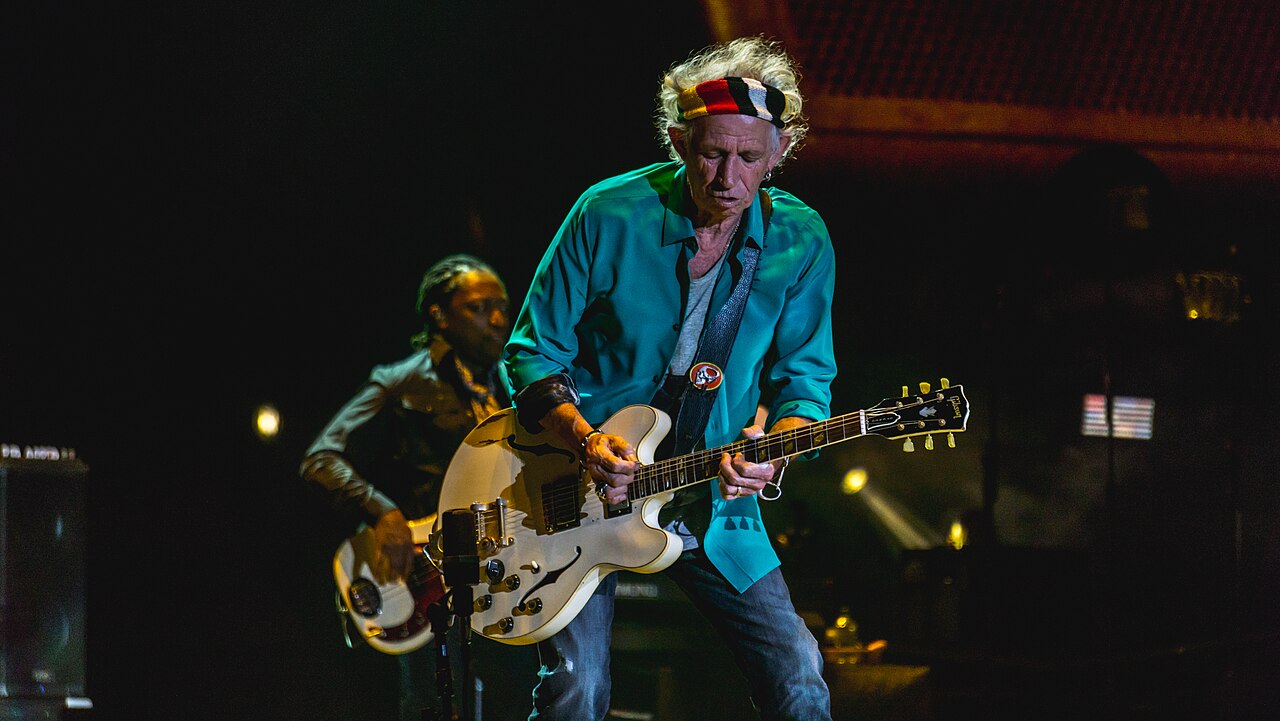
- Keith Richards: Raph_PH, Wikimedia Commons, CC BY 2.0.
- Johnny Thunders: Beth Herzhaft, Wikimedia Commons, CC BY-SA 3.0.
- Top image: by Thomas Good / Next Left Notes, CC BY-SA 4.0.
- Fender Twin Reverb: Micahmedia, Wikimedia Commons, CC BY 3.0.
- Johnny Thunders live: Thomas Good, Wikimedia Commons, CC BY-SA 4.0.