Sylvain Sylvain Guitars & Gear: The Complete Guide to the New York Dolls’ Gretsch, Les Paul Junior & Automatic Guitar Proto-Punk Rig
Sylvain Sylvain guitars & gear: New York Dolls guitarist. Les Paul Junior 'automatics', Gretsch Golden Anniversary, white Les Paul Custom stolen by Steve Jones — proto-punk tone.
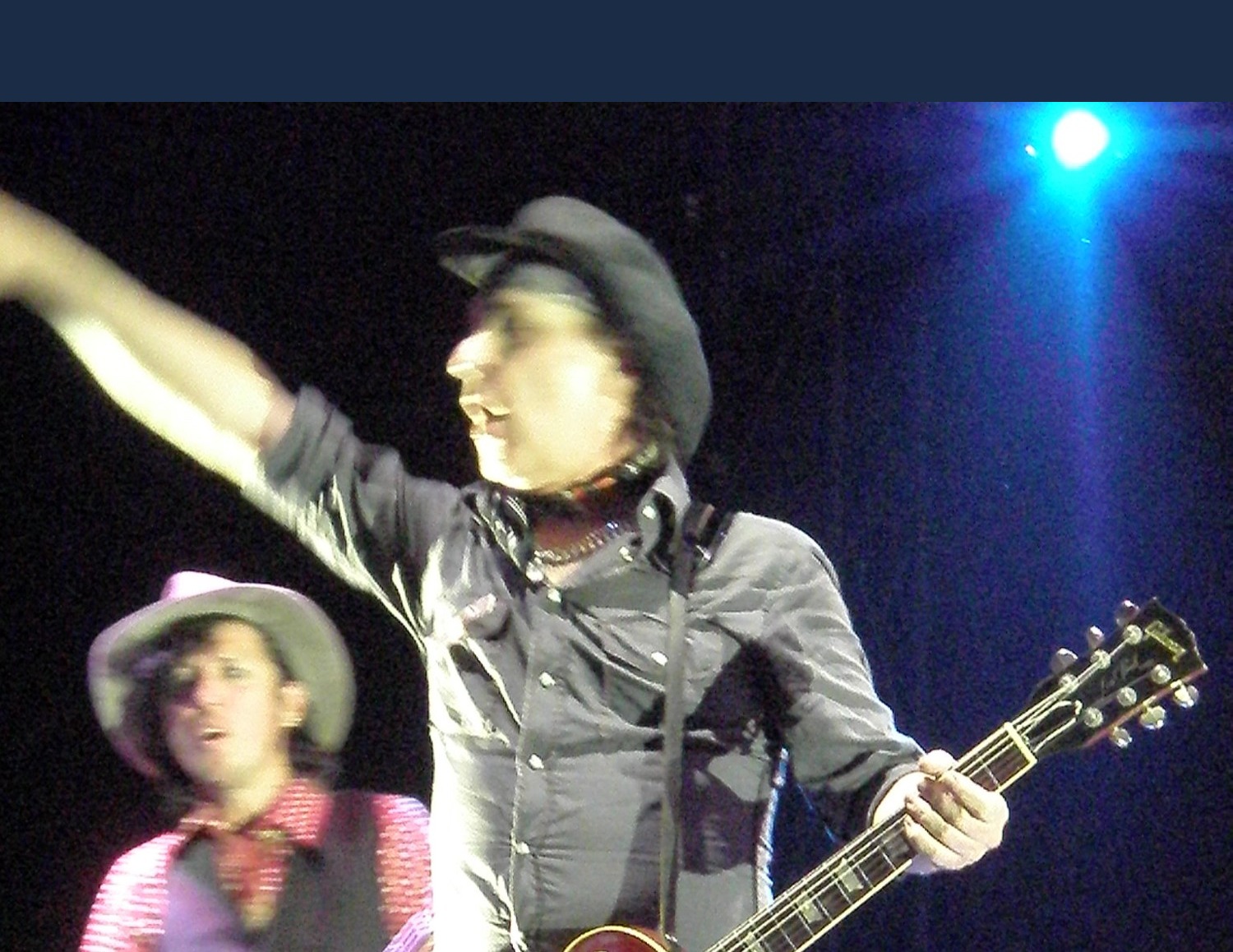
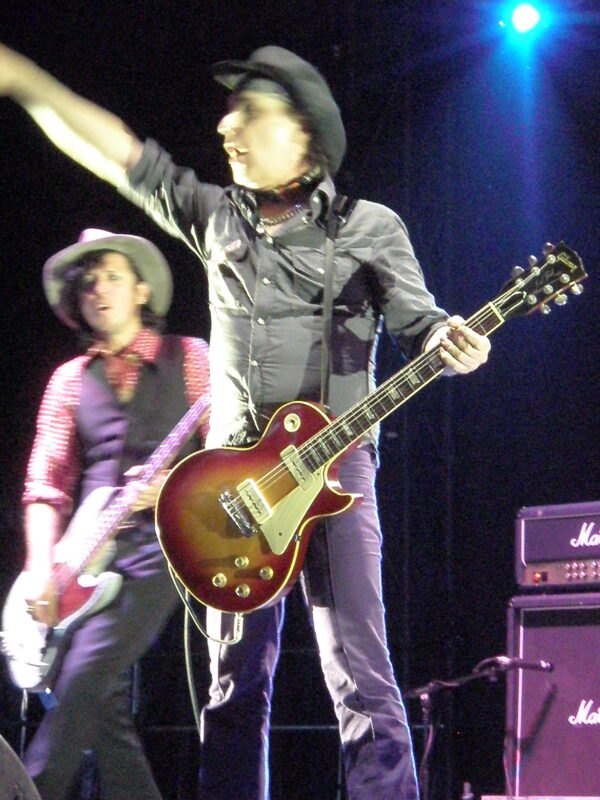
Sylvain Sylvain on stage with the New York Dolls at the Wireless festival, London, 2008. Photo: Mike.parry1966, Public domain. Source: Wikimedia Commons.
Malcolm McLaren offered Steve Jones of the nascent Sex Pistols a plane ticket for Sylvain Sylvain to fly from New York to London and join the band — with the condition that Sylvain’s white 1974 Gibson Les Paul Custom would be sold to pay for the ticket. Jones reportedly took the guitar and kept both the guitar and the money, and Sylvain never made it to London to join the Sex Pistols. The white Les Paul Custom that had been Sylvain Sylvain’s guitar became the guitar that Steve Jones played on Never Mind the Bollocks, Here’s the Sex Pistols — the guitar, with the yellowed finish and the cigarette smoke and the pinup-girl tan lines. The guitar that was meant to be the plane ticket became the guitar that recorded one of the most celebrated debut albums in punk history. Sylvain Sylvain stayed in New York. The Sex Pistols went on without him, with his guitar. This is the specific gear story that connects the New York Dolls — the proto-punk band that both Jones and Mick Jones of the Clash have explicitly cited as foundational — to the British punk movement that the Dolls directly inspired. The guitar traveled across the Atlantic without its original owner. The punk movement followed.
The Journey
Sylvain Mizrahi — who performed as Sylvain Sylvain — was born on February 14, 1951, in Cairo, Egypt, to a Jewish family that immigrated to the United States when he was young, eventually settling in New York City. He died on January 13, 2021, at the age of sixty-nine, from cancer. He was the rhythm guitarist of the New York Dolls, the proto-punk glam-rock band formed in New York City in 1971 with David Johansen (vocals), Johnny Thunders (guitar), Arthur Kane (bass), and Billy Murcia (then Jerry Nolan after Murcia’s death) on drums. The New York Dolls made two albums — New York Dolls (1973) and Too Much Too Soon (1974) — before imploding in 1975 amid drug problems, management disasters, and the specific creative and commercial tensions that afflicted almost every band whose ambition exceeded its mainstream commercial success.
His specific contribution to the New York Dolls’ guitar identity is the most important piece of gear documentation in this article: the “automatic guitar” philosophy. “I had a double cutaway Les Paul Junior, like the kind that Johnny made famous, but not TV yellow. Mine was cherry and it is what started us off on that sound. That’s when we discovered the power of an automatic. That’s what I used to call them, automatics. You got one pickup, one tone, one volume. No frills, no nothing. And we married that with power chords, because it was too hard for us to play a whole barre chord and they sounded so much nastier cranked through the amps. And that’s what they consider the beginning of punk.” The cherry double-cutaway Les Paul Junior as the first guitar. The “automatic” philosophy — one pickup, one tone, one volume — as the foundational principle. The power chords as the marriage of that philosophy with the playing approach that was accessible and sounded “nastier cranked through the amps.” This is the origin story of proto-punk guitar, told by the guitarist who was there at the origin, holding the cherry Junior.
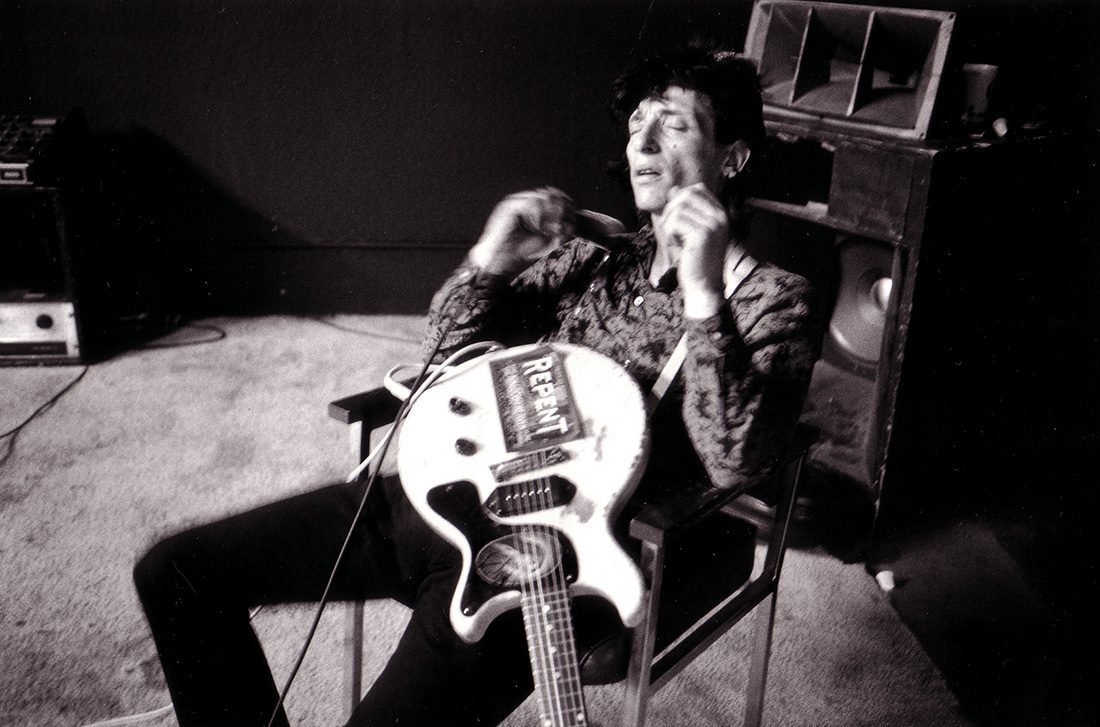
“Me and Johnny Thunders basically put the Les Paul Junior on the map,” Sylvain told Gibson.com in 2009. “We called them ‘automatic guitars,’ like a car with an automatic transmission — easy to use. It was the perfect guitar for the New York Dolls because it was stripped down — like the band was and like our songs were.” The “stripped down” description of the Les Paul Junior — the guitar that Gibson introduced as the entry-level, budget-conscious version of the Les Paul line, with a single P-90 pickup, a wraparound bridge, and mahogany slab body without the arch, binding, or finish detail of the Standard — is the specific gear aesthetic that the New York Dolls made famous and that the subsequent punk generation absorbed as the correct approach to the electric guitar. Mick Jones of the Clash bought a Les Paul Junior because Johnny Thunders used one. The chain runs from the cherry Les Paul Junior in Sylvain’s hands to the British punk guitarists who heard the New York Dolls and understood that the automatic guitar was the right guitar.
Background: Cairo to New York, the Dolls’ Rise and Fall, and the Automatic Guitar Philosophy
The New York Dolls’ origin story — the East Village and downtown Manhattan scene of the early 1970s where the band formed, the specific combination of glam rock visual excess and proto-punk musical directness that produced their first album’s aesthetic, and the specific economic and creative context of an unsigned band playing the Mercer Arts Center and Max’s Kansas City — is the foundational story of American proto-punk. The Dolls were not punk in the British sense; they predated the formal emergence of British punk by three or four years, and they combined the rough-edged rock and roll of the New York Dolls tradition with the drag-queen glam of the Bowie and New York Dolls tradition in ways that were simultaneously more flamboyant and more musically raw than either the straight glam or the later punk traditions. They were, as one assessment put it, “a low-rent Rolling Stones dressed like downtown drag queens” — the specific combination of rock and roll directness and visual excess that produced the proto-punk template.
The Mercury Records deal — $25,000 advance, $200 weekly salary per band member, and an equipment budget — is the specific economic context in which Sylvain’s guitar collection expanded from the cherry Les Paul Junior to the broader collection of Juniors, Customs, and eventually the Gretsch hollow-bodies that he describes as his true instrument identity. “Mercury’s two-album deal promised a $25,000 advance, a $200 weekly salary per Doll, and an allowance for new equipment. Sylvain recalls starting with Gibson Les Paul Juniors, which he traded for Thunders’ Les Paul Custom black beauty.” The trade — the cherry Junior for Thunders’ black beauty Les Paul Custom — is the specific economic transaction that reorganized the Dolls’ guitar collection and produced the visual identity of the Too Much Too Soon era: Sylvain with the Les Paul Custom, Thunders with the TV Yellow Junior.
The Gretsch identity — which Sylvain identified as his true guitar preference in the MusicRadar interview — is the one that developed after the Dolls’ dissolution, in the reunion period that Malcolm McLaren briefly managed (the red patent leather suits, the Communist flags, the specific 1975 political-theatrical concept that hastened rather than prevented the band’s final dissolution) and in the subsequent decades of Sylvain’s musical activity. “I’ve always gone for those hollow bodies,” Sylvain told MusicRadar. “Eddie Cochran was God for me. I loved how he used to fuck with those guitars… You know, hot rod them. That’s what I do.” The Eddie Cochran influence — the specific rockabilly hollow-body approach of one of rock and roll’s most dynamic early performers — is the foundational preference that the specific economic and musical context of the early Dolls suppressed in favor of the Les Paul Junior automatic, and that the subsequent decades allowed to emerge as the primary guitar identity. The Gretsch Golden Anniversary with the humbucker replacing the treble pickup — the hot-rodded hollow-body that Sylvain describes — is the mature guitar voice that the cherry Junior anticipated.
The 2004 New York Dolls reunion — organized by Morrissey for the Meltdown Festival in London, without Johnny Thunders (who died in 1991) and without Arthur Kane (who joined the reunion but died of leukemia in 2004, shortly after the Meltdown show) — produced three more studio albums (One Day It Will Please Us to Remember Even This, 2006; Cause I Sez So, 2009; Dancing Backward in High Heels, 2011) that documented the Dolls’ continued creative activity in the Thunders-less and Kane-less configuration. Sylvain’s guitar in the reunion period returned to the Gretsch hollow-bodies and the Orange amplification that the MusicRadar interview documents — a different tonal character from the Les Paul Junior/power chord automatic approach of the original Dolls, but serving the same fundamental commitment to the specific emotional directness that the Dolls’ music has always embodied.
The Rig: Sylvain Sylvain’s Guitars, Amps, and Effects
Guitars
Sylvain Sylvain’s foundational guitar — the instrument that started the New York Dolls’ specific sound and that he identified as the origin of the “automatic guitar” philosophy — was a cherry double-cutaway Gibson Les Paul Junior. The double-cutaway variant of the Les Paul Junior provides access to the upper frets from both sides of the body, unlike the single-cutaway standard Junior. The cherry finish — red sunburst rather than the TV Yellow of Thunders’ most famous Junior — distinguished Sylvain’s Junior visually from his bandmate’s while sharing the same fundamental instrument architecture: one P-90 pickup, two knobs (volume and tone), wraparound bridge, mahogany slab body. “I had a double cutaway Les Paul Junior, like the kind that Johnny made famous, but not TV yellow. Mine was cherry.” The specific “automatic” quality — one pickup, one tone, one volume — is what Sylvain identified as the beginning of the punk guitar philosophy: the stripped-down instrument for the stripped-down music, power chords through an amp cranked to the point of natural saturation, no additional processing required or desired.
The white 1974 Gibson Les Paul Custom is the most historically documented guitar in Sylvain’s collection — the specific instrument that Malcolm McLaren intended to sell to finance Sylvain’s plane ticket to London to join the nascent Sex Pistols. The plan was that Sylvain would give McLaren the guitar, McLaren would sell it and use the money for the ticket, and Sylvain would join the Sex Pistols. Jones reportedly took the guitar and kept it rather than selling it, and Sylvain stayed in New York. The white Les Paul Custom then became the primary recording and performance guitar of the Sex Pistols — the guitar on Never Mind the Bollocks . The guitar’s original owner, Sylvain Sylvain, had intended it as a plane ticket. Its new owner, Steve Jones, used it to record one of the most celebrated debut albums in punk history. Both outcomes are correct for the specific instrument.
“I’ve always gone for those hollow bodies,” Sylvain told MusicRadar. “Eddie Cochran was God for me. I loved how he used to fuck with those guitars… You know, hot rod them. That’s what I do. Like with my Gretsch Golden Anniversary: I took out the treble pickup and threw in a humbucker.” The Gretsch Golden Anniversary — Gretsch’s two-pickup hollow-body archtop available in the specific two-tone green “anniversary” color that gives the model its name — with the treble pickup replaced by a humbucker is the specific hot-rodded hollow-body that captures Sylvain’s mature guitar identity. The modification reflects the Eddie Cochran influence: Cochran was famous for modifying and customizing his guitars, and the specific hot-rodding approach — removing the original pickup and installing a humbucker — is in the Cochran tradition of using the available instrument as a starting point rather than a fixed specification. The Gretsch hollow-body’s warm, resonant acoustic character combined with the humbucker’s output and warmth in the bridge position produces a different tonal character from the Les Paul Junior’s P-90 directness.
Sylvain Sylvain appeared in a 1973 New York Dolls “Plays Ibanez” advertisement with his Ibanez Rocket Roll Sr. (model 2387CT) — the Japanese Ibanez solid-body electric that the Dolls briefly endorsed during the Mercury Records period. The Ibanez Rocket Roll’s double-cutaway design and dual pickups provided an alternative solid-body option to the Gibson Juniors and Customs that defined the Dolls’ primary guitar identity. The endorsement deal was consistent with the Mercury Records budget that allowed the Dolls to expand their equipment beyond what had been available in the pre-deal period.
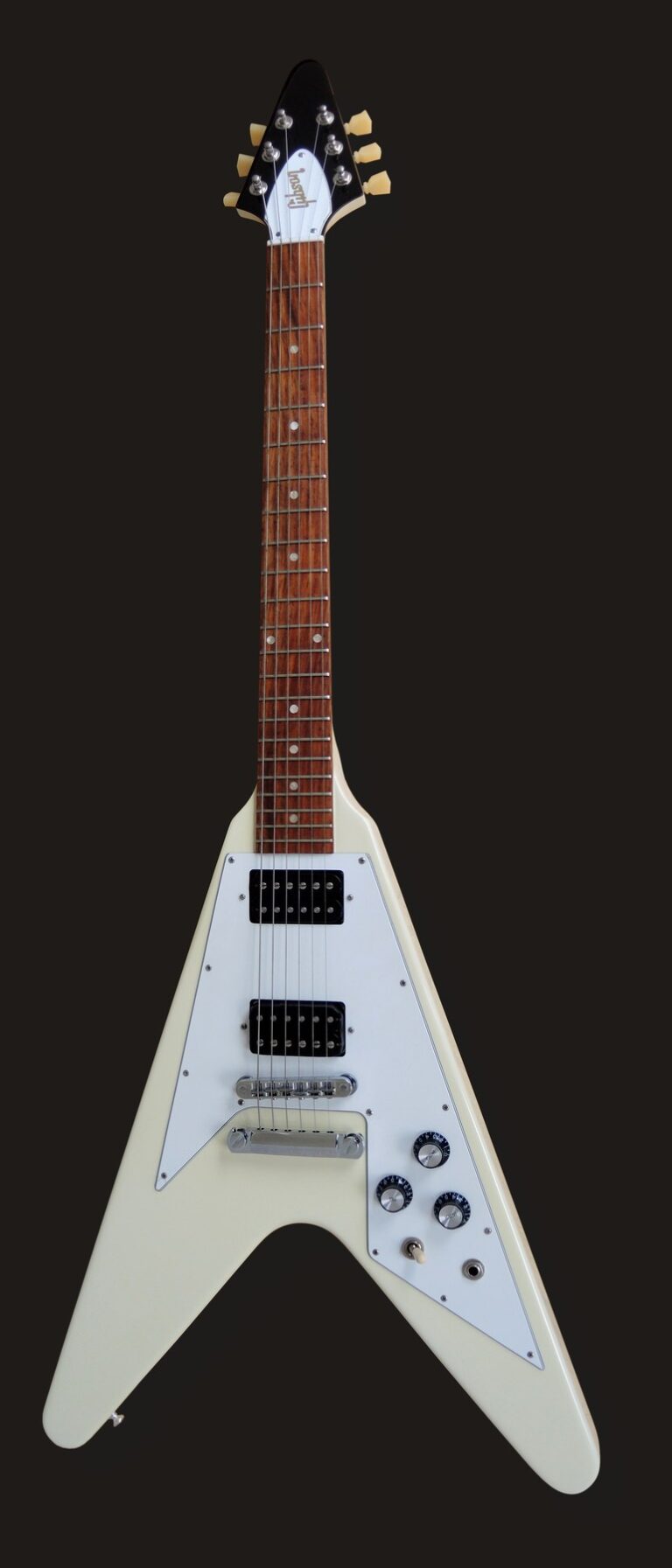
Sylvain’s documented guitar collection includes a sunburst Telecaster Custom, Gibson Flying V (documented in live performances), Gibson SG (documented in photographs), and Gibson Custom Les Paul RI with vintage appointments. The breadth of the collection reflects both the Mercury Records equipment budget that allowed expansion from the original cherry Junior and the subsequent decades of collecting and performing that produced a guitar wardrobe appropriate for different songs and different performance contexts.
Amps
The Equipboard community documentation identifies Sylvain’s primary amplification in the reunion New York Dolls period as an Orange AD30H head through an Orange PPC412 cabinet. The Orange AD30H is a 30-watt EL84-powered British amplifier from Orange Amplification — the same Orange company from which the original Orange 2×12 combo that Rick Nielsen bought was derived, though a very different product from the late-1960s originals. The AD30H’s EL84 output stage produces the specific chiming, compressed British character that EL84 amplification is known for, in a smaller format than the Orange 100-watt heads. The Orange PPC412 cabinet’s four 12-inch Celestion speakers provide the full-range, British-voiced cabinet character. The Orange combination in the reunion period differs significantly from the original Dolls amplification, reflecting the evolution of Sylvain’s tonal requirements from the proto-punk power-chord approach to the more varied, hollow-body-centered approach of the reunion period.
The original New York Dolls’ amplification — including the specific cranked-amp approach that Sylvain describes in the automatic guitar philosophy — was Marshall-based. “We married that with power chords, because it was too hard for us to play a whole barre chord and they sounded so much nastier cranked through the amps.” The “amps” of the original Dolls era were Marshall amplifiers, cranked to produce the natural EL34 saturation that made the cherry Les Paul Junior’s P-90 power chords sound “nastier” than they would through a clean amplifier. The Marshall at high volume with the automatic guitar’s single P-90 driving the input is the specific signal chain of proto-punk’s founding guitar approach.
Effects
The “automatic guitar” philosophy is the most significant single element of Sylvain Sylvain’s gear story — more significant than any specific pedal or amplifier choice because it is the foundational gear philosophy that directly produced the proto-punk guitar approach and informed the subsequent British punk generation’s understanding of what a guitar should be. “You got one pickup, one tone, one volume. No frills, no nothing.” This is the complete signal chain description: one pickup, no effects, power chords cranked through the amp. The automatic guitar’s single-pickup architecture eliminates the tonal switching that two-pickup guitars require; there is no pickup selection to make, no blend to consider, no tonal alternative. The guitar produces one sound. That sound, through a cranked Marshall, with power chords: this is the proto-punk guitar tone that the New York Dolls established and that the British punk movement translated into its own context.
Sylvain’s specific description of the power chord’s origin in the New York Dolls context — “it was too hard for us to play a whole barre chord and they sounded so much nastier cranked through the amps” — is one of the more honest accounts of technical limitation as creative catalyst. The power chord (the root and fifth, without the third that completes the major or minor triad) emerged from the specific difficulty of playing full barre chords at the pace and with the energy that the Dolls’ music required, and the specific discovery that the two-note power chord “sounded so much nastier” than the full chord through a cranked amp. The technical limitation produced a specific tonal discovery, and the tonal discovery produced the foundational rhythmic technique of punk guitar. The automatic guitar’s P-90 pickup driving the cranked Marshall through power chords: this is the proto-punk guitar formula, arrived at through the specific practical consequence of finding full barre chords too difficult.
Sylvain’s practice of modifying guitars — removing the Gretsch Golden Anniversary’s treble pickup and installing a humbucker — reflects the Eddie Cochran influence and the broader rockabilly tradition of customizing instruments for specific tonal requirements. The hot-rodding approach is an “effect” in the sense that it permanently alters the tonal character of the instrument: a Gretsch Golden Anniversary with its original FilterTron treble pickup replaced by a humbucker produces a different sound from the factory specification, and that difference is a deliberate tonal choice. This is the instrument modification as effects processing approach that multiple guitarists have employed, from Steve Jones’s removal of the Les Paul Custom’s pickup covers to Greg Ginn’s homemade high-output humbuckers. The hot-rod tradition that Cochran represented — the hot rod itself being an American working-class tradition of modifying a standard vehicle for superior performance — applied to the guitar is the specific aesthetic that Sylvain’s Gretsch modification represents.
The specific New York context — the downtown Manhattan of the early 1970s where the Dolls formed and performed, the Mercer Arts Center and Max’s Kansas City and the other venues that constituted the proto-punk circuit before CBGB opened and redefined it — is the specific cultural geography that produced the automatic guitar philosophy. New York in 1971-73 was not London; there was no established punk tradition to inherit, no safety net of genre conventions to fall back on. The Dolls were making up their aesthetic as they went, combining the visual excess of the New York drag culture with the rock and roll directness of the Rolling Stones and the Stooges and the specific lower-Manhattan energy of a downtown scene that had no commercial support and no established audience. The cherry Les Paul Junior was the right guitar for this specific context because it was what Sylvain had, and what Sylvain had turned out to be exactly right for the music they needed to make. The automatic guitar philosophy was not designed; it was discovered, in the specific economic and musical context of the early Dolls, and then articulated after the fact as a description of what they had already done.
The Too Much Too Soon album — the second and final Mercury Records release (1974), produced by Shadow Morton — is the specific commercial and creative document of where the automatic guitar philosophy had developed after the debut. Sylvain had traded the cherry Junior for Thunders’ black beauty Les Paul Custom by this point; the cover of Too Much Too Soon shows both Juniors and the Custom, the full visual vocabulary of the Dolls’ guitar identity in the Mercury period. Shadow Morton’s production — more elaborate, more produced than the raw debut — gave the automatic guitars a context that demonstrated their versatility: the P-90’s specific voice works in the produced setting as well as in the raw garage context, because the automatic quality — one pickup, one tone, one volume — provides a consistent guitar voice regardless of the production environment. The guitar sounds like the guitar. The production provides the context. The automatic provides the voice.
Playing Style & Tone Philosophy
Sylvain Sylvain plays guitar as a rhythm guitarist who understood that the rhythm guitar’s role is to drive the band — not to showcase technical proficiency, not to demonstrate harmonic sophistication, but to provide the specific rhythmic momentum that allows the vocalist and the lead guitarist to operate with maximum energy and directness. The automatic guitar philosophy is the rhythm guitarist’s philosophy in its most concentrated form: one pickup, one tone, one volume, power chords cranked through the amp, driving the rhythm section and the vocalist forward with the specific physical momentum of the stripped-down instrument.
The contrast between the automatic philosophy and the Gretsch hollow-body hot-rod approach reflects the specific evolution of Sylvain’s musical identity from the Dolls’ proto-punk context to the more musically varied approach of the reunion period. The automatic guitar’s single-pickup directness was the correct instrument for the specific music the Dolls made in 1973; the Gretsch hollow-body’s warm, resonant character suits the more varied material of the reunion albums and the broader range of influences that the mature Sylvain’s guitar approach incorporates. Both are expressions of the same underlying philosophy: use the guitar that serves the specific music rather than the guitar that demonstrates the guitarist’s sophistication. The automatic is the proto-punk guitar; the Gretsch is the rock-and-roll guitar. Both are correct for their respective contexts.
“Eddie Cochran was God for me.” This is the specific historical antecedent that makes the Gretsch choice and the hot-rod approach coherent: Cochran was one of the first guitarists to use the electric guitar with the specific physicality and tonal directness that would become proto-punk’s foundational approach, and his willingness to modify and customize instruments was the original rock and roll hot-rod philosophy. Sylvain’s Gretsch modification is in direct aesthetic lineage with the Cochran tradition, applied to a different instrument in a different decade for a different musical context but expressing the same fundamental commitment to making the guitar serve the specific music rather than conforming to factory specification.
How to Sound Like Sylvain Sylvain
The original New York Dolls Sylvain Sylvain tone requires: a Gibson Les Paul Junior (double-cutaway, cherry or TV Yellow, single P-90 pickup — “automatic” configuration); a Marshall amplifier cranked to natural EL34 saturation; no effects; and power chords played with the specific physical commitment of the proto-punk approach. The reunion period tone requires a Gretsch hollow-body (Golden Anniversary or equivalent, modified with humbucker in bridge position) through Orange or equivalent British tube amplification.
| Control | Setting (0–10) | Notes |
|---|---|---|
| Marshall (Automatic Guitar — Cranked) | Volume: 7–8; Treble: 7; Mid: 7; Bass: 5 | “They sounded so much nastier cranked through the amps.” Push the Marshall toward natural EL34 saturation with the cherry Les Paul Junior’s single P-90 driving the input. The P-90’s high-output single-coil character drives the Marshall harder than a standard-output pickup, producing the specific “nasty” character of the automatic guitar through a cranked amp. No pedals. No effects. This is the complete proto-punk signal chain. |
| Gibson Les Paul Junior P-90 (Automatic) | Volume: 10; Tone: 7; Single pickup | The automatic guitar: one pickup, one tone, one volume. Full volume for maximum P-90 output into the cranked Marshall. Tone at 7 — slightly rolled back from maximum for the specific warmth that balances the P-90’s natural bite. No pickup selection to make. The guitar produces one sound. That sound is proto-punk. |
| Power Chords (Technique) | Root + fifth; downstroke; committed; nasty | The automatic guitar technique: two-string power chord (root and fifth) rather than full barre chord. Aggressive downstroke with the full commitment of the rhythm guitarist who understands that the rhythm guitar drives the band. “Too hard to play a whole barre chord and they sounded so much nastier cranked through the amps.” The technical limitation is the creative discovery. |
| Gretsch Golden Anniversary + Humbucker (Reunion Tone) | Bridge humbucker; Volume: 9; hollow-body resonance | For the reunion period approach: the Gretsch Golden Anniversary with humbucker replacing the treble pickup. The hollow-body acoustic resonance combined with the humbucker’s output warmth produces the specific warm, resonant character of the mature Sylvain approach. Through Orange amplification for the specific EL84 British warmth. |
| Orange AD30H (Reunion Amplification) | Volume: 6; Gain: 5; Treble: 7; Bass: 5 | The Orange EL84 amplification for the Gretsch hollow-body: warm, compressed, with the specific chiming character of the EL84 stage. Different from the Marshall’s EL34 character — lighter, more chiming, less aggressive — suited to the hollow-body’s acoustic warmth rather than the solid-body Junior’s P-90 directness. |
| Hot-Rodding Philosophy | Modify the instrument to serve the music | The Eddie Cochran influence: hot-rod the guitar to match the musical requirement rather than accepting factory specification as final. Replace the pickup that doesn’t serve the sound with one that does. The Gretsch treble pickup removed; the humbucker installed. The instrument modified; the music served. This is the correct approach. |
Influence & Legacy
Sylvain Sylvain’s influence on punk and rock guitar is concentrated in the specific articulation and development of the “automatic guitar” philosophy — the Les Paul Junior single-pickup, one-tone, one-volume approach that he and Johnny Thunders made famous and that the British punk generation absorbed as the correct guitar for the specific music they were making. Mick Jones of the Clash bought a Les Paul Junior because Johnny Thunders used one; Jones never forgot that Sylvain was the co-developer of the automatic guitar approach. The Guitar Player assessment — “Me and Johnny Thunders basically put the Les Paul Junior on the map” — is both accurate and characteristically modest: they put it on the map by making music with it that demonstrated its specific power, and the map subsequently included every punk guitarist who picked up a Junior and discovered the specific nasty character that a single P-90 through a cranked Marshall produces.
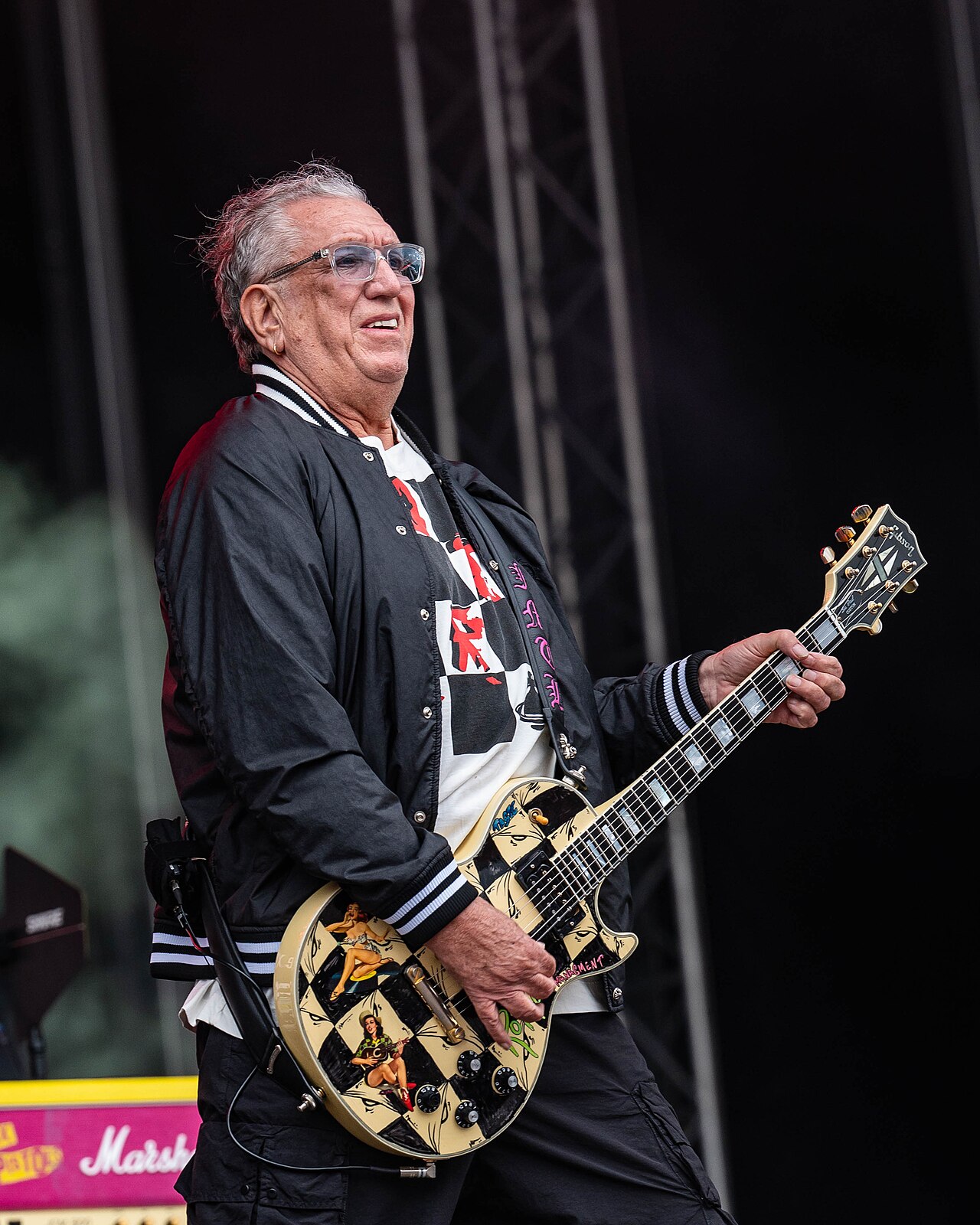
The white Les Paul Custom that ended up with Steve Jones is the most directly documented piece of the Sylvain influence chain: the guitar that was Sylvain’s traveled across the Atlantic (via Malcolm McLaren’s plan and Steve Jones’s opportunism) and recorded the Sex Pistols’ debut album. The New York Dolls’ direct influence on the British punk movement — acknowledged by the Clash, the Sex Pistols, and the broader British punk tradition — runs through both the musical approach (the power chords, the automatic guitar) and the specific physical instrument (Sylvain’s Les Paul Custom in Jones’s hands).
For the New York Dolls parallel — Johnny Thunders’ guitar approach, covered in his own guide. The Les Paul Junior tradition that both Dolls guitarists put on the map connects to Mick Jones’s Clash Les Paul Junior origin story at #66 — the specific British punk guitarist who bought the Junior explicitly because Thunders used one. And the proto-punk tradition that the Dolls established connects to the broader punk and post-punk tradition documented through the entries from Joe Strummer at #65 through the post-punk players that conclude this series’ punk section.
He died on January 13, 2021, at sixty-nine, from cancer. He gave Malcolm McLaren his white Les Paul Custom for a plane ticket he never took. The guitar recorded Never Mind the Bollocks. The Dolls recorded two albums that inspired the punk movement. The cherry Les Paul Junior with one pickup and one tone and one volume was the beginning of punk. He called it an automatic. He and Johnny Thunders put it on the map. The map now includes every punk guitarist who has ever plugged a single-pickup Gibson into a cranked Marshall and played a power chord. The automatic is the correct guitar for the stripped-down music, like the band was, like the songs were. Sylvain Sylvain. Eddie Cochran was God. The Gretsch Golden Anniversary has a humbucker where the treble pickup used to be. The hot rod runs. The automatic transmission was the correct gear for the stripped-down music. One pickup, one tone, one volume. The beginning of punk. The New York Dolls. Sylvain Sylvain. February 14, 1951. January 13, 2021. The white Les Paul Custom is still in Steve Jones’s possession, the serial number confirmed as 145418, with the cigarette-smoke yellowing and the pinup-girl tan lines and the Bigsby removed. The cherry Junior that started it all is wherever it is. The automatic guitar philosophy is everywhere punk has ever been played.
Frequently Asked Questions: Sylvain Sylvain Guitars & Gear
What guitar did Sylvain Sylvain use with the New York Dolls?
Sylvain Sylvain’s foundational guitar was a cherry double-cutaway Gibson Les Paul Junior — the “automatic” guitar with one P-90 pickup, one tone knob, and one volume knob. He and Johnny Thunders are jointly credited with putting the Les Paul Junior on the map as a proto-punk and punk guitar. He also used a white 1974 Gibson Les Paul Custom that was later stolen by Steve Jones of the Sex Pistols, an Ibanez Rocket Roll Sr. (2387CT) in a 1973 New York Dolls endorsement, and traded for Thunders’ Les Paul Custom Black Beauty during the Mercury Records period. His preferred guitar beyond the Dolls context was the Gretsch hollow-body, which he described as his true instrument identity.
What is the “automatic guitar” philosophy?
Sylvain Sylvain’s “automatic guitar” philosophy — which he described as the founding philosophy of the New York Dolls’ guitar approach and the beginning of punk — was the specific concept of the single-pickup, minimal-control guitar. “You got one pickup, one tone, one volume. No frills, no nothing. And we married that with power chords, because it was too hard for us to play a whole barre chord and they sounded so much nastier cranked through the amps. And that’s what they consider the beginning of punk.” The automatic guitar — like an automatic transmission rather than a manual — required no complex management or switching, allowing the player to concentrate entirely on the playing rather than on the instrument’s controls. The Gibson Les Paul Junior’s single P-90 was the automatic guitar in its most accessible form.
How did Steve Jones end up with Sylvain Sylvain’s white Les Paul Custom?
Malcolm McLaren, who briefly managed both the New York Dolls and the nascent Sex Pistols, conceived a plan to bring Sylvain Sylvain to London to join the Sex Pistols. The plan involved Sylvain giving McLaren his white 1974 Gibson Les Paul Custom, which McLaren would sell to finance Sylvain’s plane ticket. Jones reportedly took the guitar and kept the money rather than purchasing the ticket, and Sylvain never came to London. The white Les Paul Custom became the primary guitar on Never Mind the Bollocks, Here’s the Sex Pistols — Sylvain’s guitar recorded one of punk’s most celebrated debut albums while its original owner stayed in New York.
What was Sylvain Sylvain’s preferred amplification?
In the original New York Dolls era, the amplification was Marshall-based — cranked to natural saturation for the “nastier” quality that the automatic guitar philosophy demanded. “They sounded so much nastier cranked through the amps.” In the reunion New York Dolls period (2004 onward), the Equipboard documentation identifies an Orange AD30H head through an Orange PPC412 cabinet as his primary amplification — a 30-watt EL84-powered British amplification significantly different in character from the Marshall EL34 of the original era, suited to the Gretsch hollow-body approach of the reunion period.
What was Sylvain Sylvain’s relationship with Gretsch guitars?
“I’ve always gone for those hollow bodies,” Sylvain told MusicRadar. “Eddie Cochran was God for me. I loved how he used to fuck with those guitars… You know, hot rod them. That’s what I do. Like with my Gretsch Golden Anniversary: I took out the treble pickup and threw in a humbucker.” The Gretsch hollow-body — specifically the Golden Anniversary model, modified by removing the treble pickup and installing a humbucker — was Sylvain’s preferred guitar beyond the specific requirements of the New York Dolls’ Les Paul Junior “automatic” approach. The Eddie Cochran influence (Cochran was one of rock and roll’s most innovative early performers) shaped both the Gretsch preference and the hot-rodding approach.
Who was Sylvain Sylvain and what was his significance?
Sylvain Sylvain (born Sylvain Mizrahi, February 14, 1951, in Cairo, Egypt; died January 13, 2021, in New York City) was the rhythm guitarist and co-founder of the New York Dolls. He and Johnny Thunders co-developed the Les Paul Junior “automatic guitar” approach that influenced the British punk movement, and he co-wrote much of the Dolls’ catalog. The New York Dolls were cited by the Clash, the Sex Pistols, and the broader British punk tradition as primary influences. Sylvain’s specific contributions — the automatic guitar philosophy, the power chord development, the guitar that became Steve Jones’s primary instrument — are the specific gear contributions that connect the New York proto-punk tradition to the British punk movement that changed rock music.
What happened to the New York Dolls?
The original New York Dolls — David Johansen (vocals), Johnny Thunders (guitar), Sylvain Sylvain (guitar), Arthur Kane (bass), and Jerry Nolan (drums, replacing the original drummer Billy Murcia who died in 1972) — recorded two Mercury Records albums before dissolving in 1975. Johnny Thunders died in 1991. Arthur Kane reformed with Johansen and Sylvain for a 2004 reunion organized by Morrissey for the Meltdown Festival, but died of leukemia shortly after. Johansen, Sylvain, and others continued the Dolls under the New York Dolls name, recording three more studio albums (2006, 2009, 2011) before Sylvain’s cancer diagnosis ended his participation. Sylvain died on January 13, 2021.
Image credits
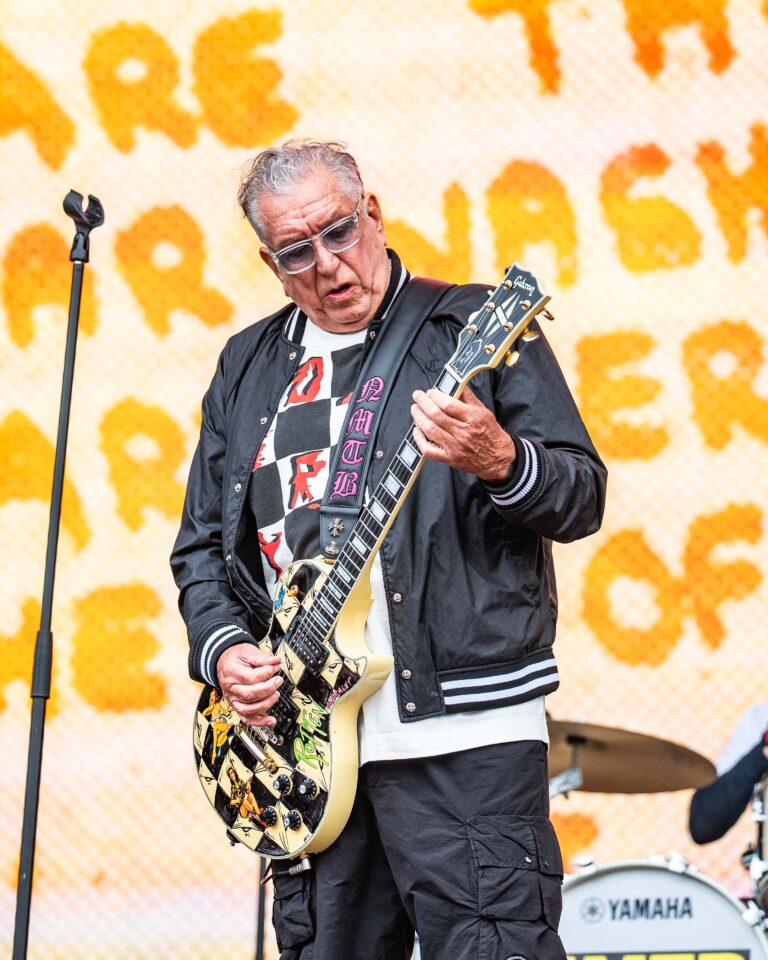
- Steve Jones: Birgit Fostervold, Wikimedia Commons, CC BY-SA 4.0.
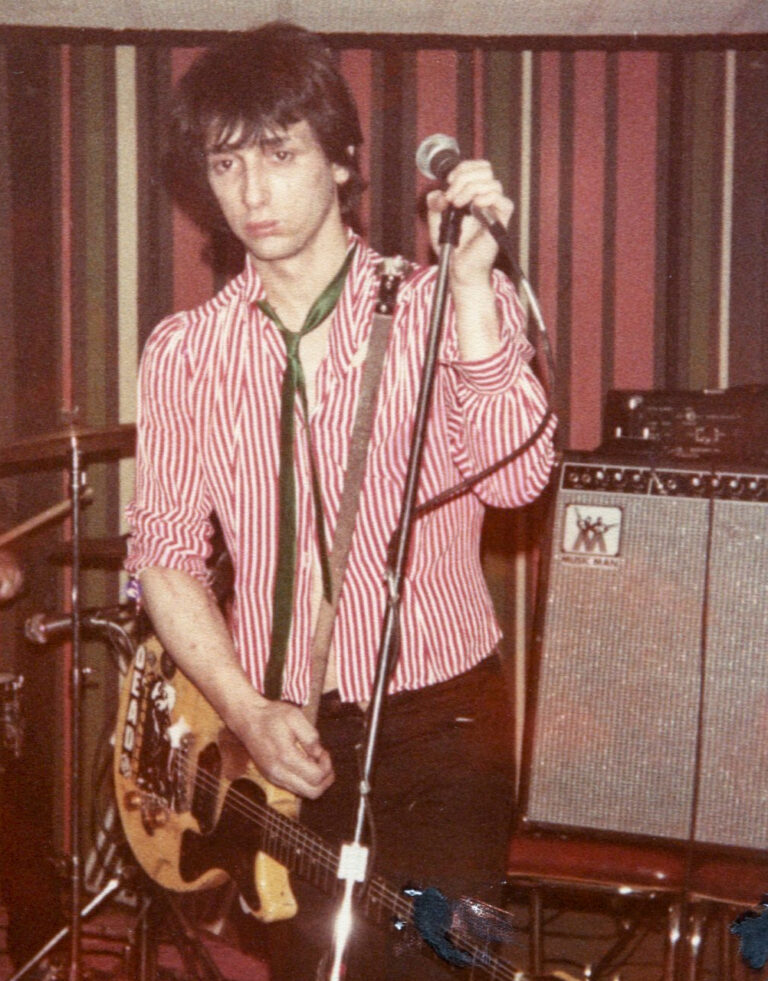
- Johnny Thunders: Beth Herzhaft, Wikimedia Commons, CC BY-SA 3.0.
- Top image: Mike.parry1966, Wikimedia Commons, Public domain.
- Sylvain Sylvain: photo by Mike.parry1966, public domain, via Wikimedia Commons.
- Gibson Flying V: Monika Fischer (retouch: Auge=mit), Wikimedia Commons, CC BY-SA 2.5.