Epiphone SG Standard: The One Guitar That Somehow Belongs to Everyone
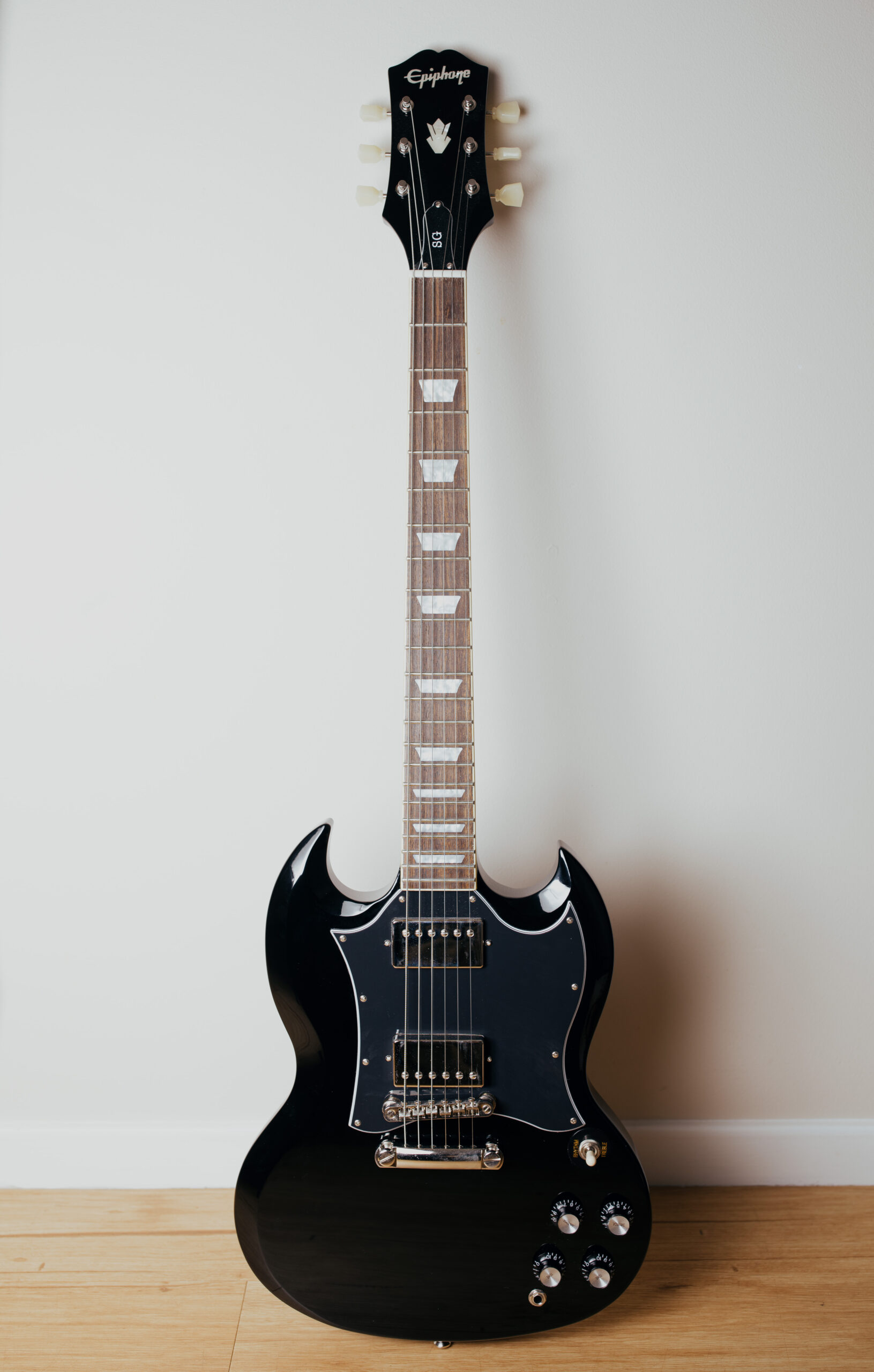
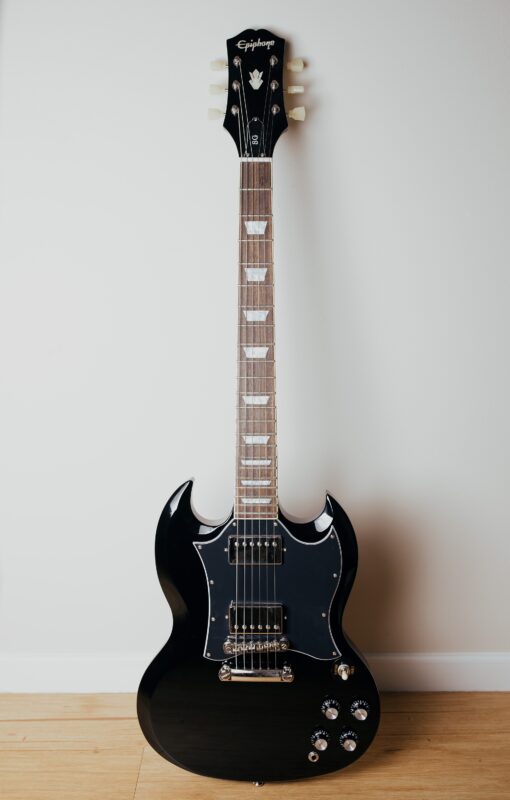
Epiphone SG Standard Ebony. Photo: VirtualWolf from Sydney, Australia, CC BY-SA 2.0, via Wikimedia Commons (File:2020 Epiphone SG Standard Ebony - Inspired by Gibson (2020-11-09 12.05.53 by VirtualWolf).jpg).
From Sister Rosetta Tharpe to Tony Iommi and Angus Young, the SG spans gospel, doom metal, and rock swagger. History, specs, and buying guide inside.
Most gear spec sheets lean on the same five or six names no matter what guitar they’re attached to, and after enough articles chasing down the real story behind a generic player list, it starts to feel like nobody actually checks. So it’s worth pausing here: the players tied to the SG shape — Angus Young, Tony Iommi, Derek Trucks, Frank Zappa, Sister Rosetta Tharpe — are not a copy-pasted family list. Every one of them is a genuine, well-documented SG player, and between them they cover gospel, hard rock, doom metal, jam-band slide, and avant-garde jazz-fusion on a single body shape. That’s not typecasting. That’s a guitar that refuses to sit still.
The Epiphone SG Standard is the accessible entry point into that lineage — Epiphone’s Inspired by Gibson recreation of the double-cutaway solidbody that Gibson accidentally invented while trying to save money on the Les Paul.
Born From a Cost-Cutting Crisis, Not a Grand Vision
The SG’s origin story is almost the opposite of most legendary guitar designs. By 1960, Gibson’s Les Paul Standard — the guitar now considered the holy grail of the format — was actually a sales disappointment, shipping fewer than 1,800 units during its entire 1958-to-1960 run, while cheaper, simpler models like the Les Paul Junior and Melody Maker were the company’s real bestsellers. Gibson president Ted McCarty needed a redesign that could fill a rapidly expanding factory with a guitar people would actually buy. For 1961, McCarty took the Les Paul Standard’s thick body, slimmed it dramatically, ditched the carved maple top, and resculpted the shape into a more aggressive double-cutaway outline with unrestricted access to all 22 frets. The new guitar kept the Les Paul name for a couple of years — Les Paul himself was going through a public divorce and declining popularity at the time, and asked Gibson to withhold his royalty and remove his name once he saw the redesign, which he reportedly didn’t much like. Gibson agreed, and the guitar was simply renamed the SG, for Solid Guitar. What began as a budget-driven pivot became one of the most recognizable silhouettes in electric guitar history — proof that not every icon starts out as one.
Full Specifications
Why the SG Sounds Different From a Les Paul
The SG and the Les Paul share a family tree but not a voice, and the difference comes down to mass and neck geometry rather than pickups alone. The SG’s set neck is shallower than the Les Paul’s, and Gibson moved the neck joint outward by three frets, which is why the upper register feels so much more open on an SG — there’s simply less body in the way. That slimmer, lighter mahogany body also means less sustain-generating mass than a maple-topped Les Paul, trading some of that guitar’s compressed, singing quality for a brighter, more immediate midrange bite. It’s a guitar that responds fast, which is exactly why it became the instrument of choice for players who needed speed and attack over creamy sustain.
The Epiphone SG Standard’s ProBucker 2 and ProBucker 3 pairing follows that same philosophy at a budget-friendly price point — a slightly hotter bridge pickup than neck, wired to independent volume and tone controls so players can blend or isolate either side of that speed-versus-warmth equation on the fly.
Famous Players: One Shape, Five Completely Different Genres
Sister Rosetta Tharpe: The Godmother Who Got There First
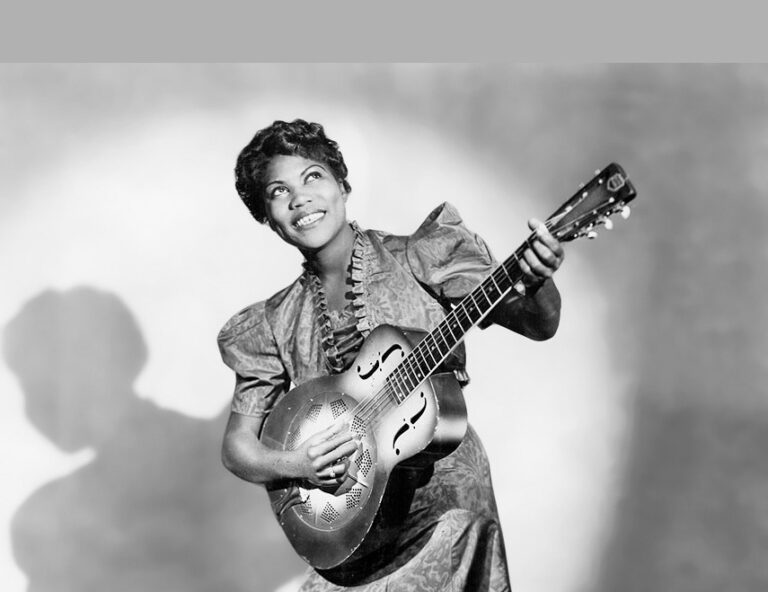
Before Angus Young or Tony Iommi ever plugged in, Sister Rosetta Tharpe was already touring the UK with a white 1961 Gibson SG Custom, filmed in now-legendary footage playing to a segregated audience across railway platforms at a disused Manchester train station. She’s widely credited as one of the first guitarists to fully embrace valve overdrive, decades before distortion became a genre-defining sound. Bob Dylan himself pointed to her influence on a generation of young British guitarists — a lineage that runs directly through the same guitar shape Tony Iommi and Angus Young would later make their own. Find her full profile at GuitarGangsters’ Sister Rosetta Tharpe page.
Tony Iommi: Inventing Heavy Metal by Accident
Black Sabbath’s Tony Iommi wielded an SG to invent heavy metal, shaping the genre with crushing, downtuned riffs. His original SG — used on the band’s earliest, most foundational albums — was a modified cherry red, left-handed 1964 SG Special with P-90 pickups, nicknamed “Monkey” after a sticker he added. Iommi’s detuned, doom-laden riffing style became possible in part because of the SG’s slim neck and light body — a guitar built for speed became, in his hands, the vehicle for something far slower and heavier than its designers ever imagined.
Angus Young: Rock and Roll’s Uniform
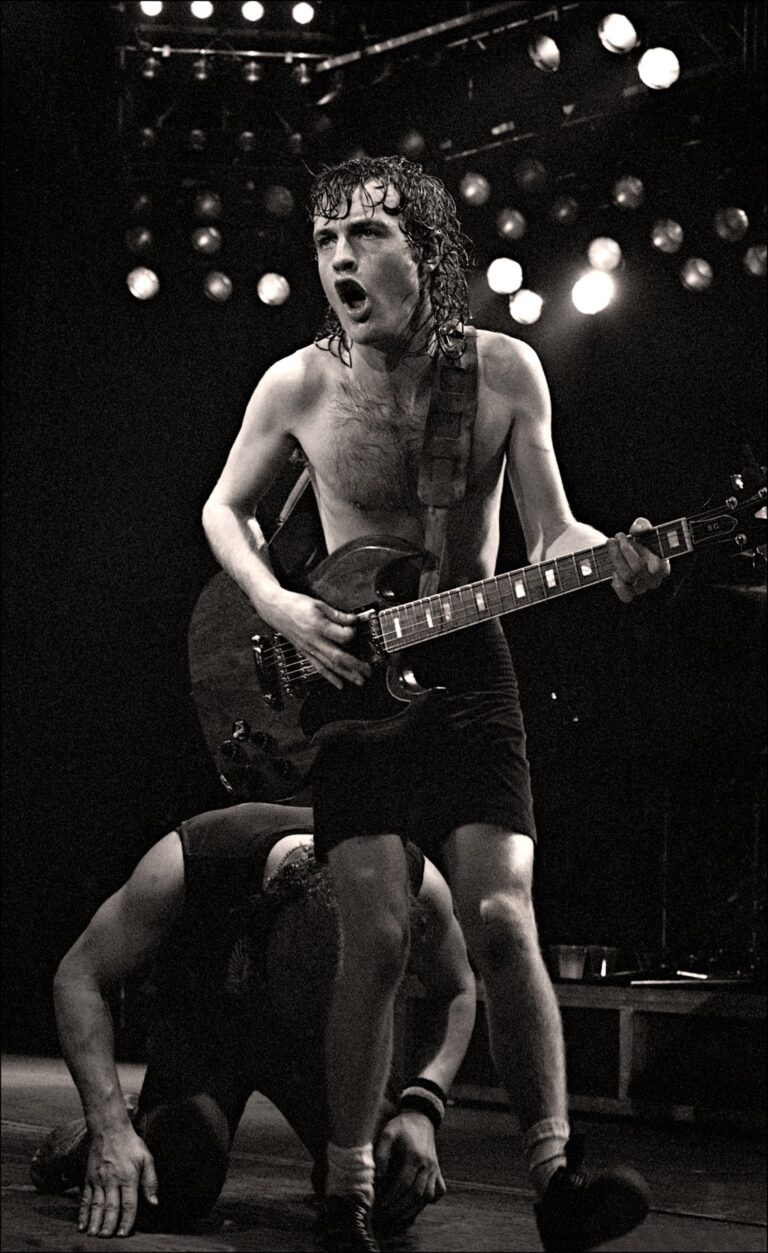
AC/DC’s Angus Young made the cherry-finished SG his signature weapon, duckwalking across stages worldwide with a guitar that became as visually inseparable from his identity as the school uniform he wears on stage. Where Iommi pushed the SG toward doom, Young pushed it toward pure, unfiltered rock and roll energy — proof of just how much range one body shape can hold.
Derek Trucks: The Slide Player’s SG
The SG has long been recognized as a near-perfect electric slide guitar, largely because of its neck-through-body access, and Derek Trucks’ main instrument for over a decade has been a Gibson Custom Shop SG based on the 1961 model that Dickey Betts gave to Duane Allman — a direct link back to the Allman Brothers’ own SG history. Trucks got his first SG at age 11 or 12 because a Les Paul was simply too heavy for him at the time, and has favored the shape’s easy upper-fret access for slide playing ever since. Find his profile at GuitarGangsters’ Derek Trucks page.
Frank Zappa and the Wider Circle
Frank Zappa rounds out the SG’s genre-spanning résumé, having favored the model during periods of his notoriously eclectic career, alongside other genuinely documented players like Pete Townshend of The Who and Robby Krieger of The Doors. Find Zappa’s profile at GuitarGangsters’ Frank Zappa page, and Eric Clapton’s — whose psychedelically-painted “Fool” SG from his Cream days became one of the most famous custom-finished guitars in rock history — at GuitarGangsters’ Eric Clapton page. George Harrison, another early SG adopter during the Beatles’ mid-60s period, has his own profile at GuitarGangsters’ George Harrison page, and Tony Iommi’s full rig breakdown lives at GuitarGangsters’ Tony Iommi page, with Angus Young’s at GuitarGangsters’ Angus Young page.
The Wider Circle: Why the List Kept Growing
Part of what makes the SG’s player roster so unusual is how little these artists have in common outside the guitar itself. Tharpe was a gospel singer performing decades before rock and roll had a name. Iommi and Young came up through the British and Australian pub-rock circuits a decade apart, chasing completely different sonic goals — one slower and heavier than anything before it, the other faster and more direct. Trucks inherited his SG connection through a literal family lineage of Southern rock and blues. Zappa treated the instrument as one tool among dozens in a genre-agnostic compositional toolkit. None of them were chasing the same sound, and none of them were copying each other’s approach — they simply kept finding that the same slim neck and light body served wildly different musical goals equally well. That’s a rarer trait in guitar design than it sounds; most iconic shapes get strongly associated with one genre and stay there. The SG never got the memo.
Tone Recipes
Iommi-Style Doom and Detuned Riffing
Bridge pickup, tone rolled back slightly, volume maxed. Push into a high-gain amp or a distortion pedal for thick, saturated low end — the SG’s lighter body and slim neck make downtuned riffing feel faster and more precise than it would on a heavier solidbody.
Angus Young-Style Rock and Roll Bite
Bridge pickup, both controls wide open, straight into a cranked tube amp with minimal pedal assistance. The ProBucker 3’s slightly hotter output gives it natural edge-of-breakup character without needing much external gain.
Derek Trucks-Style Slide Blues
Neck pickup for warmth, open tuning, moderate action height for clean slide contact. The SG’s easy upper-fret access — a direct benefit of its neck-joint placement — makes high-register slide runs far more comfortable than on a Les Paul-style body.
Zappa-Style Angular Fusion Lines
Middle pickup position, tone and volume both around 7, into a clean or lightly-driven amp with a touch of chorus or flanger. The SG’s fast neck and light body make rapid position shifts and wide interval jumps feel considerably easier than on a heavier-bodied guitar, which is part of why it suited Zappa’s technically demanding compositions.
How It Compares
Vs. the Gibson SG Standard
The Gibson version uses USA-made components throughout and typically carries higher-output, more nuanced humbuckers with tighter manufacturing tolerances — a real step up in fit, finish, and long-term resale value. The Epiphone SG Standard replicates the core spec sheet closely enough that most players in a blind test would struggle to identify which is which through a mixed amp signal, making it the far more sensible choice for anyone not specifically chasing USA-made collectibility.
Vs. a Solidbody Les Paul
Compared to a Gibson Les Paul Standard, the SG trades sustain and body mass for speed and upper-fret access. Players who prioritize fast lead runs and comfortable ergonomics over long, singing sustain tend to gravitate toward the SG; players chasing that thick, compressed Les Paul lead tone stick with the heavier body.
Vs. the Epiphone Les Paul Standard
Both guitars share mahogany construction and a similar pickup philosophy, but the weight difference alone changes the playing experience substantially. The SG’s slimmer body makes it noticeably more comfortable over long sessions, while the Les Paul’s extra mass contributes to a warmer, more sustained low end.
Buying Guide
The Epiphone SG Standard currently retails for $599, discounted from an $799 MSRP, positioning it as an accessible but genuinely capable step up from Epiphone’s entry-level SG models. It sits within Epiphone’s broader “Inspired by Gibson” collection, which is itself divided into Original and Modern subcategories — the Standard reviewed here follows the Original spec, built around vintage-style tone and feel rather than the higher-output pickups and ergonomic upgrades found on Modern-collection SGs. Players wanting an even closer match to specific vintage years should look toward Epiphone’s SG Standard ’61, which trades the ProBucker set for period-correct styling and finish options closer to the guitars Iommi and Young originally played.
Buyers chasing true USA-made specs and collectible value should budget significantly more for a genuine Gibson SG Standard or Custom Shop model; buyers who want the shape, the ergonomics, and 90% of the tone without the four-figure investment will find the Epiphone version does exactly what it needs to. Check current listings at Reverb’s Epiphone SG Standard marketplace.
Practical Ownership Notes
The SG’s slim neck joint, while excellent for upper-fret access, is also a known structural weak point on vintage originals — early Gibson SGs are notorious for neck-heel cracks under hard use, a design quirk the Epiphone version addresses with modern glued-neck construction and reinforced joinery, but it’s still worth handling the guitar gently around the heel during transport. The lightweight mahogany body makes this one of the more shoulder-friendly solidbodies for long gigs or practice sessions, a genuine advantage over heavier Les Paul-style guitars. Because the SG’s balance point sits differently than a Les Paul’s, players switching between the two shapes should expect a brief adjustment period with strap height and neck-dive tendency — the SG can feel slightly neck-heavy when standing, depending on strap position.
The double-cutaway design also means less body contact against a seated player’s leg compared to a Les Paul or Stratocaster, which some players find less stable when playing seated — a wider strap or a slight repositioning usually resolves it. Fret access above the 15th fret is genuinely excellent thanks to the SG’s minimal upper-body horn intrusion, making it one of the better choices in this price range for players who spend real time soloing in the guitar’s upper register. Because the ProBucker pickups are a widely used Epiphone standard across multiple product lines, replacement parts and compatible aftermarket pickups are easy to source if you eventually want to experiment with tonal upgrades.
FAQ
Why does the SG sound different from a Les Paul with similar pickups?
The SG’s thinner, lighter mahogany body and shallower neck joint reduce sustain-generating mass compared to a Les Paul, producing a brighter, faster-responding tone with less compression, particularly noticeable in the upper register.
Is the Epiphone SG Standard good for slide guitar?
Yes — the SG shape’s easy upper-fret access, the same quality that made it popular with Derek Trucks and other slide specialists, translates well to the Epiphone version at a fraction of the cost of a signature Gibson model.
What’s the difference between the SG Standard and SG Standard ’61?
The SG Standard ’61 leans further into vintage-correct styling and finish options aimed at replicating specific historical years, while the standard SG Standard reviewed here uses Epiphone’s core ProBucker pickup set and modern production specs.
Is the Epiphone SG Standard suitable for metal and hard rock?
Very much so — Tony Iommi effectively invented heavy metal on this body shape, and the ProBucker pickups handle high-gain settings comfortably, though extreme modern metal tones will still benefit from a dedicated high-gain amp or pedal.
Image credits
- Top image: VirtualWolf from Sydney, Australia, Wikimedia Commons, CC BY-SA 2.0.
- Epiphone SG Standard: photo by VirtualWolf from Sydney, Australia, via Wikimedia Commons, CC BY-SA 2.0.
- Sister Rosetta Tharpe: James J. Kriegsmann, Wikimedia Commons, Public domain.
- Angus Young: Harry Potts, Wikimedia Commons, CC BY 2.0.
Latest News
Related

On This Day
Tuesday 10 November
From this week: