Harmony Silhouette: The Guitar St. Vincent Rescued From the Bargain Bin
The Harmony Silhouette has no artist tied to the new reissue, but the vintage shape it revives was made famous by St. Vincent's Strange Mercy-era rig.
For the specific 2019 reissue sitting in music stores today, nobody has built a signature model around this exact SKU. But dig one layer deeper into the name itself, and the honest “no player” verdict falls apart completely. The Silhouette isn’t just a new shape Harmony invented for the relaunch. It’s a direct revival of a specific 1960s model name — one that a Grammy-winning guitarist spent the 2010s turning into one of the most talked-about “forgotten” guitars in indie rock.
A Sears Catalog Guitar That Became a St. Vincent Signature Sound
Between 1963 and 1968, Harmony built a compact offset solidbody with one or two DeArmond gold foil pickups and called it, simply, the Silhouette. Sears sold the same guitar under its own Silvertone house brand. It was catalog fare — the kind of instrument a kid’s parents ordered from a Sears wishbook rather than saved up for at a proper guitar shop. In 1968, Harmony renamed the shape “Bobkat,” and it continued in that form for several more years. For decades afterward, both names described the same basic, unglamorous, mass-produced guitar: cheap wood, simple electronics, built to a price.
Then Annie Clark — St. Vincent — picked one up. She recorded much of her breakthrough 2011 album Strange Mercy around a 1967 Harmony from this exact lineage, and described her recording setup to Guitar Player in terms that read like a mission statement for the whole “forgotten catalog guitar” revival: a vintage Harmony pushed hard into an overdrive pedal and straight into a late-’70s Fender Princeton, without a wall of effects standing between the guitar and the amp. She’s also spoken specifically about the vintage vibrato unit these guitars carry, calling it super sensitive and noting you can dive bomb on it and it will hold pitch — a detail that matters, because that Hagstrom-made vibrato was one of the more surprising strengths of an otherwise budget instrument. Clark has played the same guitar lineage on stage repeatedly, including a widely circulated 2014 appearance performing Nirvana material alongside the band’s surviving members, Dave Grohl, Krist Novoselic, and Pat Smear, at the Rock and Roll Hall of Fame induction ceremony. According to vintage-guitar historians, this sustained, visible use is directly credited with reviving collector and player interest in the model — the exact kind of grassroots cultural momentum that makes a dormant brand name worth relaunching.
The connection isn’t to this specific new guitar, it’s to the name and shape BandLab chose to bring back. When BandLab Technologies relaunched Harmony in 2019 — building in Kalamazoo, Michigan, at 225 Parsons Street, the same address where Gibson guitars were once built — the Silhouette was one of three debut Standard Series models alongside the Jupiter and Rebel. Of the three, it’s the only one that shares its exact vintage name with a guitar a major contemporary artist had already made cool again. The full story of Clark’s genuinely unconventional gear choices — including her own signature Ernie Ball Music Man guitars — is covered in our St. Vincent gear guide.
Full Specifications
Construction and Tone
Where the Jupiter and Rebel lean on mahogany for a darker, woodier voice, the Silhouette switches to an alder body with a bolt-on maple neck — a more Fender-flavored recipe that reviewers have consistently described as brighter and snappier than its siblings. Premier Guitar’s review noted the guitar’s gold foil-style mini-humbuckers deliver real spank and clarity rather than a dark, compressed humbucker tone, and singled out the middle pickup position for a clucky, articulate character well suited to arpeggios and half-chords. Guitar.com’s review went further, describing the guitar as capable of making even a Jazzmaster sound comparatively dull by contrast in the bridge position, while still cleaning up nicely for jangly indie strumming on the neck pickup.
The pickups themselves are worth pausing on. Despite the visual and marketing language borrowing heavily from the original DeArmond-made gold foils of the 1950s and ’60s, Harmony’s modern units are technically mini-humbuckers rather than true single-coil gold foils — a deliberate trade-off that keeps the vintage-inspired brightness and openness while eliminating the hum and microphonic squeal that made the originals a mixed blessing. Reviewers have noted this is a sensible modernization rather than a purist’s reissue, and one that most players are unlikely to mind in practice.
Construction-wise, the Silhouette shares its bolt-neck philosophy with the rest of the Standard Series: three recessed bolts rather than a traditional neck plate, a medium 12″ fretboard radius, and 22 medium jumbo frets. One consistent criticism across reviews is that the ebony fretboard’s edges aren’t rolled or rounded off at the factory — a detail some players won’t notice and others will want to address themselves or have a tech smooth out. The headstock, styled after the original 1960s Silhouette’s Fender-ish silhouette, is angled back rather than recessed, meaning it doesn’t lie flat on the floor the way a Telecaster does.
Not every guitarist welcomed the redesign with open arms. When photos of the new Silhouette first surfaced in 2019, offset-guitar forums lit up with debate — some longtime fans of the vintage originals felt the rear-routed knobs and separate scratchplate broke up the shape’s original flow, and preferred the old Hagstrom-trem-and-bridge combination that gave the 1960s guitars their distinctive silhouette in the first place. It’s a useful reminder that “inspired by” reissues rarely please purists chasing exact vintage accuracy, even when the professional press response was considerably warmer than the forum reaction.
Family Tree
The vintage lineage runs deeper than most players realize. Harmony’s original offset shape debuted as the Silhouette in 1963, built in single-pickup (H14) and dual-pickup (H15) configurations, with an optional Hagstrom-made vibrato tailpiece (H15V). In 1968 the same body was renamed Bobkat, continuing with a similar spec sheet, while a related, higher-spec H19 Silhouette variant — the version most closely associated with St. Vincent’s stage rig — added a bound neck and abalone block inlays. Sears sold the same basic guitar under its Silvertone house brand as the Model 1478. It’s a genuinely confusing family tree of overlapping names, and even dedicated collector resources note that H15V and H17 Bobkat models are frequently mixed up due to nearly identical bodies with different headstock shapes.
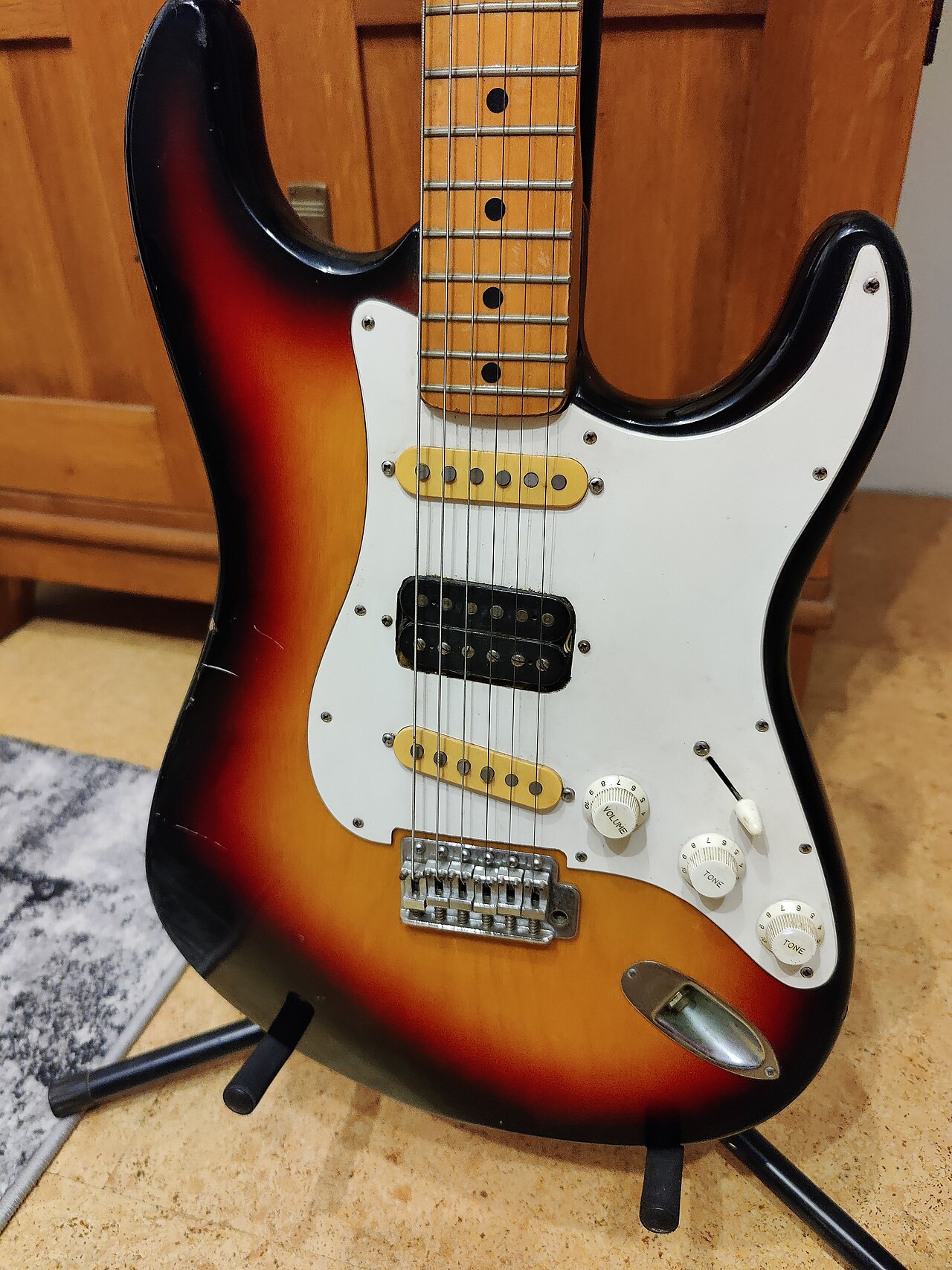
Within the modern relaunched lineup, the Silhouette sits alongside the mahogany-bodied Jupiter (single-cutaway) and Rebel (double-cutaway), sharing the same 25″ scale and Standard Series control layout but distinguishing itself with the alder/maple combination and true offset body. A Bigsby-equipped Silhouette with Bigsby variant launched in 2021, replacing the hardtail bridge with a Bigsby B5 vibrato for players who want a taste of the original H15V’s vibrato character, and shipping in Burgundy, Slate, and Space Black finishes.
Famous Players
The direct player connection here belongs almost entirely to the vintage instrument rather than the modern reissue — but it’s a connection worth taking seriously rather than dismissing just because the guitar in question predates the current SKU. St. Vincent’s championing of the vintage Harmony Silhouette/Bobkat lineage throughout the 2010s is the reason this specific shape carries any cultural weight at all today, and it’s directly credited by vintage-guitar historians with reviving collector interest in these once-overlooked catalog instruments. She’s used the guitar on record (most notably on Strange Mercy) and on stage, including a widely seen performance backing Nirvana’s surviving members, and has spoken in detail and on the record about specific mechanical details — like the vibrato’s surprising stability — that only come from someone who’s actually gigged the thing hard.
No current artist has stepped forward as a dedicated player of the new BandLab-era reissue specifically. But that’s a different claim than saying the Silhouette name has no famous history — it has one of the more interesting ones in Harmony’s whole revived catalog, and it belongs to one of the most acclaimed and influential guitarists of the last fifteen years.
Tone Recipes
St. Vincent-style driven tone: Bridge or middle pickup, guitar volume maxed, into a hard-driven overdrive pedal set for a thick, slightly fuzzy push, straight into a small clean tube amp rather than a high-gain modern head. The goal is amp breakup shaped by the pedal, not scooped distortion — Clark’s own description of her recording chain emphasizes a direct, uncomplicated signal path pushed hard rather than layered effects.
Clean indie jangle: Middle toggle position, tone control backed off slightly, amp clean and bright. This is where reviewers consistently say the Silhouette earns its keep — articulate, clucky, and full of character on arpeggiated parts without sounding thin.
Surf-adjacent vibrato work (Bigsby model): Neck pickup, light spring reverb, gentle vibrato bar dips rather than aggressive dive bombs. The original H15V’s Hagstrom vibrato was prized for staying in tune through exactly this kind of playing, and the modern Bigsby-equipped version chases the same feel.
Comparisons to Related Models
Within Harmony’s own lineup, the Silhouette is the brightest and most Fender-flavored of the three Standard Series solidbodies, contrasting with the darker, more midrange-forward Harmony Jupiter and its mahogany body and full-size gold foil humbuckers. Against genuine offset alternatives like a Fender Stratocaster, the Silhouette trades single-coil quack for gold-foil-style mini-humbucker bite, and its unconventional body shape draws more attention on stage than a Strat ever will. It’s also a useful contrast case with the discontinued vintage-catalog guitars that inspired it: where a genuine 1960s Harmony Silhouette or Silvertone 1478 comes with all the tuning and reliability risks of a 60-year-old budget instrument, the modern reissue delivers a comparable tonal starting point with locking tuners, consistent fretwork, and a warranty.
Buying Guide
- Hardtail vs. Bigsby: Choose the hardtail for maximum sustain and simplicity; choose the Bigsby version if the vintage H15V’s vibrato character is part of what draws you to this shape in the first place.
- Fretboard edges: Multiple reviews note the ebony board’s edges aren’t rolled at the factory. Worth trying in person or budgeting for a quick setup adjustment if that’s a dealbreaker for your playing style.
- Vintage vs. reissue: A genuine 1960s Harmony Silhouette or Bobkat can be found for meaningful money less than the new reissue, but expect period-correct electronics, non-locking tuners, and the general unpredictability of a guitar that’s been through six decades of unknown storage conditions. The reissue is the lower-risk way into this exact tonal territory.
- Weight and balance: Like its Standard Series siblings, the Silhouette is light by modern solidbody standards — comfortable for long sets, though worth trying with your own strap before assuming perfect balance.
- Color availability: Slate, Pearl White, and Champagne have all appeared across production runs, sometimes joined by limited finishes like 3-Tone Sunburst; check current retailer stock rather than assuming a specific color is standing inventory.
Practical Ownership Notes
The nitrocellulose finish will show wear and age faster than a modern polyurethane finish — true to the vintage-inspired brief, and arguably part of the appeal for players chasing a lived-in look. The locking tuners are a genuinely modern convenience the 1960s originals never had, making string changes meaningfully quicker. Because the pickups are mini-humbuckers rather than true single-coils, the Silhouette is notably quieter under gain than a genuine vintage gold-foil-loaded original — a practical upgrade for anyone who wants the look and vibe without the 60-year-old noise floor.
FAQ
Is the modern Harmony Silhouette related to a specific vintage model?
Yes — Harmony built an offset solidbody called the Silhouette from 1963 to 1968, when the same shape was renamed Bobkat. Sears sold the identical guitar under its Silvertone house brand. The modern reissue borrows the name and general shape rather than reproducing the vintage electronics exactly.
Does St. Vincent play the new Harmony Silhouette?
Not the current BandLab-era reissue specifically — her documented guitars are vintage originals from the 1960s Silhouette/Bobkat lineage, most famously a 1967 Harmony used extensively on Strange Mercy. Her championing of that vintage shape throughout the 2010s is widely credited with reviving interest in these guitars, which is relevant context for why Harmony chose to revive this specific name.
What’s the difference between the Silhouette and the Bobkat?
They’re the same basic Harmony body shape under two different names used at different points in the 1960s — Silhouette until 1968, Bobkat afterward — with variations in headstock shape and pickup configuration across specific sub-models.
Are the Silhouette’s gold foil pickups the same as the vintage originals?
No — the modern pickups are custom-voiced mini-humbuckers styled after vintage gold foils rather than true single-coil reproductions, trading some of the originals’ microphonic character for lower noise and more reliable output.
Where is the Harmony Silhouette made?
Kalamazoo, Michigan — the same factory address where Gibson guitars were historically built, and where Heritage Guitars, a BandLab partner brand, still operates today.
Is the Harmony Silhouette a good first guitar?
It’s built to a high enough standard for gigging professionals, but its price point puts it well above typical beginner instruments — it’s better suited to an experienced player looking for a distinctive-sounding American-made alternative to mainstream offsets than to someone buying their first guitar.
Image credits
- A sunburst electric guitar with a white pickguard: Elmschrat, Wikimedia Commons, CC BY-SA 4.0.
Latest News
Related


On This Day
Tuesday 10 November
From this week: