Dan Auerbach (The Black Keys) Guitars & Gear: The Complete Guide to the Garage Blues Chameleon’s Oddball Rig
Dan Auerbach's guitars, amps, and effects — the complete guide. Harmony H78 hollowbody gold-foil DeArmond, Supro Martinique Howlin For You, National Reso-Glass, Ibanez No. 59 fuzz 'I cannot top it', Shin-ei Companion Fuzz, Magnatone El Camino blown speaker Lonely Boy rattle, Fender Quad Reverb, Victoria Dual Deluxe, 'whatever guitar has the best character for the song', Akron Ohio, and garage blues oddball rig.
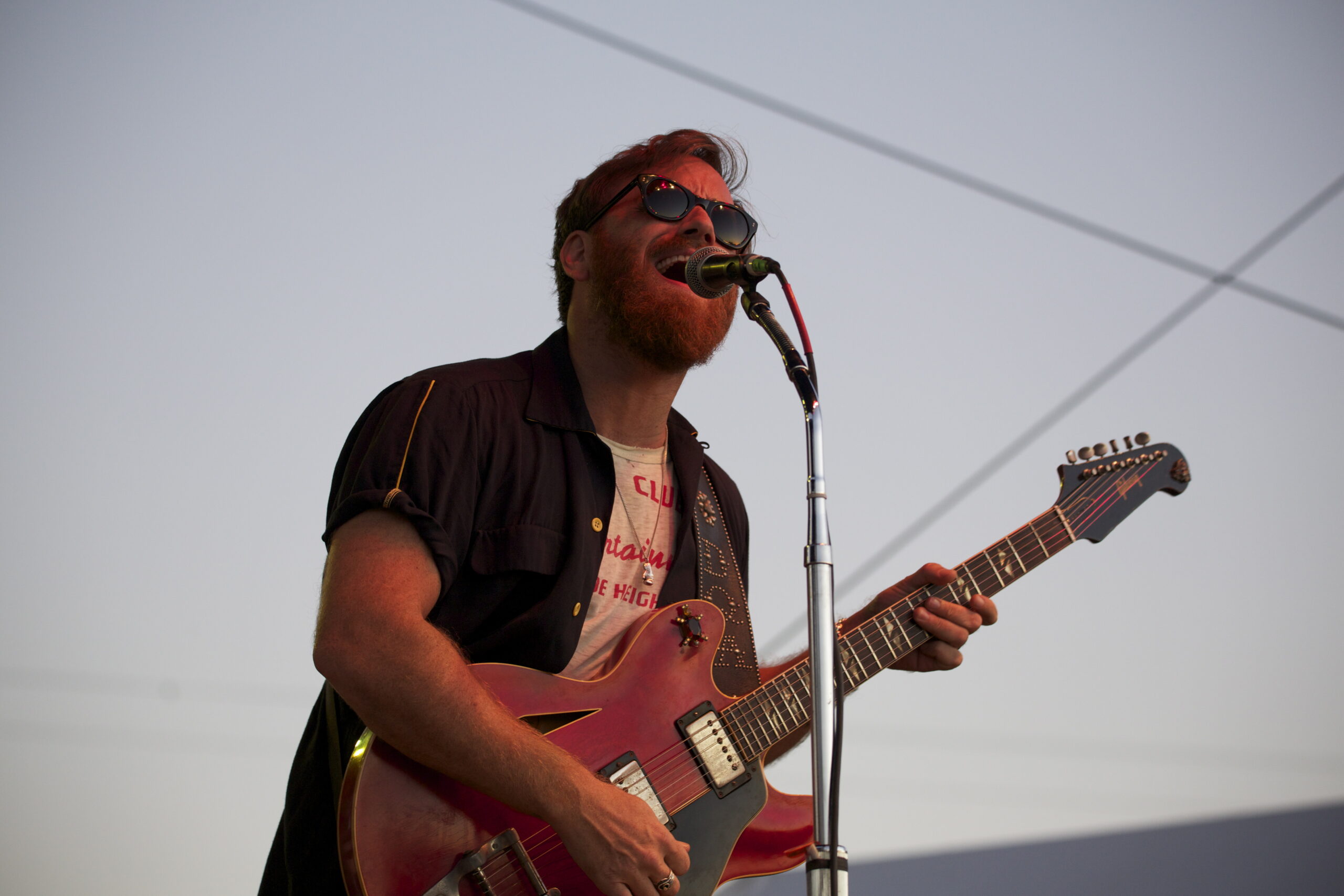
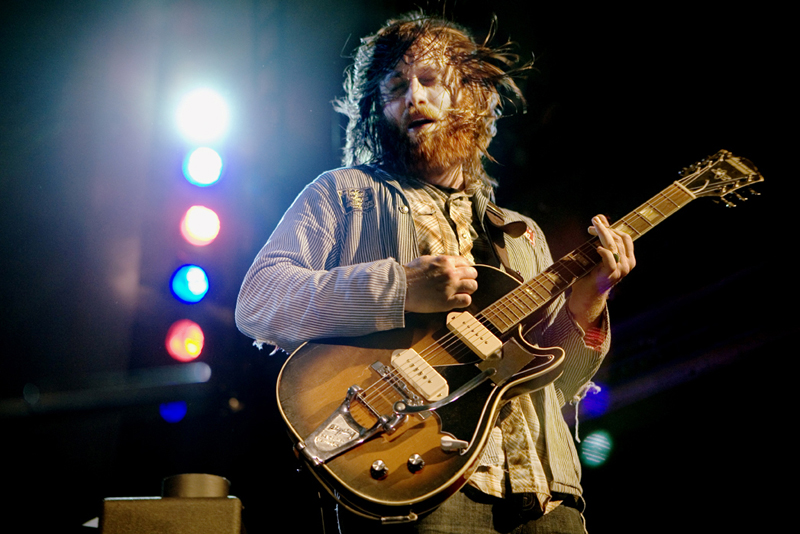
Photo by Andy Witchger, licensed under CC BY 2.0 (https://commons.wikimedia.org/wiki/File:Dan_Auerbach_-_Black_Keys_-_Arcs_-_Festival_Palomino_(29670742921).jpg)
Gear Timeline
“I’m not too picky about guitars. I love to collect them, mostly oddballs, but I’m not married to any brand or model. Whatever guitar has the best character for the song is the one I want to use, because if you’ve got a style, you’re going to sound like yourself no matter what guitar you play.” Dan Auerbach said this to Guitar World — and it is simultaneously the most liberating and most demanding guitar philosophy in this guide. Liberating because it frees him from brand allegiance and vintage market anxiety; demanding because “if you’ve got a style, you’re going to sound like yourself no matter what guitar you play” requires that you actually have a style. Auerbach does. The Teisco Del Ray through the fuzz, the Harmony hollow-body through the fuzz, the Supro through the fuzz, the National Reso-Glass through the fuzz — they all sound like Dan Auerbach, because Dan Auerbach’s touch, his specific vibrato, his specific phrasing and bending and rhythmic approach, are more identifying than any instrument. His guitar philosophy is actually a philosophy about playing. He also has “sick amounts of pedals.” But the fuzz pedal he has used since the first Black Keys record is an early-1970s Ibanez No. 59 Standard Fuzz: “I’ve been using it since the first record, and I cannot top it.” Shelves of pedals. One he cannot top. The oddballs, the fuzz, the Magnatone that blew its speaker during the El Camino sessions — you can hear it rattle at the beginning of “Lonely Boy.” He left the rattle in. Of course he did. That’s the character. That’s the sound.
The Journey
Daniel Quine Auerbach was born on May 14, 1979, in Akron, Ohio. He grew up in a musical household — his father was a musical antique dealer — and began playing guitar as a teenager, self-taught and influenced by the American roots music (blues, country, folk, R&B) that surrounded him through his father’s record and instrument trade. He formed The Black Keys with drummer Patrick Carney in Akron in 2001, recording their debut The Big Come Up (2002) in Carney’s basement on an eight-track recorder. Subsequent albums — Thickfreakness (2003), Rubber Factory (2004), Magic Potion (2006), Attack & Release (2008, produced by Danger Mouse), Brothers (2010, Grammy Award), El Camino (2011, Grammy), Turn Blue (2014) — built a trajectory from basement blues to international arena rock that is one of the more dramatic commercial ascents in 21st-century guitar music. He has also pursued a prolific solo career (Keep It Hid, 2009), produced albums for artists including Dr. John, Lana Del Rey, Ray LaMontagne, Mark Lanegan, and Ringo Starr, and opened the Easy Eye Sound studio in Nashville. He is forty-seven years old. He still cannot top the Ibanez No. 59.
Background: Akron Ohio, Patrick Carney Basement, Musical Antique Dealer Father, Blues Self-Taught, Big Come Up to El Camino Grammys, Nashville Easy Eye Sound
The specific cultural geography of Auerbach’s formation — Akron, Ohio, a rust-belt industrial city with a specific blue-collar working-class culture that produced DEVO, Chrissie Hynde of the Pretenders, and a specific American fatalism — is essential context for understanding the Black Keys’ approach to blues-rock. Akron is not the Mississippi Delta. It is not Chicago. It is not New York or Los Angeles. It is a Midwestern American city whose relationship to the blues tradition is that of a fan rather than an inheritor — a relationship that produces the specific kind of authentic enthusiasm that motivates someone to record a debut album in a basement on an eight-track without any commercial expectation.
His father’s musical antique dealing is the specific biographical fact that explains his guitar philosophy. Growing up around old instruments — Harmony hollowbodies, Teisco Del Rays, Supros, Silvertones, National Reso-Glass guitars — taught him that these “oddballs” (budget instruments, department-store brands, short-run models built for character rather than prestige) had specific sonic qualities that the prestigious instruments did not. The Harmony hollowbody’s gold-foil DeArmond pickups produce “a wide, microphonic, slightly unruly tone — perfect for the Black Keys’ stripped-back duo format.” The Supro’s “snarling, compressed fuzz with minimal effort.” The National Reso-Glass fiberglass body’s “punchy, slightly hollow tone that sits perfectly between bass and drums, especially in a two-piece band.” These are not the limitations of budget instruments; they are the advantages of instruments built for character rather than for versatility.
The El Camino guitar solo talk box story is the most specifically humorous gear-acquisition story in this guide: Dunlop sent him a box full of effects including a talk box; he tried to set it up with Pat Carney, couldn’t figure out how it worked; their engineer said “It goes like this, dumbasses,” plugged it in; they played with it laughing the whole time; he cut the solo in two takes; “then I put it in a box and haven’t seen it since.” Unbox, cut, rebox, lose. This is the anti-gear-obsessive’s relationship to equipment.
The Rig: Dan Auerbach’s Guitars, Amps, and Effects
Guitars
Before listing specific instruments, the foundational principle: “Whatever guitar has the best character for the song is the one I want to use, because if you’ve got a style, you’re going to sound like yourself no matter what guitar you play.” This is not false modesty but genuine operational philosophy. Auerbach’s guitar collection spans Teisco Del Ray, Harmony, Supro, Silvertone, National, and Guild instruments alongside more conventional Gibsons and Fenders — a collection built on the principle that character and suitability matter more than brand and value.
One of Auerbach’s most iconic and most historically consistent guitars is the Harmony hollowbody equipped with vintage DeArmond gold-foil pickups. The Guitar Marketplace documentation: “One of Dan’s most iconic guitars is a Harmony H78-style hollowbody, often associated with vintage DeArmond gold-foil pickups. These pickups deliver a wide, microphonic, slightly unruly tone — perfect for the Black Keys’ stripped-back duo format. They shine when pushed through fuzz and small amps, forming the backbone of many classic Black Keys recordings.” The Harmony Company of Chicago was a major manufacturer of affordable guitars in the 1950s and 1960s — instruments sold in department stores and through mail-order catalogs, not in music stores. The DeArmond gold-foil pickup (the gold-colored, high-output single-coil with the specific flat, slab construction) produces a specific wide-frequency, slightly microphonic character that suits aggressive garage blues playing.
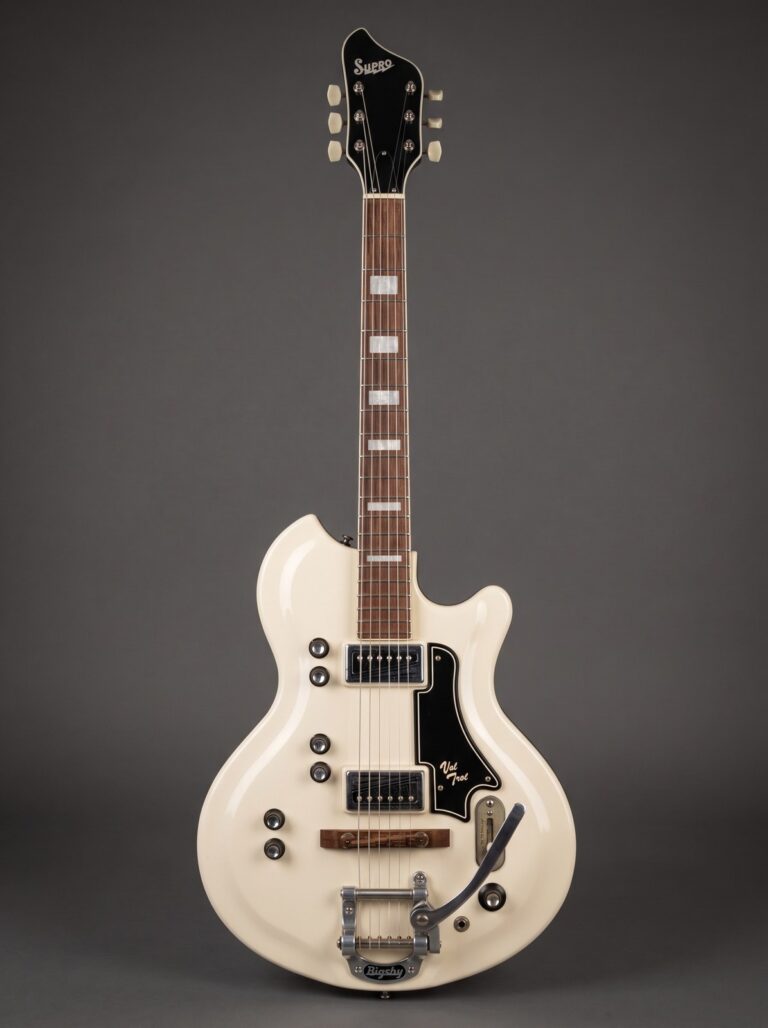
Guitar Marketplace: “Auerbach’s love of Supro guitars is legendary. Models like the Supro Martinique played a huge role in shaping tones on tracks like Howlin’ for You, delivering snarling, compressed fuzz with minimal effort.” Supro guitars — made by the Valco company of Chicago, distributed through mail-order catalogs in the 1950s and 1960s — are associated with the specific “snarling, compressed” character of their high-output lap steel-derived pickups through small amplifiers. Jimmy Page used a Supro amp as a primary recording amplifier; Dan Auerbach uses Supro guitars. The specific Supro character — the pickup’s output combined with the guitar’s relatively simple construction — provides exactly the fuzz-ready garage blues tone that the Black Keys’ sound required.
Guitar Marketplace: “Alongside Supro electrics, Dan has long used National Reso-Glass guitars. These fiberglass-bodied instruments produce a punchy, slightly hollow tone that sits perfectly between bass and drums, especially in a two-piece band.” The National Reso-Glass — National’s fiberglass-bodied electric guitar from the early 1960s — has a specific acoustic character from its fiberglass construction: the material’s different density and resonance from wood produces a “punchy, slightly hollow” quality that gives single-note lines and chords a specific midrange presence that suits the two-piece Black Keys format (where the guitar must fill sonic space normally occupied by bass in a conventional band).
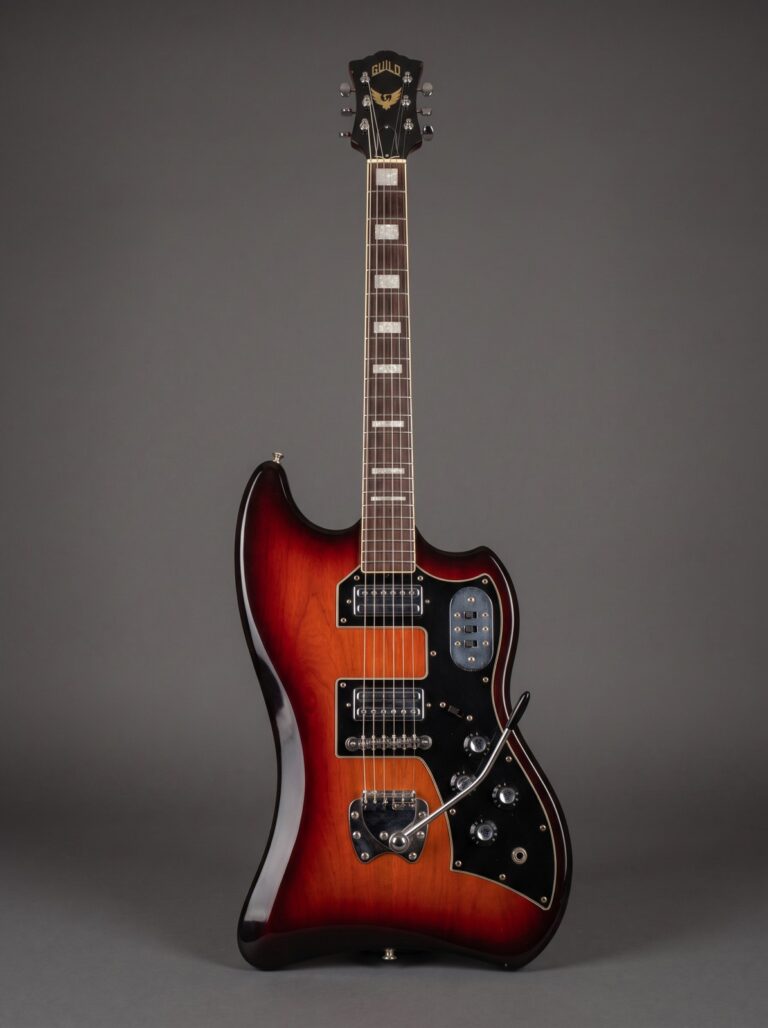
Guitar Marketplace: “The Guild S-200 Thunderbird is a standout. Its unique pickups and offset styling deliver a thicker, darker sound than a Fender, while retaining clarity under fuzz and overdrive.” The Guild S-200 Thunderbird — a 1960s offset-body Guild solidbody — provides a different tonal character from the Supro and Harmony instruments: darker, thicker, with the clarity that allows it to be distinctly heard through fuzz and overdrive without becoming undefined or muddy.
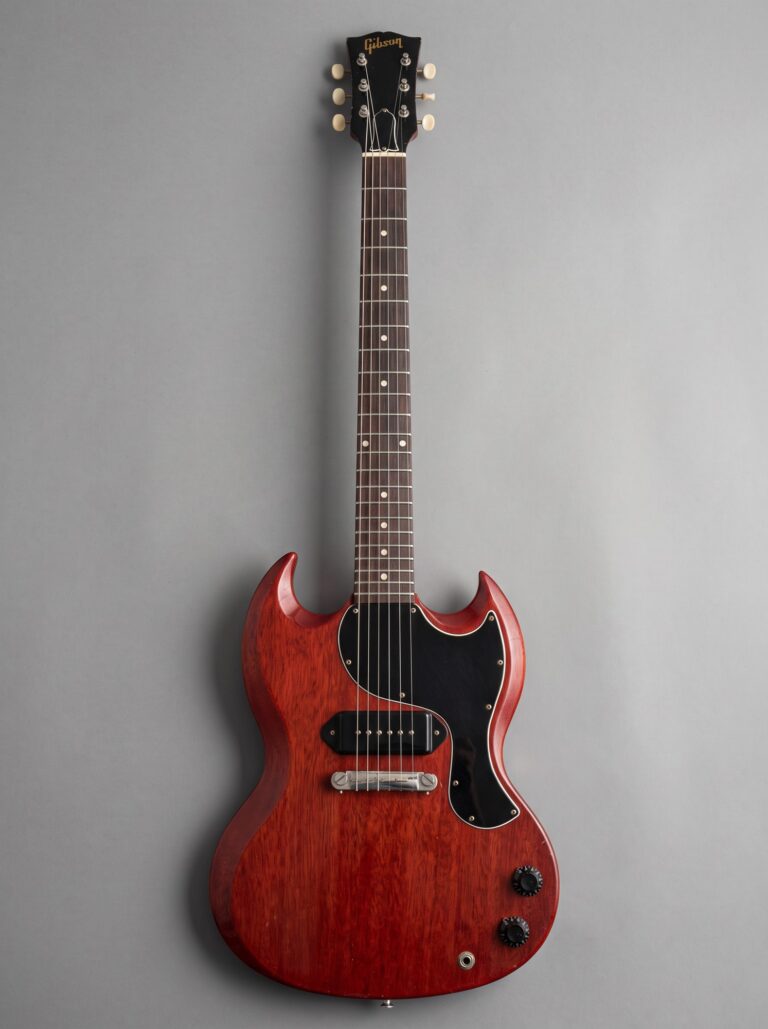
Guitar Marketplace: “Dan has frequently used Gibson SG Juniors, favouring their P-90 [pickups].” The Gibson SG Junior — the simplified, budget version of the SG with a single P-90 in the bridge position — provides the specific P-90 character (aggressive midrange, bright single-coil with the warmth of a large pickup area) in a lightweight, accessible format. P-90 into fuzz is one of the classic garage rock tonal combinations, and the SG Junior’s simplicity (one pickup, minimal controls) suits the Auerbach “character” philosophy.
The Equipboard documentation: “In the video you can see Dan Auerbach using a white Ibanez Custom SG with three humbucker pickups, while his band ‘The Black Keys’ perform ‘Set You Free.’ During 2023 and 2024, Auerbach uses white Custom SG mostly for ‘Gold on the Ceiling.'” The white Ibanez Custom SG with three humbuckers is a more recent and more visually distinctive stage guitar — its three-humbucker configuration providing more pickup selection options than a standard two-humbucker SG.
Guitar World: Auerbach is “known for manhandling a motley assortment of electric instruments with brand names like Teisco Del Ray, Harmony, Supro, Silvertone and National onstage with the Black Keys.” The complete list of his “oddballs” — Teisco Del Ray (Japanese budget guitars of the 1960s, often with foil or lipstick-tube pickups), Silvertone (Sears-branded instruments made by Harmony and Danelectro), Danelectro (cardboard-body guitars with the specific “lipstick tube” single-coil character) — documents a guitarist whose collection is an American music history museum of budget and forgotten instruments.
Amps
Guitar World’s El Camino interview captures the most specifically memorable amp story in Auerbach’s documented career: “For El Camino, I used a Magnatone and an Ampeg V-92 with a JBL D-130 speaker. I blew the speaker, and in three or four songs you can hear it rattle, like at the beginning of ‘Lonely Boy.'” The Magnatone — a vintage American amplifier company known for their specific tremolo circuit (a true pitch-modulating vibrato rather than the volume-modulating “vibrato” of Fender) — is the primary studio amp for El Camino. The blown JBL D-130 speaker creates the specific rattling character heard at the beginning of “Lonely Boy” — the album’s most commercially successful track, and the rattle is part of the recorded tone. He did not replace the speaker before recording. The character was the point.
The Victoria Amp documentation: “Dan’s been using a Victoria Double Deluxe for his clean tones on his most recent tour.” The Victoria Dual Deluxe is a boutique American amplifier builder’s reproduction of the vintage Fender Deluxe circuit — warm, clean, natural tube saturation with the specific American character of 6V6 power tubes. Victoria’s amplifiers are known for their exceptional build quality and fidelity to vintage Fender circuit designs.
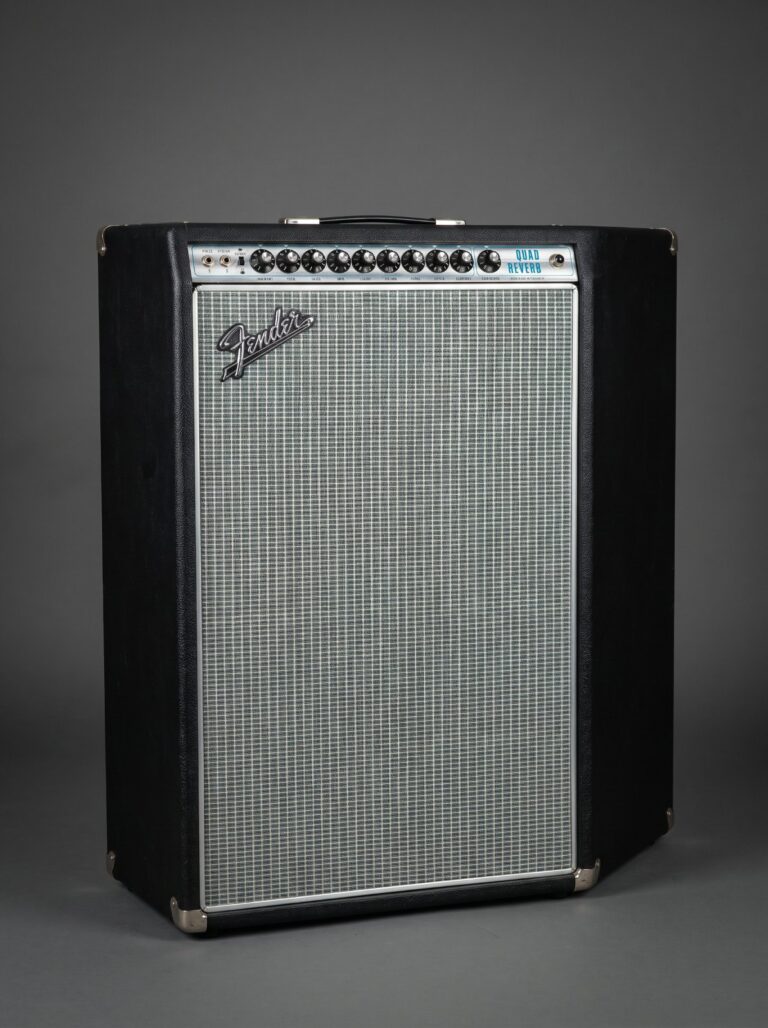
The Premier Guitar 2014 Rig Rundown documents: The only amp from the previous Rig Rundown is a Fender Quad Reverb that had speaker surgery since then and now has four 12″ Tubby Tone Alnico 25W Hempcone speakers because the Celestion Greenbacks and Vintage 30s locked up and stopped working. The Fender Quad Reverb (four 12-inch speakers, 100 watts) with the custom Tubby Tone hemp-cone speakers — an unusual speaker modification chosen specifically for their tonal character — provides the large-stage clean foundation for his live guitar signal.
Premier Guitar 2014: He originally had a Marshall JTM45 head, but that was swapped out for a 50-watt plexi in the need for added stage volume. The Marshall 50-watt Plexi (the handwired, Plexiglas-panel Marshall from the late 1960s) provides the British tube saturation dimension alongside the Fender Quad Reverb’s American clean character.
The Premier Guitar 2014 Rig Rundown: Replacing the Victoria Dual Deluxe is a pair of vintage 6V6-powered Danelectro combos. This one is a 1958 Commando accordion amp that is loaded with eight 8″ speakers — four original ceramic speakers and four replacement alnico speakers from Weber. A 1958 accordion amplifier repurposed for electric guitar — loaded with eight 8-inch speakers from two different speaker types — is one of the more specifically unusual amplifier choices in live rock guitar history. The accordion amp’s specific voicing (designed for the frequency range of an accordion, not a guitar) produces a different character than a conventional guitar amp.
Premier Guitar 2014: There’s a Fulltone Custom Shop Tape Echo (with a Strymon El Capistan standing by as a backup) going through it for a continuous tight slapback effect. The Fulltone Custom Shop Tape Echo — a high-quality tape echo unit — provides the specific warm, slightly degrading tape echo character for the Marshall-driven portion of his four-amp live setup.
Effects
Dan Auerbach’s most consistently documented and most personally celebrated effect is the early-1970s Ibanez No. 59 Standard Fuzz. The Equipboard quote from the 2010 Premier Guitar interview: “I’ve got shelves of pedals — sick amounts of pedals. But I swear, I use the same pedals I’ve always played. I bought an early-1970s Ibanez Standard Fuzz pedal — the octave fuzz with the two sliders. I’ve been using it since the first record, and I cannot top it.” The Ibanez No. 59 is a vintage Japanese octave fuzz pedal — a specific circuit that combines standard fuzz clipping with an upper-octave harmonic component (producing notes one octave above the fundamental note simultaneously with the fundamental, creating the specific “octavia”-like quality). “I cannot top it” is the complete product review. Thirty-plus years of pedal development, shelves full of alternatives, and the 1970s Japanese octave fuzz remains the one he uses.
Guitar World: “The Shin-ei Companion Fuzz and the Marshall Supa Fuzz are my favorites.” Both are vintage Japanese/British fuzz pedals — the Shin-ei Companion Fuzz (a Japanese octave/fuzz pedal with a specific compressed, slightly synthetic character) and the Marshall Supa Fuzz (Marshall’s own branded fuzz pedal from the late 1960s, related to the Supa Fuzz circuit) representing different fuzz characters that Auerbach deploys for different tonal applications.
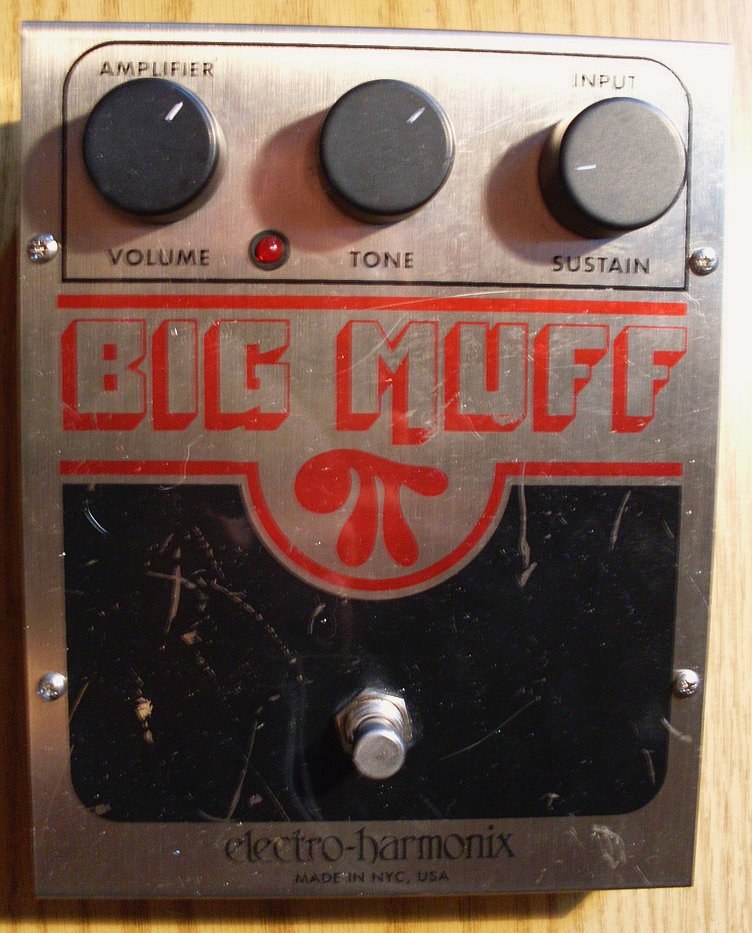
Guitar Lobby: “Dan mostly used this pedal for the earlier years of Black Keys.” The EHX Big Muff Pi provided the smooth, high-sustain fuzz character of the early albums before the Ibanez No. 59 became the definitive primary fuzz.
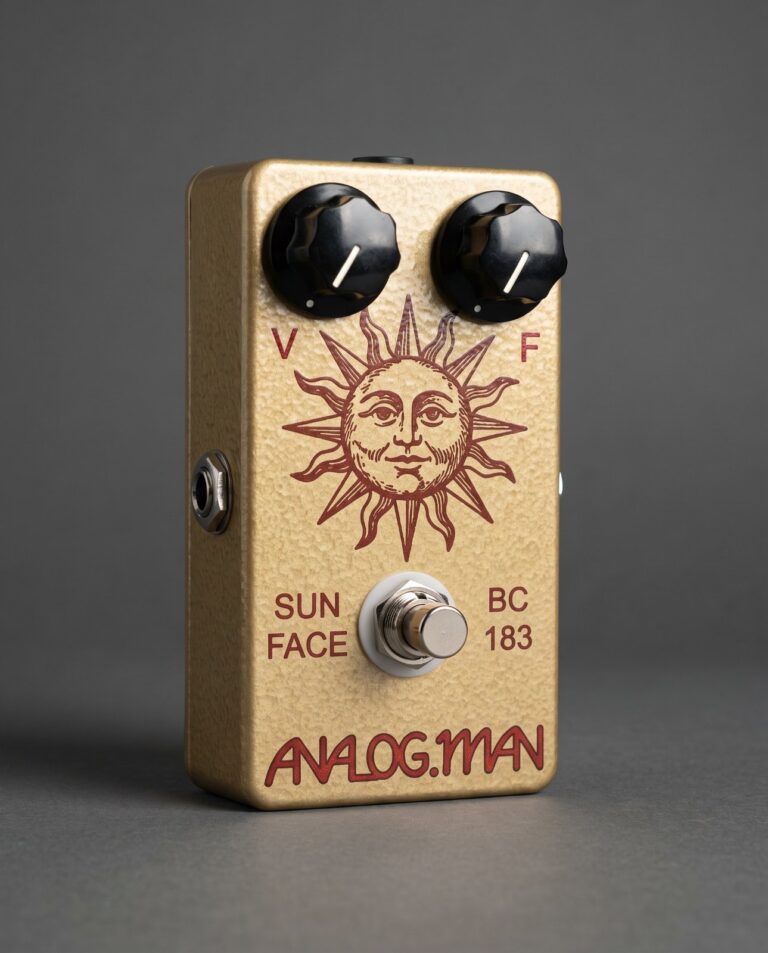
Equipboard: “When touring Attack & Release in 2008 and 2009, Dan Auerbach used a Analogman Sun Face Fuzz Pedal.” The Analogman Sun Face is a boutique recreation of the original Dallas Arbiter Fuzz Face circuit — using vintage germanium or silicon transistors — known for its exceptional tonal quality and dynamic responsiveness to picking attack.
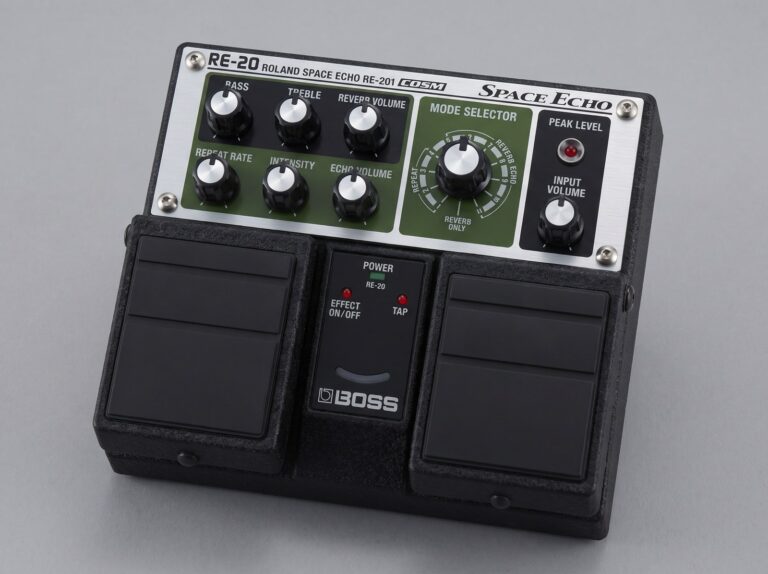
Premier Guitar Rig Rundown: “A Boss RE-20 [Space Echo] — the more I use it, the more I’ve grown to love it — the perfect amount of bounce for echo effects. It’s forever inspiring and reliable.” The Boss RE-20 is Roland’s digital recreation of the Roland RE-201 Space Echo (a tape echo unit from the 1970s) in pedal format — providing the warm, bouncing echo character of tape delay without actual tape maintenance. Combined with the Fulltone Custom Shop Tape Echo in his live four-amp setup, delay and echo are consistent elements of his live rig.
Guitar Lobby documentation of Dan Johnson (guitar tech): “I used to use it as a splitter when we had only two amps. It has such a warm boost that I have in there now just for the boost so that when we use that, which is something we kick on very often, it’s not like a lot of other boost pedals that add a lot of top-end to them.” The Radial Tonebone’s warm boost character — adding volume without adding excessive brightness — is consistent with Auerbach’s preference for natural, character-preserving amplification of his already-characteristic guitar tones.
The Premier Guitar Rig Rundown captures the specific tuner comment: “Next, the Boss TU-2 — god knows how old it was when it got to me (I rarely buy new), but I’ve had it for at least a good 15 years.” The Boss TU-2 is the standard professional chromatic tuner pedal — and his characterization (“I rarely buy new”) is entirely consistent with a guitarist who collects budget vintage guitars and uses a second-hand tuner of unknown age for fifteen years.

Playing Style & Tone Philosophy
Dan Auerbach’s playing style is the most character-focused in this section of the guide — the approach of a musician whose technical vocabulary (blues-derived bending, vibrato, rhythmic drive, slide technique) is entirely in service of specific musical character rather than technical display. His Guitar World philosophy — “if you’ve got a style, you’re going to sound like yourself no matter what guitar you play” — describes both his playing approach and his guitar collection strategy: the playing is the style, not the instrument.

His tone philosophy is the character philosophy: find the guitar with the right character for the song, run it through the fuzz (Ibanez No. 59, always, since the first record), adjust the amp (whatever the right amp is for this specific application — Magnatone, Victoria, Danelectro accordion amp, Marshall Plexi), and play. The result sounds like Dan Auerbach. He has proven this with Teisco Del Rays and Harmony hollowbodies and National Reso-Glass guitars and Gibson SG Juniors and every other oddball in his collection. The character is his. The guitar and amp and fuzz are the medium.
The blown Magnatone speaker on El Camino — and his decision to leave the rattle in the recordings — is the most specific single decision that defines his approach to gear as character rather than gear as precision: the imperfect thing, honestly recorded, is more interesting than the perfect thing perfectly reproduced. “Lonely Boy” has a rattling speaker at the beginning. That’s the sound. That’s the character. That’s the record.
How to Sound Like Dan Auerbach
Guitar: Any vintage oddball with gold-foil or single-coil pickups — Harmony hollowbody (DeArmond gold-foil), Supro, Silvertone, Danelectro (lipstick tube single-coil), National Reso-Glass. The Guitar World principle: “whatever guitar has the best character for the song.” If you have a style, you’ll sound like yourself regardless. The P-90 (SG Junior) for the Gibson approach. Don’t overthink it.
Amp: Small vintage American combo — Magnatone, Victoria Dual Deluxe, small Fender, Danelectro combo. The key: enough volume for the tubes to color the signal, not so much that clarity is lost. The vintage character of the amp is part of the tone — imperfections and all. Don’t replace the blown speaker immediately.
Amp Settings (Small Vintage American Combo — Black Keys Garage Blues):
| Control | Setting (0–10) | Notes |
|---|---|---|
| Volume | 6–8 | High enough for natural tube saturation — the amp should breathe |
| Bass | 5–6 | Natural — the gold-foil or single-coil needs bottom support |
| Mid | 6 | Present — the fuzz’s midrange needs amp mid support |
| Treble | 6 | Bright — vintage single-coil character requires treble presence |
| Reverb | 3–4 | Moderate — natural spring reverb for the garage recording character |
Fuzz: Early-1970s Ibanez No. 59 Standard Fuzz (the octave fuzz “I cannot top”). Shin-ei Companion Fuzz or Marshall Supa Fuzz for alternatives. Run it before the amp, medium gain, and let the vintage guitar’s pickup interact with the fuzz circuit. The octave harmonic of the No. 59 adds the specific “breadth” to single-note lines — especially in the upper register — that distinguishes Auerbach’s lead lines from conventional fuzz-lead playing.
Influence & Legacy
Dan Auerbach’s influence on 21st-century rock guitar is the influence of a guitarist who demonstrated that the blues tradition — specifically the specific sonic qualities of budget vintage instruments, small vintage amplifiers, and simple fuzz pedals — could be made commercially vital in the arena rock context of the 2000s and 2010s. The Black Keys’ trajectory from Akron basement to international stadium shows what the “character over prestige” guitar philosophy produces when applied consistently and with genuine musical quality.
His connection to Johnny Winter as a fellow American blues-rock guitarist whose approach to guitar tone (find the right instrument, turn it up, play with conviction) parallels Auerbach’s “whatever has the best character” philosophy reflects the shared American blues-roots tradition. His connection to Leslie West as a fellow advocate of the “less is more” philosophy — West’s Les Paul Junior through an overdriven Sunn PA, Auerbach’s Harmony hollowbody through a vintage combo — reflects the shared belief that simple, character-driven rigs produce better music than technically complex alternatives. His connection to Harvey Mandel as a fellow American roots-blues guitarist who worked outside the commercial mainstream until his music found its audience reflects the shared experience of genuine musical vision eventually connecting with the right audience.
Frequently Asked Questions: Dan Auerbach Black Keys Guitars & Gear
What guitars does Dan Auerbach use?
Auerbach uses a wide variety of “oddball” vintage guitars rather than a single primary instrument: “I love to collect them, mostly oddballs, but I’m not married to any brand or model. Whatever guitar has the best character for the song is the one I want to use.” Key documented instruments include Harmony H78-style hollowbody (vintage DeArmond gold-foil pickups), Supro Martinique, National Reso-Glass (fiberglass body), Guild S-200 Thunderbird, Gibson SG Junior (P-90), white Ibanez Custom SG (three humbuckers, live 2023-2024 for “Gold on the Ceiling”), Teisco Del Ray, Silvertone, and Danelectro guitars.
What is Dan Auerbach’s primary fuzz pedal?
“I’ve got shelves of pedals — sick amounts of pedals. But I swear, I use the same pedals I’ve always played. I bought an early-1970s Ibanez Standard Fuzz pedal — the octave fuzz with the two sliders. I’ve been using it since the first record, and I cannot top it.” The early-1970s Ibanez No. 59 Standard Fuzz — an octave fuzz with two slider controls — is his primary fuzz since the Black Keys’ debut. Additional favorites: Shin-ei Companion Fuzz and Marshall Supa Fuzz.
What amplifiers does Dan Auerbach use?
Studio: Magnatone (El Camino — with the blown JBL D-130 speaker heard rattling on “Lonely Boy”), Ampeg V-92, various vintage combos. Live: Four-amp setup documented in 2014 Rig Rundown — Fender Quad Reverb (with Tubby Tone hemp-cone speakers), Marshall 50-watt Plexi (replacing original JTM45), Victoria Dual Deluxe (or 1958 Danelectro accordion amp with eight 8-inch speakers). He also uses boutique American builders including Victoria Amplifiers.
What is the story of the “Lonely Boy” blown speaker?
“For El Camino, I used a Magnatone and an Ampeg V-92 with a JBL D-130 speaker. I blew the speaker, and in three or four songs you can hear it rattle, like at the beginning of ‘Lonely Boy.'” The speaker failed during the El Camino sessions. Rather than replacing it before recording the remaining tracks, Auerbach continued recording with the broken speaker — its rattling becoming part of the recorded character of the album’s most commercially successful track. The imperfection is the character. The character is the sound.
What is Dan Auerbach’s tone philosophy?
“If you’ve got a style, you’re going to sound like yourself no matter what guitar you play.” His approach: find the instrument with the right character for the specific song, run it through the fuzz (Ibanez No. 59, always), use the right vintage amplifier for the application, and play. The style comes from the playing, not the equipment. The collection of “oddballs” (Harmony, Supro, Silvertone, Teisco, National) is built around the understanding that these budget vintage instruments have specific tonal characters that suit the Black Keys’ stripped-back garage blues sound better than prestigious alternatives.
What fuzz pedals does Dan Auerbach use on specific albums?
Early albums: Electro-Harmonix Big Muff Pi. Attack & Release (2008-2009 tour): Analogman Sun Face Fuzz. Brothers, El Camino, Turn Blue: Ibanez No. 59 Standard Fuzz (octave fuzz) replacing the Big Muff as primary. The Shin-ei Companion Fuzz and Marshall Supa Fuzz are documented favorites alongside the Ibanez. His 2010 Premier Guitar interview: “I’ve got shelves of pedals — sick amounts of pedals. But I swear, I use the same pedals I’ve always played.”
How did Dan Auerbach’s father influence his guitar approach?
Auerbach grew up with a father who was a musical antique dealer — trading in vintage instruments and records. Growing up around Harmony hollowbodies, Teisco Del Rays, Supros, Silvertones, and other budget vintage instruments taught him that these “oddballs” had specific sonic characters. The Guitar Marketplace: “Rather than relying on predictable ‘holy grail’ models, Dan has spent years assembling an arsenal of quirky, soulful guitars that help define the band’s gritty, fuzz-laden sound.” The father’s antique dealing career produced a son who values character over prestige in every instrument choice.
Image credits
- Top image: by Andy Witchger, Wikimedia Commons, CC BY 2.0.
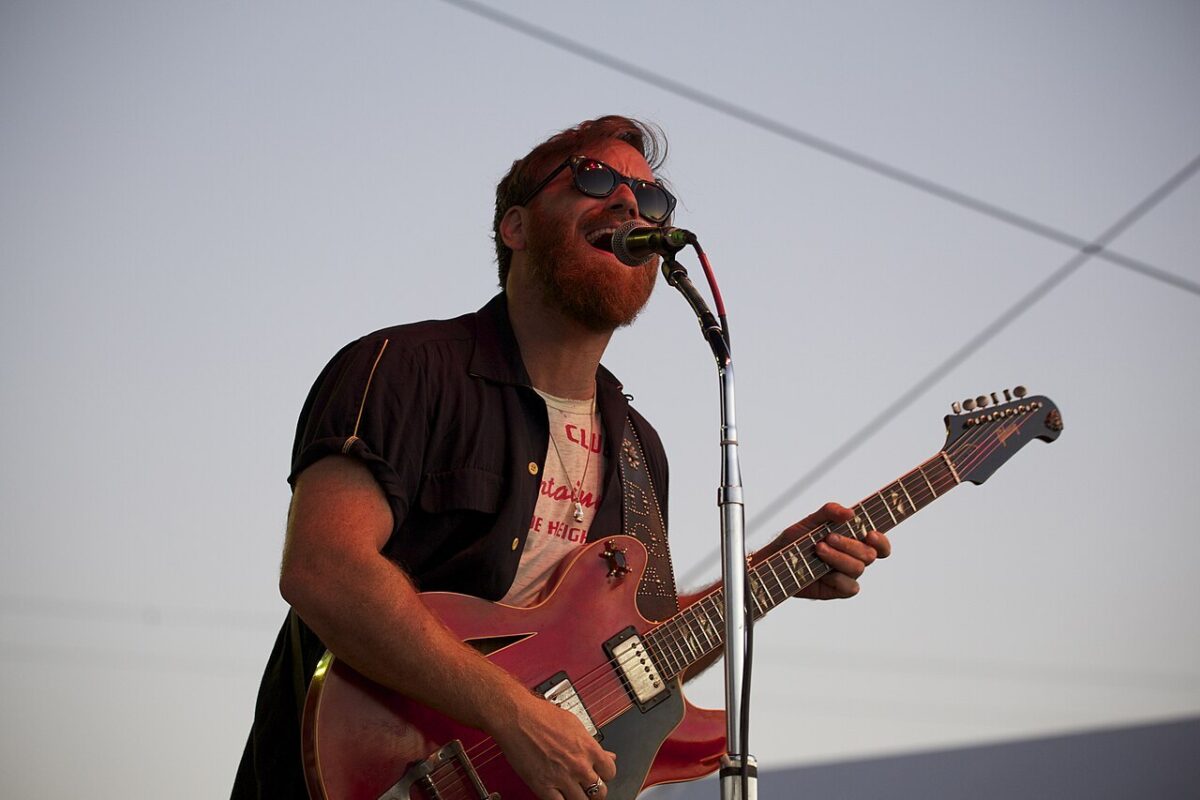
- Dan Auerbach: photo by Simon Fernandez, via Wikimedia Commons, CC BY 2.0.
- Dan Auerbach: photo by Sxanthony, via Wikimedia Commons, CC BY-SA 3.0.
- Electro-Harmonix Big Muff Pi: Roadside Guitars, Flickr, CC BY-SA 2.0.
- Dan Auerbach live: Andy Witchger, Wikimedia Commons, CC BY 2.0.
- Boss TU-2 Chromatic Tuner: GuitarGangsters AI-generated reference illustration, not a photograph.
- Boss RE-20 Space Echo: GuitarGangsters AI-generated reference illustration, not a photograph.
- Gibson SG Junior: GuitarGangsters AI-generated reference illustration, not a photograph.
- Fender Quad Reverb: GuitarGangsters AI-generated reference illustration, not a photograph.
- Analogman Sun Face: GuitarGangsters AI-generated reference illustration, not a photograph.
- Supro Martinique: GuitarGangsters AI-generated reference illustration, not a photograph.
- Guild S-200 Thunderbird: GuitarGangsters AI-generated reference illustration, not a photograph.