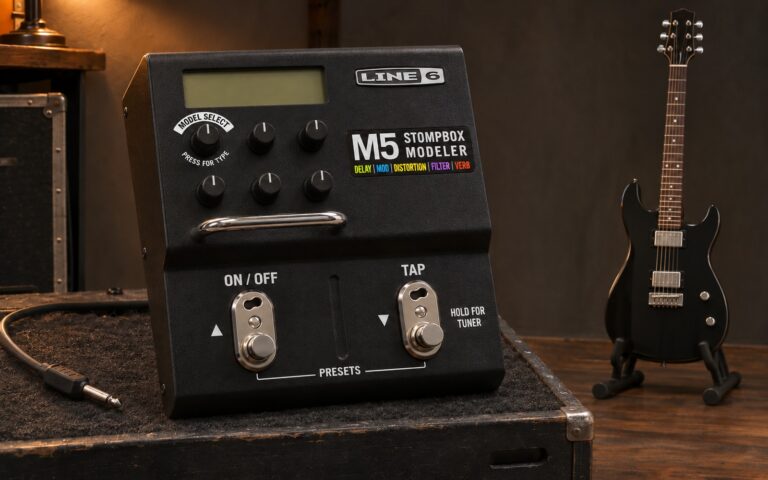
The Last of the HD Guard: Why the Line 6 POD HD500X Still Makes Sense in a Helix World
The Line 6 POD HD500X was the peak of the HD modeling era — 30 amp models, XLR outputs, MIDI, Variax, L6 Link — at a fraction of current Helix prices.
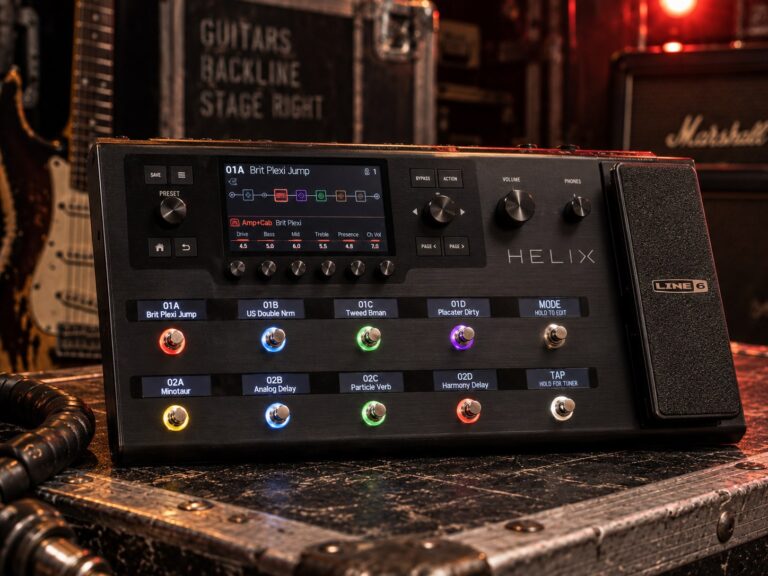
It arrived in July 2013 as the most powerful floor processor Line 6 had ever built. It left the production line in December 2021, quietly discontinued after an eight-year run that outlasted the initial Helix hype cycle and somehow survived into the neural-network amp modeling era. The Line 6 POD HD500X was never the flashiest unit in the room — it had no colour touchscreen, no 32-block signal chain, no app-based preset ecosystem. What it had was a rock-solid bent-metal chassis, 30 seriously usable HD amp models, XLR balanced outputs, MIDI in and out, a Variax jack, L6 Link, S/PDIF, a stereo FX loop, a 48-second looper, and twelve LED-ringed footswitches that you could see from the back of a dark stage. In 2013 that combination was genuinely exceptional. In 2026, a clean used HD500X trades for £150–200 and still gives a working guitarist everything they actually need.
This is not a review. The HD500X is discontinued, so there is nothing to recommend or warn you away from at retail. This is a gear guide — the kind that tells you what the unit actually is, where it sits in Line 6’s architecture history, who documented themselves playing one, and what a used buyer should pay attention to before handing over money. If you are debating between a £180 HD500X and a £600 Helix LT, this article is aimed squarely at you.
From Bean to Floor: The POD HD500X in Context
Line 6 was founded in 1996 in Agoura Hills, California, by Marcus Ryle, Michel Doidic, and Peter Gotcher. The 1998 POD — a kidney-bean-shaped desktop unit that sounded implausible for its price — was the product that genuinely changed the recording landscape for home studios and touring musicians alike. The original POD used what Line 6 called “modelling” at a time when that word was new, and while the results sound noticeably digital by modern ears, the concept was correct and the market response was immediate.
The POD HD family, launched in 2011, represented Line 6’s first serious attempt at a fundamentally different architecture. Where the original POD used mathematical approximations of circuit behaviour, the HD engine performs component-level circuit simulation — modelling the individual transistors, tubes, transformers, and tone stacks of each amplifier rather than describing the amplifier’s output curve from outside. The result was a generation shift in feel and touch response that the original POD family never achieved. HD stood for “High Definition,” and the marketing was not entirely wrong.
The original HD family launched with the HD300, HD400, and HD500, plus rack-format HD Pro and HD Pro X variants. The HD500 was the flagship floor unit: twelve footswitches, a full-sized expression pedal, dual signal paths, comprehensive I/O, and the full 30-amp, 100-plus-effects library. Two years later, in July 2013, Line 6 issued a press release from Calabasas, California, announcing the HD500X as the HD500’s successor. The X designation indicated a more powerful CPU — more DSP headroom, meaning you could stack more effects simultaneously, particularly in dual-path configurations where the original HD500 would sometimes run out of processing budget mid-preset. The footswitches were upgraded to backlit professional-grade units with bright LED rings. The display gained contrast. Everything else — the chassis, the I/O, the amp library, the fundamental HD engine — remained identical to the HD500.
Line 6 discontinued the HD500X on December 1, 2021. By that point the Helix had been on the market for six years, and the newer HX engine made the HD engine’s limitations audible in direct A/B comparisons. But the HD500X had a long, productive life, and it sold in enormous numbers to working musicians who needed a professional-grade live rig at a price point the Helix could never match.
Specifications
| Feature | Specification |
|---|---|
| Announced | July 10, 2013 (Calabasas, CA) |
| Discontinued | December 1, 2021 |
| Modeling engine | Line 6 HD (component-level circuit simulation, single DSP) |
| HD amp models | 30 (see full list below) |
| Effects models | 100+ (M-class: dynamics, distortion, pitch/mod, filter, EQ, delay, wah/volume, reverb) |
| Simultaneous effects | Up to 8 (dynamic DSP allocation) |
| Presets | 512 user locations |
| Signal paths | Dual (two independent HD amp + effects chains) |
| Expression pedal control | Up to 52 parameters in real time |
| Footswitches | 12 backlit with LED rings |
| Expression pedal | Die-cast, built-in |
| Looper | 48 seconds (dedicated footswitches: Undo, Play Once, Pre/Post, Record/Overdub, Play/Stop, Half Speed, Reverse) |
| Guitar input | 1× ¼” (6.3 mm) |
| Auxiliary input | 1× ¼” (6.3 mm) + 1× ⅛” (3.5 mm) CD/MP3 in |
| Microphone input | 1× XLR |
| Main outputs | 1× ¼” L/mono (unbalanced) + 1× ¼” R (unbalanced) + 1× XLR L (balanced) + 1× XLR R (balanced) |
| Headphone output | 1× ¼” (6.3 mm) |
| FX loop | 1× ¼” TRS stereo send + 1× ¼” return L + 1× ¼” return R |
| Digital output | 1× S/PDIF |
| Variax connection | 1× Cat 5 (VDI) |
| L6 Link | 1× XLR (for DT-series amps and StageSource speakers) |
| MIDI | 5-pin DIN in + 5-pin DIN out |
| USB | 1× (multi-channel audio interface + POD HD Edit editor) |
| Chassis | Bent sheet-metal |
| Package weight | ~16 lb / 7.3 kg (unit approximately 10–11 lb) |
| Software | POD HD Edit (free, Mac/Windows) |
| Original street price | ~$399–$499 USD |
| Used market (2026) | ~$150–275 clean condition |
The 30 HD Amp Models
The amp library covers a lot of stylistic ground. California clean and crunch comes from the Fender Bassman (both Normal and Bright channels), Fender Blackface Deluxe Reverb (Normal and Vibrato channels), and Fender Twin Reverb (Normal and Vibrato channels). British flavours include the Hiwatt Custom 100 (DR103), Marshall JCM-800 (2204), Marshall JTM-45 MkII (Bright and Normal), and the Marshall 1959 Super Lead “Plexi” (Bright and Normal). The Park 75 (both channels) gives you the Park-vs-Marshall tonal difference to explore. High gain is served by the Bogner Uberschall, Mesa/Boogie Dual Rectifier, ENGL Fireball 100, and Soldano SLO100 in three channels (Clean, Crunch, Overdrive). Boutique and unusual territory covers the Dr. Z Route 66, Divided by 13 JRT 9/15, and the Vox AC-15 and AC-30 Top Boost. The vintage and curio wing includes the 1930s Gibson EH-185, the 1960s Supro S6616, and the Park 75. Line 6 rounds things out with three original voices — Line 6 Doom, Line 6 Epic, and Line 6 Elektrik. The Ampeg B-15NF Portaflex is the sole bass model in the library. Crucially, every amp model is paired with selectable cabinet simulations and microphone options — you can choose the cab and the virtual mic position independently, which matters significantly at anything approaching pro recording use.
The HD Engine vs. the HX Engine: What the Upgrade Actually Means
The single most common question about the HD500X in 2026 is whether its modeling engine is meaningfully inferior to the HX engine in the Helix family. The honest answer is yes — and understanding the gap is useful before you decide whether it matters for your application.
The HD engine performs component-level circuit simulation but runs on a single DSP chip. The HX engine, introduced with the Helix in 2015, uses dual SHARC processors and simulates the circuit at a more granular level, capturing the interaction between stages more accurately. The practical consequences are most audible in touch response — the way the amp model reacts to pick attack and playing dynamics — and in the behaviour of the preamp under saturation. HD models sound accurate and usable; HX models sound more alive. The gap is real but it is not enormous, and it matters a great deal less in a full live mix than it does when you are wearing headphones doing a direct A/B comparison.
What the HD500X has that the current POD Go does not is worth naming explicitly: XLR balanced main outputs, MIDI in and out (5-pin DIN), Variax/VDI connection, L6 Link (for DT amps and StageSource speakers), and S/PDIF digital output. If you are building a rig around DT-series amplifiers — Line 6’s tube power amp that integrates with the POD’s modeling — the HD500X is still the correct unit because its L6 Link can reprogram the DT’s topology (class A vs. class A/B, pentode vs. triode, negative feedback) per preset. The POD Go has no L6 Link at all. In this specific configuration, the older unit is the better choice.
Famous Players
Five artists are listed here: Bill Kelliher, Vernon Reid, Nita Strauss, John Browne, and Steve Stevens. These are all documented Helix-era users whose Line 6 connections post-date the HD500X’s peak relevance, or documented users of other Line 6 products entirely.
Bill Kelliher of Mastodon is a confirmed Helix Floor user, in his own words from a Guitar.com/Thomann interview in October 2023: “I’ve got a Victory Dutchess pedal and a Friedman BE-OD pedal and I’m just plugging those in direct to a Ffryette power amp, and using those as the actual amps. They’re controlled in settings in the [Line 6] Helix.” That is the Helix Floor, not the HD500X.
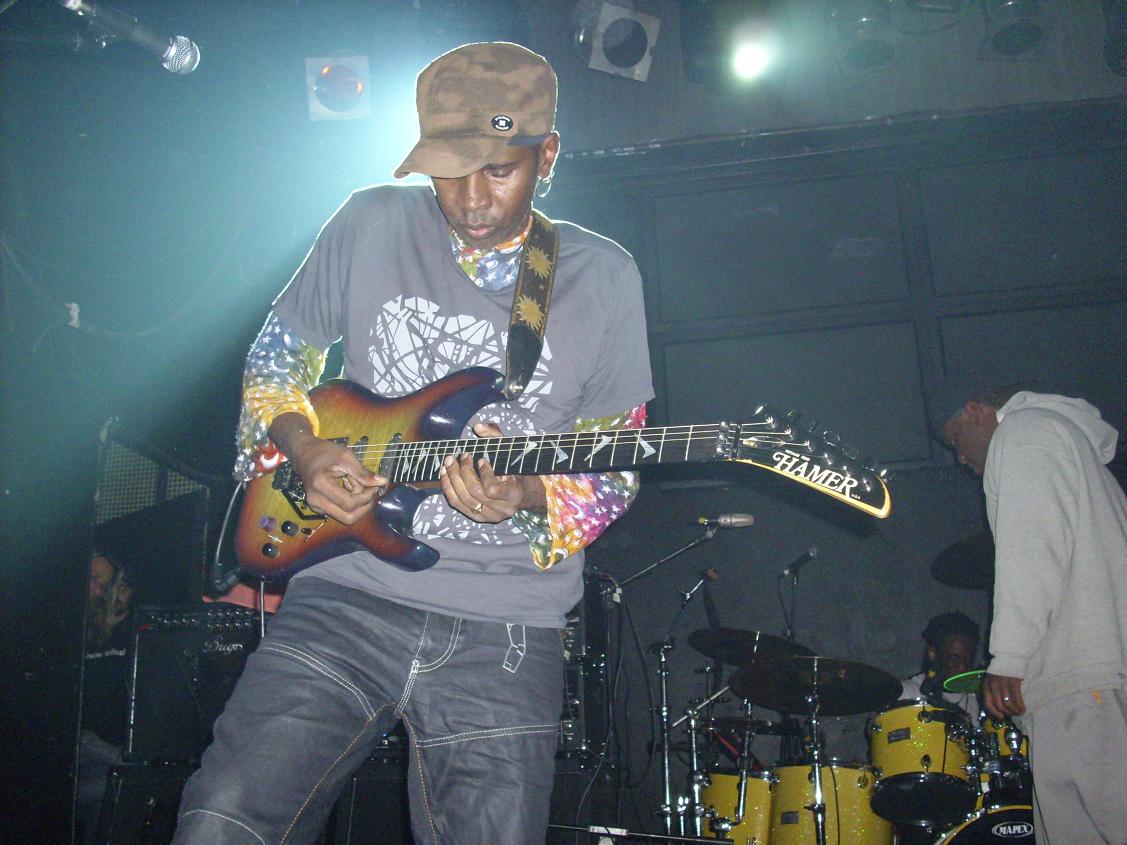
Vernon Reid of Living Colour uses the Helix plus an HX Stomp XL, confirmed via Line 6’s own official Facebook post announcing his involvement in the 3.50 firmware update campaign. The HD500X is a different product from a different generation.
Nita Strauss’s primary documented modeler is the Boss GT-1000, verified by Premier Guitar’s Rig Rundown filmed at Nashville’s Basement East during her Controlled Chaos solo tour. Her Line 6 connection runs through the Helix Stadium — a newer, separate product — not the HD500X.
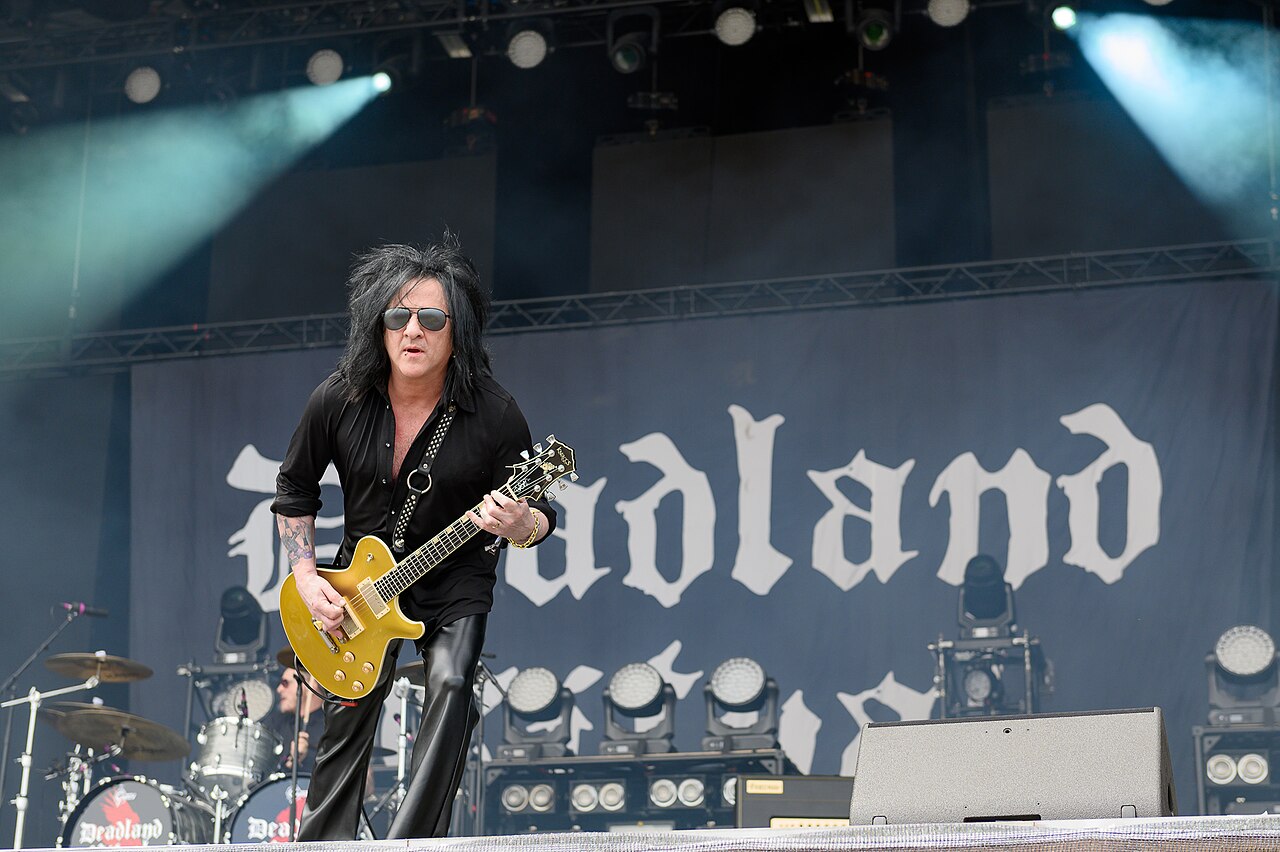
Steve Stevens‘s documented Line 6 unit is the HX Effects, the effects-only (no amp modeling) processor in the Helix family, used in his April 2023 touring rig alongside Friedman SS100DLx amplifiers. The HX Effects and the HD500X are different products at different price points.
John Browne of Monuments has released commercial Helix preset packs with Olly Steele and appeared on the Line 6 Helix Hour podcast — a Helix-specific connection, not HD500X.
The one solid Line 6 artist confirmation that does apply specifically to the HD500X era is Cory Churko, lead guitarist for Kelly Clarkson since 2007 (previously Shania Twain). Line 6 produced an official promotional campaign titled “Cory Churko Goes FRX on Kelly Clarkson Tour” in which Churko documented using the POD HD500X paired with a StageSource L2t powered speaker — Line 6’s “Full Range Experience” or FRX system, built around the HD500X as the tone engine. This is the kind of primary source — an official Line 6 artist feature with the guitarist describing his own setup — that earns a genuine mention. The FRX configuration (POD HD500X direct into a full-range speaker, bypassing a traditional guitar amp entirely) was a significant live-touring proof of concept at the time, and Churko’s Kelly Clarkson rig was probably the most high-profile real-world validation the HD500X ever received in a major touring context.
Additionally, the HD500X showed up in a significant number of working-band rigs because of its price-to-feature ratio. Equipboard lists a substantial user base of gigging musicians rather than the headline-name endorser roster you find on Helix. That is an honest reflection of who the unit was designed to serve.
Five Tone Recipes
1. Classic Crunch (Marshall Plexi → Pushed Clean)
Load the Marshall 1959 Super Lead “Plexi” on the Bright channel. Set the Gain at 55%, Bass at 45%, Mid at 60%, Treble at 50%, Presence at 55%. Add a Tube Drive in front with the Drive at 20% — just enough to warm the front end without actually distorting. Cabinet: Marshall 4×12 with the 121 Ribbon mic at a slight off-axis position. This gives you the Zeppelin-era crunch sound: saturated but not modern-high-gain, with pick attack that translates clearly in a live mix. Works cleanly at Gain below 40% for a Stones-style rhythm tone, then push the Tube Drive harder for lead.
2. Modern High Gain (Bogner Uberschall)
The Bogner Uberschall model is one of the HD500X’s genuinely strong suits. Gain at 70%, Bass at 40% (pull back to clean up the low end — the real Uberschall can be boomy), Mid at 45%, Treble at 55%, Presence at 60%. Add a Hard Gate before the amp (Threshold at -65 dB, Decay at 50 ms) and a Studio EQ after the cab with a gentle 3 dB cut at 400 Hz to remove any boxy mid. This gets you into modern metal territory — tight, articulate, palm-mute-friendly — without the low-end mud that plagues this model at default settings.
3. American Clean (Fender Twin Reverb)
Fender Twin Reverb, Vibrato channel, Bright switch on. Gain at 30%, Bass at 50%, Mid at 40%, Treble at 60%, Presence at 55%. Add an Analog Chorus (Speed 35%, Depth 45%, Mix 30%) and the ’63 Spring reverb (Decay 30%, Pre-Delay 0%, Mix 20%). This is the clean-room sound: glassy, immediate, with the spring reverb sitting behind rather than in front of the note. Fingerpickers will find the natural bloom of the Twin model particularly responsive here. The CD/MP3 input — an overlooked feature on the HD500X — lets you run a backing track into the unit and practice against it with this preset active, all in headphones.
4. Boutique Edge-of-Breakup (Dr. Z Route 66)
The Dr. Z Route 66 model sits in a sweet spot the more famous amps in the library don’t quite reach: clean-to-crunch transitions, Texas blues voicing, Marshall-adjacent but softer-edged. Gain at 50%, Bass at 50%, Mid at 55%, Treble at 50%, Presence at 50% — dead centre on everything, then adjust to your pickups. Add a Boost Comp in front with the Drive at 30% and the Output at 55%. The key is keeping the expression pedal assigned to Gain so you can sweep from clean into crunch mid-phrase — the HD500X lets you morph up to 52 parameters simultaneously, and on a dual-path rig you can blend the overdriven and clean signals in real time.
5. Metal Precision (ENGL Fireball 100)
The ENGL Fireball 100 is the HD500X’s most underused model. Gain at 75%, Bass at 35%, Mid at 50%, Treble at 65%, Presence at 70%. Add a Noise Gate (Threshold at -55 dB) before the amp and a Parametric EQ after the cab with a 2 dB cut at 250 Hz (flabby lows) and a 2 dB boost at 3.5 kHz (bite and presence). This produces tight, scooped, modern metal. The ENGL is the most accurate of the high-gain models for extended-range players because its upper-mid response does not get congested the way the Dual Rectifier model can on 7-strings.
Comparisons
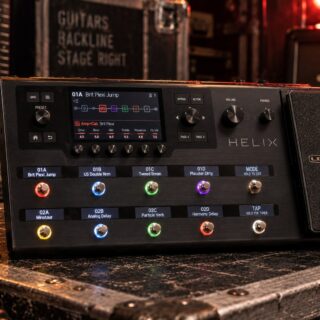
The natural successor to the HD500X within Line 6’s own range is the Helix Floor . The Helix has the dual-SHARC HX engine, 300+ models (versus 30 HD amps), dual DSP for 32-block signal chains, a 6.2″ colour LCD with scribble strip per footswitch, and the full I/O complement including XLR main outs and L6 Link. Current street is approximately £1,299 new, £700–900 used clean. The HD engine gap is real and the preset ecosystem around Helix Native and CustomTone is vastly richer. If budget allows, the Helix is the right call. But the gap from £200 used HD500X to £750 used Helix is substantial, and the HD500X does 90% of what most gigging musicians actually need.
The Helix LT costs approximately £899 new and £500–700 used. It removes the XLR balanced main outs, Variax/VDI input, L6 Link, and CV output compared to the Helix Floor, using a bent-steel rather than extruded-aluminium chassis. Importantly, the HD500X has things the Helix LT does not: Variax connection, L6 Link, and XLR balanced outs — which the LT specifically removed. So the price-and-features comparison between an HD500X and a Helix LT is less one-sided than it looks. If you need those connectivity features, the older unit wins on spec.
The POD Go is Line 6’s current mid-range floor unit at approximately £600 new. It uses the HX engine (same as the Helix) but on a single DSP with 9 blocks per preset. It has no XLR balanced main outs, no Variax, no MIDI DIN (only MIDI over USB), and no L6 Link. The HX engine in the POD Go genuinely sounds better than the HD engine in the HD500X. But the HD500X has more I/O by most measures. For a guitarist who does not need the HX engine’s sonic improvements but does need XLR outs for a direct live rig with a professional PA, the HD500X used at £180 is arguably more practical than a POD Go at £600.
The Neural DSP Quad Cortex is a different category of product: neural-network-based capture technology, a colour touchscreen, WiFi, and cloud preset sharing. It costs approximately £1,699 new. The comparison between a £180 HD500X and a £1,699 Quad Cortex is less a question of which is better and more a question of what you need the unit to do. If you need captures of your own specific amplifiers, there is no comparison. If you need a live multi-effects unit with solid amp models, the HD500X covers 80% of what the Quad Cortex does at 10% of the price.
The Kemper Profiler Head occupies a similar capture-focused territory: profiling of real amplifiers, with the resulting profile sounding remarkably close to the source amp because the Kemper is profiling the actual output rather than simulating circuit components. The Kemper does not model amps the way the HD500X does — it captures them. The HD500X is the right choice for someone who needs a broad-library modeler with extensive I/O at a used-market price. The Kemper is the right choice for someone who has specific amplifiers to capture and tour with.

Buying Guide
The HD500X has been discontinued for four years at the time of writing, and used examples are plentiful on Reverb, eBay, and Facebook Marketplace. Clean condition units with power supply trade in the £150–275 range (UK); US pricing is similar at $150–280 depending on cosmetic condition and accessories.
Before purchasing a used HD500X, verify these things specifically. First, work every footswitch: all twelve need to register cleanly, because replacement switches are available but the labour to fit them is not trivial. Second, test the expression pedal throughout its full sweep — the die-cast construction is durable, but the internal potentiometer can wear and introduce crackle or dead spots that affect any parameter it controls. Third, check the Variax jack if you plan to use one: the Cat 5 socket is proprietary and not cheap to repair. Fourth, confirm the unit is running current firmware (2.62 was the final release) — units that were never updated can behave erratically with certain model combinations. POD HD Edit, the free editor/librarian software, still functions on current operating systems and is the easiest way to update firmware and manage presets.
No case was included with the HD500X at retail. Gator and SKB make appropriately sized cases; a pedaltrain-style board will also accommodate it given the unit’s relatively compact footprint for its feature set. Power supply is included; the original units take a standard centre-negative barrel jack. Line 6-branded replacements are available, as are universal equivalents with the correct voltage and polarity.
Ownership Notes
The factory presets in the HD500X are genuinely bad. This is not unusual for multi-effects units — factory presets are designed to demonstrate the unit’s range in isolation, not to be usable on stage. Budget several hours with POD HD Edit before your first gig to build usable patches from scratch. The editor is easier to work with than the front panel for anything beyond simple parameter tweaks.
The dual signal path is the HD500X’s most powerful and most underused feature. Running two independent amp models — a clean path and a saturated path — and blending them with the expression pedal produces tones with depth and complexity that single-path setups cannot replicate easily. The trick is setting the paths at matched output levels so the blend moves smoothly rather than jumping. Most users who dismiss the HD500X never got around to building a dual-path preset, and that is the unit working at its best.
The FX loop on the HD500X is a genuine stereo loop with a TRS send and two mono returns. It can be placed at any point in the signal chain — pre-amp, post-amp, between stages — making it more flexible than the single loop on many competitors. If you have specific analogue pedals (a particular fuzz, a vintage chorus) that you prefer to run in hardware, the loop placement options are broad enough to accommodate most conventional signal chain preferences.
The XLR mic input is real and works as a straightforward microphone preamp routed through the unit’s signal path — useful for acoustic guitar or simple direct vocal recording in a studio demo context. It is not a professional voice channel, but it is a usable one.
Finally: the HD500X has no idle noise from the expression pedal when it is assigned to volume — a problem that afflicts some older multi-effects units. The die-cast pedal construction keeps the sweep clean even on units that have been toured for years.
FAQ
Is the Line 6 POD HD500X still worth buying in 2026?
For a working musician who needs XLR balanced outputs, MIDI, a Variax connection, and a full-featured direct live rig at a used-market price, yes. The HD engine sounds dated compared to HX, but the I/O complement exceeds what the current POD Go offers at three times the used price. The correct question is whether the sonic improvement of the HX engine justifies the price jump for your specific use case.
What is the difference between the POD HD500 and the HD500X?
The HD500X has a more powerful CPU (more DSP headroom for complex preset builds), upgraded footswitches with bright LED rings, and a higher-contrast display. The amp library, the I/O, and the fundamental HD engine are identical. If you find an HD500 for significantly less than an HD500X, the sonic difference is zero — the practical difference is whether you ever build presets that push the DSP ceiling.
Does the HD500X work with a James Tyler Variax?
Yes. The Cat 5 VDI connector on the rear panel connects directly to any James Tyler Variax or Variax Standard guitar. This allows the HD500X to select guitar models, tunings, and string volume remotely per preset — the full Dream Rig integration that Line 6 marketed through this era. The L6 Link connector allows similar integration with DT-series tube amplifiers, reprogramming their topology (topology, class, feedback) per preset.
Can I use third-party IRs with the HD500X?
No. Third-party impulse response loading was introduced with the Helix series in 2015. The HD500X uses its own internal cabinet simulations and mic selections, which cannot be replaced with external IRs. This is a genuine limitation compared to the Helix and POD Go, both of which support loadable IRs. The internal cabs are usable, but the inability to load your own is a real constraint for users who have invested in IR libraries.
What is the final firmware version for the HD500X?
Firmware 2.62 was the final release. Line 6 declared the HD500X end-of-life on December 1, 2021, and firmware updates ended with that version. POD HD Edit, the free editor/librarian software, continues to function on current operating systems for preset management and firmware installation on units that have not yet been updated.
How does the HD500X compare to the Boss GT-1000?
The GT-1000 (also discontinued) used Roland’s AIRD modeling engine and offered a very different voicing philosophy — more compressed, more consistent across the gain range, arguably more polished in its default state. The HD500X has a more open, dynamic quality that responds more directly to pick attack. The GT-1000 is harder to find used and typically commands a higher price. Neither unit supports third-party IRs. For players accustomed to Boss’s design language, the GT-1000 may feel more immediately usable; the HD500X rewards more time spent building patches from scratch.
What are the known failure points on used HD500X units?
Footswitch registration wear (inspect all twelve before buying), expression pedal potentiometer crackle or dead spots (sweep fully through its range), and the power supply barrel jack (ensure the unit powers on cleanly and does not cut out intermittently). The Cat 5 Variax jack is robust but worth inspecting visually for bent pins if you plan to use it. The chassis itself — bent sheet metal — is genuinely durable and rarely shows structural problems even on heavily gigged units.
Is the HD500X compatible with POD Farm or other Line 6 software?
No. POD Farm uses a different license-based system tied to earlier POD interfaces. The HD500X uses POD HD Edit as its editor/librarian and functions as a standard multi-channel USB audio interface in DAWs without any additional software. POD Farm presets cannot be transferred to the HD500X. The unit’s USB class-compliance means it works as a recording interface on current operating systems without additional drivers on Mac; Windows may require the Line 6 driver package.
Image credits
- Nita Strauss: Sven Mandel, Wikimedia Commons, CC BY-SA 4.0.
- Steve Stevens: Stefan Brending (2eight), Wikimedia Commons, CC BY-SA 4.0.
- Vernon Reid: Mario, Wikimedia Commons, CC BY 2.0.
Latest News
Related
On This Day
Tuesday 10 November
From this week: